WHAT IS THE CARDWHAT IS THE CARD
CATALOG?CATALOG?
The original purpose of the card catalog was to
provide library users with multiple ways to
search for books. Before the advent of
automation, each card was written in what was
called "library hand," then filed manually in
drawers.
IT IS THE INDEX TO THE COLLECTION OF
THE LIBRARY. IT CONTAINS CARDS
ALPHABETICALLY ARRANGED. THERE ARE
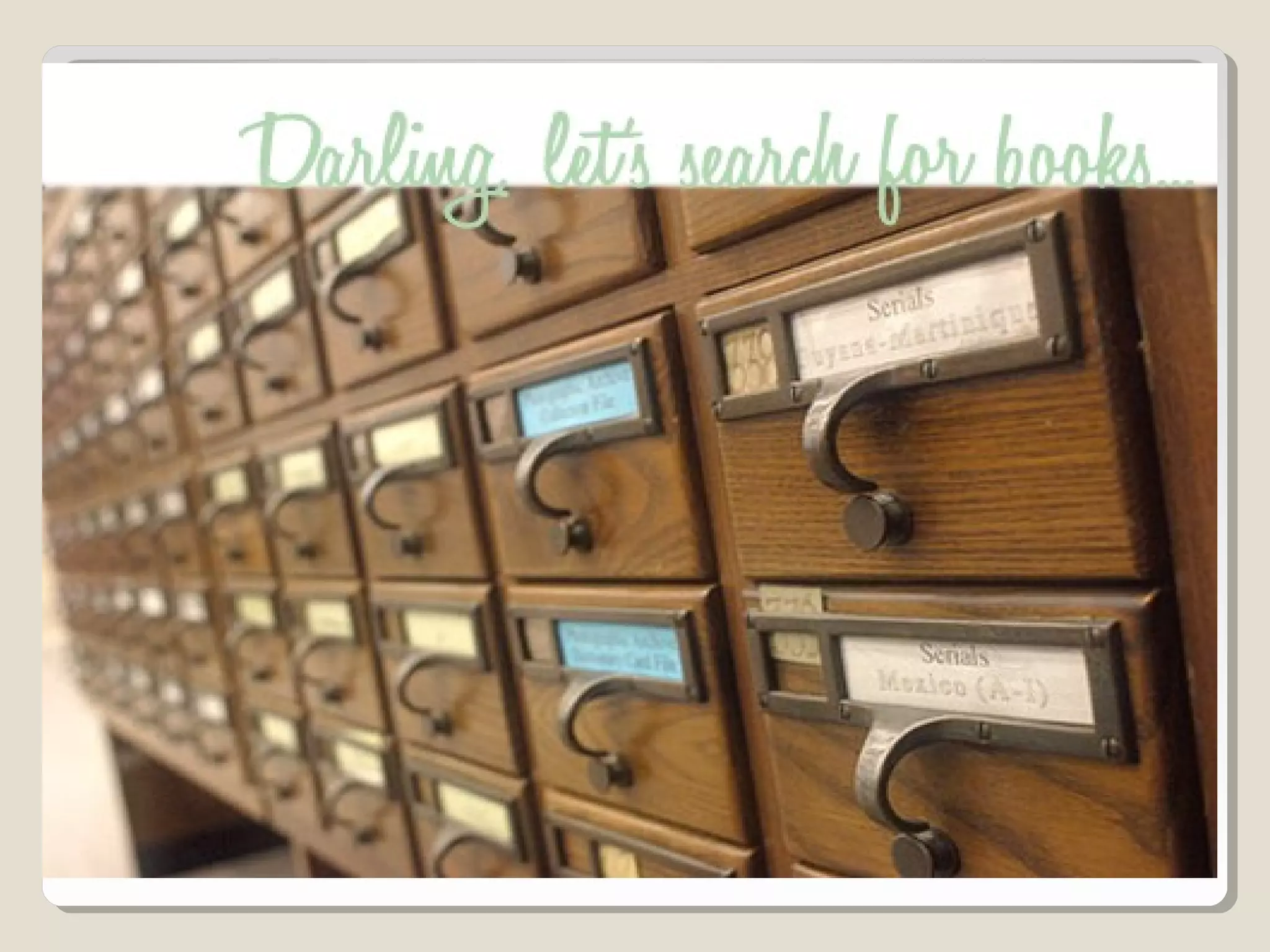
LABELS OUTSIDE THE TRAYS TO ASSIST
THE USER IN LOCATING THE BOOK HE OR
SHE NEEDS. CARDS SIZE “3X”5 ARE FILED
IN THE CARD CATALOG TO GIVE
INFORMATION ABOUT THE BOOKS. EACH
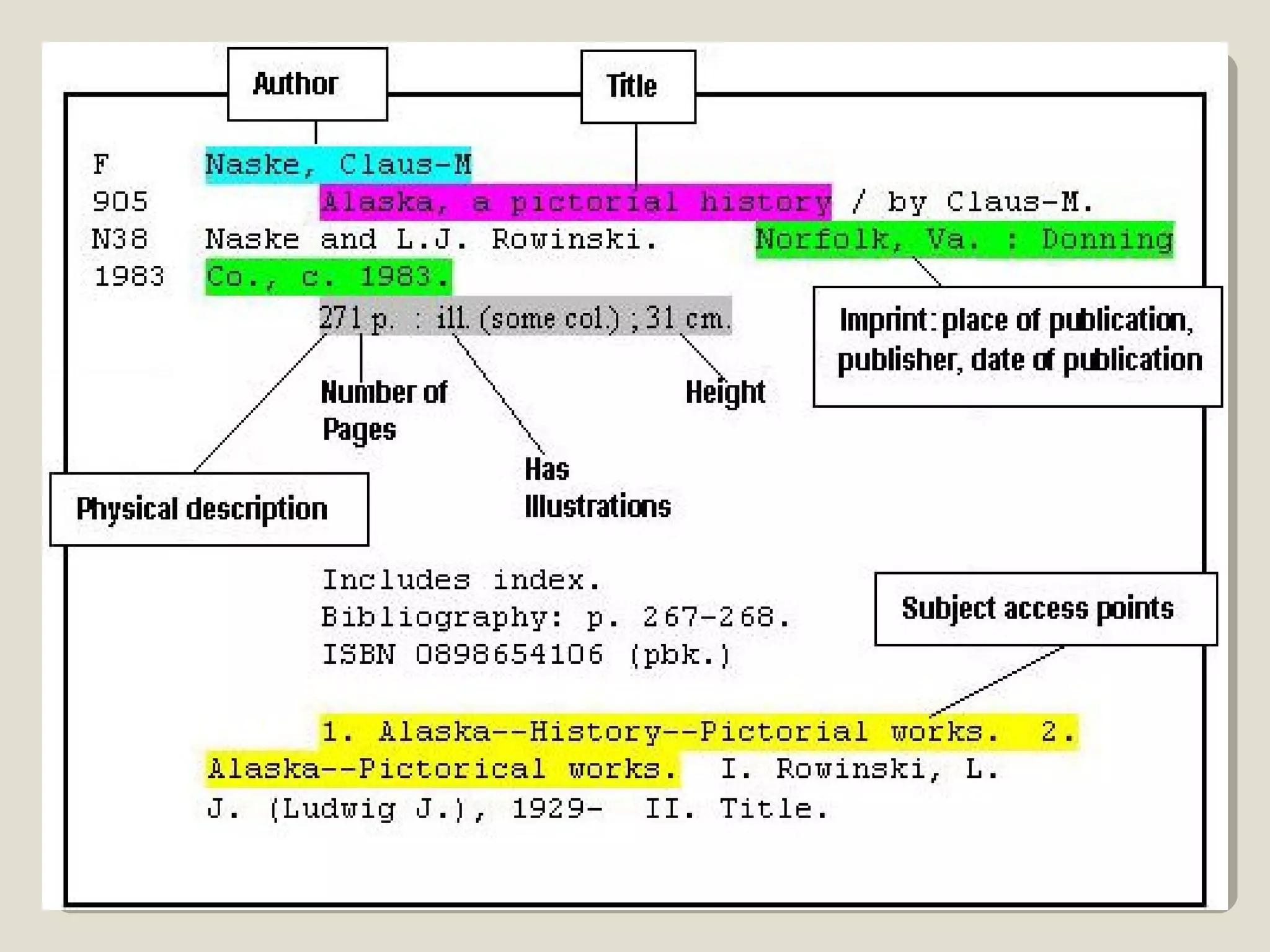
CARD CONTAINS A CALL NUMBER WHICH
APPEARS IN THE UPPER LEFT-HAND
CORNER TO IDENTIFY THE BOOK.
..
In a Library, What Are theIn a Library, What Are the
Three Types of Cards in theThree Types of Cards in the
Card Catalog?Card Catalog?
||
Library card catalogs use three types of cards. These
form a system that helps patrons locate a book on the
shelf. The card types have listings by author, subject or
title. The system was created to assist people who may
not be sure of all of the information about a book.
Information on the card corresponds with where the book
is located.
Author card catalogAuthor card catalog
Author cards in the catalog are fairly
straightforward, listing the author alphabetically
by last name. Authors of similar name can be
differentiated by a middle initial or by their birth
and death dates. If a book has multiple authors,
the card catalog will give each of them their own
author card with their co-authors listed, so that if
readers know just one author they can still find
the book. Authors using pen names will often
have a "See Also" card under that name directing
readers to the full listing elsewhere.
Title Card CatalogTitle Card Catalog
The title cards are filed alphabetically by the
title of a book, not counting the article (The,
A, An, etc.). In the card catalog, title cards
are listed after author and subject cards
when all start with the same word. Title cards
will also contain the subtitle of the book. Like
author and subject cards, title cards will
contain the publishing date and number of
pages.
Subject Card CatalogSubject Card Catalog
Subject listings in the card catalog are most
helpful for a reader who isn't in search of a
specific book, but would rather see all the books
under a certain topic. All card catalogs list
subjects and subdivisions of subjects based on
criteria created by The Library of Congress.
Subject cards will begin with the broadest topic
(i.e., Literature) and then become more specific
and subdivided (i.e., Literature-American;
Literature, American, 1900-1945).
CARD CATALOG/ELEMENTARY

CARD CATALOG/ELEMENTARY

  • 1.
    WHAT IS THECARDWHAT IS THE CARD CATALOG?CATALOG? The original purpose of the card catalog was to provide library users with multiple ways to search for books. Before the advent of automation, each card was written in what was called "library hand," then filed manually in drawers.
  • 3.
    IT IS THEINDEX TO THE COLLECTION OF THE LIBRARY. IT CONTAINS CARDS ALPHABETICALLY ARRANGED. THERE ARE LABELS OUTSIDE THE TRAYS TO ASSIST THE USER IN LOCATING THE BOOK HE OR SHE NEEDS. CARDS SIZE “3X”5 ARE FILED IN THE CARD CATALOG TO GIVE INFORMATION ABOUT THE BOOKS. EACH CARD CONTAINS A CALL NUMBER WHICH APPEARS IN THE UPPER LEFT-HAND CORNER TO IDENTIFY THE BOOK.
  • 4.
  • 5.
    In a Library,What Are theIn a Library, What Are the Three Types of Cards in theThree Types of Cards in the Card Catalog?Card Catalog? || Library card catalogs use three types of cards. These form a system that helps patrons locate a book on the shelf. The card types have listings by author, subject or title. The system was created to assist people who may not be sure of all of the information about a book. Information on the card corresponds with where the book is located.
  • 6.
    Author card catalogAuthorcard catalog Author cards in the catalog are fairly straightforward, listing the author alphabetically by last name. Authors of similar name can be differentiated by a middle initial or by their birth and death dates. If a book has multiple authors, the card catalog will give each of them their own author card with their co-authors listed, so that if readers know just one author they can still find the book. Authors using pen names will often have a "See Also" card under that name directing readers to the full listing elsewhere.
  • 8.
    Title Card CatalogTitleCard Catalog The title cards are filed alphabetically by the title of a book, not counting the article (The, A, An, etc.). In the card catalog, title cards are listed after author and subject cards when all start with the same word. Title cards will also contain the subtitle of the book. Like author and subject cards, title cards will contain the publishing date and number of pages.
  • 10.
    Subject Card CatalogSubjectCard Catalog Subject listings in the card catalog are most helpful for a reader who isn't in search of a specific book, but would rather see all the books under a certain topic. All card catalogs list subjects and subdivisions of subjects based on criteria created by The Library of Congress. Subject cards will begin with the broadest topic (i.e., Literature) and then become more specific and subdivided (i.e., Literature-American; Literature, American, 1900-1945).