WHAT IS 
•The Ebola virus is a serioEusB andO deaLdlyA dise?ase 
transmitted by animals and humans. Scientists 
initially detected the Ebola virus disease (EVD) in 
1976 in Sudan and the Democratic Republic of 
Congo. Researchers named the disease after the 
Ebola River that flows in the Congo. 
•Although the Ebola virus has been present for 
more than 35 years, an outbreak occurred in March
SYMPTO 
•Early signs and MsymptoSms include fever, severe 
headache, joint and muscle aches, chills, 
weakness 
•Over time, symptoms become increasingly 
severe and may include nausea and vomiting, 
diarrhea (may be bloody), red eyes, raised rash 
chest pain and cough, stomach pain, severe 
weight loss, bleeding, usually from the eyes,
CAUSES •Blood: Butchering or eating infected 
animals can spread the viruses. 
•Waste products: Possibly through contact 
with the feces or urine of the infected. 
•Once people become infected with Ebola, 
they can transmit it to others if people 
come in contact with their breast milk, 
saliva, semen, sweat, or vomit.
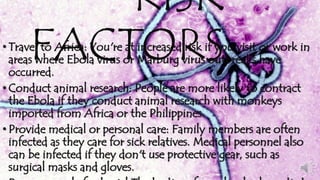
RISK 
• TraveFl to AAfrica: CYou'rTe at inOcreasedR risk iSf you visit or work in 
areas where Ebola virus or Marburg virus outbreaks have 
occurred. 
• Conduct animal research: People are more likely to contract 
the Ebola if they conduct animal research with monkeys 
imported from Africa or the Philippines. 
• Provide medical or personal care: Family members are often 
infected as they care for sick relatives. Medical personnel also 
can be infected if they don't use protective gear, such as 
surgical masks and gloves. 
• Prepare people for burial The bodies of people who have died
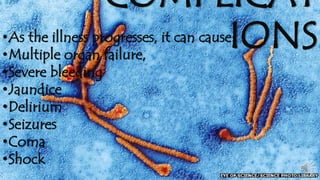
COMPLICAT 
•As the illness progresses, it can causeI: ONS 
•Multiple organ failure, 
•Severe bleeding 
•Jaundice 
•Delirium 
•Seizures 
•Coma 
•Shock
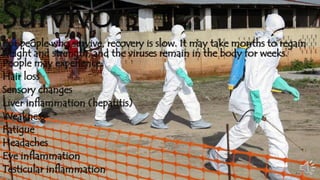
Survivors 
For people who survive, recovery is slow. It may take months to regain 
weight and strength, and the viruses remain in the body for weeks. 
People may experience: 
Hair loss 
Sensory changes 
Liver inflammation (hepatitis) 
Weakness 
Fatigue 
Headaches 
Eye inflammation 
Testicular inflammation
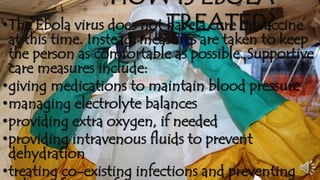
HOW IS EBOLA 
•The Ebola virus does not ThaRveE a AcurTe EorD va?ccine 
at this time. Instead, measures are taken to keep 
the person as comfortable as possible. Supportive 
care measures include: 
•giving medications to maintain blood pressure 
•managing electrolyte balances 
•providing extra oxygen, if needed 
•providing intravenous fluids to prevent 
dehydration 
•treating co-existing infections and preventing 
other infections from occurring
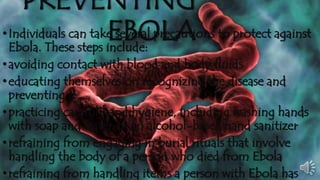
PREVENTING 
• Individuals can takeE seBverOal prLecAautions to protect against 
Ebola. These steps include: 
• avoiding contact with blood and body fluids 
• educating themselves on recognizing the disease and 
preventing it 
•practicing careful hand hygiene, including washing hands 
with soap and water or an alcohol-based hand sanitizer 
• refraining from engaging in burial rituals that involve 
handling the body of a person who died from Ebola 
• refraining from handling items a person with Ebola has 
handled, including clothing, bedding, needles, or medical
ALSO THERE ARE 
ZOMBIES!!!

Ebola-BIO 110

  • 2.
    WHAT IS •TheEbola virus is a serioEusB andO deaLdlyA dise?ase transmitted by animals and humans. Scientists initially detected the Ebola virus disease (EVD) in 1976 in Sudan and the Democratic Republic of Congo. Researchers named the disease after the Ebola River that flows in the Congo. •Although the Ebola virus has been present for more than 35 years, an outbreak occurred in March
  • 3.
    SYMPTO •Early signsand MsymptoSms include fever, severe headache, joint and muscle aches, chills, weakness •Over time, symptoms become increasingly severe and may include nausea and vomiting, diarrhea (may be bloody), red eyes, raised rash chest pain and cough, stomach pain, severe weight loss, bleeding, usually from the eyes,
  • 4.
    CAUSES •Blood: Butcheringor eating infected animals can spread the viruses. •Waste products: Possibly through contact with the feces or urine of the infected. •Once people become infected with Ebola, they can transmit it to others if people come in contact with their breast milk, saliva, semen, sweat, or vomit.
  • 5.
    RISK • TraveFlto AAfrica: CYou'rTe at inOcreasedR risk iSf you visit or work in areas where Ebola virus or Marburg virus outbreaks have occurred. • Conduct animal research: People are more likely to contract the Ebola if they conduct animal research with monkeys imported from Africa or the Philippines. • Provide medical or personal care: Family members are often infected as they care for sick relatives. Medical personnel also can be infected if they don't use protective gear, such as surgical masks and gloves. • Prepare people for burial The bodies of people who have died
  • 6.
    COMPLICAT •As theillness progresses, it can causeI: ONS •Multiple organ failure, •Severe bleeding •Jaundice •Delirium •Seizures •Coma •Shock
  • 7.
    Survivors For peoplewho survive, recovery is slow. It may take months to regain weight and strength, and the viruses remain in the body for weeks. People may experience: Hair loss Sensory changes Liver inflammation (hepatitis) Weakness Fatigue Headaches Eye inflammation Testicular inflammation
  • 8.
    HOW IS EBOLA •The Ebola virus does not ThaRveE a AcurTe EorD va?ccine at this time. Instead, measures are taken to keep the person as comfortable as possible. Supportive care measures include: •giving medications to maintain blood pressure •managing electrolyte balances •providing extra oxygen, if needed •providing intravenous fluids to prevent dehydration •treating co-existing infections and preventing other infections from occurring
  • 9.
    PREVENTING • Individualscan takeE seBverOal prLecAautions to protect against Ebola. These steps include: • avoiding contact with blood and body fluids • educating themselves on recognizing the disease and preventing it •practicing careful hand hygiene, including washing hands with soap and water or an alcohol-based hand sanitizer • refraining from engaging in burial rituals that involve handling the body of a person who died from Ebola • refraining from handling items a person with Ebola has handled, including clothing, bedding, needles, or medical
  • 10.
    ALSO THERE ARE ZOMBIES!!!