-DR. Sudha Tiwari
Nutrition Consultant,
PSSCIVE, BHOPAL
.
Basic Rules
A B A L A N C E D D I E T C O N T A I N S A L L T H E F O O D T Y P E S I N T H E
R I G H T A M O U N T S T O S T A Y H E A L T H Y .
MY PYRAMID PLAN
FOOD GROUPS TO INCLUDE IN PLATE IN THE
RIGHT PROPORTIONS :-
C E R E A L & G R A I N
P U L S E S & L E G U M E S
M I L K & M I L K P R O D U C T S
V E G E T A B L E S & F R U I T S
 M E A T , F I S H & E G G
F A T S & O I L
FOOD GROUPS
Cereal & Pulses
.
Wholegrain are the healthiest choices,
usually contain more fibre, vitamins
and minerals than refined versions.
This group can provides carbohydrate,
fibre, B vitamins, iron, calcium and
folate.
These includes-
Wheat, rice, oats, barley, millets, pasta,
suji, brown rice,dal, rajma, chana,
soyabean, dry beans and peas
Fruits & Vegetables
 Different fruit and vegetables contain: vitamin C,
vitamin A, folate, fibre, potassium and magnesium
& iron.
 High in fiber
 should make up approximately 1/3 of our daily
food intake.
 Choose a rainbow of colors, especially dark green
and deep orange
 Reduce stroke and cancer risk
Milk & Milk Products
 Good source of calcium; also contains protein, Calcium
riboflavin, and vitamins A and D.
 Promotes strong bones and healthy teeth
 Vitamin D in milk helps to maintain proper levels of
calcium and phosphorous
 Potassium maintain healthy blood pressure
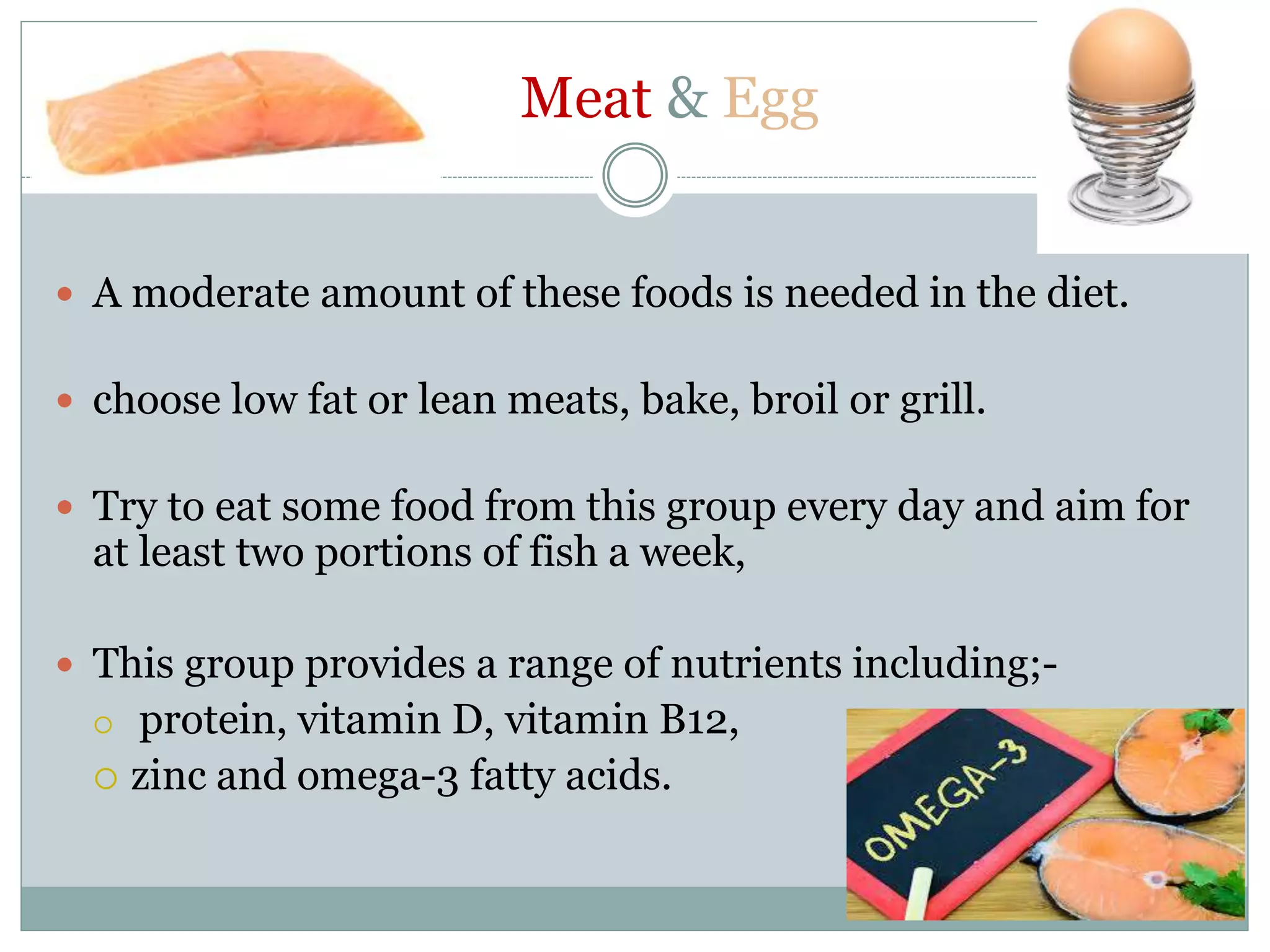
Meat & Egg
 A moderate amount of these foods is needed in the diet.
 choose low fat or lean meats, bake, broil or grill.
 Try to eat some food from this group every day and aim for
at least two portions of fish a week,
 This group provides a range of nutrients including;-
 protein, vitamin D, vitamin B12,
 zinc and omega-3 fatty acids.
Fat & Sugar- Eat Little
Essential Fat are important as they:-
•Increasing energy and stamina;
•Improving brain function;
•Speeding up recovery and healing processes.
•Assisting in many body processes.
Sweet, desserts, cakes, pastries, biscuits, chocolate, crisps, fried
foods and non-diet fizzy drinks should be considered as treats
and only eaten occasionally.
Limit sugar-heavy beverages and fried products
Choose water or fat free milk to drink.
We need to eat a variety of foods because one
food does not have all the nutrients
Essential nutrients are:-
 Carbohydrate
 Protein
 Fat
 Vitamin
 Mineral
 Water
Carbohydrates
Carbohydrates are primary source of ENERGY.
Carbohydrates have 2 categories: Simple & complex
Simple carbs from sugar.
Complex carbs from starchy foods like grains, rice,
and vegetables.
FIBRE-Complex Carbohydrate
 Fiber is the plant material that doesn’t
break down when we digest food.
 Some complex carbohydrates contain fiber.
 Food Sources:
 Oatmeal, fruits, vegetables, whole grains and legumes.
 Function in the Body:
 Aids in digestion.
 Reduce the risk of heart disease, diabetes and obesity and
certain types of cancer.
 Promote bowel regularity.
Protein
 Building blocks for the body for growth and repair.
 Our skin, hair, blood, muscles and vital organs are made of
proteins.
 Protein sources: Plant (incomplete) & Animal (complete)
 Plant sources: Beans, Soy, Lentils
 Animals sources: Beef, Pork, Fish, Eggs, Cheese, Poultry
 Insulate our body
 Cushion our organs from shock
 Transport vitamins A,D,E,K vitamins
 Give taste and flavor to food
 Types of fat include: saturated, unsaturated, trans-fat and
cholesterol.
 Omega’s are good fats
 Cholesterol-fat-like substance in found in body cells. When
high, it clogs arteries.
SA, MUFA,PUFA
Saturated mainly from animal
sources, solid at room temperature
Unsaturated generally come from
plants and usually liquid at room
temperature
Unsaturated fatty acid associated with a
lower level of blood cholesterol and
reduces the risk of heart disease.
trans fatty acids- in margarines, baked
goods and restaurant deep-fried foods.
•Choose lean meat, fish, poultry, nonfat
dairy products & Read food labels
Vitamin
There are two groups of vitamins:-
 fat-soluble vitamins, which can be stored in the
body, e.g. vitamins A, D,E and K
 water-soluble vitamins, which cannot be stored in
the body and therefore required daily, e.g. B vitamins
and vitamin C.
Vitamin B complex
 Different B vitamins has specific function in the body.
 These include:- Thiamin, Riboflavin, Niacin, pyridoxine,
cyanocobalmine, folic acid.
 Vitamin B complex required to release energy from carbohydrate, protein
and fat.
 Involved in normal function of the skin, mucous membranes and nervous
system
• Sources are-
• Milk Eggs. Rice.
• Fortified breakfast cereals.
• Liver. Legumes. Mushrooms.
• Green vegetables.
Vitamin B-sources
Vitamin C
 Needed to make collagen, required for the structure
and function of skin, cartilage and bones.
 It is an important nutrient for healing cuts and
wounds
 Sources are- Citrus food- amla, lemon, orange,
grapes, berries,apple
21
Water-Soluble Vitamins
Nutrient Functions Sources
B-Complex Helps wounds heal
Helps fight infection
Helps nervous tissue function healthy
Plays important role in breakdown of
proteins fats and carbohydrates
Oranges, grapefruits,
tangerines, cantaloupe,
broccoli, citrus fruits, tomatoes
and raw cabbage
Vitamin C
(ascorbic acid)
Keeps nervous system healthy
Releases energy from food
Helps promote healthy gums and tissues
Pork, whole grain breads and
cereals
22
Nutrient Functions Sources
Vitamin A Keeps skin and mucus
membranes healthy
Prevents night blindness
Promotes growth
Butter, dark green and yellow fruits
and vegetables, egg yolk, liver,
whole and fortified milk
Vitamin D Builds strong bones and teeth Egg yolk; fortified butter,
margarine, and milk; the sun
Vitamin E Acts as an antioxidant to protect
cell membranes
Eggs, liver, salad oils, whole grain
cereals
Vitamin K Helps blood clot Cauliflower, egg yolk, organ meats
Fat-Soluble Vitamins
Vitamin A
 Food Sources:
 Dark green, leafy vegetables, deep yellow and orange fruits and
vegetables, liver, milk, cheese, and eggs.
 Function in the Body:
 Helps keep skin and hair healthy.
 Aids in night vision.
 Plays a role in developing
strong bones and teeth.
Vitamin- E
 Acts as an antioxidant to protect cell membranes
 Sources are-
Eggs,
liver,
salad oils
whole grain cereals
Minerals
Nutrient Functions Sources
Calcium Builds bones and teeth
Helps muscles and nerves work
Milk, yogurt, cheese,
salmon, dark veggies
Iron Combines with protein to make
hemoglobin. Helps cells use oxygen
Liver, spinach, raisins and
molasses
Potassium Helps nerves and muscles
Balances body water
Potatoes, bananas, prune
juice and tomato products
Sodium Helps nerves and muscle function Salt, soy sauce, processed
foods and country ham
Iodine Promotes normal functioning of the
thyroid gland
Iodized salt and salt water
fish
Mineral
 Minerals are inorganic substances required by the body in small
amounts for a variety of different functions.
 Calcium maintain bones and teeth, blood clotting and normal muscle
function.
 Deficiency of calcium & phosphorus leads to osteoporosis.
 Trace minerals are Iron, zinc, manganese, copper, iodine needed in
small amounts
 Iron is essential for the formation of haemoglobin in red blood cells,
deficiency leads to anemia.
Mineral- sources
WATER
 The major component of blood
 50-60% of body is water
 Necessary for
 Electrolyte and pH balance
 Transporting cells and O2
 Recommended amount – 8 glasses/day (64 ounces)
Reading Food Label
Junk food-
 Junk Food examples: Chips, chocolate, soft drinks,
pizza, hot dog, burger, cake, cookies, chips, French
fries……..
 Too convenient
 Too tasty
 Available everywhere
 Heavily promoted
 High in salt, sugar, fat or calories and low nutrient
content
 Offer little to no nutrition.
What’s the issue with junk food?
Harmful Effects
obesity, tooth decay, heart disease, lack of concentration, fatigue, liver
disease, vitamin deficiency
Focus!
 Focus on the 5 essential food groups for good health.
 Replace healthier foods in the diet
 Opt for water as your beverage of choice
Have Evergreen Heart!

Eat Right

  • 1.
    -DR. Sudha Tiwari NutritionConsultant, PSSCIVE, BHOPAL .
  • 2.
  • 3.
    A B AL A N C E D D I E T C O N T A I N S A L L T H E F O O D T Y P E S I N T H E R I G H T A M O U N T S T O S T A Y H E A L T H Y .
  • 4.
  • 5.
    FOOD GROUPS TOINCLUDE IN PLATE IN THE RIGHT PROPORTIONS :- C E R E A L & G R A I N P U L S E S & L E G U M E S M I L K & M I L K P R O D U C T S V E G E T A B L E S & F R U I T S  M E A T , F I S H & E G G F A T S & O I L FOOD GROUPS
  • 6.
    Cereal & Pulses . Wholegrainare the healthiest choices, usually contain more fibre, vitamins and minerals than refined versions. This group can provides carbohydrate, fibre, B vitamins, iron, calcium and folate. These includes- Wheat, rice, oats, barley, millets, pasta, suji, brown rice,dal, rajma, chana, soyabean, dry beans and peas
  • 7.
    Fruits & Vegetables Different fruit and vegetables contain: vitamin C, vitamin A, folate, fibre, potassium and magnesium & iron.  High in fiber  should make up approximately 1/3 of our daily food intake.  Choose a rainbow of colors, especially dark green and deep orange  Reduce stroke and cancer risk
  • 8.
    Milk & MilkProducts  Good source of calcium; also contains protein, Calcium riboflavin, and vitamins A and D.  Promotes strong bones and healthy teeth  Vitamin D in milk helps to maintain proper levels of calcium and phosphorous  Potassium maintain healthy blood pressure
  • 9.
    Meat & Egg A moderate amount of these foods is needed in the diet.  choose low fat or lean meats, bake, broil or grill.  Try to eat some food from this group every day and aim for at least two portions of fish a week,  This group provides a range of nutrients including;-  protein, vitamin D, vitamin B12,  zinc and omega-3 fatty acids.
  • 10.
    Fat & Sugar-Eat Little Essential Fat are important as they:- •Increasing energy and stamina; •Improving brain function; •Speeding up recovery and healing processes. •Assisting in many body processes. Sweet, desserts, cakes, pastries, biscuits, chocolate, crisps, fried foods and non-diet fizzy drinks should be considered as treats and only eaten occasionally. Limit sugar-heavy beverages and fried products Choose water or fat free milk to drink.
  • 11.
    We need toeat a variety of foods because one food does not have all the nutrients Essential nutrients are:-  Carbohydrate  Protein  Fat  Vitamin  Mineral  Water
  • 12.
    Carbohydrates Carbohydrates are primarysource of ENERGY. Carbohydrates have 2 categories: Simple & complex Simple carbs from sugar. Complex carbs from starchy foods like grains, rice, and vegetables.
  • 13.
    FIBRE-Complex Carbohydrate  Fiberis the plant material that doesn’t break down when we digest food.  Some complex carbohydrates contain fiber.  Food Sources:  Oatmeal, fruits, vegetables, whole grains and legumes.  Function in the Body:  Aids in digestion.  Reduce the risk of heart disease, diabetes and obesity and certain types of cancer.  Promote bowel regularity.
  • 14.
    Protein  Building blocksfor the body for growth and repair.  Our skin, hair, blood, muscles and vital organs are made of proteins.  Protein sources: Plant (incomplete) & Animal (complete)  Plant sources: Beans, Soy, Lentils  Animals sources: Beef, Pork, Fish, Eggs, Cheese, Poultry
  • 15.
     Insulate ourbody  Cushion our organs from shock  Transport vitamins A,D,E,K vitamins  Give taste and flavor to food  Types of fat include: saturated, unsaturated, trans-fat and cholesterol.  Omega’s are good fats  Cholesterol-fat-like substance in found in body cells. When high, it clogs arteries.
  • 16.
    SA, MUFA,PUFA Saturated mainlyfrom animal sources, solid at room temperature Unsaturated generally come from plants and usually liquid at room temperature Unsaturated fatty acid associated with a lower level of blood cholesterol and reduces the risk of heart disease. trans fatty acids- in margarines, baked goods and restaurant deep-fried foods. •Choose lean meat, fish, poultry, nonfat dairy products & Read food labels
  • 17.
    Vitamin There are twogroups of vitamins:-  fat-soluble vitamins, which can be stored in the body, e.g. vitamins A, D,E and K  water-soluble vitamins, which cannot be stored in the body and therefore required daily, e.g. B vitamins and vitamin C.
  • 18.
    Vitamin B complex Different B vitamins has specific function in the body.  These include:- Thiamin, Riboflavin, Niacin, pyridoxine, cyanocobalmine, folic acid.  Vitamin B complex required to release energy from carbohydrate, protein and fat.  Involved in normal function of the skin, mucous membranes and nervous system • Sources are- • Milk Eggs. Rice. • Fortified breakfast cereals. • Liver. Legumes. Mushrooms. • Green vegetables.
  • 19.
  • 20.
    Vitamin C  Neededto make collagen, required for the structure and function of skin, cartilage and bones.  It is an important nutrient for healing cuts and wounds  Sources are- Citrus food- amla, lemon, orange, grapes, berries,apple
  • 21.
    21 Water-Soluble Vitamins Nutrient FunctionsSources B-Complex Helps wounds heal Helps fight infection Helps nervous tissue function healthy Plays important role in breakdown of proteins fats and carbohydrates Oranges, grapefruits, tangerines, cantaloupe, broccoli, citrus fruits, tomatoes and raw cabbage Vitamin C (ascorbic acid) Keeps nervous system healthy Releases energy from food Helps promote healthy gums and tissues Pork, whole grain breads and cereals
  • 22.
    22 Nutrient Functions Sources VitaminA Keeps skin and mucus membranes healthy Prevents night blindness Promotes growth Butter, dark green and yellow fruits and vegetables, egg yolk, liver, whole and fortified milk Vitamin D Builds strong bones and teeth Egg yolk; fortified butter, margarine, and milk; the sun Vitamin E Acts as an antioxidant to protect cell membranes Eggs, liver, salad oils, whole grain cereals Vitamin K Helps blood clot Cauliflower, egg yolk, organ meats Fat-Soluble Vitamins
  • 23.
    Vitamin A  FoodSources:  Dark green, leafy vegetables, deep yellow and orange fruits and vegetables, liver, milk, cheese, and eggs.  Function in the Body:  Helps keep skin and hair healthy.  Aids in night vision.  Plays a role in developing strong bones and teeth.
  • 24.
    Vitamin- E  Actsas an antioxidant to protect cell membranes  Sources are- Eggs, liver, salad oils whole grain cereals
  • 25.
    Minerals Nutrient Functions Sources CalciumBuilds bones and teeth Helps muscles and nerves work Milk, yogurt, cheese, salmon, dark veggies Iron Combines with protein to make hemoglobin. Helps cells use oxygen Liver, spinach, raisins and molasses Potassium Helps nerves and muscles Balances body water Potatoes, bananas, prune juice and tomato products Sodium Helps nerves and muscle function Salt, soy sauce, processed foods and country ham Iodine Promotes normal functioning of the thyroid gland Iodized salt and salt water fish
  • 26.
    Mineral  Minerals areinorganic substances required by the body in small amounts for a variety of different functions.  Calcium maintain bones and teeth, blood clotting and normal muscle function.  Deficiency of calcium & phosphorus leads to osteoporosis.  Trace minerals are Iron, zinc, manganese, copper, iodine needed in small amounts  Iron is essential for the formation of haemoglobin in red blood cells, deficiency leads to anemia.
  • 27.
  • 28.
    WATER  The majorcomponent of blood  50-60% of body is water  Necessary for  Electrolyte and pH balance  Transporting cells and O2  Recommended amount – 8 glasses/day (64 ounces)
  • 29.
  • 30.
    Junk food-  JunkFood examples: Chips, chocolate, soft drinks, pizza, hot dog, burger, cake, cookies, chips, French fries……..  Too convenient  Too tasty  Available everywhere  Heavily promoted  High in salt, sugar, fat or calories and low nutrient content  Offer little to no nutrition.
  • 31.
    What’s the issuewith junk food?
  • 32.
    Harmful Effects obesity, toothdecay, heart disease, lack of concentration, fatigue, liver disease, vitamin deficiency
  • 33.
    Focus!  Focus onthe 5 essential food groups for good health.  Replace healthier foods in the diet  Opt for water as your beverage of choice
  • 34.