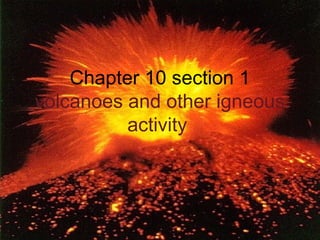
Chapter 10 section 1
volcanoes and other igneous
activity
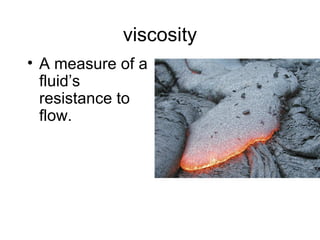
viscosity
• A measure of a
fluid’s
resistance to
flow.
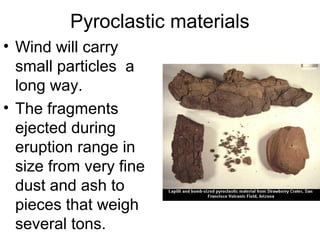
Pyroclastic materials
• Wind will carry
small particles a
long way.
• The fragments
ejected during
eruption range in
size from very fine
dust and ash to
pieces that weigh
several tons.
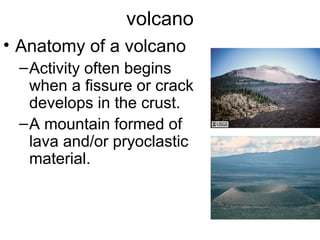
volcano
• Anatomy of a volcano
–Activity often begins
when a fissure or crack
develops in the crust.
–A mountain formed of
lava and/or pryoclastic
material.
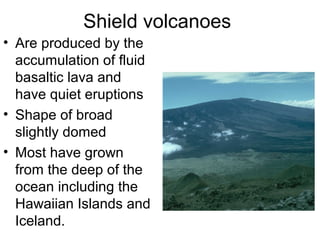
Shield volcanoes
• Are produced by the
accumulation of fluid
basaltic lava and
have quiet eruptions
• Shape of broad
slightly domed
• Most have grown
from the deep of the
ocean including the
Hawaiian Islands and
Iceland.
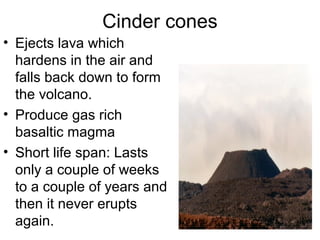
Cinder cones
• Ejects lava which
hardens in the air and
falls back down to form
the volcano.
• Produce gas rich
basaltic magma
• Short life span: Lasts
only a couple of weeks
to a couple of years and
then it never erupts
again.
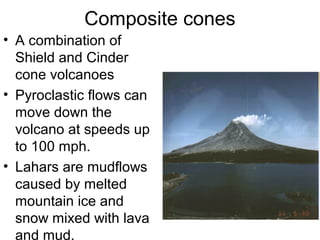
Composite cones
• A combination of
Shield and Cinder
cone volcanoes
• Pyroclastic flows can
move down the
volcano at speeds up
to 100 mph.
• Lahars are mudflows
caused by melted
mountain ice and
snow mixed with lava
and mud.
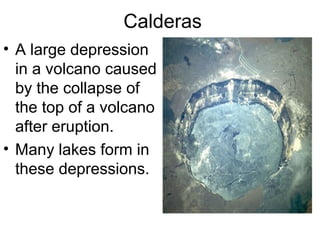
Calderas
• A large depression
in a volcano caused
by the collapse of
the top of a volcano
after eruption.
• Many lakes form in
these depressions.
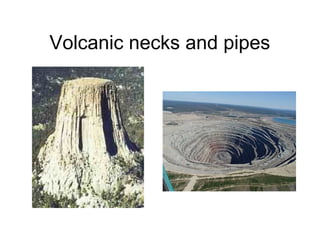
Volcanic necks and pipes
Lava plateaus
• Greatest volume of lava is excreted
from fissures
• Columbia plateau was formed this
way
• Numerous fissures erupted to form
this large landform.
Key Concept
• What determines the type of volcanic
eruption?
–The primary factors that determine
whether a volcano erupts violently or
quietly include magma composition,
magma temperature, and the amount of
dissolved gases in the magma.
Key Concept
• What other landforms are
associated with volcanic
eruptions?
–Neck, pipes, and calderas.

Earth science 10.1

  • 1.
    Chapter 10 section1 volcanoes and other igneous activity
  • 2.
    viscosity • A measureof a fluid’s resistance to flow.
  • 3.
    Pyroclastic materials • Windwill carry small particles a long way. • The fragments ejected during eruption range in size from very fine dust and ash to pieces that weigh several tons.
  • 4.
    volcano • Anatomy ofa volcano –Activity often begins when a fissure or crack develops in the crust. –A mountain formed of lava and/or pryoclastic material.
  • 5.
    Shield volcanoes • Areproduced by the accumulation of fluid basaltic lava and have quiet eruptions • Shape of broad slightly domed • Most have grown from the deep of the ocean including the Hawaiian Islands and Iceland.
  • 6.
    Cinder cones • Ejectslava which hardens in the air and falls back down to form the volcano. • Produce gas rich basaltic magma • Short life span: Lasts only a couple of weeks to a couple of years and then it never erupts again.
  • 7.
    Composite cones • Acombination of Shield and Cinder cone volcanoes • Pyroclastic flows can move down the volcano at speeds up to 100 mph. • Lahars are mudflows caused by melted mountain ice and snow mixed with lava and mud.
  • 8.
    Calderas • A largedepression in a volcano caused by the collapse of the top of a volcano after eruption. • Many lakes form in these depressions.
  • 9.
  • 10.
    Lava plateaus • Greatestvolume of lava is excreted from fissures • Columbia plateau was formed this way • Numerous fissures erupted to form this large landform.
  • 11.
    Key Concept • Whatdetermines the type of volcanic eruption? –The primary factors that determine whether a volcano erupts violently or quietly include magma composition, magma temperature, and the amount of dissolved gases in the magma.
  • 12.
    Key Concept • Whatother landforms are associated with volcanic eruptions? –Neck, pipes, and calderas.