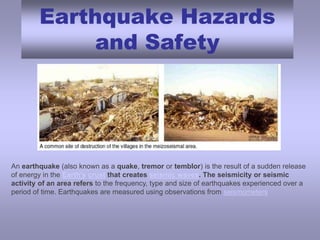
Earthquake Hazards and SafetyAn earthquake (also known as a quake, tremor or temblor) is the result of a sudden release of energy in the Earth's crust that creates seismic waves. The seismicity or seismic activity of an area refers to the frequency, type and size of earthquakes experienced over a period of time. Earthquakes are measured using observations from seismometers
The Earth
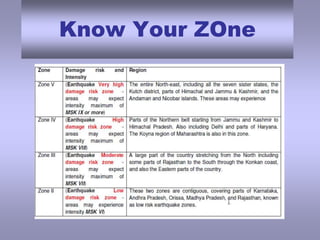
Know Your ZOne
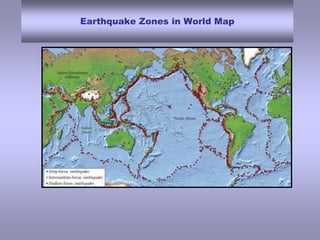
Earthquake Zones in World Map
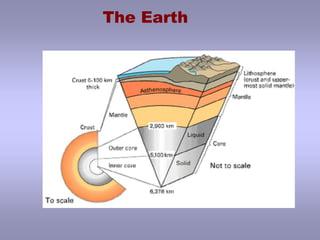
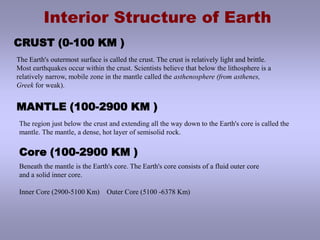
Interior Structure of Earth CRUST (0-100 KM )The Earth's outermost surface is called the crust. The crust is relatively light and brittle.  Most earthquakes occur within the crust. Scientists believe that below the lithosphere is a relatively narrow, mobile zone in the mantle called the asthenosphere (from asthenes, Greek for weak).MANTLE (100-2900 KM )The region just below the crust and extending all the way down to the Earth's core is called themantle. The mantle, a dense, hot layer of semisolid rock.Core (100-2900 KM )Beneath the mantle is the Earth's core. The Earth's core consists of a fluid outer core and a solid inner core.Inner Core (2900-5100 Km)    Outer Core (5100 -6378 Km)
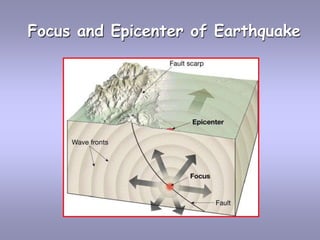
Focus and Epicenter of Earthquake
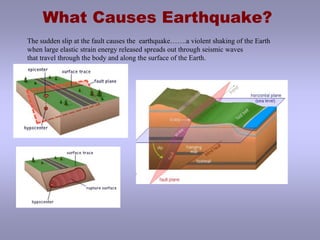
What Causes Earthquake? The sudden slip at the fault causes the  earthquake…….a violent shaking of the Earth when large elastic strain energy released spreads out through seismic waves that travel through the body and along the surface of the Earth.
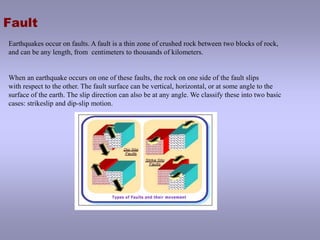
FaultEarthquakes occur on faults. A fault is a thin zone of crushed rock between two blocks of rock, and can be any length, from  centimeters to thousands of kilometers. When an earthquake occurs on one of these faults, the rock on one side of the fault slips with respect to the other. The fault surface can be vertical, horizontal, or at some angle to the surface of the earth. The slip direction can also be at any angle. We classify these into two basic cases: strikeslip and dip-slip motion.
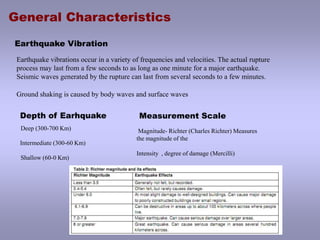
General CharacteristicsEarthquake VibrationEarthquake vibrations occur in a variety of frequencies and velocities. The actual rupture process may last from a few seconds to as long as one minute for a major earthquake. Seismic waves generated by the rupture can last from several seconds to a few minutes.Ground shaking is caused by body waves and surface wavesDepth of EarhquakeMeasurement Scale Deep (300-700 Km)Magnitude- Richter (Charles Richter) Measures the magnitude of the Intensity  , degree of damage (Mercilli)Intermediate (300-60 Km)Shallow (60-0 Km)
Determining the magnitude of an earthquakeMagnitude-- measure of energy released during earthquake. There are several different ways to measure magnitude. Most common magnitude measure is Richter Magnitude, named for the renowned seismologist, Charles Richter.  Richter MagnitudeMeasure amplitude of largest S wave on seismograph record.
Take into account distance between seismograph & epicenter.  Richter ScaleLogarithmic numerical (NOT a physical) scale
Increasing one whole unit on Richter Scale represents 10 times greater magnitude.
Going up one whole unit on Richter Scale represents about a 30 times greater release of energy.Intensity Intensity refers to the amount of damage done in an earthquake
Mercalli Scale is used to express damage
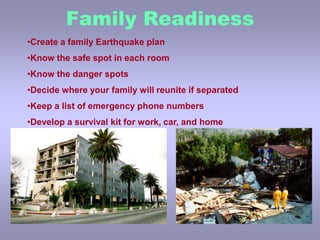
Family ReadinessCreate a family Earthquake plan
Know the safe spot in each room
Know the danger spots
Decide where your family will reunite if separated
Keep a list of emergency phone numbers
Develop a survival kit for work, car, and homeHazards associated with QuakesShaking:	Frequency of shaking differs for different seismic waves. High frequency body waves shake low buildings more. Low frequency surface waves shake high buildings more. 	Intensity of shaking also depends on type of subsurface material. Unconsolidated materials amplify shaking more than rocks do. 	Fine-grained, sensitive materials can lose strength when shaken. They lose strength by liquefaction. 	Buildings respond differently to shaking depending on construction styles, materials 	Wood -- more flexible, holds up well 	Earthen materials -- very vulnerable to shaking. Ground displacement:	Ground surface may shift during an earthquake (esp. if focus is shallow). 	Vertical displacements of surface produce fault scarps. Tsunamis (NOT tidal waves)	Tsunamis are huge waves generated by earthquakes undersea or below coastal areas. 	If earthquake displaces sea surface, wave is generated that can grow as it moves over sea surface.Fires	Usually occurs from shifting of subsurface utilities (gas lines)
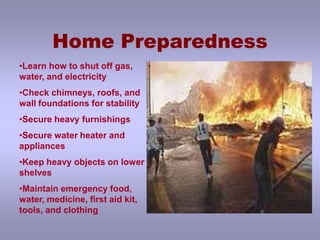
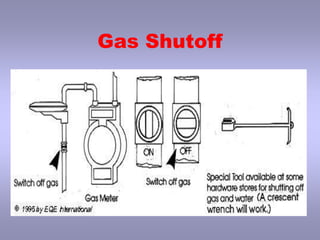
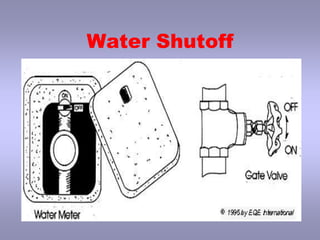
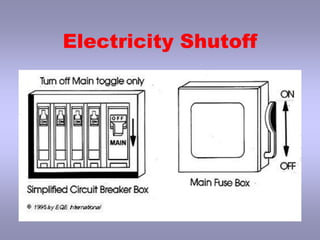
Home PreparednessLearn how to shut off gas, water, and electricity
Check chimneys, roofs, and wall foundations for stability
Secure heavy furnishings
Secure water heater and appliances

Earth Quake

  • 1.
    Earthquake Hazards andSafetyAn earthquake (also known as a quake, tremor or temblor) is the result of a sudden release of energy in the Earth's crust that creates seismic waves. The seismicity or seismic activity of an area refers to the frequency, type and size of earthquakes experienced over a period of time. Earthquakes are measured using observations from seismometers
  • 2.
  • 3.
  • 4.
  • 5.
    Interior Structure ofEarth CRUST (0-100 KM )The Earth's outermost surface is called the crust. The crust is relatively light and brittle. Most earthquakes occur within the crust. Scientists believe that below the lithosphere is a relatively narrow, mobile zone in the mantle called the asthenosphere (from asthenes, Greek for weak).MANTLE (100-2900 KM )The region just below the crust and extending all the way down to the Earth's core is called themantle. The mantle, a dense, hot layer of semisolid rock.Core (100-2900 KM )Beneath the mantle is the Earth's core. The Earth's core consists of a fluid outer core and a solid inner core.Inner Core (2900-5100 Km) Outer Core (5100 -6378 Km)
  • 6.
    Focus and Epicenterof Earthquake
  • 7.
    What Causes Earthquake?The sudden slip at the fault causes the earthquake…….a violent shaking of the Earth when large elastic strain energy released spreads out through seismic waves that travel through the body and along the surface of the Earth.
  • 8.
    FaultEarthquakes occur onfaults. A fault is a thin zone of crushed rock between two blocks of rock, and can be any length, from centimeters to thousands of kilometers. When an earthquake occurs on one of these faults, the rock on one side of the fault slips with respect to the other. The fault surface can be vertical, horizontal, or at some angle to the surface of the earth. The slip direction can also be at any angle. We classify these into two basic cases: strikeslip and dip-slip motion.
  • 9.
    General CharacteristicsEarthquake VibrationEarthquakevibrations occur in a variety of frequencies and velocities. The actual rupture process may last from a few seconds to as long as one minute for a major earthquake. Seismic waves generated by the rupture can last from several seconds to a few minutes.Ground shaking is caused by body waves and surface wavesDepth of EarhquakeMeasurement Scale Deep (300-700 Km)Magnitude- Richter (Charles Richter) Measures the magnitude of the Intensity , degree of damage (Mercilli)Intermediate (300-60 Km)Shallow (60-0 Km)
  • 10.
    Determining the magnitudeof an earthquakeMagnitude-- measure of energy released during earthquake. There are several different ways to measure magnitude. Most common magnitude measure is Richter Magnitude, named for the renowned seismologist, Charles Richter.  Richter MagnitudeMeasure amplitude of largest S wave on seismograph record.
  • 11.
    Take into accountdistance between seismograph & epicenter.  Richter ScaleLogarithmic numerical (NOT a physical) scale
  • 12.
    Increasing one wholeunit on Richter Scale represents 10 times greater magnitude.
  • 13.
    Going up onewhole unit on Richter Scale represents about a 30 times greater release of energy.Intensity Intensity refers to the amount of damage done in an earthquake
  • 14.
    Mercalli Scale isused to express damage
  • 15.
    Family ReadinessCreate afamily Earthquake plan
  • 16.
    Know the safespot in each room
  • 17.
  • 18.
    Decide where yourfamily will reunite if separated
  • 19.
    Keep a listof emergency phone numbers
  • 20.
    Develop a survivalkit for work, car, and homeHazards associated with QuakesShaking: Frequency of shaking differs for different seismic waves. High frequency body waves shake low buildings more. Low frequency surface waves shake high buildings more. Intensity of shaking also depends on type of subsurface material. Unconsolidated materials amplify shaking more than rocks do. Fine-grained, sensitive materials can lose strength when shaken. They lose strength by liquefaction. Buildings respond differently to shaking depending on construction styles, materials Wood -- more flexible, holds up well Earthen materials -- very vulnerable to shaking. Ground displacement: Ground surface may shift during an earthquake (esp. if focus is shallow). Vertical displacements of surface produce fault scarps. Tsunamis (NOT tidal waves) Tsunamis are huge waves generated by earthquakes undersea or below coastal areas. If earthquake displaces sea surface, wave is generated that can grow as it moves over sea surface.Fires Usually occurs from shifting of subsurface utilities (gas lines)
  • 21.
    Home PreparednessLearn howto shut off gas, water, and electricity
  • 22.
    Check chimneys, roofs,and wall foundations for stability
  • 23.
  • 24.
    Secure water heaterand appliances