DISASTER RISK
REDUCTION
UNIT-IV
DISASTER PREPAREDNESS AND PLANNING MANAGEMENT
Disaster Risk Reduction (DRR):
The conceptual framework of elements considered with the possibilities to
minimize vulnerabilities and disaster risks throughout a society, to avoid (prevention) or
to limit (mitigation and preparedness) the adverse impacts of hazards, within the broad
context of sustainable development.
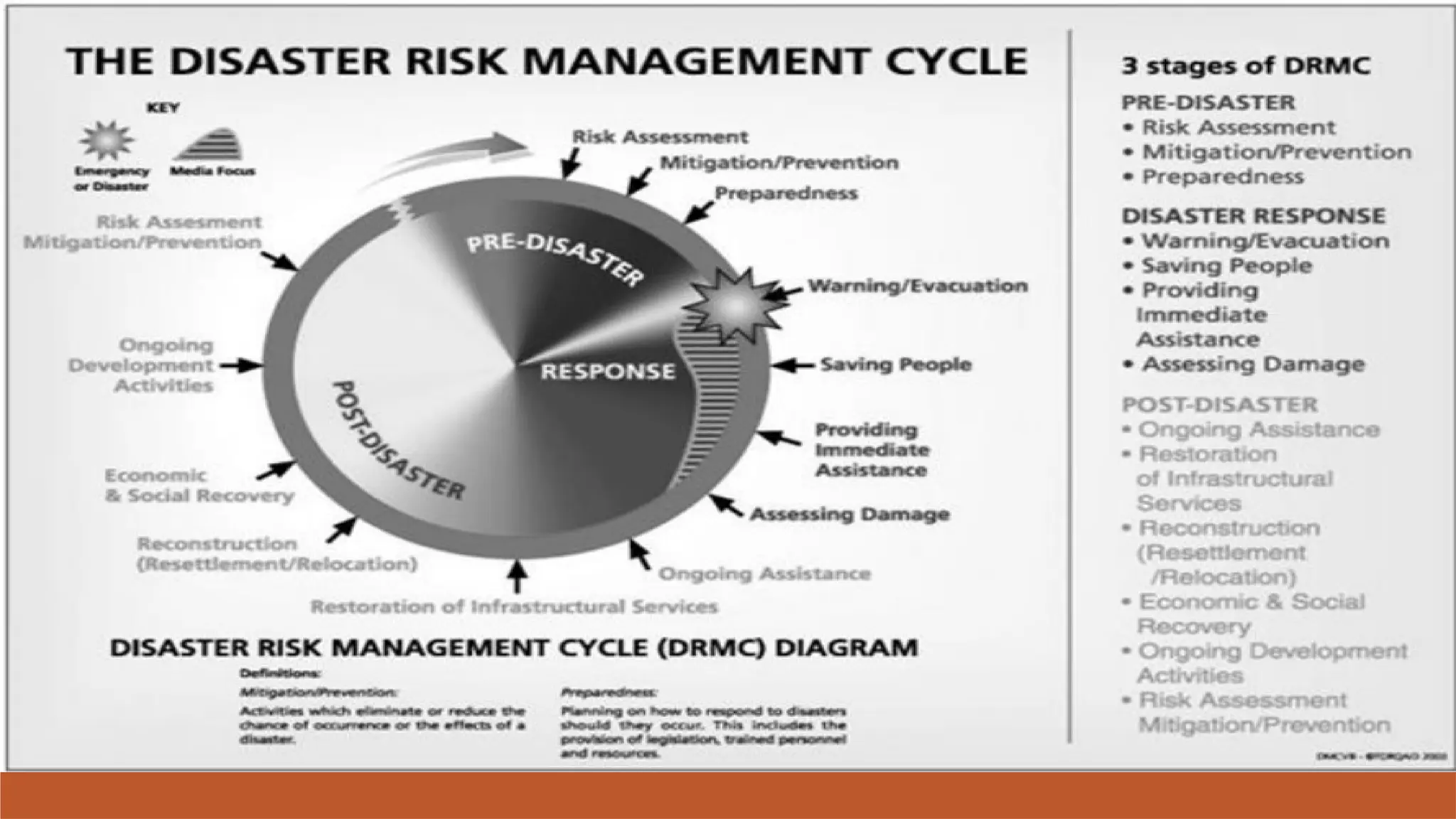
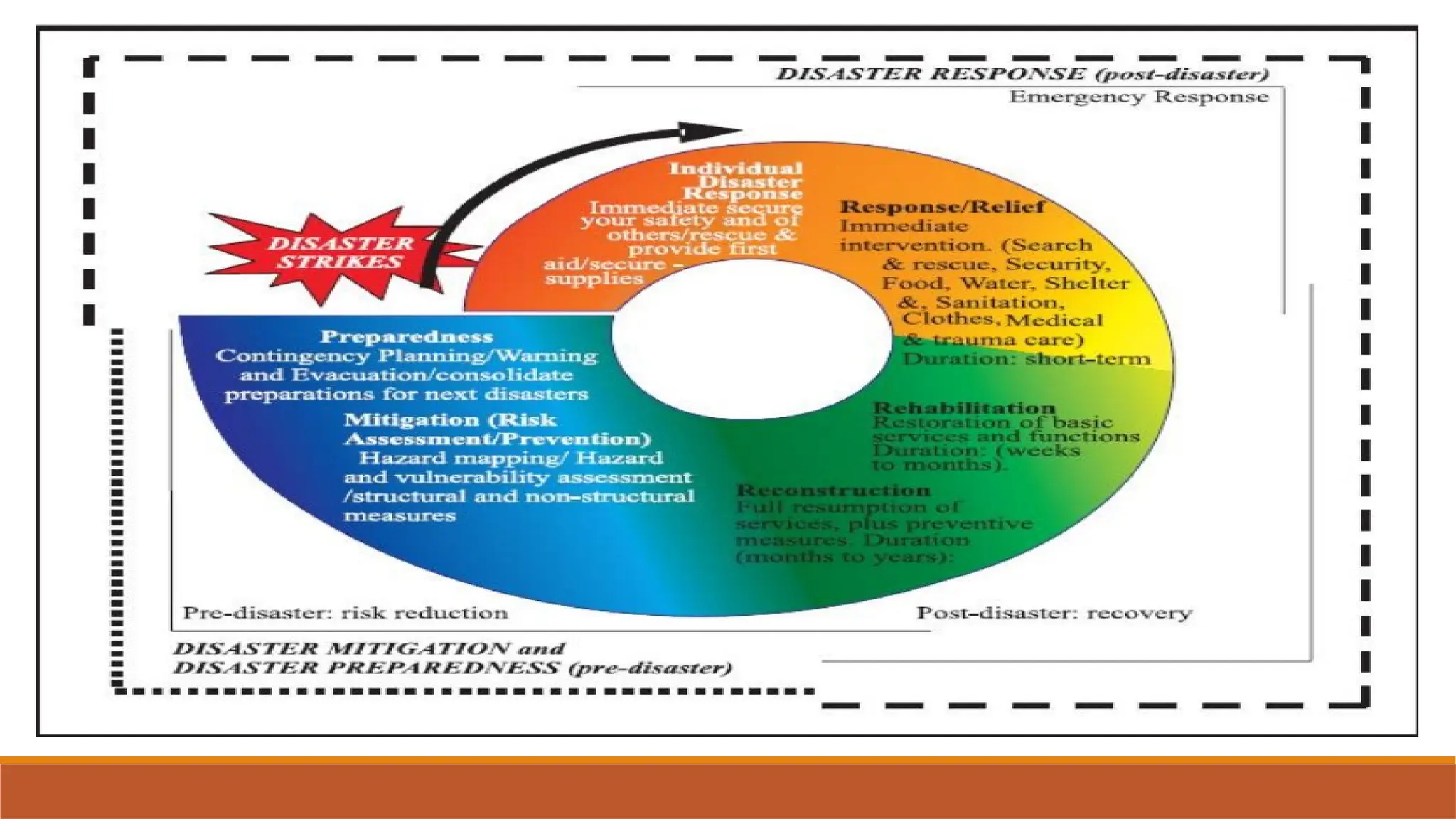
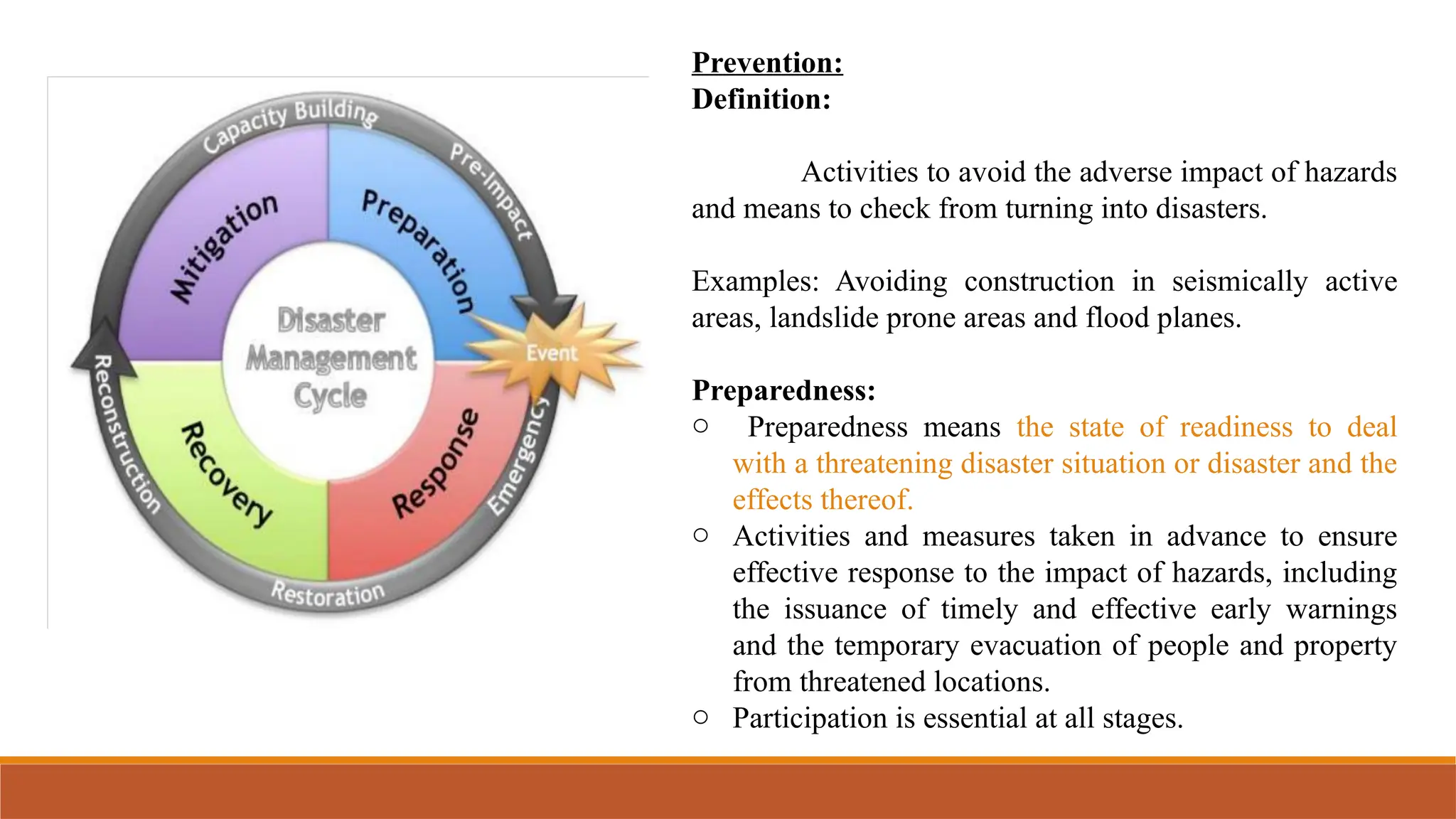
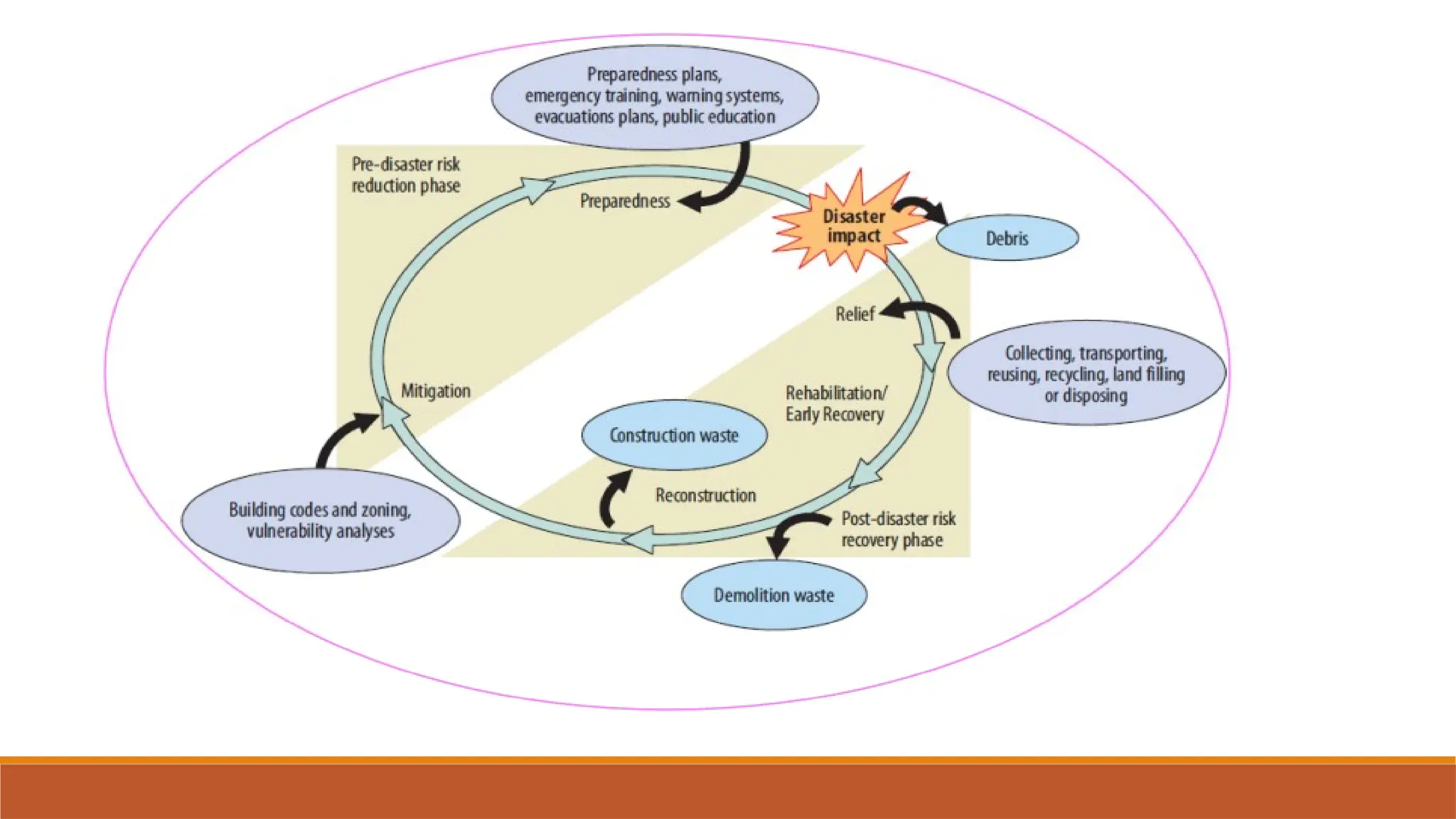
Disaster Management Cycle – its Phases/Stages:
 Activities and Measures to avoid (prevention) or to limit (mitigation) and
(preparedness) adverse effects of disasters in the pre-disaster phase and (Response,
Relief, Recovery, Reconstruction) in the post-disaster Stage.
 Disaster Risk Management includes sum of all activities, programmes and measures
which can be taken up before, during and after a disaster with the purpose to avoid a
disaster, reduce its impact or recover from its losses
1. Before a disaster (pre disaster):
‐ Activities taken to reduce human and property losses
caused by a potential hazard. For example carrying out awareness campaigns,
strengthening the existing weak structures, preparation of the disaster management
plans at household and community level etc. Such risk reduction measures taken under
this stage are termed as mitigation and preparedness activities.
2. During a disaster (disaster occurrence): Initiatives taken to ensure that the needs
and provisions of victims are met and suffering is minimized. Activities taken under
this stage are called emergency response activities
3. After a disaster (post disaster):
‐ Initiatives taken in response to a disaster with a
purpose to achieve early recovery and rehabilitation of affected communities,
immediately after a disaster strikes. These are called as response and recovery
activities.
Prevention:
Definition:
Activities to avoid the adverse impact of hazards
and means to check from turning into disasters.
Examples: Avoiding construction in seismically active
areas, landslide prone areas and flood planes.
Preparedness:
o Preparedness means the state of readiness to deal
with a threatening disaster situation or disaster and the
effects thereof.
o Activities and measures taken in advance to ensure
effective response to the impact of hazards, including
the issuance of timely and effective early warnings
and the temporary evacuation of people and property
from threatened locations.
o Participation is essential at all stages.
Relief:
Definition:
An act of helping or alleviating the conditions of persons who are suffering from the effects of
disaster/calamity.
The relief plan provides provisions of assistance or intervention during/immediately after a
disaster to meet the basic needs of affected people.
Minimum Standards of Relief: The National Authority recommends guidelines for minimum standards
of relief to be provided to persons affected by disaster, which include
1. Minimum requirements to be provided in the relief camps in relation to shelter, food, drinking water,
medical cover and sanitation.
2. Special provisions to be made for widows and orphans.
3. Ex gratia assistance on account of loss of life as also assistance on account of damage to houses and for
restoration of means of livelihood.
4. Such other relief as may be necessary.
Recovery:
Constitutes the last step of post-disaster actions, such as rebuilding livelihood, infrastructure or
retrofitting of damaged structures.
Risk Analysis:
Definition: The probability of harmful consequences or expected losses resulting from interaction between
natural or human induced hazards and vulnerable conditions.
Or
Risk is a “measure of the expected losses due to a hazard event occurring in a given area over a specific
time period. Risk is a function of the probability of particular hazardous event and the losses each would
cause.”
Level of risk:
The level of risk depends upon:
1. Nature of the hazard.
2. Vulnerability of the elements which are affected.
3. Economic value of those elements
Mitigation:
 Mitigation means measures aimed at reducing the risk, impact or effects of a disaster or threatening disaster
situation.
 Measures taken in advance of a disaster aimed at reducing its impact on society and the environment.
 Learning from the past disaster.
 Incorporating the learning in present scenario.
 Building back better to reduce the impact of future disasters.
Mitigation Measures:
1. Structural Measures: i. Multi-hazard resistant buildings. ii. Shelters. iii. Retrofitting. iv. Modernizing early
warning system.
2. Non-structural measures: i. Awareness generation. ii. Training and capacity building. iii. Policy and
regulations. iv. Mock drills and demos. v. Effective dissemination of early warning. vi. Development of
state, district village plans. vii. Building byelaws Revision
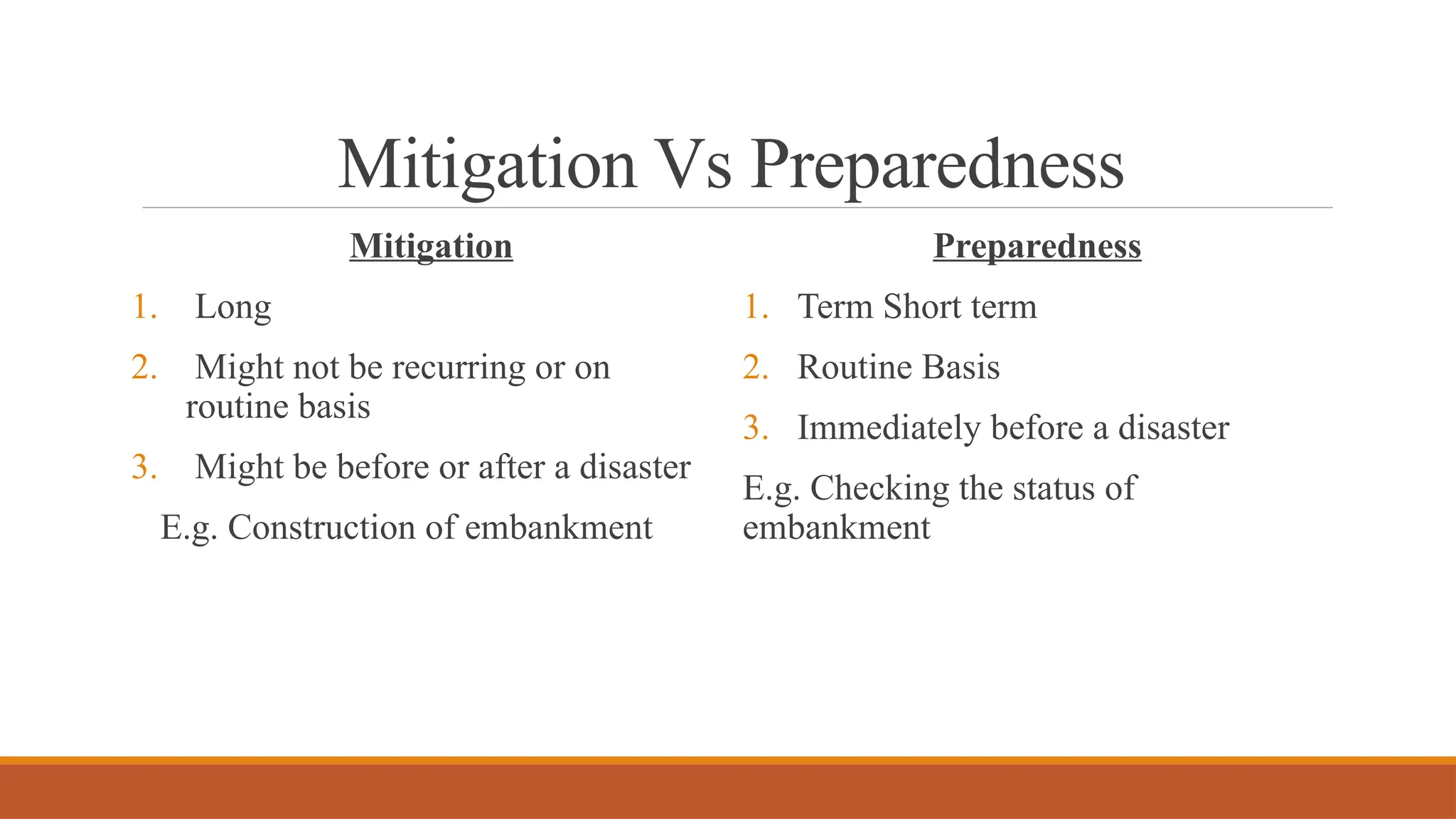
Mitigation Vs Preparedness
Mitigation
1. Long
2. Might not be recurring or on
routine basis
3. Might be before or after a disaster
E.g. Construction of embankment
Preparedness
1. Term Short term
2. Routine Basis
3. Immediately before a disaster
E.g. Checking the status of
embankment
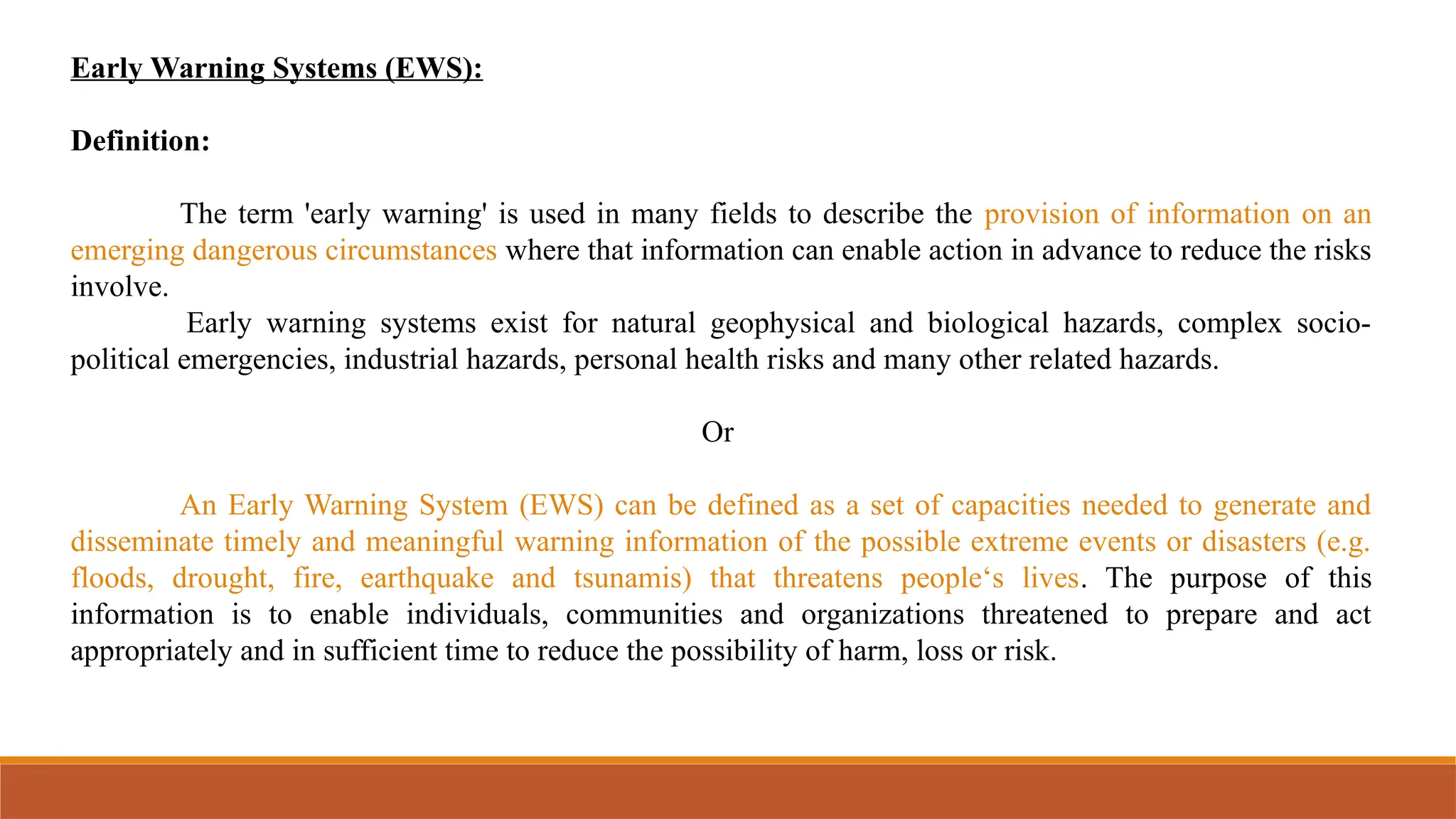
Early Warning Systems (EWS):
Definition:
The term 'early warning' is used in many fields to describe the provision of information on an
emerging dangerous circumstances where that information can enable action in advance to reduce the risks
involve.
Early warning systems exist for natural geophysical and biological hazards, complex socio-
political emergencies, industrial hazards, personal health risks and many other related hazards.
Or
An Early Warning System (EWS) can be defined as a set of capacities needed to generate and
disseminate timely and meaningful warning information of the possible extreme events or disasters (e.g.
floods, drought, fire, earthquake and tsunamis) that threatens people‘s lives. The purpose of this
information is to enable individuals, communities and organizations threatened to prepare and act
appropriately and in sufficient time to reduce the possibility of harm, loss or risk.
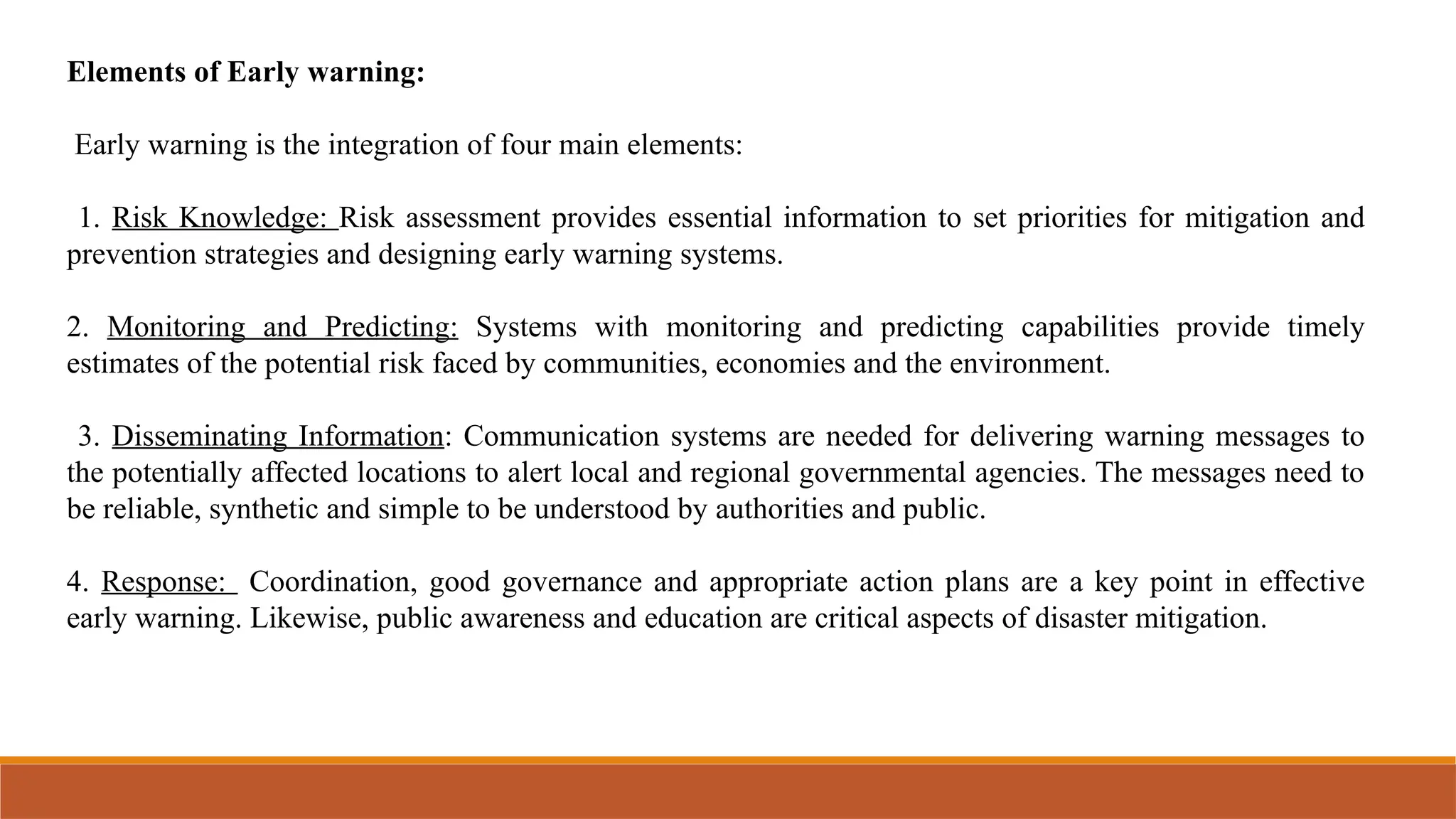
Elements of Early warning:
Early warning is the integration of four main elements:
1. Risk Knowledge: Risk assessment provides essential information to set priorities for mitigation and
prevention strategies and designing early warning systems.
2. Monitoring and Predicting: Systems with monitoring and predicting capabilities provide timely
estimates of the potential risk faced by communities, economies and the environment.
3. Disseminating Information: Communication systems are needed for delivering warning messages to
the potentially affected locations to alert local and regional governmental agencies. The messages need to
be reliable, synthetic and simple to be understood by authorities and public.
4. Response: Coordination, good governance and appropriate action plans are a key point in effective
early warning. Likewise, public awareness and education are critical aspects of disaster mitigation.
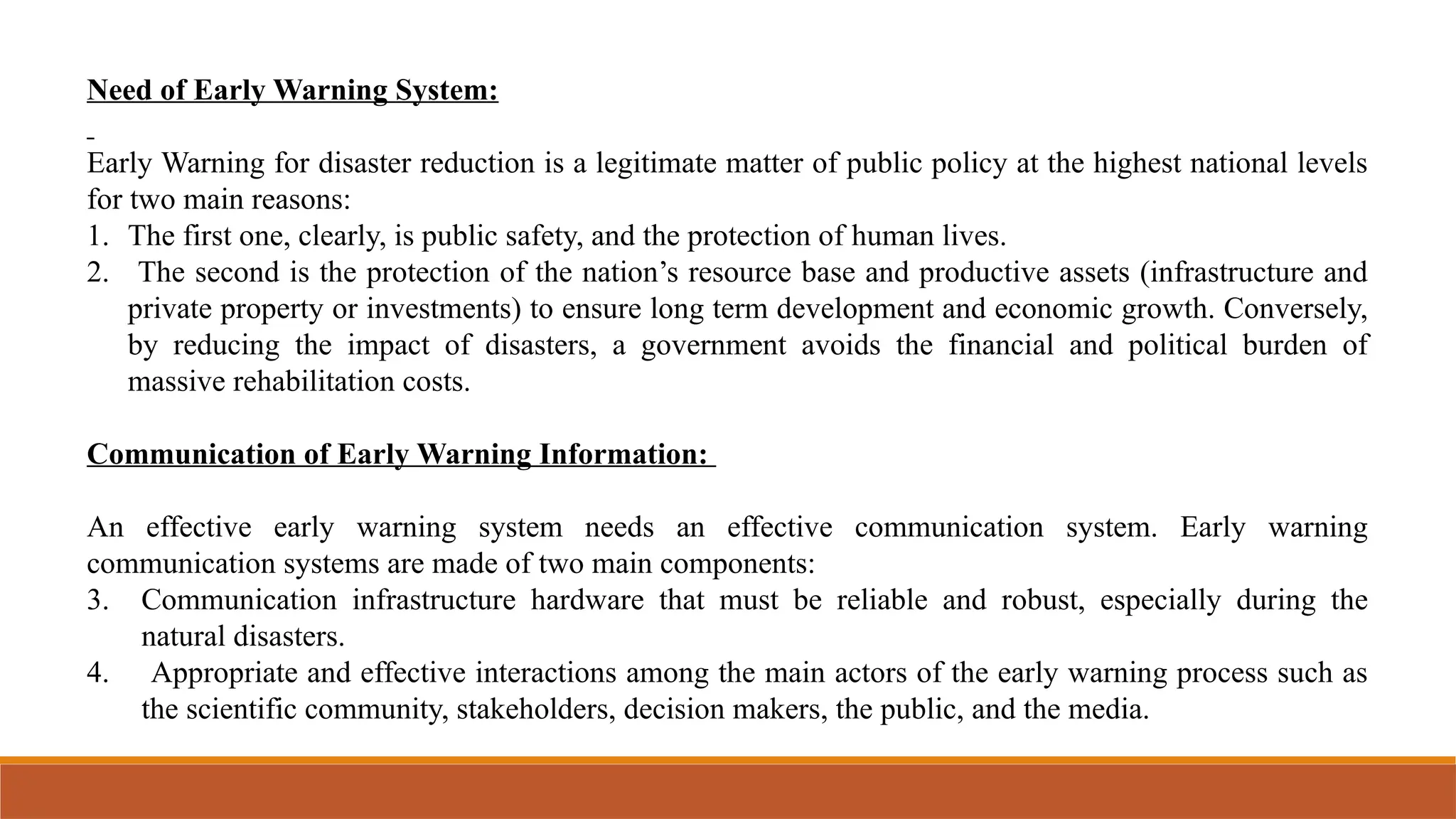
Need of Early Warning System:
Early Warning for disaster reduction is a legitimate matter of public policy at the highest national levels
for two main reasons:
1. The first one, clearly, is public safety, and the protection of human lives.
2. The second is the protection of the nation’s resource base and productive assets (infrastructure and
private property or investments) to ensure long term development and economic growth. Conversely,
by reducing the impact of disasters, a government avoids the financial and political burden of
massive rehabilitation costs.
Communication of Early Warning Information:
An effective early warning system needs an effective communication system. Early warning
communication systems are made of two main components:
3. Communication infrastructure hardware that must be reliable and robust, especially during the
natural disasters.
4. Appropriate and effective interactions among the main actors of the early warning process such as
the scientific community, stakeholders, decision makers, the public, and the media.
Key elements for successful implementation of early warning:
1. Understand the most likely threats, likelihood of disasters and their potential consequences.
2. Establish proper priorities.
3. Developing institutional networks with clear responsibilities.
4. Establish or strengthen the legislative/legal framework and mechanisms.
5. Developing effective communication strategies.
6. Securing resources.
Post Disaster/After a Disaster Environmental Response (Water, Sanitation, Food
Safety, Waste Management, Disease Control, Security, Communications):
Introduction:
҉Post disaster stage or third stage of disaster management cycle.
҉It involves the initial actions taken as the event takes place.
҉It involves efforts to minimize the hazards created by a disaster.
҉Examples: Evacuation; search and rescue; emergency relief.
1. Water: Do not use water you suspect or have been told is contaminated to wash dishes, brush your
teeth, wash and prepare food, wash your hands, make ice, or make baby formula. Safe water for drinking,
cooking, and personal hygiene includes bottled, boiled, or treated water. Your state, local, or tribal health
department can make specific recommendations for boiling or treating water in your area
Safe drinking water:
⁕ After an emergency, especially after flooding, drinking water may not be available or safe to drink.
⁕ Do not use water you suspect or have been told is unsafe to wash dishes, brush teeth, wash and prepare
food, make ice, or make baby formula.
⁕ Alcohol dehydrates the body, which increases the need for drinking water.
⁕ Floods and other disasters can damage drinking water wells and lead to aquifer and well contamination.
Flood waters can contaminate well water with livestock waste, human sewage, chemicals, and other
contaminants which can lead to illness when used for drinking, bathing, and other hygiene activities.
⁕ If your water comes from a private well that has been flooded, consider the following guidance for
making water safe and for emergency water sources until you are certain your water is free of
contaminants and safe to drink
Finding emergency water sources:
Alternative sources of clean water can be found inside and outside the home. Do not drink water that has an
unusual odor or color, or that you know or suspect might be contaminated with fuel or toxic chemicals; use a
different source of water.
The following are possible sources of water:
† Water from your home’s water heater tank (part of your drinking water system, not your home heating
system).
† Melted ice cubes made with water that was not contaminated.
† Water from your home’s toilet tank (not from the bowl), if it is clear and has not been chemically treated
with toilet cleaners such as those that change the color of the water.
† Liquid from canned fruit and vegetables
† Water from swimming pools and spas that hasn’t been contaminated with flood or storm water can be
used for personal hygiene, cleaning, and related uses, but not for drinking.
† Possible sources of water that could be made safe by treatment include: i. Rainwater. ii. Streams, rivers,
and other moving bodies of water. iii. Ponds and lakes. iv. Natural springs.
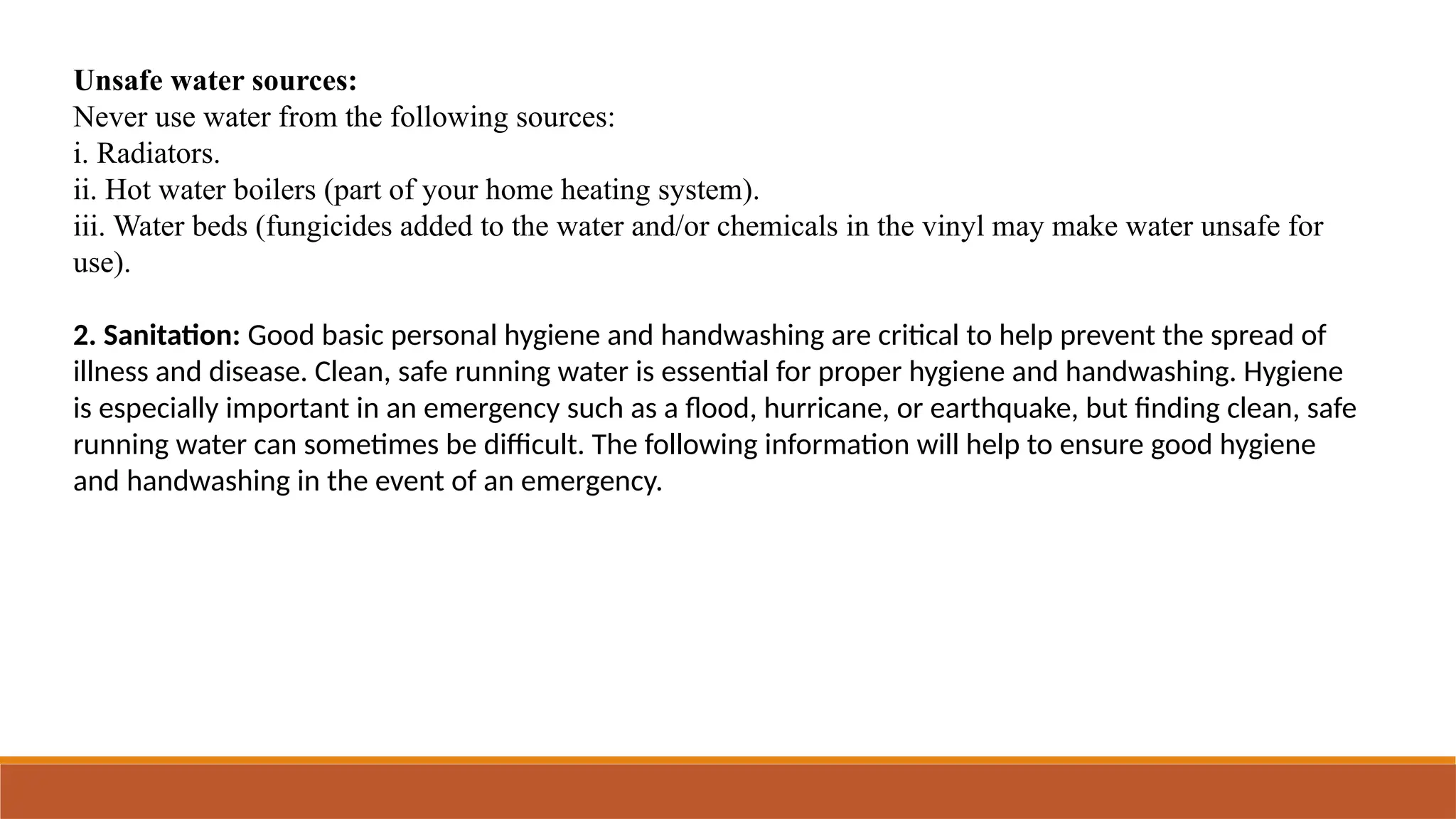
Unsafe water sources:
Never use water from the following sources:
i. Radiators.
ii. Hot water boilers (part of your home heating system).
iii. Water beds (fungicides added to the water and/or chemicals in the vinyl may make water unsafe for
use).
2. Sanitation: Good basic personal hygiene and handwashing are critical to help prevent the spread of
illness and disease. Clean, safe running water is essential for proper hygiene and handwashing. Hygiene
is especially important in an emergency such as a flood, hurricane, or earthquake, but finding clean, safe
running water can sometimes be difficult. The following information will help to ensure good hygiene
and handwashing in the event of an emergency.
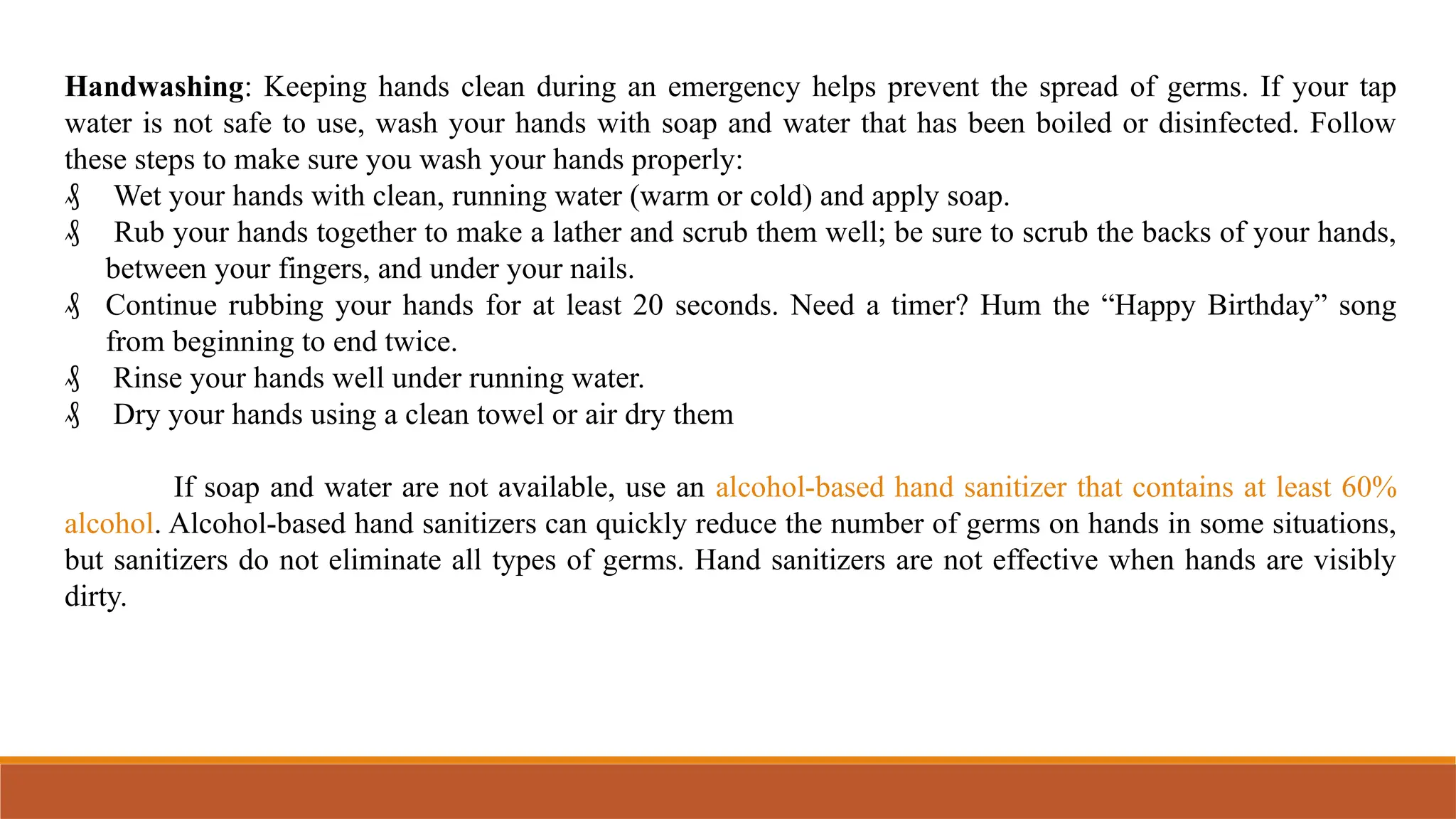
Handwashing: Keeping hands clean during an emergency helps prevent the spread of germs. If your tap
water is not safe to use, wash your hands with soap and water that has been boiled or disinfected. Follow
these steps to make sure you wash your hands properly:
₰ Wet your hands with clean, running water (warm or cold) and apply soap.
₰ Rub your hands together to make a lather and scrub them well; be sure to scrub the backs of your hands,
between your fingers, and under your nails.
₰ Continue rubbing your hands for at least 20 seconds. Need a timer? Hum the “Happy Birthday” song
from beginning to end twice.
₰ Rinse your hands well under running water.
₰ Dry your hands using a clean towel or air dry them
If soap and water are not available, use an alcohol-based hand sanitizer that contains at least 60%
alcohol. Alcohol-based hand sanitizers can quickly reduce the number of germs on hands in some situations,
but sanitizers do not eliminate all types of germs. Hand sanitizers are not effective when hands are visibly
dirty.
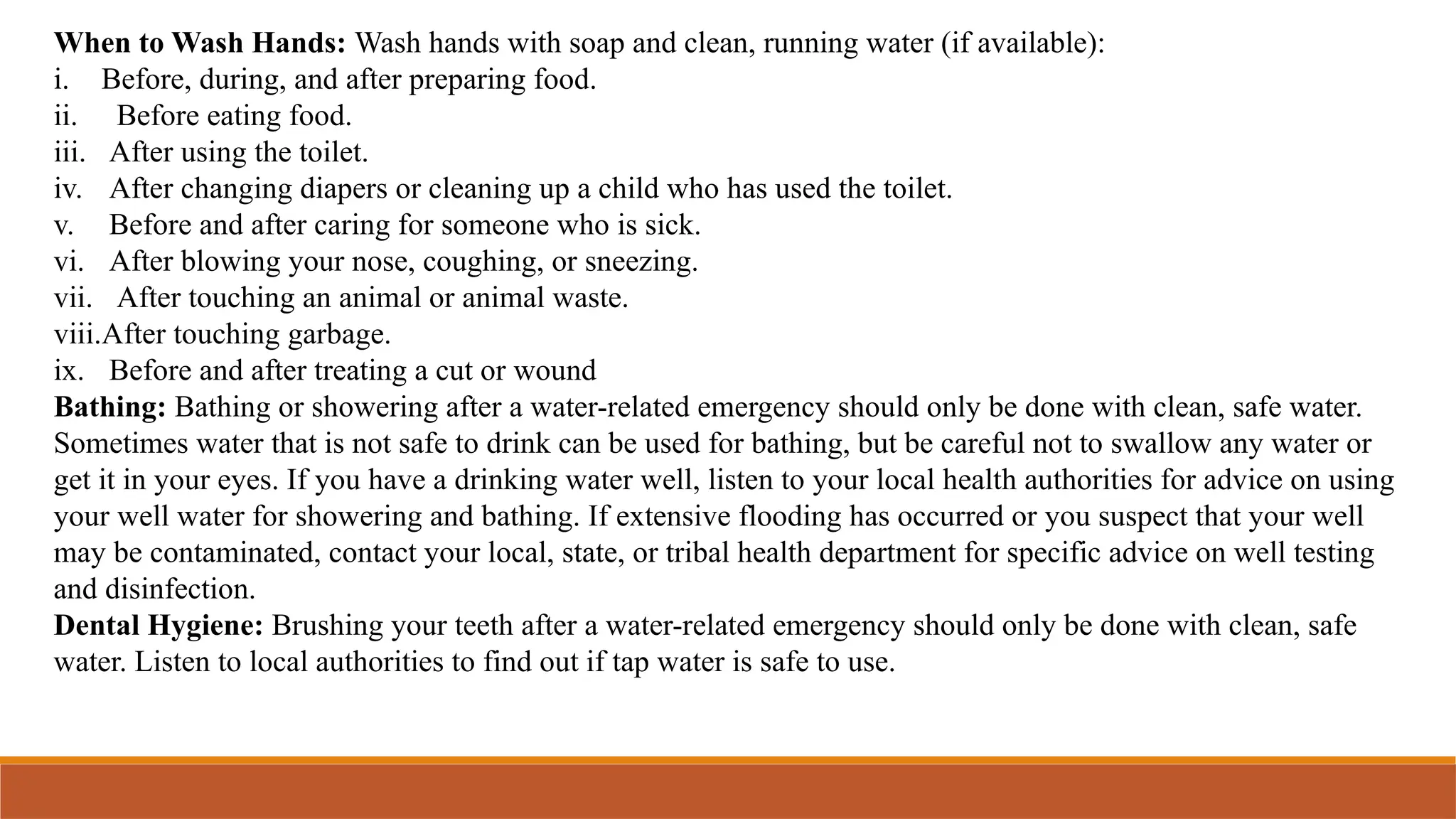
When to Wash Hands: Wash hands with soap and clean, running water (if available):
i. Before, during, and after preparing food.
ii. Before eating food.
iii. After using the toilet.
iv. After changing diapers or cleaning up a child who has used the toilet.
v. Before and after caring for someone who is sick.
vi. After blowing your nose, coughing, or sneezing.
vii. After touching an animal or animal waste.
viii.After touching garbage.
ix. Before and after treating a cut or wound
Bathing: Bathing or showering after a water-related emergency should only be done with clean, safe water.
Sometimes water that is not safe to drink can be used for bathing, but be careful not to swallow any water or
get it in your eyes. If you have a drinking water well, listen to your local health authorities for advice on using
your well water for showering and bathing. If extensive flooding has occurred or you suspect that your well
may be contaminated, contact your local, state, or tribal health department for specific advice on well testing
and disinfection.
Dental Hygiene: Brushing your teeth after a water-related emergency should only be done with clean, safe
water. Listen to local authorities to find out if tap water is safe to use.
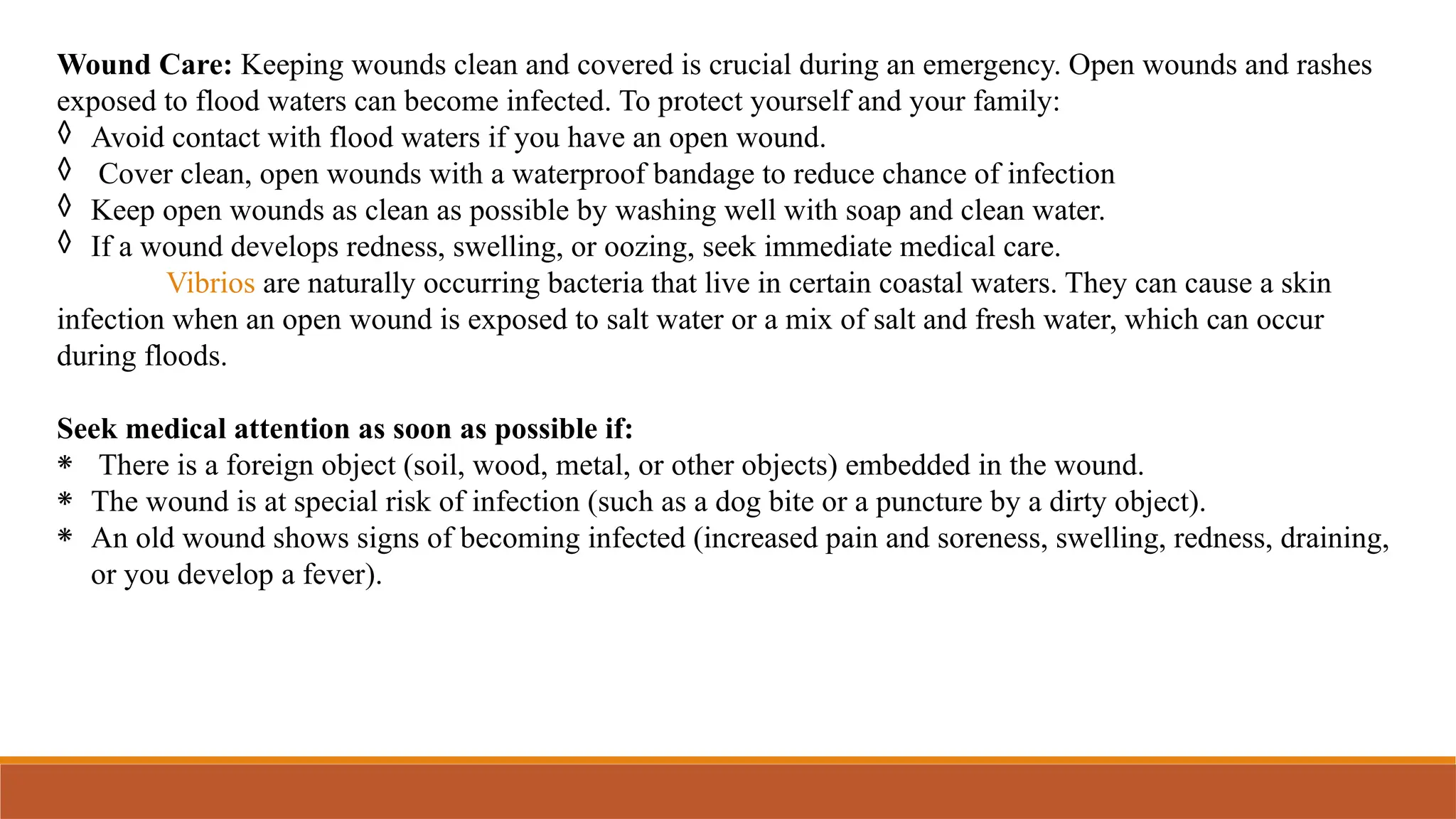
Wound Care: Keeping wounds clean and covered is crucial during an emergency. Open wounds and rashes
exposed to flood waters can become infected. To protect yourself and your family:
◊ Avoid contact with flood waters if you have an open wound.
◊ Cover clean, open wounds with a waterproof bandage to reduce chance of infection
◊ Keep open wounds as clean as possible by washing well with soap and clean water.
◊ If a wound develops redness, swelling, or oozing, seek immediate medical care.
Vibrios are naturally occurring bacteria that live in certain coastal waters. They can cause a skin
infection when an open wound is exposed to salt water or a mix of salt and fresh water, which can occur
during floods.
Seek medical attention as soon as possible if:
⁕ There is a foreign object (soil, wood, metal, or other objects) embedded in the wound.
⁕ The wound is at special risk of infection (such as a dog bite or a puncture by a dirty object).
⁕ An old wound shows signs of becoming infected (increased pain and soreness, swelling, redness, draining,
or you develop a fever).
3. Food Safety: Throw away food that may have come in contact with flood or storm water; perishable foods
that have not been refrigerated properly due to power outages; and those with an unusual odor, color, or
texture. Unsafe food can make you sick even if it looks, smells, and tastes normal.
When in doubt, throw it out. Identify and throw away food that may not be safe to eat. Do the
following with food and containers that may have had contact with flood or storm water.
Throw away the following foods:
 Food that has an unusual odor, color, or texture. When in doubt, throw it out.
 Perishable foods (including meat, poultry, fish, eggs and leftovers) in your refrigerator when the power
has been off for 4 hours or more.
 Food not in packages or cans.
 Canned foods or food containers that are bulging, opened, or damaged. Throw away the food if the
container spurts liquid or foam when you open it or the food inside is discolored, is moldy, or smells bad.
 Packaged food: Throw away food containers with screw-caps, snap-lids, crimped caps, twist caps, flip
tops, and snap-open, and home-canned foods because they cannot be disinfected. Throw away food in
cardboard containers, including juice/milk/baby formula boxes.
How to reuse commercially prepared cans and retort pouches (like flexible, shelf-stable juice and seafood
packages):
† Remove labels if they are removable.
† Brush or wipe away dirt or silt.
† Wash cans and pouches with soap and water, using hot water if available.
† Rinse cans and pouches with water that is safe for drinking, if available.
† Sanitize cans and pouches in one of two ways:
i. Place them in a solution of 1 cup of ( 8 oz (226.8gm) / 240 mL ) of unscented household bleach in 5 gallons
(1gallon = 3.78liters) of water for 15 minutes.
ii. Submerge in a pot of water, bring to a boil, and continue boiling for 2 minutes.
iii. Re-label cans or pouches with a marker. Include the expire date.
† Use food in reconditioned cans or pouches as soon as possible.
Clean and sanitize food-contact surfaces that have been flooded: Throw out wooden cutting boards, baby
bottle nipples, and pacifiers if they have come into contact with flood waters because they cannot be properly
sanitized. Clean and sanitize food-contact surfaces in a four-step process:
i. Wash with soap and hot, clean water.
ii. Rinse with clean water.
iii. Sanitize by immersing for 1 minute in a solution of 1 cup (8 oz/240 mL) of unscented household chlorine
bleach in 5 gallons of clean water.
iv. Allow to air dry.
4. Waste Management: The debris generated by most severe disasters, overwhelm existing solid waste
management facilities or force communities to use disposal options that otherwise would not be acceptable
(EPA, 2008).
The Environment Protection Agency (EPA) in USA in their report (EPA, 2008) has identified several
items which are generated as waste at most post disaster circumstances as soil and sediments, building rubble,
vegetation, personal effects, hazardous material, mixed domestic and clinical wastes and, all too often, human
and animal remains. These wastes represent a risk to human health from biological sources, chemical sources
and physical sources
Kobayashi (1995) classified the disaster waste as: rubble and other waste accumulated on roads,
demolition and dismantling waste of buildings, bulky waste and raw materials, items in processes or other
substances.
In 2004, Baycan refined the classification in a more comprehensive manner as: recyclable materials
(concrete, masonry, wood, metal, soil and excavated material), non recyclable materials (household
inventory, organic materials, and other inert materials) and hazardous waste (asbestos, chemicals) (Baycan,
2004)
Kourmpanis et al. (2008) has pointed out that building waste is considered to be one of the priority
waste streams and appropriate actions need to be taken with respect to its effective management
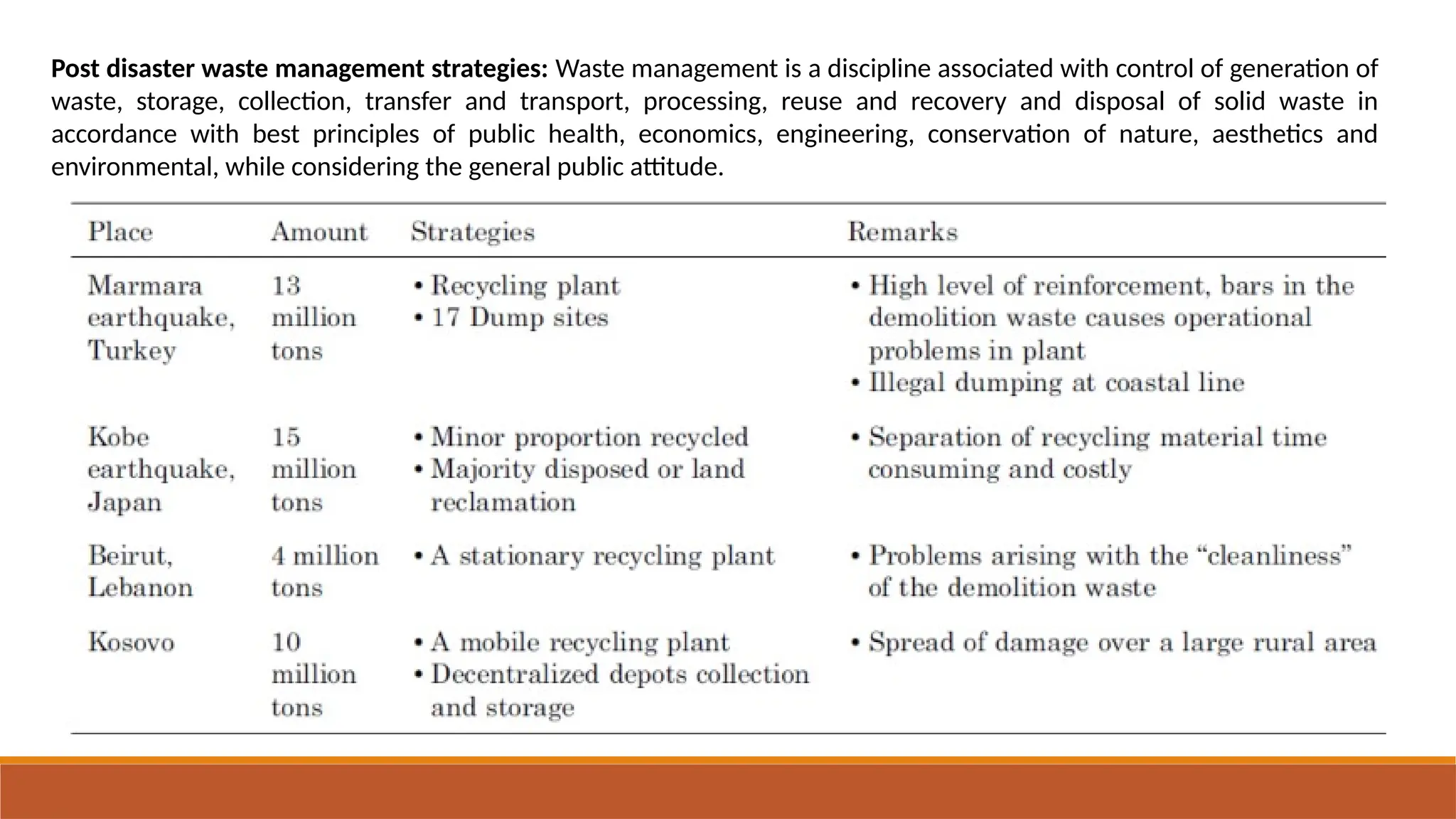
Post disaster waste management strategies: Waste management is a discipline associated with control of generation of
waste, storage, collection, transfer and transport, processing, reuse and recovery and disposal of solid waste in
accordance with best principles of public health, economics, engineering, conservation of nature, aesthetics and
environmental, while considering the general public attitude.
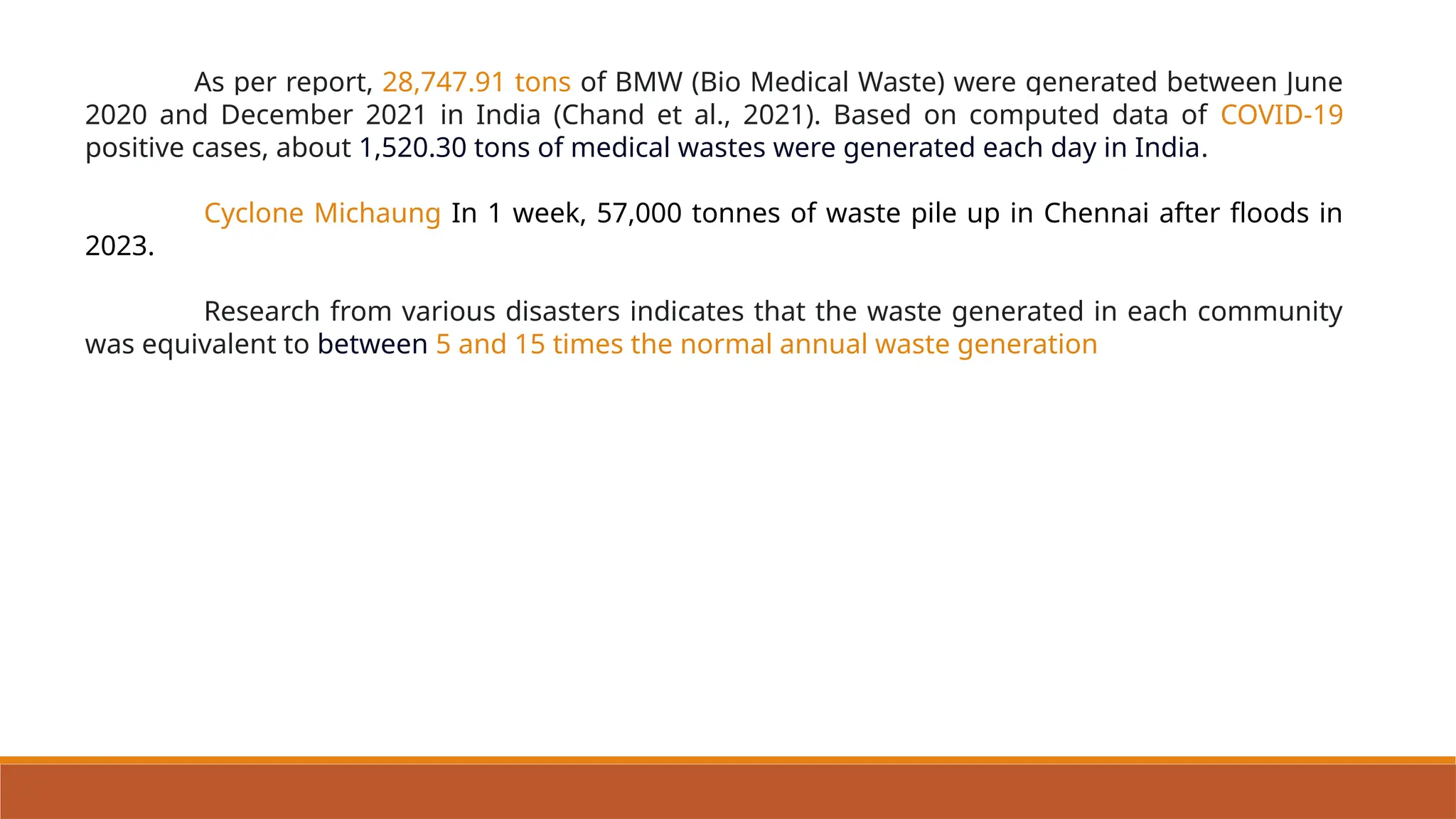
As per report, 28,747.91 tons of BMW (Bio Medical Waste) were generated between June
2020 and December 2021 in India (Chand et al., 2021). Based on computed data of COVID-19
positive cases, about 1,520.30 tons of medical wastes were generated each day in India.
Cyclone Michaung In 1 week, 57,000 tonnes of waste pile up in Chennai after floods in
2023.
Research from various disasters indicates that the waste generated in each community
was equivalent to between 5 and 15 times the normal annual waste generation
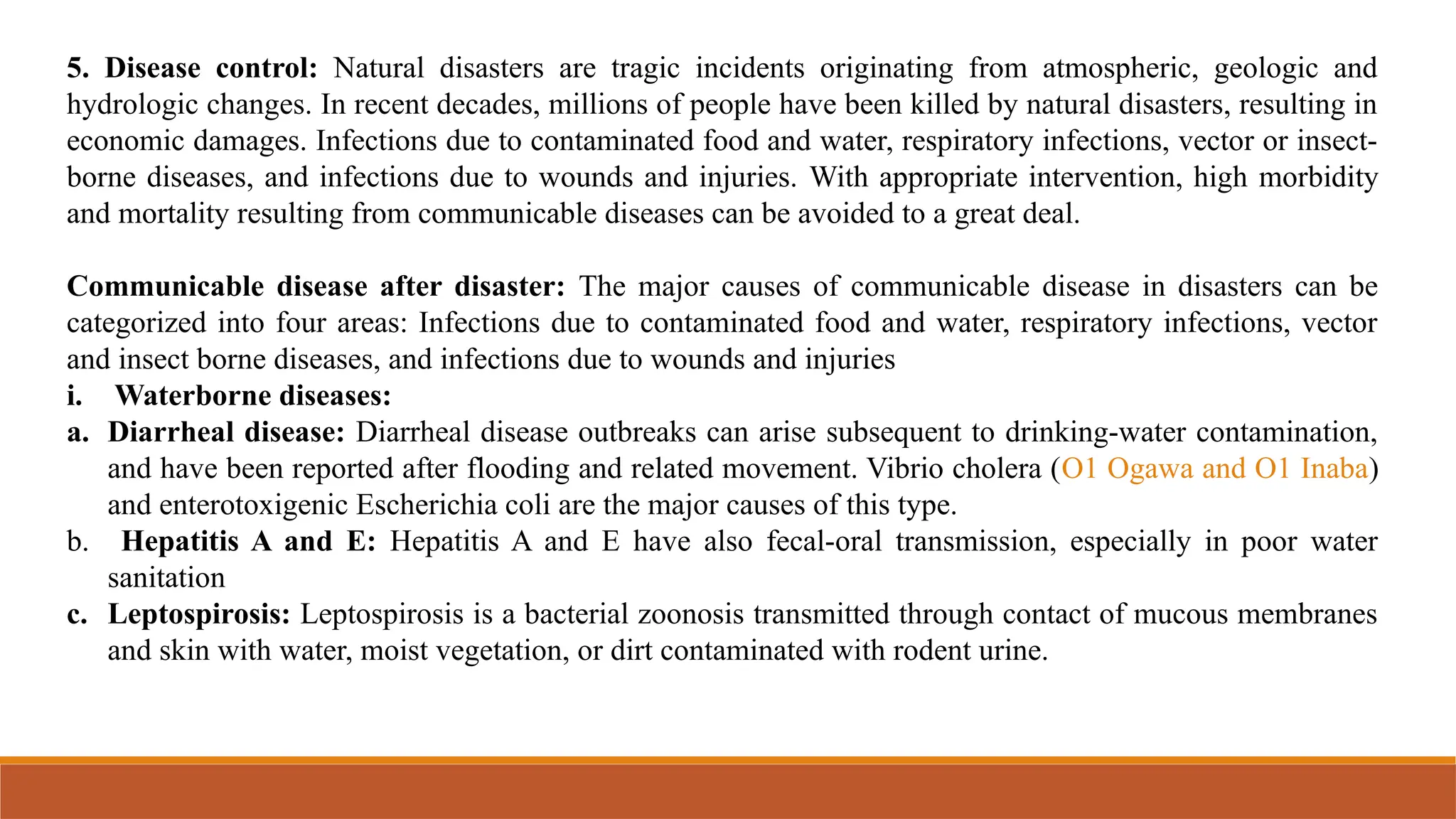
5. Disease control: Natural disasters are tragic incidents originating from atmospheric, geologic and
hydrologic changes. In recent decades, millions of people have been killed by natural disasters, resulting in
economic damages. Infections due to contaminated food and water, respiratory infections, vector or insect-
borne diseases, and infections due to wounds and injuries. With appropriate intervention, high morbidity
and mortality resulting from communicable diseases can be avoided to a great deal.
Communicable disease after disaster: The major causes of communicable disease in disasters can be
categorized into four areas: Infections due to contaminated food and water, respiratory infections, vector
and insect borne diseases, and infections due to wounds and injuries
i. Waterborne diseases:
a. Diarrheal disease: Diarrheal disease outbreaks can arise subsequent to drinking-water contamination,
and have been reported after flooding and related movement. Vibrio cholera (O1 Ogawa and O1 Inaba)
and enterotoxigenic Escherichia coli are the major causes of this type.
b. Hepatitis A and E: Hepatitis A and E have also fecal-oral transmission, especially in poor water
sanitation
c. Leptospirosis: Leptospirosis is a bacterial zoonosis transmitted through contact of mucous membranes
and skin with water, moist vegetation, or dirt contaminated with rodent urine.
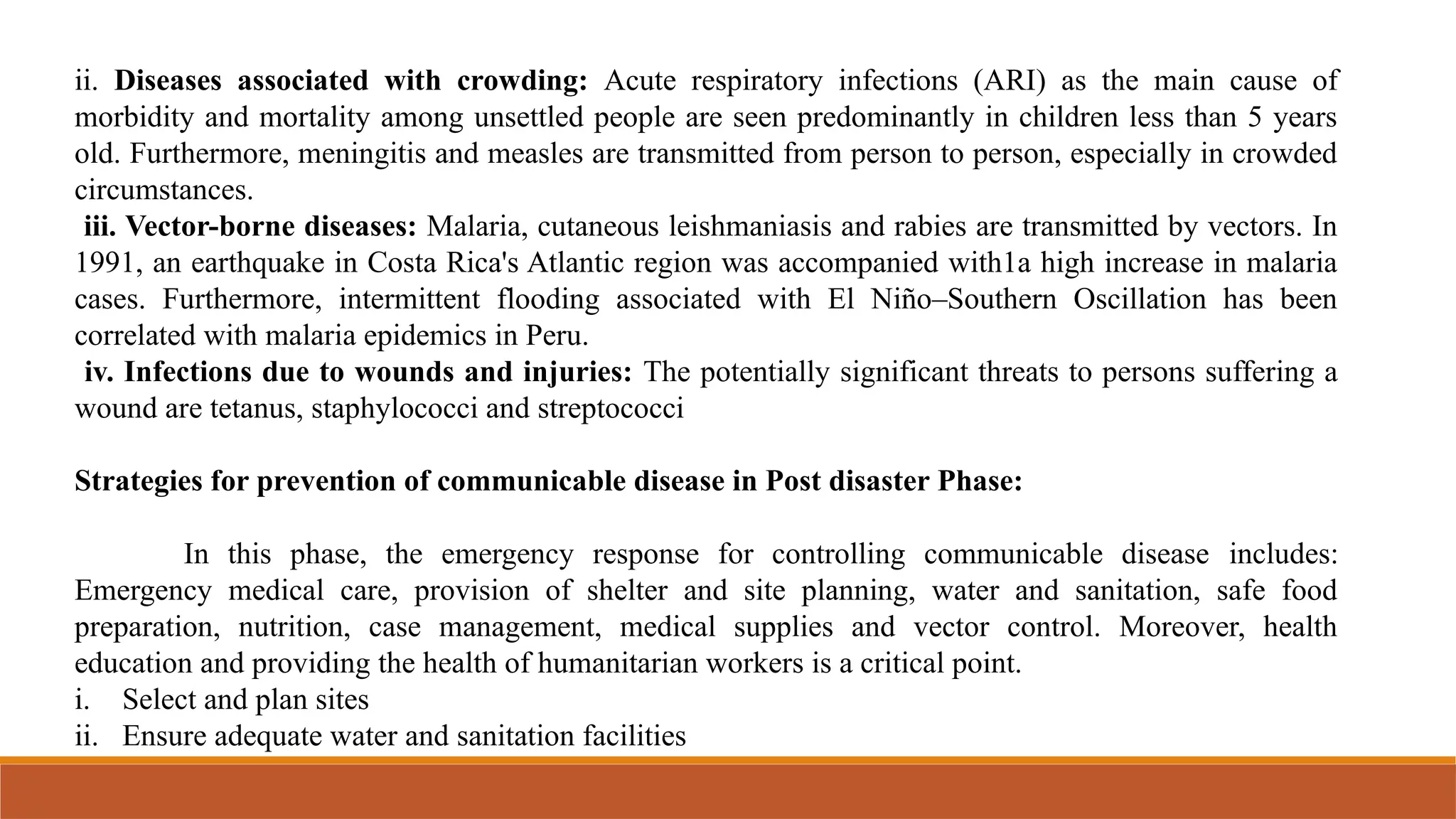
ii. Diseases associated with crowding: Acute respiratory infections (ARI) as the main cause of
morbidity and mortality among unsettled people are seen predominantly in children less than 5 years
old. Furthermore, meningitis and measles are transmitted from person to person, especially in crowded
circumstances.
iii. Vector-borne diseases: Malaria, cutaneous leishmaniasis and rabies are transmitted by vectors. In
1991, an earthquake in Costa Rica's Atlantic region was accompanied with1a high increase in malaria
cases. Furthermore, intermittent flooding associated with El Niño–Southern Oscillation has been
correlated with malaria epidemics in Peru.
iv. Infections due to wounds and injuries: The potentially significant threats to persons suffering a
wound are tetanus, staphylococci and streptococci
Strategies for prevention of communicable disease in Post disaster Phase:
In this phase, the emergency response for controlling communicable disease includes:
Emergency medical care, provision of shelter and site planning, water and sanitation, safe food
preparation, nutrition, case management, medical supplies and vector control. Moreover, health
education and providing the health of humanitarian workers is a critical point.
i. Select and plan sites
ii. Ensure adequate water and sanitation facilities
iii. Ensure safety of food: The World Health Organization recommends five keys for ensuring the safety
of food supplements following a disaster event;
Key 1: Preserve clean (prevents the growth and spread of hazardous microorganisms).
Key 2: Separate cooked and raw food (microorganisms transfer prevention).
Key 3: Cook thoroughly (kills dangerous microorganisms).
Key 4: Preserve food at harmless temperatures (microorganisms growth prevention).
Key 5: Consuming safe water and raw materials (contamination prevention).
iv. Control vectors: Natural disasters can influence transmission of vector borne disease. The crowding
of infected and vulnerable hosts, a debilitated public health infrastructure and disruptions of ongoing
control processes are entirely risk factors for transmission of vector-borne disease. Major diseases
frequently spread by vectors are malaria, dengue, Japanese encephalitis, yellow fever, typhus, and
trypanosomiasis.
Examples of some useful interventions are indoor residual spraying for malaria, insecticide-
treated nets, and traps for tsetse flies as the vectors of trypanosomiasis.
v. Implement vaccination campaigns: Mass immunization should be fulfilled as soon as possible in areas
with baseline coverage rates below 90% among individuals under 15 years old
vi. Provide essential clinical services
vii. Provide basic laboratory facilities
6. Security: “fear” (such as aftershocks and deteriorating social order) and “want” (lack of food, water and
shelter).
Many of the same actors are involved in the response, notably the UN and humanitarian NGOs. Indeed,
most of the organizations involved in natural disaster relief are working to protect human security, even if
they don’t label their work as such.
A human security perspective encourages us to consider the needs of the most vulnerable parts of
the population, most notably protecting women, children, and the elderly. Human security also emphasizes
empowerment strategies, enabling people — both individuals and communities — to act on their own
behalf, and on the behalf of others.
7. Communications: Management of any disaster or emergency event is a complicated and multi-faceted
task. The entire disaster management process is further complicated when hindered by ineffective
information gathering and distribution.
Institutional Framework
‡ Shifting from relief and response mode, disaster management in India started to address the issues
of early warning systems, forecasting and monitoring setup for various weather related hazards.
‡ A structure for flow of information, in the form of warnings, alert sand updates about the oncoming
hazard, also emerged within this framework.
‡ A multi-stakeholder High powered group was setup by involving representatives from different
ministries and departments.
‡ Some of these ministries were also designated as the nodal authorities for specific disasters.
Roles & Responsibilities of Government [Or] Government Initiatives on Disaster Management:
Nodal Agencies for Disaster Management
• Floods : Ministry of Water Resources, CWC
• Cyclones : Indian Meteorological Department
• Earthquakes : Indian Meteorological Department
• Epidemics : Ministry of Health and Family Welfare
• Avian Flu/ Bird flu : Ministry of Health, Ministry of Environment, Ministry of Agriculture and Animal
Husbandry
• Chemical Disasters : Ministry of Environment and Forests
• Industrial Disasters : Ministry of Labour
• Rail Accidents : Ministry of Railways
• Air Accidents : Ministry of Civil Aviation
• Fire : Ministry of Home Affairs
• Nuclear Incidents : Department of Atomic Energy
• Mine Disasters : Department of Mines
National Response Mechanism
CENTRAL SECTOR SCHEME FOR DISASTER
MANAGEMENT - SALIENT FEATURES
† Human resource Development
† Setting up of National Centre for Disaster Management (NCDM)
† Setting up of Disaster Management Faculties in States
† Programs for Community Participation and Public Awareness
† Observing National Disaster Reduction Day
† Activities to achieve the goals and objectives of IDNDR/ISDR
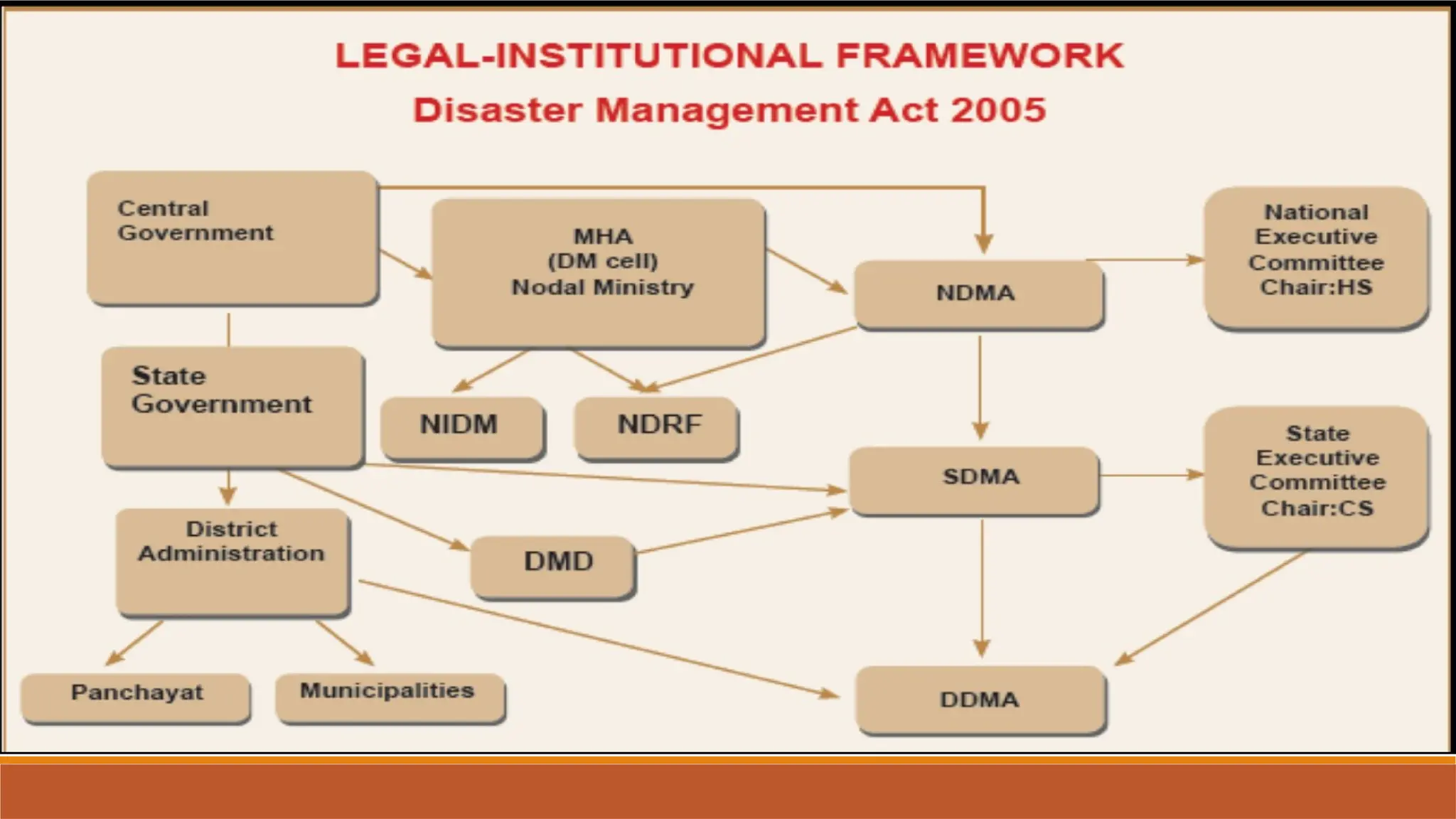
Disaster Management Act
The Government have enacted and notified the Disaster Management Act, on December 23, 2005 to
provide for institutional mechanisms for drawing up and monitoring the implementation of the disaster
management plans, ensuring measures by various wings of Government for prevention and mitigating effects
of disasters and for undertaking a holistic, coordinated and prompt response to any disaster situation.
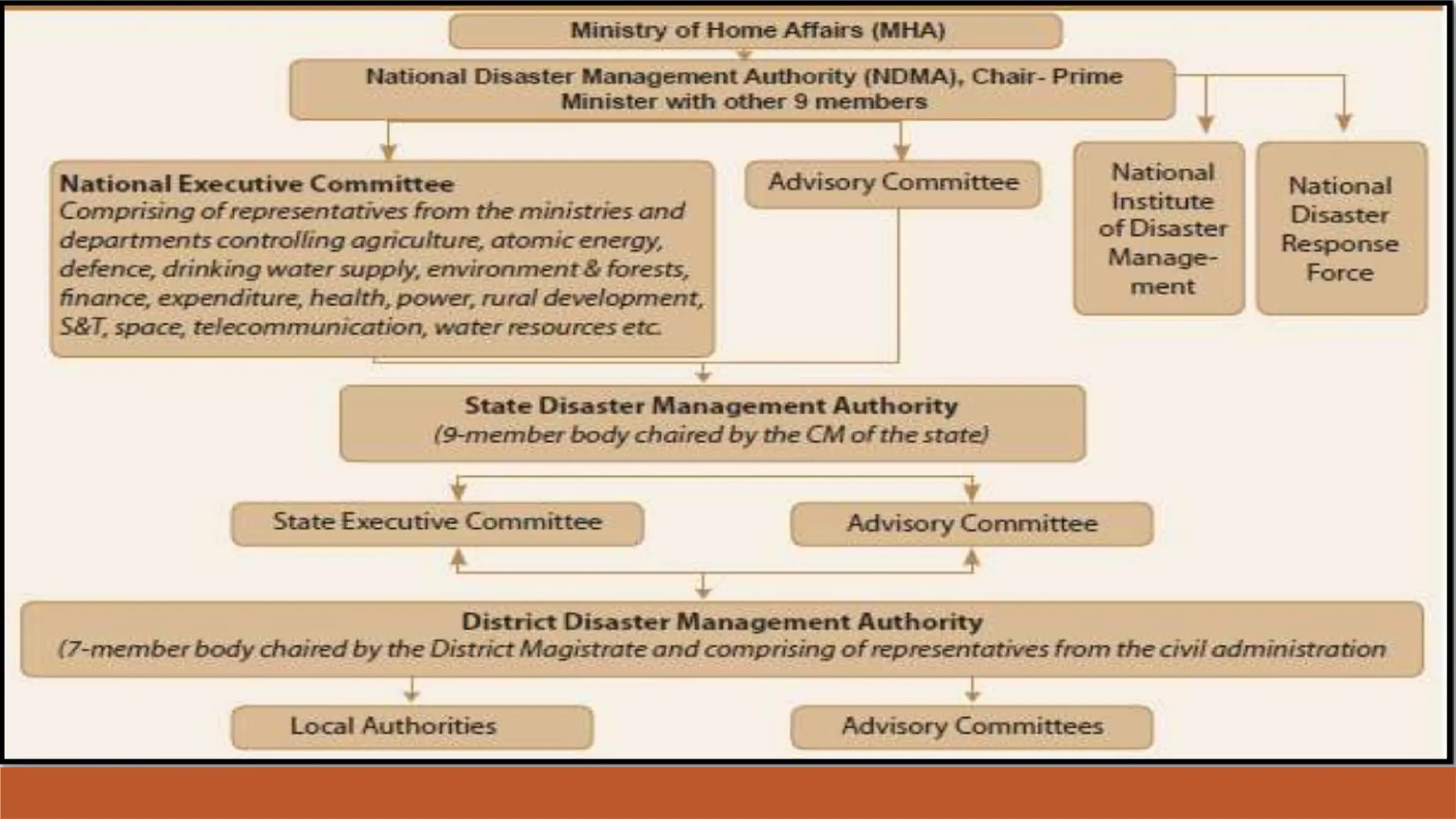
The Act provides for setting up of a National Disaster Management Authority (NDMA) under the
chairmanship of the Prime Minister, State Disaster Management Authorities (SDMAs) under the
chairmanship of the Chief ministers and District Disaster Management Authorities (DDMAs) under the
chairmanship of District magistrate.
New Directions for Disaster
Management in India
 The National Disaster Management Authority (NDMA) has been set up as the apex body for
Disaster Management in India, with the Prime Minister as its Chairman.
 Disaster Management Authorities will be set up at the State and District Levels to be headed by the
Chief Ministers and Collectors/Zilla Parishad Chairmen respectively.
 A National Disaster Mitigation Fund will be administered by NDMA. States and districts will
administer mitigation funds.
 A National Disaster Response Fund will be administered by NDMA through the National Executive
Committee. States and Districts will administer state Disaster Response Fund and Disaster
Response Fund respectively.
 8 Battalions of National Disaster Response Force (NDRF) are being trained and deployed with
CSSR and MFR equipment's and tools in eight strategic locations.
 A National Disaster Management Policy and National Disaster Response Plan will also be drawn
up.
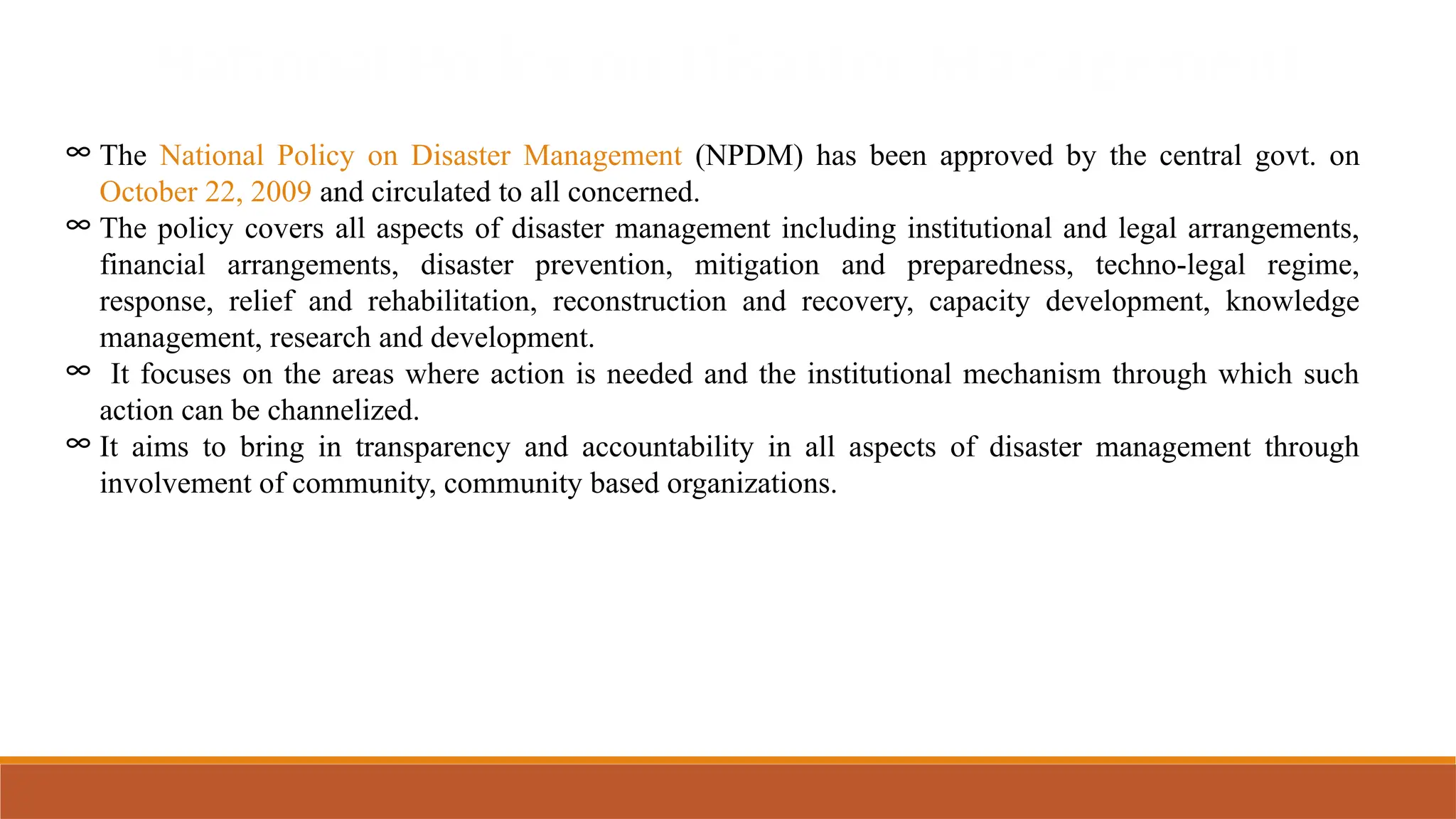
National Policy on Disaster Management
∞ The National Policy on Disaster Management (NPDM) has been approved by the central govt. on
October 22, 2009 and circulated to all concerned.
∞ The policy covers all aspects of disaster management including institutional and legal arrangements,
financial arrangements, disaster prevention, mitigation and preparedness, techno-legal regime,
response, relief and rehabilitation, reconstruction and recovery, capacity development, knowledge
management, research and development.
∞ It focuses on the areas where action is needed and the institutional mechanism through which such
action can be channelized.
∞ It aims to bring in transparency and accountability in all aspects of disaster management through
involvement of community, community based organizations.
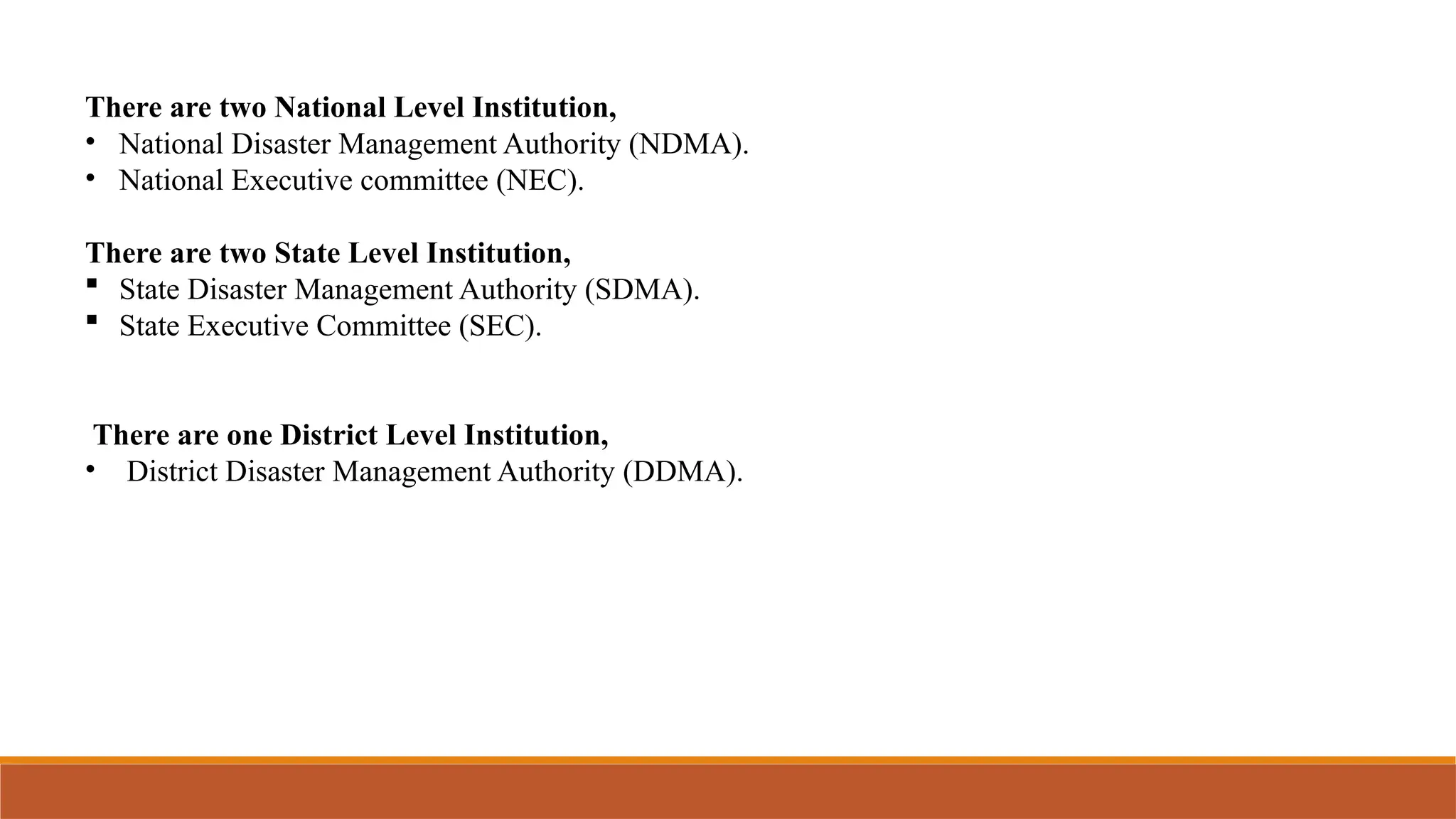
There are two National Level Institution,
• National Disaster Management Authority (NDMA).
• National Executive committee (NEC).
There are two State Level Institution,
 State Disaster Management Authority (SDMA).
 State Executive Committee (SEC).
There are one District Level Institution,
• District Disaster Management Authority (DDMA).
Activities of National Disaster Management Authority (NDMA):
National Disaster Management Authority, abbreviated as NDMA, is an apex Body of Government of India,
with a mandate to lay down policies for disaster management. The phrase disaster management is to be
understood as a continuous and integrated process of planning, organizing, coordinating and implementing
measures, which are necessary or expedient for prevention of danger or threat of any disaster, mitigation or
reduction of risk of any disaster or severity of its consequences, capacity building, preparedness to deal with any
disaster, prompt response, assessing the severity or magnitude of effects of any disaster, evacuation, rescue, relief,
rehabilitation and reconstruction’.
NDMA was established through the Disaster Management Act enacted by the Government of India on 23
December 2005. NDMA is responsible for framing policies, laying down guidelines and best-practices for
coordinating with the State Disaster Management Authorities (SDMAs) to ensure a holistic and distributed
approach to disaster management.
It is headed by the Minister of India and can have up to nine other members. Since 2020, there have
been five other members. There is a provision to have a Vice Chair-person if needed. NDMA has a vision to
"build a safer and disaster resilient India by a holistic, pro-active, technology driven and sustainable
development strategy that involves all stakeholders and fosters a culture of prevention, preparedness and
mitigation.“
NDMA equips and trains other Government officials, institutions and the community in mitigation
for and response during a crisis situation or a disaster. It works closely with the National Institute of Disaster
Management for capacity building.
Functions and responsibilities:
1. Lay down policies on disaster management.
2. Approves the National Plan.
3. Approve plans prepared by the Ministries or Departments of the Government of India in accordance
with the National Plan.
4. Lay down guidelines to be followed by the State Authorities in drawing up the State Plan.
5. Lay down guidelines to be followed by the different Ministries or Departments of the Government of
India for the Purpose of integrating the measures for prevention of disaster or the mitigation of its effects
in their development plans and projects.
6. Coordinate the enforcement and implementation of the policy and plans for disaster management
7. Recommend provision of funds for the purpose of mitigation;
8. Provide such support to other countries affected by major disasters as may be determined by the Central
Government.
9. Take such other measures for the prevention of disaster, or the mitigation, or preparedness and capacity
building for dealing with threatening disaster situations or disasters as it may consider necessary.
10.Lay down broad policies and guidelines for the functioning of the National Institute of Disaster
Management.
Programs:
NDMA (National Disaster Management Authority) runs various programs for mitigation and
responsiveness for specific situations. These include the
• National Cyclone Risk Management Project.
• School Safety Project
• Decision Support System and others.
India Disaster Response Summit held on 9 November 2017 held at New Delhi. This Summit was jointly
organised by the National Disaster Management Authority (NDMA) and social networking site Facebook. India has
become the first country to partner with Facebook on disaster response.
NDMA Guidelines:
1. Guidelines for Preparation of Action Plan – Prevention and Management of Heat-Wave.
2. Guidelines on Management of School Safety.
3. Guidelines on Management of Hospital Safety.
4. Guidelines on Minimum Standards for Shelter, Food, Water, Sanitation, Medical Cover in Relief Camps.
5. Guidelines on Management of Earthquakes.
6. Guidelines on Management of Tsunamis.
7. Guidelines on Management of Cyclones.
8. Guidelines on Management of Flood.
9. Guidelines on Management of Urban Flooding.
10.Guidelines on Drought Management.
11.Guidelines on Landslide and snow avalanches.
12.Guidelines for Nuclear attack disaster.
13.Guidelines on Chemical Disaster (Industrial).
14.Guidelines for Chemical (Terrorism) Disaster).
15.Guidelines on Medical Preparedness and Mass Casualty Management.
16.Guidelines for Biological Disaster.
17.Guidelines for Psycho-Social Support.
18.Guidelines on Formulation of State DM Plans.
19.Guidelines for Incident Response System.
20.Guidelines for National Disaster Management Information and Communication System.
21.Guidelines for Scaling, Type of Equipment and Training of Fire Services.
22.Guidelines for Seismic Retrofitting of Deficient Buildings and Structures.
23.Guidelines on temporary shelters for disaster affected families.
24.Guidelines on disability inclusive disaster risk reductio
Other institutional arrangements:
1. Armed Forces.
2. Central Para Military Forces.
3. State Police Forces and Fire Services.
4. Civil Defence and Home Guards.
5. State Disaster Response Force (SDRF).
6. National Cadet Corps (NCC).
7. National Service Scheme (NSS).
8. Nehru Yuva Kendra Sangathan (NYKS).
Stakeholders:
9. Corporate Social Responsibility (CSR).
10.Public Private Partnership (PPP).
11.Media Partnership.
12.Training of Communities.
13.DM Education in Schools.
Policies & Legislation for Disaster Risk Reduction:
Policies for Disaster Risk Reduction: The general objectives of the Disaster Management Policy are:
1. To avoid loss of human life and destruction of property by natural disasters or by man.
2. To incorporate disaster prevention into the overall national development process.
3. To promote domestic and external.
DRR Programmes in India:
About 57% of India’s land is vulnerable to earthquake, 28% to drought, and 15% to floods. Millions
of Indians are displaced and severely affected by natural disasters every year. These three innovations are
ensuring are making sure better disaster risk reduction techniques that save lives during disasters.
1. Oxfam's Disaster Risk Reduction interventions.
2. Area Development Programmes of World Vision India.
3. Safe School Programme of Plan International (India Chapter).
Oxfam's Disaster Risk Reduction interventions:
Two of our DRR programs received a special mention by UNICEF and Cansa. These programs
are Community Managed Flood Proof Pond Water Filter Systems and Volunteer Network Management
Systems.
Through our DRR activities in 2017, we were able to reach out to 101544 people during India
floods. With 750 existing water sources including hand pumps and open wells and supply water points
tested and repaired. We were able to reach to 94603 men, women and children for public health
promotion activities and support16924 families with shelter and livelihood opportunities.
Area Development Programmes of World Vision India:
ADPs (Area Development Programs) are integrated programs that help communities by
assisting them to achieve a better standard of living and well-being. Each ADP touches the lives of
20,000 to 1,00,000 people.
When the 2017 floods hit the states of Bihar, West Bengal, Assam and Mizoram, claiming 790
lives; World Vision India sent out emergency relief that reached more than 22,500 people. Their services
provided basic amenities such as dry ration, cooking oil, soaps and tarpaulin sheets to 3,610 households.
Safe School Programme of Plan International (India Chapter):
Plan India is on a mission to strengthen the resilience in education sector. The goal of this
program is to ensure safety, accessibility, sustainability and relevance of children’s education in the
context of disasters and climate change. They also aim to build a culture of safety and contribute to
the resilience of the children and community.
Their program outline incorporates 200 schools through structural and nonstructural
mitigation and risk reduction measures. They reinforce building structures of schools to strengthen
them. Non-structural measures include ensuring that casualties due to falling objects are avoided
through anchoring of the architectural elements such as ensuring the outward opening of doors,
filming of glass windows, anchoring of the cup boards, computers, etc.

DISASTER RISK REDUCTION ppt e ngineering

  • 1.
  • 2.
    Disaster Risk Reduction(DRR): The conceptual framework of elements considered with the possibilities to minimize vulnerabilities and disaster risks throughout a society, to avoid (prevention) or to limit (mitigation and preparedness) the adverse impacts of hazards, within the broad context of sustainable development. Disaster Management Cycle – its Phases/Stages:  Activities and Measures to avoid (prevention) or to limit (mitigation) and (preparedness) adverse effects of disasters in the pre-disaster phase and (Response, Relief, Recovery, Reconstruction) in the post-disaster Stage.  Disaster Risk Management includes sum of all activities, programmes and measures which can be taken up before, during and after a disaster with the purpose to avoid a disaster, reduce its impact or recover from its losses
  • 3.
    1. Before adisaster (pre disaster): ‐ Activities taken to reduce human and property losses caused by a potential hazard. For example carrying out awareness campaigns, strengthening the existing weak structures, preparation of the disaster management plans at household and community level etc. Such risk reduction measures taken under this stage are termed as mitigation and preparedness activities. 2. During a disaster (disaster occurrence): Initiatives taken to ensure that the needs and provisions of victims are met and suffering is minimized. Activities taken under this stage are called emergency response activities 3. After a disaster (post disaster): ‐ Initiatives taken in response to a disaster with a purpose to achieve early recovery and rehabilitation of affected communities, immediately after a disaster strikes. These are called as response and recovery activities.
  • 6.
    Prevention: Definition: Activities to avoidthe adverse impact of hazards and means to check from turning into disasters. Examples: Avoiding construction in seismically active areas, landslide prone areas and flood planes. Preparedness: o Preparedness means the state of readiness to deal with a threatening disaster situation or disaster and the effects thereof. o Activities and measures taken in advance to ensure effective response to the impact of hazards, including the issuance of timely and effective early warnings and the temporary evacuation of people and property from threatened locations. o Participation is essential at all stages.
  • 7.
    Relief: Definition: An act ofhelping or alleviating the conditions of persons who are suffering from the effects of disaster/calamity. The relief plan provides provisions of assistance or intervention during/immediately after a disaster to meet the basic needs of affected people. Minimum Standards of Relief: The National Authority recommends guidelines for minimum standards of relief to be provided to persons affected by disaster, which include 1. Minimum requirements to be provided in the relief camps in relation to shelter, food, drinking water, medical cover and sanitation. 2. Special provisions to be made for widows and orphans. 3. Ex gratia assistance on account of loss of life as also assistance on account of damage to houses and for restoration of means of livelihood. 4. Such other relief as may be necessary.
  • 8.
    Recovery: Constitutes the laststep of post-disaster actions, such as rebuilding livelihood, infrastructure or retrofitting of damaged structures. Risk Analysis: Definition: The probability of harmful consequences or expected losses resulting from interaction between natural or human induced hazards and vulnerable conditions. Or Risk is a “measure of the expected losses due to a hazard event occurring in a given area over a specific time period. Risk is a function of the probability of particular hazardous event and the losses each would cause.” Level of risk: The level of risk depends upon: 1. Nature of the hazard. 2. Vulnerability of the elements which are affected. 3. Economic value of those elements
  • 9.
    Mitigation:  Mitigation meansmeasures aimed at reducing the risk, impact or effects of a disaster or threatening disaster situation.  Measures taken in advance of a disaster aimed at reducing its impact on society and the environment.  Learning from the past disaster.  Incorporating the learning in present scenario.  Building back better to reduce the impact of future disasters. Mitigation Measures: 1. Structural Measures: i. Multi-hazard resistant buildings. ii. Shelters. iii. Retrofitting. iv. Modernizing early warning system. 2. Non-structural measures: i. Awareness generation. ii. Training and capacity building. iii. Policy and regulations. iv. Mock drills and demos. v. Effective dissemination of early warning. vi. Development of state, district village plans. vii. Building byelaws Revision
  • 10.
    Mitigation Vs Preparedness Mitigation 1.Long 2. Might not be recurring or on routine basis 3. Might be before or after a disaster E.g. Construction of embankment Preparedness 1. Term Short term 2. Routine Basis 3. Immediately before a disaster E.g. Checking the status of embankment
  • 11.
    Early Warning Systems(EWS): Definition: The term 'early warning' is used in many fields to describe the provision of information on an emerging dangerous circumstances where that information can enable action in advance to reduce the risks involve. Early warning systems exist for natural geophysical and biological hazards, complex socio- political emergencies, industrial hazards, personal health risks and many other related hazards. Or An Early Warning System (EWS) can be defined as a set of capacities needed to generate and disseminate timely and meaningful warning information of the possible extreme events or disasters (e.g. floods, drought, fire, earthquake and tsunamis) that threatens people‘s lives. The purpose of this information is to enable individuals, communities and organizations threatened to prepare and act appropriately and in sufficient time to reduce the possibility of harm, loss or risk.
  • 12.
    Elements of Earlywarning: Early warning is the integration of four main elements: 1. Risk Knowledge: Risk assessment provides essential information to set priorities for mitigation and prevention strategies and designing early warning systems. 2. Monitoring and Predicting: Systems with monitoring and predicting capabilities provide timely estimates of the potential risk faced by communities, economies and the environment. 3. Disseminating Information: Communication systems are needed for delivering warning messages to the potentially affected locations to alert local and regional governmental agencies. The messages need to be reliable, synthetic and simple to be understood by authorities and public. 4. Response: Coordination, good governance and appropriate action plans are a key point in effective early warning. Likewise, public awareness and education are critical aspects of disaster mitigation.
  • 14.
    Need of EarlyWarning System: Early Warning for disaster reduction is a legitimate matter of public policy at the highest national levels for two main reasons: 1. The first one, clearly, is public safety, and the protection of human lives. 2. The second is the protection of the nation’s resource base and productive assets (infrastructure and private property or investments) to ensure long term development and economic growth. Conversely, by reducing the impact of disasters, a government avoids the financial and political burden of massive rehabilitation costs. Communication of Early Warning Information: An effective early warning system needs an effective communication system. Early warning communication systems are made of two main components: 3. Communication infrastructure hardware that must be reliable and robust, especially during the natural disasters. 4. Appropriate and effective interactions among the main actors of the early warning process such as the scientific community, stakeholders, decision makers, the public, and the media.
  • 15.
    Key elements forsuccessful implementation of early warning: 1. Understand the most likely threats, likelihood of disasters and their potential consequences. 2. Establish proper priorities. 3. Developing institutional networks with clear responsibilities. 4. Establish or strengthen the legislative/legal framework and mechanisms. 5. Developing effective communication strategies. 6. Securing resources.
  • 16.
    Post Disaster/After aDisaster Environmental Response (Water, Sanitation, Food Safety, Waste Management, Disease Control, Security, Communications): Introduction: ҉Post disaster stage or third stage of disaster management cycle. ҉It involves the initial actions taken as the event takes place. ҉It involves efforts to minimize the hazards created by a disaster. ҉Examples: Evacuation; search and rescue; emergency relief. 1. Water: Do not use water you suspect or have been told is contaminated to wash dishes, brush your teeth, wash and prepare food, wash your hands, make ice, or make baby formula. Safe water for drinking, cooking, and personal hygiene includes bottled, boiled, or treated water. Your state, local, or tribal health department can make specific recommendations for boiling or treating water in your area
  • 17.
    Safe drinking water: ⁕After an emergency, especially after flooding, drinking water may not be available or safe to drink. ⁕ Do not use water you suspect or have been told is unsafe to wash dishes, brush teeth, wash and prepare food, make ice, or make baby formula. ⁕ Alcohol dehydrates the body, which increases the need for drinking water. ⁕ Floods and other disasters can damage drinking water wells and lead to aquifer and well contamination. Flood waters can contaminate well water with livestock waste, human sewage, chemicals, and other contaminants which can lead to illness when used for drinking, bathing, and other hygiene activities. ⁕ If your water comes from a private well that has been flooded, consider the following guidance for making water safe and for emergency water sources until you are certain your water is free of contaminants and safe to drink
  • 18.
    Finding emergency watersources: Alternative sources of clean water can be found inside and outside the home. Do not drink water that has an unusual odor or color, or that you know or suspect might be contaminated with fuel or toxic chemicals; use a different source of water. The following are possible sources of water: † Water from your home’s water heater tank (part of your drinking water system, not your home heating system). † Melted ice cubes made with water that was not contaminated. † Water from your home’s toilet tank (not from the bowl), if it is clear and has not been chemically treated with toilet cleaners such as those that change the color of the water. † Liquid from canned fruit and vegetables † Water from swimming pools and spas that hasn’t been contaminated with flood or storm water can be used for personal hygiene, cleaning, and related uses, but not for drinking. † Possible sources of water that could be made safe by treatment include: i. Rainwater. ii. Streams, rivers, and other moving bodies of water. iii. Ponds and lakes. iv. Natural springs.
  • 19.
    Unsafe water sources: Neveruse water from the following sources: i. Radiators. ii. Hot water boilers (part of your home heating system). iii. Water beds (fungicides added to the water and/or chemicals in the vinyl may make water unsafe for use). 2. Sanitation: Good basic personal hygiene and handwashing are critical to help prevent the spread of illness and disease. Clean, safe running water is essential for proper hygiene and handwashing. Hygiene is especially important in an emergency such as a flood, hurricane, or earthquake, but finding clean, safe running water can sometimes be difficult. The following information will help to ensure good hygiene and handwashing in the event of an emergency.
  • 20.
    Handwashing: Keeping handsclean during an emergency helps prevent the spread of germs. If your tap water is not safe to use, wash your hands with soap and water that has been boiled or disinfected. Follow these steps to make sure you wash your hands properly: ₰ Wet your hands with clean, running water (warm or cold) and apply soap. ₰ Rub your hands together to make a lather and scrub them well; be sure to scrub the backs of your hands, between your fingers, and under your nails. ₰ Continue rubbing your hands for at least 20 seconds. Need a timer? Hum the “Happy Birthday” song from beginning to end twice. ₰ Rinse your hands well under running water. ₰ Dry your hands using a clean towel or air dry them If soap and water are not available, use an alcohol-based hand sanitizer that contains at least 60% alcohol. Alcohol-based hand sanitizers can quickly reduce the number of germs on hands in some situations, but sanitizers do not eliminate all types of germs. Hand sanitizers are not effective when hands are visibly dirty.
  • 21.
    When to WashHands: Wash hands with soap and clean, running water (if available): i. Before, during, and after preparing food. ii. Before eating food. iii. After using the toilet. iv. After changing diapers or cleaning up a child who has used the toilet. v. Before and after caring for someone who is sick. vi. After blowing your nose, coughing, or sneezing. vii. After touching an animal or animal waste. viii.After touching garbage. ix. Before and after treating a cut or wound Bathing: Bathing or showering after a water-related emergency should only be done with clean, safe water. Sometimes water that is not safe to drink can be used for bathing, but be careful not to swallow any water or get it in your eyes. If you have a drinking water well, listen to your local health authorities for advice on using your well water for showering and bathing. If extensive flooding has occurred or you suspect that your well may be contaminated, contact your local, state, or tribal health department for specific advice on well testing and disinfection. Dental Hygiene: Brushing your teeth after a water-related emergency should only be done with clean, safe water. Listen to local authorities to find out if tap water is safe to use.
  • 22.
    Wound Care: Keepingwounds clean and covered is crucial during an emergency. Open wounds and rashes exposed to flood waters can become infected. To protect yourself and your family: ◊ Avoid contact with flood waters if you have an open wound. ◊ Cover clean, open wounds with a waterproof bandage to reduce chance of infection ◊ Keep open wounds as clean as possible by washing well with soap and clean water. ◊ If a wound develops redness, swelling, or oozing, seek immediate medical care. Vibrios are naturally occurring bacteria that live in certain coastal waters. They can cause a skin infection when an open wound is exposed to salt water or a mix of salt and fresh water, which can occur during floods. Seek medical attention as soon as possible if: ⁕ There is a foreign object (soil, wood, metal, or other objects) embedded in the wound. ⁕ The wound is at special risk of infection (such as a dog bite or a puncture by a dirty object). ⁕ An old wound shows signs of becoming infected (increased pain and soreness, swelling, redness, draining, or you develop a fever).
  • 23.
    3. Food Safety:Throw away food that may have come in contact with flood or storm water; perishable foods that have not been refrigerated properly due to power outages; and those with an unusual odor, color, or texture. Unsafe food can make you sick even if it looks, smells, and tastes normal. When in doubt, throw it out. Identify and throw away food that may not be safe to eat. Do the following with food and containers that may have had contact with flood or storm water. Throw away the following foods:  Food that has an unusual odor, color, or texture. When in doubt, throw it out.  Perishable foods (including meat, poultry, fish, eggs and leftovers) in your refrigerator when the power has been off for 4 hours or more.  Food not in packages or cans.  Canned foods or food containers that are bulging, opened, or damaged. Throw away the food if the container spurts liquid or foam when you open it or the food inside is discolored, is moldy, or smells bad.  Packaged food: Throw away food containers with screw-caps, snap-lids, crimped caps, twist caps, flip tops, and snap-open, and home-canned foods because they cannot be disinfected. Throw away food in cardboard containers, including juice/milk/baby formula boxes.
  • 24.
    How to reusecommercially prepared cans and retort pouches (like flexible, shelf-stable juice and seafood packages): † Remove labels if they are removable. † Brush or wipe away dirt or silt. † Wash cans and pouches with soap and water, using hot water if available. † Rinse cans and pouches with water that is safe for drinking, if available. † Sanitize cans and pouches in one of two ways: i. Place them in a solution of 1 cup of ( 8 oz (226.8gm) / 240 mL ) of unscented household bleach in 5 gallons (1gallon = 3.78liters) of water for 15 minutes. ii. Submerge in a pot of water, bring to a boil, and continue boiling for 2 minutes. iii. Re-label cans or pouches with a marker. Include the expire date. † Use food in reconditioned cans or pouches as soon as possible. Clean and sanitize food-contact surfaces that have been flooded: Throw out wooden cutting boards, baby bottle nipples, and pacifiers if they have come into contact with flood waters because they cannot be properly sanitized. Clean and sanitize food-contact surfaces in a four-step process: i. Wash with soap and hot, clean water. ii. Rinse with clean water. iii. Sanitize by immersing for 1 minute in a solution of 1 cup (8 oz/240 mL) of unscented household chlorine bleach in 5 gallons of clean water. iv. Allow to air dry.
  • 25.
    4. Waste Management:The debris generated by most severe disasters, overwhelm existing solid waste management facilities or force communities to use disposal options that otherwise would not be acceptable (EPA, 2008). The Environment Protection Agency (EPA) in USA in their report (EPA, 2008) has identified several items which are generated as waste at most post disaster circumstances as soil and sediments, building rubble, vegetation, personal effects, hazardous material, mixed domestic and clinical wastes and, all too often, human and animal remains. These wastes represent a risk to human health from biological sources, chemical sources and physical sources Kobayashi (1995) classified the disaster waste as: rubble and other waste accumulated on roads, demolition and dismantling waste of buildings, bulky waste and raw materials, items in processes or other substances. In 2004, Baycan refined the classification in a more comprehensive manner as: recyclable materials (concrete, masonry, wood, metal, soil and excavated material), non recyclable materials (household inventory, organic materials, and other inert materials) and hazardous waste (asbestos, chemicals) (Baycan, 2004) Kourmpanis et al. (2008) has pointed out that building waste is considered to be one of the priority waste streams and appropriate actions need to be taken with respect to its effective management
  • 27.
    Post disaster wastemanagement strategies: Waste management is a discipline associated with control of generation of waste, storage, collection, transfer and transport, processing, reuse and recovery and disposal of solid waste in accordance with best principles of public health, economics, engineering, conservation of nature, aesthetics and environmental, while considering the general public attitude.
  • 28.
    As per report,28,747.91 tons of BMW (Bio Medical Waste) were generated between June 2020 and December 2021 in India (Chand et al., 2021). Based on computed data of COVID-19 positive cases, about 1,520.30 tons of medical wastes were generated each day in India. Cyclone Michaung In 1 week, 57,000 tonnes of waste pile up in Chennai after floods in 2023. Research from various disasters indicates that the waste generated in each community was equivalent to between 5 and 15 times the normal annual waste generation
  • 29.
    5. Disease control:Natural disasters are tragic incidents originating from atmospheric, geologic and hydrologic changes. In recent decades, millions of people have been killed by natural disasters, resulting in economic damages. Infections due to contaminated food and water, respiratory infections, vector or insect- borne diseases, and infections due to wounds and injuries. With appropriate intervention, high morbidity and mortality resulting from communicable diseases can be avoided to a great deal. Communicable disease after disaster: The major causes of communicable disease in disasters can be categorized into four areas: Infections due to contaminated food and water, respiratory infections, vector and insect borne diseases, and infections due to wounds and injuries i. Waterborne diseases: a. Diarrheal disease: Diarrheal disease outbreaks can arise subsequent to drinking-water contamination, and have been reported after flooding and related movement. Vibrio cholera (O1 Ogawa and O1 Inaba) and enterotoxigenic Escherichia coli are the major causes of this type. b. Hepatitis A and E: Hepatitis A and E have also fecal-oral transmission, especially in poor water sanitation c. Leptospirosis: Leptospirosis is a bacterial zoonosis transmitted through contact of mucous membranes and skin with water, moist vegetation, or dirt contaminated with rodent urine.
  • 30.
    ii. Diseases associatedwith crowding: Acute respiratory infections (ARI) as the main cause of morbidity and mortality among unsettled people are seen predominantly in children less than 5 years old. Furthermore, meningitis and measles are transmitted from person to person, especially in crowded circumstances. iii. Vector-borne diseases: Malaria, cutaneous leishmaniasis and rabies are transmitted by vectors. In 1991, an earthquake in Costa Rica's Atlantic region was accompanied with1a high increase in malaria cases. Furthermore, intermittent flooding associated with El Niño–Southern Oscillation has been correlated with malaria epidemics in Peru. iv. Infections due to wounds and injuries: The potentially significant threats to persons suffering a wound are tetanus, staphylococci and streptococci Strategies for prevention of communicable disease in Post disaster Phase: In this phase, the emergency response for controlling communicable disease includes: Emergency medical care, provision of shelter and site planning, water and sanitation, safe food preparation, nutrition, case management, medical supplies and vector control. Moreover, health education and providing the health of humanitarian workers is a critical point. i. Select and plan sites ii. Ensure adequate water and sanitation facilities
  • 31.
    iii. Ensure safetyof food: The World Health Organization recommends five keys for ensuring the safety of food supplements following a disaster event; Key 1: Preserve clean (prevents the growth and spread of hazardous microorganisms). Key 2: Separate cooked and raw food (microorganisms transfer prevention). Key 3: Cook thoroughly (kills dangerous microorganisms). Key 4: Preserve food at harmless temperatures (microorganisms growth prevention). Key 5: Consuming safe water and raw materials (contamination prevention). iv. Control vectors: Natural disasters can influence transmission of vector borne disease. The crowding of infected and vulnerable hosts, a debilitated public health infrastructure and disruptions of ongoing control processes are entirely risk factors for transmission of vector-borne disease. Major diseases frequently spread by vectors are malaria, dengue, Japanese encephalitis, yellow fever, typhus, and trypanosomiasis. Examples of some useful interventions are indoor residual spraying for malaria, insecticide- treated nets, and traps for tsetse flies as the vectors of trypanosomiasis.
  • 32.
    v. Implement vaccinationcampaigns: Mass immunization should be fulfilled as soon as possible in areas with baseline coverage rates below 90% among individuals under 15 years old vi. Provide essential clinical services vii. Provide basic laboratory facilities 6. Security: “fear” (such as aftershocks and deteriorating social order) and “want” (lack of food, water and shelter). Many of the same actors are involved in the response, notably the UN and humanitarian NGOs. Indeed, most of the organizations involved in natural disaster relief are working to protect human security, even if they don’t label their work as such. A human security perspective encourages us to consider the needs of the most vulnerable parts of the population, most notably protecting women, children, and the elderly. Human security also emphasizes empowerment strategies, enabling people — both individuals and communities — to act on their own behalf, and on the behalf of others. 7. Communications: Management of any disaster or emergency event is a complicated and multi-faceted task. The entire disaster management process is further complicated when hindered by ineffective information gathering and distribution.
  • 33.
    Institutional Framework ‡ Shiftingfrom relief and response mode, disaster management in India started to address the issues of early warning systems, forecasting and monitoring setup for various weather related hazards. ‡ A structure for flow of information, in the form of warnings, alert sand updates about the oncoming hazard, also emerged within this framework. ‡ A multi-stakeholder High powered group was setup by involving representatives from different ministries and departments. ‡ Some of these ministries were also designated as the nodal authorities for specific disasters.
  • 34.
    Roles & Responsibilitiesof Government [Or] Government Initiatives on Disaster Management: Nodal Agencies for Disaster Management • Floods : Ministry of Water Resources, CWC • Cyclones : Indian Meteorological Department • Earthquakes : Indian Meteorological Department • Epidemics : Ministry of Health and Family Welfare • Avian Flu/ Bird flu : Ministry of Health, Ministry of Environment, Ministry of Agriculture and Animal Husbandry • Chemical Disasters : Ministry of Environment and Forests • Industrial Disasters : Ministry of Labour • Rail Accidents : Ministry of Railways • Air Accidents : Ministry of Civil Aviation • Fire : Ministry of Home Affairs • Nuclear Incidents : Department of Atomic Energy • Mine Disasters : Department of Mines
  • 35.
  • 36.
    CENTRAL SECTOR SCHEMEFOR DISASTER MANAGEMENT - SALIENT FEATURES † Human resource Development † Setting up of National Centre for Disaster Management (NCDM) † Setting up of Disaster Management Faculties in States † Programs for Community Participation and Public Awareness † Observing National Disaster Reduction Day † Activities to achieve the goals and objectives of IDNDR/ISDR
  • 37.
    Disaster Management Act TheGovernment have enacted and notified the Disaster Management Act, on December 23, 2005 to provide for institutional mechanisms for drawing up and monitoring the implementation of the disaster management plans, ensuring measures by various wings of Government for prevention and mitigating effects of disasters and for undertaking a holistic, coordinated and prompt response to any disaster situation. The Act provides for setting up of a National Disaster Management Authority (NDMA) under the chairmanship of the Prime Minister, State Disaster Management Authorities (SDMAs) under the chairmanship of the Chief ministers and District Disaster Management Authorities (DDMAs) under the chairmanship of District magistrate.
  • 38.
    New Directions forDisaster Management in India  The National Disaster Management Authority (NDMA) has been set up as the apex body for Disaster Management in India, with the Prime Minister as its Chairman.  Disaster Management Authorities will be set up at the State and District Levels to be headed by the Chief Ministers and Collectors/Zilla Parishad Chairmen respectively.  A National Disaster Mitigation Fund will be administered by NDMA. States and districts will administer mitigation funds.  A National Disaster Response Fund will be administered by NDMA through the National Executive Committee. States and Districts will administer state Disaster Response Fund and Disaster Response Fund respectively.  8 Battalions of National Disaster Response Force (NDRF) are being trained and deployed with CSSR and MFR equipment's and tools in eight strategic locations.  A National Disaster Management Policy and National Disaster Response Plan will also be drawn up.
  • 39.
    National Policy onDisaster Management ∞ The National Policy on Disaster Management (NPDM) has been approved by the central govt. on October 22, 2009 and circulated to all concerned. ∞ The policy covers all aspects of disaster management including institutional and legal arrangements, financial arrangements, disaster prevention, mitigation and preparedness, techno-legal regime, response, relief and rehabilitation, reconstruction and recovery, capacity development, knowledge management, research and development. ∞ It focuses on the areas where action is needed and the institutional mechanism through which such action can be channelized. ∞ It aims to bring in transparency and accountability in all aspects of disaster management through involvement of community, community based organizations.
  • 40.
    There are twoNational Level Institution, • National Disaster Management Authority (NDMA). • National Executive committee (NEC). There are two State Level Institution,  State Disaster Management Authority (SDMA).  State Executive Committee (SEC). There are one District Level Institution, • District Disaster Management Authority (DDMA).
  • 43.
    Activities of NationalDisaster Management Authority (NDMA): National Disaster Management Authority, abbreviated as NDMA, is an apex Body of Government of India, with a mandate to lay down policies for disaster management. The phrase disaster management is to be understood as a continuous and integrated process of planning, organizing, coordinating and implementing measures, which are necessary or expedient for prevention of danger or threat of any disaster, mitigation or reduction of risk of any disaster or severity of its consequences, capacity building, preparedness to deal with any disaster, prompt response, assessing the severity or magnitude of effects of any disaster, evacuation, rescue, relief, rehabilitation and reconstruction’. NDMA was established through the Disaster Management Act enacted by the Government of India on 23 December 2005. NDMA is responsible for framing policies, laying down guidelines and best-practices for coordinating with the State Disaster Management Authorities (SDMAs) to ensure a holistic and distributed approach to disaster management.
  • 44.
    It is headedby the Minister of India and can have up to nine other members. Since 2020, there have been five other members. There is a provision to have a Vice Chair-person if needed. NDMA has a vision to "build a safer and disaster resilient India by a holistic, pro-active, technology driven and sustainable development strategy that involves all stakeholders and fosters a culture of prevention, preparedness and mitigation.“ NDMA equips and trains other Government officials, institutions and the community in mitigation for and response during a crisis situation or a disaster. It works closely with the National Institute of Disaster Management for capacity building.
  • 45.
    Functions and responsibilities: 1.Lay down policies on disaster management. 2. Approves the National Plan. 3. Approve plans prepared by the Ministries or Departments of the Government of India in accordance with the National Plan. 4. Lay down guidelines to be followed by the State Authorities in drawing up the State Plan. 5. Lay down guidelines to be followed by the different Ministries or Departments of the Government of India for the Purpose of integrating the measures for prevention of disaster or the mitigation of its effects in their development plans and projects. 6. Coordinate the enforcement and implementation of the policy and plans for disaster management 7. Recommend provision of funds for the purpose of mitigation; 8. Provide such support to other countries affected by major disasters as may be determined by the Central Government. 9. Take such other measures for the prevention of disaster, or the mitigation, or preparedness and capacity building for dealing with threatening disaster situations or disasters as it may consider necessary. 10.Lay down broad policies and guidelines for the functioning of the National Institute of Disaster Management.
  • 46.
    Programs: NDMA (National DisasterManagement Authority) runs various programs for mitigation and responsiveness for specific situations. These include the • National Cyclone Risk Management Project. • School Safety Project • Decision Support System and others. India Disaster Response Summit held on 9 November 2017 held at New Delhi. This Summit was jointly organised by the National Disaster Management Authority (NDMA) and social networking site Facebook. India has become the first country to partner with Facebook on disaster response. NDMA Guidelines: 1. Guidelines for Preparation of Action Plan – Prevention and Management of Heat-Wave. 2. Guidelines on Management of School Safety. 3. Guidelines on Management of Hospital Safety. 4. Guidelines on Minimum Standards for Shelter, Food, Water, Sanitation, Medical Cover in Relief Camps. 5. Guidelines on Management of Earthquakes. 6. Guidelines on Management of Tsunamis.
  • 47.
    7. Guidelines onManagement of Cyclones. 8. Guidelines on Management of Flood. 9. Guidelines on Management of Urban Flooding. 10.Guidelines on Drought Management. 11.Guidelines on Landslide and snow avalanches. 12.Guidelines for Nuclear attack disaster. 13.Guidelines on Chemical Disaster (Industrial). 14.Guidelines for Chemical (Terrorism) Disaster). 15.Guidelines on Medical Preparedness and Mass Casualty Management. 16.Guidelines for Biological Disaster. 17.Guidelines for Psycho-Social Support. 18.Guidelines on Formulation of State DM Plans. 19.Guidelines for Incident Response System. 20.Guidelines for National Disaster Management Information and Communication System. 21.Guidelines for Scaling, Type of Equipment and Training of Fire Services. 22.Guidelines for Seismic Retrofitting of Deficient Buildings and Structures. 23.Guidelines on temporary shelters for disaster affected families. 24.Guidelines on disability inclusive disaster risk reductio
  • 48.
    Other institutional arrangements: 1.Armed Forces. 2. Central Para Military Forces. 3. State Police Forces and Fire Services. 4. Civil Defence and Home Guards. 5. State Disaster Response Force (SDRF). 6. National Cadet Corps (NCC). 7. National Service Scheme (NSS). 8. Nehru Yuva Kendra Sangathan (NYKS). Stakeholders: 9. Corporate Social Responsibility (CSR). 10.Public Private Partnership (PPP). 11.Media Partnership. 12.Training of Communities. 13.DM Education in Schools.
  • 49.
    Policies & Legislationfor Disaster Risk Reduction: Policies for Disaster Risk Reduction: The general objectives of the Disaster Management Policy are: 1. To avoid loss of human life and destruction of property by natural disasters or by man. 2. To incorporate disaster prevention into the overall national development process. 3. To promote domestic and external. DRR Programmes in India: About 57% of India’s land is vulnerable to earthquake, 28% to drought, and 15% to floods. Millions of Indians are displaced and severely affected by natural disasters every year. These three innovations are ensuring are making sure better disaster risk reduction techniques that save lives during disasters. 1. Oxfam's Disaster Risk Reduction interventions. 2. Area Development Programmes of World Vision India. 3. Safe School Programme of Plan International (India Chapter).
  • 50.
    Oxfam's Disaster RiskReduction interventions: Two of our DRR programs received a special mention by UNICEF and Cansa. These programs are Community Managed Flood Proof Pond Water Filter Systems and Volunteer Network Management Systems. Through our DRR activities in 2017, we were able to reach out to 101544 people during India floods. With 750 existing water sources including hand pumps and open wells and supply water points tested and repaired. We were able to reach to 94603 men, women and children for public health promotion activities and support16924 families with shelter and livelihood opportunities. Area Development Programmes of World Vision India: ADPs (Area Development Programs) are integrated programs that help communities by assisting them to achieve a better standard of living and well-being. Each ADP touches the lives of 20,000 to 1,00,000 people. When the 2017 floods hit the states of Bihar, West Bengal, Assam and Mizoram, claiming 790 lives; World Vision India sent out emergency relief that reached more than 22,500 people. Their services provided basic amenities such as dry ration, cooking oil, soaps and tarpaulin sheets to 3,610 households.
  • 51.
    Safe School Programmeof Plan International (India Chapter): Plan India is on a mission to strengthen the resilience in education sector. The goal of this program is to ensure safety, accessibility, sustainability and relevance of children’s education in the context of disasters and climate change. They also aim to build a culture of safety and contribute to the resilience of the children and community. Their program outline incorporates 200 schools through structural and nonstructural mitigation and risk reduction measures. They reinforce building structures of schools to strengthen them. Non-structural measures include ensuring that casualties due to falling objects are avoided through anchoring of the architectural elements such as ensuring the outward opening of doors, filming of glass windows, anchoring of the cup boards, computers, etc.