American History Timeline,
1763 - 1820
and the movie
The Last of the Mohicans
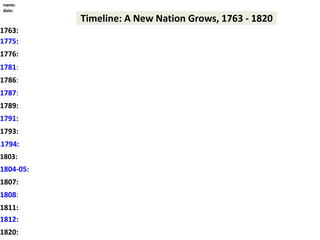
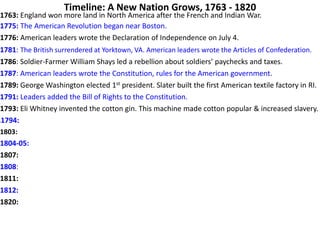
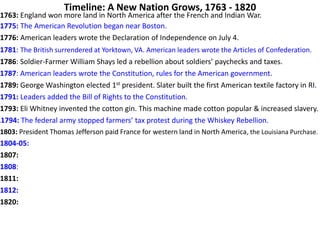
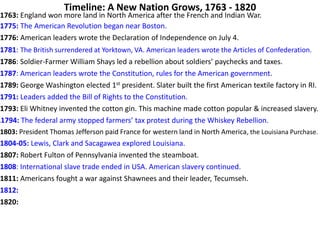
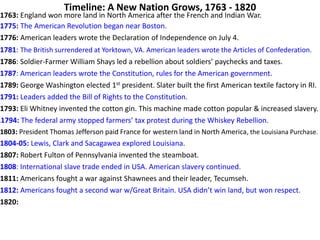
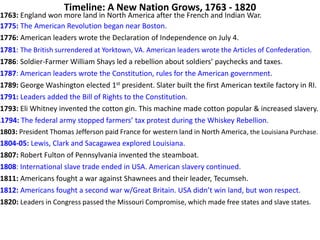
Timeline: A New Nation Grows, 1763 - 1820
1763:
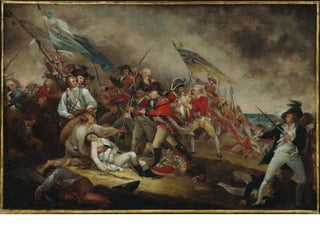
1775: The American Revolution began near Boston.
1776: American leaders wrote the Declaration of Independence on July 4.
1781: The British surrendered at Yorktown, VA. American leaders wrote the Articles of Confederation.
1786: Soldier-Farmer William Shays led a rebellion about soldiers’ paychecks and taxes.
1787: American leaders wrote the Constitution, rules for the American government.
1789: George Washington elected 1st president. Slater built the first American textile factory in RI.
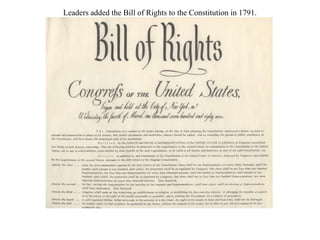
1791: Leaders added the Bill of Rights to the Constitution.
1793: Eli Whitney invented the cotton gin. This machine made cotton popular & increased slavery.
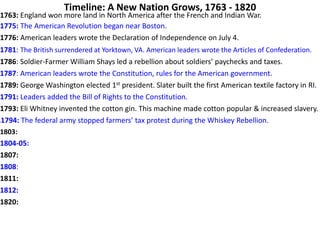
I1794: The federal army stopped farmers’ tax protest during the Whiskey Rebellion.
1803: President Thomas Jefferson paid France for western land in North America, the Louisiana Purchase.
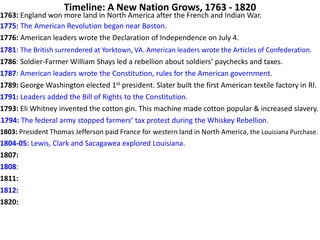
1804-05: Lewis, Clark and Sacagawea explored Louisiana.
1807: Robert Fulton of Pennsylvania invented the steamboat.
1808: International slave trade ended in USA. American slavery continued.
1811: Americans fought a war against Shawnees and their leader, Tecumseh.
1812: A
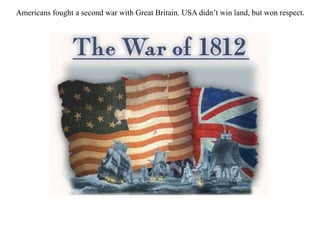
mericans fought a second war w/Great Britain. USA didn’t win land, but won respect.
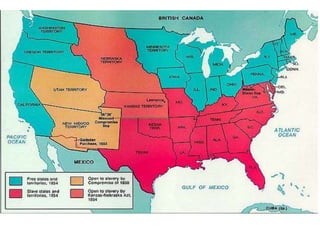
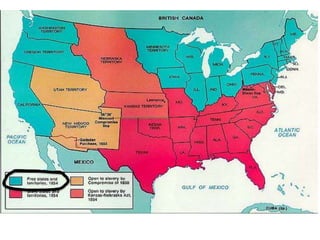
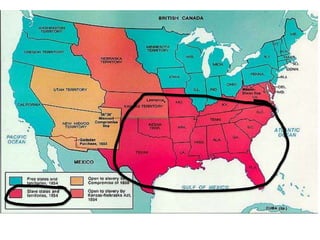
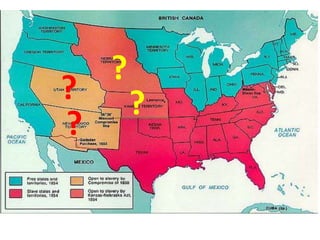
1820: Leaders in Congress passed the Missouri Compromise, which made free states and slave states.
name:
date:
Timeline: A New Nation Grows, 1763 - 1820
1763:
1775: The American Revolution began near Boston.
1776: American leaders wrote the Declaration of Independence on July 4.
1781: The British surrendered at Yorktown, VA. American leaders wrote the Articles of Confederation.
1786: Soldier-Farmer William Shays led a rebellion about soldiers’ paychecks and taxes.
1787: American leaders wrote the Constitution, rules for the American government.
1789: George Washington elected 1st president. Slater built the first American textile factory in RI.
1791: Leaders added the Bill of Rights to the Constitution.
1793: Eli Whitney invented the cotton gin. This machine made cotton popular & increased slavery.
I1794: The federal army stopped farmers’ tax protest during the Whiskey Rebellion.
1803: President Thomas Jefferson paid France for western land in North America, the Louisiana Purchase.
1804-05: Lewis, Clark and Sacagawea explored Louisiana.
1807: Robert Fulton of Pennsylvania invented the steamboat.
1808: International slave trade ended in USA. American slavery continued.
1811: Americans fought a war against Shawnees and their leader, Tecumseh.
1812: Americans fought a second war w/Great Britain. USA didn’t win land, but won respect.
1820: Leaders in Congress passed the Missouri Compromise, which made free states and slave states.
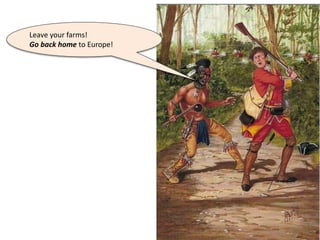
Leave your farms!
Go back home to Europe!
Timeline: A New Nation Grows, 1763 - 1820
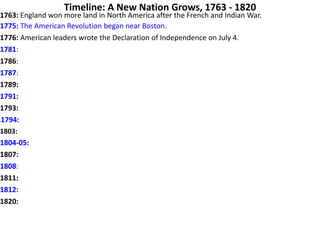
1763: England won more land in North America after the French and Indian War.
1775:
1776:
1781:
1786:
1787:
1789:
1791:
1793:
I1794:
1803:
1804-05:
1807:
1808:
1811:
1812:
1820:
Timeline: A New Nation Grows, 1763 - 1820
1763: England won more land in North America after the French and Indian War.
1775: The American Revolution began near Boston.
1776:
1781:
1786:
1787:
1789:
1791:
1793:
I1794:
1803:
1804-05:
1807:
1808:
1811:
1812:
1820:
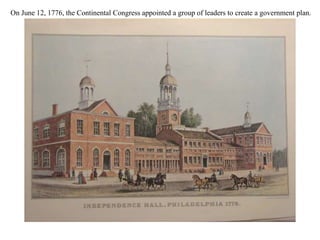
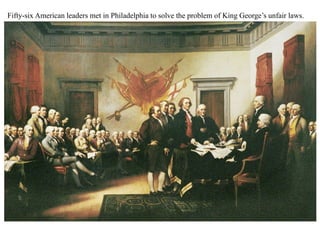
4. On June 12, 1776, the Continental Congress appointed a group of leaders to create a government plan.
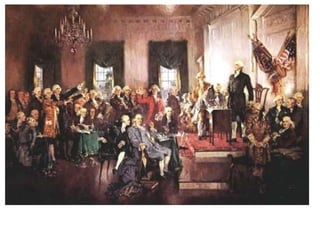
Fifty-six American leaders met in Philadelphia to solve the problem of King George’s unfair laws.
http://blogs.phillyburbs.com/news/bct/wp-content/blogs.dir/3/files/2008/06/wk_of_6.30_/0701Fireworks.jpg
Timeline: A New Nation Grows, 1763 - 1820
1763: England won more land in North America after the French and Indian War.
1775: The American Revolution began near Boston.
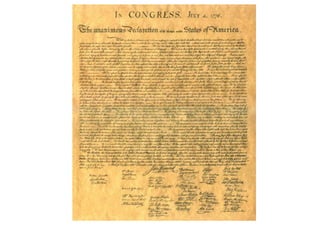
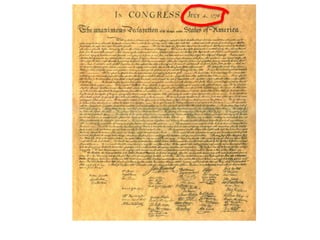
1776: American leaders wrote the Declaration of Independence on July 4.
1781:
1786:
1787:
1789:
1791:
1793:
I1794:
1803:
1804-05:
1807:
1808:
1811:
1812:
1820:
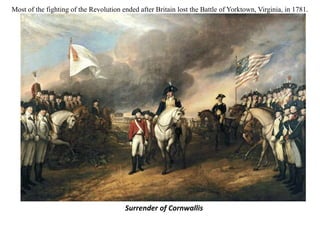
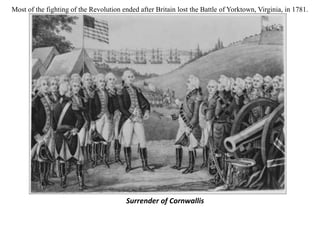
Most of the fighting of the Revolution ended after Britain lost the Battle of Yorktown, Virginia, in 1781.
Surrender of Cornwallis
Most of the fighting of the Revolution ended after Britain lost the Battle of Yorktown, Virginia, in 1781.
Surrender of Cornwallis
Timeline: A New Nation Grows, 1763 - 1820
1763: England won more land in North America after the French and Indian War.
1775: The American Revolution began near Boston.
1776: American leaders wrote the Declaration of Independence on July 4.
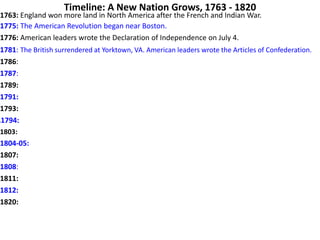
1781: The British surrendered at Yorktown, VA. American leaders wrote the Articles of Confederation.
1786:
1787:
1789:
1791:
1793:
I1794:
1803:
1804-05:
1807:
1808:
1811:
1812:
1820:
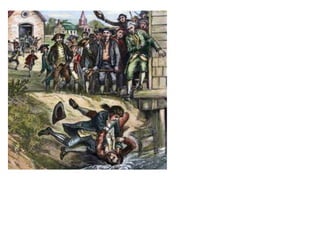
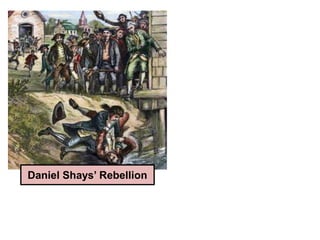
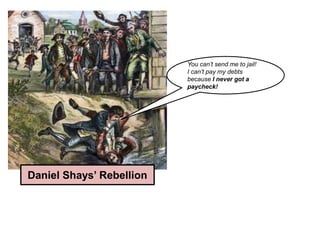
Daniel Shays’ Rebellion
You can’t send me to jail!
I can’t pay my debts
because I never got a
paycheck!
Timeline: A New Nation Grows, 1763 - 1820
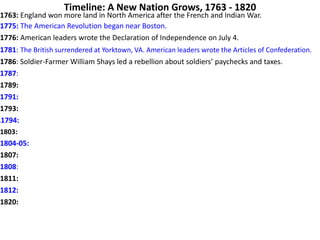
1763: England won more land in North America after the French and Indian War.
1775: The American Revolution began near Boston.
1776: American leaders wrote the Declaration of Independence on July 4.
1781: The British surrendered at Yorktown, VA. American leaders wrote the Articles of Confederation.
1786: Soldier-Farmer William Shays led a rebellion about soldiers’ paychecks and taxes.
1787:
1789:
1791:
1793:
I1794:
1803:
1804-05:
1807:
1808:
1811:
1812:
1820:
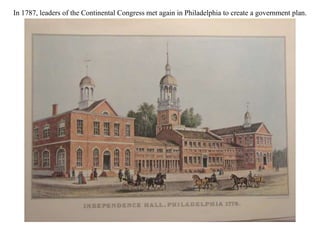
In 1787, leaders of the Continental Congress met again in Philadelphia to create a government plan.
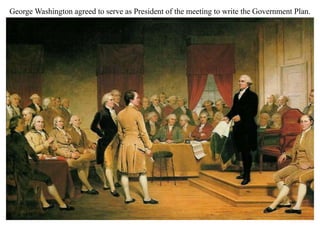
George Washington agreed to serve as President of the meeting to write the Government Plan.
http://www.princetonol.com/groups/iad/links/constitution.jpg
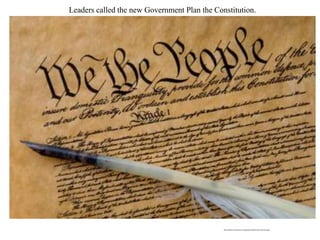
Leaders called the new Government Plan the Constitution.
1.
2.
3.
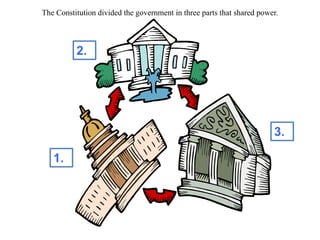
The Constitution divided the government in three parts that shared power.
Timeline: A New Nation Grows, 1763 - 1820
1763: England won more land in North America after the French and Indian War.
1775: The American Revolution began near Boston.
1776: American leaders wrote the Declaration of Independence on July 4.
1781: The British surrendered at Yorktown, VA. American leaders wrote the Articles of Confederation.
1786: Soldier-Farmer William Shays led a rebellion about soldiers’ paychecks and taxes.
1787: American leaders wrote the Constitution, rules for the American government.
1789:
1791:
1793:
I1794:
1803:
1804-05:
1807:
1808:
1811:
1812:
1820:
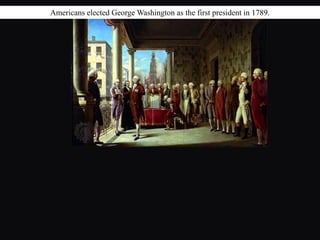
Americans elected George Washington as the first president in 1789.
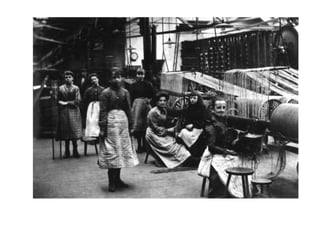
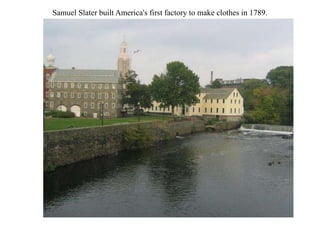
Samuel Slater built America's first factory to make clothes in 1789.
Timeline: A New Nation Grows, 1763 - 1820
1763: England won more land in North America after the French and Indian War.
1775: The American Revolution began near Boston.
1776: American leaders wrote the Declaration of Independence on July 4.
1781: The British surrendered at Yorktown, VA. American leaders wrote the Articles of Confederation.
1786: Soldier-Farmer William Shays led a rebellion about soldiers’ paychecks and taxes.
1787: American leaders wrote the Constitution, rules for the American government.
1789: George Washington elected 1st president. Slater built the first American textile factory in RI.
1791:
1793:
I1794:
1803:
1804-05:
1807:
1808:
1811:
1812:
1820:
Leaders added the Bill of Rights to the Constitution in 1791.
Timeline: A New Nation Grows, 1763 - 1820
1763: England won more land in North America after the French and Indian War.
1775: The American Revolution began near Boston.
1776: American leaders wrote the Declaration of Independence on July 4.
1781: The British surrendered at Yorktown, VA. American leaders wrote the Articles of Confederation.
1786: Soldier-Farmer William Shays led a rebellion about soldiers’ paychecks and taxes.
1787: American leaders wrote the Constitution, rules for the American government.
1789: George Washington elected 1st president. Slater built the first American textile factory in RI.
1791: Leaders added the Bill of Rights to the Constitution.
1793:
I1794:
1803:
1804-05:
1807:
1808:
1811:
1812:
1820:
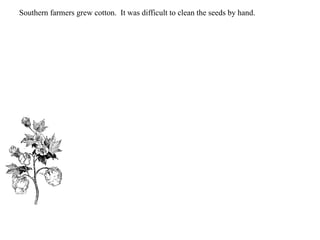
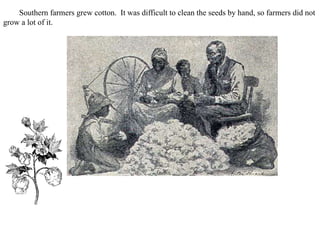
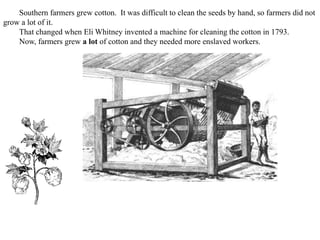
Southern farmers grew cotton. It was difficult to clean the seeds by hand.
Southern farmers grew cotton. It was difficult to clean the seeds by hand, so farmers did not
grow a lot of it.
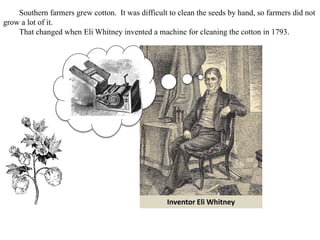
Inventor Eli Whitney
Southern farmers grew cotton. It was difficult to clean the seeds by hand, so farmers did not
grow a lot of it.
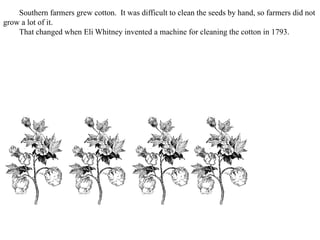
That changed when Eli Whitney invented a machine for cleaning the cotton in 1793.
Southern farmers grew cotton. It was difficult to clean the seeds by hand, so farmers did not
grow a lot of it.
That changed when Eli Whitney invented a machine for cleaning the cotton in 1793.
Southern farmers grew cotton. It was difficult to clean the seeds by hand, so farmers did not
grow a lot of it.
That changed when Eli Whitney invented a machine for cleaning the cotton in 1793.
Southern farmers grew cotton. It was difficult to clean the seeds by hand, so farmers did not
grow a lot of it.
That changed when Eli Whitney invented a machine for cleaning the cotton in 1793.
Southern farmers grew cotton. It was difficult to clean the seeds by hand, so farmers did not
grow a lot of it.
That changed when Eli Whitney invented a machine for cleaning the cotton in 1793.
Southern farmers grew cotton. It was difficult to clean the seeds by hand, so farmers did not
grow a lot of it.
That changed when Eli Whitney invented a machine for cleaning the cotton in 1793.
Southern farmers grew cotton. It was difficult to clean the seeds by hand, so farmers did not
grow a lot of it.
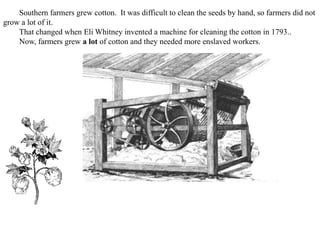
That changed when Eli Whitney invented a machine for cleaning the cotton in 1793..
Now, farmers grew a lot of cotton and they needed more enslaved workers.
Southern farmers grew cotton. It was difficult to clean the seeds by hand, so farmers did not
grow a lot of it.
That changed when Eli Whitney invented a machine for cleaning the cotton in 1793.
Now, farmers grew a lot of cotton and they needed more enslaved workers.
Timeline: A New Nation Grows, 1763 - 1820
1763: England won more land in North America after the French and Indian War.
1775: The American Revolution began near Boston.
1776: American leaders wrote the Declaration of Independence on July 4.
1781: The British surrendered at Yorktown, VA. American leaders wrote the Articles of Confederation.
1786: Soldier-Farmer William Shays led a rebellion about soldiers’ paychecks and taxes.
1787: American leaders wrote the Constitution, rules for the American government.
1789: George Washington elected 1st president. Slater built the first American textile factory in RI.
1791: Leaders added the Bill of Rights to the Constitution.
1793: Eli Whitney invented the cotton gin. This machine made cotton popular & increased slavery.
I1794:
1803:
1804-05:
1807:
1808:
1811:
1812:
1820:
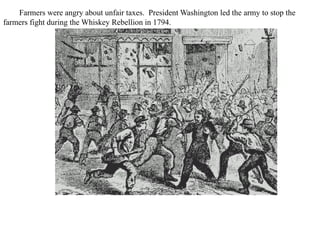
Farmers were angry about unfair taxes. President Washington led the army to stop the
farmers fight during the Whiskey Rebellion in 1794.
Timeline: A New Nation Grows, 1763 - 1820
1763: England won more land in North America after the French and Indian War.
1775: The American Revolution began near Boston.
1776: American leaders wrote the Declaration of Independence on July 4.
1781: The British surrendered at Yorktown, VA. American leaders wrote the Articles of Confederation.
1786: Soldier-Farmer William Shays led a rebellion about soldiers’ paychecks and taxes.
1787: American leaders wrote the Constitution, rules for the American government.
1789: George Washington elected 1st president. Slater built the first American textile factory in RI.
1791: Leaders added the Bill of Rights to the Constitution.
1793: Eli Whitney invented the cotton gin. This machine made cotton popular & increased slavery.
I1794: The federal army stopped farmers’ tax protest during the Whiskey Rebellion.
1803:
1804-05:
1807:
1808:
1811:
1812:
1820:
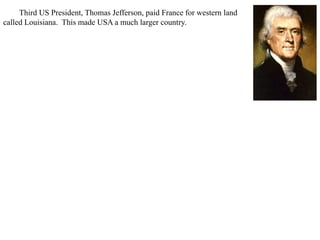
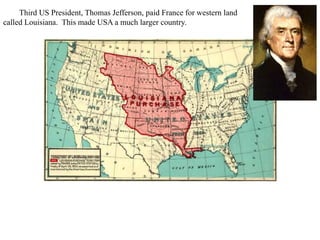
Third US President, Thomas Jefferson, paid France for western land
called Louisiana. This made USA a much larger country.
Third US President, Thomas Jefferson, paid France for western land
called Louisiana. This made USA a much larger country.
Timeline: A New Nation Grows, 1763 - 1820
1763: England won more land in North America after the French and Indian War.
1775: The American Revolution began near Boston.
1776: American leaders wrote the Declaration of Independence on July 4.
1781: The British surrendered at Yorktown, VA. American leaders wrote the Articles of Confederation.
1786: Soldier-Farmer William Shays led a rebellion about soldiers’ paychecks and taxes.
1787: American leaders wrote the Constitution, rules for the American government.
1789: George Washington elected 1st president. Slater built the first American textile factory in RI.
1791: Leaders added the Bill of Rights to the Constitution.
1793: Eli Whitney invented the cotton gin. This machine made cotton popular & increased slavery.
I1794: The federal army stopped farmers’ tax protest during the Whiskey Rebellion.
1803: President Thomas Jefferson paid France for western land in North America, the Louisiana Purchase.
1804-05:
1807:
1808:
1811:
1812:
1820:
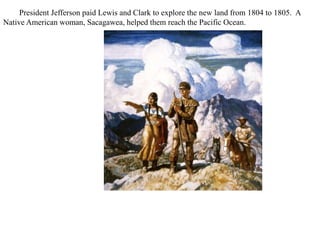
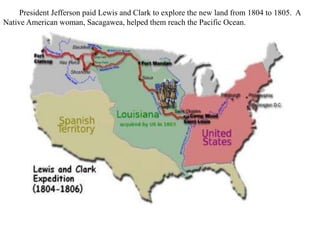
President Jefferson paid Lewis and Clark to explore the new land from 1804 to 1805. A
Native American woman, Sacagawea, helped them reach the Pacific Ocean.
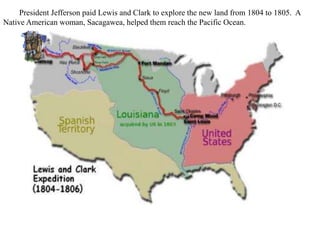
President Jefferson paid Lewis and Clark to explore the new land from 1804 to 1805. A
Native American woman, Sacagawea, helped them reach the Pacific Ocean.
President Jefferson paid Lewis and Clark to explore the new land from 1804 to 1805. A
Native American woman, Sacagawea, helped them reach the Pacific Ocean.
Timeline: A New Nation Grows, 1763 - 1820
1763: England won more land in North America after the French and Indian War.
1775: The American Revolution began near Boston.
1776: American leaders wrote the Declaration of Independence on July 4.
1781: The British surrendered at Yorktown, VA. American leaders wrote the Articles of Confederation.
1786: Soldier-Farmer William Shays led a rebellion about soldiers’ paychecks and taxes.
1787: American leaders wrote the Constitution, rules for the American government.
1789: George Washington elected 1st president. Slater built the first American textile factory in RI.
1791: Leaders added the Bill of Rights to the Constitution.
1793: Eli Whitney invented the cotton gin. This machine made cotton popular & increased slavery.
I1794: The federal army stopped farmers’ tax protest during the Whiskey Rebellion.
1803: President Thomas Jefferson paid France for western land in North America, the Louisiana Purchase.
1804-05: Lewis, Clark and Sacagawea explored Louisiana.
1807:
1808:
1811:
1812:
1820:
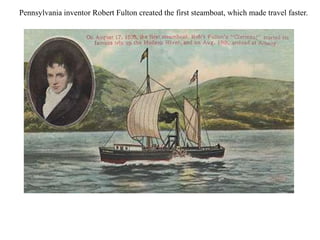
Pennsylvania inventor Robert Fulton created the first steamboat, which made travel faster.
Timeline: A New Nation Grows, 1763 - 1820
1763: England won more land in North America after the French and Indian War.
1775: The American Revolution began near Boston.
1776: American leaders wrote the Declaration of Independence on July 4.
1781: The British surrendered at Yorktown, VA. American leaders wrote the Articles of Confederation.
1786: Soldier-Farmer William Shays led a rebellion about soldiers’ paychecks and taxes.
1787: American leaders wrote the Constitution, rules for the American government.
1789: George Washington elected 1st president. Slater built the first American textile factory in RI.
1791: Leaders added the Bill of Rights to the Constitution.
1793: Eli Whitney invented the cotton gin. This machine made cotton popular & increased slavery.
I1794: The federal army stopped farmers’ tax protest during the Whiskey Rebellion.
1803: President Thomas Jefferson paid France for western land in North America, the Louisiana Purchase.
1804-05: Lewis, Clark and Sacagawea explored Louisiana.
1807: Robert Fulton of Pennsylvania invented the steamboat.
1808:
1811:
1812:
1820:
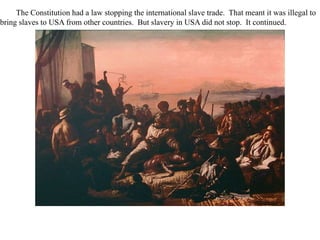
The Constitution had a law stopping the international slave trade. That meant it was illegal to
bring slaves to USA from other countries. But slavery in USA did not stop. It continued.
Timeline: A New Nation Grows, 1763 - 1820
1763: England won more land in North America after the French and Indian War.
1775: The American Revolution began near Boston.
1776: American leaders wrote the Declaration of Independence on July 4.
1781: The British surrendered at Yorktown, VA. American leaders wrote the Articles of Confederation.
1786: Soldier-Farmer William Shays led a rebellion about soldiers’ paychecks and taxes.
1787: American leaders wrote the Constitution, rules for the American government.
1789: George Washington elected 1st president. Slater built the first American textile factory in RI.
1791: Leaders added the Bill of Rights to the Constitution.
1793: Eli Whitney invented the cotton gin. This machine made cotton popular & increased slavery.
I1794: The federal army stopped farmers’ tax protest during the Whiskey Rebellion.
1803: President Thomas Jefferson paid France for western land in North America, the Louisiana Purchase.
1804-05: Lewis, Clark and Sacagawea explored Louisiana.
1807: Robert Fulton of Pennsylvania invented the steamboat.
1808: International slave trade ended in USA. American slavery continued.
1811:
1812:
1820:
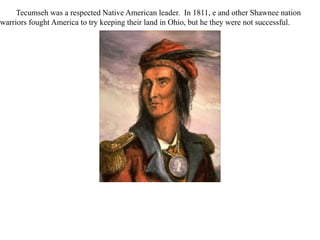
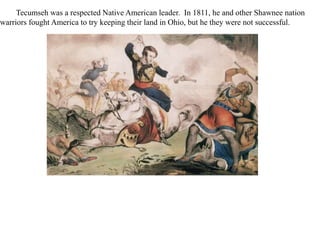
Tecumseh was a respected Native American leader. In 1811, e and other Shawnee nation
warriors fought America to try keeping their land in Ohio, but he they were not successful.
Tecumseh was a respected Native American leader. In 1811, he and other Shawnee nation
warriors fought America to try keeping their land in Ohio, but he they were not successful.
Timeline: A New Nation Grows, 1763 - 1820
1763: England won more land in North America after the French and Indian War.
1775: The American Revolution began near Boston.
1776: American leaders wrote the Declaration of Independence on July 4.
1781: The British surrendered at Yorktown, VA. American leaders wrote the Articles of Confederation.
1786: Soldier-Farmer William Shays led a rebellion about soldiers’ paychecks and taxes.
1787: American leaders wrote the Constitution, rules for the American government.
1789: George Washington elected 1st president. Slater built the first American textile factory in RI.
1791: Leaders added the Bill of Rights to the Constitution.
1793: Eli Whitney invented the cotton gin. This machine made cotton popular & increased slavery.
I1794: The federal army stopped farmers’ tax protest during the Whiskey Rebellion.
1803: President Thomas Jefferson paid France for western land in North America, the Louisiana Purchase.
1804-05: Lewis, Clark and Sacagawea explored Louisiana.
1807: Robert Fulton of Pennsylvania invented the steamboat.
1808: International slave trade ended in USA. American slavery continued.
1811: Americans fought a war against Shawnees and their leader, Tecumseh.
1812:
1820:
Americans fought a second war with Great Britain. USA didn’t win land, but won respect.
Timeline: A New Nation Grows, 1763 - 1820
1763: England won more land in North America after the French and Indian War.
1775: The American Revolution began near Boston.
1776: American leaders wrote the Declaration of Independence on July 4.
1781: The British surrendered at Yorktown, VA. American leaders wrote the Articles of Confederation.
1786: Soldier-Farmer William Shays led a rebellion about soldiers’ paychecks and taxes.
1787: American leaders wrote the Constitution, rules for the American government.
1789: George Washington elected 1st president. Slater built the first American textile factory in RI.
1791: Leaders added the Bill of Rights to the Constitution.
1793: Eli Whitney invented the cotton gin. This machine made cotton popular & increased slavery.
I1794: The federal army stopped farmers’ tax protest during the Whiskey Rebellion.
1803: President Thomas Jefferson paid France for western land in North America, the Louisiana Purchase.
1804-05: Lewis, Clark and Sacagawea explored Louisiana.
1807: Robert Fulton of Pennsylvania invented the steamboat.
1808: International slave trade ended in USA. American slavery continued.
1811: Americans fought a war against Shawnees and their leader, Tecumseh.
1812: Americans fought a second war w/Great Britain. USA didn’t win land, but won respect.
1820:
?
?
?
?
Timeline: A New Nation Grows, 1763 - 1820
1763: England won more land in North America after the French and Indian War.
1775: The American Revolution began near Boston.
1776: American leaders wrote the Declaration of Independence on July 4.
1781: The British surrendered at Yorktown, VA. American leaders wrote the Articles of Confederation.
1786: Soldier-Farmer William Shays led a rebellion about soldiers’ paychecks and taxes.
1787: American leaders wrote the Constitution, rules for the American government.
1789: George Washington elected 1st president. Slater built the first American textile factory in RI.
1791: Leaders added the Bill of Rights to the Constitution.
1793: Eli Whitney invented the cotton gin. This machine made cotton popular & increased slavery.
I1794: The federal army stopped farmers’ tax protest during the Whiskey Rebellion.
1803: President Thomas Jefferson paid France for western land in North America, the Louisiana Purchase.
1804-05: Lewis, Clark and Sacagawea explored Louisiana.
1807: Robert Fulton of Pennsylvania invented the steamboat.
1808: International slave trade ended in USA. American slavery continued.
1811: Americans fought a war against Shawnees and their leader, Tecumseh.
1812: Americans fought a second war w/Great Britain. USA didn’t win land, but won respect.
1820: Leaders in Congress passed the Missouri Compromise, which made free states and slave states.

Early US History Timeline
  • 1.
    American History Timeline, 1763- 1820 and the movie The Last of the Mohicans
  • 2.
    Timeline: A NewNation Grows, 1763 - 1820 1763: 1775: The American Revolution began near Boston. 1776: American leaders wrote the Declaration of Independence on July 4. 1781: The British surrendered at Yorktown, VA. American leaders wrote the Articles of Confederation. 1786: Soldier-Farmer William Shays led a rebellion about soldiers’ paychecks and taxes. 1787: American leaders wrote the Constitution, rules for the American government. 1789: George Washington elected 1st president. Slater built the first American textile factory in RI. 1791: Leaders added the Bill of Rights to the Constitution. 1793: Eli Whitney invented the cotton gin. This machine made cotton popular & increased slavery. I1794: The federal army stopped farmers’ tax protest during the Whiskey Rebellion. 1803: President Thomas Jefferson paid France for western land in North America, the Louisiana Purchase. 1804-05: Lewis, Clark and Sacagawea explored Louisiana. 1807: Robert Fulton of Pennsylvania invented the steamboat. 1808: International slave trade ended in USA. American slavery continued. 1811: Americans fought a war against Shawnees and their leader, Tecumseh. 1812: A mericans fought a second war w/Great Britain. USA didn’t win land, but won respect. 1820: Leaders in Congress passed the Missouri Compromise, which made free states and slave states. name: date:
  • 3.
    Timeline: A NewNation Grows, 1763 - 1820 1763: 1775: The American Revolution began near Boston. 1776: American leaders wrote the Declaration of Independence on July 4. 1781: The British surrendered at Yorktown, VA. American leaders wrote the Articles of Confederation. 1786: Soldier-Farmer William Shays led a rebellion about soldiers’ paychecks and taxes. 1787: American leaders wrote the Constitution, rules for the American government. 1789: George Washington elected 1st president. Slater built the first American textile factory in RI. 1791: Leaders added the Bill of Rights to the Constitution. 1793: Eli Whitney invented the cotton gin. This machine made cotton popular & increased slavery. I1794: The federal army stopped farmers’ tax protest during the Whiskey Rebellion. 1803: President Thomas Jefferson paid France for western land in North America, the Louisiana Purchase. 1804-05: Lewis, Clark and Sacagawea explored Louisiana. 1807: Robert Fulton of Pennsylvania invented the steamboat. 1808: International slave trade ended in USA. American slavery continued. 1811: Americans fought a war against Shawnees and their leader, Tecumseh. 1812: Americans fought a second war w/Great Britain. USA didn’t win land, but won respect. 1820: Leaders in Congress passed the Missouri Compromise, which made free states and slave states.
  • 4.
    Leave your farms! Goback home to Europe!
  • 5.
    Timeline: A NewNation Grows, 1763 - 1820 1763: England won more land in North America after the French and Indian War. 1775: 1776: 1781: 1786: 1787: 1789: 1791: 1793: I1794: 1803: 1804-05: 1807: 1808: 1811: 1812: 1820:
  • 7.
    Timeline: A NewNation Grows, 1763 - 1820 1763: England won more land in North America after the French and Indian War. 1775: The American Revolution began near Boston. 1776: 1781: 1786: 1787: 1789: 1791: 1793: I1794: 1803: 1804-05: 1807: 1808: 1811: 1812: 1820:
  • 8.
    4. On June12, 1776, the Continental Congress appointed a group of leaders to create a government plan.
  • 9.
    Fifty-six American leadersmet in Philadelphia to solve the problem of King George’s unfair laws.
  • 12.
  • 13.
    Timeline: A NewNation Grows, 1763 - 1820 1763: England won more land in North America after the French and Indian War. 1775: The American Revolution began near Boston. 1776: American leaders wrote the Declaration of Independence on July 4. 1781: 1786: 1787: 1789: 1791: 1793: I1794: 1803: 1804-05: 1807: 1808: 1811: 1812: 1820:
  • 14.
    Most of thefighting of the Revolution ended after Britain lost the Battle of Yorktown, Virginia, in 1781. Surrender of Cornwallis
  • 15.
    Most of thefighting of the Revolution ended after Britain lost the Battle of Yorktown, Virginia, in 1781. Surrender of Cornwallis
  • 16.
    Timeline: A NewNation Grows, 1763 - 1820 1763: England won more land in North America after the French and Indian War. 1775: The American Revolution began near Boston. 1776: American leaders wrote the Declaration of Independence on July 4. 1781: The British surrendered at Yorktown, VA. American leaders wrote the Articles of Confederation. 1786: 1787: 1789: 1791: 1793: I1794: 1803: 1804-05: 1807: 1808: 1811: 1812: 1820:
  • 18.
  • 19.
    Daniel Shays’ Rebellion Youcan’t send me to jail! I can’t pay my debts because I never got a paycheck!
  • 20.
    Timeline: A NewNation Grows, 1763 - 1820 1763: England won more land in North America after the French and Indian War. 1775: The American Revolution began near Boston. 1776: American leaders wrote the Declaration of Independence on July 4. 1781: The British surrendered at Yorktown, VA. American leaders wrote the Articles of Confederation. 1786: Soldier-Farmer William Shays led a rebellion about soldiers’ paychecks and taxes. 1787: 1789: 1791: 1793: I1794: 1803: 1804-05: 1807: 1808: 1811: 1812: 1820:
  • 21.
    In 1787, leadersof the Continental Congress met again in Philadelphia to create a government plan.
  • 23.
    George Washington agreedto serve as President of the meeting to write the Government Plan.
  • 24.
  • 25.
    1. 2. 3. The Constitution dividedthe government in three parts that shared power.
  • 26.
    Timeline: A NewNation Grows, 1763 - 1820 1763: England won more land in North America after the French and Indian War. 1775: The American Revolution began near Boston. 1776: American leaders wrote the Declaration of Independence on July 4. 1781: The British surrendered at Yorktown, VA. American leaders wrote the Articles of Confederation. 1786: Soldier-Farmer William Shays led a rebellion about soldiers’ paychecks and taxes. 1787: American leaders wrote the Constitution, rules for the American government. 1789: 1791: 1793: I1794: 1803: 1804-05: 1807: 1808: 1811: 1812: 1820:
  • 27.
    Americans elected GeorgeWashington as the first president in 1789.
  • 29.
    Samuel Slater builtAmerica's first factory to make clothes in 1789.
  • 30.
    Timeline: A NewNation Grows, 1763 - 1820 1763: England won more land in North America after the French and Indian War. 1775: The American Revolution began near Boston. 1776: American leaders wrote the Declaration of Independence on July 4. 1781: The British surrendered at Yorktown, VA. American leaders wrote the Articles of Confederation. 1786: Soldier-Farmer William Shays led a rebellion about soldiers’ paychecks and taxes. 1787: American leaders wrote the Constitution, rules for the American government. 1789: George Washington elected 1st president. Slater built the first American textile factory in RI. 1791: 1793: I1794: 1803: 1804-05: 1807: 1808: 1811: 1812: 1820:
  • 31.
    Leaders added theBill of Rights to the Constitution in 1791.
  • 32.
    Timeline: A NewNation Grows, 1763 - 1820 1763: England won more land in North America after the French and Indian War. 1775: The American Revolution began near Boston. 1776: American leaders wrote the Declaration of Independence on July 4. 1781: The British surrendered at Yorktown, VA. American leaders wrote the Articles of Confederation. 1786: Soldier-Farmer William Shays led a rebellion about soldiers’ paychecks and taxes. 1787: American leaders wrote the Constitution, rules for the American government. 1789: George Washington elected 1st president. Slater built the first American textile factory in RI. 1791: Leaders added the Bill of Rights to the Constitution. 1793: I1794: 1803: 1804-05: 1807: 1808: 1811: 1812: 1820:
  • 33.
    Southern farmers grewcotton. It was difficult to clean the seeds by hand.
  • 34.
    Southern farmers grewcotton. It was difficult to clean the seeds by hand, so farmers did not grow a lot of it.
  • 35.
    Inventor Eli Whitney Southernfarmers grew cotton. It was difficult to clean the seeds by hand, so farmers did not grow a lot of it. That changed when Eli Whitney invented a machine for cleaning the cotton in 1793.
  • 36.
    Southern farmers grewcotton. It was difficult to clean the seeds by hand, so farmers did not grow a lot of it. That changed when Eli Whitney invented a machine for cleaning the cotton in 1793.
  • 37.
    Southern farmers grewcotton. It was difficult to clean the seeds by hand, so farmers did not grow a lot of it. That changed when Eli Whitney invented a machine for cleaning the cotton in 1793.
  • 38.
    Southern farmers grewcotton. It was difficult to clean the seeds by hand, so farmers did not grow a lot of it. That changed when Eli Whitney invented a machine for cleaning the cotton in 1793.
  • 39.
    Southern farmers grewcotton. It was difficult to clean the seeds by hand, so farmers did not grow a lot of it. That changed when Eli Whitney invented a machine for cleaning the cotton in 1793.
  • 40.
    Southern farmers grewcotton. It was difficult to clean the seeds by hand, so farmers did not grow a lot of it. That changed when Eli Whitney invented a machine for cleaning the cotton in 1793.
  • 41.
    Southern farmers grewcotton. It was difficult to clean the seeds by hand, so farmers did not grow a lot of it. That changed when Eli Whitney invented a machine for cleaning the cotton in 1793.. Now, farmers grew a lot of cotton and they needed more enslaved workers.
  • 42.
    Southern farmers grewcotton. It was difficult to clean the seeds by hand, so farmers did not grow a lot of it. That changed when Eli Whitney invented a machine for cleaning the cotton in 1793. Now, farmers grew a lot of cotton and they needed more enslaved workers.
  • 43.
    Timeline: A NewNation Grows, 1763 - 1820 1763: England won more land in North America after the French and Indian War. 1775: The American Revolution began near Boston. 1776: American leaders wrote the Declaration of Independence on July 4. 1781: The British surrendered at Yorktown, VA. American leaders wrote the Articles of Confederation. 1786: Soldier-Farmer William Shays led a rebellion about soldiers’ paychecks and taxes. 1787: American leaders wrote the Constitution, rules for the American government. 1789: George Washington elected 1st president. Slater built the first American textile factory in RI. 1791: Leaders added the Bill of Rights to the Constitution. 1793: Eli Whitney invented the cotton gin. This machine made cotton popular & increased slavery. I1794: 1803: 1804-05: 1807: 1808: 1811: 1812: 1820:
  • 44.
    Farmers were angryabout unfair taxes. President Washington led the army to stop the farmers fight during the Whiskey Rebellion in 1794.
  • 45.
    Timeline: A NewNation Grows, 1763 - 1820 1763: England won more land in North America after the French and Indian War. 1775: The American Revolution began near Boston. 1776: American leaders wrote the Declaration of Independence on July 4. 1781: The British surrendered at Yorktown, VA. American leaders wrote the Articles of Confederation. 1786: Soldier-Farmer William Shays led a rebellion about soldiers’ paychecks and taxes. 1787: American leaders wrote the Constitution, rules for the American government. 1789: George Washington elected 1st president. Slater built the first American textile factory in RI. 1791: Leaders added the Bill of Rights to the Constitution. 1793: Eli Whitney invented the cotton gin. This machine made cotton popular & increased slavery. I1794: The federal army stopped farmers’ tax protest during the Whiskey Rebellion. 1803: 1804-05: 1807: 1808: 1811: 1812: 1820:
  • 46.
    Third US President,Thomas Jefferson, paid France for western land called Louisiana. This made USA a much larger country.
  • 47.
    Third US President,Thomas Jefferson, paid France for western land called Louisiana. This made USA a much larger country.
  • 48.
    Timeline: A NewNation Grows, 1763 - 1820 1763: England won more land in North America after the French and Indian War. 1775: The American Revolution began near Boston. 1776: American leaders wrote the Declaration of Independence on July 4. 1781: The British surrendered at Yorktown, VA. American leaders wrote the Articles of Confederation. 1786: Soldier-Farmer William Shays led a rebellion about soldiers’ paychecks and taxes. 1787: American leaders wrote the Constitution, rules for the American government. 1789: George Washington elected 1st president. Slater built the first American textile factory in RI. 1791: Leaders added the Bill of Rights to the Constitution. 1793: Eli Whitney invented the cotton gin. This machine made cotton popular & increased slavery. I1794: The federal army stopped farmers’ tax protest during the Whiskey Rebellion. 1803: President Thomas Jefferson paid France for western land in North America, the Louisiana Purchase. 1804-05: 1807: 1808: 1811: 1812: 1820:
  • 49.
    President Jefferson paidLewis and Clark to explore the new land from 1804 to 1805. A Native American woman, Sacagawea, helped them reach the Pacific Ocean.
  • 50.
    President Jefferson paidLewis and Clark to explore the new land from 1804 to 1805. A Native American woman, Sacagawea, helped them reach the Pacific Ocean.
  • 51.
    President Jefferson paidLewis and Clark to explore the new land from 1804 to 1805. A Native American woman, Sacagawea, helped them reach the Pacific Ocean.
  • 52.
    Timeline: A NewNation Grows, 1763 - 1820 1763: England won more land in North America after the French and Indian War. 1775: The American Revolution began near Boston. 1776: American leaders wrote the Declaration of Independence on July 4. 1781: The British surrendered at Yorktown, VA. American leaders wrote the Articles of Confederation. 1786: Soldier-Farmer William Shays led a rebellion about soldiers’ paychecks and taxes. 1787: American leaders wrote the Constitution, rules for the American government. 1789: George Washington elected 1st president. Slater built the first American textile factory in RI. 1791: Leaders added the Bill of Rights to the Constitution. 1793: Eli Whitney invented the cotton gin. This machine made cotton popular & increased slavery. I1794: The federal army stopped farmers’ tax protest during the Whiskey Rebellion. 1803: President Thomas Jefferson paid France for western land in North America, the Louisiana Purchase. 1804-05: Lewis, Clark and Sacagawea explored Louisiana. 1807: 1808: 1811: 1812: 1820:
  • 53.
    Pennsylvania inventor RobertFulton created the first steamboat, which made travel faster.
  • 54.
    Timeline: A NewNation Grows, 1763 - 1820 1763: England won more land in North America after the French and Indian War. 1775: The American Revolution began near Boston. 1776: American leaders wrote the Declaration of Independence on July 4. 1781: The British surrendered at Yorktown, VA. American leaders wrote the Articles of Confederation. 1786: Soldier-Farmer William Shays led a rebellion about soldiers’ paychecks and taxes. 1787: American leaders wrote the Constitution, rules for the American government. 1789: George Washington elected 1st president. Slater built the first American textile factory in RI. 1791: Leaders added the Bill of Rights to the Constitution. 1793: Eli Whitney invented the cotton gin. This machine made cotton popular & increased slavery. I1794: The federal army stopped farmers’ tax protest during the Whiskey Rebellion. 1803: President Thomas Jefferson paid France for western land in North America, the Louisiana Purchase. 1804-05: Lewis, Clark and Sacagawea explored Louisiana. 1807: Robert Fulton of Pennsylvania invented the steamboat. 1808: 1811: 1812: 1820:
  • 55.
    The Constitution hada law stopping the international slave trade. That meant it was illegal to bring slaves to USA from other countries. But slavery in USA did not stop. It continued.
  • 56.
    Timeline: A NewNation Grows, 1763 - 1820 1763: England won more land in North America after the French and Indian War. 1775: The American Revolution began near Boston. 1776: American leaders wrote the Declaration of Independence on July 4. 1781: The British surrendered at Yorktown, VA. American leaders wrote the Articles of Confederation. 1786: Soldier-Farmer William Shays led a rebellion about soldiers’ paychecks and taxes. 1787: American leaders wrote the Constitution, rules for the American government. 1789: George Washington elected 1st president. Slater built the first American textile factory in RI. 1791: Leaders added the Bill of Rights to the Constitution. 1793: Eli Whitney invented the cotton gin. This machine made cotton popular & increased slavery. I1794: The federal army stopped farmers’ tax protest during the Whiskey Rebellion. 1803: President Thomas Jefferson paid France for western land in North America, the Louisiana Purchase. 1804-05: Lewis, Clark and Sacagawea explored Louisiana. 1807: Robert Fulton of Pennsylvania invented the steamboat. 1808: International slave trade ended in USA. American slavery continued. 1811: 1812: 1820:
  • 57.
    Tecumseh was arespected Native American leader. In 1811, e and other Shawnee nation warriors fought America to try keeping their land in Ohio, but he they were not successful.
  • 58.
    Tecumseh was arespected Native American leader. In 1811, he and other Shawnee nation warriors fought America to try keeping their land in Ohio, but he they were not successful.
  • 59.
    Timeline: A NewNation Grows, 1763 - 1820 1763: England won more land in North America after the French and Indian War. 1775: The American Revolution began near Boston. 1776: American leaders wrote the Declaration of Independence on July 4. 1781: The British surrendered at Yorktown, VA. American leaders wrote the Articles of Confederation. 1786: Soldier-Farmer William Shays led a rebellion about soldiers’ paychecks and taxes. 1787: American leaders wrote the Constitution, rules for the American government. 1789: George Washington elected 1st president. Slater built the first American textile factory in RI. 1791: Leaders added the Bill of Rights to the Constitution. 1793: Eli Whitney invented the cotton gin. This machine made cotton popular & increased slavery. I1794: The federal army stopped farmers’ tax protest during the Whiskey Rebellion. 1803: President Thomas Jefferson paid France for western land in North America, the Louisiana Purchase. 1804-05: Lewis, Clark and Sacagawea explored Louisiana. 1807: Robert Fulton of Pennsylvania invented the steamboat. 1808: International slave trade ended in USA. American slavery continued. 1811: Americans fought a war against Shawnees and their leader, Tecumseh. 1812: 1820:
  • 60.
    Americans fought asecond war with Great Britain. USA didn’t win land, but won respect.
  • 61.
    Timeline: A NewNation Grows, 1763 - 1820 1763: England won more land in North America after the French and Indian War. 1775: The American Revolution began near Boston. 1776: American leaders wrote the Declaration of Independence on July 4. 1781: The British surrendered at Yorktown, VA. American leaders wrote the Articles of Confederation. 1786: Soldier-Farmer William Shays led a rebellion about soldiers’ paychecks and taxes. 1787: American leaders wrote the Constitution, rules for the American government. 1789: George Washington elected 1st president. Slater built the first American textile factory in RI. 1791: Leaders added the Bill of Rights to the Constitution. 1793: Eli Whitney invented the cotton gin. This machine made cotton popular & increased slavery. I1794: The federal army stopped farmers’ tax protest during the Whiskey Rebellion. 1803: President Thomas Jefferson paid France for western land in North America, the Louisiana Purchase. 1804-05: Lewis, Clark and Sacagawea explored Louisiana. 1807: Robert Fulton of Pennsylvania invented the steamboat. 1808: International slave trade ended in USA. American slavery continued. 1811: Americans fought a war against Shawnees and their leader, Tecumseh. 1812: Americans fought a second war w/Great Britain. USA didn’t win land, but won respect. 1820:
  • 65.
  • 66.
    Timeline: A NewNation Grows, 1763 - 1820 1763: England won more land in North America after the French and Indian War. 1775: The American Revolution began near Boston. 1776: American leaders wrote the Declaration of Independence on July 4. 1781: The British surrendered at Yorktown, VA. American leaders wrote the Articles of Confederation. 1786: Soldier-Farmer William Shays led a rebellion about soldiers’ paychecks and taxes. 1787: American leaders wrote the Constitution, rules for the American government. 1789: George Washington elected 1st president. Slater built the first American textile factory in RI. 1791: Leaders added the Bill of Rights to the Constitution. 1793: Eli Whitney invented the cotton gin. This machine made cotton popular & increased slavery. I1794: The federal army stopped farmers’ tax protest during the Whiskey Rebellion. 1803: President Thomas Jefferson paid France for western land in North America, the Louisiana Purchase. 1804-05: Lewis, Clark and Sacagawea explored Louisiana. 1807: Robert Fulton of Pennsylvania invented the steamboat. 1808: International slave trade ended in USA. American slavery continued. 1811: Americans fought a war against Shawnees and their leader, Tecumseh. 1812: Americans fought a second war w/Great Britain. USA didn’t win land, but won respect. 1820: Leaders in Congress passed the Missouri Compromise, which made free states and slave states.

Editor's Notes

  • #9 http://currierandives.net/images/IndependenceHallPhiladelphia1776.jpg
  • #22 http://currierandives.net/images/IndependenceHallPhiladelphia1776.jpg
  • #54 https://www.mississippiriverinfo.com/wp-content/uploads/2013/06/Robert-Fulton-And-His-Steamboat-Clermont.jpg
  • #59 https://i1.wp.com/thehistoryjunkie.com/wp-content/uploads/2019/01/DeathofTecumseh.jpg