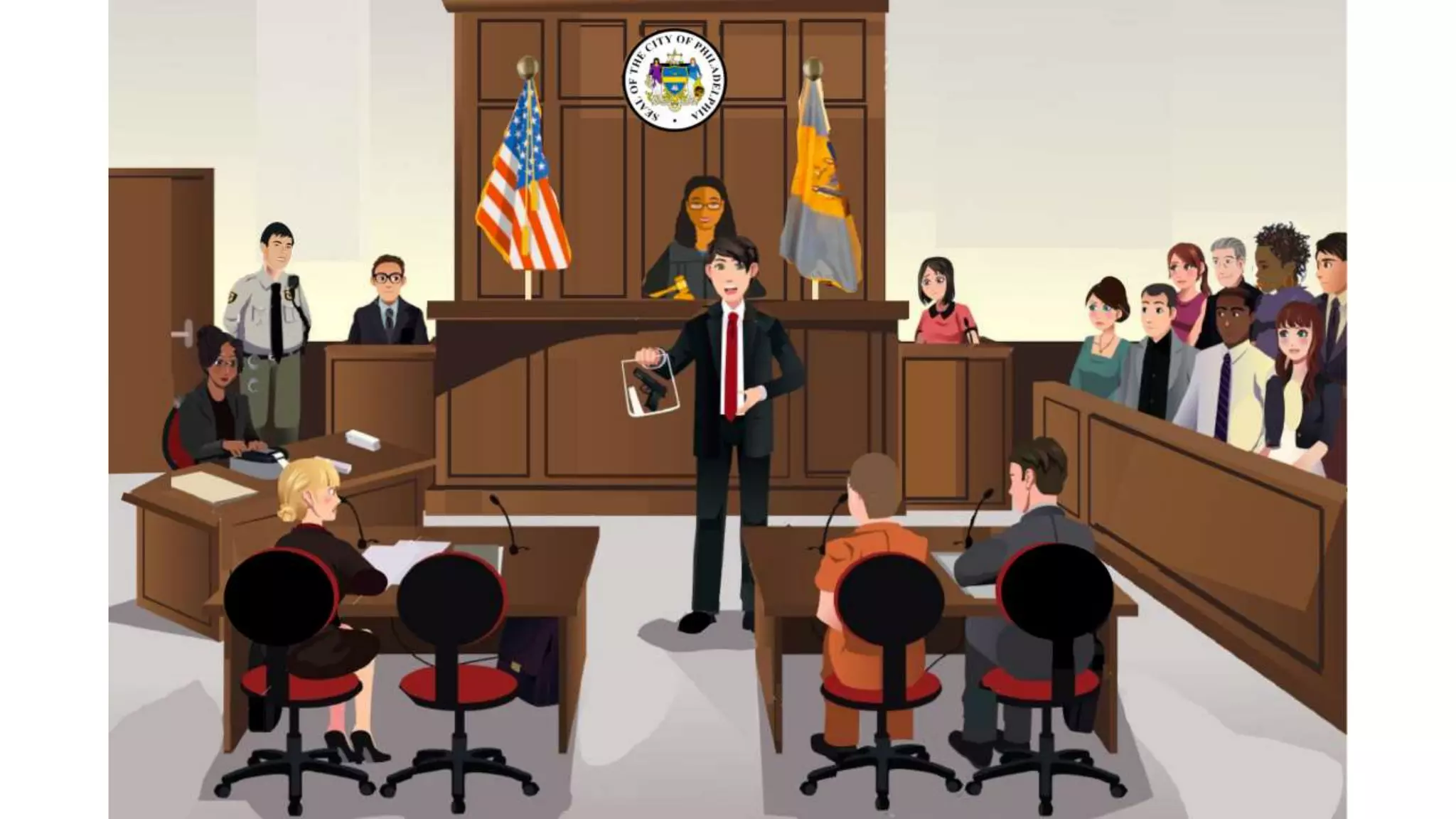
Who’s Who in a Courtroom?
the defense attorney
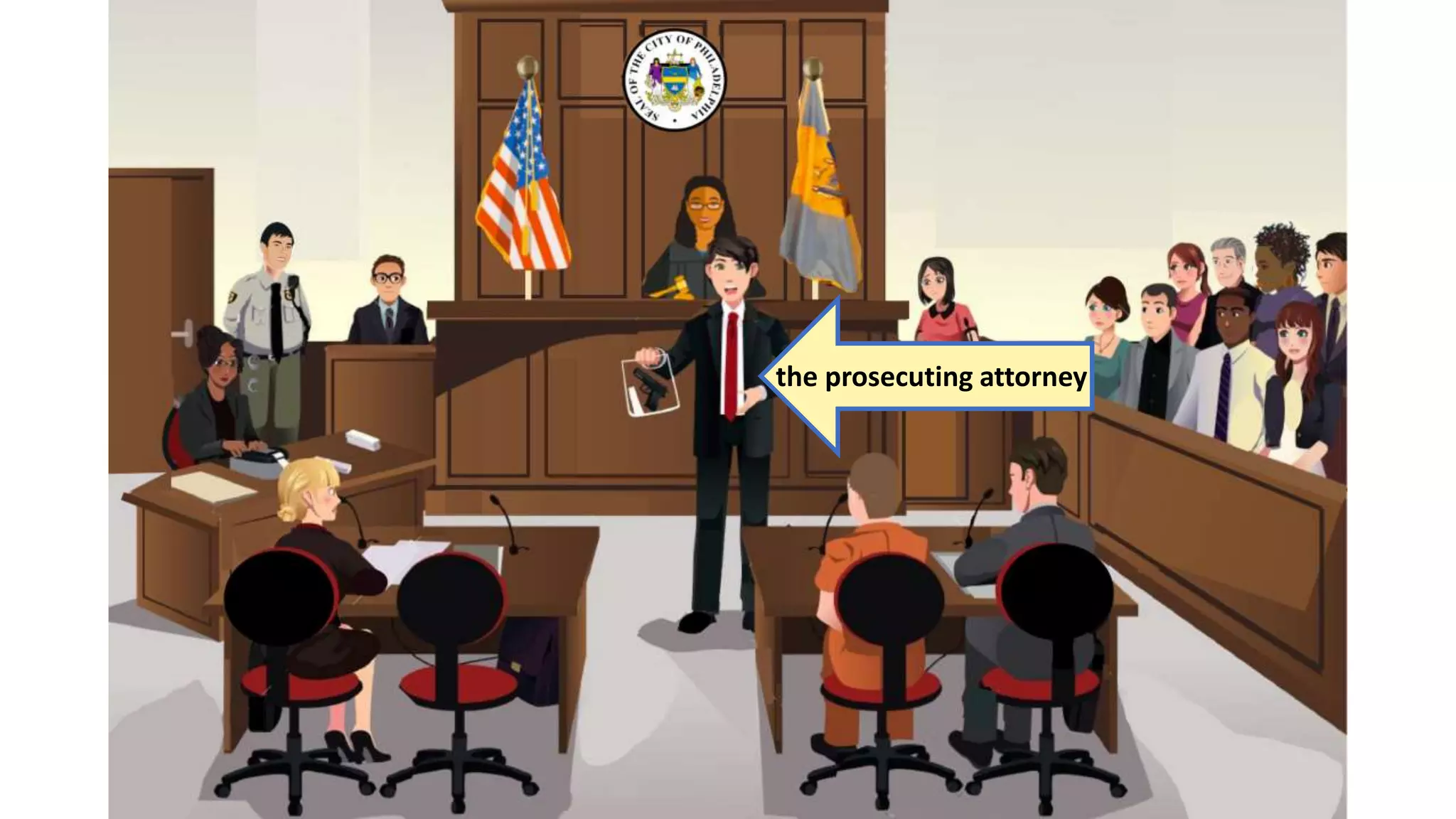
the prosecuting attorney
• the judge: Judges make decisions in
court and watch that everyone follows
rules.
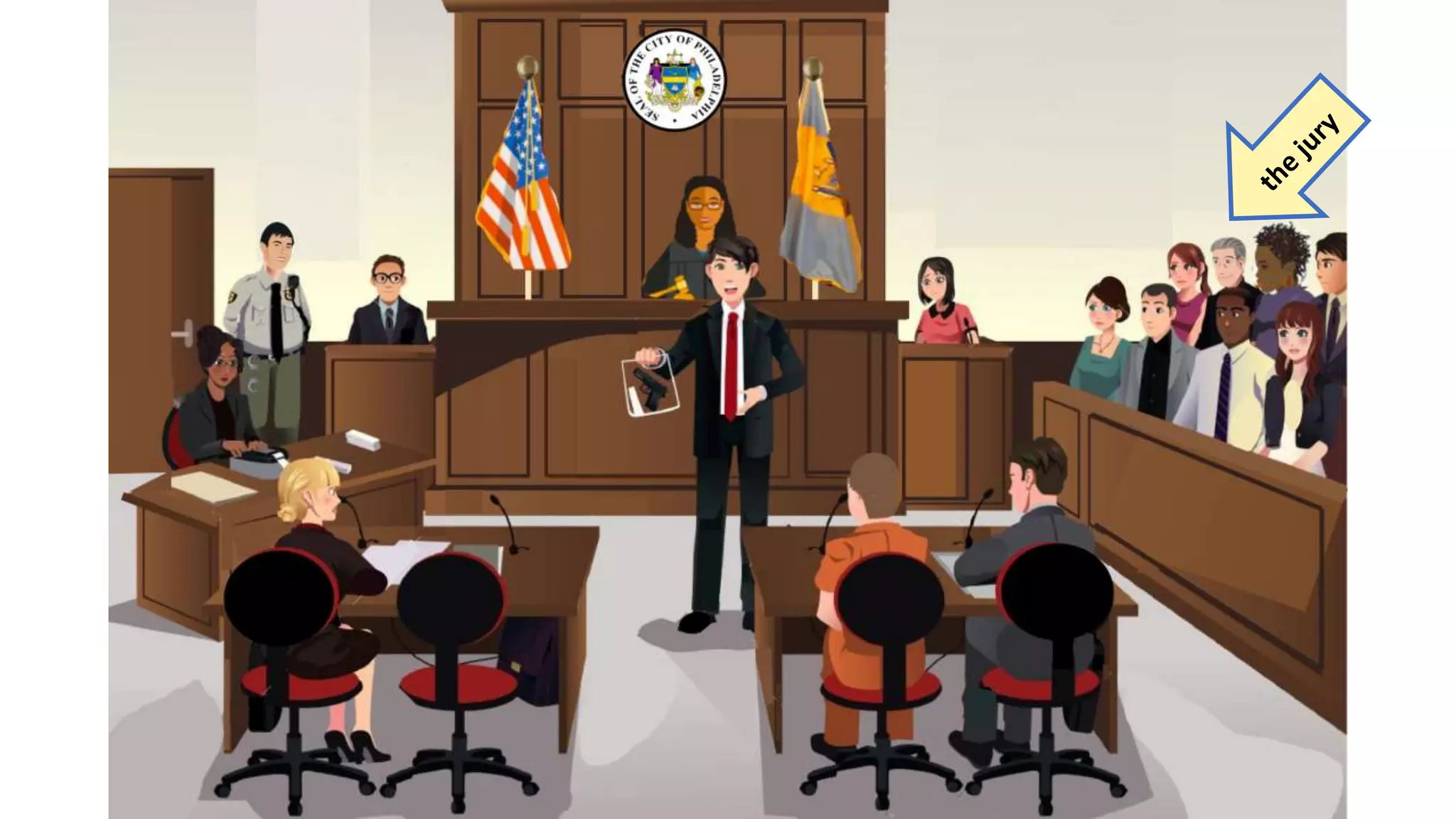
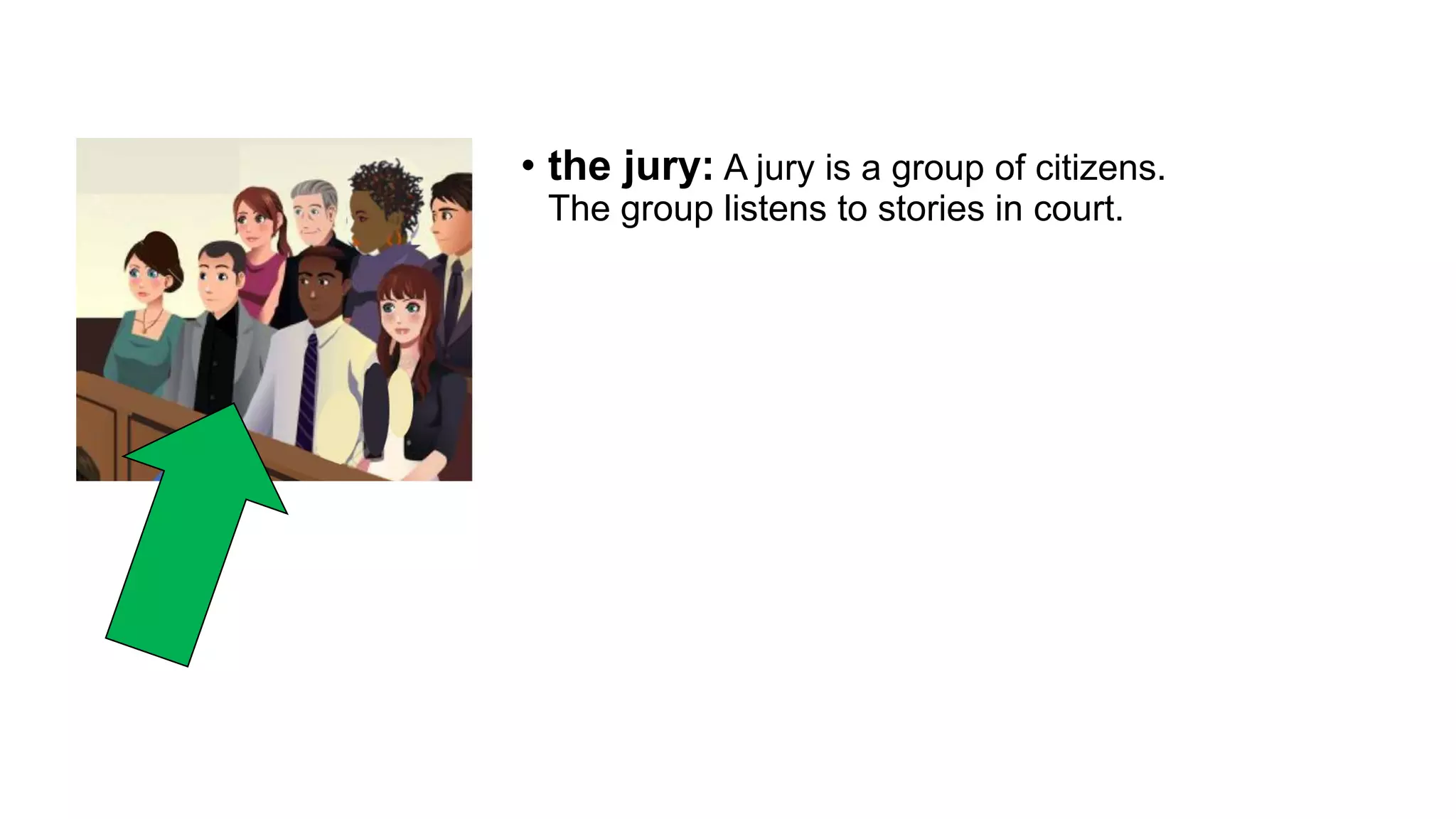
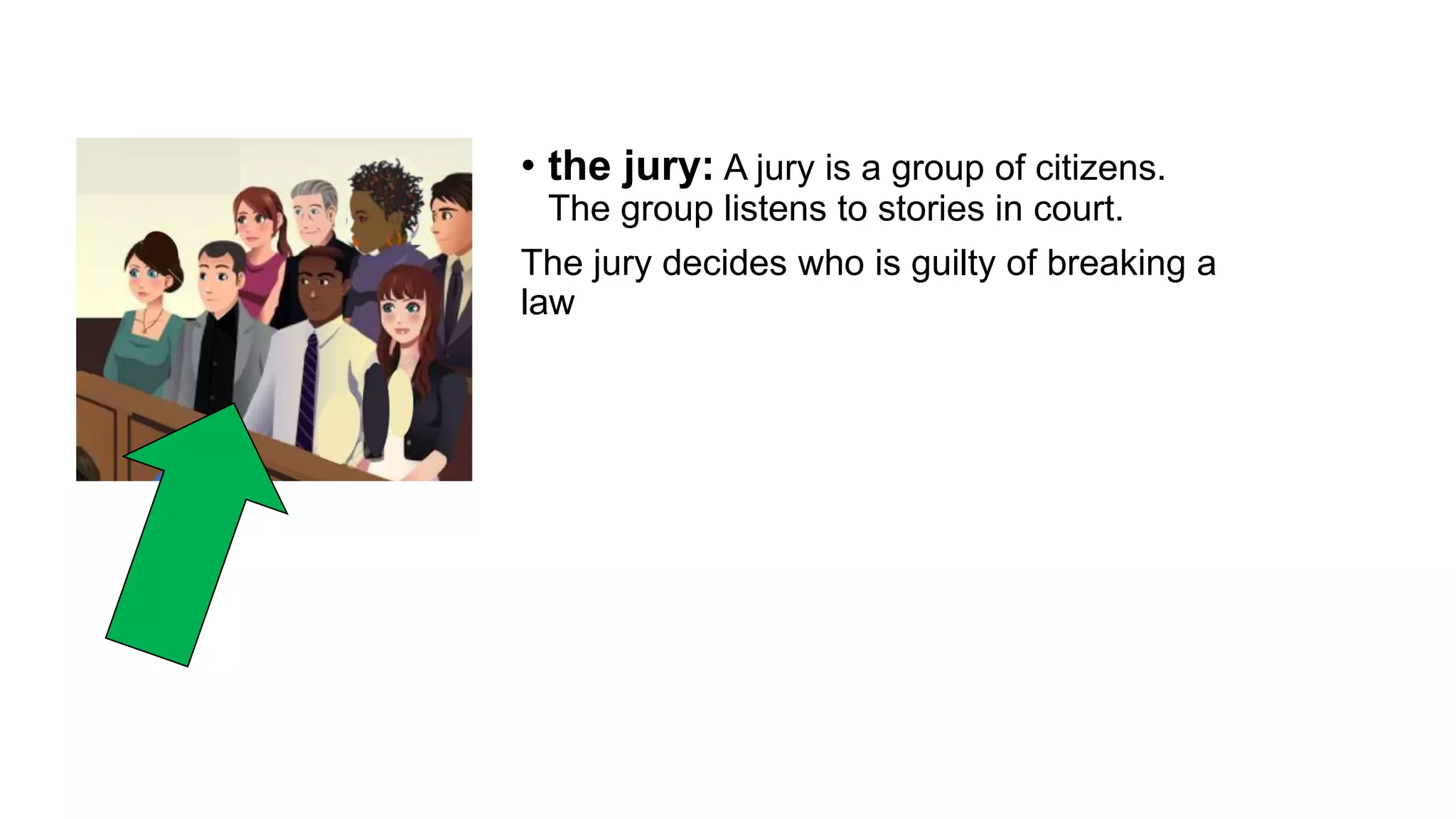
• the jury: A jury is a group of citizens.
The group listens to stories in court.
• the jury: A jury is a group of citizens.
The group listens to stories in court.
The jury decides who is guilty of breaking a
law
• the jury: A jury is a group of citizens.
The group listens to stories in court.
The jury decides who is guilty of breaking a
law or who is responsible for a problem.
• the jury: A jury is a group of citizens.
The group listens to stories in court.
The jury decides who is guilty of breaking a
law or who is responsible for a problem.
Juries decide about punishments.
A person on a jury is called a ‘juror.’
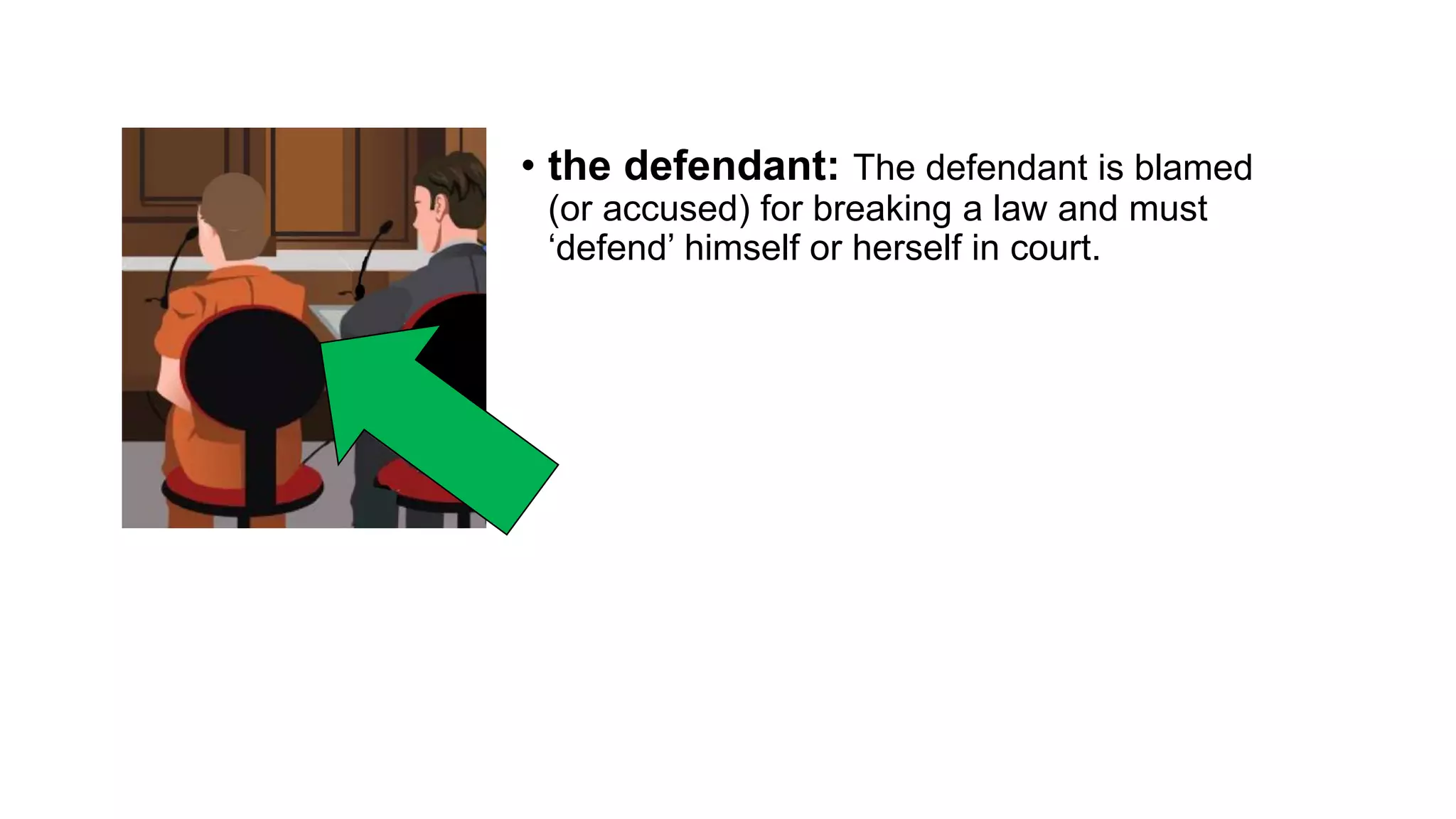
• the defendant: The defendant is blamed
(or accused) for breaking a law and must
‘defend’ himself or herself in court.
• a witness: A witness saw what
happened and tells the story in court.
• the defense attorney: This attorney
(lawyer) supports the defendant.
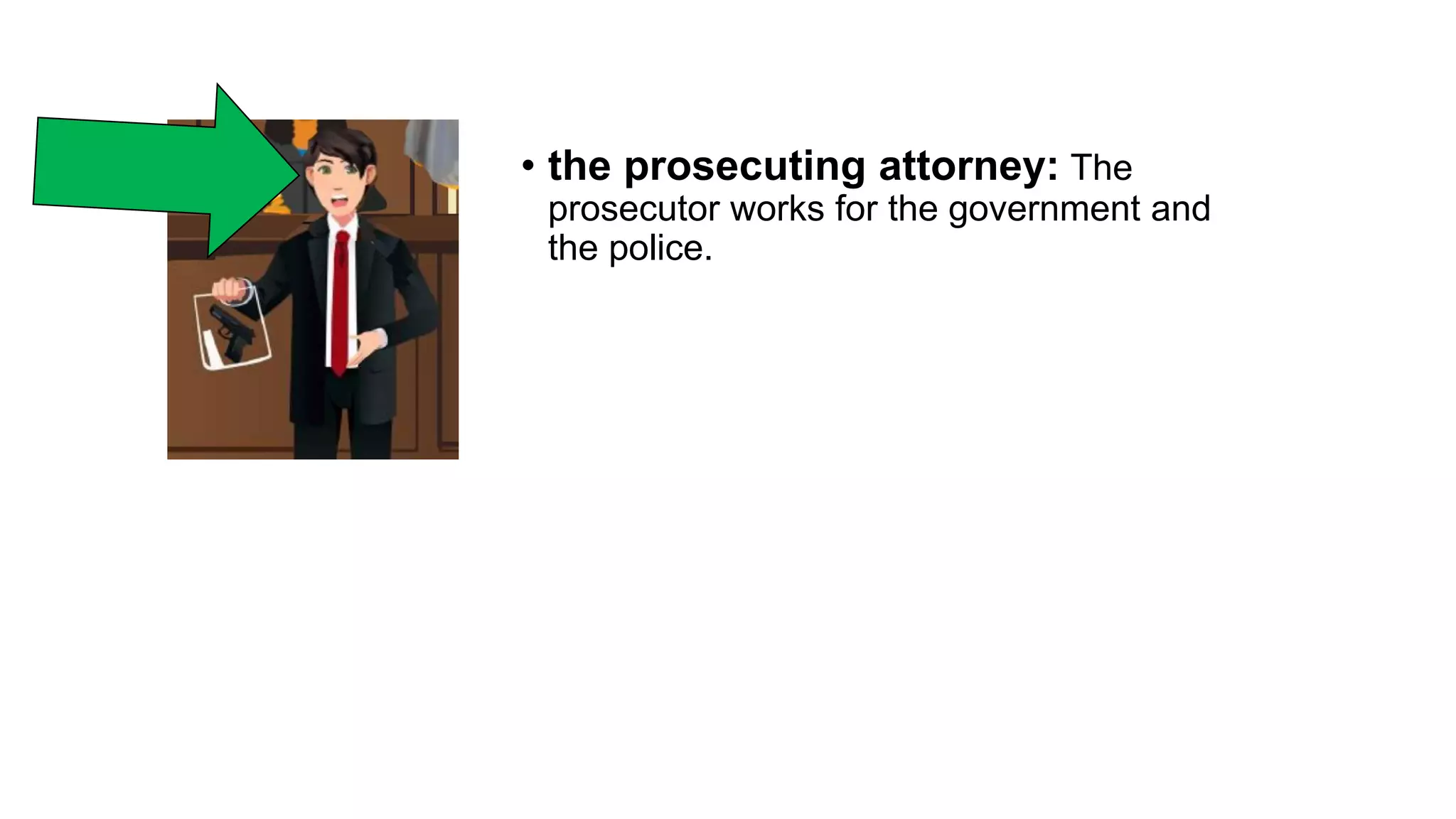
• the prosecuting attorney: The
prosecutor works for the government and
the police.
• the prosecuting attorney: The
prosecutor works for the government and
the police.
Prosecuting attorneys must prove
defendants breake laws. The District
Attorney is his boss.
• the interpreter: translates languages.
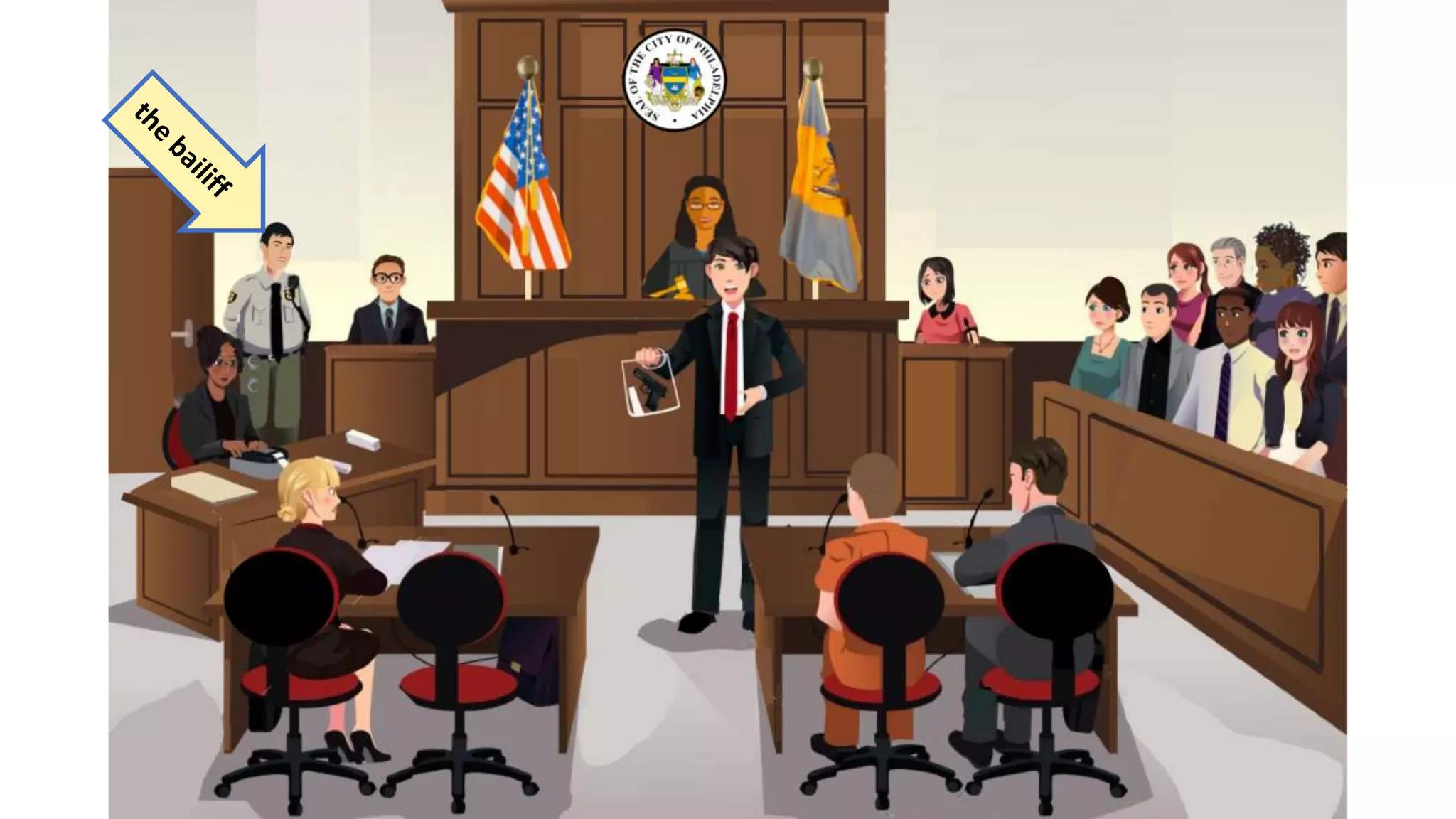
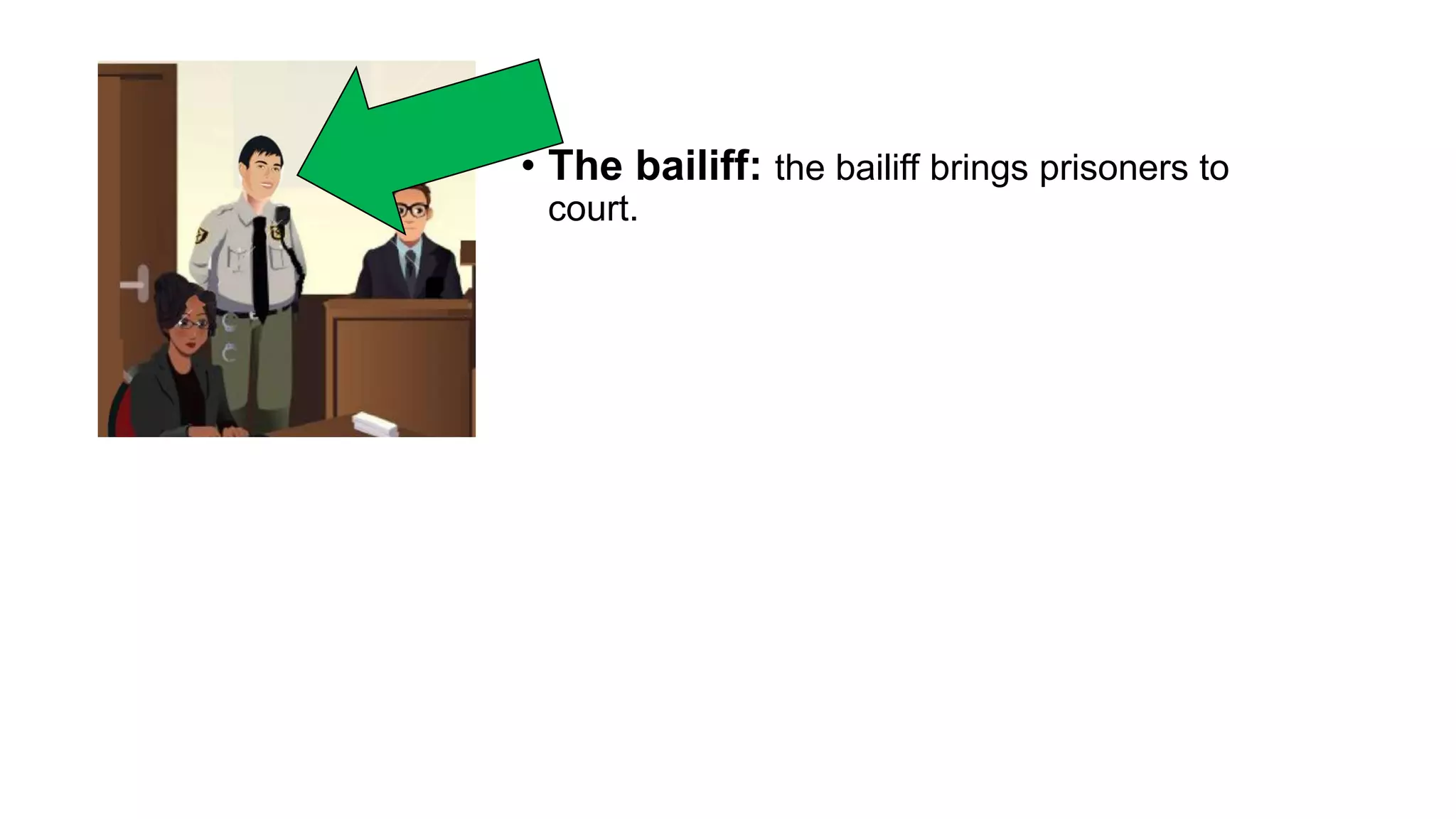
• The bailiff: the bailiff brings prisoners to
court.
• The bailiff: the bailiff brings prisoners to
court. If anyone is not polite in court, judges
tell bailiffs to remove them.
• The court reporter: This person
records everything people say in court.
bailiff
court reporter
judge
jury
defendant
defense attorney
interpreter
prosecuting attorney
witness
• The public gallery: In most hearings,
anyone may visit a courtroom and listen
to the hearing.
• The news media: We have freedom
of the press. News writers may be in the
courtroom to prepare stories for TV and
radio news shows or newspapers.
• hearing: telling your story in court
(the judge and witnesses *hear* you).
• oath: promise.
• oath: promise. Everyone who speaks in
court must ‘take an oath’. That means
they promise to tell the truth.
• “Your honor”: What you call a judge.
Everyone in the courtroom must speak to
the judge in a respectful way.
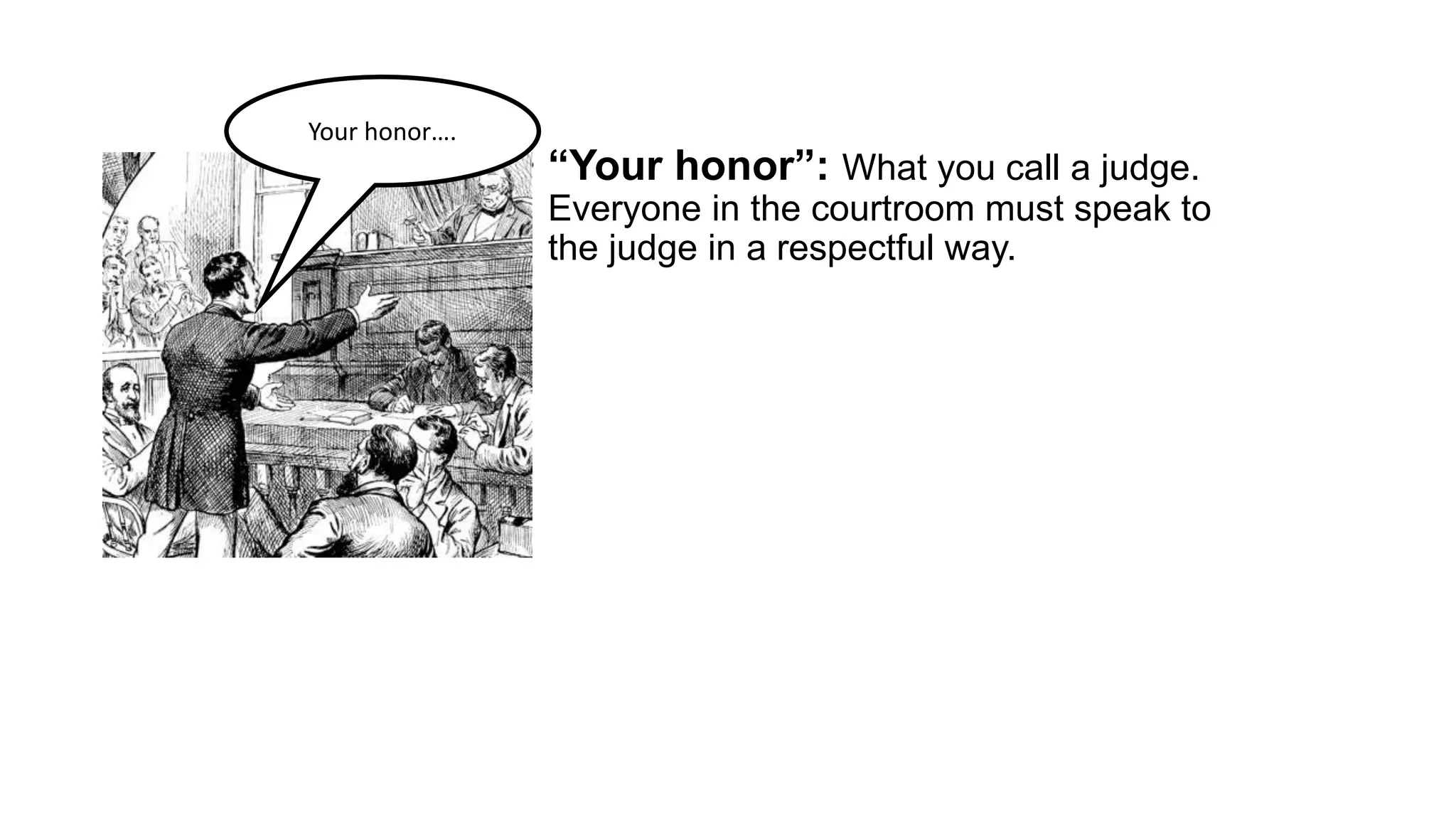
• “Your honor”: What you call a judge.
Everyone in the courtroom must speak to
the judge in a respectful way.
Your honor….
• perjury: Lying in court.
There are strict punishments for perjury.
• object: Complain about fairness.
If a lawyer thinks the prosecuting attorney
says something unfair, the lawyer will say, “I
object!”
• object: Complain about fairness.
If a lawyer thinks the prosecuting attorney
says something unfair, the lawyer will say, “I
object!”
“I object, your honor!”
• guilty: Guilty means you did wrong.
You broke laws. You will get a
punishment:
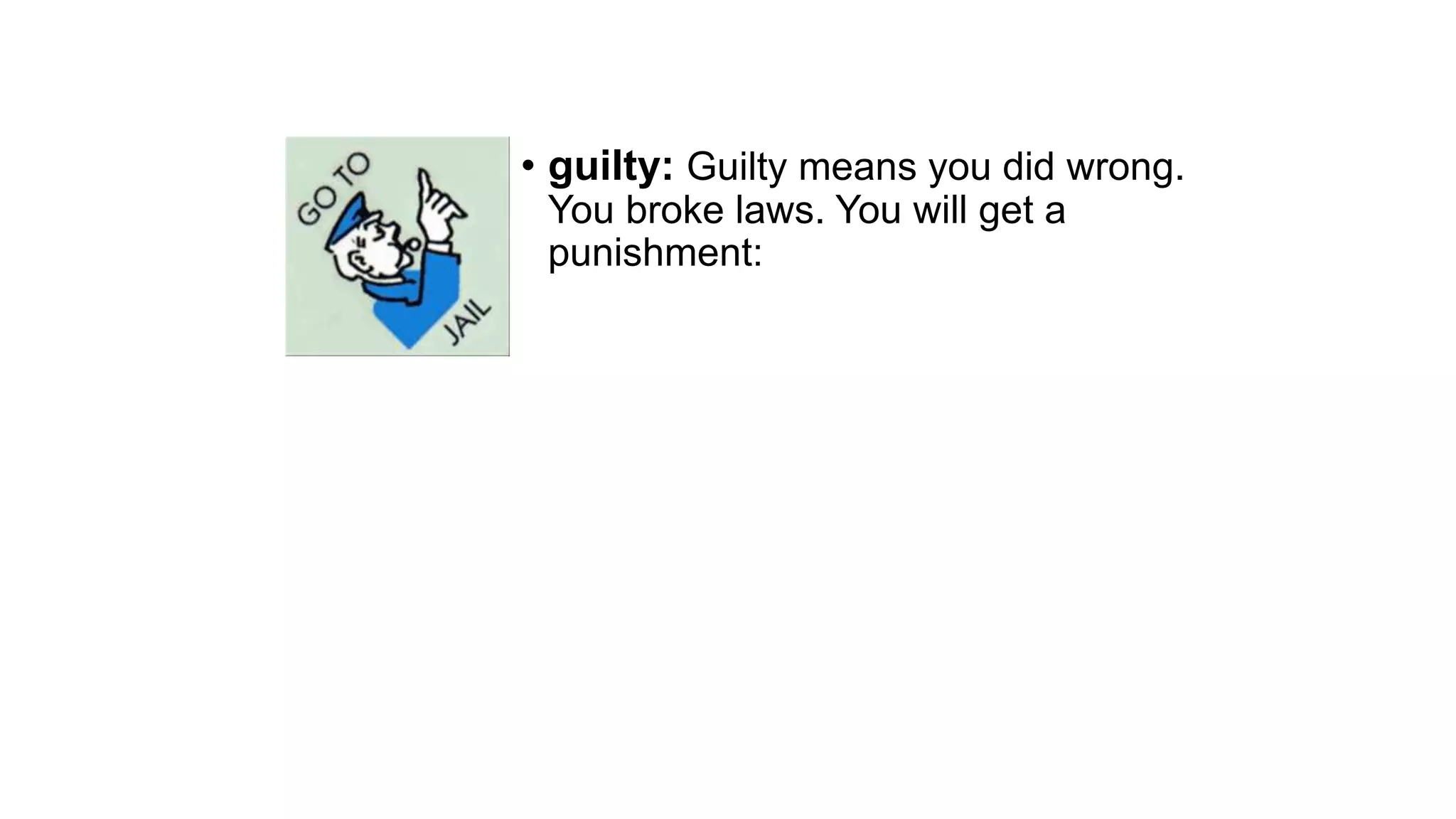
• guilty: Guilty means you did wrong.
You broke laws. You will get a
punishment: paying money (a fine),
going to jail or
doing community service.
• innocent: not guilty. You are not
responsible for breaking laws.
• bail: Money defendants pay to stay out
of jail before they go to court.
Who's who in the courtroom? complete

Who's who in the courtroom? complete