

Early management of bladder after
spinal cord injury
Dhaval Shukla,
Addl. Professor of Neurosurgery,
NIMHANS, Bangalore
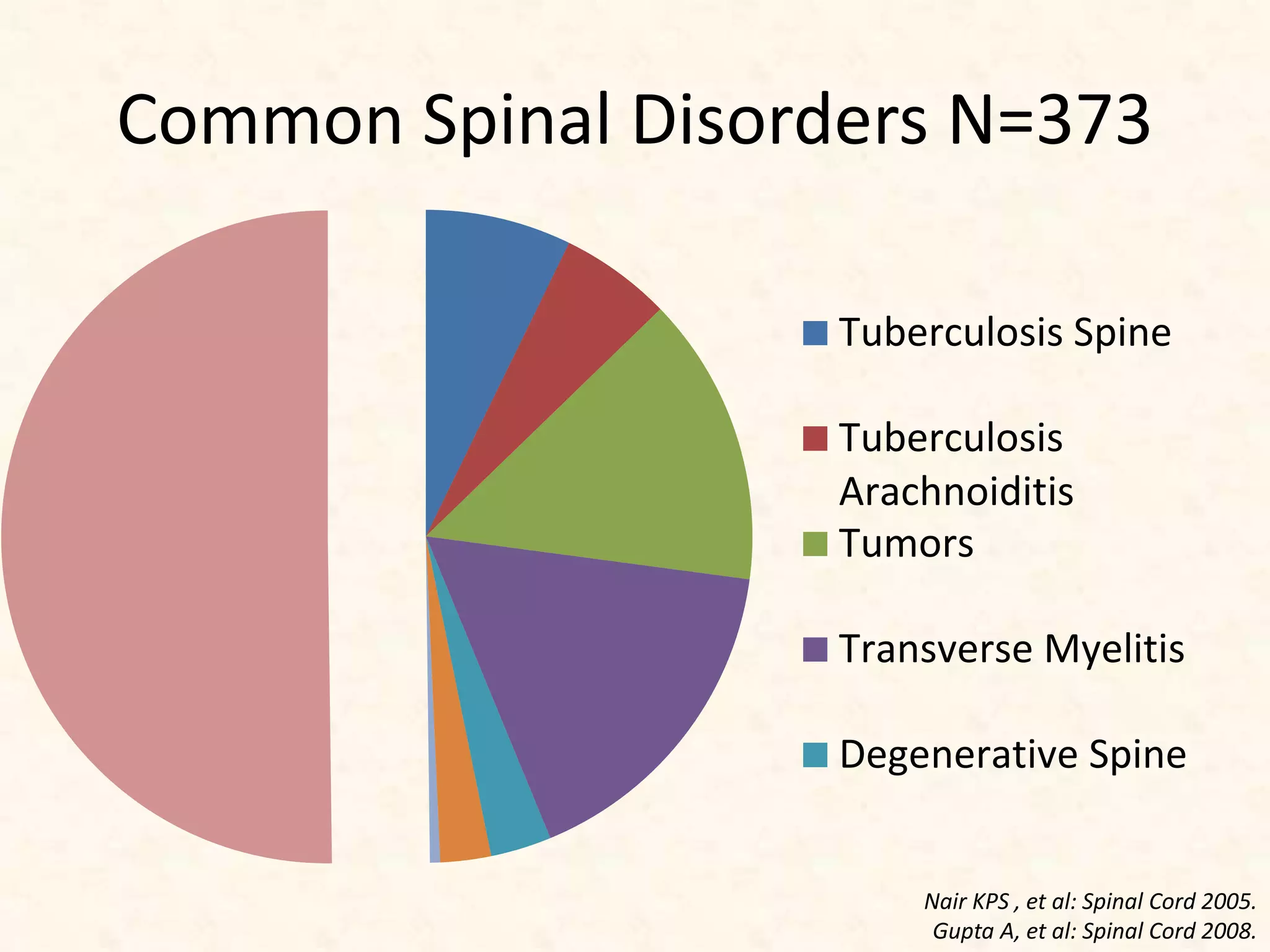
Common Spinal Disorders N=373
Tuberculosis Spine
Tuberculosis
Arachnoiditis
Tumors
Transverse Myelitis
Degenerative Spine
Nair KPS , et al: Spinal Cord 2005.
Gupta A, et al: Spinal Cord 2008.
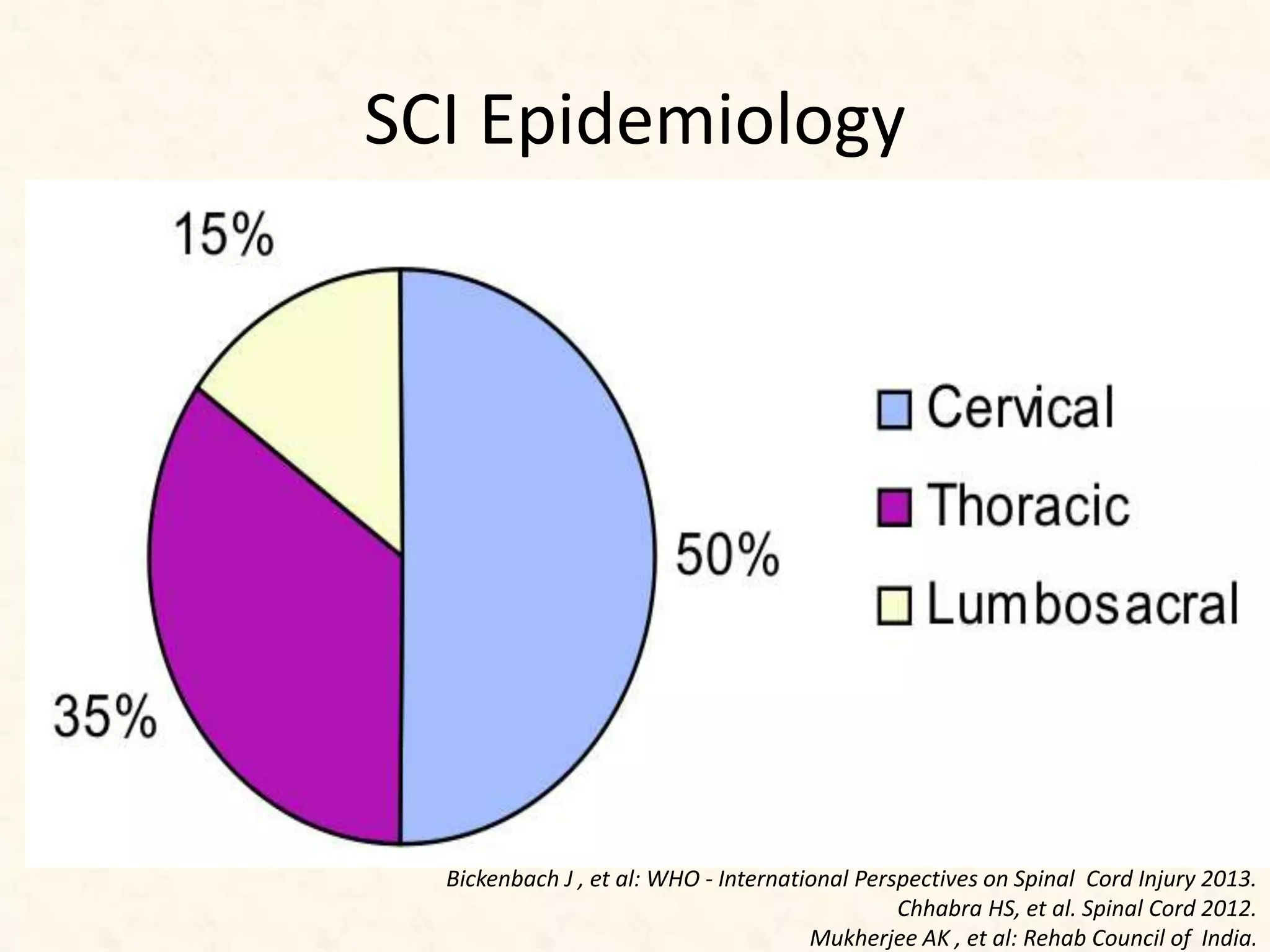
SCI Epidemiology
• Incidence:
– Traumatic: 13 to 53 / million
– Non Traumatic: 11 to 68 / million
• Prevalence:
– Traumatic:280 to 1298 / million
– Non Traumatic: 367 to 1227 / million
•
Bickenbach J , et al: WHO - International Perspectives on Spinal Cord Injury 2013.
Chhabra HS, et al. Spinal Cord 2012.
Mukherjee AK , et al: Rehab Council of India.
Urinary Complications in SCI
• Traumatic: 81%
• Non Traumatic : 75.4%
• Pre 1940:
– Death in first few months was due to urinary problems (UTIs)
• Post antibiotic era
– Kidney failure was leading cause of death
• With current urological management
– Less than 3% death due to kidney failure
Major reason for re-hospitalization in high-income countries and
premature mortality in developing countries
Bickenbach J , et al: WHO - International Perspectives on Spinal Cord Injury 2013.
Ku JH, et al. BJU 2006.
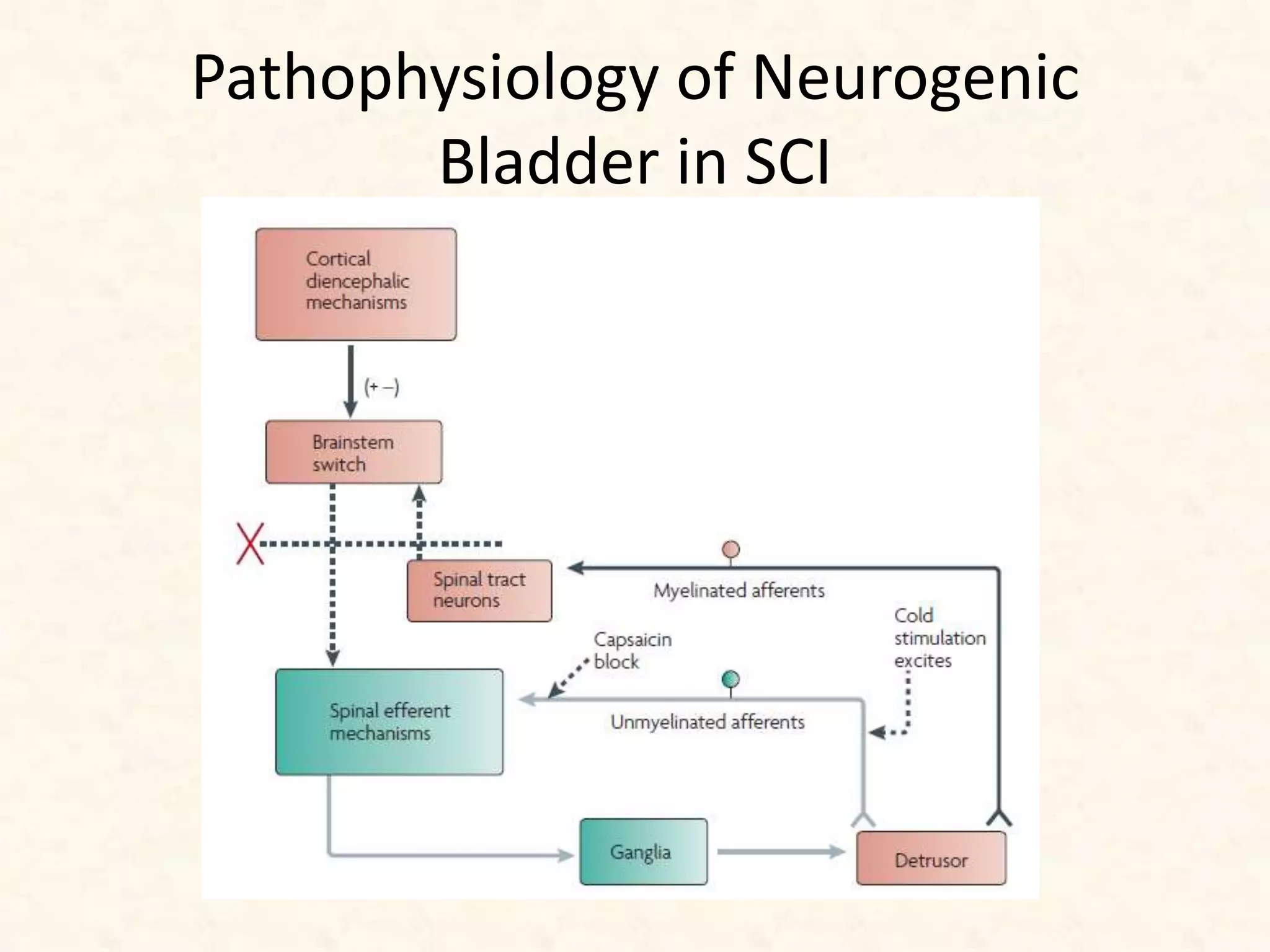
Pathophysiology of Neurogenic
Bladder in SCI
Events After SCI Involving Bladder
• Spinal Shock
– Distended flaccid bladder to hyperactive bladder
• Autonomic Dysreflexia
– Bladder Distension is a major precipitant
Spinal Shock
• Phase 1, (0–1 day)
– Areflexia/Hyporeflexia
• Phase 2, (1–3 days)
– Initial Reflex Return
• Phase 3, (1–4 weeks)
Early Hyperreflexia
• Phase 4, (1–12months)
Spasticity/ Final Hyperreflexia
Ditunno JP , et al: Spinal Cord 2004.
Phase 1, (0–1 day)
Areflexia/Hyporeflexia
• Areflexia/Hyporeflexia
• Caudal to complete SCI, DTRs absent
• Muscles are flaccid and paralyzed
• Bradyarrhythmias, atrioventricular conduction
block, and hypotension
• Bladder areflexic
Phase 2, (1–3 days)
Initial Reflex Return
• Cutaneous reflexes become stronger
– Bulbocavernous
– Anal
– Cremesteric
• DTRs are still absent
• Bladder areflexic
Phase 3, (1–4 weeks)
Early Hyperreflexia
• DTRs reappear
• Babinski sign
• Autonomic function evolve
• Bladder areflexic
Phase 4, (1–12months)
Spasticity/ Final Hyperreflexia
• Cutaneous reflexes, DTRs, and Babinski’s sign
become hyperactive
• Autonomic dysreflexia develops
• Bladder recovery
Autonomic Dysreflexia (AD)
• AD is a potentially life threatening condition
characterized by a sudden uncontrolled
sympathetic response secondary to noxious
stimuli resulting in a sudden rise in blood
pressure with dangerous consequences
• Higher the level of SCI, more severe bouts of AD
– 98% and 48% in patients with quadriplegia and high
paraplegia (above T6)
– Only 27% of patients with incomplete injury
Gunduz H , et al: Cardiol J 2012.
AD - Clinical Features
• From asymptomatic, to mild discomfort, to a life-
threatening emergency
• A sudden 20 to 40 mm Hg increase of BP over baseline
with bradycardia
• Accompanied by at least one of the following signs
(sweating, piloerection, facial flushing, cold peripheries),
or symptoms (headache, blurred vision, stuffy nose,
chest tightness)
• Seizures, intracranial and retinal hemorrhages,
myocardial irregularities, coma, and even death
AD - Precipitants
• Commonest triggering factor is bladder (85%)
– Distension
– Urinary retention
– Catheter blockage
– Cystoscopy
– Urodynamics
– Urinary infections
– Bladder calculi
• Pain or irritation (13% to 19%)
• Constipation, hemorrhoids, and anal fissures
• Cutaneous triggers: pressure sores and ingrown toenails
AD- Treatment
• Identifying and removing trigger for AD
• Placing the patient in an upright position to take advantage of
orthostatic reduction in BP
• Loosen any tight clothing/ constrictive devices
• Frequent monitoring of BP
• Captopril (25 mg sublingually) is a primary medication in the
management of AD
• Nitrates
– Caution with sildenafil
• Alpha-1 adrenoceptor selective blocking agents prazosin
– Added effect includes inhibition of urinary sphincter
Gunduz H , et al: Cardiol J 2012.
Evaluation of Bladder Involvement in
SCI
• History
– Time since injury
– Time since last passed urine
– Difficulty, and adequacy of urination
• General examination
– Trauma survey
– BP
• Neurological examination
– Motor power
– Sensation
– Reflexes
• Post-void residual volume
Urodynamics in SCI
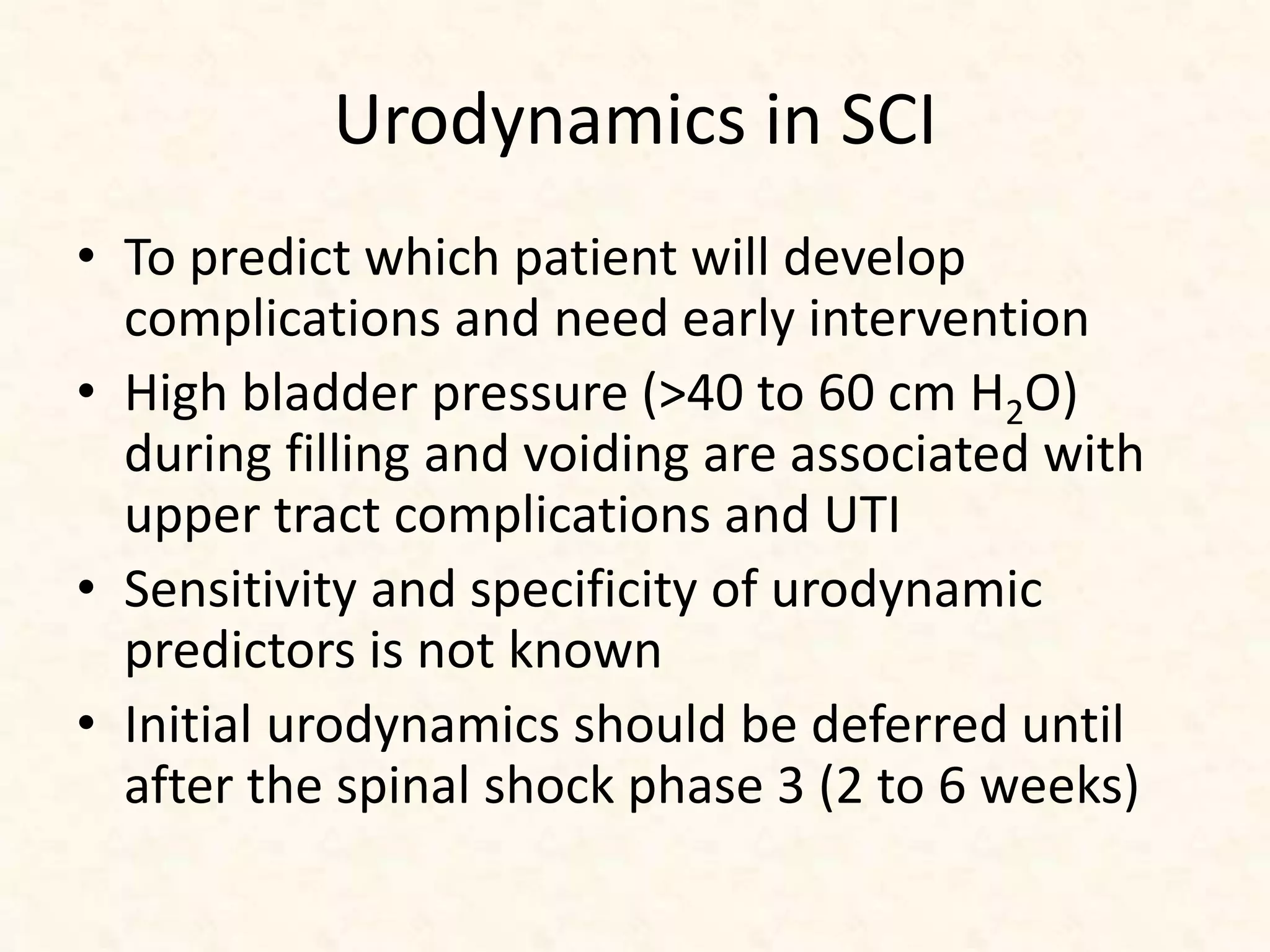
• To predict which patient will develop
complications and need early intervention
• High bladder pressure (>40 to 60 cm H2O)
during filling and voiding are associated with
upper tract complications and UTI
• Sensitivity and specificity of urodynamic
predictors is not known
• Initial urodynamics should be deferred until
after the spinal shock phase 3 (2 to 6 weeks)
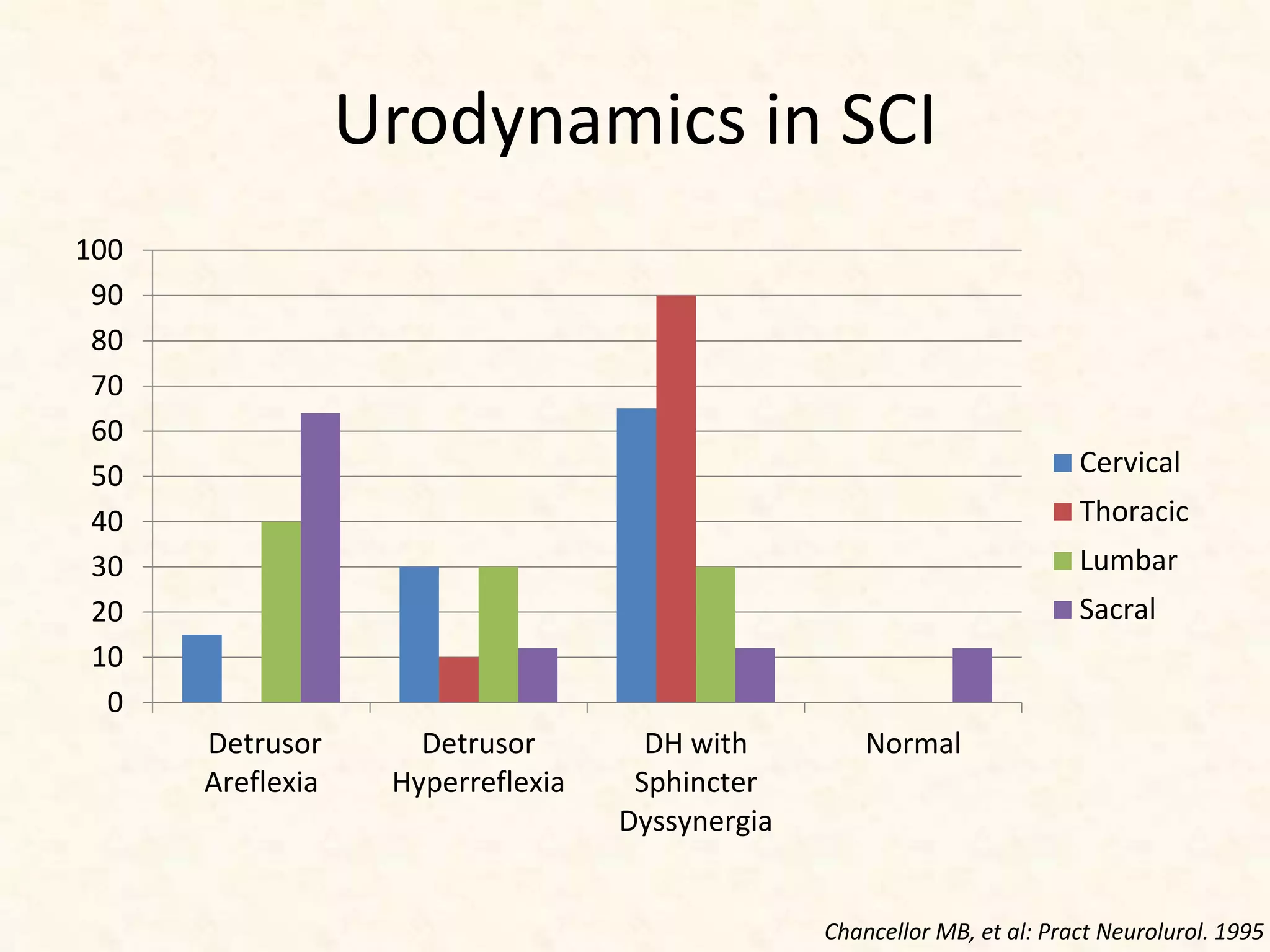
Urodynamics in SCI
0
10
20
30
40
50
60
70
80
90
100
Detrusor
Areflexia
Detrusor
Hyperreflexia
DH with
Sphincter
Dyssynergia
Normal
Cervical
Thoracic
Lumbar
Sacral
Chancellor MB, et al: Pract Neurolurol. 1995
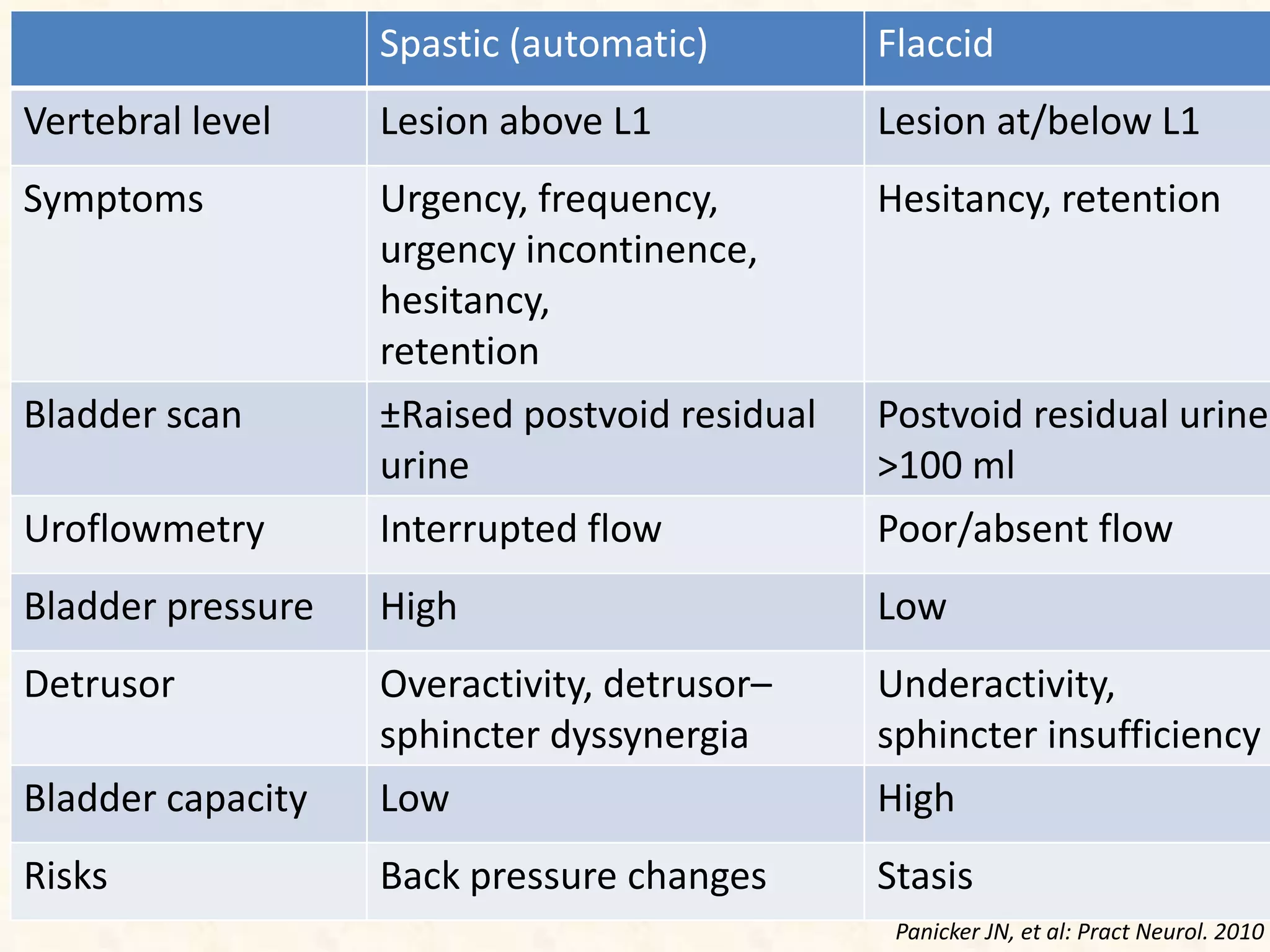
Spastic (automatic) Flaccid
Vertebral level Lesion above L1 Lesion at/below L1
Symptoms Urgency, frequency,
urgency incontinence,
hesitancy,
retention
Hesitancy, retention
Bladder scan ±Raised postvoid residual
urine
Postvoid residual urine
>100 ml
Uroflowmetry Interrupted flow Poor/absent flow
Bladder pressure High Low
Detrusor Overactivity, detrusor–
sphincter dyssynergia
Underactivity,
sphincter insufficiency
Bladder capacity Low High
Risks Back pressure changes Stasis
Panicker JN, et al: Pract Neurol. 2010
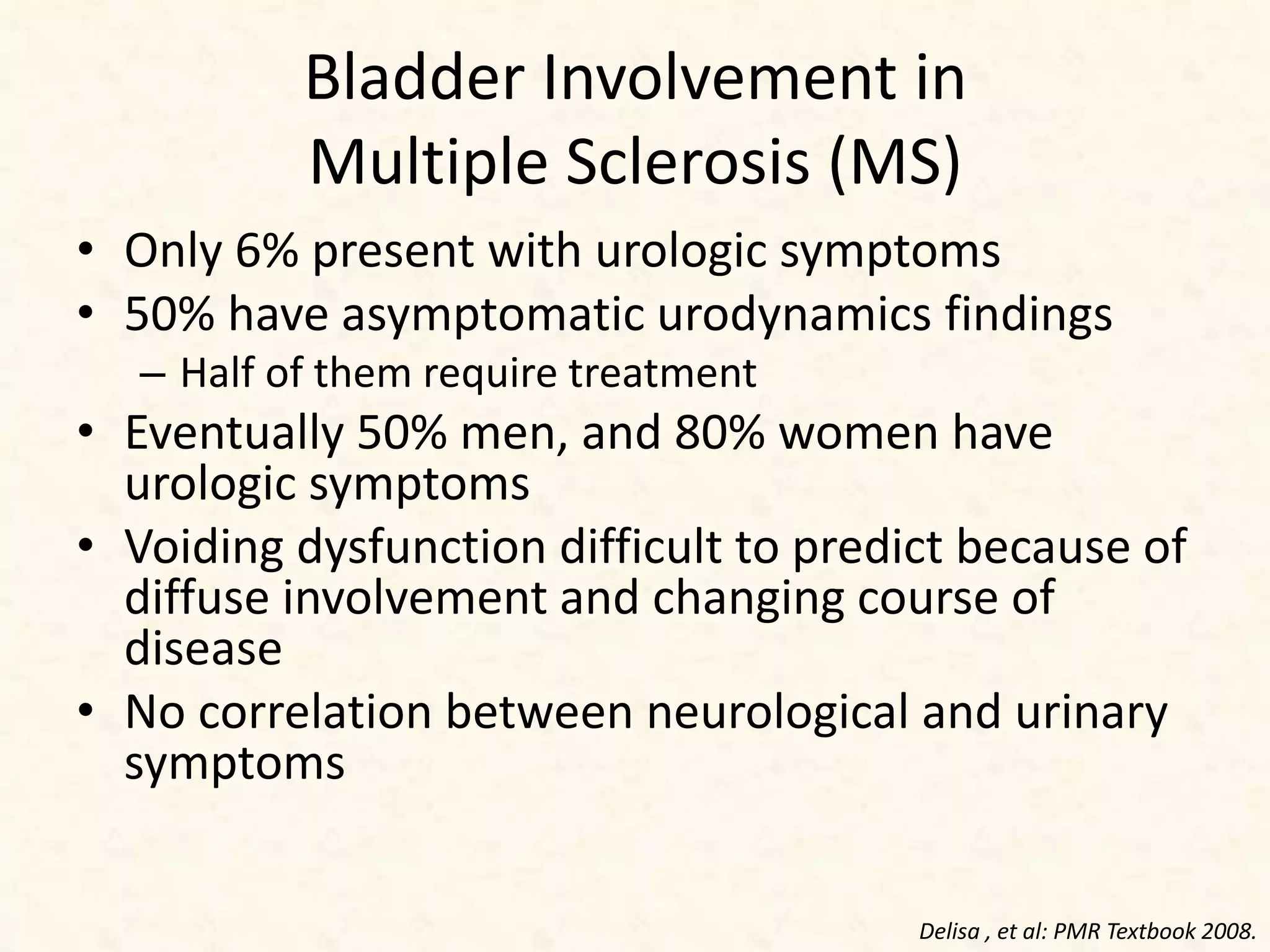
Bladder Involvement in
Multiple Sclerosis (MS)
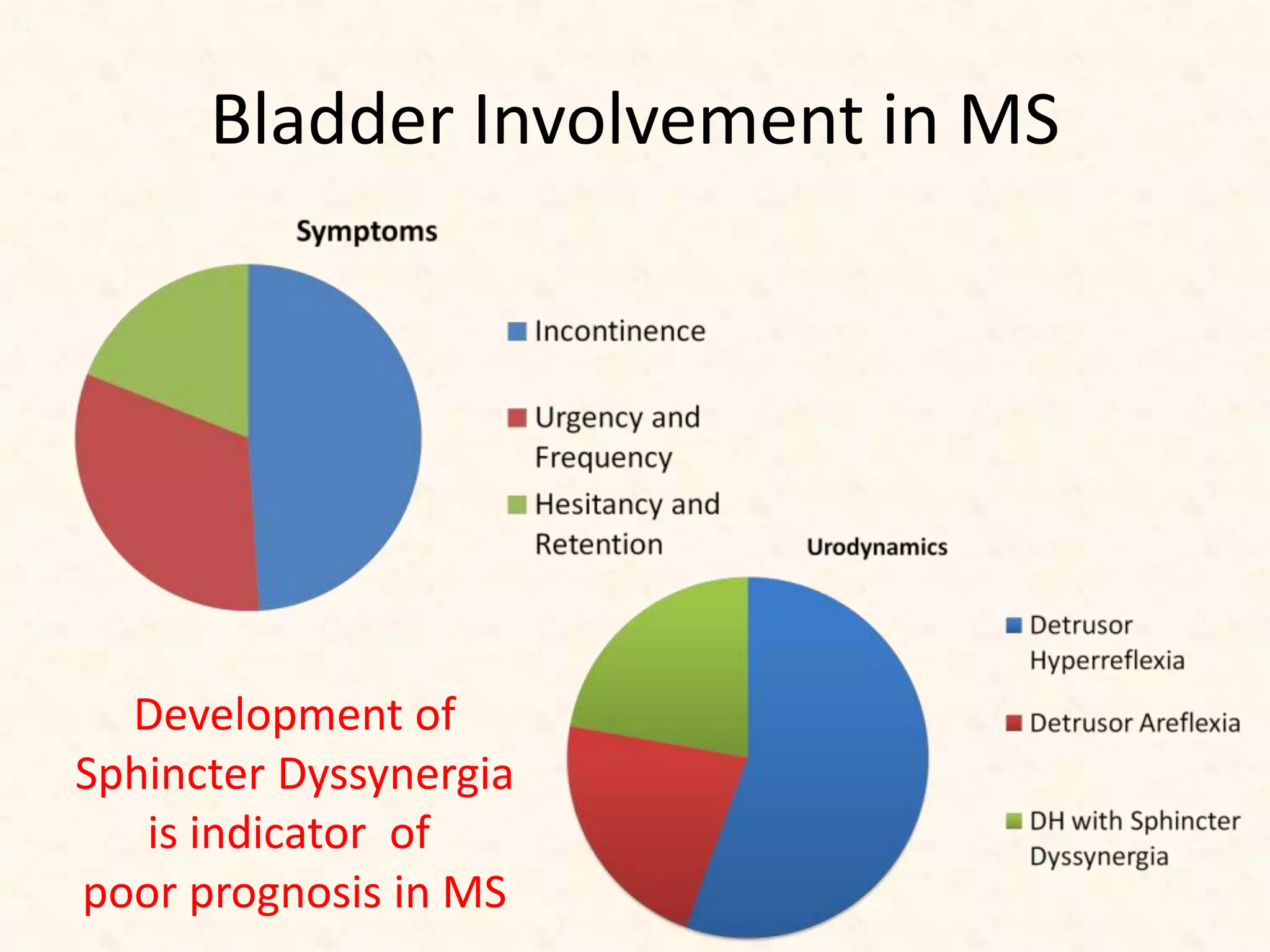
• Only 6% present with urologic symptoms
• 50% have asymptomatic urodynamics findings
– Half of them require treatment
• Eventually 50% men, and 80% women have
urologic symptoms
• Voiding dysfunction difficult to predict because of
diffuse involvement and changing course of
disease
• No correlation between neurological and urinary
symptoms
Delisa , et al: PMR Textbook 2008.
Bladder Involvement in MS
Development of
Sphincter Dyssynergia
is indicator of
poor prognosis in MS
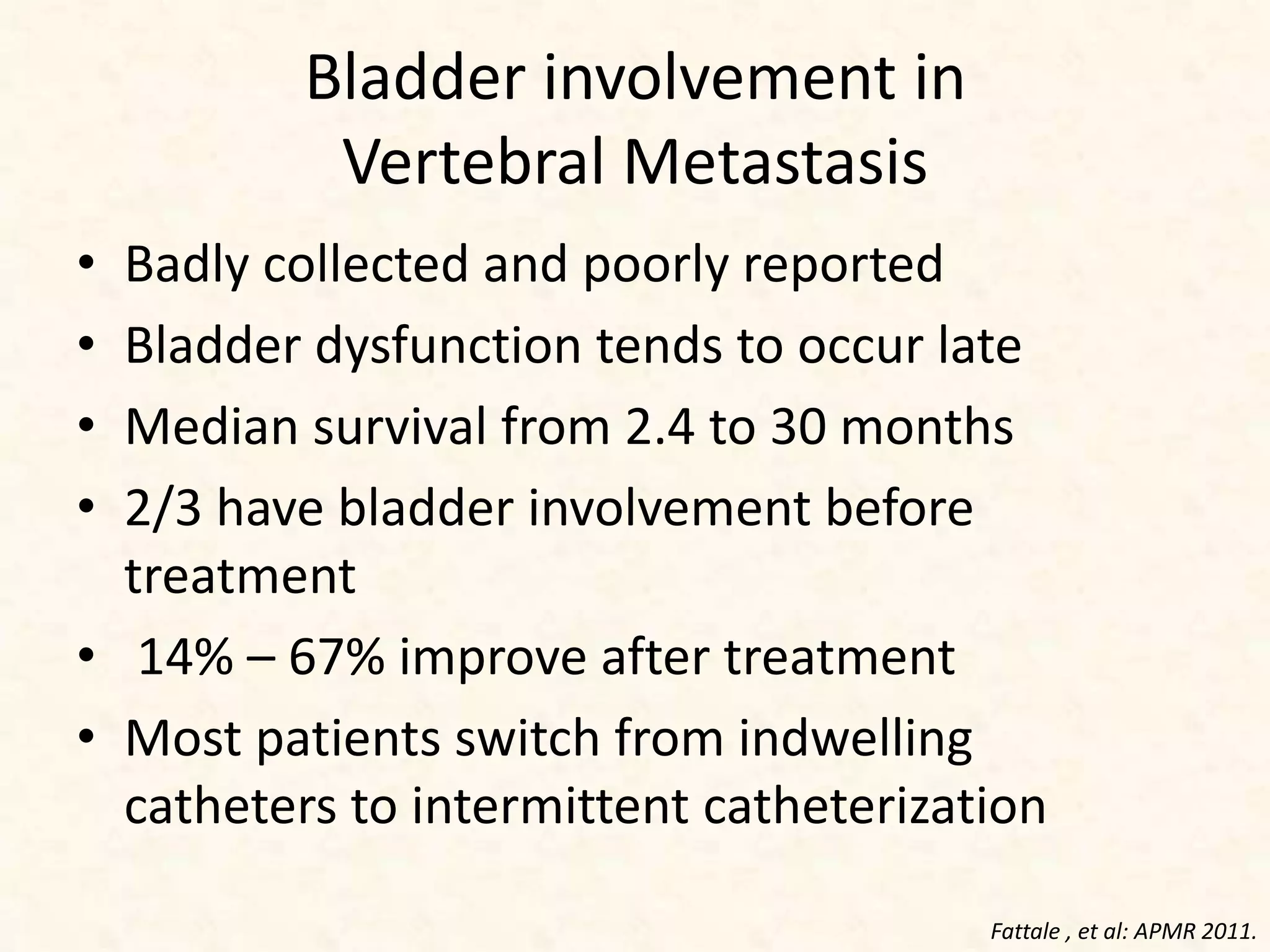
Bladder involvement in
Vertebral Metastasis
• Badly collected and poorly reported
• Bladder dysfunction tends to occur late
• Median survival from 2.4 to 30 months
• 2/3 have bladder involvement before
treatment
• 14% – 67% improve after treatment
• Most patients switch from indwelling
catheters to intermittent catheterization
Fattale , et al: APMR 2011.
Bladder Management in SCI
Neurogenic bladder dysfunction in
spinal cord injury is the prototype
neurourology dysfunction
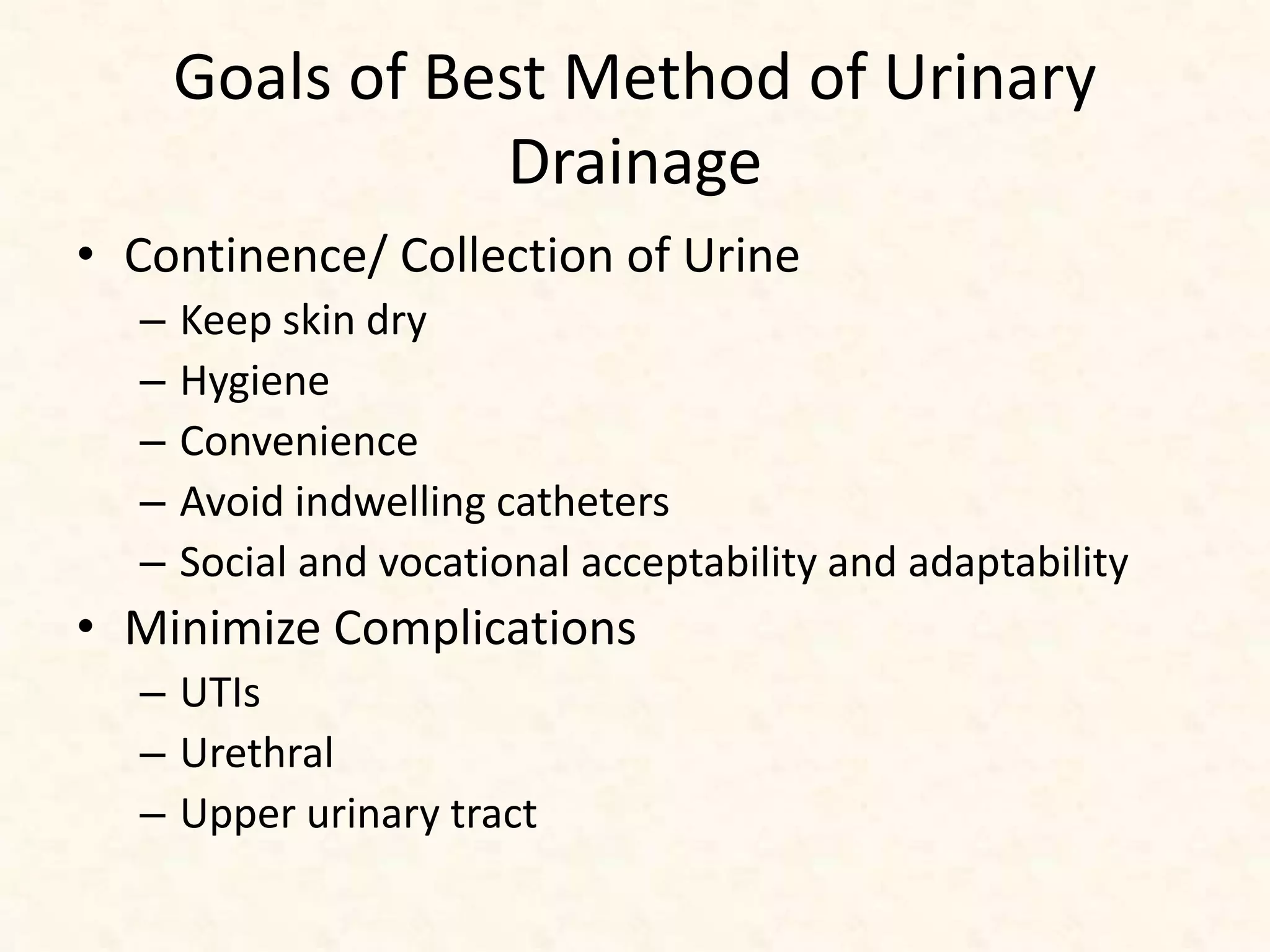
Goals of Best Method of Urinary
Drainage
• Continence/ Collection of Urine
– Keep skin dry
– Hygiene
– Convenience
– Avoid indwelling catheters
– Social and vocational acceptability and adaptability
• Minimize Complications
– UTIs
– Urethral
– Upper urinary tract
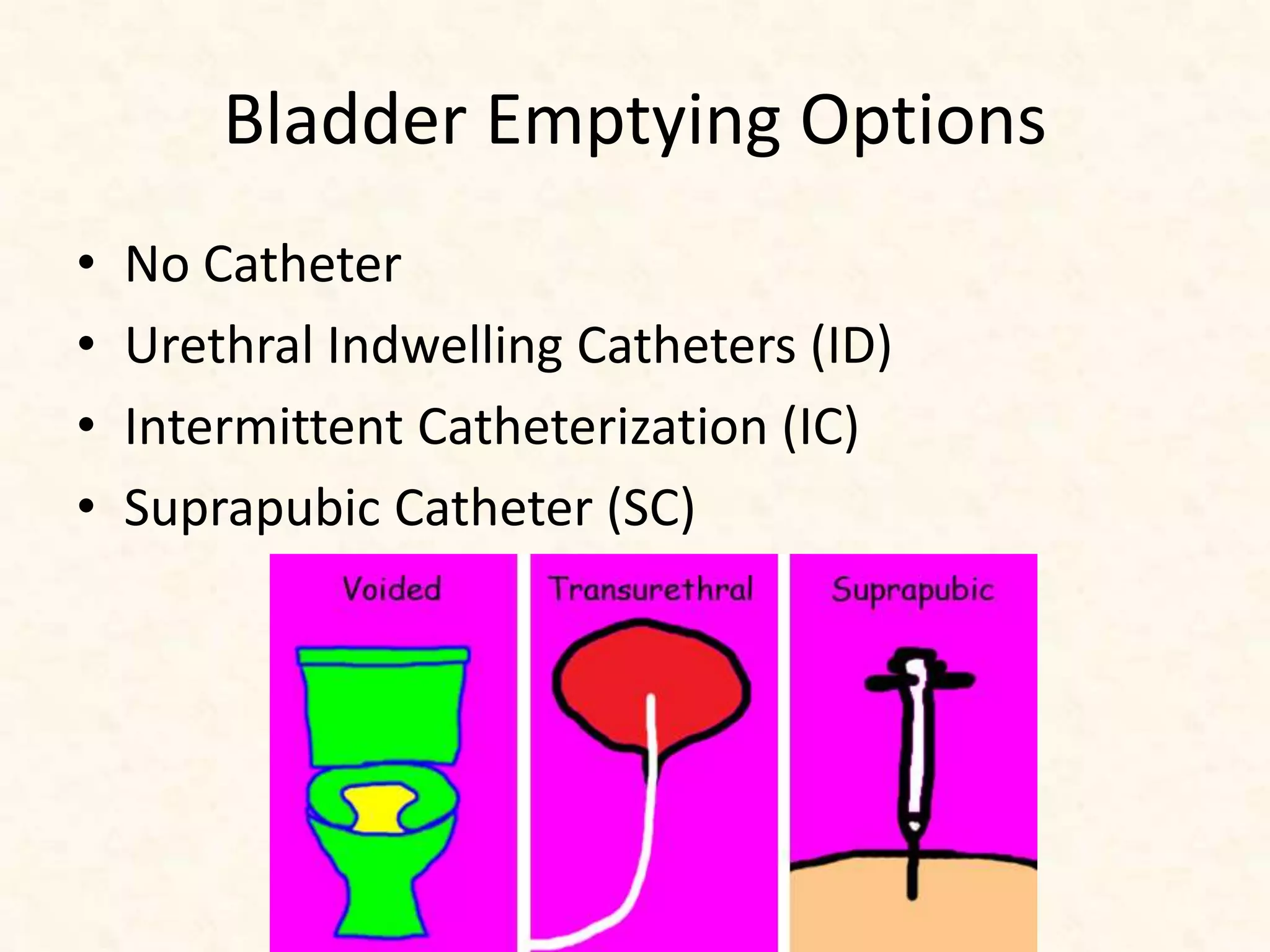
Bladder Emptying Options
• No Catheter
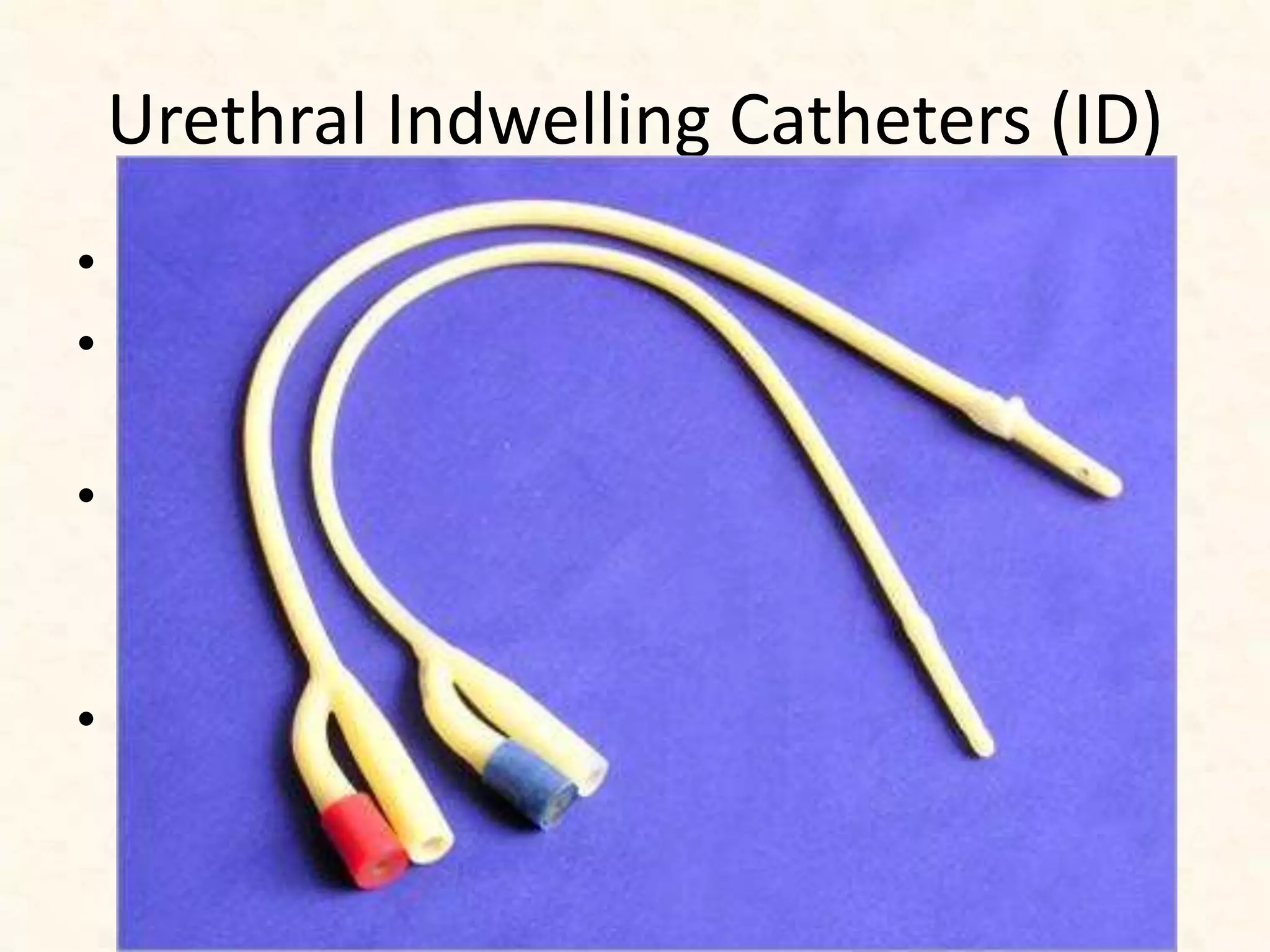
• Urethral Indwelling Catheters (ID)
• Intermittent Catheterization (IC)
• Suprapubic Catheter (SC)
No Catheter
• Incomplete SCI
• Requires intact sacral micturition reflex
• Voluntary voiding
– Credé and Valsalva
• Involuntary voiding
• Reflex Voiding
Conduct a thorough urodynamic
evaluation to determine whether reflex
voiding is a suitable method for a
particular individual
Small post-void residual volume is must
No Catheter - Credé and Valsalva
Consider
• For individuals who have lower motor neuron
injuries with low outlet resistance or who have had a
sphincterotomy
– Bladder is flaccid and there is low outlet resistance
– Silent complications of the upper tract are not uncommon
with this technique and should be routinely monitored
Avoid
• Detrusor sphincter dyssynergia.
• Bladder outlet obstruction.
Consortium for Spinal Cord Medicine: J Spinal Cord Med 2006.
Credé and Valsalva
Complications
• Incomplete bladder emptying.
• High intravesical pressure.
• Developing and/or worsening vesicoureteral reflux.
• Developing and/or worsening hydronephrosis.
• Abdominal bruising.
• Hernia, pelvic organ prolapse, or hemorrhoids.
Credé and Valsalva increase bladder pressure but do not
empty the bladder effectively and can lead to complications.
Complications are frequent
No Catheter - Reflex Voiding
Consider
• For males who demonstrate post-spinal shock
adequate bladder contractions
• Sufficient hand skills to put on a condom catheter
and empty the bag or have a willing caregiver.
• Poor compliance with fluid restriction.
• Small bladder capacity.
• Ability to maintain a condom catheter in place.
Reflex Voiding
Avoid
• Detrusor sphincter dyssynergia
– High voiding pressures (which can cause upper tract
damage)
– Autonomic dysreflexia
• High post-void residuals
• Have incomplete bladder emptying despite
treatment to facilitate voiding
• Develop autonomic dysreflexia despite treatment
to facilitate voiding
Reflex Voiding - Complications
• Condom catheter leakage and/or failure.
• Penile skin breakdown from external condom
catheter.
• Urethral fistula.
• Symptomatic UTI.
• Poor bladder emptying.
• High intravesical voiding pressures.
• Autonomic dysreflexia.
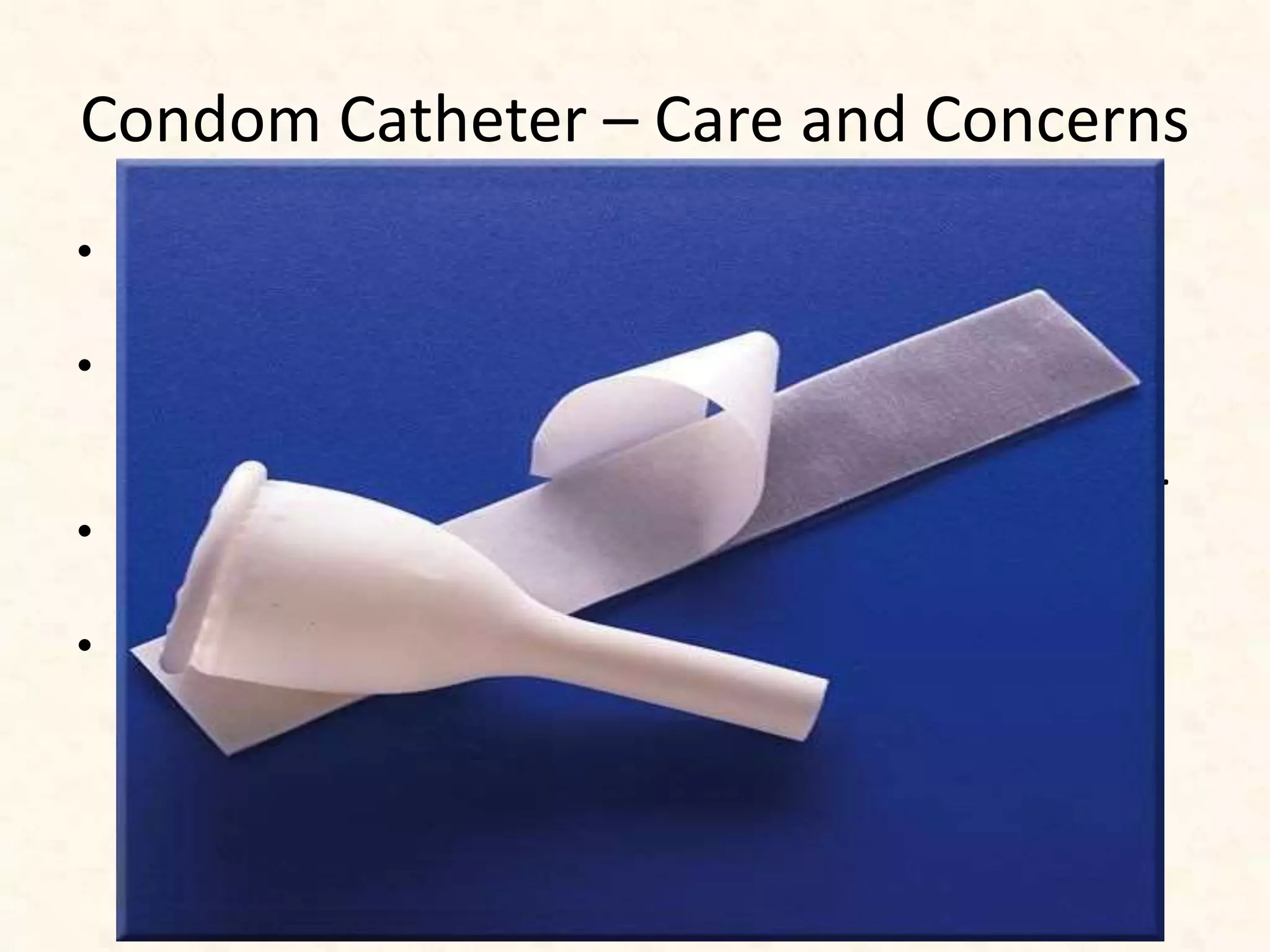
Condom Catheter – Care and Concerns
• Should be applied securely to avoid leakage and
constriction for 24 hours.
• To avoid skin maceration and breakdown, the glans is
washed daily when the condom is changed, the skin is
aired for 20–30 minutes, and the condom is reapplied.
• Urinary collection bags are cleaned daily with 1:10
solution of bleach to water
• Interference with social/sexual function.
– Urine leakage may occur during sexual activity.
– Use of a regular condom may be an option for
management.
Urethral Indwelling Catheters (ID)
• ID is the first choice in acute stage of SCI
• Strict aseptic precautions
– Urinary infection rate 5% to 7% / day
• Continued
– Till hemodynamically stable
– During perioperative period
• Should be removed as early as possible
– Till fit for IC
Continuing ID beyond 2 weeks
requires justification
Continuing ID
• Poor hand skills (cervical SCI)
• High fluid intake
• Cognitive impairment or active substance abuse.
• Elevated detrusor pressures managed with anticholinergic
medications or other means
• Lack of success with other methods
• Need for temporary management of vesicoureteral reflux
• Limited assistance from a caregiver
• Women with technical difficulty
• IC not feasible because of urethral abnormality
Consortium for Spinal Cord Medicine: J Spinal Cord Med 2006.
Care of ID
• Large size and small balloon volume
• Replace every 2 to 4 weeks
– More frequent if catheter encrustation or bladder stones
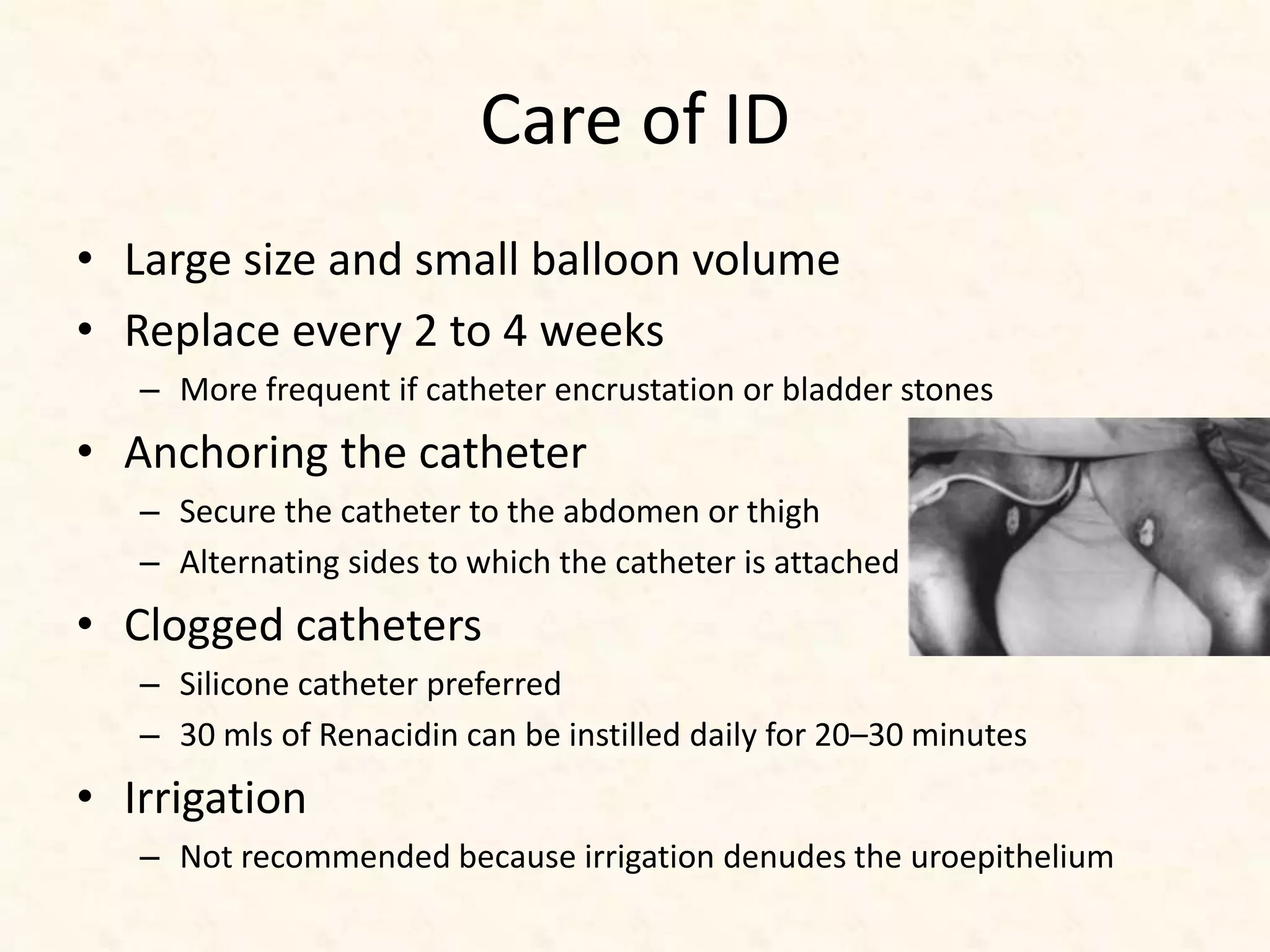
• Anchoring the catheter
– Secure the catheter to the abdomen or thigh
– Alternating sides to which the catheter is attached
• Clogged catheters
– Silicone catheter preferred
– 30 mls of Renacidin can be instilled daily for 20–30 minutes
• Irrigation
– Not recommended because irrigation denudes the uroepithelium
Care of ID
• Intolerance to inflated catheter balloon
– Anticholinergic medication to reduce autonomic dysreflexia
• Personal care
– Genital area is cleaned daily with mild soap and water
• High fluid intake (> 2000 ml)
– To facilitate mechanical washout
– Decrease solute concentration
– Lessen the likelihood of stone formation
• Cosmesis
– Leg bag is worn during the day and a nighttime collection device is used
overnight
• Interference with social/sexual function
– Need to be removed for intercourse
Complications of ID
• Urethral
– Diverticula
– Periurethritis
– Fistula
– Erosion
– Strictures
• Bladder
– UTI and Calculi
• Bed rest
demineralization
• Infection
• Stasis due to catheter
block
• Diverticuli
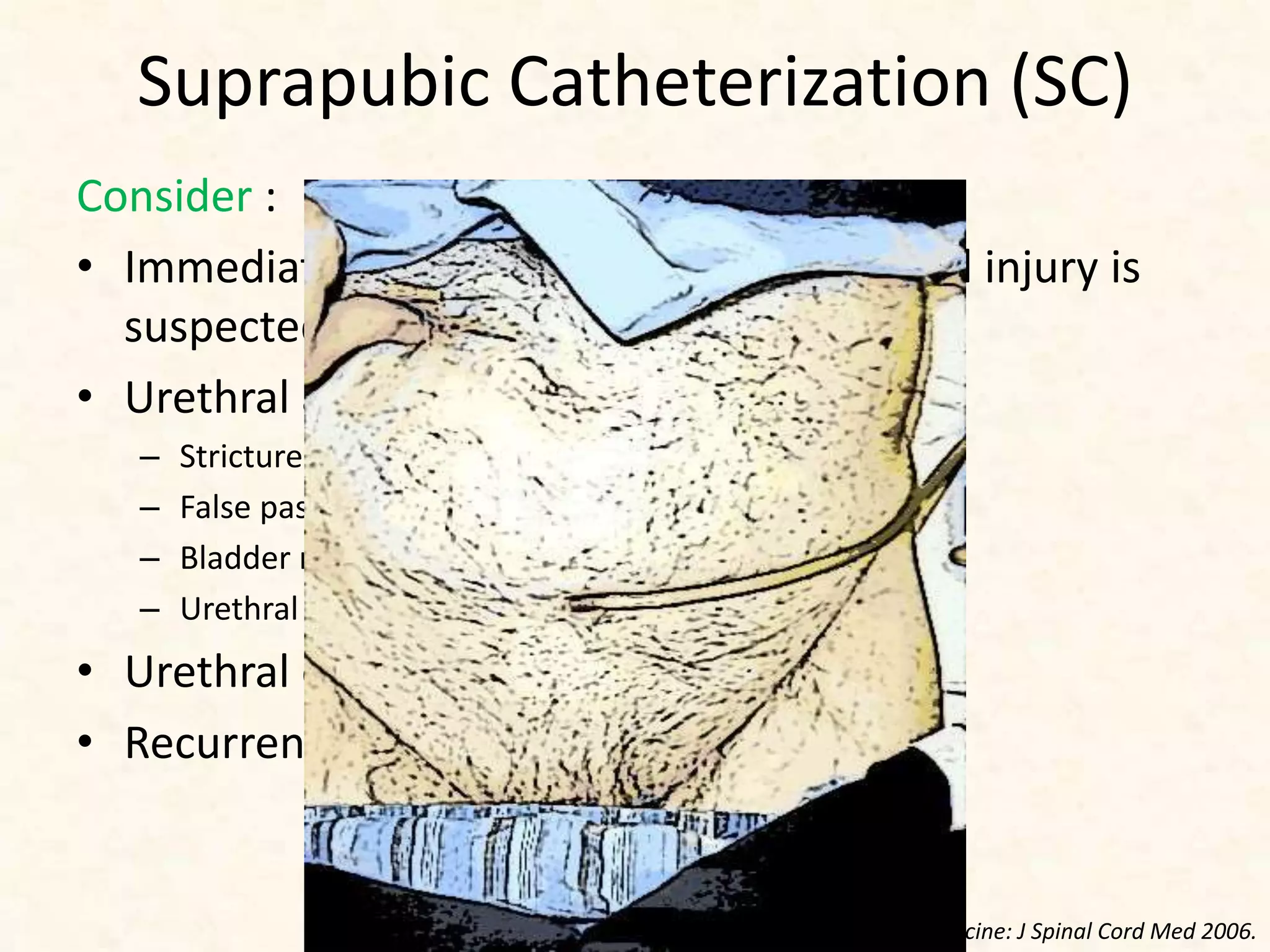
Suprapubic Catheterization (SC)
Consider :
• Immediately following acute SCI if urethral injury is
suspected, especially after pelvic trauma
• Urethral abnormalities
– Stricture
– False passages
– Bladder neck obstruction
– Urethral fistula.
• Urethral discomfort.
• Recurrent urethral catheter obstruction.
Consortium for Spinal Cord Medicine: J Spinal Cord Med 2006.
Suprapubic Catheterization (SC)
Consider
• Difficulty with urethral catheter insertion.
• Perineal skin breakdown due to urine leakage
secondary to urethral incompetence.
• Psychological considerations
– Body image or personal preference.
• A desire to improve sexual genital function.
• Prostatitis, urethritis, or epididymoorchitis.
• If bladder capacity is small, with forceful uninhibited
contractions despite treatment.
Consortium for Spinal Cord Medicine: J Spinal Cord Med 2006.
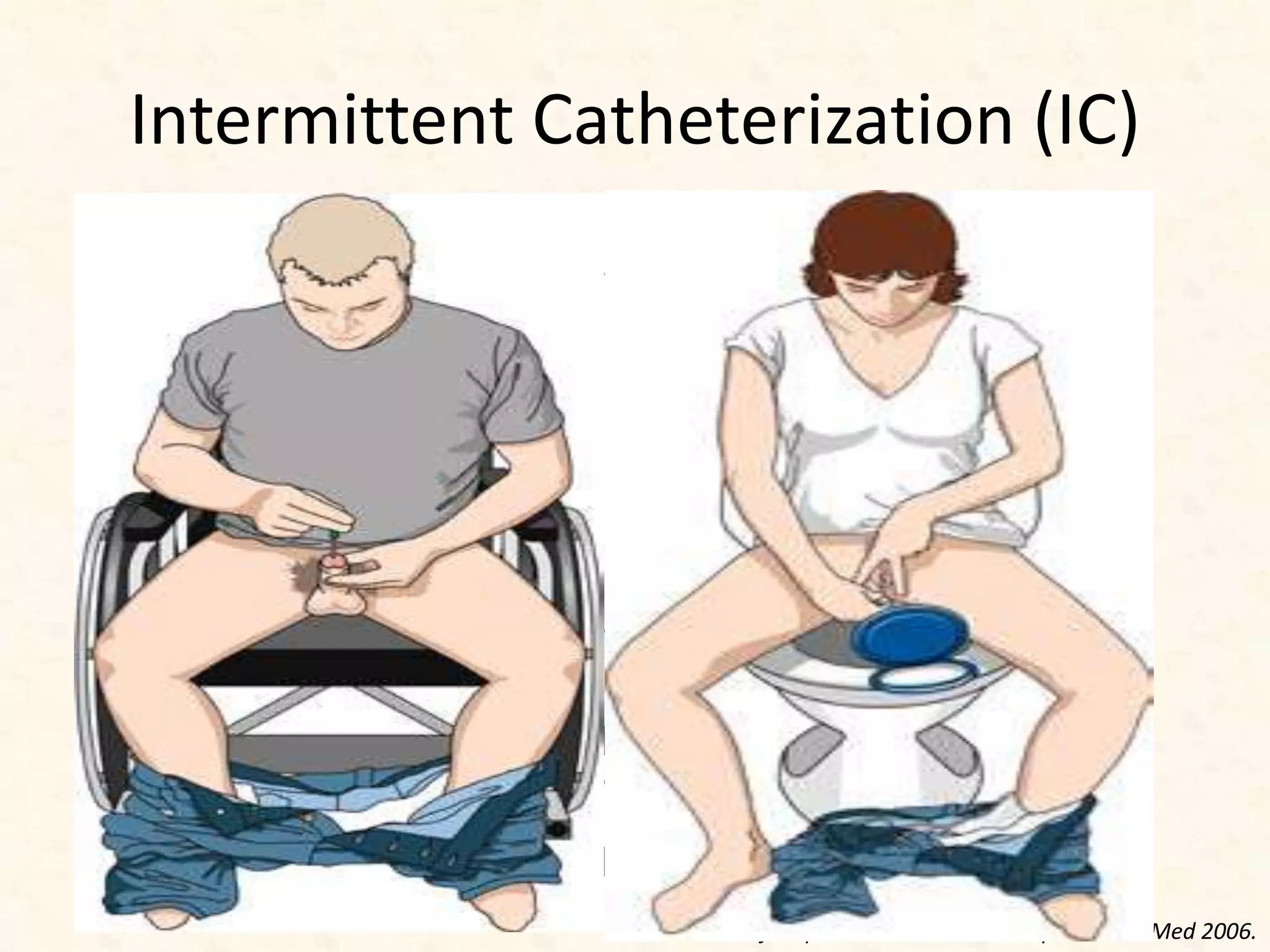
Intermittent Catheterization (IC)
• Effective alternative during spinal shock when the
bladder is not contracting
• IC provides complete bladder emptying and offers a
practical means of obtaining a catheter-free state
• Advantages:
– No changes in cosmesis
– No Interference with social/sexual functioning
– Reversibility
• Should be considered for patients with sufficient hand
skills or a willing caregiver to perform IC
• Institute clean IC training prior to discharge
Consortium for Spinal Cord Medicine: J Spinal Cord Med 2006.
IC Care
• Hand washing
• Correct technique
• Catheter care
– Cleaned with mild soap and water, air-dried, and
placed in a paper bag
• Fluids restriction to 2 L/ day
• Timing
– Every 4–6 hours so that the amount of urine
obtained with each collection is less than 500 ml
Avoid IC
• Inability to catheterize themselves.
– A caregiver who is unwilling to perform catheterization.
• Abnormal urethral anatomy, such as stricture, false passages,
and bladder neck obstruction.
• Bladder capacity less than 200 ml.
• Poor cognition, little motivation, or inability or unwillingness
to adhere to the catheterization time schedule.
• High fluid intake regimen.
• Adverse reaction to passing a catheter into the genital area
multiple times a day.
• Tendency to develop autonomic dysreflexia with bladder
filling despite treatment.
Complications of IC
• Urinary tract infections.
• Bladder over-distention.
• Urinary incontinence.
• Urethral trauma with hematuria.
• Urethral false passages.
• Urethral stricture.
• Autonomic dysreflexia.
• Bladder stones.
Other Considerations with IC
• Consider anticholinergics if reflux is present
• Investigate and provide treatment for individuals on
IC who leak urine between catheterizations
• Monitor individuals using this method of bladder
management
• If bladder volumes consistently exceed 500 ml
– Adjust fluid intake
– Increase frequency of IC
– Consider alternative bladder management method
Recurrent UTI with IC
• Technique and bladder check
• Single-use catheter
• Single-use hydrophilic catheter
– Reduces urethral irritation
– Requires sterile water for injection
• Antibacterial catheter
• Touchless catheter
• Fluids intake
• Timing change
Joseph, AC, et al: Spinal Cord Injury Nursing 1998.
Catheterization Techniques –
Current Evidence
No evidence that any of the following strategy is
better than any other for all clinical settings:
• Specific technique (aseptic or clean)
• Catheter type (coated or uncoated)
• Method (single-use or multiple-use)
• Person (self or other)
Moore, et al: Cochrane Database Syst Rev 2007.
Red Flags for Referral to Urologist
▶ Haematuria
▶ Renal impairment
▶ Recurrent urinary tract infections
▶ Bladder stones
▶ Pain thought to be arising from the urinary tract
▶ Suspicion of concomitant local pathologies such
as bladder outlet obstruction due to prostate
enlargement in men, stress incontinence in
women
▶ Symptoms refractory to treatment
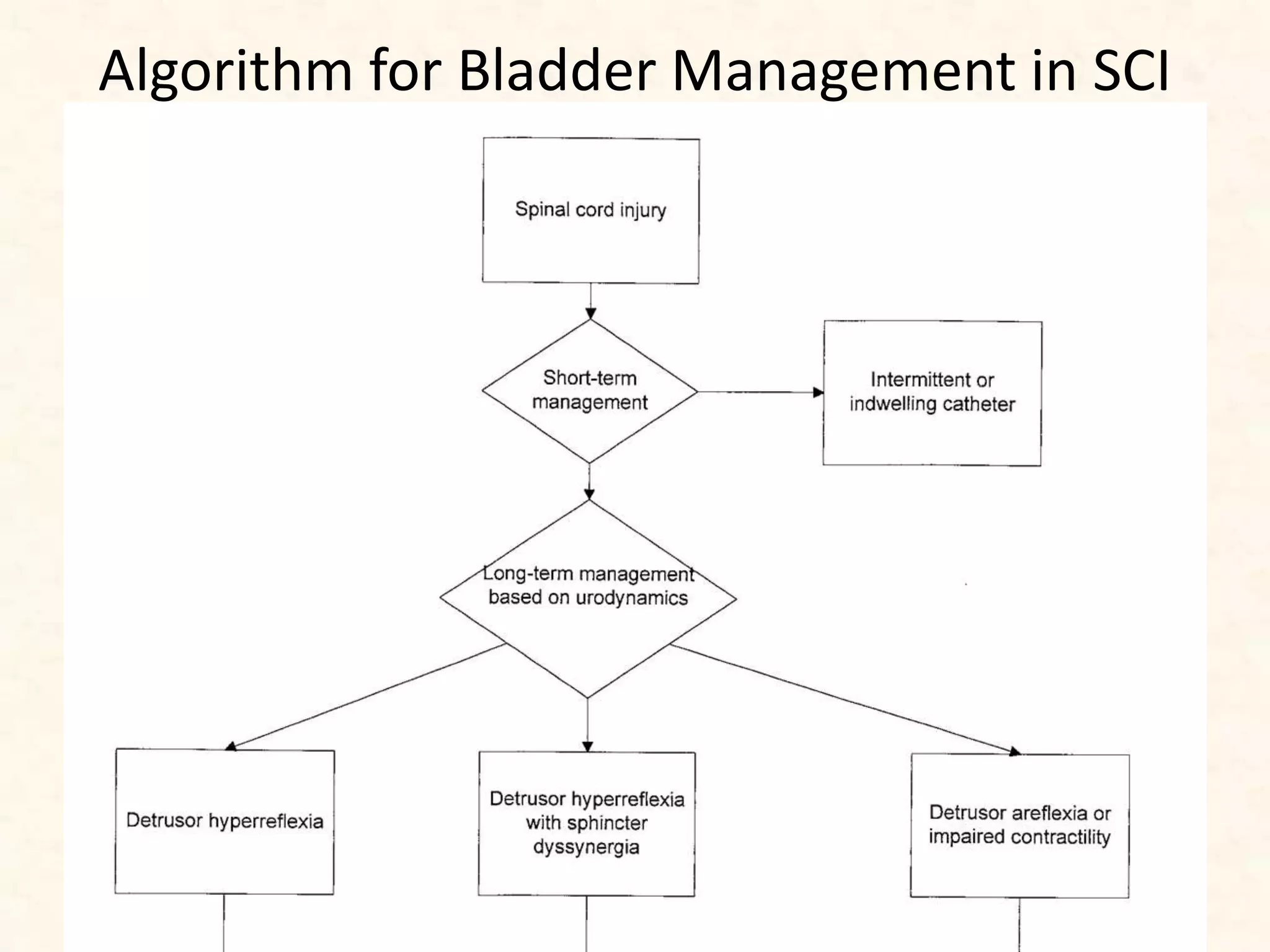
Algorithm for Bladder Management in SCI
Early management of_bladder_after_sci_dhaval_shukla

Early management of_bladder_after_sci_dhaval_shukla

  • 1.
    Early management ofbladder after spinal cord injury Dhaval Shukla, Addl. Professor of Neurosurgery, NIMHANS, Bangalore
  • 2.
    Common Spinal DisordersN=373 Tuberculosis Spine Tuberculosis Arachnoiditis Tumors Transverse Myelitis Degenerative Spine Nair KPS , et al: Spinal Cord 2005. Gupta A, et al: Spinal Cord 2008.
  • 3.
    SCI Epidemiology • Incidence: –Traumatic: 13 to 53 / million – Non Traumatic: 11 to 68 / million • Prevalence: – Traumatic:280 to 1298 / million – Non Traumatic: 367 to 1227 / million • Bickenbach J , et al: WHO - International Perspectives on Spinal Cord Injury 2013. Chhabra HS, et al. Spinal Cord 2012. Mukherjee AK , et al: Rehab Council of India.
  • 4.
    Urinary Complications inSCI • Traumatic: 81% • Non Traumatic : 75.4% • Pre 1940: – Death in first few months was due to urinary problems (UTIs) • Post antibiotic era – Kidney failure was leading cause of death • With current urological management – Less than 3% death due to kidney failure Major reason for re-hospitalization in high-income countries and premature mortality in developing countries Bickenbach J , et al: WHO - International Perspectives on Spinal Cord Injury 2013. Ku JH, et al. BJU 2006.
  • 5.
  • 6.
    Events After SCIInvolving Bladder • Spinal Shock – Distended flaccid bladder to hyperactive bladder • Autonomic Dysreflexia – Bladder Distension is a major precipitant
  • 7.
    Spinal Shock • Phase1, (0–1 day) – Areflexia/Hyporeflexia • Phase 2, (1–3 days) – Initial Reflex Return • Phase 3, (1–4 weeks) Early Hyperreflexia • Phase 4, (1–12months) Spasticity/ Final Hyperreflexia Ditunno JP , et al: Spinal Cord 2004.
  • 8.
    Phase 1, (0–1day) Areflexia/Hyporeflexia • Areflexia/Hyporeflexia • Caudal to complete SCI, DTRs absent • Muscles are flaccid and paralyzed • Bradyarrhythmias, atrioventricular conduction block, and hypotension • Bladder areflexic
  • 9.
    Phase 2, (1–3days) Initial Reflex Return • Cutaneous reflexes become stronger – Bulbocavernous – Anal – Cremesteric • DTRs are still absent • Bladder areflexic
  • 10.
    Phase 3, (1–4weeks) Early Hyperreflexia • DTRs reappear • Babinski sign • Autonomic function evolve • Bladder areflexic
  • 11.
    Phase 4, (1–12months) Spasticity/Final Hyperreflexia • Cutaneous reflexes, DTRs, and Babinski’s sign become hyperactive • Autonomic dysreflexia develops • Bladder recovery
  • 12.
    Autonomic Dysreflexia (AD) •AD is a potentially life threatening condition characterized by a sudden uncontrolled sympathetic response secondary to noxious stimuli resulting in a sudden rise in blood pressure with dangerous consequences • Higher the level of SCI, more severe bouts of AD – 98% and 48% in patients with quadriplegia and high paraplegia (above T6) – Only 27% of patients with incomplete injury Gunduz H , et al: Cardiol J 2012.
  • 13.
    AD - ClinicalFeatures • From asymptomatic, to mild discomfort, to a life- threatening emergency • A sudden 20 to 40 mm Hg increase of BP over baseline with bradycardia • Accompanied by at least one of the following signs (sweating, piloerection, facial flushing, cold peripheries), or symptoms (headache, blurred vision, stuffy nose, chest tightness) • Seizures, intracranial and retinal hemorrhages, myocardial irregularities, coma, and even death
  • 14.
    AD - Precipitants •Commonest triggering factor is bladder (85%) – Distension – Urinary retention – Catheter blockage – Cystoscopy – Urodynamics – Urinary infections – Bladder calculi • Pain or irritation (13% to 19%) • Constipation, hemorrhoids, and anal fissures • Cutaneous triggers: pressure sores and ingrown toenails
  • 15.
    AD- Treatment • Identifyingand removing trigger for AD • Placing the patient in an upright position to take advantage of orthostatic reduction in BP • Loosen any tight clothing/ constrictive devices • Frequent monitoring of BP • Captopril (25 mg sublingually) is a primary medication in the management of AD • Nitrates – Caution with sildenafil • Alpha-1 adrenoceptor selective blocking agents prazosin – Added effect includes inhibition of urinary sphincter Gunduz H , et al: Cardiol J 2012.
  • 16.
    Evaluation of BladderInvolvement in SCI • History – Time since injury – Time since last passed urine – Difficulty, and adequacy of urination • General examination – Trauma survey – BP • Neurological examination – Motor power – Sensation – Reflexes • Post-void residual volume
  • 17.
    Urodynamics in SCI •To predict which patient will develop complications and need early intervention • High bladder pressure (>40 to 60 cm H2O) during filling and voiding are associated with upper tract complications and UTI • Sensitivity and specificity of urodynamic predictors is not known • Initial urodynamics should be deferred until after the spinal shock phase 3 (2 to 6 weeks)
  • 18.
    Urodynamics in SCI 0 10 20 30 40 50 60 70 80 90 100 Detrusor Areflexia Detrusor Hyperreflexia DHwith Sphincter Dyssynergia Normal Cervical Thoracic Lumbar Sacral Chancellor MB, et al: Pract Neurolurol. 1995
  • 19.
    Spastic (automatic) Flaccid Vertebrallevel Lesion above L1 Lesion at/below L1 Symptoms Urgency, frequency, urgency incontinence, hesitancy, retention Hesitancy, retention Bladder scan ±Raised postvoid residual urine Postvoid residual urine >100 ml Uroflowmetry Interrupted flow Poor/absent flow Bladder pressure High Low Detrusor Overactivity, detrusor– sphincter dyssynergia Underactivity, sphincter insufficiency Bladder capacity Low High Risks Back pressure changes Stasis Panicker JN, et al: Pract Neurol. 2010
  • 20.
    Bladder Involvement in MultipleSclerosis (MS) • Only 6% present with urologic symptoms • 50% have asymptomatic urodynamics findings – Half of them require treatment • Eventually 50% men, and 80% women have urologic symptoms • Voiding dysfunction difficult to predict because of diffuse involvement and changing course of disease • No correlation between neurological and urinary symptoms Delisa , et al: PMR Textbook 2008.
  • 21.
    Bladder Involvement inMS Development of Sphincter Dyssynergia is indicator of poor prognosis in MS
  • 22.
    Bladder involvement in VertebralMetastasis • Badly collected and poorly reported • Bladder dysfunction tends to occur late • Median survival from 2.4 to 30 months • 2/3 have bladder involvement before treatment • 14% – 67% improve after treatment • Most patients switch from indwelling catheters to intermittent catheterization Fattale , et al: APMR 2011.
  • 23.
    Bladder Management inSCI Neurogenic bladder dysfunction in spinal cord injury is the prototype neurourology dysfunction
  • 24.
    Goals of BestMethod of Urinary Drainage • Continence/ Collection of Urine – Keep skin dry – Hygiene – Convenience – Avoid indwelling catheters – Social and vocational acceptability and adaptability • Minimize Complications – UTIs – Urethral – Upper urinary tract
  • 25.
    Bladder Emptying Options •No Catheter • Urethral Indwelling Catheters (ID) • Intermittent Catheterization (IC) • Suprapubic Catheter (SC)
  • 26.
    No Catheter • IncompleteSCI • Requires intact sacral micturition reflex • Voluntary voiding – Credé and Valsalva • Involuntary voiding • Reflex Voiding Conduct a thorough urodynamic evaluation to determine whether reflex voiding is a suitable method for a particular individual Small post-void residual volume is must
  • 27.
    No Catheter -Credé and Valsalva Consider • For individuals who have lower motor neuron injuries with low outlet resistance or who have had a sphincterotomy – Bladder is flaccid and there is low outlet resistance – Silent complications of the upper tract are not uncommon with this technique and should be routinely monitored Avoid • Detrusor sphincter dyssynergia. • Bladder outlet obstruction. Consortium for Spinal Cord Medicine: J Spinal Cord Med 2006.
  • 28.
    Credé and Valsalva Complications •Incomplete bladder emptying. • High intravesical pressure. • Developing and/or worsening vesicoureteral reflux. • Developing and/or worsening hydronephrosis. • Abdominal bruising. • Hernia, pelvic organ prolapse, or hemorrhoids. Credé and Valsalva increase bladder pressure but do not empty the bladder effectively and can lead to complications. Complications are frequent
  • 29.
    No Catheter -Reflex Voiding Consider • For males who demonstrate post-spinal shock adequate bladder contractions • Sufficient hand skills to put on a condom catheter and empty the bag or have a willing caregiver. • Poor compliance with fluid restriction. • Small bladder capacity. • Ability to maintain a condom catheter in place.
  • 30.
    Reflex Voiding Avoid • Detrusorsphincter dyssynergia – High voiding pressures (which can cause upper tract damage) – Autonomic dysreflexia • High post-void residuals • Have incomplete bladder emptying despite treatment to facilitate voiding • Develop autonomic dysreflexia despite treatment to facilitate voiding
  • 31.
    Reflex Voiding -Complications • Condom catheter leakage and/or failure. • Penile skin breakdown from external condom catheter. • Urethral fistula. • Symptomatic UTI. • Poor bladder emptying. • High intravesical voiding pressures. • Autonomic dysreflexia.
  • 32.
    Condom Catheter –Care and Concerns • Should be applied securely to avoid leakage and constriction for 24 hours. • To avoid skin maceration and breakdown, the glans is washed daily when the condom is changed, the skin is aired for 20–30 minutes, and the condom is reapplied. • Urinary collection bags are cleaned daily with 1:10 solution of bleach to water • Interference with social/sexual function. – Urine leakage may occur during sexual activity. – Use of a regular condom may be an option for management.
  • 33.
    Urethral Indwelling Catheters(ID) • ID is the first choice in acute stage of SCI • Strict aseptic precautions – Urinary infection rate 5% to 7% / day • Continued – Till hemodynamically stable – During perioperative period • Should be removed as early as possible – Till fit for IC Continuing ID beyond 2 weeks requires justification
  • 34.
    Continuing ID • Poorhand skills (cervical SCI) • High fluid intake • Cognitive impairment or active substance abuse. • Elevated detrusor pressures managed with anticholinergic medications or other means • Lack of success with other methods • Need for temporary management of vesicoureteral reflux • Limited assistance from a caregiver • Women with technical difficulty • IC not feasible because of urethral abnormality Consortium for Spinal Cord Medicine: J Spinal Cord Med 2006.
  • 35.
    Care of ID •Large size and small balloon volume • Replace every 2 to 4 weeks – More frequent if catheter encrustation or bladder stones • Anchoring the catheter – Secure the catheter to the abdomen or thigh – Alternating sides to which the catheter is attached • Clogged catheters – Silicone catheter preferred – 30 mls of Renacidin can be instilled daily for 20–30 minutes • Irrigation – Not recommended because irrigation denudes the uroepithelium
  • 36.
    Care of ID •Intolerance to inflated catheter balloon – Anticholinergic medication to reduce autonomic dysreflexia • Personal care – Genital area is cleaned daily with mild soap and water • High fluid intake (> 2000 ml) – To facilitate mechanical washout – Decrease solute concentration – Lessen the likelihood of stone formation • Cosmesis – Leg bag is worn during the day and a nighttime collection device is used overnight • Interference with social/sexual function – Need to be removed for intercourse
  • 37.
    Complications of ID •Urethral – Diverticula – Periurethritis – Fistula – Erosion – Strictures • Bladder – UTI and Calculi • Bed rest demineralization • Infection • Stasis due to catheter block • Diverticuli
  • 38.
    Suprapubic Catheterization (SC) Consider: • Immediately following acute SCI if urethral injury is suspected, especially after pelvic trauma • Urethral abnormalities – Stricture – False passages – Bladder neck obstruction – Urethral fistula. • Urethral discomfort. • Recurrent urethral catheter obstruction. Consortium for Spinal Cord Medicine: J Spinal Cord Med 2006.
  • 39.
    Suprapubic Catheterization (SC) Consider •Difficulty with urethral catheter insertion. • Perineal skin breakdown due to urine leakage secondary to urethral incompetence. • Psychological considerations – Body image or personal preference. • A desire to improve sexual genital function. • Prostatitis, urethritis, or epididymoorchitis. • If bladder capacity is small, with forceful uninhibited contractions despite treatment. Consortium for Spinal Cord Medicine: J Spinal Cord Med 2006.
  • 40.
    Intermittent Catheterization (IC) •Effective alternative during spinal shock when the bladder is not contracting • IC provides complete bladder emptying and offers a practical means of obtaining a catheter-free state • Advantages: – No changes in cosmesis – No Interference with social/sexual functioning – Reversibility • Should be considered for patients with sufficient hand skills or a willing caregiver to perform IC • Institute clean IC training prior to discharge Consortium for Spinal Cord Medicine: J Spinal Cord Med 2006.
  • 41.
    IC Care • Handwashing • Correct technique • Catheter care – Cleaned with mild soap and water, air-dried, and placed in a paper bag • Fluids restriction to 2 L/ day • Timing – Every 4–6 hours so that the amount of urine obtained with each collection is less than 500 ml
  • 42.
    Avoid IC • Inabilityto catheterize themselves. – A caregiver who is unwilling to perform catheterization. • Abnormal urethral anatomy, such as stricture, false passages, and bladder neck obstruction. • Bladder capacity less than 200 ml. • Poor cognition, little motivation, or inability or unwillingness to adhere to the catheterization time schedule. • High fluid intake regimen. • Adverse reaction to passing a catheter into the genital area multiple times a day. • Tendency to develop autonomic dysreflexia with bladder filling despite treatment.
  • 43.
    Complications of IC •Urinary tract infections. • Bladder over-distention. • Urinary incontinence. • Urethral trauma with hematuria. • Urethral false passages. • Urethral stricture. • Autonomic dysreflexia. • Bladder stones.
  • 44.
    Other Considerations withIC • Consider anticholinergics if reflux is present • Investigate and provide treatment for individuals on IC who leak urine between catheterizations • Monitor individuals using this method of bladder management • If bladder volumes consistently exceed 500 ml – Adjust fluid intake – Increase frequency of IC – Consider alternative bladder management method
  • 45.
    Recurrent UTI withIC • Technique and bladder check • Single-use catheter • Single-use hydrophilic catheter – Reduces urethral irritation – Requires sterile water for injection • Antibacterial catheter • Touchless catheter • Fluids intake • Timing change Joseph, AC, et al: Spinal Cord Injury Nursing 1998.
  • 46.
    Catheterization Techniques – CurrentEvidence No evidence that any of the following strategy is better than any other for all clinical settings: • Specific technique (aseptic or clean) • Catheter type (coated or uncoated) • Method (single-use or multiple-use) • Person (self or other) Moore, et al: Cochrane Database Syst Rev 2007.
  • 47.
    Red Flags forReferral to Urologist ▶ Haematuria ▶ Renal impairment ▶ Recurrent urinary tract infections ▶ Bladder stones ▶ Pain thought to be arising from the urinary tract ▶ Suspicion of concomitant local pathologies such as bladder outlet obstruction due to prostate enlargement in men, stress incontinence in women ▶ Symptoms refractory to treatment
  • 48.
    Algorithm for BladderManagement in SCI

Editor's Notes

  • #16 Added effect at the bladder level, which includes inhibition of the urinary sphincter and relaxation
  • #25 The simplest, most convenient, and leat expensive method that will keep patient dry, avoid serious complication and treatment side effects, and preserve kidneys for entire life.
  • #27 Credé and Valsalva increase bladder pressure but do not empty the bladder effectively and can lead to complications from both high intravesical and abdominal pressure. Complications are frequent
  • #39 (blood at the urethral meatus and perineal and scrotal hematomas may be indicative of urethral trauma).
  • #40 (blood at the urethral meatus and perineal and scrotal hematomas may be indicative of urethral trauma).
  • #41 Method to empty bladder at a specified time frequency by inserting a catheter into the bladder, draining the bladder, and then removing the catheter.