







inappropriate behavior
Responding to
Mr. Ronald Macanip Quileste, MAEd
Xavier University – Ateneo de Cagayan
Outline
Interventions
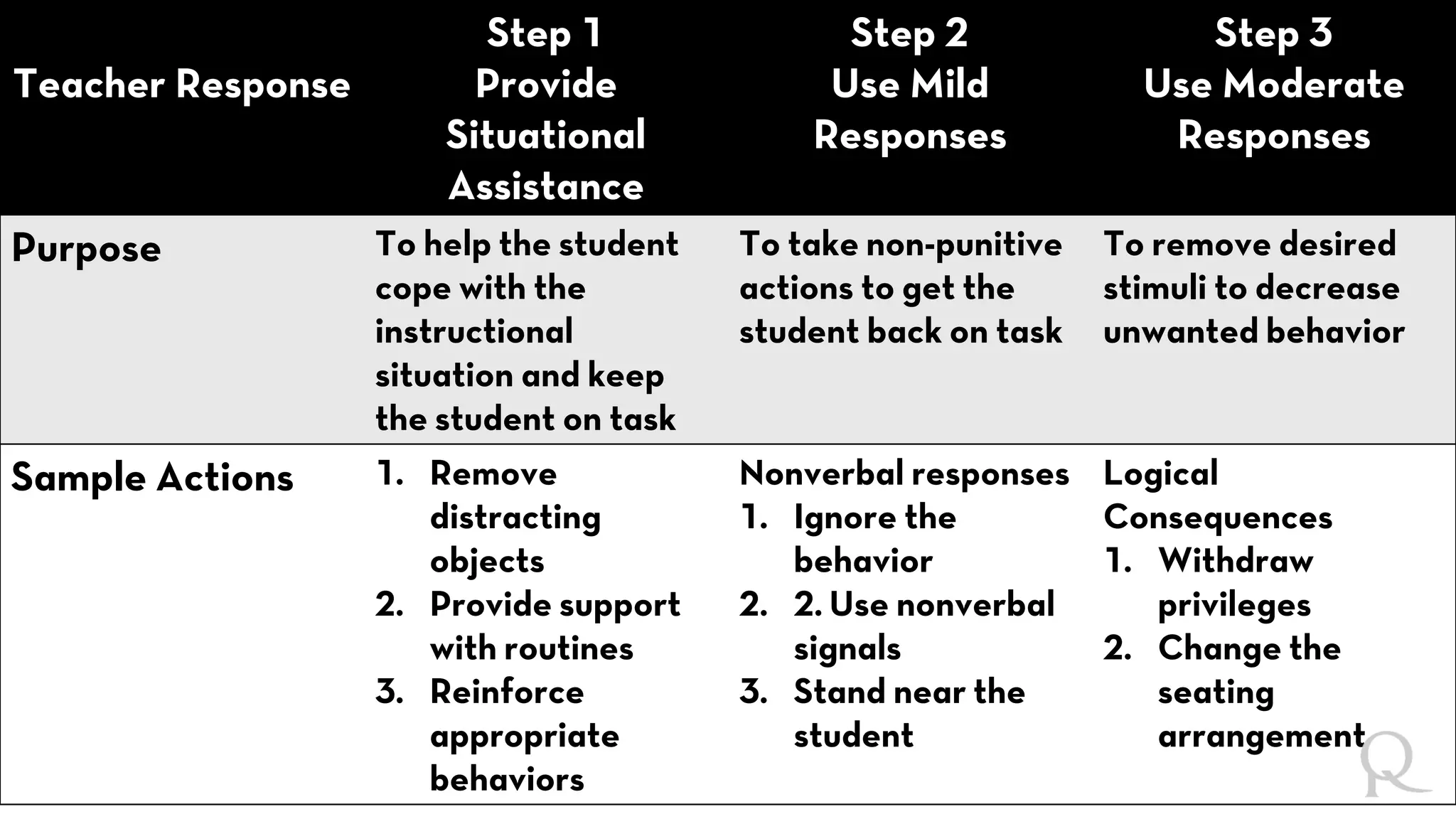
Three Step Response Plan
Dealing with Chronic Misbehavior
Chapter Activity
intervention
intervention
is an action done by the
teacher to stop
disruptive behavior
The principle of
least intervention
The principle of
least intervention
According to Slavin (2009) teachers should deal
misbehavior with the simplest. Least intrusive
interventions that work.
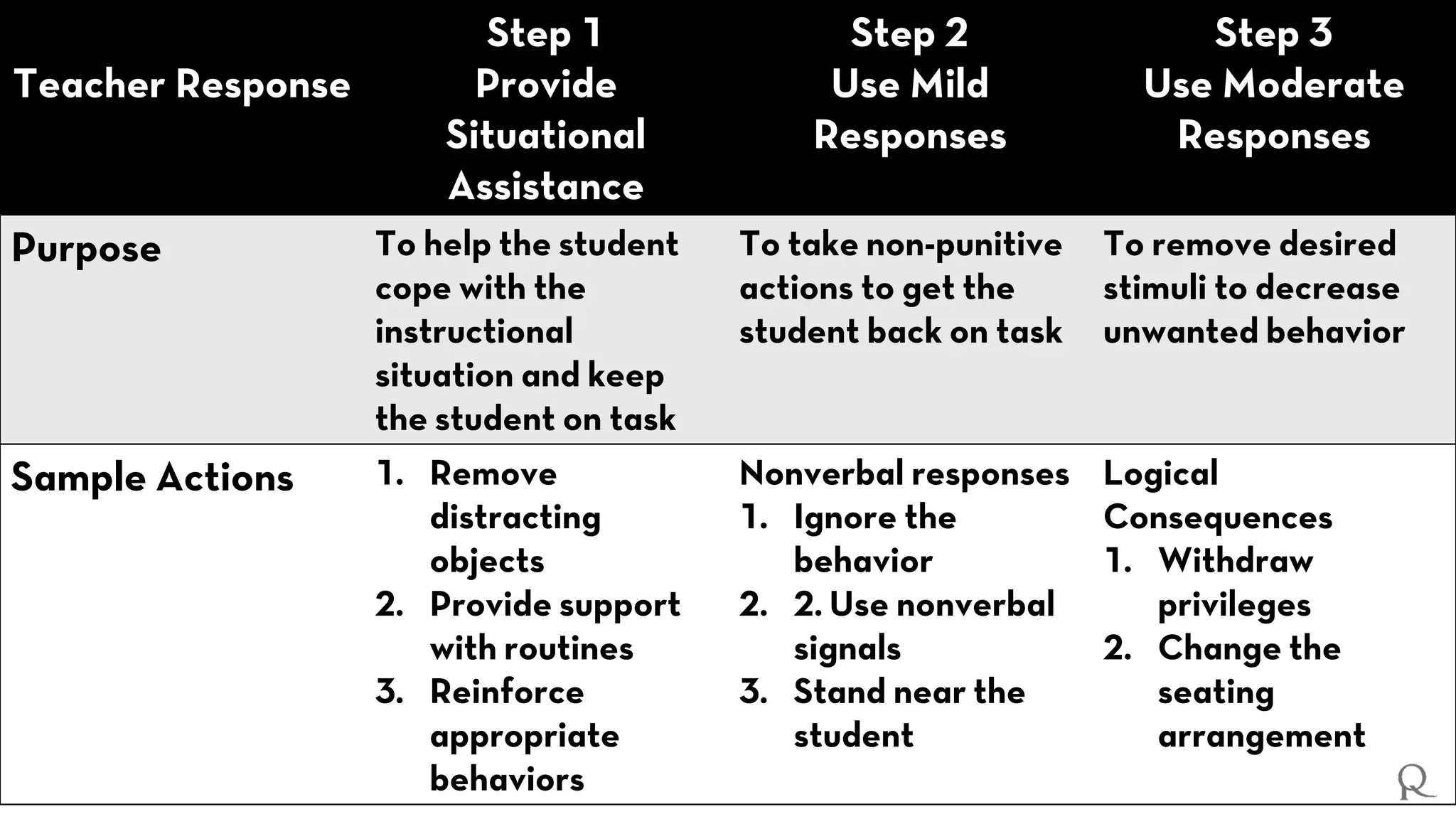
Three Step Response Plan
using the principle of
least intervention
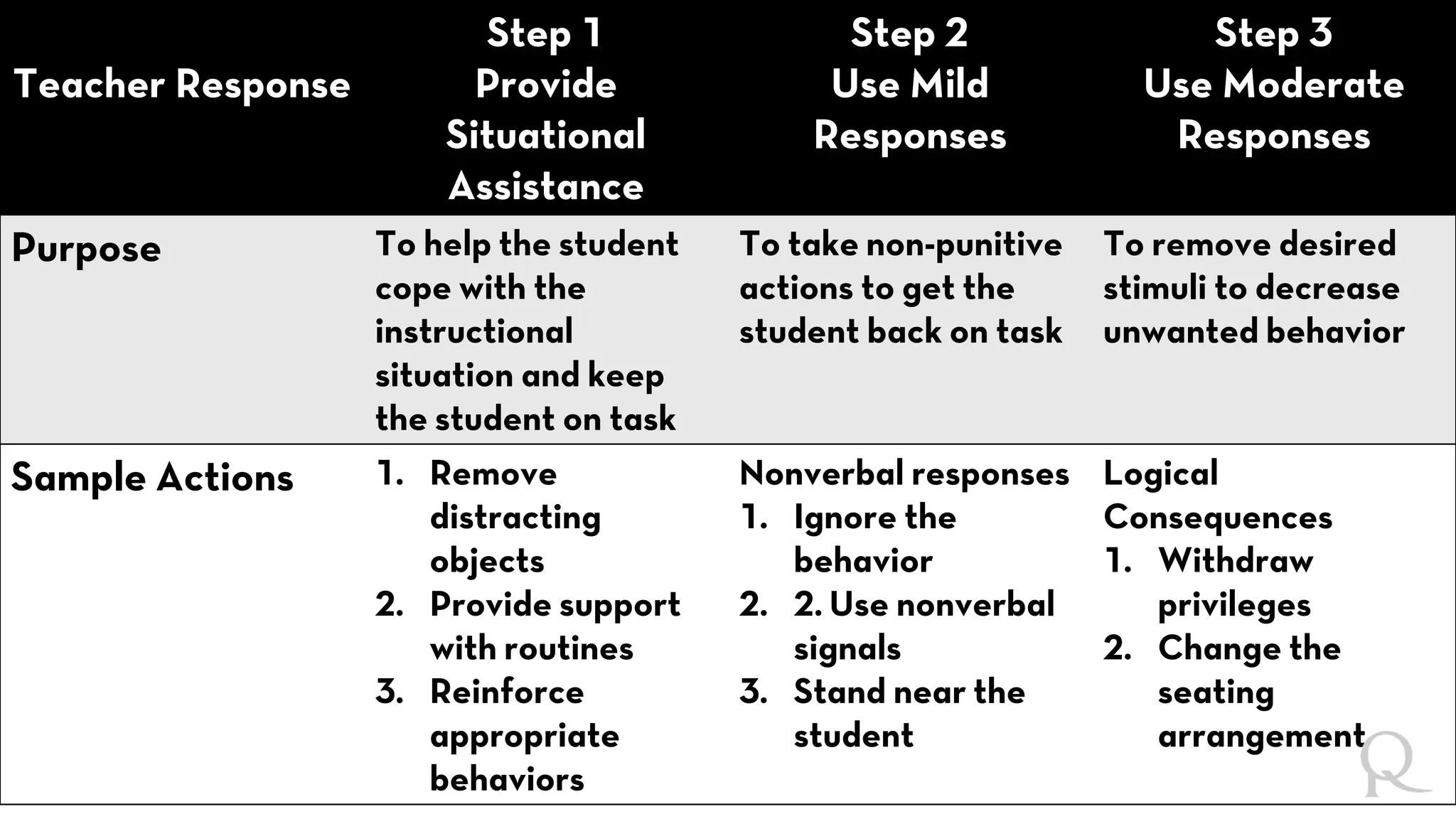
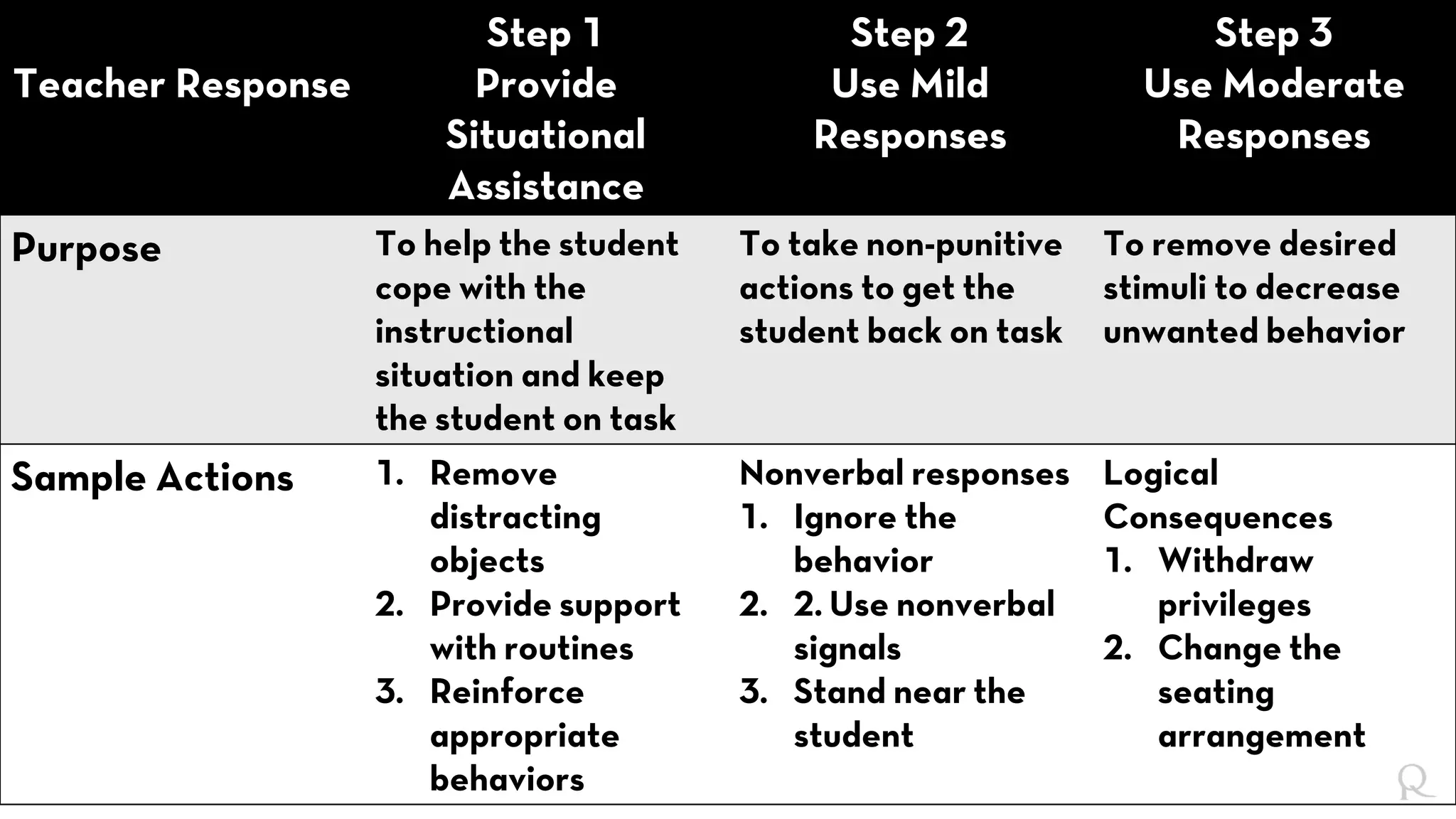
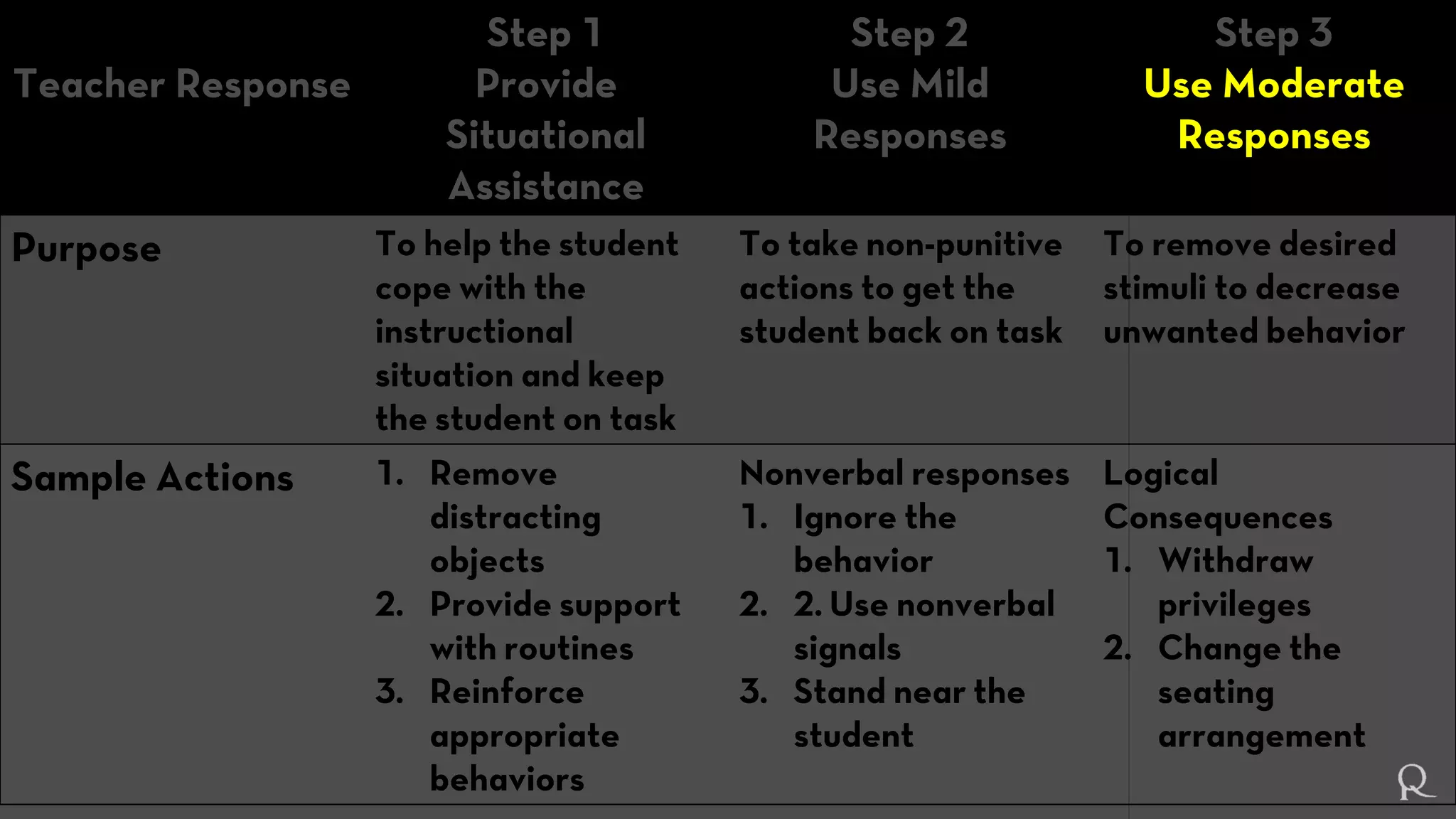
Teacher Response
Step 1
Provide
Situational
Assistance
Step 2
Use Mild
Responses
Step 3
Use Moderate
Responses
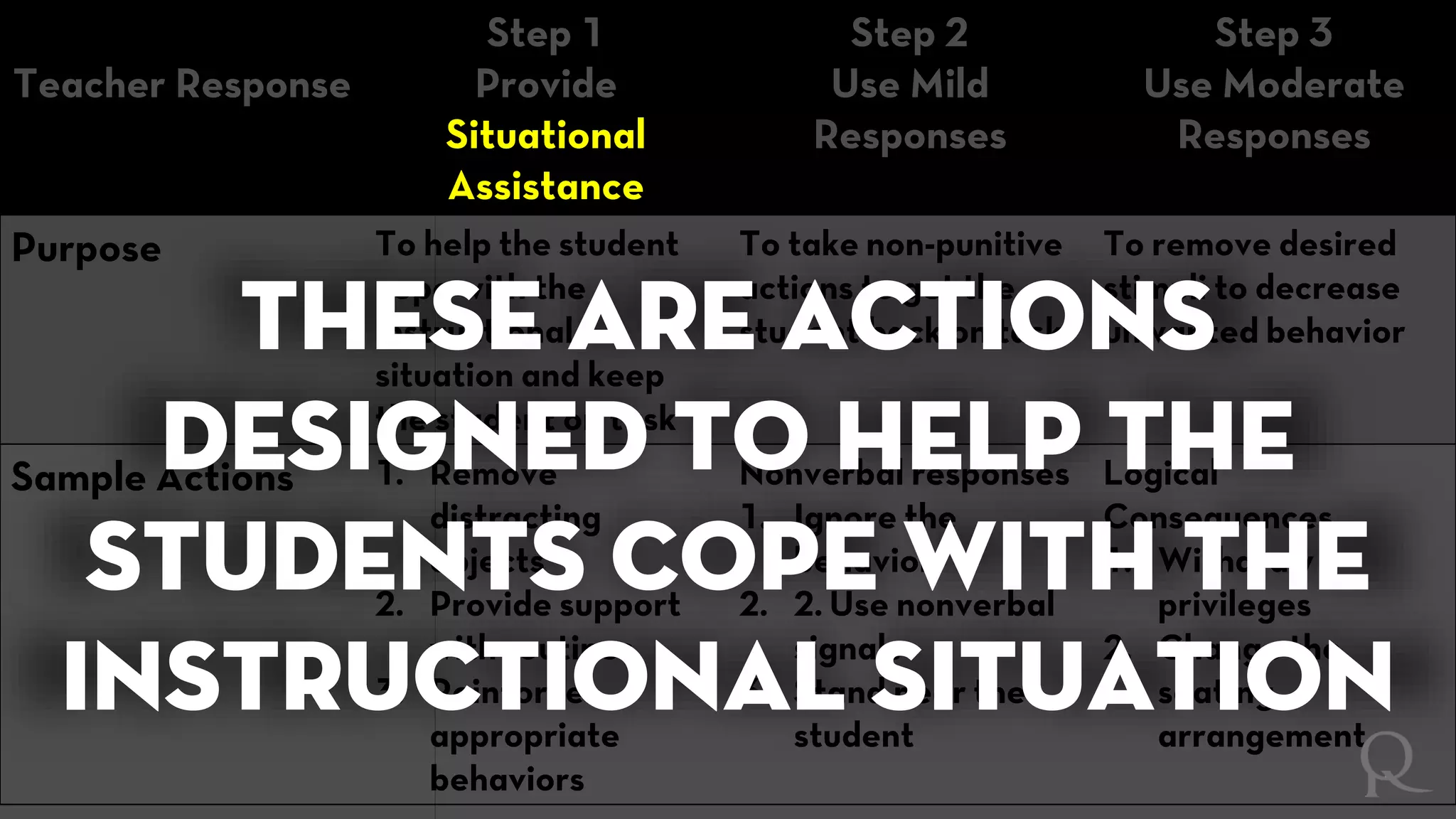
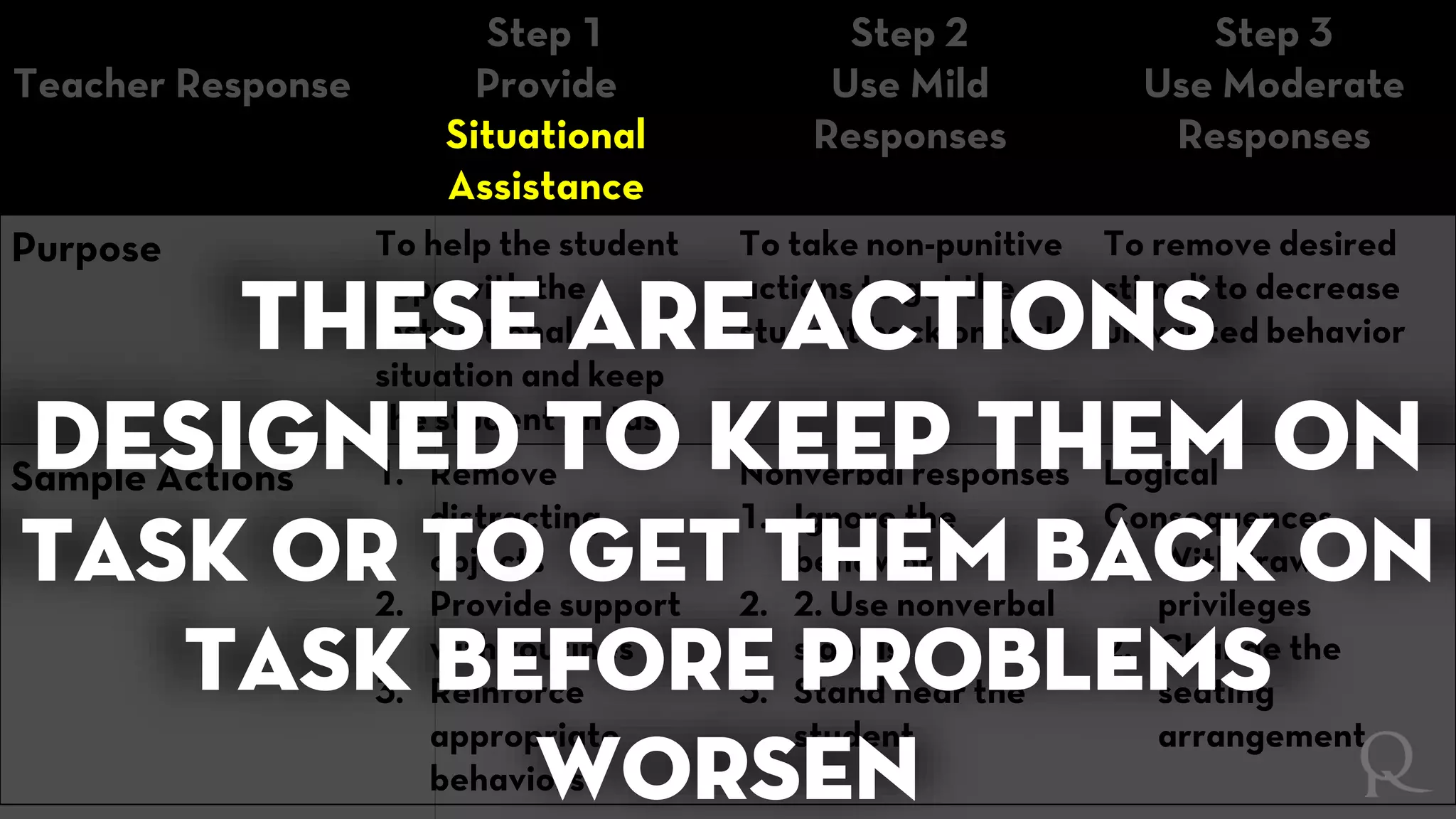
Purpose To help the student
cope with the
instructional
situation and keep
the student on task
To take non-punitive
actions to get the
student back on task
To remove desired
stimuli to decrease
unwanted behavior
Sample Actions 1. Remove
distracting
objects
2. Provide support
with routines
3. Reinforce
appropriate
behaviors
Nonverbal responses
1. Ignore the
behavior
2. 2. Use nonverbal
signals
3. Stand near the
student
Logical
Consequences
1. Withdraw
privileges
2. Change the
seating
arrangement
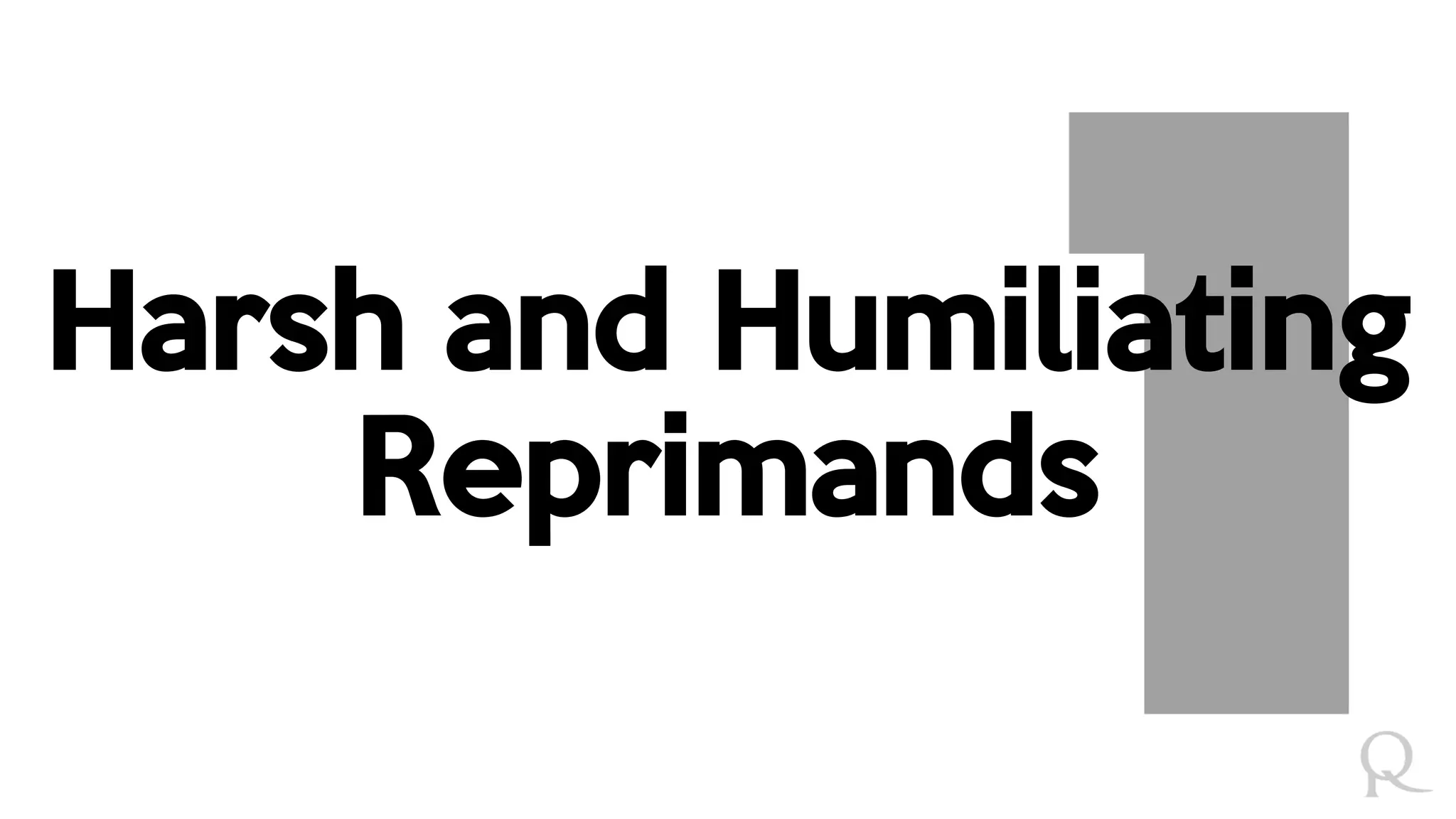
Harsh and Humiliating
Reprimands
Threats
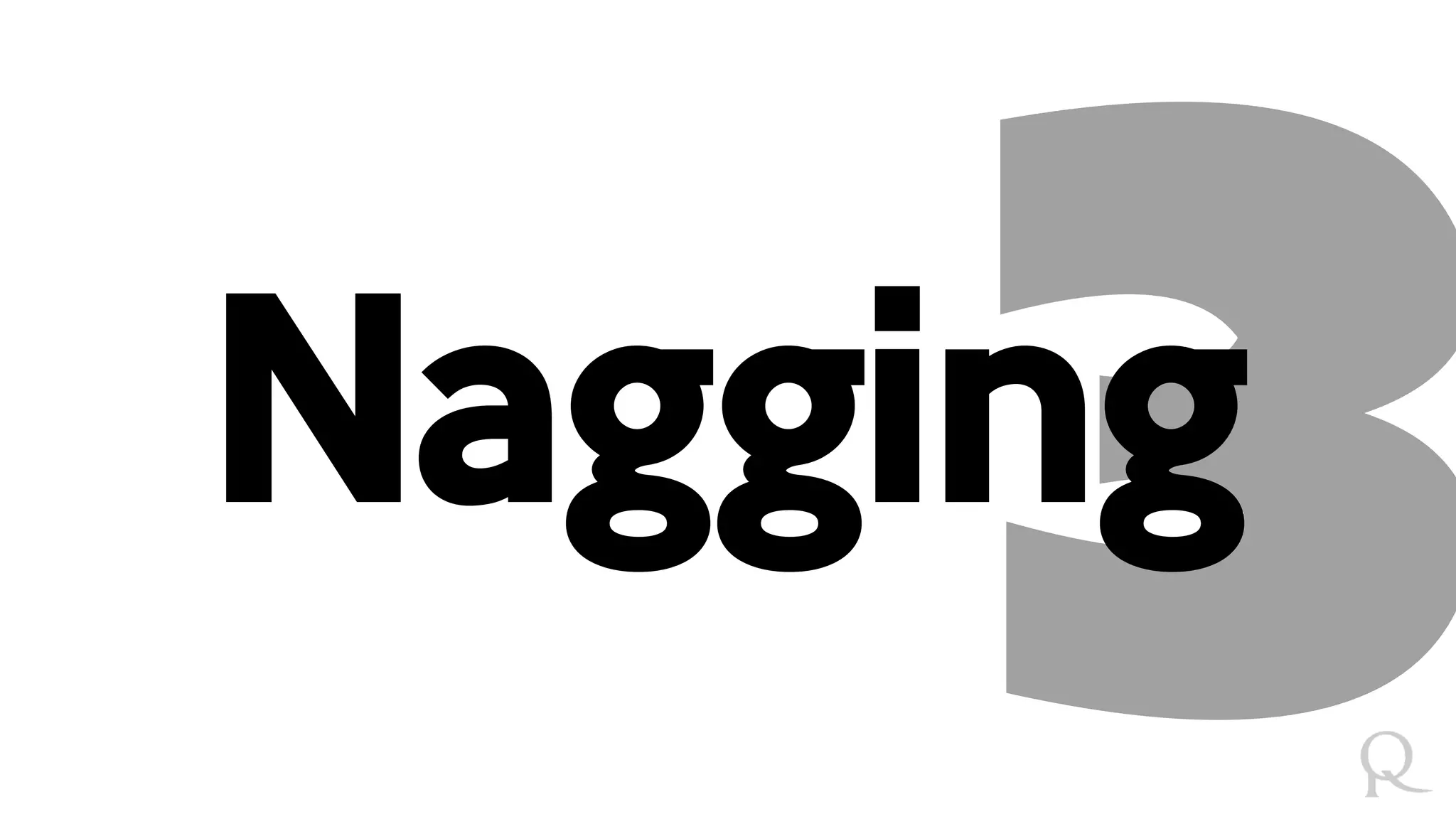
Nagging
Forced Apologies
Sarcastic
Remarks
Group
Punishment
Assigning Extra
Academic Work
Reducing
Grades
Writing as
Punishment
Physical Labor
or Exercise
Corporal
Punishment
factors
To consider
When using
punishment
Discuss and Reward
Acceptable
Behaviors
Clearly Specify the
Behaviors That Will
Lead Punishment
Use Punishment Only
When Rewards or
Nonpunitive Interventions
Have Not Worked
Administer
Punishment in a
Calm, Unemotional
Manner
Deliver a Warning
before Punishment
is Applied to Any
Behavior
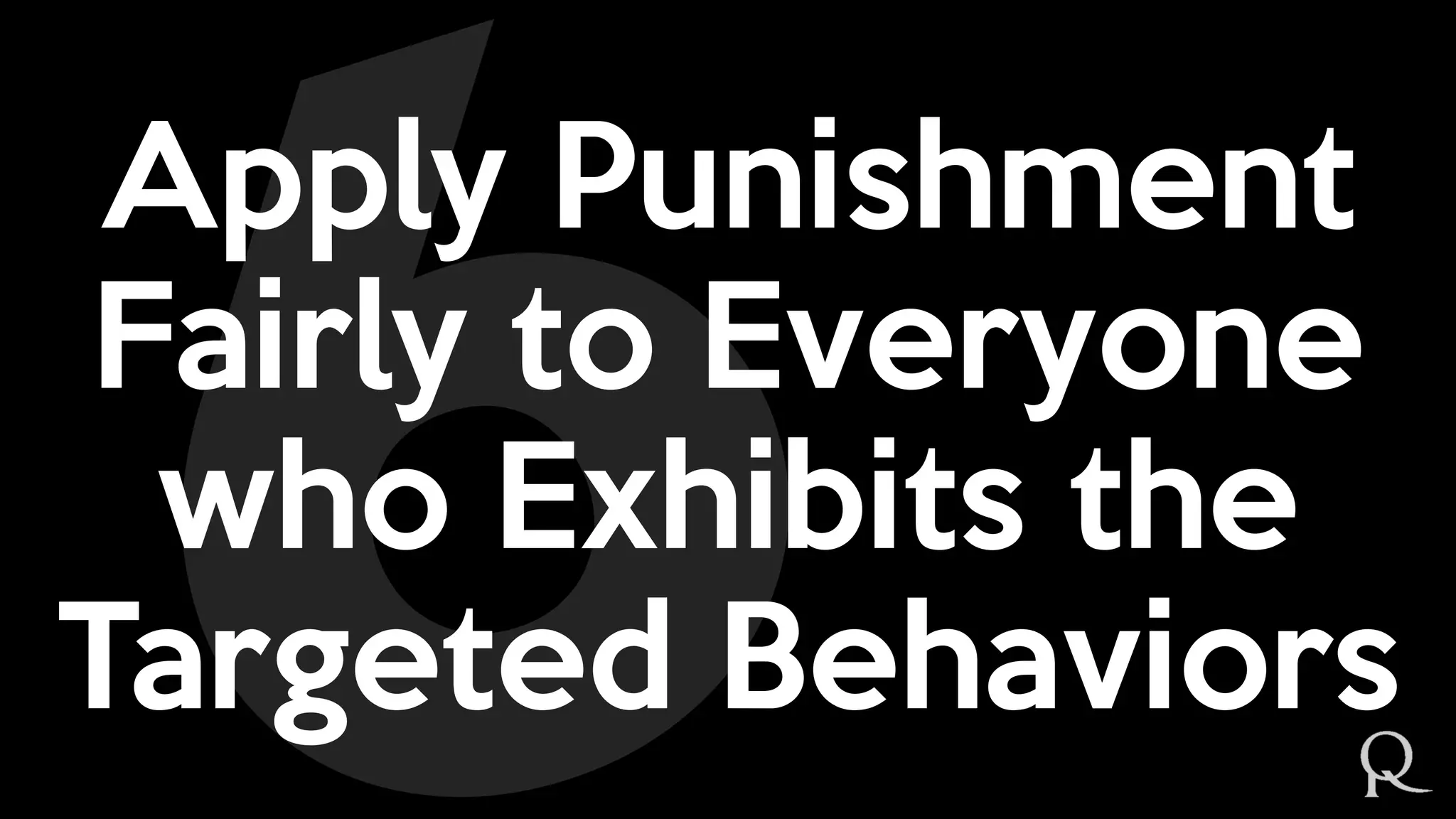
Apply Punishment
Fairly to Everyone
who Exhibits the
Targeted Behaviors
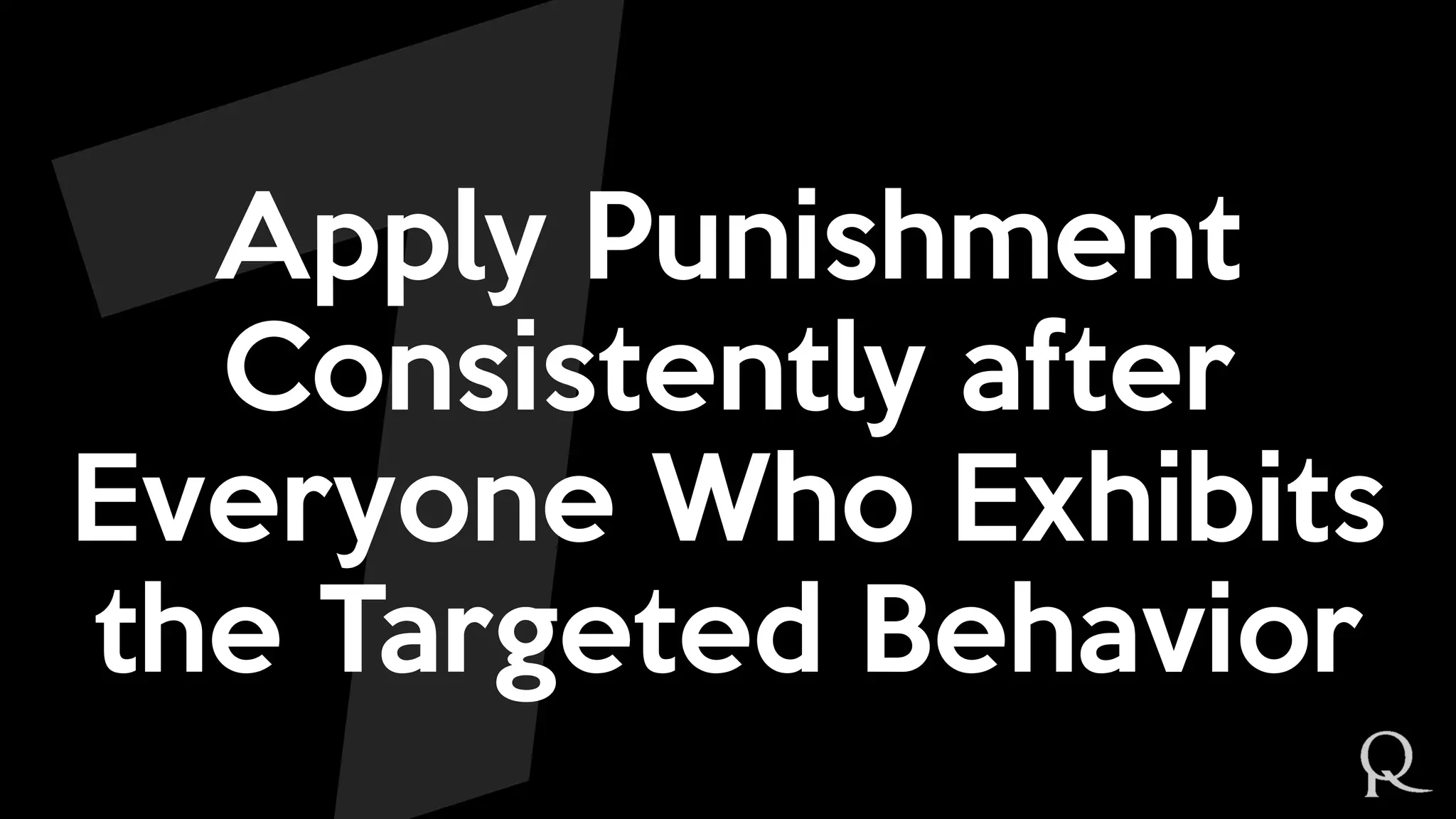
Apply Punishment
Consistently after
Everyone Who Exhibits
the Targeted Behavior
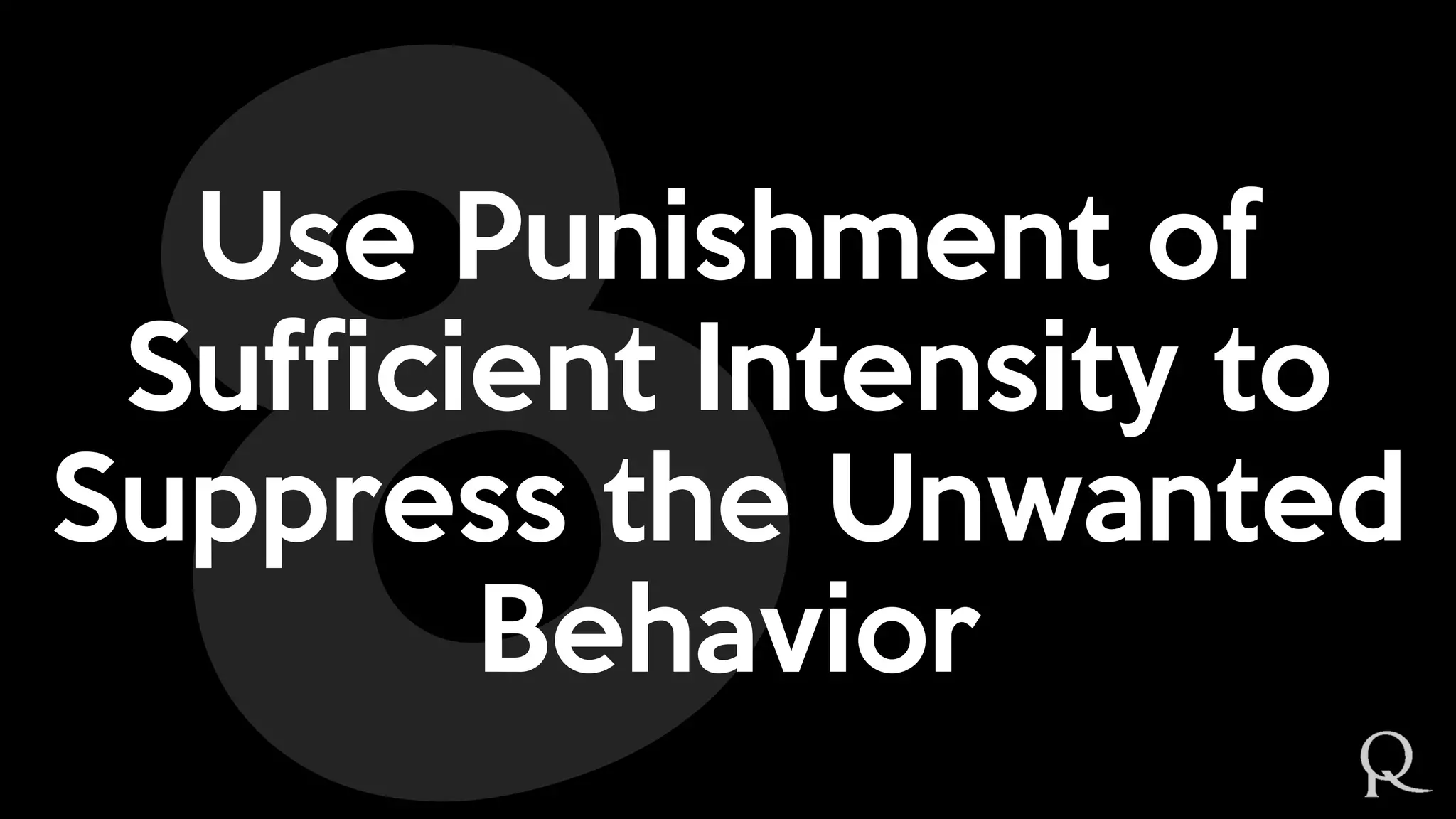
Use Punishment of
Sufficient Intensity to
Suppress the Unwanted
Behavior
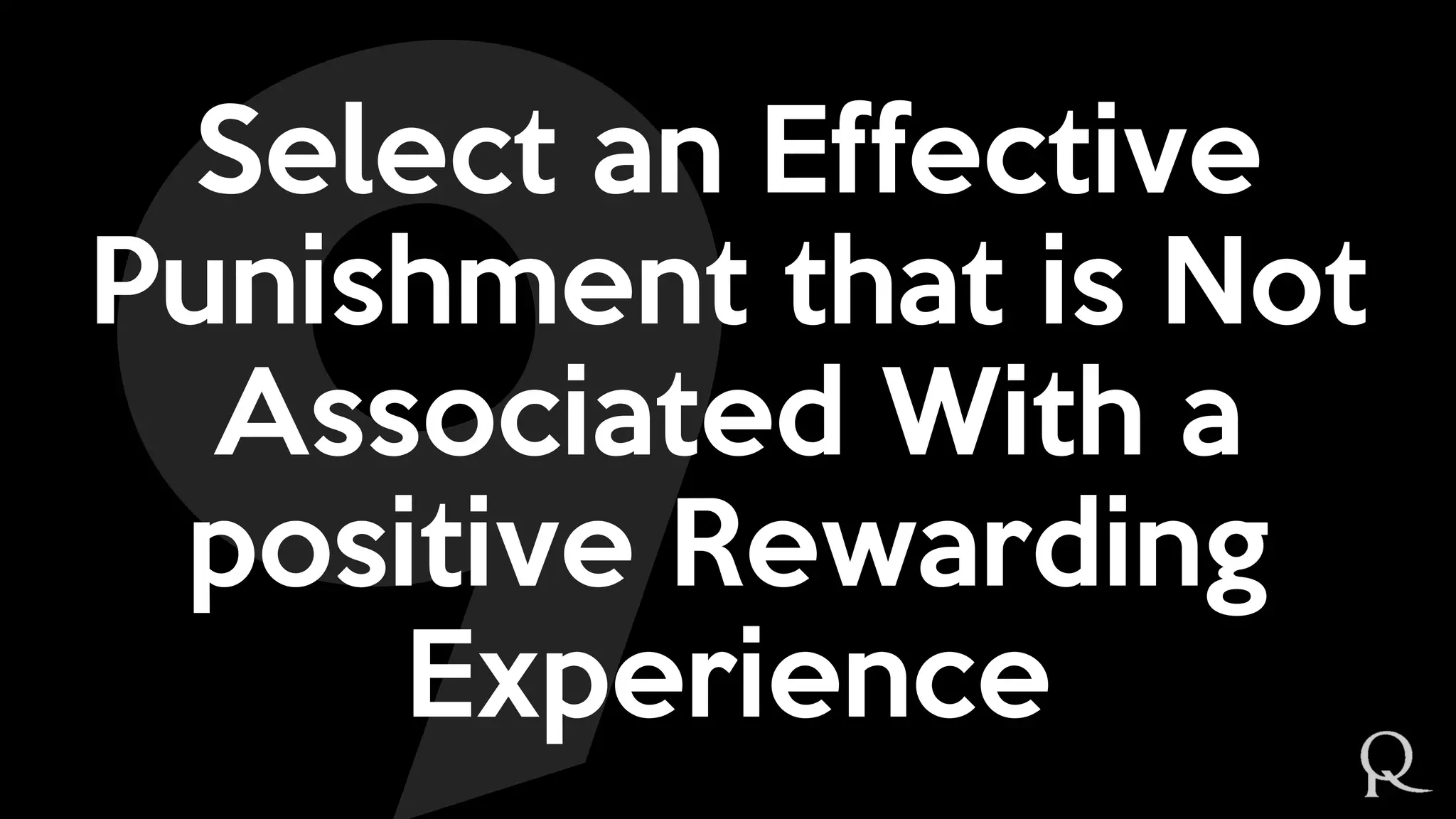
Select an Effective
Punishment that is Not
Associated With a
positive Rewarding
Experience
Avoid Extended
Periods of Punishment
Teacher Response
Step 1
Provide
Situational
Assistance
Step 2
Use Mild
Responses
Step 3
Use Moderate
Responses
Purpose To help the student
cope with the
instructional
situation and keep
the student on task
To take non-punitive
actions to get the
student back on task
To remove desired
stimuli to decrease
unwanted behavior
Sample Actions 1. Remove
distracting
objects
2. Provide support
with routines
3. Reinforce
appropriate
behaviors
Nonverbal responses
1. Ignore the
behavior
2. 2. Use nonverbal
signals
3. Stand near the
student
Logical
Consequences
1. Withdraw
privileges
2. Change the
seating
arrangement
Teacher Response
Step 1
Provide
Situational
Assistance
Step 2
Use Mild
Responses
Step 3
Use Moderate
Responses
Purpose To help the student
cope with the
instructional
situation and keep
the student on task
To take non-punitive
actions to get the
student back on task
To remove desired
stimuli to decrease
unwanted behavior
Sample Actions 1. Remove
distracting
objects
2. Provide support
with routines
3. Reinforce
appropriate
behaviors
Nonverbal responses
1. Ignore the
behavior
2. 2. Use nonverbal
signals
3. Stand near the
student
Logical
Consequences
1. Withdraw
privileges
2. Change the
seating
arrangement
Teacher Response
Step 1
Provide
Situational
Assistance
Step 2
Use Mild
Responses
Step 3
Use Moderate
Responses
Purpose To help the student
cope with the
instructional
situation and keep
the student on task
To take non-punitive
actions to get the
student back on task
To remove desired
stimuli to decrease
unwanted behavior
Sample Actions 1. Remove
distracting
objects
2. Provide support
with routines
3. Reinforce
appropriate
behaviors
Nonverbal responses
1. Ignore the
behavior
2. 2. Use nonverbal
signals
3. Stand near the
student
Logical
Consequences
1. Withdraw
privileges
2. Change the
seating
arrangement
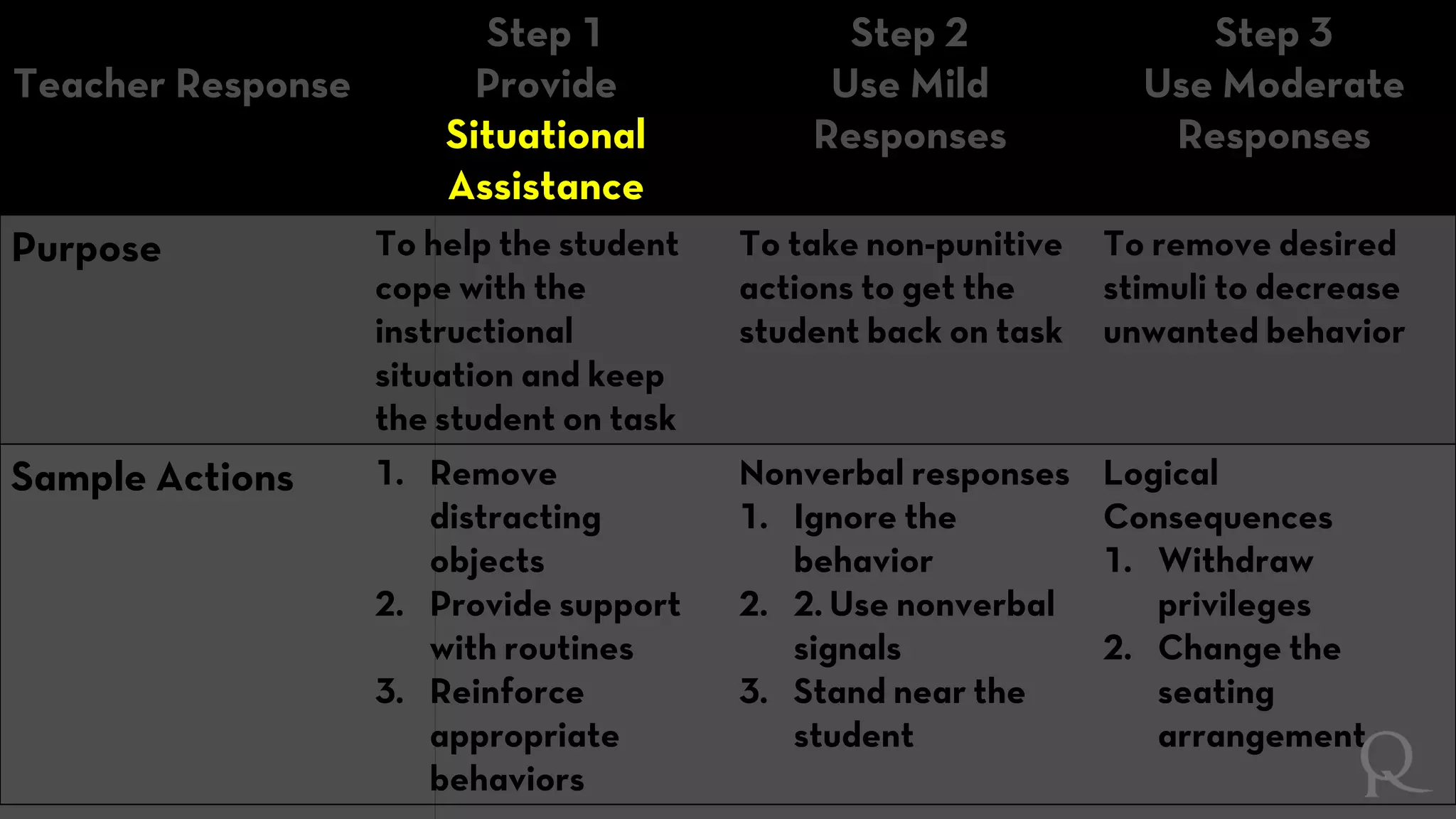
These are actions
designed to help the
students cope with the
instructional situation
Teacher Response
Step 1
Provide
Situational
Assistance
Step 2
Use Mild
Responses
Step 3
Use Moderate
Responses
Purpose To help the student
cope with the
instructional
situation and keep
the student on task
To take non-punitive
actions to get the
student back on task
To remove desired
stimuli to decrease
unwanted behavior
Sample Actions 1. Remove
distracting
objects
2. Provide support
with routines
3. Reinforce
appropriate
behaviors
Nonverbal responses
1. Ignore the
behavior
2. 2. Use nonverbal
signals
3. Stand near the
student
Logical
Consequences
1. Withdraw
privileges
2. Change the
seating
arrangement
These are actions
designed to keep them on
task or to get them back on
task before problems
worsen
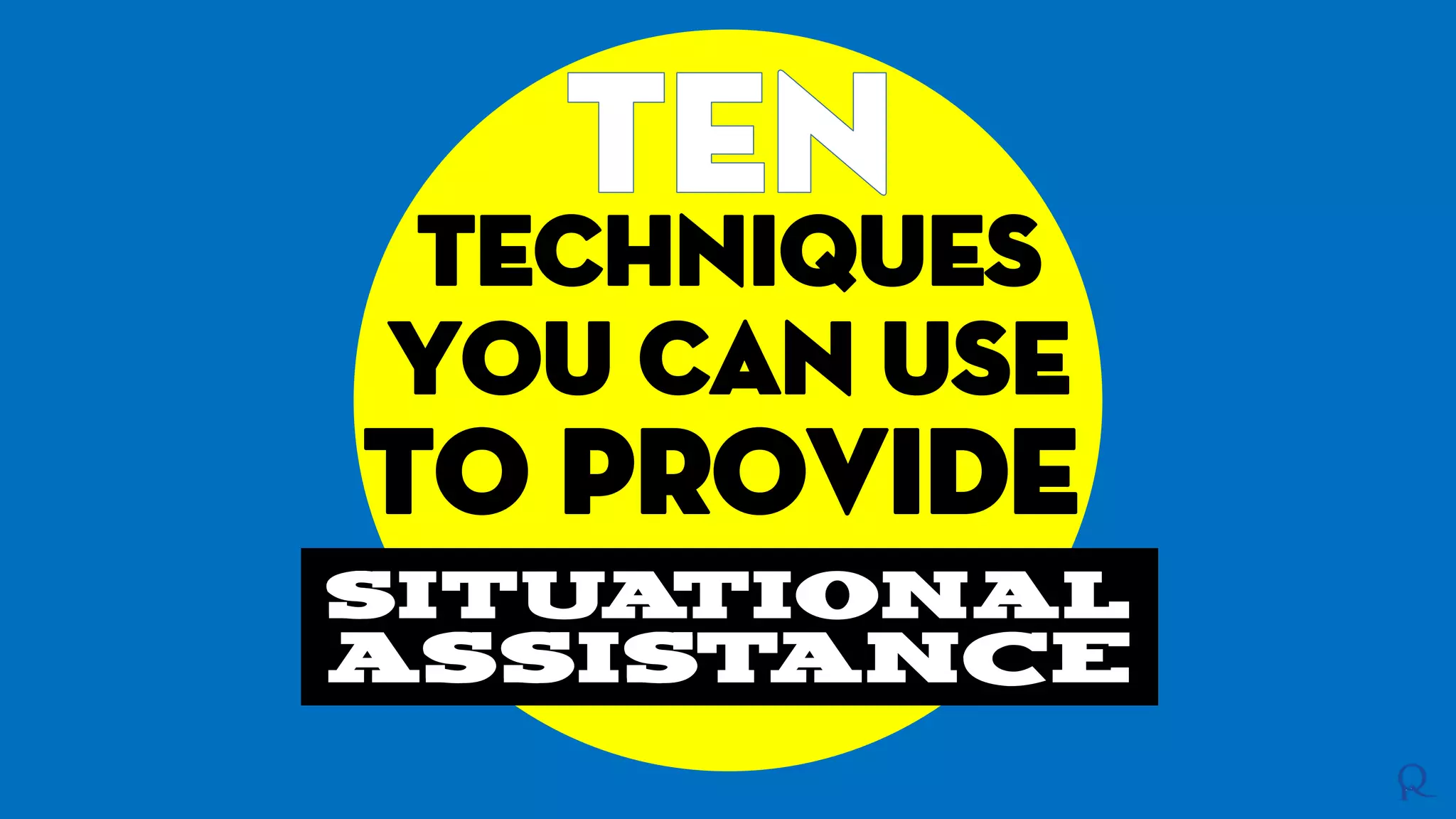
techniques
You can use
To provide
situational
assistance
1
Remove
distracting
objects
2
Provide support
with routines
3
Reinforce
appropriate
behavior
4
Boost student
interest
5
Provide
cues
6
Help students
over hurdles
7
Redirect the
behavior
8
Alter the
lesson
9
Provide non-
punitive time-
out
10
Modify the
classroom
environment
Teacher Response
Step 1
Provide
Situational
Assistance
Step 2
Use Mild
Responses
Step 3
Use Moderate
Responses
Purpose To help the student
cope with the
instructional
situation and keep
the student on task
To take non-punitive
actions to get the
student back on task
To remove desired
stimuli to decrease
unwanted behavior
Sample Actions 1. Remove
distracting
objects
2. Provide support
with routines
3. Reinforce
appropriate
behaviors
Nonverbal responses
1. Ignore the
behavior
2. 2. Use nonverbal
signals
3. Stand near the
student
Logical
Consequences
1. Withdraw
privileges
2. Change the
seating
arrangement
Teacher Response
Step 1
Provide
Situational
Assistance
Step 2
Use Mild
Responses
Step 3
Use Moderate
Responses
Purpose To help the student
cope with the
instructional
situation and keep
the student on task
To take non-punitive
actions to get the
student back on task
To remove desired
stimuli to decrease
unwanted behavior
Sample Actions 1. Remove
distracting
objects
2. Provide support
with routines
3. Reinforce
appropriate
behaviors
Nonverbal responses
1. Ignore the
behavior
2. 2. Use nonverbal
signals
3. Stand near the
student
Logical
Consequences
1. Withdraw
privileges
2. Change the
seating
arrangement
Teacher Response
Step 1
Provide
Situational
Assistance
Step 2
Use Mild
Responses
Step 3
Use Moderate
Responses
Purpose To help the student
cope with the
instructional
situation and keep
the student on task
To take non-punitive
actions to get the
student back on task
To remove desired
stimuli to decrease
unwanted behavior
Sample Actions 1. Remove
distracting
objects
2. Provide support
with routines
3. Reinforce
appropriate
behaviors
Nonverbal responses
1. Ignore the
behavior
2. 2. Use nonverbal
signals
3. Stand near the
student
Logical
Consequences
1. Withdraw
privileges
2. Change the
seating
arrangement
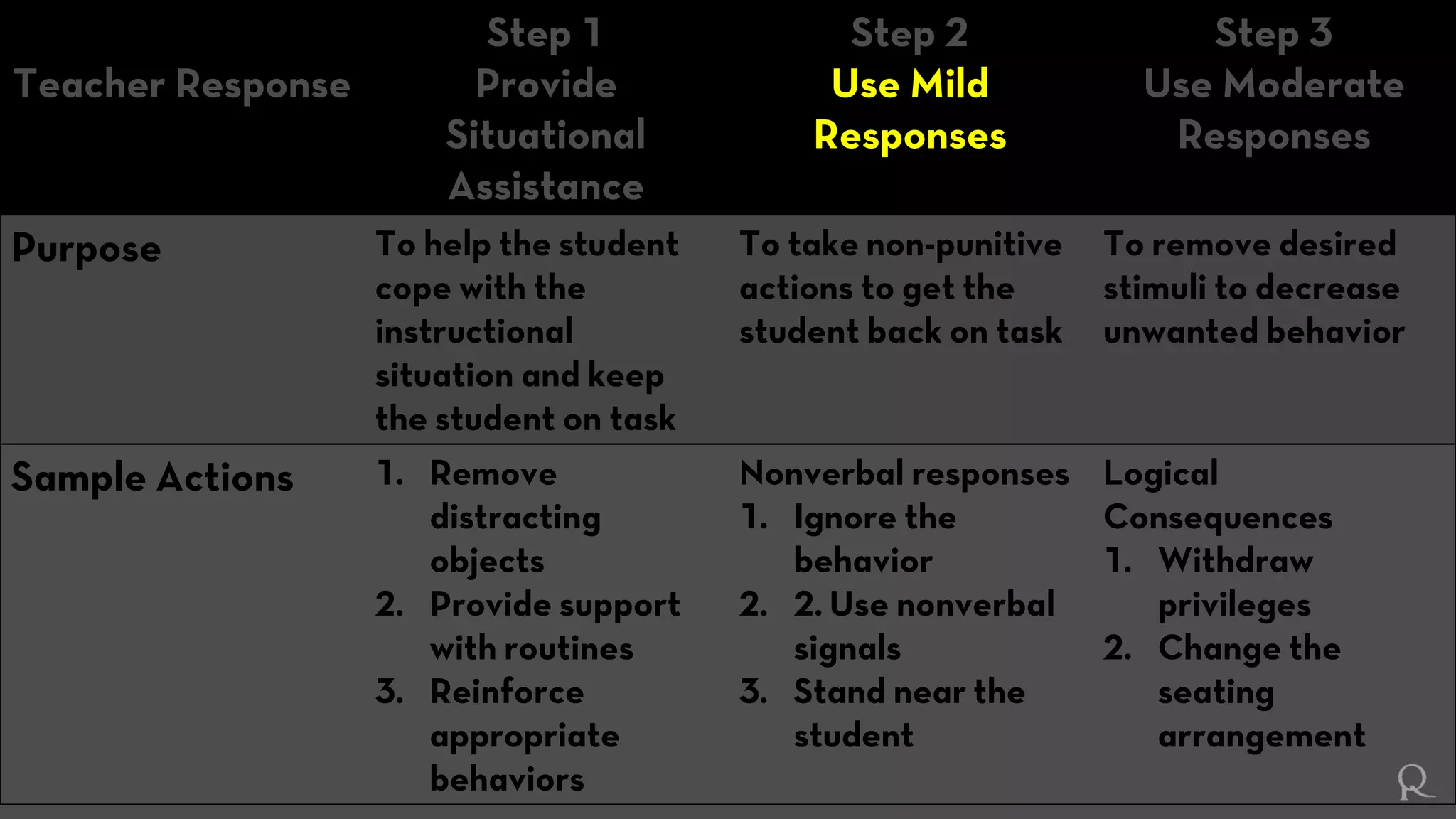
These are non-punitive
ways to deal with
misbehavior while
providing guidance for
appropriate behavior
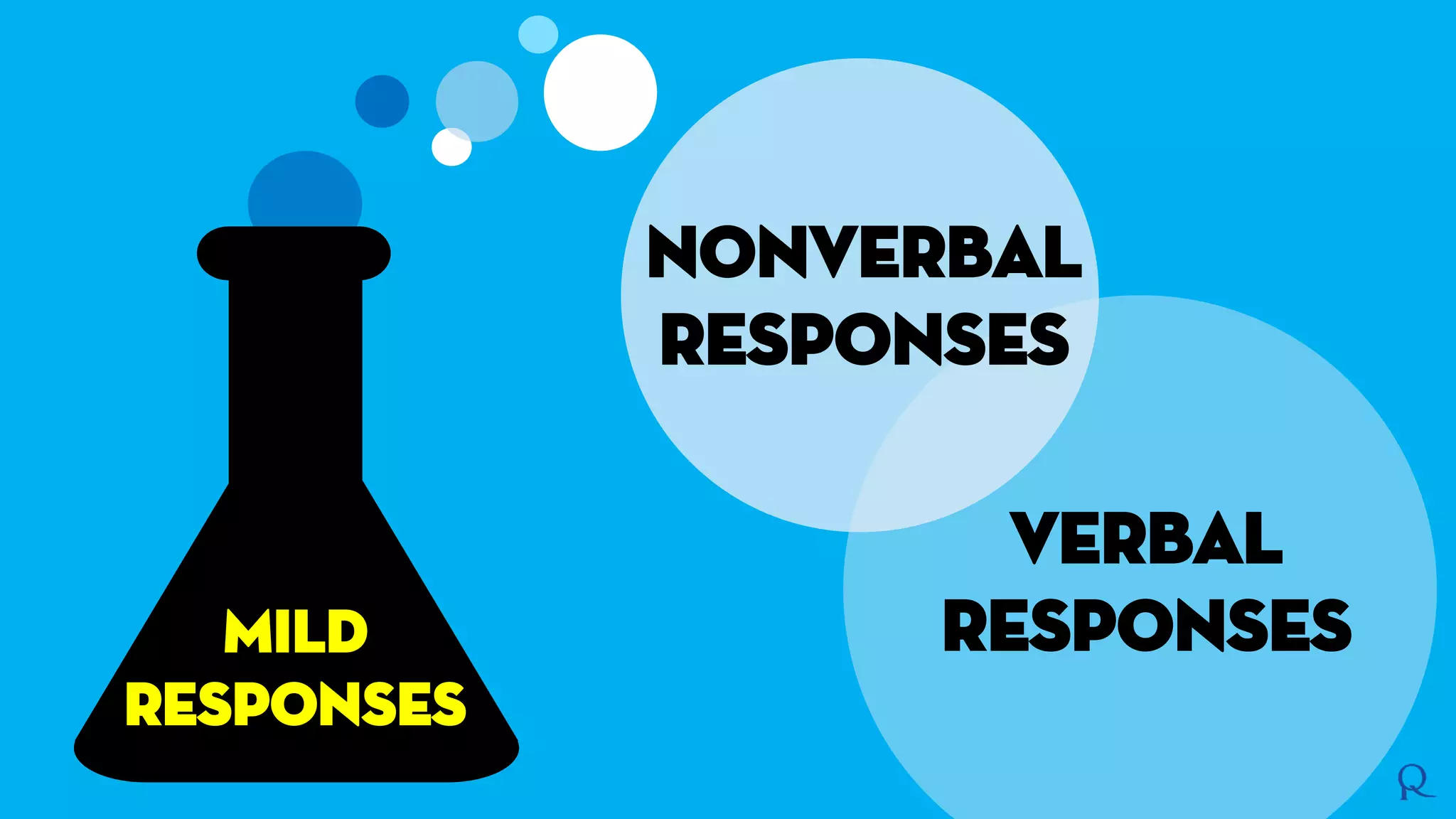
Nonverbal
responses
Verbal
responsesMild
responses
Non verbal
Response
techniques
1
Ignore the
behavior
2
Use
nonverbal
signals
3
Stand near
the student
4
Touch or tap
the student’s
shoulder
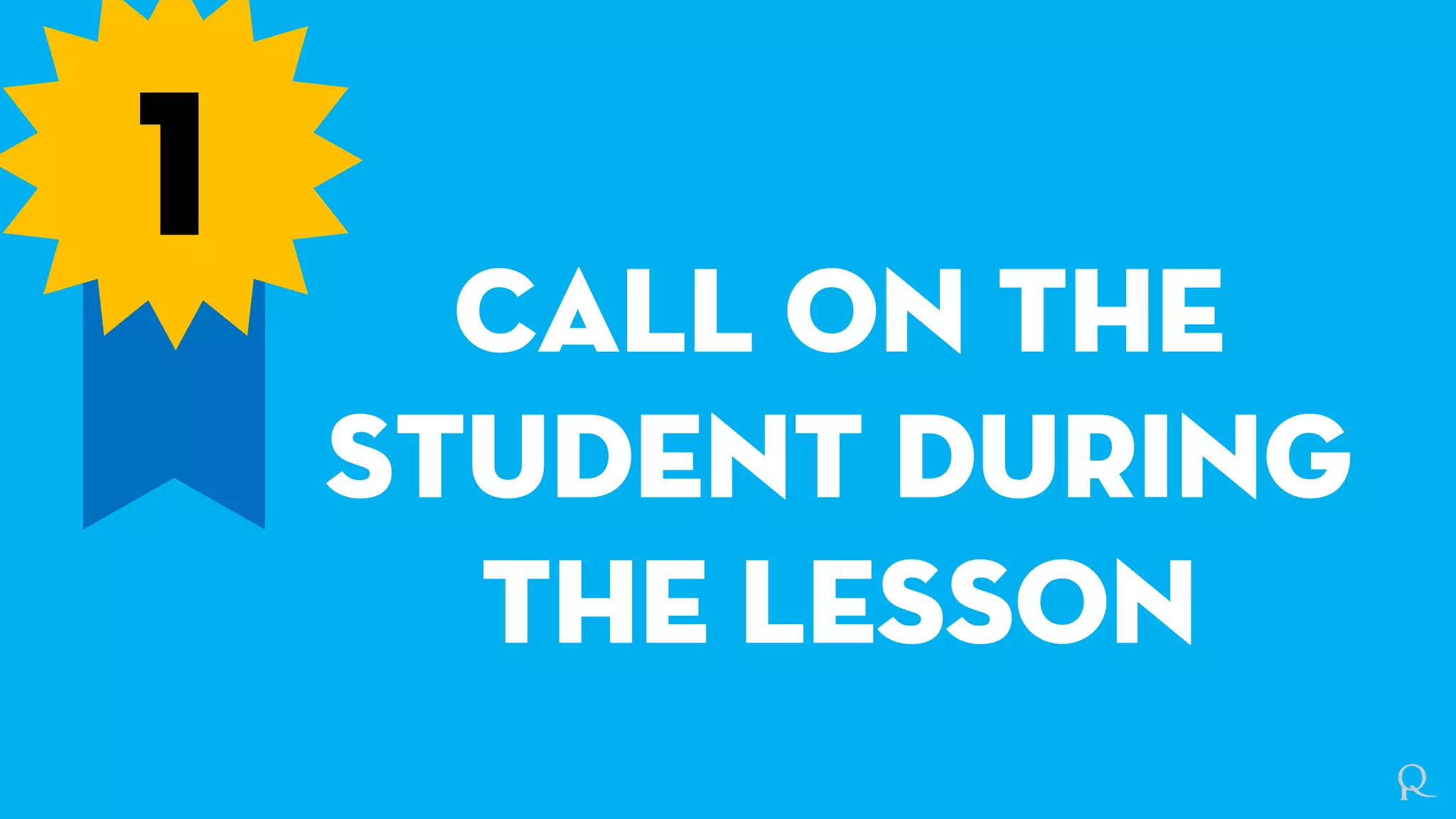
1
Call on the
student during
the lesson
2
Use
humor
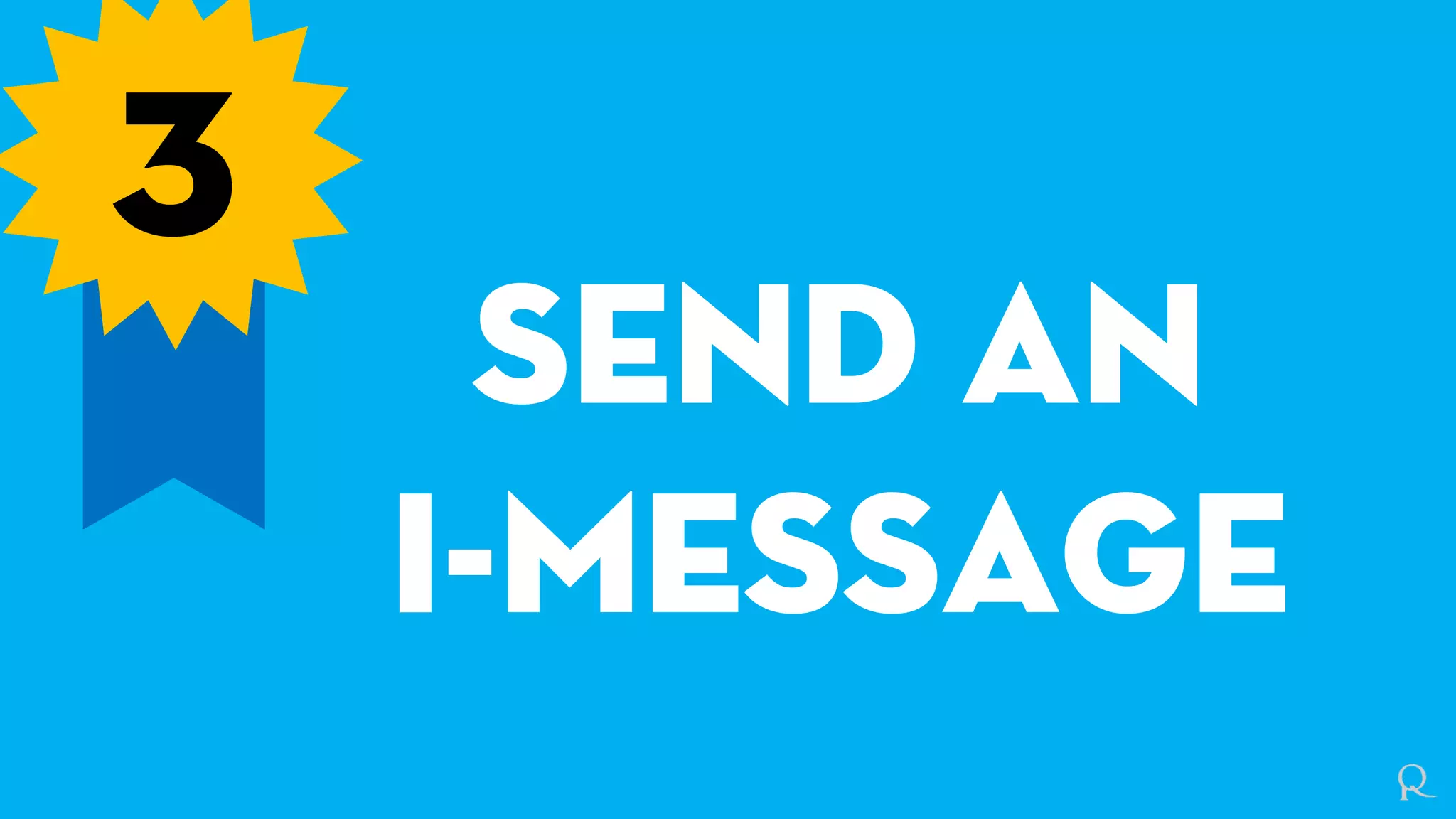
3
Send an
i-message
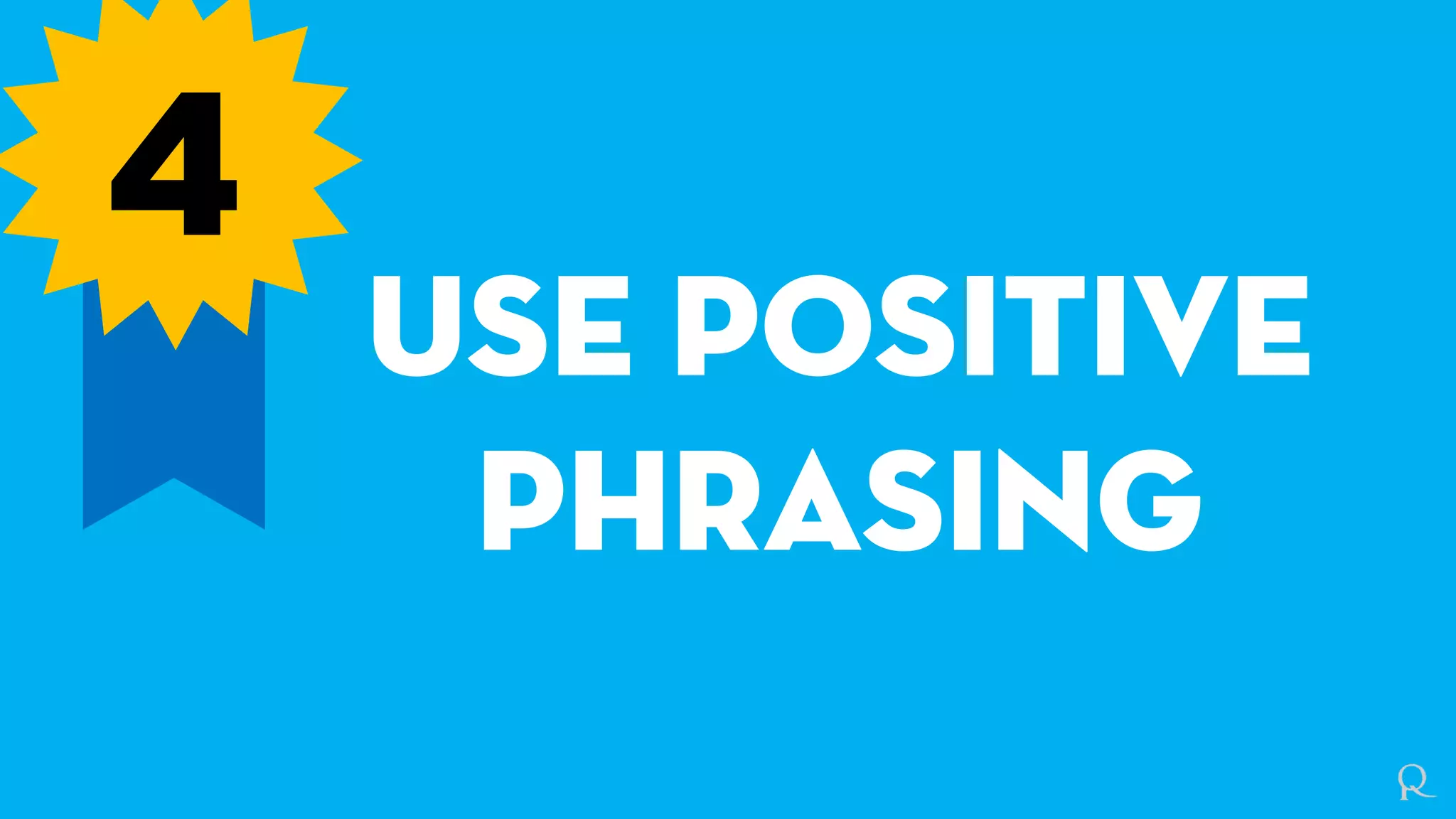
4
Use positive
phrasing
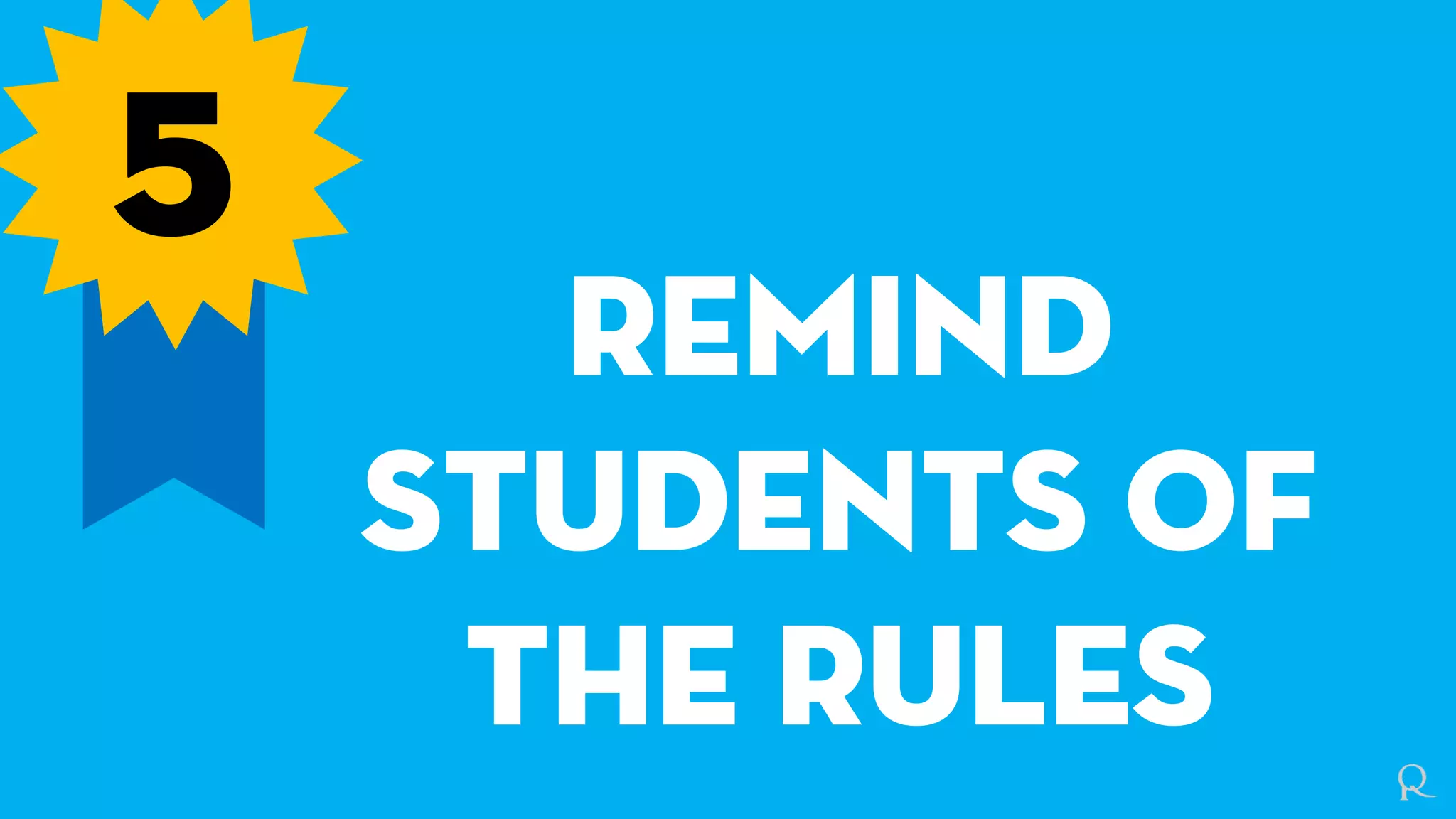
5
Remind
students of
the rules
6
Give
students
choices
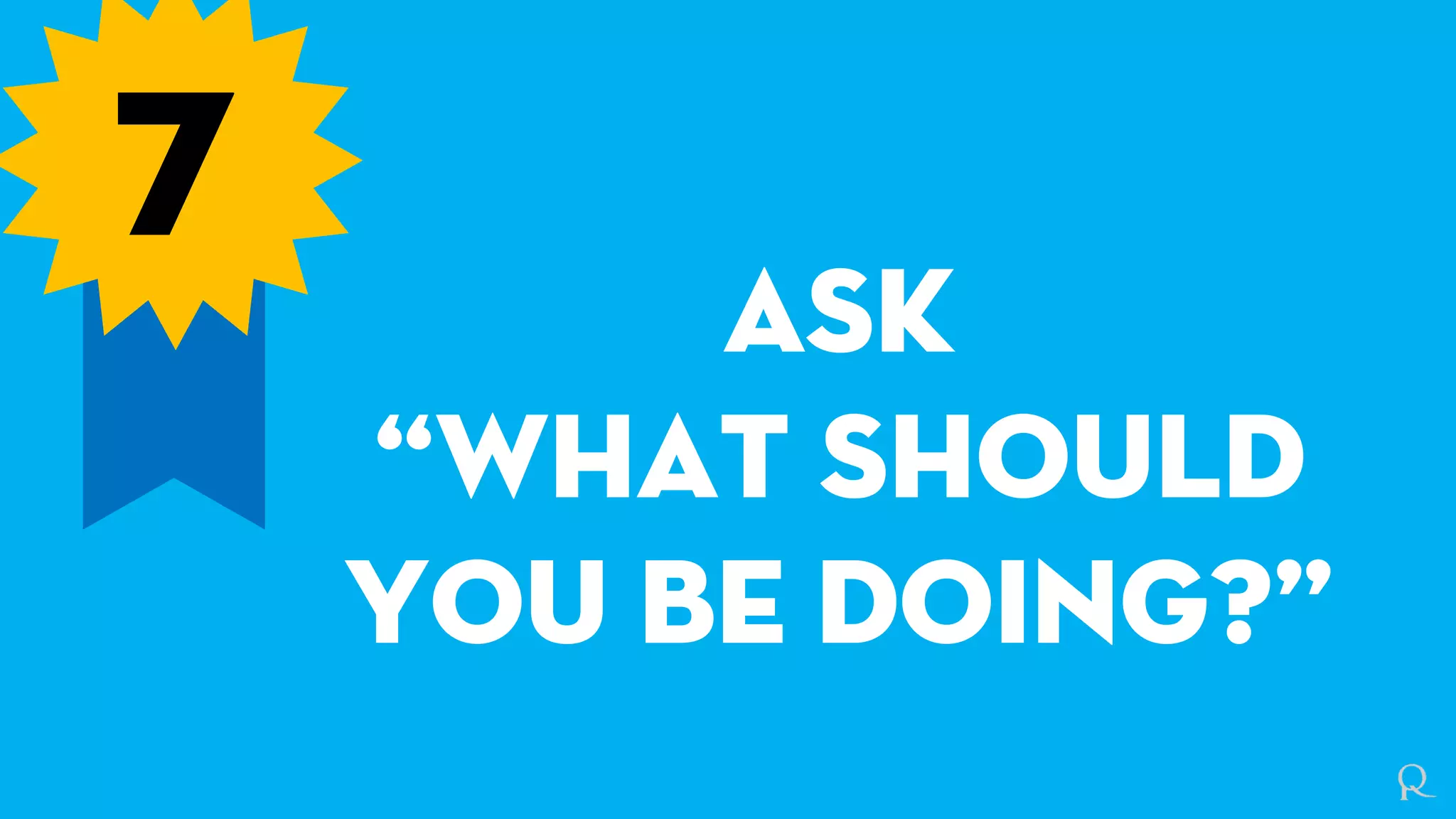
7
Ask
“What should
you be doing?”
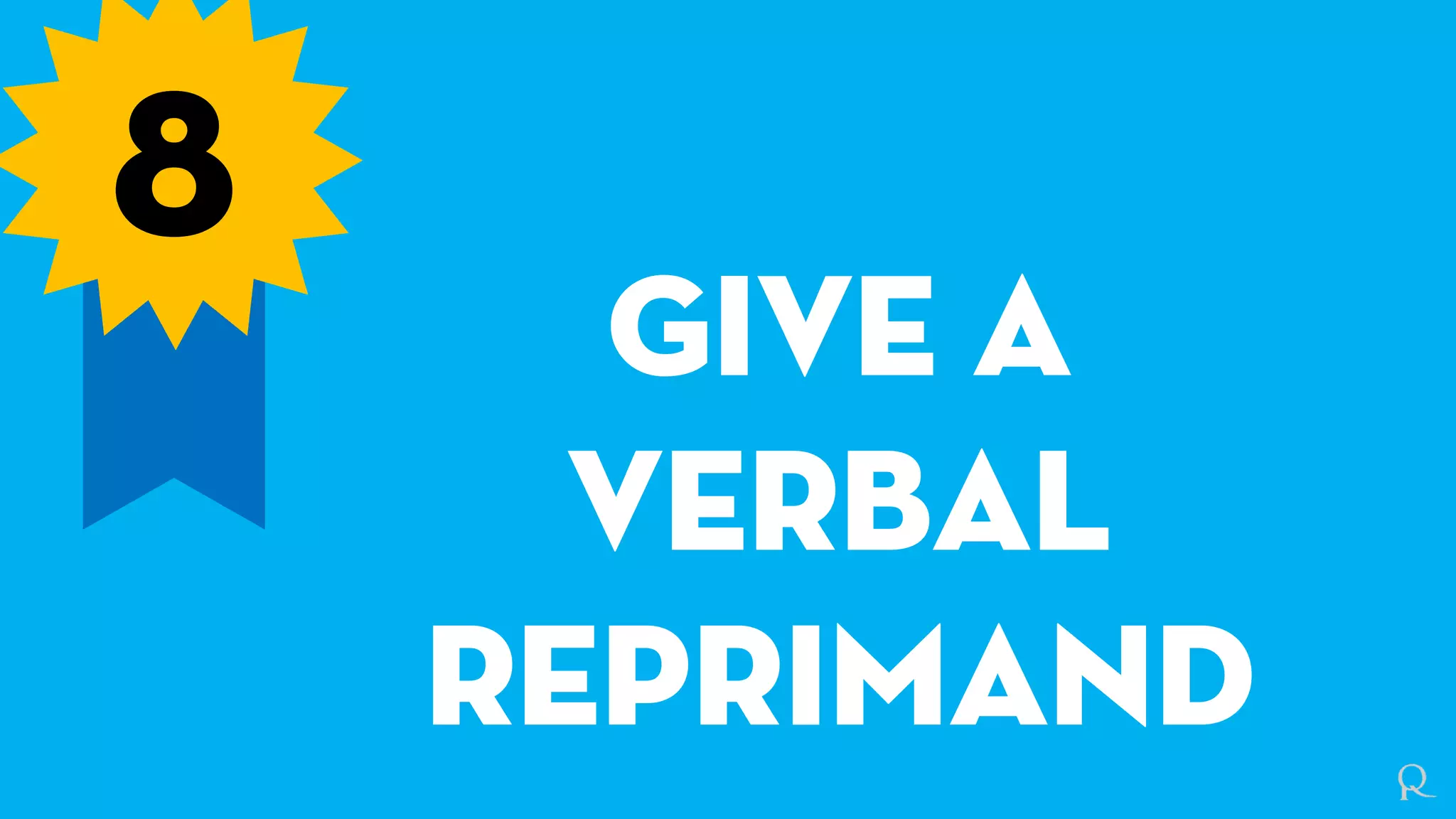
8
Give a
verbal
reprimand
Teacher Response
Step 1
Provide
Situational
Assistance
Step 2
Use Mild
Responses
Step 3
Use Moderate
Responses
Purpose To help the student
cope with the
instructional
situation and keep
the student on task
To take non-punitive
actions to get the
student back on task
To remove desired
stimuli to decrease
unwanted behavior
Sample Actions 1. Remove
distracting
objects
2. Provide support
with routines
3. Reinforce
appropriate
behaviors
Nonverbal responses
1. Ignore the
behavior
2. 2. Use nonverbal
signals
3. Stand near the
student
Logical
Consequences
1. Withdraw
privileges
2. Change the
seating
arrangement
Teacher Response
Step 1
Provide
Situational
Assistance
Step 2
Use Mild
Responses
Step 3
Use Moderate
Responses
Purpose To help the student
cope with the
instructional
situation and keep
the student on task
To take non-punitive
actions to get the
student back on task
To remove desired
stimuli to decrease
unwanted behavior
Sample Actions 1. Remove
distracting
objects
2. Provide support
with routines
3. Reinforce
appropriate
behaviors
Nonverbal responses
1. Ignore the
behavior
2. 2. Use nonverbal
signals
3. Stand near the
student
Logical
Consequences
1. Withdraw
privileges
2. Change the
seating
arrangement
Teacher Response
Step 1
Provide
Situational
Assistance
Step 2
Use Mild
Responses
Step 3
Use Moderate
Responses
Purpose To help the student
cope with the
instructional
situation and keep
the student on task
To take non-punitive
actions to get the
student back on task
To remove desired
stimuli to decrease
unwanted behavior
Sample Actions 1. Remove
distracting
objects
2. Provide support
with routines
3. Reinforce
appropriate
behaviors
Nonverbal responses
1. Ignore the
behavior
2. 2. Use nonverbal
signals
3. Stand near the
student
Logical
Consequences
1. Withdraw
privileges
2. Change the
seating
arrangement
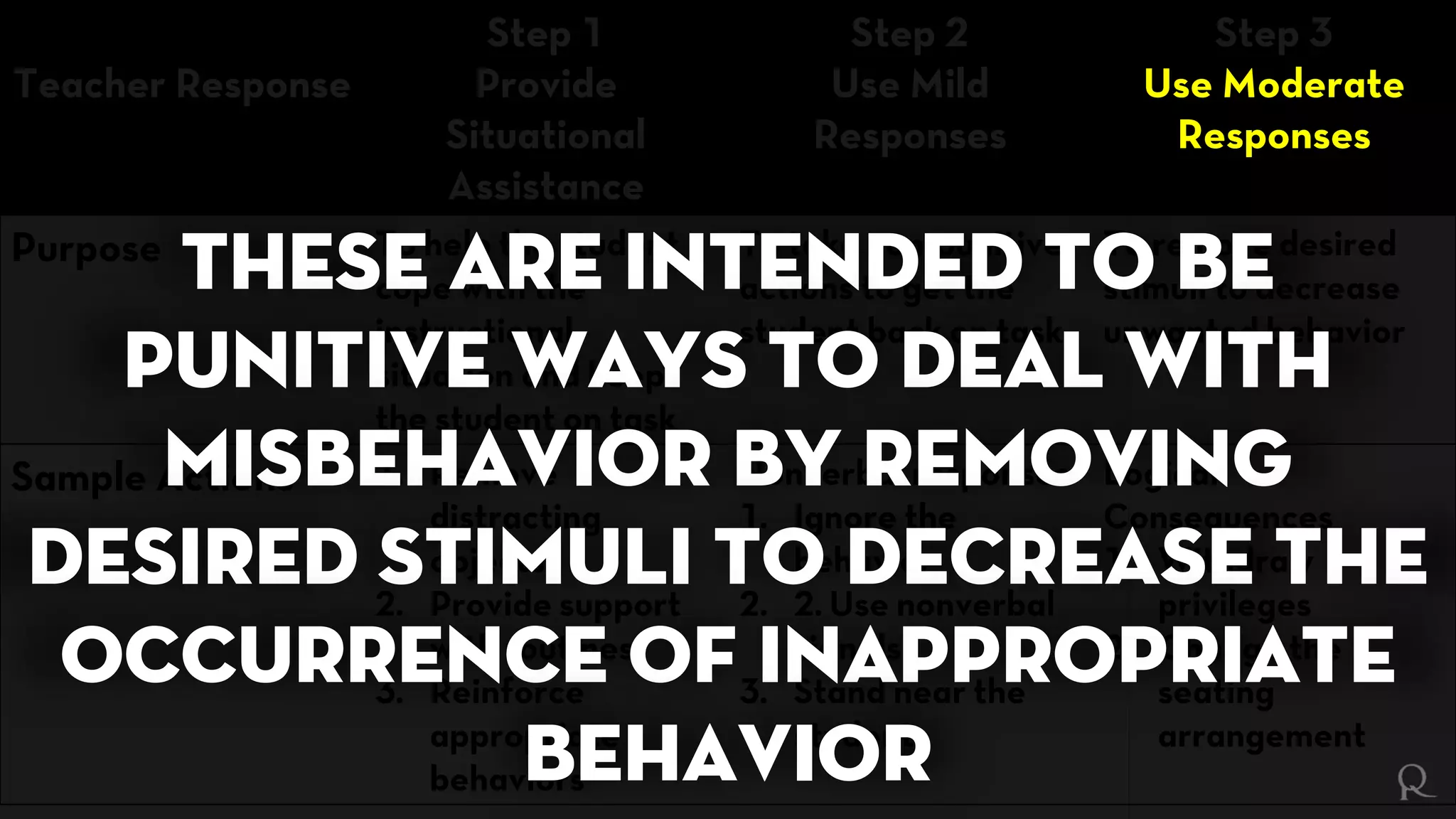
These are intended to be
punitive ways to deal with
misbehavior by removing
desired stimuli to decrease the
occurrence of inappropriate
behavior
Teacher Response
Step 1
Provide
Situational
Assistance
Step 2
Use Mild
Responses
Step 3
Use Moderate
Responses
Purpose To help the student
cope with the
instructional
situation and keep
the student on task
To take non-punitive
actions to get the
student back on task
To remove desired
stimuli to decrease
unwanted behavior
Sample Actions 1. Remove
distracting
objects
2. Provide support
with routines
3. Reinforce
appropriate
behaviors
Nonverbal responses
1. Ignore the
behavior
2. 2. Use nonverbal
signals
3. Stand near the
student
Logical
Consequences
1. Withdraw
privileges
2. Change the
seating
arrangement
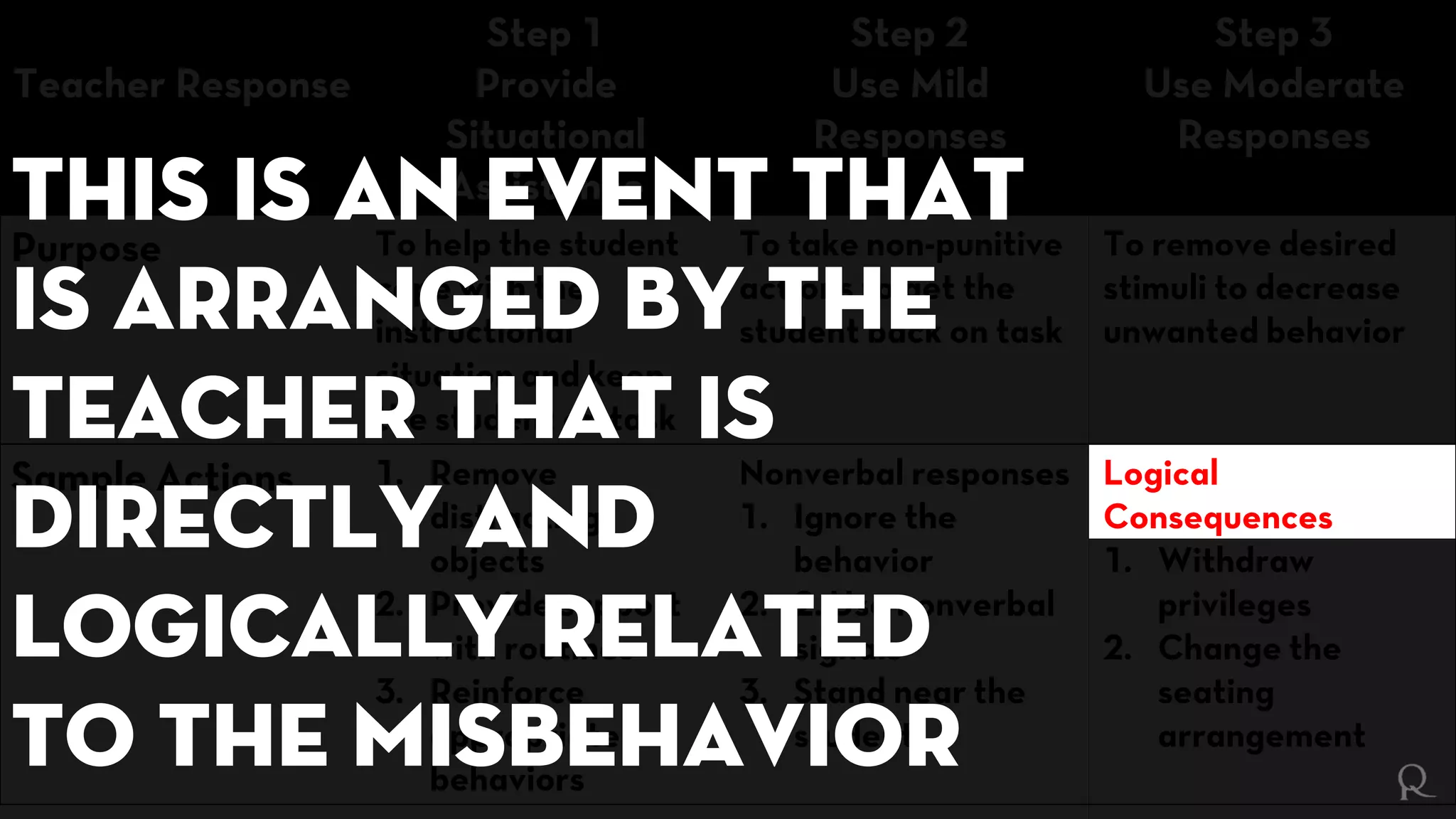
This is an event that
is arranged by the
teacher that is
directly and
logically related
to the misbehavior
Teacher Response
Step 1
Provide
Situational
Assistance
Step 2
Use Mild
Responses
Step 3
Use Moderate
Responses
Purpose To help the student
cope with the
instructional
situation and keep
the student on task
To take non-punitive
actions to get the
student back on task
To remove desired
stimuli to decrease
unwanted behavior
Sample Actions 1. Remove
distracting
objects
2. Provide support
with routines
3. Reinforce
appropriate
behaviors
Nonverbal responses
1. Ignore the
behavior
2. 2. Use nonverbal
signals
3. Stand near the
student
Logical
Consequences
1. Withdraw
privileges
2. Change the
seating
arrangement
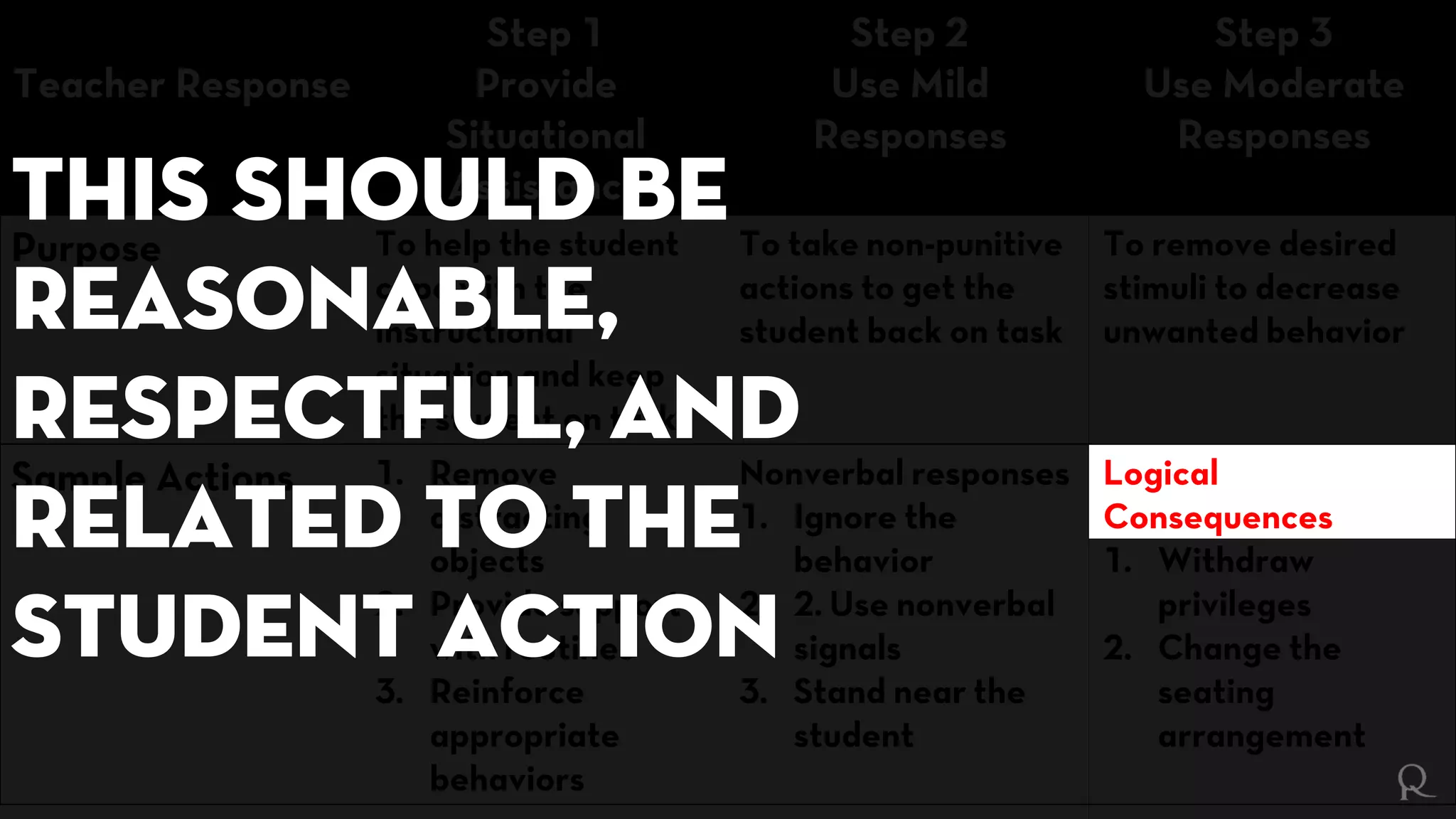
This should be
reasonable,
respectful, and
related to the
student action
Logical consequences
include…
Withdraw
Privileges
Logical consequences
include…
Change the Seat
Assignment
Logical consequences
include…
Have the Student
Write Reflections
on the Problem
Logical consequences
include…
Place the Student
in a Time-Out
Logical consequences
include…
Hold the Student
for Detention
Logical consequences
include…
Contact the
Family
Logical consequences
include…
Have the Student
Visit the Principal
examples
Of chronic
misbehaviors
And how to deal with them
effectively
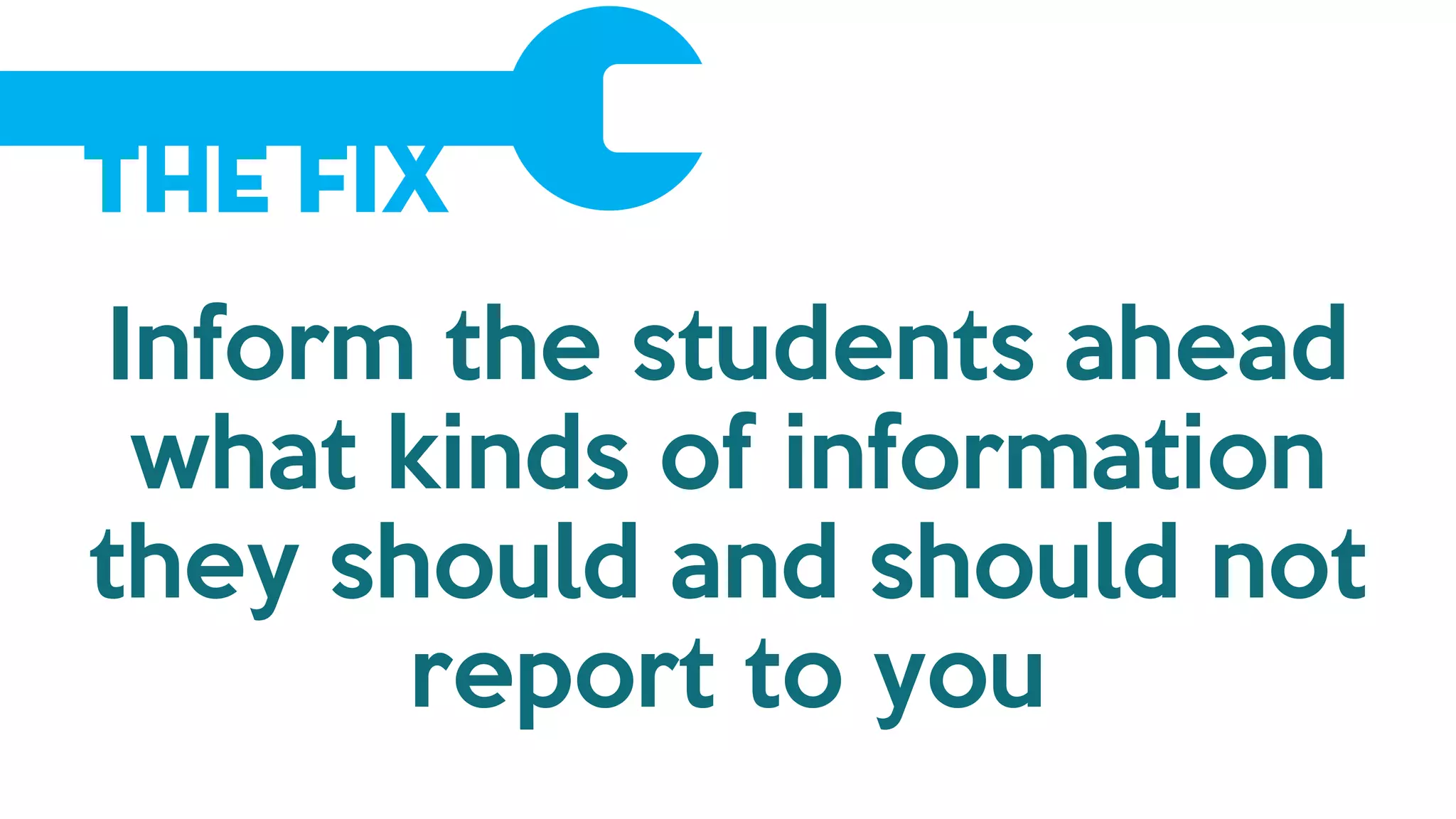
1
Tattling
The Fix
Inform the students ahead
what kinds of information
they should and should not
report to you
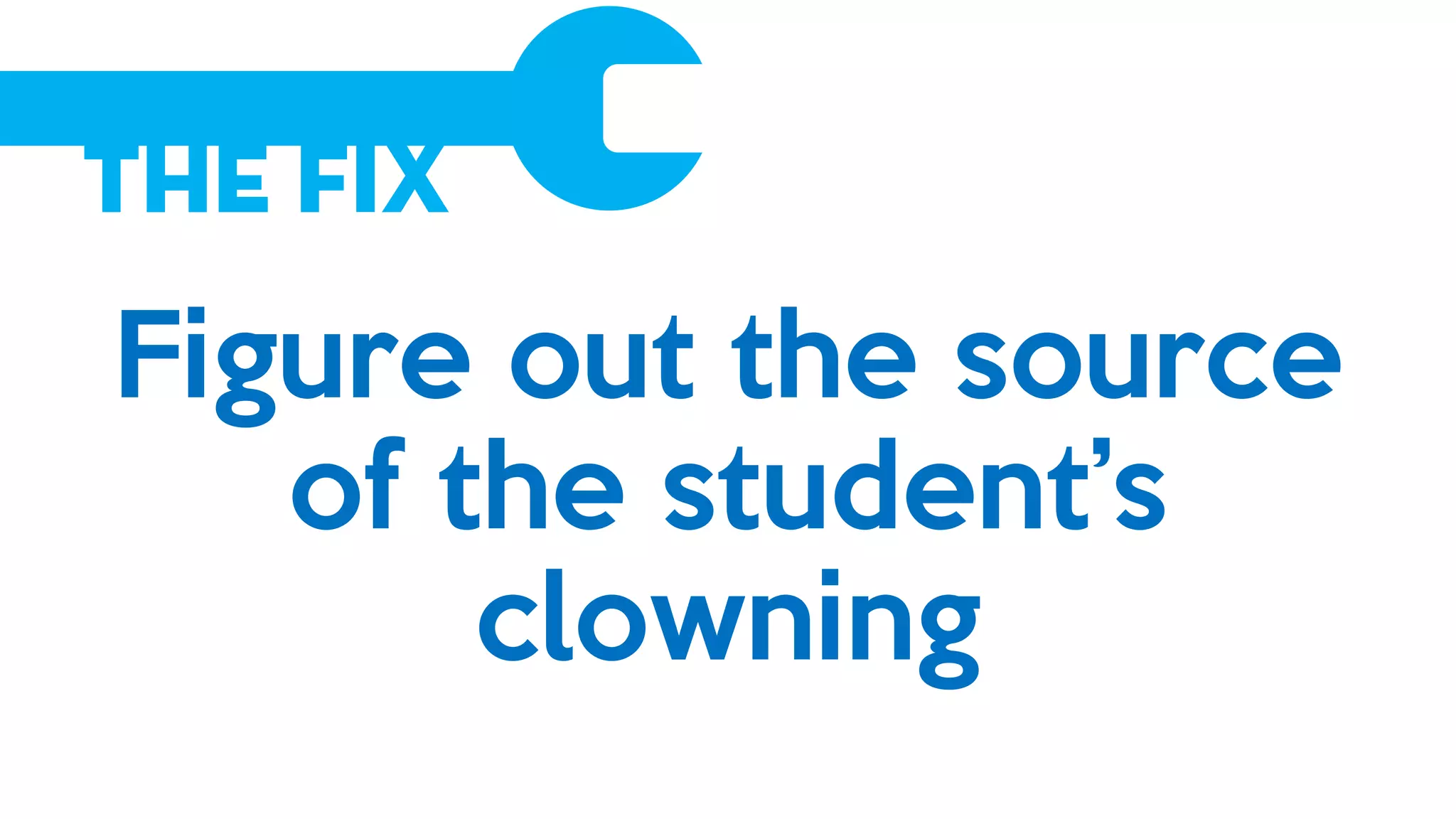
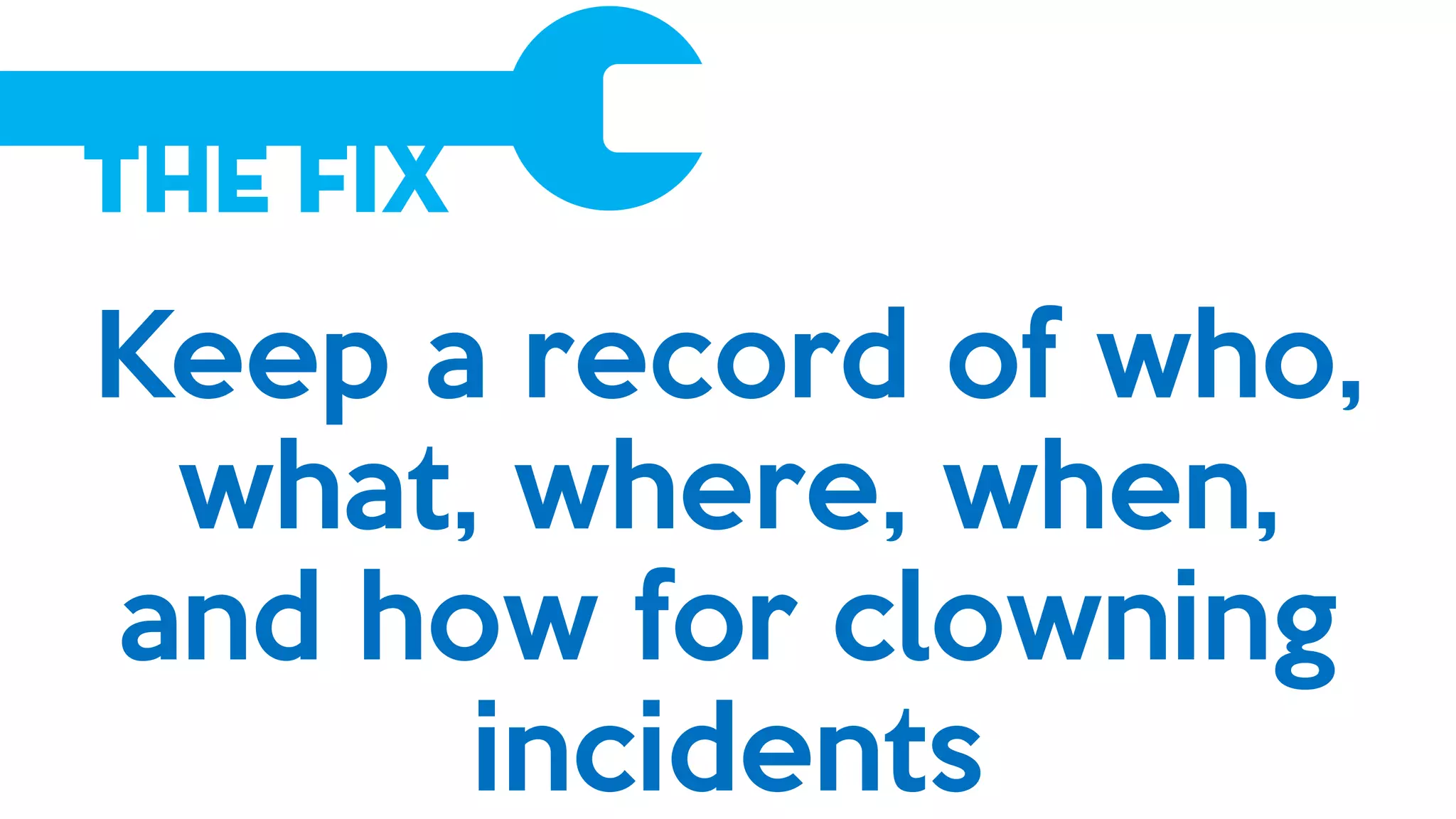
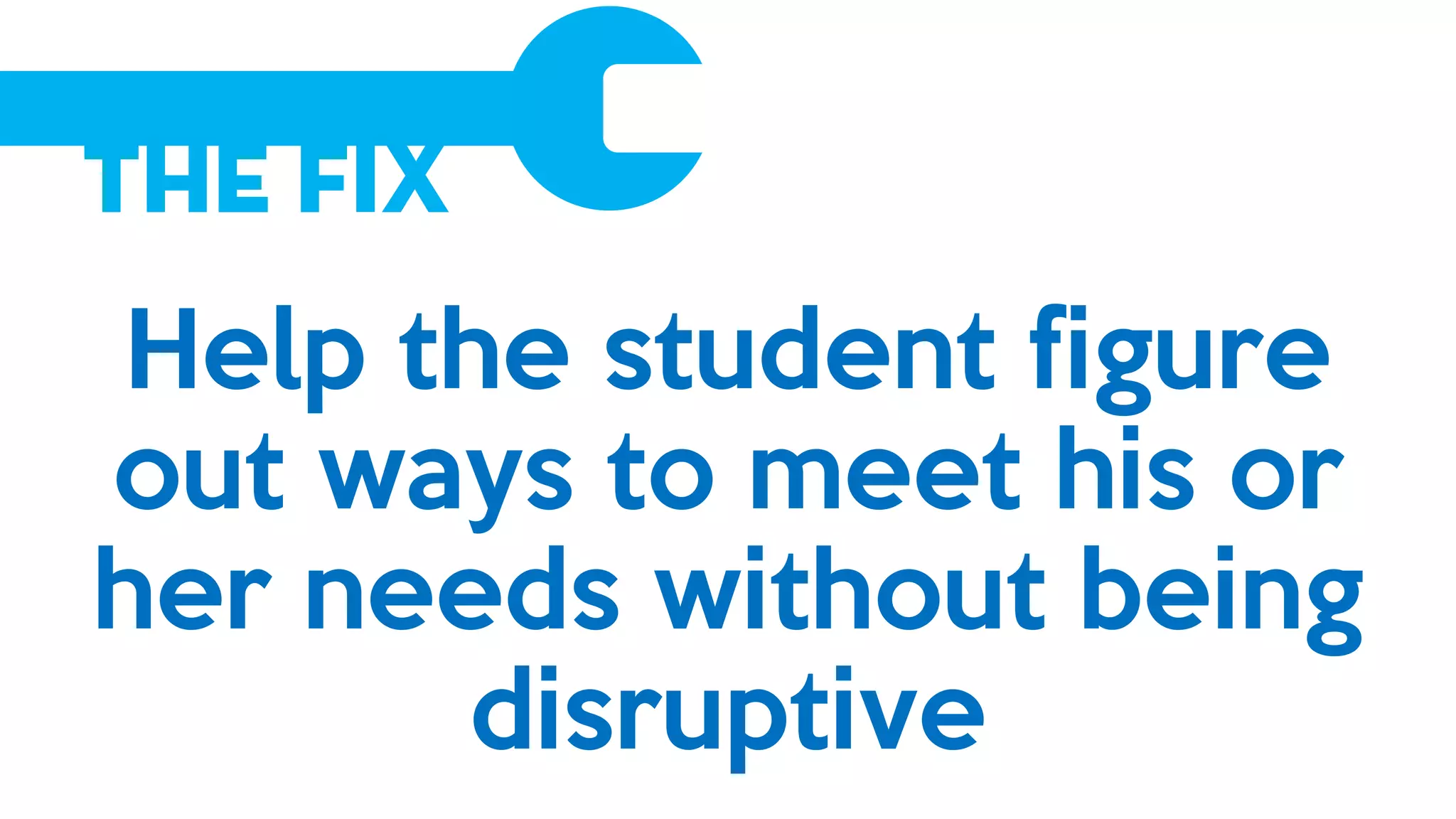
2
Clowning
The Fix
Figure out the source
of the student’s
clowning
The Fix
Keep a record of who,
what, where, when,
and how for clowning
incidents
The Fix
Help the student figure
out ways to meet his or
her needs without being
disruptive
3
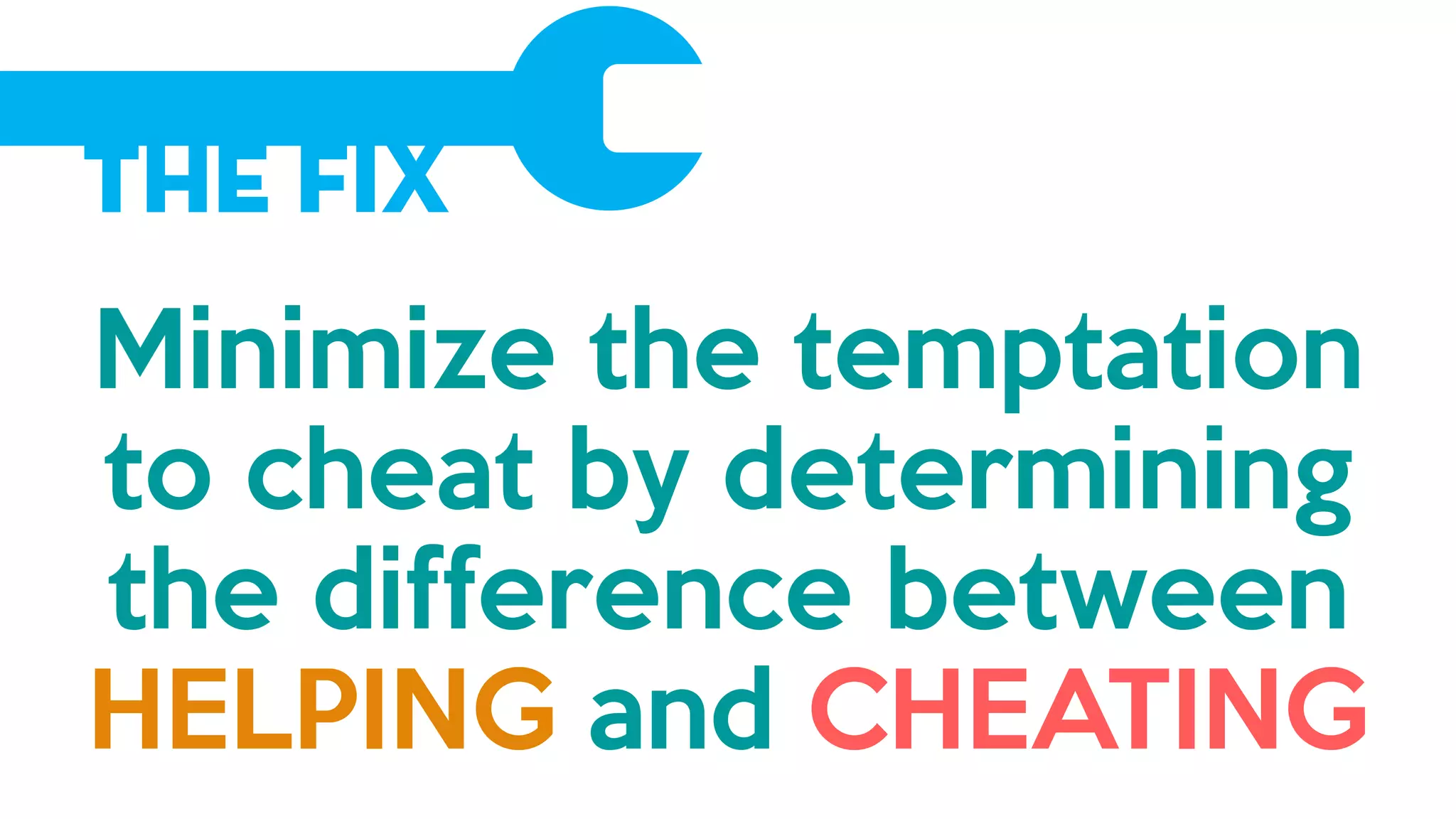
Cheating
The Fix
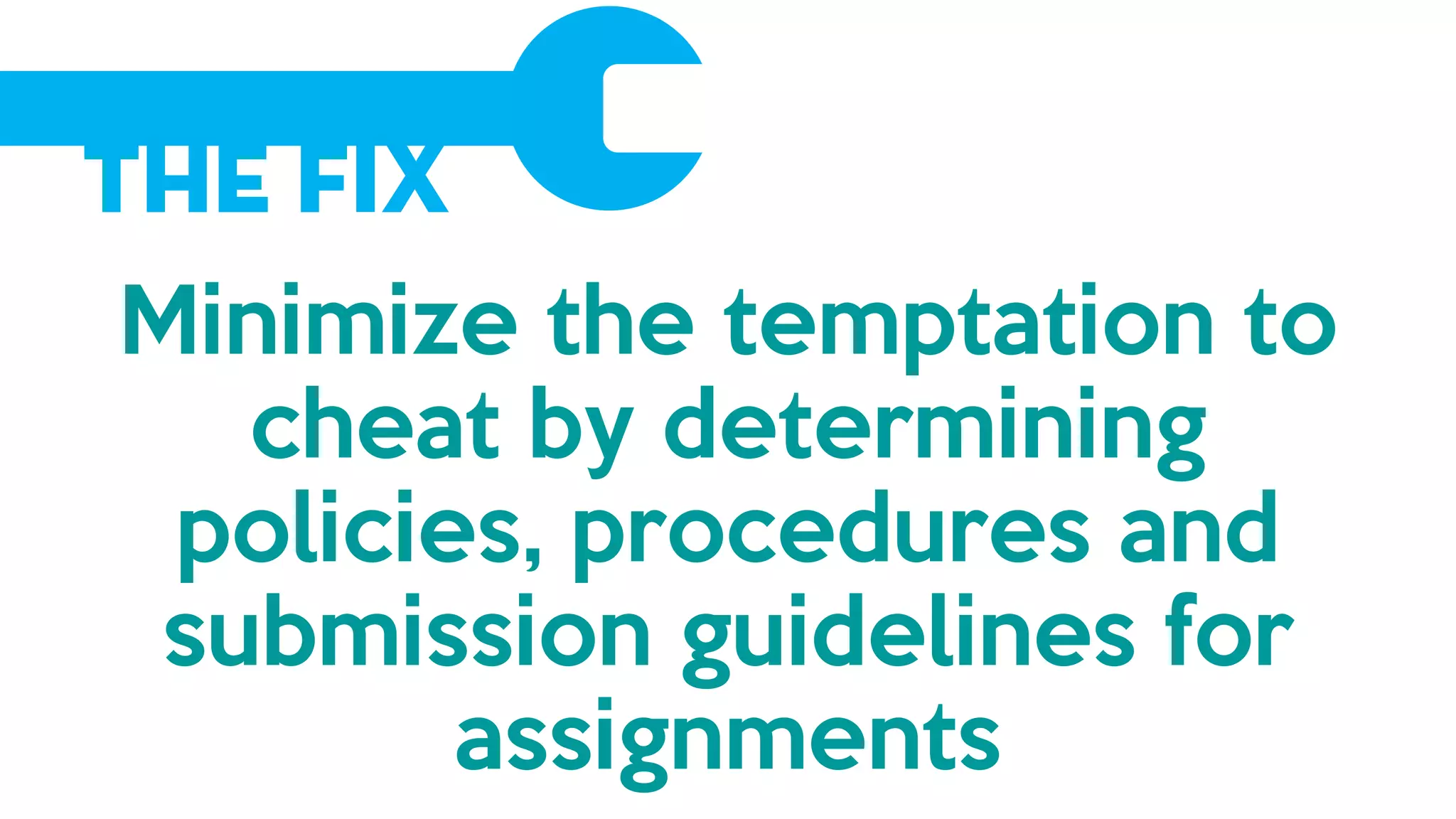
Minimize the temptation
to cheat by determining
the difference between
HELPING and CHEATING
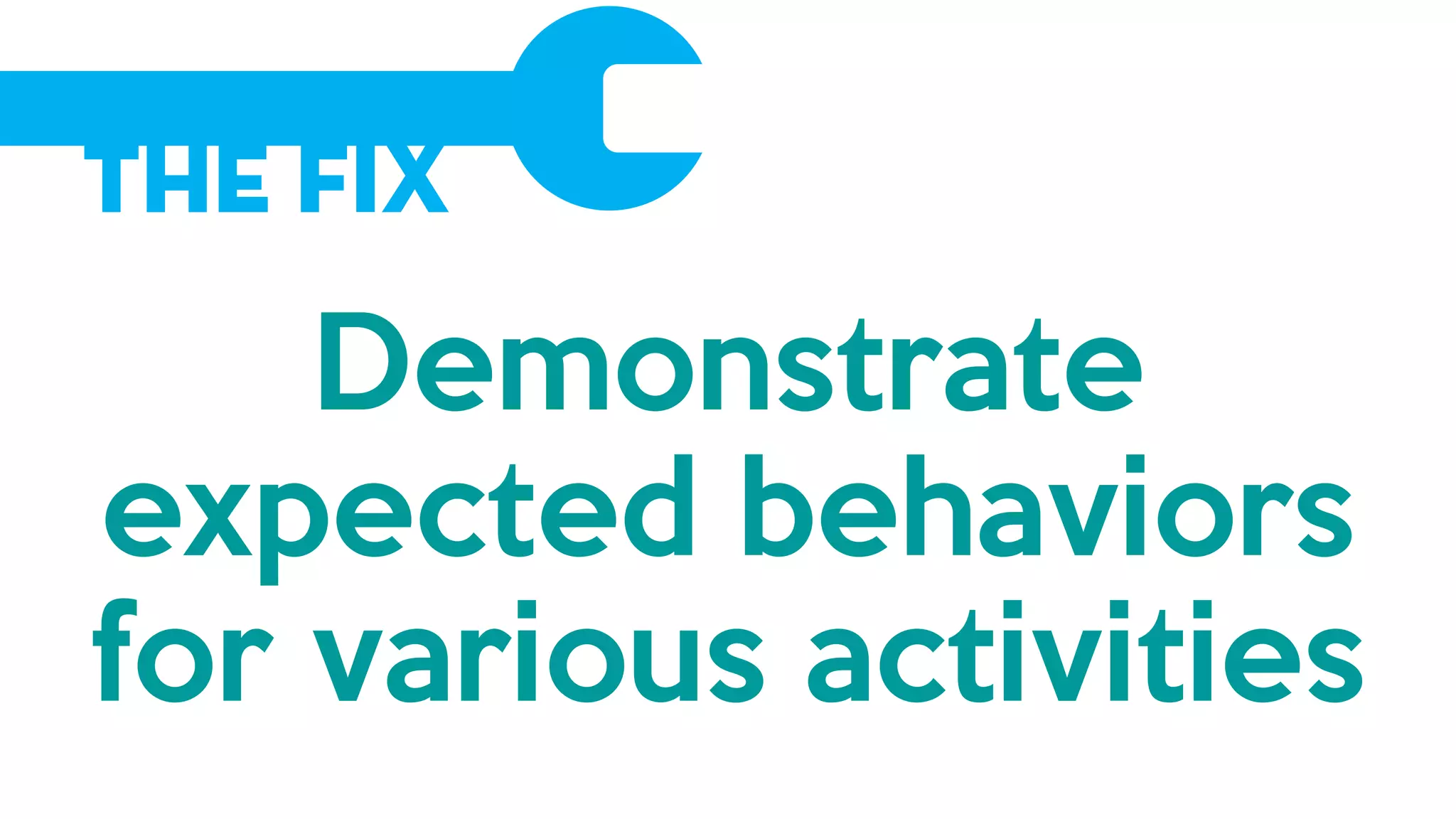
The Fix
Demonstrate
expected behaviors
for various activities
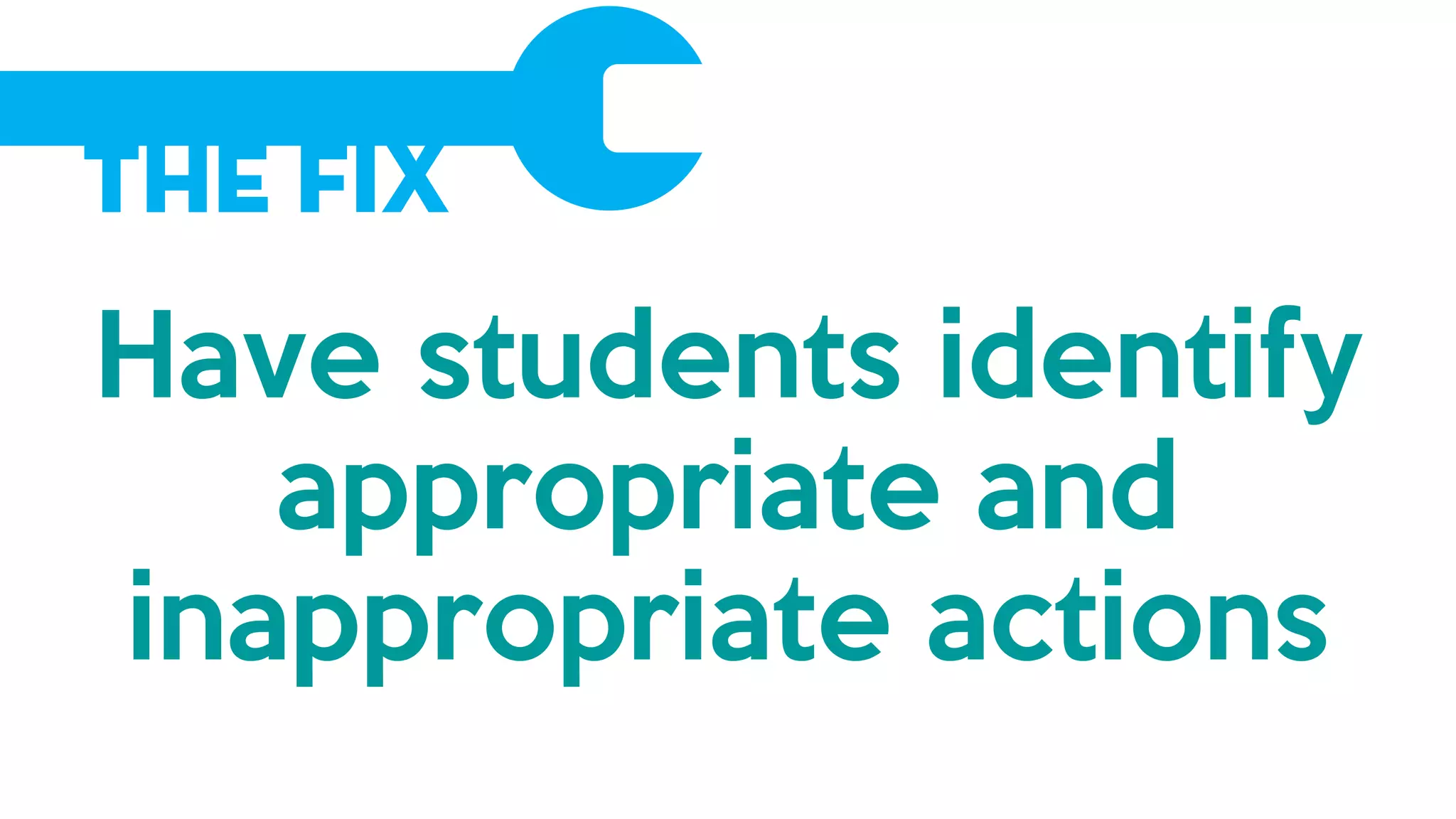
The Fix
Have students identify
appropriate and
inappropriate actions
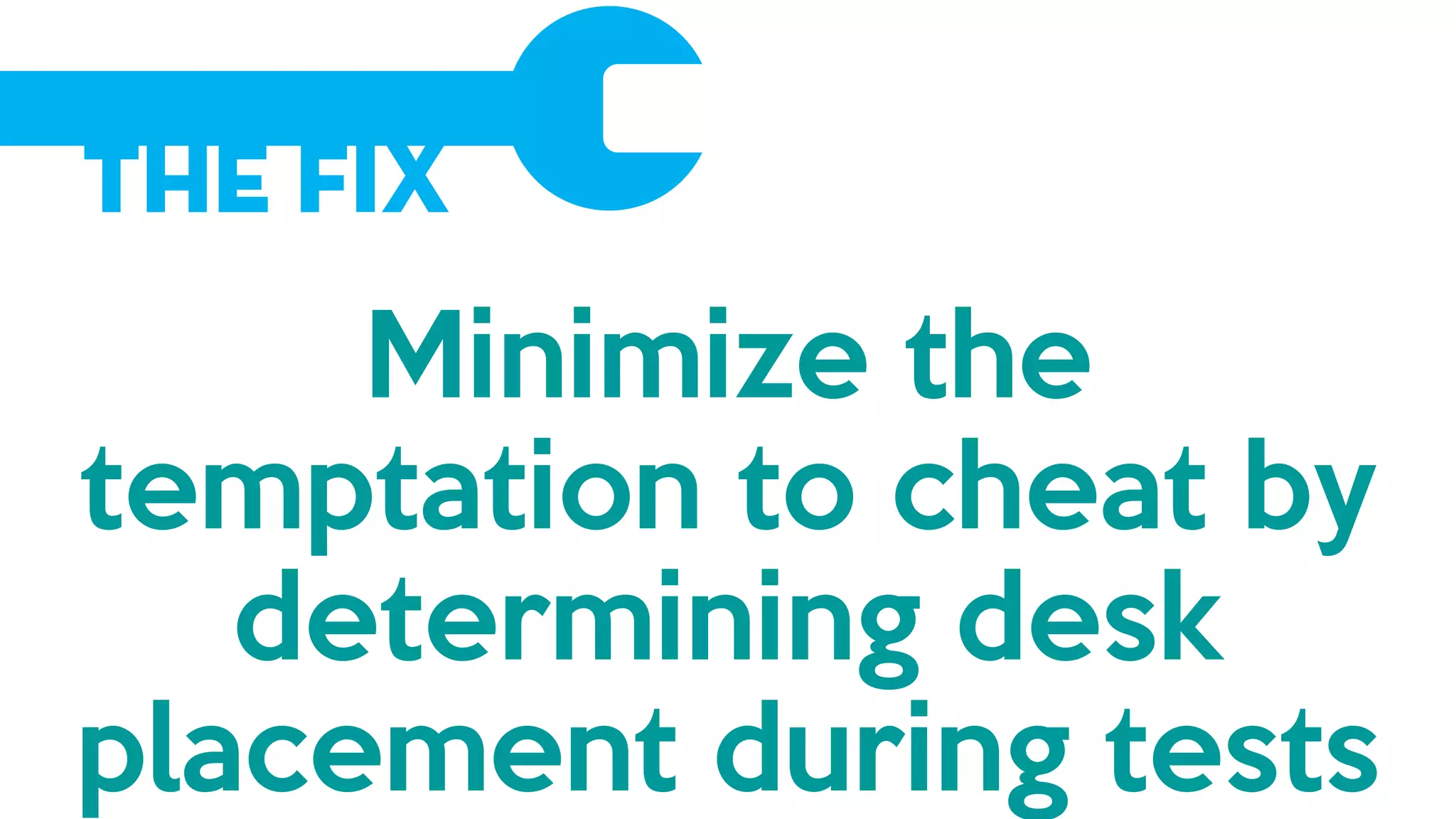
The Fix
Minimize the
temptation to cheat by
determining desk
placement during tests
The Fix
Minimize the temptation to
cheat by determining
policies, procedures and
submission guidelines for
assignments
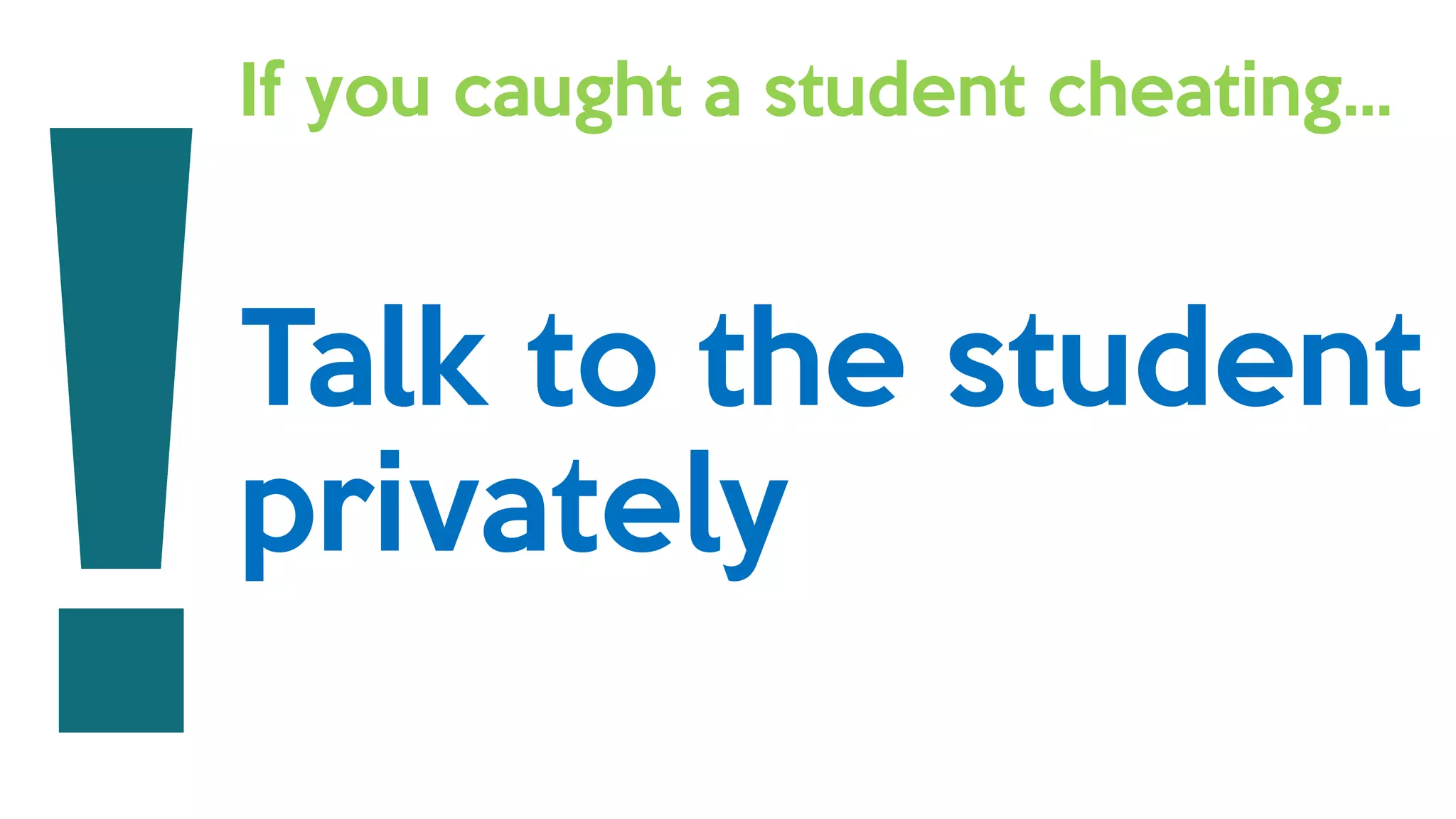
If you caught a student cheating…
Talk to the student
privately
If you caught a student cheating…
Present your
reasons for
suspecting cheating
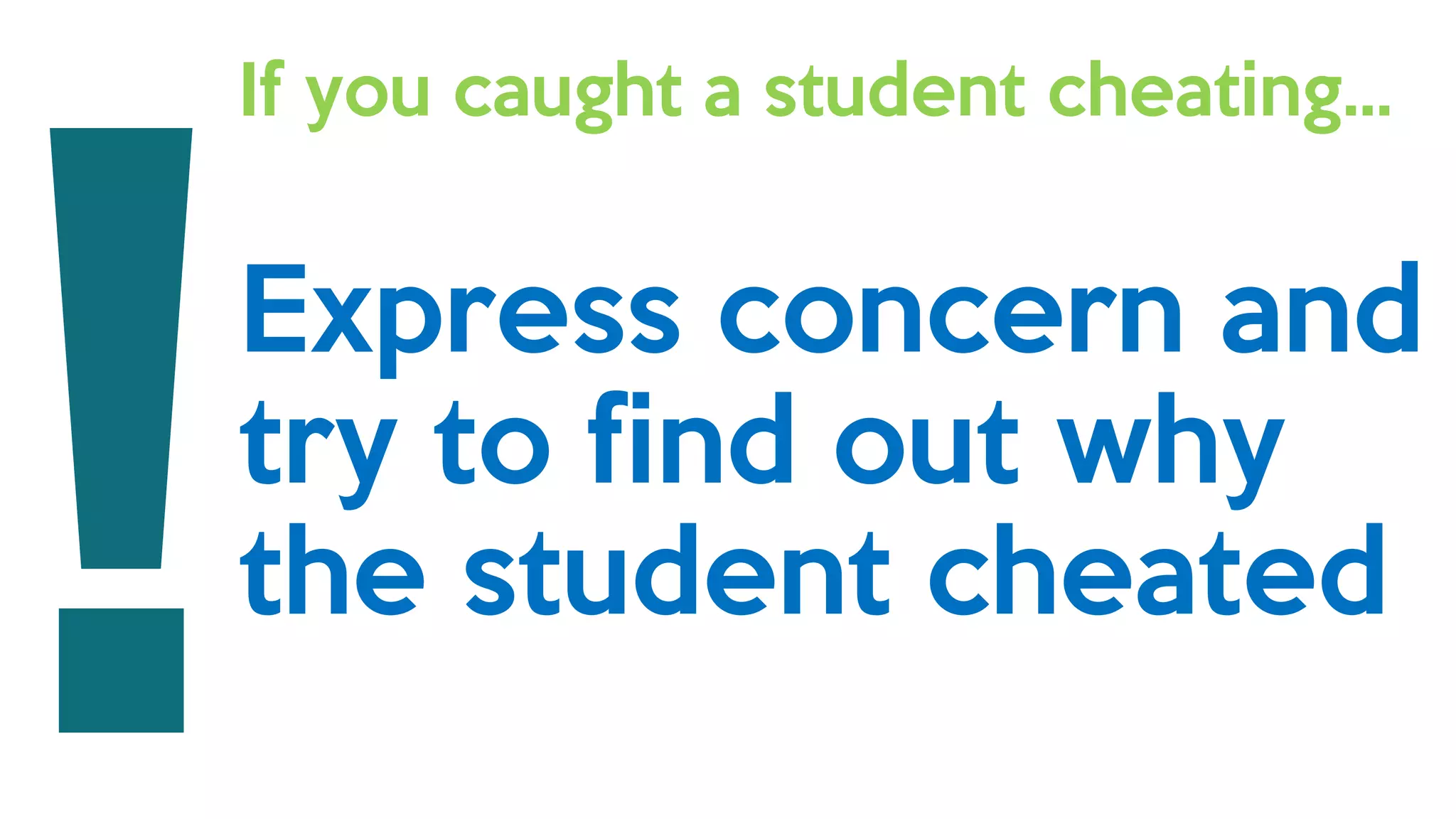
If you caught a student cheating…
Express concern and
try to find out why
the student cheated
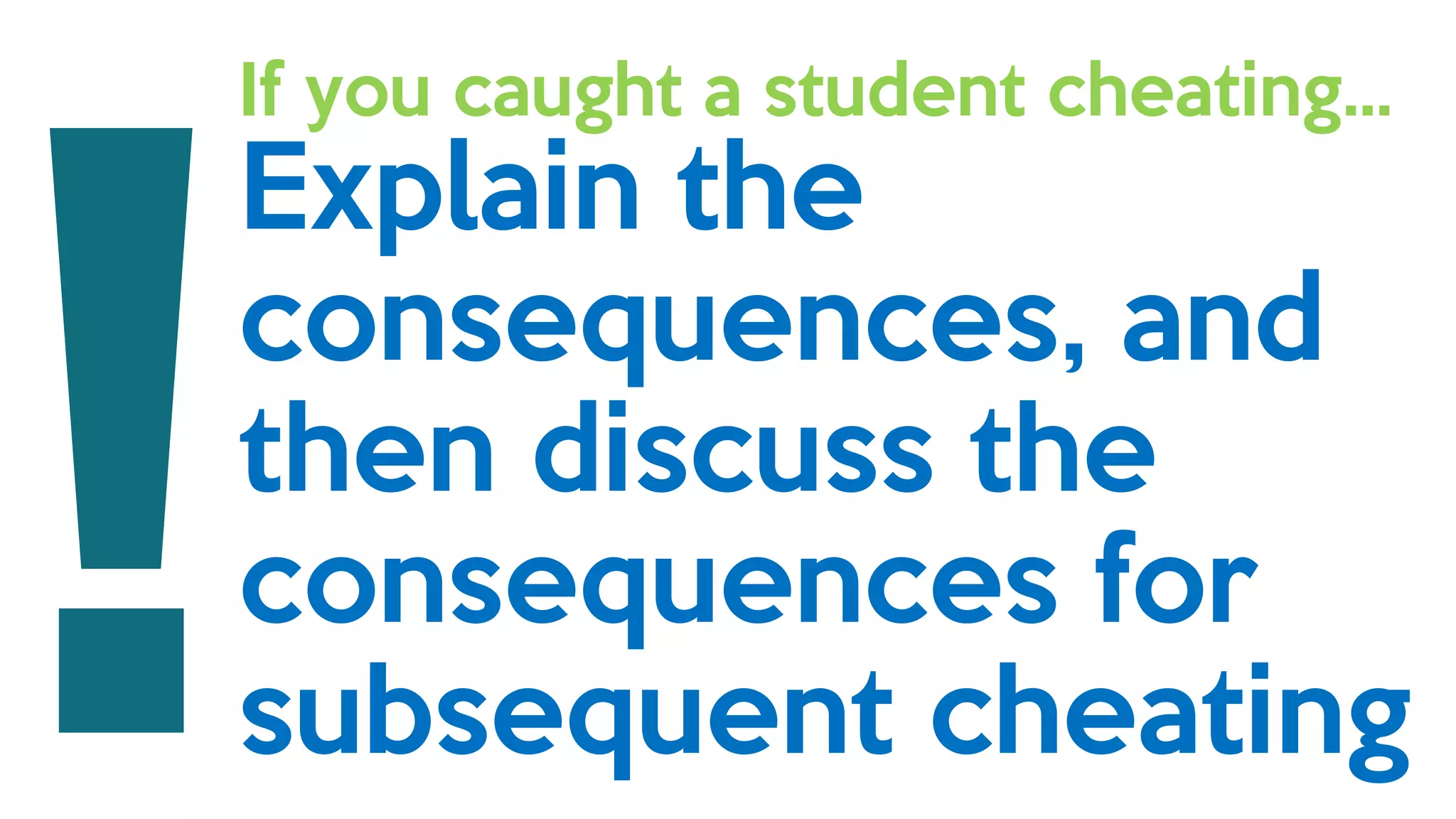
If you caught a student cheating…
Explain the
consequences, and
then discuss the
consequences for
subsequent cheating
4
Lying
The Fix
Identify the
reasons for lying
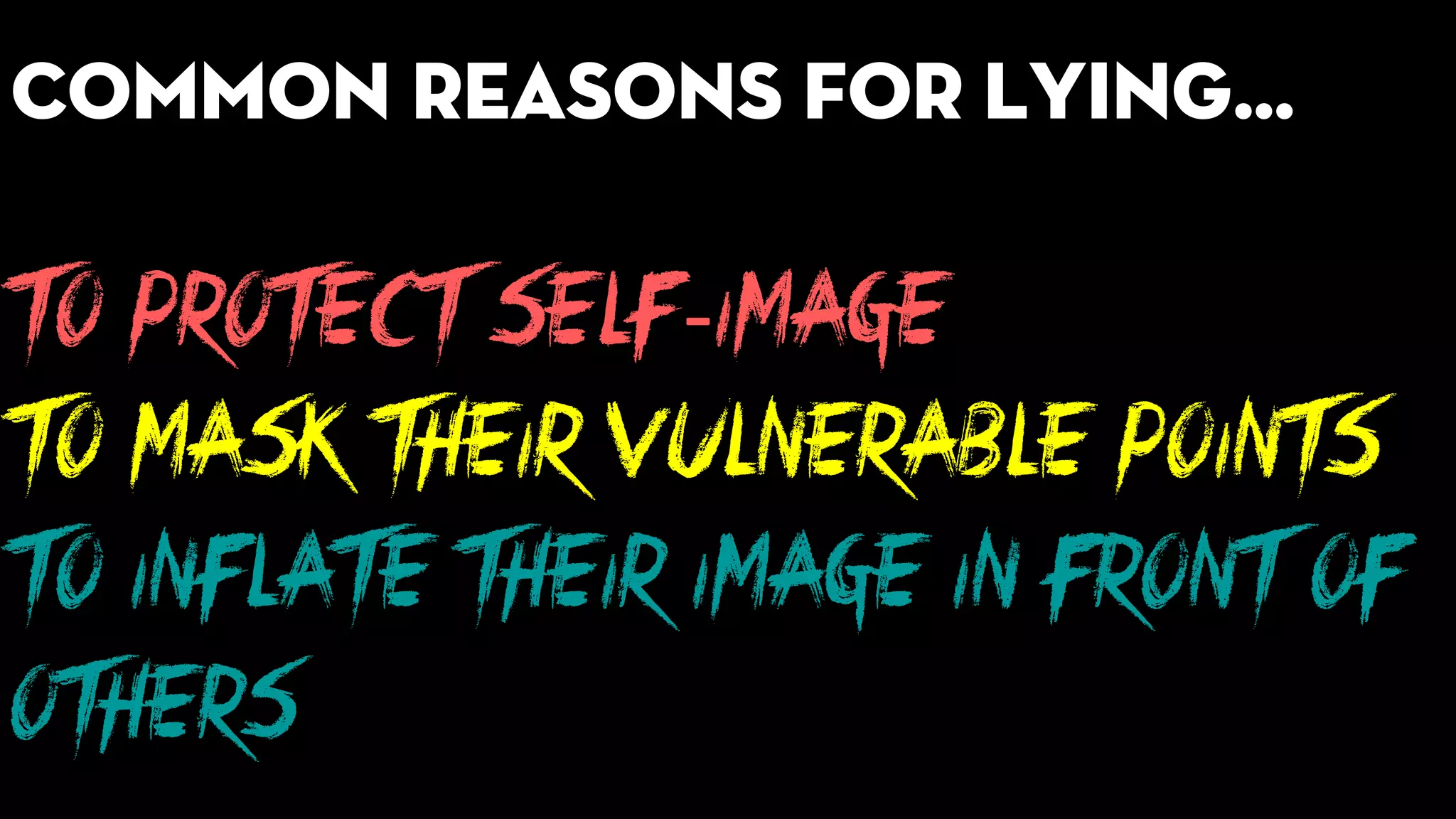
to protect self-image
to mask their vulnerable points
to inflate their image in front of
others
Common reasons for lying…
The Fix
Respond best by
expressing concern
about the student’s
need to lie
The Fix
Ask:
I wonder why you
couldn’t tell me what
really happened?
The Fix
Stay calm and encourage
them to discuss why
they felt they needed to
tell a lie
The Fix
Try not to overreact
or get angry with
the student
The Fix
Focus on the student’s
reasons and feelings
that led to the lie
The Fix
Express your intent to
help the student so
the act will not be
repeated anymore
The Fix
Encourage the
students to be honest
with their feelings
The Fix
Use a calm problem-
solving approach to help
students address a
problem that caused them
to lie in the first place
5
Stealing
The Fix
If you know the culprit,
have a private
conversation with the
student about what
happened
The Fix
Help the student
figure out options
other than stealing
The Fix
Respond forcefully
depending on the value
of the property and
frequency of stealing
The Fix
It is wise to discuss an
incident with the principal
before conducting a search
of backpacks, lockers, or a
student’s clothing
6
Profanity
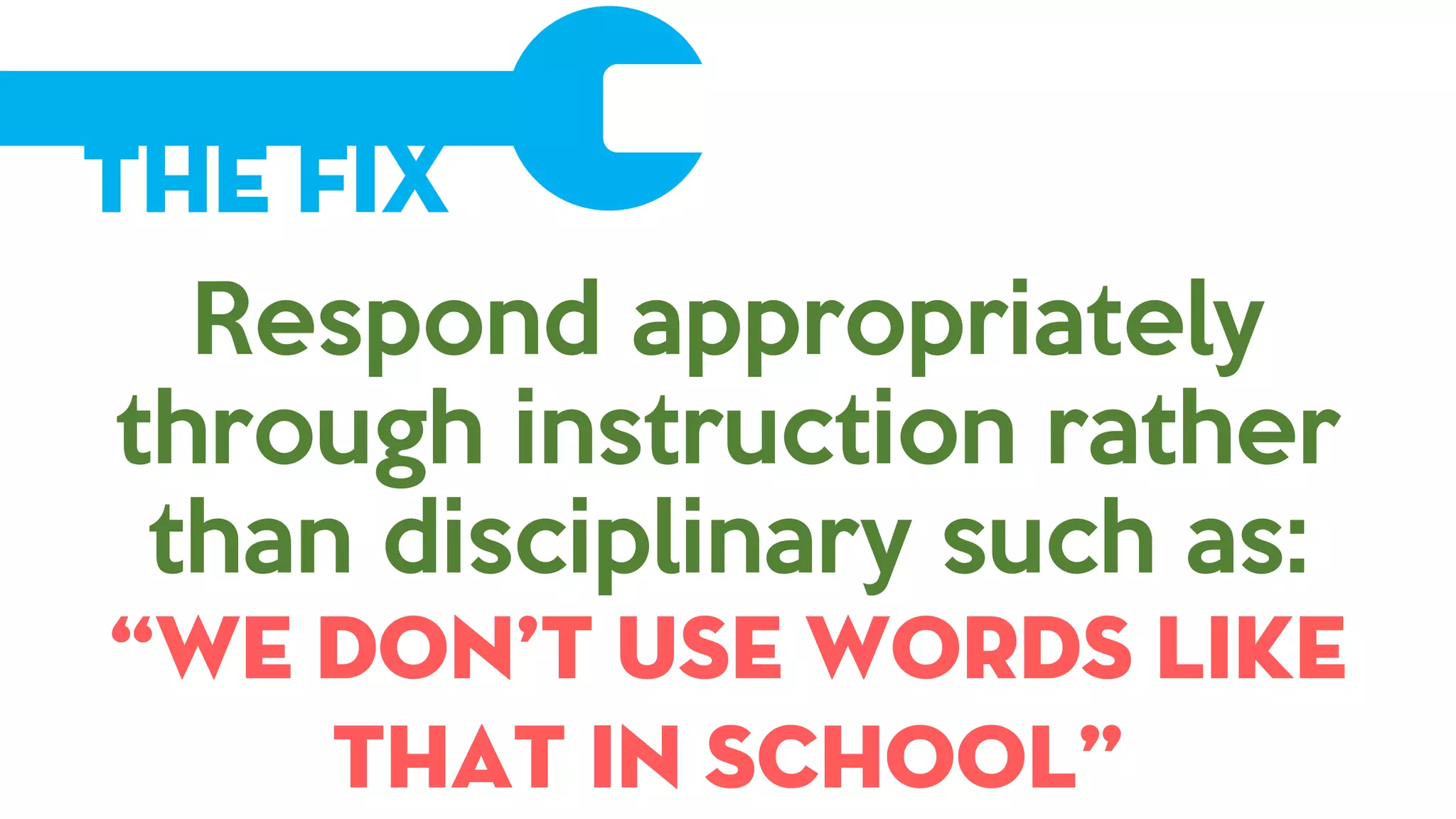
The Fix
Respond appropriately
through instruction rather
than disciplinary such as:
“We don’t use words like
that in school”
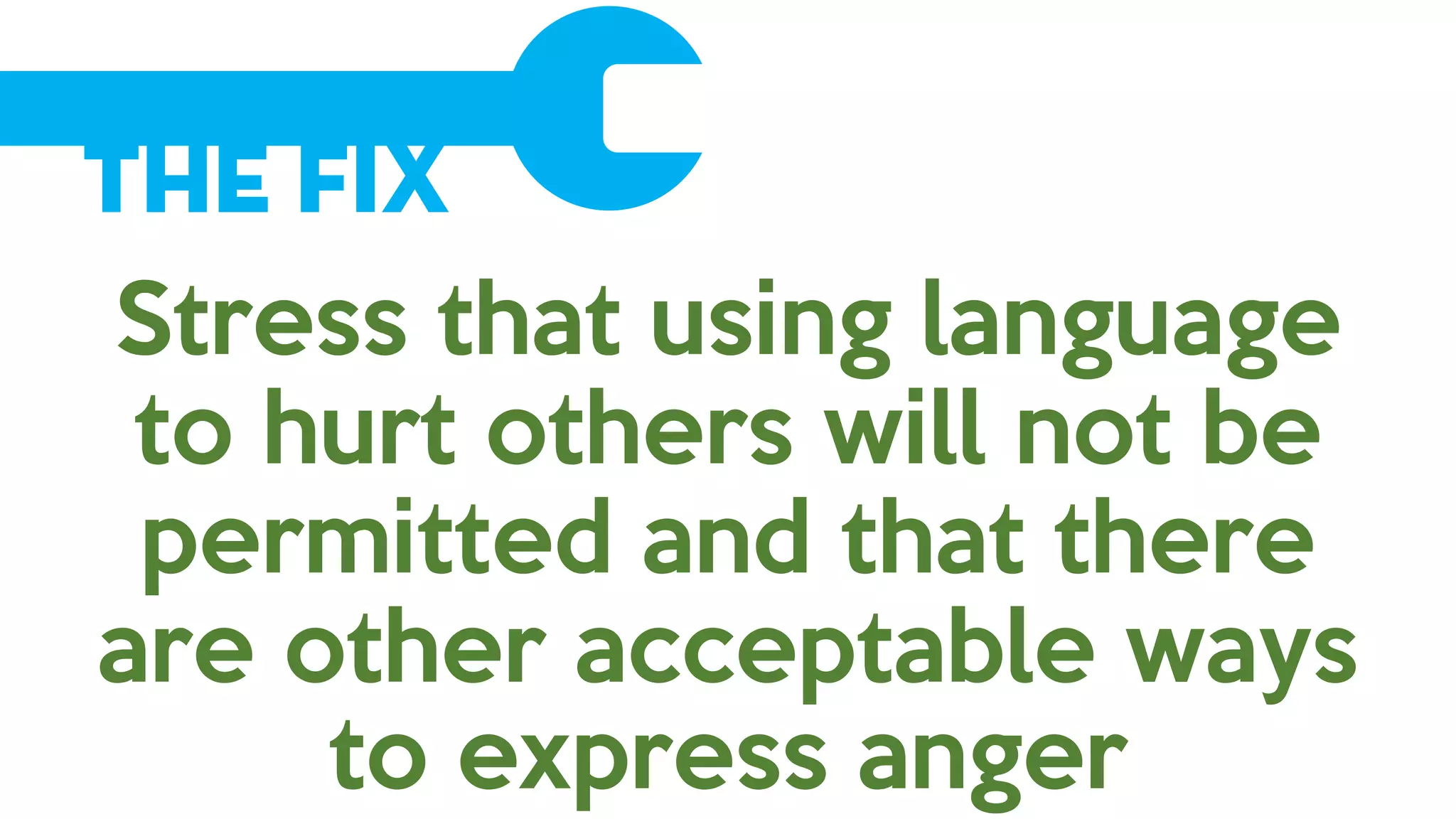
The Fix
Stress that using language
to hurt others will not be
permitted and that there
are other acceptable ways
to express anger
7
Rudeness
Toward the
Teacher
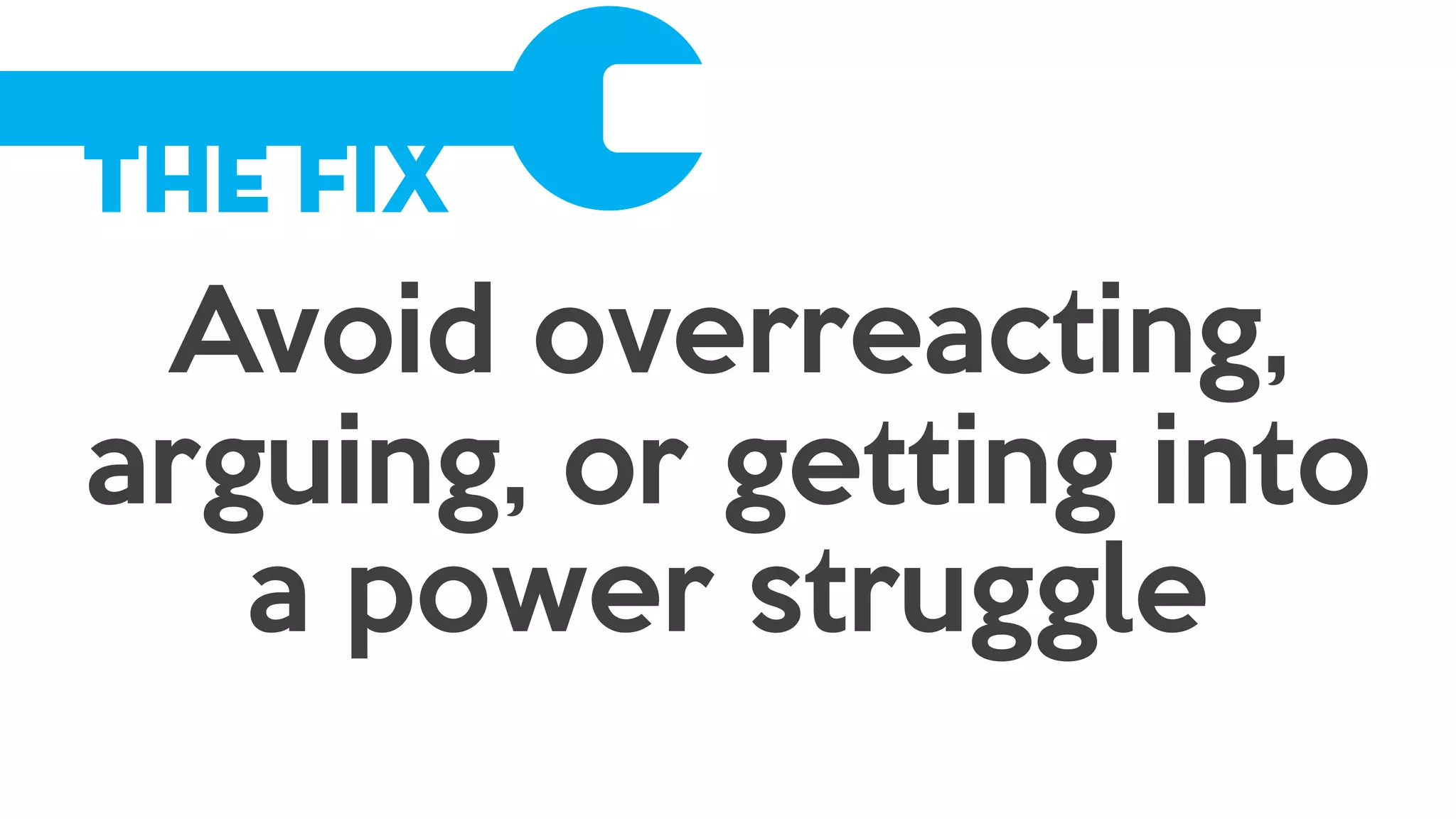
The Fix
Avoid overreacting,
arguing, or getting into
a power struggle
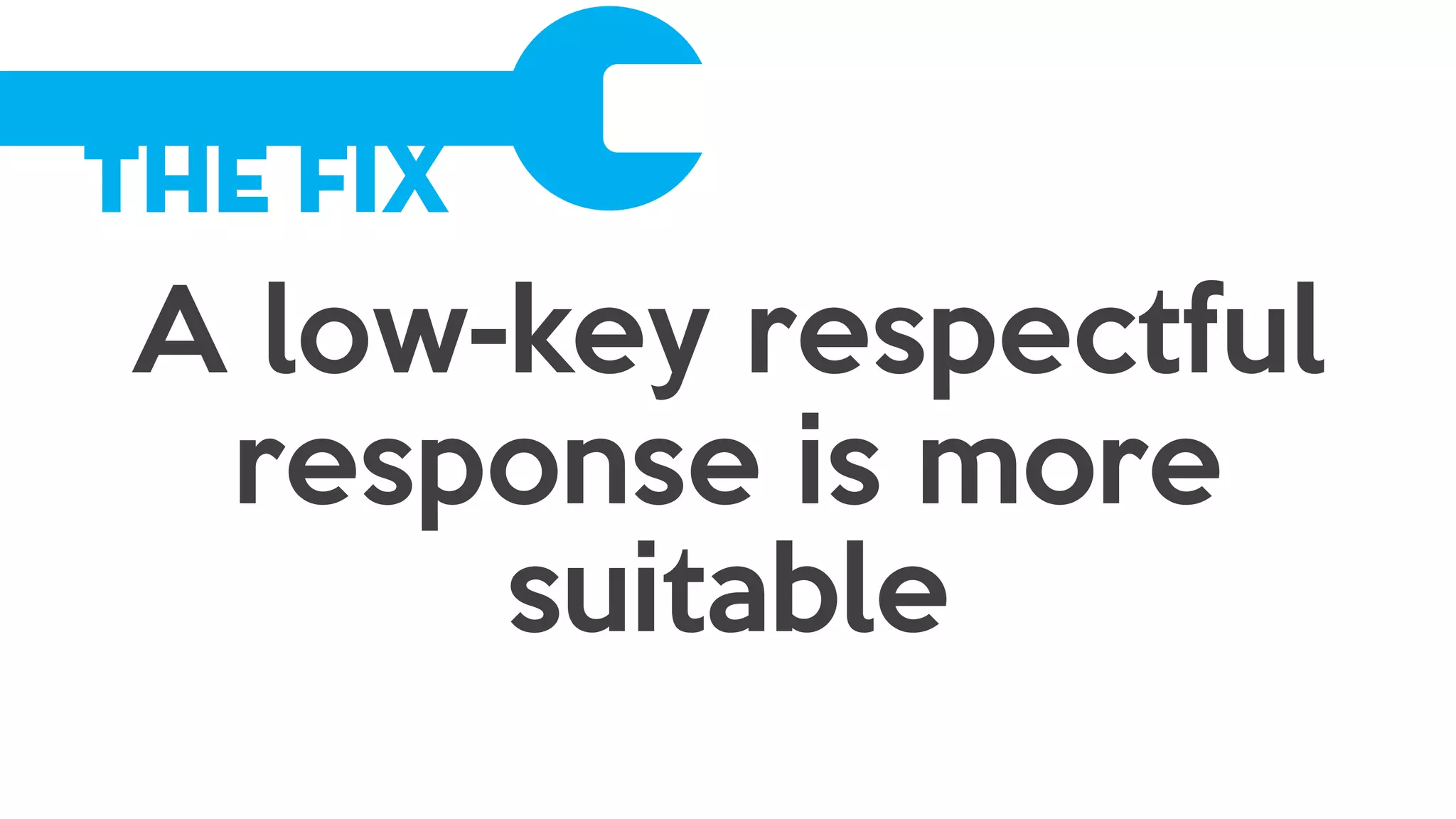
The Fix
A low-key respectful
response is more
suitable
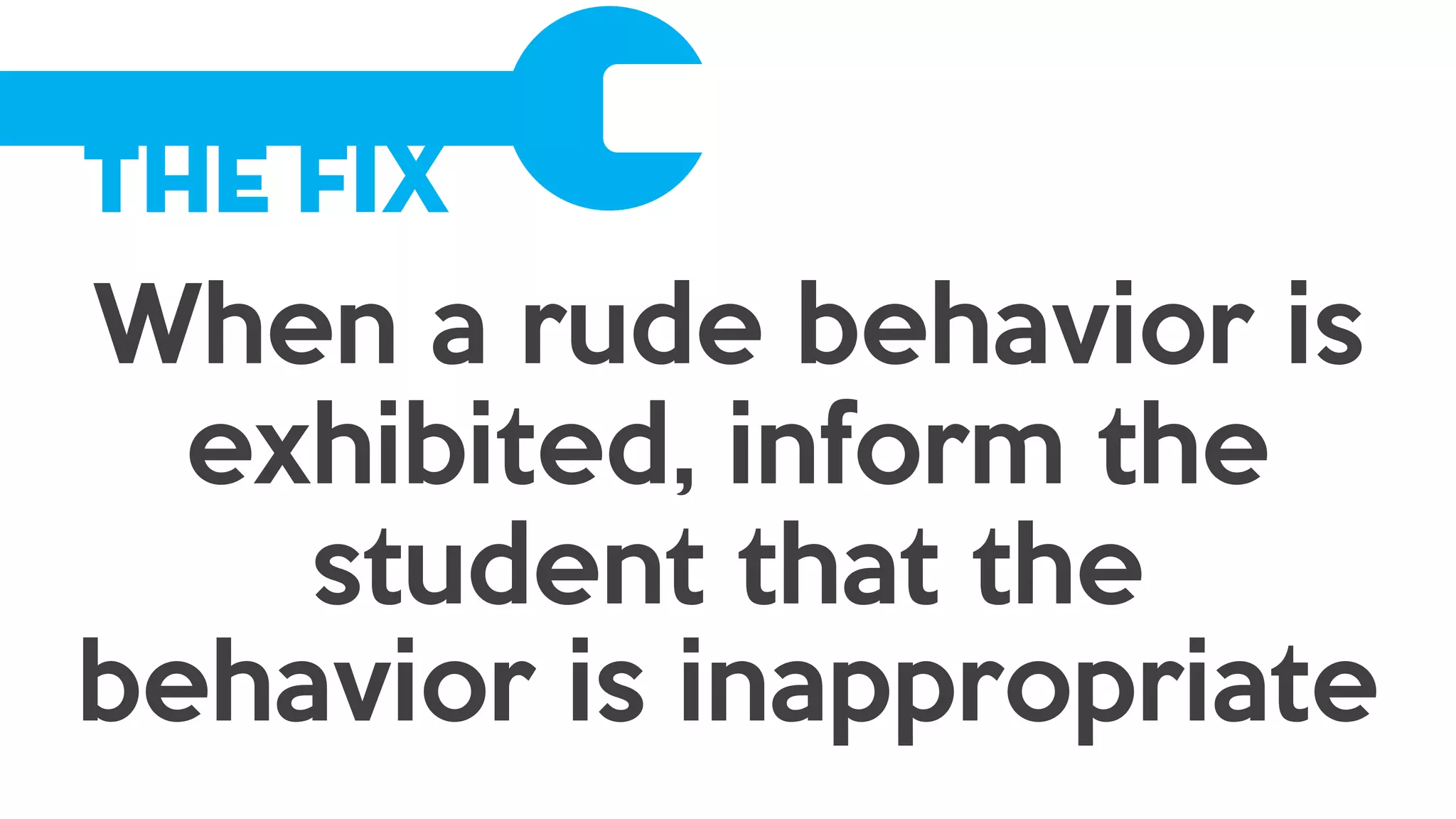
The Fix
When a rude behavior is
exhibited, inform the
student that the
behavior is inappropriate
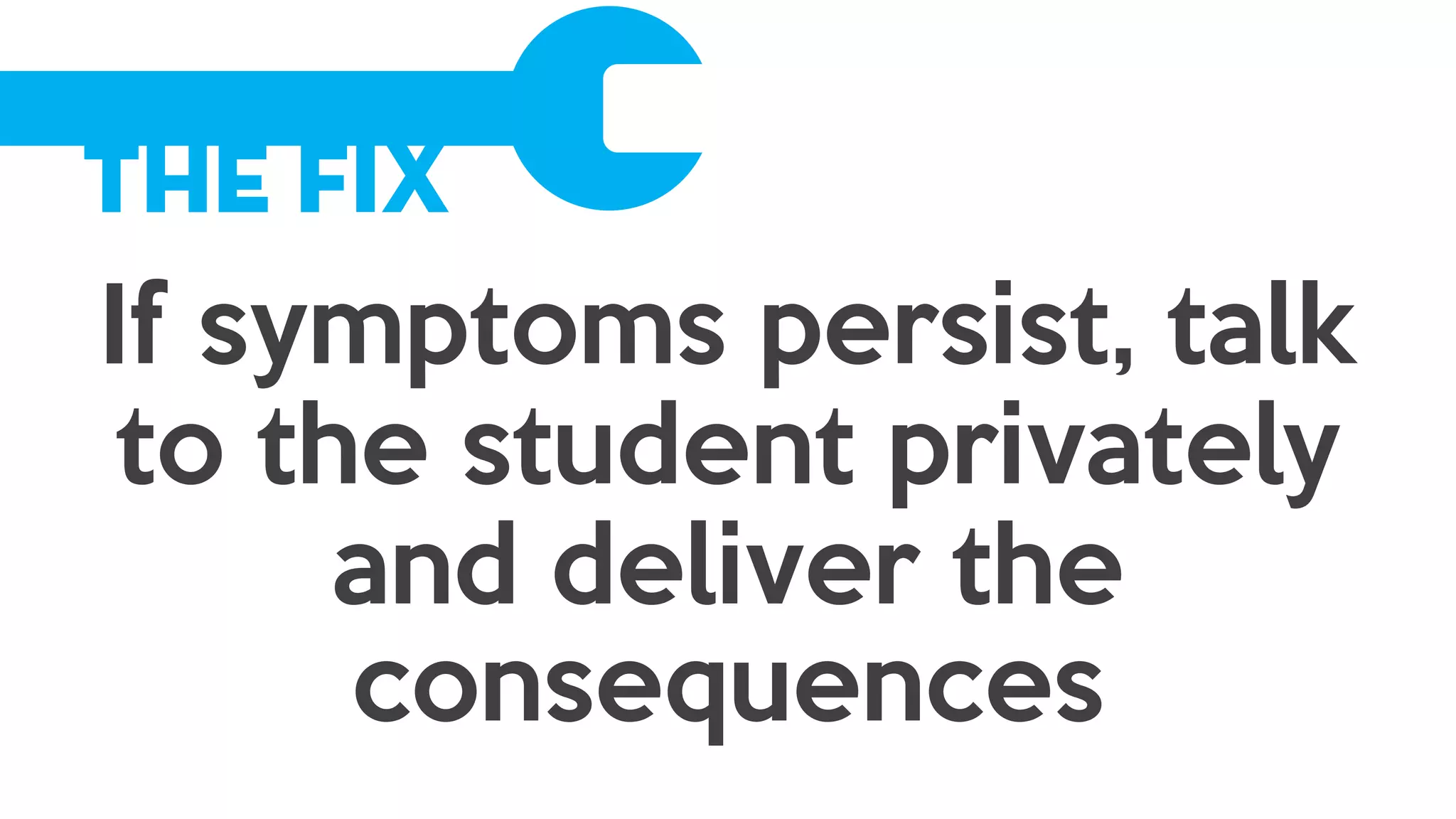
The Fix
If symptoms persist, talk
to the student privately
and deliver the
consequences
The Fix
If symptoms persist
enough, consult the
principal or counselors
about additional responses
8
Defiance or
Hostility Toward
the Teacher
The Fix
Deal the defiance by
defusing it by keeping it in
private and handing it
individually with the
student
The Fix
Avoid a power
struggle and
remain objective
The Fix
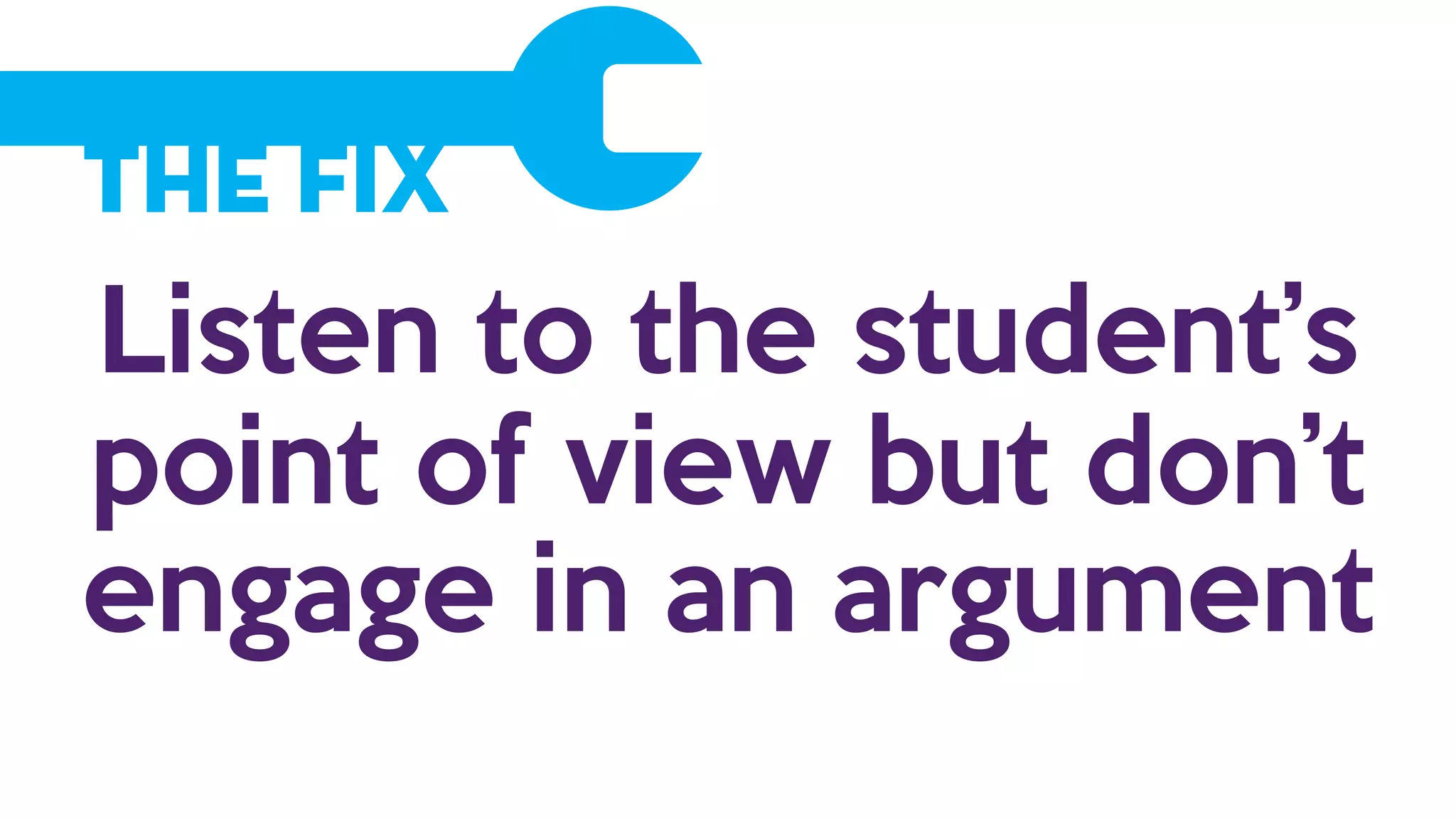
Listen to the student’s
point of view but don’t
engage in an argument
The Fix
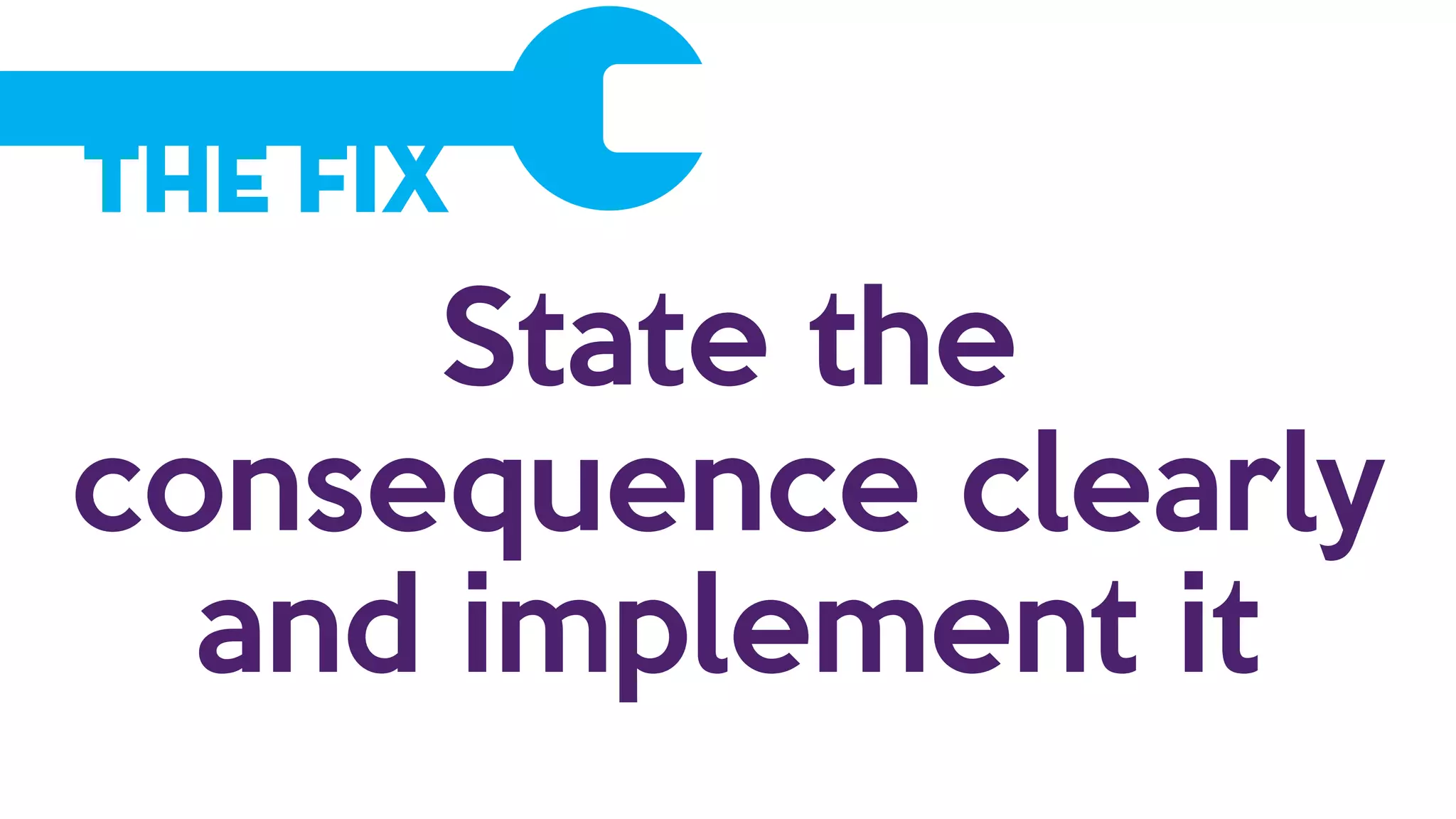
State the
consequence clearly
and implement it
1
Stay in control
with yourself
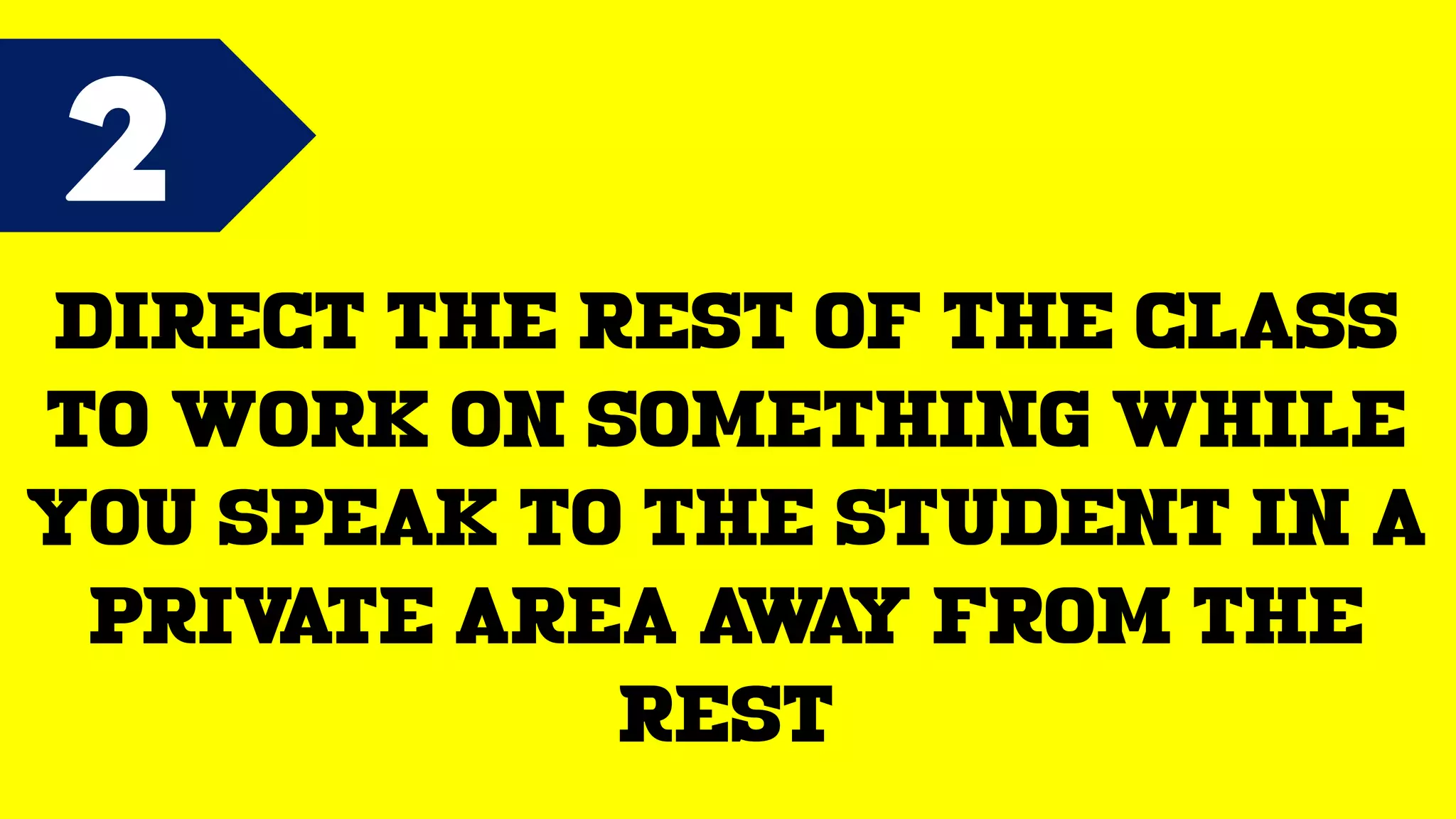
2
Direct the rest of the class
to work on something while
you speak to the student in a
private area away from the
rest
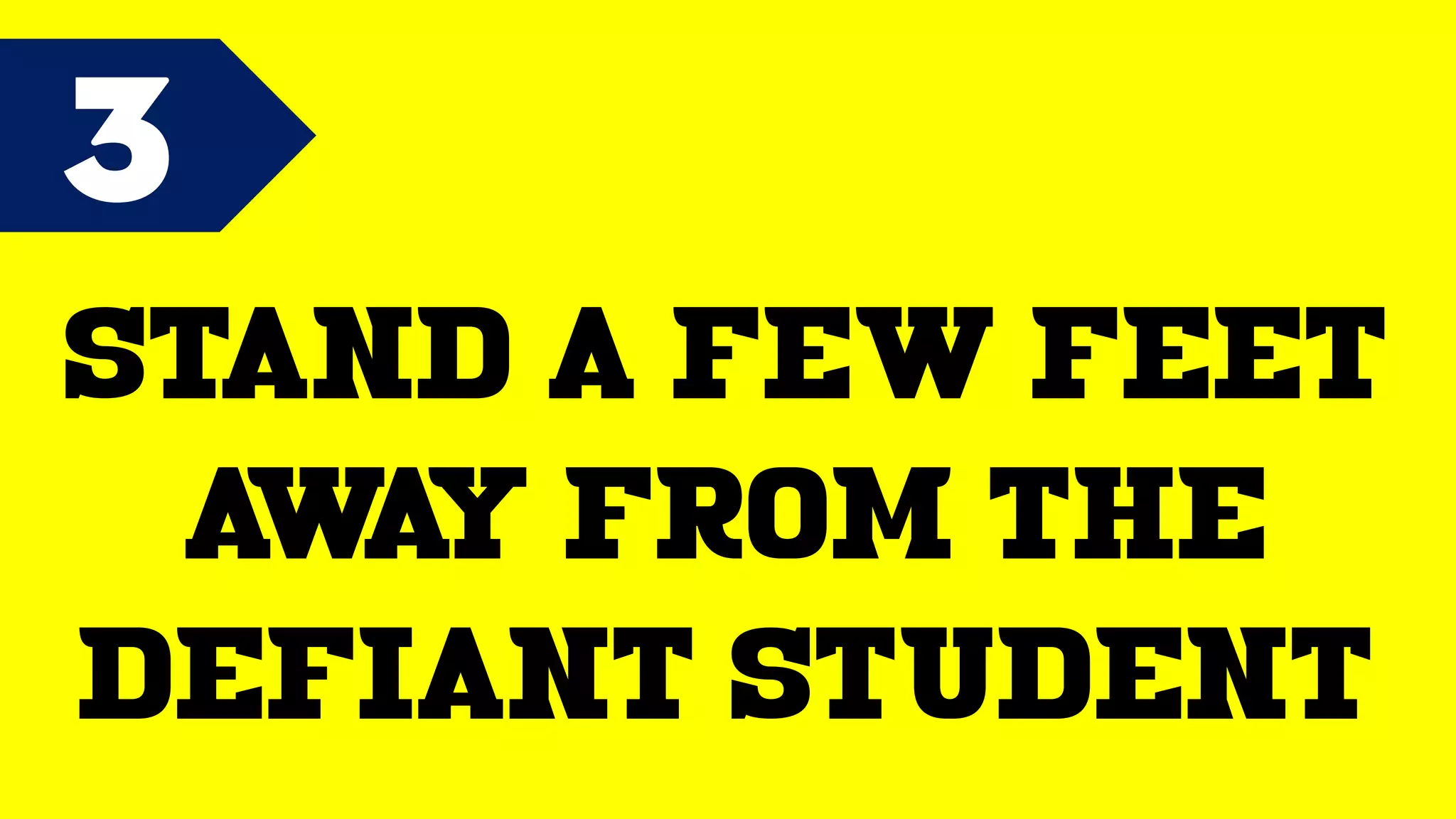
3
Stand a few feet
away from the
defiant student
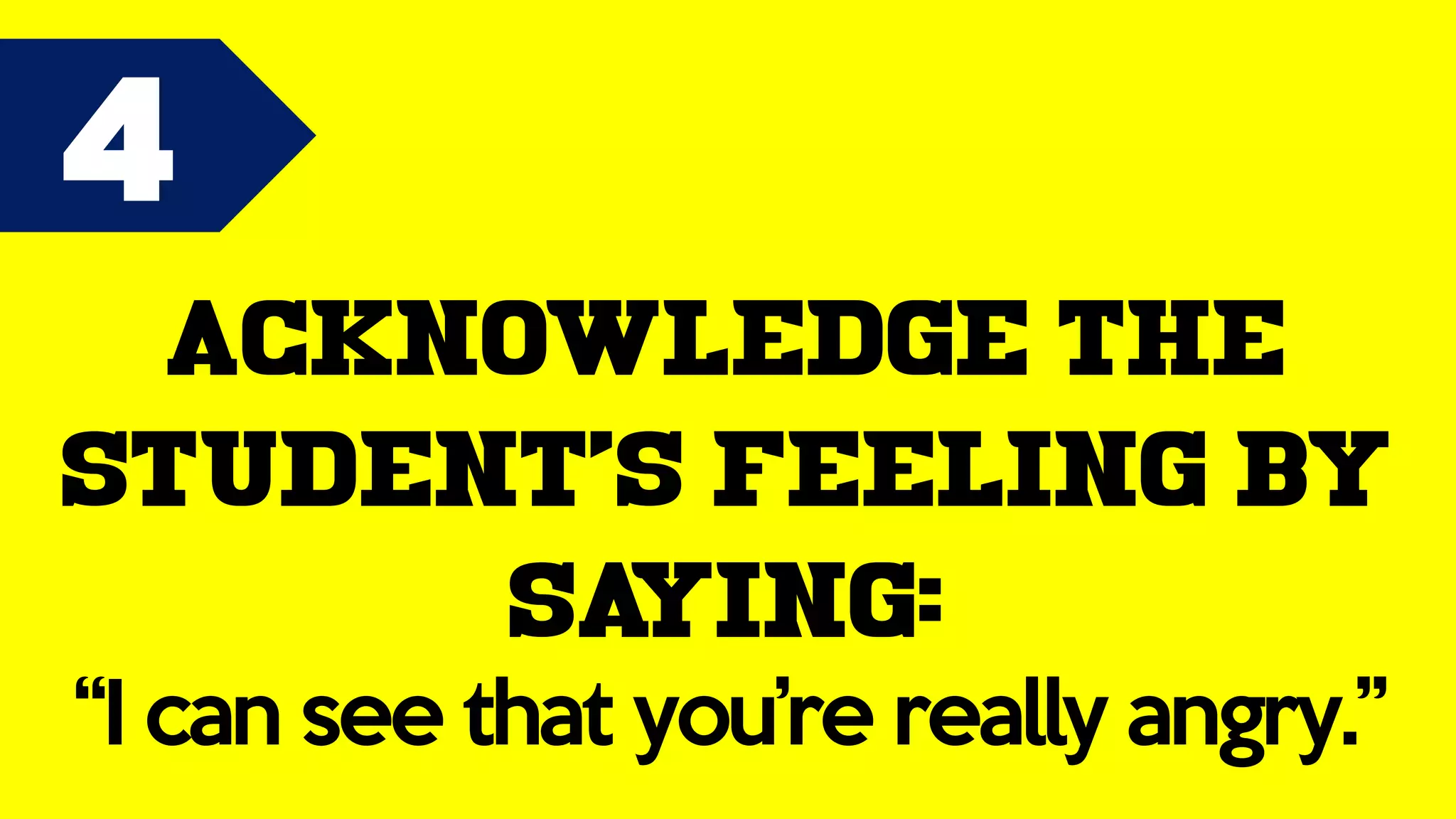
4
Acknowledge the
student’s feeling by
saying:
“I can see that you’re really angry.”
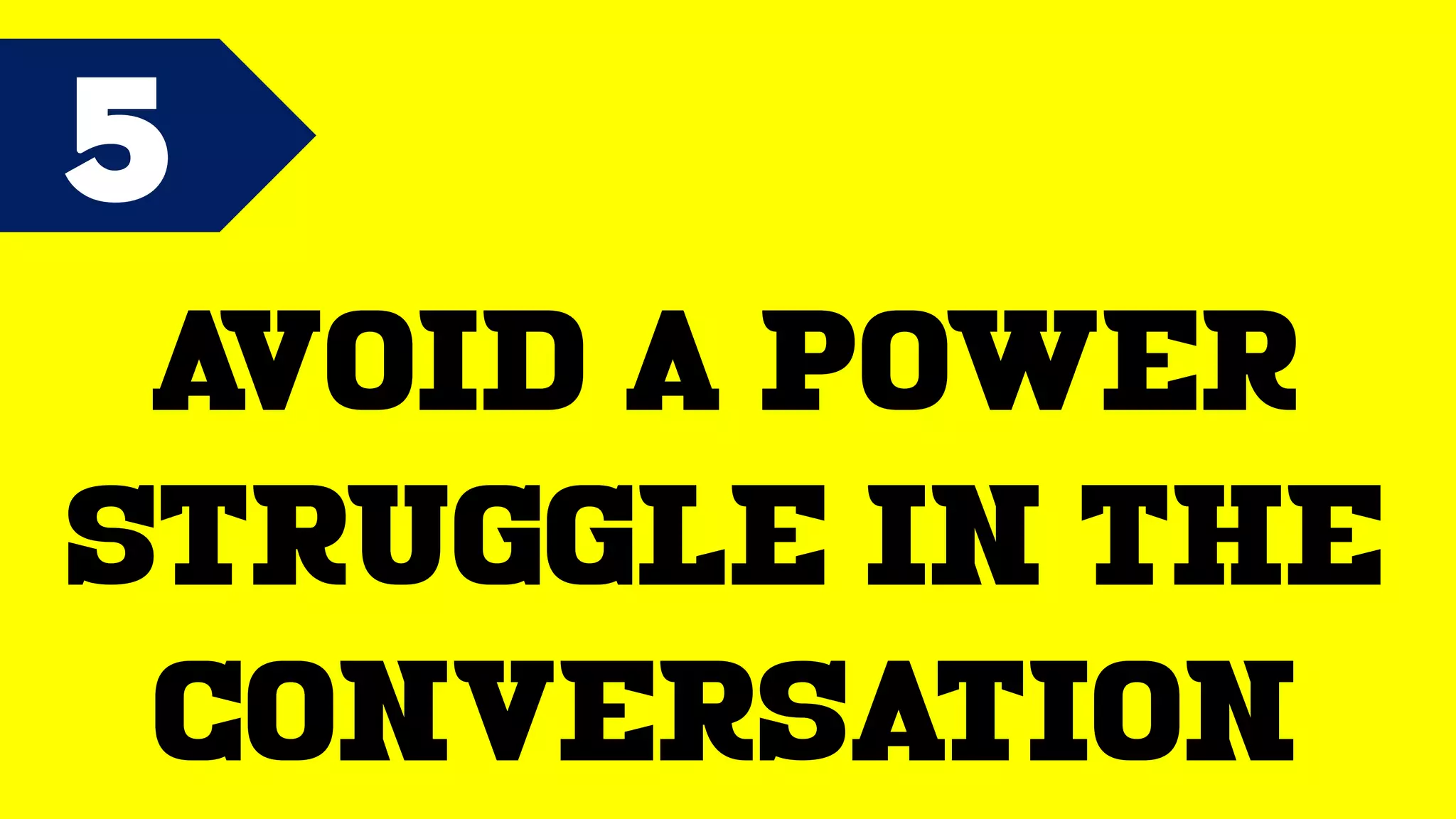
5
Avoid a power
struggle in the
conversation
6
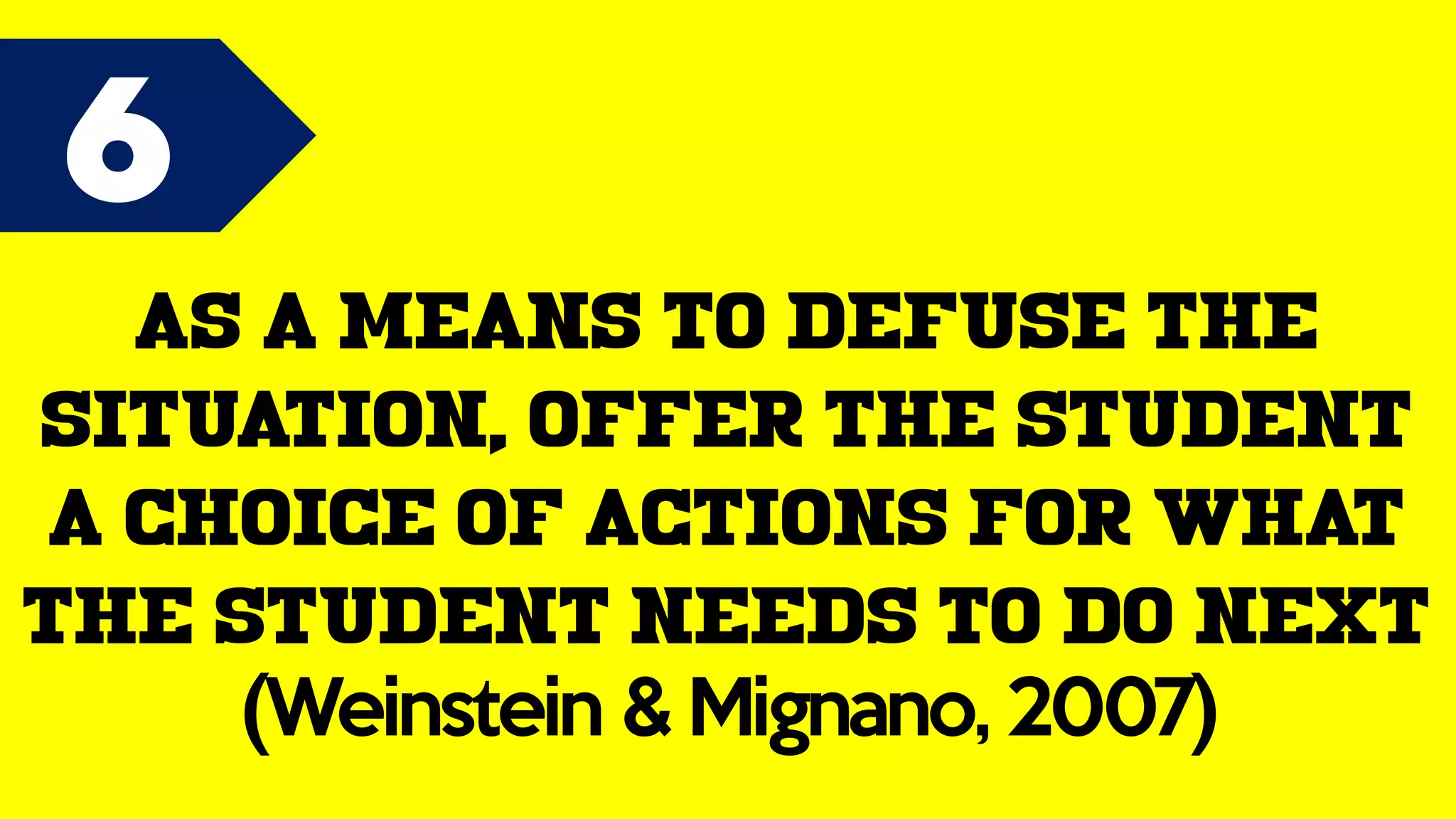
As a means to defuse the
situation, offer the student
a choice of actions for what
the student needs to do next
(Weinstein & Mignano, 2007)
9
Failure to do
Work in Class or
Homework
The Fix
Examine how you hold
students accountable
in your class
The Fix
Plan to maintain accurate records of
the school work and respond early
when you recognize students who
regularly are not completing their
class work
The Fix
Examine the nature
of the assignment
or homework
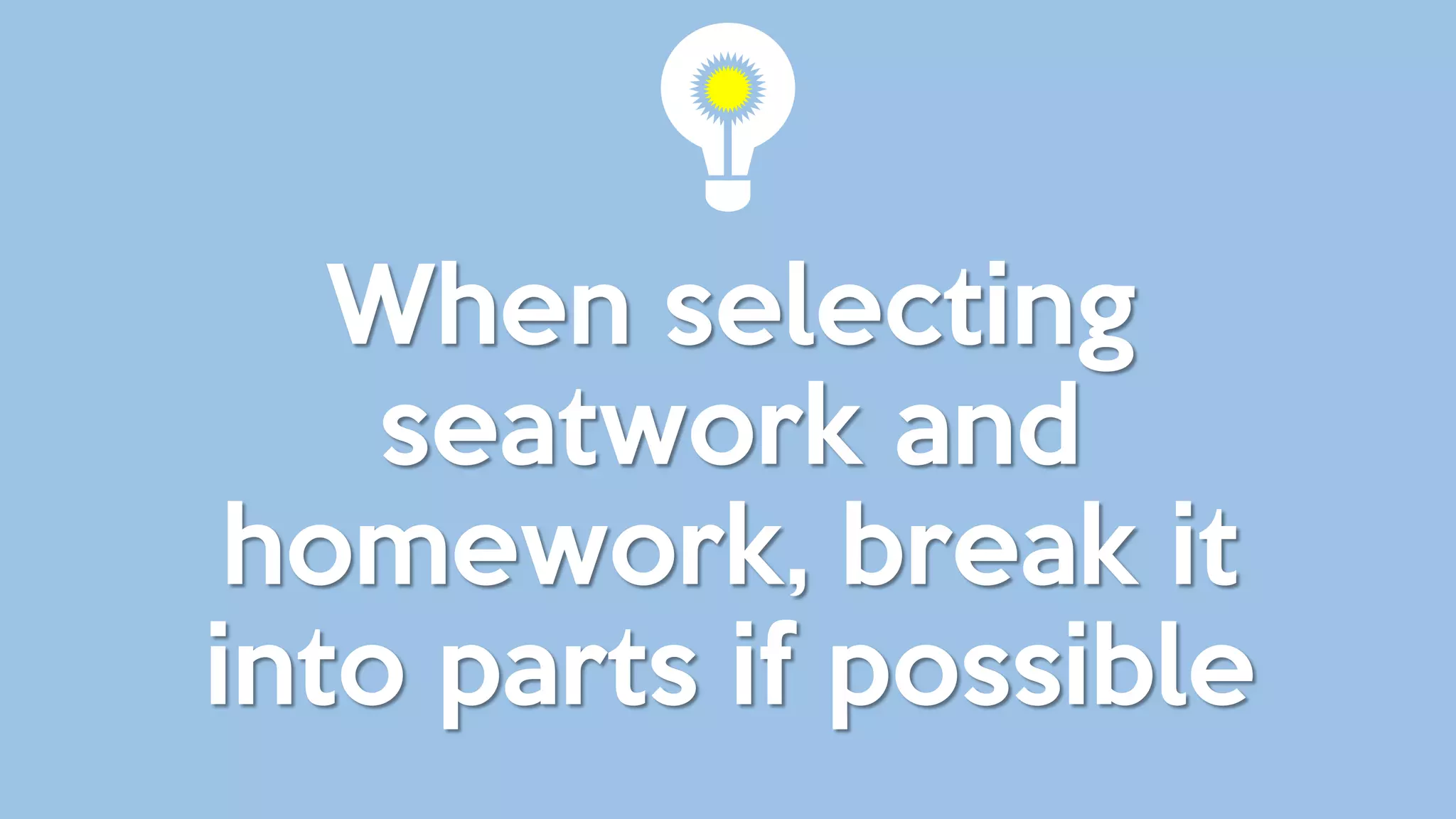
When selecting
seatwork and
homework, break it
into parts if possible
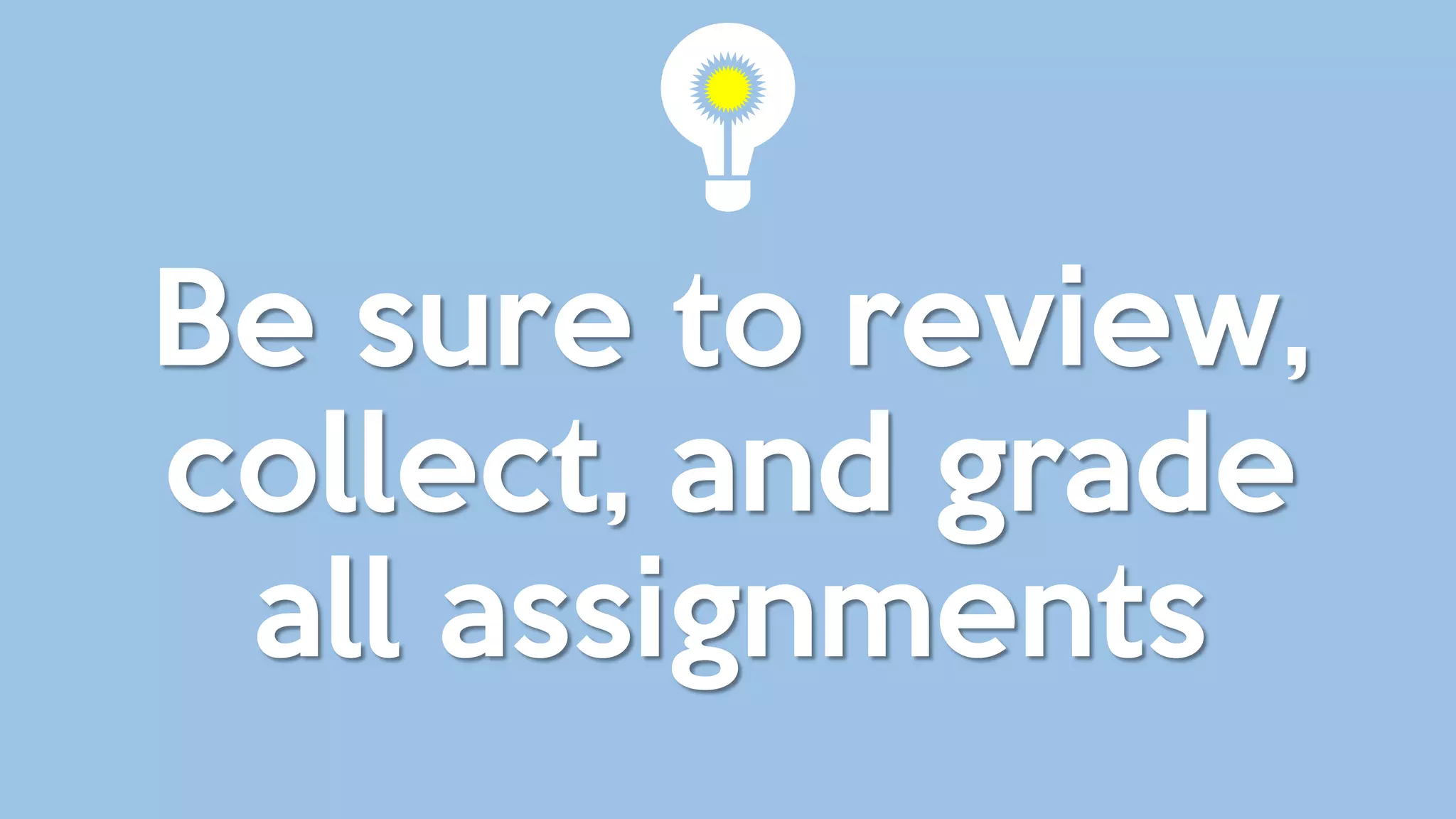
Be sure to review,
collect, and grade
all assignments
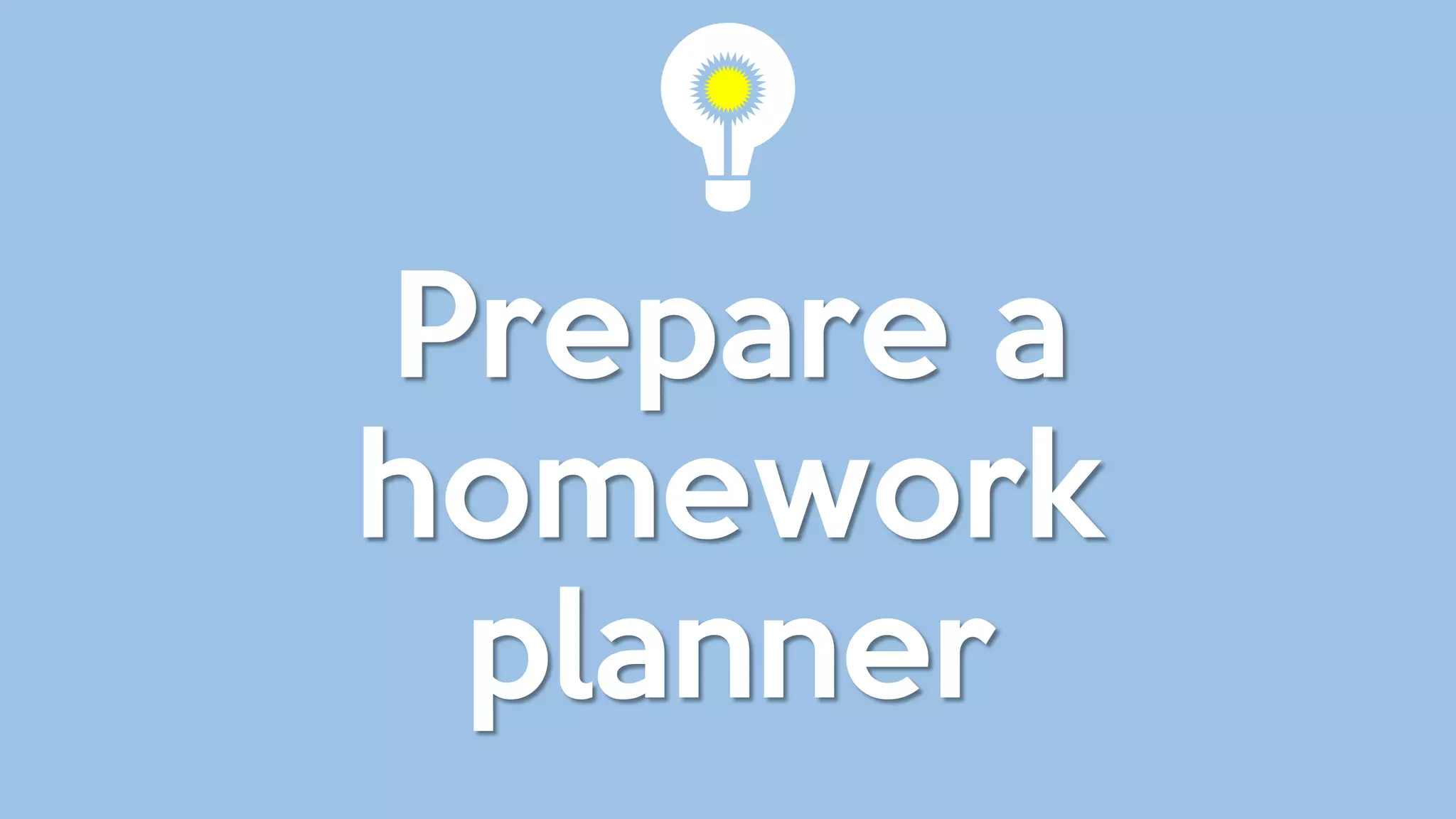
Prepare a
homework
planner
Performance
task
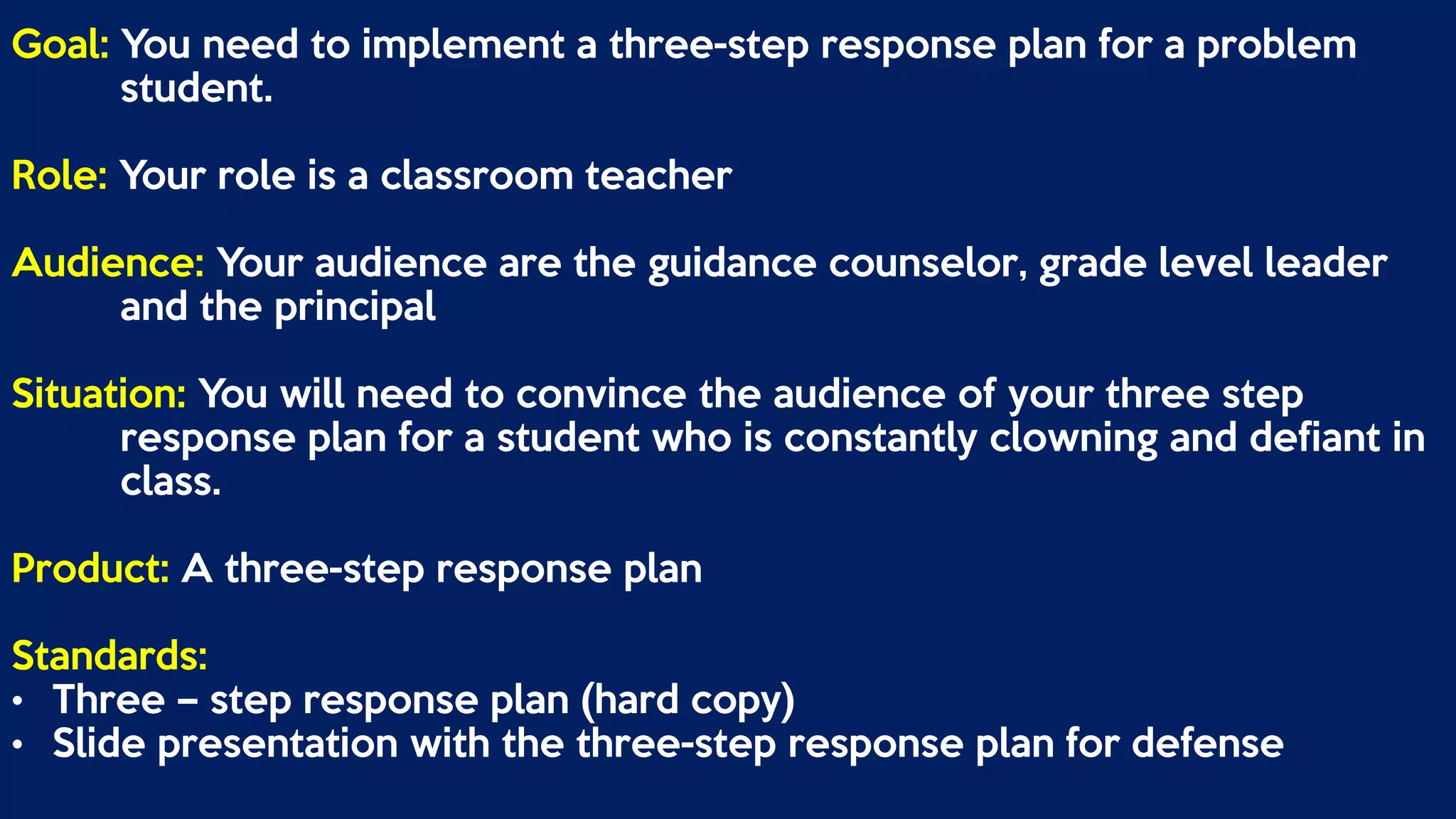
Goal: You need to implement a three-step response plan for a problem
student.
Role: Your role is a classroom teacher
Audience: Your audience are the guidance counselor, grade level leader
and the principal
Situation: You will need to convince the audience of your three step
response plan for a student who is constantly clowning and defiant in
class.
Product: A three-step response plan
Standards:
• Three – step response plan (hard copy)
• Slide presentation with the three-step response plan for defense
Namaste!!
Reference:
Burden, Paul R. (2010) Classroom Management:
Creating a Successful K-12 Learning
Community (4th Ed.) .John Wiley & Sins, Inc. ,
111 River Street, Hoboken NJ 07030-5774.
United States of America

Early Childhood Classroom Management - Responding to Inappropriate Behavior