Curriculum 
Development And 
Management of 
Learning
Learning-> is the most basic of all 
human experience. Includes Intellectual, 
Emotional, and Physical Learning 
.
Three areas of Learning 
Principles: 
Subjective Principles 
Self-concept 
Past experience
• Subjective Principles – concerned with “what” the 
learner brings to the learning situation . 
• Self-concept – new experience are learned more 
effectively if they agree with or enhance our self-concept. 
If a new experience is painful and insulting, we t6end to 
reject or to forget it even if its acceptance would help us 
to become better person.
• Past experience – to learn more effectively, a 
person should be aware of the influence of his 
limited and selective personal experience and to 
maintain an open and flexible attitude
• Intelligence – the confidence, creativity ,leadership , 
and desire to achieve could be help learning to be 
effective. 
• Motivation – when a learner is really interested and 
involved he will learn better. 
• Emotion – when we are enthusiastic, we tend to learn 
better. Fearful situations impair learning ability. Mild 
stress or anxiety may help learning by making the 
learning more alert.
Objective Principles of learning - deal with 
factors relevant to learning situations that includes : 
• People differ in their rate of learning. 
• Forgetting is more rapid then learning. 
• Review is essential to retain what has been learned. 
• Learning is more effective when followed by appropriate rewards. 
• Habits are better formed when the sequence of continuous, 
intermittent, and variable reward schedules are followed. 
• When the preceding schedules are followed, the behavior can 
become self-rewarding. 
• Generalization permits the learning of large amounts of 
information. 
• Discrimination permits appropriate usage of information learned 
through generalization.
Special Learning Techniques – use to increase 
learning efficiency that includes : 
• Massed & distributed learning 
• Feedback 
• Over learning
Techniques of 
Management of 
Learning
• Planning the sequence of learning 
• Learning by feedback 
• Integrative learning 
• Experiential approach to learning
Planning the Sequence of Learning 
In general, when there is a large amount of 
information to be learned, such as complex directions, it is best to 
distribute the total learning time into separate periods. 
• Distributed practice – learning section by section is a better 
technique than trying to give all the things to be learned at the same 
time. 
• Massed practice – learning to solve a problem or learning an 
entire sequence at one time with no rest or interruptions.
Learning by Feedback 
Persons learn better when they are informed as to 
the correctness or incorrectness of their responses. This 
process is called feedback. Knowledge of results helps 
them to learn faster because full information is available 
and the task is become more interesting. There is much 
evidence that people learn better when they are 
constantly informed as to how they are doing and shown 
ways to improve.
Integrative Learning
What is 
Integrative 
Learning?
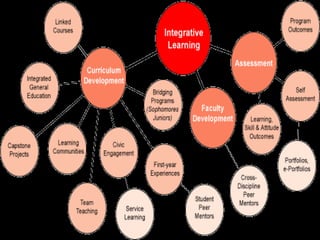
Integrative Learning 
- Is a learning theory describing a movement toward 
integrated lessons helping students make connections across 
curricula. 
- Learning by wholes tends to be better 
than learning by parts.
Integrative Learning 
- Fostering students' abilities to 
integrate learning--over time, across 
courses, and between academic, 
personal, and community life--is one of 
the most important goals and 
challenges of higher education.
I HEAR AND I FORGET 
I SEE AND I REMEMBER 
I DO AND I UNDERSTAND. 
-Ancient Chinese Proverb
Experiential Approach To 
Learning
What is 
Experiential 
Approach To 
Learning ?
Experiential Approach To Learning 
- Is the process of making meaning from direct 
experience. “Learning from experience“. 
- Focuses on the learning process 
for the individual.
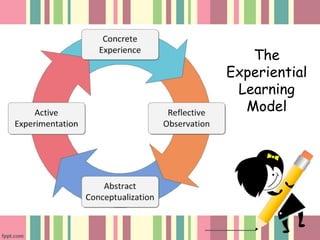
The 
Experiential 
Learning 
Model
How do we decide which 
mode of experiential 
learning will work best?
5 Factors used in Experiential 
Education 
Learning must be current 
Learning must be Eclectic 
Learning must be inclusive 
 learning must deal with the Essential, not 
structures and forms 
Learning must be Dynamic
Learning must be Current 
- new ways of doing things are 
constantly being introduced
 Learning must be Eclectic 
- With the current trend to merge the different disciplines 
or to use the interdisciplinary approach, there is not one 
subject matter that can claim that it is the most important 
of all 
 Learning must be Inclusive 
- There is on-going search for new knowledge, hence, all 
the disciplines must contribute to the discovery of new 
and more important techniques
 Learning must deal with the Essential, not Structures and 
Forms 
- Experiential education focuses on-the spot data and 
analysis, planning action and evaluation are done on here-and 
now. 
 Learning must be Dynamic 
- to be dynamic one is always growing and alive, hence, 
learning is an on-going process. 
- careful planning and control is however necessary for 
efficient learning.
DOW (1971) 
He states that 
“experiential education 
addresses behavior, not 
attitude; it deals with action, 
not concepts. It is a process 
philosophy. Its principal 
thesis is that learning is only 
learning when it results in 
some new behavior.”
Recalling & Learning 
Recall is a very important factor in learning. 
There are several ways of recalling. 
i. Self-recitation while the material is being learned. 
- recall is helped by recalling during practice. 
ii. Overlearning helps the learner to have a better 
memory since he can recall more efficiently 
overlearned materials.
iii. Periodic review helps to cut down the effects of 
forgetting 
iv. Following a logical pattern makes us remember the 
materials better
Guidelines for Curriculum Development 
Based on the principles and on what have been discussed 
in the previous pages, curriculum developers must 
bear in mind the following guidelines in making a 
curriculum: 
1) A good curriculum must encourage inquiry and 
creativity 
2.) A good curriculum must be democratic with regard 
to procedures 
3.) A good curriculum must accept individual differences
Guidelines for curriculum development 
4.) A good curriculum must take into consideration 
scientific and scholarly techniques and findings. 
5.) A good curriculum must minimize memorizing and 
maximize discovery. 
6.) A good curriculum must take into consideration the 
potential for achievement through either the 
individual learner or the group. 
7.) A good curriculum must employ teacher resources in 
a multi-dimensional role
Curriculum development and management of learning

Curriculum development and management of learning

  • 1.
    Curriculum Development And Management of Learning
  • 2.
    Learning-> is themost basic of all human experience. Includes Intellectual, Emotional, and Physical Learning .
  • 3.
    Three areas ofLearning Principles: Subjective Principles Self-concept Past experience
  • 4.
    • Subjective Principles– concerned with “what” the learner brings to the learning situation . • Self-concept – new experience are learned more effectively if they agree with or enhance our self-concept. If a new experience is painful and insulting, we t6end to reject or to forget it even if its acceptance would help us to become better person.
  • 5.
    • Past experience– to learn more effectively, a person should be aware of the influence of his limited and selective personal experience and to maintain an open and flexible attitude
  • 6.
    • Intelligence –the confidence, creativity ,leadership , and desire to achieve could be help learning to be effective. • Motivation – when a learner is really interested and involved he will learn better. • Emotion – when we are enthusiastic, we tend to learn better. Fearful situations impair learning ability. Mild stress or anxiety may help learning by making the learning more alert.
  • 7.
    Objective Principles oflearning - deal with factors relevant to learning situations that includes : • People differ in their rate of learning. • Forgetting is more rapid then learning. • Review is essential to retain what has been learned. • Learning is more effective when followed by appropriate rewards. • Habits are better formed when the sequence of continuous, intermittent, and variable reward schedules are followed. • When the preceding schedules are followed, the behavior can become self-rewarding. • Generalization permits the learning of large amounts of information. • Discrimination permits appropriate usage of information learned through generalization.
  • 8.
    Special Learning Techniques– use to increase learning efficiency that includes : • Massed & distributed learning • Feedback • Over learning
  • 9.
  • 10.
    • Planning thesequence of learning • Learning by feedback • Integrative learning • Experiential approach to learning
  • 11.
    Planning the Sequenceof Learning In general, when there is a large amount of information to be learned, such as complex directions, it is best to distribute the total learning time into separate periods. • Distributed practice – learning section by section is a better technique than trying to give all the things to be learned at the same time. • Massed practice – learning to solve a problem or learning an entire sequence at one time with no rest or interruptions.
  • 12.
    Learning by Feedback Persons learn better when they are informed as to the correctness or incorrectness of their responses. This process is called feedback. Knowledge of results helps them to learn faster because full information is available and the task is become more interesting. There is much evidence that people learn better when they are constantly informed as to how they are doing and shown ways to improve.
  • 13.
  • 14.
  • 15.
    Integrative Learning -Is a learning theory describing a movement toward integrated lessons helping students make connections across curricula. - Learning by wholes tends to be better than learning by parts.
  • 16.
    Integrative Learning -Fostering students' abilities to integrate learning--over time, across courses, and between academic, personal, and community life--is one of the most important goals and challenges of higher education.
  • 18.
    I HEAR ANDI FORGET I SEE AND I REMEMBER I DO AND I UNDERSTAND. -Ancient Chinese Proverb
  • 19.
  • 20.
    What is Experiential Approach To Learning ?
  • 21.
    Experiential Approach ToLearning - Is the process of making meaning from direct experience. “Learning from experience“. - Focuses on the learning process for the individual.
  • 22.
  • 23.
    How do wedecide which mode of experiential learning will work best?
  • 24.
    5 Factors usedin Experiential Education Learning must be current Learning must be Eclectic Learning must be inclusive  learning must deal with the Essential, not structures and forms Learning must be Dynamic
  • 25.
    Learning must beCurrent - new ways of doing things are constantly being introduced
  • 26.
     Learning mustbe Eclectic - With the current trend to merge the different disciplines or to use the interdisciplinary approach, there is not one subject matter that can claim that it is the most important of all  Learning must be Inclusive - There is on-going search for new knowledge, hence, all the disciplines must contribute to the discovery of new and more important techniques
  • 27.
     Learning mustdeal with the Essential, not Structures and Forms - Experiential education focuses on-the spot data and analysis, planning action and evaluation are done on here-and now.  Learning must be Dynamic - to be dynamic one is always growing and alive, hence, learning is an on-going process. - careful planning and control is however necessary for efficient learning.
  • 28.
    DOW (1971) Hestates that “experiential education addresses behavior, not attitude; it deals with action, not concepts. It is a process philosophy. Its principal thesis is that learning is only learning when it results in some new behavior.”
  • 29.
    Recalling & Learning Recall is a very important factor in learning. There are several ways of recalling. i. Self-recitation while the material is being learned. - recall is helped by recalling during practice. ii. Overlearning helps the learner to have a better memory since he can recall more efficiently overlearned materials.
  • 30.
    iii. Periodic reviewhelps to cut down the effects of forgetting iv. Following a logical pattern makes us remember the materials better
  • 31.
    Guidelines for CurriculumDevelopment Based on the principles and on what have been discussed in the previous pages, curriculum developers must bear in mind the following guidelines in making a curriculum: 1) A good curriculum must encourage inquiry and creativity 2.) A good curriculum must be democratic with regard to procedures 3.) A good curriculum must accept individual differences
  • 32.
    Guidelines for curriculumdevelopment 4.) A good curriculum must take into consideration scientific and scholarly techniques and findings. 5.) A good curriculum must minimize memorizing and maximize discovery. 6.) A good curriculum must take into consideration the potential for achievement through either the individual learner or the group. 7.) A good curriculum must employ teacher resources in a multi-dimensional role