Ears
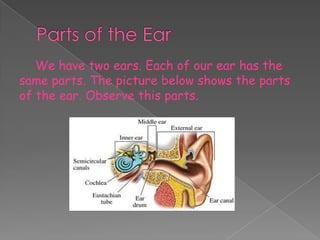
We have two ears. Each of our ear has the
same parts. The picture below shows the parts
of the ear. Observe this parts.
The three main parts of the ear are the
outer ear, middle ear, and the inner ear.
      The outer ear is separated from the middle
ear by a thin membrane called eardrum. The middle
ear is separated from the inner ear also by a
membrane.
      The outer ear has a canal. This canal is lined
with wax and tiny hairs. These keep dust from
entering further into your ear. The canal leads to
the middle ear. There are three tiny bones in the
middle ear. In the inner ear there is a coiled tube
called cochlea which contains fluid. The cochlea is
attached to nerve cells.
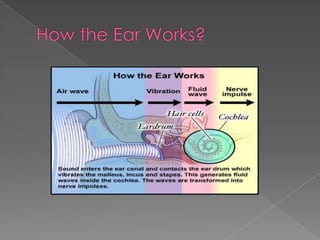
Sound travels like waves. When sound waves
enter the outer ear, they pass through the canal
and strike the eardrum. When the eardrum
moves or vibrates, it moves the tiny bone
nearest to it. This bone, in turn moves the
second bone which in turn, moves the third bone.
The third bone touches the membrane between
the middle ear and the inner ear. When this
membrane vibrates, the fluid in the cochlea
moves. The nerve cells then send the message to
the brain which tells you what you hear.

Ear parts and its function

  • 1.
  • 2.
    We have twoears. Each of our ear has the same parts. The picture below shows the parts of the ear. Observe this parts.
  • 3.
    The three mainparts of the ear are the outer ear, middle ear, and the inner ear. The outer ear is separated from the middle ear by a thin membrane called eardrum. The middle ear is separated from the inner ear also by a membrane. The outer ear has a canal. This canal is lined with wax and tiny hairs. These keep dust from entering further into your ear. The canal leads to the middle ear. There are three tiny bones in the middle ear. In the inner ear there is a coiled tube called cochlea which contains fluid. The cochlea is attached to nerve cells.
  • 5.
    Sound travels likewaves. When sound waves enter the outer ear, they pass through the canal and strike the eardrum. When the eardrum moves or vibrates, it moves the tiny bone nearest to it. This bone, in turn moves the second bone which in turn, moves the third bone. The third bone touches the membrane between the middle ear and the inner ear. When this membrane vibrates, the fluid in the cochlea moves. The nerve cells then send the message to the brain which tells you what you hear.