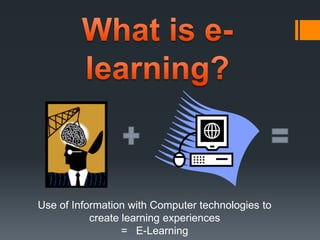
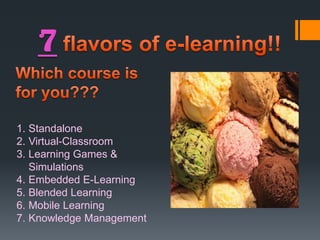
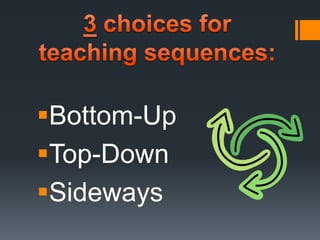
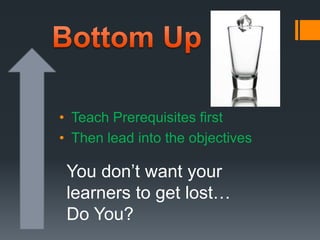
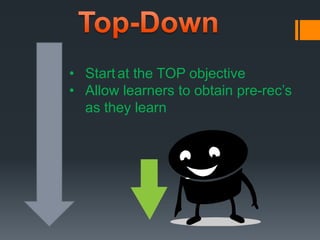
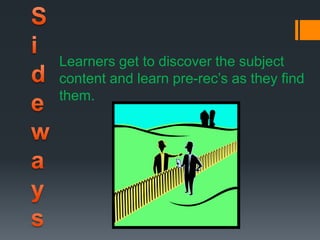
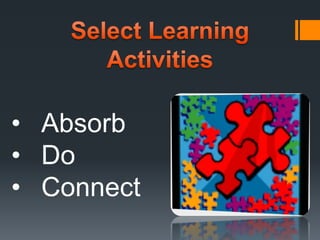
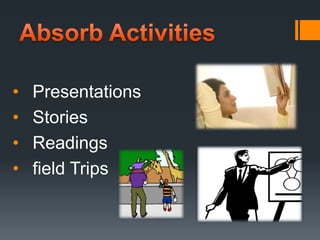
E-learning can take many forms, including standalone courses, virtual classrooms, games/simulations, embedded content, blended learning, and mobile learning. When designing e-learning, instructional designers must make important decisions about learning goals, objectives, prerequisites, and sequencing. There are three options for sequencing - bottom-up which teaches prerequisites first, top-down which starts with the main objective, and sideways which allows learners to discover prerequisites as they learn. Design also requires selecting appropriate learning activities such as presentations, readings, explores, and activities for learners to connect with and apply the content. Careful planning of these design elements can ensure effective e-learning experiences.




![Distance Learning Ict1[1]](https://cdn.slidesharecdn.com/ss_thumbnails/distancelearningict11-090726042008-phpapp02-thumbnail.jpg?width=640&height=640&fit=bounds)


