By:
 Dede Dapik
 Eva Dwi
 Nauzia
 Rifatul Inayah
 Yesvita Tamba
15 Nopember 2006
Workshop Dokumentasi dan
Standarisasi Materi E-Learning
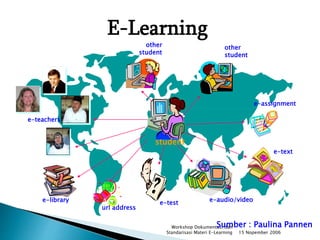
student
e-assignment
e-text
e-audio/videoe-test
url address
e-library
e-teachers
other
student
other
student
E-Learning
Sumber : Paulina Pannen
 Comerchero (2006:19) states that e-learning
is a means of education that incorporate self-
motivation, communication, efficiency, and
technology.
 New Zealand Departmen: enabled or
supported by the use of digital tools and
content.
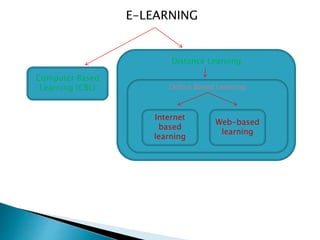
E-LEARNING
Computer Based
Learning (CBL)
Distance Learning
Online Based Learning
Internet
based
learning
Web-based
learning
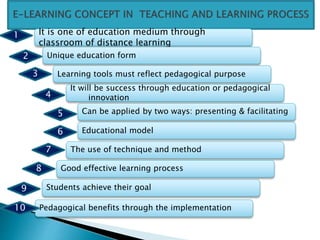
It is one of education medium through
classroom of distance learning
Unique education form
Learning tools must reflect pedagogical purpose
It will be success through education or pedagogical
innovation
Can be applied by two ways: presenting & facilitating
Educational model
The use of technique and method
Good effective learning process
Students achieve their goal
Pedagogical benefits through the implementation
1
5
6
7
8
9
10
2
4
3
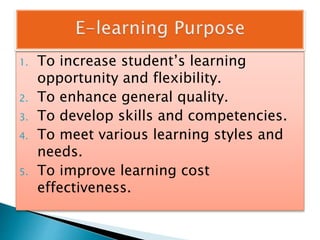
1. To increase student’s learning
opportunity and flexibility.
2. To enhance general quality.
3. To develop skills and competencies.
4. To meet various learning styles and
needs.
5. To improve learning cost
effectiveness.
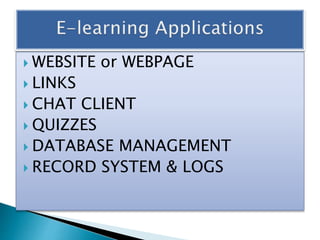
 WEBSITE or WEBPAGE
 LINKS
 CHAT CLIENT
 QUIZZES
 DATABASE MANAGEMENT
 RECORD SYSTEM & LOGS
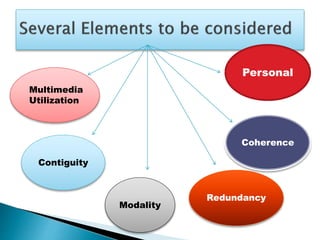
Multimedia
Utilization
Modality
Redundancy
Coherence
Contiguity
Personal
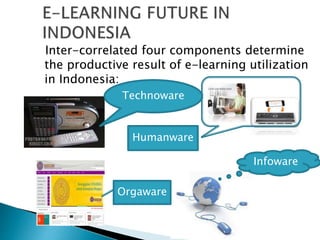
Inter-correlated four components determine
the productive result of e-learning utilization
in Indonesia:
Technoware
Infoware
Orgaware
Humanware
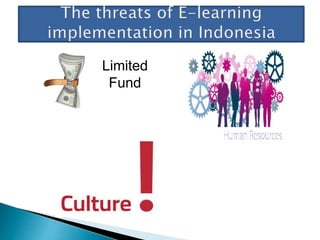
Limited
Fund
E-learning implementation needs
qualified design and plan,
readiness of hardware, software,
system, and human resource.
E learning Concept, Application, and Potency

E learning Concept, Application, and Potency

  • 1.
    By:  Dede Dapik Eva Dwi  Nauzia  Rifatul Inayah  Yesvita Tamba
  • 2.
    15 Nopember 2006 WorkshopDokumentasi dan Standarisasi Materi E-Learning student e-assignment e-text e-audio/videoe-test url address e-library e-teachers other student other student E-Learning Sumber : Paulina Pannen
  • 3.
     Comerchero (2006:19)states that e-learning is a means of education that incorporate self- motivation, communication, efficiency, and technology.  New Zealand Departmen: enabled or supported by the use of digital tools and content.
  • 4.
    E-LEARNING Computer Based Learning (CBL) DistanceLearning Online Based Learning Internet based learning Web-based learning
  • 5.
    It is oneof education medium through classroom of distance learning Unique education form Learning tools must reflect pedagogical purpose It will be success through education or pedagogical innovation Can be applied by two ways: presenting & facilitating Educational model The use of technique and method Good effective learning process Students achieve their goal Pedagogical benefits through the implementation 1 5 6 7 8 9 10 2 4 3
  • 6.
    1. To increasestudent’s learning opportunity and flexibility. 2. To enhance general quality. 3. To develop skills and competencies. 4. To meet various learning styles and needs. 5. To improve learning cost effectiveness.
  • 7.
     WEBSITE orWEBPAGE  LINKS  CHAT CLIENT  QUIZZES  DATABASE MANAGEMENT  RECORD SYSTEM & LOGS
  • 8.
  • 9.
    Inter-correlated four componentsdetermine the productive result of e-learning utilization in Indonesia: Technoware Infoware Orgaware Humanware
  • 11.
  • 12.
    E-learning implementation needs qualifieddesign and plan, readiness of hardware, software, system, and human resource.