Presented by: Eka Stefani Yuli Marlina Ida Mariati Hantamah Nurcahyani Gandi Mustika Herita Andi Suharya Endang iriani
 
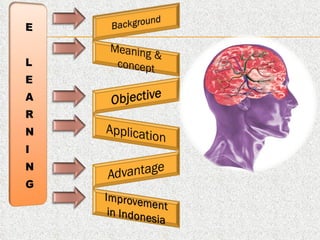
E : Electronic Learning E-learning comprises all forms of electronically supported  learning  and  teaching . The  information  and  communication systems , whether  networked learning  or not, serve as specific media to implement the learning process. [1] Distance Learning Online Based Learning Computer  Based Learning Internet Based Learning Web  Learning
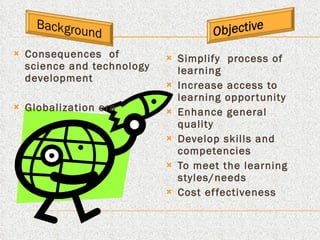
Consequences  of  science and technology development Globalization era Simplify  process of learning Increase access to learning opportunity Enhance general quality Develop skills and competencies To meet the learning styles/needs Cost effectiveness
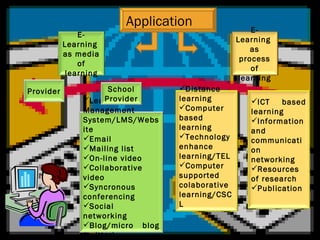
Application E-Learning  as media of learning E-Learning  as process of learning Provider Learning  Management System/LMS/Website Email Mailing list On-line video Collaborative video Syncronous conferencing Social networking Blog/micro blog (twitter) School Provider Distance learning Computer based learning Technology enhance learning/TEL Computer supported colaborative learning/CSCL ICT based learning Information and communication networking Resources of research Publication
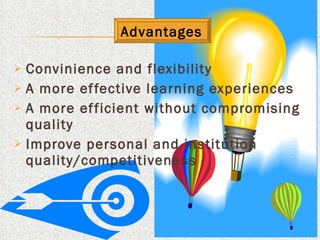
Convinience and flexibility A more effective learning experiences A more efficient without compromising quality Improve personal and institution quality/competitiveness Advantages
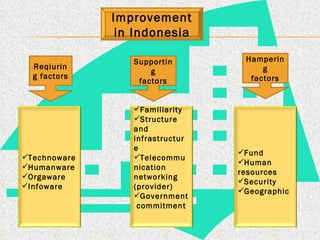
Improvement in Indonesia Reqiuring factors Supporting factors Hampering factors Technoware Humanware Orgaware Infoware Familiarity Structure and infrastructure Telecommunication networking (provider) Government  commitment Fund Human resources Security Geographic
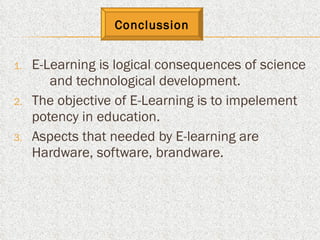
E-Learning is logical consequences of science  and technological development.  The objective of E-Learning is to impelement potency in education. Aspects that needed by E-learning are Hardware, software, brandware.  Conclussion

E learning andi

  • 1.
    Presented by: EkaStefani Yuli Marlina Ida Mariati Hantamah Nurcahyani Gandi Mustika Herita Andi Suharya Endang iriani
  • 2.
  • 3.
    E : ElectronicLearning E-learning comprises all forms of electronically supported learning and teaching . The information and communication systems , whether networked learning or not, serve as specific media to implement the learning process. [1] Distance Learning Online Based Learning Computer Based Learning Internet Based Learning Web Learning
  • 4.
    Consequences of science and technology development Globalization era Simplify process of learning Increase access to learning opportunity Enhance general quality Develop skills and competencies To meet the learning styles/needs Cost effectiveness
  • 5.
    Application E-Learning as media of learning E-Learning as process of learning Provider Learning Management System/LMS/Website Email Mailing list On-line video Collaborative video Syncronous conferencing Social networking Blog/micro blog (twitter) School Provider Distance learning Computer based learning Technology enhance learning/TEL Computer supported colaborative learning/CSCL ICT based learning Information and communication networking Resources of research Publication
  • 6.
    Convinience and flexibilityA more effective learning experiences A more efficient without compromising quality Improve personal and institution quality/competitiveness Advantages
  • 7.
    Improvement in IndonesiaReqiuring factors Supporting factors Hampering factors Technoware Humanware Orgaware Infoware Familiarity Structure and infrastructure Telecommunication networking (provider) Government commitment Fund Human resources Security Geographic
  • 8.
    E-Learning is logicalconsequences of science and technological development. The objective of E-Learning is to impelement potency in education. Aspects that needed by E-learning are Hardware, software, brandware. Conclussion