Planning Your E-Commerce
Online Advertising
E-mail Marketing
A. S. M. SHAMZIDUL ISLAM
SHAMZID@GMAIL.COM
01713239922
Planning Your E-Commerce
E-commerce
 E-commerce
E-commerce describes the process of buying and selling or exchanging of products,
services and information via computer networks including Internet.
These include:
 Business to Business (B2B)
 Business to Consumer (B2C)
 Consumer to Consumer (C2C)
 Consumer to Business (C2B)
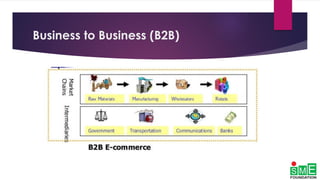
Business to Business (B2B)
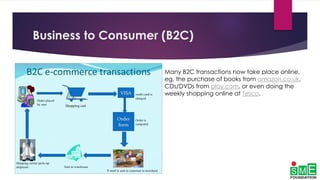
Business to Consumer (B2C)
Many B2C transactions now take place online,
eg, the purchase of books from amazon.co.uk,
CDs/DVDs from play.com, or even doing the
weekly shopping online at Tesco.
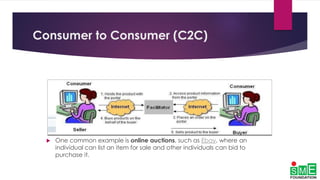
Consumer to Consumer (C2C)
 One common example is online auctions, such as Ebay, where an
individual can list an item for sale and other individuals can bid to
purchase it.
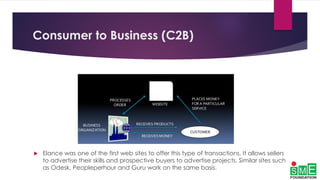
Consumer to Business (C2B)
 Elance was one of the first web sites to offer this type of transactions. It allows sellers
to advertise their skills and prospective buyers to advertise projects. Similar sites such
as Odesk, Peopleperhour and Guru work on the same basis.
Planning Your E-Commerce
When you are considering starting to sell online you also have to look at what your
competitors are doing online. You should never copy what your competitors are doing
but you can use it as a guide and then even improve on what they offer. So getting
started means doing some research so that you are best informed and ready to move
forward.
E-Commerce Strategy and Plan
Having a plan can help save you from making mistakes and getting off target from your
original objectives. A plan does not have to be long and complex. Consider the key issues:
 Mission - what is your business's value to your customers?
 Strategy - how will you go about making the business a success?
 Technology - choose the technology to support and grow with your business
 Stakeholders - identify the partners that will help move the business forward
 Engagement - get moving then review and improve as you go
E-Commerce Strategy Overview
A good business plan, whether for e-commerce or any business
should cover:
 Business & Personal Aims - what is your business's mission? What
value are you seeking to provide?
 Business Objectives - what do you want to achieve?
 Business Model - how will you achieve those objectives?
 How are you sourcing your product?
 Manufacture In-house: You make your product or service in-
house
 Third party manufacturer: You outsource manufacturing of your
product or service to a third party manufacturer
 Dropship: You partner with a dropship manufacturer. Basically
this means that they make your product, package it and ship it
directly to your customer while your company handles the
entire customer relationship
 Wholesale: You buy goods or services from other companies in
bulk and re-sell those products on your website
 Tactical Deployment - what do you need to do to achieve those
goals?
 Marketing Requirements and Goals - how will you reach your target
customers?
 Content Gathering and Management - Who will do this and how?
 Fulfilment and Logistics - Managing your inventory and getting it to
customers
 Financial Management and Payments - including security
management
 Social Media - strategies to connect with your customers
 Platform & Technology - what requirements does your business have
to achieve the goals above?
 Mobile Commerce
 Maintenance & Management
E-Commerce Strategy Tasks
 Make sure you know your market - it's best to check in with target
customers throughout the start-up process to ensure your strategy
resonates with the value you are seeking to provide.
 Multi/Omni-channel - What is important to your customers? Physical
presence? eBay? Clicks and mortar?
 Integrate the shopping experience - customers what to feel they are
dealing with you so all avenues through to a final sale should feel
integrated from their perspective.
 How you will deal with
 Content - creating it and keeping it up to date
 Pricing & inventory - regular updates and fresh inventory
 Logistics - getting your products to your customers
 Service & support - how do your customers get help from?
 Payment & refund/returns - what will be your policy?
 Security - how will you manage credit card and payment
security?
 Develop an easy-to-use purchase process - minimize clicks and
concerns for your customers
 Consider localization requirements - language requirements or multi-
currency
 Consider customer relationship management and personalization -
how will you get and stay connected with your customers?
 Make sure that you select a scalable platform or solution - will your
technology grow as you do?
 Make sure you have a team in place - either staff or support from
vendors, associates, partners or family?
 Marketing campaigns and requirements - how will you market your
business? Online only? Google Ad-words?
 Integrate to external systems, suppliers or logistics - what efficiencies
do you need to make sure you are focused on growing your
business and don't spend all your time in it on the day to day tasks?
E-Commerce Strategy Checklist-
Business Issues
 What is your business model - The business model is all important and how you establish you business may depend on the
model. Will you sell to consumers, to businesses, to both. Will you build a marketplace where lots of businesses can sell
together online.
 Marketplace: You are acting as a middleman by bringing businesses and (B2B or B2C) customers to one website.
 What kind of resources will you need - Every business needs to budget for resources and you need to ensure that you
have the capital to get your venture moving.
 What is the demographic focus - Who will be your primary buyer? Knowing this can help you setup the online assets to be
more attractive to the demographic that you are targeting.
 What expertise is available - Self managed and when you need assistance.
 Tax model - this in many ways relates to the business model B2B or B2C. I Australia you need to collect GST on most goods
and services. If you are unsure of the take model seek advice.
 Domain name/s - your brand and your domain name are linked together for you business. Choose a domain name that
represents your brand and is not being used in other countries.
E-Commerce Strategy Checklist-
Technology Issues
 Business email addresses - helps to develop trust with your customers
 SSL Certificate (recommended if you accept credit cards) - necessary for security and trust
 Merchant account and/or PayPal - always collect payments safely.
 Which pricing model - relates to the business model and the demographic
 Shipping and logistics - shipping costs can be a margin eater. In most situations you will be able to add shipping cost to the total price. But shipping can be
a competitive advantage.
 Design and user experience - make it easy for the customer to browse and buy on any device
 Requirements for custom development - try to avoid having any custom development done as this will potentially cause you pain when you need to
upgrade or maintain the website.
 Mobile and tablets - work on any device.
 Search Engine Optimization (SEO) - SEO can be more costly than traditional marketing so ensure that you have tools and a strategy to get the most out of
the technology
 Content Marketing - good SEO and good results all start with great content. Remember Content is King when it comes to the web.
 Search Engine Marketing (SEM) - digital marketing is all about promoting your business on the web and bringing customers to your website.
 Web analytics - once you are selling online you need to be able to track who has been to your website and what they have done.
 Web-services for integration
Online Advertising
Online Advertising
 Online advertising, also known as online advertisement, internet marketing, online
marketing or e-marketing, is the marketing and promotion of products or services over the
Internet.
 One major benefit of online advertising is the immediate publishing of information and
content that is not limited by geography or time. To that end, the emerging area of
interactive advertising presents fresh challenges for advertisers who have hitherto adopted
an interruptive strategy.
 Another benefit is the efficiency of the advertiser's investment. Online advertising allows for
the customization of advertisements, including content and posted websites. For example,
AdWords, Yahoo! Search Marketing and Google AdSense enable ads to be shown on
relevant web pages or alongside search results.
 Examples of online advertising include contextual ads on search engine results pages,
banner ads, blogs, rich media ads, social network advertising, interstitial ads, online
classified advertising, advertising networks, dynamic banner ads, cross-platform ads and e-
mail marketing, including e-mail spam. Many of these types of ads are delivered by an ad
server.
The pros and cons of Online Advertising
 Pros:
 Low Cost
 Determining The Right Target Audience
 Relatively Trouble-free
 Update Ads
 Cons:
 Privacy
 Malware
 Limitations
Online Advertising Example
 http://www.wordstream.com/online-ads
E-mail Marketing
Email Marketing
 Email marketing is a way to reach consumers directly via electronic mail. Unlike spam,
direct email marketing reaches those interested in your business’ area of expertise. In its
broadest sense, every email sent to a potential or current customer could be
considered email marketing. It usually involves using email to send ads, request
business, or solicit sales or donations, and is meant to build loyalty, trust, or brand
awareness. The information is sent out more like a laser-guided missile than a bomb: No
matter what you’re selling, it is a way to reach thousands of potential customers directly
at a relatively low cost when compared to advertising or other forms of media
exposure. It brings your business’ message through an attractive mix of graphics, text
and links directly to people who may have never heard of your business or considered
your products, but are knowledgeable and interested in your business’ area of
expertise.
 Types of email marketing
1. Email Newsletters 2. Transactional emails 3. Direct emails
Benefits of Email Marketing
 Reduced Time & Effort
 Real-Time Messages
 Personalize Messages
 Segment User and Customer Database Information
 More Frequent Communications
 Test Marketing Messages
 Information Spreading
 Reduce Overhead Costs
 Exponentially Better Ability to Track Sales and User Engagement
 Save the Planet with Email Marketing!
Email Marketing Software
 Constant Contact
 MailChimp
 ExactTarget
 Emma Mail
 Aweber
 InfusionSoft

E commerce online-advertising_email_marketing

  • 1.
    Planning Your E-Commerce OnlineAdvertising E-mail Marketing A. S. M. SHAMZIDUL ISLAM SHAMZID@GMAIL.COM 01713239922
  • 2.
  • 3.
    E-commerce  E-commerce E-commerce describesthe process of buying and selling or exchanging of products, services and information via computer networks including Internet. These include:  Business to Business (B2B)  Business to Consumer (B2C)  Consumer to Consumer (C2C)  Consumer to Business (C2B)
  • 4.
  • 5.
    Business to Consumer(B2C) Many B2C transactions now take place online, eg, the purchase of books from amazon.co.uk, CDs/DVDs from play.com, or even doing the weekly shopping online at Tesco.
  • 6.
    Consumer to Consumer(C2C)  One common example is online auctions, such as Ebay, where an individual can list an item for sale and other individuals can bid to purchase it.
  • 7.
    Consumer to Business(C2B)  Elance was one of the first web sites to offer this type of transactions. It allows sellers to advertise their skills and prospective buyers to advertise projects. Similar sites such as Odesk, Peopleperhour and Guru work on the same basis.
  • 8.
    Planning Your E-Commerce Whenyou are considering starting to sell online you also have to look at what your competitors are doing online. You should never copy what your competitors are doing but you can use it as a guide and then even improve on what they offer. So getting started means doing some research so that you are best informed and ready to move forward.
  • 9.
    E-Commerce Strategy andPlan Having a plan can help save you from making mistakes and getting off target from your original objectives. A plan does not have to be long and complex. Consider the key issues:  Mission - what is your business's value to your customers?  Strategy - how will you go about making the business a success?  Technology - choose the technology to support and grow with your business  Stakeholders - identify the partners that will help move the business forward  Engagement - get moving then review and improve as you go
  • 10.
    E-Commerce Strategy Overview Agood business plan, whether for e-commerce or any business should cover:  Business & Personal Aims - what is your business's mission? What value are you seeking to provide?  Business Objectives - what do you want to achieve?  Business Model - how will you achieve those objectives?  How are you sourcing your product?  Manufacture In-house: You make your product or service in- house  Third party manufacturer: You outsource manufacturing of your product or service to a third party manufacturer  Dropship: You partner with a dropship manufacturer. Basically this means that they make your product, package it and ship it directly to your customer while your company handles the entire customer relationship  Wholesale: You buy goods or services from other companies in bulk and re-sell those products on your website  Tactical Deployment - what do you need to do to achieve those goals?  Marketing Requirements and Goals - how will you reach your target customers?  Content Gathering and Management - Who will do this and how?  Fulfilment and Logistics - Managing your inventory and getting it to customers  Financial Management and Payments - including security management  Social Media - strategies to connect with your customers  Platform & Technology - what requirements does your business have to achieve the goals above?  Mobile Commerce  Maintenance & Management
  • 11.
    E-Commerce Strategy Tasks Make sure you know your market - it's best to check in with target customers throughout the start-up process to ensure your strategy resonates with the value you are seeking to provide.  Multi/Omni-channel - What is important to your customers? Physical presence? eBay? Clicks and mortar?  Integrate the shopping experience - customers what to feel they are dealing with you so all avenues through to a final sale should feel integrated from their perspective.  How you will deal with  Content - creating it and keeping it up to date  Pricing & inventory - regular updates and fresh inventory  Logistics - getting your products to your customers  Service & support - how do your customers get help from?  Payment & refund/returns - what will be your policy?  Security - how will you manage credit card and payment security?  Develop an easy-to-use purchase process - minimize clicks and concerns for your customers  Consider localization requirements - language requirements or multi- currency  Consider customer relationship management and personalization - how will you get and stay connected with your customers?  Make sure that you select a scalable platform or solution - will your technology grow as you do?  Make sure you have a team in place - either staff or support from vendors, associates, partners or family?  Marketing campaigns and requirements - how will you market your business? Online only? Google Ad-words?  Integrate to external systems, suppliers or logistics - what efficiencies do you need to make sure you are focused on growing your business and don't spend all your time in it on the day to day tasks?
  • 12.
    E-Commerce Strategy Checklist- BusinessIssues  What is your business model - The business model is all important and how you establish you business may depend on the model. Will you sell to consumers, to businesses, to both. Will you build a marketplace where lots of businesses can sell together online.  Marketplace: You are acting as a middleman by bringing businesses and (B2B or B2C) customers to one website.  What kind of resources will you need - Every business needs to budget for resources and you need to ensure that you have the capital to get your venture moving.  What is the demographic focus - Who will be your primary buyer? Knowing this can help you setup the online assets to be more attractive to the demographic that you are targeting.  What expertise is available - Self managed and when you need assistance.  Tax model - this in many ways relates to the business model B2B or B2C. I Australia you need to collect GST on most goods and services. If you are unsure of the take model seek advice.  Domain name/s - your brand and your domain name are linked together for you business. Choose a domain name that represents your brand and is not being used in other countries.
  • 13.
    E-Commerce Strategy Checklist- TechnologyIssues  Business email addresses - helps to develop trust with your customers  SSL Certificate (recommended if you accept credit cards) - necessary for security and trust  Merchant account and/or PayPal - always collect payments safely.  Which pricing model - relates to the business model and the demographic  Shipping and logistics - shipping costs can be a margin eater. In most situations you will be able to add shipping cost to the total price. But shipping can be a competitive advantage.  Design and user experience - make it easy for the customer to browse and buy on any device  Requirements for custom development - try to avoid having any custom development done as this will potentially cause you pain when you need to upgrade or maintain the website.  Mobile and tablets - work on any device.  Search Engine Optimization (SEO) - SEO can be more costly than traditional marketing so ensure that you have tools and a strategy to get the most out of the technology  Content Marketing - good SEO and good results all start with great content. Remember Content is King when it comes to the web.  Search Engine Marketing (SEM) - digital marketing is all about promoting your business on the web and bringing customers to your website.  Web analytics - once you are selling online you need to be able to track who has been to your website and what they have done.  Web-services for integration
  • 14.
  • 15.
    Online Advertising  Onlineadvertising, also known as online advertisement, internet marketing, online marketing or e-marketing, is the marketing and promotion of products or services over the Internet.  One major benefit of online advertising is the immediate publishing of information and content that is not limited by geography or time. To that end, the emerging area of interactive advertising presents fresh challenges for advertisers who have hitherto adopted an interruptive strategy.  Another benefit is the efficiency of the advertiser's investment. Online advertising allows for the customization of advertisements, including content and posted websites. For example, AdWords, Yahoo! Search Marketing and Google AdSense enable ads to be shown on relevant web pages or alongside search results.  Examples of online advertising include contextual ads on search engine results pages, banner ads, blogs, rich media ads, social network advertising, interstitial ads, online classified advertising, advertising networks, dynamic banner ads, cross-platform ads and e- mail marketing, including e-mail spam. Many of these types of ads are delivered by an ad server.
  • 16.
    The pros andcons of Online Advertising  Pros:  Low Cost  Determining The Right Target Audience  Relatively Trouble-free  Update Ads  Cons:  Privacy  Malware  Limitations
  • 17.
    Online Advertising Example http://www.wordstream.com/online-ads
  • 18.
  • 19.
    Email Marketing  Emailmarketing is a way to reach consumers directly via electronic mail. Unlike spam, direct email marketing reaches those interested in your business’ area of expertise. In its broadest sense, every email sent to a potential or current customer could be considered email marketing. It usually involves using email to send ads, request business, or solicit sales or donations, and is meant to build loyalty, trust, or brand awareness. The information is sent out more like a laser-guided missile than a bomb: No matter what you’re selling, it is a way to reach thousands of potential customers directly at a relatively low cost when compared to advertising or other forms of media exposure. It brings your business’ message through an attractive mix of graphics, text and links directly to people who may have never heard of your business or considered your products, but are knowledgeable and interested in your business’ area of expertise.  Types of email marketing 1. Email Newsletters 2. Transactional emails 3. Direct emails
  • 20.
    Benefits of EmailMarketing  Reduced Time & Effort  Real-Time Messages  Personalize Messages  Segment User and Customer Database Information  More Frequent Communications  Test Marketing Messages  Information Spreading  Reduce Overhead Costs  Exponentially Better Ability to Track Sales and User Engagement  Save the Planet with Email Marketing!
  • 21.
    Email Marketing Software Constant Contact  MailChimp  ExactTarget  Emma Mail  Aweber  InfusionSoft