 This video is presented by USEP's BSCS student
 Renato P. Arante under Mr. ND Arquillano as a
 partial fulfillment for Elective 4 -E-Commerce :

   Introduction to e-business and e-commerce
   E-commerce Fundamentals
   E-business Infrastructure
   E-environment
   Supply Chain Management
   E-marketing
   Customer relationship Management
   Change Management
   Analysis and Design: M-commerce
   Management of Mobile commerce services
Introduction to E-Business and E-
commerce

 The buying and selling products through the use of
  internet.
 An electronically mediated financial transactions
  between organizations and customers.
E-commerce Fundamentals
  user experience.
      It can be argued that everything else is secondary.
  Solid ‘on-site search’ functionality
      You need good-quality metadata to make it work properly.
  Well-defined information architecture
      Studies have shown that most people are ‘cognitive misers’. In
       plain English: people don’t like to think. Keep this in mind
       when wireframing your site.
E-Business Infrastructure
 The architecture of hardware, software, content and data
  used to deliver e-business services to employees,
  customers as well as partners
E- Environment
 Risk Factors of E-Commerce Environment
    Risk
       The overarching risk to any business doing online transactions
        is not having an overall E-commerce strategy, especially when
        it comes to the compliance requirements of which a merchant
        may or may not fully understand or even be aware.
   Availability
       lack of which is a big risk to an E-commerce
 Performance
     . Network utilization—as the single weakest link can
      cause the entire environment to respond poorly.
 Scalability
     Scalability for an E-commerce site or environment could
      mean different things to different merchants.
 Security
     Vital issue for both users. Viewed as the safety for both
      users vital information
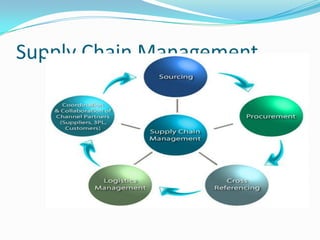
Supply Chain Management
E- Marketing
Enticing web surfers to your site and, once there, to entice
 them into becoming a customer.
E- Marketing Priorities
 We divide web site marketing into three primary
  divisions:
    Enticing visitors (non-customers) to come to the site
    Converting visitors (non-customers) into customers
    Site Effectiveness
 The benefits of E-Marketing include:
    Speed
    Ease and Efficiency
    Low Cost
    Targeted
Customer Relationship
 Management
 Customer relationship management (CRM) is a
  widely implemented model for managing a company’s
  interactions with customers, clients, and sales
  prospects. It involves using technology to organize,
  automate, and synchronize business processes—
  principally sales activities, but also those
  for    marketing, customer service, and technical
  support..
 Benefits of Customer Relationship Management
    Quality and efficiency
    Decrease in overall costs
    Increase Profitability
Change Management
 It is an approach to shifting individuals, teams and
  organizations from current state to a desired future
  state.
Analysis and Design: M-
  commerce
 Imagine for a moment that you owned a small corner
  store. As a conventional retailer, your potential market
  would extend to your immediate geographic region.
 Now imagine some technology became available that
  would open up your reach to a much larger audience.
 The mobile industry today is rapidly growing because
  of its design , functionality and its services to the
  consumer.
Management of M-commerce
Services
 The emerging issues in mobile commerce is the
  emerging wireless LANs and 3G/4G wireless networks,
  personalized content management, implementation
  challenges in m-commerce, futuristic m-commerce
  services

E commerce ex

  • 2.
     This videois presented by USEP's BSCS student Renato P. Arante under Mr. ND Arquillano as a partial fulfillment for Elective 4 -E-Commerce :  Introduction to e-business and e-commerce  E-commerce Fundamentals  E-business Infrastructure  E-environment  Supply Chain Management  E-marketing  Customer relationship Management  Change Management  Analysis and Design: M-commerce  Management of Mobile commerce services
  • 3.
    Introduction to E-Businessand E- commerce  The buying and selling products through the use of internet.  An electronically mediated financial transactions between organizations and customers.
  • 4.
    E-commerce Fundamentals user experience.  It can be argued that everything else is secondary.  Solid ‘on-site search’ functionality  You need good-quality metadata to make it work properly.  Well-defined information architecture  Studies have shown that most people are ‘cognitive misers’. In plain English: people don’t like to think. Keep this in mind when wireframing your site.
  • 5.
    E-Business Infrastructure  Thearchitecture of hardware, software, content and data used to deliver e-business services to employees, customers as well as partners
  • 6.
    E- Environment  RiskFactors of E-Commerce Environment  Risk  The overarching risk to any business doing online transactions is not having an overall E-commerce strategy, especially when it comes to the compliance requirements of which a merchant may or may not fully understand or even be aware.  Availability  lack of which is a big risk to an E-commerce
  • 7.
     Performance  . Network utilization—as the single weakest link can cause the entire environment to respond poorly.  Scalability  Scalability for an E-commerce site or environment could mean different things to different merchants.  Security  Vital issue for both users. Viewed as the safety for both users vital information
  • 8.
  • 9.
    E- Marketing Enticing websurfers to your site and, once there, to entice them into becoming a customer.
  • 10.
    E- Marketing Priorities We divide web site marketing into three primary divisions:  Enticing visitors (non-customers) to come to the site  Converting visitors (non-customers) into customers  Site Effectiveness
  • 11.
     The benefitsof E-Marketing include:  Speed  Ease and Efficiency  Low Cost  Targeted
  • 12.
    Customer Relationship Management Customer relationship management (CRM) is a widely implemented model for managing a company’s interactions with customers, clients, and sales prospects. It involves using technology to organize, automate, and synchronize business processes— principally sales activities, but also those for marketing, customer service, and technical support..
  • 13.
     Benefits ofCustomer Relationship Management  Quality and efficiency  Decrease in overall costs  Increase Profitability
  • 14.
    Change Management  Itis an approach to shifting individuals, teams and organizations from current state to a desired future state.
  • 15.
    Analysis and Design:M- commerce  Imagine for a moment that you owned a small corner store. As a conventional retailer, your potential market would extend to your immediate geographic region.  Now imagine some technology became available that would open up your reach to a much larger audience.  The mobile industry today is rapidly growing because of its design , functionality and its services to the consumer.
  • 16.
    Management of M-commerce Services The emerging issues in mobile commerce is the emerging wireless LANs and 3G/4G wireless networks, personalized content management, implementation challenges in m-commerce, futuristic m-commerce services