Introduction to Drug Utilization Research 2003
                                                                                            Introduction to Drug
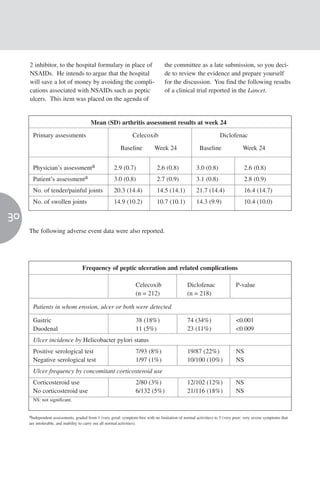
                                                                                            Utilization Research


Tittel: Introduction to Drug Utilization
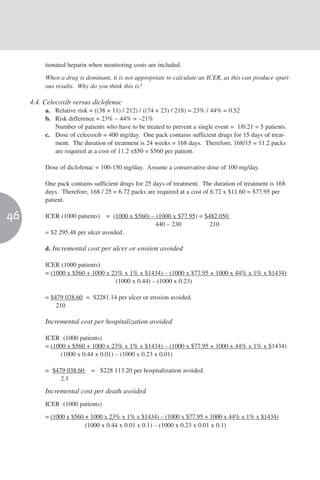
Research
Opplag: 2 500
Design: Grete Søimer
Foto: Photo Alto/Laurent Hamels
Trykk: Nordberg Aksidenstrykkeri AS


ISBN 82-8082-039-6
IN 0000-2069
                                                                                            2003
Introduction to
Drug Utilization Research


World Health Organization

WHO International Working Group for Drug Statistics Methodology

WHO Collaborating Centre for Drug Statistics Methodology

WHO Collaborating Centre for Drug Utilization Research and Clinical

Pharmacological Services
WHO Library Cataloguing-in-Publication Data

    Introduction to drug utilization research / WHO International Working Group for Drug
    Statistics Methodology, WHO Collaborating Centre for Drug Statistics Methodology,
    WHO Collaborating Centre for Drug Utilization Research and Clinical Pharmacological
    Services.

    1. Drug utilization 2. Research 3. Manuals I.WHO International Working Group for
    Drug Statistics Methodology II.WHO Collaborating Centre for Drug
    Statistics Methodology III.WHO Collaborating Centre for Drug Utilization Research
    and Clinical Pharmacological Services

       ISBN 92 4 156234 X                                  (NLM classification: WB 330)


2


    © World Health Organization 2003
    All rights reserved. Publications of the World Health Organization can be obtained
    from Marketing and Dissemination, World Health Organization, 20 Avenue Appia,
    1211 Geneva 27, Switzerland (tel: +41 22 791 2476; fax: +41 22 791 4857;
    email: bookorders@who.int). Requests for permission to reproduce or translate WHO
    publications – whether for sale or for noncommercial distribution – should be addressed
    to Publications, at the above address (fax: +41 22 791 4806; email:
    permissions@who.int).
    The designations employed and the presentation of the material in this publication do not
    imply the expression of any opinion whatsoever on the part of the World Health
    Organization concerning the legal status of any country, territory, city or area or of its
    authorities, or concerning the delimitation of its frontiers or boundaries. Dotted lines on
    maps represent approximate border lines for which there may not yet be full agreement.

    The mention of specific companies or of certain manufacturers’ products does not imply
    that they are endorsed or recommended by the World Health Organization in preference to
    others of a similar nature that are not mentioned. Errors and omissions excepted, the names
    of proprietary products are distinguished by initial capital letters.

    The World Health Organization does not warrant that the information contained in this
    publication is complete and correct and shall not be liable for any damages incurred as a
    result of its use.

    Printed in Oslo, Norway, 2003
3
Contents


Preface: Drug utilization research - the early work ...........................................................................6

Chapter 1: What is drug utilization research and why is it needed? ...............................................8
  1.1 Definition and domains............................................................................................................8
  1.2 Why drug utilization research? ................................................................................................9
        1.2.1 Description of drug use patterns ....................................................................................9
        1.2.2 Early signals of irrational use of drugs .......................................................................10
        1.2.3 Interventions to improve drug use - follow-up ............................................................10
        1.2.4 Quality control of drug use...........................................................................................10
  1.3 Drug utilization studies and drug policy decisions................................................................11
  1.4 General reading ......................................................................................................................12

Chapter 2: Types of drug use information ........................................................................................13
  2.1 Drug-based information .........................................................................................................13
        2.1.1 Level of drug use aggregation .....................................................................................13
        2.1.2 Indication .....................................................................................................................13
        2.1.3 Prescribed daily doses .................................................................................................14
  2.2 Problem or encounter-based information ..............................................................................15
  2.3 Patient information.................................................................................................................16
  2.4 Prescriber information ...........................................................................................................16
  2.5 Types of drug utilization study ..............................................................................................17
  2.6 Drug costs ..............................................................................................................................17
  2.7 General reading ......................................................................................................................18
  2.8 Exercises ................................................................................................................................19

Chapter 3: Sources of data on drug utilization ................................................................................20
  3.1 Large databases ......................................................................................................................20
  3.2 Data from drug regulatory agencies ......................................................................................20
  3.3 Supplier (distribution) data ....................................................................................................20
  3.4 Practice setting data ...............................................................................................................21
        3.4.1 Prescribing data ............................................................................................................21
        3.4.2 Dispensing data ............................................................................................................22
        3.4.3 Aggregate data .............................................................................................................22
        3.4.4 Over-the-counter and pharmacist-prescribed drugs ....................................................22
        3.4.5 Telephone and Internet prescribing .............................................................................22
  3.5 Community setting data .........................................................................................................23
  3.6 Drug use evaluation ...............................................................................................................23
  3.7 General reading ......................................................................................................................24
  3.8 Exercises ................................................................................................................................24

Chapter 4: Economic aspects of drug use (pharmacoeconomy) ....................................................26
  4.1 Introduction ............................................................................................................................26
  4.2 Cost-minimization analysis....................................................................................................26
  4.3 Cost-effectiveness analysis ....................................................................................................26
  4.4 Cost-utility analysis ...............................................................................................................27
  4.5 Cost-benefit analysis ..............................................................................................................27
  4.6 General reading ......................................................................................................................28
  4.7 Exercises ................................................................................................................................28
Chapter 5: Drug classification systems..............................................................................................33
  5.1 Different classification systems .............................................................................................33
  5.2 The ATC classification system...............................................................................................33
  5.3 Ambivalence towards an international classification system ................................................35
  5.4 Implementation of the ATC/DDD methodology ...................................................................36
  5.5 General reading ......................................................................................................................36
  5.6 Exercises ................................................................................................................................37

Chapter 6: Drug utilization metrics and their applications ............................................................38
  6.1 The concept of the defined daily dose (DDD).......................................................................38
  6.2 Prescribed daily dose and consumed daily dose....................................................................39
  6.3 Other units for presentation of volume..................................................................................39
  6.4 Cost ......................................................................................................................................39
  6.5 General reading .....................................................................................................................40
  6.6 Exercises ...............................................................................................................................41

Chapter 7: Solutions to the exercises .................................................................................................74

Acknowledgements...............................................................................................................................84
Preface:
    Drug utilization research - the early work

    The development of drug utilization research              became clear that we need to know the answers
    was sparked by initiatives taken in Northern              to the following questions:
    Europe and the United Kingdom in the mid-                 • why drugs are prescribed;
    1960s (1, 2). The pioneering work of Arthur               • who the prescribers are;
    Engel in Sweden and Pieter Siderius in Holland            • for whom the prescribers prescribe;
    (3) alerted many investigators to the importance          • whether patients take their medicines correctly;
    of comparing drug use between different count-            • what the benefits and risks of the drugs are.
    ries and regions. Their demonstration of the
    remarkable differences in the sales of antibiotics        The ultimate goal of drug utilization research
    in six European countries between 1966 and                must be to assess whether drug therapy is rational
    1967 inspired WHO to organize its first meeting           or not. To reach this goal, methods for auditing
    on «Drug consumption» in Oslo in 1969 (4).                drug therapy towards rationality are necessary.
    This led to the constitution of the WHO                      The early work did not permit detailed compa-
    European Drug Utilization Research Group                  risons of the drug utilization data obtained from
    (DURG).                                                   different countries because the source and form
       The pioneers of this research understood that a        of the information varied between them. To
    correct interpretation of data on drug utilization        overcome this difficulty, researchers in Northern
    requires investigations at the patient level. It          Ireland (United Kingdom), Norway and Sweden
6


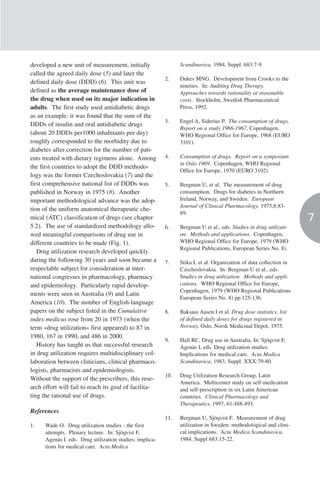
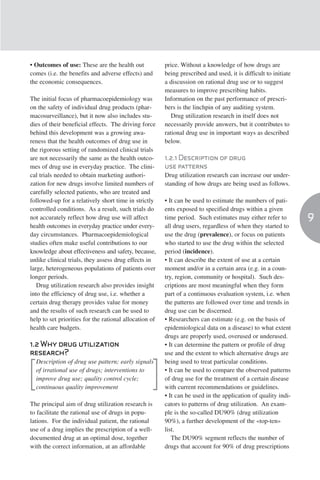
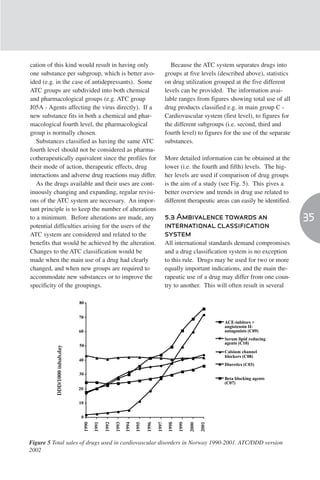
    Figure 1 Utilization of insulin and oral antidiabetic drugs in seven European countries from 1971-1980 expressed
    in defined daily doses (DDDs) per 1000 inhabitants per day. For comparison the prescribed daily doses (PDD)
    per 1000 inhabitants per day of oral antidiabetic drugs are given for Northern Ireland (UK) and Sweden for 1980
    (indicated with an asterisk).
developed a new unit of measurement, initially                  Scandinavica, 1984, Suppl. 683:7-9.
called the agreed daily dose (5) and later the
                                                          2.    Dukes MNG. Development from Crooks to the
defined daily dose (DDD) (6). This unit was
                                                                nineties. In: Auditing Drug Therapy.
defined as the average maintenance dose of                      Approaches towards rationality at reasonable
the drug when used on its major indication in                   costs. Stockholm, Swedish Pharmaceutical
adults. The first study used antidiabetic drugs                 Press, 1992.
as an example: it was found that the sum of the
                                                          3.    Engel A, Siderius P. The consumption of drugs.
DDDs of insulin and oral antidiabetic drugs
                                                                Report on a study 1966-1967. Copenhagen,
(about 20 DDDs per1000 inhabitants per day)                     WHO Regional Office for Europe, 1968 (EURO
roughly corresponded to the morbidity due to                    3101).
diabetes after correction for the number of pati-
ents treated with dietary regimens alone. Among           4.    Consumption of drugs. Report on a symposium
                                                                in Oslo 1969. Copenhagen, WHO Regional
the first countries to adopt the DDD methodo-
                                                                Office for Europe, 1970 (EURO 3102).
logy was the former Czechoslovakia (7) and the
first comprehensive national list of DDDs was             5.    Bergman U, et al. The measurement of drug
published in Norway in 1975 (8). Another                        consumption. Drugs for diabetes in Northern
important methodological advance was the adop-                  Ireland, Norway, and Sweden. European
                                                                Journal of Clinical Pharmacology, 1975,8:83-
tion of the uniform anatomical therapeutic che-
                                                                89.
mical (ATC) classification of drugs (see chapter                                                                    7
5.2). The use of standardized methodology allo-           6.    Bergman U et al., eds. Studies in drug utilizati-
wed meaningful comparisons of drug use in                       on. Methods and applications. Copenhagen,
different countries to be made (Fig. 1).                        WHO Regional Office for Europe, 1979 (WHO
                                                                Regional Publications, European Series No. 8).
   Drug utilization research developed quickly
during the following 30 years and soon became a           7.    Stika L et al. Organization of data collection in
respectable subject for consideration at inter-                 Czechoslovakia. In: Bergman U et al., eds.
national congresses in pharmacology, pharmacy                   Studies in drug utilization. Methods and appli-
and epidemiology. Particularly rapid develop-                   cations. WHO Regional Office for Europe,
                                                                Copenhagen, 1979 (WHO Regional Publications
ments were seen in Australia (9) and Latin
                                                                European Series No. 8) pp.125-136.
America (10). The number of English-language
papers on the subject listed in the Cumulative            8.    Baksaas Aasen I et al. Drug dose statistics, list
index medicus rose from 20 in 1973 (when the                    of defined daily doses for drugs registered in
term «drug utilization« first appeared) to 87 in                Norway. Oslo, Norsk Medicinal Depot, 1975.
1980, 167 in 1990, and 486 in 2000.
                                                          9.    Hall RC. Drug use in Australia. In: Sjöqvist F,
   History has taught us that successful research               Agenäs I, eds. Drug utilization studies:
in drug utilization requires multidisciplinary col-             Implications for medical care. Acta Medica
laboration between clinicians, clinical pharmaco-               Scandinavica, 1983, Suppl. XXX:79-80.
logists, pharmacists and epidemiologists.
                                                          10.   Drug Utilization Research Group, Latin
Without the support of the prescribers, this rese-
                                                                America. Multicenter study on self-medication
arch effort will fail to reach its goal of facilita-            and self-prescription in six Latin American
ting the rational use of drugs.                                 countries. Clinical Pharmacology and
                                                                Therapeutics, 1997, 61:488-493.
References
                                                          11.   Bergman U, Sjöqvist F. Measurement of drug
1.    Wade O. Drug utilization studies - the first              utilization in Sweden: methodological and clini-
      attempts. Plenary lecture. In: Sjöqvist F,                cal implications. Acta Medica Scandinavica,
      Agenäs I. eds. Drug utilization studies: implica-         1984, Suppl 683:15-22.
      tions for medical care. Acta Medica
Chapter 1: What is drug utilization research
    and why is it needed?

    1.1. Definition and domains                                                    not. Sophisticated utilization-oriented pharma-
                                                                                   coepidemiology may focus on the drug (e.g.
        Drug utilization; pharmacoepidemiology;                                    dose-effect and concentration-effect relationships),
    [   pharmacosurveillance; pharmacovigilance                           ]        the prescriber (e.g. quality indices of the prescrip-
                                                                                   tion), or the patient (e.g. selection of drug and
    • Drug utilization research was defined by                                     dose, and comparisons of kidney function, drug
    WHO in 1977 as «the marketing, distribution,                                   metabolic phenotype/genotype, age, etc.).
    prescription, and use of drugs in a society, with                                 Drug utilization research is thus an essential
    special emphasis on the resulting medical, social                              part of pharmacoepidemiology as it describes the
    and economic consequences». Since then, a                                      extent, nature and determinants of drug exposure.
    number of other terms have come into use and it                                Over time, the distinction between these two
    is important to understand the interrelationships                              terms has become less sharp, and they are some-
    of the different domains.                                                      times used interchangeably. However, while
    • Epidemiology has been defined as «the study                                  drug utilization studies often employ various
    of the distribution and determinants of health-                                sources of information that focus on drugs (e.g.
    related states and events in the population, and                               aggregate data from wholesale and prescription
    the application of this study to control of health                             registers) the term epidemiology implies defined
    problems».                                                                     populations in which drug use can be expressed
8   • Pharmacoepidemiology applies epidemiologi-                                   in terms of incidence and prevalence (see
    cal methods to studies of the clinical use of                                  chapter 1.2.1).
    drugs in populations. A modern definition of                                      Together, drug utilization research and pharma-
    pharmacoepidemiology is: «the study of the use                                 coepidemiology may provide insights into the fol-
    and effects/side-effects of drugs in large numbers                             lowing aspects of drug use and drug prescribing.
    of people with the purpose of supporting the
    rational and cost-effective use of drugs in the                                • Pattern of use: This covers the extent and pro-
    population thereby improving health outcomes».                                 files of drug use and the trends in drug use and
    • Pharmacosurveillance and pharmacovigi-                                       costs over time.
    lance are terms used to refer to the monitoring                                • Quality of use: This is determined using audits
    of drug safety, for example, by means of spon-                                 to compare actual use to national prescription
    taneous adverse-effect reporting systems, case-                                guidelines or local drug formularies.1 Indices of
    control and cohort studies.                                                    quality of drug use may include the choice of
                                                                                   drug (compliance with recommended assort-
    Pharmacoepidemiology may be drug-oriented,                                     ment), drug cost (compliance with budgetary
    emphasizing the safety and effectiveness of indi-                              recommendations), drug dosage (awareness of
    vidual drugs or groups of drugs, or utilization-                               inter-individual variations in dose requirements
    oriented aiming to improve the quality of drug                                 and age-dependence), awareness of drug inter-
    therapy through pedagogic (educational) inter-                                 actions and adverse drug reactions, and the pro-
    vention. Drug utilization research may also be                                 portion of patients who are aware of or unaware
    divided into descriptive and analytical studies.                               of the costs and benefits of the treatment.
    The emphasis of the former has been to describe                                • Determinants of use: These include user cha-
    patterns of drug utilization and to identify pro-                              racteristics (e.g. sociodemographic parameters
    blems deserving more detailed studies.                                         and attitudes towards drugs), prescriber characte-
    Analytical studies try to link data on drug utili-                             ristics (e.g. speciality, education and factors
    zation to figures on morbidity, outcome of treat-                              influencing therapeutic decisions) and drug cha-
    ment and quality of care with the ultimate goal                                racteristics (e.g. therapeutic properties and affor-
    of assessing whether drug therapy is rational or                               dability).
    1 An audit in drug use was defined by Crooks (1979) as an examination of the way in which drugs are used in clinical practice carried out at intervals
    frequent enough to maintain a generally accepted standard of prescribing.
• Outcomes of use: These are the health out             price. Without a knowledge of how drugs are
comes (i.e. the benefits and adverse effects) and       being prescribed and used, it is difficult to initiate
the economic consequences.                              a discussion on rational drug use or to suggest
                                                        measures to improve prescribing habits.
The initial focus of pharmacoepidemiology was           Information on the past performance of prescri-
on the safety of individual drug products (phar-        bers is the linchpin of any auditing system.
macosurveillance), but it now also includes stu-           Drug utilization research in itself does not
dies of their beneficial effects. The driving force     necessarily provide answers, but it contributes to
behind this development was a growing awa-              rational drug use in important ways as described
reness that the health outcomes of drug use in          below.
the rigorous setting of randomized clinical trials
are not necessarily the same as the health outco-       1.2.1 Description of drug
mes of drug use in everyday practice. The clini-        use patterns
cal trials needed to obtain marketing authori-          Drug utilization research can increase our under-
zation for new drugs involve limited numbers of         standing of how drugs are being used as follows.
carefully selected patients, who are treated and
followed-up for a relatively short time in strictly     • It can be used to estimate the numbers of pati-
controlled conditions. As a result, such trials do      ents exposed to specified drugs within a given
not accurately reflect how drug use will affect         time period. Such estimates may either refer to          9
health outcomes in everyday practice under every-       all drug users, regardless of when they started to
day circumstances. Pharmacoepidemiological              use the drug (prevalence), or focus on patients
studies often make useful contributions to our          who started to use the drug within the selected
knowledge about effectiveness and safety, because,      period (incidence).
unlike clinical trials, they assess drug effects in     • It can describe the extent of use at a certain
large, heterogeneous populations of patients over       moment and/or in a certain area (e.g. in a coun-
longer periods.                                         try, region, community or hospital). Such des-
   Drug utilization research also provides insight      criptions are most meaningful when they form
into the efficiency of drug use, i.e. whether a         part of a continuous evaluation system, i.e. when
certain drug therapy provides value for money           the patterns are followed over time and trends in
and the results of such research can be used to         drug use can be discerned.
help to set priorities for the rational allocation of   • Researchers can estimate (e.g. on the basis of
health care budgets.                                    epidemiological data on a disease) to what extent
                                                        drugs are properly used, overused or underused.
1.2 Why drug utilization                                • It can determine the pattern or profile of drug
research?                                               use and the extent to which alternative drugs are
  Description of drug use pattern; early signals        being used to treat particular conditions.
  of irrational use of drugs; interventions to          • It can be used to compare the observed patterns
  improve drug use; quality control cycle;              of drug use for the treatment of a certain disease
  continuous quality improvement                        with current recommendations or guidelines.
                                                        • It can be used in the application of quality indi-
The principal aim of drug utilization research is       cators to patterns of drug utilization. An exam-
to facilitate the rational use of drugs in popu-        ple is the so-called DU90% (drug utilization
lations. For the individual patient, the rational       90%), a further development of the «top-ten»
use of a drug implies the prescription of a well-       list.
documented drug at an optimal dose, together               The DU90% segment reflects the number of
with the correct information, at an affordable          drugs that account for 90% of drug prescriptions
and the adherence to local or national prescrip-     mal practice, whether pedagogic interventions
     tion guidelines in this segment. This general        (education) are required or whether the guide-
     indicator can be applied at different levels (e.g.   lines should be reviewed in the light of actual
     individual prescriber, group of prescribers, hos-    practice. These hypotheses should apply to both
     pitals, region or county) to obtain a rough esti-    under use and over use of drugs.
     mate of the quality of prescribing.
     • Drug utilization data can be fed back to pre-      1.2.3 Interventions to improve
     scribers. This is particularly useful when the       drug use - follow-up
     drug prescribing by a particular individual can      Drug utilization research undertaken in the follo-
     be compared with some form of «gold standard»        wing ways may enable us to assess whether
     or best practice, and with the average prescrip-     interventions intended to improve drug use have
     tions in the relevant country, region or area.       had the desired impact.
     • The number of case reports about a drug pro-       • The effects of measures taken to ameliorate
     blem or adverse effects can be related to the        undesirable patterns of drug use (e.g. provision
     number of patients exposed to the drug to assess     of regional or local formularies, information
     the potential magnitude of the problem. If it is     campaigns and regulatory policies) should be
     possible to detect that the reaction is more com-    monitored and evaluated. The researchers
     mon in a certain age group, in certain conditions    should bear in mind that prescribers may have
10   or at a given dose level, improving the informa-     switched to other drugs that are equally undesi-
     tion on indications, contraindications and           rable. These potential alternative drugs should
     appropriate dosages may be sufficient to ensure      be included in the survey to assess the full
     safer use and avoid withdrawal of the drug from      impact of the measure.
     the market.                                          • The impact of regulatory changes or changes
                                                          in insurance or reimbursement systems should
     1.2.2 Early signals of irrational use                be assessed using a broad survey. This is neces-
     of drugs                                             sary because the total cost to society may remain
     Drug utilization research may generate hypothe-      the same or may even increase if more expen-
     ses that set the agenda for further investigations   sive drugs are used as alternatives.
     as outlined below, and thus avoid prolonged irra-    • The extent to which the promotional activities
     tional use of drugs.                                 of the pharmaceutical industry and the educatio-
     • Drug utilization patterns and costs between        nal activities of the society affect the patterns of
     different regions or at different times may be       drug use should be assessed.
     compared. Hypotheses can be generated to form
     the basis for investigations of the reasons for,     1.2.4 Quality control of drug use
     and health implications of, the differences          Drug use should be controlled according to a
     found. Geographical differences and changes in       quality control cycle that offers a systematic
     drug use over time may have medical, social and      framework for continuous quality improve-
     economic implications both for the individual        ment. The components of such a cycle are illu-
     patient and for society, and should therefore be     strated on the next page.
     identified, explained and, when necessary cor-
     rected.                                              After step 4, the cycle begins again with new
     • The observed patterns of drug use can be com-      analyses, the setting of new targets, and so on.
     pared with the current recommendations and             The quality control cycle can be applied at
     guidelines for the treatment of a certain disease.   many levels, ranging from local or regional dis-
     Hypotheses can then be generated to determine        cussion groups consisting of physicians, clinical
     whether discrepancies represent less than opti-      pharmacologists or pharmacists to national and
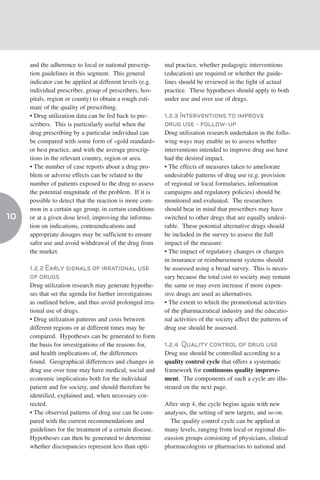
Step 1. Plan. Analyse current situation to               Step 2. Do. Implement the plan on a small
 establish a plan for improvment (e.g. analyse            scale (e.g. provide feedback on possible
 current prescription patterns of individual              overuse, underuse or drug misuse of
 prescribers, groups of prescribers, or health            individual drugs or therapeutic groups).
 facilities).


 Step 4. Act Revise plan or implement plan                Step 3. Check Check to see if expected
 on large scale (e.g. guide national imple-               results are obtained (e.g. evaluate whether
 mentation of plan).                                      prescription patterns really improve).

international initiatives. An important technique     and validated from 1992-1994. Since then,
that can be used in conjunction with this cycle       annual reviews of drug utilization have been
is benchmarking. By comparing drug utiliza-           used to provide background information for
tion data from different localities, it is often      decisions on regulatory and reimbursement poli-
possible to detect substantial differences that       cies in Estonia; two examples are described
require further evaluation, which may then lead       below.
to the identification and promotion of best prac-        If physicians have high rates of inappropriate
tice. Such comparisons will be accurate and           prescribing, drug regulatory authorities can          11
truthful provided that the data are collected and     require educational intervention or impose
aggregated in a standardized, uniform way (see        restrictions on specific drugs or on practitioners.
chapter 5).                                           In Estonia, it was decided to stop the import and
                                                      use of some hazardous products, such as phena-
1.3 Drug utilization studies and                      cetine, older sulphonamides and pyrazolones,
drug policy decisions                                 after clarifying and explaining the reasons for
Many of the questions asked in drug utilization       this in the national Drug information bulletin,
research and the answers obtained are important       which is distributed free by the drug regulatory
for initiating and modifying a rational drug poli-    authority to all prescribers in Estonia.
cy at both national and local levels. Two suc-           In planning the reimbursement policies, the
cessful examples of the use of such research are      total volume of drug use in DDDs was monito-
given below.                                          red carefully. During the 1990s, the use of pre-
                                                      scription-only medicines measured as number of
Drug use in Estonia                                   DDDs per capita was less than one third of that
An important reason for undertaking studies of        reported from the Nordic countries. This proved
drug use in Estonia after its independence was        to be the result of under-treatment of certain
the need to make decisions on drug policy. At         chronic diseases (i.e. hypertension and schizo-
the time, no information was available in the         phrenia), and therefore the decision was to incre-
country on which drugs were used (sold), or on        ase the availability and use of cardiovascular and
the quantities and there was therefore no rationale   neuroleptic drugs. Thus, the national drug use
for regulating the drug market. Moreover, in the      surveys in Estonia have been used to monitor the
absence of any feedback system it was impos-          impact of drug regulatory activities as well as to
sible to gauge the impact of possible future          follow the increase in drug expenditure.
interventions. A national drug classification         Because data on drug use are only part of the
system was therefore developed for Estonia, and       background material relevant to the discussions
a reporting system from wholesalers, based on         and decisions on therapeutic strategies - at both
this classification, was implemented, checked         the local and national levels - it is difficult to
evaluate the specific influence of drug utilization                     rent social-class districts in the catchment areas
     research on developments in drug policies. It is,                       of 11 health centres.1
     however, reasonable to assume that such studies
     have contributed to a more rational use of drugs                        1.4 General reading
     in Estonia.1                                                            Bergman U et al. Drug utilization 90% - a sim-
                                                                             ple method for assessing the quality of drug pre-
     Drug use in Latin America                                               scribing. European Journal of Clinical
     The second example is the successful work within                        Pharmacology, 1998, 54:113-118.
     the Latin American DURG, in association with                               Crooks J. Methods of audit in drug use. In:
     the WHO Collaborating Centre of Pharmaco-                               Duchene-Marulla ZP, ed. Advances in pharma-
     epidemiology in Barcelona, Spain.                                       cology and therapeutics. Proceedings of 7th
       In September 1991, health professionals from                          International Congress of Pharmacology, Paris,
     Spain and eight Latin American countries met in                         1978. Oxford, Pergamon Press, 1979:189-195.
     Barcelona for the «First Meeting of Latin                                  Diogène E et al. The Cuban experience in
     American Groups for Drug Epidemiology». It                              focusing pharmaceuticals policy to health popu-
     was made clear that in most of the countries                            lation needs: initial results of the National
     taking part, data on drug utilization were scarce                       Pharmacoepidemiology Network (1996-2001).
     and fragmentary. Some national drug regulatory                          European Journal of Clinical Pharmacology,
12   authorities had no access to either quantitative or                     2002, in press.
     qualitative data on drug consumption and reali-                            Drug Utilization Research Group, Latin
     zed that information on patterns of drug utili-                         America. Multicenter study on self-medication
     zation would be useful for designing drug policy                        and self-prescription in six Latin American
     and educational programmes about drugs.                                 countries. Clinical Pharmacology and
       It was agreed at this meeting to set up a Latin                       Therapeutics, 1997, 61:488-493.
     American network (later called DURG-LA),                                   Dukes MNG, ed. Drug Utilization Studies:
     with the following aims:                                                Methods and Uses. Copenhagen, WHO Regional
     – to promote drug utilization research in Latin                         Office for Europe, 1993 (WHO Regional
       American countries;                                                   Publications European Series No. 45)
     – to exchange experiences and information                                  Einarson TR, Bergman U, Wiholm BE.
       between the participating groups;                                     Principles and practice of pharmacoepidemiolo-
     – to use the knowledge generated to give techni-                        gy. In: Avery’s Drug Treatment, 4th ed. Adis
       cal advice to drug regulatory authorities and to                      International:371-392.
       guide teaching of pharmacology;                                          Figueras A et al. Health need, drug registration
     – to write and disseminate information aimed at                         and control in less developed countries - the
       improving drug use, and                                               Peruvian case. Pharmacoepidemiology and Drug
     – to participate in the training of health pro-                         Safety, 2001, 10:1-2.
       fessionals in pharmacoepidemiology and thera-                            Laporte JR, Porta M, Capella D. Drug utiliza-
       peutics.                                                              tion studies: a tool for determining the effecti-
                                                                             veness of drug use. British Journal of Clinical
     Seven further DURG-LA meetings have been                                Pharmacology, 1983, 16:301-304.
     held over the subsequent ten years to promote                              McGavock H. Handbook of drug use research
     drug utilization research. Part of the initial core                     methodology 1st ed. Newcastle upon Tyne,
     group participated in a first multicentre study in                      United Kingdom Drug Utilization Research
     six Latin American countries to examine self-                           Group, 2000.
     medication and self-prescription. The study was                            Strom BL. Pharmacoepidemiology, 3rd ed.
     carried out in a sample of pharmacies from diffe-                       New York, J Wiley, 2000.
     1 The information about DURG-LA was provided in a personal communication by Dr Albert Figueras and Professor Joan-Ramon Laporte,
       Barcelona, Spain.
Chapter 2: Types of drug use information


Different types of drug use information are           2.1.2 Indication
required depending on the problem being exami-        For drugs with multiple indications, it will usually
ned. These include information about the overall      be important to divide data on use according to
use of drugs, drug groups, individual generic         indication to allow a correct interpretation of the
compounds or specific products. Often, infor-         overall trends. An example is the relative use of
mation about the condition being treated, the         drug groups in treating hypertension. The over-
patient and the prescriber is also required. In       all data might suggest that the relative use of
addition, data on drug costs will be important in     diuretics is comparable to that of ACE inhibitors
ensuring that drugs are used efficiently and eco-     and higher than the use of calcium channel bloc-
nomically. These types of drug information are        kers (column A in Table 1). However, analysis
described in detail below, together with exam-        of the data according to indication may reveal
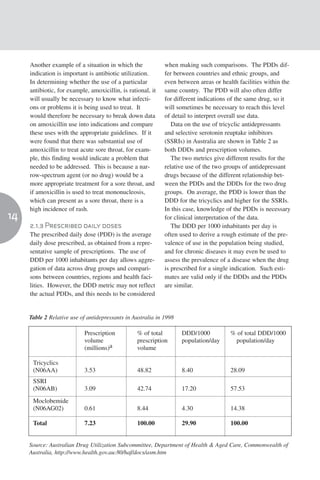
ples to illustrate the ways in which the informa-     that 75% of ACE inhibitors are used to treat
tion can be used to promote the rational use of       hypertension whereas only 43% of diuretics are
drugs.                                                used for this indication (most of the high-ceiling
                                                      diuretics used are for treating heart failure). The
2.1 Drug-based information                            picture that emerges of the use of the two drug
Knowledge of the trends in total drug use may         groups in the treatment of heart failure is mar-
be useful, but more detailed information invol-       kedly altered when use according to indication is
ving aggregation of data on drug use at various       taken into account (column B of Table 1).                          13
levels, and information on indications, doses and
dosage regimens is usually necessary to answer
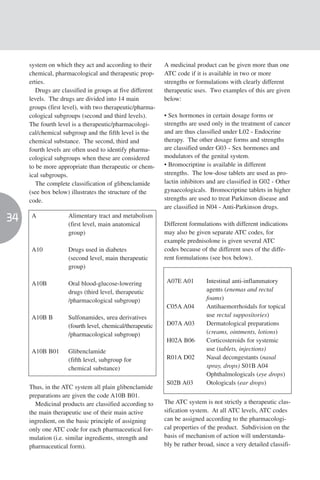
                                                      Table 1 Relative use of drug groups in the treatment
clinically important questions.                       of hypertension in Australia in 1998a

2.1.1 Level of drug use aggregation
                                                        Drug group                       Ab         Bc       Cd
The level at which data on drug use are aggrega-
ted will depend on the question being asked.            ACE inhibitors (C09A)            31.80      36.6     34.8
For example, the question might concern the             Calcium channel blockers
relative use of drug groups in the treatment of         (C08C)                           24.50      28       26.7
hypertension. It would then be appropriate to           Diuretics (C03)                  29.60      19.4     15.9
aggregate data on diuretics, beta-blockers and          Beta-blockers
angiotensin-converting enzyme (ACE) inhibitors,
                                                        (C07AA, C07AB)                   11.20      11.5     15.7
etc. If, however, the question concerns the rela-
tive use of beta-blockers in hypertension, data at      ATII antagonists
the substance (generic drug) level would be nee-        (C09CA)                          3.00       4.6      6.9
ded. Information on the relative scale of use of
individual products will sometimes be required,
for example to find the market leader or to           Source: Australian Drug Utilization
assess the relative use of generic versus branded     Subcommittee and BEACH Survey April-
or innovator products. Information down to the        December 1998, Sydney University, GPSCU
level of dose strength will be necessary, for         1999.
example, to determine whether there is a trend
                                                      a Values are the use of the drug group expressed as a percenta
towards use of higher strengths of antibiotics, or
                                                        ge of the total use for these drug groups.
to determine the relative use of strengths of anti-   b Based on total use.
depressants to assess whether they are being          c Adjusted for the percentage of total use of each group for the
used at effective doses.                                treatment of hypertension.
                                                      d Relative prescribing of these drug groups in hypertension
                                                       community practice patient encounters.
Another example of a situation in which the             when making such comparisons. The PDDs dif-
     indication is important is antibiotic utilization.      fer between countries and ethnic groups, and
     In determining whether the use of a particular          even between areas or health facilities within the
     antibiotic, for example, amoxicillin, is rational, it   same country. The PDD will also often differ
     will usually be necessary to know what infecti-         for different indications of the same drug, so it
     ons or problems it is being used to treat. It           will sometimes be necessary to reach this level
     would therefore be necessary to break down data         of detail to interpret overall use data.
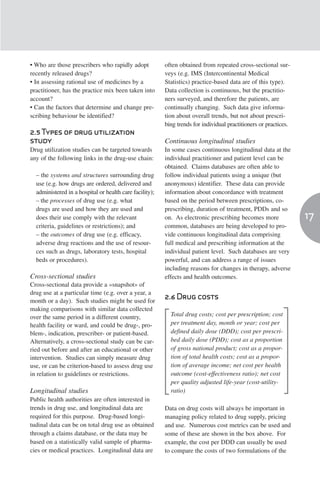
     on amoxicillin use into indications and compare            Data on the use of tricyclic antidepressants
     these uses with the appropriate guidelines. If it       and selective serotonin reuptake inhibitors
     were found that there was substantial use of            (SSRIs) in Australia are shown in Table 2 as
     amoxicillin to treat acute sore throat, for exam-       both DDDs and prescription volumes.
     ple, this finding would indicate a problem that            The two metrics give different results for the
     needed to be addressed. This is because a nar-          relative use of the two groups of antidepressant
     row-spectrum agent (or no drug) would be a              drugs because of the different relationship bet-
     more appropriate treatment for a sore throat, and       ween the PDDs and the DDDs for the two drug
     if amoxicillin is used to treat mononucleosis,          groups. On average, the PDD is lower than the
     which can present as a sore throat, there is a          DDD for the tricyclics and higher for the SSRIs.
     high incidence of rash.                                 In this case, knowledge of the PDDs is necessary
14                                                           for clinical interpretation of the data.
     2.1.3 Prescribed daily doses                               The DDD per 1000 inhabitants per day is
     The prescribed daily dose (PDD) is the average          often used to derive a rough estimate of the pre-
     daily dose prescribed, as obtained from a repre-        valence of use in the population being studied,
     sentative sample of prescriptions. The use of           and for chronic diseases it may even be used to
     DDD per 1000 inhabitants per day allows aggre-          assess the prevalence of a disease when the drug
     gation of data across drug groups and compari-          is prescribed for a single indication. Such esti-
     sons between countries, regions and health faci-        mates are valid only if the DDDs and the PDDs
     lities. However, the DDD metric may not reflect         are similar.
     the actual PDDs, and this needs to be considered


     Table 2 Relative use of antidepressants in Australia in 1998

                           Prescription           % of total        DDD/1000           % of total DDD/1000
                           volume                 prescription      population/day      population/day
                           (millions)a            volume

      Tricyclics
      (N06AA)              3.53                   48.82             8.40               28.09
      SSRI
      (N06AB)              3.09                   42.74             17.20              57.53
      Moclobemide
      (N06AG02)            0.61                   8.44              4.30               14.38

      Total                7.23                   100.00            29.90              100.00


     Source: Australian Drug Utilization Subcommittee, Department of Health & Aged Care, Commonwealth of
     Australia, http://www.health.gov.au:80/haf/docs/asm.htm
2.2 Problem or encounter-based                             sistent. This consistency between data using two
information                                                different approaches (i.e. drug and problem-
                                                           based) gives confidence in the result.
  Reason for the encounter (the problem);                     Other questions that might be addressed using
  drug treatment versus non-drug treatment;                a problem-based approach include the following:
  other problems managed; severity of the pro-
  blem managed; new or continuing presenta-                • Does the severity of hypertension influence the
  tion; duration of consultation; medications              choice of single or combination therapy?
  prescribed for the problem; how the medica-              • Is the management of newly-presenting pati-
  tions were supplied; other medications pre-              ents different to that of patients already receiving
  scribed                                                  treatment?
                                                           • Are there likely to be any drug interactions
                                                           with co-prescribed treatments?
Rather than asking how a particular group of
                                                           • Is the choice of drug influenced by evidence-
drugs is used, it may be useful to address the
                                                           based outcome data?
question of how a particular problem (e.g. sore
throat, hypertension or gastric ulcer) is managed.
                                                           For some diseases it may be important to study
The different types of information that may be
                                                           the relative use of drug treatment and other the-
required are listed in the box above.
   As an example, consider how problem-based
                                                           rapeutic approaches to map out and understand          15
                                                           pharmacotherapeutic traditions and other thera-
information about the management of hyperten-
                                                           peutic approaches. As an example, drug utiliza-
sion might be used. Initially, concordance with
                                                           tion research in Estonia has shown that there was
guidelines for drug treatment or non-drug mana-
                                                           a reciprocal relationship between the use of hor-
gement of blood pressure and other risk factors
                                                           monal contraceptives and the abortion rate
might be assessed. Where drug treatment is
                                                           from1989-1997 (Fig. 2).
used, the proportion of patients treated with each
of the drug groups gives an overall picture of
                                                           Another example was the excessive use of ulcer
management (column C of Table 1). This is
                                                           surgery in Estonia compared to Sweden during
more direct information on how hypertension is
                                                           the Soviet era. This was because of the difficul-
managed than that provided by assessing the
                                                           ties of obtaining modern anti-ulcer drugs in
overall use of the different drug groups as dis-
                                                           Estonia at that time (Fig. 3).
cussed above. In the example shown in Table 1,
the data in columns B and C are reasonably con-
                  (per 10 000 population


                                                                                   Use of hormonal
                  Nr of abortions


                                                                                   contraceptives
                                                                                   (DDD/1000/day


Figure 2 Abortion rate and use of hormonal contraceptives in Estonia in 1989-1997.
Source: Kiivet R. Drug utilization studies as support to decisions in drug policy in Estonia. [MD Thesis]
Stockholm, Karolinska Institutet, 1999.
80                                                     20

                      60                                                     16
                                                                             12
                      40
                                                                             8
                      20                                                     4
                       0                                                     0
                                     1993                  1995

                       anti-ulcer drugs, Estonia        surgery, Estonia
                       anti-ulcer drugs, Stockholm      surgery, Stockholm


     Figure 3 Treatment of ulcer disease in Estonia and in Stockholm County 1993-1995.
     Source: Kiivet R. Drug utilization studies as support to decisions in drug policy in Estonia.
     [MD Thesis] Stockholm, Karolinska Institutet, 1999.


     2.3 Patient information                                 2.4 Prescriber information
         Age; gender; ethnicity; co-morbidities;                  Demographic information - age, gender,
16   [   knowledge; beliefs and perceptions            ]          medical school, years in practice; type of
                                                                  practice (e.g. specialist or family, rural or
     Information on demographic factors and other                 urban); practice size; patient mix; knowledge
     details about the patient will often be useful.              about drugs; factors driving prescribing
     For example, the age distribution of patients may            behaviour
     be of critical importance, to assess the likelihood
     of severe adverse effects with nonsteroidal anti-       The prescriber plays a critical role in determi-
     inflammatory drugs (NSAIDs), or whether the             ning drug use. Claims have even been made that
     drug is being used to treat patients in an age          the differences between doctors are greater than
     group different from that in which the clinical         those between patients and that variations in
     trials were performed. The co-morbidities of the        drug prescribing behaviour often lack rational
     patient group may be important in determining           explanations. Dissecting the factors that deter-
     the choice of treatment and predicting possible         mine prescribing behaviour is therefore often
     adverse effects. For instance, in the manage-           central to understanding how and why drugs are
     ment of hypertension, beta-blockers should not          prescribed. Some questions that might be
     be used to treat patients with asthma, and ACE          addressed using prescriber information include
     inhibitors are the preferred treatment in patients      the following:
     with heart failure.                                     • Are prescribing profiles influenced by the
        Qualitative information relating to the know-          prescriber’s medical education?
     ledge, beliefs and perceptions of patients and          • Do the prescribing profiles of specialists differ
     their attitudes to drugs will be important in some        from those of family practitioners?
     cases, for example in assessing the pressures put       • Does the age or gender of the prescriber influ-
     by patients on their doctors to prescribe antibio-        ence the prescribing profile?
     tics, or in designing consumer information and          • Are there differences in prescribing behaviour
     education programmes.                                     between urban and rural practices or between
                                                               small and large practices? Do these variations
                                                               indicate a need to target education to particular
                                                               sectors?
• Who are those prescribers who rapidly adopt            often obtained from repeated cross-sectional sur-
recently released drugs?                                 veys (e.g. IMS (Intercontinental Medical
• In assessing rational use of medicines by a            Statistics) practice-based data are of this type).
practitioner, has the practice mix been taken into       Data collection is continuous, but the practitio-
account?                                                 ners surveyed, and therefore the patients, are
• Can the factors that determine and change pre-         continually changing. Such data give informa-
scribing behaviour be identified?                        tion about overall trends, but not about prescri-
                                                         bing trends for individual practitioners or practices.
2.5 Types of drug utilization
study                                                    Continuous longitudinal studies
Drug utilization studies can be targeted towards         In some cases continuous longitudinal data at the
any of the following links in the drug-use chain:        individual practitioner and patient level can be
                                                         obtained. Claims databases are often able to
  – the systems and structures surrounding drug          follow individual patients using a unique (but
  use (e.g. how drugs are ordered, delivered and         anonymous) identifier. These data can provide
  administered in a hospital or health care facility);   information about concordance with treatment
  – the processes of drug use (e.g. what                 based on the period between prescriptions, co-
  drugs are used and how they are used and               prescribing, duration of treatment, PDDs and so
  does their use comply with the relevant                on. As electronic prescribing becomes more               17
  criteria, guidelines or restrictions); and             common, databases are being developed to pro-
  – the outcomes of drug use (e.g. efficacy,             vide continuous longitudinal data comprising
  adverse drug reactions and the use of resour-          full medical and prescribing information at the
  ces such as drugs, laboratory tests, hospital          individual patient level. Such databases are very
  beds or procedures).                                   powerful, and can address a range of issues
                                                         including reasons for changes in therapy, adverse
Cross-sectional studies                                  effects and health outcomes.
Cross-sectional data provide a «snapshot» of
drug use at a particular time (e.g. over a year, a
month or a day). Such studies might be used for
                                                         2.6 Drug costs
making comparisons with similar data collected
over the same period in a different country,               Total drug costs; cost per prescription; cost
health facility or ward, and could be drug-, pro-          per treatment day, month or year; cost per
blem-, indication, prescriber- or patient-based.           defined daily dose (DDD); cost per prescri-
Alternatively, a cross-sectional study can be car-         bed daily dose (PDD); cost as a proportion
ried out before and after an educational or other          of gross national product; cost as a propor-
intervention. Studies can simply measure drug              tion of total health costs; cost as a propor-
use, or can be criterion-based to assess drug use          tion of average income; net cost per health
in relation to guidelines or restrictions.                 outcome (cost-effectiveness ratio); net cost
                                                           per quality adjusted life-year (cost-utility-
Longitudinal studies                                       ratio)
Public health authorities are often interested in
trends in drug use, and longitudinal data are            Data on drug costs will always be important in
required for this purpose. Drug-based longi-             managing policy related to drug supply, pricing
tudinal data can be on total drug use as obtained        and use. Numerous cost metrics can be used and
through a claims database, or the data may be            some of these are shown in the box above. For
based on a statistically valid sample of pharma-         example, the cost per DDD can usually be used
cies or medical practices. Longitudinal data are         to compare the costs of two formulations of the
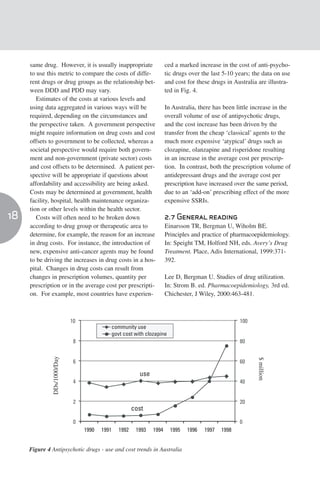
same drug. However, it is usually inappropriate                     ced a marked increase in the cost of anti-psycho-
     to use this metric to compare the costs of diffe-                   tic drugs over the last 5-10 years; the data on use
     rent drugs or drug groups as the relationship bet-                  and cost for these drugs in Australia are illustra-
     ween DDD and PDD may vary.                                          ted in Fig. 4.
        Estimates of the costs at various levels and
     using data aggregated in various ways will be                       In Australia, there has been little increase in the
     required, depending on the circumstances and                        overall volume of use of antipsychotic drugs,
     the perspective taken. A government perspective                     and the cost increase has been driven by the
     might require information on drug costs and cost                    transfer from the cheap ‘classical’ agents to the
     offsets to government to be collected, whereas a                    much more expensive ‘atypical’ drugs such as
     societal perspective would require both govern-                     clozapine, olanzapine and risperidone resulting
     ment and non-government (private sector) costs                      in an increase in the average cost per prescrip-
     and cost offsets to be determined. A patient per-                   tion. In contrast, both the prescription volume of
     spective will be appropriate if questions about                     antidepressant drugs and the average cost per
     affordability and accessibility are being asked.                    prescription have increased over the same period,
     Costs may be determined at government, health                       due to an ‘add-on’ prescribing effect of the more
     facility, hospital, health maintenance organiza-                    expensive SSRIs.
     tion or other levels within the health sector.
18      Costs will often need to be broken down                          2.7 General reading
     according to drug group or therapeutic area to                      Einarsson TR, Bergman U, Wiholm BE.
     determine, for example, the reason for an increase                  Principles and practice of pharmacoepidemiology.
     in drug costs. For instance, the introduction of                    In: Speight TM, Holford NH, eds. Avery’s Drug
     new, expensive anti-cancer agents may be found                      Treatment. Place, Adis International, 1999:371-
     to be driving the increases in drug costs in a hos-                 392.
     pital. Changes in drug costs can result from
     changes in prescription volumes, quantity per                       Lee D, Bergman U. Studies of drug utilization.
     prescription or in the average cost per prescripti-                 In: Strom B. ed. Pharmacoepidemiology, 3rd ed.
     on. For example, most countries have experien-                      Chichester, J Wiley, 2000:463-481.


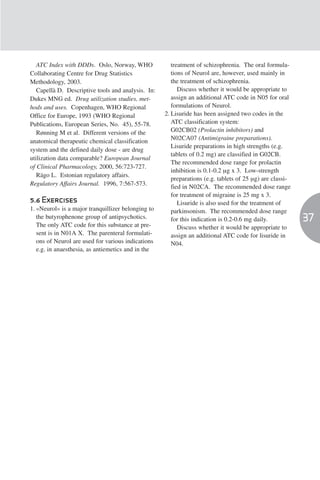
                             10                                                                        100
                                                community use
                                                govt cost with clozapine
                              8                                                                        80
              DDs/1000/Day


                                                                                                              $ million


                              6                                                                        60

                                                            use
                              4                                                                        40


                              2                                                                        20
                                                          cost
                              0                                                                        0
                                  1990   1991      1992    1993   1994     1995   1996   1997   1998


     Figure 4 Antipsychotic drugs - use and cost trends in Australia
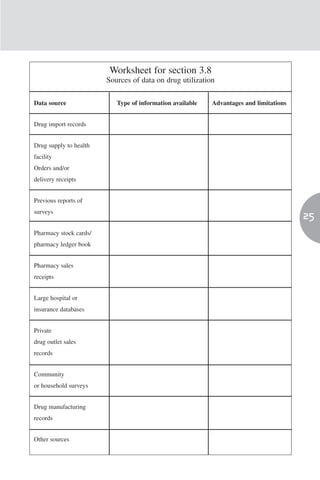
2.8 Exercises                                     4. Antidepressant use
3. Amoxicillin                                      The use of antidepressant drugs (in DDDs per
  You note that amoxicillin use expressed as        1000 population per day) and their costs have
  DDDs per1000 population per day has               been increasing for at least the last five years.
  increased over the last two years. What types     What types of data would you need to deter-
  of drug utilization data would you need to        mine the reasons for the change and whether it
  evaluate the possible reasons for this?           has resulted in positive or negative health out-
                                                    comes?


                                                                                                        19
Chapter 3: Sources of data on drug utilization


         Drug-use chain; large databases; other sour-       drug distribution chain, pharmaceutical and
     [   ces; drug use evaluation; pharmacoeconomics   ]    medical billing or samples of prescriptions. The
                                                            databases may be international, national or local
     The drug-use chain includes the processes of           in scope. They may be diagnosis-linked or non-
     drug acquisition, storage, distribution, prescri-      diagnosis-linked. Diagnosis-linked data enable
     bing, patient compliance and the review of out-        drug use to be analysed according to patient cha-
     come of treatment. Each of these events is an          racteristics, therapeutic groups, diseases or con-
     important aspect of drug utilization, and most         ditions and, in the best of cases, clinical out-
     countries have regulations to cover these aspects.     come. A useful analysis requires an understand-
     Data are collected, or are available, at national,     ing of the sources and organization of the data.
     regional and local health facility or household
     level and may be derived from quantitative or          3.2 Data from drug regulatory
     qualitative studies. Quantitative data may be          agencies
     used to describe the present situation and the
                                                                Drug registration; drug importation
     trends in drug prescribing and drug use at vari-       [                                                ]
     ous levels of the health care system.
                                                            Drug regulatory agencies have the legal respon-
     Quantitative data may be routinely collected data
                                                            sibility of ensuring the availability of safe, effi-
     or obtained from surveys. Qualitative studies
20   assess the appropriateness of drug utilization and
                                                            cacious and good-quality drugs in their country.
                                                            They are thus the repositories of data on which
     generally link prescribing data to reasons (indi-
                                                            drugs have been registered for use, withdrawn or
     cations) for prescribing. Such studies have been
                                                            banned within a country. Regulatory agencies
     referred to as «drug utilization review» or «drug
                                                            also have inspection and enforcement functions,
     utilization evaluation». The process is one of a
                                                            and are responsible for supervising the importa-
     «therapeutic audit» based on defined criteria and
                                                            tion of drugs and for the issuance of permits for
     is intended to improve the quality of therapeutic
                                                            drug registration.
     care. There is an increasing interest in the evalu-
                                                               It is possible, therefore, to obtain data on the
     ation of the economic impact of clinical care and
                                                            number of drugs registered in a country from
     medical technology. This has evolved into a dis-
                                                            such agencies. Where the agency issues import
     cipline dedicated to the study of how pharma-
                                                            permits and supervises drug importation, data on
     cotherapeutic methods influence resource utili-
                                                            product type (i.e. generic or branded), volume,
     zation in health care known as pharmacoeco-
                                                            port of origin, country of manufacture, batch
     nomics (see chapter 4).
                                                            number and expiry date may be collected.
        The sources of drug utilization data vary from
                                                            Where the data reflect total national imports,
     country to country depending on the level of
                                                            estimates of quantities of drugs in circulation
     sophistication of record keeping, data collection,
                                                            can be obtained for defined periods and for
     analysis and reporting and the operational consi-
                                                            various therapeutic groups
     derations of the health care system.
                                                               It may be difficult to obtain true estimates if
                                                            documentation is incomplete and not all trans-
     3.1 Large databases
                                                            actions are recorded. Information on smuggled
     The increasing interest in efficient use of health
                                                            goods or goods entering the country through ille-
     care resources has resulted in the establishment
                                                            gal routes will not be captured by these data.
     of computer databases for studies on drug utili-
     zation. Some of the databases can generate sta-
     tistics for patterns of drug utilization and adverse
                                                            3.3 Supplier (distribution) data
     drug reactions. Data may be collected on drug              Drug importation; local manufacture; cus-
     sales, drug movement at various levels of the          [   toms service                                 ]
Data on suppliers may be obtained from drug           motivate health care providers to adhere to esta-
importers, wholesalers or local manufacturers.        blished health care standards.
In countries where permits or licences are
required from drug regulatory authorities and         3.4.1 Prescribing data
ministries of health before importation of drugs,     Prescribing data are usually extracted from out-
data may be available from such sources.              patient and inpatient prescription forms. Such
Customs services, in the process of clearing          data may be easily retrieved where records are
imports from the ports of entry, may collect data     computerized and computerized data also facili-
on drugs. However, the codes used by customs          tate trend analysis. In the absence of electronic
services are not detailed enough to capture all       databases, prescribing data are usually extracted
relevant information. National agencies respon-       from patient records or from patient intercept
sible for the collection of excise duty can also      studies or retrieved at dispensing points.
provide information on the volume of production          Information that may be obtained from pre-
and on distribution of drugs from local manufac-      scriptions includes patient demography, drug
turers.                                               name, dosage form, strength, dose, frequency of
   Data from these sources can generally be used      administration and duration of treatment. Where
to describe total quantities of specific drugs or     diagnoses are noted on prescriptions, and parti-
drug groups, origins of supplies and type (i.e.       cularly for inpatient prescription, it is possible to
branded or generic).                                  link drug use to indications. Trends in utilization     21
   In the absence of a national mechanism for the     for specific drugs and diseases can also be esta-
direct capture of data on drug production or          blished. As an example, inpatient data may pro-
importation, wholesalers become an important          vide a link to empirical treatment of infections as
source of information on drug acquisition. Such       opposed to treatment based on microbiological
data are reliable insofar as wholesalers are the      assessment. This may be achieved by extracting
only legal entity able to import drugs. In some       relevant data from the patient records, but requi-
countries, medical, dental and veterinary practiti-   res that the records be of good quality.
oners, as well as pharmacists, can import phar-          Prescriptions are a good source of information
maceutical products. It is usually very difficult     for determining some of the indicators of drug
to collect comprehensive data from such sources       use recommended by WHO including the:
even if there are regulatory requirements about
submitting reports. Public sector procurement         – average number of drugs per prescription
practices, however, have reasonable documen-            (encounter);
tation but provide data only on that sector.          – percentage of drugs prescribed by generic
                                                        name;
Practice setting data                                 – percentage of encounters resulting in prescrip-
                                                        tion of an antibiotic;
    Prescribing data; dispensing data; drug use       – percentage of encounters resulting in prescrip-
[   indicators; facility data (aggregate)         ]     tion of an injection;
                                                      – percentage of drugs prescribed from essential
Data from health facilities may be used to evalu-       drugs list or formulary, and
ate specific aspects of health provision and drug     – average drug cost per encounter.
use and to generate indicators that provide infor-
                                                      Prescribing data allow the determination of the
mation on prescribing habits and aspects of pati-
                                                      PDD which may differ from the DDD. While
ent care. These indicators can be used to deter-
                                                      the DDD is based on the dosages approved in
mine where drug use problems exist, provide a
                                                      standard product characteristics with clinical out-
mechanism for monitoring and supervision and
                                                      come data from controlled clinical trials, the
PDD is variable and dependent on factors such       can be used to obtain information on various
     as severity of illness, body weight, interethnic    aspects of drug use including:
     differences in drug metabolism and the prescri-     – the cost of individual drugs and classes of
     bing culture of the health provider. Using DDDs       drug;
     enables comparison to be made between drug          – the most frequently or infrequently used drugs;
     groups as the influences of prescribing culture     – the most expensive drugs;
     and available dosage strengths are eliminated.      – the per capita consumption of specific pro-
        In some countries, it is a legal requirement       ducts;
     that prescriptions dispensed by pharmacies and      – comparisons of two or more drugs used for the
     drug outlets are kept for a minimum period before     same indication;
     disposal. Where these regulations are adhered       – the prevalence of adverse drug reactions;
     to, prescription data may be obtainable from        – the prevalence of medication errors; and
     pharmacies. However, in many developing             – the percentage of the budget spent on specific
     countries the rule is not generally followed. In      drugs or classes of drug.
     countries where computerized records of prescri-
     bing data are kept, they may be readily retriev-    Aggregate data are often useful for comparing
     able depending on the depth of the database.        the utilization of a particular drug to that of
                                                         other drugs and to utilization in other hospitals,
22   3.4.2 Dispensing data                               regions or countries.
     Drug dispensing is a process that ends with a
     client leaving a drug outlet with a defined quan-   3.4.4 Over-the-counter and
     tity of medication(s) and instructions on how to    pharmacist-prescribed drugs
     use it (them). The quantity of drugs dispensed      Pharmacists and other drug outlet managers may
     depends on their availability. Thus information     prescribe over-the-counter preparations or phar-
     available from dispensers may include:              macist-prepared drugs that do not require pre-
     – drug(s) prescribed;                               scription by a physician. Data on such medica-
     – dose(s) prescribed;                               tions may be difficult to obtain especially in
     – average number of items per prescription;         environments with weak drug regulation and
     – percentage of items prescribed that were actu -   poor record keeping, but when such information
        ally supplied (an indicator of availability);    is available from stock or dispensing records, it
     – percentage of drugs adequately labelled;          broadens the understanding of drug utilization
     – quantity of medications dispensed; and            patterns.
     – cost of each item or prescription.
                                                         3.4.5. Telephone and Internet
     These data may be obtained from records kept at     prescribing
     the drug outlet either in electronic or manual      Physicians in certain countries may prescribe
     form.                                               over the telephone. Prescribing and dispensing
                                                         using the Internet also occurs, especially in deve-
     3.4.3 Aggregate data                                loped countries. Most Internet prescriptions are
     A number of data sources within the health faci-    for nutritional supplements and herbal preparati-
     lity or hospital setting can provide aggregate      ons. However, as exemplified by sildenafil
     data on drug utilization. These sources include     (Viagra®), other medicines are also increasingly
     procurement records, warehouse drug records,        being sold on the Internet. Innovative ways have
     pharmacy stock and dispensing records, medica-      to be devised to collect information on this type
     tion error records, adverse drug reaction records   of transaction.
     and patient medical records. These data sources
3.5 Community setting data                             Drug use evaluation can assess the actual pro-
                                                       cess of administration or dispensing of a medica-
    Household survey; compliance (adherence            tion (including appropriate indications, drug
[   to treatment); drug utilization               ]    selection, dose, route of administration, duration
                                                       of treatment and drug interactions) and also the
The drugs available in households have either          outcomes of treatment (e.g. cured disease condi-
been prescribed or dispensed at health facilities,     tions or decreased levels of a clinical parameter).
purchased at a pharmacy (with or without a pre-        The objectives of drug use evaluation include:
scription) or are over-the-counter medications.
The drugs may be for the treatment of a current        – ensuring that drug therapy meets current stan--
illness or are left over from a previous illness. It     dards of care
is not uncommon for patients to adhere poorly to       – controlling drug cost;
the instructions given for taking their dispensed      – preventing problems related to medication;
medicines. Thus dispensing data and utilization        – evaluating the effectiveness of drug therapy; and
data may not be equivalent because they have           – identification of areas of practice that require
not been corrected for non-compliance.                   further education of practitioners.
   Drug utilization by outpatients is best assessed
by performing household surveys, counting left-        The problems to be addressed by drug use evalu-
                                                       ation may be identified from any of the data des-
over pills or using special devices that allow
                                                       cribed in section 3.4 (including prescription indi-
                                                                                                             23
electronic counting of the number of times a par-
ticular drug is administered. Drug utilization by      cators, dispensing data and aggregate data). The
inpatients can be determined by reviewing treat-       main source of data for drug use evaluation is
ment sheets or orders.                                 the patient records. An identifiable authoritative
   For both outpatients and inpatients, the data       group, such as the drugs and therapeutic com-
on the utilization of a particular drug can be         mittee, usually carries out reviews of drug use in
aggregated for a defined population in DDDs.           a hospital or health facility. This group has the
Using DDDs has the advantage of allowing com-          responsibility for drawing up the guidelines, cri-
parison for example between inpatients and out-        teria, indicators and thresholds for the evaluati-
patients. Data on various dosage forms and             on. Drug use evaluation may be based on data
generic equivalents of the same medication can         collected prospectively (as the drug is being dis-
also be aggregated.                                    pensed or administered) or retrospectively (based
                                                       on chart reviews or other data sources).
3.6 Drug use evaluation
                                                       • Typical criteria reviewed in prospective studies
    Drugs and therapeutic committee; prospec-          include the following
    tive evaluation; retrospective evaluation;         – indications;
    criteria setting                                   – drug selection;
                                                       – doses prescribed;
Drug use evaluation, sometimes referred to as          – dosage form and route of administration;
drug utilization review, is a system of continu-       – duration of therapy;
ous, systematic, criteria-based drug evaluation        – costs;
that ensures the appropriate use of drugs. It is a     – therapeutic duplication;
method of obtaining information to identify pro-       – quantity dispensed;
blems related to drug use and if properly develo-      – contraindications;
ped, it also provides a means of correcting the        – therapeutic outcome
problem and thereby contributes to rational drug       – adverse drug reactions; and
therapy.                                               – drug interactions.
• In retrospective studies, the criteria             source that could help you understand the situa-
     reviewed include:                                    tion, and (2) some possible advantages and/or
        – evaluation of indications;                      limitations of each of the sources of data you
        – monitoring use of high-cost medicines;          have listed.
        – comparison of prescribing between physicians;
        – cost to patient;                                When evaluating the advantages and
        – adverse drug reactions; and                     limitations of the data, consider the ans-
        – drug interactions.                              wers to the following questions:
                                                             • How relevant are the data for
     It is possible to incorporate some of the above           learning about antibiotics?
     criteria into databases thus allowing drug experts      • How easy is it to collect these
     to evaluate any items that do not meet establis-          types of data in your country?
     hed criteria. For meaningful results to be obtai-       • How much will it cost to collect
     ned from drug use evaluation a reasonable num-            and process the data and how
     ber of records need to be assessed. A minimum             long will it take?
     of 50 to 75 records per health care facility is         • How reliable are these data?
     considered adequate. However, the number of
     records sampled would depend on the size of the      For example, from data from previous
24   facility and the number of prescribers.
                                                          surveys, we might obtain the following
                                                          useful information: historical utilization
     3.7 General reading
                                                          rates by facility or geographical area, and
     How to investigate drug use in health facilities:
                                                          possibly utilization by type of antibiotic,
     Selected drug use indicators. Geneva,World
                                                          health problem or age. The advantages
     Health Organization, 1993 (unpublished docu-
                                                          of using historical survey data are that
     ment WHO/DAP/93.1; available on request from
                                                          they have already been collected and
     Department of Essential Drugs and Medicines
                                                          carry no additional cost. However, their
     Policy, World Health Organization, 1211
                                                          limitations include not being able to con-
     Geneva, 27, Switzerland).
                                                          trol exactly which data have been collec-
                                                          ted or from where, not knowing whether
     3.8 Exercises
                                                          current practices reflect those of the past,
     Examine the sources of data listed in the
                                                          and having no patient-specific or provi-
     Worksheet. Imagine that you want to learn
                                                          der-specific information. It would also
     about the utilization of antibiotics in your coun-
                                                          usually not be possible to find informa-
     try. In the spaces provided in the right-hand
                                                          tion on dosing of antibiotics.
     columns of the worksheet, write down (1) what
     kinds of useful data you might gather from each
Worksheet for section 3.8
                        Sources of data on drug utilization

Data source                Type of information available   Advantages and limitations


Drug import records


Drug supply to health
facility
Orders and/or
delivery receipts


Previous reports of
surveys
                                                                                        25
Pharmacy stock cards/
pharmacy ledger book


Pharmacy sales
receipts


Large hospital or
insurance databases


Private
drug outlet sales
records


Community
or household surveys


Drug manufacturing
records


Other sources
Chapter 4: Economic aspects of drug
     use (pharmacoeconomy)

       Pharmacoeconomics; types of cost; cost-mini-           4.2 Cost-minimization analysis
       mization analysis; cost-effectivness analysis;         Cost-minimization analysis is a method of calcu-
       cost-benefit analysis; cost-utility analysis           lating drug costs to project the least costly drug
                                                              or therapeutic modality. Cost minimization also
     4.1 Introduction                                         reflects the cost of preparing and administering a
     Drug costs per se are important, as they account for     dose. This method of cost evaluation is the one
     a substantial part of the total cost of health care -    used most often in evaluating the cost of a speci-
     typically 10-15% in developed countries and up to        fic drug. Cost minimization can only be used to
     30-40% in some developing countries. However,            compare two products that have been shown to
     drug costs usually need to be interpreted in the con-    be equivalent in dose and therapeutic effect.
     text of the overall (net) costs to the health system.    Therefore, this method is most useful for compa-
     Drugs cost money to buy, but their use may also          ring generic and therapeutic equivalents or «me
     save costs in other areas. For example, the purchase     too» drugs. In many cases, there is no reliable
     of one specific type of drug may lead to reductions      equivalence between two products and if thera-
     in the following:                                        peutic equivalence cannot be demonstrated, then
     – use of other drugs;                                    cost-minimization analysis is inappropriate.
     – the number of patients requiring hospitalization          If a new therapy were no safer or more effecti-
        or in the length of stay in hospital;                 ve than an existing therapy (i.e. there is no incre-
26   – the number of doctor visits required;                  mental benefit), it would normally justify the
     – administration and laboratory costs compared           same price as the existing therapy. An example
        with those incurred by using another drug to treat    would be the introduction of a new ACE inhibi-
        the same condition.                                   tor with essentially the same properties as exis-
        Assessing the true cost to a health system of         ting members of the class; the price would be
     using a specific drug will therefore require the cost    equivalent to that of the existing drug(s). This is
     of acquisition of the drug to be balanced against        often not as simple as it may seem, as it requires
     both any cost savings resulting from the use of that     sound trial-based information on the doses of the
     drug and the extra health benefits it may produce.       two drugs required for equivalent efficacy. An
     On the other hand, costs may arise from adverse          alternative is to use the PDDs for the two drugs
     drug reactions both in the short- and particularly the   in the marketplace to determine the relative pri-
     long-term.                                               ces. This is a pragmatic approach, but assumes
        Assessing the value for money of using a drug         that the two drugs are actually used at equiva-
     requires the extra health benefits achieved to be        lently effective doses, and this may not always
     weighed against the extra net cost. This compari-        be the case.
     son is usually expressed as an incremental cost-
     effectiveness ratio (ICER) which is the net incre-       4.1 Cost-effectiveness analysis
     mental cost (costs minus cost offsets) of gaining an     Cost-effectiveness analysis involves a more com-
     incremental health benefit over another therapy.         prehensive look at drug costs. While cost is
        Concerns about the cost of medical care in gene-      measured in monetary terms, effectiveness is
     ral, and pharmaceuticals in particular, are currently    determined independently and may be measured
     being expressed by all health systems. There is a        in terms of a clinical outcome such as number of
     general focus on providing quality care within limi-     lives saved, complications prevented or diseases
     ted financial resources. Decision-makers are increa-     cured.
     singly dependent on clinical economic data to guide         Cost-effectiveness analysis thus measures the
     policy formulation and implementation. Some of           incremental cost of achieving an incremental
     the concepts used in making such decisions include:      health benefit expressed as a particular health
     cost-minimization, cost-effectiveness,                   outcome that varies according to the indication
     cost-benefit, and cost-utility.                          for the drug. Examples of ICERs using this
approach are:                                           ratios enables the cost of achieving a health benefit
– the cost per extra patient achieving a 10 mm          by treatment with a drug to be assessed against
  Hg fall in blood pressure;                            similar ratios calculated for other health inter-
– the cost per extra asthmatic patient achieving        ventions (e.g. surgery or screening by mammo-
  a reduction in oral corticosteroid use                graphy). It therefore provides a broader context
– the cost per extra episode of febrile neutro-         in which to make judgements about the value for
  penia avoided; or                                     money of using a particular drug.
– the cost per extra acute rejection episode avo-
  ided in patients with kidney transplants.
                                                        4.5 Cost-benefit analysis
                                                        Cost-benefit analysis is used to value both incre-
It is often difficult to make judgements about the
                                                        mental costs and outcomes in monetary terms
relative value for money across a range of drug
                                                        and therefore allows a direct calculation of the
groups and health outcomes such as those in the
                                                        net monetary cost of achieving a health outcome.
examples given above.
                                                        A gain in life-years (survival) may be regarded
                                                        as the cost of the productive value to society of
                                                        that life-year using, for example, the average
4.4 Cost-utility analysis                               wage. The methods for valuing gains in quality
Cost-utility analysis is used to determine cost in      of life include techniques such as willingness-to-
terms of utilities, especially quantity and quality     pay, where the amount that individuals would be
                                                                                                                27
of life. This type of analysis is controversial         willing to pay for a quality-of-life benefit is
because it is difficult to put a value on health sta-   assessed. However, the techniques used to value
tus or on an improvement in health status as per-       health outcomes in monetary terms remain
ceived by different individuals or societies.           somewhat controversial, with the result that cost-
Unlike cost-benefit analysis, cost-utility analysis     benefit analysis is so far not widely used in phar-
is used to compare two different drugs or proce-        macoeconomic analyses.
dures whose benefits may be different.                     Economic analyses such as those described
   Cost-utility analysis expresses the value for        above may be trial based or modelled. A trial
money in terms of a single type of health out-          based analysis uses the incremental benefits and
come. The ICER in this case is usually                  use of resources in a clinical trial to calculate an
expressed as the incremental cost to gain an            ICER, but this may not be as relevant to the use
extra quality-adjusted life-year (QALY). This           of the drug as it would be in the marketplace. A
approach incorporates both increases in survival        modelled analysis is used to apply the benefits
time (extra life-years) and changes in quality of       and use of resources to a local clinical situation,
life (with or without increased survival) into one      and to extend the time frame beyond that of a
measure. An increased quality of life is                clinical trial. This is particularly important
expressed as a utility value on a scale of 0 (dead)     where the benefits of treatment may not be reali-
to one (perfect quality of life). An increased          zed until some time in the future. Two examples
duration of life of one year (without change in         are the avoidance of liver cancer or transplantati-
quality of life), or an increase in quality of life     on for patients with hepatitis C and the prolong-
from 0.5 to 0.7 utility units for five years, would     ation of life for hypertensive patients. Short-
both result in a gain of one QALY. This allows          term surrogate outcome measures (clearance of
for easy comparison across different types of           virus and lowering of blood pressure, respective-
health outcome, but still requires value judge-         ly) are used in clinical trials, and need to be
ments to be made about increases in the quality         translated by modelling into the longer-term out-
of life (utility) associated with different health      comes, which are more relevant to patients and
outcomes. The use of incremental cost-utility           policy-makers.
4.6 General reading                                   Klotgon, has recently been brought to your
     How to investigate drug use in health facilities:     attention. The two drugs have been compared in
     Selected drug use indicators. Geneva,World            a large randomized trial in which the primary
     Health Organization, 1993 (unpublished docu-          outcome of mortality was measured 30 days
     ment WHO/DAP/93.1; available on request from          after randomization.
     the Department of Essential Drugs and
     Medicines Policy, World Health Organization,            Outcomes in 100 patients
     1211 Geneva, 27, Switzerland).                          No treatment                   15 deaths
       Schulman KA et al. Pharmacoeconomics:                 Thrombase                      10 deaths
     Economic evaluation of pharmaceuticals. In:             Klotgon                        7 deaths
     Strom B. ed. Pharmacoepidemiology, 3rd ed.              Drug cost per patient
     Chichester, J Wiley, 2000.                              Thrombase                      $ 200
                                                             Klotgon                        $ 1000
     4.7 Exercises
     1. Comparison of antihypertensives                    You are also aware that the average survival time
     You are considering the use of a new alpha-anta-      following non-fatal myocardial infarction is
     gonist for the treatment of hypertension. It is       eight years.
     used once daily and you are told that it has been        Please answer the following questions. Be
28   tested in trials against enalapril and losartan and   prepared to present your findings to the large
     it has been found to lower blood pressure to a        group.
     similar extent to these agents. You already have      a. If the hospital budget were unlimited, and if
     prazosin on your subsidy list but the producers          1000 patients were to be treated, how many
     inform you that they have not carried out trials         lives could be saved if patients were treated
     against prazosin. The approximate costs for a            with Thrombase, compared with no treatment?
     month’s supply of the existing drugs are prazosin        How many could be saved with Klotgon, com-
     $18, enalapril $28 and losartan $35. Beta-bloc-          pared with no treatment?
     kers and thiazide diuretics are also on your sub-
     sidy list at a cost of about $8 for a month’s sup-    b. If the hospital’s budget for purchasing throm-
     ply but no trials of the new agent have been car-        bolytics were $200 000, how many patients
     ried out against them. How would you approach            could be treated, and how many lives could be
     the pricing of the new alpha-antagonist?                 saved with each of the drugs, compared with
                                                              no treatment at all?
     2. Thrombolytics for acute myocardial                 c. What is the incremental cost per life saved, for
     infarction (a purely hypothetical exercise)              each of the thrombolytic agents, compared
     Congratulations! You have just been appointed            with no active treatment?
     as a member of the formulary committee of a
     large teaching hospital in Sydney, Australia. A       d. What are the incremental cost-effectiveness
                                                              ratios (ICERs), expressed as the incremental
     key item on the agenda for the next meeting is a
                                                              cost per life-year gained, for each of the
     proposal to implement a management protocol
                                                              thrombolytic agents, compared with no active
     for the treatment of acute myocardial infarction.
                                                              treatment?
     You have been asked to evaluate the available
     evidence and advise to the committee as to            e. What is the ICER for Klotgon compared to
     which of two available drugs represents the more         Thrombase?
     cost-effective choice.
                                                           f. What will you recommend to the formulary
        The draft clinical management protocol cur-
                                                              committee?
     rently proposes the use of the (hypothetical)
     thrombolytic drug Thrombase. A new drug,
Outcome                                     Low-molecular-           Unfractionated         P-value
                                                weight heparin           heparin


    Combined risk of death                      318/1607                 364/1564               0.016

    AMI1 or unstable angina                     (19.8%)                  (23.3%)

    Percutaneous                                236/1607                 293/1564               0.002

    revascularization ($ 1390 per               (14.7%)                  (18.7%)

    procedure)

    Major bleeds                                102/1569                 107/1528               0.57

                                                (6.5%)                   (7.0%)

    Minor bleeds                                188/1580                 110/1528               <0.001
                                                (11.9%)                  (7.2%)


3. Unfractionated heparin versus low-                                Please answer the following questions. Be pre-
molecular-weight heparin                                             pared to present your findings to a large group.
                                                                                                                          29
Because of your valuable contribution to the                         a. Calculate the relative risk of the combined
development of a cost-effective treatment proto-                        (triple) end-point in patients who received
col for acute myocardial infarction, you have                           low-molecular-weight heparin compared with
been retained as a member of the formulary                              those who received unfractionated heparin.
committee of the above-mentioned hospital. An                        b. Calculate the risk difference and the number
agenda item for consideration at your committee’s                       of patients who need to be treated to prevent a
next meeting concerns a recommendation, from                            single event with low-molecular-weight hepa-
                                                                        rin compared with unfractionated heparin.
a very pleasant pharmaceutical company repre-
                                                                     c. Calculate the ICER for the main clinical out
sentative, that you replace unfractionated heparin
                                                                        come with low-molecular-weight heparin,
with a low- molecular-weight heparin in the
                                                                        compared with unfractionated heparin using
management of patients with unstable coronary
                                                                        drug costs only.
artery disease. She very kindly gives you a sum-
                                                                     d. Recalculate the ICER for the main clinical
mary of some data from a clinical trial published                       outcome with low-molecular-weight heparin,
in the New England Journal of Medicine. The                             compared with unfractionated heparin includ-
outcomes were reported 30 days after randomi-                           ing the costs of monitoring treatment with
zation.                                                                 heparin.

You decide to investigate the costs of acquiring                     4. Celecoxib versus diclofenac
and monitoring treatment with the two drugs and                      A representative from a very supportive pharma-
note the following:                                                  ceutical company addressed your medical staff
                                                                     during a Saturday seminar last week. She gave
    Item                       Low-molecular-   Unfractionated       an interesting presentation on the comparative
                               weight heparin   heparin              safety of some well-known anti-inflammatory
    Monthly drug costs ($)     $72.20           $27.09               preparations. At the formulary meeting this
    Monthly cost               none             5 tests/patient of   week, the head of your rheumatology department
    monitoring                                                       is planning to propose adding celecoxib, a COX-
    anticoagulant effect                        @ $12.40 per test
1
 Acute myocardial infarction
2 inhibitor, to the hospital formulary in place of                           the committee as a late submission, so you deci-
     NSAIDs. He intends to argue that the hospital                                de to review the evidence and prepare yourself
     will save a lot of money by avoiding the compli-                             for the discussion. You find the following results
     cations associated with NSAIDs such as peptic                                of a clinical trial reported in the Lancet.
     ulcers. This item was placed on the agenda of


                                        Mean (SD) arthritis assessment results at week 24

       Primary assessments                                      Celecoxib                                         Diclofenac

                                                         Baseline           Week 24                   Baseline                 Week 24


       Physician’s assessmenta                       2.9 (0.7)                2.6 (0.8)             3.0 (0.8)                   2.6 (0.8)
       Patient’s assessmenta                         3.0 (0.8)                2.7 (0.9)             3.1 (0.8)                   2.8 (0.9)
       No. of tender/painful joints                  20.3 (14.4)              14.5 (14.1)           21.7 (14.4)                 16.4 (14.7)
       No. of swollen joints                         14.9 (10.2)              10.7 (10.1)           14.3 (9.9)                  10.4 (10.0)

30
     The following adverse event data were also reported.


                                   Frequency of peptic ulceration and related complications

                                                                 Celecoxib                     Diclofenac                  P-value
                                                                 (n = 212)                     (n = 218)

       Patients in whom erosion, ulcer or both were detected

       Gastric                                                   38 (18%)                      74 (34%)                    <0.001
       Duodenal                                                  11 (5%)                       23 (11%)                    <0.009
       Ulcer incidence by Helicobacter pylori status
       Positive serological test                                 7/93 (8%)                     19/87 (22%)                 NS
       Negative serological test                                 1/97 (1%)                     10/100 (10%)                NS
       Ulcer frequency by concomitant corticosteroid use
       Corticosteroid use                                        2/80 (3%)                     12/102 (12%)                NS
       No corticosteroid use                                     6/132 (5%)                    21/116 (18%)                NS
       NS: not significant.


     aIndependent assessments, graded from 1 (very good: symptom-free with no limitation of normal activities) to 5 (very poor: very severe symptoms that
     are intolerable, and inability to carry out all normal activities).
From your research you also know that:                          c. Calculate the ICER for the main clinical out-
• One per cent of patients with endoscopic                         come with celecoxib, compared with the
  damage are hospitalized with gastrointestinal                    NSAID, using drug costs only.
  bleeding.                                                     d. Recalculate the ICER for the main clinical
                                                                   outcome with celecoxib, compared with the
• The cost of hospitalization for gastrointestinal                 NSAID, including the costs of treatment of
  bleeding is $1434/patient.                                       gastrointestinal bleeding.
• Ten per cent of patients admitted with gastroin-
  testinal bleeding die.                                        5. Oral montelukast versus an inhaled
• The cost of celecoxib for 60 x 100 mg tablets                 steroid
  is $50.                                                       A community-driven asthma awareness group
                                                                has donated 10 cartons of montelukast tablets for
• The usual dose of celecoxib is 200 mg bd.
                                                                adults treated in your hospital’s asthma clinic.
• The cost of diclofenac is $11.60 for 50 x 50                  They feel strongly that this product should be
  mg tablets; $14.35 for 100 x 25 mg tablets.                   made available since, according to the medical
• The usual dose of diclofenac is 50 mg-75 mg bd.               adviser of the sponsoring company, it is much
• Answer the following questions. Be prepared                   more effective and much easier to use than the
  to present your findings to a large group.                    usual «puffers». As this product is fairly new,
                                                                the formulary committee has been asked to                31
a.Calculate the relative risk for peptic (i.e. gas-             comment on its effectiveness. Since the asthma
  tric or duodenal) ulcers in the patients who                  unit will prepare a submission for including it in
  received celecoxib compared with those who                    the hospital formulary after the supply of dona-
  received the NSAID diclofenac.                                ted drugs is exhausted, you have been asked to
b.Calculate the risk difference and the number                  comment on the comparative cost-effectiveness
  of patients who have to be treated to prevent a               of the drug. You begin your assessment by con-
  single event with celecoxib, as compared with                 sidering the following results at 22 weeks after
  the NSAID.                                                    the baseline assessment.


 End-point                                    Placebo                  Beclometasone              Montelukast

 Percentage change *FEV1                      0.7 [–2.3, 3.7]          13.1 [10.1, 16.2]          7.4 [4.6, 10.1]
 Change in daytime
 asthma symptom score                         –0.17 [–0.3, –0.05]      –0.62 [–0.75, 0.49]        –0.41 [–5.3, –0.29]
 Percentage change in total daily
 β-agonist use                                0.0 [–8.3, 8.3]          –40.0 [–48.5, –31.5]       –23.9 [–31.4, –16.5]
 Change in morning PEFR [l/min]               0.8 [–7.1, 8.6]          39.1 [31.0, 47.1]          23.8 [16.6, 30.9]
 Change in evening PEFR [l/min]               0.3 [–7.3, 8.0]          32.1 [24.2, 39.9]          20.8 [13.8, 27.8]
 Change in nocturnal awakenings               –0.5 [–0.9, –0.1]        –2.4 [–2.8, –2.0]          –1.7 [–2.07, 1.3]
 [nights per week]
 Change in eosinophil count
 [cells x 103/µl]                             –0.02 [–0.07, 0.03]      –0.07 [–0.12, –0.02]       –0.08 [–0.12, –0.03]
 Percentage of patients with
 asthma attacks                               27.3                     10.1                       15.6

Values are mean [95% CI].   *FEV1 = forced expiratory volume in one second; PEFR = peak expiratory flow rate
The costs of the two drugs are:                    a.You wish to compare montelukast with beclo-
     – Beclametasone: Australian $26 for 28 days of       metasone. Which outcome(s) will you use for
       treatment;                                         the comparison? Why?
     – Montelukast: Australian $70 for 28 days of       b.Calculate the ICER for the main clinical outcome.
       treatment.                                       c.Which is the better drug? Why?

     Please answer the following questions. Be pre-
     pared to present your findings to a large group.


32
Chapter 5: Drug classification systems


A drug classification system represents a com-         were originally based on the same main princi-
mon language for describing the drug assortment        ples. In the EPhMRA system, drugs are classi-
in a country or region and is a prerequisite for       fied in groups at three or four different levels.
national and international comparisons of drug         The ATC classification system modifies and
utilization data, which have to be collected and       extends the EPhMRA system to include a thera-
aggregated in a uniform way. Access to stan-           peutic/pharmacological/chemical subgroup as
dardized and validated information on drug use         the fourth level and the chemical substance as
is essential to allow audits of patterns of drug       the fifth level (see, for example, the classifi-
utilization, to identify problems in drug use, to      cation of glibenclamide in the box below).
initiate educational or other interventions and to
monitor the outcomes of these interventions.           The ATC classification is also the basis for the
The main purpose of having an international            classification of adverse drug reactions used by
standard is to be able to compare data between         the WHO Collaborating Centre for International
countries. A recent example is the international       Drug Monitoring in Uppsala, Sweden
focus on creating comparable systems for moni-         (www.who-umc.org).
toring cross-national patterns of antibacterial uti-
lization to aid work against bacterial resistance.     The main purpose of the ATC classification is as
                                                       a tool for presenting drug utilization statistics
5.1 Different classification                           and it is recommended by WHO for use in inter-        33
systems                                                national comparisons. The EPhMRA classification
                                                       system is used worldwide by IMS for providing
  ATC classification; AT classification;
                                                       market research statistics to the pharmaceutical
  EPhMRA; IMS; WHO Collaborating Centre
                                                       industry. It should be emphasized that the many
  for Drug Statistics Methodology
                                                       technical differences between the EPhMRA
                                                       classification and the ATC classification mean that
Drugs can be classified in different ways accor-
                                                       data prepared using the two classification systems
ding to:
                                                       are not directly comparable.
– their mode of action;
                                                          In 1996, WHO recognized the need to develop
– their indications; or
                                                       the ATC/DDD system from a European to an
– their chemical structure.
                                                       international standard in drug utilization studies.
                                                       The European WHO Collaborating Centre for
Each classification system will have its advanta-
                                                       Drug Statistics Methodology in Oslo, Norway,
ges and limitations and its usefulness will
                                                       which is responsible for coordinating the use of
depend on the purpose, the setting used and the
                                                       the methodology, was then linked to WHO
user’s knowledge of the methodology.
                                                       Headquarters in Geneva. This was intended to
Comparisons between countries may require a
                                                       assist WHO in its efforts to ensure universal
classification system different from that needed
                                                       access to essential drugs and to stimulate ratio-
for a local comparison (e.g. between different
                                                       nal use of drugs particularly in developing coun-
wards in a hospital). Of the various systems pro-
                                                       tries.
posed over the years, only two have survived to
attain a dominant position in drug utilization
                                                       5.2The ATC classification system
research worldwide. These are the «Anatomical
Therapeutic» (AT) classification developed by the          Structure; coding principles; therapeutic use;
European Pharmaceutical Market Research                [   pharmaceutical formulations; strengths       ]
Association (EPhMRA) and the «Anatomical
Therapeutic Chemical» (ATC) classification deve-       The ATC classification system divides the drugs
loped by Norwegian researchers. These systems          into different groups according to the organ or
system on which they act and according to their       A medicinal product can be given more than one
     chemical, pharmacological and therapeutic prop-       ATC code if it is available in two or more
     erties.                                               strengths or formulations with clearly different
        Drugs are classified in groups at five different   therapeutic uses. Two examples of this are given
     levels. The drugs are divided into 14 main            below:
     groups (first level), with two therapeutic/pharma-
     cological subgroups (second and third levels).        • Sex hormones in certain dosage forms or
     The fourth level is a therapeutic/pharmacologi-       strengths are used only in the treatment of cancer
     cal/chemical subgroup and the fifth level is the      and are thus classified under L02 - Endocrine
     chemical substance. The second, third and             therapy. The other dosage forms and strengths
     fourth levels are often used to identify pharma-      are classified under G03 - Sex hormones and
     cological subgroups when these are considered         modulators of the genital system.
     to be more appropriate than therapeutic or chem-      • Bromocriptine is available in different
     ical subgroups.                                       strengths. The low-dose tablets are used as pro-
        The complete classification of glibenclamide       lactin inhibitors and are classified in G02 - Other
     (see box below) illustrates the structure of the      gynaecologicals. Bromocriptine tablets in higher
     code.                                                 strengths are used to treat Parkinson disease and
                                                           are classified in N04 - Anti-Parkinson drugs.
34    A             Alimentary tract and metabolism
                    (first level, main anatomical          Different formulations with different indications
                    group)                                 may also be given separate ATC codes, for
                                                           example prednisolone is given several ATC
      A10           Drugs used in diabetes                 codes because of the different uses of the diffe-
                    (second level, main therapeutic        rent formulations (see box below).
                    group)

      A10B          Oral blood-glucose-lowering             A07E A01        Intestinal anti-inflammatory
                    drugs (third level, therapeutic                         agents (enemas and rectal
                    /pharmacological subgroup)                              foams)
                                                            C05A A04        Antihaemorrhoidals for topical
      A10B B        Sulfonamides, urea derivatives                          use rectal suppositories)
                    (fourth level, chemical/therapeutic     D07A A03        Dermatological preparations
                    /pharmacological subgroup)                              (creams, ointments, lotions)
                                                            H02A B06        Corticosteroids for systemic
      A10B B01      Glibenclamide                                           use (tablets, injections)
                    (fifth level, subgroup for              R01A D02        Nasal decongestants (nasal
                    chemical substance)                                     spray, drops) S01B A04
                                                                            Ophthalmologicals (eye drops)
                                                            S02B A03        Otologicals (ear drops)
     Thus, in the ATC system all plain glibenclamide
     preparations are given the code A10B B01.
       Medicinal products are classified according to      The ATC system is not strictly a therapeutic clas-
     the main therapeutic use of their main active         sification system. At all ATC levels, ATC codes
     ingredient, on the basic principle of assigning       can be assigned according to the pharmacologi-
     only one ATC code for each pharmaceutical for-        cal properties of the product. Subdivision on the
     mulation (i.e. similar ingredients, strength and      basis of mechanism of action will understanda-
     pharmaceutical form).                                 bly be rather broad, since a very detailed classifi-
cation of this kind would result in having only                                                Because the ATC system separates drugs into
one substance per subgroup, which is better avo-                                            groups at five levels (described above), statistics
ided (e.g. in the case of antidepressants). Some                                            on drug utilization grouped at the five different
ATC groups are subdivided into both chemical                                                levels can be provided. The information avai-
and pharmacological groups (e.g. ATC group                                                  lable ranges from figures showing total use of all
J05A - Agents affecting the virus directly). If a                                           drug products classified e.g. in main group C -
new substance fits in both a chemical and phar-                                             Cardiovascular system (first level), to figures for
macological fourth level, the pharmacological                                               the different subgroups (i.e. second, third and
group is normally chosen.                                                                   fourth level) to figures for the use of the separate
   Substances classified as having the same ATC                                             substances.
fourth level should not be considered as pharma-
cotherapeutically equivalent since the profiles for                                         More detailed information can be obtained at the
their mode of action, therapeutic effects, drug                                             lower (i.e. the fourth and fifth) levels. The hig-
interactions and adverse drug reactions may differ.                                         her levels are used if comparison of drug groups
   As the drugs available and their uses are cont-                                          is the aim of a study (see Fig. 5). This gives a
inuously changing and expanding, regular revisi-                                            better overview and trends in drug use related to
ons of the ATC system are necessary. An impor-                                              different therapeutic areas can easily be identified.
tant principle is to keep the number of alterations
to a minimum. Before alterations are made, any                                              5.3 Ambivalence towards an                              35
potential difficulties arising for the users of the                                         international classification
ATC system are considered and related to the                                                system
benefits that would be achieved by the alteration.                                          All international standards demand compromises
Changes to the ATC classification would be                                                  and a drug classification system is no exception
made when the main use of a drug had clearly                                                to this rule. Drugs may be used for two or more
changed, and when new groups are required to                                                equally important indications, and the main the-
accommodate new substances or to improve the                                                rapeutic use of a drug may differ from one coun-
specificity of the groupings.                                                               try to another. This will often result in several

                               80


                               70
                                                                                                                         ACE-inbitors +
                                                                                                                         angiotensin II-
                               60                                                                                        antagonists (C09)
                                                                                                                         Serum lipid reducing
                                                                                                                         agents (C10)
                               50
          DDD/1000 inhab.day


                                                                                                                         Calsium channel
                                                                                                                         blockers (C08)
                               40
                                                                                                                         Diuretics (C03)

                               30
                                                                                                                         Beta blocking agents
                                                                                                                         (C07)
                               20


                               10


                                0
                                    1990

                                           1991

                                                  1992

                                                         1993
                                                                1994

                                                                       1995

                                                                              1996

                                                                                     1997

                                                                                             1998

                                                                                                    1999


                                                                                                                  2001
                                                                                                           2000


Figure 5 Total sales of drugs used in cardiovascular disorders in Norway 1990-2001. ATC/DDD version
2002
possible alternatives for classification, and a       national basis to secure consistent use of the
     decision has to be made regarding the main use.       methodology within a country. As described in
     Countries using a drug in a different way from        the general introduction, the same substance may
     that indicated by the ATC classification may not      have several different ATC codes depending on
     wish to adopt the ATC classification but prefer to    the application form and, to some extent, even
     develop national classification systems.              the strength. For combination products, specific
     However, national traditions have to be weighed       guidelines have been established for allocating
     against the opportunity to introduce a methodo-       ATC codes. Allocating DDDs to the products
     logy that permits valid international comparisons     necessitates many of the same considerations as
     of drug utilization. Indeed, there are now many       the allocation of the ATC code. However, in
     examples where an enthusiastic application of         order to link the drug list with sales figures or
     the ATC/DDD methodology has been instrumen-           prescription figures to obtain drug utilization sta-
     tal in stimulating national research in drug utili-   tistics, it is necessary to make appropriate calcu-
     zation and in developing an efficient drug con-       lations such as the number of DDDs per drug
     trol system.                                          package.
                                                              Finally, a given country will nearly always
     5.4 Implementation of the                             have medicines and combination products for
     ATC/DDD methodology                                   which no ATC codes or DDDs exist. In these
36                                                         cases, it is important to consult the WHO
         National drug register; dynamic system;
     [   different versions                           ]    Collaborating Centre for Drug Statistics
                                                           Methodology in Oslo and request new ATC
                                                           codes and DDDs. Once ATC codes and DDDs
     As soon as the decision to introduce the
                                                           have been linked to the national drug lists, it is
     ATC/DDD methodology is taken, it is essential
                                                           necessary to update the drug list regularly in
     to realize that its proper use inevitably includes
                                                           accordance with the annual updates of the
     an important and time-consuming first step.
                                                           ATC/DDD system.
     Each product has to be connected to the appro-
                                                              The publication Guidelines for ATC
     priate ATC code and DDD (see chapter 6). The
                                                           Classification and DDD Assignment (see
     linkage between the national drug register and
                                                           General reading) gives the information necessary
     ATC/DDDs has to be ascertained by persons
                                                           for allocating ATC codes and DDDs at a national
     with proper knowledge of the methodology.
                                                           or local level. All officially assigned ATC codes
     Experience has shown that in many countries,
                                                           and DDDs are listed in the ATC Index with
     health authorities, health policy-makers and rese-
                                                           DDDs (see General reading), a publication that
     archers have not always allocated adequate
                                                           is also available in electronic format and is upda-
     resources to this important initial step. Another
                                                           ted every year. Training courses in the
     problem is that some users seem to be unaware
                                                           ATC/DDD methodology are arranged annually
     that the ATC/DDD methodology is a dynamic
                                                           in Norway and from time to time in other coun-
     system to which changes are made continually.
                                                           tries. Further information is available on the
     This has resulted in several different versions of
                                                           web site of the WHO Collaborating Centre for
     the ATC/DDD system being used at the same
                                                           Drug Statistics Methodology at
     time, sometimes even within the same country.
                                                           http://www.whocc.no.
        It is important to realize that adopting the
     ATC/DDD classification of drugs requires
                                                           5.5 General reading
     resources and the necessary competence to carry
                                                           Guidelines for ATC classification and DDD
     out the work of allocating ATC codes to the pro-
                                                           Assignment. Oslo, Norway, WHO Collaborating
     ducts. If possible, this work should be done on a
                                                           Centre for Drug Statistics Methodology, 2003.
ATC Index with DDDs. Oslo, Norway, WHO              treatment of schizophrenia. The oral formula-
Collaborating Centre for Drug Statistics               tions of Neurol are, however, used mainly in
Methodology, 2003.                                     the treatment of schizophrenia.
   Capellà D. Descriptive tools and analysis. In:         Discuss whether it would be appropriate to
Dukes MNG ed. Drug utilization studies, met-           assign an additional ATC code in N05 for oral
hods and uses. Copenhagen, WHO Regional                formulations of Neurol.
Office for Europe, 1993 (WHO Regional               2. Lisuride has been assigned two codes in the
Publications, European Series, No. 45), 55-78.         ATC classification system:
   Rønning M et al. Different versions of the          G02CB02 (Prolactin inhibitors) and
anatomical therapeutic chemical classification         N02CA07 (Antimigraine preparations).
                                                       Lisuride preparations in high strengths (e.g.
system and the defined daily dose - are drug
                                                       tablets of 0.2 mg) are classified in G02CB.
utilization data comparable? European Journal
                                                       The recommended dose range for prolactin
of Clinical Pharmacology, 2000, 56:723-727.
                                                       inhibition is 0.1-0.2 µg x 3. Low-strength
   Rägo L. Estonian regulatory affairs.
                                                       preparations (e.g. tablets of 25 µg) are classi-
Regulatory Affairs Journal. 1996, 7:567-573.
                                                       fied in N02CA. The recommended dose range
                                                       for treatment of migraine is 25 mg x 3.
5.6 Exercises                                             Lisuride is also used for the treatment of
1. «Neurol» is a major tranquillizer belonging to      parkinsonism. The recommended dose range
   the butyrophenone group of antipsychotics.          for this indication is 0.2-0.6 mg daily.           37
   The only ATC code for this substance at pre-           Discuss whether it would be appropriate to
   sent is in N01A X. The parenteral formulati-        assign an additional ATC code for lisuride in
   ons of Neurol are used for various indications      N04.
   e.g. in anaesthesia, as antiemetics and in the
Chapter 6: Drug utilization metrics and
     their applications

     6.1. The concept of the defined                      per 1000 inhabitants per day indicates that 1% of
     daily dose (DDD)                                     the population on average might receive a certain
                                                          drug or group of drugs daily. This estimate is
       Definition; DDDs per1000 inhibitants per           most useful for chronically used drugs when
       day; DDDs per 100 bed-days;                        there is good agreement between the average
       DDDs per inhibitant per year                       prescribed daily dose (see below) and the DDD.
                                                          It may also be important to consider the size of
     The historical development of the concept of the     the population used as the denominator. Usually
     defined daily dose (DDD) and its early applicati-    the general utilization is calculated for the total
     ons are described in the Preface.                    population including all age groups, but some
                                                          drug groups have very limited use among people
     The DDD is the assumed average maintenance           below the age of 45 years. To correct for differ-
     dose per day for a drug used for its main indi-      ences in utilization due to differing age struc-
     cation in adults.                                    tures between countries, simple age adjustments
                                                          can be made by using the number of inhabitants
     It should be emphasized that the DDD is a unit       in the relevant age group as the denominator.
     of measurement and does not necessarily corres-
     pond to the recommended or prescribed daily          DDDs per 100 bed-days
38   dose (PDD). Doses for individual patients and        The DDDs per 100 bed-days may be applied
     patient groups will often differ from the DDD as     when drug use by inpatients is considered. The
     they must be based on individual characteristics     definition of a bed-day may differ between hos-
     (e.g. age and weight) and pharmacokinetic consi-     pitals or countries, and bed-days should be
     derations.                                           adjusted for occupancy rate. The same definition
        The DDD is often a compromise based on a          should be used when performing comparative
     review of the available information about doses      studies. As an example, 70 DDDs per 100 bed-
     used in various countries. The DDD may even          days of hypnotics provide an estimate of the the-
     be a dose that is seldom prescribed, because it is   rapeutic intensity and suggests that 70% of the
     an average of two or more commonly used dose         inpatients might receive a DDD of a hypnotic
     sizes.                                               every day. This unit is quite useful for bench-
        Drug utilization figures should ideally be pre-   marking in hospitals.
     sented as numbers of DDDs per 1000 inhabitants
     per day or, when drug use by inpatients is consi-    DDDs per inhabitant per year
     dered, as DDDs per 100 bed-days. For antiinfec-      The DDDs per inhabitant per year may give an
     tives (or other drugs normally used for short        estimate of the average number of days for
     periods), it is often considered to be most appro-   which each inhabitant is treated annually. For
     priate to present the figures as numbers of DDDs     example, an estimate of five DDDs per inhabi-
     per inhabitant per year.                             tant per year indicates that the utilization is equi-
                                                          valent to the treatment of every inhabitant with a
     These terms are explained below.                     five-day course during a certain year.
                                                          Alternatively, if the standard treatment period is
     DDDs per 1000 inhabitants per day                    known, the total number of DDDs can be calcu-
     Sales or prescription data presented in DDDs per     lated as the number of treatment courses, and the
     1000 inhabitants per day may provide a rough         number of treatment courses can then be related
     estimate of the proportion of the study popula-      to the total population.
     tion treated daily with a particular drug or group
     of drugs. As an example, the figure 10 DDDs
6.2 Prescribed daily dose and con-                    tifying drug utilization, but have certain disad-
sumed daily dose                                      vantages (see below). These units can be applied
The prescribed daily dose (PDD) is defined as         only when the use of a single drug or of well-
the average dose prescribed according to a repre-     defined products is evaluated. Problems arise,
sentative sample of prescriptions. The PDD can        however, when the utilization of whole drug
be determined from studies of prescriptions or        groups is considered.
medical or pharmacy records. It is important to
relate the PDD to the diagnosis on which the          Grams of active ingredient
dosage is based. The PDD will give the average        If utilization is given in terms of grams of active
daily amount of a drug that is actually pre-          ingredients, drugs with low potency will account
scribed. When there is a substantial discrepancy      for a larger fraction of the total than drugs with
between the PDD and the defined daily dose            high potency. Combined products may also con-
(DDD), it is important to take this into considera-   tain different amounts of active ingredients from
tion when evaluating and interpreting drug utiliza-   plain products, and this difference will not be
tion figures, particularly in terms of morbidity.     reflected in the figures.
   For drugs where the recommended dosage dif-        Number of tablets
fers from one indication to another (e.g. the         Counting numbers of tablets does not reflect the
antipsychotics), it is important to link the diag-    variations in strengths of tablets, with the result
nosis to the PDD. Pharmacoepidemiological             that low-strength preparations contribute relati-
                                                                                                            39
information (e.g. on sex, age and whether thera-      vely more than high-strength preparations to the
py is mono- or combined) is also important in         total numbers. Also, short-acting preparations
order to interpret a PDD.                             will often contribute more than long-acting pre-
   The PDD can vary according to both the ill-        parations.
ness treated and national therapeutic traditions.
For instance, for the anti-infectives, PDDs vary      Numbers of prescriptions
according to the severity of the infection treated.   Numbers of prescriptions do not accurately
The PDDs also vary substantially between dif-         reflect total use, unless total quantities of drugs
ferent countries, for example, PDDs are often         per prescription are also considered. However,
lower in Asian than in Caucasian populations.         counting of prescriptions is valuable in measu-
The fact that PDDs may differ from one country        ring the frequency of prescriptions and in evalua-
to another should always be considered when           ting the clinical use of drugs (e.g. diagnosis and
making international comparisons.                     dosages used).
   It should be noted that the PDD does not nec-         Although they are useful in making national
essarily reflect actual drug utilization. Some        comparisons it should be noted that none of
prescribed medications are not dispensed, and         these volume units is usually applicable in cross-
the patient does not always take all the medica-      national comparisons, as was pointed out during
tions that are dispensed. Specially designed          the 1969 WHO symposium in Oslo.
studies including patient interviews are required
to measure actual drug intake at the patient level    6.4 Cost
(i.e. the consumed daily dose).                       Drug use can be expressed in terms of costs (e.g.
                                                      national currency). Cost figures are suitable for
6.3 Other units for presentation                      an overall analysis of expenditure on drugs.
of volume                                             International comparisons based on cost parame-
Common physical units (e.g. grams, kilograms          ters can be misleading and have limited value in
and litres), numbers of packages or tablets and       the evaluation of drug use. Price differences
numbers of prescriptions are also used for quan-      between alternative preparations and different
national cost levels make the evaluation difficult.                                                6.5 General reading
     Long-term studies are also difficult due to fluc-                                                  Consumption of drugs. Report of a symposium
     tuations in currency and changes in prices.                                                        in Oslo, 1969. Copenhagen, WHO Regional
     When cost data are used, an increase in the use                                                    Office for Europe, 1970 (EURO 3102).
     of cheaper drugs may have little influence on the                                                     Studies in drug utilization: methods and appli-
     total level of expenditure on drugs, while a shift                                                 cations. Copenhagen, WHO Regional Office for
     to more expensive drugs is more readily noticed.                                                   Europe 1979 (Regional Publications European
        The trends in drug use measured in cost may                                                     Series No.8).
     therefore look very different from the same drug                                                      Bergman U et al. Auditing hospital drug uti-
     use measured in DDDs. As an example, the total                                                     lization by means of defined daily doses per bed-
     drug use in Norway from 1987-1999 measured                                                         day. A methodological study. European Journal
     in cost (Euros) and in DDDs is shown in Figs 6                                                     of Clinical Pharmacology, 1980, 17:183-187.
     and 7.


                                           1400


                                           1200
         mill Euro parmacy retail price


40
                                           1000


                                            800


                                            600


                                            400


                                            200


                                                 0
                                                      1987    1988    1989    1990    1991    1992    1993    1994     1995     1996     1997 1998    1999

                                                     Figure 6 Total sales of drugs in Norway in millions of Euros 1987-1999


                                          3000


                                          2500


                                          2000


                                          1500


                                          1000


                                           500
                mill DDD


                                             0
                                                     1987    1988    1989    1990    1991    1992    1993    1994    1995     1996     1997   1998   1999

                                                     Figure 7 Total sales of drugs in Norway in millions of DDDs 1987-1999
Baksaas I. Patterns in drug utilization - national       Comment on the comparability of these figu-
and international aspects: antihypertensive drugs.       res. Discuss how to best present the sales
Acta Medica Scandinavica, 1984, suppl.                   figures from these two years in the same
683:59-66.                                               article.
   Lee D, Bergman U. Studies of drug utiliza-
tion. In: Strom B ed. Pharmacoepidemiology,
                                                     3. Annual sales figures given in millions of
3rd ed. Chichester, J Wiley, 2000:463-481.
                                                        DDDs are:

6.6 Exercises
                                                            Substance A       Substance B
1. Assign DDDs for the two antibacterials
                                                     1988       1.7              21.6
   below according to the following dose
                                                     1996       9.1               9.9
   recommendations.
   Substance A: 500 mg on first day, then 250
                                                     Total number of inhabitants: 4 million
   mg daily; duration of treatment 14 days.
   Substance B: 500 mg on first day, then 250
                                                     Calculate total number of four-day courses of
   mg daily; duration of treatment five days.
                                                     substance A sold per year and the equivalent
                                                     number of courses per inhabitant.
2. The DDD for budesonide inhalation powder            Calculate total number of eight-day courses of
   was changed from 0.3 mg to 0.8 mg in 1991.        substance B sold per year and the equivalent
                                                                                                        41
   The following sales figures from Norway for       number of courses per inhabitant.
   budesonide inhalation powder are found in
   two different books on drug statistics.

   1990     9.6 DDDs /1000 inhabitants/day
            (DDD = 0.3 mg)

   1994     11.6 DDDs /1000 inhabitants/day
            (DDD = 0.8 mg)
Chapter 7: Solutions to the exercises


     Chaper 2 - Types of drug use information

     2.1. Amoxicillin
          The use of a drug expressed as DDD/1000 population/day is derived by calculating the overall
          amount of a drug being used over a specified period of time (e.g. a year) and dividing this by
          the DDD multiplied by the population and the number of days in the period.

          DDD/1000 population/day = Amount used in 1 year (mg)*1000
                                   DDD(mg) x population x 365(days)

          The amount used is a function of the number of prescriptions, the number of tablets or capsules
          per prescription and the dose size of the tablets or capsules.
            An understanding of the above allows the following hypotheses about the reasons for increa-
          sed use to be generated and tested.

          Hypothesis 1
          The number of prescriptions per year has increased.
          The information needed to test this hypothesis would be prescription numbers per year adjusted
42        for population changes over the study period. Remember that the DDD/1000 population/day is
          corrected for population changes. Another way of addressing this hypothesis for a drug mainly
          used acutely in short courses would be to obtain data expressed as the number of amoxicillin
          treatment courses/1000 population/year.
            If the prescription rate has increased, questions could be asked about the reasons for this.

          Have the indications changed?
          This would require data over time on the indications for which amoxicillin is used.
          Has there been increased promotion for example, to introduce a new brand? This would require
          a survey of promotional materials over time.


          Hypothesis 2
          The amount of amoxicillin per treatment course has increased.
          This might be the result of an increase in the average length of the course and/or an increase in
          the average PDD. The first possibility could be addressed by a survey of prescribers to find out
          about the length of treatment courses, or a survey of prescriptions to calculate the duration of
          treatment by dividing the PDD by the total quantity prescribed. To obtain the PDD, a prescrip-
          tion survey would be required, either designed for this purpose or making use of data from ong-
          oing surveys such as those conducted by IMS.

     2.2. Antidepressant use
          Both use and cost have been noted to increase over time. The types of data required to deter-
          mine the reasons for increased use are similar to those suggested in answer to question 1 with
          some differences. In this case, the data on the use of all the antidepressants have been aggrega-
          ted so the data on the use of the individual agents and groups (TCAs, SSRIs and monoamine
          oxidase (MAO) inhibitors) will need to be disaggregated. In looking at the relative use of
          drugs or drug groups, it may be necessary to use both DDD/1000 population/day and prescrip-
tion numbers. To interpret the data fully, it may be necessary to determine the PDDs for each
     drug or drug group. If the relationship between DDD and PDD differs for the different drugs,
     the trends based on DDD/1000 population/day may be misleading. For example, the use of the
     SSRIs and moclobemide may have increased, while only a small decrease in TCA use has
     occurred. This would have increased total antidepressant use with a multiplier effect on cost as
     the SSRIs and moclobemide are patented and much more expensive than the older drugs. If
     this is what has occurred a number of questions can be asked.

     • Is the incidence or prevalence of depression in the community increasing?
     • Is there increased awareness of depression by doctors and patients resulting in a
       higher proportion of patients with depression being treated?
     • If so, is this the result of government educational initiatives, or pharmaceutical
       promotion aimed at case-finding and enhancement of compliance.
     • Are there changes in the doses being used or in the duration of treatment?
     • Has there been a change in the indications for which antidepressant drugs are
       used?
     • For example, has there been an increase in their use for the treatment of
       obsessive–compulsive disorder, panic attacks or chronic pain?

     Different types of data will be required to answer some of these questions and special surveys
                                                                                                          43
     will have to be designed and carried out. Some information (on indications, dose and duration
     of treatment) may be available from ongoing prescriber surveys carried out either by academic
     units or by commercial sources such as IMS. Data on the incidence and prevalence of depres-
     sion may be available from government disease registries or similar sources. Qualitative studi-
     es may need to be designed and carried out to determine for example, the degree of awareness
     of depression as a problem and the sources that have been used to obtain information about
     depression and its treatment.
       Cost is a function of price and volume. The issue of volume has been addressed above. A
     full assessment of the reasons for cost increases will require information on the price trends for
     the drugs over time.

     Questions about changes in utilization of a drug or drug group over time require a number of
     different types and sources of data.

Chaper 4 - Economic aspects of drug use (pharmacoeconomy)

4.1. Comparison of antihypertensives
     The goal of treating hypertension in terms of health outcomes is to prolong life by preventing
     cardiovascular events and target organ damage. This is achieved by lowering blood pressure to
     a range where absolute cardiovascular risk is essentially reduced to the population level. The
     reduction in blood pressure is a surrogate outcome measure, but is accepted by most regulatory
     authorities for registration purposes. All the drug groups lower blood pressure to approximate-
     ly the same extent. Outcome studies are available for diuretics, beta-blockers and for the ACE
     inhibitors, but not for the alpha-antagonists. In terms of subsidy listing, a principle should be
     that, to achieve a price premium, a new drug should have demonstrated an increased benefit in
     terms of health outcomes.
       The company argues that this is a new innovative treatment that has been shown to be equiva-
lent to losartan and they therefore demand a price equivalent to the A2 antagonists.
            You reply that this is just another alpha-antagonist and it should therefore be compared with
          prazosin.
            The company states that there are no head-to-head trials of the new agent against prazosin
          (they have not done any trials and have no intention of doing so) and therefore no evidence on
          which to base a comparison. They argue the new agent should be compared with the ACE
          inhibitors and A2 antagonists where there are good comparative data.

          You reply that the lack of data comparing the new agent with prazosin is their problem, and
          that if they want a higher price they should do the studies to demonstrate a health outcome
          benefit over prazosin. Indeed, you wonder why prazosin has a price premium over the diure-
          tics and beta-blockers and whether this should be reviewed to determine whether the higher
          price is justified.
            The company now argues that the new innovative drug has a longer half-life than prazosin so
          that it can be administered once a day compared to twice a day for prazosin. It would therefore
          improve compliance which is a very important consideration in treating hypertension.
            You reply that the company has not demonstrated that the once-daily dose leads to improved
          compliance or health outcomes and there is little evidence to support this supposition. A small
          premium might be considered for the extra convenience for patients who are taking a life-long
44        treatment when they are essentially without symptoms.
            The company decides not to proceed with the marketing of the new drug.
          Who is right in this story? What price would you offer for this drug? Are you concerned that it
          won’t be available?

     4.2. Thrombolytics for acute myocardial infarction

          a. Of 1000 patients treated with a placebo,150 will die.
          Of 1000 patients treated with Drug A (Thrombase), 100 will die, therefore 50 lives will be saved.
          Of 1000 patients treated with Drug B (Klotgon) 70 will die, therefore 80 lives will be saved.

          b. Treatment with Thrombase
          If the budget is $200 000 and the cost of treatment is $200 per patient ($2000/$200), 1000 pati-
          ents could be treated and 50 lives saved (see question 1 above).

          Treatment with Klotgon
          If the budget is $200 000 and the cost of treatment is $1000 per patient ($200 000/$1000), 200
          patients could be treated and 80 x 200/1000 = 16 lives could be saved.

          c. If 1000 patients are treated with Thrombase, 50 lives are saved.

          ICER (Thrombase versus placebo for 1000 patiens)= (1000 x $200-1000 x $0)
                                                                50 lives saved

          = $200 000 = $4000 per life saved
              50

          If 1000 patients are treated with Klotgon, 80 lives are saved.
ICER (Klotgon versus placebo for 1000 patients)

= (1000 x $1000 – 1000 x $0) = $1 000 000 = $12 500 per life saved.
     80 lives saved                80

d. If 1000 patients are treated with Thrombase, 50 lives are saved. Assuming an increase in
survival time of eight years per patient, 50 x 8 = 400 life-years are gained.


ICER (Thrombase versus placebo for 1000 patients)
= (1000 x $200 – 1000 x $0) = $200 000 = $500 per life-year gained.
         400 life-years          400

If 1000 patients are treated with Klotgon, 80 lives are saved. Assuming an increase in survival
time of eight years per patient, 80 x 8 = 640 life-years are gained.

ICER (Klotgon versus placebo for 1000 patients)

= (1000 x $1000 – 1000 x $0) = $1 000 000 = $1 562.50 per life-year gained.
         640 life-years          640
                                                                                                   45
e. If 1000 patients are treated with Thrombase, 50 lives are saved; if 1000 patients are treated
   with Klotgon, 80 lives are saved; therefore, 30 lives are saved by treatment with Klotgon
   rather than Thrombase.
   Assuming an increase in survival time of eight years per patient, 30 x 8 = 240 life-years
   are gained.

ICER (Klotgon versus Thrombase for 1000 patients)

= (1000 x $1000 – 1000 x $200) = $800 000 = $3 333 per life-year gained.
          240 life-years          240


4.3. Unfractionated heparin versus low-molecular-weight heparin
a. Relative risk = 19.8% / 23.3% = 0.85.
b. Risk difference = 19.8% / 23.3% = 3.5%
   Number of patients who needed to be
   treated = 1/0.035 = 29 patients.

c. ICER (1000 patients) = (1000 x 72.20) – (1000 x 27.09) = $45 110
                                  3.5% x 1000                 35
= $1 288.86 per event avoided.

d.. ICER (1000 patients)
= (1000 x $72.20) – (1000 x ($27.09 + 5 x $12.40)) = –$16 890
               (1000 x 23.3%) – (1000 x 19.8%)          35


Low-molecular-weight heparin is dominant. It is both cheaper and more effective than unfrac-
tionated heparin when monitoring costs are included.

          When a drug is dominant, it is not appropriate to calculate an ICER, as this can produce spuri-
          ous results. Why do you think this is?

     4.4. Celecoxib versus diclofenac
          a. Relative risk = ((38 + 11) / 212) / ((74 + 23) / 218) = 23% / 44% = 0.52
          b. Risk difference = 23% – 44% = –21%
             Number of patients who have to be treated to prevent a single event = 1/0.21 = 5 patients.
          c. Dose of celecoxib = 400 mg/day. One pack contains sufficient drugs for 15 days of treat-
             ment. The duration of treatment is 24 weeks = 168 days. Therefore, 168/15 = 11.2 packs
             are required at a cost of 11.2 x$50 = $560 per patient.

          Dose of diclofenac = 100-150 mg/day. Assume a conservative dose of 100 mg/day.

          One pack contains sufficient drugs for 25 days of treatment. The duration of treatment is 168
          days. Therefore, 168 / 25 = 6.72 packs are required at a cost of 6.72 x $11.60 = $77.95 per
          patient.

46        ICER (1000 patients) = (1000 x $560) – (1000 x $77.95) = $482 050
                                                 440 – 230           210
          = $2 295.48 per ulcer avoided.

          d. Incremental cost per ulcer or erosion avoided

          ICER (1000 patients)
          = (1000 x $560 + 1000 x 23% x 1% x $1434) – (1000 x $77.95 + 1000 x 44% x 1% x $1434)
                                   (1000 x 0.44) – (1000 x 0.23)

          = $479 038.60 = $2281.14 per ulcer or erosion avoided.
              210

          Incremental cost per hospitalization avoided

          ICER (1000 patients)
          = (1000 x $560 + 1000 x 23% x 1% x $1434) – (1000 x $77.95 + 1000 x 44% x 1% x $1434)
                (1000 x 0.44 x 0.01) – (1000 x 0.23 x 0.01)

          = $479 038.60    = $228 113.20 per hospitalization avoided.
               2.1
          Incremental cost per death avoided
          ICER (1000 patients)

          = (1000 x $560 + 1000 x 23% x 1% x $1434) – (1000 x $77.95 + 1000 x 44% x 1% x $1434)
                         (1000 x 0.44 x 0.01 x 0.1) – (1000 x 0.23 x 0.01 x 0.1)
= $479 038.60    = $2 281 136.20 per death avoided.
             0.21

4.5.    Oral montelukast versus an inhaled steroid
        a/b. There is no “right” answer to this question. What do you think?
        c. Beclometasone is both cheaper and more effective than montelukast. Therefore
            beclometasone is dominant.


Chapter 5: Drug classification systems

        1. It is appropriate to assign an additional ATC code in N05A (Antipsychotics) for oral for-
           mulations of «Neurol», because the main indications for the parenteral and oral formula-
           tions differ. A medicinal product can be given more than one ATC code if it is available
           in two or more strengths or formulations with clearly different therapeutic uses (see
           Guidelines for ATC classification and DDD assignment. Oslo, Norway, WHO
           Collaborating Centre for Drug Statistics Methodology, version 2003.)

        2. It is not appropriate to assign an additional ATC code in N04 (Anti-Parkinson drugs) for
           lisuride because the dosages overlap with those used in prolactin inhibition.
                                                                                                         47

Chapter 6: Drug utilization metrics and their applications

        1. Substance A:       250 mg
           Substance B:       300 mg

        2. To make the sales figures comparable, it is important to recalculate the figures to reflect
           the same DDD version. The most recent DDD version should always be used (i.e. 0.8
           mg for budesonide inhalation powder). Recalculation of the 1990 sales figure with the
           updated DDD gives 3.6 DDDs/1000 inhabitants/day.

        3. Four-day courses, substance A:         1988: 0.43 million courses; 0.1 courses/inhabitant
                                                  1996: 2.3 million courses; 0.57 courses/inhabitant

            Eight days courses, substance B:      1988: 2.7 million courses; 0.68 courses/inhabitant
                                                  1996: 1.2 million courses; 0.31 courses/inhabitant
Acknowledgements


     This manual has been prepared by the WHO             CEA: cost-effectiveness analysis
     Collaborating Centre for Drug Statistics
     Methodology and the WHO Collaborating                CMA: cost-minimization analysis ICER: incre-
                                                          mental cost-effectiveness ratio
     Centre for Drug Utilization Research and
     Clinical Pharmacological Services. Particular        CUA: cost-utility analysis DURG: WHO
     thanks are extended to all the members and           European Drug Utilization Research Group
     observers of the International Working Group on
     Drug Statistics Methodology and the staff of the     DDD: defined daily dose
     WHO Collaborating Centre for Drug Statistics         DU90%: drug utilization 90%
     Methodology and in particular to Professor Don
     Birkett, Professor Peter de Smet, Professor          EPhMRA: European Pharmaceutical Market
     David Ofori-Adjei, Dr Ingrid Trolin, Professor       Research Organization
     Ulf Bergman, Hanne Strøm, Bente Tange Harbø
                                                          IMS: International Medical Statistics
     and Marit Rønning. A special thank you to
     Professor Folke Sjöqvist for his excellent contri-   MAO: monoamine oxidase
     bution to the editing of the manuscript.
                                                          NSAIDs: nonsteroidal anti-inflammatory drugs
     List of abbreviations
                                                          QUALY: quality-adjusted life-year
48
     ACE inhibitors: angiotensin-converting enzyme        SSRIs: selective serotonin reuptake inhibitors
     inhibitors
                                                          TCAs: Tricyclic antidepressants
     AT: anatomical therapeutic (classification)

     ATC: anatomical therapeutic chemical (classifi-
     cation)

Due

  • 1.
    Introduction to DrugUtilization Research 2003 Introduction to Drug Utilization Research Tittel: Introduction to Drug Utilization Research Opplag: 2 500 Design: Grete Søimer Foto: Photo Alto/Laurent Hamels Trykk: Nordberg Aksidenstrykkeri AS ISBN 82-8082-039-6 IN 0000-2069 2003
  • 2.
    Introduction to Drug UtilizationResearch World Health Organization WHO International Working Group for Drug Statistics Methodology WHO Collaborating Centre for Drug Statistics Methodology WHO Collaborating Centre for Drug Utilization Research and Clinical Pharmacological Services
  • 3.
    WHO Library Cataloguing-in-PublicationData Introduction to drug utilization research / WHO International Working Group for Drug Statistics Methodology, WHO Collaborating Centre for Drug Statistics Methodology, WHO Collaborating Centre for Drug Utilization Research and Clinical Pharmacological Services. 1. Drug utilization 2. Research 3. Manuals I.WHO International Working Group for Drug Statistics Methodology II.WHO Collaborating Centre for Drug Statistics Methodology III.WHO Collaborating Centre for Drug Utilization Research and Clinical Pharmacological Services ISBN 92 4 156234 X (NLM classification: WB 330) 2 © World Health Organization 2003 All rights reserved. Publications of the World Health Organization can be obtained from Marketing and Dissemination, World Health Organization, 20 Avenue Appia, 1211 Geneva 27, Switzerland (tel: +41 22 791 2476; fax: +41 22 791 4857; email: bookorders@who.int). Requests for permission to reproduce or translate WHO publications – whether for sale or for noncommercial distribution – should be addressed to Publications, at the above address (fax: +41 22 791 4806; email: permissions@who.int). The designations employed and the presentation of the material in this publication do not imply the expression of any opinion whatsoever on the part of the World Health Organization concerning the legal status of any country, territory, city or area or of its authorities, or concerning the delimitation of its frontiers or boundaries. Dotted lines on maps represent approximate border lines for which there may not yet be full agreement. The mention of specific companies or of certain manufacturers’ products does not imply that they are endorsed or recommended by the World Health Organization in preference to others of a similar nature that are not mentioned. Errors and omissions excepted, the names of proprietary products are distinguished by initial capital letters. The World Health Organization does not warrant that the information contained in this publication is complete and correct and shall not be liable for any damages incurred as a result of its use. Printed in Oslo, Norway, 2003
  • 4.
  • 5.
    Contents Preface: Drug utilizationresearch - the early work ...........................................................................6 Chapter 1: What is drug utilization research and why is it needed? ...............................................8 1.1 Definition and domains............................................................................................................8 1.2 Why drug utilization research? ................................................................................................9 1.2.1 Description of drug use patterns ....................................................................................9 1.2.2 Early signals of irrational use of drugs .......................................................................10 1.2.3 Interventions to improve drug use - follow-up ............................................................10 1.2.4 Quality control of drug use...........................................................................................10 1.3 Drug utilization studies and drug policy decisions................................................................11 1.4 General reading ......................................................................................................................12 Chapter 2: Types of drug use information ........................................................................................13 2.1 Drug-based information .........................................................................................................13 2.1.1 Level of drug use aggregation .....................................................................................13 2.1.2 Indication .....................................................................................................................13 2.1.3 Prescribed daily doses .................................................................................................14 2.2 Problem or encounter-based information ..............................................................................15 2.3 Patient information.................................................................................................................16 2.4 Prescriber information ...........................................................................................................16 2.5 Types of drug utilization study ..............................................................................................17 2.6 Drug costs ..............................................................................................................................17 2.7 General reading ......................................................................................................................18 2.8 Exercises ................................................................................................................................19 Chapter 3: Sources of data on drug utilization ................................................................................20 3.1 Large databases ......................................................................................................................20 3.2 Data from drug regulatory agencies ......................................................................................20 3.3 Supplier (distribution) data ....................................................................................................20 3.4 Practice setting data ...............................................................................................................21 3.4.1 Prescribing data ............................................................................................................21 3.4.2 Dispensing data ............................................................................................................22 3.4.3 Aggregate data .............................................................................................................22 3.4.4 Over-the-counter and pharmacist-prescribed drugs ....................................................22 3.4.5 Telephone and Internet prescribing .............................................................................22 3.5 Community setting data .........................................................................................................23 3.6 Drug use evaluation ...............................................................................................................23 3.7 General reading ......................................................................................................................24 3.8 Exercises ................................................................................................................................24 Chapter 4: Economic aspects of drug use (pharmacoeconomy) ....................................................26 4.1 Introduction ............................................................................................................................26 4.2 Cost-minimization analysis....................................................................................................26 4.3 Cost-effectiveness analysis ....................................................................................................26 4.4 Cost-utility analysis ...............................................................................................................27 4.5 Cost-benefit analysis ..............................................................................................................27 4.6 General reading ......................................................................................................................28 4.7 Exercises ................................................................................................................................28
  • 6.
    Chapter 5: Drugclassification systems..............................................................................................33 5.1 Different classification systems .............................................................................................33 5.2 The ATC classification system...............................................................................................33 5.3 Ambivalence towards an international classification system ................................................35 5.4 Implementation of the ATC/DDD methodology ...................................................................36 5.5 General reading ......................................................................................................................36 5.6 Exercises ................................................................................................................................37 Chapter 6: Drug utilization metrics and their applications ............................................................38 6.1 The concept of the defined daily dose (DDD).......................................................................38 6.2 Prescribed daily dose and consumed daily dose....................................................................39 6.3 Other units for presentation of volume..................................................................................39 6.4 Cost ......................................................................................................................................39 6.5 General reading .....................................................................................................................40 6.6 Exercises ...............................................................................................................................41 Chapter 7: Solutions to the exercises .................................................................................................74 Acknowledgements...............................................................................................................................84
  • 7.
    Preface: Drug utilization research - the early work The development of drug utilization research became clear that we need to know the answers was sparked by initiatives taken in Northern to the following questions: Europe and the United Kingdom in the mid- • why drugs are prescribed; 1960s (1, 2). The pioneering work of Arthur • who the prescribers are; Engel in Sweden and Pieter Siderius in Holland • for whom the prescribers prescribe; (3) alerted many investigators to the importance • whether patients take their medicines correctly; of comparing drug use between different count- • what the benefits and risks of the drugs are. ries and regions. Their demonstration of the remarkable differences in the sales of antibiotics The ultimate goal of drug utilization research in six European countries between 1966 and must be to assess whether drug therapy is rational 1967 inspired WHO to organize its first meeting or not. To reach this goal, methods for auditing on «Drug consumption» in Oslo in 1969 (4). drug therapy towards rationality are necessary. This led to the constitution of the WHO The early work did not permit detailed compa- European Drug Utilization Research Group risons of the drug utilization data obtained from (DURG). different countries because the source and form The pioneers of this research understood that a of the information varied between them. To correct interpretation of data on drug utilization overcome this difficulty, researchers in Northern requires investigations at the patient level. It Ireland (United Kingdom), Norway and Sweden 6 Figure 1 Utilization of insulin and oral antidiabetic drugs in seven European countries from 1971-1980 expressed in defined daily doses (DDDs) per 1000 inhabitants per day. For comparison the prescribed daily doses (PDD) per 1000 inhabitants per day of oral antidiabetic drugs are given for Northern Ireland (UK) and Sweden for 1980 (indicated with an asterisk).
  • 8.
    developed a newunit of measurement, initially Scandinavica, 1984, Suppl. 683:7-9. called the agreed daily dose (5) and later the 2. Dukes MNG. Development from Crooks to the defined daily dose (DDD) (6). This unit was nineties. In: Auditing Drug Therapy. defined as the average maintenance dose of Approaches towards rationality at reasonable the drug when used on its major indication in costs. Stockholm, Swedish Pharmaceutical adults. The first study used antidiabetic drugs Press, 1992. as an example: it was found that the sum of the 3. Engel A, Siderius P. The consumption of drugs. DDDs of insulin and oral antidiabetic drugs Report on a study 1966-1967. Copenhagen, (about 20 DDDs per1000 inhabitants per day) WHO Regional Office for Europe, 1968 (EURO roughly corresponded to the morbidity due to 3101). diabetes after correction for the number of pati- ents treated with dietary regimens alone. Among 4. Consumption of drugs. Report on a symposium in Oslo 1969. Copenhagen, WHO Regional the first countries to adopt the DDD methodo- Office for Europe, 1970 (EURO 3102). logy was the former Czechoslovakia (7) and the first comprehensive national list of DDDs was 5. Bergman U, et al. The measurement of drug published in Norway in 1975 (8). Another consumption. Drugs for diabetes in Northern important methodological advance was the adop- Ireland, Norway, and Sweden. European Journal of Clinical Pharmacology, 1975,8:83- tion of the uniform anatomical therapeutic che- 89. mical (ATC) classification of drugs (see chapter 7 5.2). The use of standardized methodology allo- 6. Bergman U et al., eds. Studies in drug utilizati- wed meaningful comparisons of drug use in on. Methods and applications. Copenhagen, different countries to be made (Fig. 1). WHO Regional Office for Europe, 1979 (WHO Regional Publications, European Series No. 8). Drug utilization research developed quickly during the following 30 years and soon became a 7. Stika L et al. Organization of data collection in respectable subject for consideration at inter- Czechoslovakia. In: Bergman U et al., eds. national congresses in pharmacology, pharmacy Studies in drug utilization. Methods and appli- and epidemiology. Particularly rapid develop- cations. WHO Regional Office for Europe, Copenhagen, 1979 (WHO Regional Publications ments were seen in Australia (9) and Latin European Series No. 8) pp.125-136. America (10). The number of English-language papers on the subject listed in the Cumulative 8. Baksaas Aasen I et al. Drug dose statistics, list index medicus rose from 20 in 1973 (when the of defined daily doses for drugs registered in term «drug utilization« first appeared) to 87 in Norway. Oslo, Norsk Medicinal Depot, 1975. 1980, 167 in 1990, and 486 in 2000. 9. Hall RC. Drug use in Australia. In: Sjöqvist F, History has taught us that successful research Agenäs I, eds. Drug utilization studies: in drug utilization requires multidisciplinary col- Implications for medical care. Acta Medica laboration between clinicians, clinical pharmaco- Scandinavica, 1983, Suppl. XXX:79-80. logists, pharmacists and epidemiologists. 10. Drug Utilization Research Group, Latin Without the support of the prescribers, this rese- America. Multicenter study on self-medication arch effort will fail to reach its goal of facilita- and self-prescription in six Latin American ting the rational use of drugs. countries. Clinical Pharmacology and Therapeutics, 1997, 61:488-493. References 11. Bergman U, Sjöqvist F. Measurement of drug 1. Wade O. Drug utilization studies - the first utilization in Sweden: methodological and clini- attempts. Plenary lecture. In: Sjöqvist F, cal implications. Acta Medica Scandinavica, Agenäs I. eds. Drug utilization studies: implica- 1984, Suppl 683:15-22. tions for medical care. Acta Medica
  • 9.
    Chapter 1: Whatis drug utilization research and why is it needed? 1.1. Definition and domains not. Sophisticated utilization-oriented pharma- coepidemiology may focus on the drug (e.g. Drug utilization; pharmacoepidemiology; dose-effect and concentration-effect relationships), [ pharmacosurveillance; pharmacovigilance ] the prescriber (e.g. quality indices of the prescrip- tion), or the patient (e.g. selection of drug and • Drug utilization research was defined by dose, and comparisons of kidney function, drug WHO in 1977 as «the marketing, distribution, metabolic phenotype/genotype, age, etc.). prescription, and use of drugs in a society, with Drug utilization research is thus an essential special emphasis on the resulting medical, social part of pharmacoepidemiology as it describes the and economic consequences». Since then, a extent, nature and determinants of drug exposure. number of other terms have come into use and it Over time, the distinction between these two is important to understand the interrelationships terms has become less sharp, and they are some- of the different domains. times used interchangeably. However, while • Epidemiology has been defined as «the study drug utilization studies often employ various of the distribution and determinants of health- sources of information that focus on drugs (e.g. related states and events in the population, and aggregate data from wholesale and prescription the application of this study to control of health registers) the term epidemiology implies defined problems». populations in which drug use can be expressed 8 • Pharmacoepidemiology applies epidemiologi- in terms of incidence and prevalence (see cal methods to studies of the clinical use of chapter 1.2.1). drugs in populations. A modern definition of Together, drug utilization research and pharma- pharmacoepidemiology is: «the study of the use coepidemiology may provide insights into the fol- and effects/side-effects of drugs in large numbers lowing aspects of drug use and drug prescribing. of people with the purpose of supporting the rational and cost-effective use of drugs in the • Pattern of use: This covers the extent and pro- population thereby improving health outcomes». files of drug use and the trends in drug use and • Pharmacosurveillance and pharmacovigi- costs over time. lance are terms used to refer to the monitoring • Quality of use: This is determined using audits of drug safety, for example, by means of spon- to compare actual use to national prescription taneous adverse-effect reporting systems, case- guidelines or local drug formularies.1 Indices of control and cohort studies. quality of drug use may include the choice of drug (compliance with recommended assort- Pharmacoepidemiology may be drug-oriented, ment), drug cost (compliance with budgetary emphasizing the safety and effectiveness of indi- recommendations), drug dosage (awareness of vidual drugs or groups of drugs, or utilization- inter-individual variations in dose requirements oriented aiming to improve the quality of drug and age-dependence), awareness of drug inter- therapy through pedagogic (educational) inter- actions and adverse drug reactions, and the pro- vention. Drug utilization research may also be portion of patients who are aware of or unaware divided into descriptive and analytical studies. of the costs and benefits of the treatment. The emphasis of the former has been to describe • Determinants of use: These include user cha- patterns of drug utilization and to identify pro- racteristics (e.g. sociodemographic parameters blems deserving more detailed studies. and attitudes towards drugs), prescriber characte- Analytical studies try to link data on drug utili- ristics (e.g. speciality, education and factors zation to figures on morbidity, outcome of treat- influencing therapeutic decisions) and drug cha- ment and quality of care with the ultimate goal racteristics (e.g. therapeutic properties and affor- of assessing whether drug therapy is rational or dability). 1 An audit in drug use was defined by Crooks (1979) as an examination of the way in which drugs are used in clinical practice carried out at intervals frequent enough to maintain a generally accepted standard of prescribing.
  • 10.
    • Outcomes ofuse: These are the health out price. Without a knowledge of how drugs are comes (i.e. the benefits and adverse effects) and being prescribed and used, it is difficult to initiate the economic consequences. a discussion on rational drug use or to suggest measures to improve prescribing habits. The initial focus of pharmacoepidemiology was Information on the past performance of prescri- on the safety of individual drug products (phar- bers is the linchpin of any auditing system. macosurveillance), but it now also includes stu- Drug utilization research in itself does not dies of their beneficial effects. The driving force necessarily provide answers, but it contributes to behind this development was a growing awa- rational drug use in important ways as described reness that the health outcomes of drug use in below. the rigorous setting of randomized clinical trials are not necessarily the same as the health outco- 1.2.1 Description of drug mes of drug use in everyday practice. The clini- use patterns cal trials needed to obtain marketing authori- Drug utilization research can increase our under- zation for new drugs involve limited numbers of standing of how drugs are being used as follows. carefully selected patients, who are treated and followed-up for a relatively short time in strictly • It can be used to estimate the numbers of pati- controlled conditions. As a result, such trials do ents exposed to specified drugs within a given not accurately reflect how drug use will affect time period. Such estimates may either refer to 9 health outcomes in everyday practice under every- all drug users, regardless of when they started to day circumstances. Pharmacoepidemiological use the drug (prevalence), or focus on patients studies often make useful contributions to our who started to use the drug within the selected knowledge about effectiveness and safety, because, period (incidence). unlike clinical trials, they assess drug effects in • It can describe the extent of use at a certain large, heterogeneous populations of patients over moment and/or in a certain area (e.g. in a coun- longer periods. try, region, community or hospital). Such des- Drug utilization research also provides insight criptions are most meaningful when they form into the efficiency of drug use, i.e. whether a part of a continuous evaluation system, i.e. when certain drug therapy provides value for money the patterns are followed over time and trends in and the results of such research can be used to drug use can be discerned. help to set priorities for the rational allocation of • Researchers can estimate (e.g. on the basis of health care budgets. epidemiological data on a disease) to what extent drugs are properly used, overused or underused. 1.2 Why drug utilization • It can determine the pattern or profile of drug research? use and the extent to which alternative drugs are Description of drug use pattern; early signals being used to treat particular conditions. of irrational use of drugs; interventions to • It can be used to compare the observed patterns improve drug use; quality control cycle; of drug use for the treatment of a certain disease continuous quality improvement with current recommendations or guidelines. • It can be used in the application of quality indi- The principal aim of drug utilization research is cators to patterns of drug utilization. An exam- to facilitate the rational use of drugs in popu- ple is the so-called DU90% (drug utilization lations. For the individual patient, the rational 90%), a further development of the «top-ten» use of a drug implies the prescription of a well- list. documented drug at an optimal dose, together The DU90% segment reflects the number of with the correct information, at an affordable drugs that account for 90% of drug prescriptions
  • 11.
    and the adherenceto local or national prescrip- mal practice, whether pedagogic interventions tion guidelines in this segment. This general (education) are required or whether the guide- indicator can be applied at different levels (e.g. lines should be reviewed in the light of actual individual prescriber, group of prescribers, hos- practice. These hypotheses should apply to both pitals, region or county) to obtain a rough esti- under use and over use of drugs. mate of the quality of prescribing. • Drug utilization data can be fed back to pre- 1.2.3 Interventions to improve scribers. This is particularly useful when the drug use - follow-up drug prescribing by a particular individual can Drug utilization research undertaken in the follo- be compared with some form of «gold standard» wing ways may enable us to assess whether or best practice, and with the average prescrip- interventions intended to improve drug use have tions in the relevant country, region or area. had the desired impact. • The number of case reports about a drug pro- • The effects of measures taken to ameliorate blem or adverse effects can be related to the undesirable patterns of drug use (e.g. provision number of patients exposed to the drug to assess of regional or local formularies, information the potential magnitude of the problem. If it is campaigns and regulatory policies) should be possible to detect that the reaction is more com- monitored and evaluated. The researchers mon in a certain age group, in certain conditions should bear in mind that prescribers may have 10 or at a given dose level, improving the informa- switched to other drugs that are equally undesi- tion on indications, contraindications and rable. These potential alternative drugs should appropriate dosages may be sufficient to ensure be included in the survey to assess the full safer use and avoid withdrawal of the drug from impact of the measure. the market. • The impact of regulatory changes or changes in insurance or reimbursement systems should 1.2.2 Early signals of irrational use be assessed using a broad survey. This is neces- of drugs sary because the total cost to society may remain Drug utilization research may generate hypothe- the same or may even increase if more expen- ses that set the agenda for further investigations sive drugs are used as alternatives. as outlined below, and thus avoid prolonged irra- • The extent to which the promotional activities tional use of drugs. of the pharmaceutical industry and the educatio- • Drug utilization patterns and costs between nal activities of the society affect the patterns of different regions or at different times may be drug use should be assessed. compared. Hypotheses can be generated to form the basis for investigations of the reasons for, 1.2.4 Quality control of drug use and health implications of, the differences Drug use should be controlled according to a found. Geographical differences and changes in quality control cycle that offers a systematic drug use over time may have medical, social and framework for continuous quality improve- economic implications both for the individual ment. The components of such a cycle are illu- patient and for society, and should therefore be strated on the next page. identified, explained and, when necessary cor- rected. After step 4, the cycle begins again with new • The observed patterns of drug use can be com- analyses, the setting of new targets, and so on. pared with the current recommendations and The quality control cycle can be applied at guidelines for the treatment of a certain disease. many levels, ranging from local or regional dis- Hypotheses can then be generated to determine cussion groups consisting of physicians, clinical whether discrepancies represent less than opti- pharmacologists or pharmacists to national and
  • 12.
    Step 1. Plan.Analyse current situation to Step 2. Do. Implement the plan on a small establish a plan for improvment (e.g. analyse scale (e.g. provide feedback on possible current prescription patterns of individual overuse, underuse or drug misuse of prescribers, groups of prescribers, or health individual drugs or therapeutic groups). facilities). Step 4. Act Revise plan or implement plan Step 3. Check Check to see if expected on large scale (e.g. guide national imple- results are obtained (e.g. evaluate whether mentation of plan). prescription patterns really improve). international initiatives. An important technique and validated from 1992-1994. Since then, that can be used in conjunction with this cycle annual reviews of drug utilization have been is benchmarking. By comparing drug utiliza- used to provide background information for tion data from different localities, it is often decisions on regulatory and reimbursement poli- possible to detect substantial differences that cies in Estonia; two examples are described require further evaluation, which may then lead below. to the identification and promotion of best prac- If physicians have high rates of inappropriate tice. Such comparisons will be accurate and prescribing, drug regulatory authorities can 11 truthful provided that the data are collected and require educational intervention or impose aggregated in a standardized, uniform way (see restrictions on specific drugs or on practitioners. chapter 5). In Estonia, it was decided to stop the import and use of some hazardous products, such as phena- 1.3 Drug utilization studies and cetine, older sulphonamides and pyrazolones, drug policy decisions after clarifying and explaining the reasons for Many of the questions asked in drug utilization this in the national Drug information bulletin, research and the answers obtained are important which is distributed free by the drug regulatory for initiating and modifying a rational drug poli- authority to all prescribers in Estonia. cy at both national and local levels. Two suc- In planning the reimbursement policies, the cessful examples of the use of such research are total volume of drug use in DDDs was monito- given below. red carefully. During the 1990s, the use of pre- scription-only medicines measured as number of Drug use in Estonia DDDs per capita was less than one third of that An important reason for undertaking studies of reported from the Nordic countries. This proved drug use in Estonia after its independence was to be the result of under-treatment of certain the need to make decisions on drug policy. At chronic diseases (i.e. hypertension and schizo- the time, no information was available in the phrenia), and therefore the decision was to incre- country on which drugs were used (sold), or on ase the availability and use of cardiovascular and the quantities and there was therefore no rationale neuroleptic drugs. Thus, the national drug use for regulating the drug market. Moreover, in the surveys in Estonia have been used to monitor the absence of any feedback system it was impos- impact of drug regulatory activities as well as to sible to gauge the impact of possible future follow the increase in drug expenditure. interventions. A national drug classification Because data on drug use are only part of the system was therefore developed for Estonia, and background material relevant to the discussions a reporting system from wholesalers, based on and decisions on therapeutic strategies - at both this classification, was implemented, checked the local and national levels - it is difficult to
  • 13.
    evaluate the specificinfluence of drug utilization rent social-class districts in the catchment areas research on developments in drug policies. It is, of 11 health centres.1 however, reasonable to assume that such studies have contributed to a more rational use of drugs 1.4 General reading in Estonia.1 Bergman U et al. Drug utilization 90% - a sim- ple method for assessing the quality of drug pre- Drug use in Latin America scribing. European Journal of Clinical The second example is the successful work within Pharmacology, 1998, 54:113-118. the Latin American DURG, in association with Crooks J. Methods of audit in drug use. In: the WHO Collaborating Centre of Pharmaco- Duchene-Marulla ZP, ed. Advances in pharma- epidemiology in Barcelona, Spain. cology and therapeutics. Proceedings of 7th In September 1991, health professionals from International Congress of Pharmacology, Paris, Spain and eight Latin American countries met in 1978. Oxford, Pergamon Press, 1979:189-195. Barcelona for the «First Meeting of Latin Diogène E et al. The Cuban experience in American Groups for Drug Epidemiology». It focusing pharmaceuticals policy to health popu- was made clear that in most of the countries lation needs: initial results of the National taking part, data on drug utilization were scarce Pharmacoepidemiology Network (1996-2001). and fragmentary. Some national drug regulatory European Journal of Clinical Pharmacology, 12 authorities had no access to either quantitative or 2002, in press. qualitative data on drug consumption and reali- Drug Utilization Research Group, Latin zed that information on patterns of drug utili- America. Multicenter study on self-medication zation would be useful for designing drug policy and self-prescription in six Latin American and educational programmes about drugs. countries. Clinical Pharmacology and It was agreed at this meeting to set up a Latin Therapeutics, 1997, 61:488-493. American network (later called DURG-LA), Dukes MNG, ed. Drug Utilization Studies: with the following aims: Methods and Uses. Copenhagen, WHO Regional – to promote drug utilization research in Latin Office for Europe, 1993 (WHO Regional American countries; Publications European Series No. 45) – to exchange experiences and information Einarson TR, Bergman U, Wiholm BE. between the participating groups; Principles and practice of pharmacoepidemiolo- – to use the knowledge generated to give techni- gy. In: Avery’s Drug Treatment, 4th ed. Adis cal advice to drug regulatory authorities and to International:371-392. guide teaching of pharmacology; Figueras A et al. Health need, drug registration – to write and disseminate information aimed at and control in less developed countries - the improving drug use, and Peruvian case. Pharmacoepidemiology and Drug – to participate in the training of health pro- Safety, 2001, 10:1-2. fessionals in pharmacoepidemiology and thera- Laporte JR, Porta M, Capella D. Drug utiliza- peutics. tion studies: a tool for determining the effecti- veness of drug use. British Journal of Clinical Seven further DURG-LA meetings have been Pharmacology, 1983, 16:301-304. held over the subsequent ten years to promote McGavock H. Handbook of drug use research drug utilization research. Part of the initial core methodology 1st ed. Newcastle upon Tyne, group participated in a first multicentre study in United Kingdom Drug Utilization Research six Latin American countries to examine self- Group, 2000. medication and self-prescription. The study was Strom BL. Pharmacoepidemiology, 3rd ed. carried out in a sample of pharmacies from diffe- New York, J Wiley, 2000. 1 The information about DURG-LA was provided in a personal communication by Dr Albert Figueras and Professor Joan-Ramon Laporte, Barcelona, Spain.
  • 14.
    Chapter 2: Typesof drug use information Different types of drug use information are 2.1.2 Indication required depending on the problem being exami- For drugs with multiple indications, it will usually ned. These include information about the overall be important to divide data on use according to use of drugs, drug groups, individual generic indication to allow a correct interpretation of the compounds or specific products. Often, infor- overall trends. An example is the relative use of mation about the condition being treated, the drug groups in treating hypertension. The over- patient and the prescriber is also required. In all data might suggest that the relative use of addition, data on drug costs will be important in diuretics is comparable to that of ACE inhibitors ensuring that drugs are used efficiently and eco- and higher than the use of calcium channel bloc- nomically. These types of drug information are kers (column A in Table 1). However, analysis described in detail below, together with exam- of the data according to indication may reveal ples to illustrate the ways in which the informa- that 75% of ACE inhibitors are used to treat tion can be used to promote the rational use of hypertension whereas only 43% of diuretics are drugs. used for this indication (most of the high-ceiling diuretics used are for treating heart failure). The 2.1 Drug-based information picture that emerges of the use of the two drug Knowledge of the trends in total drug use may groups in the treatment of heart failure is mar- be useful, but more detailed information invol- kedly altered when use according to indication is ving aggregation of data on drug use at various taken into account (column B of Table 1). 13 levels, and information on indications, doses and dosage regimens is usually necessary to answer Table 1 Relative use of drug groups in the treatment clinically important questions. of hypertension in Australia in 1998a 2.1.1 Level of drug use aggregation Drug group Ab Bc Cd The level at which data on drug use are aggrega- ted will depend on the question being asked. ACE inhibitors (C09A) 31.80 36.6 34.8 For example, the question might concern the Calcium channel blockers relative use of drug groups in the treatment of (C08C) 24.50 28 26.7 hypertension. It would then be appropriate to Diuretics (C03) 29.60 19.4 15.9 aggregate data on diuretics, beta-blockers and Beta-blockers angiotensin-converting enzyme (ACE) inhibitors, (C07AA, C07AB) 11.20 11.5 15.7 etc. If, however, the question concerns the rela- tive use of beta-blockers in hypertension, data at ATII antagonists the substance (generic drug) level would be nee- (C09CA) 3.00 4.6 6.9 ded. Information on the relative scale of use of individual products will sometimes be required, for example to find the market leader or to Source: Australian Drug Utilization assess the relative use of generic versus branded Subcommittee and BEACH Survey April- or innovator products. Information down to the December 1998, Sydney University, GPSCU level of dose strength will be necessary, for 1999. example, to determine whether there is a trend a Values are the use of the drug group expressed as a percenta towards use of higher strengths of antibiotics, or ge of the total use for these drug groups. to determine the relative use of strengths of anti- b Based on total use. depressants to assess whether they are being c Adjusted for the percentage of total use of each group for the used at effective doses. treatment of hypertension. d Relative prescribing of these drug groups in hypertension community practice patient encounters.
  • 15.
    Another example ofa situation in which the when making such comparisons. The PDDs dif- indication is important is antibiotic utilization. fer between countries and ethnic groups, and In determining whether the use of a particular even between areas or health facilities within the antibiotic, for example, amoxicillin, is rational, it same country. The PDD will also often differ will usually be necessary to know what infecti- for different indications of the same drug, so it ons or problems it is being used to treat. It will sometimes be necessary to reach this level would therefore be necessary to break down data of detail to interpret overall use data. on amoxicillin use into indications and compare Data on the use of tricyclic antidepressants these uses with the appropriate guidelines. If it and selective serotonin reuptake inhibitors were found that there was substantial use of (SSRIs) in Australia are shown in Table 2 as amoxicillin to treat acute sore throat, for exam- both DDDs and prescription volumes. ple, this finding would indicate a problem that The two metrics give different results for the needed to be addressed. This is because a nar- relative use of the two groups of antidepressant row-spectrum agent (or no drug) would be a drugs because of the different relationship bet- more appropriate treatment for a sore throat, and ween the PDDs and the DDDs for the two drug if amoxicillin is used to treat mononucleosis, groups. On average, the PDD is lower than the which can present as a sore throat, there is a DDD for the tricyclics and higher for the SSRIs. high incidence of rash. In this case, knowledge of the PDDs is necessary 14 for clinical interpretation of the data. 2.1.3 Prescribed daily doses The DDD per 1000 inhabitants per day is The prescribed daily dose (PDD) is the average often used to derive a rough estimate of the pre- daily dose prescribed, as obtained from a repre- valence of use in the population being studied, sentative sample of prescriptions. The use of and for chronic diseases it may even be used to DDD per 1000 inhabitants per day allows aggre- assess the prevalence of a disease when the drug gation of data across drug groups and compari- is prescribed for a single indication. Such esti- sons between countries, regions and health faci- mates are valid only if the DDDs and the PDDs lities. However, the DDD metric may not reflect are similar. the actual PDDs, and this needs to be considered Table 2 Relative use of antidepressants in Australia in 1998 Prescription % of total DDD/1000 % of total DDD/1000 volume prescription population/day population/day (millions)a volume Tricyclics (N06AA) 3.53 48.82 8.40 28.09 SSRI (N06AB) 3.09 42.74 17.20 57.53 Moclobemide (N06AG02) 0.61 8.44 4.30 14.38 Total 7.23 100.00 29.90 100.00 Source: Australian Drug Utilization Subcommittee, Department of Health & Aged Care, Commonwealth of Australia, http://www.health.gov.au:80/haf/docs/asm.htm
  • 16.
    2.2 Problem orencounter-based sistent. This consistency between data using two information different approaches (i.e. drug and problem- based) gives confidence in the result. Reason for the encounter (the problem); Other questions that might be addressed using drug treatment versus non-drug treatment; a problem-based approach include the following: other problems managed; severity of the pro- blem managed; new or continuing presenta- • Does the severity of hypertension influence the tion; duration of consultation; medications choice of single or combination therapy? prescribed for the problem; how the medica- • Is the management of newly-presenting pati- tions were supplied; other medications pre- ents different to that of patients already receiving scribed treatment? • Are there likely to be any drug interactions with co-prescribed treatments? Rather than asking how a particular group of • Is the choice of drug influenced by evidence- drugs is used, it may be useful to address the based outcome data? question of how a particular problem (e.g. sore throat, hypertension or gastric ulcer) is managed. For some diseases it may be important to study The different types of information that may be the relative use of drug treatment and other the- required are listed in the box above. As an example, consider how problem-based rapeutic approaches to map out and understand 15 pharmacotherapeutic traditions and other thera- information about the management of hyperten- peutic approaches. As an example, drug utiliza- sion might be used. Initially, concordance with tion research in Estonia has shown that there was guidelines for drug treatment or non-drug mana- a reciprocal relationship between the use of hor- gement of blood pressure and other risk factors monal contraceptives and the abortion rate might be assessed. Where drug treatment is from1989-1997 (Fig. 2). used, the proportion of patients treated with each of the drug groups gives an overall picture of Another example was the excessive use of ulcer management (column C of Table 1). This is surgery in Estonia compared to Sweden during more direct information on how hypertension is the Soviet era. This was because of the difficul- managed than that provided by assessing the ties of obtaining modern anti-ulcer drugs in overall use of the different drug groups as dis- Estonia at that time (Fig. 3). cussed above. In the example shown in Table 1, the data in columns B and C are reasonably con- (per 10 000 population Use of hormonal Nr of abortions contraceptives (DDD/1000/day Figure 2 Abortion rate and use of hormonal contraceptives in Estonia in 1989-1997. Source: Kiivet R. Drug utilization studies as support to decisions in drug policy in Estonia. [MD Thesis] Stockholm, Karolinska Institutet, 1999.
  • 17.
    80 20 60 16 12 40 8 20 4 0 0 1993 1995 anti-ulcer drugs, Estonia surgery, Estonia anti-ulcer drugs, Stockholm surgery, Stockholm Figure 3 Treatment of ulcer disease in Estonia and in Stockholm County 1993-1995. Source: Kiivet R. Drug utilization studies as support to decisions in drug policy in Estonia. [MD Thesis] Stockholm, Karolinska Institutet, 1999. 2.3 Patient information 2.4 Prescriber information Age; gender; ethnicity; co-morbidities; Demographic information - age, gender, 16 [ knowledge; beliefs and perceptions ] medical school, years in practice; type of practice (e.g. specialist or family, rural or Information on demographic factors and other urban); practice size; patient mix; knowledge details about the patient will often be useful. about drugs; factors driving prescribing For example, the age distribution of patients may behaviour be of critical importance, to assess the likelihood of severe adverse effects with nonsteroidal anti- The prescriber plays a critical role in determi- inflammatory drugs (NSAIDs), or whether the ning drug use. Claims have even been made that drug is being used to treat patients in an age the differences between doctors are greater than group different from that in which the clinical those between patients and that variations in trials were performed. The co-morbidities of the drug prescribing behaviour often lack rational patient group may be important in determining explanations. Dissecting the factors that deter- the choice of treatment and predicting possible mine prescribing behaviour is therefore often adverse effects. For instance, in the manage- central to understanding how and why drugs are ment of hypertension, beta-blockers should not prescribed. Some questions that might be be used to treat patients with asthma, and ACE addressed using prescriber information include inhibitors are the preferred treatment in patients the following: with heart failure. • Are prescribing profiles influenced by the Qualitative information relating to the know- prescriber’s medical education? ledge, beliefs and perceptions of patients and • Do the prescribing profiles of specialists differ their attitudes to drugs will be important in some from those of family practitioners? cases, for example in assessing the pressures put • Does the age or gender of the prescriber influ- by patients on their doctors to prescribe antibio- ence the prescribing profile? tics, or in designing consumer information and • Are there differences in prescribing behaviour education programmes. between urban and rural practices or between small and large practices? Do these variations indicate a need to target education to particular sectors?
  • 18.
    • Who arethose prescribers who rapidly adopt often obtained from repeated cross-sectional sur- recently released drugs? veys (e.g. IMS (Intercontinental Medical • In assessing rational use of medicines by a Statistics) practice-based data are of this type). practitioner, has the practice mix been taken into Data collection is continuous, but the practitio- account? ners surveyed, and therefore the patients, are • Can the factors that determine and change pre- continually changing. Such data give informa- scribing behaviour be identified? tion about overall trends, but not about prescri- bing trends for individual practitioners or practices. 2.5 Types of drug utilization study Continuous longitudinal studies Drug utilization studies can be targeted towards In some cases continuous longitudinal data at the any of the following links in the drug-use chain: individual practitioner and patient level can be obtained. Claims databases are often able to – the systems and structures surrounding drug follow individual patients using a unique (but use (e.g. how drugs are ordered, delivered and anonymous) identifier. These data can provide administered in a hospital or health care facility); information about concordance with treatment – the processes of drug use (e.g. what based on the period between prescriptions, co- drugs are used and how they are used and prescribing, duration of treatment, PDDs and so does their use comply with the relevant on. As electronic prescribing becomes more 17 criteria, guidelines or restrictions); and common, databases are being developed to pro- – the outcomes of drug use (e.g. efficacy, vide continuous longitudinal data comprising adverse drug reactions and the use of resour- full medical and prescribing information at the ces such as drugs, laboratory tests, hospital individual patient level. Such databases are very beds or procedures). powerful, and can address a range of issues including reasons for changes in therapy, adverse Cross-sectional studies effects and health outcomes. Cross-sectional data provide a «snapshot» of drug use at a particular time (e.g. over a year, a month or a day). Such studies might be used for 2.6 Drug costs making comparisons with similar data collected over the same period in a different country, Total drug costs; cost per prescription; cost health facility or ward, and could be drug-, pro- per treatment day, month or year; cost per blem-, indication, prescriber- or patient-based. defined daily dose (DDD); cost per prescri- Alternatively, a cross-sectional study can be car- bed daily dose (PDD); cost as a proportion ried out before and after an educational or other of gross national product; cost as a propor- intervention. Studies can simply measure drug tion of total health costs; cost as a propor- use, or can be criterion-based to assess drug use tion of average income; net cost per health in relation to guidelines or restrictions. outcome (cost-effectiveness ratio); net cost per quality adjusted life-year (cost-utility- Longitudinal studies ratio) Public health authorities are often interested in trends in drug use, and longitudinal data are Data on drug costs will always be important in required for this purpose. Drug-based longi- managing policy related to drug supply, pricing tudinal data can be on total drug use as obtained and use. Numerous cost metrics can be used and through a claims database, or the data may be some of these are shown in the box above. For based on a statistically valid sample of pharma- example, the cost per DDD can usually be used cies or medical practices. Longitudinal data are to compare the costs of two formulations of the
  • 19.
    same drug. However,it is usually inappropriate ced a marked increase in the cost of anti-psycho- to use this metric to compare the costs of diffe- tic drugs over the last 5-10 years; the data on use rent drugs or drug groups as the relationship bet- and cost for these drugs in Australia are illustra- ween DDD and PDD may vary. ted in Fig. 4. Estimates of the costs at various levels and using data aggregated in various ways will be In Australia, there has been little increase in the required, depending on the circumstances and overall volume of use of antipsychotic drugs, the perspective taken. A government perspective and the cost increase has been driven by the might require information on drug costs and cost transfer from the cheap ‘classical’ agents to the offsets to government to be collected, whereas a much more expensive ‘atypical’ drugs such as societal perspective would require both govern- clozapine, olanzapine and risperidone resulting ment and non-government (private sector) costs in an increase in the average cost per prescrip- and cost offsets to be determined. A patient per- tion. In contrast, both the prescription volume of spective will be appropriate if questions about antidepressant drugs and the average cost per affordability and accessibility are being asked. prescription have increased over the same period, Costs may be determined at government, health due to an ‘add-on’ prescribing effect of the more facility, hospital, health maintenance organiza- expensive SSRIs. tion or other levels within the health sector. 18 Costs will often need to be broken down 2.7 General reading according to drug group or therapeutic area to Einarsson TR, Bergman U, Wiholm BE. determine, for example, the reason for an increase Principles and practice of pharmacoepidemiology. in drug costs. For instance, the introduction of In: Speight TM, Holford NH, eds. Avery’s Drug new, expensive anti-cancer agents may be found Treatment. Place, Adis International, 1999:371- to be driving the increases in drug costs in a hos- 392. pital. Changes in drug costs can result from changes in prescription volumes, quantity per Lee D, Bergman U. Studies of drug utilization. prescription or in the average cost per prescripti- In: Strom B. ed. Pharmacoepidemiology, 3rd ed. on. For example, most countries have experien- Chichester, J Wiley, 2000:463-481. 10 100 community use govt cost with clozapine 8 80 DDs/1000/Day $ million 6 60 use 4 40 2 20 cost 0 0 1990 1991 1992 1993 1994 1995 1996 1997 1998 Figure 4 Antipsychotic drugs - use and cost trends in Australia
  • 20.
    2.8 Exercises 4. Antidepressant use 3. Amoxicillin The use of antidepressant drugs (in DDDs per You note that amoxicillin use expressed as 1000 population per day) and their costs have DDDs per1000 population per day has been increasing for at least the last five years. increased over the last two years. What types What types of data would you need to deter- of drug utilization data would you need to mine the reasons for the change and whether it evaluate the possible reasons for this? has resulted in positive or negative health out- comes? 19
  • 21.
    Chapter 3: Sourcesof data on drug utilization Drug-use chain; large databases; other sour- drug distribution chain, pharmaceutical and [ ces; drug use evaluation; pharmacoeconomics ] medical billing or samples of prescriptions. The databases may be international, national or local The drug-use chain includes the processes of in scope. They may be diagnosis-linked or non- drug acquisition, storage, distribution, prescri- diagnosis-linked. Diagnosis-linked data enable bing, patient compliance and the review of out- drug use to be analysed according to patient cha- come of treatment. Each of these events is an racteristics, therapeutic groups, diseases or con- important aspect of drug utilization, and most ditions and, in the best of cases, clinical out- countries have regulations to cover these aspects. come. A useful analysis requires an understand- Data are collected, or are available, at national, ing of the sources and organization of the data. regional and local health facility or household level and may be derived from quantitative or 3.2 Data from drug regulatory qualitative studies. Quantitative data may be agencies used to describe the present situation and the Drug registration; drug importation trends in drug prescribing and drug use at vari- [ ] ous levels of the health care system. Drug regulatory agencies have the legal respon- Quantitative data may be routinely collected data sibility of ensuring the availability of safe, effi- or obtained from surveys. Qualitative studies 20 assess the appropriateness of drug utilization and cacious and good-quality drugs in their country. They are thus the repositories of data on which generally link prescribing data to reasons (indi- drugs have been registered for use, withdrawn or cations) for prescribing. Such studies have been banned within a country. Regulatory agencies referred to as «drug utilization review» or «drug also have inspection and enforcement functions, utilization evaluation». The process is one of a and are responsible for supervising the importa- «therapeutic audit» based on defined criteria and tion of drugs and for the issuance of permits for is intended to improve the quality of therapeutic drug registration. care. There is an increasing interest in the evalu- It is possible, therefore, to obtain data on the ation of the economic impact of clinical care and number of drugs registered in a country from medical technology. This has evolved into a dis- such agencies. Where the agency issues import cipline dedicated to the study of how pharma- permits and supervises drug importation, data on cotherapeutic methods influence resource utili- product type (i.e. generic or branded), volume, zation in health care known as pharmacoeco- port of origin, country of manufacture, batch nomics (see chapter 4). number and expiry date may be collected. The sources of drug utilization data vary from Where the data reflect total national imports, country to country depending on the level of estimates of quantities of drugs in circulation sophistication of record keeping, data collection, can be obtained for defined periods and for analysis and reporting and the operational consi- various therapeutic groups derations of the health care system. It may be difficult to obtain true estimates if documentation is incomplete and not all trans- 3.1 Large databases actions are recorded. Information on smuggled The increasing interest in efficient use of health goods or goods entering the country through ille- care resources has resulted in the establishment gal routes will not be captured by these data. of computer databases for studies on drug utili- zation. Some of the databases can generate sta- tistics for patterns of drug utilization and adverse 3.3 Supplier (distribution) data drug reactions. Data may be collected on drug Drug importation; local manufacture; cus- sales, drug movement at various levels of the [ toms service ]
  • 22.
    Data on suppliersmay be obtained from drug motivate health care providers to adhere to esta- importers, wholesalers or local manufacturers. blished health care standards. In countries where permits or licences are required from drug regulatory authorities and 3.4.1 Prescribing data ministries of health before importation of drugs, Prescribing data are usually extracted from out- data may be available from such sources. patient and inpatient prescription forms. Such Customs services, in the process of clearing data may be easily retrieved where records are imports from the ports of entry, may collect data computerized and computerized data also facili- on drugs. However, the codes used by customs tate trend analysis. In the absence of electronic services are not detailed enough to capture all databases, prescribing data are usually extracted relevant information. National agencies respon- from patient records or from patient intercept sible for the collection of excise duty can also studies or retrieved at dispensing points. provide information on the volume of production Information that may be obtained from pre- and on distribution of drugs from local manufac- scriptions includes patient demography, drug turers. name, dosage form, strength, dose, frequency of Data from these sources can generally be used administration and duration of treatment. Where to describe total quantities of specific drugs or diagnoses are noted on prescriptions, and parti- drug groups, origins of supplies and type (i.e. cularly for inpatient prescription, it is possible to branded or generic). link drug use to indications. Trends in utilization 21 In the absence of a national mechanism for the for specific drugs and diseases can also be esta- direct capture of data on drug production or blished. As an example, inpatient data may pro- importation, wholesalers become an important vide a link to empirical treatment of infections as source of information on drug acquisition. Such opposed to treatment based on microbiological data are reliable insofar as wholesalers are the assessment. This may be achieved by extracting only legal entity able to import drugs. In some relevant data from the patient records, but requi- countries, medical, dental and veterinary practiti- res that the records be of good quality. oners, as well as pharmacists, can import phar- Prescriptions are a good source of information maceutical products. It is usually very difficult for determining some of the indicators of drug to collect comprehensive data from such sources use recommended by WHO including the: even if there are regulatory requirements about submitting reports. Public sector procurement – average number of drugs per prescription practices, however, have reasonable documen- (encounter); tation but provide data only on that sector. – percentage of drugs prescribed by generic name; Practice setting data – percentage of encounters resulting in prescrip- tion of an antibiotic; Prescribing data; dispensing data; drug use – percentage of encounters resulting in prescrip- [ indicators; facility data (aggregate) ] tion of an injection; – percentage of drugs prescribed from essential Data from health facilities may be used to evalu- drugs list or formulary, and ate specific aspects of health provision and drug – average drug cost per encounter. use and to generate indicators that provide infor- Prescribing data allow the determination of the mation on prescribing habits and aspects of pati- PDD which may differ from the DDD. While ent care. These indicators can be used to deter- the DDD is based on the dosages approved in mine where drug use problems exist, provide a standard product characteristics with clinical out- mechanism for monitoring and supervision and come data from controlled clinical trials, the
  • 23.
    PDD is variableand dependent on factors such can be used to obtain information on various as severity of illness, body weight, interethnic aspects of drug use including: differences in drug metabolism and the prescri- – the cost of individual drugs and classes of bing culture of the health provider. Using DDDs drug; enables comparison to be made between drug – the most frequently or infrequently used drugs; groups as the influences of prescribing culture – the most expensive drugs; and available dosage strengths are eliminated. – the per capita consumption of specific pro- In some countries, it is a legal requirement ducts; that prescriptions dispensed by pharmacies and – comparisons of two or more drugs used for the drug outlets are kept for a minimum period before same indication; disposal. Where these regulations are adhered – the prevalence of adverse drug reactions; to, prescription data may be obtainable from – the prevalence of medication errors; and pharmacies. However, in many developing – the percentage of the budget spent on specific countries the rule is not generally followed. In drugs or classes of drug. countries where computerized records of prescri- bing data are kept, they may be readily retriev- Aggregate data are often useful for comparing able depending on the depth of the database. the utilization of a particular drug to that of other drugs and to utilization in other hospitals, 22 3.4.2 Dispensing data regions or countries. Drug dispensing is a process that ends with a client leaving a drug outlet with a defined quan- 3.4.4 Over-the-counter and tity of medication(s) and instructions on how to pharmacist-prescribed drugs use it (them). The quantity of drugs dispensed Pharmacists and other drug outlet managers may depends on their availability. Thus information prescribe over-the-counter preparations or phar- available from dispensers may include: macist-prepared drugs that do not require pre- – drug(s) prescribed; scription by a physician. Data on such medica- – dose(s) prescribed; tions may be difficult to obtain especially in – average number of items per prescription; environments with weak drug regulation and – percentage of items prescribed that were actu - poor record keeping, but when such information ally supplied (an indicator of availability); is available from stock or dispensing records, it – percentage of drugs adequately labelled; broadens the understanding of drug utilization – quantity of medications dispensed; and patterns. – cost of each item or prescription. 3.4.5. Telephone and Internet These data may be obtained from records kept at prescribing the drug outlet either in electronic or manual Physicians in certain countries may prescribe form. over the telephone. Prescribing and dispensing using the Internet also occurs, especially in deve- 3.4.3 Aggregate data loped countries. Most Internet prescriptions are A number of data sources within the health faci- for nutritional supplements and herbal preparati- lity or hospital setting can provide aggregate ons. However, as exemplified by sildenafil data on drug utilization. These sources include (Viagra®), other medicines are also increasingly procurement records, warehouse drug records, being sold on the Internet. Innovative ways have pharmacy stock and dispensing records, medica- to be devised to collect information on this type tion error records, adverse drug reaction records of transaction. and patient medical records. These data sources
  • 24.
    3.5 Community settingdata Drug use evaluation can assess the actual pro- cess of administration or dispensing of a medica- Household survey; compliance (adherence tion (including appropriate indications, drug [ to treatment); drug utilization ] selection, dose, route of administration, duration of treatment and drug interactions) and also the The drugs available in households have either outcomes of treatment (e.g. cured disease condi- been prescribed or dispensed at health facilities, tions or decreased levels of a clinical parameter). purchased at a pharmacy (with or without a pre- The objectives of drug use evaluation include: scription) or are over-the-counter medications. The drugs may be for the treatment of a current – ensuring that drug therapy meets current stan-- illness or are left over from a previous illness. It dards of care is not uncommon for patients to adhere poorly to – controlling drug cost; the instructions given for taking their dispensed – preventing problems related to medication; medicines. Thus dispensing data and utilization – evaluating the effectiveness of drug therapy; and data may not be equivalent because they have – identification of areas of practice that require not been corrected for non-compliance. further education of practitioners. Drug utilization by outpatients is best assessed by performing household surveys, counting left- The problems to be addressed by drug use evalu- ation may be identified from any of the data des- over pills or using special devices that allow cribed in section 3.4 (including prescription indi- 23 electronic counting of the number of times a par- ticular drug is administered. Drug utilization by cators, dispensing data and aggregate data). The inpatients can be determined by reviewing treat- main source of data for drug use evaluation is ment sheets or orders. the patient records. An identifiable authoritative For both outpatients and inpatients, the data group, such as the drugs and therapeutic com- on the utilization of a particular drug can be mittee, usually carries out reviews of drug use in aggregated for a defined population in DDDs. a hospital or health facility. This group has the Using DDDs has the advantage of allowing com- responsibility for drawing up the guidelines, cri- parison for example between inpatients and out- teria, indicators and thresholds for the evaluati- patients. Data on various dosage forms and on. Drug use evaluation may be based on data generic equivalents of the same medication can collected prospectively (as the drug is being dis- also be aggregated. pensed or administered) or retrospectively (based on chart reviews or other data sources). 3.6 Drug use evaluation • Typical criteria reviewed in prospective studies Drugs and therapeutic committee; prospec- include the following tive evaluation; retrospective evaluation; – indications; criteria setting – drug selection; – doses prescribed; Drug use evaluation, sometimes referred to as – dosage form and route of administration; drug utilization review, is a system of continu- – duration of therapy; ous, systematic, criteria-based drug evaluation – costs; that ensures the appropriate use of drugs. It is a – therapeutic duplication; method of obtaining information to identify pro- – quantity dispensed; blems related to drug use and if properly develo- – contraindications; ped, it also provides a means of correcting the – therapeutic outcome problem and thereby contributes to rational drug – adverse drug reactions; and therapy. – drug interactions.
  • 25.
    • In retrospectivestudies, the criteria source that could help you understand the situa- reviewed include: tion, and (2) some possible advantages and/or – evaluation of indications; limitations of each of the sources of data you – monitoring use of high-cost medicines; have listed. – comparison of prescribing between physicians; – cost to patient; When evaluating the advantages and – adverse drug reactions; and limitations of the data, consider the ans- – drug interactions. wers to the following questions: • How relevant are the data for It is possible to incorporate some of the above learning about antibiotics? criteria into databases thus allowing drug experts • How easy is it to collect these to evaluate any items that do not meet establis- types of data in your country? hed criteria. For meaningful results to be obtai- • How much will it cost to collect ned from drug use evaluation a reasonable num- and process the data and how ber of records need to be assessed. A minimum long will it take? of 50 to 75 records per health care facility is • How reliable are these data? considered adequate. However, the number of records sampled would depend on the size of the For example, from data from previous 24 facility and the number of prescribers. surveys, we might obtain the following useful information: historical utilization 3.7 General reading rates by facility or geographical area, and How to investigate drug use in health facilities: possibly utilization by type of antibiotic, Selected drug use indicators. Geneva,World health problem or age. The advantages Health Organization, 1993 (unpublished docu- of using historical survey data are that ment WHO/DAP/93.1; available on request from they have already been collected and Department of Essential Drugs and Medicines carry no additional cost. However, their Policy, World Health Organization, 1211 limitations include not being able to con- Geneva, 27, Switzerland). trol exactly which data have been collec- ted or from where, not knowing whether 3.8 Exercises current practices reflect those of the past, Examine the sources of data listed in the and having no patient-specific or provi- Worksheet. Imagine that you want to learn der-specific information. It would also about the utilization of antibiotics in your coun- usually not be possible to find informa- try. In the spaces provided in the right-hand tion on dosing of antibiotics. columns of the worksheet, write down (1) what kinds of useful data you might gather from each
  • 26.
    Worksheet for section3.8 Sources of data on drug utilization Data source Type of information available Advantages and limitations Drug import records Drug supply to health facility Orders and/or delivery receipts Previous reports of surveys 25 Pharmacy stock cards/ pharmacy ledger book Pharmacy sales receipts Large hospital or insurance databases Private drug outlet sales records Community or household surveys Drug manufacturing records Other sources
  • 27.
    Chapter 4: Economicaspects of drug use (pharmacoeconomy) Pharmacoeconomics; types of cost; cost-mini- 4.2 Cost-minimization analysis mization analysis; cost-effectivness analysis; Cost-minimization analysis is a method of calcu- cost-benefit analysis; cost-utility analysis lating drug costs to project the least costly drug or therapeutic modality. Cost minimization also 4.1 Introduction reflects the cost of preparing and administering a Drug costs per se are important, as they account for dose. This method of cost evaluation is the one a substantial part of the total cost of health care - used most often in evaluating the cost of a speci- typically 10-15% in developed countries and up to fic drug. Cost minimization can only be used to 30-40% in some developing countries. However, compare two products that have been shown to drug costs usually need to be interpreted in the con- be equivalent in dose and therapeutic effect. text of the overall (net) costs to the health system. Therefore, this method is most useful for compa- Drugs cost money to buy, but their use may also ring generic and therapeutic equivalents or «me save costs in other areas. For example, the purchase too» drugs. In many cases, there is no reliable of one specific type of drug may lead to reductions equivalence between two products and if thera- in the following: peutic equivalence cannot be demonstrated, then – use of other drugs; cost-minimization analysis is inappropriate. – the number of patients requiring hospitalization If a new therapy were no safer or more effecti- or in the length of stay in hospital; ve than an existing therapy (i.e. there is no incre- 26 – the number of doctor visits required; mental benefit), it would normally justify the – administration and laboratory costs compared same price as the existing therapy. An example with those incurred by using another drug to treat would be the introduction of a new ACE inhibi- the same condition. tor with essentially the same properties as exis- Assessing the true cost to a health system of ting members of the class; the price would be using a specific drug will therefore require the cost equivalent to that of the existing drug(s). This is of acquisition of the drug to be balanced against often not as simple as it may seem, as it requires both any cost savings resulting from the use of that sound trial-based information on the doses of the drug and the extra health benefits it may produce. two drugs required for equivalent efficacy. An On the other hand, costs may arise from adverse alternative is to use the PDDs for the two drugs drug reactions both in the short- and particularly the in the marketplace to determine the relative pri- long-term. ces. This is a pragmatic approach, but assumes Assessing the value for money of using a drug that the two drugs are actually used at equiva- requires the extra health benefits achieved to be lently effective doses, and this may not always weighed against the extra net cost. This compari- be the case. son is usually expressed as an incremental cost- effectiveness ratio (ICER) which is the net incre- 4.1 Cost-effectiveness analysis mental cost (costs minus cost offsets) of gaining an Cost-effectiveness analysis involves a more com- incremental health benefit over another therapy. prehensive look at drug costs. While cost is Concerns about the cost of medical care in gene- measured in monetary terms, effectiveness is ral, and pharmaceuticals in particular, are currently determined independently and may be measured being expressed by all health systems. There is a in terms of a clinical outcome such as number of general focus on providing quality care within limi- lives saved, complications prevented or diseases ted financial resources. Decision-makers are increa- cured. singly dependent on clinical economic data to guide Cost-effectiveness analysis thus measures the policy formulation and implementation. Some of incremental cost of achieving an incremental the concepts used in making such decisions include: health benefit expressed as a particular health cost-minimization, cost-effectiveness, outcome that varies according to the indication cost-benefit, and cost-utility. for the drug. Examples of ICERs using this
  • 28.
    approach are: ratios enables the cost of achieving a health benefit – the cost per extra patient achieving a 10 mm by treatment with a drug to be assessed against Hg fall in blood pressure; similar ratios calculated for other health inter- – the cost per extra asthmatic patient achieving ventions (e.g. surgery or screening by mammo- a reduction in oral corticosteroid use graphy). It therefore provides a broader context – the cost per extra episode of febrile neutro- in which to make judgements about the value for penia avoided; or money of using a particular drug. – the cost per extra acute rejection episode avo- ided in patients with kidney transplants. 4.5 Cost-benefit analysis Cost-benefit analysis is used to value both incre- It is often difficult to make judgements about the mental costs and outcomes in monetary terms relative value for money across a range of drug and therefore allows a direct calculation of the groups and health outcomes such as those in the net monetary cost of achieving a health outcome. examples given above. A gain in life-years (survival) may be regarded as the cost of the productive value to society of that life-year using, for example, the average 4.4 Cost-utility analysis wage. The methods for valuing gains in quality Cost-utility analysis is used to determine cost in of life include techniques such as willingness-to- terms of utilities, especially quantity and quality pay, where the amount that individuals would be 27 of life. This type of analysis is controversial willing to pay for a quality-of-life benefit is because it is difficult to put a value on health sta- assessed. However, the techniques used to value tus or on an improvement in health status as per- health outcomes in monetary terms remain ceived by different individuals or societies. somewhat controversial, with the result that cost- Unlike cost-benefit analysis, cost-utility analysis benefit analysis is so far not widely used in phar- is used to compare two different drugs or proce- macoeconomic analyses. dures whose benefits may be different. Economic analyses such as those described Cost-utility analysis expresses the value for above may be trial based or modelled. A trial money in terms of a single type of health out- based analysis uses the incremental benefits and come. The ICER in this case is usually use of resources in a clinical trial to calculate an expressed as the incremental cost to gain an ICER, but this may not be as relevant to the use extra quality-adjusted life-year (QALY). This of the drug as it would be in the marketplace. A approach incorporates both increases in survival modelled analysis is used to apply the benefits time (extra life-years) and changes in quality of and use of resources to a local clinical situation, life (with or without increased survival) into one and to extend the time frame beyond that of a measure. An increased quality of life is clinical trial. This is particularly important expressed as a utility value on a scale of 0 (dead) where the benefits of treatment may not be reali- to one (perfect quality of life). An increased zed until some time in the future. Two examples duration of life of one year (without change in are the avoidance of liver cancer or transplantati- quality of life), or an increase in quality of life on for patients with hepatitis C and the prolong- from 0.5 to 0.7 utility units for five years, would ation of life for hypertensive patients. Short- both result in a gain of one QALY. This allows term surrogate outcome measures (clearance of for easy comparison across different types of virus and lowering of blood pressure, respective- health outcome, but still requires value judge- ly) are used in clinical trials, and need to be ments to be made about increases in the quality translated by modelling into the longer-term out- of life (utility) associated with different health comes, which are more relevant to patients and outcomes. The use of incremental cost-utility policy-makers.
  • 29.
    4.6 General reading Klotgon, has recently been brought to your How to investigate drug use in health facilities: attention. The two drugs have been compared in Selected drug use indicators. Geneva,World a large randomized trial in which the primary Health Organization, 1993 (unpublished docu- outcome of mortality was measured 30 days ment WHO/DAP/93.1; available on request from after randomization. the Department of Essential Drugs and Medicines Policy, World Health Organization, Outcomes in 100 patients 1211 Geneva, 27, Switzerland). No treatment 15 deaths Schulman KA et al. Pharmacoeconomics: Thrombase 10 deaths Economic evaluation of pharmaceuticals. In: Klotgon 7 deaths Strom B. ed. Pharmacoepidemiology, 3rd ed. Drug cost per patient Chichester, J Wiley, 2000. Thrombase $ 200 Klotgon $ 1000 4.7 Exercises 1. Comparison of antihypertensives You are also aware that the average survival time You are considering the use of a new alpha-anta- following non-fatal myocardial infarction is gonist for the treatment of hypertension. It is eight years. used once daily and you are told that it has been Please answer the following questions. Be 28 tested in trials against enalapril and losartan and prepared to present your findings to the large it has been found to lower blood pressure to a group. similar extent to these agents. You already have a. If the hospital budget were unlimited, and if prazosin on your subsidy list but the producers 1000 patients were to be treated, how many inform you that they have not carried out trials lives could be saved if patients were treated against prazosin. The approximate costs for a with Thrombase, compared with no treatment? month’s supply of the existing drugs are prazosin How many could be saved with Klotgon, com- $18, enalapril $28 and losartan $35. Beta-bloc- pared with no treatment? kers and thiazide diuretics are also on your sub- sidy list at a cost of about $8 for a month’s sup- b. If the hospital’s budget for purchasing throm- ply but no trials of the new agent have been car- bolytics were $200 000, how many patients ried out against them. How would you approach could be treated, and how many lives could be the pricing of the new alpha-antagonist? saved with each of the drugs, compared with no treatment at all? 2. Thrombolytics for acute myocardial c. What is the incremental cost per life saved, for infarction (a purely hypothetical exercise) each of the thrombolytic agents, compared Congratulations! You have just been appointed with no active treatment? as a member of the formulary committee of a large teaching hospital in Sydney, Australia. A d. What are the incremental cost-effectiveness ratios (ICERs), expressed as the incremental key item on the agenda for the next meeting is a cost per life-year gained, for each of the proposal to implement a management protocol thrombolytic agents, compared with no active for the treatment of acute myocardial infarction. treatment? You have been asked to evaluate the available evidence and advise to the committee as to e. What is the ICER for Klotgon compared to which of two available drugs represents the more Thrombase? cost-effective choice. f. What will you recommend to the formulary The draft clinical management protocol cur- committee? rently proposes the use of the (hypothetical) thrombolytic drug Thrombase. A new drug,
  • 30.
    Outcome Low-molecular- Unfractionated P-value weight heparin heparin Combined risk of death 318/1607 364/1564 0.016 AMI1 or unstable angina (19.8%) (23.3%) Percutaneous 236/1607 293/1564 0.002 revascularization ($ 1390 per (14.7%) (18.7%) procedure) Major bleeds 102/1569 107/1528 0.57 (6.5%) (7.0%) Minor bleeds 188/1580 110/1528 <0.001 (11.9%) (7.2%) 3. Unfractionated heparin versus low- Please answer the following questions. Be pre- molecular-weight heparin pared to present your findings to a large group. 29 Because of your valuable contribution to the a. Calculate the relative risk of the combined development of a cost-effective treatment proto- (triple) end-point in patients who received col for acute myocardial infarction, you have low-molecular-weight heparin compared with been retained as a member of the formulary those who received unfractionated heparin. committee of the above-mentioned hospital. An b. Calculate the risk difference and the number agenda item for consideration at your committee’s of patients who need to be treated to prevent a next meeting concerns a recommendation, from single event with low-molecular-weight hepa- rin compared with unfractionated heparin. a very pleasant pharmaceutical company repre- c. Calculate the ICER for the main clinical out sentative, that you replace unfractionated heparin come with low-molecular-weight heparin, with a low- molecular-weight heparin in the compared with unfractionated heparin using management of patients with unstable coronary drug costs only. artery disease. She very kindly gives you a sum- d. Recalculate the ICER for the main clinical mary of some data from a clinical trial published outcome with low-molecular-weight heparin, in the New England Journal of Medicine. The compared with unfractionated heparin includ- outcomes were reported 30 days after randomi- ing the costs of monitoring treatment with zation. heparin. You decide to investigate the costs of acquiring 4. Celecoxib versus diclofenac and monitoring treatment with the two drugs and A representative from a very supportive pharma- note the following: ceutical company addressed your medical staff during a Saturday seminar last week. She gave Item Low-molecular- Unfractionated an interesting presentation on the comparative weight heparin heparin safety of some well-known anti-inflammatory Monthly drug costs ($) $72.20 $27.09 preparations. At the formulary meeting this Monthly cost none 5 tests/patient of week, the head of your rheumatology department monitoring is planning to propose adding celecoxib, a COX- anticoagulant effect @ $12.40 per test 1 Acute myocardial infarction
  • 31.
    2 inhibitor, tothe hospital formulary in place of the committee as a late submission, so you deci- NSAIDs. He intends to argue that the hospital de to review the evidence and prepare yourself will save a lot of money by avoiding the compli- for the discussion. You find the following results cations associated with NSAIDs such as peptic of a clinical trial reported in the Lancet. ulcers. This item was placed on the agenda of Mean (SD) arthritis assessment results at week 24 Primary assessments Celecoxib Diclofenac Baseline Week 24 Baseline Week 24 Physician’s assessmenta 2.9 (0.7) 2.6 (0.8) 3.0 (0.8) 2.6 (0.8) Patient’s assessmenta 3.0 (0.8) 2.7 (0.9) 3.1 (0.8) 2.8 (0.9) No. of tender/painful joints 20.3 (14.4) 14.5 (14.1) 21.7 (14.4) 16.4 (14.7) No. of swollen joints 14.9 (10.2) 10.7 (10.1) 14.3 (9.9) 10.4 (10.0) 30 The following adverse event data were also reported. Frequency of peptic ulceration and related complications Celecoxib Diclofenac P-value (n = 212) (n = 218) Patients in whom erosion, ulcer or both were detected Gastric 38 (18%) 74 (34%) <0.001 Duodenal 11 (5%) 23 (11%) <0.009 Ulcer incidence by Helicobacter pylori status Positive serological test 7/93 (8%) 19/87 (22%) NS Negative serological test 1/97 (1%) 10/100 (10%) NS Ulcer frequency by concomitant corticosteroid use Corticosteroid use 2/80 (3%) 12/102 (12%) NS No corticosteroid use 6/132 (5%) 21/116 (18%) NS NS: not significant. aIndependent assessments, graded from 1 (very good: symptom-free with no limitation of normal activities) to 5 (very poor: very severe symptoms that are intolerable, and inability to carry out all normal activities).
  • 32.
    From your researchyou also know that: c. Calculate the ICER for the main clinical out- • One per cent of patients with endoscopic come with celecoxib, compared with the damage are hospitalized with gastrointestinal NSAID, using drug costs only. bleeding. d. Recalculate the ICER for the main clinical outcome with celecoxib, compared with the • The cost of hospitalization for gastrointestinal NSAID, including the costs of treatment of bleeding is $1434/patient. gastrointestinal bleeding. • Ten per cent of patients admitted with gastroin- testinal bleeding die. 5. Oral montelukast versus an inhaled • The cost of celecoxib for 60 x 100 mg tablets steroid is $50. A community-driven asthma awareness group has donated 10 cartons of montelukast tablets for • The usual dose of celecoxib is 200 mg bd. adults treated in your hospital’s asthma clinic. • The cost of diclofenac is $11.60 for 50 x 50 They feel strongly that this product should be mg tablets; $14.35 for 100 x 25 mg tablets. made available since, according to the medical • The usual dose of diclofenac is 50 mg-75 mg bd. adviser of the sponsoring company, it is much • Answer the following questions. Be prepared more effective and much easier to use than the to present your findings to a large group. usual «puffers». As this product is fairly new, the formulary committee has been asked to 31 a.Calculate the relative risk for peptic (i.e. gas- comment on its effectiveness. Since the asthma tric or duodenal) ulcers in the patients who unit will prepare a submission for including it in received celecoxib compared with those who the hospital formulary after the supply of dona- received the NSAID diclofenac. ted drugs is exhausted, you have been asked to b.Calculate the risk difference and the number comment on the comparative cost-effectiveness of patients who have to be treated to prevent a of the drug. You begin your assessment by con- single event with celecoxib, as compared with sidering the following results at 22 weeks after the NSAID. the baseline assessment. End-point Placebo Beclometasone Montelukast Percentage change *FEV1 0.7 [–2.3, 3.7] 13.1 [10.1, 16.2] 7.4 [4.6, 10.1] Change in daytime asthma symptom score –0.17 [–0.3, –0.05] –0.62 [–0.75, 0.49] –0.41 [–5.3, –0.29] Percentage change in total daily β-agonist use 0.0 [–8.3, 8.3] –40.0 [–48.5, –31.5] –23.9 [–31.4, –16.5] Change in morning PEFR [l/min] 0.8 [–7.1, 8.6] 39.1 [31.0, 47.1] 23.8 [16.6, 30.9] Change in evening PEFR [l/min] 0.3 [–7.3, 8.0] 32.1 [24.2, 39.9] 20.8 [13.8, 27.8] Change in nocturnal awakenings –0.5 [–0.9, –0.1] –2.4 [–2.8, –2.0] –1.7 [–2.07, 1.3] [nights per week] Change in eosinophil count [cells x 103/µl] –0.02 [–0.07, 0.03] –0.07 [–0.12, –0.02] –0.08 [–0.12, –0.03] Percentage of patients with asthma attacks 27.3 10.1 15.6 Values are mean [95% CI]. *FEV1 = forced expiratory volume in one second; PEFR = peak expiratory flow rate
  • 33.
    The costs ofthe two drugs are: a.You wish to compare montelukast with beclo- – Beclametasone: Australian $26 for 28 days of metasone. Which outcome(s) will you use for treatment; the comparison? Why? – Montelukast: Australian $70 for 28 days of b.Calculate the ICER for the main clinical outcome. treatment. c.Which is the better drug? Why? Please answer the following questions. Be pre- pared to present your findings to a large group. 32
  • 34.
    Chapter 5: Drugclassification systems A drug classification system represents a com- were originally based on the same main princi- mon language for describing the drug assortment ples. In the EPhMRA system, drugs are classi- in a country or region and is a prerequisite for fied in groups at three or four different levels. national and international comparisons of drug The ATC classification system modifies and utilization data, which have to be collected and extends the EPhMRA system to include a thera- aggregated in a uniform way. Access to stan- peutic/pharmacological/chemical subgroup as dardized and validated information on drug use the fourth level and the chemical substance as is essential to allow audits of patterns of drug the fifth level (see, for example, the classifi- utilization, to identify problems in drug use, to cation of glibenclamide in the box below). initiate educational or other interventions and to monitor the outcomes of these interventions. The ATC classification is also the basis for the The main purpose of having an international classification of adverse drug reactions used by standard is to be able to compare data between the WHO Collaborating Centre for International countries. A recent example is the international Drug Monitoring in Uppsala, Sweden focus on creating comparable systems for moni- (www.who-umc.org). toring cross-national patterns of antibacterial uti- lization to aid work against bacterial resistance. The main purpose of the ATC classification is as a tool for presenting drug utilization statistics 5.1 Different classification and it is recommended by WHO for use in inter- 33 systems national comparisons. The EPhMRA classification system is used worldwide by IMS for providing ATC classification; AT classification; market research statistics to the pharmaceutical EPhMRA; IMS; WHO Collaborating Centre industry. It should be emphasized that the many for Drug Statistics Methodology technical differences between the EPhMRA classification and the ATC classification mean that Drugs can be classified in different ways accor- data prepared using the two classification systems ding to: are not directly comparable. – their mode of action; In 1996, WHO recognized the need to develop – their indications; or the ATC/DDD system from a European to an – their chemical structure. international standard in drug utilization studies. The European WHO Collaborating Centre for Each classification system will have its advanta- Drug Statistics Methodology in Oslo, Norway, ges and limitations and its usefulness will which is responsible for coordinating the use of depend on the purpose, the setting used and the the methodology, was then linked to WHO user’s knowledge of the methodology. Headquarters in Geneva. This was intended to Comparisons between countries may require a assist WHO in its efforts to ensure universal classification system different from that needed access to essential drugs and to stimulate ratio- for a local comparison (e.g. between different nal use of drugs particularly in developing coun- wards in a hospital). Of the various systems pro- tries. posed over the years, only two have survived to attain a dominant position in drug utilization 5.2The ATC classification system research worldwide. These are the «Anatomical Therapeutic» (AT) classification developed by the Structure; coding principles; therapeutic use; European Pharmaceutical Market Research [ pharmaceutical formulations; strengths ] Association (EPhMRA) and the «Anatomical Therapeutic Chemical» (ATC) classification deve- The ATC classification system divides the drugs loped by Norwegian researchers. These systems into different groups according to the organ or
  • 35.
    system on whichthey act and according to their A medicinal product can be given more than one chemical, pharmacological and therapeutic prop- ATC code if it is available in two or more erties. strengths or formulations with clearly different Drugs are classified in groups at five different therapeutic uses. Two examples of this are given levels. The drugs are divided into 14 main below: groups (first level), with two therapeutic/pharma- cological subgroups (second and third levels). • Sex hormones in certain dosage forms or The fourth level is a therapeutic/pharmacologi- strengths are used only in the treatment of cancer cal/chemical subgroup and the fifth level is the and are thus classified under L02 - Endocrine chemical substance. The second, third and therapy. The other dosage forms and strengths fourth levels are often used to identify pharma- are classified under G03 - Sex hormones and cological subgroups when these are considered modulators of the genital system. to be more appropriate than therapeutic or chem- • Bromocriptine is available in different ical subgroups. strengths. The low-dose tablets are used as pro- The complete classification of glibenclamide lactin inhibitors and are classified in G02 - Other (see box below) illustrates the structure of the gynaecologicals. Bromocriptine tablets in higher code. strengths are used to treat Parkinson disease and are classified in N04 - Anti-Parkinson drugs. 34 A Alimentary tract and metabolism (first level, main anatomical Different formulations with different indications group) may also be given separate ATC codes, for example prednisolone is given several ATC A10 Drugs used in diabetes codes because of the different uses of the diffe- (second level, main therapeutic rent formulations (see box below). group) A10B Oral blood-glucose-lowering A07E A01 Intestinal anti-inflammatory drugs (third level, therapeutic agents (enemas and rectal /pharmacological subgroup) foams) C05A A04 Antihaemorrhoidals for topical A10B B Sulfonamides, urea derivatives use rectal suppositories) (fourth level, chemical/therapeutic D07A A03 Dermatological preparations /pharmacological subgroup) (creams, ointments, lotions) H02A B06 Corticosteroids for systemic A10B B01 Glibenclamide use (tablets, injections) (fifth level, subgroup for R01A D02 Nasal decongestants (nasal chemical substance) spray, drops) S01B A04 Ophthalmologicals (eye drops) S02B A03 Otologicals (ear drops) Thus, in the ATC system all plain glibenclamide preparations are given the code A10B B01. Medicinal products are classified according to The ATC system is not strictly a therapeutic clas- the main therapeutic use of their main active sification system. At all ATC levels, ATC codes ingredient, on the basic principle of assigning can be assigned according to the pharmacologi- only one ATC code for each pharmaceutical for- cal properties of the product. Subdivision on the mulation (i.e. similar ingredients, strength and basis of mechanism of action will understanda- pharmaceutical form). bly be rather broad, since a very detailed classifi-
  • 36.
    cation of thiskind would result in having only Because the ATC system separates drugs into one substance per subgroup, which is better avo- groups at five levels (described above), statistics ided (e.g. in the case of antidepressants). Some on drug utilization grouped at the five different ATC groups are subdivided into both chemical levels can be provided. The information avai- and pharmacological groups (e.g. ATC group lable ranges from figures showing total use of all J05A - Agents affecting the virus directly). If a drug products classified e.g. in main group C - new substance fits in both a chemical and phar- Cardiovascular system (first level), to figures for macological fourth level, the pharmacological the different subgroups (i.e. second, third and group is normally chosen. fourth level) to figures for the use of the separate Substances classified as having the same ATC substances. fourth level should not be considered as pharma- cotherapeutically equivalent since the profiles for More detailed information can be obtained at the their mode of action, therapeutic effects, drug lower (i.e. the fourth and fifth) levels. The hig- interactions and adverse drug reactions may differ. her levels are used if comparison of drug groups As the drugs available and their uses are cont- is the aim of a study (see Fig. 5). This gives a inuously changing and expanding, regular revisi- better overview and trends in drug use related to ons of the ATC system are necessary. An impor- different therapeutic areas can easily be identified. tant principle is to keep the number of alterations to a minimum. Before alterations are made, any 5.3 Ambivalence towards an 35 potential difficulties arising for the users of the international classification ATC system are considered and related to the system benefits that would be achieved by the alteration. All international standards demand compromises Changes to the ATC classification would be and a drug classification system is no exception made when the main use of a drug had clearly to this rule. Drugs may be used for two or more changed, and when new groups are required to equally important indications, and the main the- accommodate new substances or to improve the rapeutic use of a drug may differ from one coun- specificity of the groupings. try to another. This will often result in several 80 70 ACE-inbitors + angiotensin II- 60 antagonists (C09) Serum lipid reducing agents (C10) 50 DDD/1000 inhab.day Calsium channel blockers (C08) 40 Diuretics (C03) 30 Beta blocking agents (C07) 20 10 0 1990 1991 1992 1993 1994 1995 1996 1997 1998 1999 2001 2000 Figure 5 Total sales of drugs used in cardiovascular disorders in Norway 1990-2001. ATC/DDD version 2002
  • 37.
    possible alternatives forclassification, and a national basis to secure consistent use of the decision has to be made regarding the main use. methodology within a country. As described in Countries using a drug in a different way from the general introduction, the same substance may that indicated by the ATC classification may not have several different ATC codes depending on wish to adopt the ATC classification but prefer to the application form and, to some extent, even develop national classification systems. the strength. For combination products, specific However, national traditions have to be weighed guidelines have been established for allocating against the opportunity to introduce a methodo- ATC codes. Allocating DDDs to the products logy that permits valid international comparisons necessitates many of the same considerations as of drug utilization. Indeed, there are now many the allocation of the ATC code. However, in examples where an enthusiastic application of order to link the drug list with sales figures or the ATC/DDD methodology has been instrumen- prescription figures to obtain drug utilization sta- tal in stimulating national research in drug utili- tistics, it is necessary to make appropriate calcu- zation and in developing an efficient drug con- lations such as the number of DDDs per drug trol system. package. Finally, a given country will nearly always 5.4 Implementation of the have medicines and combination products for ATC/DDD methodology which no ATC codes or DDDs exist. In these 36 cases, it is important to consult the WHO National drug register; dynamic system; [ different versions ] Collaborating Centre for Drug Statistics Methodology in Oslo and request new ATC codes and DDDs. Once ATC codes and DDDs As soon as the decision to introduce the have been linked to the national drug lists, it is ATC/DDD methodology is taken, it is essential necessary to update the drug list regularly in to realize that its proper use inevitably includes accordance with the annual updates of the an important and time-consuming first step. ATC/DDD system. Each product has to be connected to the appro- The publication Guidelines for ATC priate ATC code and DDD (see chapter 6). The Classification and DDD Assignment (see linkage between the national drug register and General reading) gives the information necessary ATC/DDDs has to be ascertained by persons for allocating ATC codes and DDDs at a national with proper knowledge of the methodology. or local level. All officially assigned ATC codes Experience has shown that in many countries, and DDDs are listed in the ATC Index with health authorities, health policy-makers and rese- DDDs (see General reading), a publication that archers have not always allocated adequate is also available in electronic format and is upda- resources to this important initial step. Another ted every year. Training courses in the problem is that some users seem to be unaware ATC/DDD methodology are arranged annually that the ATC/DDD methodology is a dynamic in Norway and from time to time in other coun- system to which changes are made continually. tries. Further information is available on the This has resulted in several different versions of web site of the WHO Collaborating Centre for the ATC/DDD system being used at the same Drug Statistics Methodology at time, sometimes even within the same country. http://www.whocc.no. It is important to realize that adopting the ATC/DDD classification of drugs requires 5.5 General reading resources and the necessary competence to carry Guidelines for ATC classification and DDD out the work of allocating ATC codes to the pro- Assignment. Oslo, Norway, WHO Collaborating ducts. If possible, this work should be done on a Centre for Drug Statistics Methodology, 2003.
  • 38.
    ATC Index withDDDs. Oslo, Norway, WHO treatment of schizophrenia. The oral formula- Collaborating Centre for Drug Statistics tions of Neurol are, however, used mainly in Methodology, 2003. the treatment of schizophrenia. Capellà D. Descriptive tools and analysis. In: Discuss whether it would be appropriate to Dukes MNG ed. Drug utilization studies, met- assign an additional ATC code in N05 for oral hods and uses. Copenhagen, WHO Regional formulations of Neurol. Office for Europe, 1993 (WHO Regional 2. Lisuride has been assigned two codes in the Publications, European Series, No. 45), 55-78. ATC classification system: Rønning M et al. Different versions of the G02CB02 (Prolactin inhibitors) and anatomical therapeutic chemical classification N02CA07 (Antimigraine preparations). Lisuride preparations in high strengths (e.g. system and the defined daily dose - are drug tablets of 0.2 mg) are classified in G02CB. utilization data comparable? European Journal The recommended dose range for prolactin of Clinical Pharmacology, 2000, 56:723-727. inhibition is 0.1-0.2 µg x 3. Low-strength Rägo L. Estonian regulatory affairs. preparations (e.g. tablets of 25 µg) are classi- Regulatory Affairs Journal. 1996, 7:567-573. fied in N02CA. The recommended dose range for treatment of migraine is 25 mg x 3. 5.6 Exercises Lisuride is also used for the treatment of 1. «Neurol» is a major tranquillizer belonging to parkinsonism. The recommended dose range the butyrophenone group of antipsychotics. for this indication is 0.2-0.6 mg daily. 37 The only ATC code for this substance at pre- Discuss whether it would be appropriate to sent is in N01A X. The parenteral formulati- assign an additional ATC code for lisuride in ons of Neurol are used for various indications N04. e.g. in anaesthesia, as antiemetics and in the
  • 39.
    Chapter 6: Drugutilization metrics and their applications 6.1. The concept of the defined per 1000 inhabitants per day indicates that 1% of daily dose (DDD) the population on average might receive a certain drug or group of drugs daily. This estimate is Definition; DDDs per1000 inhibitants per most useful for chronically used drugs when day; DDDs per 100 bed-days; there is good agreement between the average DDDs per inhibitant per year prescribed daily dose (see below) and the DDD. It may also be important to consider the size of The historical development of the concept of the the population used as the denominator. Usually defined daily dose (DDD) and its early applicati- the general utilization is calculated for the total ons are described in the Preface. population including all age groups, but some drug groups have very limited use among people The DDD is the assumed average maintenance below the age of 45 years. To correct for differ- dose per day for a drug used for its main indi- ences in utilization due to differing age struc- cation in adults. tures between countries, simple age adjustments can be made by using the number of inhabitants It should be emphasized that the DDD is a unit in the relevant age group as the denominator. of measurement and does not necessarily corres- pond to the recommended or prescribed daily DDDs per 100 bed-days 38 dose (PDD). Doses for individual patients and The DDDs per 100 bed-days may be applied patient groups will often differ from the DDD as when drug use by inpatients is considered. The they must be based on individual characteristics definition of a bed-day may differ between hos- (e.g. age and weight) and pharmacokinetic consi- pitals or countries, and bed-days should be derations. adjusted for occupancy rate. The same definition The DDD is often a compromise based on a should be used when performing comparative review of the available information about doses studies. As an example, 70 DDDs per 100 bed- used in various countries. The DDD may even days of hypnotics provide an estimate of the the- be a dose that is seldom prescribed, because it is rapeutic intensity and suggests that 70% of the an average of two or more commonly used dose inpatients might receive a DDD of a hypnotic sizes. every day. This unit is quite useful for bench- Drug utilization figures should ideally be pre- marking in hospitals. sented as numbers of DDDs per 1000 inhabitants per day or, when drug use by inpatients is consi- DDDs per inhabitant per year dered, as DDDs per 100 bed-days. For antiinfec- The DDDs per inhabitant per year may give an tives (or other drugs normally used for short estimate of the average number of days for periods), it is often considered to be most appro- which each inhabitant is treated annually. For priate to present the figures as numbers of DDDs example, an estimate of five DDDs per inhabi- per inhabitant per year. tant per year indicates that the utilization is equi- valent to the treatment of every inhabitant with a These terms are explained below. five-day course during a certain year. Alternatively, if the standard treatment period is DDDs per 1000 inhabitants per day known, the total number of DDDs can be calcu- Sales or prescription data presented in DDDs per lated as the number of treatment courses, and the 1000 inhabitants per day may provide a rough number of treatment courses can then be related estimate of the proportion of the study popula- to the total population. tion treated daily with a particular drug or group of drugs. As an example, the figure 10 DDDs
  • 40.
    6.2 Prescribed dailydose and con- tifying drug utilization, but have certain disad- sumed daily dose vantages (see below). These units can be applied The prescribed daily dose (PDD) is defined as only when the use of a single drug or of well- the average dose prescribed according to a repre- defined products is evaluated. Problems arise, sentative sample of prescriptions. The PDD can however, when the utilization of whole drug be determined from studies of prescriptions or groups is considered. medical or pharmacy records. It is important to relate the PDD to the diagnosis on which the Grams of active ingredient dosage is based. The PDD will give the average If utilization is given in terms of grams of active daily amount of a drug that is actually pre- ingredients, drugs with low potency will account scribed. When there is a substantial discrepancy for a larger fraction of the total than drugs with between the PDD and the defined daily dose high potency. Combined products may also con- (DDD), it is important to take this into considera- tain different amounts of active ingredients from tion when evaluating and interpreting drug utiliza- plain products, and this difference will not be tion figures, particularly in terms of morbidity. reflected in the figures. For drugs where the recommended dosage dif- Number of tablets fers from one indication to another (e.g. the Counting numbers of tablets does not reflect the antipsychotics), it is important to link the diag- variations in strengths of tablets, with the result nosis to the PDD. Pharmacoepidemiological that low-strength preparations contribute relati- 39 information (e.g. on sex, age and whether thera- vely more than high-strength preparations to the py is mono- or combined) is also important in total numbers. Also, short-acting preparations order to interpret a PDD. will often contribute more than long-acting pre- The PDD can vary according to both the ill- parations. ness treated and national therapeutic traditions. For instance, for the anti-infectives, PDDs vary Numbers of prescriptions according to the severity of the infection treated. Numbers of prescriptions do not accurately The PDDs also vary substantially between dif- reflect total use, unless total quantities of drugs ferent countries, for example, PDDs are often per prescription are also considered. However, lower in Asian than in Caucasian populations. counting of prescriptions is valuable in measu- The fact that PDDs may differ from one country ring the frequency of prescriptions and in evalua- to another should always be considered when ting the clinical use of drugs (e.g. diagnosis and making international comparisons. dosages used). It should be noted that the PDD does not nec- Although they are useful in making national essarily reflect actual drug utilization. Some comparisons it should be noted that none of prescribed medications are not dispensed, and these volume units is usually applicable in cross- the patient does not always take all the medica- national comparisons, as was pointed out during tions that are dispensed. Specially designed the 1969 WHO symposium in Oslo. studies including patient interviews are required to measure actual drug intake at the patient level 6.4 Cost (i.e. the consumed daily dose). Drug use can be expressed in terms of costs (e.g. national currency). Cost figures are suitable for 6.3 Other units for presentation an overall analysis of expenditure on drugs. of volume International comparisons based on cost parame- Common physical units (e.g. grams, kilograms ters can be misleading and have limited value in and litres), numbers of packages or tablets and the evaluation of drug use. Price differences numbers of prescriptions are also used for quan- between alternative preparations and different
  • 41.
    national cost levelsmake the evaluation difficult. 6.5 General reading Long-term studies are also difficult due to fluc- Consumption of drugs. Report of a symposium tuations in currency and changes in prices. in Oslo, 1969. Copenhagen, WHO Regional When cost data are used, an increase in the use Office for Europe, 1970 (EURO 3102). of cheaper drugs may have little influence on the Studies in drug utilization: methods and appli- total level of expenditure on drugs, while a shift cations. Copenhagen, WHO Regional Office for to more expensive drugs is more readily noticed. Europe 1979 (Regional Publications European The trends in drug use measured in cost may Series No.8). therefore look very different from the same drug Bergman U et al. Auditing hospital drug uti- use measured in DDDs. As an example, the total lization by means of defined daily doses per bed- drug use in Norway from 1987-1999 measured day. A methodological study. European Journal in cost (Euros) and in DDDs is shown in Figs 6 of Clinical Pharmacology, 1980, 17:183-187. and 7. 1400 1200 mill Euro parmacy retail price 40 1000 800 600 400 200 0 1987 1988 1989 1990 1991 1992 1993 1994 1995 1996 1997 1998 1999 Figure 6 Total sales of drugs in Norway in millions of Euros 1987-1999 3000 2500 2000 1500 1000 500 mill DDD 0 1987 1988 1989 1990 1991 1992 1993 1994 1995 1996 1997 1998 1999 Figure 7 Total sales of drugs in Norway in millions of DDDs 1987-1999
  • 42.
    Baksaas I. Patternsin drug utilization - national Comment on the comparability of these figu- and international aspects: antihypertensive drugs. res. Discuss how to best present the sales Acta Medica Scandinavica, 1984, suppl. figures from these two years in the same 683:59-66. article. Lee D, Bergman U. Studies of drug utiliza- tion. In: Strom B ed. Pharmacoepidemiology, 3. Annual sales figures given in millions of 3rd ed. Chichester, J Wiley, 2000:463-481. DDDs are: 6.6 Exercises Substance A Substance B 1. Assign DDDs for the two antibacterials 1988 1.7 21.6 below according to the following dose 1996 9.1 9.9 recommendations. Substance A: 500 mg on first day, then 250 Total number of inhabitants: 4 million mg daily; duration of treatment 14 days. Substance B: 500 mg on first day, then 250 Calculate total number of four-day courses of mg daily; duration of treatment five days. substance A sold per year and the equivalent number of courses per inhabitant. 2. The DDD for budesonide inhalation powder Calculate total number of eight-day courses of was changed from 0.3 mg to 0.8 mg in 1991. substance B sold per year and the equivalent 41 The following sales figures from Norway for number of courses per inhabitant. budesonide inhalation powder are found in two different books on drug statistics. 1990 9.6 DDDs /1000 inhabitants/day (DDD = 0.3 mg) 1994 11.6 DDDs /1000 inhabitants/day (DDD = 0.8 mg)
  • 43.
    Chapter 7: Solutionsto the exercises Chaper 2 - Types of drug use information 2.1. Amoxicillin The use of a drug expressed as DDD/1000 population/day is derived by calculating the overall amount of a drug being used over a specified period of time (e.g. a year) and dividing this by the DDD multiplied by the population and the number of days in the period. DDD/1000 population/day = Amount used in 1 year (mg)*1000 DDD(mg) x population x 365(days) The amount used is a function of the number of prescriptions, the number of tablets or capsules per prescription and the dose size of the tablets or capsules. An understanding of the above allows the following hypotheses about the reasons for increa- sed use to be generated and tested. Hypothesis 1 The number of prescriptions per year has increased. The information needed to test this hypothesis would be prescription numbers per year adjusted 42 for population changes over the study period. Remember that the DDD/1000 population/day is corrected for population changes. Another way of addressing this hypothesis for a drug mainly used acutely in short courses would be to obtain data expressed as the number of amoxicillin treatment courses/1000 population/year. If the prescription rate has increased, questions could be asked about the reasons for this. Have the indications changed? This would require data over time on the indications for which amoxicillin is used. Has there been increased promotion for example, to introduce a new brand? This would require a survey of promotional materials over time. Hypothesis 2 The amount of amoxicillin per treatment course has increased. This might be the result of an increase in the average length of the course and/or an increase in the average PDD. The first possibility could be addressed by a survey of prescribers to find out about the length of treatment courses, or a survey of prescriptions to calculate the duration of treatment by dividing the PDD by the total quantity prescribed. To obtain the PDD, a prescrip- tion survey would be required, either designed for this purpose or making use of data from ong- oing surveys such as those conducted by IMS. 2.2. Antidepressant use Both use and cost have been noted to increase over time. The types of data required to deter- mine the reasons for increased use are similar to those suggested in answer to question 1 with some differences. In this case, the data on the use of all the antidepressants have been aggrega- ted so the data on the use of the individual agents and groups (TCAs, SSRIs and monoamine oxidase (MAO) inhibitors) will need to be disaggregated. In looking at the relative use of drugs or drug groups, it may be necessary to use both DDD/1000 population/day and prescrip-
  • 44.
    tion numbers. Tointerpret the data fully, it may be necessary to determine the PDDs for each drug or drug group. If the relationship between DDD and PDD differs for the different drugs, the trends based on DDD/1000 population/day may be misleading. For example, the use of the SSRIs and moclobemide may have increased, while only a small decrease in TCA use has occurred. This would have increased total antidepressant use with a multiplier effect on cost as the SSRIs and moclobemide are patented and much more expensive than the older drugs. If this is what has occurred a number of questions can be asked. • Is the incidence or prevalence of depression in the community increasing? • Is there increased awareness of depression by doctors and patients resulting in a higher proportion of patients with depression being treated? • If so, is this the result of government educational initiatives, or pharmaceutical promotion aimed at case-finding and enhancement of compliance. • Are there changes in the doses being used or in the duration of treatment? • Has there been a change in the indications for which antidepressant drugs are used? • For example, has there been an increase in their use for the treatment of obsessive–compulsive disorder, panic attacks or chronic pain? Different types of data will be required to answer some of these questions and special surveys 43 will have to be designed and carried out. Some information (on indications, dose and duration of treatment) may be available from ongoing prescriber surveys carried out either by academic units or by commercial sources such as IMS. Data on the incidence and prevalence of depres- sion may be available from government disease registries or similar sources. Qualitative studi- es may need to be designed and carried out to determine for example, the degree of awareness of depression as a problem and the sources that have been used to obtain information about depression and its treatment. Cost is a function of price and volume. The issue of volume has been addressed above. A full assessment of the reasons for cost increases will require information on the price trends for the drugs over time. Questions about changes in utilization of a drug or drug group over time require a number of different types and sources of data. Chaper 4 - Economic aspects of drug use (pharmacoeconomy) 4.1. Comparison of antihypertensives The goal of treating hypertension in terms of health outcomes is to prolong life by preventing cardiovascular events and target organ damage. This is achieved by lowering blood pressure to a range where absolute cardiovascular risk is essentially reduced to the population level. The reduction in blood pressure is a surrogate outcome measure, but is accepted by most regulatory authorities for registration purposes. All the drug groups lower blood pressure to approximate- ly the same extent. Outcome studies are available for diuretics, beta-blockers and for the ACE inhibitors, but not for the alpha-antagonists. In terms of subsidy listing, a principle should be that, to achieve a price premium, a new drug should have demonstrated an increased benefit in terms of health outcomes. The company argues that this is a new innovative treatment that has been shown to be equiva-
  • 45.
    lent to losartanand they therefore demand a price equivalent to the A2 antagonists. You reply that this is just another alpha-antagonist and it should therefore be compared with prazosin. The company states that there are no head-to-head trials of the new agent against prazosin (they have not done any trials and have no intention of doing so) and therefore no evidence on which to base a comparison. They argue the new agent should be compared with the ACE inhibitors and A2 antagonists where there are good comparative data. You reply that the lack of data comparing the new agent with prazosin is their problem, and that if they want a higher price they should do the studies to demonstrate a health outcome benefit over prazosin. Indeed, you wonder why prazosin has a price premium over the diure- tics and beta-blockers and whether this should be reviewed to determine whether the higher price is justified. The company now argues that the new innovative drug has a longer half-life than prazosin so that it can be administered once a day compared to twice a day for prazosin. It would therefore improve compliance which is a very important consideration in treating hypertension. You reply that the company has not demonstrated that the once-daily dose leads to improved compliance or health outcomes and there is little evidence to support this supposition. A small premium might be considered for the extra convenience for patients who are taking a life-long 44 treatment when they are essentially without symptoms. The company decides not to proceed with the marketing of the new drug. Who is right in this story? What price would you offer for this drug? Are you concerned that it won’t be available? 4.2. Thrombolytics for acute myocardial infarction a. Of 1000 patients treated with a placebo,150 will die. Of 1000 patients treated with Drug A (Thrombase), 100 will die, therefore 50 lives will be saved. Of 1000 patients treated with Drug B (Klotgon) 70 will die, therefore 80 lives will be saved. b. Treatment with Thrombase If the budget is $200 000 and the cost of treatment is $200 per patient ($2000/$200), 1000 pati- ents could be treated and 50 lives saved (see question 1 above). Treatment with Klotgon If the budget is $200 000 and the cost of treatment is $1000 per patient ($200 000/$1000), 200 patients could be treated and 80 x 200/1000 = 16 lives could be saved. c. If 1000 patients are treated with Thrombase, 50 lives are saved. ICER (Thrombase versus placebo for 1000 patiens)= (1000 x $200-1000 x $0) 50 lives saved = $200 000 = $4000 per life saved 50 If 1000 patients are treated with Klotgon, 80 lives are saved.
  • 46.
    ICER (Klotgon versusplacebo for 1000 patients) = (1000 x $1000 – 1000 x $0) = $1 000 000 = $12 500 per life saved. 80 lives saved 80 d. If 1000 patients are treated with Thrombase, 50 lives are saved. Assuming an increase in survival time of eight years per patient, 50 x 8 = 400 life-years are gained. ICER (Thrombase versus placebo for 1000 patients) = (1000 x $200 – 1000 x $0) = $200 000 = $500 per life-year gained. 400 life-years 400 If 1000 patients are treated with Klotgon, 80 lives are saved. Assuming an increase in survival time of eight years per patient, 80 x 8 = 640 life-years are gained. ICER (Klotgon versus placebo for 1000 patients) = (1000 x $1000 – 1000 x $0) = $1 000 000 = $1 562.50 per life-year gained. 640 life-years 640 45 e. If 1000 patients are treated with Thrombase, 50 lives are saved; if 1000 patients are treated with Klotgon, 80 lives are saved; therefore, 30 lives are saved by treatment with Klotgon rather than Thrombase. Assuming an increase in survival time of eight years per patient, 30 x 8 = 240 life-years are gained. ICER (Klotgon versus Thrombase for 1000 patients) = (1000 x $1000 – 1000 x $200) = $800 000 = $3 333 per life-year gained. 240 life-years 240 4.3. Unfractionated heparin versus low-molecular-weight heparin a. Relative risk = 19.8% / 23.3% = 0.85. b. Risk difference = 19.8% / 23.3% = 3.5% Number of patients who needed to be treated = 1/0.035 = 29 patients. c. ICER (1000 patients) = (1000 x 72.20) – (1000 x 27.09) = $45 110 3.5% x 1000 35 = $1 288.86 per event avoided. d.. ICER (1000 patients) = (1000 x $72.20) – (1000 x ($27.09 + 5 x $12.40)) = –$16 890 (1000 x 23.3%) – (1000 x 19.8%) 35 Low-molecular-weight heparin is dominant. It is both cheaper and more effective than unfrac-
  • 47.
    tionated heparin whenmonitoring costs are included. When a drug is dominant, it is not appropriate to calculate an ICER, as this can produce spuri- ous results. Why do you think this is? 4.4. Celecoxib versus diclofenac a. Relative risk = ((38 + 11) / 212) / ((74 + 23) / 218) = 23% / 44% = 0.52 b. Risk difference = 23% – 44% = –21% Number of patients who have to be treated to prevent a single event = 1/0.21 = 5 patients. c. Dose of celecoxib = 400 mg/day. One pack contains sufficient drugs for 15 days of treat- ment. The duration of treatment is 24 weeks = 168 days. Therefore, 168/15 = 11.2 packs are required at a cost of 11.2 x$50 = $560 per patient. Dose of diclofenac = 100-150 mg/day. Assume a conservative dose of 100 mg/day. One pack contains sufficient drugs for 25 days of treatment. The duration of treatment is 168 days. Therefore, 168 / 25 = 6.72 packs are required at a cost of 6.72 x $11.60 = $77.95 per patient. 46 ICER (1000 patients) = (1000 x $560) – (1000 x $77.95) = $482 050 440 – 230 210 = $2 295.48 per ulcer avoided. d. Incremental cost per ulcer or erosion avoided ICER (1000 patients) = (1000 x $560 + 1000 x 23% x 1% x $1434) – (1000 x $77.95 + 1000 x 44% x 1% x $1434) (1000 x 0.44) – (1000 x 0.23) = $479 038.60 = $2281.14 per ulcer or erosion avoided. 210 Incremental cost per hospitalization avoided ICER (1000 patients) = (1000 x $560 + 1000 x 23% x 1% x $1434) – (1000 x $77.95 + 1000 x 44% x 1% x $1434) (1000 x 0.44 x 0.01) – (1000 x 0.23 x 0.01) = $479 038.60 = $228 113.20 per hospitalization avoided. 2.1 Incremental cost per death avoided ICER (1000 patients) = (1000 x $560 + 1000 x 23% x 1% x $1434) – (1000 x $77.95 + 1000 x 44% x 1% x $1434) (1000 x 0.44 x 0.01 x 0.1) – (1000 x 0.23 x 0.01 x 0.1)
  • 48.
    = $479 038.60 = $2 281 136.20 per death avoided. 0.21 4.5. Oral montelukast versus an inhaled steroid a/b. There is no “right” answer to this question. What do you think? c. Beclometasone is both cheaper and more effective than montelukast. Therefore beclometasone is dominant. Chapter 5: Drug classification systems 1. It is appropriate to assign an additional ATC code in N05A (Antipsychotics) for oral for- mulations of «Neurol», because the main indications for the parenteral and oral formula- tions differ. A medicinal product can be given more than one ATC code if it is available in two or more strengths or formulations with clearly different therapeutic uses (see Guidelines for ATC classification and DDD assignment. Oslo, Norway, WHO Collaborating Centre for Drug Statistics Methodology, version 2003.) 2. It is not appropriate to assign an additional ATC code in N04 (Anti-Parkinson drugs) for lisuride because the dosages overlap with those used in prolactin inhibition. 47 Chapter 6: Drug utilization metrics and their applications 1. Substance A: 250 mg Substance B: 300 mg 2. To make the sales figures comparable, it is important to recalculate the figures to reflect the same DDD version. The most recent DDD version should always be used (i.e. 0.8 mg for budesonide inhalation powder). Recalculation of the 1990 sales figure with the updated DDD gives 3.6 DDDs/1000 inhabitants/day. 3. Four-day courses, substance A: 1988: 0.43 million courses; 0.1 courses/inhabitant 1996: 2.3 million courses; 0.57 courses/inhabitant Eight days courses, substance B: 1988: 2.7 million courses; 0.68 courses/inhabitant 1996: 1.2 million courses; 0.31 courses/inhabitant
  • 49.
    Acknowledgements This manual has been prepared by the WHO CEA: cost-effectiveness analysis Collaborating Centre for Drug Statistics Methodology and the WHO Collaborating CMA: cost-minimization analysis ICER: incre- mental cost-effectiveness ratio Centre for Drug Utilization Research and Clinical Pharmacological Services. Particular CUA: cost-utility analysis DURG: WHO thanks are extended to all the members and European Drug Utilization Research Group observers of the International Working Group on Drug Statistics Methodology and the staff of the DDD: defined daily dose WHO Collaborating Centre for Drug Statistics DU90%: drug utilization 90% Methodology and in particular to Professor Don Birkett, Professor Peter de Smet, Professor EPhMRA: European Pharmaceutical Market David Ofori-Adjei, Dr Ingrid Trolin, Professor Research Organization Ulf Bergman, Hanne Strøm, Bente Tange Harbø IMS: International Medical Statistics and Marit Rønning. A special thank you to Professor Folke Sjöqvist for his excellent contri- MAO: monoamine oxidase bution to the editing of the manuscript. NSAIDs: nonsteroidal anti-inflammatory drugs List of abbreviations QUALY: quality-adjusted life-year 48 ACE inhibitors: angiotensin-converting enzyme SSRIs: selective serotonin reuptake inhibitors inhibitors TCAs: Tricyclic antidepressants AT: anatomical therapeutic (classification) ATC: anatomical therapeutic chemical (classifi- cation)