Drugs and the Kidney www.freelivedoctor.com
Drugs and the Kidney 1 Renal Physiology and Pharmacokinetics 2 Drugs and the normal kidney 3 Drugs toxic to the kidney 4 Prescribing in kidney disease www.freelivedoctor.com
Normal Kidney Function  1 Extra Cellular Fluid Volume control 2 Electrolyte balance 3 Waste product excretion 4 Drug and hormone elimination/metabolism 5 Blood pressure regulation 6 Regulation of haematocrit 7 regulation of calcium/phosphate balance (vitamin D3 metabolism) www.freelivedoctor.com
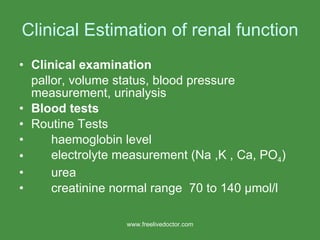
Clinical Estimation of renal function Clinical examination pallor, volume status, blood pressure measurement, urinalysis Blood tests Routine Tests haemoglobin level electrolyte measurement (Na ,K , Ca, PO 4 ) urea creatinine normal range  70 to 140  μ mol/l www.freelivedoctor.com
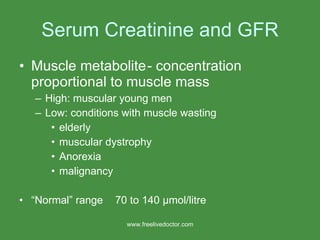
Serum Creatinine and GFR Muscle metabolite - concentration  proportional to muscle mass High: muscular young men Low: conditions with muscle wasting elderly muscular dystrophy Anorexia malignancy “ Normal” range  70 to 140  μ mol/litre www.freelivedoctor.com
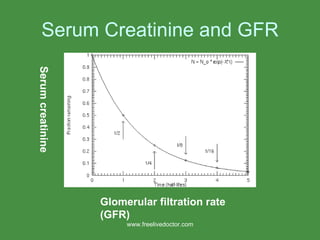
Serum Creatinine and GFR Serum creatinine Glomerular filtration rate  (GFR) www.freelivedoctor.com
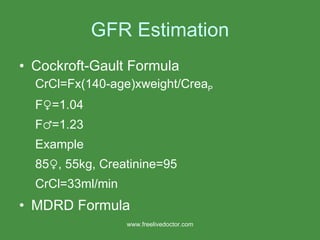
GFR Estimation Cockroft-Gault Formula CrCl=Fx(140-age)xweight/Crea P   F ♀=1.04 F♂=1.23 Example 85♀, 55kg, Creatinine=95 CrCl=33ml/min MDRD Formula www.freelivedoctor.com
Tests of renal function cont. 24h Urine sample-Creatinine  clearance chromium EDTA Clearance gold standard Inulin clearance www.freelivedoctor.com
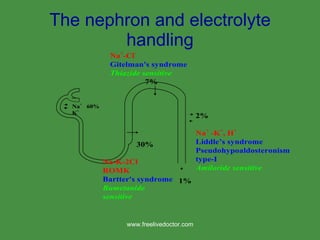
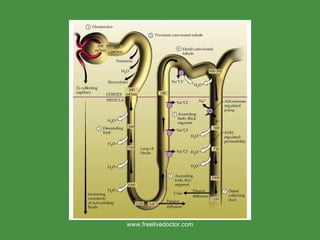
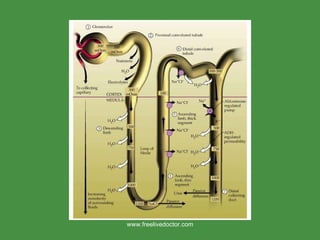
The nephron and electrolyte handling www.freelivedoctor.com
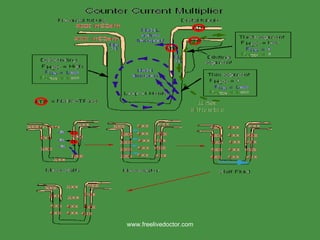
www.freelivedoctor.com
Pharmacokinetics Absorption Distribution Metabolism Elimination filtration secretion www.freelivedoctor.com
Diuretics Loop Thiazide Aldosterone antagonist Osmotic www.freelivedoctor.com
Diuretics Indications for use heart failure ( acute or chronic ) pulmonary oedema hypertension nephrotic syndrome hypercalcaemia hypercalciuria www.freelivedoctor.com
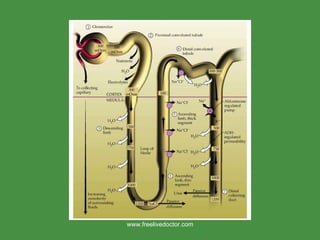
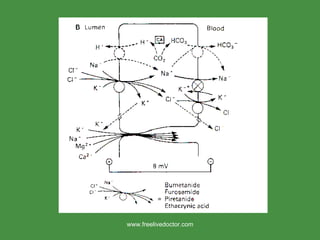
Loop diuretics Frusemide, Bumetanide Indication Fluid overload Hypertension Hypercalcaemia Mechanism of action Blockade of NaK2Cl (NKCC2) transporter in the thick ascending loop of Henle www.freelivedoctor.com
www.freelivedoctor.com
Loop diuretics Frusemide oral bioavailability between 10 and 90% Acts at luminal side of thick ascending limb(NaK2Cl transporter) Highly protein bound Rebound after single dose Half-life 4 hours www.freelivedoctor.com
Loop diuretics continued Caution Electrolyte imbalance - hypokalaemia Volume depletion (prerenal uremia) Tinitus (acts within cochlea – can synergise with aminoglycoside antibiotics) www.freelivedoctor.com
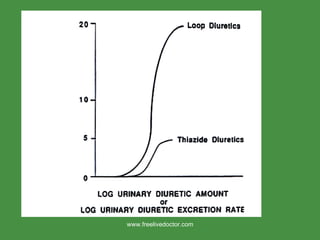
Thiazide diuretics Bendrofluazide, Metolazone Site of action distal convoluted tubule blocks electroneutral Na/Cl  exchanger (NCCT) Reaches site of action in glomerular filtrate Higher doses required in low GFR (ineffective when serum creatinine >200 μ M) T ½  3-5 hours www.freelivedoctor.com
www.freelivedoctor.com
Thiazides Indications Antihypertensive: especially in combination with ACE inhibitor/ARB (A+D) In combination with loop diuretic for profound oedema Cautions Metabolic side effects – hyperuricaemia, impaired glucose tolerance & electrolyte disturbance (hypokalaemia and hyponatraemia) Volume depletion www.freelivedoctor.com
Major Outcomes in High Risk Hypertensive Patients Randomized to Angiotensin-Converting Enzyme Inhibitor or Calcium Channel Blocker vs Diuretic The Antihypertensive and Lipid-Lowering Treatment to Prevent Heart Attack Trial (ALLHAT) The ALLHAT Collaborative Research Group Sponsored by the National Heart, Lung, and Blood Institute (NHLBI) www.freelivedoctor.com
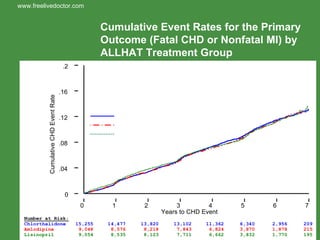
Cumulative Event Rates for the Primary Outcome (Fatal CHD or Nonfatal MI) by ALLHAT Treatment Group   Chlorthalidone Amlodipine Lisinopril www.freelivedoctor.com Years to CHD Event 0 1 2 3 4 5 6 7 Cumulative CHD Event Rate 0 .04 .08 .12 .16 .2 RR (95% CI) p value A/C 0.98 (0.90-1.07) 0.65 L/C 0.99 (0.91-1.08) 0.81
Overall Conclusions Because of the superiority of thiazide-type diuretics in preventing one or more major forms of CVD and their lower cost, they should be the drugs of choice for first-step antihypertensive drug therapy. www.freelivedoctor.com
Amiloride and Spironolactone Amiloride  Blocks ENaC (channel for Na secretion in collecting duct under aldosterone control) Spironolactone Aldosterone receptor antagonist  Reaches DCT via blood stream (not dependent on GFR) Often Combined with loop or thiazides to capitalise on K-sparing action www.freelivedoctor.com
www.freelivedoctor.com
Nephrotoxic Drugs Dose dependant toxicity NSAIDs including COX 2 Aminoglycosides Radio opaque contrast materials Idiosyncratic Renal Damage NSAIDs Penicillins Gold, penicillamine www.freelivedoctor.com
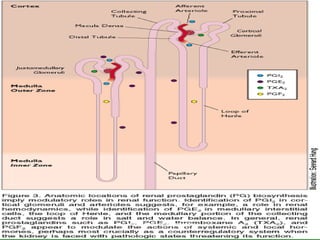
NSAIDs (Non-steroidal anti inflammatory drugs) Commonly used Interfere with prostaglandin production,  disrupt regulation of renal medullary blood flow and salt water balance Chronic renal impairment Habitual use Exacerbated by other drugs ( anti-hypertensives, ACE inhibitors) Typical radiological features when advanced www.freelivedoctor.com
www.freelivedoctor.com
Aminoglycosides Highly effective antimicrobials Particularly useful in gram -ve sepsis bactericidal BUT Nephrotoxic  Ototoxic  Narrow therapeutic range www.freelivedoctor.com
Prescribing Aminoglycosides Once daily regimen now recommended in patients with normal kidneys High peak concentration enhances efficacy  long post dose effect Single daily dose less nephrotoxic Dose depends on size  and renal function Measure levels! www.freelivedoctor.com
Intravenous contrast Used commonly   CT scanning, IV urography, Angiography Unsafe in patients with pre-existing renal impairment Risk increased in diabetic nephropathy, heart failure & dehydration Can precipitate end-stage renal failure Cumulative effect on repeated administration Risk reduced by using Acetylcysteine ? see N Engl J Med 2000; 343:180-184 www.freelivedoctor.com
Prescribing in Kidney Disease Patients with renal impairment  Patients on Dialysis Patients with renal transplants www.freelivedoctor.com
Principles Establish type of kidney disease Most patients with kidney failure will already be taking a number of drugs  Interactions are common Care needed to avoid drug toxicity Patients with renal impairment and renal failure Antihypertensives Phosphate binders www.freelivedoctor.com
Dosing in renal impairment Loading dose does not change (usually) Maintenance dose or dosing interval does T ½  often prolonged Reduce dose OR Increase dosing interval Some drugs have active metabolites that are themselves excreted renally Warfarin, diazepam www.freelivedoctor.com
Spironolactone Class Potassium sparing diuretic Mode of action Antagonises the effect of aldosterone at levels MR Mineralocorticoid receptor (MR)–aldosterone complex translocates to nucleus to affect gene transcription Indication Prevent hypokalaemia in patients taking diuretics or digoxin Improves survival in advanced heart failure (RALES 1999 Randomised Aldactone Evaluation Study) Antihypertensive (adjunctive third line therapy for hypertension or first line for conns patients) Ascites in patients with cirrhosis www.freelivedoctor.com
Spironolactone Side effects Antiandrogenic effects through the antagonism of DHT (testosterone) at its binding site.  Gynaecomastia, impotence, reduced libido Interactions Other potassium sparing drugs e.g. ACE inhibitors/ARBs & potassium supplements (remember ‘LoSalt’ used as NaCl substitute in cooking) www.freelivedoctor.com
Amphotericin Class Anti fungal agent for topical and systemic use Mode of action Lipid soluble drug. Binds steroid alcohols (ergosterol) in the fungal cell membrane causing leakage of cellular content and death. Effective against candida species Fungistatic or fungicidal depending on the concentration Broad spectrum (candida, cryptosporidium) www.freelivedoctor.com
Amphotericin Indications  iv administration for systemic invasive fungal infections Oral for GI mycosis Side effects Local/systemic effects with infusion (fever) Chronic kidney dysfunction Decline in GFR with prolonged use Tubular dysfunction (membrane permeability) Hypokalaemia, renal tubular acidosis (bicarb wasting type 1/distal), diabetes insipidus, hypomagnesaemia Pre hydration/saline loading may avoid problems Toxicity can be reduced substantially by liposomal packing of Amphotericin www.freelivedoctor.com
Lithium toxicity Lithium carbonate -  Rx for bipolar affective disorder Toxicity closely related to serum levels Symptoms  CVS  arrhythmias (especially junctional dysrrythmias) CNS  tremor – confusion - coma Treatment Supportive  - Haemodialysis and colonic irrigation for severe levels Inadvertent intoxication from interaction with  ACEI &  loop/thiazide diuretic Carbamezepine and other anti epileptics increase neurotoxicity www.freelivedoctor.com
Digoxin toxicity Incidence  High levels demonstrated in 10% and toxicity reported in 4% of a series of 4000 digoxin samples Kinetics  large volume of distribution (reservoir is skeletal muscle) about 30% of stores excreted in urine/day www.freelivedoctor.com
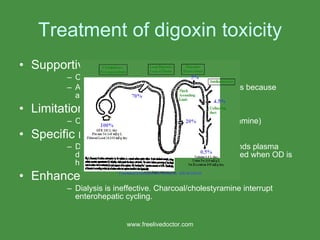
Treatment of digoxin toxicity Supportive Correction of electrolyte imbalances Atropine for bradycardia avoid cardio stimulants because arrythmogenic Limitation of absorption Charcoal effective within 8 hours (or cholestyramine) Specific measures DIGIBIND  Fab digoxin specific antibodies. Binds plasma digoxin and complex eliminated by kidneys (used when OD is high/near arrest) Enhanced elimination Dialysis is ineffective. Charcoal/cholestyramine interrupt enterohepatic cycling. www.freelivedoctor.com
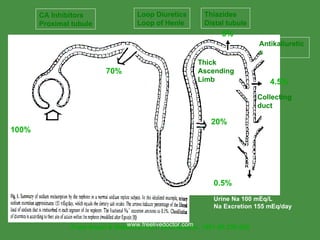
From Knauf & Mutschler Klin. Wochenschr. 1991 69:239-250 70% 20% 5% 4.5% 0.5% Volume 1.5 L/day Urine Na 100 mEq/L Na Excretion 155 mEq/day 100% GFR 180 L/day  Plasma Na 145 mEq/L Filtered Load 26,100 mEq/day CA Inhibitors Proximal tubule Loop Diuretics Loop of Henle Thiazides Distal tubule Antikaliuretics Collecting  duct Thick  Ascending  Limb www.freelivedoctor.com
Principles important for understanding effects of diuretics Interference with Na +  reabsorption at one nephron site interferes with other renal functions linked to it It also leads to increased Na +  reabsorption at other sites Increased flow and Na +  delivery to distal nephron stimulates K  +  (and H  + ) secretion www.freelivedoctor.com
Diuretics act only if Na +  reaches their site of action.  The magnitude of the diuretic effect depends on the amount of Na +  reaching that site Diuretic actions at different nephron sites can produce synergism All, except spironolactone, act from the lumenal side of the tubular cellular membrane Principles important for understanding effects of diuretics www.freelivedoctor.com
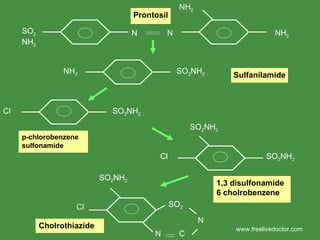
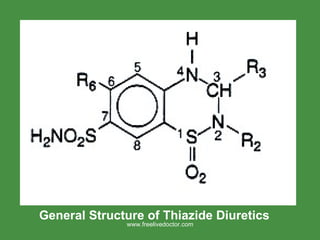
N N SO 2  NH 2 SO 2 NH 2 NH 2 NH 2 NH 2 SO 2 NH 2 Cl Cl SO 2 NH 2 SO 2 NH 2 Cl SO 2 NH 2 N C N SO 2 Prontosil Sulfanilamide p-chlorobenzene sulfonamide 1,3 disulfonamide 6 cholrobenzene Cholrothiazide www.freelivedoctor.com
THIAZIDE DIURETICS Secreted into the tubular lumen by the organic acid transport mechanisms in the proximal tubule Act on the distal tubule to inhibit sodium and chloride transport and result in a modest diuresis Increase renal excretion of potassium, magnesium Reduce calcium and urate excretion Not effective at low glomerular filtration rates Impair maximal diluting but not maximal concentrating ability www.freelivedoctor.com
General Structure of Thiazide Diuretics www.freelivedoctor.com
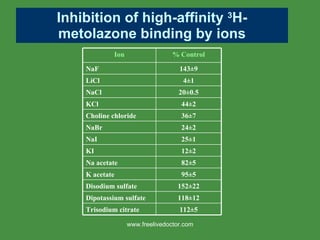
Inhibition of high-affinity  3 H-metolazone binding by ions www.freelivedoctor.com Ion % Control NaF 143±9 LiCl 4±1 NaCl 20±0.5 KCl 44±2 Choline chloride 36±7 NaBr 24±2 NaI 25±1 KI 12±2 Na acetate 82±5 K acetate 95±5 Disodium sulfate 152±22 Dipotassium sulfate 118±12 Trisodium citrate 112±5
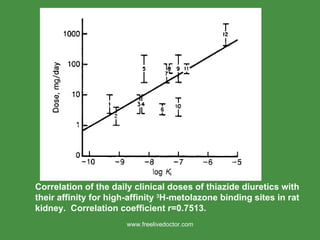
Correlation of the daily clinical doses of thiazide diuretics with their affinity for high-affinity  3 H-metolazone binding sites in rat kidney.  Correlation coefficient r=0.7513. www.freelivedoctor.com
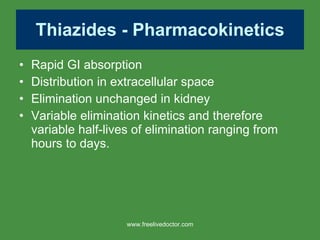
Thiazides - Pharmacokinetics Rapid GI absorption Distribution in extracellular space Elimination unchanged in kidney Variable elimination kinetics and therefore variable half-lives of elimination ranging from hours to days. www.freelivedoctor.com
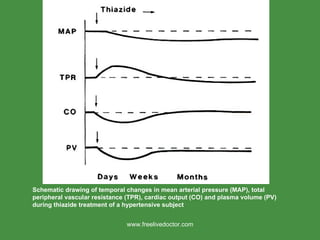
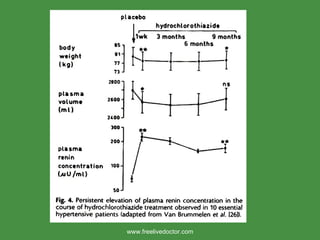
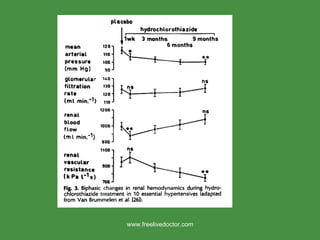
CLINICAL USES Of  THIAZIDES-1 1 ) HYPERTENSION Thiazides reduce blood pressure and associated risk of CVA and MI in hypertension they should be considered first-line therapy in hypertension (effective, safe and cheap) Mechanism of action in hypertension is uncertain – involves vasodilation that is not a direct effect but a consequence of the diuretic/natriuretic effect www.freelivedoctor.com
Schematic drawing of temporal changes in mean arterial pressure (MAP), total peripheral vascular resistance (TPR), cardiac output (CO) and plasma volume (PV) during thiazide treatment of a hypertensive subject www.freelivedoctor.com
www.freelivedoctor.com
CLINICAL USES OF THIAZIDES-2 2)  EDEMA  (cardiac, liver renal) 3)  IDIOPATHIC HYPERCALCIURIA condition characterized by recurrent stone formation in the kidneys due to excess calcium excretion thiazide diuretics used to prevent calcium loss and protect the kidneys 4) DIABETES INSIPIDUS www.freelivedoctor.com
ADVERSE EFFECTS OF THIAZIDES-1 Initially, they were used at high doses which caused a high incidence of adverse effects. Lower doses now used cause fewer adverse effects.  Among them are: HYPOKALEMIA DEHYDRATION  (particularly in the elderly) leading to POSTURAL HYPOTENSION HYPERGLYCEMIA  possibly because of impaired insulin release secondary to hypokalemia HYPERURICEMIA  because thiazides compete with urate for tubular secretion www.freelivedoctor.com
ADVERSE EFFECTS OF THIAZIDES-2 HYPERLIPIDEMIA ; mechanism unknown but cholesterol increases usually trivial (1% increase) IMPOTENCE HYPONATREMIA  due to thirst, sodium lo s loss, inappropriate ADH secretion (can cause confusion in the elderly), usually after prolonged use www.freelivedoctor.com
Less common problems HYPERSENSITIVITY  - may manifest as interstitial nephritis, pancreatitis, rashes, blood dyscrasias (all very rare) METABOLIC ALKALOSIS  due to increased sodium load at the distal convoluted tubule which stimulates the sodium/hydrogen exchanger to reabsorb sodium and excrete hydrogen HYPERCALCEMIA ADVERSE EFFECTS OF THIAZIDES-3 www.freelivedoctor.com
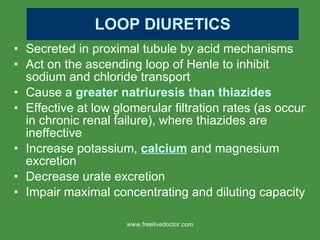
LOOP DIURETICS Secreted in proximal tubule by acid mechanisms Act on the ascending loop of Henle to inhibit sodium and chloride transport Cause a  greater natriuresis than thiazides Effective at low glomerular filtration rates (as occur in chronic renal failure), where thiazides are ineffective Increase potassium,  calcium   and magnesium excretion Decrease urate excretion Impair maximal concentrating and diluting capacity www.freelivedoctor.com
www.freelivedoctor.com
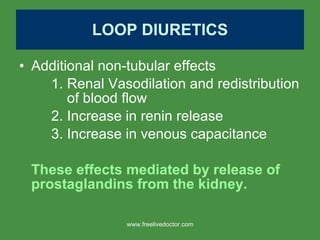
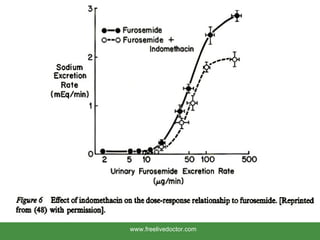
LOOP DIURETICS Additional non-tubular effects 1. Renal Vasodilation and redistribution    of blood flow 2. Increase in renin release 3. Increase in venous capacitance These effects mediated by release of prostaglandins from the kidney. www.freelivedoctor.com
www.freelivedoctor.com
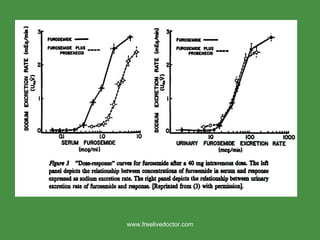
Loop Diuretics - Pharmacokinetics Rapid GI absorption.  Also given i.m. and i.v. Extensively protein bound in plasma Short half-lives in general Elimination: unchanged in kidney or by conjugation in the liver and secretion in bile. www.freelivedoctor.com
www.freelivedoctor.com
CLINICAL USES OF LOOP DIURETICS EDEMA  due to CHF, nephrotic syndrome or cirrhosis Acute heart failure with  PULMONARY EDEMA HYPERCALCEMIA not in widespread use for the treatment of hypertension (except in a few special cases e.g. hypertension in renal disease) www.freelivedoctor.com
Hypokalemia, metabolic alkalosis, hypercholesterolemia, hyperuricemia, hyperglycemia, hyponatremia Dehydration  and postural hypotension Hypocalcemia  (in contrast to thiazides) Hypersensitivity OTOTOXICITY  (especially if given by rapid IV bolus) Adverse Effects of Loop Diuretics   similar to thiazides in many respects www.freelivedoctor.com
Edema: Therapeutic Considerations Therapy is palliative (except with pulmonary edema). Need a mild sustained response.  Specific consideration to potassium homeostasis, i.e. supplement with K-salt or use K-sparing diuretic. Therefore, in most cases start with a thiazide. If resistant, move to Loop diuretic. www.freelivedoctor.com
www.freelivedoctor.com
Conditions treated with Diuretics Edema Hypertension Nephrogenic Diabetes Insipidus Syndrome of Inappropriate ADH Secretion (SIADH) To increase or decrease Ca ++ , K +  or H +  ion excretion. www.freelivedoctor.com
Diuretic Resistance Compensatory Mechanisms  ( RAAS, SNS ) Failure to reach tubular site of action a - Decreased G.I. absorption b -   Decreased secretion into tubular lumen   (e.g. uremia, decreased kidney perfusion) c -   Decreased availability in tubular lumen   (e.g. nephrotic syndrome) Interference by other drugs  ( e.g. NSAID’s ) Tubular adaptation  ( chronic Loop diuretic use) Can Use Combination of Diuretics  to Induce a S ynergistic Effect www.freelivedoctor.com
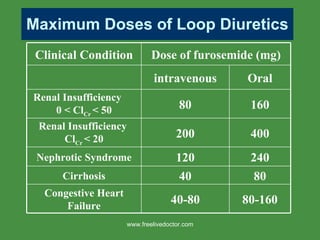
Maximum Doses of Loop Diuretics www.freelivedoctor.com Clinical Condition Dose of furosemide (mg) intravenous Oral Renal Insufficiency  0 < Cl Cr  < 50 80 160 Renal Insufficiency  Cl Cr  < 20 200 400 Nephrotic Syndrome 120 240 Cirrhosis 40 80 Congestive Heart Failure 40-80 80-160

Drugs and the kidney

  • 1.
    Drugs and theKidney www.freelivedoctor.com
  • 2.
    Drugs and theKidney 1 Renal Physiology and Pharmacokinetics 2 Drugs and the normal kidney 3 Drugs toxic to the kidney 4 Prescribing in kidney disease www.freelivedoctor.com
  • 3.
    Normal Kidney Function 1 Extra Cellular Fluid Volume control 2 Electrolyte balance 3 Waste product excretion 4 Drug and hormone elimination/metabolism 5 Blood pressure regulation 6 Regulation of haematocrit 7 regulation of calcium/phosphate balance (vitamin D3 metabolism) www.freelivedoctor.com
  • 4.
    Clinical Estimation ofrenal function Clinical examination pallor, volume status, blood pressure measurement, urinalysis Blood tests Routine Tests haemoglobin level electrolyte measurement (Na ,K , Ca, PO 4 ) urea creatinine normal range 70 to 140 μ mol/l www.freelivedoctor.com
  • 5.
    Serum Creatinine andGFR Muscle metabolite - concentration proportional to muscle mass High: muscular young men Low: conditions with muscle wasting elderly muscular dystrophy Anorexia malignancy “ Normal” range 70 to 140 μ mol/litre www.freelivedoctor.com
  • 6.
    Serum Creatinine andGFR Serum creatinine Glomerular filtration rate (GFR) www.freelivedoctor.com
  • 7.
    GFR Estimation Cockroft-GaultFormula CrCl=Fx(140-age)xweight/Crea P F ♀=1.04 F♂=1.23 Example 85♀, 55kg, Creatinine=95 CrCl=33ml/min MDRD Formula www.freelivedoctor.com
  • 8.
    Tests of renalfunction cont. 24h Urine sample-Creatinine clearance chromium EDTA Clearance gold standard Inulin clearance www.freelivedoctor.com
  • 9.
    The nephron andelectrolyte handling www.freelivedoctor.com
  • 10.
  • 11.
    Pharmacokinetics Absorption DistributionMetabolism Elimination filtration secretion www.freelivedoctor.com
  • 12.
    Diuretics Loop ThiazideAldosterone antagonist Osmotic www.freelivedoctor.com
  • 13.
    Diuretics Indications foruse heart failure ( acute or chronic ) pulmonary oedema hypertension nephrotic syndrome hypercalcaemia hypercalciuria www.freelivedoctor.com
  • 14.
    Loop diuretics Frusemide,Bumetanide Indication Fluid overload Hypertension Hypercalcaemia Mechanism of action Blockade of NaK2Cl (NKCC2) transporter in the thick ascending loop of Henle www.freelivedoctor.com
  • 15.
  • 16.
    Loop diuretics Frusemideoral bioavailability between 10 and 90% Acts at luminal side of thick ascending limb(NaK2Cl transporter) Highly protein bound Rebound after single dose Half-life 4 hours www.freelivedoctor.com
  • 17.
    Loop diuretics continuedCaution Electrolyte imbalance - hypokalaemia Volume depletion (prerenal uremia) Tinitus (acts within cochlea – can synergise with aminoglycoside antibiotics) www.freelivedoctor.com
  • 18.
    Thiazide diuretics Bendrofluazide,Metolazone Site of action distal convoluted tubule blocks electroneutral Na/Cl exchanger (NCCT) Reaches site of action in glomerular filtrate Higher doses required in low GFR (ineffective when serum creatinine >200 μ M) T ½ 3-5 hours www.freelivedoctor.com
  • 19.
  • 20.
    Thiazides Indications Antihypertensive:especially in combination with ACE inhibitor/ARB (A+D) In combination with loop diuretic for profound oedema Cautions Metabolic side effects – hyperuricaemia, impaired glucose tolerance & electrolyte disturbance (hypokalaemia and hyponatraemia) Volume depletion www.freelivedoctor.com
  • 21.
    Major Outcomes inHigh Risk Hypertensive Patients Randomized to Angiotensin-Converting Enzyme Inhibitor or Calcium Channel Blocker vs Diuretic The Antihypertensive and Lipid-Lowering Treatment to Prevent Heart Attack Trial (ALLHAT) The ALLHAT Collaborative Research Group Sponsored by the National Heart, Lung, and Blood Institute (NHLBI) www.freelivedoctor.com
  • 22.
    Cumulative Event Ratesfor the Primary Outcome (Fatal CHD or Nonfatal MI) by ALLHAT Treatment Group Chlorthalidone Amlodipine Lisinopril www.freelivedoctor.com Years to CHD Event 0 1 2 3 4 5 6 7 Cumulative CHD Event Rate 0 .04 .08 .12 .16 .2 RR (95% CI) p value A/C 0.98 (0.90-1.07) 0.65 L/C 0.99 (0.91-1.08) 0.81
  • 23.
    Overall Conclusions Becauseof the superiority of thiazide-type diuretics in preventing one or more major forms of CVD and their lower cost, they should be the drugs of choice for first-step antihypertensive drug therapy. www.freelivedoctor.com
  • 24.
    Amiloride and SpironolactoneAmiloride Blocks ENaC (channel for Na secretion in collecting duct under aldosterone control) Spironolactone Aldosterone receptor antagonist Reaches DCT via blood stream (not dependent on GFR) Often Combined with loop or thiazides to capitalise on K-sparing action www.freelivedoctor.com
  • 25.
  • 26.
    Nephrotoxic Drugs Dosedependant toxicity NSAIDs including COX 2 Aminoglycosides Radio opaque contrast materials Idiosyncratic Renal Damage NSAIDs Penicillins Gold, penicillamine www.freelivedoctor.com
  • 27.
    NSAIDs (Non-steroidal antiinflammatory drugs) Commonly used Interfere with prostaglandin production, disrupt regulation of renal medullary blood flow and salt water balance Chronic renal impairment Habitual use Exacerbated by other drugs ( anti-hypertensives, ACE inhibitors) Typical radiological features when advanced www.freelivedoctor.com
  • 28.
  • 29.
    Aminoglycosides Highly effectiveantimicrobials Particularly useful in gram -ve sepsis bactericidal BUT Nephrotoxic Ototoxic Narrow therapeutic range www.freelivedoctor.com
  • 30.
    Prescribing Aminoglycosides Oncedaily regimen now recommended in patients with normal kidneys High peak concentration enhances efficacy long post dose effect Single daily dose less nephrotoxic Dose depends on size and renal function Measure levels! www.freelivedoctor.com
  • 31.
    Intravenous contrast Usedcommonly CT scanning, IV urography, Angiography Unsafe in patients with pre-existing renal impairment Risk increased in diabetic nephropathy, heart failure & dehydration Can precipitate end-stage renal failure Cumulative effect on repeated administration Risk reduced by using Acetylcysteine ? see N Engl J Med 2000; 343:180-184 www.freelivedoctor.com
  • 32.
    Prescribing in KidneyDisease Patients with renal impairment Patients on Dialysis Patients with renal transplants www.freelivedoctor.com
  • 33.
    Principles Establish typeof kidney disease Most patients with kidney failure will already be taking a number of drugs Interactions are common Care needed to avoid drug toxicity Patients with renal impairment and renal failure Antihypertensives Phosphate binders www.freelivedoctor.com
  • 34.
    Dosing in renalimpairment Loading dose does not change (usually) Maintenance dose or dosing interval does T ½ often prolonged Reduce dose OR Increase dosing interval Some drugs have active metabolites that are themselves excreted renally Warfarin, diazepam www.freelivedoctor.com
  • 35.
    Spironolactone Class Potassiumsparing diuretic Mode of action Antagonises the effect of aldosterone at levels MR Mineralocorticoid receptor (MR)–aldosterone complex translocates to nucleus to affect gene transcription Indication Prevent hypokalaemia in patients taking diuretics or digoxin Improves survival in advanced heart failure (RALES 1999 Randomised Aldactone Evaluation Study) Antihypertensive (adjunctive third line therapy for hypertension or first line for conns patients) Ascites in patients with cirrhosis www.freelivedoctor.com
  • 36.
    Spironolactone Side effectsAntiandrogenic effects through the antagonism of DHT (testosterone) at its binding site. Gynaecomastia, impotence, reduced libido Interactions Other potassium sparing drugs e.g. ACE inhibitors/ARBs & potassium supplements (remember ‘LoSalt’ used as NaCl substitute in cooking) www.freelivedoctor.com
  • 37.
    Amphotericin Class Antifungal agent for topical and systemic use Mode of action Lipid soluble drug. Binds steroid alcohols (ergosterol) in the fungal cell membrane causing leakage of cellular content and death. Effective against candida species Fungistatic or fungicidal depending on the concentration Broad spectrum (candida, cryptosporidium) www.freelivedoctor.com
  • 38.
    Amphotericin Indications iv administration for systemic invasive fungal infections Oral for GI mycosis Side effects Local/systemic effects with infusion (fever) Chronic kidney dysfunction Decline in GFR with prolonged use Tubular dysfunction (membrane permeability) Hypokalaemia, renal tubular acidosis (bicarb wasting type 1/distal), diabetes insipidus, hypomagnesaemia Pre hydration/saline loading may avoid problems Toxicity can be reduced substantially by liposomal packing of Amphotericin www.freelivedoctor.com
  • 39.
    Lithium toxicity Lithiumcarbonate - Rx for bipolar affective disorder Toxicity closely related to serum levels Symptoms CVS arrhythmias (especially junctional dysrrythmias) CNS tremor – confusion - coma Treatment Supportive - Haemodialysis and colonic irrigation for severe levels Inadvertent intoxication from interaction with ACEI & loop/thiazide diuretic Carbamezepine and other anti epileptics increase neurotoxicity www.freelivedoctor.com
  • 40.
    Digoxin toxicity Incidence High levels demonstrated in 10% and toxicity reported in 4% of a series of 4000 digoxin samples Kinetics large volume of distribution (reservoir is skeletal muscle) about 30% of stores excreted in urine/day www.freelivedoctor.com
  • 41.
    Treatment of digoxintoxicity Supportive Correction of electrolyte imbalances Atropine for bradycardia avoid cardio stimulants because arrythmogenic Limitation of absorption Charcoal effective within 8 hours (or cholestyramine) Specific measures DIGIBIND Fab digoxin specific antibodies. Binds plasma digoxin and complex eliminated by kidneys (used when OD is high/near arrest) Enhanced elimination Dialysis is ineffective. Charcoal/cholestyramine interrupt enterohepatic cycling. www.freelivedoctor.com
  • 42.
    From Knauf &Mutschler Klin. Wochenschr. 1991 69:239-250 70% 20% 5% 4.5% 0.5% Volume 1.5 L/day Urine Na 100 mEq/L Na Excretion 155 mEq/day 100% GFR 180 L/day Plasma Na 145 mEq/L Filtered Load 26,100 mEq/day CA Inhibitors Proximal tubule Loop Diuretics Loop of Henle Thiazides Distal tubule Antikaliuretics Collecting duct Thick Ascending Limb www.freelivedoctor.com
  • 43.
    Principles important forunderstanding effects of diuretics Interference with Na + reabsorption at one nephron site interferes with other renal functions linked to it It also leads to increased Na + reabsorption at other sites Increased flow and Na + delivery to distal nephron stimulates K + (and H + ) secretion www.freelivedoctor.com
  • 44.
    Diuretics act onlyif Na + reaches their site of action. The magnitude of the diuretic effect depends on the amount of Na + reaching that site Diuretic actions at different nephron sites can produce synergism All, except spironolactone, act from the lumenal side of the tubular cellular membrane Principles important for understanding effects of diuretics www.freelivedoctor.com
  • 45.
    N N SO2 NH 2 SO 2 NH 2 NH 2 NH 2 NH 2 SO 2 NH 2 Cl Cl SO 2 NH 2 SO 2 NH 2 Cl SO 2 NH 2 N C N SO 2 Prontosil Sulfanilamide p-chlorobenzene sulfonamide 1,3 disulfonamide 6 cholrobenzene Cholrothiazide www.freelivedoctor.com
  • 46.
    THIAZIDE DIURETICS Secretedinto the tubular lumen by the organic acid transport mechanisms in the proximal tubule Act on the distal tubule to inhibit sodium and chloride transport and result in a modest diuresis Increase renal excretion of potassium, magnesium Reduce calcium and urate excretion Not effective at low glomerular filtration rates Impair maximal diluting but not maximal concentrating ability www.freelivedoctor.com
  • 47.
    General Structure ofThiazide Diuretics www.freelivedoctor.com
  • 48.
    Inhibition of high-affinity 3 H-metolazone binding by ions www.freelivedoctor.com Ion % Control NaF 143±9 LiCl 4±1 NaCl 20±0.5 KCl 44±2 Choline chloride 36±7 NaBr 24±2 NaI 25±1 KI 12±2 Na acetate 82±5 K acetate 95±5 Disodium sulfate 152±22 Dipotassium sulfate 118±12 Trisodium citrate 112±5
  • 49.
    Correlation of thedaily clinical doses of thiazide diuretics with their affinity for high-affinity 3 H-metolazone binding sites in rat kidney. Correlation coefficient r=0.7513. www.freelivedoctor.com
  • 50.
    Thiazides - PharmacokineticsRapid GI absorption Distribution in extracellular space Elimination unchanged in kidney Variable elimination kinetics and therefore variable half-lives of elimination ranging from hours to days. www.freelivedoctor.com
  • 51.
    CLINICAL USES Of THIAZIDES-1 1 ) HYPERTENSION Thiazides reduce blood pressure and associated risk of CVA and MI in hypertension they should be considered first-line therapy in hypertension (effective, safe and cheap) Mechanism of action in hypertension is uncertain – involves vasodilation that is not a direct effect but a consequence of the diuretic/natriuretic effect www.freelivedoctor.com
  • 52.
    Schematic drawing oftemporal changes in mean arterial pressure (MAP), total peripheral vascular resistance (TPR), cardiac output (CO) and plasma volume (PV) during thiazide treatment of a hypertensive subject www.freelivedoctor.com
  • 53.
  • 54.
  • 55.
    CLINICAL USES OFTHIAZIDES-2 2) EDEMA (cardiac, liver renal) 3) IDIOPATHIC HYPERCALCIURIA condition characterized by recurrent stone formation in the kidneys due to excess calcium excretion thiazide diuretics used to prevent calcium loss and protect the kidneys 4) DIABETES INSIPIDUS www.freelivedoctor.com
  • 56.
    ADVERSE EFFECTS OFTHIAZIDES-1 Initially, they were used at high doses which caused a high incidence of adverse effects. Lower doses now used cause fewer adverse effects. Among them are: HYPOKALEMIA DEHYDRATION (particularly in the elderly) leading to POSTURAL HYPOTENSION HYPERGLYCEMIA possibly because of impaired insulin release secondary to hypokalemia HYPERURICEMIA because thiazides compete with urate for tubular secretion www.freelivedoctor.com
  • 57.
    ADVERSE EFFECTS OFTHIAZIDES-2 HYPERLIPIDEMIA ; mechanism unknown but cholesterol increases usually trivial (1% increase) IMPOTENCE HYPONATREMIA due to thirst, sodium lo s loss, inappropriate ADH secretion (can cause confusion in the elderly), usually after prolonged use www.freelivedoctor.com
  • 58.
    Less common problemsHYPERSENSITIVITY - may manifest as interstitial nephritis, pancreatitis, rashes, blood dyscrasias (all very rare) METABOLIC ALKALOSIS due to increased sodium load at the distal convoluted tubule which stimulates the sodium/hydrogen exchanger to reabsorb sodium and excrete hydrogen HYPERCALCEMIA ADVERSE EFFECTS OF THIAZIDES-3 www.freelivedoctor.com
  • 59.
    LOOP DIURETICS Secretedin proximal tubule by acid mechanisms Act on the ascending loop of Henle to inhibit sodium and chloride transport Cause a greater natriuresis than thiazides Effective at low glomerular filtration rates (as occur in chronic renal failure), where thiazides are ineffective Increase potassium, calcium and magnesium excretion Decrease urate excretion Impair maximal concentrating and diluting capacity www.freelivedoctor.com
  • 60.
  • 61.
    LOOP DIURETICS Additionalnon-tubular effects 1. Renal Vasodilation and redistribution of blood flow 2. Increase in renin release 3. Increase in venous capacitance These effects mediated by release of prostaglandins from the kidney. www.freelivedoctor.com
  • 62.
  • 63.
    Loop Diuretics -Pharmacokinetics Rapid GI absorption. Also given i.m. and i.v. Extensively protein bound in plasma Short half-lives in general Elimination: unchanged in kidney or by conjugation in the liver and secretion in bile. www.freelivedoctor.com
  • 64.
  • 65.
    CLINICAL USES OFLOOP DIURETICS EDEMA due to CHF, nephrotic syndrome or cirrhosis Acute heart failure with PULMONARY EDEMA HYPERCALCEMIA not in widespread use for the treatment of hypertension (except in a few special cases e.g. hypertension in renal disease) www.freelivedoctor.com
  • 66.
    Hypokalemia, metabolic alkalosis,hypercholesterolemia, hyperuricemia, hyperglycemia, hyponatremia Dehydration and postural hypotension Hypocalcemia (in contrast to thiazides) Hypersensitivity OTOTOXICITY (especially if given by rapid IV bolus) Adverse Effects of Loop Diuretics similar to thiazides in many respects www.freelivedoctor.com
  • 67.
    Edema: Therapeutic ConsiderationsTherapy is palliative (except with pulmonary edema). Need a mild sustained response. Specific consideration to potassium homeostasis, i.e. supplement with K-salt or use K-sparing diuretic. Therefore, in most cases start with a thiazide. If resistant, move to Loop diuretic. www.freelivedoctor.com
  • 68.
  • 69.
    Conditions treated withDiuretics Edema Hypertension Nephrogenic Diabetes Insipidus Syndrome of Inappropriate ADH Secretion (SIADH) To increase or decrease Ca ++ , K + or H + ion excretion. www.freelivedoctor.com
  • 70.
    Diuretic Resistance CompensatoryMechanisms ( RAAS, SNS ) Failure to reach tubular site of action a - Decreased G.I. absorption b - Decreased secretion into tubular lumen (e.g. uremia, decreased kidney perfusion) c - Decreased availability in tubular lumen (e.g. nephrotic syndrome) Interference by other drugs ( e.g. NSAID’s ) Tubular adaptation ( chronic Loop diuretic use) Can Use Combination of Diuretics to Induce a S ynergistic Effect www.freelivedoctor.com
  • 71.
    Maximum Doses ofLoop Diuretics www.freelivedoctor.com Clinical Condition Dose of furosemide (mg) intravenous Oral Renal Insufficiency 0 < Cl Cr < 50 80 160 Renal Insufficiency Cl Cr < 20 200 400 Nephrotic Syndrome 120 240 Cirrhosis 40 80 Congestive Heart Failure 40-80 80-160