S.P.B PATEL ENGINEERING COLLEGE
NAME ENROLLMENT NO.
Patel sandip S. 136930306521
Patel vivek V. 136930306524
Patel purv D. 136930306541
DRILLING
DRILLING is the process of making hole in solid Materials
like rocks , timber , metal etc……
For blasting ,drilling is necessary to make hole in the rock to
place explosive in the drill hole.
Necessity Of Drilling:
 for breaking rocks for the foundation of dam
 for getting stones from quarry
 for making roads in mountains.
 for tunnelling.
 for sinking caissons or well foundation.
 For laying pipeline in the rocky strata.
Types Of Drills
Drills can broadly be classified into the following two
categories:
1. Abrasion drills
2. Percussion drills
Abrasion Drills
* in this types of drills, the grinding of the of rock into
small particles is carried out through the abrasive effect
of a bit which roatates in the hole.
* Common types of abrasive drills are as Under
1. Shot Drills
2. Diamond Drills
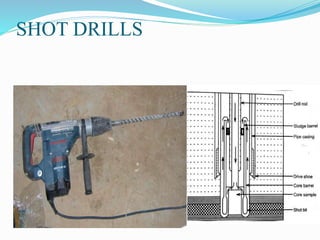
SHOT DRILLS
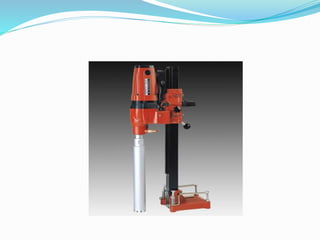
Diamond Drills
• Primarily the diamond drills are used for exploration
drilling, where cores are desired for the purpase of
studying the structure of the rocks.
• The diamond drills are available in four standard sizes.
• 1:- 37.5MM
• 2:- 47MM
• 3:- 60MM
• 4:- 75MM
Percaution Drills
• in this types of drill, the disintegration of rock into
small particles in achieved by the impact from
repeated blows.
• Commons types of percussion drills are as under.
1:- churn drills
2:- drifters
3:- jack-hammer
4:-piston drill
5:- rotary hammer drills
6:- wagon drills
Selection of Drilling method and
Equipment
 Holes are drilled into the rock for different
purposes like blasting , grouting , investigations , etc.
The drilling method and equipment should be so
selected that maximum work can be done at minimum
cost.
 The following factors should be considered
while selecting drilling method and equipment:
 Hardness of rock.
 Depth of bore hole.
 Nature of terrain.
 Texture of rock.
 Purpose off hole e.g. blasting , grouting , investigation
, etc.
 Availability of water.
 Size of project.
 Size of core required for exporation.
Factors Affecting the optimum
drilling pressure:
 The pressure at which the cost of drilling of
unit depth of hole is minimum is called optimum
pressure.
 Factors affecting optimum pressure:
 Value of increased production.
 Additional cost for providing air at high pressure.
 Cost of leakage due to high pressure.
 Increase in cost of repair and maintenance of drill.
 III effects of noise in tunnels.
 Effect on availability of high pressure drill or air
compressor.
Thank You

Drilling

  • 1.
    S.P.B PATEL ENGINEERINGCOLLEGE NAME ENROLLMENT NO. Patel sandip S. 136930306521 Patel vivek V. 136930306524 Patel purv D. 136930306541
  • 2.
    DRILLING DRILLING is theprocess of making hole in solid Materials like rocks , timber , metal etc…… For blasting ,drilling is necessary to make hole in the rock to place explosive in the drill hole.
  • 3.
    Necessity Of Drilling: for breaking rocks for the foundation of dam  for getting stones from quarry  for making roads in mountains.  for tunnelling.  for sinking caissons or well foundation.  For laying pipeline in the rocky strata.
  • 4.
    Types Of Drills Drillscan broadly be classified into the following two categories: 1. Abrasion drills 2. Percussion drills
  • 5.
    Abrasion Drills * inthis types of drills, the grinding of the of rock into small particles is carried out through the abrasive effect of a bit which roatates in the hole. * Common types of abrasive drills are as Under 1. Shot Drills 2. Diamond Drills
  • 6.
  • 7.
    Diamond Drills • Primarilythe diamond drills are used for exploration drilling, where cores are desired for the purpase of studying the structure of the rocks. • The diamond drills are available in four standard sizes. • 1:- 37.5MM • 2:- 47MM • 3:- 60MM • 4:- 75MM
  • 9.
    Percaution Drills • inthis types of drill, the disintegration of rock into small particles in achieved by the impact from repeated blows. • Commons types of percussion drills are as under. 1:- churn drills 2:- drifters 3:- jack-hammer 4:-piston drill 5:- rotary hammer drills 6:- wagon drills
  • 10.
    Selection of Drillingmethod and Equipment  Holes are drilled into the rock for different purposes like blasting , grouting , investigations , etc. The drilling method and equipment should be so selected that maximum work can be done at minimum cost.  The following factors should be considered while selecting drilling method and equipment:
  • 11.
     Hardness ofrock.  Depth of bore hole.  Nature of terrain.  Texture of rock.  Purpose off hole e.g. blasting , grouting , investigation , etc.  Availability of water.  Size of project.  Size of core required for exporation.
  • 12.
    Factors Affecting theoptimum drilling pressure:  The pressure at which the cost of drilling of unit depth of hole is minimum is called optimum pressure.  Factors affecting optimum pressure:  Value of increased production.  Additional cost for providing air at high pressure.  Cost of leakage due to high pressure.  Increase in cost of repair and maintenance of drill.
  • 13.
     III effectsof noise in tunnels.  Effect on availability of high pressure drill or air compressor.
  • 14.