Draft Structural Floor and Roof
Framing Plans
Compression Test
 determines behavior of
materials under crushing
loads
Concrete Slump Test
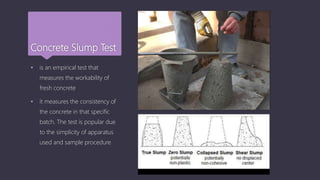
 is an empirical test that
measures the workability of
fresh concrete
 it measures the consistency of
the concrete in that specific
batch. The test is popular due
to the simplicity of apparatus
used and sample procedure
Dead Load
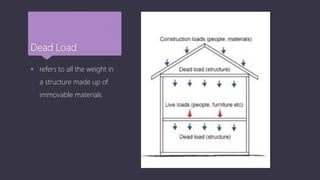
 refers to all the weight in
a structure made up of
immovable materials
Framing
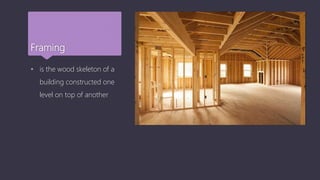
 is the wood skeleton of a
building constructed one
level on top of another
Girder
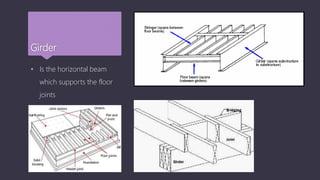
 Is the horizontal beam
which supports the floor
joints
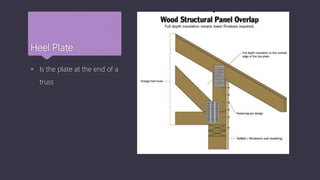
Heel Plate
 Is the plate at the end of a
truss
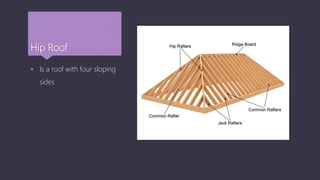
Hip Roof
 Is a roof with four sloping
sides
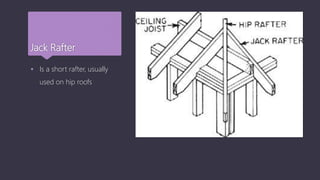
Jack Rafter
 Is a short rafter, usually
used on hip roofs
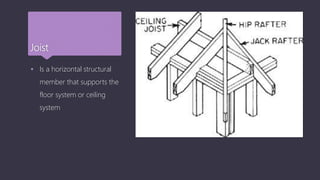
Joist
 Is a horizontal structural
member that supports the
floor system or ceiling
system
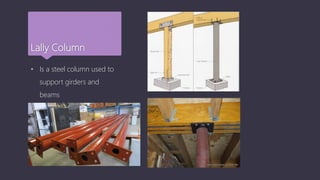
Lally Column
 Is a steel column used to
support girders and
beams
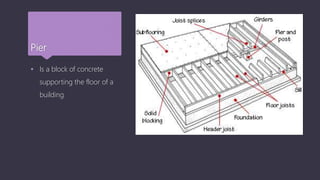
Pier
 Is a block of concrete
supporting the floor of a
building
Pilaster
 Is a decorative column
attached to a wall
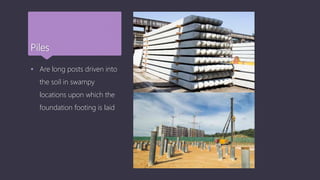
Piles
 Are long posts driven into
the soil in swampy
locations upon which the
foundation footing is laid
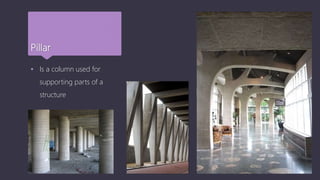
Pillar
 Is a column used for
supporting parts of a
structure
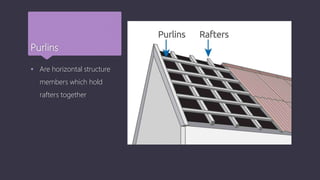
Purlins
 Are horizontal structure
members which hold
rafters together
Ridge
 Is the top edge of the roof
where rafters meet
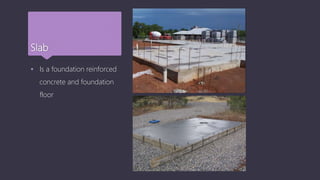
Slab
 Is a foundation reinforced
concrete and foundation
floor
Span
 Is a distance between
structural supports
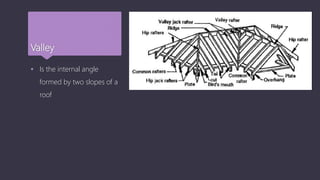
Valley
 Is the internal angle
formed by two slopes of a
roof
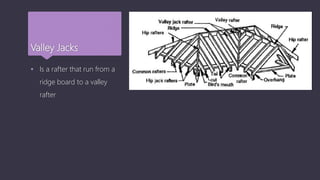
Valley Jacks
 Is a rafter that run from a
ridge board to a valley
rafter
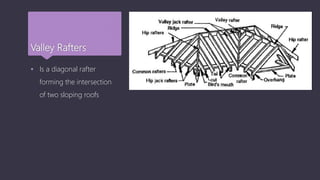
Valley Rafters
 Is a diagonal rafter
forming the intersection
of two sloping roofs
Concrete
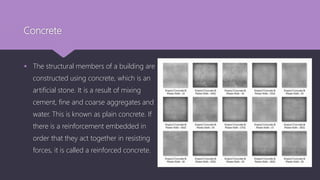
 The structural members of a building are
constructed using concrete, which is an
artificial stone. It is a result of mixing
cement, fine and coarse aggregates and
water. This is known as plain concrete. If
there is a reinforcement embedded in
order that they act together in resisting
forces, it is called a reinforced concrete.
Concrete
 Concrete is the bonding agent
that reacts with water to form a
stone-hard substance. It is of two
types; hydraulic cement and the
Portland cement
Concrete
 Joseph Aydin introduced Portland
cement in 1824. Portland cement
is categorized as to its type,
whether for general construction
or where high early strength or
resistance is required.
Concrete
 Pozzolana cement is amorphous
silica that that hardens as silica
gel by reacting chemically with
alkali in water. The name is
derived from Pozzolana, Itally
where this was found.
Concrete
 Water suitable for drinking is satisfactory for concrete mixing. Admixture, on
the other hand is a material other than cement that is used as ingredient in
concrete, before or during mixing. The ability of concrete to flow freely and
fill all voids is known as workability of the concrete mixture. Workability is
sometimes described as consistency, plasticity and mobility.
Concrete
 Consistency is the degree or wetness or slump while plasticity refers to the
ease with which fresh concrete is molded and mobility refers to the flow or
movement of the mixture. Concrete should be proportioned correctly to
obtain a good mixture required for a particular work. The strength of
concrete is measured in its ability to resist stresses such as compressive,
tensile flexural and shearing stress.
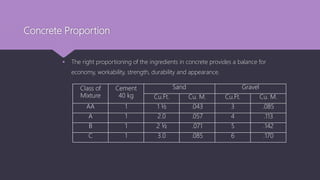
Concrete Proportion
 The right proportioning of the ingredients in concrete provides a balance for
economy, workability, strength, durability and appearance.
Class of
Mixture
Cement
40 kg
Sand Gravel
Cu.Ft. Cu. M. Cu.Ft. Cu. M.
AA 1 1 ½ .043 3 .085
A 1 2.0 .057 4 .113
B 1 2 ½ .071 5 .142
C 1 3.0 .085 6 .170
Concrete
 Concrete for building construction is mixed in two different ways:
1) On the job site – hand mixing
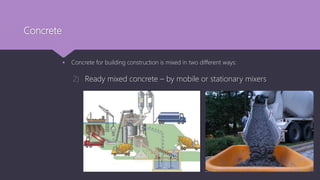
Concrete
 Concrete for building construction is mixed in two different ways:
2) Ready mixed concrete – by mobile or stationary mixers
Concrete
Concrete hardens or settles at about two or three hours after the concrete
has been mixed. The hardening of concrete depends upon the chemical
reaction between the cement and water. The building code provides that
concrete shall be maintained above 10 degrees Celsius temperature for at least
7 days after placing and three days for high early strength concrete.
Thank you!

Draft structural floor and roof framing plans

  • 1.
    Draft Structural Floorand Roof Framing Plans
  • 2.
    Compression Test  determinesbehavior of materials under crushing loads
  • 3.
    Concrete Slump Test is an empirical test that measures the workability of fresh concrete  it measures the consistency of the concrete in that specific batch. The test is popular due to the simplicity of apparatus used and sample procedure
  • 4.
    Dead Load  refersto all the weight in a structure made up of immovable materials
  • 5.
    Framing  is thewood skeleton of a building constructed one level on top of another
  • 6.
    Girder  Is thehorizontal beam which supports the floor joints
  • 7.
    Heel Plate  Isthe plate at the end of a truss
  • 8.
    Hip Roof  Isa roof with four sloping sides
  • 9.
    Jack Rafter  Isa short rafter, usually used on hip roofs
  • 10.
    Joist  Is ahorizontal structural member that supports the floor system or ceiling system
  • 11.
    Lally Column  Isa steel column used to support girders and beams
  • 12.
    Pier  Is ablock of concrete supporting the floor of a building
  • 13.
    Pilaster  Is adecorative column attached to a wall
  • 14.
    Piles  Are longposts driven into the soil in swampy locations upon which the foundation footing is laid
  • 15.
    Pillar  Is acolumn used for supporting parts of a structure
  • 16.
    Purlins  Are horizontalstructure members which hold rafters together
  • 17.
    Ridge  Is thetop edge of the roof where rafters meet
  • 18.
    Slab  Is afoundation reinforced concrete and foundation floor
  • 19.
    Span  Is adistance between structural supports
  • 20.
    Valley  Is theinternal angle formed by two slopes of a roof
  • 21.
    Valley Jacks  Isa rafter that run from a ridge board to a valley rafter
  • 22.
    Valley Rafters  Isa diagonal rafter forming the intersection of two sloping roofs
  • 23.
    Concrete  The structuralmembers of a building are constructed using concrete, which is an artificial stone. It is a result of mixing cement, fine and coarse aggregates and water. This is known as plain concrete. If there is a reinforcement embedded in order that they act together in resisting forces, it is called a reinforced concrete.
  • 24.
    Concrete  Concrete isthe bonding agent that reacts with water to form a stone-hard substance. It is of two types; hydraulic cement and the Portland cement
  • 25.
    Concrete  Joseph Aydinintroduced Portland cement in 1824. Portland cement is categorized as to its type, whether for general construction or where high early strength or resistance is required.
  • 26.
    Concrete  Pozzolana cementis amorphous silica that that hardens as silica gel by reacting chemically with alkali in water. The name is derived from Pozzolana, Itally where this was found.
  • 27.
    Concrete  Water suitablefor drinking is satisfactory for concrete mixing. Admixture, on the other hand is a material other than cement that is used as ingredient in concrete, before or during mixing. The ability of concrete to flow freely and fill all voids is known as workability of the concrete mixture. Workability is sometimes described as consistency, plasticity and mobility.
  • 28.
    Concrete  Consistency isthe degree or wetness or slump while plasticity refers to the ease with which fresh concrete is molded and mobility refers to the flow or movement of the mixture. Concrete should be proportioned correctly to obtain a good mixture required for a particular work. The strength of concrete is measured in its ability to resist stresses such as compressive, tensile flexural and shearing stress.
  • 29.
    Concrete Proportion  Theright proportioning of the ingredients in concrete provides a balance for economy, workability, strength, durability and appearance. Class of Mixture Cement 40 kg Sand Gravel Cu.Ft. Cu. M. Cu.Ft. Cu. M. AA 1 1 ½ .043 3 .085 A 1 2.0 .057 4 .113 B 1 2 ½ .071 5 .142 C 1 3.0 .085 6 .170
  • 30.
    Concrete  Concrete forbuilding construction is mixed in two different ways: 1) On the job site – hand mixing
  • 31.
    Concrete  Concrete forbuilding construction is mixed in two different ways: 2) Ready mixed concrete – by mobile or stationary mixers
  • 32.
    Concrete Concrete hardens orsettles at about two or three hours after the concrete has been mixed. The hardening of concrete depends upon the chemical reaction between the cement and water. The building code provides that concrete shall be maintained above 10 degrees Celsius temperature for at least 7 days after placing and three days for high early strength concrete.
  • 33.