
Vaccine preventable waterborne diseases—Typhoid fever and Hepatitis AProfessor Huma Arshad CheemaPediatric Gastroenterologist HepatologistChairperson PPA GI group
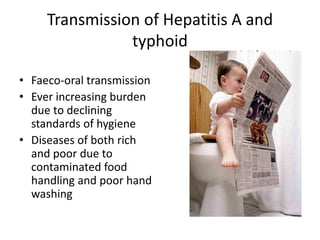
Transmission of Hepatitis A and typhoid Faeco-oral transmissionEver increasing burden due to declining standards of hygieneDiseases of both rich and poor due to contaminated food handling and poor hand washing
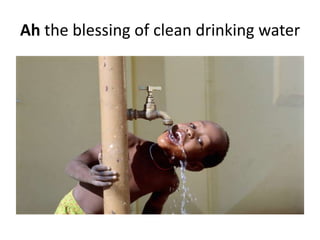
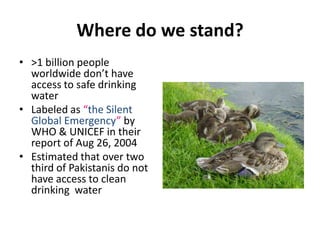
Ah the blessing of clean drinking water
Where do we stand?>1 billion people worldwide don’t have access to safe drinking waterLabeled as “the Silent Global Emergency” by WHO & UNICEF in their report of Aug 26, 2004Estimated that over two third of Pakistanis do not have access to clean drinking  water
Some facts Ranking 135th on the United Nation’s Human Development Index, Pakistan has a population of approximately 148 million, ranking 7th in the world, of whom half are children. Infant Mortality stands at 90 per 1,000 live births, and maternal Mortality at 340 per 100,000 live births (median estimates).In terms of health status, Pakistan faces a double burden: a rapidly increasing incidence of non-communicable diseases (NCDs) and injuries, superimposed on endemic communicable diseases (CDs).
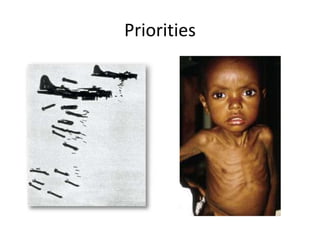
Priorities
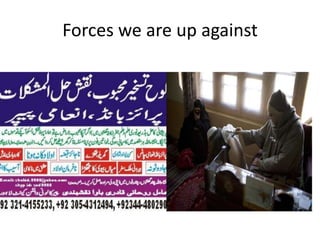
Forces we are up against
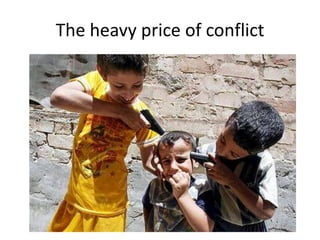
The heavy price of conflict
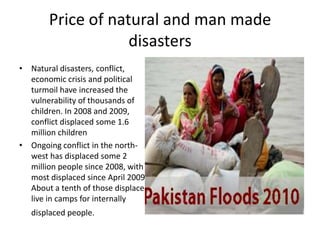
Price of natural and man made  disastersNatural disasters, conflict, economic crisis and political turmoil have increased the vulnerability of thousands of children. In 2008 and 2009, conflict displaced some 1.6 million childrenOngoing conflict in the north-west has displaced some 2 million people since 2008, with most displaced since April 2009. About a tenth of those displaced live in camps for internally displaced people. 
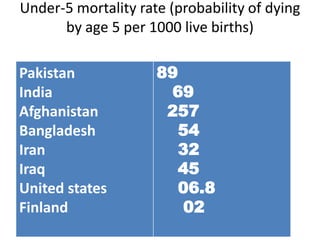
Under-5 mortality rate (probability of dying by age 5 per 1000 live births)  
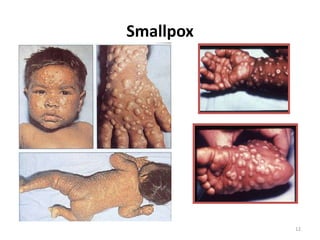
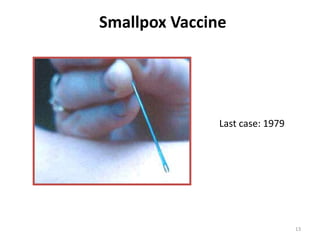
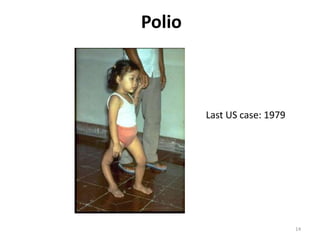
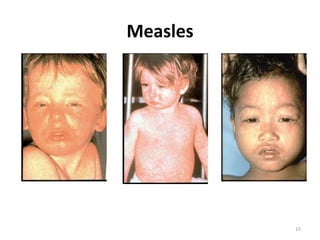
11What has been the impact of vaccines on public health?The 2 things man has done to improve health the most:Clean WaterVaccinesThe impact of vaccines has been tremendous since they were first used in the 1700s.
12Smallpox
13Smallpox VaccineLast case: 1979
14PolioLast US case: 1979
15Measles
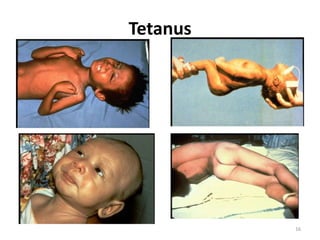
16Tetanus
And now this
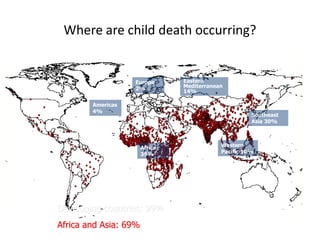
Where are child death occurring?Eastern Mediterranean 14%Europe 2%Americas  4%Southeast Asia 30%Western Pacific 10%Africa  39%Developing countries: 99%Africa and Asia: 69%
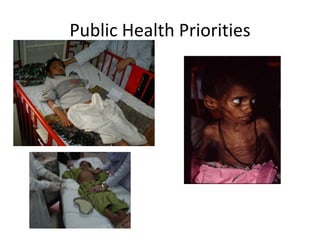
Public Health Priorities
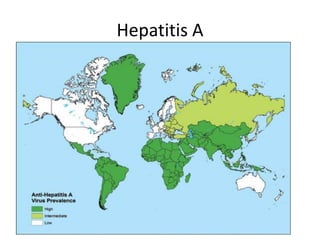
Hepatitis A
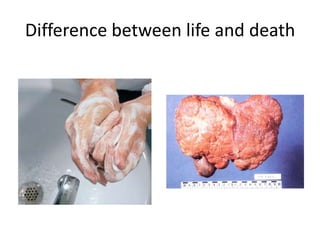
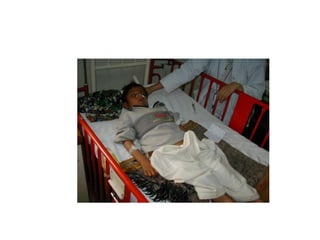
Difference between life and death
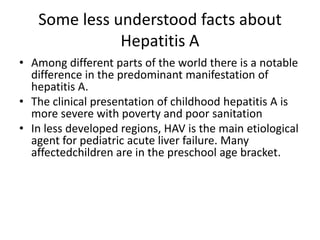
Some less understood facts about Hepatitis A Among different parts of the world there is a notable difference in the predominant manifestation of hepatitis A.The clinical presentation of childhood hepatitis A is more severe with poverty and poor sanitation In less developed regions, HAV is the main etiological agent for pediatric acute liver failure. Many affectedchildren are in the preschool age bracket.  
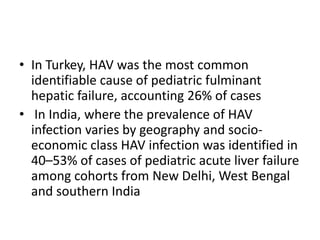
In Turkey, HAV was the most common identifiable cause of pediatric fulminant hepatic failure, accounting 26% of cases  In India, where the prevalence of HAV infection varies by geography and socio-economic class HAV infection was identified in 40–53% of cases of pediatric acute liver failure among cohorts from New Delhi, West Bengal and southern India
At Children's Hospital lahore60  % of cases of fulminant hepatic failure were due to Hepatitis A with a mortality of 35% Morbidity from other complications underestimated	- prolonged cholestatic syndrome	- Hemolytic anemia both viral induced and G6PD   	deficiency induced	- precipitation of autoimmune liver disease 	- Bone marrow aplasia
Combined infections Co infection with Hepatitis A and S typhi seen increasingly at Children'sCo infection of Hepatitis A and E also seen producing more severe illness and prolonged cholestasis
Prevention is the KeyTime to understand that the assumption that Hepatitis A is a harmless disease and vaccination is a luxury is falseWhen the difference is between death and a thousand rupees the choice is obvious
Similarities between the epidemiology of Hep A and Polio virus suggesting widespread vaccination of susceptible populations can substantially lower disease incidence Eliminate virus transmissionUltimately eradicate HAV
ImmunoprophylaxisInactivated Hep A vaccine	15 years of marketing experienceHighly immunogenicProvides lasting protection in healthy individualsGenerates protective levels of antibodies in patients with chronic liver disease or impaired immunity
VaccineTiming of booster dose not critical to effectiveness but in routine now booster is recommendedEffective in curbing outbreaks of hepatitis AAfter completion of primary dosage antibodies last longer than 10 years and immune memory may last even longer
Post exposureEffective postexposure due to rapid seroconversion and long incubation periodMultiple studies show that contacts given vaccine within 14 days have equal or better protection than immunoglobulinsVery young children  <  1 yrs may still need immunoglobulins
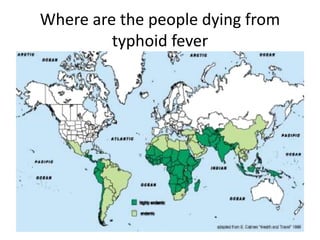
Where are the people dying from typhoid fever
Typhoid Global BurdenBurden probably underestimatedMany hospitals lack facilities for blood culturesUp to 90% of patients are treated as outpatientsSporadic disease in developed countries - mainly in returning travelers
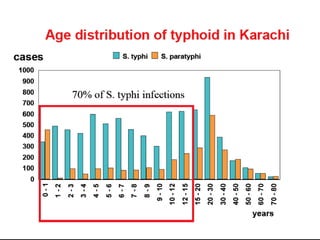
Epidemiology of Typhoid FeverWorld wideAnnual incidence of 12.5 M (WHO)Mortality rate: 600,000 deaths every year more than 90% of morbidity and mortality occurs in Asia. Incidence in developing countries100-1000 per 100,000 per yearPopulation-based studies indicate that, contrary to previous views, the age-specific incidence of typhoid may be highest in children <5 yr of age, with comparatively higher rates of complications and hospitalization
Typhoid in Pakistan 	As per a paper presented at the WHO 6th International Conference on Typhoid Fever and Other Salmonellas in 2004Typhoid is the 4th most common cause of death in Pakistan 9Source: 9. Richens J. Typhoid fever, Surgery in Africa – Monthly Review; 2006 (World    Health Organization. 6th International Conference on Typhoid Fever and    other Salmonellas. 2006. Geneva, WHO.)
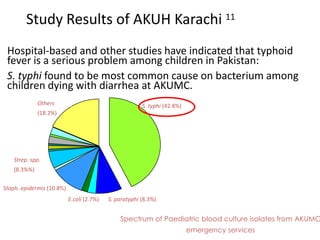
Others(18.2%)S. typhi (42.8%)Strep. spp. (8.3%%)Staph. epidermis (10.8%)S. paratyphi (8.3%)E.coli (2.7%)Study Results of AKUH Karachi 11	Hospital-based and other studies have indicated that typhoid fever is a serious problem among children in Pakistan:	S. typhi found to be most common cause on bacterium among children dying with diarrhea at AKUMC.Spectrum of Paediatric blood culture isolates from AKUMCemergency services
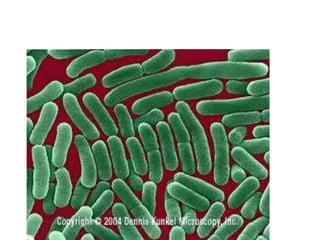
Causative AgentSalmonella typhiFlagellar antigenCapsular polysaccharideantigen (Vi)Somatic antigen
Some Important practical clinical information  Humans are the only natural reservoir of styphiClinical presentation varies from mild disease to severe with high grade fever ,abdominal discomfort and complicationsPresentation more severe in infants and older patients Infants may have diarrhea and abdominal distension along with fever as the main symptom
Some Important practical clinical information Classic stepladder rise of fever is now rareSevere rigors unusualHepatomegaly more frequent than splenomegalyMild Hepatitis with altered liver enzymes very common but frank hepatitis with jaundice rareBronchitis a frequent accompaniment
Deadly complications Intestinal BleedIntestinal perforation Osteomyelitis
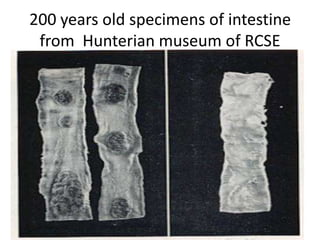
200 years old specimens of intestine from  Hunterian museum of RCSE
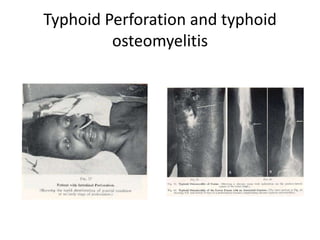
Typhoid Perforation and typhoid osteomyelitis
Diagnosis First week --- and no previous antibiotic given the best yield is from a blood cultureAfter 4 days the Typhidot test also becomes positive Widal test has notoriously high percentage of false positive and negative---rising titres over the days more diagnostic
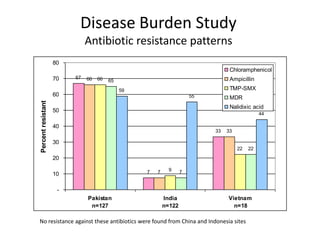
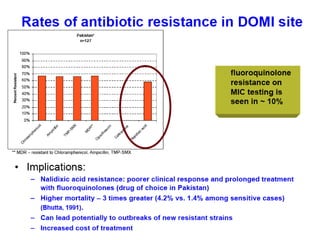
Treatment and the implications of Antibiotic ResistanceTHE SUPER BUGSStudy of typhoid fever from 5 asian countries gives dismal news on antimicrobial resistanceNearly 60% of the isolates were resistant to chloramphenicol, ampicillin, TMP-SMX and nalidixic acid.In contrast, all isolates from sites in China and Indonesia were susceptible to all antimicrobial agents
THE SUPER BUGSMultidrug resistance (resistance to chloramphenicol, ampicillin and TMP-SMX) was observed in 65% isolates from the site in PakistanNalidixic acid resistance was found in 59% isolates from the site in Pakistan,
Disease Burden StudyAntibiotic resistance patternsNo resistance against these antibiotics were found from China and Indonesia sites
Treatment of enteric feverChoosing the right empirical therapy is problematic and controversialIncreasing incidence of multiresistance to chloramphenicol Ampicillin and TMP- SMX in 49-83% of salmonella typhi is being reported from India Resistant strains are usually susceptible to third generation cephalosporinsQuinolones are not to be used as first line
WHO POSITION PAPER-2008In view of the continued high burden of typhoid fever and increasing antibiotic resistance, and given the safety, efficacy, feasibility and affordability of licensed vaccines , countries should consider the programmatic use of typhoid vaccines for controlling endemic disease.
WHO POSITION PAPER-2008	All typhoid fever vaccination programmes should be implemented in the context of other efforts to control the disease, including Health education, water qualitySanitation improvements, Training of health professionals in diagnosis and treatment.
Current issuesVery high incidence of this infectious and deadly disease in PakistanEndemic all year round and incidence on the riseMulti drug resistant salmonella becoming a big health issueSignificant cost of treatment and hospitalization.
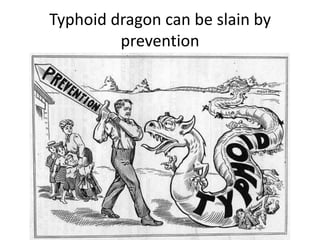
Typhoid dragon can be slain by prevention
Prevention is the key
Public Health MeasuresSupply of clean, safe drinking waterEffective and sanitary disposal of human feces and urineCareful attention to cleanliness and hygiene during food preparationProvision of adequate hand washing facilities wherever food is handledEducation in personal hygiene procedures and public health measuresEnforced regulations governing manufacture of food and drink
Vaccination ….Is the most effective and most reliableway of preventing typhoid fever.
The Vi polysaccharide vaccineFirst licensed in the United States in 1994.Elicits a T-cell independent IgG response that is not boosted by additional doses.The target value for each single human dose is about 25μg of the antigen.The Vi vaccine does not elicit adequate immune responses in children aged <2 years.
ScheduleOnly 1 dose is required, and the vaccine confers protection 7 days after injection. To maintain protection, revaccination is recommended every 3 yearsCan be co administered with other childhood vaccines
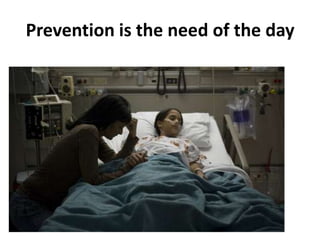
Prevention is the need of the day
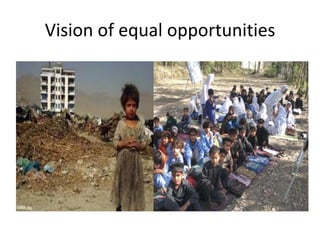
Vision of equal opportunities
Summary 	Ever increasing burden of infectious water borne diseases is a cause for alarm at all levelNeed to create public awareness about prevention through clean water , hand washing, better hygienic practices and vaccination Professional body of doctors needs to push the government to clamp down on food vendors and public eating places for enforcing standards of hygiene
With availability of typhoid and hepatitis A vaccines at affordable prices there is no excuse for not vaccinating Culture  of vaccination as a business should be discouraged in order to enroll and benefit more and more people

Dr. Huma Arshad

  • 1.
    Vaccine preventable waterbornediseases—Typhoid fever and Hepatitis AProfessor Huma Arshad CheemaPediatric Gastroenterologist HepatologistChairperson PPA GI group
  • 2.
    Transmission of HepatitisA and typhoid Faeco-oral transmissionEver increasing burden due to declining standards of hygieneDiseases of both rich and poor due to contaminated food handling and poor hand washing
  • 3.
    Ah the blessingof clean drinking water
  • 4.
    Where do westand?>1 billion people worldwide don’t have access to safe drinking waterLabeled as “the Silent Global Emergency” by WHO & UNICEF in their report of Aug 26, 2004Estimated that over two third of Pakistanis do not have access to clean drinking water
  • 5.
    Some facts Ranking135th on the United Nation’s Human Development Index, Pakistan has a population of approximately 148 million, ranking 7th in the world, of whom half are children. Infant Mortality stands at 90 per 1,000 live births, and maternal Mortality at 340 per 100,000 live births (median estimates).In terms of health status, Pakistan faces a double burden: a rapidly increasing incidence of non-communicable diseases (NCDs) and injuries, superimposed on endemic communicable diseases (CDs).
  • 6.
  • 7.
    Forces we areup against
  • 8.
    The heavy priceof conflict
  • 9.
    Price of naturaland man made disastersNatural disasters, conflict, economic crisis and political turmoil have increased the vulnerability of thousands of children. In 2008 and 2009, conflict displaced some 1.6 million childrenOngoing conflict in the north-west has displaced some 2 million people since 2008, with most displaced since April 2009. About a tenth of those displaced live in camps for internally displaced people. 
  • 10.
    Under-5 mortality rate(probability of dying by age 5 per 1000 live births)  
  • 11.
    11What has beenthe impact of vaccines on public health?The 2 things man has done to improve health the most:Clean WaterVaccinesThe impact of vaccines has been tremendous since they were first used in the 1700s.
  • 12.
  • 13.
  • 14.
  • 15.
  • 16.
  • 17.
  • 18.
    Where are childdeath occurring?Eastern Mediterranean 14%Europe 2%Americas 4%Southeast Asia 30%Western Pacific 10%Africa 39%Developing countries: 99%Africa and Asia: 69%
  • 19.
  • 20.
  • 21.
  • 22.
    Some less understoodfacts about Hepatitis A Among different parts of the world there is a notable difference in the predominant manifestation of hepatitis A.The clinical presentation of childhood hepatitis A is more severe with poverty and poor sanitation In less developed regions, HAV is the main etiological agent for pediatric acute liver failure. Many affectedchildren are in the preschool age bracket.  
  • 23.
    In Turkey, HAVwas the most common identifiable cause of pediatric fulminant hepatic failure, accounting 26% of cases In India, where the prevalence of HAV infection varies by geography and socio-economic class HAV infection was identified in 40–53% of cases of pediatric acute liver failure among cohorts from New Delhi, West Bengal and southern India
  • 25.
    At Children's Hospitallahore60 % of cases of fulminant hepatic failure were due to Hepatitis A with a mortality of 35% Morbidity from other complications underestimated - prolonged cholestatic syndrome - Hemolytic anemia both viral induced and G6PD deficiency induced - precipitation of autoimmune liver disease - Bone marrow aplasia
  • 26.
    Combined infections Coinfection with Hepatitis A and S typhi seen increasingly at Children'sCo infection of Hepatitis A and E also seen producing more severe illness and prolonged cholestasis
  • 27.
    Prevention is theKeyTime to understand that the assumption that Hepatitis A is a harmless disease and vaccination is a luxury is falseWhen the difference is between death and a thousand rupees the choice is obvious
  • 28.
    Similarities between theepidemiology of Hep A and Polio virus suggesting widespread vaccination of susceptible populations can substantially lower disease incidence Eliminate virus transmissionUltimately eradicate HAV
  • 29.
    ImmunoprophylaxisInactivated Hep Avaccine 15 years of marketing experienceHighly immunogenicProvides lasting protection in healthy individualsGenerates protective levels of antibodies in patients with chronic liver disease or impaired immunity
  • 30.
    VaccineTiming of boosterdose not critical to effectiveness but in routine now booster is recommendedEffective in curbing outbreaks of hepatitis AAfter completion of primary dosage antibodies last longer than 10 years and immune memory may last even longer
  • 31.
    Post exposureEffective postexposuredue to rapid seroconversion and long incubation periodMultiple studies show that contacts given vaccine within 14 days have equal or better protection than immunoglobulinsVery young children < 1 yrs may still need immunoglobulins
  • 33.
    Where are thepeople dying from typhoid fever
  • 34.
    Typhoid Global BurdenBurdenprobably underestimatedMany hospitals lack facilities for blood culturesUp to 90% of patients are treated as outpatientsSporadic disease in developed countries - mainly in returning travelers
  • 35.
    Epidemiology of TyphoidFeverWorld wideAnnual incidence of 12.5 M (WHO)Mortality rate: 600,000 deaths every year more than 90% of morbidity and mortality occurs in Asia. Incidence in developing countries100-1000 per 100,000 per yearPopulation-based studies indicate that, contrary to previous views, the age-specific incidence of typhoid may be highest in children <5 yr of age, with comparatively higher rates of complications and hospitalization
  • 36.
    Typhoid in Pakistan As per a paper presented at the WHO 6th International Conference on Typhoid Fever and Other Salmonellas in 2004Typhoid is the 4th most common cause of death in Pakistan 9Source: 9. Richens J. Typhoid fever, Surgery in Africa – Monthly Review; 2006 (World Health Organization. 6th International Conference on Typhoid Fever and other Salmonellas. 2006. Geneva, WHO.)
  • 37.
    Others(18.2%)S. typhi (42.8%)Strep.spp. (8.3%%)Staph. epidermis (10.8%)S. paratyphi (8.3%)E.coli (2.7%)Study Results of AKUH Karachi 11 Hospital-based and other studies have indicated that typhoid fever is a serious problem among children in Pakistan: S. typhi found to be most common cause on bacterium among children dying with diarrhea at AKUMC.Spectrum of Paediatric blood culture isolates from AKUMCemergency services
  • 38.
    Causative AgentSalmonella typhiFlagellarantigenCapsular polysaccharideantigen (Vi)Somatic antigen
  • 40.
    Some Important practicalclinical information Humans are the only natural reservoir of styphiClinical presentation varies from mild disease to severe with high grade fever ,abdominal discomfort and complicationsPresentation more severe in infants and older patients Infants may have diarrhea and abdominal distension along with fever as the main symptom
  • 41.
    Some Important practicalclinical information Classic stepladder rise of fever is now rareSevere rigors unusualHepatomegaly more frequent than splenomegalyMild Hepatitis with altered liver enzymes very common but frank hepatitis with jaundice rareBronchitis a frequent accompaniment
  • 42.
    Deadly complications IntestinalBleedIntestinal perforation Osteomyelitis
  • 43.
    200 years oldspecimens of intestine from Hunterian museum of RCSE
  • 44.
    Typhoid Perforation andtyphoid osteomyelitis
  • 45.
    Diagnosis First week--- and no previous antibiotic given the best yield is from a blood cultureAfter 4 days the Typhidot test also becomes positive Widal test has notoriously high percentage of false positive and negative---rising titres over the days more diagnostic
  • 46.
    Treatment and theimplications of Antibiotic ResistanceTHE SUPER BUGSStudy of typhoid fever from 5 asian countries gives dismal news on antimicrobial resistanceNearly 60% of the isolates were resistant to chloramphenicol, ampicillin, TMP-SMX and nalidixic acid.In contrast, all isolates from sites in China and Indonesia were susceptible to all antimicrobial agents
  • 47.
    THE SUPER BUGSMultidrugresistance (resistance to chloramphenicol, ampicillin and TMP-SMX) was observed in 65% isolates from the site in PakistanNalidixic acid resistance was found in 59% isolates from the site in Pakistan,
  • 48.
    Disease Burden StudyAntibioticresistance patternsNo resistance against these antibiotics were found from China and Indonesia sites
  • 50.
    Treatment of entericfeverChoosing the right empirical therapy is problematic and controversialIncreasing incidence of multiresistance to chloramphenicol Ampicillin and TMP- SMX in 49-83% of salmonella typhi is being reported from India Resistant strains are usually susceptible to third generation cephalosporinsQuinolones are not to be used as first line
  • 51.
    WHO POSITION PAPER-2008Inview of the continued high burden of typhoid fever and increasing antibiotic resistance, and given the safety, efficacy, feasibility and affordability of licensed vaccines , countries should consider the programmatic use of typhoid vaccines for controlling endemic disease.
  • 52.
    WHO POSITION PAPER-2008 Alltyphoid fever vaccination programmes should be implemented in the context of other efforts to control the disease, including Health education, water qualitySanitation improvements, Training of health professionals in diagnosis and treatment.
  • 53.
    Current issuesVery highincidence of this infectious and deadly disease in PakistanEndemic all year round and incidence on the riseMulti drug resistant salmonella becoming a big health issueSignificant cost of treatment and hospitalization.
  • 54.
    Typhoid dragon canbe slain by prevention
  • 55.
  • 56.
    Public Health MeasuresSupplyof clean, safe drinking waterEffective and sanitary disposal of human feces and urineCareful attention to cleanliness and hygiene during food preparationProvision of adequate hand washing facilities wherever food is handledEducation in personal hygiene procedures and public health measuresEnforced regulations governing manufacture of food and drink
  • 57.
    Vaccination ….Is themost effective and most reliableway of preventing typhoid fever.
  • 58.
    The Vi polysaccharidevaccineFirst licensed in the United States in 1994.Elicits a T-cell independent IgG response that is not boosted by additional doses.The target value for each single human dose is about 25μg of the antigen.The Vi vaccine does not elicit adequate immune responses in children aged <2 years.
  • 59.
    ScheduleOnly 1 doseis required, and the vaccine confers protection 7 days after injection. To maintain protection, revaccination is recommended every 3 yearsCan be co administered with other childhood vaccines
  • 60.
    Prevention is theneed of the day
  • 62.
    Vision of equalopportunities
  • 63.
    Summary Ever increasingburden of infectious water borne diseases is a cause for alarm at all levelNeed to create public awareness about prevention through clean water , hand washing, better hygienic practices and vaccination Professional body of doctors needs to push the government to clamp down on food vendors and public eating places for enforcing standards of hygiene
  • 64.
    With availability oftyphoid and hepatitis A vaccines at affordable prices there is no excuse for not vaccinating Culture of vaccination as a business should be discouraged in order to enroll and benefit more and more people