



Physical Activity, Physical
Fitness, & Academic
Performance
Joseph E. Donnelly, ED.D., FACSM
Professor, Internal Medicine
Director, Energy Balance Laboratory
Director, Center for Physical Activity & Weight Management
The University of Kansas Medical Center
The University of Kansas-Lawrence
Overview
• Metabolic syndrome and obesity in children
and youth
• Minimal intervention approach to increase
physical activity and impact learning in schools
• Barriers and potential solutions
• Summary
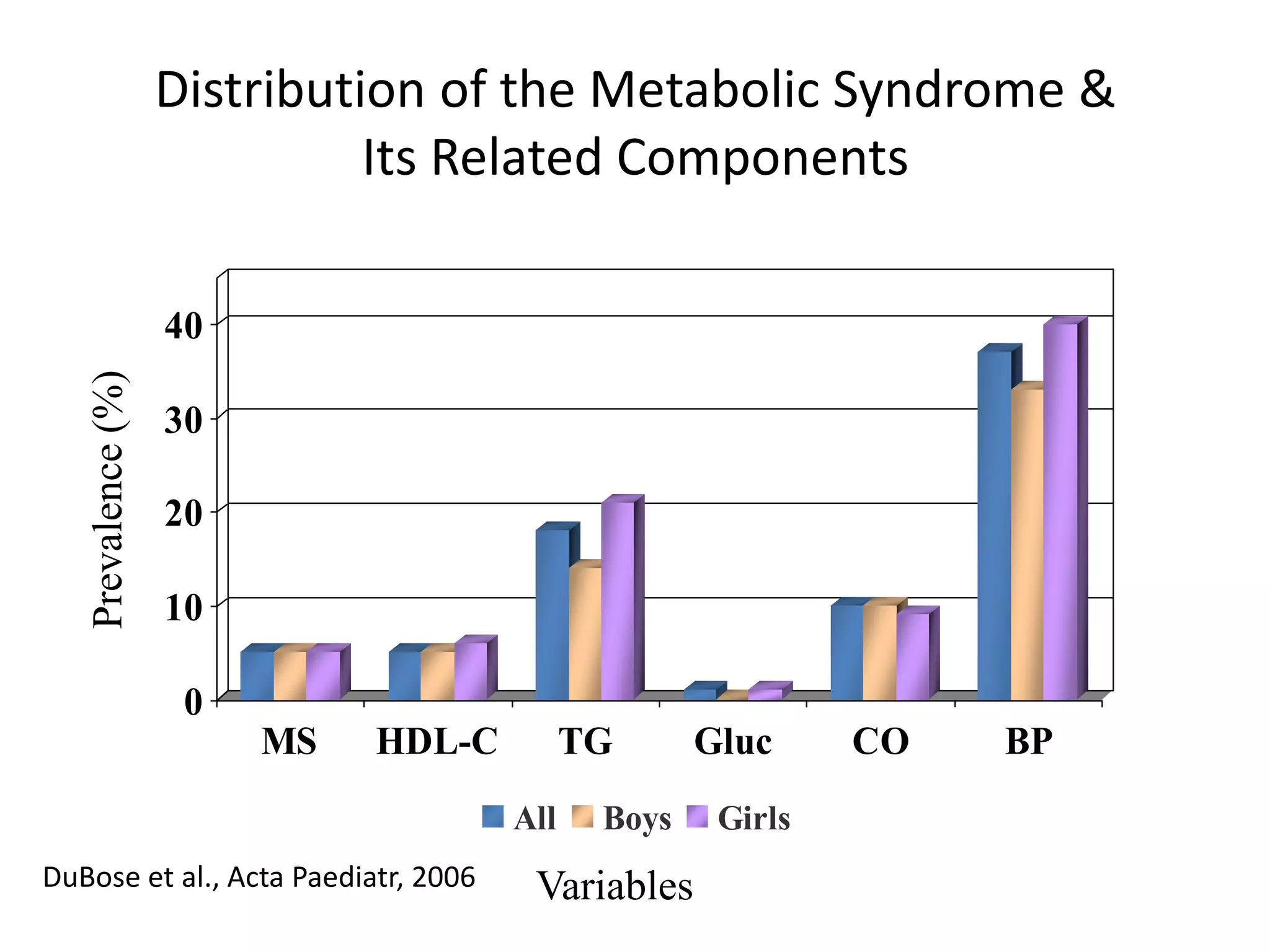
Distribution of the Metabolic Syndrome &
Its Related Components

Prevalence (%)

40
30
20
10
0
MS

HDL-C

TG
All

DuBose et al., Acta Paediatr, 2006

Boys

Variables

Gluc
Girls

CO

BP
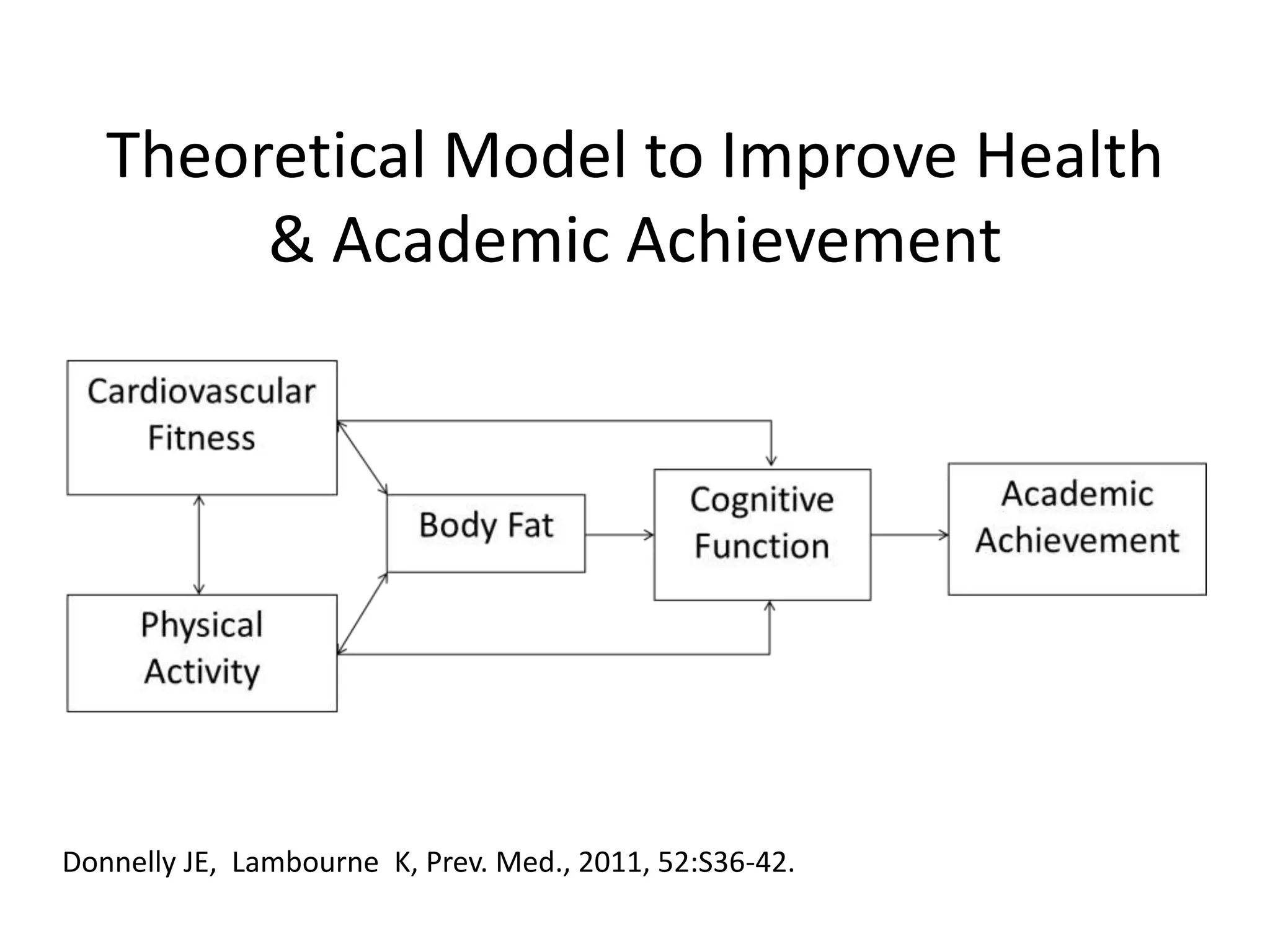
Theoretical Model to Improve Health
& Academic Achievement

Donnelly JE, Lambourne K, Prev. Med., 2011, 52:S36-42.
Schools are Sedentary
• Bus ride can be > 60 min each way
• Recess and physical education has declined to
levels that cannot provide adequate stimulus
(energy expenditure) for fitness or to protect
against fatness
• Motor time off task is discouraged and
disciplined
• Traditional teaching paradigm- sit down and
be quiet
Physical Education by Itself is not Adequate
to Provide Fitness or Prevent Fatness in the
Current Environment
• PE and recess have diminished, frequently
offered 2-3 X week
• PE duration as little as 20 minutes
• MET value frequently just at or below the
definition of moderately vigorous
• Inadequate facilities & equipment
• PE teacher shared among schools, poor
training/no training
Physical Activity Across the
Curriculum (PAAC)
A 3-year, randomized controlled trial of
physical activity and academic
achievement for elementary school
children in grades 2 & 3
Donnelly et al., Physical Activity Across the Curriculum (PAAC): A randomized controlled trial
to promote physical activity and diminish obesity in elementary school children.
Prev. Med. 2009, 49:336-41 (DK61489)
Major Aims of PAAC
• Increase physical activity by using classroom
teachers to teach existing lessons with using
physical activity
• Primary aimDiminish increases in BMI

• Secondary aimsDetermine association between physically active
lessons and academic achievement
Characterize metabolic syndrome
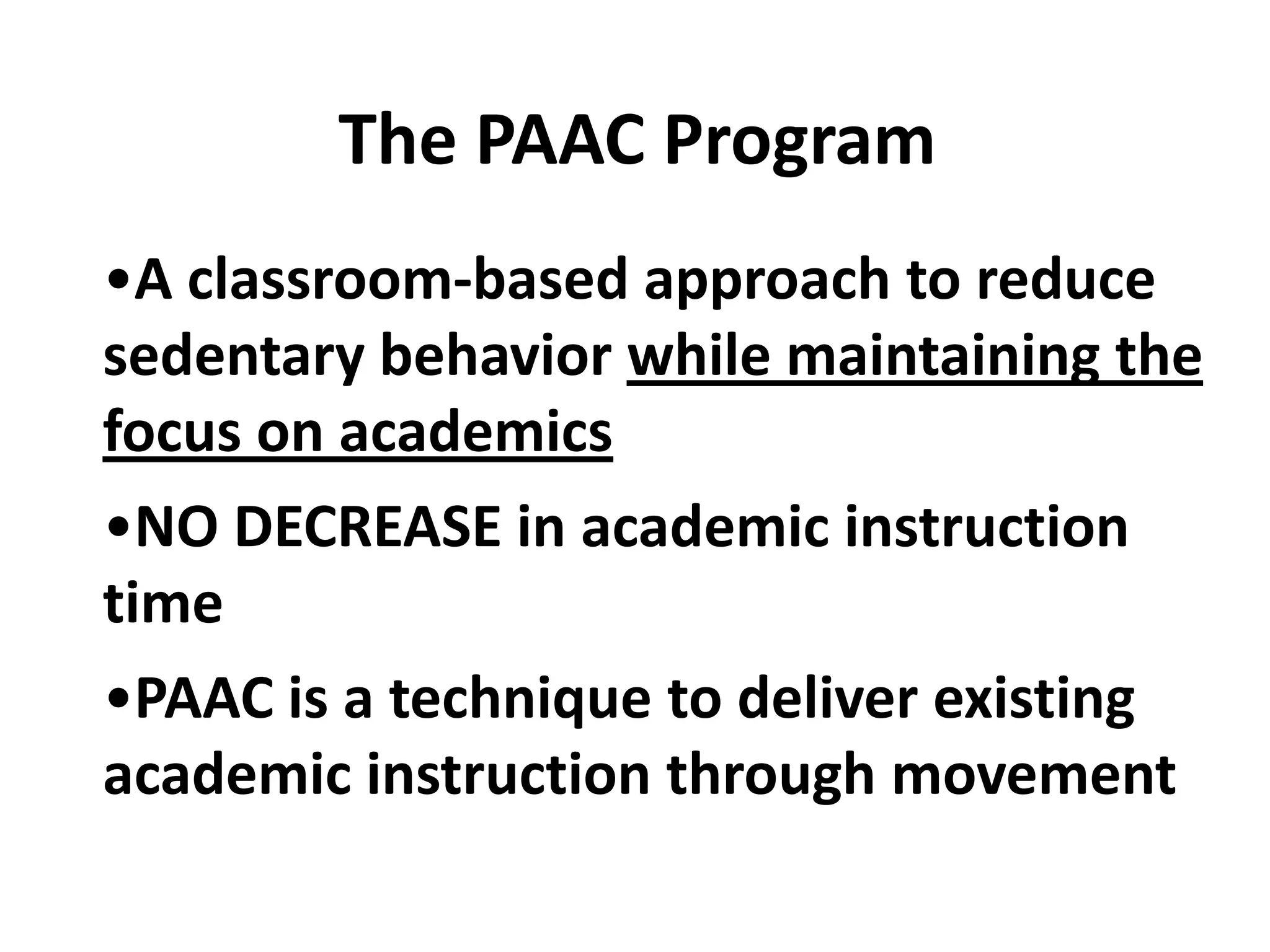
The PAAC Program
•A classroom-based approach to reduce
sedentary behavior while maintaining the
focus on academics

•NO DECREASE in academic instruction
time
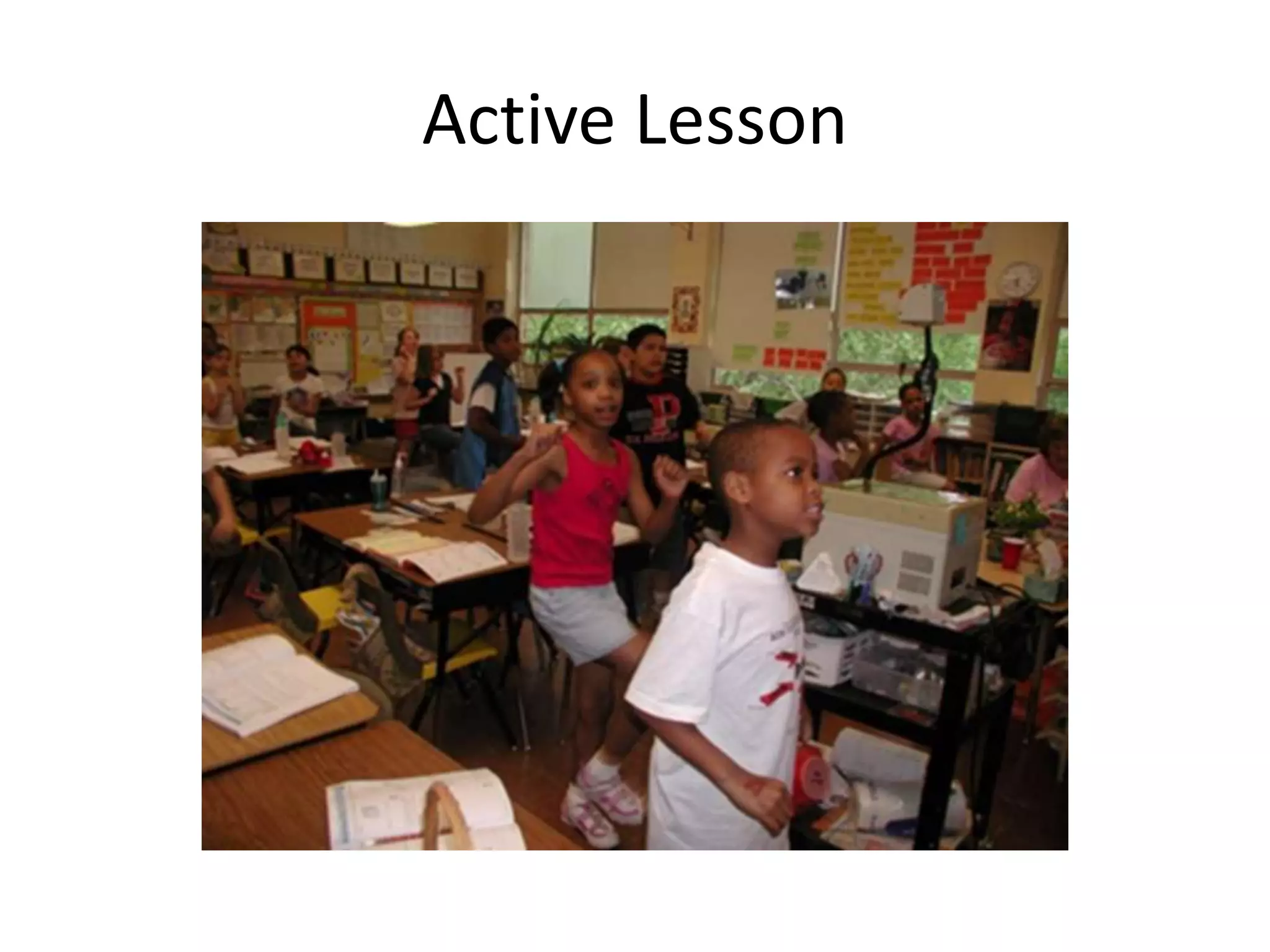
•PAAC is a technique to deliver existing
academic instruction through movement
Traditional VS. PAAC Classroom
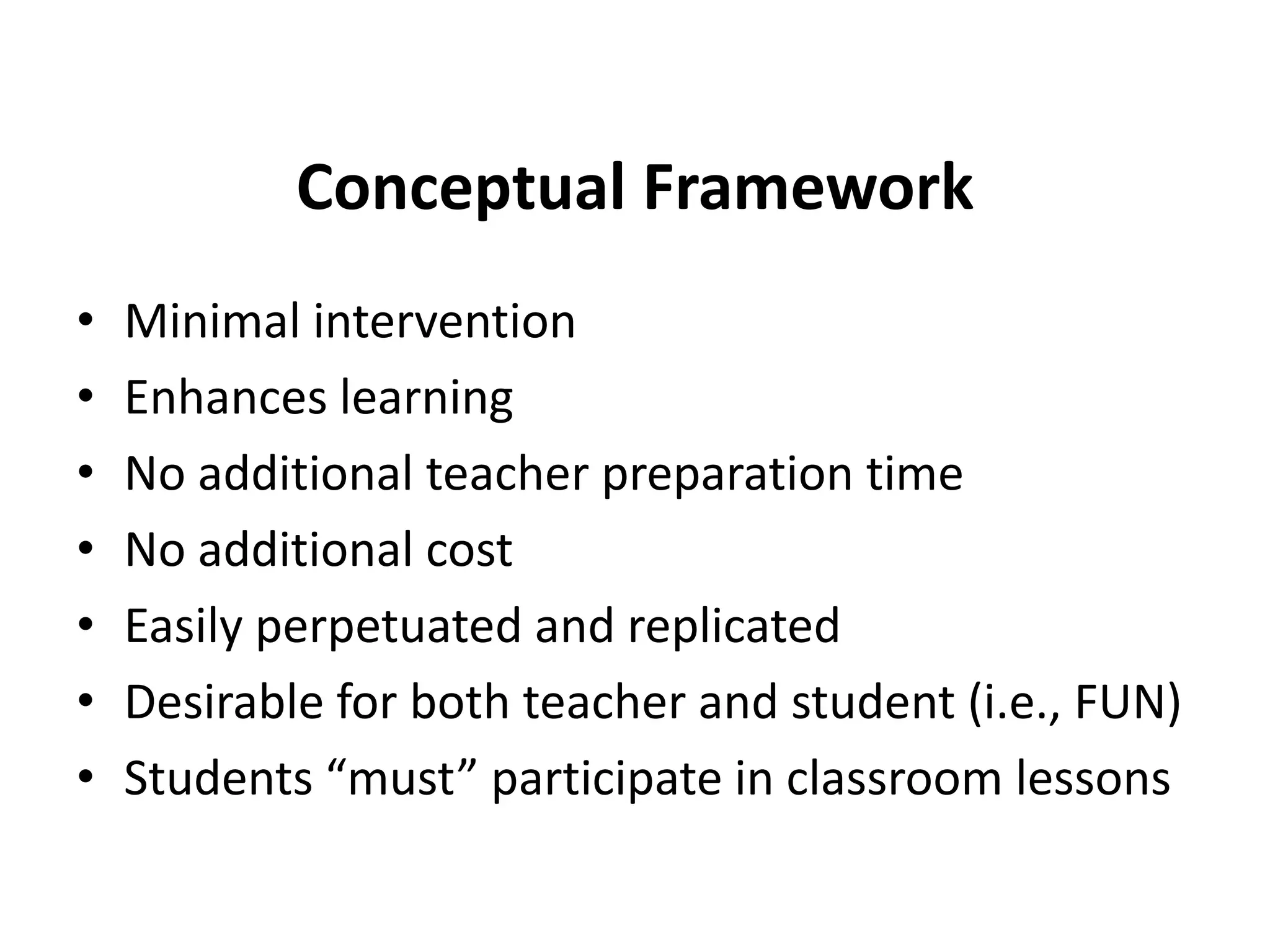
Conceptual Framework
•
•
•
•
•
•
•

Minimal intervention
Enhances learning
No additional teacher preparation time
No additional cost
Easily perpetuated and replicated
Desirable for both teacher and student (i.e., FUN)
Students “must” participate in classroom lessons
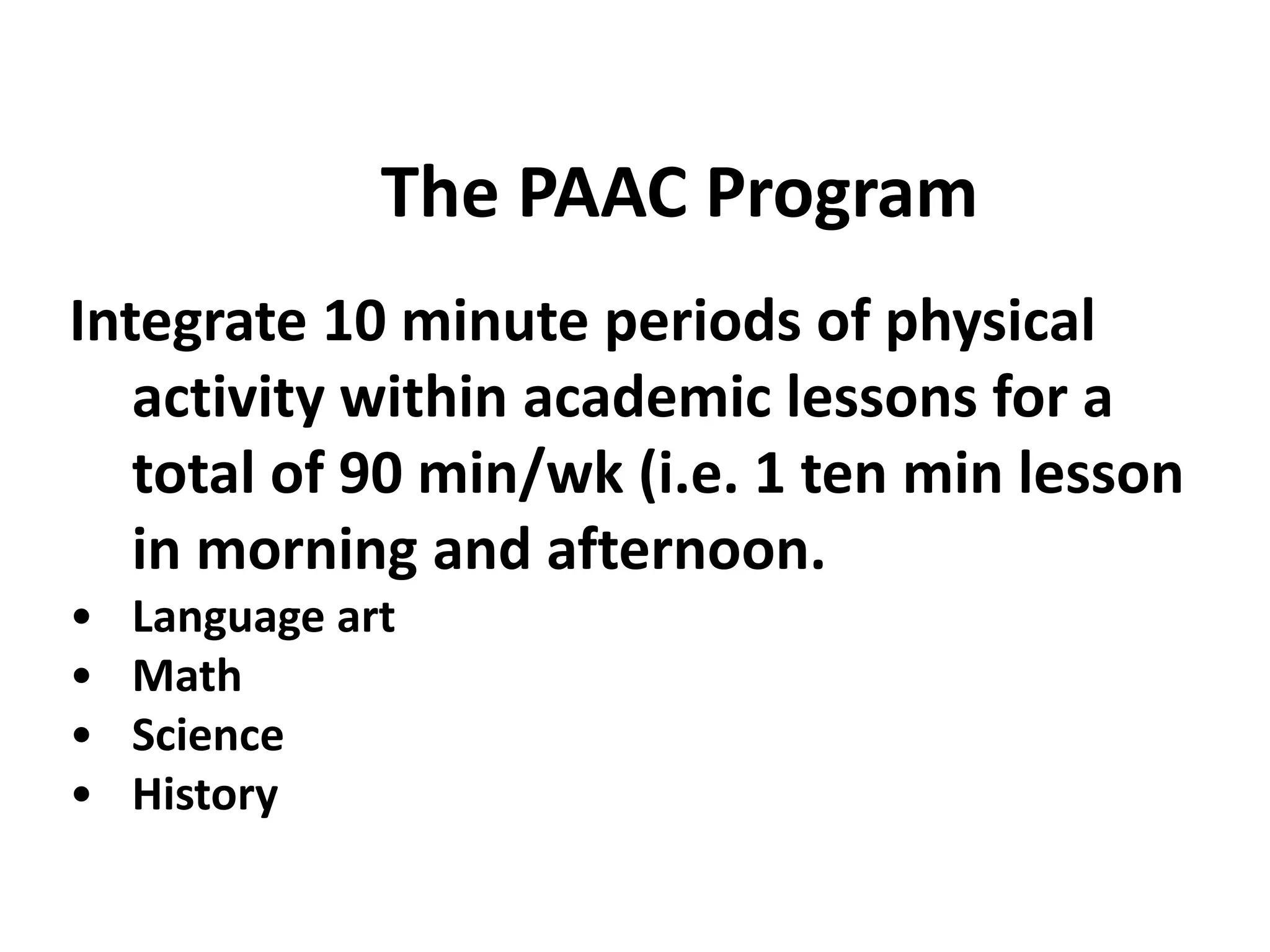
The PAAC Program
Integrate 10 minute periods of physical
activity within academic lessons for a
total of 90 min/wk (i.e. 1 ten min lesson
in morning and afternoon.
•
•
•
•

Language art
Math
Science
History
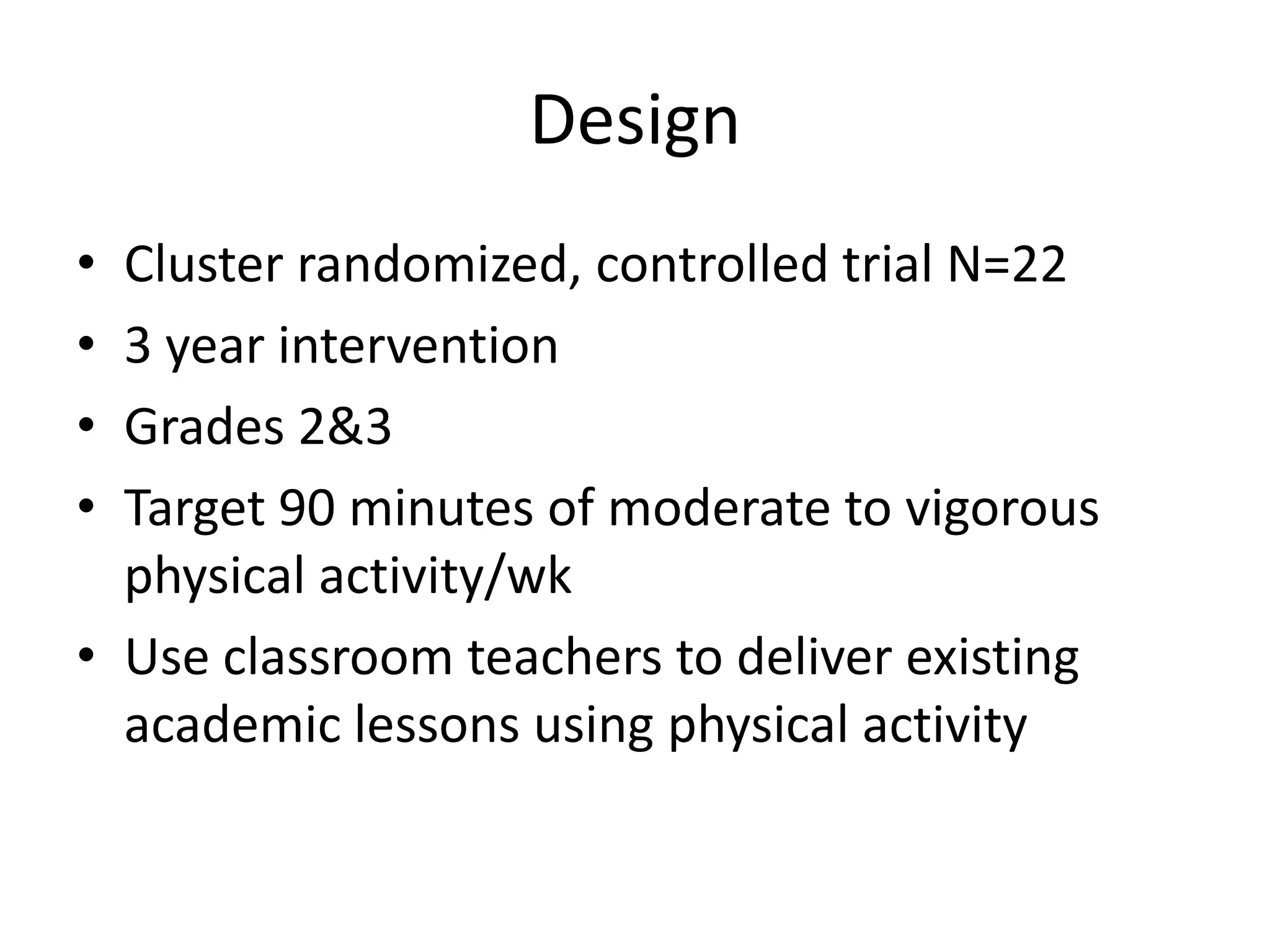
Design
•
•
•
•

Cluster randomized, controlled trial N=22
3 year intervention
Grades 2&3
Target 90 minutes of moderate to vigorous
physical activity/wk
• Use classroom teachers to deliver existing
academic lessons using physical activity
Active Lesson
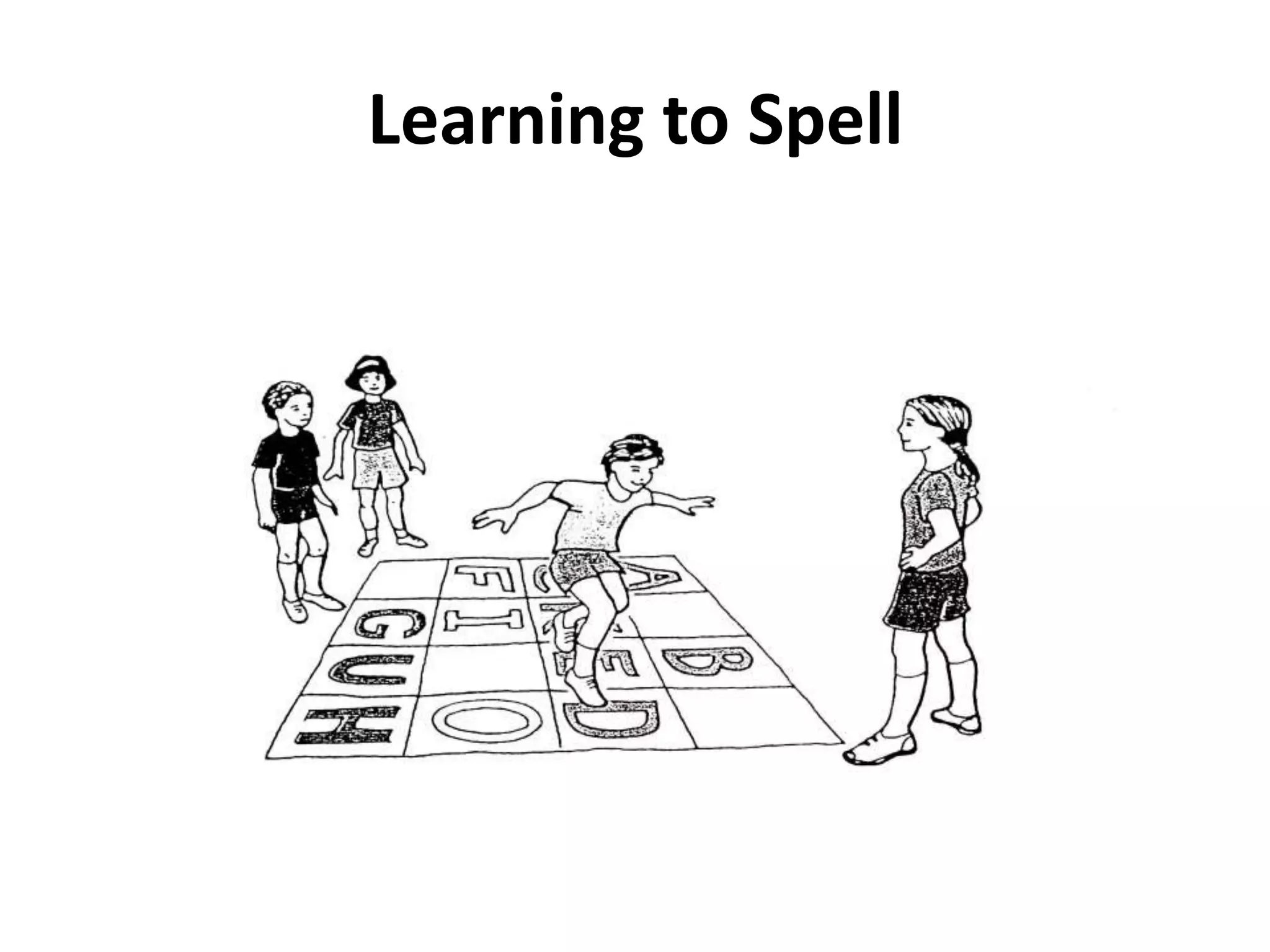
Learning to Spell
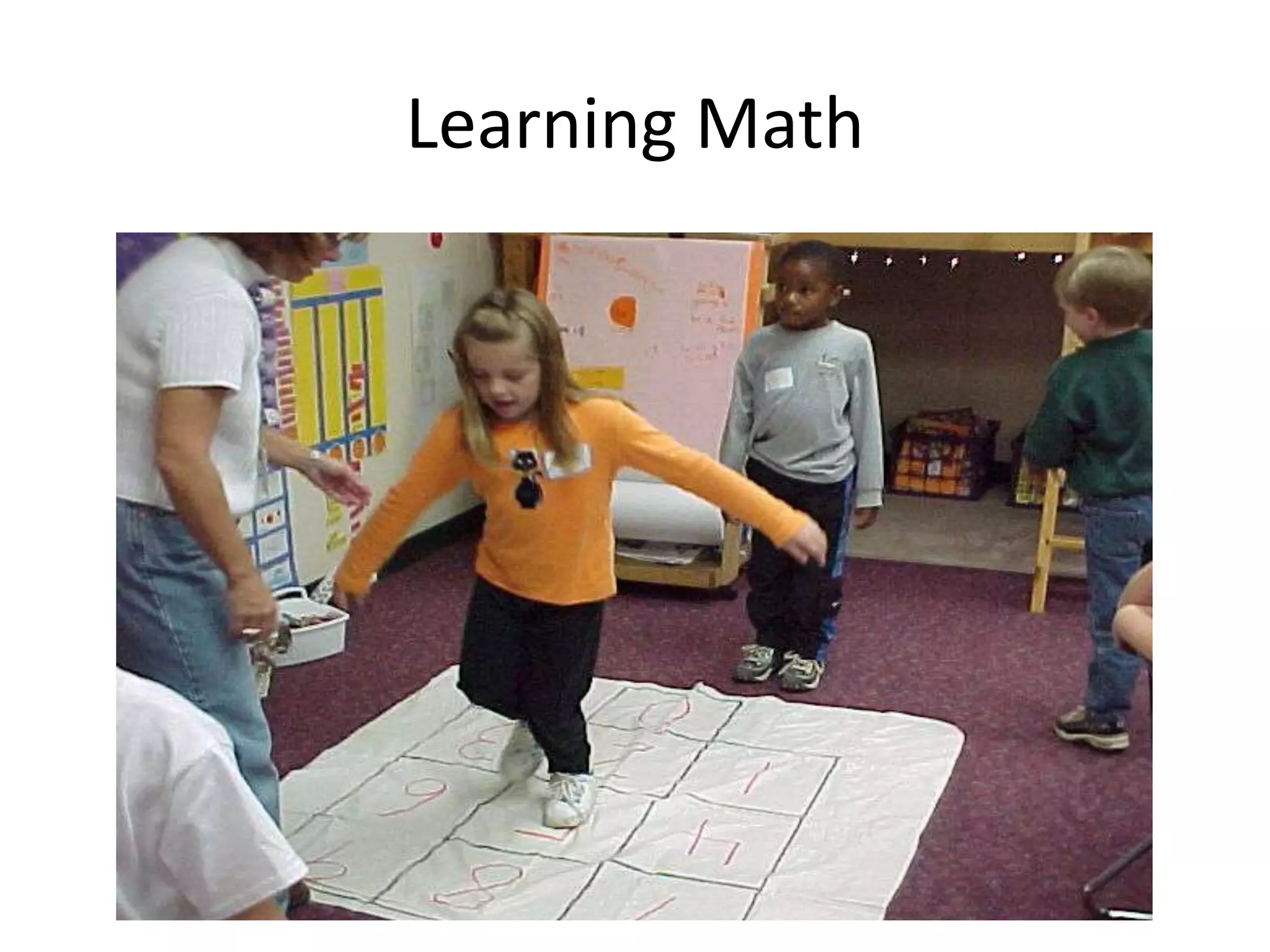
Learning Math
Learning Spanish
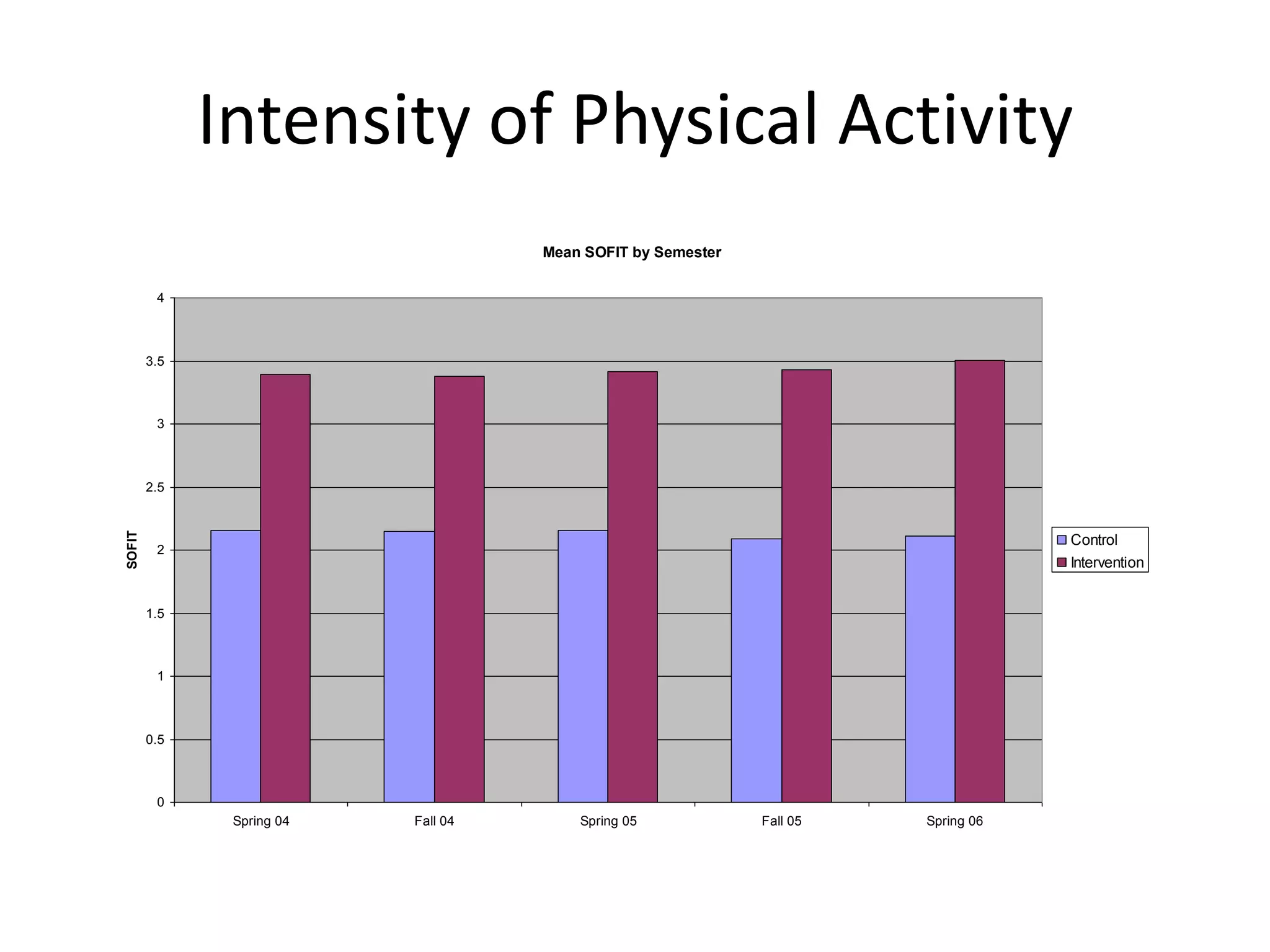
Intensity of Physical Activity
Mean SOFIT by Semester
4

3.5

3

SOFIT

2.5

Control
Intervention

2

1.5

1

0.5

0
Spring 04

Fall 04

Spring 05

Fall 05

Spring 06
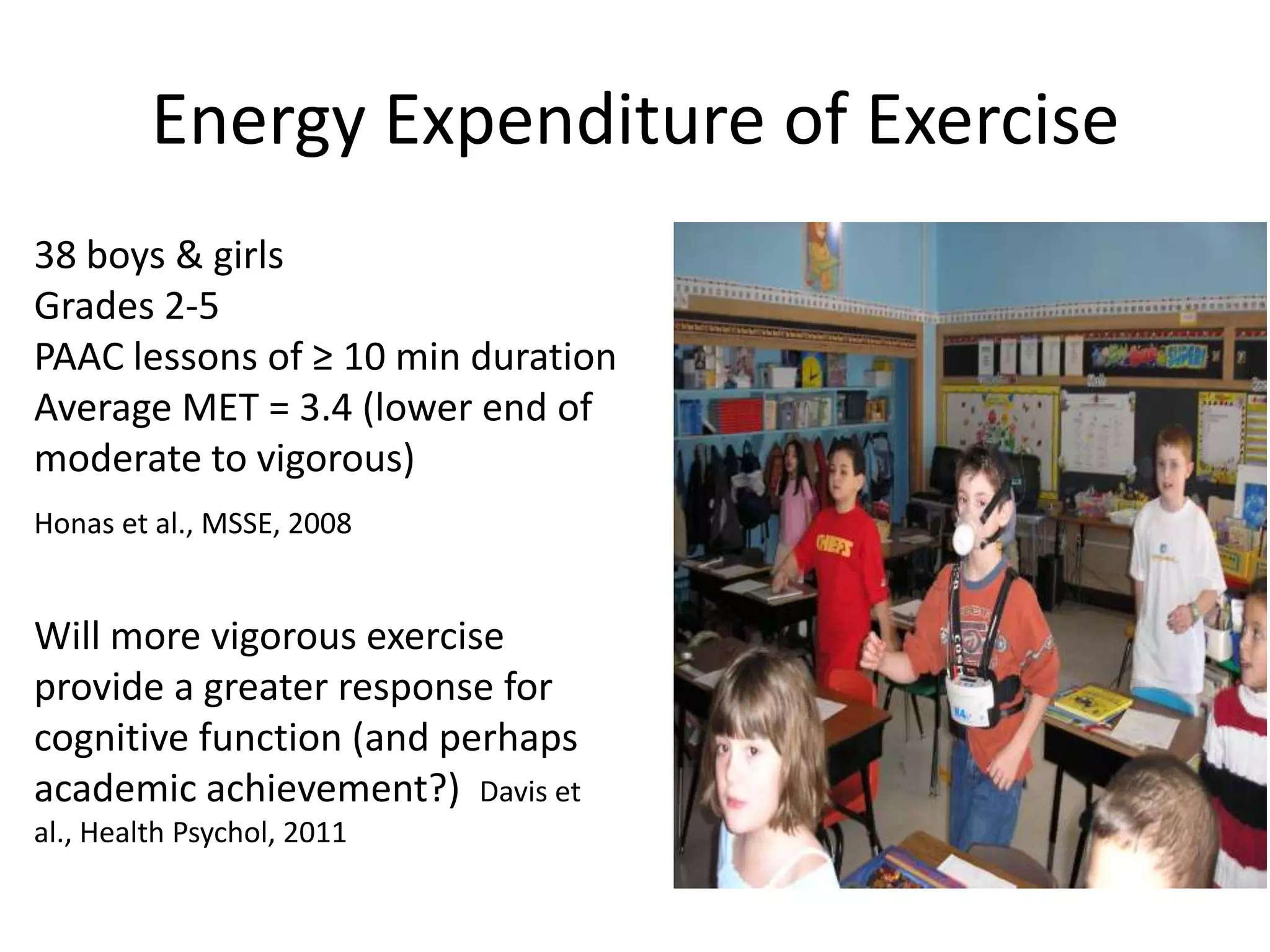
Energy Expenditure of Exercise
38 boys & girls
Grades 2-5
PAAC lessons of ≥ 10 min duration
Average MET = 3.4 (lower end of
moderate to vigorous)
Honas et al., MSSE, 2008

Will more vigorous exercise
provide a greater response for
cognitive function (and perhaps
academic achievement?) Davis et
al., Health Psychol, 2011
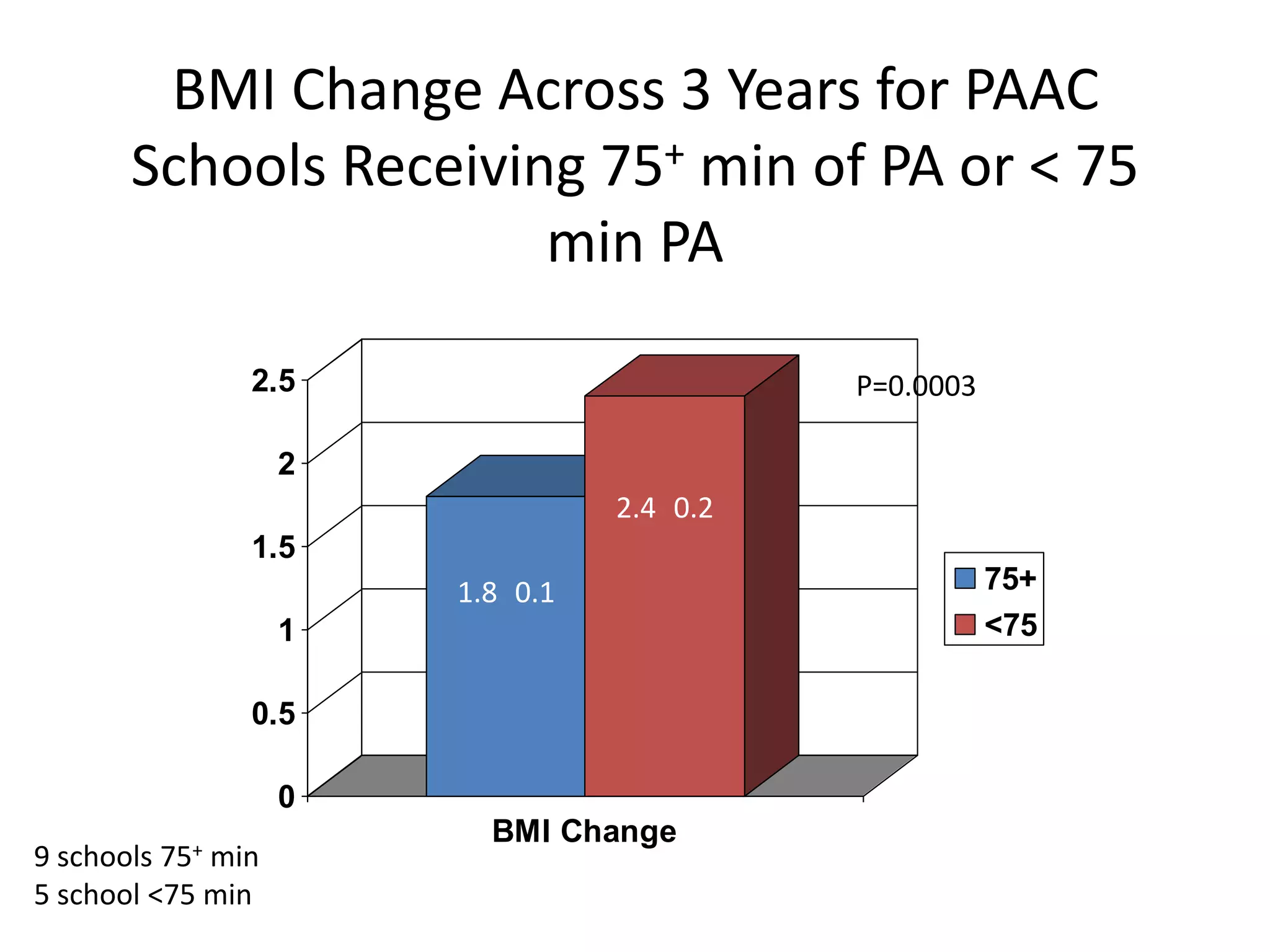
BMI Change Across 3 Years for PAAC
Schools Receiving 75+ min of PA or < 75
min PA
2.5

P=0.0003

2

2.4 0.2
1.5

1.8 0.1
1
0.5
0

9 schools 75+ min
5 school <75 min

BMI Change

75+
<75
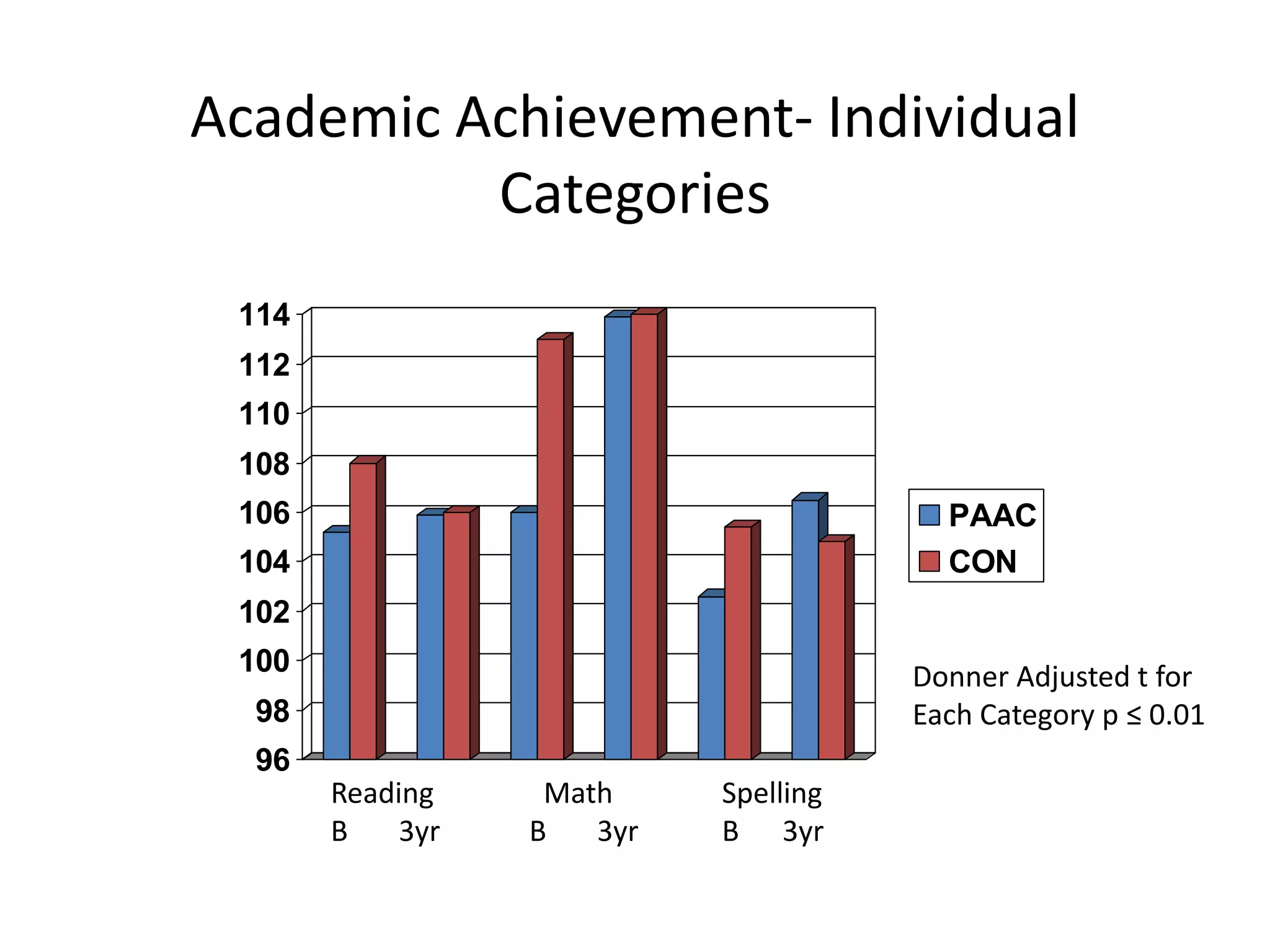
Academic Achievement- Individual
Categories
114
112
110
108
106

PAAC
CON

104
102
100

Donner Adjusted t for
Each Category p ≤ 0.01

98
96

Reading
B
3yr

Math
B
3yr

Spelling
B 3yr
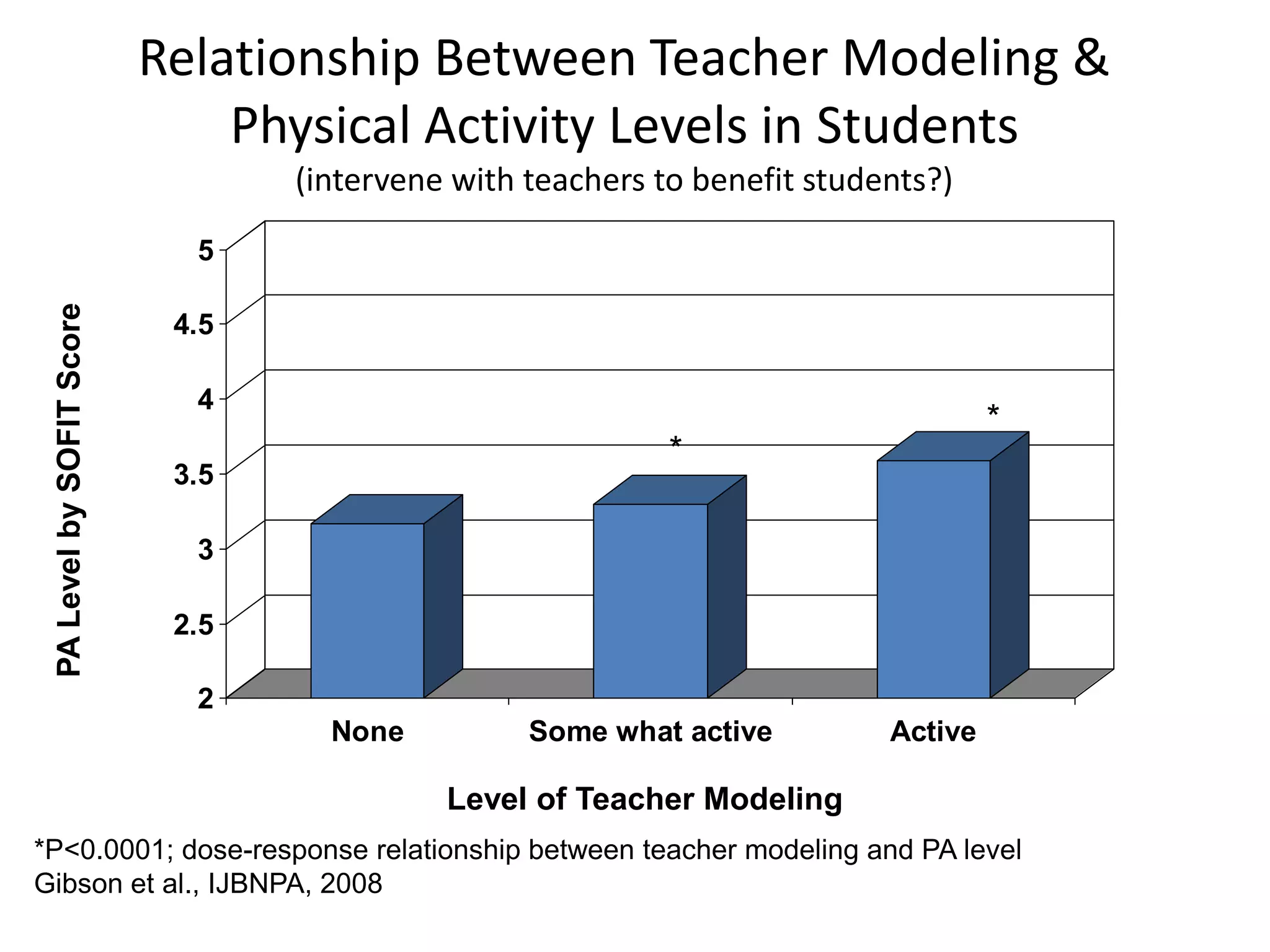
Relationship Between Teacher Modeling &
Physical Activity Levels in Students
(intervene with teachers to benefit students?)

PA Level by SOFIT Score

5
4.5
4

*

*

3.5
3
2.5
2
None

Some what active

Active

Level of Teacher Modeling
*P<0.0001; dose-response relationship between teacher modeling and PA level
Gibson et al., IJBNPA, 2008
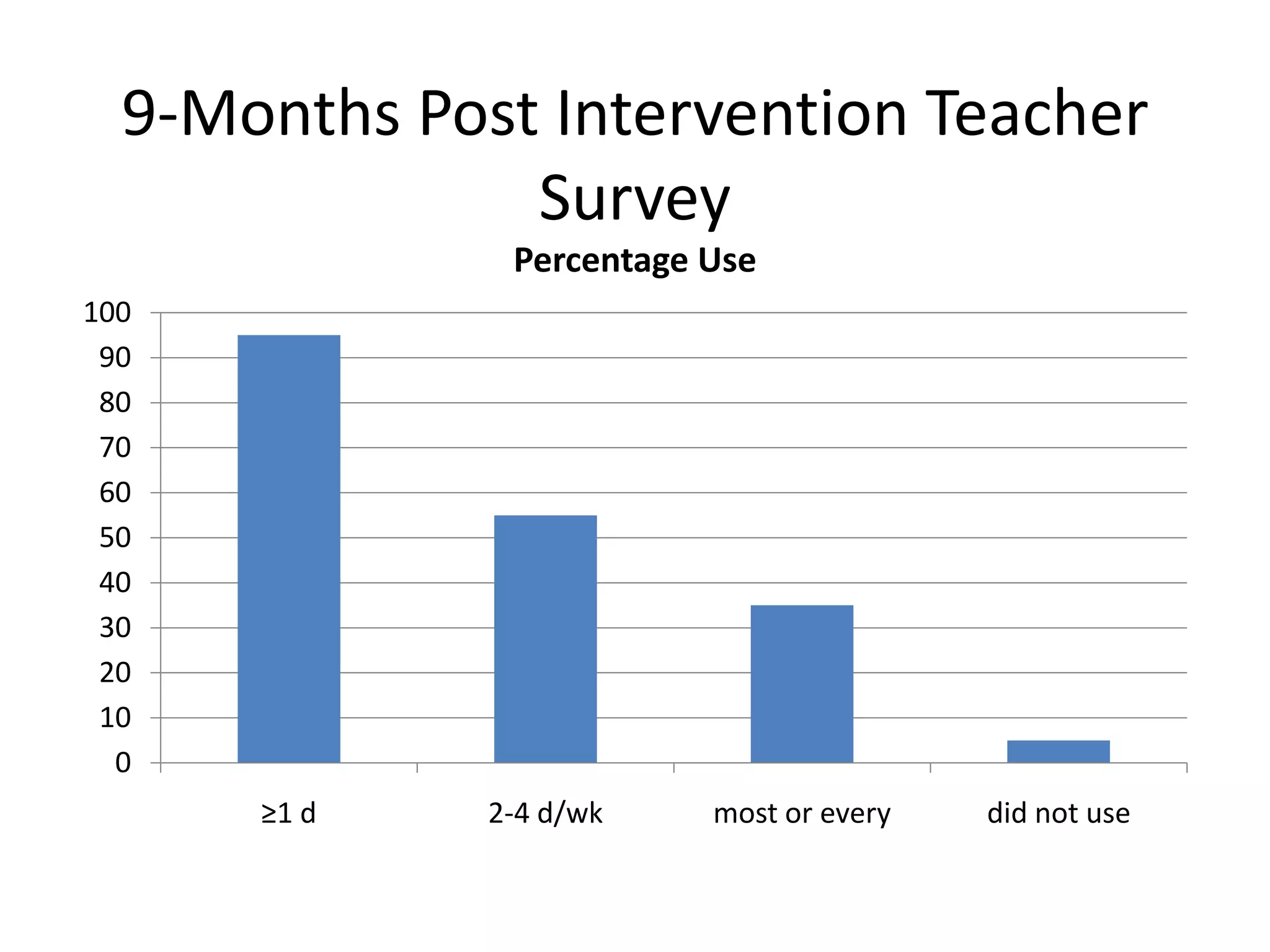
9-Months Post Intervention Teacher
Survey
Percentage Use
100
90
80
70
60
50
40
30
20
10
0
≥1 d

2-4 d/wk

most or every

did not use
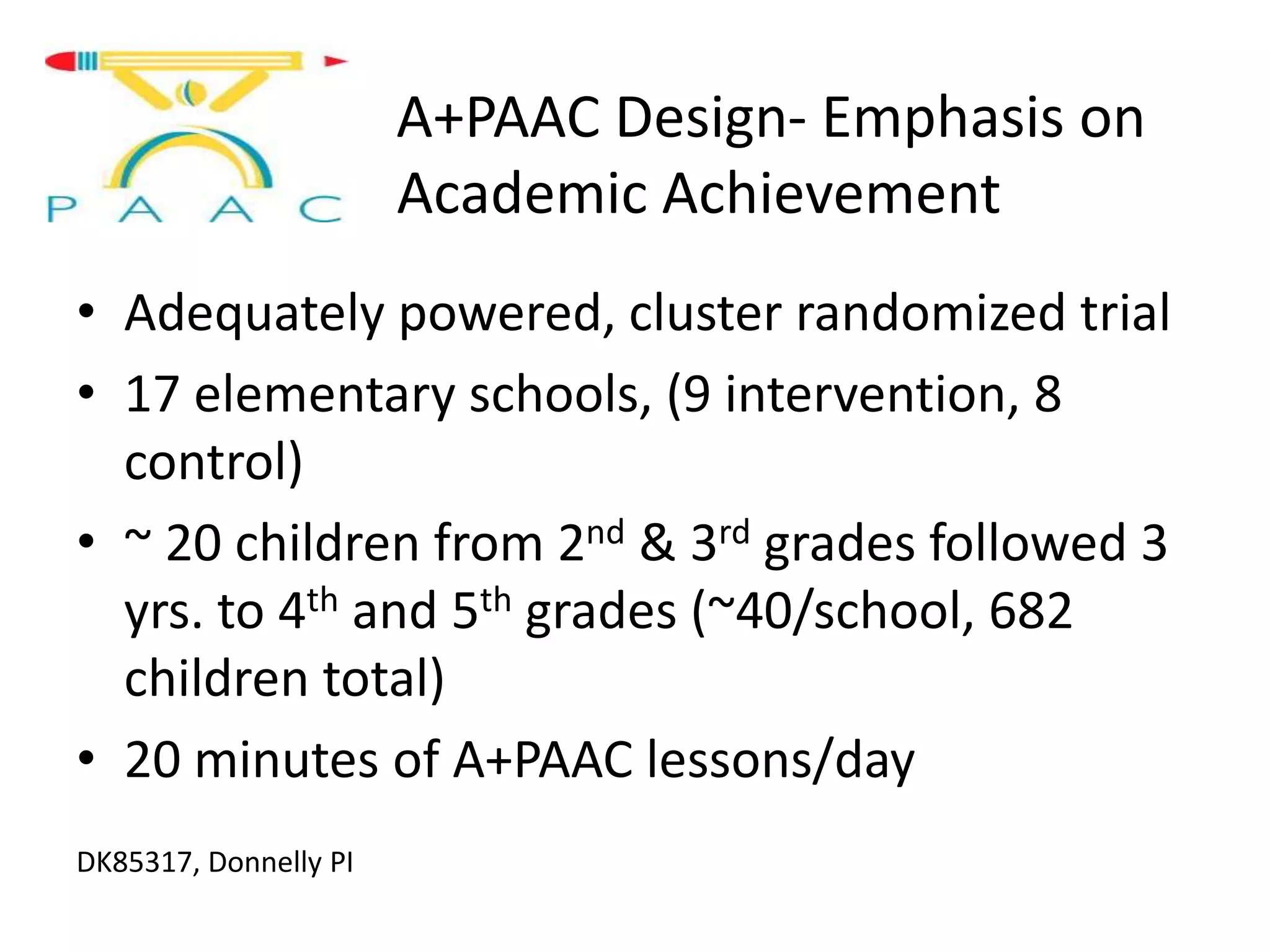
A+PAAC Design- Emphasis on
Academic Achievement
• Adequately powered, cluster randomized trial
• 17 elementary schools, (9 intervention, 8
control)
• ~ 20 children from 2nd & 3rd grades followed 3
yrs. to 4th and 5th grades (~40/school, 682
children total)
• 20 minutes of A+PAAC lessons/day
DK85317, Donnelly PI
A+PAAC Outcomes
• Academic achievement measured by Wechsler
Individual Achievement Test III
• State administered achievement tests with
individual identifiers
• Cognitive function- Flanker, n-back (Hillman)
• Anthropometrics, fitness (Pacer), blood
chemistry, blood pressure, attention-to-task
(Mahar), energy expenditure of A+PAAC
lessons (indirect calorimetry via CosMed)
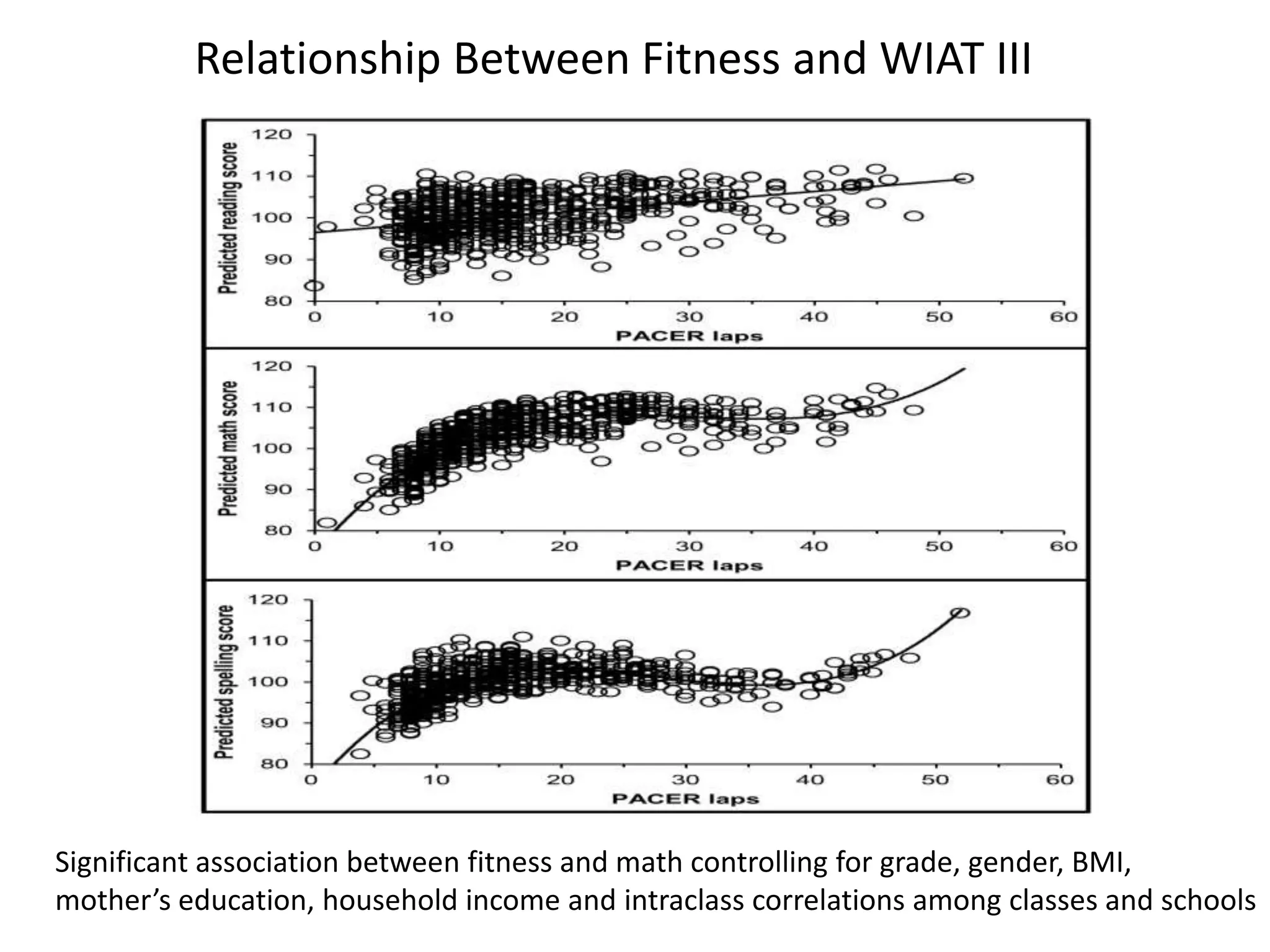
Relationship Between Fitness and WIAT III

Significant association between fitness and math controlling for grade, gender, BMI,
mother’s education, household income and intraclass correlations among classes and schools
How to Increase Physical Activity in
Schools Without Decreasing Academic
Instruction
• Increase time children are physically active in
current physical education and recess
• Provide access to physical activity before and
after school
• Promote active transportation
• Provide physically active lessons
What is Needed to Avoid Barriers and
Promote Non-Traditional Physical Activity
in Schools

• Low teacher burden for lesson preparation
• Activity disconnected from motor skills
• Additional evidence to link physical
activity/fitness & learning

Plausible biological model combined with evidence
from well designed interventions linking to state
academic achievement tests

• Low cost/no cost, sustainable programs through
university teacher preparation (i.e., additional
cost = $0.00)
Training Programs
•
•
•
•
•

Physical Activity Across the Curriculum (A+PAAC)
Take 10!
Let’s Move in School
Energizers
The Kinesthetic Classroom: teaching and learning
through movement. Mike Kuczala Regional
Training Center (Randolph, NJ)
• Others
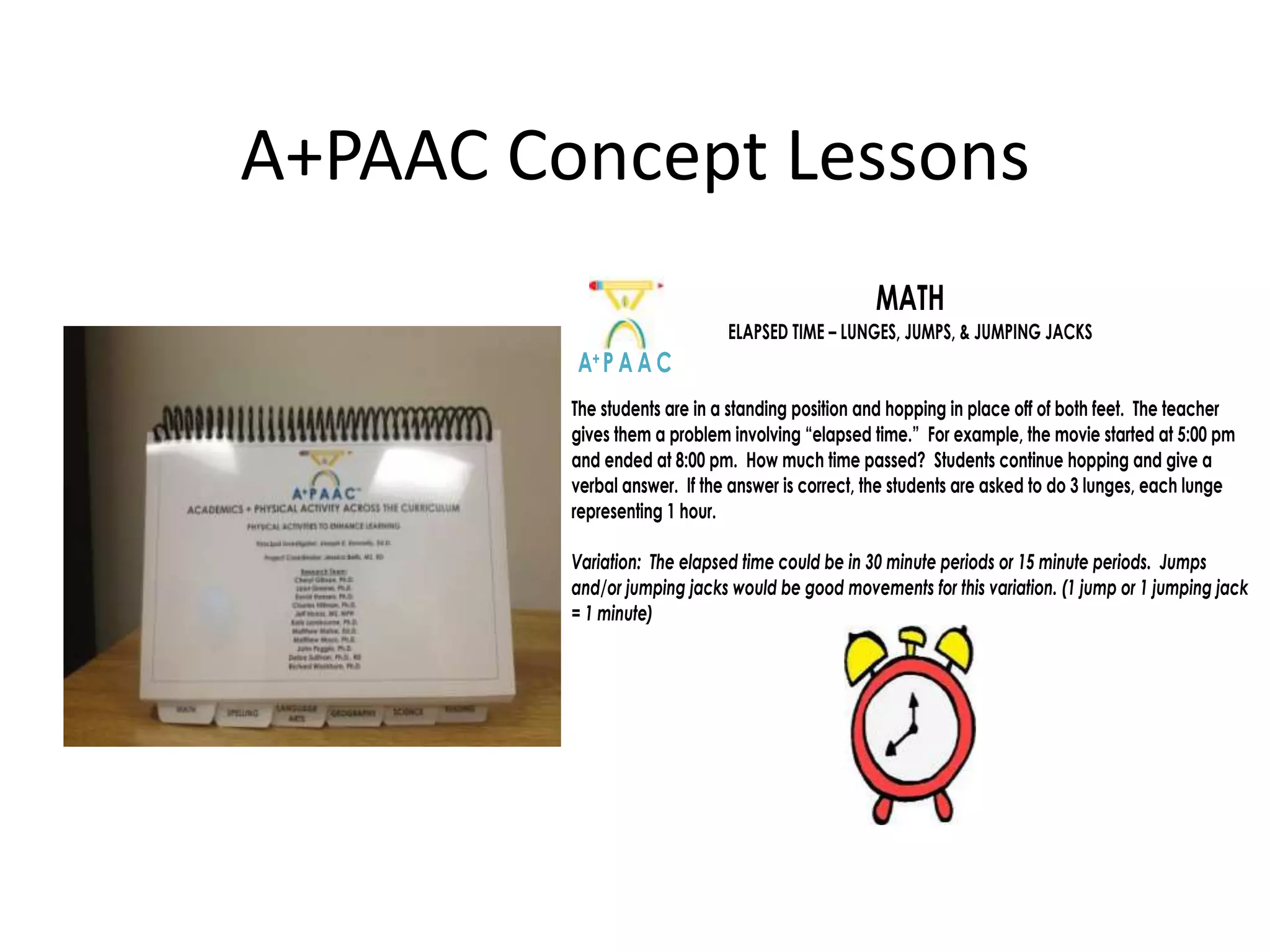
A+PAAC Concept Lessons
MATH
ELAPSED TIME – LUNGES, JUMPS, & JUMPING JACKS

A+ P A A C
The students are in a standing position and hopping in place off of both feet. The teacher
gives them a problem involving “elapsed time.” For example, the movie started at 5:00 pm
and ended at 8:00 pm. How much time passed? Students continue hopping and give a
verbal answer. If the answer is correct, the students are asked to do 3 lunges, each lunge
representing 1 hour.
Variation: The elapsed time could be in 30 minute periods or 15 minute periods. Jumps
and/or jumping jacks would be good movements for this variation. (1 jump or 1 jumping jack
= 1 minute)
Evidence for Physical Activity & Academic
Achievement
• Fitness (aerobic capacity) seems to be associated with
academic achievement
• Academic lessons taught with physical activity have
been shown to improve academic achievement and
attenuate increases in BMI (2 for 1) even without
increases in fitness
• Physically active lessons may improve attention-totask, a behavior associated with learning, and critical to
classroom management

There is no evidence that removal of physical activity
programs results in greater academic achievement
The End

Joseph E. Donnelly - "Physical Activity and Academic Achievement in Elementary School Children"

  • 1.
    Physical Activity, Physical Fitness,& Academic Performance Joseph E. Donnelly, ED.D., FACSM Professor, Internal Medicine Director, Energy Balance Laboratory Director, Center for Physical Activity & Weight Management The University of Kansas Medical Center The University of Kansas-Lawrence
  • 2.
    Overview • Metabolic syndromeand obesity in children and youth • Minimal intervention approach to increase physical activity and impact learning in schools • Barriers and potential solutions • Summary
  • 3.
    Distribution of theMetabolic Syndrome & Its Related Components Prevalence (%) 40 30 20 10 0 MS HDL-C TG All DuBose et al., Acta Paediatr, 2006 Boys Variables Gluc Girls CO BP
  • 4.
    Theoretical Model toImprove Health & Academic Achievement Donnelly JE, Lambourne K, Prev. Med., 2011, 52:S36-42.
  • 5.
    Schools are Sedentary •Bus ride can be > 60 min each way • Recess and physical education has declined to levels that cannot provide adequate stimulus (energy expenditure) for fitness or to protect against fatness • Motor time off task is discouraged and disciplined • Traditional teaching paradigm- sit down and be quiet
  • 6.
    Physical Education byItself is not Adequate to Provide Fitness or Prevent Fatness in the Current Environment • PE and recess have diminished, frequently offered 2-3 X week • PE duration as little as 20 minutes • MET value frequently just at or below the definition of moderately vigorous • Inadequate facilities & equipment • PE teacher shared among schools, poor training/no training
  • 7.
    Physical Activity Acrossthe Curriculum (PAAC) A 3-year, randomized controlled trial of physical activity and academic achievement for elementary school children in grades 2 & 3 Donnelly et al., Physical Activity Across the Curriculum (PAAC): A randomized controlled trial to promote physical activity and diminish obesity in elementary school children. Prev. Med. 2009, 49:336-41 (DK61489)
  • 8.
    Major Aims ofPAAC • Increase physical activity by using classroom teachers to teach existing lessons with using physical activity • Primary aimDiminish increases in BMI • Secondary aimsDetermine association between physically active lessons and academic achievement Characterize metabolic syndrome
  • 9.
    The PAAC Program •Aclassroom-based approach to reduce sedentary behavior while maintaining the focus on academics •NO DECREASE in academic instruction time •PAAC is a technique to deliver existing academic instruction through movement
  • 10.
  • 11.
    Conceptual Framework • • • • • • • Minimal intervention Enhanceslearning No additional teacher preparation time No additional cost Easily perpetuated and replicated Desirable for both teacher and student (i.e., FUN) Students “must” participate in classroom lessons
  • 12.
    The PAAC Program Integrate10 minute periods of physical activity within academic lessons for a total of 90 min/wk (i.e. 1 ten min lesson in morning and afternoon. • • • • Language art Math Science History
  • 13.
    Design • • • • Cluster randomized, controlledtrial N=22 3 year intervention Grades 2&3 Target 90 minutes of moderate to vigorous physical activity/wk • Use classroom teachers to deliver existing academic lessons using physical activity
  • 14.
  • 15.
  • 16.
  • 17.
  • 18.
    Intensity of PhysicalActivity Mean SOFIT by Semester 4 3.5 3 SOFIT 2.5 Control Intervention 2 1.5 1 0.5 0 Spring 04 Fall 04 Spring 05 Fall 05 Spring 06
  • 19.
    Energy Expenditure ofExercise 38 boys & girls Grades 2-5 PAAC lessons of ≥ 10 min duration Average MET = 3.4 (lower end of moderate to vigorous) Honas et al., MSSE, 2008 Will more vigorous exercise provide a greater response for cognitive function (and perhaps academic achievement?) Davis et al., Health Psychol, 2011
  • 20.
    BMI Change Across3 Years for PAAC Schools Receiving 75+ min of PA or < 75 min PA 2.5 P=0.0003 2 2.4 0.2 1.5 1.8 0.1 1 0.5 0 9 schools 75+ min 5 school <75 min BMI Change 75+ <75
  • 21.
    Academic Achievement- Individual Categories 114 112 110 108 106 PAAC CON 104 102 100 DonnerAdjusted t for Each Category p ≤ 0.01 98 96 Reading B 3yr Math B 3yr Spelling B 3yr
  • 22.
    Relationship Between TeacherModeling & Physical Activity Levels in Students (intervene with teachers to benefit students?) PA Level by SOFIT Score 5 4.5 4 * * 3.5 3 2.5 2 None Some what active Active Level of Teacher Modeling *P<0.0001; dose-response relationship between teacher modeling and PA level Gibson et al., IJBNPA, 2008
  • 23.
    9-Months Post InterventionTeacher Survey Percentage Use 100 90 80 70 60 50 40 30 20 10 0 ≥1 d 2-4 d/wk most or every did not use
  • 24.
    A+PAAC Design- Emphasison Academic Achievement • Adequately powered, cluster randomized trial • 17 elementary schools, (9 intervention, 8 control) • ~ 20 children from 2nd & 3rd grades followed 3 yrs. to 4th and 5th grades (~40/school, 682 children total) • 20 minutes of A+PAAC lessons/day DK85317, Donnelly PI
  • 25.
    A+PAAC Outcomes • Academicachievement measured by Wechsler Individual Achievement Test III • State administered achievement tests with individual identifiers • Cognitive function- Flanker, n-back (Hillman) • Anthropometrics, fitness (Pacer), blood chemistry, blood pressure, attention-to-task (Mahar), energy expenditure of A+PAAC lessons (indirect calorimetry via CosMed)
  • 26.
    Relationship Between Fitnessand WIAT III Significant association between fitness and math controlling for grade, gender, BMI, mother’s education, household income and intraclass correlations among classes and schools
  • 27.
    How to IncreasePhysical Activity in Schools Without Decreasing Academic Instruction • Increase time children are physically active in current physical education and recess • Provide access to physical activity before and after school • Promote active transportation • Provide physically active lessons
  • 28.
    What is Neededto Avoid Barriers and Promote Non-Traditional Physical Activity in Schools • Low teacher burden for lesson preparation • Activity disconnected from motor skills • Additional evidence to link physical activity/fitness & learning Plausible biological model combined with evidence from well designed interventions linking to state academic achievement tests • Low cost/no cost, sustainable programs through university teacher preparation (i.e., additional cost = $0.00)
  • 29.
    Training Programs • • • • • Physical ActivityAcross the Curriculum (A+PAAC) Take 10! Let’s Move in School Energizers The Kinesthetic Classroom: teaching and learning through movement. Mike Kuczala Regional Training Center (Randolph, NJ) • Others
  • 31.
    A+PAAC Concept Lessons MATH ELAPSEDTIME – LUNGES, JUMPS, & JUMPING JACKS A+ P A A C The students are in a standing position and hopping in place off of both feet. The teacher gives them a problem involving “elapsed time.” For example, the movie started at 5:00 pm and ended at 8:00 pm. How much time passed? Students continue hopping and give a verbal answer. If the answer is correct, the students are asked to do 3 lunges, each lunge representing 1 hour. Variation: The elapsed time could be in 30 minute periods or 15 minute periods. Jumps and/or jumping jacks would be good movements for this variation. (1 jump or 1 jumping jack = 1 minute)
  • 32.
    Evidence for PhysicalActivity & Academic Achievement • Fitness (aerobic capacity) seems to be associated with academic achievement • Academic lessons taught with physical activity have been shown to improve academic achievement and attenuate increases in BMI (2 for 1) even without increases in fitness • Physically active lessons may improve attention-totask, a behavior associated with learning, and critical to classroom management There is no evidence that removal of physical activity programs results in greater academic achievement
  • 33.