The Importance of Physical
Activity and its Effects on
Learning
  Samantha McDonald
  u3037265
  Sport Coaching Pedagogy
  UC, Semester 1, 2013
What is physical activity?

Physical activity is defined as any bodily
movement produced by skeletal
muscles that requires energy
expenditure.
           World Health Organisation (WHO), 2013
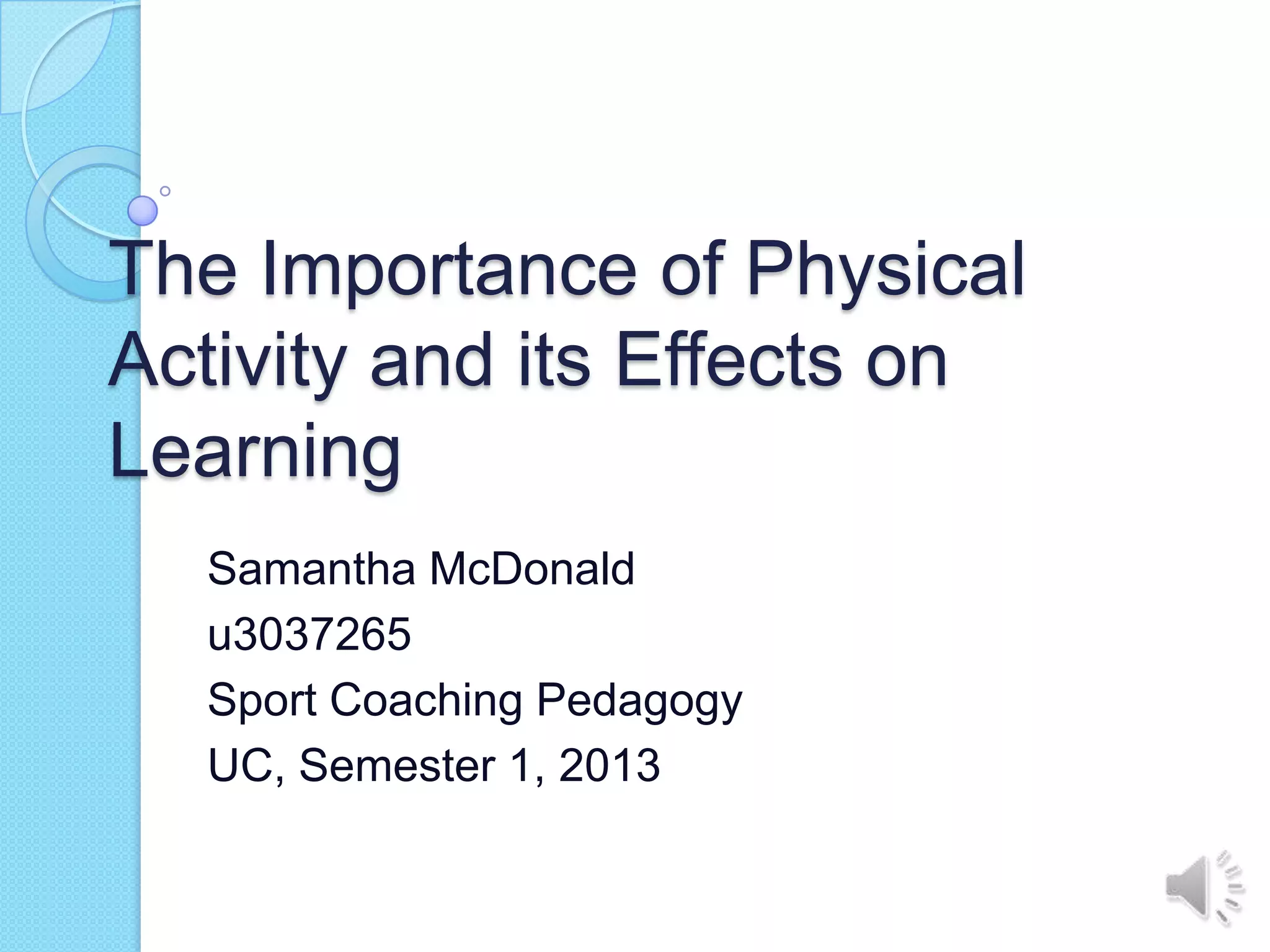
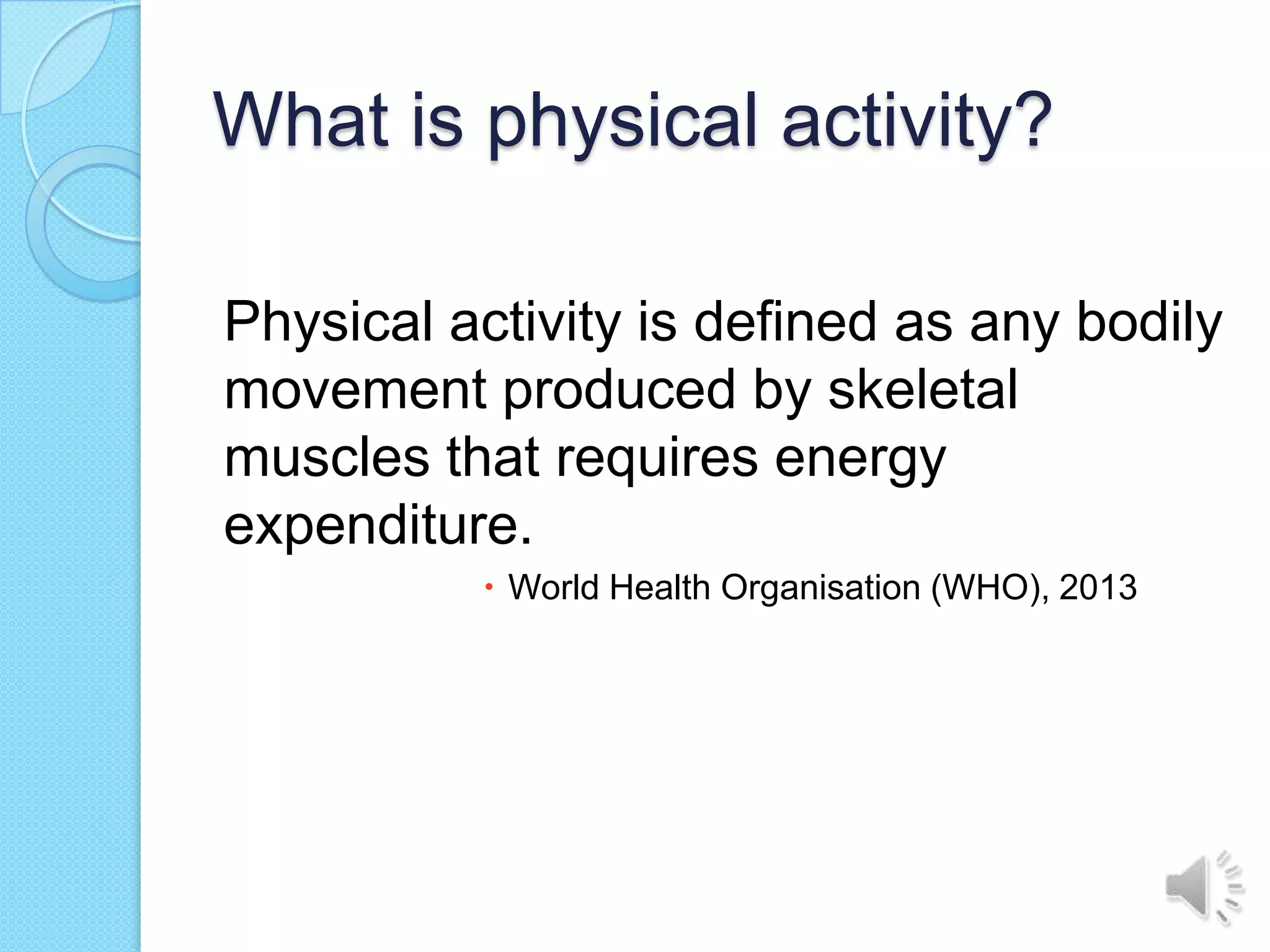
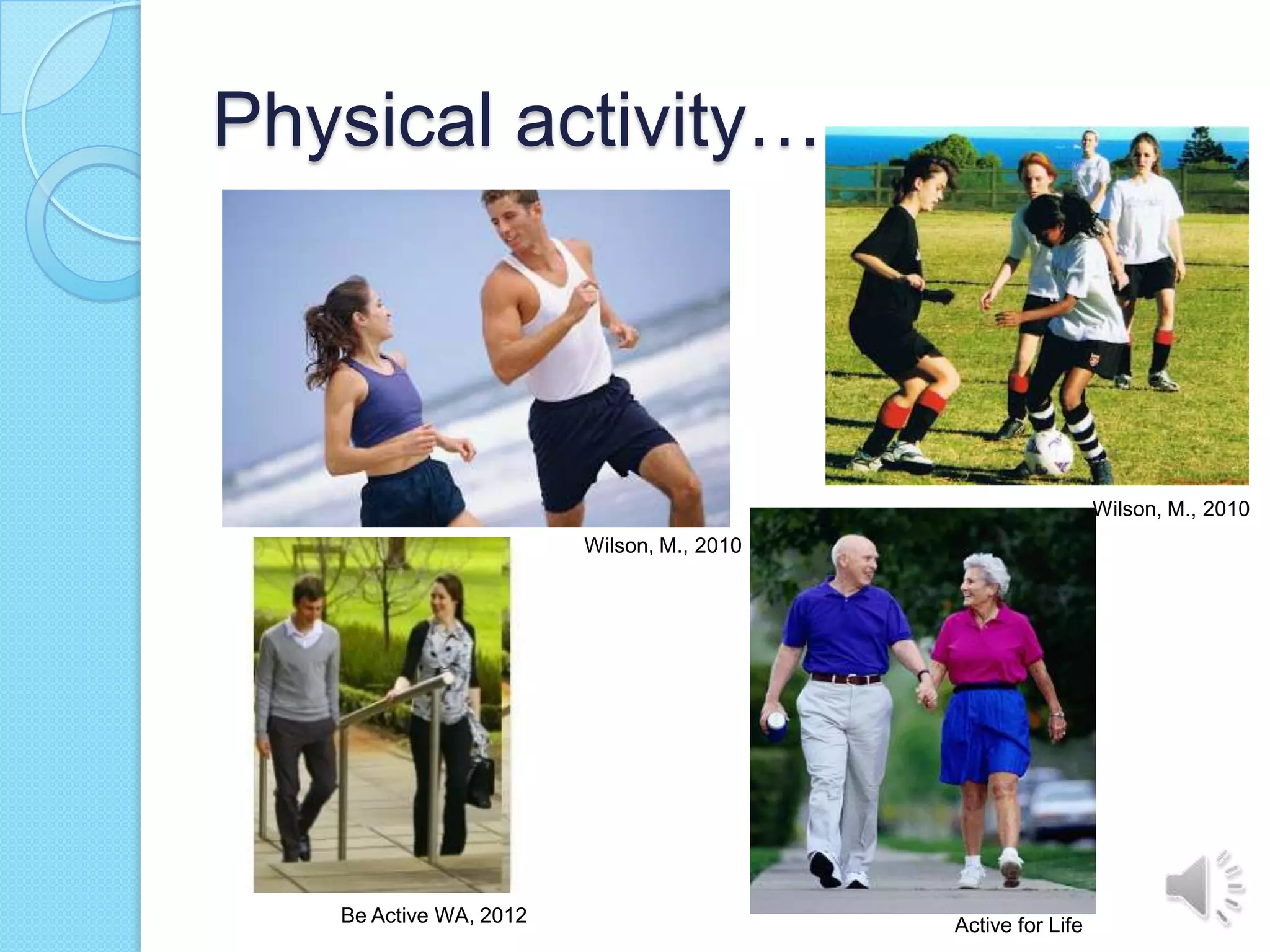
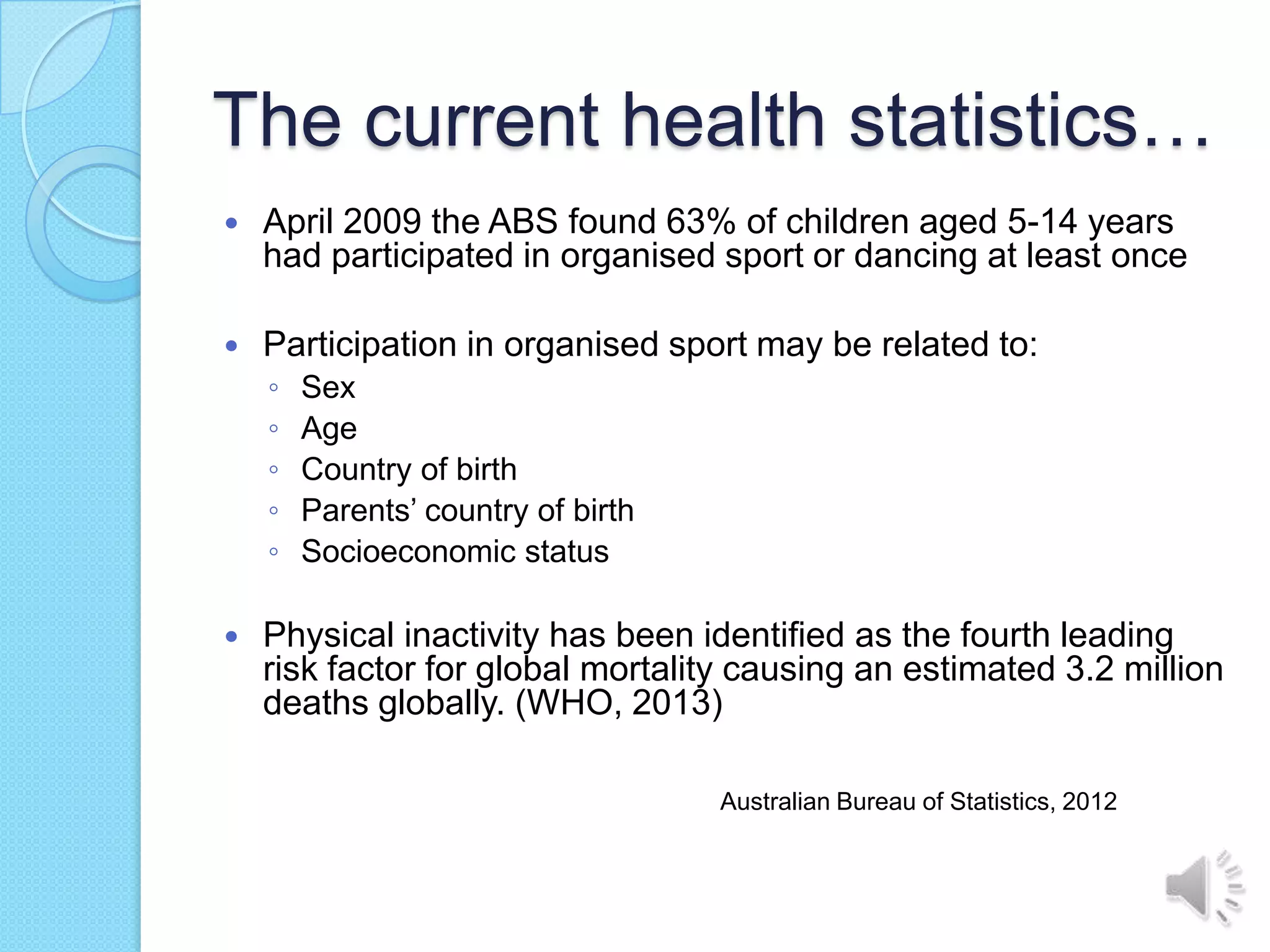
Physical activity…


                                                             Wilson, M., 2010
                        Wilson, M., 2010


   Be Active WA, 2012                      Active for Life
The current health statistics…
   April 2009 the ABS found 63% of children aged 5-14 years
    had participated in organised sport or dancing at least once

   Participation in organised sport may be related to:
    ◦   Sex
    ◦   Age
    ◦   Country of birth
    ◦   Parents’ country of birth
    ◦   Socioeconomic status

   Physical inactivity has been identified as the fourth leading
    risk factor for global mortality causing an estimated 3.2 million
    deaths globally. (WHO, 2013)

                                    Australian Bureau of Statistics, 2012
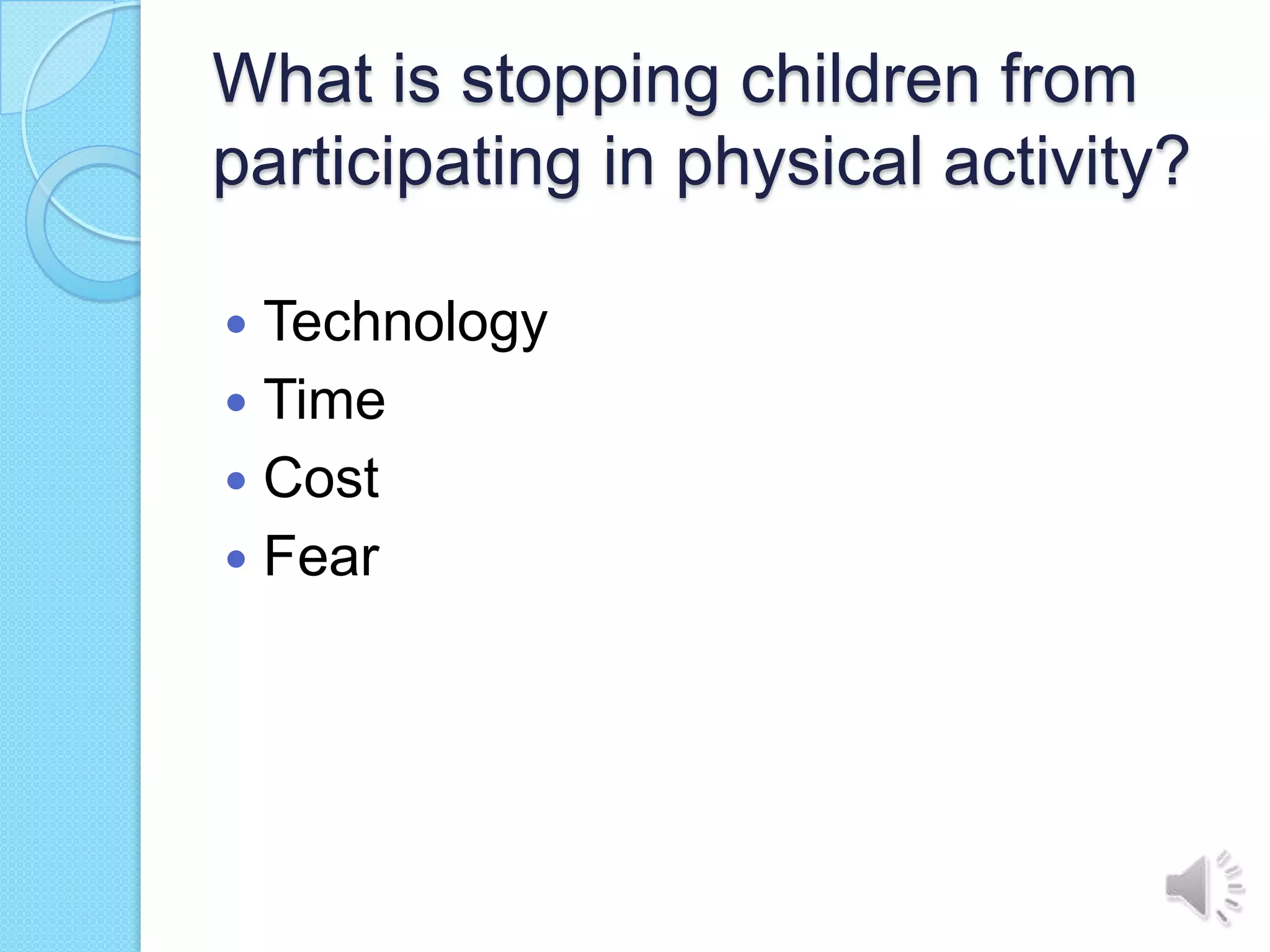
What is stopping children from
participating in physical activity?

 Technology
 Time
 Cost
 Fear
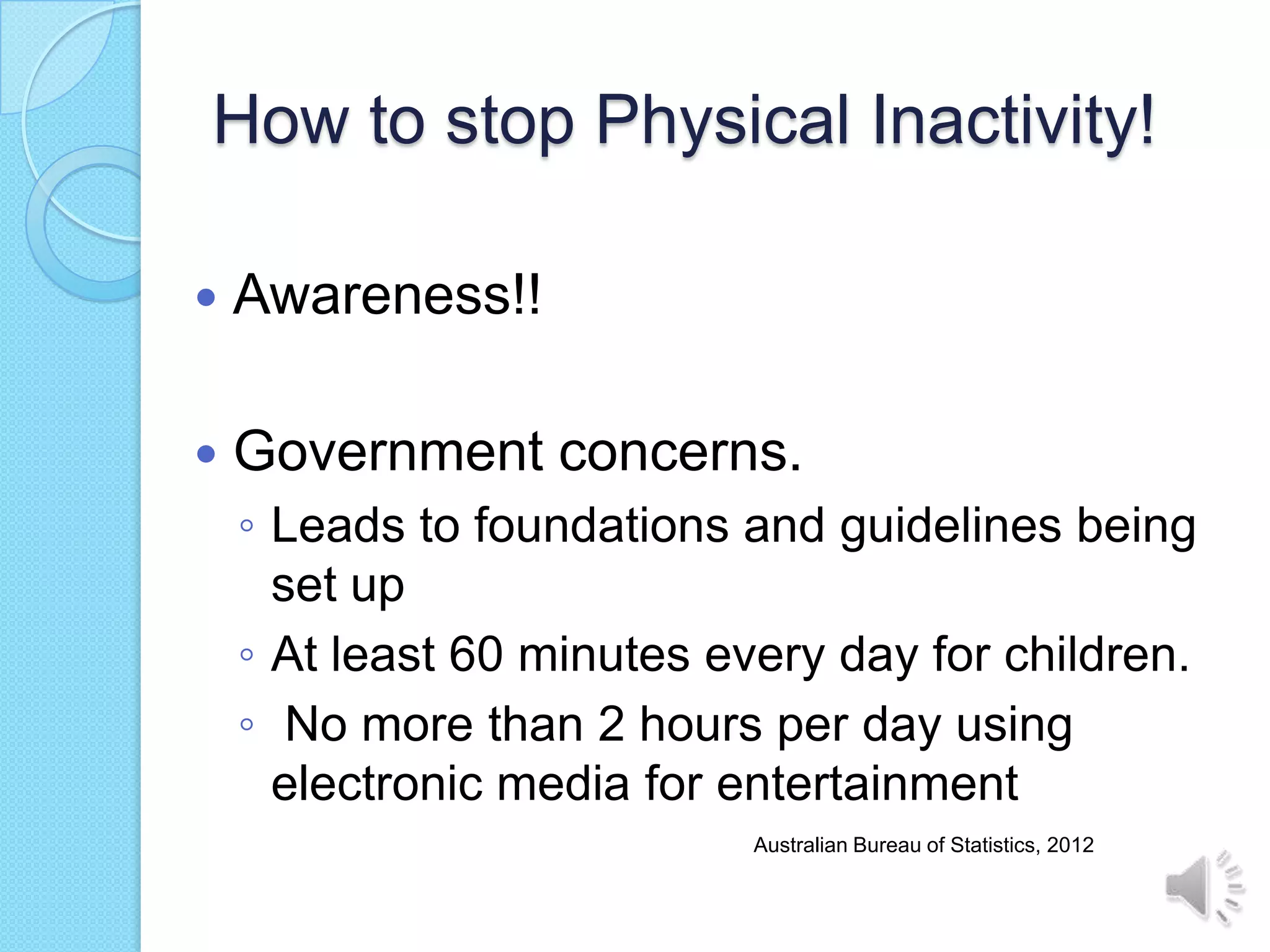
How to stop Physical Inactivity!

   Awareness!!

   Government concerns.
    ◦ Leads to foundations and guidelines being
      set up
    ◦ At least 60 minutes every day for children.
    ◦ No more than 2 hours per day using
      electronic media for entertainment
                            Australian Bureau of Statistics, 2012
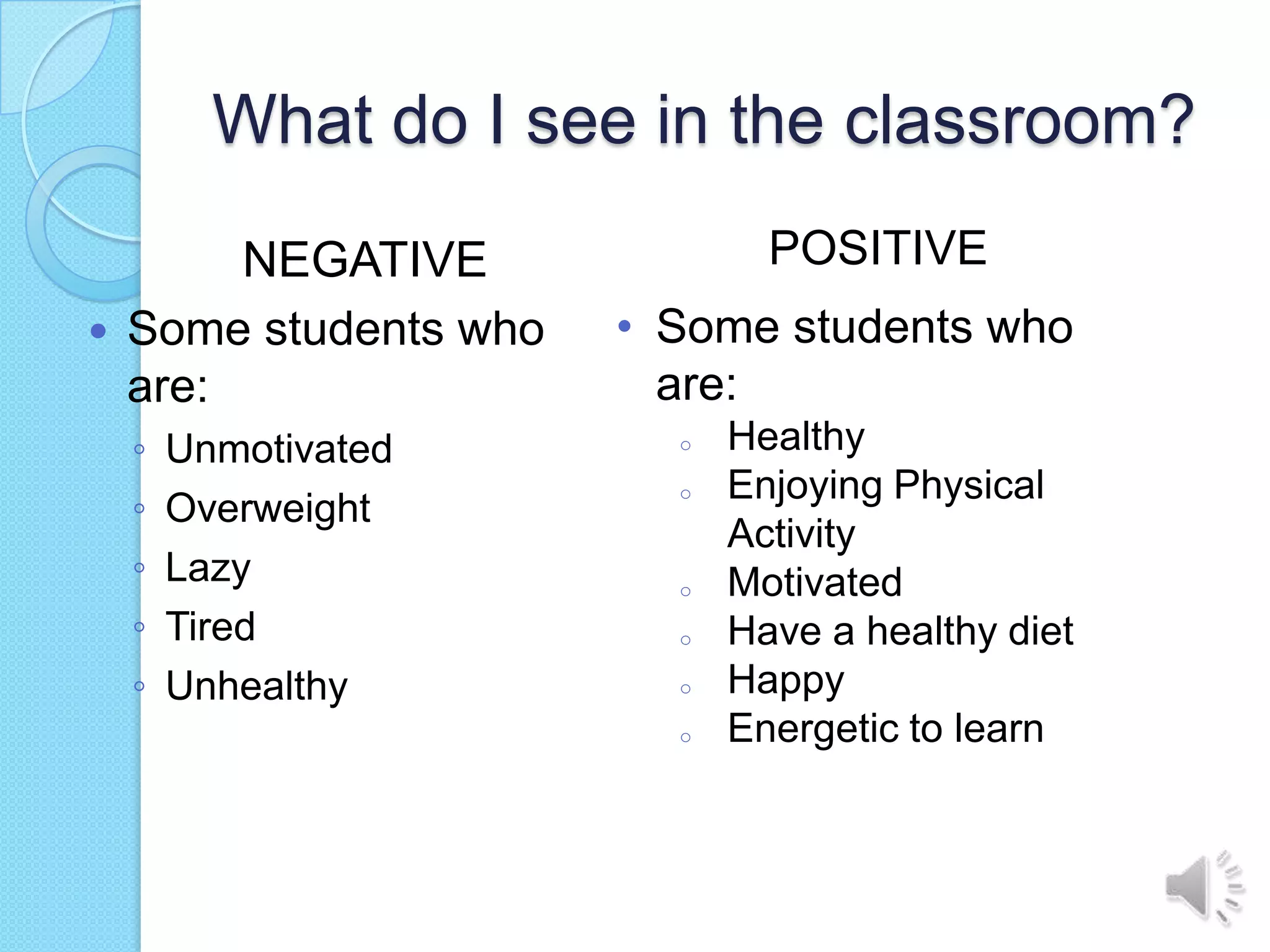
What do I see in the classroom?
         NEGATIVE               POSITIVE
   Some students who   • Some students who
    are:                  are:
    ◦   Unmotivated       o   Healthy
                              Enjoying Physical
    ◦
                          o
        Overweight
                              Activity
    ◦   Lazy              o   Motivated
    ◦   Tired             o   Have a healthy diet
    ◦   Unhealthy         o   Happy
                          o   Energetic to learn
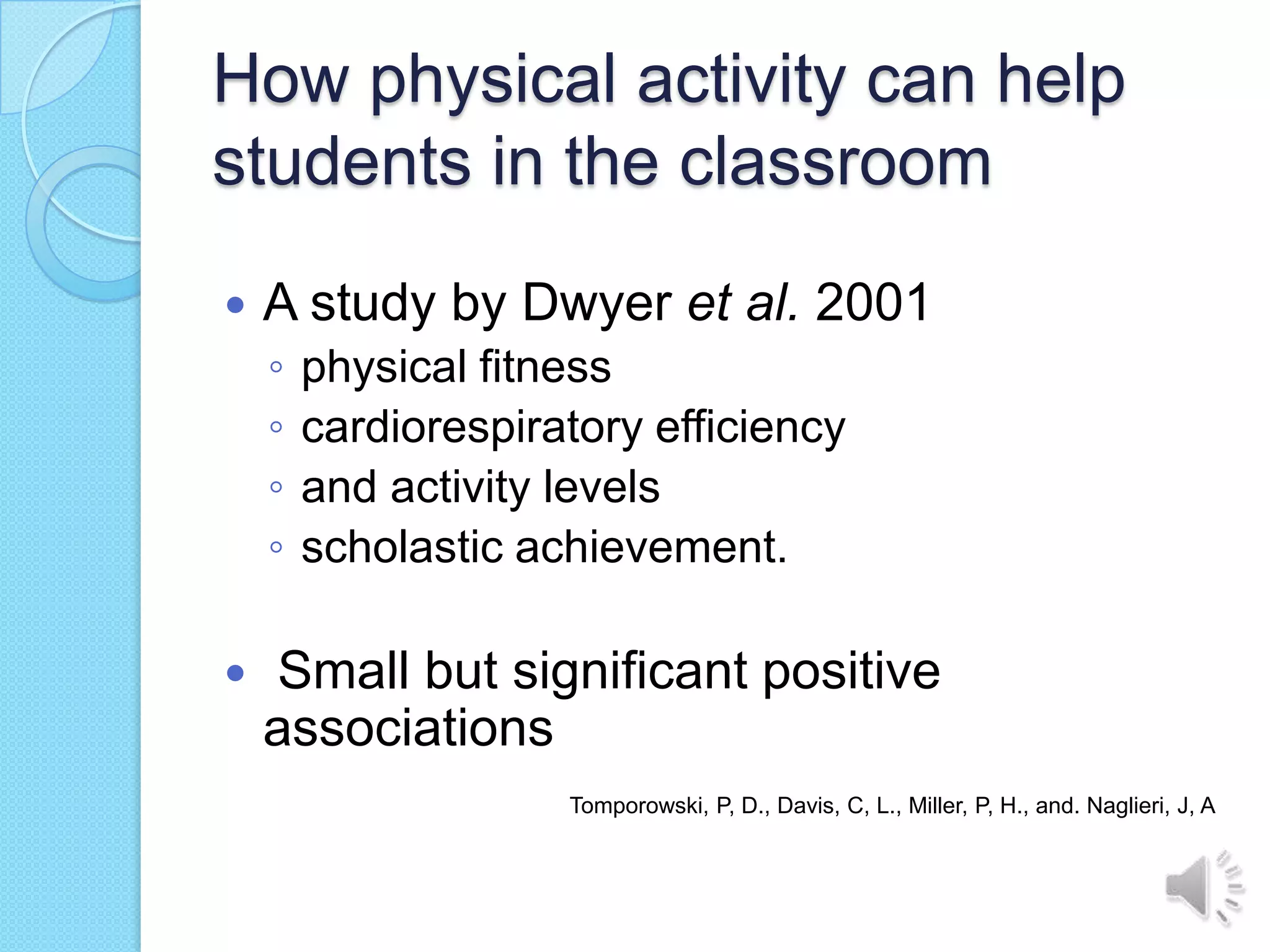
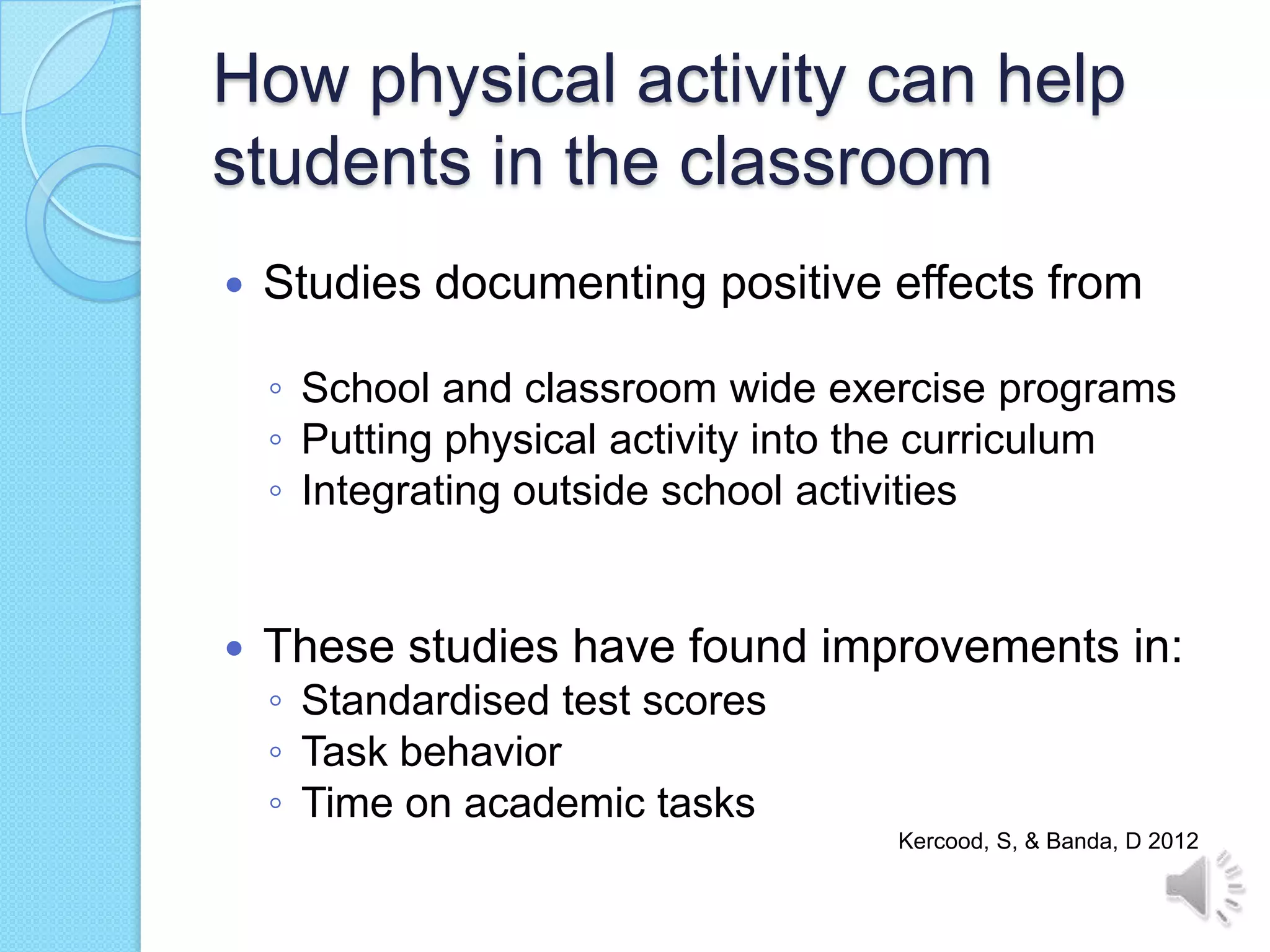
How physical activity can help
students in the classroom
   A study by Dwyer et al. 2001
    ◦   physical fitness
    ◦   cardiorespiratory efficiency
    ◦   and activity levels
    ◦   scholastic achievement.

   Small but significant positive
    associations
                     Tomporowski, P, D., Davis, C, L., Miller, P, H., and. Naglieri, J, A
How physical activity can help
students in the classroom
   Studies documenting positive effects from

    ◦ School and classroom wide exercise programs
    ◦ Putting physical activity into the curriculum
    ◦ Integrating outside school activities


   These studies have found improvements in:
    ◦ Standardised test scores
    ◦ Task behavior
    ◦ Time on academic tasks
                                    Kercood, S, & Banda, D 2012
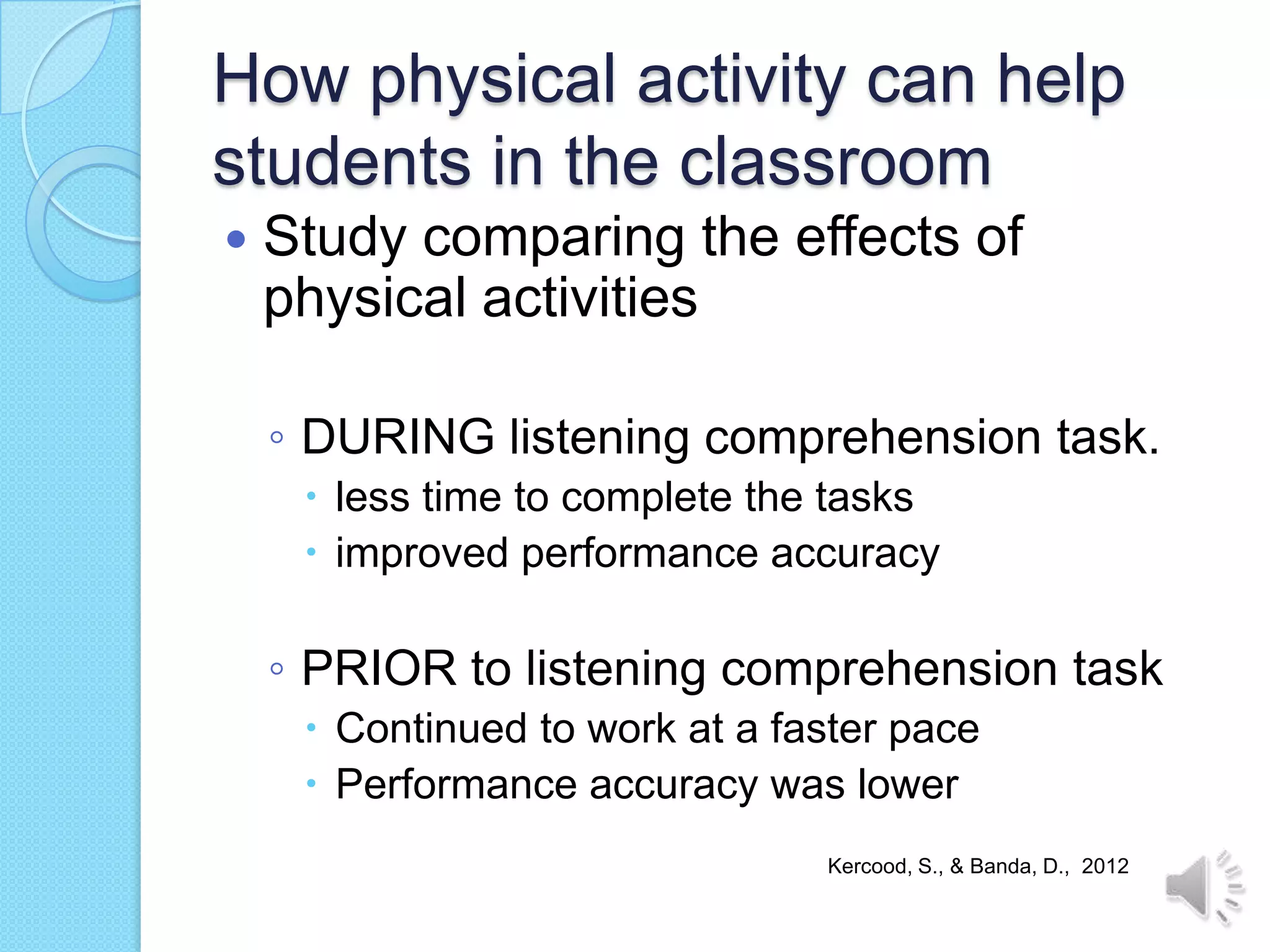
How physical activity can help
students in the classroom
   Study comparing the effects of
    physical activities

    ◦ DURING listening comprehension task.
      less time to complete the tasks
      improved performance accuracy

    ◦ PRIOR to listening comprehension task
      Continued to work at a faster pace
      Performance accuracy was lower
                                Kercood, S., & Banda, D., 2012
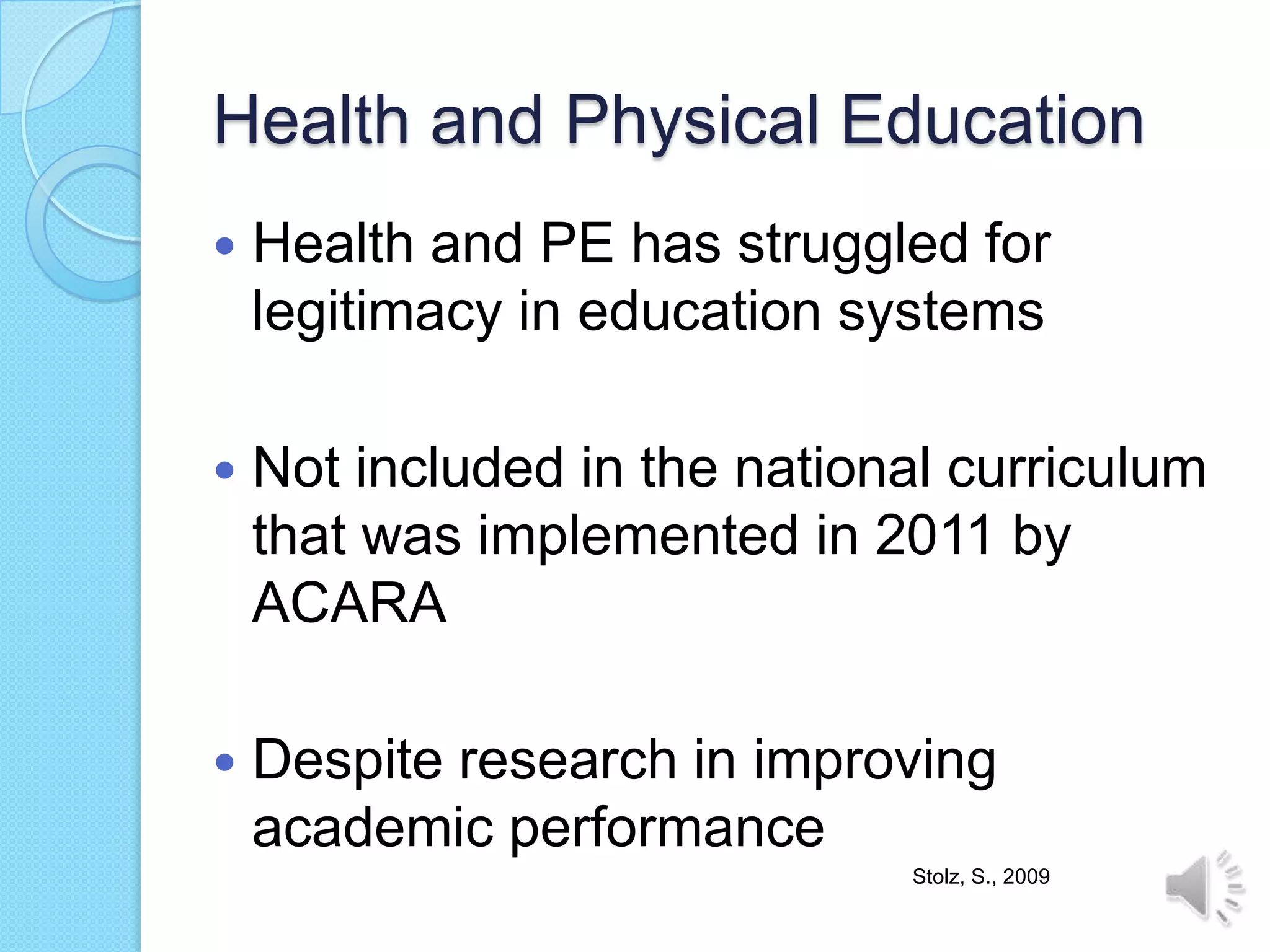
Health and Physical Education
   Health and PE has struggled for
    legitimacy in education systems

   Not included in the national curriculum
    that was implemented in 2011 by
    ACARA

   Despite research in improving
    academic performance
                              Stolz, S., 2009
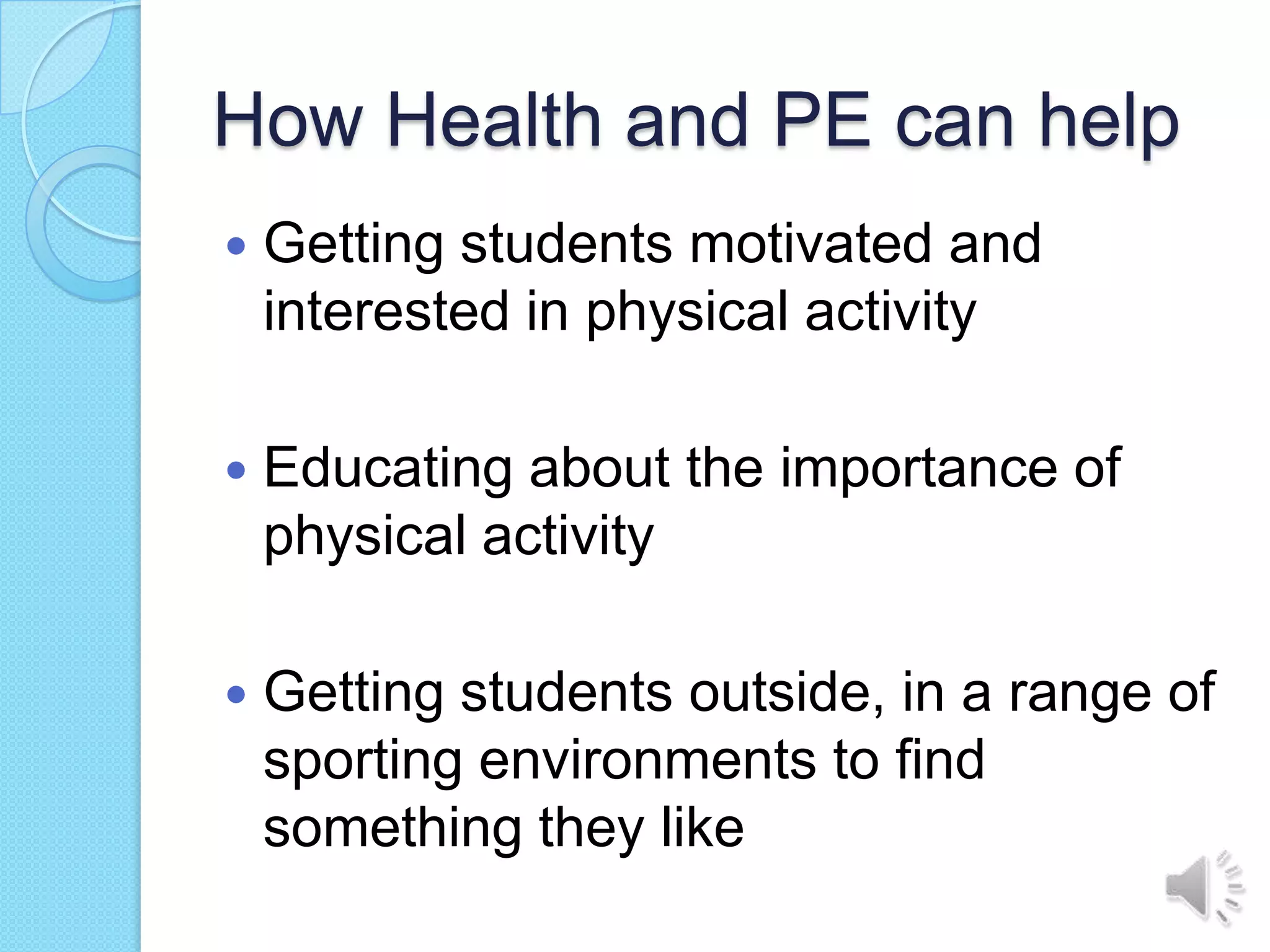
How Health and PE can help
   Getting students motivated and
    interested in physical activity

   Educating about the importance of
    physical activity

   Getting students outside, in a range of
    sporting environments to find
    something they like
References
   Active for life, Increasing Physical Activity in Adults Age 50 and Older,
    http://www.activeforlife.info/about_the_program/national_blueprint.html


   Australian Bureau of Statistics, 2012, Australian Social Trends,
    Viewed 27/3/2013, http://www.abs.gov.au/AUSSTATS/abs@.nsf/Lookup/4102.0Main+Features40Jun+2012


   Be Active WA, 2012, The Taskforce and Local Governnent, http://www.beactive.wa.gov.au/index.php?id=312


   Kercood, S, & Banda, D 2012, 'The Effects of Added Physical Activity on Performance during a Listening Comprehension
    Task for Students with and without Attention Problems', International Journal Of Applied Educational Studies, 13, 1, pp. 19-
    32, Education Research Complete, EBSCOhost, viewed 26 March 2013.


   Jacob Sattelmair and John J. Ratey, 2009, Physically Active Play and Cognition An Academic Matter?,
    http://johnratey.typepad.com/SattelRatey.pdf


   Stolz, Steven. Physical education and the national curriculum. [online]. Professional Educator; v.8 n.4 p.44-47; November
    2009. Availability: <http://search.informit.com.au/fullText;dn=179754;res=AEIPT> ISSN: 1447-3607. [cited 26 Mar 13].


   Tomporowski, P, D., Davis, C, L., Miller, P, H., and. Naglieri, J, A., Exercise and Children’s Intelligence, Cognition, and
    Academic Achievement, Viewed 27/3/2013, http://www.ncbi.nlm.nih.gov/pmc/articles/PMC2748863/


   Wilson, M., 2010, Online Health Forum's, http://onlinehealthfourms.blogspot.com.au/2010/09/benefits-of-exercise.html


   World Health Organisation, 2013, Physical Activity, Viewed 30/3/2012, http://www.who.int/topics/physical_activity/en/

The Importance of Physical Activty and its Effects on Learning

  • 1.
    The Importance ofPhysical Activity and its Effects on Learning Samantha McDonald u3037265 Sport Coaching Pedagogy UC, Semester 1, 2013
  • 2.
    What is physicalactivity? Physical activity is defined as any bodily movement produced by skeletal muscles that requires energy expenditure.  World Health Organisation (WHO), 2013
  • 3.
    Physical activity… Wilson, M., 2010 Wilson, M., 2010 Be Active WA, 2012 Active for Life
  • 4.
    The current healthstatistics…  April 2009 the ABS found 63% of children aged 5-14 years had participated in organised sport or dancing at least once  Participation in organised sport may be related to: ◦ Sex ◦ Age ◦ Country of birth ◦ Parents’ country of birth ◦ Socioeconomic status  Physical inactivity has been identified as the fourth leading risk factor for global mortality causing an estimated 3.2 million deaths globally. (WHO, 2013) Australian Bureau of Statistics, 2012
  • 5.
    What is stoppingchildren from participating in physical activity?  Technology  Time  Cost  Fear
  • 6.
    How to stopPhysical Inactivity!  Awareness!!  Government concerns. ◦ Leads to foundations and guidelines being set up ◦ At least 60 minutes every day for children. ◦ No more than 2 hours per day using electronic media for entertainment Australian Bureau of Statistics, 2012
  • 7.
    What do Isee in the classroom? NEGATIVE POSITIVE  Some students who • Some students who are: are: ◦ Unmotivated o Healthy Enjoying Physical ◦ o Overweight Activity ◦ Lazy o Motivated ◦ Tired o Have a healthy diet ◦ Unhealthy o Happy o Energetic to learn
  • 8.
    How physical activitycan help students in the classroom  A study by Dwyer et al. 2001 ◦ physical fitness ◦ cardiorespiratory efficiency ◦ and activity levels ◦ scholastic achievement.  Small but significant positive associations Tomporowski, P, D., Davis, C, L., Miller, P, H., and. Naglieri, J, A
  • 9.
    How physical activitycan help students in the classroom  Studies documenting positive effects from ◦ School and classroom wide exercise programs ◦ Putting physical activity into the curriculum ◦ Integrating outside school activities  These studies have found improvements in: ◦ Standardised test scores ◦ Task behavior ◦ Time on academic tasks Kercood, S, & Banda, D 2012
  • 10.
    How physical activitycan help students in the classroom  Study comparing the effects of physical activities ◦ DURING listening comprehension task.  less time to complete the tasks  improved performance accuracy ◦ PRIOR to listening comprehension task  Continued to work at a faster pace  Performance accuracy was lower Kercood, S., & Banda, D., 2012
  • 11.
    Health and PhysicalEducation  Health and PE has struggled for legitimacy in education systems  Not included in the national curriculum that was implemented in 2011 by ACARA  Despite research in improving academic performance Stolz, S., 2009
  • 12.
    How Health andPE can help  Getting students motivated and interested in physical activity  Educating about the importance of physical activity  Getting students outside, in a range of sporting environments to find something they like
  • 13.
    References  Active for life, Increasing Physical Activity in Adults Age 50 and Older, http://www.activeforlife.info/about_the_program/national_blueprint.html  Australian Bureau of Statistics, 2012, Australian Social Trends, Viewed 27/3/2013, http://www.abs.gov.au/AUSSTATS/abs@.nsf/Lookup/4102.0Main+Features40Jun+2012  Be Active WA, 2012, The Taskforce and Local Governnent, http://www.beactive.wa.gov.au/index.php?id=312  Kercood, S, & Banda, D 2012, 'The Effects of Added Physical Activity on Performance during a Listening Comprehension Task for Students with and without Attention Problems', International Journal Of Applied Educational Studies, 13, 1, pp. 19- 32, Education Research Complete, EBSCOhost, viewed 26 March 2013.  Jacob Sattelmair and John J. Ratey, 2009, Physically Active Play and Cognition An Academic Matter?, http://johnratey.typepad.com/SattelRatey.pdf  Stolz, Steven. Physical education and the national curriculum. [online]. Professional Educator; v.8 n.4 p.44-47; November 2009. Availability: <http://search.informit.com.au/fullText;dn=179754;res=AEIPT> ISSN: 1447-3607. [cited 26 Mar 13].  Tomporowski, P, D., Davis, C, L., Miller, P, H., and. Naglieri, J, A., Exercise and Children’s Intelligence, Cognition, and Academic Achievement, Viewed 27/3/2013, http://www.ncbi.nlm.nih.gov/pmc/articles/PMC2748863/  Wilson, M., 2010, Online Health Forum's, http://onlinehealthfourms.blogspot.com.au/2010/09/benefits-of-exercise.html  World Health Organisation, 2013, Physical Activity, Viewed 30/3/2012, http://www.who.int/topics/physical_activity/en/