
DNSSEC 
Tutorial 
champika.wijayatunga@icann.org
Acknowledgements 
• Rick 
Lamb 
– Senior 
Program 
Manager, 
DNSSEC 
@ICANN 
• APNIC 
Training
DNS 
Basics 
• DNS 
converts 
names 
(www.icann.org) 
to 
numbers 
(192.0.32.7) 
• ..to 
idenOfy 
services 
such 
as 
www 
and 
e-­‐mail 
• ..that 
idenOfy 
and 
link 
customers 
to 
business 
and 
visa 
versa
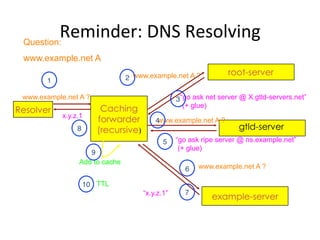
Reminder: 
DNS 
Resolving 
Question: 
www.example.net A 
1" 2" 
www.example.net A ? 
Resolver 
www.example.net A ? 
Caching 
forwarder 
(recursive) 
“go ask net server @ X.gtld-servers.net” 
(+ glue) 
gtld-server 
www.example.net A ? 
“go ask ripe server @ ns.example.net” 
(+ glue) 
www.example.net A ? 
example-server 
“x.y.z.1” 
x.y.z.1 
3" 
4" 
5" 
6" 
7" 
9" 
8" 
Add to cache 
10" TTL 
root-server
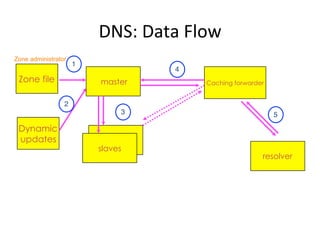
DNS: 
Data 
Flow 
master Caching forwarder 
Zone administrator 
Zone file 
Dynamic 
updates 
1" 
2" 
3" 
slaves 
4" 
5" 
resolver
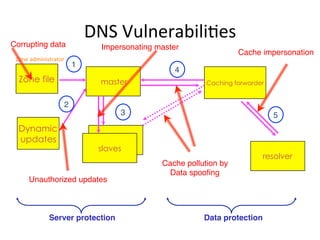
DNS 
VulnerabiliOes 
Corrupting data" Impersonating master" 
Cache impersonation" 
master Caching forwarder 
Zone 
administrator 
Zone file 
Dynamic 
updates 
1" 
2" 
3" 
slaves 
4" 
5" 
resolver 
Unauthorized updates" 
Cache pollution by" 
Data spoofing" 
Server protection! Data protection!
+1-­‐202-­‐709-­‐5262 
VoIP 
US-­‐NSTIC 
effort 
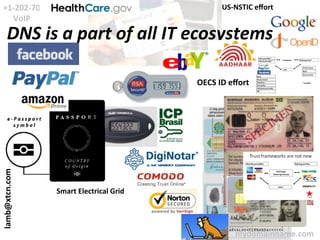
DNS 
is 
a 
part 
of 
all 
IT 
ecosystems 
lamb@xtcn.com 
mydomainname.com 
Smart 
Electrical 
Grid 
OECS 
ID 
effort
Where 
DNSSEC 
fits 
in 
• ..but 
CPU 
and 
bandwidth 
advances 
make 
legacy 
DNS 
vulnerable 
to 
MITM 
aWacks 
• DNS 
Security 
Extensions 
(DNSSEC) 
introduces 
digital 
signatures 
into 
DNS 
to 
cryptographically 
protect 
contents 
• With 
DNSSEC 
fully 
deployed 
a 
business 
can 
be 
sure 
a 
customer 
gets 
un-­‐modified 
data 
(and 
visa 
versa)
The 
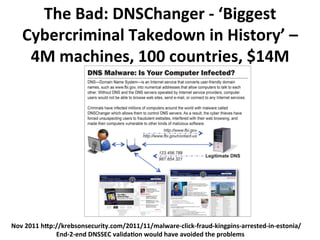
Bad: 
DNSChanger 
-­‐ 
‘Biggest 
Cybercriminal 
Takedown 
in 
History’ 
– 
4M 
machines, 
100 
countries, 
$14M 
Nov 
2011 
h[p://krebsonsecurity.com/2011/11/malware-­‐click-­‐fraud-­‐kingpins-­‐arrested-­‐in-­‐estonia/ 
End-­‐2-­‐end 
DNSSEC 
valida_on 
would 
have 
avoided 
the 
problems
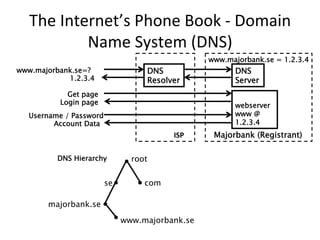
The 
Internet’s 
Phone 
Book 
-­‐ 
Domain 
Name 
System 
(DNS) 
www.majorbank.se=? 
Get page 
webserver 
www @ 
1.2.3.4 
Username / Password 
Account Data 
DNS Hierarchy 
DNS 
Resolver 
root 
se com 
majorbank.se 
www.majorbank.se 
www.majorbank.se = 1.2.3.4 
DNS 
1.2.3.4 Server 
Login page 
ISP 
Majorbank (Registrant)
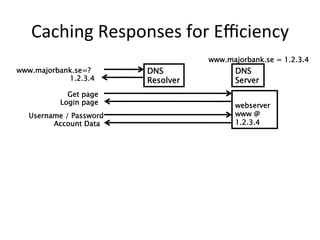
Caching 
Responses 
for 
Efficiency 
www.majorbank.se=? 
Get page 
webserver 
www @ 
1.2.3.4 
Username / Password 
Account Data 
DNS 
Resolver 
www.majorbank.se = 1.2.3.4 
DNS 
1.2.3.4 Server 
Login page
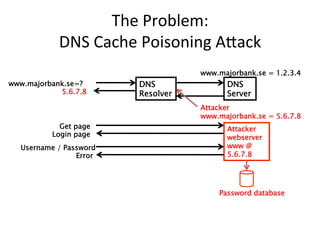
The 
Problem: 
DNS 
Cache 
Poisoning 
AWack 
www.majorbank.se=? DNS 
Resolver 
www.majorbank.se = 1.2.3.4 
DNS 
5.6.7.8 Server 
Get page Attacker 
webserver 
www @ 
5.6.7.8 
Username / Password 
Error 
Attacker 
www.majorbank.se = 5.6.7.8 
Login page 
Password database
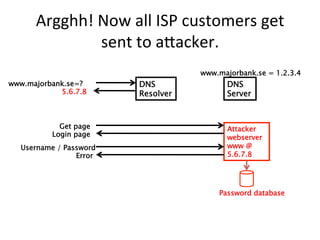
Argghh! 
Now 
all 
ISP 
customers 
get 
sent 
to 
aWacker. 
www.majorbank.se=? DNS 
Resolver 
www.majorbank.se = 1.2.3.4 
DNS 
5.6.7.8 Server 
Get page Attacker 
webserver 
www @ 
5.6.7.8 
Login page 
Username / Password 
Error 
Password database
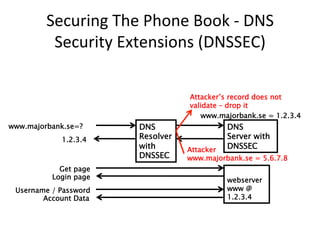
Securing 
The 
Phone 
Book 
-­‐ 
DNS 
Security 
Extensions 
(DNSSEC) 
www.majorbank.se=? DNS 
Resolver 
with 
DNSSEC 
Attacker’s record does not 
validate – drop it 
www.majorbank.se = 1.2.3.4 
DNS 
Server with 
DNSSEC 
1.2.3.4 
Get page 
webserver 
www @ 
1.2.3.4 
Login page 
Username / Password 
Account Data 
Attacker 
www.majorbank.se = 5.6.7.8
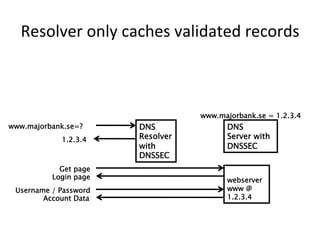
Resolver 
only 
caches 
validated 
records 
www.majorbank.se=? DNS 
Resolver 
with 
DNSSEC 
www.majorbank.se = 1.2.3.4 
DNS 
Server with 
DNSSEC 
1.2.3.4 
Get page 
webserver 
www @ 
1.2.3.4 
Login page 
Username / Password 
Account Data
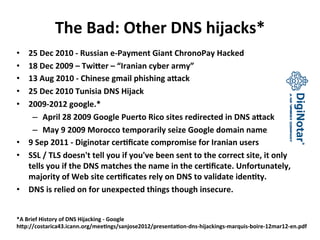
The 
Bad: 
Other 
DNS 
hijacks* 
• 25 
Dec 
2010 
-­‐ 
Russian 
e-­‐Payment 
Giant 
ChronoPay 
Hacked 
• 18 
Dec 
2009 
– 
Twi[er 
– 
“Iranian 
cyber 
army” 
• 13 
Aug 
2010 
-­‐ 
Chinese 
gmail 
phishing 
a[ack 
• 25 
Dec 
2010 
Tunisia 
DNS 
Hijack 
• 2009-­‐2012 
google.* 
– April 
28 
2009 
Google 
Puerto 
Rico 
sites 
redirected 
in 
DNS 
a[ack 
– May 
9 
2009 
Morocco 
temporarily 
seize 
Google 
domain 
name 
• 9 
Sep 
2011 
-­‐ 
Diginotar 
cer_ficate 
compromise 
for 
Iranian 
users 
• SSL 
/ 
TLS 
doesn't 
tell 
you 
if 
you've 
been 
sent 
to 
the 
correct 
site, 
it 
only 
tells 
you 
if 
the 
DNS 
matches 
the 
name 
in 
the 
cer_ficate. 
Unfortunately, 
majority 
of 
Web 
site 
cer_ficates 
rely 
on 
DNS 
to 
validate 
iden_ty. 
• DNS 
is 
relied 
on 
for 
unexpected 
things 
though 
insecure. 
*A 
Brief 
History 
of 
DNS 
Hijacking 
-­‐ 
Google 
h[p://costarica43.icann.org/mee_ngs/sanjose2012/presenta_on-­‐dns-­‐hijackings-­‐marquis-­‐boire-­‐12mar12-­‐en.pdf
The 
Business 
Case 
for 
DNSSEC 
• Cyber 
security 
is 
becoming 
a 
greater 
concern 
to 
enterprises, 
government, 
and 
end 
users. 
DNSSEC 
is 
a 
key 
tool 
and 
differenOator. 
• DNSSEC 
is 
the 
biggest 
security 
upgrade 
to 
Internet 
infrastructure 
in 
over 
20 
years. 
It 
is 
a 
pla`orm 
for 
new 
security 
applicaOons 
(for 
those 
that 
see 
the 
opportunity). 
• DNSSEC 
infrastructure 
deployment 
has 
been 
brisk 
but 
requires 
experOse. 
Gecng 
ahead 
of 
the 
curve 
is 
a 
compeOOve 
advantage.
• 
DNSSEC 
-­‐ 
Where 
we 
are 
Deployed 
on 
462/654 
TLDs 
(29 
July 
2014 
70% 
.com 
.hr 
.es 
.in 
.af 
.ee 
.lb 
.bg 
.tm 
.cz 
.nl 
.uk 
.de 
.jp 
.cn 
.ru 
.р 
ф 
.my 
مليسيا 
.asia 
.tw 
台灣, 
.kr 
한국 .net, 
.org, 
.post, 
+gtlds) 
• Root 
signed** 
and 
audited 
• Required 
in 
new 
gTLDs. 
Basic 
support 
by 
ICANN 
registrars 
• Growing 
ISP 
support*. 
• 3rd 
party 
signing 
soluOons*** 
• Growing 
S/W 
H/W 
support: 
NLNetLabs, 
ISC, 
Microsop, 
PowerDNS, 
Secure64…? 
openssl, 
pos`ix, 
XMPP, 
mozilla: 
early 
DANE 
support 
• IETF 
standard 
on 
DNSSEC 
SSL 
cerOficates 
(RFC6698) 
• Growing 
support 
from 
major 
players…(Apple 
iPhone/iPad, 
Google 
8.8.8.8,…) 
* 
COMCAST 
/w 
20M 
and 
others; 
most 
ISPs 
in 
SE 
,CZ. 
AND 
~12% 
of 
resolvers 
validate 
using 
DNSSEC 
**Int’l 
bo[om-­‐up 
trust 
model 
/w 
21 
TCRs 
from: 
TT, 
BF, 
RU, 
CN, 
US, 
SE, 
NL, 
UG, 
BR, 
Benin, 
PT, 
NP, 
Mauri_us, 
CZ, 
CA, 
JP, 
UK, 
NZ… 
*** 
Par_al 
list 
of 
registrars: 
h[ps://www.icann.org/en/news/in-­‐focus/dnssec/deployment
But… 
• But 
deployed 
on 
~1-­‐2% 
(3.5M) 
of 
2nd 
level 
domains. 
Many 
have 
plans. 
Few 
have 
taken 
the 
step 
(e.g., 
yandex.com, 
paypal.com*, 
comcast.com). 
• DNSChanger 
and 
other 
aWacks 
highlight 
today’s 
need. 
(e.g 
end-­‐2-­‐end 
DNSSEC 
validaOon 
would 
have 
avoided 
the 
problems) 
• InnovaOve 
security 
soluOons 
(e.g., 
DANE) 
highlight 
tomorrow’s 
value. 
* 
h[p://fedv6-­‐deployment.antd.nist.gov/cgi-­‐bin/generate-­‐com 
h[p://www.thesecurityprac_ce.com/ 
the_security_prac_ce/2011/12/all-­‐paypal-­‐domains-­‐are-­‐now-­‐using-­‐dnssec.html 
h[p://www.nacion.com/2012-­‐03-­‐15/Tecnologia/Si_os-­‐web-­‐de-­‐bancos-­‐_cos-­‐podran-­‐ser-­‐mas-­‐seguros.aspx
DNSSEC: 
So 
what’s 
the 
problem? 
• Not 
enough 
IT 
departments 
know 
about 
it 
or 
are 
too 
busy 
pucng 
out 
other 
security 
fires. 
• When 
they 
do 
look 
into 
it 
they 
hear 
old 
stories 
of 
lack 
of 
turnkey 
soluOons. 
• 
Registrars*/DNS 
providers 
see 
no 
demand 
leading 
to 
“chicken-­‐and-­‐egg” 
problems. 
*but 
required 
by 
new 
ICANN 
registrar 
agreement
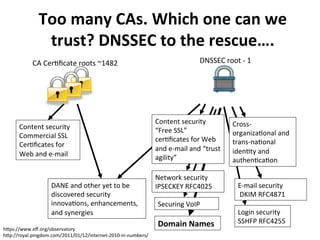
Too 
many 
CAs. 
Which 
one 
can 
we 
trust? 
DNSSEC 
to 
the 
rescue…. 
CA 
CerOficate 
roots 
~1482 
DNSSEC 
root 
-­‐ 
1 
Login 
security 
SSHFP 
RFC4255 
Content 
security 
Commercial 
SSL 
CerOficates 
for 
Web 
and 
e-­‐mail 
DANE 
and 
other 
yet 
to 
be 
discovered 
security 
innovaOons, 
enhancements, 
and 
synergies 
Content 
security 
“Free 
SSL” 
cerOficates 
for 
Web 
and 
e-­‐mail 
and 
“trust 
agility” 
Network 
security 
IPSECKEY 
RFC4025 
Cross-­‐ 
organizaOonal 
and 
trans-­‐naOonal 
idenOty 
and 
authenOcaOon 
E-­‐mail 
security 
DKIM 
RFC4871 
Securing 
VoIP 
Domain 
Names 
hWps://www.eff.org/observatory 
hWp://royal.pingdom.com/2011/01/12/internet-­‐2010-­‐in-­‐numbers/
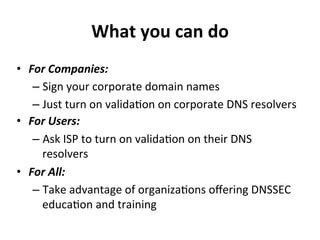
• For 
What 
you 
can 
do 
Companies: 
– Sign 
your 
corporate 
domain 
names 
– Just 
turn 
on 
validaOon 
on 
corporate 
DNS 
resolvers 
• For 
Users: 
– Ask 
ISP 
to 
turn 
on 
validaOon 
on 
their 
DNS 
resolvers 
• For 
All: 
– Take 
advantage 
of 
organizaOons 
offering 
DNSSEC 
educaOon 
and 
training
DNSSEC 
ImplementaOon
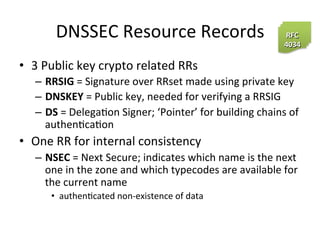
DNSSEC 
Resource 
Records 
• 3 
Public 
key 
crypto 
related 
RRs 
– RRSIG 
= 
Signature 
over 
RRset 
made 
using 
private 
key 
– DNSKEY 
= 
Public 
key, 
needed 
for 
verifying 
a 
RRSIG 
– DS 
= 
DelegaOon 
Signer; 
‘Pointer’ 
for 
building 
chains 
of 
authenOcaOon 
• One 
RR 
for 
internal 
consistency 
– NSEC 
= 
Next 
Secure; 
indicates 
which 
name 
is 
the 
next 
one 
in 
the 
zone 
and 
which 
typecodes 
are 
available 
for 
the 
current 
name 
• authenOcated 
non-­‐existence 
of 
data 
RFC 
4034
DNSKEY 
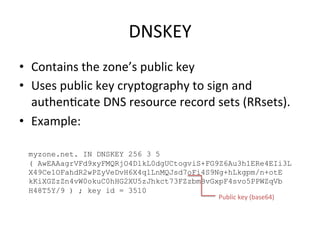
• Contains 
the 
zone’s 
public 
key 
• Uses 
public 
key 
cryptography 
to 
sign 
and 
authenOcate 
DNS 
resource 
record 
sets 
(RRsets). 
• Example: 
myzone.net. IN DNSKEY 256 3 5 
( AwEAAagrVFd9xyFMQRjO4DlkL0dgUCtogviS+FG9Z6Au3h1ERe4EIi3L 
X49Ce1OFahdR2wPZyVeDvH6X4qlLnMQJsd7oFi4S9Ng+hLkgpm/n+otE 
kKiXGZzZn4vW0okuC0hHG2XU5zJhkct73FZzbmBvGxpF4svo5PPWZqVb 
H48T5Y/9 ) ; key id = 3510 
Public 
key 
(base64)
RRSIG 
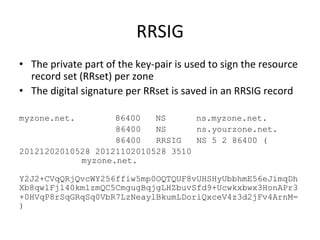
• The 
private 
part 
of 
the 
key-­‐pair 
is 
used 
to 
sign 
the 
resource 
record 
set 
(RRset) 
per 
zone 
• The 
digital 
signature 
per 
RRset 
is 
saved 
in 
an 
RRSIG 
record 
myzone.net. 86400 NS ns.myzone.net. 
86400 NS ns.yourzone.net. 
86400 RRSIG NS 5 2 86400 ( 
20121202010528 20121102010528 3510 
myzone.net. 
Y2J2+CVqQRjQvcWY256ffiw5mp0OQTQUF8vUHSHyUbbhmE56eJimqDh 
Xb8qwlFjl40kmlzmQC5CmgugBqjgLHZbuvSfd9+Ucwkxbwx3HonAPr3 
+0HVqP8rSqGRqSq0VbR7LzNeaylBkumLDoriQxceV4z3d2jFv4ArnM= 
)
Types 
of 
Keys 
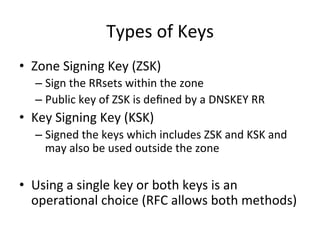
• Zone 
Signing 
Key 
(ZSK) 
– Sign 
the 
RRsets 
within 
the 
zone 
– Public 
key 
of 
ZSK 
is 
defined 
by 
a 
DNSKEY 
RR 
• Key 
Signing 
Key 
(KSK) 
– Signed 
the 
keys 
which 
includes 
ZSK 
and 
KSK 
and 
may 
also 
be 
used 
outside 
the 
zone 
• Using 
a 
single 
key 
or 
both 
keys 
is 
an 
operaOonal 
choice 
(RFC 
allows 
both 
methods)
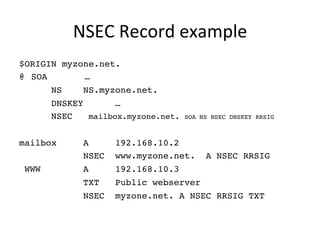
NSEC 
Record 
example 
$ORIGIN myzone.net.! 
@!SOA …! 
! !NS !NS.myzone.net.! 
! !DNSKEY !…! 
! !NSEC mailbox.myzone.net. SOA NS NSEC DNSKEY RRSIG! 
! 
mailbox !A !192.168.10.2 !! 
! ! !NSEC www.myzone.net. A NSEC RRSIG! 
WWW ! !A !192.168.10.3 !! 
! ! !TXT !Public webserver! 
! ! !NSEC myzone.net. A NSEC RRSIG TXT!
DelegaOon 
Signer 
(DS) 
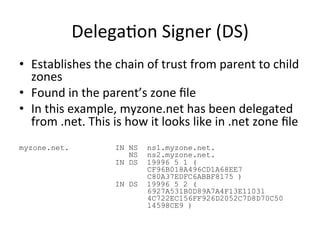
• Establishes 
the 
chain 
of 
trust 
from 
parent 
to 
child 
zones 
• Found 
in 
the 
parent’s 
zone 
file 
• In 
this 
example, 
myzone.net 
has 
been 
delegated 
from 
.net. 
This 
is 
how 
it 
looks 
like 
in 
.net 
zone 
file 
myzone.net. IN NS ns1.myzone.net. 
NS ns2.myzone.net. 
IN DS 19996 5 1 ( 
CF96B018A496CD1A68EE7 
C80A37EDFC6ABBF8175 ) 
IN DS 19996 5 2 ( 
6927A531B0D89A7A4F13E11031 
4C722EC156FF926D2052C7D8D70C50 
14598CE9 )
DelegaOon 
Signer 
(DS) 
• DelegaOon 
Signer 
(DS) 
RR 
indicates 
that: 
– delegated 
zone 
is 
digitally 
signed 
– indicated 
key 
is 
used 
for 
the 
delegated 
zone 
• Parent 
is 
authoraOve 
for 
the 
DS 
of 
the 
childs 
zone 
– Not 
for 
the 
NS 
record 
delegaOng 
the 
childs 
zone! 
– DS 
should 
not 
be 
in 
the 
childs 
zone
DNSSEC 
ValidaOon 
• Recursive 
servers 
that 
are 
dnssec-­‐enabled 
can 
validate 
signed 
zones 
• The 
AD 
bit 
in 
the 
message 
flag 
shows 
if 
validated 
• Other 
opOons 
if 
you 
don’t 
have 
a 
validaOng 
resolver 
– Use 
a 
validator 
add-­‐on 
for 
your 
web 
browser 
• ex: 
hWps://www.dnssec-­‐validator.cz/ 
– Online 
web 
tools 
• hWp://dnsviz.net/ 
• hWp://dnssec-­‐debugger.verisignlabs.com/ 
– Use 
an 
open 
DNSSEC-­‐validaOng 
resolver 
• Some 
open 
validaOng 
resolvers 
– DNS-­‐OARC’s 
ODVR 
(link) 
• 149.20.64.20 
(BIND9), 
149.20.64.21 
(Unbound) 
– Google 
Public 
DNS 
• 8.8.8.8 
or 
8.8.4.4
DNSSEC 
-­‐ 
Secng 
up 
a 
Secure 
Zone 
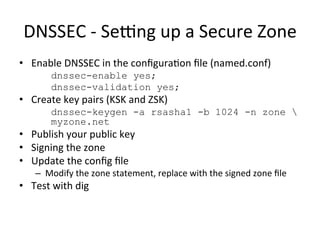
• Enable 
DNSSEC 
in 
the 
configuraOon 
file 
(named.conf) 
dnssec-enable yes; 
dnssec-validation yes; 
• Create 
key 
pairs 
(KSK 
and 
ZSK) 
dnssec-keygen -a rsasha1 -b 1024 -n zone  
myzone.net 
• Publish 
your 
public 
key 
• Signing 
the 
zone 
• Update 
the 
config 
file 
– Modify 
the 
zone 
statement, 
replace 
with 
the 
signed 
zone 
file 
• Test 
with 
dig
Signing 
the 
Zone 
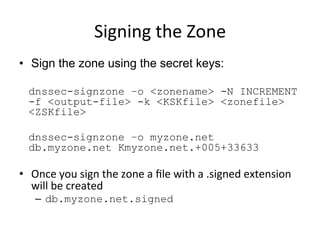
• Sign the zone using the secret keys: 
dnssec-signzone –o <zonename> -N INCREMENT 
-f <output-file> -k <KSKfile> <zonefile> 
<ZSKfile> 
dnssec-signzone –o myzone.net 
db.myzone.net Kmyzone.net.+005+33633 
• Once 
you 
sign 
the 
zone 
a 
file 
with 
a 
.signed 
extension 
will 
be 
created 
– db.myzone.net.signed
TesOng 
with 
dig: 
an 
example 
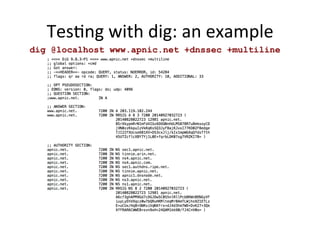
dig @localhost www.apnic.net +dnssec +multiline
Pushing 
the 
DS 
record 
• The 
DS 
record 
must 
be 
published 
by 
the 
parent 
zone. 
• Contact 
the 
parent 
zone 
to 
communicate 
the 
KSK 
to 
them.
Ways 
to 
Deploy 
DNSSEC 
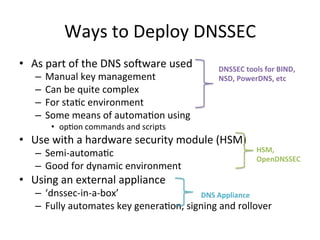
• As 
part 
of 
the 
DNS 
sopware 
used 
– Manual 
key 
management 
– Can 
be 
quite 
complex 
– For 
staOc 
environment 
– Some 
means 
of 
automaOon 
using 
• opOon 
commands 
and 
scripts 
• Use 
DNSSEC 
tools 
for 
BIND, 
NSD, 
PowerDNS, 
etc 
with 
a 
hardware 
security 
module 
(HSM) 
– Semi-­‐automaOc 
– Good 
for 
dynamic 
environment 
• Using 
an 
external 
appliance 
– ‘dnssec-­‐in-­‐a-­‐box’ 
– Fully 
HSM, 
OpenDNSSEC 
DNS 
Appliance 
automates 
key 
generaOon, 
signing 
and 
rollover
DNSSEC: 
Internet 
infrastructure 
upgrade 
to 
help 
address 
today’s 
needs 
and 
create 
tomorrow’s 
opportunity.
Thank 
you!

DNSSEC Tutorial, by Champika Wijayatunga [APNIC 38]

  • 1.
  • 2.
    Acknowledgements • Rick Lamb – Senior Program Manager, DNSSEC @ICANN • APNIC Training
  • 3.
    DNS Basics •DNS converts names (www.icann.org) to numbers (192.0.32.7) • ..to idenOfy services such as www and e-­‐mail • ..that idenOfy and link customers to business and visa versa
  • 4.
    Reminder: DNS Resolving Question: www.example.net A 1" 2" www.example.net A ? Resolver www.example.net A ? Caching forwarder (recursive) “go ask net server @ X.gtld-servers.net” (+ glue) gtld-server www.example.net A ? “go ask ripe server @ ns.example.net” (+ glue) www.example.net A ? example-server “x.y.z.1” x.y.z.1 3" 4" 5" 6" 7" 9" 8" Add to cache 10" TTL root-server
  • 5.
    DNS: Data Flow master Caching forwarder Zone administrator Zone file Dynamic updates 1" 2" 3" slaves 4" 5" resolver
  • 6.
    DNS VulnerabiliOes Corruptingdata" Impersonating master" Cache impersonation" master Caching forwarder Zone administrator Zone file Dynamic updates 1" 2" 3" slaves 4" 5" resolver Unauthorized updates" Cache pollution by" Data spoofing" Server protection! Data protection!
  • 7.
    +1-­‐202-­‐709-­‐5262 VoIP US-­‐NSTIC effort DNS is a part of all IT ecosystems lamb@xtcn.com mydomainname.com Smart Electrical Grid OECS ID effort
  • 8.
    Where DNSSEC fits in • ..but CPU and bandwidth advances make legacy DNS vulnerable to MITM aWacks • DNS Security Extensions (DNSSEC) introduces digital signatures into DNS to cryptographically protect contents • With DNSSEC fully deployed a business can be sure a customer gets un-­‐modified data (and visa versa)
  • 9.
    The Bad: DNSChanger -­‐ ‘Biggest Cybercriminal Takedown in History’ – 4M machines, 100 countries, $14M Nov 2011 h[p://krebsonsecurity.com/2011/11/malware-­‐click-­‐fraud-­‐kingpins-­‐arrested-­‐in-­‐estonia/ End-­‐2-­‐end DNSSEC valida_on would have avoided the problems
  • 10.
    The Internet’s Phone Book -­‐ Domain Name System (DNS) www.majorbank.se=? Get page webserver www @ 1.2.3.4 Username / Password Account Data DNS Hierarchy DNS Resolver root se com majorbank.se www.majorbank.se www.majorbank.se = 1.2.3.4 DNS 1.2.3.4 Server Login page ISP Majorbank (Registrant)
  • 11.
    Caching Responses for Efficiency www.majorbank.se=? Get page webserver www @ 1.2.3.4 Username / Password Account Data DNS Resolver www.majorbank.se = 1.2.3.4 DNS 1.2.3.4 Server Login page
  • 12.
    The Problem: DNS Cache Poisoning AWack www.majorbank.se=? DNS Resolver www.majorbank.se = 1.2.3.4 DNS 5.6.7.8 Server Get page Attacker webserver www @ 5.6.7.8 Username / Password Error Attacker www.majorbank.se = 5.6.7.8 Login page Password database
  • 13.
    Argghh! Now all ISP customers get sent to aWacker. www.majorbank.se=? DNS Resolver www.majorbank.se = 1.2.3.4 DNS 5.6.7.8 Server Get page Attacker webserver www @ 5.6.7.8 Login page Username / Password Error Password database
  • 14.
    Securing The Phone Book -­‐ DNS Security Extensions (DNSSEC) www.majorbank.se=? DNS Resolver with DNSSEC Attacker’s record does not validate – drop it www.majorbank.se = 1.2.3.4 DNS Server with DNSSEC 1.2.3.4 Get page webserver www @ 1.2.3.4 Login page Username / Password Account Data Attacker www.majorbank.se = 5.6.7.8
  • 15.
    Resolver only caches validated records www.majorbank.se=? DNS Resolver with DNSSEC www.majorbank.se = 1.2.3.4 DNS Server with DNSSEC 1.2.3.4 Get page webserver www @ 1.2.3.4 Login page Username / Password Account Data
  • 16.
    The Bad: Other DNS hijacks* • 25 Dec 2010 -­‐ Russian e-­‐Payment Giant ChronoPay Hacked • 18 Dec 2009 – Twi[er – “Iranian cyber army” • 13 Aug 2010 -­‐ Chinese gmail phishing a[ack • 25 Dec 2010 Tunisia DNS Hijack • 2009-­‐2012 google.* – April 28 2009 Google Puerto Rico sites redirected in DNS a[ack – May 9 2009 Morocco temporarily seize Google domain name • 9 Sep 2011 -­‐ Diginotar cer_ficate compromise for Iranian users • SSL / TLS doesn't tell you if you've been sent to the correct site, it only tells you if the DNS matches the name in the cer_ficate. Unfortunately, majority of Web site cer_ficates rely on DNS to validate iden_ty. • DNS is relied on for unexpected things though insecure. *A Brief History of DNS Hijacking -­‐ Google h[p://costarica43.icann.org/mee_ngs/sanjose2012/presenta_on-­‐dns-­‐hijackings-­‐marquis-­‐boire-­‐12mar12-­‐en.pdf
  • 17.
    The Business Case for DNSSEC • Cyber security is becoming a greater concern to enterprises, government, and end users. DNSSEC is a key tool and differenOator. • DNSSEC is the biggest security upgrade to Internet infrastructure in over 20 years. It is a pla`orm for new security applicaOons (for those that see the opportunity). • DNSSEC infrastructure deployment has been brisk but requires experOse. Gecng ahead of the curve is a compeOOve advantage.
  • 18.
    • DNSSEC -­‐ Where we are Deployed on 462/654 TLDs (29 July 2014 70% .com .hr .es .in .af .ee .lb .bg .tm .cz .nl .uk .de .jp .cn .ru .р ф .my مليسيا .asia .tw 台灣, .kr 한국 .net, .org, .post, +gtlds) • Root signed** and audited • Required in new gTLDs. Basic support by ICANN registrars • Growing ISP support*. • 3rd party signing soluOons*** • Growing S/W H/W support: NLNetLabs, ISC, Microsop, PowerDNS, Secure64…? openssl, pos`ix, XMPP, mozilla: early DANE support • IETF standard on DNSSEC SSL cerOficates (RFC6698) • Growing support from major players…(Apple iPhone/iPad, Google 8.8.8.8,…) * COMCAST /w 20M and others; most ISPs in SE ,CZ. AND ~12% of resolvers validate using DNSSEC **Int’l bo[om-­‐up trust model /w 21 TCRs from: TT, BF, RU, CN, US, SE, NL, UG, BR, Benin, PT, NP, Mauri_us, CZ, CA, JP, UK, NZ… *** Par_al list of registrars: h[ps://www.icann.org/en/news/in-­‐focus/dnssec/deployment
  • 19.
    But… • But deployed on ~1-­‐2% (3.5M) of 2nd level domains. Many have plans. Few have taken the step (e.g., yandex.com, paypal.com*, comcast.com). • DNSChanger and other aWacks highlight today’s need. (e.g end-­‐2-­‐end DNSSEC validaOon would have avoided the problems) • InnovaOve security soluOons (e.g., DANE) highlight tomorrow’s value. * h[p://fedv6-­‐deployment.antd.nist.gov/cgi-­‐bin/generate-­‐com h[p://www.thesecurityprac_ce.com/ the_security_prac_ce/2011/12/all-­‐paypal-­‐domains-­‐are-­‐now-­‐using-­‐dnssec.html h[p://www.nacion.com/2012-­‐03-­‐15/Tecnologia/Si_os-­‐web-­‐de-­‐bancos-­‐_cos-­‐podran-­‐ser-­‐mas-­‐seguros.aspx
  • 20.
    DNSSEC: So what’s the problem? • Not enough IT departments know about it or are too busy pucng out other security fires. • When they do look into it they hear old stories of lack of turnkey soluOons. • Registrars*/DNS providers see no demand leading to “chicken-­‐and-­‐egg” problems. *but required by new ICANN registrar agreement
  • 21.
    Too many CAs. Which one can we trust? DNSSEC to the rescue…. CA CerOficate roots ~1482 DNSSEC root -­‐ 1 Login security SSHFP RFC4255 Content security Commercial SSL CerOficates for Web and e-­‐mail DANE and other yet to be discovered security innovaOons, enhancements, and synergies Content security “Free SSL” cerOficates for Web and e-­‐mail and “trust agility” Network security IPSECKEY RFC4025 Cross-­‐ organizaOonal and trans-­‐naOonal idenOty and authenOcaOon E-­‐mail security DKIM RFC4871 Securing VoIP Domain Names hWps://www.eff.org/observatory hWp://royal.pingdom.com/2011/01/12/internet-­‐2010-­‐in-­‐numbers/
  • 22.
    • For What you can do Companies: – Sign your corporate domain names – Just turn on validaOon on corporate DNS resolvers • For Users: – Ask ISP to turn on validaOon on their DNS resolvers • For All: – Take advantage of organizaOons offering DNSSEC educaOon and training
  • 23.
  • 24.
    DNSSEC Resource Records • 3 Public key crypto related RRs – RRSIG = Signature over RRset made using private key – DNSKEY = Public key, needed for verifying a RRSIG – DS = DelegaOon Signer; ‘Pointer’ for building chains of authenOcaOon • One RR for internal consistency – NSEC = Next Secure; indicates which name is the next one in the zone and which typecodes are available for the current name • authenOcated non-­‐existence of data RFC 4034
  • 25.
    DNSKEY • Contains the zone’s public key • Uses public key cryptography to sign and authenOcate DNS resource record sets (RRsets). • Example: myzone.net. IN DNSKEY 256 3 5 ( AwEAAagrVFd9xyFMQRjO4DlkL0dgUCtogviS+FG9Z6Au3h1ERe4EIi3L X49Ce1OFahdR2wPZyVeDvH6X4qlLnMQJsd7oFi4S9Ng+hLkgpm/n+otE kKiXGZzZn4vW0okuC0hHG2XU5zJhkct73FZzbmBvGxpF4svo5PPWZqVb H48T5Y/9 ) ; key id = 3510 Public key (base64)
  • 26.
    RRSIG • The private part of the key-­‐pair is used to sign the resource record set (RRset) per zone • The digital signature per RRset is saved in an RRSIG record myzone.net. 86400 NS ns.myzone.net. 86400 NS ns.yourzone.net. 86400 RRSIG NS 5 2 86400 ( 20121202010528 20121102010528 3510 myzone.net. Y2J2+CVqQRjQvcWY256ffiw5mp0OQTQUF8vUHSHyUbbhmE56eJimqDh Xb8qwlFjl40kmlzmQC5CmgugBqjgLHZbuvSfd9+Ucwkxbwx3HonAPr3 +0HVqP8rSqGRqSq0VbR7LzNeaylBkumLDoriQxceV4z3d2jFv4ArnM= )
  • 27.
    Types of Keys • Zone Signing Key (ZSK) – Sign the RRsets within the zone – Public key of ZSK is defined by a DNSKEY RR • Key Signing Key (KSK) – Signed the keys which includes ZSK and KSK and may also be used outside the zone • Using a single key or both keys is an operaOonal choice (RFC allows both methods)
  • 28.
    NSEC Record example $ORIGIN myzone.net.! @!SOA …! ! !NS !NS.myzone.net.! ! !DNSKEY !…! ! !NSEC mailbox.myzone.net. SOA NS NSEC DNSKEY RRSIG! ! mailbox !A !192.168.10.2 !! ! ! !NSEC www.myzone.net. A NSEC RRSIG! WWW ! !A !192.168.10.3 !! ! ! !TXT !Public webserver! ! ! !NSEC myzone.net. A NSEC RRSIG TXT!
  • 29.
    DelegaOon Signer (DS) • Establishes the chain of trust from parent to child zones • Found in the parent’s zone file • In this example, myzone.net has been delegated from .net. This is how it looks like in .net zone file myzone.net. IN NS ns1.myzone.net. NS ns2.myzone.net. IN DS 19996 5 1 ( CF96B018A496CD1A68EE7 C80A37EDFC6ABBF8175 ) IN DS 19996 5 2 ( 6927A531B0D89A7A4F13E11031 4C722EC156FF926D2052C7D8D70C50 14598CE9 )
  • 30.
    DelegaOon Signer (DS) • DelegaOon Signer (DS) RR indicates that: – delegated zone is digitally signed – indicated key is used for the delegated zone • Parent is authoraOve for the DS of the childs zone – Not for the NS record delegaOng the childs zone! – DS should not be in the childs zone
  • 31.
    DNSSEC ValidaOon •Recursive servers that are dnssec-­‐enabled can validate signed zones • The AD bit in the message flag shows if validated • Other opOons if you don’t have a validaOng resolver – Use a validator add-­‐on for your web browser • ex: hWps://www.dnssec-­‐validator.cz/ – Online web tools • hWp://dnsviz.net/ • hWp://dnssec-­‐debugger.verisignlabs.com/ – Use an open DNSSEC-­‐validaOng resolver • Some open validaOng resolvers – DNS-­‐OARC’s ODVR (link) • 149.20.64.20 (BIND9), 149.20.64.21 (Unbound) – Google Public DNS • 8.8.8.8 or 8.8.4.4
  • 32.
    DNSSEC -­‐ Secng up a Secure Zone • Enable DNSSEC in the configuraOon file (named.conf) dnssec-enable yes; dnssec-validation yes; • Create key pairs (KSK and ZSK) dnssec-keygen -a rsasha1 -b 1024 -n zone myzone.net • Publish your public key • Signing the zone • Update the config file – Modify the zone statement, replace with the signed zone file • Test with dig
  • 33.
    Signing the Zone • Sign the zone using the secret keys: dnssec-signzone –o <zonename> -N INCREMENT -f <output-file> -k <KSKfile> <zonefile> <ZSKfile> dnssec-signzone –o myzone.net db.myzone.net Kmyzone.net.+005+33633 • Once you sign the zone a file with a .signed extension will be created – db.myzone.net.signed
  • 34.
    TesOng with dig: an example dig @localhost www.apnic.net +dnssec +multiline
  • 35.
    Pushing the DS record • The DS record must be published by the parent zone. • Contact the parent zone to communicate the KSK to them.
  • 36.
    Ways to Deploy DNSSEC • As part of the DNS sopware used – Manual key management – Can be quite complex – For staOc environment – Some means of automaOon using • opOon commands and scripts • Use DNSSEC tools for BIND, NSD, PowerDNS, etc with a hardware security module (HSM) – Semi-­‐automaOc – Good for dynamic environment • Using an external appliance – ‘dnssec-­‐in-­‐a-­‐box’ – Fully HSM, OpenDNSSEC DNS Appliance automates key generaOon, signing and rollover
  • 37.
    DNSSEC: Internet infrastructure upgrade to help address today’s needs and create tomorrow’s opportunity.
  • 38.