Awal Haolader, Network Analyst / Technical Trainer at APNIC, presented on 'DDoS Mitigation Strategies' at bdNOG 19 held in Dhaka, Bangladesh from 21 to 24 May 2025.
5
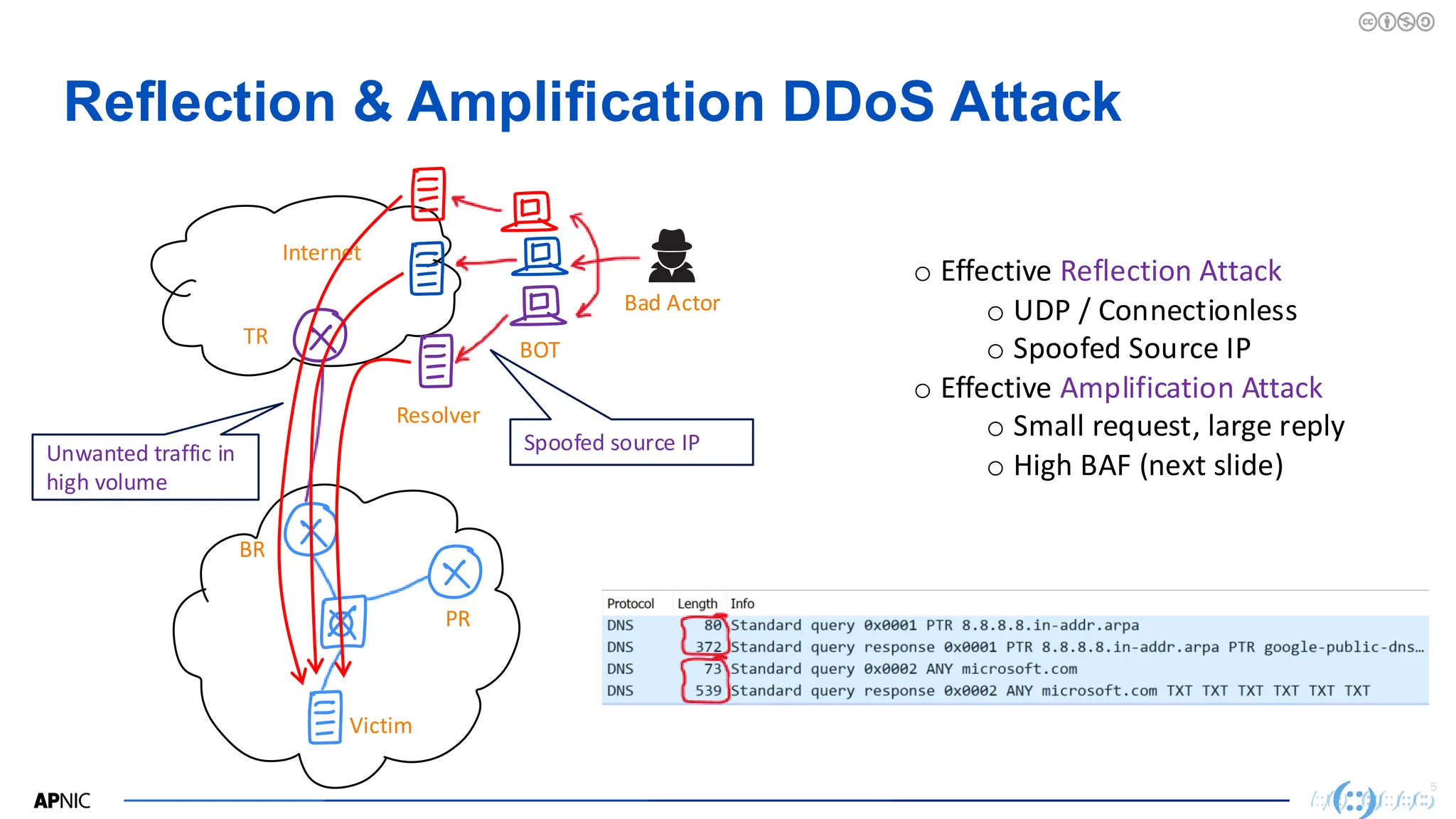
Reflection & AmplificationDDoS Attack
TR
BR
PR
Internet
Bad Actor
Spoofed source IP
Victim
BOT
Resolver
Unwanted traffic in
high volume
o Effective Reflection Attack
o UDP / Connectionless
o Spoofed Source IP
o Effective Amplification Attack
o Small request, large reply
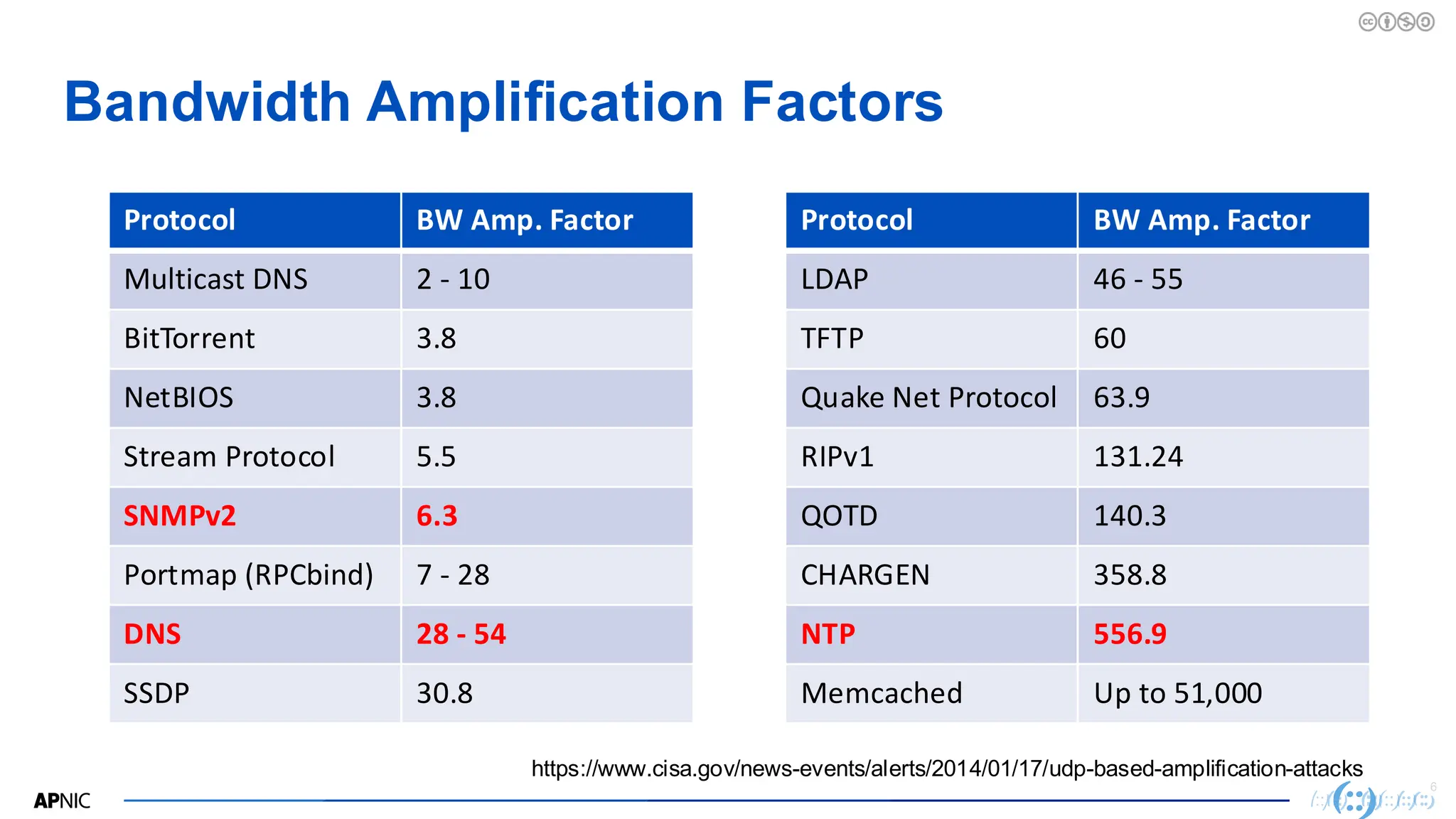
o High BAF (next slide)
7
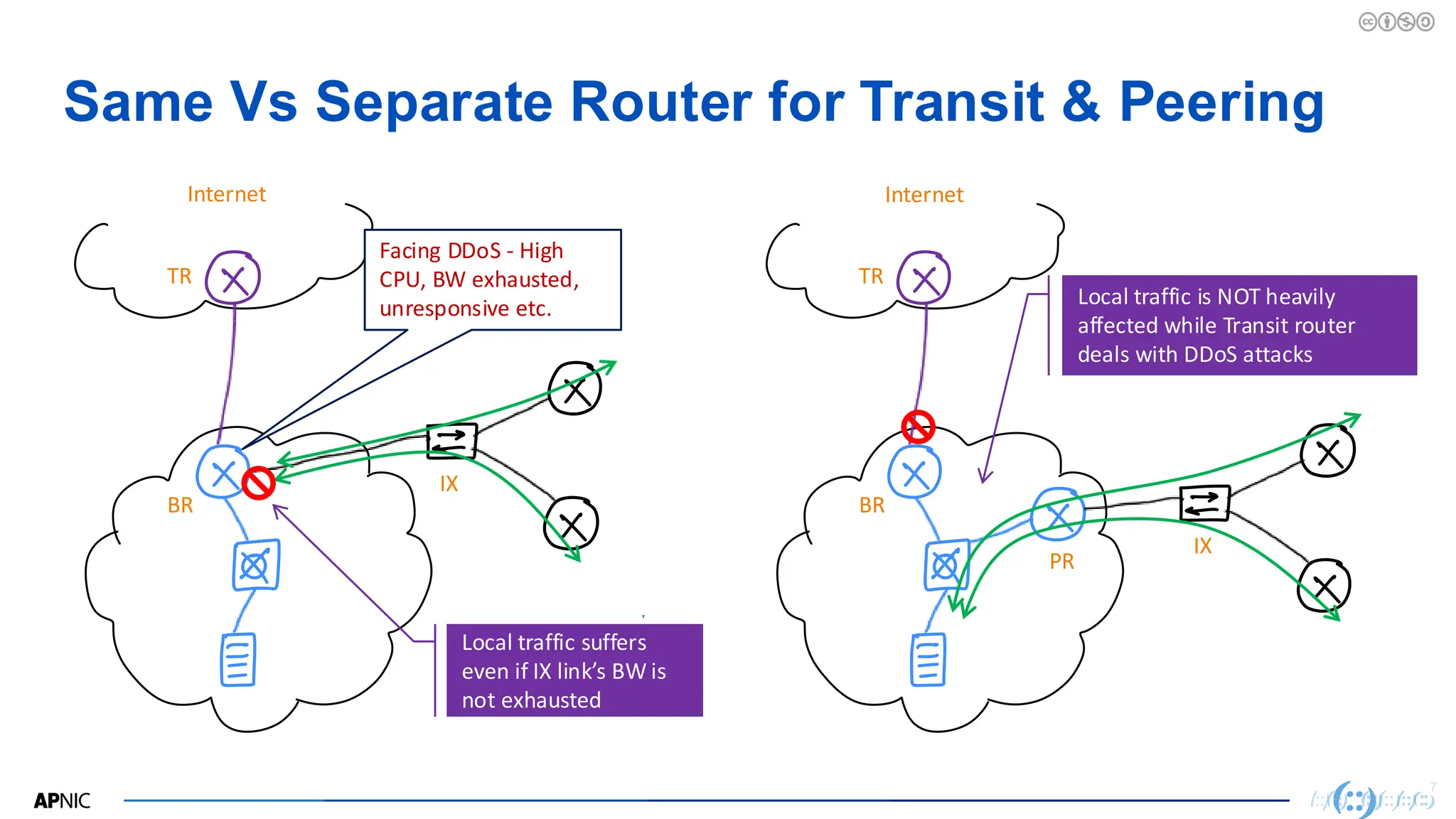
Same Vs SeparateRouter for Transit & Peering
TR
BR
IX
TR
BR
PR
IX
Facing DDoS - High
CPU, BW exhausted,
unresponsive etc.
Internet Internet
Local traffic suffers
even if IX link’s BW is
not exhausted
Local traffic is NOT heavily
affected while Transit router
deals with DDoS attacks
9
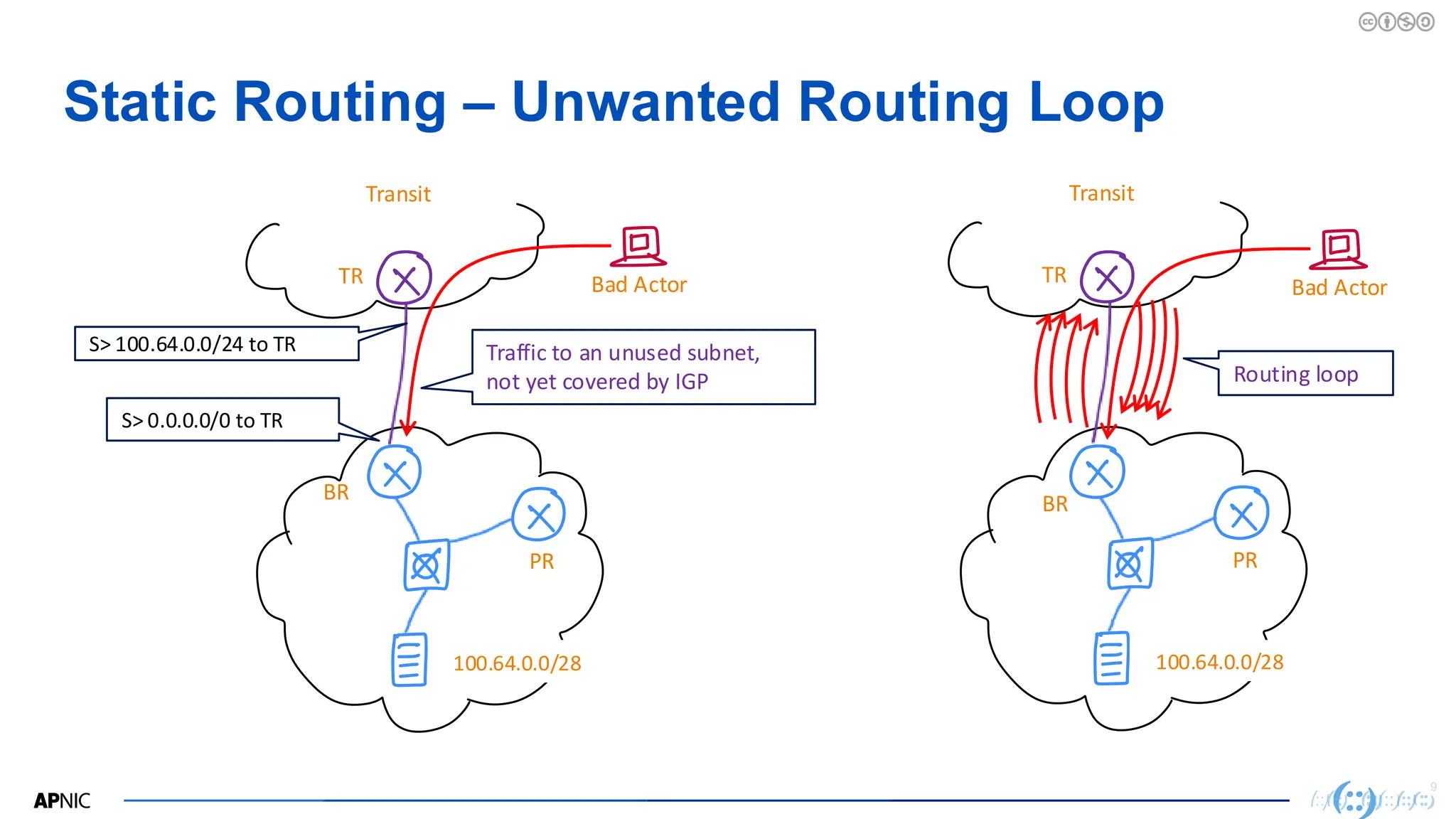
Static Routing –Unwanted Routing Loop
TR
BR
PR
TR
BR
PR
100.64.0.0/28
S> 0.0.0.0/0 to TR
Transit Transit
Bad Actor
S> 100.64.0.0/24 to TR
100.64.0.0/28
Routing loop
Bad Actor
Traffic to an unused subnet,
not yet covered by IGP
10.
10
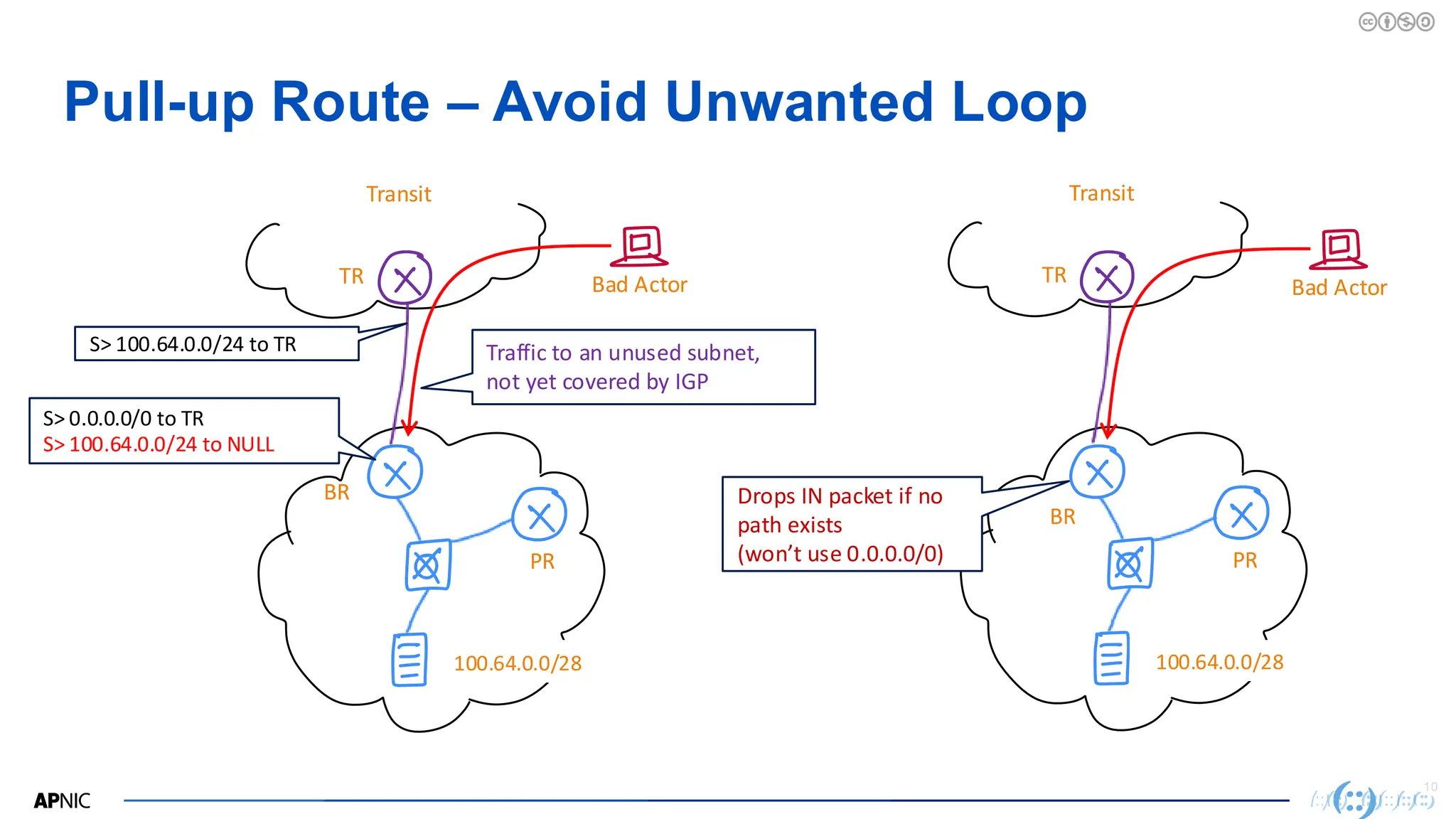
Pull-up Route –Avoid Unwanted Loop
TR
BR
PR
TR
BR
PR
100.64.0.0/28
S> 0.0.0.0/0 to TR
S> 100.64.0.0/24 to NULL
Transit Transit
Bad Actor
Traffic to an unused subnet,
not yet covered by IGP
S> 100.64.0.0/24 to TR
100.64.0.0/28
Bad Actor
Drops IN packet if no
path exists
(won’t use 0.0.0.0/0)
11.
11
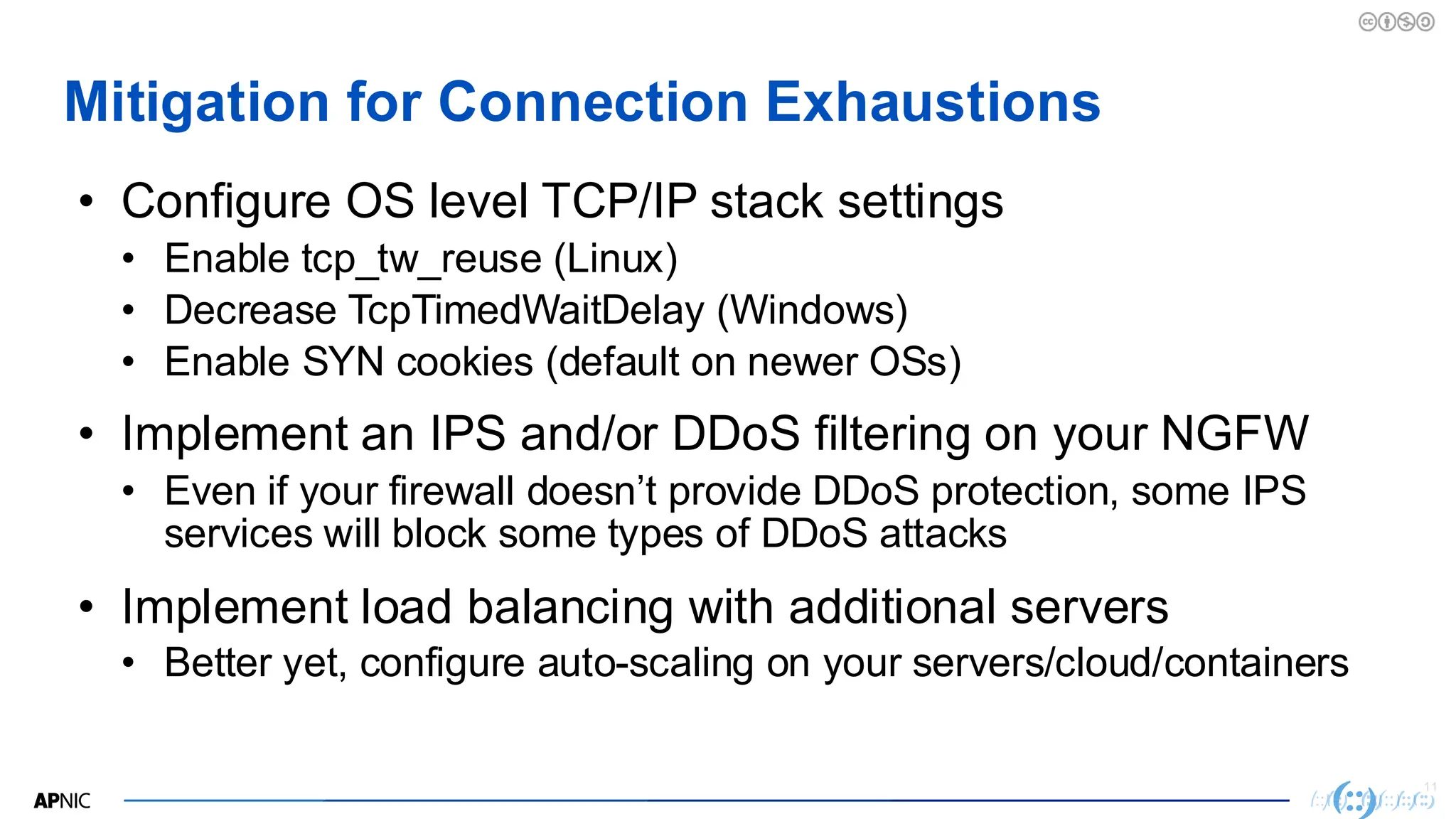
Mitigation for ConnectionExhaustions
• Configure OS level TCP/IP stack settings
• Enable tcp_tw_reuse (Linux)
• Decrease TcpTimedWaitDelay (Windows)
• Enable SYN cookies (default on newer OSs)
• Implement an IPS and/or DDoS filtering on your NGFW
• Even if your firewall doesn’t provide DDoS protection, some IPS
services will block some types of DDoS attacks
• Implement load balancing with additional servers
• Better yet, configure auto-scaling on your servers/cloud/containers
12.
12
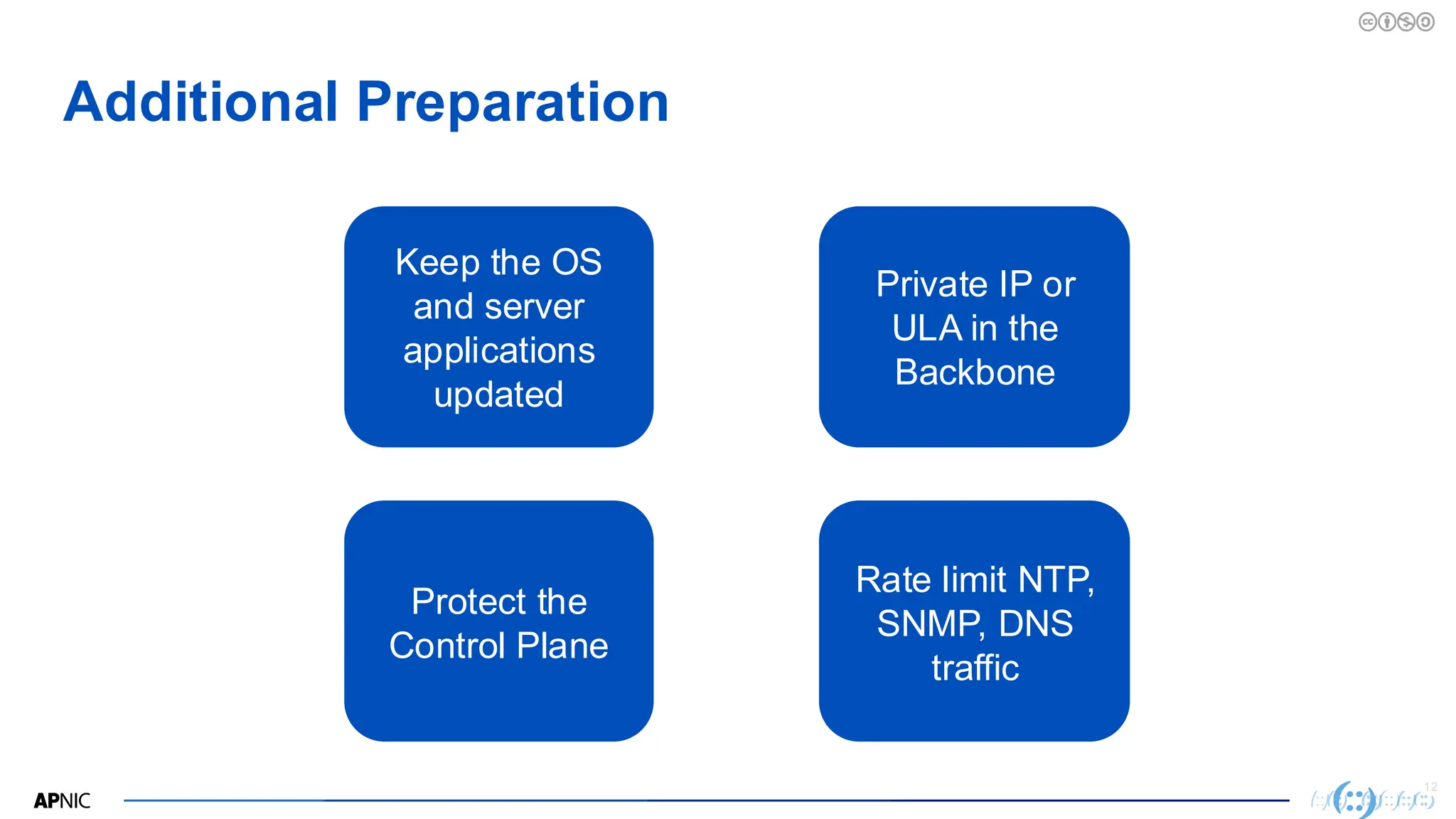
Additional Preparation
Keep theOS
and server
applications
updated
Private IP or
ULA in the
Backbone
Protect the
Control Plane
Rate limit NTP,
SNMP, DNS
traffic
16
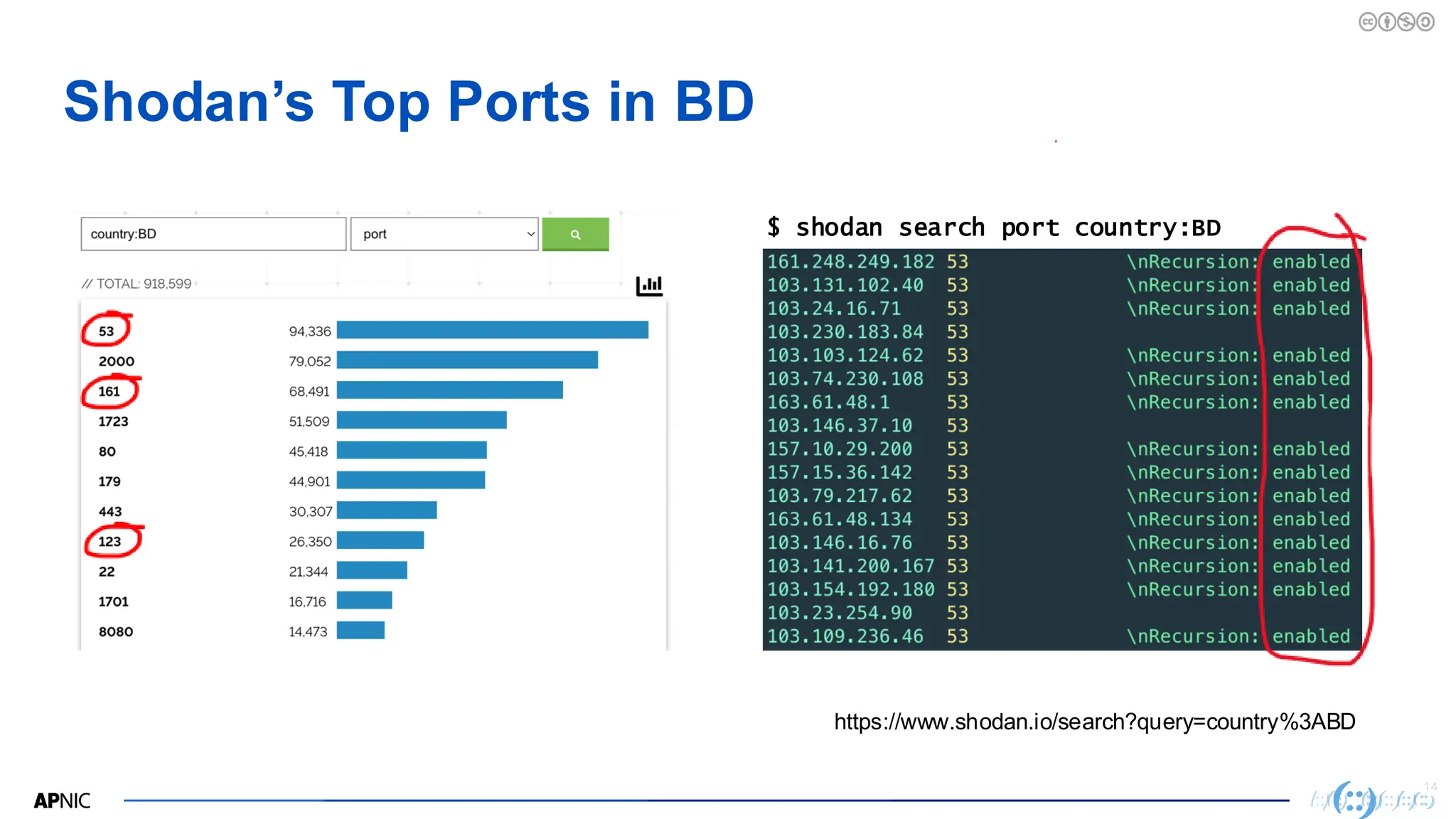
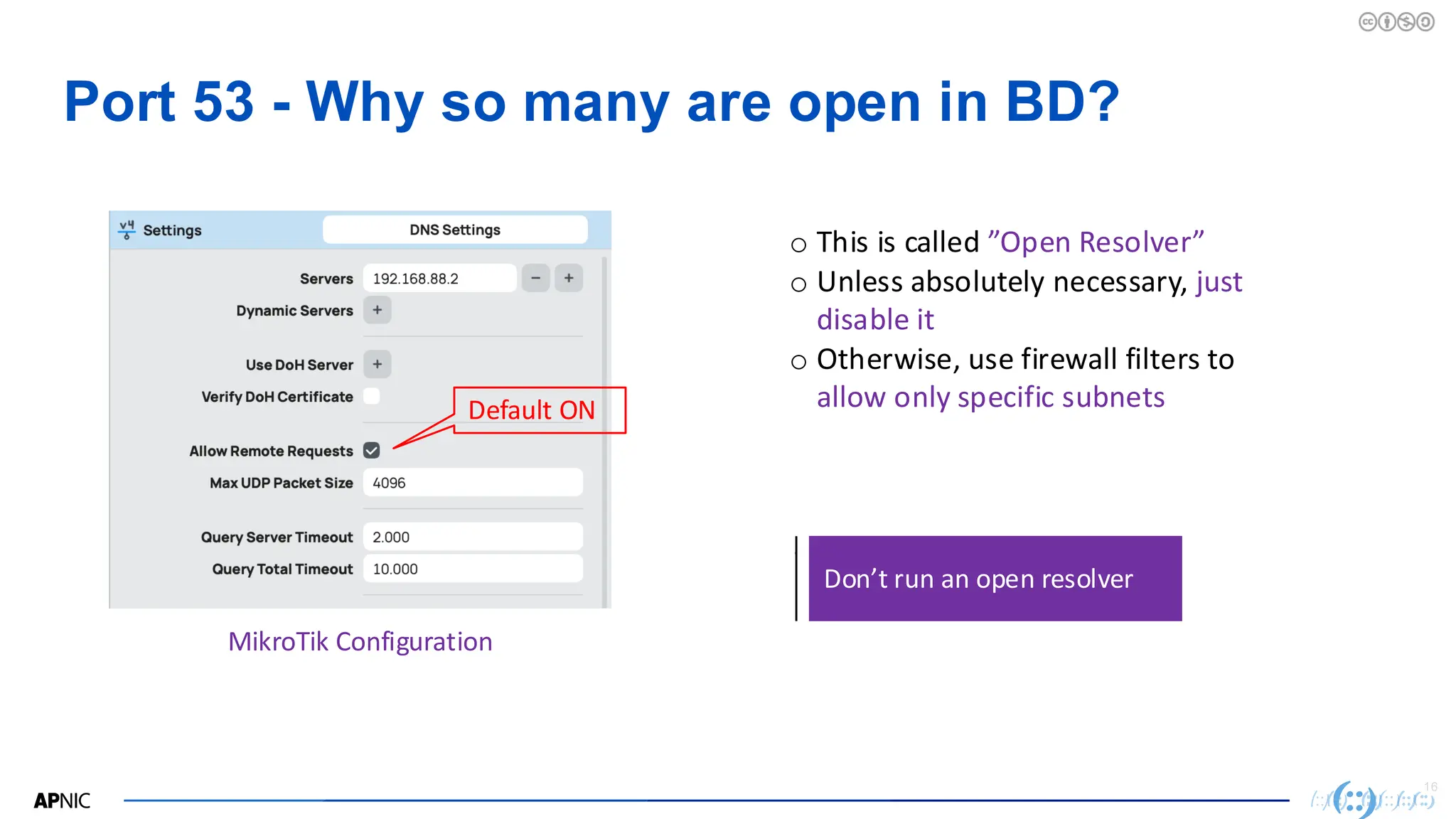
Port 53 -Why so many are open in BD?
Default ON
o This is called ”Open Resolver”
o Unless absolutely necessary, just
disable it
o Otherwise, use firewall filters to
allow only specific subnets
Don’t run an open resolver
MikroTik Configuration
17.
17
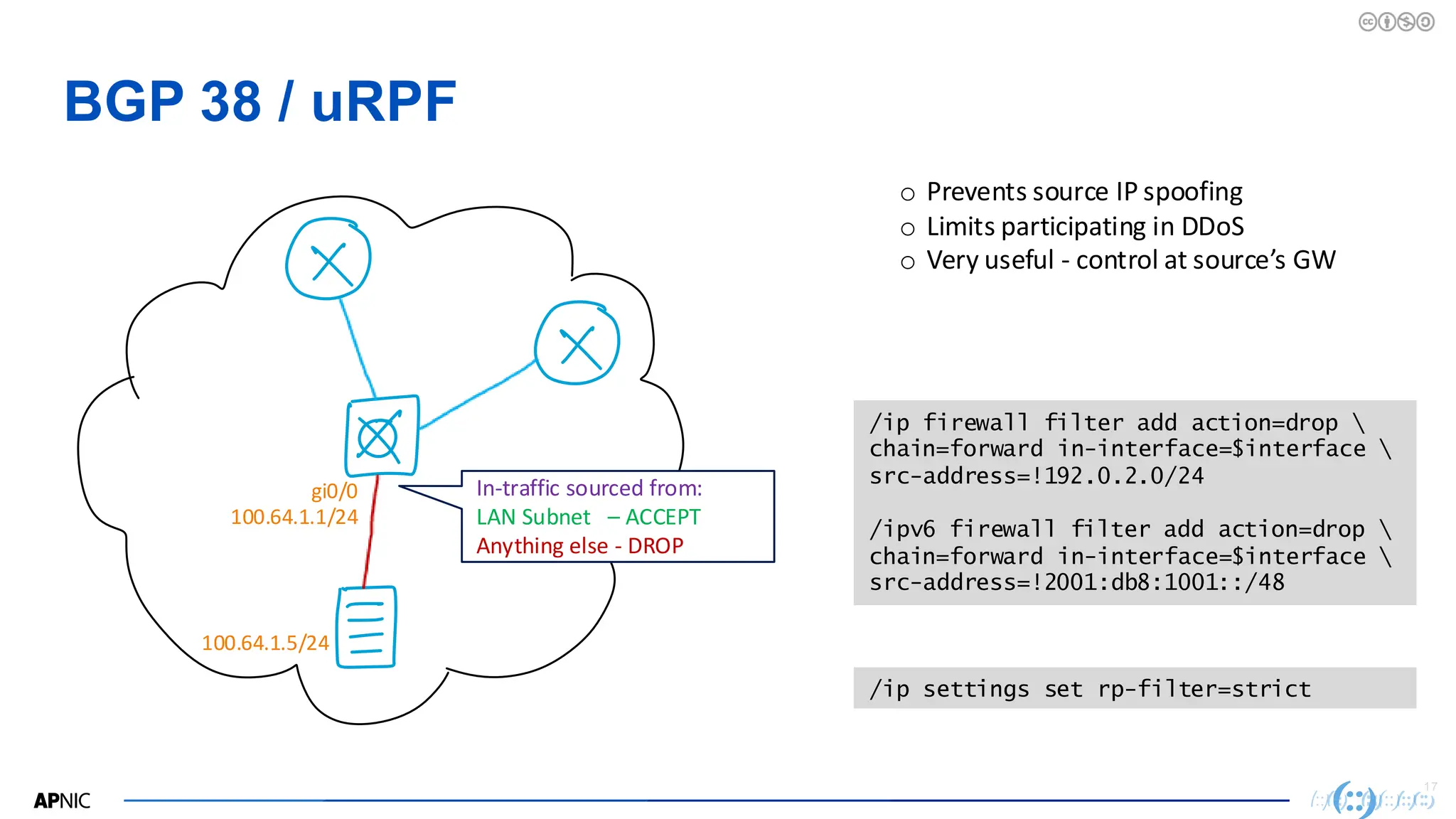
BGP 38 /uRPF
In-traffic sourced from:
LAN Subnet – ACCEPT
Anything else - DROP
gi0/0
100.64.1.1/24
o Prevents source IP spoofing
o Limits participating in DDoS
o Very useful - control at source’s GW
100.64.1.5/24
/ip firewall filter add action=drop
chain=forward in-interface=$interface
src-address=!192.0.2.0/24
/ipv6 firewall filter add action=drop
chain=forward in-interface=$interface
src-address=!2001:db8:1001::/48
/ip settings set rp-filter=strict
18.
18
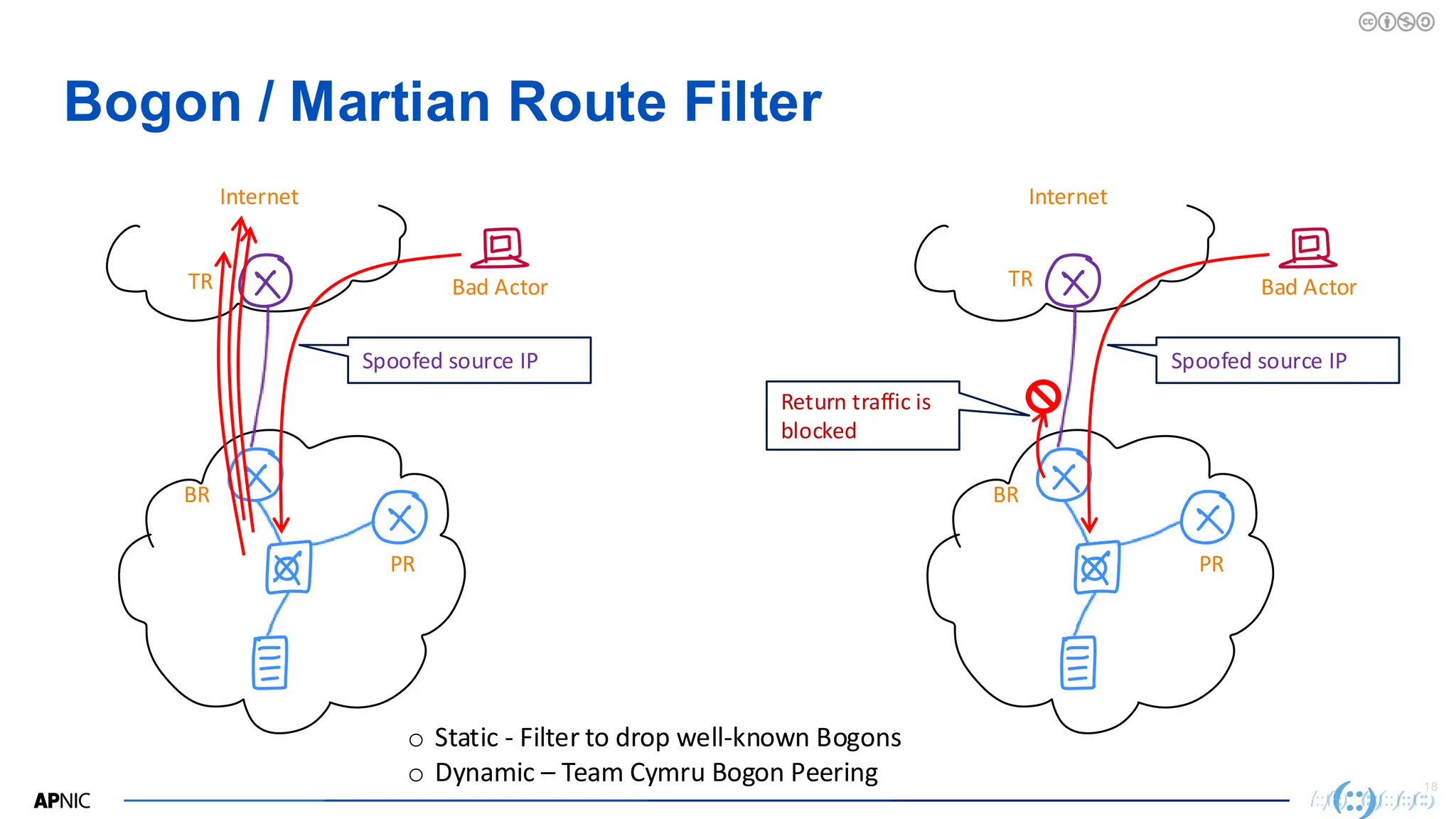
Bogon / MartianRoute Filter
TR
BR
PR
Internet
Bad Actor
Spoofed source IP
o Static - Filter to drop well-known Bogons
o Dynamic – Team Cymru Bogon Peering
TR
BR
PR
Internet
Bad Actor
Spoofed source IP
Return traffic is
blocked
20
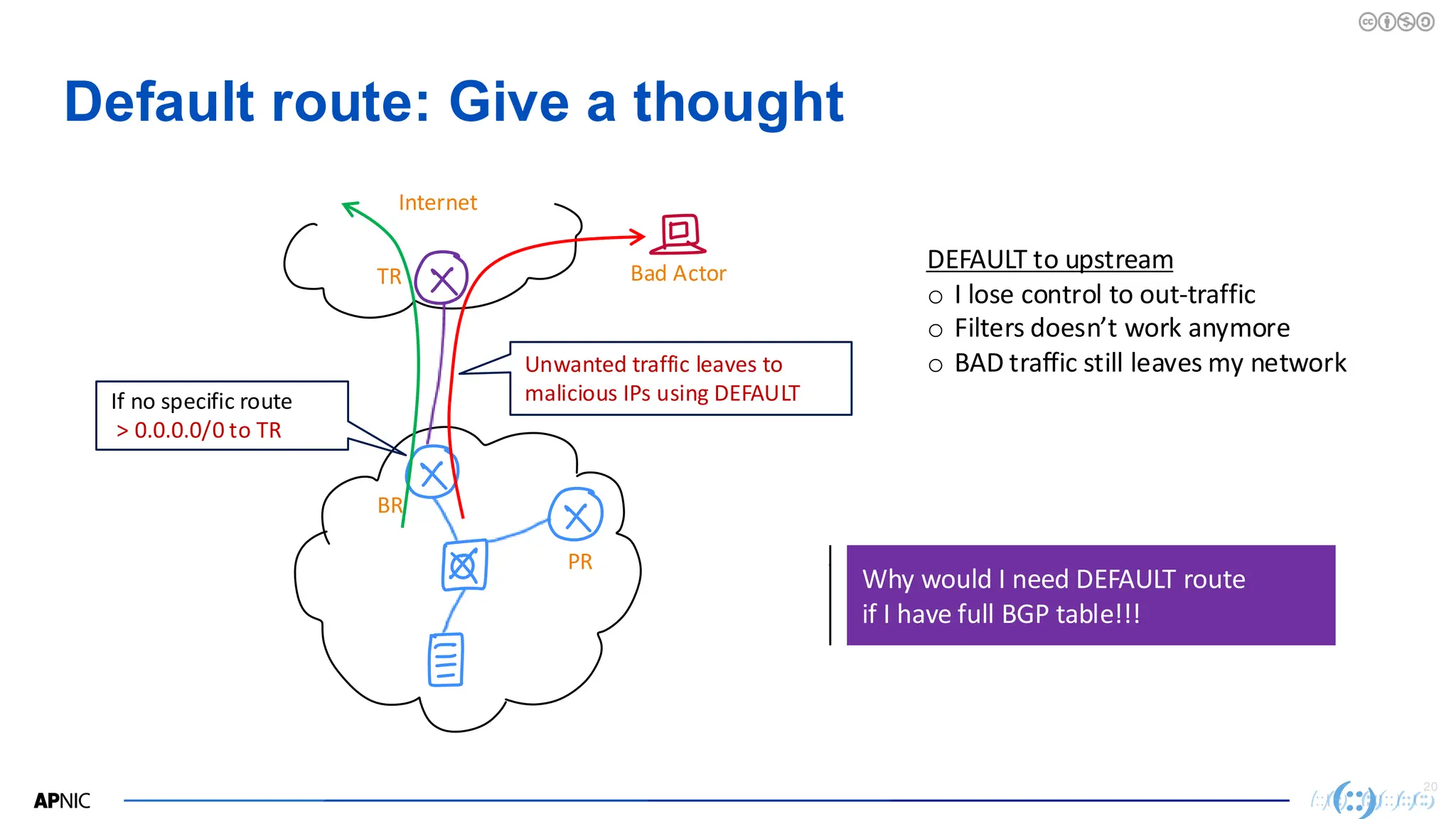
Default route: Givea thought
Why would I need DEFAULT route
if I have full BGP table!!!
If no specific route
> 0.0.0.0/0 to TR
DEFAULT to upstream
o I lose control to out-traffic
o Filters doesn’t work anymore
o BAD traffic still leaves my network
Unwanted traffic leaves to
malicious IPs using DEFAULT
TR
BR
PR
Internet
Bad Actor
21.
21
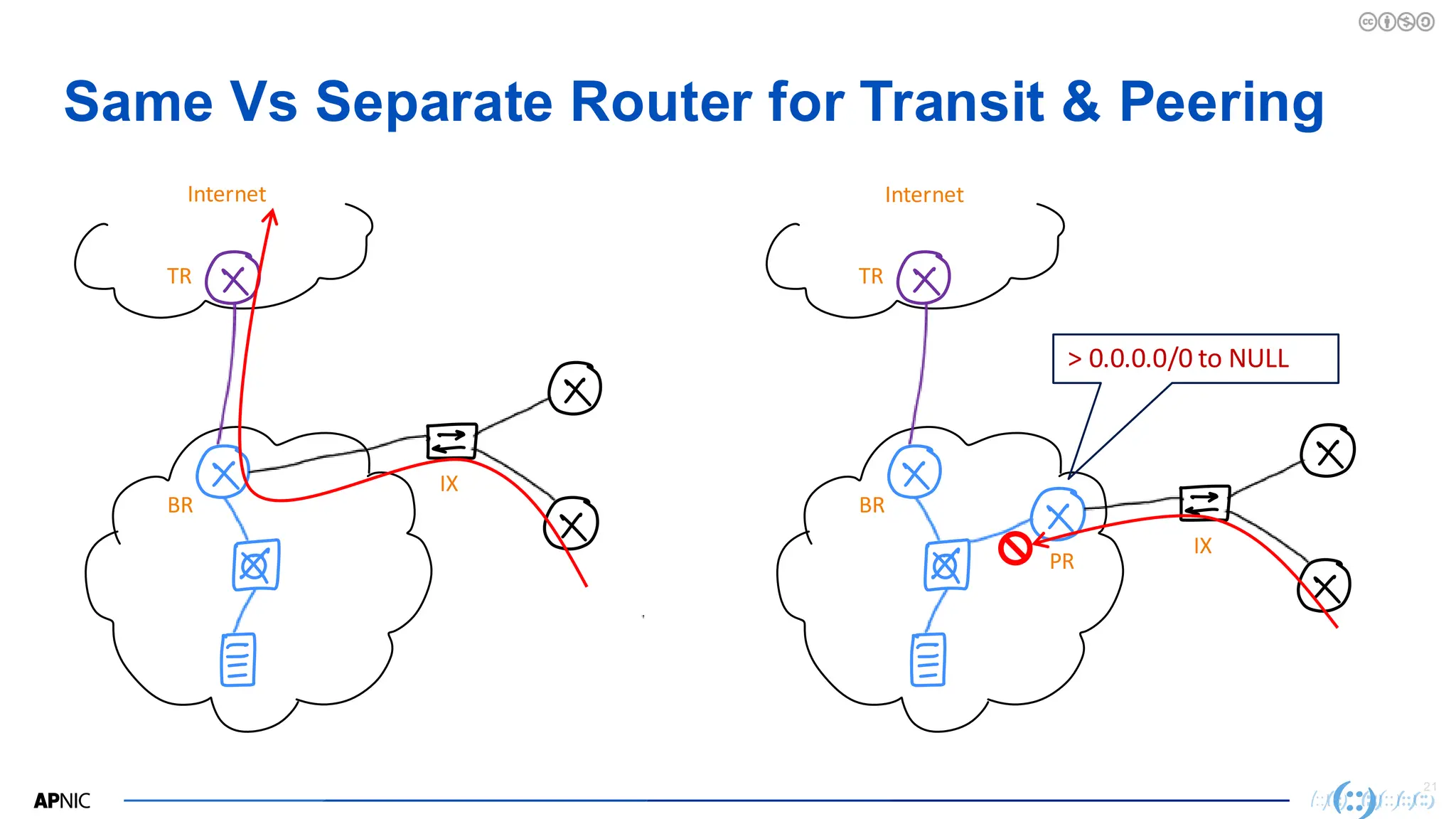
Same Vs SeparateRouter for Transit & Peering
TR
BR
IX
> 0.0.0.0/0 to NULL
TR
BR
PR
IX
Internet Internet
22.
22
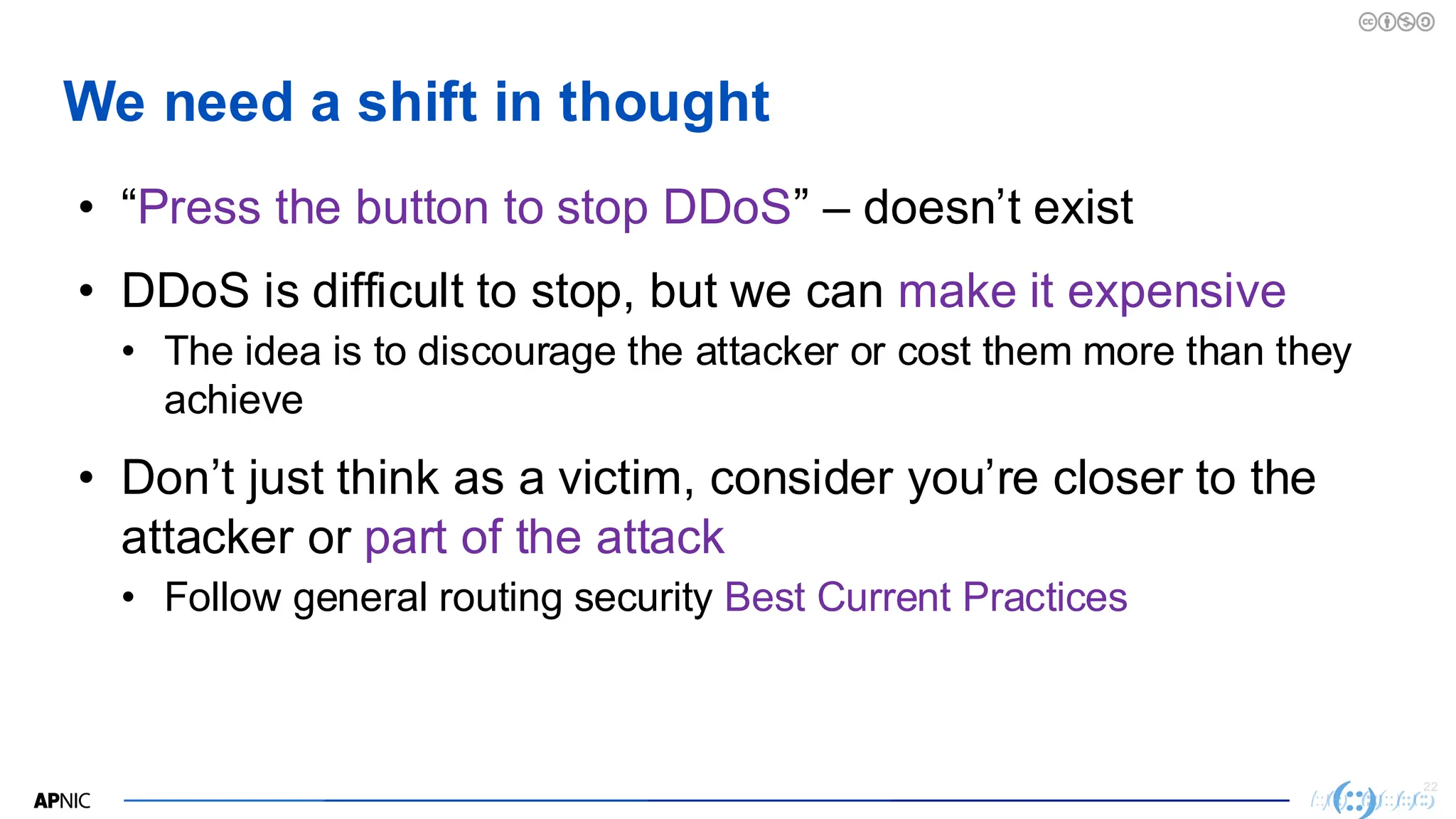
We need ashift in thought
• “Press the button to stop DDoS” – doesn’t exist
• DDoS is difficult to stop, but we can make it expensive
• The idea is to discourage the attacker or cost them more than they
achieve
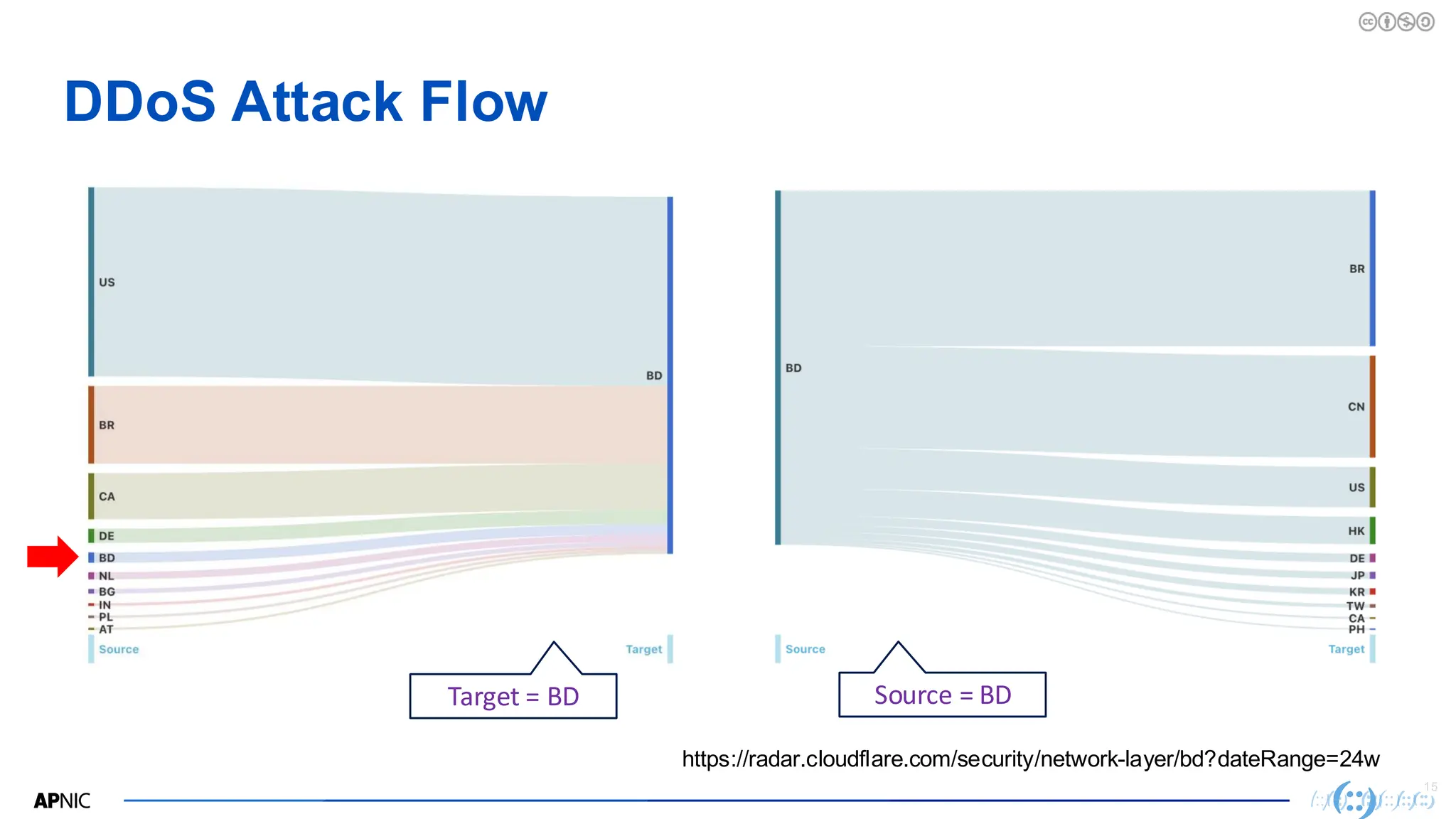
• Don’t just think as a victim, consider you’re closer to the
attacker or part of the attack
• Follow general routing security Best Current Practices




![Number_Guessing_Game_Dsbsbssbzboc[1].pptx](https://cdn.slidesharecdn.com/ss_thumbnails/numberguessinggamedoc1-251206215042-a076fc05-thumbnail.jpg?width=640&height=640&fit=bounds)


