1
SOME BASIC CONCEPTS OF BIOCHEMISTRY FOR DMLT SECOND YEAR STUDENTS (U.
P. State Medical Faculty syllabus) in Hinglish
LESSON 8
[Kidney function tests (KFT)/Renal function tests (RFT)/Renal panel]
IN ENGLISH
KIDNEY FUNCTION TESTS
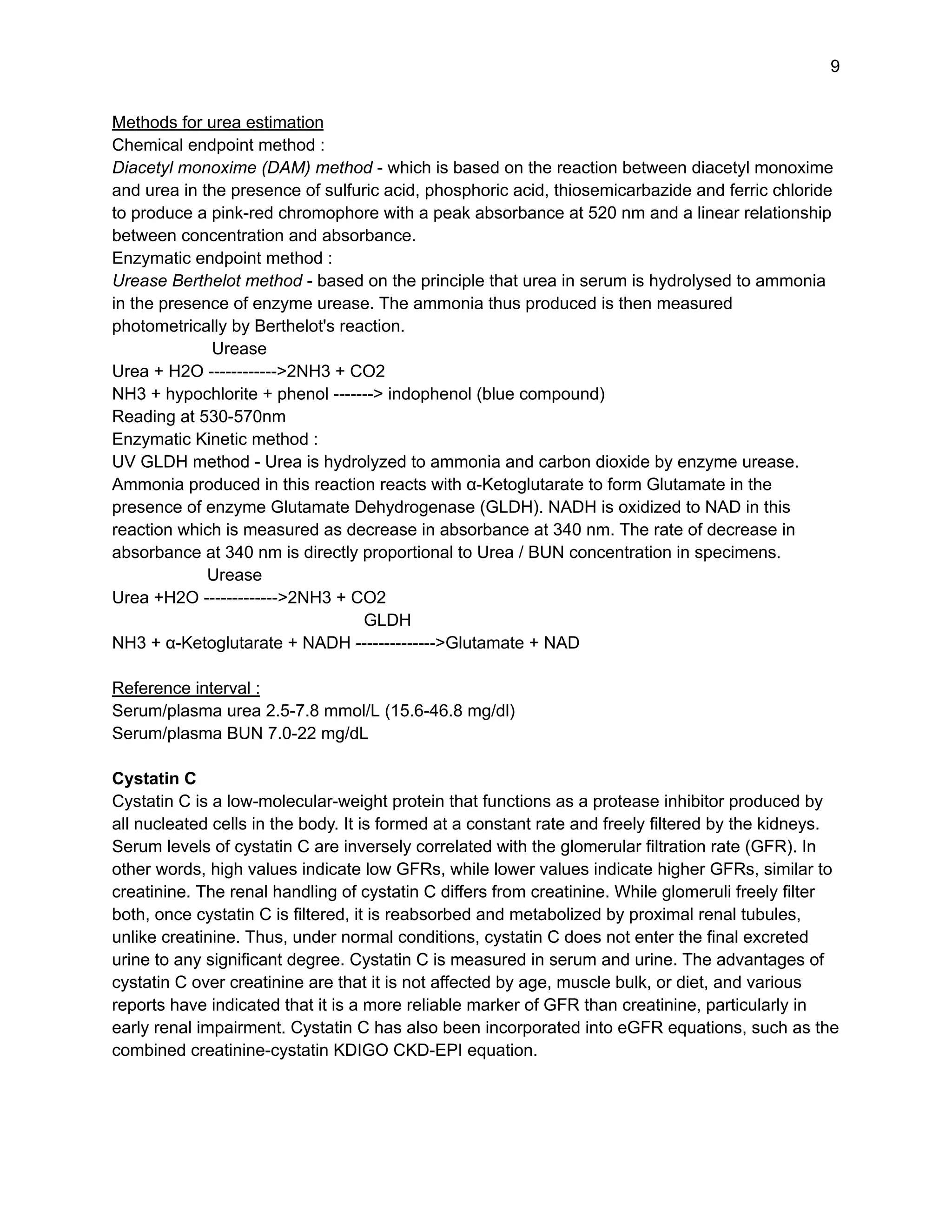
Nephron
The functional units of the kidney are the nephron, which consists of the glomerulus, proximal
and distal tubules, and collecting duct.
Functions of kidneys
● Excretion of waste products and toxins such as urea, creatinine and uric acid,
● Regulation of extracellular fluid volume, serum osmolality and electrolyte concentrations,
● Production of hormones like erythropoietin and 1,25 dihydroxy vitamin D and renin.
Assessment of renal function is important in :
● the management of patients with kidney disease or pathologies affecting renal function.
● identifying the presence of renal disease,
● monitoring the response of kidneys to treatment, and
● determining the progression of renal disease.
Parameters of renal function tests
● Urine - routine and microscopic examination
● Glomerular Filtration Rate
● Serum creatinine
● Serum urea or blood urea nitrogen (BUN)
● Serum cystatin C
2
Urine examination
Routine examination
Appearance - Indication
Straw coloured - normal
Dark in colour - dehydration
Red colour - hematuria or porphyria or could be due to dietary intake of
food like beets.
Clear - normal
Cloudy - pyuria (urinary tract infection, UTI)
Specific gravity (an indicator of the renal concentrating ability)
1.003 to 1.030 - normal
Increased (>1.030) - low water intake/diabetes mellitus/albuminuria/acute
nephritis
pH
6.0-6.5 (acidic) - normal
High (alkaline) - kidney stones/UTIs/ kidney-related disorders
Low (more acidic) - diabetic ketoacidosis/diarrhea/ starvation
Chemical examination
Dipstick uses dry chemistry methods to detect the presence of protein, glucose, blood, ketones,
bilirubin, urobilinogen, nitrite, and leukocyte esterase. However, the analyte of interest in renal
function tests is - protein. Normal urine protein is up to 150 mg per day [30% albumin; 30%
globulins; 40% Tamm Horsfall protein (Uromodulin, a glycoprotein)] and its rising levels indicate
a kidney problem. Albuminuria refers to the abnormal presence of albumin in the urine.
Sometimes a term microalbuminuria is used but now it is considered an obsolete term as there
is no such biochemical molecule, and hence it is referred to only as urine albumin.
● Albuminuria is used as a marker for the detection of incipient nephropathy (the initial
presence of low but abnormal amounts of urine albumin) in diabetics.
● It is an independent marker for the cardiovascular disease since it suggests increased
endothelial permeability.
● It is also a marker for chronic renal impairment.
For testing albuminuria the urine may be collected normally in three ways:
● In a special container (with preservative) over a 24-hour period for urinary albumin
excretion (UAE) determination.
● A urine sample first thing in the morning or after a four-hour period of not urinating
(Timed urine test) for albumin excretion rate (AER) determination.
● A random (spot) urine sample can be taken at any time for urinary albumin concentration
(UAC) estimatiion but to improve the accuracy of the results, it's often combined with a
urine test for creatinine for albumin : creatinine ratio (ACR).
Estimation of albumin - can be done by immunoturbidimetric assay and HPLC.
Calculations -
Albumin (mg/dl)
ACR (mg/g) = ------------------------ x 1000.
Creatinine (mg/dl)
3
UAC (mg/L) = Albumin (mg/dl) x 10
UAE (mg/24 hours) = Albumin (mg/dl) x Volume of 24-hour urine (dl)
Albumin (mg/dl) x volume of urine in timed collection (dl) x1000
AER (µg/min) = --------------------------------------------------------------------------
Time period of urine collection (min)
Cutoff values in normoalbuminuria, microalbuminuria and macroalbuminuria
—---------------------------------------------------------------------------------------------------------
Urine sample type Normoalbuminuria Microalbuminuria Macroalbuminuria
24-hour urine
UAE (mg/24hrs) < 30 30 - 300 > 300
Timed overnight
AER (µg/min) <20 20 - 200 > 200
Spot (random)
UAC (mg/l) <20 20 - 200 > 200
ACR (mg/g) < 30 30 - 300 > 300
—--------------------------------------------------------------------------------------------------------
The presence of albuminuria on two occasions with the exclusion of a urinary tract infection
indicates glomerular dysfunction. The presence of albuminuria for three or more months is
indicative of chronic kidney disease.
Microscopic examination
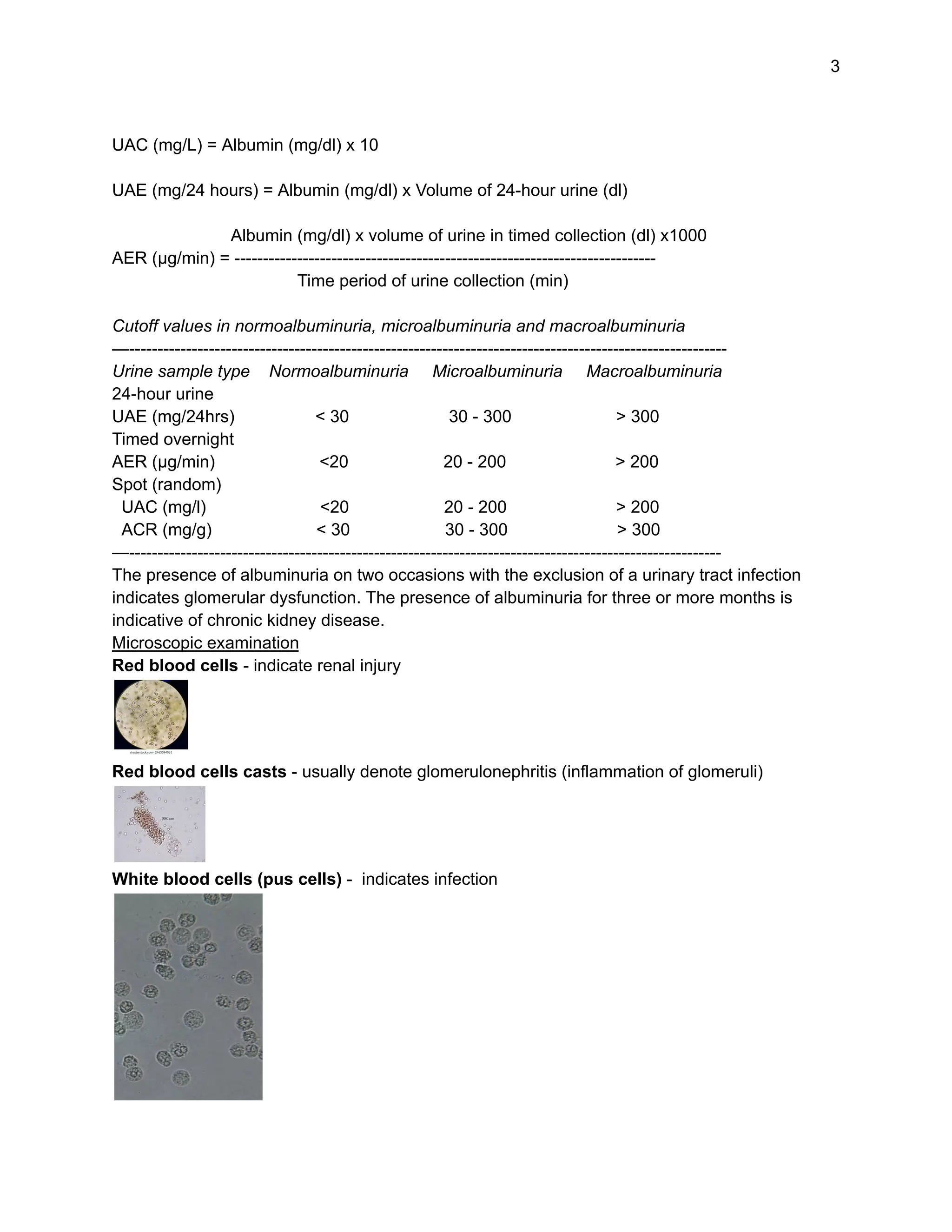
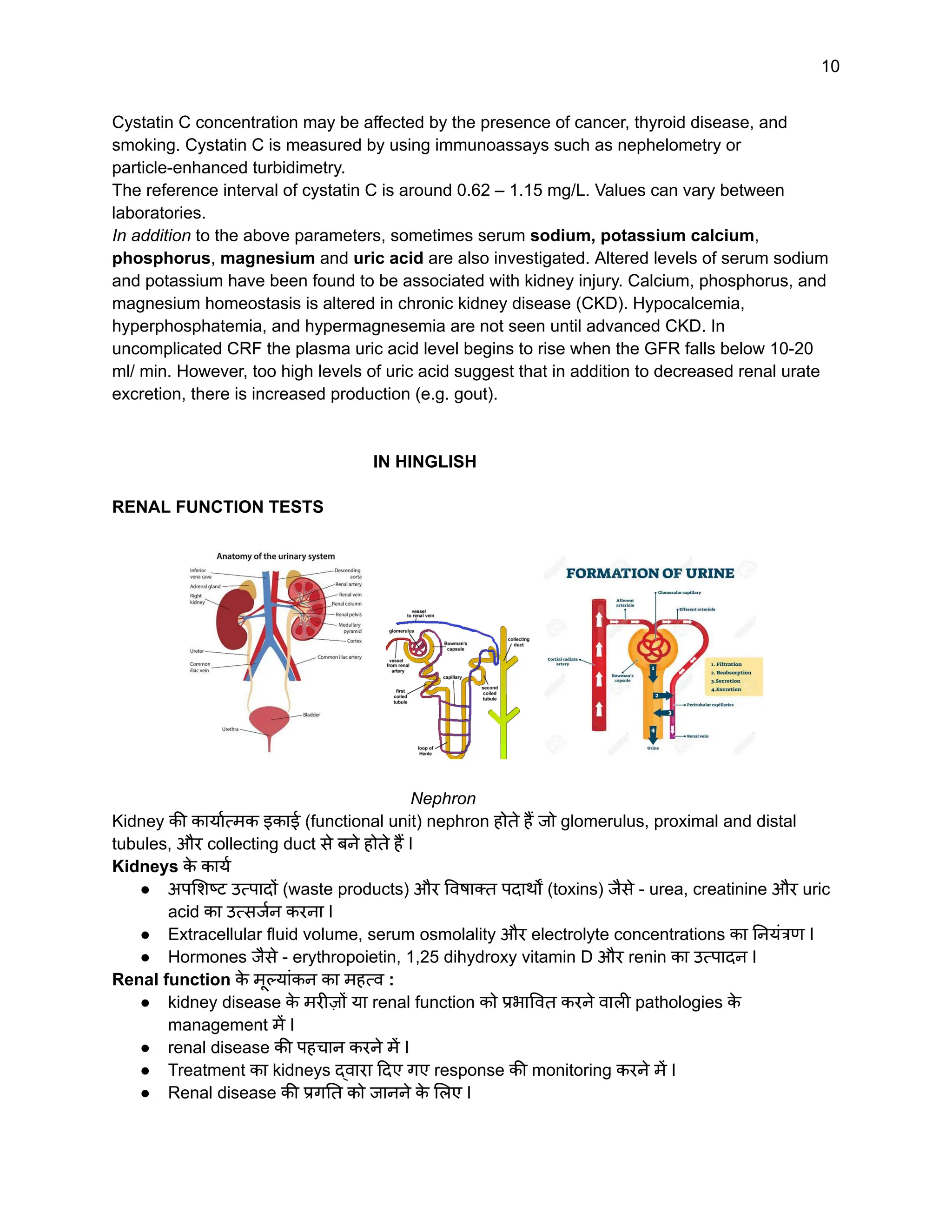
Red blood cells - indicate renal injury
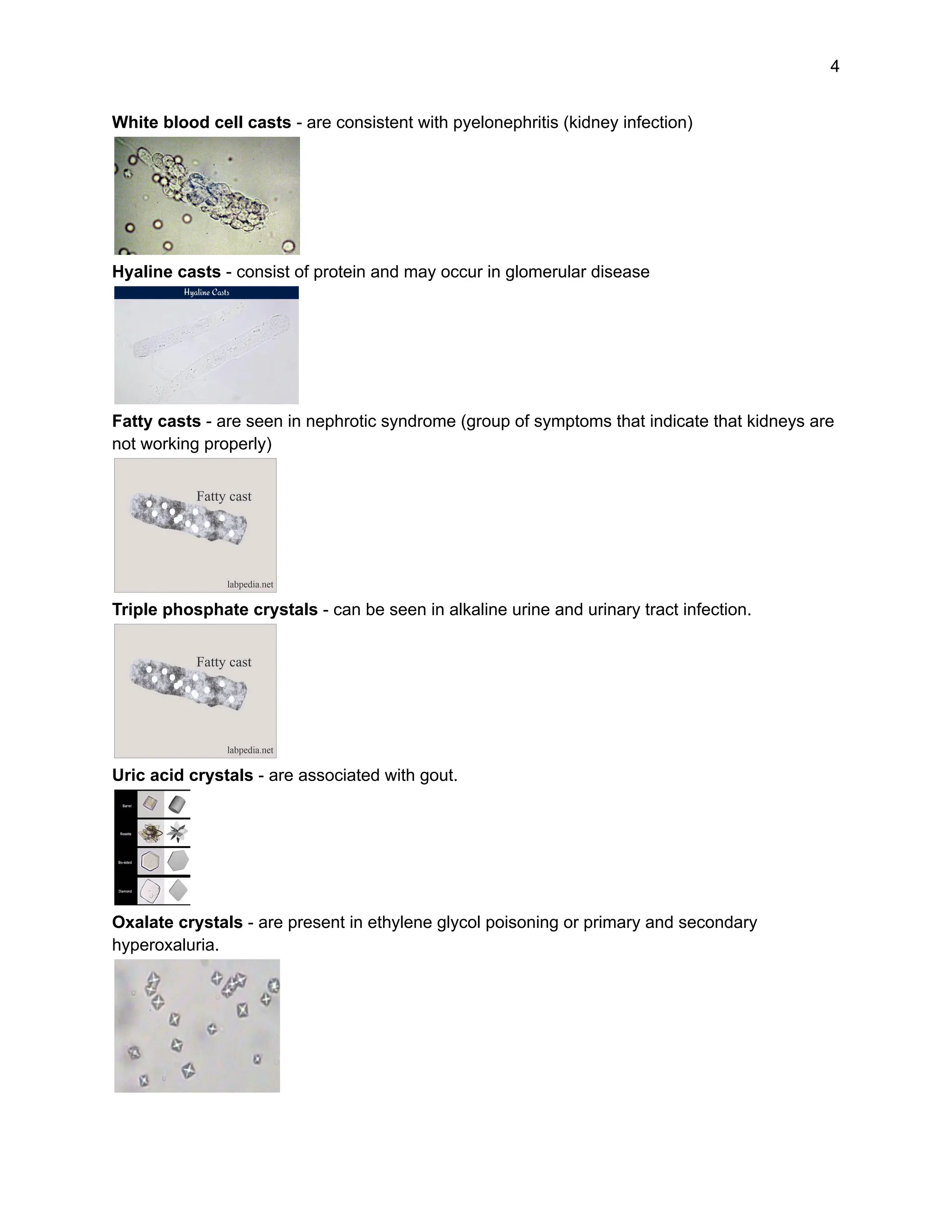
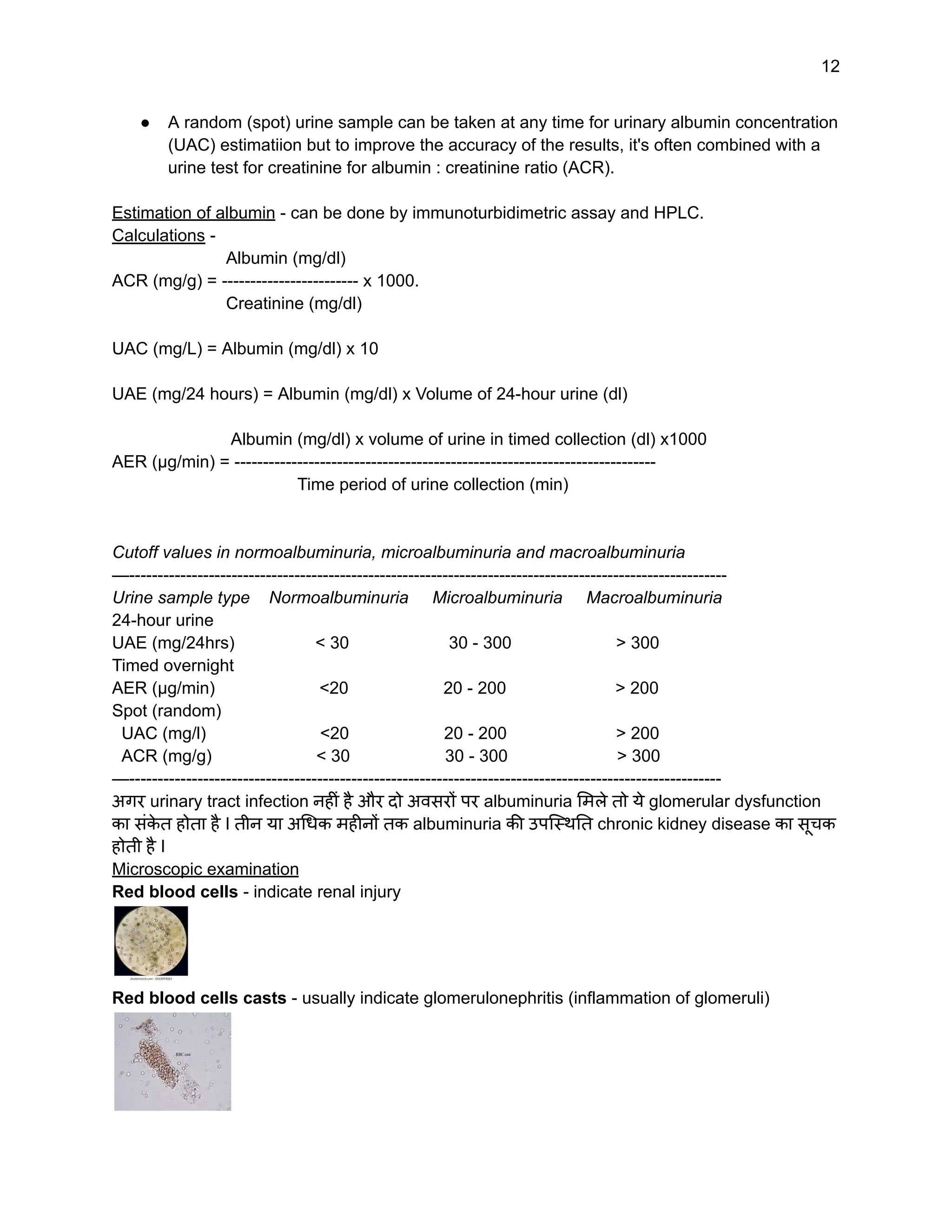
Red blood cells casts - usually denote glomerulonephritis (inflammation of glomeruli)
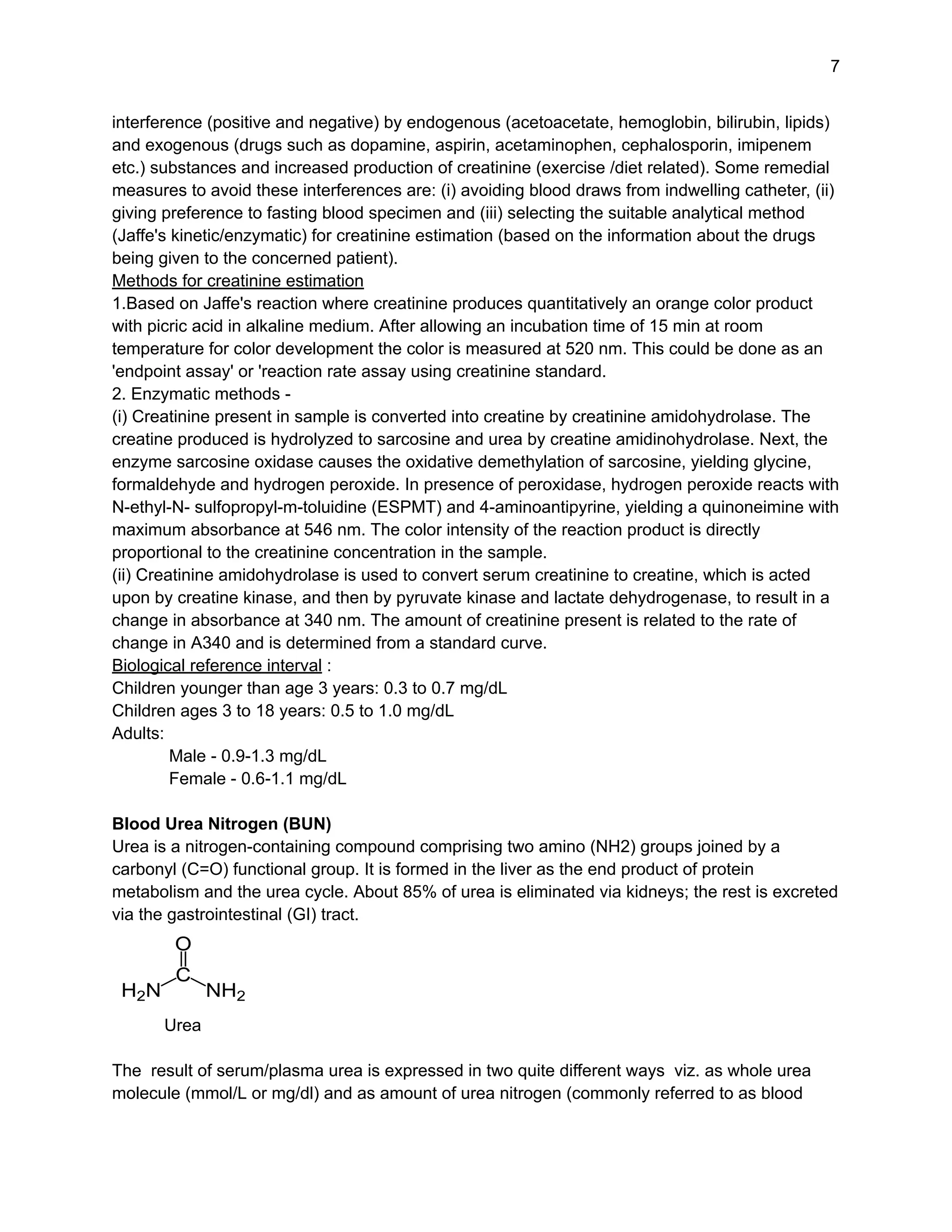
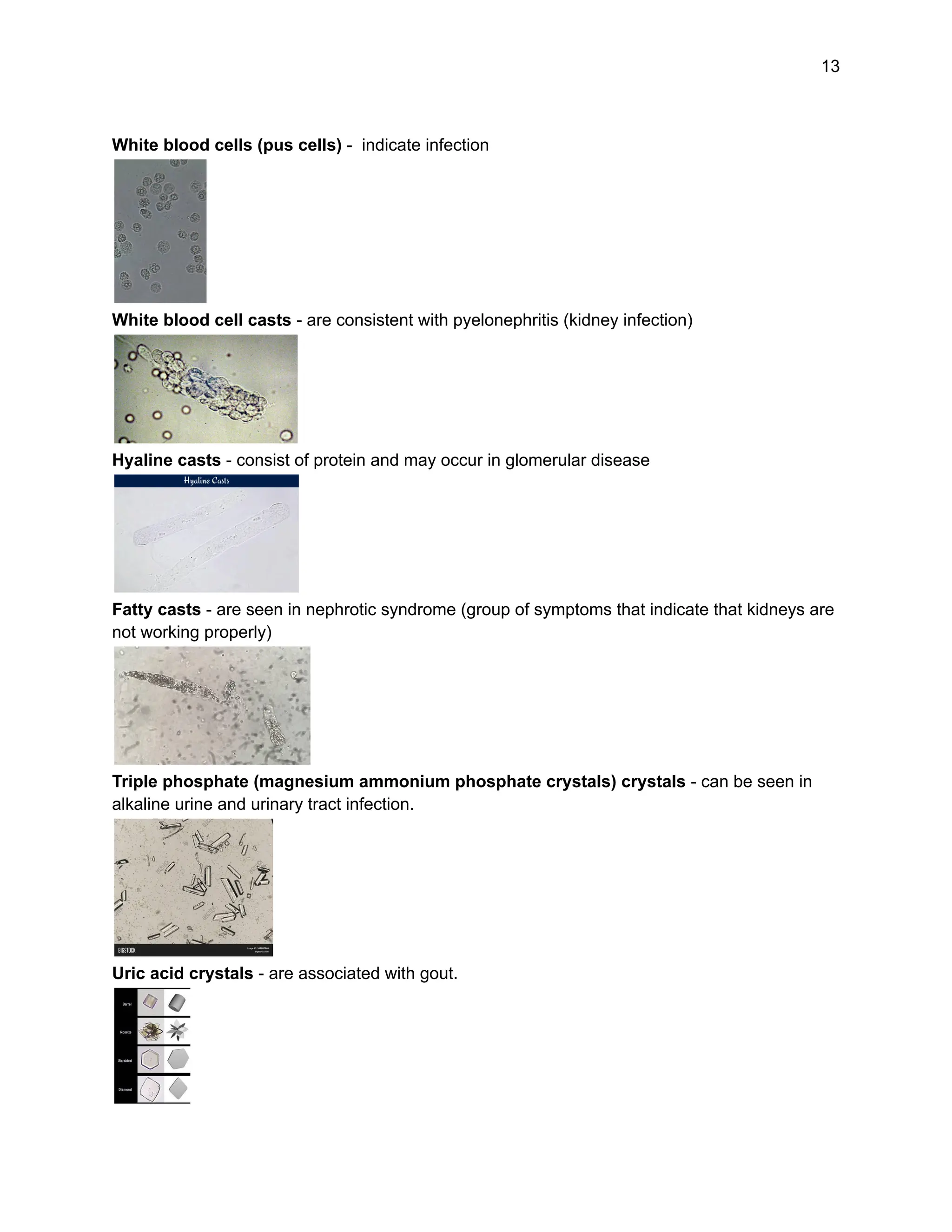
White blood cells (pus cells) - indicates infection
4
White blood cell casts - are consistent with pyelonephritis (kidney infection)
Hyaline casts - consist of protein and may occur in glomerular disease
Fatty casts - are seen in nephrotic syndrome (group of symptoms that indicate that kidneys are
not working properly)
Triple phosphate crystals - can be seen in alkaline urine and urinary tract infection.
Uric acid crystals - are associated with gout.
Oxalate crystals - are present in ethylene glycol poisoning or primary and secondary
hyperoxaluria.
5
Cystine crystals - are observed in cystinuria
Glomerular Filtration Rate (GFR) - is the best overall indicator of the glomerular function. GFR
is the rate in milliliters per minute at which substances in plasma are filtered through the
glomerulus. The normal GFR for an adult is 90 to 120 mL per minute.
Exogenous markers of GFR -
● Inulin clearance - It involves the infusion of inulin (a small polysaccharide) and then the
measurement of blood levels of inulin after a specified period to determine the rate of
clearance of inulin. This is the 'reference method' for determining GFR.
● Other exogenous markers used are non-radioactive contrast agent, iohexol and
radioisotopes such as chromium-51 ethylene-diamine-tetra-acetic acid (51 Cr-EDTA),
and technetium-99-labeled diethylene-triamine-pentaacetate (99 Tc-DTPA).
Due to inconvenience involved and requirement of specialized centres for performing these
tests, the use of endogenous markers of GFR is encouraged.
Endogenous markers of GFR
Plasma/serum Creatinine and urinary creatinine - is the most commonly used endogenous
marker for the assessment of glomerular function. Urinary creatinine involves the collection of
urine over a 24-hour period or preferably over an accurately timed period of 5 to 8 hours since
24-hour collections are notoriously unreliable. Creatinine clearance is then calculated using the
equation:
C = (U x V) / P
C = clearance, U = urinary creatinine concentration(mg/L) V = urinary flow rate (volume/time i.e.
ml/min), and P = plasma creatinine concentration(mg/L)
The creatinine clearance test is a method of assessing estimated GFR (eGFR).
[Important - Twenty-four-hour urine collection bottles may contain small amounts of
preservatives such as boric acid, hydrochloric acid, acetic acid, oxalic acid and thymol, and
therefore, the patient should be told that the direct contact with skin and mucous membranes
must be avoided]
The creatinine clearance test is not used very often any more. It has largely been
replaced by the eGFR equations using serum creatinine (SCr) levels.
6
In adults, the most widely-used equations for estimating glomerular filtration rate (GFR) from
serum creatinine are the Chronic Kidney Disease Epidemiology Collaboration (CKD-EPI)
equation and the isotope dilution mass spectrometry (IDMS) traceable Modification of Diet in
Renal Disease (MDRD) Study equation.
The CKD-EPI equation
GFR = 141 × min(Scr/κ, 1)α × max(Scr/κ, 1)-1.209 × 0.993Age × 1.018 [if female] × 1.159 [if
African American]
where:
Scr is serum creatinine in mg/dL,
κ is 0.7 for females and 0.9 for males,
α is -0.329 for females and -0.411 for males,
min indicates the minimum of Scr/κ or 1, and
max indicates the maximum of Scr/κ or 1
These eGFR equations are superior to serum creatinine alone since they include race, age, and
gender variables. eGFR equations are used to determine the presence of renal disease, stage
of CKD, and to monitor response to treatment.
—----------------------------------------------------------------------------------------------------------------------------
STAGES OF CHRONIC KIDNEY DISEASE GFR % OF KIDNEY FUNCTION
Stage 1 Kidney damage with normal kidney function 90 or high 90 - 100%
Stage 2 Kidney damage with mild loss of kidney function 89 - 60 89 - 60%
Stage 3a Mild to moderate loss of kidney function 59 - 45 59 - 60%
Stage 3b Moderate to severe loss of kidney function 44 - 30 44 - 30%
Stage 4 Severe loss of kidney function 29 - 15 29 - 15%
Stage 5 Kidney failure < 15 < 15%
—----------------------------------------------------------------------------------------------------------------------------
Serum creatinine - Creatinine is the by-product of creatine phosphate in muscle, and it is
produced at a constant rate by the body. For the most part, creatinine is cleared from the blood
entirely by the kidney. Decreased clearance by the kidney results in increased blood creatinine
and increased level of creatinine may be a sign of poor kidney function. The amount of
creatinine produced per day depends on muscle mass and diet. Additionally, serum creatinine
is a later indicator of renal impairment because renal function is decreased by 50% before a rise
in serum creatinine is observed.
Causes of increased serum creatinine
With Decreased GFR -
● Prerenal - due to shock/hemorrhage, dehydration, congestive cardiac failure.
● Renal - acute and chronic renal failure
● Post-renal - obstructive lesions of the urinary tract
Blood collection for serum creatinine estimation -
For serum creatinine test no special preparation is required by the patient but false estimates of
serum creatinine have been found due to interference by both exogenous and endogenous
substances which have been attributed to factors such as decreased or inhibited tubular
secretion of creatinine (due to drugs such as cimetidine, ranitidine, trimethoprim etc.),
7
interference (positive and negative) by endogenous (acetoacetate, hemoglobin, bilirubin, lipids)
and exogenous (drugs such as dopamine, aspirin, acetaminophen, cephalosporin, imipenem
etc.) substances and increased production of creatinine (exercise /diet related). Some remedial
measures to avoid these interferences are: (i) avoiding blood draws from indwelling catheter, (ii)
giving preference to fasting blood specimen and (iii) selecting the suitable analytical method
(Jaffe's kinetic/enzymatic) for creatinine estimation (based on the information about the drugs
being given to the concerned patient).
Methods for creatinine estimation
1.Based on Jaffe's reaction where creatinine produces quantitatively an orange color product
with picric acid in alkaline medium. After allowing an incubation time of 15 min at room
temperature for color development the color is measured at 520 nm. This could be done as an
'endpoint assay' or 'reaction rate assay using creatinine standard.
2. Enzymatic methods -
(i) Creatinine present in sample is converted into creatine by creatinine amidohydrolase. The
creatine produced is hydrolyzed to sarcosine and urea by creatine amidinohydrolase. Next, the
enzyme sarcosine oxidase causes the oxidative demethylation of sarcosine, yielding glycine,
formaldehyde and hydrogen peroxide. In presence of peroxidase, hydrogen peroxide reacts with
N-ethyl-N- sulfopropyl-m-toluidine (ESPMT) and 4-aminoantipyrine, yielding a quinoneimine with
maximum absorbance at 546 nm. The color intensity of the reaction product is directly
proportional to the creatinine concentration in the sample.
(ii) Creatinine amidohydrolase is used to convert serum creatinine to creatine, which is acted
upon by creatine kinase, and then by pyruvate kinase and lactate dehydrogenase, to result in a
change in absorbance at 340 nm. The amount of creatinine present is related to the rate of
change in A340 and is determined from a standard curve.
Biological reference interval :
Children younger than age 3 years: 0.3 to 0.7 mg/dL
Children ages 3 to 18 years: 0.5 to 1.0 mg/dL
Adults:
Male - 0.9-1.3 mg/dL
Female - 0.6-1.1 mg/dL
Blood Urea Nitrogen (BUN)
Urea is a nitrogen-containing compound comprising two amino (NH2) groups joined by a
carbonyl (C=O) functional group. It is formed in the liver as the end product of protein
metabolism and the urea cycle. About 85% of urea is eliminated via kidneys; the rest is excreted
via the gastrointestinal (GI) tract.
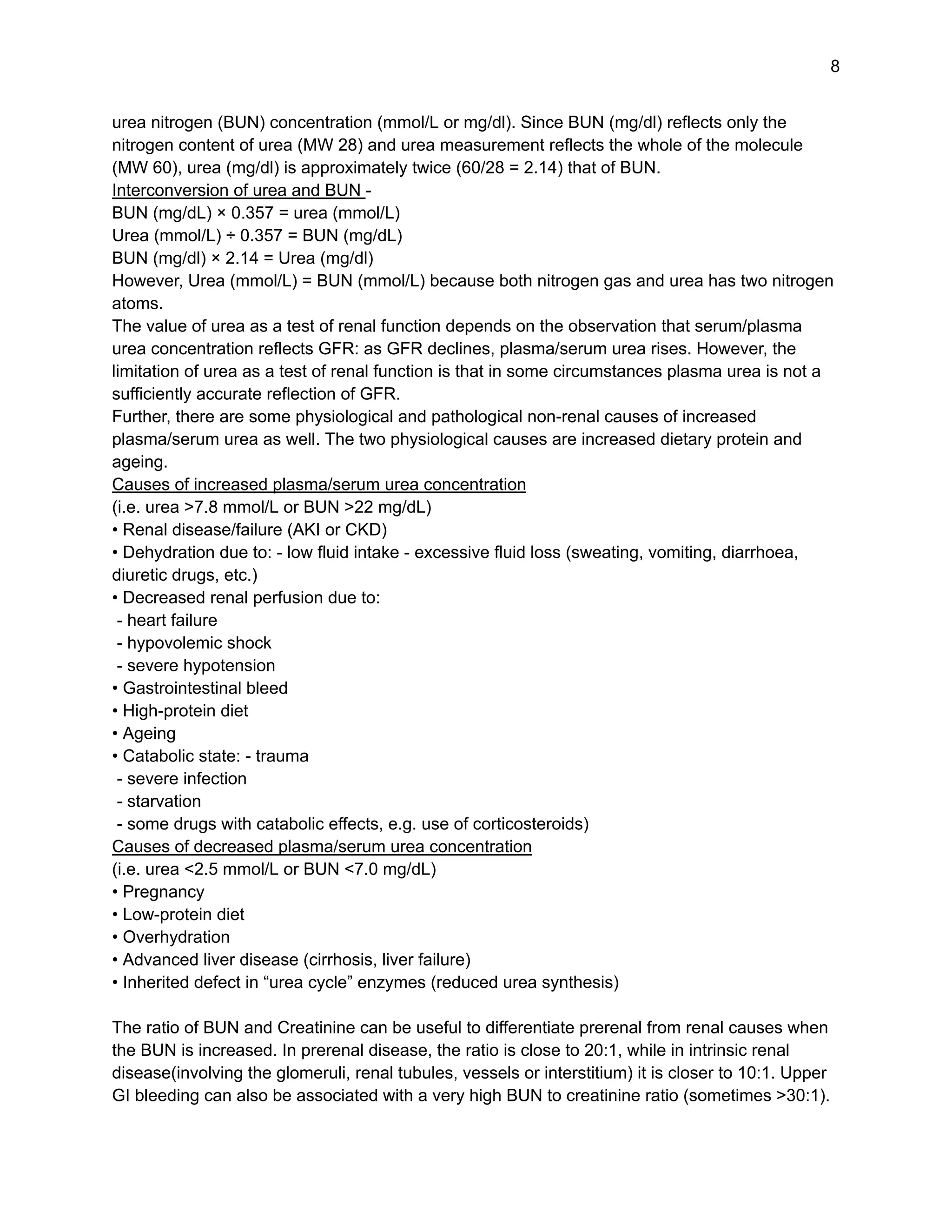
Urea
The result of serum/plasma urea is expressed in two quite different ways viz. as whole urea
molecule (mmol/L or mg/dl) and as amount of urea nitrogen (commonly referred to as blood
8
urea nitrogen (BUN) concentration (mmol/L or mg/dl). Since BUN (mg/dl) reflects only the
nitrogen content of urea (MW 28) and urea measurement reflects the whole of the molecule
(MW 60), urea (mg/dl) is approximately twice (60/28 = 2.14) that of BUN.
Interconversion of urea and BUN -
BUN (mg/dL) × 0.357 = urea (mmol/L)
Urea (mmol/L) ÷ 0.357 = BUN (mg/dL)
BUN (mg/dl) × 2.14 = Urea (mg/dl)
However, Urea (mmol/L) = BUN (mmol/L) because both nitrogen gas and urea has two nitrogen
atoms.
The value of urea as a test of renal function depends on the observation that serum/plasma
urea concentration reflects GFR: as GFR declines, plasma/serum urea rises. However, the
limitation of urea as a test of renal function is that in some circumstances plasma urea is not a
sufficiently accurate reflection of GFR.
Further, there are some physiological and pathological non-renal causes of increased
plasma/serum urea as well. The two physiological causes are increased dietary protein and
ageing.
Causes of increased plasma/serum urea concentration
(i.e. urea >7.8 mmol/L or BUN >22 mg/dL)
• Renal disease/failure (AKI or CKD)
• Dehydration due to: - low fluid intake - excessive fluid loss (sweating, vomiting, diarrhoea,
diuretic drugs, etc.)
• Decreased renal perfusion due to:
- heart failure
- hypovolemic shock
- severe hypotension
• Gastrointestinal bleed
• High-protein diet
• Ageing
• Catabolic state: - trauma
- severe infection
- starvation
- some drugs with catabolic effects, e.g. use of corticosteroids)
Causes of decreased plasma/serum urea concentration
(i.e. urea <2.5 mmol/L or BUN <7.0 mg/dL)
• Pregnancy
• Low-protein diet
• Overhydration
• Advanced liver disease (cirrhosis, liver failure)
• Inherited defect in “urea cycle” enzymes (reduced urea synthesis)
The ratio of BUN and Creatinine can be useful to differentiate prerenal from renal causes when
the BUN is increased. In prerenal disease, the ratio is close to 20:1, while in intrinsic renal
disease(involving the glomeruli, renal tubules, vessels or interstitium) it is closer to 10:1. Upper
GI bleeding can also be associated with a very high BUN to creatinine ratio (sometimes >30:1).
9
Methods for urea estimation
Chemical endpoint method :
Diacetyl monoxime (DAM) method - which is based on the reaction between diacetyl monoxime
and urea in the presence of sulfuric acid, phosphoric acid, thiosemicarbazide and ferric chloride
to produce a pink-red chromophore with a peak absorbance at 520 nm and a linear relationship
between concentration and absorbance.
Enzymatic endpoint method :
Urease Berthelot method - based on the principle that urea in serum is hydrolysed to ammonia
in the presence of enzyme urease. The ammonia thus produced is then measured
photometrically by Berthelot's reaction.
Urease
Urea + H2O ------------>2NH3 + CO2
NH3 + hypochlorite + phenol -------> indophenol (blue compound)
Reading at 530-570nm
Enzymatic Kinetic method :
UV GLDH method - Urea is hydrolyzed to ammonia and carbon dioxide by enzyme urease.
Ammonia produced in this reaction reacts with α-Ketoglutarate to form Glutamate in the
presence of enzyme Glutamate Dehydrogenase (GLDH). NADH is oxidized to NAD in this
reaction which is measured as decrease in absorbance at 340 nm. The rate of decrease in
absorbance at 340 nm is directly proportional to Urea / BUN concentration in specimens.
Urease
Urea +H2O ------------->2NH3 + CO2
GLDH
NH3 + α-Ketoglutarate + NADH -------------->Glutamate + NAD
Reference interval :
Serum/plasma urea 2.5-7.8 mmol/L (15.6-46.8 mg/dl)
Serum/plasma BUN 7.0-22 mg/dL
Cystatin C
Cystatin C is a low-molecular-weight protein that functions as a protease inhibitor produced by
all nucleated cells in the body. It is formed at a constant rate and freely filtered by the kidneys.
Serum levels of cystatin C are inversely correlated with the glomerular filtration rate (GFR). In
other words, high values indicate low GFRs, while lower values indicate higher GFRs, similar to
creatinine. The renal handling of cystatin C differs from creatinine. While glomeruli freely filter
both, once cystatin C is filtered, it is reabsorbed and metabolized by proximal renal tubules,
unlike creatinine. Thus, under normal conditions, cystatin C does not enter the final excreted
urine to any significant degree. Cystatin C is measured in serum and urine. The advantages of
cystatin C over creatinine are that it is not affected by age, muscle bulk, or diet, and various
reports have indicated that it is a more reliable marker of GFR than creatinine, particularly in
early renal impairment. Cystatin C has also been incorporated into eGFR equations, such as the
combined creatinine-cystatin KDIGO CKD-EPI equation.
10
Cystatin C concentration may be affected by the presence of cancer, thyroid disease, and
smoking. Cystatin C is measured by using immunoassays such as nephelometry or
particle-enhanced turbidimetry.
The reference interval of cystatin C is around 0.62 – 1.15 mg/L. Values can vary between
laboratories.
In addition to the above parameters, sometimes serum sodium, potassium calcium,
phosphorus, magnesium and uric acid are also investigated. Altered levels of serum sodium
and potassium have been found to be associated with kidney injury. Calcium, phosphorus, and
magnesium homeostasis is altered in chronic kidney disease (CKD). Hypocalcemia,
hyperphosphatemia, and hypermagnesemia are not seen until advanced CKD. In
uncomplicated CRF the plasma uric acid level begins to rise when the GFR falls below 10-20
ml/ min. However, too high levels of uric acid suggest that in addition to decreased renal urate
excretion, there is increased production (e.g. gout).
IN HINGLISH
RENAL FUNCTION TESTS
Nephron
Kidney की कार्यात्मक इकाई (functional unit) nephron होते हैं जो glomerulus, proximal and distal
tubules, और collecting duct से बने होते हैं I
Kidneys क
े कार्य
● अपशिष्ट उत्पादों (waste products) और विषाक्त पदार्थों (toxins) जैसे - urea, creatinine और uric
acid का उत्सर्जन करना I
● Extracellular fluid volume, serum osmolality और electrolyte concentrations का नियंत्रण I
● Hormones जैसे - erythropoietin, 1,25 dihydroxy vitamin D और renin का उत्पादन I
Renal function क
े मूल्यांकन का महत्व :
● kidney disease क
े मरीज़ों या renal function को प्रभावित करने वाली pathologies क
े
management में I
● renal disease की पहचान करने में I
● Treatment का kidneys द्वारा दिए गए response की monitoring करने में I
● Renal disease की प्रगति को जानने क
े लिए I
11
Renal function tests क
े मुख्य मापदण्ड (main parameters) :
● Urine - routine and microscopic examination
● Glomerular Filtration Rate
● Serum creatinine
● Serum urea or blood urea nitrogen (BUN)
● Serum cystatin C
Urine examination
Routine examination
Appearance - Indication
Straw coloured - normal
Dark in colour - dehydration
Red colour - hematuria or porphyria or could be due to dietary intake of
food like beets.
Clear - normal
Cloudy - pyuria (urinary tract infection, UTI)
Specific gravity (an indicator of the renal concentrating ability)
1.003 to 1.030 - normal
Increased - low water intake/diabetes mellitus/albuminuria/acute
nephritis
pH
6.0-6.5 (acidic) - normal
High (alkaline) - kidney stones/UTIs/ kidney-related disorders
Low (more acidic) - diabetic ketoacidosis/diarrhea/ starvation
Chemical examination
Dipstick uses dry chemistry methods to detect the presence of protein, glucose, blood, ketones,
bilirubin, urobilinogen, nitrite, and leukocyte esterase. हालांकि renal function tests क
े लिए urinary
protein में अधिक रूचि होती है I Normal urine protein is up to 150 mg per day [30% albumin; 30%
globulins; 40% Tamm Horsfall Protein (Uromodulin, a glycoprotein)] and its rising levels indicate
a kidney problem. Albuminuria urine में albumin की असामान्य उपस्थिति को संदर्भित (refer) करता है I
कभी - कभी एक शब्द microalbuminuria का भी इस्तेमाल होता है किन्तु अब यह शब्द (microalbuminuria)
अप्रचलित (obsolete) समझा जाता है क्योंकि ऐसा कोई biochemical molecule नहीं है, और इसलिए इसे
urine albumin द्वारा ही संदर्भित (refer) किया जाता है I
● Albuminuria का इस्तेमाल diabetics में प्रारंभिक (incipient) nephropathy (the initial presence
of low but abnormal amounts of urine albumin) क
े detection क
े लिए एक चिह्नक (marker) क
े
रूप में करते हैं I
● यह cardiovascular disease क
े लिए एक स्वतंत्र चिह्नक (independent marker) क
े रूप में भी
इस्तेमाल होता है क्योंकि यह increased endothelial permeability का संक
े त देता है I
● यह chronic renal impairment का भी चिह्नक (marker) है I
Albuminuria test करने क
े लिए urine को सामान्यतः तीन तरीकों से collect किया जा सकता है :
● In a special container (with preservative) over a 24-hour period for urinary albumin
excretion (UAE) determination.
● A urine sample first thing in the morning or after a four-hour period of not urinating
(Timed urine test) for albumin excretion rate (AER) determination.
12
● A random (spot) urine sample can be taken at any time for urinary albumin concentration
(UAC) estimatiion but to improve the accuracy of the results, it's often combined with a
urine test for creatinine for albumin : creatinine ratio (ACR).
Estimation of albumin - can be done by immunoturbidimetric assay and HPLC.
Calculations -
Albumin (mg/dl)
ACR (mg/g) = ------------------------ x 1000.
Creatinine (mg/dl)
UAC (mg/L) = Albumin (mg/dl) x 10
UAE (mg/24 hours) = Albumin (mg/dl) x Volume of 24-hour urine (dl)
Albumin (mg/dl) x volume of urine in timed collection (dl) x1000
AER (µg/min) = --------------------------------------------------------------------------
Time period of urine collection (min)
Cutoff values in normoalbuminuria, microalbuminuria and macroalbuminuria
—---------------------------------------------------------------------------------------------------------
Urine sample type Normoalbuminuria Microalbuminuria Macroalbuminuria
24-hour urine
UAE (mg/24hrs) < 30 30 - 300 > 300
Timed overnight
AER (µg/min) <20 20 - 200 > 200
Spot (random)
UAC (mg/l) <20 20 - 200 > 200
ACR (mg/g) < 30 30 - 300 > 300
—--------------------------------------------------------------------------------------------------------
अगर urinary tract infection नहीं है और दो अवसरों पर albuminuria मिले तो ये glomerular dysfunction
का संक
े त होता है I तीन या अधिक महीनों तक albuminuria की उपस्थिति chronic kidney disease का सूचक
होती है I
Microscopic examination
Red blood cells - indicate renal injury
Red blood cells casts - usually indicate glomerulonephritis (inflammation of glomeruli)
13
White blood cells (pus cells) - indicate infection
White blood cell casts - are consistent with pyelonephritis (kidney infection)
Hyaline casts - consist of protein and may occur in glomerular disease
Fatty casts - are seen in nephrotic syndrome (group of symptoms that indicate that kidneys are
not working properly)
Triple phosphate (magnesium ammonium phosphate crystals) crystals - can be seen in
alkaline urine and urinary tract infection.
Uric acid crystals - are associated with gout.
14
Oxalate crystals - are present in ethylene glycol poisoning or primary and secondary
hyperoxaluria.
Cystine crystals - are observed in cystinuria
Glomerular Filtration Rate (GFR) - यह glomerular function का सबसे अच्छा सूचक (indicator) होता
है I GFR मिलिलीटर प्रति मिनट में वो दर (rate) होती है जिससे plasma क
े पदार्थ glomerulus क
े माध्यम से
filter होते हैं I एक व्यस्क (adult) में normal GFR 90 से 120 mL per minute होता है I
बहिर्जनित (Exogenous) markers of GFR -
● Inulin clearance - It involves the infusion of inulin (a small polysaccharide) and then the
measurement of blood levels of inulin after a specified period to determine the rate of
clearance of inulin. This is the 'reference method' for determining GFR.
● Other exogenous markers used are non-radioactive contrast agent, iohexol and
radioisotopes such as chromium-51 ethylene-diamine-tetra-acetic acid (51 Cr-EDTA),
and technetium-99m-labeled diethylene-triamine-pentaacetate (99 Tc-DTPA).
इन tests में अंतर्निहित असुविधा और इसक
े निष्पादन क
े लिए विशेष क
ें द्र की आवश्यकता क
े कारण GFR क
े
अंतर्जात (endogenous) markers क
े इस्तेमाल को अधिक प्रोत्साहन दिया जाता है I
अंतर्जात (Endogenous) markers of GFR -
Plasma/serum creatinine और urinary Creatinine - यह glomerular function क
े मूल्यांकन हेतु
आमतौर पर सबसे अधिक इस्तेमाल किया जाने वाला endogenous marker है I urinary creatinine क
े लिए
24 - घंटे में एकत्रित urine का इस्तेमाल करते हैं I चूंकि 24-घंटे की urine collect करना मुश्किल होता है और
इसमें गलती भी हो सकती है इसलिए बिल्क
ु ल सही - सही 5 से 8 घंटे में एकत्रित urine को प्राथमिकता दी जाती है
I Creatinine clearance is then calculated using the equation:
C = (U x V) / P
C = clearance, U = urinary creatinine concentration (mg/L) V = urinary flow rate (volume/time i.e.
ml/min), and P = plasma creatinine concentration (mg/L)
The creatinine clearance test is a method of assessing estimated GFR (eGFR).
[Important - Twenty-four-hour urine collection bottles may contain small amounts of
preservatives such as boric acid, hydrochloric acid, acetic acid, oxalic acid or thymol, and
therefore, the patient should be told that the direct contact with skin and mucous membranes
must be avoided]
15
The creatinine clearance test का अब अधिक इस्तेमाल नहीं होता है, बल्कि इसक
े स्थान पर अधिकतर
eGFR equations का इस्तेमाल होता है जिनमें urine creatinine की जगह serum creatinine (SCr)
levels का प्रयोग करते हैं I
व्यस्को में, serum creatinine की मदद से glomerular filtration rate (GFR) estimate करने क
े लिए सबसे
व्यापक तौर पर इस्तेमाल होने वाली equations हैं - Chronic Kidney Disease Epidemiology
Collaboration (CKD-EPI) equation और isotope dilution mass spectrometry (IDMS) traceable
Modification of Diet in Renal Disease (MDRD) Study equation.
The CKD-EPI equation
GFR = 141 × min (Scr/κ, 1)α × max(Scr/κ, 1)-1.209 × 0.993Age × 1.018 [if female] × 1.159 [if
African American]
where:
Scr is serum creatinine in mg/dL,
κ is 0.7 for females and 0.9 for males,
α is -0.329 for females and -0.411 for males,
min indicates the minimum of Scr/κ or 1, and
max indicates the maximum of Scr/κ or 1
ये eGFR equations kidney function क
े मूल्यांकन हेतु अक
े ले serum creatinine levels से बेहतर होती हैं
क्योंकि इनमें race, age, and gender variables का भी समावेश होता है I eGFR equations are used to
determine the presence of renal disease, stage of CKD, and to monitor response to treatment.
—----------------------------------------------------------------------------------------------------------------------------
STAGES OF CHRONIC KIDNEY DISEASE GFR % OF KIDNEY FUNCTION
Stage 1 Kidney damage with normal kidney function 90 or high 90 - 100%
Stage 2 Kidney damage with mild loss of kidney function 89 - 60 89 - 60%
Stage 3a Mild to moderate loss of kidney function 59 - 45 59 - 60%
Stage 3b Moderate to severe loss of kidney function 44 - 30 44 - 30%
Stage 4 Severe loss of kidney function 29 - 15 29 - 15%
Stage 5 Kidney failure < 15 < 15%
—----------------------------------------------------------------------------------------------------------------------------
Serum creatinine - Creatinine, muscles में creatine phosphate का उप उत्पाद (by-product) है और
यह शरीर में एक constant rate से बनता रहता है I blood से अधिकांश creatinine kidneys द्वारा पूरी तरह से
साफ़ की जाती है I जब kidneys द्वारा creatinine की निकासी (clearance) कम होती है तो blood में
creatinine की मात्रा बढ़ जाती है और यह kidney function क
े ख़राब होने का एक संक
े त होता है I शरीर में प्रति
दिन उत्पादित creatinine की मात्रा शरीर क
े muscle mass और diet पर निर्भर करती है I हालांकि serum
16
creatinine renal impairment का एक बाद का संक
े तक (later indicator) है क्योंकि जब तक serum
creatinine क
े स्तर में वृद्धि पकड़ में आती है तब तक kidney function 50% तक कम हो चुका होता है I
Causes of increased serum creatinine
With Decreased GFR -
● Prerenal - due to shock/hemorrhage, dehydration, congestive cardiac failure.
● Renal - acute and chronic renal failure
● Post-renal - obstructive lesions of the urinary tract
Blood collection for serum creatinine estimation -
Serum creatinine test क
े लिए मरीज़ को कोई विशेष तैयारी की आवश्यकता नहीं होती है किन्तु क
ु छ
exogenous और क
ु छ endogenous पदार्थों की वजह से interference कारण serum creatinine क
े गलत
अनुमान (false estimates) पाये गये हैं और इसक
े लिए जिम्मेदार factors हैं, जैसे - decreased or inhibited
tubular secretion of creatinine (due to drugs such as cimetidine, ranitidine, trimethoprim etc.),
interference (positive and negative) by endogenous (acetoacetate, hemoglobin, bilirubin, lipids)
and exogenous (drugs such as dopamine, aspirin, acetaminophen, cephalosporin, imipenem
etc.) substances and increased production of creatinine (exercise /diet related). इस
interferences से बचने लिए क
ु छ उपचारात्मक उपाय हैं : (i) avoiding blood draws from indwelling
catheter, (ii) giving preference to fasting blood specimen and (iii) selecting the suitable analytical
method (Jaffe's kinetic/enzymatic) for creatinine estimation (based on the information about the
drugs being given to the concerned patient).
Methods for creatinine estimation
1. Jaffe's reaction पर आधारित इस विधि में creatinine, alkaline medium में picric acid से react करक
े
एक orange color का product बनाता है I इस product क
े colour development क
े लिए room
temperature पर incubate करने क
े बाद colour की OD 520 nm पर लेते हैं I इस विधि को creatinine
standard क
े साथ 'endpoint assay' या 'reaction rate assay' क
े रूप में इस्तेमाल कर सकते हैं I
2. Enzymatic methods -
(i) इस विधि में sample में उपस्थित creatinine को enzyme creatinine amidohydrolase की मदद से
creatine में बदल देते हैं I इस creatine को enzyme creatine amidinohydrolase द्वारा hydrolyze करने
पर sarcosine और urea बनते हैं I तदुपरान्त,
enzyme sarcosine oxidase द्वारा sarcosine क
े oxidative demethylation होने पर glycine,
formaldehyde और hydrogen peroxide बनते हैं I इसक
े बाद peroxidase enzyme की उपस्थिति में
hydrogen peroxide, N-ethyl-N-sulfopropyl-m-toluidine (ESPMT) और 4-aminoantipyrine से react
करक
े एक quinoneimine बनता है जिसकी OD 546 nm पर लेते हैं I इस quinoneimine की color intensity
sample क
े creatinine concentration क
े सीधे आनुपातिक होती है I
(ii) इसमें Creatinine amidohydrolase का इस्तेमाल serum creatinine को creatine में बदलने क
े लिए करते
हैं, फिर creatine kinase, pyruvate kinase, और lactate dehydrogenase की उपस्थिति में 340 nm पर
change in absorbance देखते हैं I फिर एक standard curve की मदद से sample में creatinine
concentration calculate करते हैं I
Reference interval (varies between laboratories)
Children younger than age 3 years: 0.3 to 0.7 mg/dL
Children ages 3 to 18 years: 0.5 to 1.0 mg/dL
Adults:
Male - 0.9-1.3 mg/dL
Female - 0.6-1.1 mg/dL
17
Serum/Blood Urea Nitrogen (BUN)
Urea एक nitrogen-containing compound है जिसमें दो amino (NH2) groups एक functional carbonyl
(C=O) group से जुड़े होते हैं I यह protein metabolism और urea cycle क
े end product क
े रूप में liver में
बनता है I urea का लगभग 85% kidneys द्वारा eliminate होता है और बाकी gastrointestinal (GI) tract क
े
रास्ते excrete होता है I
Urea
serum/plasma urea क
े परिणाम दो तरह से प्रकट किये जाते हैं : एक तो पूरे urea molecule क
े रूप में
(mmol/L या mg/dl) और दूसरे urea nitrogen क
े रूप में, जिसे blood urea nitrogen (BUN) भी कहते हैं
(mmol/L या mg/dl) I चूंकि BUN (mg/dl) urea (mg/dl) क
े क
े वल nitrogen content (MW 28) को दर्शाता है
और urea पूरे molecule (MW 60) को, इसलिए urea concentration (mg/dl) BUN (mg/dl) का लगभग
दोगुना (60/28 = 2.14) होता है I
Interconversion of urea and BUN -
BUN (mg/dL) × 0.357 = urea (mmol/L)
Urea (mmol/L) ÷ 0.357 = BUN (mg/dL)
BUN (mg/dl) × 2.14 = Urea (mg/dl)
However, Urea (mmol/L) = BUN (mmol/L) because both nitrogen gas and urea has two nitrogen
atoms.
Urea का renal function test क
े रूप में महत्व इसलिए है क्योंकि यह देखा गया है कि serum/plasma urea
concentration GFR को दर्शाता है : जैसे - जैसे GFR कम होता है, वैसे - वैसे plasma/serum urea
concentration बढ़ता है I हालांकि, क
ु छ परिस्थितियों में plasma/serum urea GFR को सही रूप में नहीं
दर्शाता है I साथ ही क
ु छ physiological और pathological non-renal कारणों से भी plasma/serum urea बढ़
जाता है I जैसे - urea बढ़ने क
े दो physiological कारण हैं - खाने में बढ़ी हुई protein की मात्रा और बढ़ती उम्र I
Causes of increased plasma/serum urea concentration -
(i.e. urea >7.8 mmol/L or BUN >22 mg/dL)
• Renal disease/failure (AKI or CKD)
• Dehydration due to: - low fluid intake - excessive fluid loss (sweating, vomiting, diarrhoea,
. diuretic drugs, etc.)
• Decreased renal perfusion due to:
- heart failure
- hypovolemic shock
- severe hypotension
• Gastrointestinal bleed
• High-protein diet
• Ageing
• Catabolic state: - trauma
- severe infection
- starvation
- some drugs with catabolic effects, e.g. use of corticosteroids)
Causes of decreased plasma/serum urea concentration
(i.e. urea <2.5 mmol/L or BUN <7.0 mg/dL)
18
• Pregnancy
• Low-protein diet
• Overhydration
• Advanced liver disease (cirrhosis, liver failure)
• Inherited defect in “urea cycle” enzymes (reduced urea synthesis)
BUN और Creatinine का अनुपात BUN क
े बढ़ने क
े prerenal और renal कारण में भेद करने में उपयोगी हो
सकता है I prerenal disease में यह ratio 20:1 क
े करीब होता है, जबकि intrinsic renal disease (involving
the glomeruli, renal tubules, vessels or interstitium) में यह लगभग 10:1 होता है I Upper GI bleeding
भी अत्यधिक बढ़े हुए BUN to creatinine ratio (sometimes >30:1) से सम्बद्ध हो सकती है I
Methods for urea estimation
1.Chemical endpoint method :
Diacetyl monoxime (DAM) method - यह sulfuric acid, phosphoric acid, thiosemicarbazide, और
ferric chloride की उपस्थिति में diacetyl monoxime और urea क
े बीच reaction पर आधारित है जिसमें एक
pink-red chromophore बनता है जो 520 nm पर peak absorbance देता है और इस absorbance तथा
urea concentration क
े बीच एक linear relationship होती है I इस प्रकार, urea standard curve की मदद से
sample में urea का concentration निकाल लेते हैं I
2.Enzymatic endpoint methods:
Urease Berthelot method - यह इस सिद्धांत पर आधारित है कि serum urea enzyme urease की
उपस्थिति में hydrolyze होकर ammonia बनाता है I यह ammonia, hypochlorite और phenol की
उपस्थिति में Berthelot's reaction द्वारा blue colour का indophenol compound बनाता है जिसे 530-570
nm पर read करते हैं और standard की मदद से sample में urea calculate करते हैं I
Urease
Urea + H2O ------------>2NH3 + CO2
NH3 + hypochlorite + phenol -------> indophenol (blue compound)
Enzymatic Kinetic method :
UV GLDH method - Urea enzyme urease की उपस्थिति में hydrolyze होकर ammonia और carbon
dioxide बनाता है I यह ammonia, enzyme Glutamate Dehydrogenase (GLDH) और NADH की
उपस्थिति में α-Ketoglutarate से react करक
े Glutamate बनाता है और NADH का NAD+ में oxidation हो
जाता है I NADH क
े इस oxidation से 340 nm पर NADH का absorption (OD) कम हो जाता है और OD क
े
कम होने की दर Urea/BUN concentration क
े सीधे आनुपातिक होती है I
Urease
Urea +H2O ------------->2NH3 + CO2
GLDH
NH3 + α-Ketoglutarate + NADH -------------->Glutamate + NAD+
Reference interval (varies between laboratories):
Serum/plasma urea 2.5-7.8 mmol/L (15.6-46.8 mg/dl)
Serum/plasma BUN 7.0-22 mg/dL (2.5-7.8 mmol/L)
Cystatin C
Cystatin C एक low-molecular-weight protein है जो शरीर की सभी nucleated cells द्वारा produce होती
है और यह एक protease inhibitor की तरह काम करती है I यह एक constant rate से बनती है और kidneys
द्वारा freely filter होती है I Cystatin C क
े serum levels glomerular filtration rate (GFR) से विपरीतत:
सहसंबद्ध (inversely correlated) होते हैं I दूसरे शब्दों में serum में इसकी बढ़ी हुई मात्रा low GFRs दर्शाती है
19
और इसका घटा हुआ स्तर higher GFRs दर्शाता है, जो कि creatinine क
े समान है I renal system की
cystatin C और creatinine क
े प्रति handling अलग - अलग होती है I हालांकि, glomeruli दोनों को ही freely
filter करते हैं किन्तु एक बार जब cystatin C filter हो जाता है तो यह, creatinine क
े विपरीत, proximal renal
tubules द्वारा reabsorb और metabolize हो जाता है I इस प्रकार सामान्य परिस्थितियों में cystatin C की
excreted urine में कोई महत्वपूर्ण मात्रा में नहीं होता है I Cystatin C को serum और urine में मापा जाता है I
Creatinine की अपेक्षा cystatin C क
े फायदे ये हैं कि यह age, muscle mass, या diet से प्रभावित नहीं होता
और कई reports ने यह दिखाया है कि cystatin C GFR का, creatinine की अपेक्षा, एक अधिक भरोसेमंद
marker है, खासतौर पर शुरुआती renal impairment में I Cystatin C को eGFR equations, जैसे -
combined creatinine-cystatin KDIGO CKD-EPI equation, में भी शामिल किया गया है I Cystatin C
concentration पर cancer, thyroid disease और smoking का प्रभाव पड़ सकता है I Cystatin C को
immunoassays जैसे - nephelometry या particle-enhanced turbiditimetry द्वारा मापा जाता है I
The reference interval of cystatin C is around 0.62 – 1.15 mg/L. Values can vary between
laboratories.
इन parameters क
े अतिरिक्त कभी - कभी serum, sodium, potassium calcium, phosphorus,
magnesium और uric acid की भी जाँच की जाती है I serum में sodium और potassium क
े परिवर्तित
स्तर को kidney injury से सम्बद्ध पाया गया है I Calcium, phosphorus और magnesium की समस्थिति
(homeostasis) chronic kidney disease (CKD) में बदल जाती है I Hypocalcemia,
hyperphosphatemia, और hypermagnesemia क
े वल advanced CKD में ही पाये जाते हैं I
uncomplicated CRF में plasma uric acid level तभी बढ़ना शुरू होता है जब GFR 10-20 ml/ min से नीचे
हो जाता है I हालांकि, uric acid क
े अत्यधिक high levels, renal urate excretion क
े कम होने क
े साथ - साथ
uric acid production बढ़ने का संक
े त भी देते हैं (जैसे - gout में) I
Some practice questions
Fill in the blanks -
(i) Albuminuria का अर्थ है - urine में सामान्य से अधिक मात्रा में __________ की उपस्थिति I
(ii) cloudy urine ________ को दर्शाती है I
(iii) red colour की urine होना ________ का संक
े त देती है I
(iv) urine में blood की उपस्थिति को _________ कहते हैं I
(v) kidney stones/UTIs/ kidney-related disorders में urine का pH ________ हो सकता है I
(vi) dark colour की urine _______ का संक
े त देती है I
(vii) normal urine में क
ु ल protein की प्रतिदिन मात्रा _______ mg होती है I
(viii) normal urine में albumin की मात्रा total protein की प्रतिदिन मात्रा का _______ % होती है I
(ix) spot (random) urine में यदि albumin का concentration (UAC) यदि 20-200 mg/l है तो इसे
_______ कहेँगे I
(x) 24 hour - urine sample में यदि albumin का excretion (UAE) यदि 30-300 mg/24 hours है तो इसे
___________ कहेँगे I
(xi) शरीर में प्रति दिन उत्पादित creatinine की मात्रा शरीर क
े __________ और _____ पर निर्भर करती है I
(xii) क
ु छ _____ और क
ु छ ______ पदार्थों की blood में उपस्थिति की वजह से interference क
े कारण serum
creatinine क
े माप क
े गलत अनुमान (false estimates) पाये जा सकते हैं I
(xiii) Creatinine मापने क
े 'end point' और 'fixed time kinetic' (reaction rate assay) methods
________ reaction पर आधारित होते हैं I
(xiv) Creatinine मापने क
े 'enzymatic kinetic method' में ____ nm पर change in absorbance देखते हैं
I
20
(xv) Serum creatinine का male व्यस्को में biological interval लगभग ____- ______ mg/dl और
female व्यस्को में लगभग ______ -_____ mg/dl होता है I
(xvi) Creatinine, muscles में creatine phosphate का ________ है I
(xvii) Urea protein metabolism और urea cycle क
े end product क
े रूप में _____ में बनता है I
(xviii) शरीर में urea का लगभग _____% kidneys द्वारा eliminate होता है और बाकी ___________ रास्ते
excrete होता है I
(xix) Urea का molecular weight ______ होता है I
(xx) BUN का full form _______________ है I
(xxi) Serum urea का स्तर BUN का लगभग _____ होता है I
(xxii) BUN का स्तर serum urea क
े स्तर का लगभग _______ होता है I
(xxiii) Serum urea मापने क
े लिए Chemical endpoint method का नाम है ________ method
(xxiv) Serum urea मापने क
े लिए Enzymatic endpoint method का नाम है ____________ method
(xxv) Serum Urea/BUN मापने का enzymatic kinetic method का नाम है ____________ method
(xxvi) UV GLDH method में GLDH का full form ____________ है I
(xxvii) व्यस्को में serum urea का reference interval _____ g/dl और BUN का reference interval
________ mg/dL होता है I
(xxviii) Cystatin C एक low-molecular-weight protein है जो शरीर की सभी ________ cells द्वारा
produce होती है I
(xxix) Creatinine की अपेक्षा ________ GFR का एक अधिक भरोसेमंद marker है क्योंकि यह age,
______ या diet से प्रभावित नहीं होता है I
(xxx) Serum Cystatin C का reference interval लगभग _______ mg/L होता है I
Ans. (i) albumin, (ii) pyuria, (iii) hematuria, (iv) hematuria, (v) alkaline, (vi) dehydration, (vii) 150,
(viii) 30, (ix) microalbuminuria, (x) microalbuminuria, (xi) muscle mass, diet, (xii) endogenous,
exogenous, (xiii) Jaffe's (xiv) 340, (xv) 0.9-1.3, 0.6-1.1 (xvi) by-product, (xvii) liver, (xviii) 85,
Gastrointestinal, (xix) 60, (xx) blood urea nitrogen, (xxi) दोगुना, (xxii) आधा, (xxiii) diacetyl
monoxime/DAM, (xxiv) Berthelot's, (xxv) UV GLDH, (xxvi) glutamate dehydrogenase, (xxvii)
15.6-46.8, 7-22, (xxviii) nucleated, (xxix) cystatin C, muscle mass, (xxx) 0.62 – 1.15
REFERENCES
1. Gounden V, Bhatt H, Jialal I. Renal Function Tests. [Updated 2023 Jul 17]. In: StatPearls
[Internet]. Treasure Island (FL): StatPearls Publishing; 2024 Jan-. Available from:
https://www.ncbi.nlm.nih.gov/books/NBK507821/
2. Gowda S et al. Markers of renal function tests. N Am J Med Sci. 2(4):170-173, 2010.
3. Nigam P K, Positive and negative false estimates of serum creatinine. Interventional
Cardiol 9(4):163-166, 2017.
4. Practical Clinical Biochemistry. Varley H, Gowenlock A H, Bell M. Fifth edition, 1991
5. Walmsley RN, Watkinson LR and Koay ESC. In: Cases in chemical pathology - a clinical
approach. Third edition World Scientific 1992.
Disclaimer : The pictures given in the text have been downloaded from Google images and I
am thankful to the persons who have uploaded these pictures.
Dr. P. K. Nigam
Ph. D. (Retired Biochemist)
21

DMLT (2nd Year) : Kidney Function Tests - Some basic concepts (U. P. State Medical Faculty syllabus) in English & Hinglish

  • 1.
    1 SOME BASIC CONCEPTSOF BIOCHEMISTRY FOR DMLT SECOND YEAR STUDENTS (U. P. State Medical Faculty syllabus) in Hinglish LESSON 8 [Kidney function tests (KFT)/Renal function tests (RFT)/Renal panel] IN ENGLISH KIDNEY FUNCTION TESTS Nephron The functional units of the kidney are the nephron, which consists of the glomerulus, proximal and distal tubules, and collecting duct. Functions of kidneys ● Excretion of waste products and toxins such as urea, creatinine and uric acid, ● Regulation of extracellular fluid volume, serum osmolality and electrolyte concentrations, ● Production of hormones like erythropoietin and 1,25 dihydroxy vitamin D and renin. Assessment of renal function is important in : ● the management of patients with kidney disease or pathologies affecting renal function. ● identifying the presence of renal disease, ● monitoring the response of kidneys to treatment, and ● determining the progression of renal disease. Parameters of renal function tests ● Urine - routine and microscopic examination ● Glomerular Filtration Rate ● Serum creatinine ● Serum urea or blood urea nitrogen (BUN) ● Serum cystatin C
  • 2.
    2 Urine examination Routine examination Appearance- Indication Straw coloured - normal Dark in colour - dehydration Red colour - hematuria or porphyria or could be due to dietary intake of food like beets. Clear - normal Cloudy - pyuria (urinary tract infection, UTI) Specific gravity (an indicator of the renal concentrating ability) 1.003 to 1.030 - normal Increased (>1.030) - low water intake/diabetes mellitus/albuminuria/acute nephritis pH 6.0-6.5 (acidic) - normal High (alkaline) - kidney stones/UTIs/ kidney-related disorders Low (more acidic) - diabetic ketoacidosis/diarrhea/ starvation Chemical examination Dipstick uses dry chemistry methods to detect the presence of protein, glucose, blood, ketones, bilirubin, urobilinogen, nitrite, and leukocyte esterase. However, the analyte of interest in renal function tests is - protein. Normal urine protein is up to 150 mg per day [30% albumin; 30% globulins; 40% Tamm Horsfall protein (Uromodulin, a glycoprotein)] and its rising levels indicate a kidney problem. Albuminuria refers to the abnormal presence of albumin in the urine. Sometimes a term microalbuminuria is used but now it is considered an obsolete term as there is no such biochemical molecule, and hence it is referred to only as urine albumin. ● Albuminuria is used as a marker for the detection of incipient nephropathy (the initial presence of low but abnormal amounts of urine albumin) in diabetics. ● It is an independent marker for the cardiovascular disease since it suggests increased endothelial permeability. ● It is also a marker for chronic renal impairment. For testing albuminuria the urine may be collected normally in three ways: ● In a special container (with preservative) over a 24-hour period for urinary albumin excretion (UAE) determination. ● A urine sample first thing in the morning or after a four-hour period of not urinating (Timed urine test) for albumin excretion rate (AER) determination. ● A random (spot) urine sample can be taken at any time for urinary albumin concentration (UAC) estimatiion but to improve the accuracy of the results, it's often combined with a urine test for creatinine for albumin : creatinine ratio (ACR). Estimation of albumin - can be done by immunoturbidimetric assay and HPLC. Calculations - Albumin (mg/dl) ACR (mg/g) = ------------------------ x 1000. Creatinine (mg/dl)
  • 3.
    3 UAC (mg/L) =Albumin (mg/dl) x 10 UAE (mg/24 hours) = Albumin (mg/dl) x Volume of 24-hour urine (dl) Albumin (mg/dl) x volume of urine in timed collection (dl) x1000 AER (µg/min) = -------------------------------------------------------------------------- Time period of urine collection (min) Cutoff values in normoalbuminuria, microalbuminuria and macroalbuminuria —--------------------------------------------------------------------------------------------------------- Urine sample type Normoalbuminuria Microalbuminuria Macroalbuminuria 24-hour urine UAE (mg/24hrs) < 30 30 - 300 > 300 Timed overnight AER (µg/min) <20 20 - 200 > 200 Spot (random) UAC (mg/l) <20 20 - 200 > 200 ACR (mg/g) < 30 30 - 300 > 300 —-------------------------------------------------------------------------------------------------------- The presence of albuminuria on two occasions with the exclusion of a urinary tract infection indicates glomerular dysfunction. The presence of albuminuria for three or more months is indicative of chronic kidney disease. Microscopic examination Red blood cells - indicate renal injury Red blood cells casts - usually denote glomerulonephritis (inflammation of glomeruli) White blood cells (pus cells) - indicates infection
  • 4.
    4 White blood cellcasts - are consistent with pyelonephritis (kidney infection) Hyaline casts - consist of protein and may occur in glomerular disease Fatty casts - are seen in nephrotic syndrome (group of symptoms that indicate that kidneys are not working properly) Triple phosphate crystals - can be seen in alkaline urine and urinary tract infection. Uric acid crystals - are associated with gout. Oxalate crystals - are present in ethylene glycol poisoning or primary and secondary hyperoxaluria.
  • 5.
    5 Cystine crystals -are observed in cystinuria Glomerular Filtration Rate (GFR) - is the best overall indicator of the glomerular function. GFR is the rate in milliliters per minute at which substances in plasma are filtered through the glomerulus. The normal GFR for an adult is 90 to 120 mL per minute. Exogenous markers of GFR - ● Inulin clearance - It involves the infusion of inulin (a small polysaccharide) and then the measurement of blood levels of inulin after a specified period to determine the rate of clearance of inulin. This is the 'reference method' for determining GFR. ● Other exogenous markers used are non-radioactive contrast agent, iohexol and radioisotopes such as chromium-51 ethylene-diamine-tetra-acetic acid (51 Cr-EDTA), and technetium-99-labeled diethylene-triamine-pentaacetate (99 Tc-DTPA). Due to inconvenience involved and requirement of specialized centres for performing these tests, the use of endogenous markers of GFR is encouraged. Endogenous markers of GFR Plasma/serum Creatinine and urinary creatinine - is the most commonly used endogenous marker for the assessment of glomerular function. Urinary creatinine involves the collection of urine over a 24-hour period or preferably over an accurately timed period of 5 to 8 hours since 24-hour collections are notoriously unreliable. Creatinine clearance is then calculated using the equation: C = (U x V) / P C = clearance, U = urinary creatinine concentration(mg/L) V = urinary flow rate (volume/time i.e. ml/min), and P = plasma creatinine concentration(mg/L) The creatinine clearance test is a method of assessing estimated GFR (eGFR). [Important - Twenty-four-hour urine collection bottles may contain small amounts of preservatives such as boric acid, hydrochloric acid, acetic acid, oxalic acid and thymol, and therefore, the patient should be told that the direct contact with skin and mucous membranes must be avoided] The creatinine clearance test is not used very often any more. It has largely been replaced by the eGFR equations using serum creatinine (SCr) levels.
  • 6.
    6 In adults, themost widely-used equations for estimating glomerular filtration rate (GFR) from serum creatinine are the Chronic Kidney Disease Epidemiology Collaboration (CKD-EPI) equation and the isotope dilution mass spectrometry (IDMS) traceable Modification of Diet in Renal Disease (MDRD) Study equation. The CKD-EPI equation GFR = 141 × min(Scr/κ, 1)α × max(Scr/κ, 1)-1.209 × 0.993Age × 1.018 [if female] × 1.159 [if African American] where: Scr is serum creatinine in mg/dL, κ is 0.7 for females and 0.9 for males, α is -0.329 for females and -0.411 for males, min indicates the minimum of Scr/κ or 1, and max indicates the maximum of Scr/κ or 1 These eGFR equations are superior to serum creatinine alone since they include race, age, and gender variables. eGFR equations are used to determine the presence of renal disease, stage of CKD, and to monitor response to treatment. —---------------------------------------------------------------------------------------------------------------------------- STAGES OF CHRONIC KIDNEY DISEASE GFR % OF KIDNEY FUNCTION Stage 1 Kidney damage with normal kidney function 90 or high 90 - 100% Stage 2 Kidney damage with mild loss of kidney function 89 - 60 89 - 60% Stage 3a Mild to moderate loss of kidney function 59 - 45 59 - 60% Stage 3b Moderate to severe loss of kidney function 44 - 30 44 - 30% Stage 4 Severe loss of kidney function 29 - 15 29 - 15% Stage 5 Kidney failure < 15 < 15% —---------------------------------------------------------------------------------------------------------------------------- Serum creatinine - Creatinine is the by-product of creatine phosphate in muscle, and it is produced at a constant rate by the body. For the most part, creatinine is cleared from the blood entirely by the kidney. Decreased clearance by the kidney results in increased blood creatinine and increased level of creatinine may be a sign of poor kidney function. The amount of creatinine produced per day depends on muscle mass and diet. Additionally, serum creatinine is a later indicator of renal impairment because renal function is decreased by 50% before a rise in serum creatinine is observed. Causes of increased serum creatinine With Decreased GFR - ● Prerenal - due to shock/hemorrhage, dehydration, congestive cardiac failure. ● Renal - acute and chronic renal failure ● Post-renal - obstructive lesions of the urinary tract Blood collection for serum creatinine estimation - For serum creatinine test no special preparation is required by the patient but false estimates of serum creatinine have been found due to interference by both exogenous and endogenous substances which have been attributed to factors such as decreased or inhibited tubular secretion of creatinine (due to drugs such as cimetidine, ranitidine, trimethoprim etc.),
  • 7.
    7 interference (positive andnegative) by endogenous (acetoacetate, hemoglobin, bilirubin, lipids) and exogenous (drugs such as dopamine, aspirin, acetaminophen, cephalosporin, imipenem etc.) substances and increased production of creatinine (exercise /diet related). Some remedial measures to avoid these interferences are: (i) avoiding blood draws from indwelling catheter, (ii) giving preference to fasting blood specimen and (iii) selecting the suitable analytical method (Jaffe's kinetic/enzymatic) for creatinine estimation (based on the information about the drugs being given to the concerned patient). Methods for creatinine estimation 1.Based on Jaffe's reaction where creatinine produces quantitatively an orange color product with picric acid in alkaline medium. After allowing an incubation time of 15 min at room temperature for color development the color is measured at 520 nm. This could be done as an 'endpoint assay' or 'reaction rate assay using creatinine standard. 2. Enzymatic methods - (i) Creatinine present in sample is converted into creatine by creatinine amidohydrolase. The creatine produced is hydrolyzed to sarcosine and urea by creatine amidinohydrolase. Next, the enzyme sarcosine oxidase causes the oxidative demethylation of sarcosine, yielding glycine, formaldehyde and hydrogen peroxide. In presence of peroxidase, hydrogen peroxide reacts with N-ethyl-N- sulfopropyl-m-toluidine (ESPMT) and 4-aminoantipyrine, yielding a quinoneimine with maximum absorbance at 546 nm. The color intensity of the reaction product is directly proportional to the creatinine concentration in the sample. (ii) Creatinine amidohydrolase is used to convert serum creatinine to creatine, which is acted upon by creatine kinase, and then by pyruvate kinase and lactate dehydrogenase, to result in a change in absorbance at 340 nm. The amount of creatinine present is related to the rate of change in A340 and is determined from a standard curve. Biological reference interval : Children younger than age 3 years: 0.3 to 0.7 mg/dL Children ages 3 to 18 years: 0.5 to 1.0 mg/dL Adults: Male - 0.9-1.3 mg/dL Female - 0.6-1.1 mg/dL Blood Urea Nitrogen (BUN) Urea is a nitrogen-containing compound comprising two amino (NH2) groups joined by a carbonyl (C=O) functional group. It is formed in the liver as the end product of protein metabolism and the urea cycle. About 85% of urea is eliminated via kidneys; the rest is excreted via the gastrointestinal (GI) tract. Urea The result of serum/plasma urea is expressed in two quite different ways viz. as whole urea molecule (mmol/L or mg/dl) and as amount of urea nitrogen (commonly referred to as blood
  • 8.
    8 urea nitrogen (BUN)concentration (mmol/L or mg/dl). Since BUN (mg/dl) reflects only the nitrogen content of urea (MW 28) and urea measurement reflects the whole of the molecule (MW 60), urea (mg/dl) is approximately twice (60/28 = 2.14) that of BUN. Interconversion of urea and BUN - BUN (mg/dL) × 0.357 = urea (mmol/L) Urea (mmol/L) ÷ 0.357 = BUN (mg/dL) BUN (mg/dl) × 2.14 = Urea (mg/dl) However, Urea (mmol/L) = BUN (mmol/L) because both nitrogen gas and urea has two nitrogen atoms. The value of urea as a test of renal function depends on the observation that serum/plasma urea concentration reflects GFR: as GFR declines, plasma/serum urea rises. However, the limitation of urea as a test of renal function is that in some circumstances plasma urea is not a sufficiently accurate reflection of GFR. Further, there are some physiological and pathological non-renal causes of increased plasma/serum urea as well. The two physiological causes are increased dietary protein and ageing. Causes of increased plasma/serum urea concentration (i.e. urea >7.8 mmol/L or BUN >22 mg/dL) • Renal disease/failure (AKI or CKD) • Dehydration due to: - low fluid intake - excessive fluid loss (sweating, vomiting, diarrhoea, diuretic drugs, etc.) • Decreased renal perfusion due to: - heart failure - hypovolemic shock - severe hypotension • Gastrointestinal bleed • High-protein diet • Ageing • Catabolic state: - trauma - severe infection - starvation - some drugs with catabolic effects, e.g. use of corticosteroids) Causes of decreased plasma/serum urea concentration (i.e. urea <2.5 mmol/L or BUN <7.0 mg/dL) • Pregnancy • Low-protein diet • Overhydration • Advanced liver disease (cirrhosis, liver failure) • Inherited defect in “urea cycle” enzymes (reduced urea synthesis) The ratio of BUN and Creatinine can be useful to differentiate prerenal from renal causes when the BUN is increased. In prerenal disease, the ratio is close to 20:1, while in intrinsic renal disease(involving the glomeruli, renal tubules, vessels or interstitium) it is closer to 10:1. Upper GI bleeding can also be associated with a very high BUN to creatinine ratio (sometimes >30:1).
  • 9.
    9 Methods for ureaestimation Chemical endpoint method : Diacetyl monoxime (DAM) method - which is based on the reaction between diacetyl monoxime and urea in the presence of sulfuric acid, phosphoric acid, thiosemicarbazide and ferric chloride to produce a pink-red chromophore with a peak absorbance at 520 nm and a linear relationship between concentration and absorbance. Enzymatic endpoint method : Urease Berthelot method - based on the principle that urea in serum is hydrolysed to ammonia in the presence of enzyme urease. The ammonia thus produced is then measured photometrically by Berthelot's reaction. Urease Urea + H2O ------------>2NH3 + CO2 NH3 + hypochlorite + phenol -------> indophenol (blue compound) Reading at 530-570nm Enzymatic Kinetic method : UV GLDH method - Urea is hydrolyzed to ammonia and carbon dioxide by enzyme urease. Ammonia produced in this reaction reacts with α-Ketoglutarate to form Glutamate in the presence of enzyme Glutamate Dehydrogenase (GLDH). NADH is oxidized to NAD in this reaction which is measured as decrease in absorbance at 340 nm. The rate of decrease in absorbance at 340 nm is directly proportional to Urea / BUN concentration in specimens. Urease Urea +H2O ------------->2NH3 + CO2 GLDH NH3 + α-Ketoglutarate + NADH -------------->Glutamate + NAD Reference interval : Serum/plasma urea 2.5-7.8 mmol/L (15.6-46.8 mg/dl) Serum/plasma BUN 7.0-22 mg/dL Cystatin C Cystatin C is a low-molecular-weight protein that functions as a protease inhibitor produced by all nucleated cells in the body. It is formed at a constant rate and freely filtered by the kidneys. Serum levels of cystatin C are inversely correlated with the glomerular filtration rate (GFR). In other words, high values indicate low GFRs, while lower values indicate higher GFRs, similar to creatinine. The renal handling of cystatin C differs from creatinine. While glomeruli freely filter both, once cystatin C is filtered, it is reabsorbed and metabolized by proximal renal tubules, unlike creatinine. Thus, under normal conditions, cystatin C does not enter the final excreted urine to any significant degree. Cystatin C is measured in serum and urine. The advantages of cystatin C over creatinine are that it is not affected by age, muscle bulk, or diet, and various reports have indicated that it is a more reliable marker of GFR than creatinine, particularly in early renal impairment. Cystatin C has also been incorporated into eGFR equations, such as the combined creatinine-cystatin KDIGO CKD-EPI equation.
  • 10.
    10 Cystatin C concentrationmay be affected by the presence of cancer, thyroid disease, and smoking. Cystatin C is measured by using immunoassays such as nephelometry or particle-enhanced turbidimetry. The reference interval of cystatin C is around 0.62 – 1.15 mg/L. Values can vary between laboratories. In addition to the above parameters, sometimes serum sodium, potassium calcium, phosphorus, magnesium and uric acid are also investigated. Altered levels of serum sodium and potassium have been found to be associated with kidney injury. Calcium, phosphorus, and magnesium homeostasis is altered in chronic kidney disease (CKD). Hypocalcemia, hyperphosphatemia, and hypermagnesemia are not seen until advanced CKD. In uncomplicated CRF the plasma uric acid level begins to rise when the GFR falls below 10-20 ml/ min. However, too high levels of uric acid suggest that in addition to decreased renal urate excretion, there is increased production (e.g. gout). IN HINGLISH RENAL FUNCTION TESTS Nephron Kidney की कार्यात्मक इकाई (functional unit) nephron होते हैं जो glomerulus, proximal and distal tubules, और collecting duct से बने होते हैं I Kidneys क े कार्य ● अपशिष्ट उत्पादों (waste products) और विषाक्त पदार्थों (toxins) जैसे - urea, creatinine और uric acid का उत्सर्जन करना I ● Extracellular fluid volume, serum osmolality और electrolyte concentrations का नियंत्रण I ● Hormones जैसे - erythropoietin, 1,25 dihydroxy vitamin D और renin का उत्पादन I Renal function क े मूल्यांकन का महत्व : ● kidney disease क े मरीज़ों या renal function को प्रभावित करने वाली pathologies क े management में I ● renal disease की पहचान करने में I ● Treatment का kidneys द्वारा दिए गए response की monitoring करने में I ● Renal disease की प्रगति को जानने क े लिए I
  • 11.
    11 Renal function testsक े मुख्य मापदण्ड (main parameters) : ● Urine - routine and microscopic examination ● Glomerular Filtration Rate ● Serum creatinine ● Serum urea or blood urea nitrogen (BUN) ● Serum cystatin C Urine examination Routine examination Appearance - Indication Straw coloured - normal Dark in colour - dehydration Red colour - hematuria or porphyria or could be due to dietary intake of food like beets. Clear - normal Cloudy - pyuria (urinary tract infection, UTI) Specific gravity (an indicator of the renal concentrating ability) 1.003 to 1.030 - normal Increased - low water intake/diabetes mellitus/albuminuria/acute nephritis pH 6.0-6.5 (acidic) - normal High (alkaline) - kidney stones/UTIs/ kidney-related disorders Low (more acidic) - diabetic ketoacidosis/diarrhea/ starvation Chemical examination Dipstick uses dry chemistry methods to detect the presence of protein, glucose, blood, ketones, bilirubin, urobilinogen, nitrite, and leukocyte esterase. हालांकि renal function tests क े लिए urinary protein में अधिक रूचि होती है I Normal urine protein is up to 150 mg per day [30% albumin; 30% globulins; 40% Tamm Horsfall Protein (Uromodulin, a glycoprotein)] and its rising levels indicate a kidney problem. Albuminuria urine में albumin की असामान्य उपस्थिति को संदर्भित (refer) करता है I कभी - कभी एक शब्द microalbuminuria का भी इस्तेमाल होता है किन्तु अब यह शब्द (microalbuminuria) अप्रचलित (obsolete) समझा जाता है क्योंकि ऐसा कोई biochemical molecule नहीं है, और इसलिए इसे urine albumin द्वारा ही संदर्भित (refer) किया जाता है I ● Albuminuria का इस्तेमाल diabetics में प्रारंभिक (incipient) nephropathy (the initial presence of low but abnormal amounts of urine albumin) क े detection क े लिए एक चिह्नक (marker) क े रूप में करते हैं I ● यह cardiovascular disease क े लिए एक स्वतंत्र चिह्नक (independent marker) क े रूप में भी इस्तेमाल होता है क्योंकि यह increased endothelial permeability का संक े त देता है I ● यह chronic renal impairment का भी चिह्नक (marker) है I Albuminuria test करने क े लिए urine को सामान्यतः तीन तरीकों से collect किया जा सकता है : ● In a special container (with preservative) over a 24-hour period for urinary albumin excretion (UAE) determination. ● A urine sample first thing in the morning or after a four-hour period of not urinating (Timed urine test) for albumin excretion rate (AER) determination.
  • 12.
    12 ● A random(spot) urine sample can be taken at any time for urinary albumin concentration (UAC) estimatiion but to improve the accuracy of the results, it's often combined with a urine test for creatinine for albumin : creatinine ratio (ACR). Estimation of albumin - can be done by immunoturbidimetric assay and HPLC. Calculations - Albumin (mg/dl) ACR (mg/g) = ------------------------ x 1000. Creatinine (mg/dl) UAC (mg/L) = Albumin (mg/dl) x 10 UAE (mg/24 hours) = Albumin (mg/dl) x Volume of 24-hour urine (dl) Albumin (mg/dl) x volume of urine in timed collection (dl) x1000 AER (µg/min) = -------------------------------------------------------------------------- Time period of urine collection (min) Cutoff values in normoalbuminuria, microalbuminuria and macroalbuminuria —--------------------------------------------------------------------------------------------------------- Urine sample type Normoalbuminuria Microalbuminuria Macroalbuminuria 24-hour urine UAE (mg/24hrs) < 30 30 - 300 > 300 Timed overnight AER (µg/min) <20 20 - 200 > 200 Spot (random) UAC (mg/l) <20 20 - 200 > 200 ACR (mg/g) < 30 30 - 300 > 300 —-------------------------------------------------------------------------------------------------------- अगर urinary tract infection नहीं है और दो अवसरों पर albuminuria मिले तो ये glomerular dysfunction का संक े त होता है I तीन या अधिक महीनों तक albuminuria की उपस्थिति chronic kidney disease का सूचक होती है I Microscopic examination Red blood cells - indicate renal injury Red blood cells casts - usually indicate glomerulonephritis (inflammation of glomeruli)
  • 13.
    13 White blood cells(pus cells) - indicate infection White blood cell casts - are consistent with pyelonephritis (kidney infection) Hyaline casts - consist of protein and may occur in glomerular disease Fatty casts - are seen in nephrotic syndrome (group of symptoms that indicate that kidneys are not working properly) Triple phosphate (magnesium ammonium phosphate crystals) crystals - can be seen in alkaline urine and urinary tract infection. Uric acid crystals - are associated with gout.
  • 14.
    14 Oxalate crystals -are present in ethylene glycol poisoning or primary and secondary hyperoxaluria. Cystine crystals - are observed in cystinuria Glomerular Filtration Rate (GFR) - यह glomerular function का सबसे अच्छा सूचक (indicator) होता है I GFR मिलिलीटर प्रति मिनट में वो दर (rate) होती है जिससे plasma क े पदार्थ glomerulus क े माध्यम से filter होते हैं I एक व्यस्क (adult) में normal GFR 90 से 120 mL per minute होता है I बहिर्जनित (Exogenous) markers of GFR - ● Inulin clearance - It involves the infusion of inulin (a small polysaccharide) and then the measurement of blood levels of inulin after a specified period to determine the rate of clearance of inulin. This is the 'reference method' for determining GFR. ● Other exogenous markers used are non-radioactive contrast agent, iohexol and radioisotopes such as chromium-51 ethylene-diamine-tetra-acetic acid (51 Cr-EDTA), and technetium-99m-labeled diethylene-triamine-pentaacetate (99 Tc-DTPA). इन tests में अंतर्निहित असुविधा और इसक े निष्पादन क े लिए विशेष क ें द्र की आवश्यकता क े कारण GFR क े अंतर्जात (endogenous) markers क े इस्तेमाल को अधिक प्रोत्साहन दिया जाता है I अंतर्जात (Endogenous) markers of GFR - Plasma/serum creatinine और urinary Creatinine - यह glomerular function क े मूल्यांकन हेतु आमतौर पर सबसे अधिक इस्तेमाल किया जाने वाला endogenous marker है I urinary creatinine क े लिए 24 - घंटे में एकत्रित urine का इस्तेमाल करते हैं I चूंकि 24-घंटे की urine collect करना मुश्किल होता है और इसमें गलती भी हो सकती है इसलिए बिल्क ु ल सही - सही 5 से 8 घंटे में एकत्रित urine को प्राथमिकता दी जाती है I Creatinine clearance is then calculated using the equation: C = (U x V) / P C = clearance, U = urinary creatinine concentration (mg/L) V = urinary flow rate (volume/time i.e. ml/min), and P = plasma creatinine concentration (mg/L) The creatinine clearance test is a method of assessing estimated GFR (eGFR). [Important - Twenty-four-hour urine collection bottles may contain small amounts of preservatives such as boric acid, hydrochloric acid, acetic acid, oxalic acid or thymol, and therefore, the patient should be told that the direct contact with skin and mucous membranes must be avoided]
  • 15.
    15 The creatinine clearancetest का अब अधिक इस्तेमाल नहीं होता है, बल्कि इसक े स्थान पर अधिकतर eGFR equations का इस्तेमाल होता है जिनमें urine creatinine की जगह serum creatinine (SCr) levels का प्रयोग करते हैं I व्यस्को में, serum creatinine की मदद से glomerular filtration rate (GFR) estimate करने क े लिए सबसे व्यापक तौर पर इस्तेमाल होने वाली equations हैं - Chronic Kidney Disease Epidemiology Collaboration (CKD-EPI) equation और isotope dilution mass spectrometry (IDMS) traceable Modification of Diet in Renal Disease (MDRD) Study equation. The CKD-EPI equation GFR = 141 × min (Scr/κ, 1)α × max(Scr/κ, 1)-1.209 × 0.993Age × 1.018 [if female] × 1.159 [if African American] where: Scr is serum creatinine in mg/dL, κ is 0.7 for females and 0.9 for males, α is -0.329 for females and -0.411 for males, min indicates the minimum of Scr/κ or 1, and max indicates the maximum of Scr/κ or 1 ये eGFR equations kidney function क े मूल्यांकन हेतु अक े ले serum creatinine levels से बेहतर होती हैं क्योंकि इनमें race, age, and gender variables का भी समावेश होता है I eGFR equations are used to determine the presence of renal disease, stage of CKD, and to monitor response to treatment. —---------------------------------------------------------------------------------------------------------------------------- STAGES OF CHRONIC KIDNEY DISEASE GFR % OF KIDNEY FUNCTION Stage 1 Kidney damage with normal kidney function 90 or high 90 - 100% Stage 2 Kidney damage with mild loss of kidney function 89 - 60 89 - 60% Stage 3a Mild to moderate loss of kidney function 59 - 45 59 - 60% Stage 3b Moderate to severe loss of kidney function 44 - 30 44 - 30% Stage 4 Severe loss of kidney function 29 - 15 29 - 15% Stage 5 Kidney failure < 15 < 15% —---------------------------------------------------------------------------------------------------------------------------- Serum creatinine - Creatinine, muscles में creatine phosphate का उप उत्पाद (by-product) है और यह शरीर में एक constant rate से बनता रहता है I blood से अधिकांश creatinine kidneys द्वारा पूरी तरह से साफ़ की जाती है I जब kidneys द्वारा creatinine की निकासी (clearance) कम होती है तो blood में creatinine की मात्रा बढ़ जाती है और यह kidney function क े ख़राब होने का एक संक े त होता है I शरीर में प्रति दिन उत्पादित creatinine की मात्रा शरीर क े muscle mass और diet पर निर्भर करती है I हालांकि serum
  • 16.
    16 creatinine renal impairmentका एक बाद का संक े तक (later indicator) है क्योंकि जब तक serum creatinine क े स्तर में वृद्धि पकड़ में आती है तब तक kidney function 50% तक कम हो चुका होता है I Causes of increased serum creatinine With Decreased GFR - ● Prerenal - due to shock/hemorrhage, dehydration, congestive cardiac failure. ● Renal - acute and chronic renal failure ● Post-renal - obstructive lesions of the urinary tract Blood collection for serum creatinine estimation - Serum creatinine test क े लिए मरीज़ को कोई विशेष तैयारी की आवश्यकता नहीं होती है किन्तु क ु छ exogenous और क ु छ endogenous पदार्थों की वजह से interference कारण serum creatinine क े गलत अनुमान (false estimates) पाये गये हैं और इसक े लिए जिम्मेदार factors हैं, जैसे - decreased or inhibited tubular secretion of creatinine (due to drugs such as cimetidine, ranitidine, trimethoprim etc.), interference (positive and negative) by endogenous (acetoacetate, hemoglobin, bilirubin, lipids) and exogenous (drugs such as dopamine, aspirin, acetaminophen, cephalosporin, imipenem etc.) substances and increased production of creatinine (exercise /diet related). इस interferences से बचने लिए क ु छ उपचारात्मक उपाय हैं : (i) avoiding blood draws from indwelling catheter, (ii) giving preference to fasting blood specimen and (iii) selecting the suitable analytical method (Jaffe's kinetic/enzymatic) for creatinine estimation (based on the information about the drugs being given to the concerned patient). Methods for creatinine estimation 1. Jaffe's reaction पर आधारित इस विधि में creatinine, alkaline medium में picric acid से react करक े एक orange color का product बनाता है I इस product क े colour development क े लिए room temperature पर incubate करने क े बाद colour की OD 520 nm पर लेते हैं I इस विधि को creatinine standard क े साथ 'endpoint assay' या 'reaction rate assay' क े रूप में इस्तेमाल कर सकते हैं I 2. Enzymatic methods - (i) इस विधि में sample में उपस्थित creatinine को enzyme creatinine amidohydrolase की मदद से creatine में बदल देते हैं I इस creatine को enzyme creatine amidinohydrolase द्वारा hydrolyze करने पर sarcosine और urea बनते हैं I तदुपरान्त, enzyme sarcosine oxidase द्वारा sarcosine क े oxidative demethylation होने पर glycine, formaldehyde और hydrogen peroxide बनते हैं I इसक े बाद peroxidase enzyme की उपस्थिति में hydrogen peroxide, N-ethyl-N-sulfopropyl-m-toluidine (ESPMT) और 4-aminoantipyrine से react करक े एक quinoneimine बनता है जिसकी OD 546 nm पर लेते हैं I इस quinoneimine की color intensity sample क े creatinine concentration क े सीधे आनुपातिक होती है I (ii) इसमें Creatinine amidohydrolase का इस्तेमाल serum creatinine को creatine में बदलने क े लिए करते हैं, फिर creatine kinase, pyruvate kinase, और lactate dehydrogenase की उपस्थिति में 340 nm पर change in absorbance देखते हैं I फिर एक standard curve की मदद से sample में creatinine concentration calculate करते हैं I Reference interval (varies between laboratories) Children younger than age 3 years: 0.3 to 0.7 mg/dL Children ages 3 to 18 years: 0.5 to 1.0 mg/dL Adults: Male - 0.9-1.3 mg/dL Female - 0.6-1.1 mg/dL
  • 17.
    17 Serum/Blood Urea Nitrogen(BUN) Urea एक nitrogen-containing compound है जिसमें दो amino (NH2) groups एक functional carbonyl (C=O) group से जुड़े होते हैं I यह protein metabolism और urea cycle क े end product क े रूप में liver में बनता है I urea का लगभग 85% kidneys द्वारा eliminate होता है और बाकी gastrointestinal (GI) tract क े रास्ते excrete होता है I Urea serum/plasma urea क े परिणाम दो तरह से प्रकट किये जाते हैं : एक तो पूरे urea molecule क े रूप में (mmol/L या mg/dl) और दूसरे urea nitrogen क े रूप में, जिसे blood urea nitrogen (BUN) भी कहते हैं (mmol/L या mg/dl) I चूंकि BUN (mg/dl) urea (mg/dl) क े क े वल nitrogen content (MW 28) को दर्शाता है और urea पूरे molecule (MW 60) को, इसलिए urea concentration (mg/dl) BUN (mg/dl) का लगभग दोगुना (60/28 = 2.14) होता है I Interconversion of urea and BUN - BUN (mg/dL) × 0.357 = urea (mmol/L) Urea (mmol/L) ÷ 0.357 = BUN (mg/dL) BUN (mg/dl) × 2.14 = Urea (mg/dl) However, Urea (mmol/L) = BUN (mmol/L) because both nitrogen gas and urea has two nitrogen atoms. Urea का renal function test क े रूप में महत्व इसलिए है क्योंकि यह देखा गया है कि serum/plasma urea concentration GFR को दर्शाता है : जैसे - जैसे GFR कम होता है, वैसे - वैसे plasma/serum urea concentration बढ़ता है I हालांकि, क ु छ परिस्थितियों में plasma/serum urea GFR को सही रूप में नहीं दर्शाता है I साथ ही क ु छ physiological और pathological non-renal कारणों से भी plasma/serum urea बढ़ जाता है I जैसे - urea बढ़ने क े दो physiological कारण हैं - खाने में बढ़ी हुई protein की मात्रा और बढ़ती उम्र I Causes of increased plasma/serum urea concentration - (i.e. urea >7.8 mmol/L or BUN >22 mg/dL) • Renal disease/failure (AKI or CKD) • Dehydration due to: - low fluid intake - excessive fluid loss (sweating, vomiting, diarrhoea, . diuretic drugs, etc.) • Decreased renal perfusion due to: - heart failure - hypovolemic shock - severe hypotension • Gastrointestinal bleed • High-protein diet • Ageing • Catabolic state: - trauma - severe infection - starvation - some drugs with catabolic effects, e.g. use of corticosteroids) Causes of decreased plasma/serum urea concentration (i.e. urea <2.5 mmol/L or BUN <7.0 mg/dL)
  • 18.
    18 • Pregnancy • Low-proteindiet • Overhydration • Advanced liver disease (cirrhosis, liver failure) • Inherited defect in “urea cycle” enzymes (reduced urea synthesis) BUN और Creatinine का अनुपात BUN क े बढ़ने क े prerenal और renal कारण में भेद करने में उपयोगी हो सकता है I prerenal disease में यह ratio 20:1 क े करीब होता है, जबकि intrinsic renal disease (involving the glomeruli, renal tubules, vessels or interstitium) में यह लगभग 10:1 होता है I Upper GI bleeding भी अत्यधिक बढ़े हुए BUN to creatinine ratio (sometimes >30:1) से सम्बद्ध हो सकती है I Methods for urea estimation 1.Chemical endpoint method : Diacetyl monoxime (DAM) method - यह sulfuric acid, phosphoric acid, thiosemicarbazide, और ferric chloride की उपस्थिति में diacetyl monoxime और urea क े बीच reaction पर आधारित है जिसमें एक pink-red chromophore बनता है जो 520 nm पर peak absorbance देता है और इस absorbance तथा urea concentration क े बीच एक linear relationship होती है I इस प्रकार, urea standard curve की मदद से sample में urea का concentration निकाल लेते हैं I 2.Enzymatic endpoint methods: Urease Berthelot method - यह इस सिद्धांत पर आधारित है कि serum urea enzyme urease की उपस्थिति में hydrolyze होकर ammonia बनाता है I यह ammonia, hypochlorite और phenol की उपस्थिति में Berthelot's reaction द्वारा blue colour का indophenol compound बनाता है जिसे 530-570 nm पर read करते हैं और standard की मदद से sample में urea calculate करते हैं I Urease Urea + H2O ------------>2NH3 + CO2 NH3 + hypochlorite + phenol -------> indophenol (blue compound) Enzymatic Kinetic method : UV GLDH method - Urea enzyme urease की उपस्थिति में hydrolyze होकर ammonia और carbon dioxide बनाता है I यह ammonia, enzyme Glutamate Dehydrogenase (GLDH) और NADH की उपस्थिति में α-Ketoglutarate से react करक े Glutamate बनाता है और NADH का NAD+ में oxidation हो जाता है I NADH क े इस oxidation से 340 nm पर NADH का absorption (OD) कम हो जाता है और OD क े कम होने की दर Urea/BUN concentration क े सीधे आनुपातिक होती है I Urease Urea +H2O ------------->2NH3 + CO2 GLDH NH3 + α-Ketoglutarate + NADH -------------->Glutamate + NAD+ Reference interval (varies between laboratories): Serum/plasma urea 2.5-7.8 mmol/L (15.6-46.8 mg/dl) Serum/plasma BUN 7.0-22 mg/dL (2.5-7.8 mmol/L) Cystatin C Cystatin C एक low-molecular-weight protein है जो शरीर की सभी nucleated cells द्वारा produce होती है और यह एक protease inhibitor की तरह काम करती है I यह एक constant rate से बनती है और kidneys द्वारा freely filter होती है I Cystatin C क े serum levels glomerular filtration rate (GFR) से विपरीतत: सहसंबद्ध (inversely correlated) होते हैं I दूसरे शब्दों में serum में इसकी बढ़ी हुई मात्रा low GFRs दर्शाती है
  • 19.
    19 और इसका घटाहुआ स्तर higher GFRs दर्शाता है, जो कि creatinine क े समान है I renal system की cystatin C और creatinine क े प्रति handling अलग - अलग होती है I हालांकि, glomeruli दोनों को ही freely filter करते हैं किन्तु एक बार जब cystatin C filter हो जाता है तो यह, creatinine क े विपरीत, proximal renal tubules द्वारा reabsorb और metabolize हो जाता है I इस प्रकार सामान्य परिस्थितियों में cystatin C की excreted urine में कोई महत्वपूर्ण मात्रा में नहीं होता है I Cystatin C को serum और urine में मापा जाता है I Creatinine की अपेक्षा cystatin C क े फायदे ये हैं कि यह age, muscle mass, या diet से प्रभावित नहीं होता और कई reports ने यह दिखाया है कि cystatin C GFR का, creatinine की अपेक्षा, एक अधिक भरोसेमंद marker है, खासतौर पर शुरुआती renal impairment में I Cystatin C को eGFR equations, जैसे - combined creatinine-cystatin KDIGO CKD-EPI equation, में भी शामिल किया गया है I Cystatin C concentration पर cancer, thyroid disease और smoking का प्रभाव पड़ सकता है I Cystatin C को immunoassays जैसे - nephelometry या particle-enhanced turbiditimetry द्वारा मापा जाता है I The reference interval of cystatin C is around 0.62 – 1.15 mg/L. Values can vary between laboratories. इन parameters क े अतिरिक्त कभी - कभी serum, sodium, potassium calcium, phosphorus, magnesium और uric acid की भी जाँच की जाती है I serum में sodium और potassium क े परिवर्तित स्तर को kidney injury से सम्बद्ध पाया गया है I Calcium, phosphorus और magnesium की समस्थिति (homeostasis) chronic kidney disease (CKD) में बदल जाती है I Hypocalcemia, hyperphosphatemia, और hypermagnesemia क े वल advanced CKD में ही पाये जाते हैं I uncomplicated CRF में plasma uric acid level तभी बढ़ना शुरू होता है जब GFR 10-20 ml/ min से नीचे हो जाता है I हालांकि, uric acid क े अत्यधिक high levels, renal urate excretion क े कम होने क े साथ - साथ uric acid production बढ़ने का संक े त भी देते हैं (जैसे - gout में) I Some practice questions Fill in the blanks - (i) Albuminuria का अर्थ है - urine में सामान्य से अधिक मात्रा में __________ की उपस्थिति I (ii) cloudy urine ________ को दर्शाती है I (iii) red colour की urine होना ________ का संक े त देती है I (iv) urine में blood की उपस्थिति को _________ कहते हैं I (v) kidney stones/UTIs/ kidney-related disorders में urine का pH ________ हो सकता है I (vi) dark colour की urine _______ का संक े त देती है I (vii) normal urine में क ु ल protein की प्रतिदिन मात्रा _______ mg होती है I (viii) normal urine में albumin की मात्रा total protein की प्रतिदिन मात्रा का _______ % होती है I (ix) spot (random) urine में यदि albumin का concentration (UAC) यदि 20-200 mg/l है तो इसे _______ कहेँगे I (x) 24 hour - urine sample में यदि albumin का excretion (UAE) यदि 30-300 mg/24 hours है तो इसे ___________ कहेँगे I (xi) शरीर में प्रति दिन उत्पादित creatinine की मात्रा शरीर क े __________ और _____ पर निर्भर करती है I (xii) क ु छ _____ और क ु छ ______ पदार्थों की blood में उपस्थिति की वजह से interference क े कारण serum creatinine क े माप क े गलत अनुमान (false estimates) पाये जा सकते हैं I (xiii) Creatinine मापने क े 'end point' और 'fixed time kinetic' (reaction rate assay) methods ________ reaction पर आधारित होते हैं I (xiv) Creatinine मापने क े 'enzymatic kinetic method' में ____ nm पर change in absorbance देखते हैं I
  • 20.
    20 (xv) Serum creatinineका male व्यस्को में biological interval लगभग ____- ______ mg/dl और female व्यस्को में लगभग ______ -_____ mg/dl होता है I (xvi) Creatinine, muscles में creatine phosphate का ________ है I (xvii) Urea protein metabolism और urea cycle क े end product क े रूप में _____ में बनता है I (xviii) शरीर में urea का लगभग _____% kidneys द्वारा eliminate होता है और बाकी ___________ रास्ते excrete होता है I (xix) Urea का molecular weight ______ होता है I (xx) BUN का full form _______________ है I (xxi) Serum urea का स्तर BUN का लगभग _____ होता है I (xxii) BUN का स्तर serum urea क े स्तर का लगभग _______ होता है I (xxiii) Serum urea मापने क े लिए Chemical endpoint method का नाम है ________ method (xxiv) Serum urea मापने क े लिए Enzymatic endpoint method का नाम है ____________ method (xxv) Serum Urea/BUN मापने का enzymatic kinetic method का नाम है ____________ method (xxvi) UV GLDH method में GLDH का full form ____________ है I (xxvii) व्यस्को में serum urea का reference interval _____ g/dl और BUN का reference interval ________ mg/dL होता है I (xxviii) Cystatin C एक low-molecular-weight protein है जो शरीर की सभी ________ cells द्वारा produce होती है I (xxix) Creatinine की अपेक्षा ________ GFR का एक अधिक भरोसेमंद marker है क्योंकि यह age, ______ या diet से प्रभावित नहीं होता है I (xxx) Serum Cystatin C का reference interval लगभग _______ mg/L होता है I Ans. (i) albumin, (ii) pyuria, (iii) hematuria, (iv) hematuria, (v) alkaline, (vi) dehydration, (vii) 150, (viii) 30, (ix) microalbuminuria, (x) microalbuminuria, (xi) muscle mass, diet, (xii) endogenous, exogenous, (xiii) Jaffe's (xiv) 340, (xv) 0.9-1.3, 0.6-1.1 (xvi) by-product, (xvii) liver, (xviii) 85, Gastrointestinal, (xix) 60, (xx) blood urea nitrogen, (xxi) दोगुना, (xxii) आधा, (xxiii) diacetyl monoxime/DAM, (xxiv) Berthelot's, (xxv) UV GLDH, (xxvi) glutamate dehydrogenase, (xxvii) 15.6-46.8, 7-22, (xxviii) nucleated, (xxix) cystatin C, muscle mass, (xxx) 0.62 – 1.15 REFERENCES 1. Gounden V, Bhatt H, Jialal I. Renal Function Tests. [Updated 2023 Jul 17]. In: StatPearls [Internet]. Treasure Island (FL): StatPearls Publishing; 2024 Jan-. Available from: https://www.ncbi.nlm.nih.gov/books/NBK507821/ 2. Gowda S et al. Markers of renal function tests. N Am J Med Sci. 2(4):170-173, 2010. 3. Nigam P K, Positive and negative false estimates of serum creatinine. Interventional Cardiol 9(4):163-166, 2017. 4. Practical Clinical Biochemistry. Varley H, Gowenlock A H, Bell M. Fifth edition, 1991 5. Walmsley RN, Watkinson LR and Koay ESC. In: Cases in chemical pathology - a clinical approach. Third edition World Scientific 1992. Disclaimer : The pictures given in the text have been downloaded from Google images and I am thankful to the persons who have uploaded these pictures. Dr. P. K. Nigam Ph. D. (Retired Biochemist)
  • 21.