Compilation Group
Namrata Tambe
 Shalaka Patil
 Harshada patil
 Pratik Valendra
 Shoaib shikh
 Anshu Tiwari
 Shoaib Sayyed

Introduction


A company is diversified when it is in two
or more lines of business that operate in
diverse market environments



Strategy-making in a diversified company
is a bigger picture exercise than crafting a
strategy for a single line-of-business
When Should a Firm
Diversify?


Diminishing growth prospects in present
business



Expand technologies and products
complement



Leverage existing competencies and
capabilities



Reduce costs



Powerful brand name
Why Diversify?
To build shareholder value!
Diversification is capable of building
shareholder value if it passes three tests
 1.Industry Attractiveness Test






2. Cost of Entry Test
3. Better-Off Test — the company’s
different businesses should perform better
together
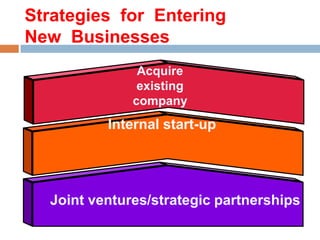
Strategies for Entering
New Businesses
Acquire
existing
company

Internal start-up

Joint ventures/strategic partnerships
Acquisition of an Existing
Company


Most popular approach to diversification



Advantages
 Quicker
 Easier

entry into target market

to hurdle certain entry barriers



Acquiring technological know-how



Establishing supplier relationships
Internal Startup


More attractive when
 Parent

firm already has most of needed
resources to build a new business

 Internal

entry has lower costs
than entry via acquisition

 New

start-up does not have to go
head-to-head against powerful rivals
Joint Ventures and Strategic
Partnerships


Good way to diversify when
Uneconomical or risky to go it alone
 Pooling competencies of two partners provides
more competitive strength
 Only way to gain entry into a desirable foreign
market




Foreign partners are needed to
Surmount tariff barriers and import quotas
 Offer local knowledge about








Market conditions
Customs and cultural factors
Customer buying habits
Access to distribution outlets
What Is Related
Diversification?




Involves diversifying into businesses
whose
value
chains possess competitively valuable
“strategic fits” with the value chain(s) of
the present business(es)

Capturing the “strategic fits” makes related
diversification a 1 + 1 = 3 phenomenon
What Is Unrelated
Diversification?


Involves diversifying into businesses with





No meaningful value chain
relationships





No strategic fit

No unifying strategic theme

Basic approach – Diversify into
any industry where potential exists
to realize good financial results
While industry attractiveness and cost-ofentry tests are important, better-off test is
secondary
Related vs. Unrelated
Diversification
Related Diversification


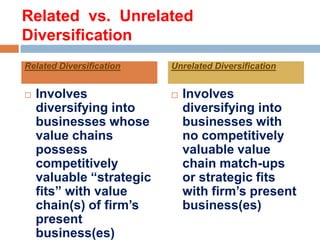
Involves
diversifying into
businesses whose
value chains
possess
competitively
valuable ―strategic
fits‖ with value
chain(s) of firm’s
present
business(es)

Unrelated Diversification


Involves
diversifying into
businesses with
no competitively
valuable value
chain match-ups
or strategic fits
with firm’s present
business(es)
Motives for Diversification


GROWTH



RISK SPREADING



PROFIT
Crucial Role of Managers


Managers must develop two important
types of mental models

•

Must also have well-developed beliefs about
how diversification should be managed in order
to achieve synergies.



The ―Learning Hypothesis‖
Diversification strategy final

Diversification strategy final

  • 2.
    Compilation Group Namrata Tambe Shalaka Patil  Harshada patil  Pratik Valendra  Shoaib shikh  Anshu Tiwari  Shoaib Sayyed 
  • 3.
    Introduction  A company isdiversified when it is in two or more lines of business that operate in diverse market environments  Strategy-making in a diversified company is a bigger picture exercise than crafting a strategy for a single line-of-business
  • 4.
    When Should aFirm Diversify?  Diminishing growth prospects in present business  Expand technologies and products complement  Leverage existing competencies and capabilities  Reduce costs  Powerful brand name
  • 5.
    Why Diversify? To buildshareholder value! Diversification is capable of building shareholder value if it passes three tests  1.Industry Attractiveness Test    2. Cost of Entry Test 3. Better-Off Test — the company’s different businesses should perform better together
  • 6.
    Strategies for Entering NewBusinesses Acquire existing company Internal start-up Joint ventures/strategic partnerships
  • 7.
    Acquisition of anExisting Company  Most popular approach to diversification  Advantages  Quicker  Easier entry into target market to hurdle certain entry barriers  Acquiring technological know-how  Establishing supplier relationships
  • 8.
    Internal Startup  More attractivewhen  Parent firm already has most of needed resources to build a new business  Internal entry has lower costs than entry via acquisition  New start-up does not have to go head-to-head against powerful rivals
  • 9.
    Joint Ventures andStrategic Partnerships  Good way to diversify when Uneconomical or risky to go it alone  Pooling competencies of two partners provides more competitive strength  Only way to gain entry into a desirable foreign market   Foreign partners are needed to Surmount tariff barriers and import quotas  Offer local knowledge about      Market conditions Customs and cultural factors Customer buying habits Access to distribution outlets
  • 10.
    What Is Related Diversification?   Involvesdiversifying into businesses whose value chains possess competitively valuable “strategic fits” with the value chain(s) of the present business(es) Capturing the “strategic fits” makes related diversification a 1 + 1 = 3 phenomenon
  • 11.
    What Is Unrelated Diversification?  Involvesdiversifying into businesses with    No meaningful value chain relationships   No strategic fit No unifying strategic theme Basic approach – Diversify into any industry where potential exists to realize good financial results While industry attractiveness and cost-ofentry tests are important, better-off test is secondary
  • 12.
    Related vs. Unrelated Diversification RelatedDiversification  Involves diversifying into businesses whose value chains possess competitively valuable ―strategic fits‖ with value chain(s) of firm’s present business(es) Unrelated Diversification  Involves diversifying into businesses with no competitively valuable value chain match-ups or strategic fits with firm’s present business(es)
  • 13.
  • 14.
    Crucial Role ofManagers  Managers must develop two important types of mental models • Must also have well-developed beliefs about how diversification should be managed in order to achieve synergies.  The ―Learning Hypothesis‖