General MotorsSIMERGrand strategy for GMPresented by-ReenadewanganShiladityasenguptaRashminidhisahuPrahladSahuShashiBhagatPratikshadewangan
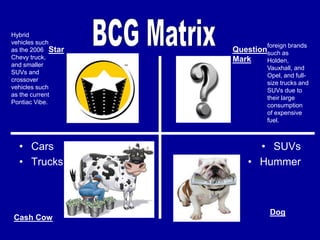
IntroductionGrand strategies , often called master or business strategies, is an extension of the existing BCG matrix which helps determine the strategies which can be adopted for a particular set of situations and provide basic direction for strategic actionsIndicate the time period over which long-range objectives are to be achievedFirms involved with multiple industries, businesses, product lines, or customer groups usually combine several grand strategiesAny one of these strategies could serve as the basis for achieving the major long-term objectives of a single firm
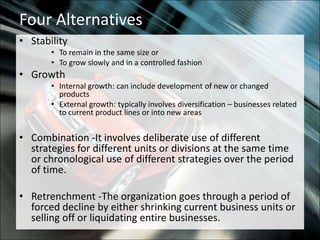
Four AlternativesStabilityTo remain in the same size orTo grow slowly and in a controlled fashionGrowthInternal growth: can include development of new or changed productsExternal growth: typically involves diversification – businesses related to current product lines or into new areasCombination -It involves deliberate use of different strategies for different units or divisions at the same time or chronological use of different strategies over the period of time.Retrenchment -The organization goes through a period of forced decline by either shrinking current business units or selling off or liquidating entire businesses.
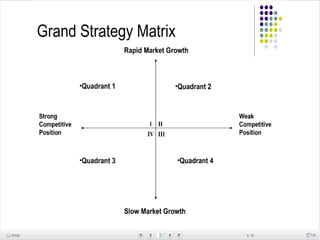
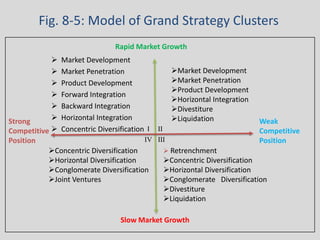
Fig. 8-5: Model of Grand Strategy ClustersRapid Market GrowthMarket Development
Market Penetration
Product Development
Forward Integration
Backward Integration
Horizontal Integration
Concentric Diversification
Market Development
Market Penetration
Product Development
Horizontal Integration
Divestiture
LiquidationStrong Competitive PositionWeak Competitive PositionIIIIIIIVRetrenchment
Concentric Diversification
Horizontal Diversification
Conglomerate   Diversification
Divestiture

1. final ppt

Editor's Notes

  • #15 Park car  customers complain about inconvenient operating hoursEnter service  hidden behind the show roomWaiting  no washrooms, magazines, chairs, and cramped