Displacement and Velocity
(velocity v.s. time and acceleration v.s. time curves)
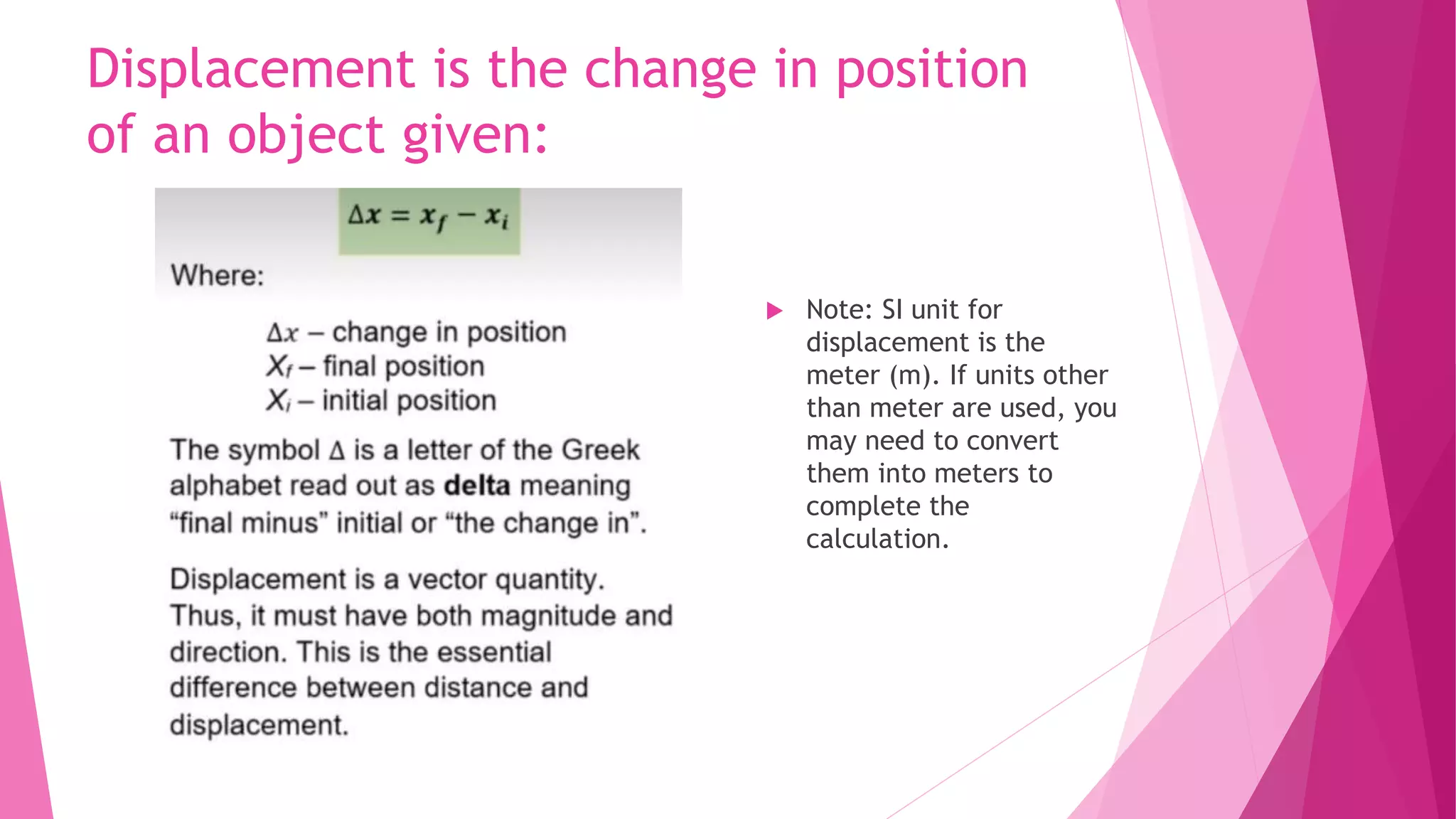
Displacement is the change in position
of an object given:
 Note: SI unit for
displacement is the
meter (m). If units other
than meter are used, you
may need to convert
them into meters to
complete the
calculation.
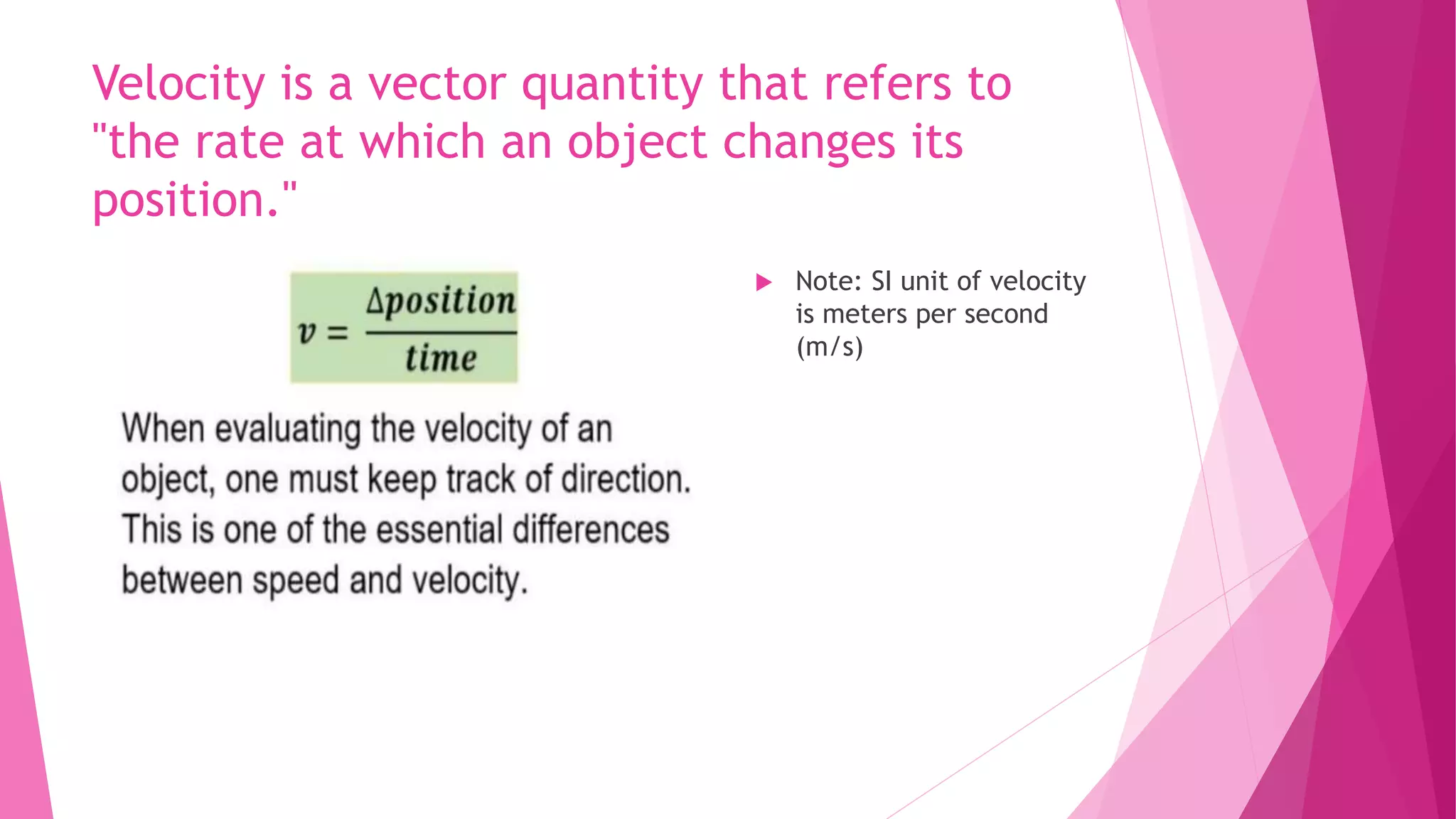
Velocity is a vector quantity that refers to
"the rate at which an object changes its
position."
 Note: SI unit of velocity
is meters per second
(m/s)
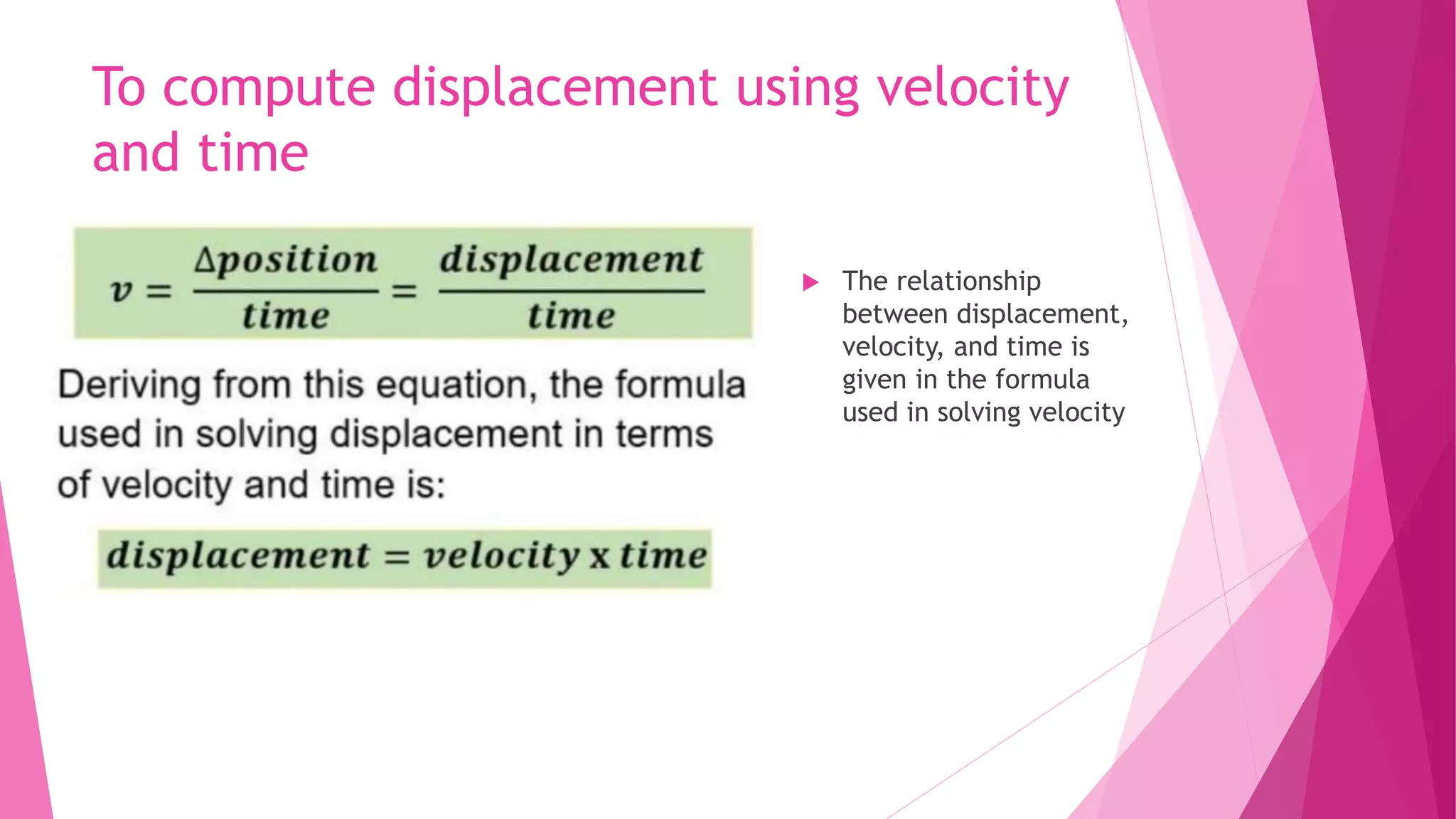
To compute displacement using velocity
and time
 The relationship
between displacement,
velocity, and time is
given in the formula
used in solving velocity
Velocity v.s. time graphs
 Velocity versus time graph is the record of an object's velocity. In these graphs,
higher means faster not farther.
 When the curve on a velocity vs time graph is straight but not horizontal, the
velocity is changing.
 The graph with the steepest slope experiences the fastest change in velocity.
 On a velocity vs time graph:
 slope equals acceleration.
 the "y" intercept equals the initial velocity.
 when two curves coincide, the two objects have the same velocity at that time.
Displacement on velocity v.s. time
graphs
 For velocity versus time graphs, the area bound by the line and the axes
represents the displacement.
The acceleration versus time graph of any
object traveling with a constant velocity is
the same.
 When acceleration is constant, the acceleration-time curve is a horizontal line.
 On an acceleration vs time graph:
 slope is meaningless.
 the "y" intercept equals the initial acceleration.
 when two curves coincide, the two objects have the same acceleration at
that time.
 an object undergoing constant acceleration traces a horizontal line.
 zero slope implies motion with constant acceleration.
Velocity on acceleration versus time graphs
 The area under an acceleration versus time graph represents the change in
velocity.
Position v.s. Time Graph
 Position-time graphs are the most basic form of graphs in kinematics, which allow
us to describe the motion of an object with respect to position and time.
 The y-axis of these graphs represent the distance travelled by the object, and the
x-axis represents the time.
Characteristics of Position v.s. Time
Graph
 The specific features of the motion of objects are demonstrated by the
shape and the slope of the lines on a position versus time graph.
 The vertical axis represents the position of the object.
 The slope of a position graph represents the velocity of the object. So the
value of the slope at a particular time represents the velocity of the
object at that instant.
 The curvature in a graph means the object is accelerating, changing
velocity/slope.
 If the curvature of the position graph looks like an upside down bowl, the
acceleration will be negative.
 If the curvature looks like a right side up bowl, the acceleration will be
positive
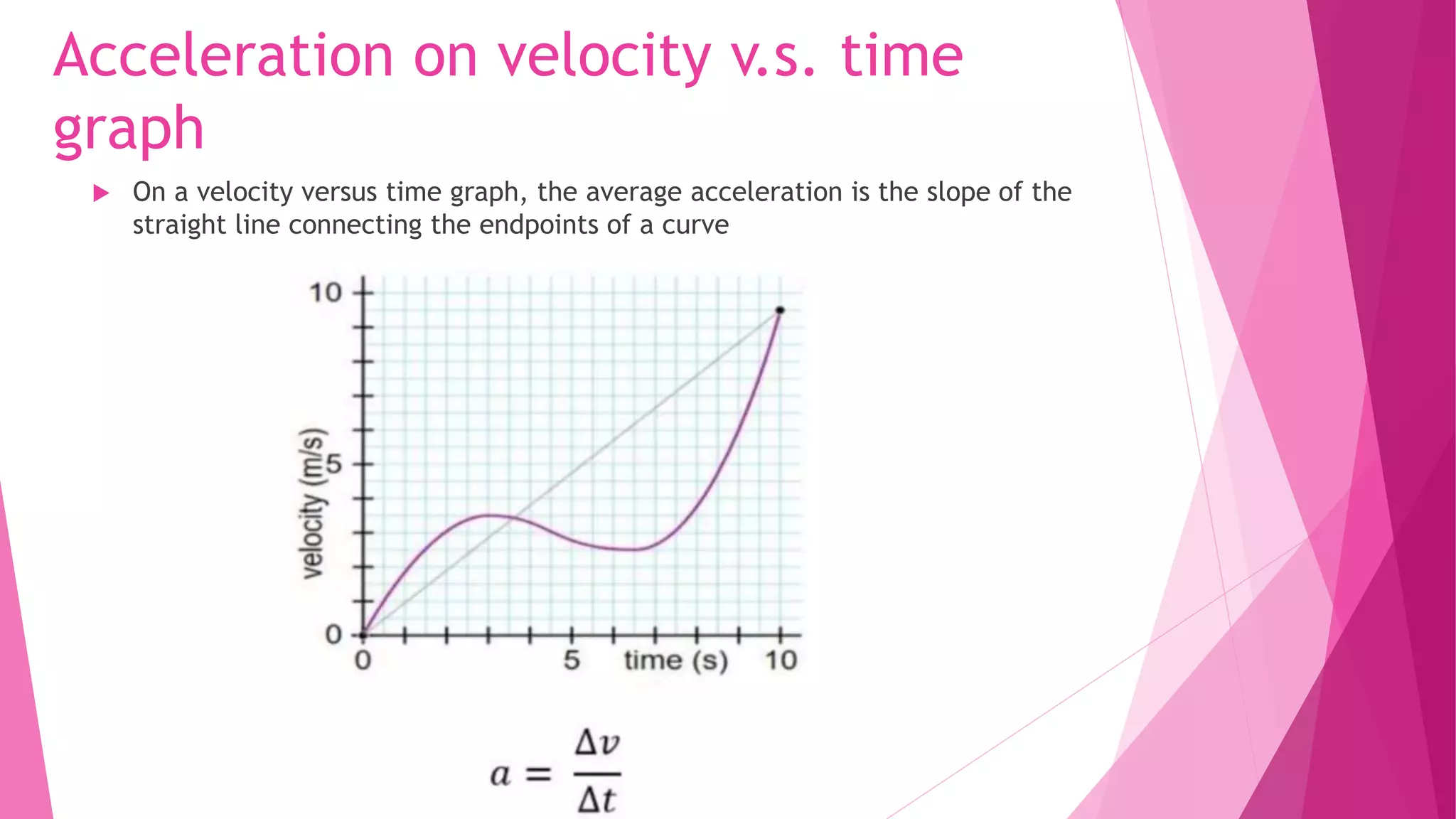
Acceleration on velocity v.s. time
graph
 On a velocity versus time graph, the average acceleration is the slope of the
straight line connecting the endpoints of a curve

Displacement and Velocity (velocity v.s. time and acceleration v.s. time curves)

  • 1.
    Displacement and Velocity (velocityv.s. time and acceleration v.s. time curves)
  • 2.
    Displacement is thechange in position of an object given:  Note: SI unit for displacement is the meter (m). If units other than meter are used, you may need to convert them into meters to complete the calculation.
  • 3.
    Velocity is avector quantity that refers to "the rate at which an object changes its position."  Note: SI unit of velocity is meters per second (m/s)
  • 4.
    To compute displacementusing velocity and time  The relationship between displacement, velocity, and time is given in the formula used in solving velocity
  • 5.
    Velocity v.s. timegraphs  Velocity versus time graph is the record of an object's velocity. In these graphs, higher means faster not farther.  When the curve on a velocity vs time graph is straight but not horizontal, the velocity is changing.  The graph with the steepest slope experiences the fastest change in velocity.  On a velocity vs time graph:  slope equals acceleration.  the "y" intercept equals the initial velocity.  when two curves coincide, the two objects have the same velocity at that time. Displacement on velocity v.s. time graphs  For velocity versus time graphs, the area bound by the line and the axes represents the displacement.
  • 6.
    The acceleration versustime graph of any object traveling with a constant velocity is the same.  When acceleration is constant, the acceleration-time curve is a horizontal line.  On an acceleration vs time graph:  slope is meaningless.  the "y" intercept equals the initial acceleration.  when two curves coincide, the two objects have the same acceleration at that time.  an object undergoing constant acceleration traces a horizontal line.  zero slope implies motion with constant acceleration. Velocity on acceleration versus time graphs  The area under an acceleration versus time graph represents the change in velocity.
  • 7.
    Position v.s. TimeGraph  Position-time graphs are the most basic form of graphs in kinematics, which allow us to describe the motion of an object with respect to position and time.  The y-axis of these graphs represent the distance travelled by the object, and the x-axis represents the time.
  • 8.
    Characteristics of Positionv.s. Time Graph  The specific features of the motion of objects are demonstrated by the shape and the slope of the lines on a position versus time graph.  The vertical axis represents the position of the object.  The slope of a position graph represents the velocity of the object. So the value of the slope at a particular time represents the velocity of the object at that instant.  The curvature in a graph means the object is accelerating, changing velocity/slope.  If the curvature of the position graph looks like an upside down bowl, the acceleration will be negative.  If the curvature looks like a right side up bowl, the acceleration will be positive
  • 9.
    Acceleration on velocityv.s. time graph  On a velocity versus time graph, the average acceleration is the slope of the straight line connecting the endpoints of a curve