
Dr Debashees nanda
M.S (E.N.T)
M.K.C.G Medical college
Berhampur
What is sleep?
A state of (1) sustained immobility in a (2)
characteristic posture accompanied by (3) reduced
responsivity to external stimuli;
The Biological Rhythms of Sleep
About every 90 or 100 minutes we
pass through 5 stages of sleep.
Throughout the five stages, our brain
waves continually fluctuate, thus
defining each distinctive stage.
The Circadian Rhythm
Our biological clock that is genetically
programmed to regulate physiological responses
within a 24 – 25 hour period.
Refers to circa=approximately and
dias=day.
Please don’t fall asleep
during the power point!!
Light Sleep -Stage 1
Body movement decreases
Spontaneous Waking may occur (when you feel like
you are falling out of bed)
Intermediate Sleep - Stage 2
Officially asleep
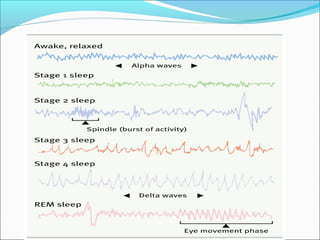
Your brain waves slow down with some bursts of
brain activity called ‘Sleep Spindles’
half of your sleep in this stage.
Helps refresh body
Sleep Talking can occur during this and all future sleep stages.Sleep Talking can occur during this and all future sleep stages.
Deep Sleep – Stage 3 -4
Deep sleep sets in – hard to wake up
brain waves become large and slow
Your breathing becomes rhythmic, and your muscles
remain relaxed.
Most Restorative stage (reparative hormones
released)
30-40 min first and shorter later
Deep Sleep – Stage 3 -4
Towards the end of stage 4, children may wet beds,
adults may sleep walk, etc…
Interestingly, even though you are in deep
sleep, your brain will still process the
meaning of certain stimuli!!
REM Sleep - Rapid Eye Movement
Nearly an hour after you fall asleep, you begin to
descend back through the stages of sleep.
During sleep you go stages 1,2,3,4,3,2 then…
You then enter what is known as REM Sleep!
REM –This stage only lasts about 10 minutes. (20 – 30
minutes later in night)
REM Sleep - Rapid Eye Movement
heart rate rises
breathing becomes rapid
every 30 seconds or so, your eyes rapidly move
around.
motor cortex is still active, but your brainstem blocks any
messages.
This leaves your muscles so relaxed that you are
essentially paralyzed.
Thus, you are not easily awakened.
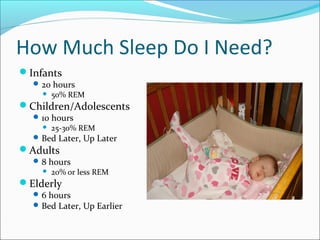
How Much Sleep Do I Need?
Infants
20 hours
 50% REM
Children/Adolescents
10 hours
 25-30% REM
Bed Later, Up Later
Adults
8 hours
 20% or less REM
Elderly
6 hours
Bed Later, Up Earlier
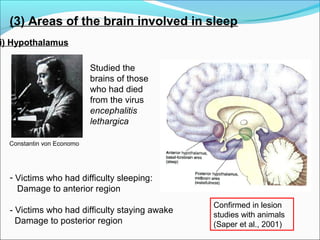
(3) Areas of the brain involved in sleep
i) Hypothalamus
Studied the
brains of those
who had died
from the virus
encephalitis
lethargica
- Victims who had difficulty sleeping:
Damage to anterior region
- Victims who had difficulty staying awake
Damage to posterior region
Constantin von Economo
Confirmed in lesion
studies with animals
(Saper et al., 2001)
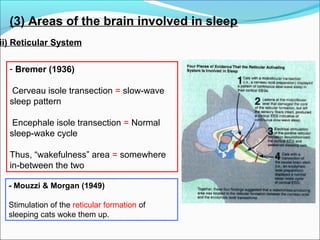
ii) Reticular System
(3) Areas of the brain involved in sleep
- Bremer (1936)
Cerveau isole transection = slow-wave
sleep pattern
Encephale isole transection = Normal
sleep-wake cycle
Thus, “wakefulness” area = somewhere
in-between the two
- Mouzzi & Morgan (1949)
Stimulation of the reticular formation of
sleeping cats woke them up.
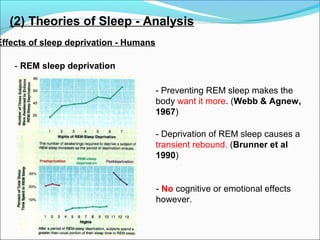
(2) Theories of Sleep - Analysis
Effects of sleep deprivation - Humans
- REM sleep deprivation
- Preventing REM sleep makes the
body want it more. (Webb & Agnew,
1967)
- Deprivation of REM sleep causes a
transient rebound. (Brunner et al
1990)
- No cognitive or emotional effects
however.
(2) Theories of Sleep - Analysis
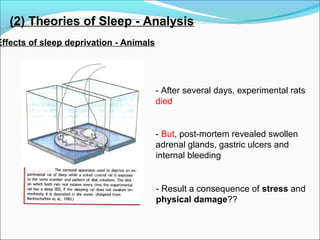
Effects of sleep deprivation - Animals
- After several days, experimental rats
died
- But, post-mortem revealed swollen
adrenal glands, gastric ulcers and
internal bleeding
- Result a consequence of stress and
physical damage??
Measurement of Sleep
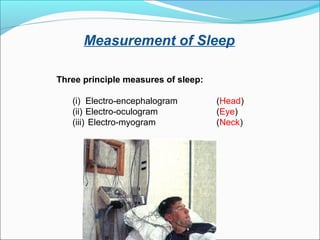
Three principle measures of sleep:
(i) Electro-encephalogram (Head)
(ii) Electro-oculogram (Eye)
(iii) Electro-myogram (Neck)
20 percent of adult population have some form of sleep
disorder.
TYPES
Respiratory-
•Obstructive sleep apnea/hypopnea
•Central sleep apnea/hypopnea
•Cheyne stokes breathing
•Sleep hypoventilation
Non Respiratory-
• Narcolepsy
• Periodic limb movement disorder
• Idiopathic hypersomnia
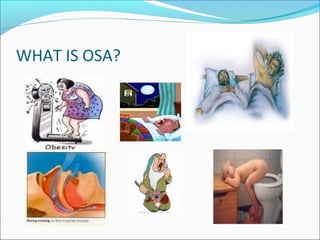
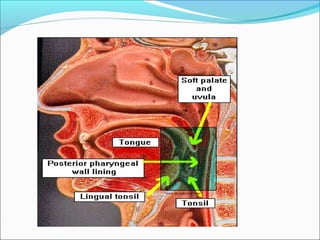
WHAT IS OSA?
OSA IS :
Common
Dangerous
Easily recognized
Treatable
www.sleepdoctor.com
WHAT IS OSA?
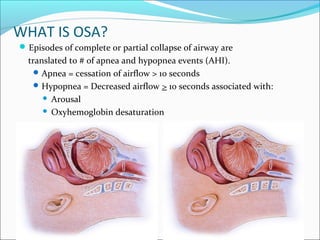
Episodes of complete or partial collapse of airway are
translated to # of apnea and hypopnea events (AHI).
Apnea = cessation of airflow > 10 seconds
Hypopnea = Decreased airflow > 10 seconds associated with:
 Arousal
 Oxyhemoglobin desaturation
WHY DOES THIS MATTER?
Excessive daytime somnolence
Impaired cognitive performance
Poor quality of life
Increased risk of MVA
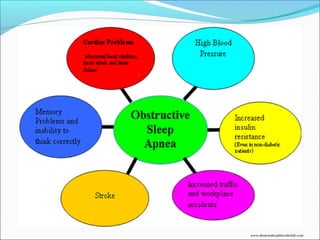
Adverse cardiovascular outcomes
Pulmonary hypertension
(?DM/metabolic syndrome)
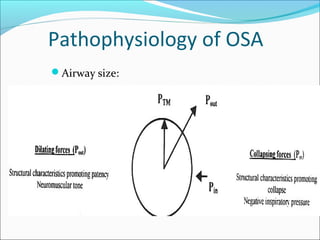
Pathophysiology of OSA
Airway size:
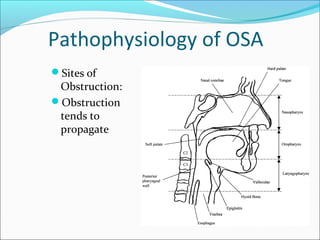
Pathophysiology of OSA
Sites of
Obstruction:
Obstruction
tends to
propagate
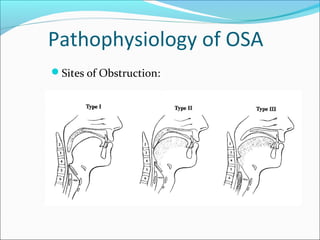
Pathophysiology of OSA
Sites of Obstruction:
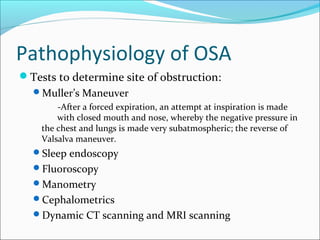
Pathophysiology of OSA
Tests to determine site of obstruction:
Muller’s Maneuver
-After a forced expiration, an attempt at inspiration is made
with closed mouth and nose, whereby the negative pressure in
the chest and lungs is made very subatmospheric; the reverse of
Valsalva maneuver.
Sleep endoscopy
Fluoroscopy
Manometry
Cephalometrics
Dynamic CT scanning and MRI scanning
EPIDEMIOLOGY
Disease prevalence = 2 – 4 % of US adult population
Higher in population subsets
1980’s = morbidity associated with OSA became more
widely appreciated
Majority of cases still undiagnosed
 Concern = increase knowledge
= recognize risk factors
= identify affected individuals
RISK FACTORS
Obesity
Age
Sex
Race
Craniofacial anatomy
Smoking and alcohol consumption
Obesity
Strongest risk factor
Alters upper airway mechanics during sleep
1. Increased parapharyngeal fat deposition:
neck circumference: > 17” males
> 16” females
With subsequent:
 smaller upper airway
 increase the collapsibility of the pharyngeal airway
obesity
2. Changes in neural compensatory mechanisms that
maintain airway patency:
 diminished protective reflexes which
otherwise
would increase upper airway dilator muscle
activity to maintain airway patency
obesity
3. waist circumference
Fat deposition around the abdomen produces
 reduced lung volumes (functional residual
capacity) which can lead to loss of caudal
traction on the upper airway
 low lung volumes are associated with
diminished oxygen stores
AGE
Anatomic susceptibility
Preferential deposition of fat in the
parapharyngeal area
Changes in the body structures around the pharynx
Deterioration of protective reflex mechanisms
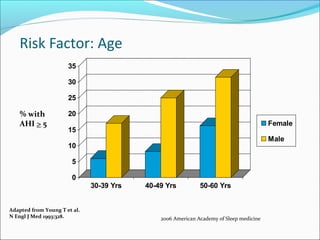
Risk Factor: Age
0
5
10
15
20
25
30
35
30-39 Yrs 40-49 Yrs 50-60 Yrs
Female
Male
% with
AHI > 5
Adapted from Young T et al.
N Engl J Med 1993;328. 2006 American Academy of Sleep medicine
GENDER
 MALE GENDER
Increased neck and waist circumference
? Women not reporting the classic symptoms
? Healthcare providers have lower index of suspicion
for considering OSA in women than men.
CRANIOFACIAL ANATOMY
Mandibular body length
Retrognathia
Tonsilar hypertrophy
Enlarged tongue or soft palate
Inferiorly positioned hyoid bone
Maxillary and mandibular retro position
Decreased posterior airway space
SMOKING
0
1
2
3
4
5
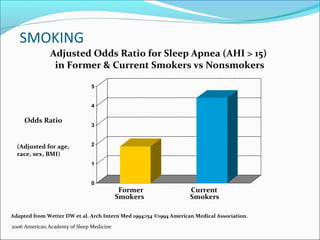
Adjusted Odds Ratio for Sleep Apnea (AHI > 15)
in Former & Current Smokers vs Nonsmokers
Adapted from Wetter DW et al. Arch Intern Med 1994:154 ©1994 American Medical Association.
Former Current
Smokers Smokers
(Adjusted for age,
race, sex, BMI)
Odds Ratio
2006 American Academy of Sleep Medicine
Other risk factors
Alcohol consumption
Sedatives (benzodiazepines)
 reduce nerve output to compensatory dilator
muscles
 increase OSA severity in patients with
preexisting syndrome.
DIAGNOSIS
Combined assessment of clinical features and
objective sleep study data.
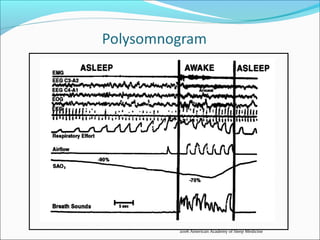
The gold standard: overnight polysomnogram
The Polysomnogram (PSG):
Provides detailed information on sleep state and
respiratory and gas exchange abnormalities.
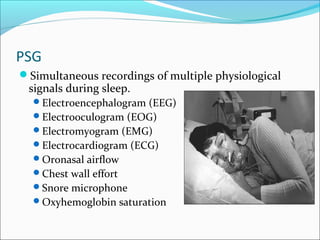
PSG
Simultaneous recordings of multiple physiological
signals during sleep.
Electroencephalogram (EEG)
Electrooculogram (EOG)
Electromyogram (EMG)
Electrocardiogram (ECG)
Oronasal airflow
Chest wall effort
Snore microphone
Oxyhemoglobin saturation
PSG
Recurrent episodes of complete or partial collapse of
the upper airway are recorded as apnea or hypopnea
events.
 Apnea = complete cessation of airflow
for at least 10 seconds
 Hypopnea = 25 – 50% reduction in oronasal
airflow associated with desaturation or an arousal from sleep.
Study should be atleast for 6 hours.
Healthy individuals
May experience apneas and hypopneas at sleep
onset or during REM sleep. But these last less
than ten seconds and do not recur.
PSG
Sleep apnea severity index:
AHI = apnea-hypopnea index
= # of apneas and hypopneas / hour of sleep
Mild: 5 – 15 events/hour of sleep
Moderate: 15 – 30 event/hour of sleep
Severe: > 30 events/hour of sleep
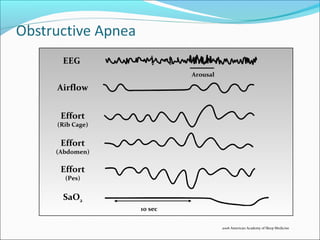
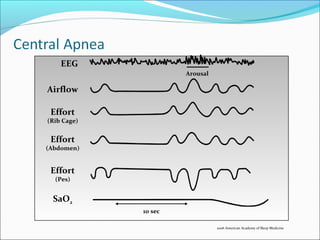
EEG
10 sec
Arousal
Airflow
Effort
(Pes)
SaO2
Effort
(Abdomen)
Effort
(Rib Cage)
2006 American Academy of Sleep Medicine
10 sec
Arousal
EEG
Airflow
Effort
(Pes)
SaO2
Effort
(Abdomen)
Effort
(Rib Cage)
2006 American Academy of Sleep Medicine
DIAGNOSIS: CLINICAL FEATURES
Nocturnal symptoms
1. Snoring
– reflects the critical narrowing
- population survey: habitual snorers
25% of men, 15% of women
- prevalence increases with age (60%, 40%)
- the most frequent symptom of OSA
- absence makes OSA unlikely
(only 6% of patients with OSA did not report)
Clinical features
(nocturnal symptoms continued)
2. Witnessed apneas
3. Nocturnal choking or gasping
- report of waking at night with a choking
sensation; passes within a few seconds
4. Insomnia
- sleep maintenance insomnia
- (few have difficulty initiating sleep)
Clinical features
Daytime symptoms
1. Excessive daytime sleepiness
- severity can be assessed
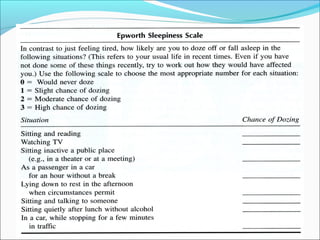
 subjectively = questionnaires
(Epworth Sleepiness Scale)
 objectively
MSLT = Multiple Sleep Latency Test
MWT = Maintenance of wakefulness Test
Osler Test
Clinical features
(daytime symptoms)
2. fatigue
3. memory impairment
4. personality changes
5. morning headaches or nausea
6. depression
DIAGNOSIS
American Academy of Sleep Medicine criterias:
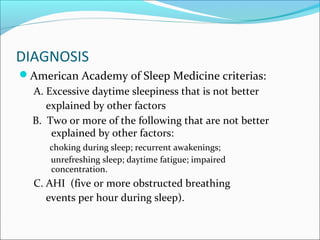
A. Excessive daytime sleepiness that is not better
explained by other factors
B. Two or more of the following that are not better
explained by other factors:
choking during sleep; recurrent awakenings;
unrefreshing sleep; daytime fatigue; impaired
concentration.
C. AHI (five or more obstructed breathing
events per hour during sleep).
www.dentonsleepdisorderlab.com
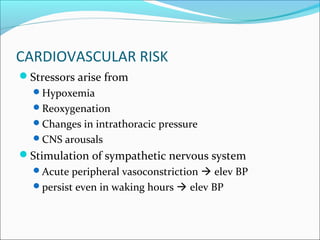
CARDIOVASCULAR RISK
Stressors arise from
Hypoxemia
Reoxygenation
Changes in intrathoracic pressure
CNS arousals
Stimulation of sympathetic nervous system
Acute peripheral vasoconstriction  elev BP
persist even in waking hours  elev BP
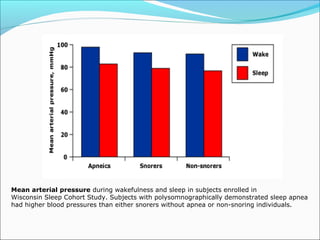
Mean arterial pressure during wakefulness and sleep in subjects enrolled in
Wisconsin Sleep Cohort Study. Subjects with polysomnographically demonstrated sleep apnea
had higher blood pressures than either snorers without apnea or non-snoring individuals.
Cardiovascular Risk
HTN
 Most studies suggest that OSA contributes
to systemic HTN
 Treatment of OSA may improve systemic HTN.
Cardiac arrhythmias
- bradycardia (increase vagal tone with hypoxemia)
- asystole
- atrial fibrillation
- ectopic ventricular beats
(bigeminy, trigeminy)
PULMONARY HYPERTENSION
Hypoxia results in pulmonary vasoconstriction
Autoregulatory mechanism in order to eliminate
V/Q mismatch
 in time may cause vasculature remodeling
 result in PH (PAP > 25mmg Hg)
OSA and medical co morbidity
Conflicting data, but possible association of OSA
with:
 CVA
 Heart Failure
 DM
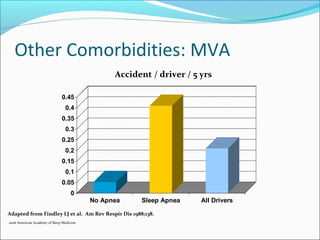
Other Comorbidities: MVA
0
0.05
0.1
0.15
0.2
0.25
0.3
0.35
0.4
0.45
No Apnea Sleep Apnea All Drivers
Accident / driver / 5 yrs
Adapted from Findley LJ et al. Am Rev Respir Dis 1988;138.
2006 American Academy of Sleep Medicine
• Objective = consequences discussed
• Modality
TREATMENTTREATMENT
BEHAVIORAL METHODS
Weight loss
Avoid alcohol and sedatives
Avoid sleep deprivation
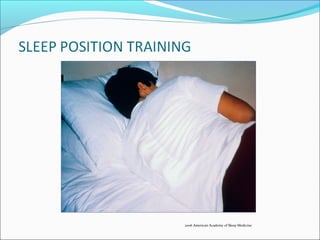
Avoid supine sleep position
Stop smoking
WEIGHT LOSS
Remains a highly effective method
10 – 15 % reduction in weight can lead to an
approximately 50 % reduction in sleep apnea severity
in moderately obese male patients.
2006 American Academy of Sleep Medicine
MEDICAL Rx
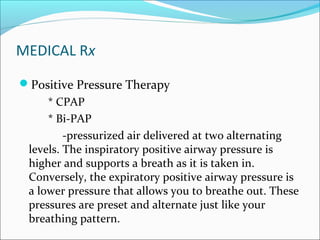
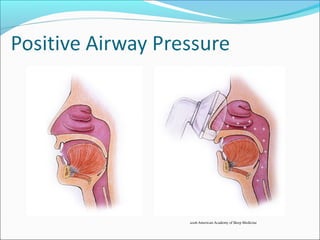
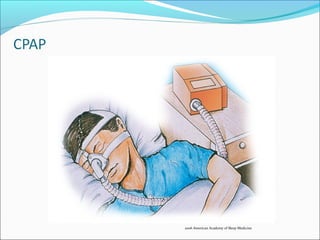
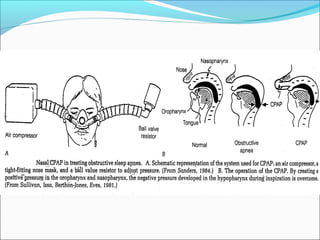
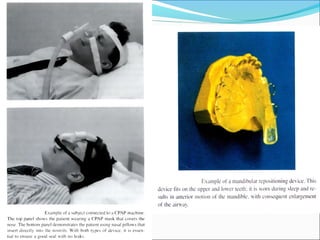
Positive Pressure Therapy
* CPAP
* Bi-PAP
-pressurized air delivered at two alternating
levels. The inspiratory positive airway pressure is
higher and supports a breath as it is taken in.
Conversely, the expiratory positive airway pressure is
a lower pressure that allows you to breathe out. These
pressures are preset and alternate just like your
breathing pattern.
2006 American Academy of Sleep Medicine
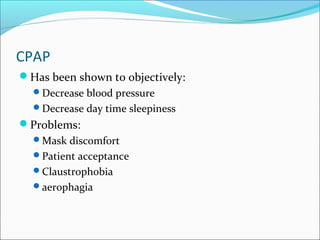
CPAP
Has been shown to objectively:
Decrease blood pressure
Decrease day time sleepiness
Problems:
Mask discomfort
Patient acceptance
Claustrophobia
aerophagia
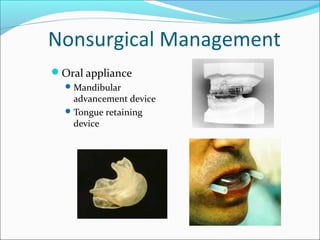
Nonsurgical Management
Oral appliance
Mandibular
advancement device
Tongue retaining
device
SURGICAL METHODS
Reconstruct upper airway
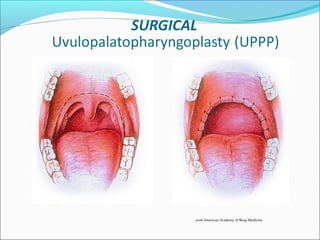
Uvulopalatopharyngoplasty (UPPP)
Laser-assisted uvulopalatopharyngoplasty (LAUP)
Radiofrequency tissue volume reduction
Genioglossal advancement
Nasal reconstruction
Tonsillectomy
Bypass upper airway
Tracheostomy
Surgical Management
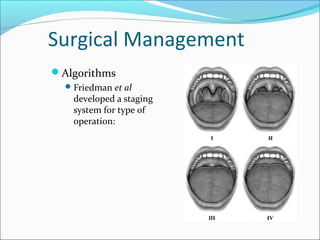
Algorithms
Friedman et al
developed a staging
system for type of
operation:
Surgical Management
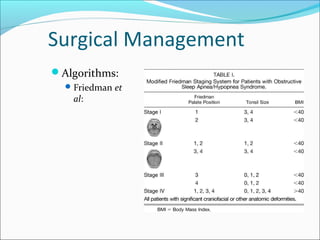
Algorithms:
Friedman et
al:
Surgical Management
 Tracheostomy
 Primary treatment modality
 Once placed, uncommon to decannulate
Thatcher GW. Maisel RH. The long-term evaluation of tracheostomy in the
management of severe obstructive sleep apnea. [Journal Article] Laryngoscope.
113(2):201-4, 2003 Feb.
Surgical Management
Nasal Surgery
Limited efficacy when used alone
Verse et al 2002 showed 15.8% success rate when used
alone in patients with OSA and day-time nasal
congestion with snoring (RDI<20 and 50% reduction)
Adenoidectomy
Surgical Management
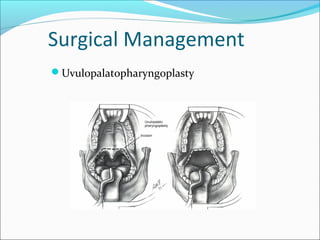
Uvulopalatopharyngoplasty
2006 American Academy of Sleep Medicine
Surgical Management
Uvulopalatopharyngoplasty
The most commonly performed surgery for OSA
Severity of disease is poor outcome predictor
Levin and Becker (1994) up to 80% initial
success decreased to 46% success rate at 12
months
Friedman et al showed a success rate of 80% at 6
months in carefully selected patients
Friedman M, Ibrahim H, Bass L. Clinical staging for
sleep-disordered breathing. Otolaryngol Head Neck
Surg 2002; 127: 13–21.
Surgical Management
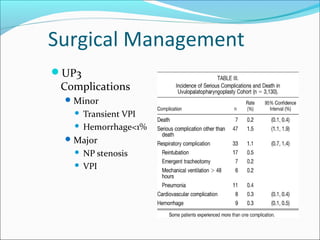
UP3
Complications
Minor
 Transient VPI
 Hemorrhage<1%
Major
 NP stenosis
 VPI
Surgical Management
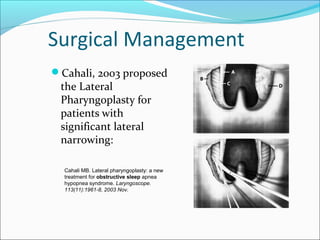
Cahali, 2003 proposed
the Lateral
Pharyngoplasty for
patients with
significant lateral
narrowing:
Cahali MB. Lateral pharyngoplasty: a new
treatment for obstructive sleep apnea
hypopnea syndrome. Laryngoscope.
113(11):1961-8, 2003 Nov.
Surgical Management
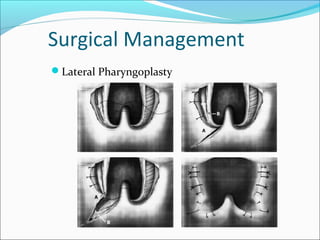
Lateral Pharyngoplasty
Surgical Management
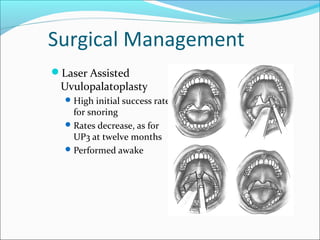
Laser Assisted
Uvulopalatoplasty
High initial success rate
for snoring
Rates decrease, as for
UP3 at twelve months
Performed awake
Surgical Management
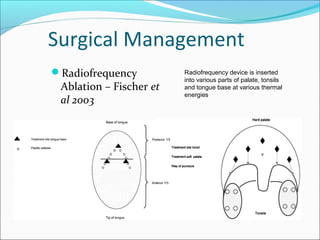
Radiofrequency
Ablation – Fischer et
al 2003
Radiofrequency device is inserted
into various parts of palate, tonsils
and tongue base at various thermal
energies
Surgical Management
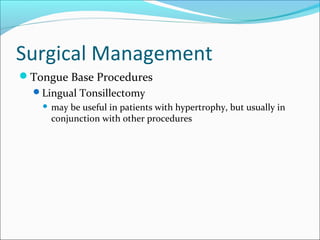
Tongue Base Procedures
Lingual Tonsillectomy
 may be useful in patients with hypertrophy, but usually in
conjunction with other procedures
Surgical Management
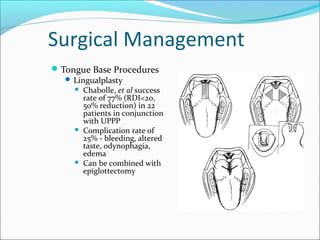
Tongue Base Procedures
 Lingualplasty
 Chabolle, et al success
rate of 77% (RDI<20,
50% reduction) in 22
patients in conjunction
with UPPP
 Complication rate of
25% - bleeding, altered
taste, odynophagia,
edema
 Can be combined with
epiglottectomy
Surgical Management
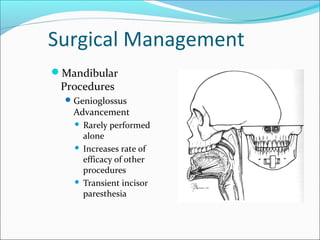
Mandibular
Procedures
Genioglossus
Advancement
 Rarely performed
alone
 Increases rate of
efficacy of other
procedures
 Transient incisor
paresthesia
Surgical Management
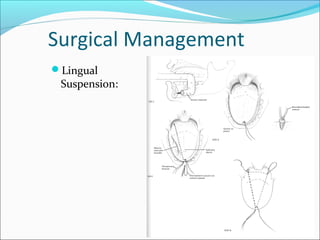
Lingual
Suspension:
Surgical Management
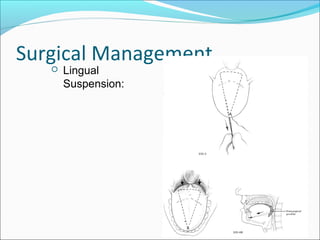
 Lingual
Suspension:
Surgical Management
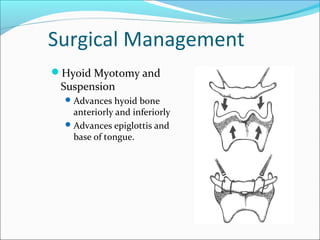
Hyoid Myotomy and
Suspension
Advances hyoid bone
anteriorly and inferiorly
Advances epiglottis and
base of tongue.
Surgical Management
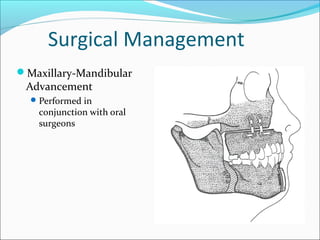
Maxillary-Mandibular Advancement
Severe disease
Failure with more conservative measures
Midface, palate, and mandible advanced
anteriorly
Limited by ability to stabilize the segments and
aesthetic facial changes
Surgical Management
Maxillary-Mandibular
Advancement
Performed in
conjunction with oral
surgeons
PRIMARY CARE MANAGEMENT
Recognize the prevalence
Identify affected patients based on risk factors and
symptoms
Counsel on behavioral changes
Refer to specialist
Monitor symptoms and compliance during Rx
2006 American Academy of Sleep Medicine
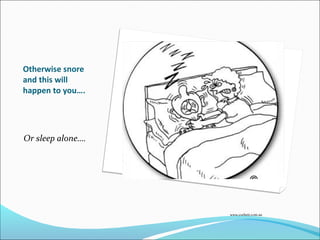
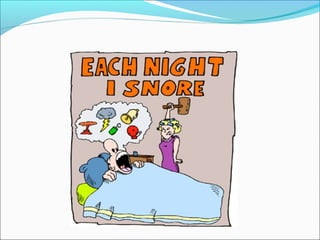
Otherwise snore
and this will
happen to you….
Or sleep alone….
www.corbett.com.au
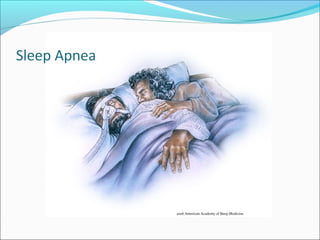
OBSTRUCTIVE SLEEP APNEA

OBSTRUCTIVE SLEEP APNEA

  • 1.
    Dr Debashees nanda M.S(E.N.T) M.K.C.G Medical college Berhampur
  • 2.
    What is sleep? Astate of (1) sustained immobility in a (2) characteristic posture accompanied by (3) reduced responsivity to external stimuli;
  • 3.
    The Biological Rhythmsof Sleep About every 90 or 100 minutes we pass through 5 stages of sleep. Throughout the five stages, our brain waves continually fluctuate, thus defining each distinctive stage.
  • 4.
    The Circadian Rhythm Ourbiological clock that is genetically programmed to regulate physiological responses within a 24 – 25 hour period. Refers to circa=approximately and dias=day.
  • 5.
    Please don’t fallasleep during the power point!!
  • 6.
    Light Sleep -Stage1 Body movement decreases Spontaneous Waking may occur (when you feel like you are falling out of bed)
  • 7.
    Intermediate Sleep -Stage 2 Officially asleep Your brain waves slow down with some bursts of brain activity called ‘Sleep Spindles’ half of your sleep in this stage. Helps refresh body Sleep Talking can occur during this and all future sleep stages.Sleep Talking can occur during this and all future sleep stages.
  • 8.
    Deep Sleep –Stage 3 -4 Deep sleep sets in – hard to wake up brain waves become large and slow Your breathing becomes rhythmic, and your muscles remain relaxed. Most Restorative stage (reparative hormones released) 30-40 min first and shorter later
  • 9.
    Deep Sleep –Stage 3 -4 Towards the end of stage 4, children may wet beds, adults may sleep walk, etc… Interestingly, even though you are in deep sleep, your brain will still process the meaning of certain stimuli!!
  • 10.
    REM Sleep -Rapid Eye Movement Nearly an hour after you fall asleep, you begin to descend back through the stages of sleep. During sleep you go stages 1,2,3,4,3,2 then… You then enter what is known as REM Sleep! REM –This stage only lasts about 10 minutes. (20 – 30 minutes later in night)
  • 11.
    REM Sleep -Rapid Eye Movement heart rate rises breathing becomes rapid every 30 seconds or so, your eyes rapidly move around. motor cortex is still active, but your brainstem blocks any messages. This leaves your muscles so relaxed that you are essentially paralyzed. Thus, you are not easily awakened.
  • 13.
    How Much SleepDo I Need? Infants 20 hours  50% REM Children/Adolescents 10 hours  25-30% REM Bed Later, Up Later Adults 8 hours  20% or less REM Elderly 6 hours Bed Later, Up Earlier
  • 14.
    (3) Areas ofthe brain involved in sleep i) Hypothalamus Studied the brains of those who had died from the virus encephalitis lethargica - Victims who had difficulty sleeping: Damage to anterior region - Victims who had difficulty staying awake Damage to posterior region Constantin von Economo Confirmed in lesion studies with animals (Saper et al., 2001)
  • 15.
    ii) Reticular System (3)Areas of the brain involved in sleep - Bremer (1936) Cerveau isole transection = slow-wave sleep pattern Encephale isole transection = Normal sleep-wake cycle Thus, “wakefulness” area = somewhere in-between the two - Mouzzi & Morgan (1949) Stimulation of the reticular formation of sleeping cats woke them up.
  • 16.
    (2) Theories ofSleep - Analysis Effects of sleep deprivation - Humans - REM sleep deprivation - Preventing REM sleep makes the body want it more. (Webb & Agnew, 1967) - Deprivation of REM sleep causes a transient rebound. (Brunner et al 1990) - No cognitive or emotional effects however.
  • 17.
    (2) Theories ofSleep - Analysis Effects of sleep deprivation - Animals - After several days, experimental rats died - But, post-mortem revealed swollen adrenal glands, gastric ulcers and internal bleeding - Result a consequence of stress and physical damage??
  • 18.
    Measurement of Sleep Threeprinciple measures of sleep: (i) Electro-encephalogram (Head) (ii) Electro-oculogram (Eye) (iii) Electro-myogram (Neck)
  • 19.
    20 percent ofadult population have some form of sleep disorder. TYPES Respiratory- •Obstructive sleep apnea/hypopnea •Central sleep apnea/hypopnea •Cheyne stokes breathing •Sleep hypoventilation Non Respiratory- • Narcolepsy • Periodic limb movement disorder • Idiopathic hypersomnia
  • 20.
  • 21.
  • 22.
  • 23.
    WHAT IS OSA? Episodesof complete or partial collapse of airway are translated to # of apnea and hypopnea events (AHI). Apnea = cessation of airflow > 10 seconds Hypopnea = Decreased airflow > 10 seconds associated with:  Arousal  Oxyhemoglobin desaturation
  • 24.
    WHY DOES THISMATTER? Excessive daytime somnolence Impaired cognitive performance Poor quality of life Increased risk of MVA Adverse cardiovascular outcomes Pulmonary hypertension (?DM/metabolic syndrome)
  • 25.
  • 26.
    Pathophysiology of OSA Sitesof Obstruction: Obstruction tends to propagate
  • 27.
  • 29.
    Pathophysiology of OSA Teststo determine site of obstruction: Muller’s Maneuver -After a forced expiration, an attempt at inspiration is made with closed mouth and nose, whereby the negative pressure in the chest and lungs is made very subatmospheric; the reverse of Valsalva maneuver. Sleep endoscopy Fluoroscopy Manometry Cephalometrics Dynamic CT scanning and MRI scanning
  • 30.
    EPIDEMIOLOGY Disease prevalence =2 – 4 % of US adult population Higher in population subsets 1980’s = morbidity associated with OSA became more widely appreciated Majority of cases still undiagnosed  Concern = increase knowledge = recognize risk factors = identify affected individuals
  • 31.
  • 32.
    Obesity Strongest risk factor Altersupper airway mechanics during sleep 1. Increased parapharyngeal fat deposition: neck circumference: > 17” males > 16” females With subsequent:  smaller upper airway  increase the collapsibility of the pharyngeal airway
  • 33.
    obesity 2. Changes inneural compensatory mechanisms that maintain airway patency:  diminished protective reflexes which otherwise would increase upper airway dilator muscle activity to maintain airway patency
  • 34.
    obesity 3. waist circumference Fatdeposition around the abdomen produces  reduced lung volumes (functional residual capacity) which can lead to loss of caudal traction on the upper airway  low lung volumes are associated with diminished oxygen stores
  • 35.
    AGE Anatomic susceptibility Preferential depositionof fat in the parapharyngeal area Changes in the body structures around the pharynx Deterioration of protective reflex mechanisms
  • 36.
    Risk Factor: Age 0 5 10 15 20 25 30 35 30-39Yrs 40-49 Yrs 50-60 Yrs Female Male % with AHI > 5 Adapted from Young T et al. N Engl J Med 1993;328. 2006 American Academy of Sleep medicine
  • 37.
    GENDER  MALE GENDER Increasedneck and waist circumference ? Women not reporting the classic symptoms ? Healthcare providers have lower index of suspicion for considering OSA in women than men.
  • 38.
    CRANIOFACIAL ANATOMY Mandibular bodylength Retrognathia Tonsilar hypertrophy Enlarged tongue or soft palate Inferiorly positioned hyoid bone Maxillary and mandibular retro position Decreased posterior airway space
  • 39.
    SMOKING 0 1 2 3 4 5 Adjusted Odds Ratiofor Sleep Apnea (AHI > 15) in Former & Current Smokers vs Nonsmokers Adapted from Wetter DW et al. Arch Intern Med 1994:154 ©1994 American Medical Association. Former Current Smokers Smokers (Adjusted for age, race, sex, BMI) Odds Ratio 2006 American Academy of Sleep Medicine
  • 40.
    Other risk factors Alcoholconsumption Sedatives (benzodiazepines)  reduce nerve output to compensatory dilator muscles  increase OSA severity in patients with preexisting syndrome.
  • 41.
    DIAGNOSIS Combined assessment ofclinical features and objective sleep study data. The gold standard: overnight polysomnogram The Polysomnogram (PSG): Provides detailed information on sleep state and respiratory and gas exchange abnormalities.
  • 42.
    PSG Simultaneous recordings ofmultiple physiological signals during sleep. Electroencephalogram (EEG) Electrooculogram (EOG) Electromyogram (EMG) Electrocardiogram (ECG) Oronasal airflow Chest wall effort Snore microphone Oxyhemoglobin saturation
  • 43.
    PSG Recurrent episodes ofcomplete or partial collapse of the upper airway are recorded as apnea or hypopnea events.  Apnea = complete cessation of airflow for at least 10 seconds  Hypopnea = 25 – 50% reduction in oronasal airflow associated with desaturation or an arousal from sleep. Study should be atleast for 6 hours. Healthy individuals May experience apneas and hypopneas at sleep onset or during REM sleep. But these last less than ten seconds and do not recur.
  • 44.
    PSG Sleep apnea severityindex: AHI = apnea-hypopnea index = # of apneas and hypopneas / hour of sleep Mild: 5 – 15 events/hour of sleep Moderate: 15 – 30 event/hour of sleep Severe: > 30 events/hour of sleep
  • 45.
  • 46.
  • 47.
    2006 American Academyof Sleep Medicine
  • 49.
    DIAGNOSIS: CLINICAL FEATURES Nocturnalsymptoms 1. Snoring – reflects the critical narrowing - population survey: habitual snorers 25% of men, 15% of women - prevalence increases with age (60%, 40%) - the most frequent symptom of OSA - absence makes OSA unlikely (only 6% of patients with OSA did not report)
  • 50.
    Clinical features (nocturnal symptomscontinued) 2. Witnessed apneas 3. Nocturnal choking or gasping - report of waking at night with a choking sensation; passes within a few seconds 4. Insomnia - sleep maintenance insomnia - (few have difficulty initiating sleep)
  • 51.
    Clinical features Daytime symptoms 1.Excessive daytime sleepiness - severity can be assessed  subjectively = questionnaires (Epworth Sleepiness Scale)  objectively MSLT = Multiple Sleep Latency Test MWT = Maintenance of wakefulness Test Osler Test
  • 53.
    Clinical features (daytime symptoms) 2.fatigue 3. memory impairment 4. personality changes 5. morning headaches or nausea 6. depression
  • 54.
    DIAGNOSIS American Academy ofSleep Medicine criterias: A. Excessive daytime sleepiness that is not better explained by other factors B. Two or more of the following that are not better explained by other factors: choking during sleep; recurrent awakenings; unrefreshing sleep; daytime fatigue; impaired concentration. C. AHI (five or more obstructed breathing events per hour during sleep).
  • 55.
  • 56.
    CARDIOVASCULAR RISK Stressors arisefrom Hypoxemia Reoxygenation Changes in intrathoracic pressure CNS arousals Stimulation of sympathetic nervous system Acute peripheral vasoconstriction  elev BP persist even in waking hours  elev BP
  • 57.
    Mean arterial pressureduring wakefulness and sleep in subjects enrolled in Wisconsin Sleep Cohort Study. Subjects with polysomnographically demonstrated sleep apnea had higher blood pressures than either snorers without apnea or non-snoring individuals.
  • 58.
    Cardiovascular Risk HTN  Moststudies suggest that OSA contributes to systemic HTN  Treatment of OSA may improve systemic HTN. Cardiac arrhythmias - bradycardia (increase vagal tone with hypoxemia) - asystole - atrial fibrillation - ectopic ventricular beats (bigeminy, trigeminy)
  • 59.
    PULMONARY HYPERTENSION Hypoxia resultsin pulmonary vasoconstriction Autoregulatory mechanism in order to eliminate V/Q mismatch  in time may cause vasculature remodeling  result in PH (PAP > 25mmg Hg)
  • 60.
    OSA and medicalco morbidity Conflicting data, but possible association of OSA with:  CVA  Heart Failure  DM
  • 61.
    Other Comorbidities: MVA 0 0.05 0.1 0.15 0.2 0.25 0.3 0.35 0.4 0.45 NoApnea Sleep Apnea All Drivers Accident / driver / 5 yrs Adapted from Findley LJ et al. Am Rev Respir Dis 1988;138. 2006 American Academy of Sleep Medicine
  • 62.
    • Objective =consequences discussed • Modality
  • 63.
    TREATMENTTREATMENT BEHAVIORAL METHODS Weight loss Avoidalcohol and sedatives Avoid sleep deprivation Avoid supine sleep position Stop smoking
  • 64.
    WEIGHT LOSS Remains ahighly effective method 10 – 15 % reduction in weight can lead to an approximately 50 % reduction in sleep apnea severity in moderately obese male patients.
  • 65.
    2006 American Academyof Sleep Medicine
  • 66.
    MEDICAL Rx Positive PressureTherapy * CPAP * Bi-PAP -pressurized air delivered at two alternating levels. The inspiratory positive airway pressure is higher and supports a breath as it is taken in. Conversely, the expiratory positive airway pressure is a lower pressure that allows you to breathe out. These pressures are preset and alternate just like your breathing pattern.
  • 67.
    2006 American Academyof Sleep Medicine
  • 68.
    2006 American Academyof Sleep Medicine
  • 69.
    CPAP Has been shownto objectively: Decrease blood pressure Decrease day time sleepiness Problems: Mask discomfort Patient acceptance Claustrophobia aerophagia
  • 72.
  • 73.
    SURGICAL METHODS Reconstruct upperairway Uvulopalatopharyngoplasty (UPPP) Laser-assisted uvulopalatopharyngoplasty (LAUP) Radiofrequency tissue volume reduction Genioglossal advancement Nasal reconstruction Tonsillectomy Bypass upper airway Tracheostomy
  • 74.
    Surgical Management Algorithms Friedman etal developed a staging system for type of operation:
  • 75.
  • 76.
    Surgical Management  Tracheostomy Primary treatment modality  Once placed, uncommon to decannulate Thatcher GW. Maisel RH. The long-term evaluation of tracheostomy in the management of severe obstructive sleep apnea. [Journal Article] Laryngoscope. 113(2):201-4, 2003 Feb.
  • 77.
    Surgical Management Nasal Surgery Limitedefficacy when used alone Verse et al 2002 showed 15.8% success rate when used alone in patients with OSA and day-time nasal congestion with snoring (RDI<20 and 50% reduction) Adenoidectomy
  • 78.
  • 79.
    2006 American Academyof Sleep Medicine
  • 80.
    Surgical Management Uvulopalatopharyngoplasty The mostcommonly performed surgery for OSA Severity of disease is poor outcome predictor Levin and Becker (1994) up to 80% initial success decreased to 46% success rate at 12 months Friedman et al showed a success rate of 80% at 6 months in carefully selected patients Friedman M, Ibrahim H, Bass L. Clinical staging for sleep-disordered breathing. Otolaryngol Head Neck Surg 2002; 127: 13–21.
  • 81.
    Surgical Management UP3 Complications Minor  TransientVPI  Hemorrhage<1% Major  NP stenosis  VPI
  • 82.
    Surgical Management Cahali, 2003proposed the Lateral Pharyngoplasty for patients with significant lateral narrowing: Cahali MB. Lateral pharyngoplasty: a new treatment for obstructive sleep apnea hypopnea syndrome. Laryngoscope. 113(11):1961-8, 2003 Nov.
  • 83.
  • 84.
    Surgical Management Laser Assisted Uvulopalatoplasty Highinitial success rate for snoring Rates decrease, as for UP3 at twelve months Performed awake
  • 86.
    Surgical Management Radiofrequency Ablation –Fischer et al 2003 Radiofrequency device is inserted into various parts of palate, tonsils and tongue base at various thermal energies
  • 87.
    Surgical Management Tongue BaseProcedures Lingual Tonsillectomy  may be useful in patients with hypertrophy, but usually in conjunction with other procedures
  • 88.
    Surgical Management Tongue BaseProcedures  Lingualplasty  Chabolle, et al success rate of 77% (RDI<20, 50% reduction) in 22 patients in conjunction with UPPP  Complication rate of 25% - bleeding, altered taste, odynophagia, edema  Can be combined with epiglottectomy
  • 90.
    Surgical Management Mandibular Procedures Genioglossus Advancement  Rarelyperformed alone  Increases rate of efficacy of other procedures  Transient incisor paresthesia
  • 91.
  • 92.
  • 93.
    Surgical Management Hyoid Myotomyand Suspension Advances hyoid bone anteriorly and inferiorly Advances epiglottis and base of tongue.
  • 94.
    Surgical Management Maxillary-Mandibular Advancement Severedisease Failure with more conservative measures Midface, palate, and mandible advanced anteriorly Limited by ability to stabilize the segments and aesthetic facial changes
  • 95.
  • 96.
    PRIMARY CARE MANAGEMENT Recognizethe prevalence Identify affected patients based on risk factors and symptoms Counsel on behavioral changes Refer to specialist Monitor symptoms and compliance during Rx
  • 97.
    2006 American Academyof Sleep Medicine
  • 98.
    Otherwise snore and thiswill happen to you…. Or sleep alone…. www.corbett.com.au

Editor's Notes

  • #37 The risk of developing sleep apnea increases with increasing age. This slide shows the results of a study which evaluated the prevalence of sleep-disordered breathing in a general middle aged adult population.6 The percentage of subjects with 5 or more apneas and hypopneas per hour of sleep increases with increasing age in both men and women.
  • #40 Cigarette smoking is also a risk factor for the development of sleep apnea. A longitudinal epidemiologic study showed that smokers are at an increased risk for developing sleep apnea when compared to nonsmokers. This slide shows that current smokers are at a greater risk than former smokers, and both are at greater risk than never-smokers for developing moderate-severity sleep apnea.27 This risk increases in a dose related manner, such that heavy smokers have a greater risk than light smokers. This risk from smoking is independent of sex, age and Body Mass Index (BMI).
  • #46 This slide depicts an obstructive apnea. The top channel shows the electroencephalogram (EEG) pattern of sleep. The next channel represents airflow. The next three channels show ventilatory effort by movements of the rib cage and abdomen and changes in esophageal pressure, all of which reflect contraction of respiratory muscles. The last channel indicates oxyhemoglobin saturation. During an apnea, the upper airway collapses resulting in cessation of airflow. Ventilatory effort continues and increases in an attempt to overcome the obstruction, shown by the increase in esophageal pressure change. Rib cage and abdominal movements are in the opposite direction as a result of the diaphragm contracting against an occluded airway, forcing the abdominal wall to distend out and the chest wall to move inward. The increasing efforts to breathe lead to an arousal from sleep, shown on the EEG, and results in opening of the airway and a resumption of normal breathing. The lack of airflow during the apnea also causes hypoxia, shown by the drop in oxyhemoglobin saturation.
  • #47 On this slide we see a central apnea. The top channel shows the EEG pattern associated with sleep; the next channel represents airflow; the lower channels indicate breathing efforts; and the last channel shows oxyhemoglobin saturation. With sleep onset, both ventilatory effort – shown by the lack of a change in esophageal pressure – and airflow cease. With the resumption of ventilatory effort, airflow also resumes. Note that termination of the apnea is associated with arousal from sleep.
  • #48 This figure demonstrates a page from a standard multi-channel all-night polysomnogram. Sleep stage is determined using the electroencephalogram (EEG), the electrooculogram (EOG), and the electromyogram (EMG). The lower series of channels measures respiratory parameters and are used to detect sleep apnea. They represent nasal-oral airflow, chest and abdominal wall motion, and arterial oxygen saturation. Additional parameters measured can include the electrocardiogram (EKG) and leg movement. Such a recording allows for a careful assessment of all desired variables over the course of an entire night, providing a relatively complete picture of the events occurring during sleep.
  • #62 Shown here is data comparing the automobile accident rate in sleep apnea patients with matched controls and with all Virginia drivers. The accident incidence was seven-fold greater in patients with sleep apnea than in matched controls without the disorder. The percentage of individuals with one or more crashes was also greater in the patients with apnea (13%) than in the controls (6%). The automobile crash rate for sleep apnea patients was 2.6 times the crash rate of all licensed drivers in Virginia.9 The risk of automobile accidents is related to severity of disease, with the highest rates seen in patients with severe apnea.12
  • #64 A variety of behavioral interventions are available to modify sleep apnea. Where appropriate, weight loss should be encouraged.59 Alcohol and sedatives should be avoided as they induce instability and promote collapsibility of the upper airway during sleep.34 Sleep deprivation also leads to upper airway instability during sleep, increasing the likelihood of collapse.60 Avoiding the supine position may modify the severity of the apnea in patients with position-dependent sleep apnea.61 Finally, smoking cessation should be encouraged since data suggests that smoking is an independent risk factor for sleep apnea.27
  • #66 Lying in the supine position results in a decrease in the size of the pharynx because of the effects of gravity.66,67 As a result, some people experience sleep apnea only when sleeping on their backs, while others may experience a worsening of the severity of their apnea when supine. These patients may benefit from sleep-position training, which is designed to prevent sleeping in the supine position.61 This slide illustrates the use of a tennis ball sewn into the back of a night shirt as a means of training the patient to avoid the supine position and sleep in the lateral recumbent position. The presence of a position-dependent breathing disturbance should be demonstrated before initiating this form of treatment. Positional dependence is less common in obese patients with severe disease. Changing position may convert severe apneas to milder forms of the disease such as hypopneas without changing the degree of sleep fragmentation.68 In these settings, positional therapy may not be sufficient and should be carefully monitored for effectiveness.
  • #68 This slide depicts the therapeutic effect of continuous positive airway pressure (CPAP). In the panel on the left, you can see upper airway closure in an untreated sleep apnea patient. Note that the airway closure is diffuse, involving both the palate and the base of the tongue. In the second panel, CPAP is applied and the airway is splinted open by the positive pressure.
  • #69 This slide depicts a patient sleeping while using a positive airway pressure system. These devices are highly portable, fit on a nightstand, and can easily be transported outside of the home.
  • #74 Several surgical alternatives have been developed for the treatment of sleep apnea. These treatments fall in two basic categories: upper airway reconstruction or bypassing of the upper airway. At present time tracheostomy, which bypasses the entire upper airway, is used only in life threatening situations or when all other therapies have failed.85 Treatments which involve upper airway reconstruction include: uvulopalatopharyngoplasty (UPPP) laser-assisted uvulopalatopharyngoplasty (LAUP) radiofrequency tissue volume reduction (also called somnoplasty) genioglossal advancement (GA) maxillomandibular advancement (MMA) nasal surgery tonsillectomy These are site-specific surgeries, attempts to surgically correct the site of airway collapse.86
  • #80 This slide depicts the uvulopalatopharyngoplasty (UPPP) surgical technique. The panel on the left depicts the preoperative upper airway, demonstrating a long soft palate and the presence of palatine tonsils. The incision site is marked with the dotted line. The panel on the right depicts the postoperative oropharynx, with amputation of the uvula, bilateral palatine tonsillectomy, and trimming and suturing together of the anterior and posterior tonsillar pillars.