Supporting Grieving YouthSupporting Grieving Youth
Sara Torres, MA, Bilingual Program & Outreach
Coordinator
Julianne O Keefe, MSW, MPA, Program & Outreach
Coordinator
Examples of LossesExamples of Losses
§ Death
§ Incarceration
§ Deployment
§ Illness/Injury
§ Divorce/separation
§ Move
§ Foster care
§ Loss of job
§ Abuse/neglect
§ Exposure to
violence
Effects of Unresolved GriefEffects of Unresolved Grief
§ Poor school
performance
§ Sleep difficulties
§ Physical illness
§ Mental Illness
§ Alcohol and drug
abuse
§ Behavior problems
§ Sexual promiscuity
§ Illegal behavior
Ted E. Bear Hollow ServicesTed E. Bear Hollow Services
Free grief support services following significant
death or during serious illness/injury
Age-appropriate programs for children ages 3-18
and adults
Various causes of death
Peer support model rather than therapy
Facilitated by volunteers who complete a 20-hour
training
Ted E. Bear Hollow ProgramsTed E. Bear Hollow Programs
Support Groups
Monthly
8-Session
Day Camps
KidsKamp
Tinsel & Tears
Teen Programs
Camp Hope: A Retreat for Grieving Teens
Adult Programs
Adults Helping Adults (AHA)
Library Program
CARE: Serious Illness/Injury
TEBH VideoTEBH Video
DEVELOPMENTAL GRIEFDEVELOPMENTAL GRIEF
REACTIONSREACTIONS
Adult Grief vs. Child GriefAdult Grief vs. Child Grief
Children grieve more sporadically than adults
Children are more capable than adults of
putting grief aside
Children do not have to deal with the many
reminders as do adults
Children grieve through each developmental
stage
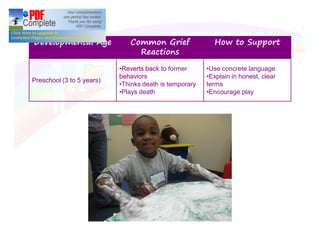
Developmental Age Common Grief
Reactions
How to Support
Preschool (3 to 5 years)
Reverts back to former
behaviors
Thinks death is temporary
Plays death
Use concrete language
Explain in honest, clear
terms
Encourage play
Developmental Age Common Grief
Reactions
How to Support
Elementary (6 to 9 years)
Understands permanence
of death
Connects that death can
happen to others
Experiences guilt
Listen: let them do the
talking
Reassure them that their
feelings are normal and it
wasn t their fault
Foster creative expression
Developmental Age Common Grief
Reactions
How to Support
Preteens (10 to 12 years)
Acting out
Feelings of anger and
unfaired against
Fears of being different,
abandonment, and own
mortality
Encourage healthy ways of
expressing their feelings
Use rituals to provide
structure and normalcy
Provide details as desired
Developmental Age Common Grief
Reactions
How to Support
Teens (13 to 18 years)
Spiritual & philosophical
reflection
Increased reliance on
peers
Search for identity
Provide unconditional,
nonjudgmental support
Teach and model healthy
coping skills
Respect need for private
time
How can we help?How can we help?
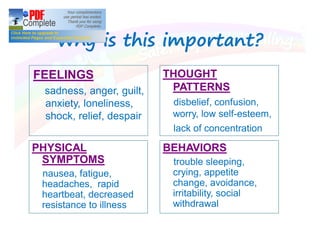
Why is this important?Why is this important?
FEELINGS
sadness, anger, guilt,
anxiety, loneliness,
shock, relief, despair
THOUGHT
PATTERNS
disbelief, confusion,
worry, low self-esteem,
lack of concentration
PHYSICAL
SYMPTOMS
nausea, fatigue,
headaches, rapid
heartbeat, decreased
resistance to illness
BEHAVIORS
trouble sleeping,
crying, appetite
change, avoidance,
irritability, social
withdrawal
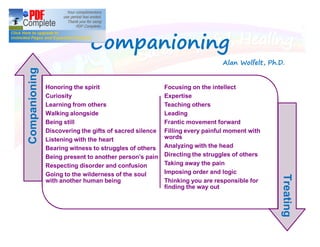
CompanioningCompanioning
Alan Wolfelt, Ph.D.
Honoring the spirit
Curiosity
Learning from others
Walking alongside
Being still
Discovering the gifts of sacred silence
Listening with the heart
Bearing witness to struggles of others
Being present to another person s pain
Respecting disorder and confusion
Going to the wilderness of the soul
with another human being
Focusing on the intellect
Expertise
Teaching others
Leading
Frantic movement forward
Filling every painful moment with
words
Analyzing with the head
Directing the struggles of others
Taking away the pain
Imposing order and logic
Thinking you are responsible for
finding the way out
Companioning
Treating
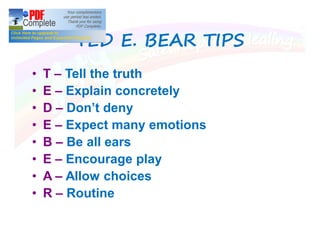
TED E. BEAR TIPSTED E. BEAR TIPS
T Tell the truth
E Explain concretely
D Don t deny
E Expect many emotions
B Be all ears
E Encourage play
A Allow choices
R Routine
Contact InformationContact Information
Ted E. Bear Hollow
7811 Farnam Drive
Omaha, NE 68114
402-502-2773
www.tedebearhollow.org

Discussing Difficult Issues

  • 1.
    Supporting Grieving YouthSupportingGrieving Youth Sara Torres, MA, Bilingual Program & Outreach Coordinator Julianne O Keefe, MSW, MPA, Program & Outreach Coordinator
  • 2.
    Examples of LossesExamplesof Losses § Death § Incarceration § Deployment § Illness/Injury § Divorce/separation § Move § Foster care § Loss of job § Abuse/neglect § Exposure to violence
  • 3.
    Effects of UnresolvedGriefEffects of Unresolved Grief § Poor school performance § Sleep difficulties § Physical illness § Mental Illness § Alcohol and drug abuse § Behavior problems § Sexual promiscuity § Illegal behavior
  • 4.
    Ted E. BearHollow ServicesTed E. Bear Hollow Services Free grief support services following significant death or during serious illness/injury Age-appropriate programs for children ages 3-18 and adults Various causes of death Peer support model rather than therapy Facilitated by volunteers who complete a 20-hour training
  • 5.
    Ted E. BearHollow ProgramsTed E. Bear Hollow Programs Support Groups Monthly 8-Session Day Camps KidsKamp Tinsel & Tears Teen Programs Camp Hope: A Retreat for Grieving Teens Adult Programs Adults Helping Adults (AHA) Library Program CARE: Serious Illness/Injury
  • 6.
  • 7.
  • 8.
    Adult Grief vs.Child GriefAdult Grief vs. Child Grief Children grieve more sporadically than adults Children are more capable than adults of putting grief aside Children do not have to deal with the many reminders as do adults Children grieve through each developmental stage
  • 9.
    Developmental Age CommonGrief Reactions How to Support Preschool (3 to 5 years) Reverts back to former behaviors Thinks death is temporary Plays death Use concrete language Explain in honest, clear terms Encourage play
  • 10.
    Developmental Age CommonGrief Reactions How to Support Elementary (6 to 9 years) Understands permanence of death Connects that death can happen to others Experiences guilt Listen: let them do the talking Reassure them that their feelings are normal and it wasn t their fault Foster creative expression
  • 11.
    Developmental Age CommonGrief Reactions How to Support Preteens (10 to 12 years) Acting out Feelings of anger and unfaired against Fears of being different, abandonment, and own mortality Encourage healthy ways of expressing their feelings Use rituals to provide structure and normalcy Provide details as desired
  • 12.
    Developmental Age CommonGrief Reactions How to Support Teens (13 to 18 years) Spiritual & philosophical reflection Increased reliance on peers Search for identity Provide unconditional, nonjudgmental support Teach and model healthy coping skills Respect need for private time
  • 13.
    How can wehelp?How can we help?
  • 14.
    Why is thisimportant?Why is this important? FEELINGS sadness, anger, guilt, anxiety, loneliness, shock, relief, despair THOUGHT PATTERNS disbelief, confusion, worry, low self-esteem, lack of concentration PHYSICAL SYMPTOMS nausea, fatigue, headaches, rapid heartbeat, decreased resistance to illness BEHAVIORS trouble sleeping, crying, appetite change, avoidance, irritability, social withdrawal
  • 15.
    CompanioningCompanioning Alan Wolfelt, Ph.D. Honoringthe spirit Curiosity Learning from others Walking alongside Being still Discovering the gifts of sacred silence Listening with the heart Bearing witness to struggles of others Being present to another person s pain Respecting disorder and confusion Going to the wilderness of the soul with another human being Focusing on the intellect Expertise Teaching others Leading Frantic movement forward Filling every painful moment with words Analyzing with the head Directing the struggles of others Taking away the pain Imposing order and logic Thinking you are responsible for finding the way out Companioning Treating
  • 16.
    TED E. BEARTIPSTED E. BEAR TIPS T Tell the truth E Explain concretely D Don t deny E Expect many emotions B Be all ears E Encourage play A Allow choices R Routine
  • 17.
    Contact InformationContact Information TedE. Bear Hollow 7811 Farnam Drive Omaha, NE 68114 402-502-2773 www.tedebearhollow.org