
Discharge,
Referral and Death
certificate
PRESENTED BY : DR MUBASHIR
MODERATOR : DR MOHSIN
DEPT. OF GENERAL SURGERY
HIMSR & HAHC HOSPITAL
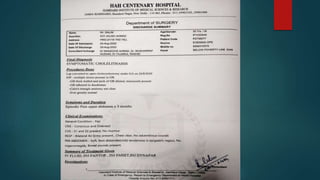
DISCHARGE
SUMMARY
 As per NABH, “Discharge is a process by which a patient is shifted
out from the hospital with all concerned medical summaries
ensuring stability. The discharge process is deemed to have started
when the consultant formally approves discharge and ends with the
patient leaving the clinical unit”
 NABH has set a standard of 180 minutes for the completion of
discharge process.
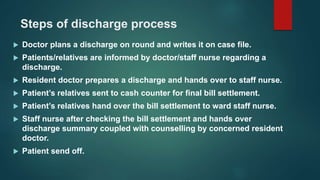
Steps of discharge process
 Doctor plans a discharge on round and writes it on case file.
 Patients/relatives are informed by doctor/staff nurse regarding a
discharge.
 Resident doctor prepares a discharge and hands over to staff nurse.
 Patient’s relatives sent to cash counter for final bill settlement.
 Patient’s relatives hand over the bill settlement to ward staff nurse.
 Staff nurse after checking the bill settlement and hands over
discharge summary coupled with counselling by concerned resident
doctor.
 Patient send off.
According to NABH standard (AAC.13)
Documented discharge process.
 Objective elements:
1. The patient’s discharge process is planned in consultation with the
patient and /or family.
2. Documented procedures exist for coordination of various
departments and agencies involved in the discharge process
(including medicolegal and absconded cases).
3. Documented policies and procedures are in place for patients
leaving against medical advice (LAMA) and patient being discharged
on request (DOPR).
4. A discharge summary is given to all the patients leaving the
organisation (including patients leaving against medical advice and on
request).
5. The organisation defines the time taken for discharge and monitors
the same.
NABH standard (AAC.14.)
Content of discharge summary
 Objective elements:
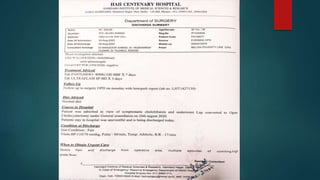
1. Discharge summary is provided to patients at the time of
discharge.
2. Discharge summary contains patients Name, unique identification
number, date of admission and date of discharge.
3. Discharge summary contains the reasons for admission,
significant findings and patients condition at the time of discharge.
4. Discharge summary contains information regarding investigation
results, any procedure performed, medication administered and other
treatment given.
5. Discharge summary contains follow up advice, medication and other
instructions in an understandable manner.
6. Discharge summary incorporates instructions about when and how
to obtain urgent care.
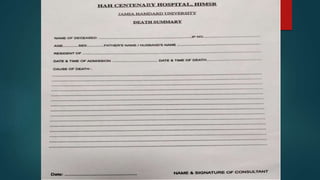
7. In case of death, the summary of the case also includes the cause of
death.
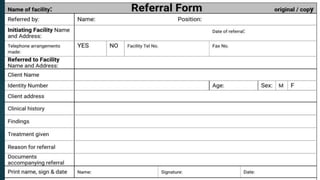
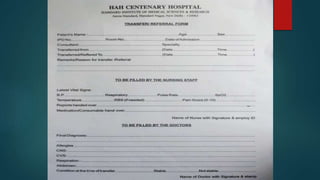
Referral of a patient
 According to WHO ‘’A referral is a process in which a health worker
at one level of health system, having insufficient resources (drugs,
equipment, skills) to manage a clinical condition, seeks the help of a
better or differently resourced facility at the same or higher level to
assist in”.
Types
 General physician to a specialist.
 From one specialist to another.
 From one hospital to another.
Common reasons for referral (either
emergency or routine cases) are:
 For taking expert opinion for the patient.
 For seeking better treatment of the patient.
 For use of high end diagnostic and therapeutic tools, which is not
available at current level.
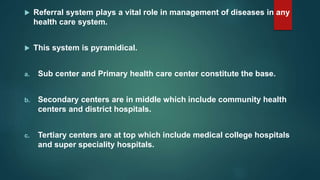
 Referral system plays a vital role in management of diseases in any
health care system.
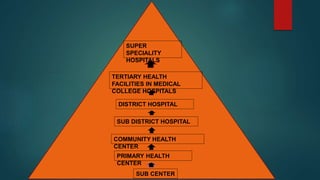
 This system is pyramidical.
a. Sub center and Primary health care center constitute the base.
b. Secondary centers are in middle which include community health
centers and district hospitals.
c. Tertiary centers are at top which include medical college hospitals
and super speciality hospitals.
SUB CENTER
PRIMARY HEALTH
CENTER
COMMUNITY HEALTH
CENTER
SUB DISTRICT HOSPITAL
DISTRICT HOSPITAL
TERTIARY HEALTH
FACILITIES IN MEDICAL
COLLEGE HOSPITALS
SUPER
SPECIALITY
HOSPITALS
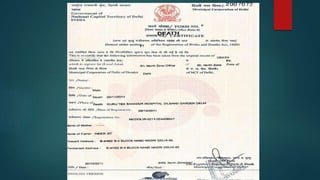
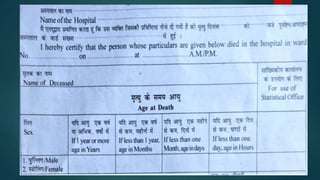
Death certificate
 It is a document issued by the government (Registrar, Birth and
death) to the kin of deceased, stating the date, fact and cause of
death.
 It is a valuable source for state based and national mortality
statistics.
 It is required to establish the fact of death legally, for relieving the
deceased from social, legal and moral obligations.
 Also used to enable settlement of property inheritance, and to
authorise the family to collect insurance and other benefits.
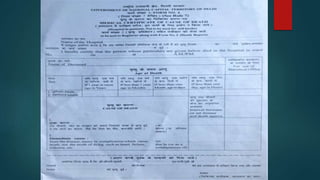
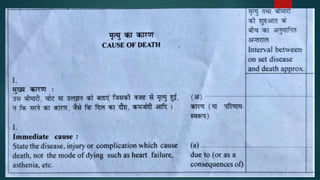
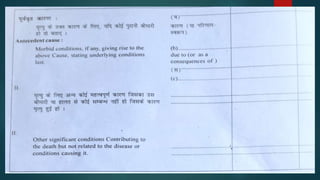
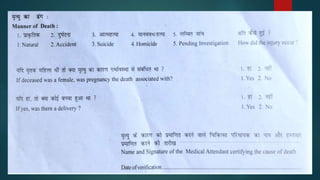
Medical certificate of cause of death
(MCCD)
 Certificate issued by a doctor after patient has died.
 Primarily, It details the cause of death but also often
includes date, time and place of death.
 It is required to register a death with local authorities.
Guidelines for issuing MCCD
 Issued immediately after patient is declared dead by the same
doctor and if it is a natural death.
 It should reach the registrar birth & death within 14 days.
 No fees to be charged.
 Issued even if his dues are not cleared by the relatives.
MCCD should not be issued and dead body not released
if :
 Injured is brought dead.
 Crime has already been registered by the police.
 Cause of death is not known.
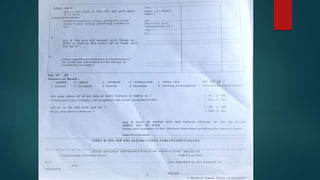
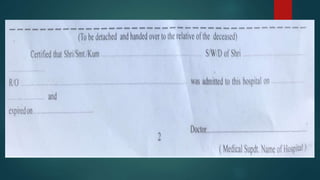
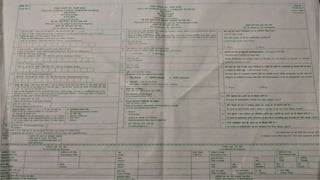
Typically it has 2 parts
Upper part:
 Particulars of the deceased along with medical data in respect to
the disease causing death.
Lower part:
 Particulars of the deceased along with the date, time and place of
occurrance of death.
 Handed over to relatives.
Discharge , referral and death summary

Discharge , referral and death summary

  • 1.
    Discharge, Referral and Death certificate PRESENTEDBY : DR MUBASHIR MODERATOR : DR MOHSIN DEPT. OF GENERAL SURGERY HIMSR & HAHC HOSPITAL
  • 2.
    DISCHARGE SUMMARY  As perNABH, “Discharge is a process by which a patient is shifted out from the hospital with all concerned medical summaries ensuring stability. The discharge process is deemed to have started when the consultant formally approves discharge and ends with the patient leaving the clinical unit”  NABH has set a standard of 180 minutes for the completion of discharge process.
  • 3.
    Steps of dischargeprocess  Doctor plans a discharge on round and writes it on case file.  Patients/relatives are informed by doctor/staff nurse regarding a discharge.  Resident doctor prepares a discharge and hands over to staff nurse.  Patient’s relatives sent to cash counter for final bill settlement.  Patient’s relatives hand over the bill settlement to ward staff nurse.  Staff nurse after checking the bill settlement and hands over discharge summary coupled with counselling by concerned resident doctor.  Patient send off.
  • 4.
    According to NABHstandard (AAC.13) Documented discharge process.  Objective elements: 1. The patient’s discharge process is planned in consultation with the patient and /or family. 2. Documented procedures exist for coordination of various departments and agencies involved in the discharge process (including medicolegal and absconded cases).
  • 5.
    3. Documented policiesand procedures are in place for patients leaving against medical advice (LAMA) and patient being discharged on request (DOPR). 4. A discharge summary is given to all the patients leaving the organisation (including patients leaving against medical advice and on request). 5. The organisation defines the time taken for discharge and monitors the same.
  • 6.
    NABH standard (AAC.14.) Contentof discharge summary  Objective elements: 1. Discharge summary is provided to patients at the time of discharge. 2. Discharge summary contains patients Name, unique identification number, date of admission and date of discharge. 3. Discharge summary contains the reasons for admission, significant findings and patients condition at the time of discharge.
  • 7.
    4. Discharge summarycontains information regarding investigation results, any procedure performed, medication administered and other treatment given. 5. Discharge summary contains follow up advice, medication and other instructions in an understandable manner. 6. Discharge summary incorporates instructions about when and how to obtain urgent care. 7. In case of death, the summary of the case also includes the cause of death.
  • 10.
    Referral of apatient  According to WHO ‘’A referral is a process in which a health worker at one level of health system, having insufficient resources (drugs, equipment, skills) to manage a clinical condition, seeks the help of a better or differently resourced facility at the same or higher level to assist in”.
  • 11.
    Types  General physicianto a specialist.  From one specialist to another.  From one hospital to another.
  • 12.
    Common reasons forreferral (either emergency or routine cases) are:  For taking expert opinion for the patient.  For seeking better treatment of the patient.  For use of high end diagnostic and therapeutic tools, which is not available at current level.
  • 13.
     Referral systemplays a vital role in management of diseases in any health care system.  This system is pyramidical. a. Sub center and Primary health care center constitute the base. b. Secondary centers are in middle which include community health centers and district hospitals. c. Tertiary centers are at top which include medical college hospitals and super speciality hospitals.
  • 14.
    SUB CENTER PRIMARY HEALTH CENTER COMMUNITYHEALTH CENTER SUB DISTRICT HOSPITAL DISTRICT HOSPITAL TERTIARY HEALTH FACILITIES IN MEDICAL COLLEGE HOSPITALS SUPER SPECIALITY HOSPITALS
  • 17.
    Death certificate  Itis a document issued by the government (Registrar, Birth and death) to the kin of deceased, stating the date, fact and cause of death.  It is a valuable source for state based and national mortality statistics.  It is required to establish the fact of death legally, for relieving the deceased from social, legal and moral obligations.  Also used to enable settlement of property inheritance, and to authorise the family to collect insurance and other benefits.
  • 19.
    Medical certificate ofcause of death (MCCD)  Certificate issued by a doctor after patient has died.  Primarily, It details the cause of death but also often includes date, time and place of death.  It is required to register a death with local authorities.
  • 20.
    Guidelines for issuingMCCD  Issued immediately after patient is declared dead by the same doctor and if it is a natural death.  It should reach the registrar birth & death within 14 days.  No fees to be charged.  Issued even if his dues are not cleared by the relatives.
  • 21.
    MCCD should notbe issued and dead body not released if :  Injured is brought dead.  Crime has already been registered by the police.  Cause of death is not known.
  • 22.
    Typically it has2 parts Upper part:  Particulars of the deceased along with medical data in respect to the disease causing death. Lower part:  Particulars of the deceased along with the date, time and place of occurrance of death.  Handed over to relatives.