“From the rich experiences that
  our senses bring, we construct
  the ideas, the concepts, the
  generalizations that give
  meaning and order to our
  lives.”
 What  do direct, purposeful
  experiences refer to?
 For meaningful learning, where
  should these direct and
  purposeful experiences lead the
  learners to?
After seeing instructional
 materials as a whole, let us single
out direct, purposeful experiences
as instructional materials. The most
real in Dale’s Cone of Experience.
   Let’s learn how they can be
  effectively used for instruction.
Testemonies:
Grade VI teacher
Graduate School Professor
Secretary to the Dean
Grade 4
pupil
 Do you have a similar experience?
  Share.
 Think of a skill you have. How did you
  acquire it?
 Think of a concept. How did you learn it?
   How did the four narrators learn their
    respective skills/concept? Analyze.
   These are our concrete and firsthand
    experiences that make up the
    foundation of our learning. These are the
    rich experiences that our senses bring
    from which we construct the ideas, the
    concepts, the generalizations that give
    meaning and order to our lives.
    (Dale, 1969). They are sensory
    experiences
 Preparing meals
 Making a piece of furniture
 Doing powerpoint presentation
 Performing a laboratory experiment
 Delivering a speech
 Taking a trip
 Are experiences of other people that
  we observe, read or hear about. They
  are not firsthand but rather vicarious
  experiences.
 People that we observe, read / hear
  about.
 They are not our own self-experiences
  but still experiences in the sense that we
  see, read and hear about them.
 Climbing a mountain is firsthand, direct
  experience. Seeing it done in films or
  reading about it is a vicarious, substitute
  experience. It is a clear, therefore , that
  we can approach the world of reality
  directly through the senses and indirectly
  with reduced sensory experience.
 Example: We can make bake black
  forest cake see it done in tv or read
  about it.
   Purposeful because the experiences are
    not purely mechanical. They are not a
    matter of going through the motion.
    These are not “mere sensory excitation”.
    They are experiences that are
    internalized in the sense that these
    experiences involve the asking of
    questions that have significance in the
    life of the person undergoing the direct
    experience.
►Why do we want our students to have a
    direct experience in conducting an
    experiment in the laboratory?
It is done in relation to a certain learning
    objective.
►Where should these direct, purposeful
    experiences lead us to?
Implies that these direct experiences must
    not be the period or the end. We must
    be brought to a higher plane. The higher
    plane referred to here is the level of
    generalization and abstraction.
 Let us give our students opportunities to
  learn by doing. Let us immerse our
  students in the world of experience.
 Let us make use of real things as
  instructional materials for as long as we
  can.
 Let us help the students develop the five
  senses to the full to heighten their sensitivity
  to the world.
 Let us guide our students so that they can
  draw meaning from their firsthand
  experiences and elevate their level of
  thinking.
 Let us not be tempted to get stuck to the
  concrete and fail to bring up our students
  to the higher level of thinking process.
 Apply the concept of direct experiences
  to the college courses you have taken.
  Were there missed opportunities for
  direct experiences? If yes, what are
  they?
 Go over the Re-structured Basic
  Education Curriculum (RBEC). Find out
  which competencies can be best
  taught through direct experience.
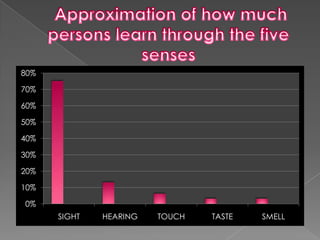
80%

70%

60%

50%

40%

30%

20%

10%

0%
      SIGHT   HEARING   TOUCH   TASTE   SMELL
1.   Connect this graph to sensory
     experience for maximum learning.
2.   Any principle you learned from the
     principles of teaching that connects
     to learning by direct experiences?
3.   Our lack of understanding is often
     due to our lack of attention.
4.   How can we arrive at a more
     accurate interpretation of what we
     experience?
 You have the skill to lead the students in
  drawing generalization or abstraction
  about the direct experience for
  meaning.
 Firsthand sensory experience alone does
  not ensure adequate learning.
 For instance, teachers do a lot of
  preparation before they bring their
  children to get in direct contact with the
  City Council in session to realize their
  objectives.

Direct, purposeful experiences and beyond

  • 2.
    “From the richexperiences that our senses bring, we construct the ideas, the concepts, the generalizations that give meaning and order to our lives.”
  • 3.
     What do direct, purposeful experiences refer to?  For meaningful learning, where should these direct and purposeful experiences lead the learners to?
  • 4.
    After seeing instructional materials as a whole, let us single out direct, purposeful experiences as instructional materials. The most real in Dale’s Cone of Experience. Let’s learn how they can be effectively used for instruction.
  • 5.
    Testemonies: Grade VI teacher GraduateSchool Professor Secretary to the Dean Grade 4 pupil
  • 6.
     Do youhave a similar experience? Share.  Think of a skill you have. How did you acquire it?  Think of a concept. How did you learn it?
  • 7.
    How did the four narrators learn their respective skills/concept? Analyze.
  • 8.
    These are our concrete and firsthand experiences that make up the foundation of our learning. These are the rich experiences that our senses bring from which we construct the ideas, the concepts, the generalizations that give meaning and order to our lives. (Dale, 1969). They are sensory experiences
  • 9.
     Preparing meals Making a piece of furniture  Doing powerpoint presentation  Performing a laboratory experiment  Delivering a speech  Taking a trip
  • 10.
     Are experiencesof other people that we observe, read or hear about. They are not firsthand but rather vicarious experiences.  People that we observe, read / hear about.  They are not our own self-experiences but still experiences in the sense that we see, read and hear about them.
  • 11.
     Climbing amountain is firsthand, direct experience. Seeing it done in films or reading about it is a vicarious, substitute experience. It is a clear, therefore , that we can approach the world of reality directly through the senses and indirectly with reduced sensory experience.  Example: We can make bake black forest cake see it done in tv or read about it.
  • 12.
    Purposeful because the experiences are not purely mechanical. They are not a matter of going through the motion. These are not “mere sensory excitation”. They are experiences that are internalized in the sense that these experiences involve the asking of questions that have significance in the life of the person undergoing the direct experience.
  • 13.
    ►Why do wewant our students to have a direct experience in conducting an experiment in the laboratory? It is done in relation to a certain learning objective. ►Where should these direct, purposeful experiences lead us to? Implies that these direct experiences must not be the period or the end. We must be brought to a higher plane. The higher plane referred to here is the level of generalization and abstraction.
  • 14.
     Let usgive our students opportunities to learn by doing. Let us immerse our students in the world of experience.  Let us make use of real things as instructional materials for as long as we can.
  • 15.
     Let ushelp the students develop the five senses to the full to heighten their sensitivity to the world.  Let us guide our students so that they can draw meaning from their firsthand experiences and elevate their level of thinking.  Let us not be tempted to get stuck to the concrete and fail to bring up our students to the higher level of thinking process.
  • 16.
     Apply theconcept of direct experiences to the college courses you have taken. Were there missed opportunities for direct experiences? If yes, what are they?  Go over the Re-structured Basic Education Curriculum (RBEC). Find out which competencies can be best taught through direct experience.
  • 17.
    80% 70% 60% 50% 40% 30% 20% 10% 0% SIGHT HEARING TOUCH TASTE SMELL
  • 18.
    1. Connect this graph to sensory experience for maximum learning. 2. Any principle you learned from the principles of teaching that connects to learning by direct experiences? 3. Our lack of understanding is often due to our lack of attention. 4. How can we arrive at a more accurate interpretation of what we experience?
  • 19.
     You havethe skill to lead the students in drawing generalization or abstraction about the direct experience for meaning.  Firsthand sensory experience alone does not ensure adequate learning.  For instance, teachers do a lot of preparation before they bring their children to get in direct contact with the City Council in session to realize their objectives.