Group : 5 
Members: 
Añes, Shaira 
Aroza, Patrick Swaze 
Balonga, Marlyn 
Cabangon, Allain Joseph 
Capillanes, Gene Vi 
Patricio, Jeanette 
Quiobe, kristel 
Prepared by: Allain
What do direct, Purposeful Experiences 
refers to? 
• These are our concrete 
experiences and first hand 
Experiences that make up the 
foundation of our learning. 
• These are the rich experiences that 
our senses bring from which we 
construct the ideas, the concepts, 
the generalization that give 
meaning and order to our lives. 
( Dale, 1969)
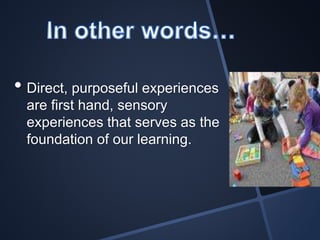
• Direct, purposeful experiences 
are first hand, sensory 
experiences that serves as the 
foundation of our learning.
Direct Activities:
INDIRECT, PURPOSEFUL 
EXPERIENCES 
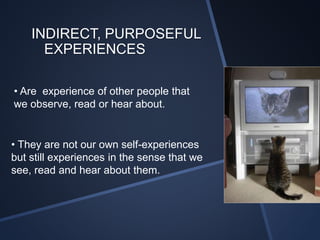
• Are experience of other people that 
we observe, read or hear about. 
• They are not our own self-experiences 
but still experiences in the sense that we 
see, read and hear about them.
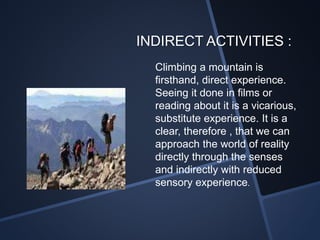
INDIRECT ACTIVITIES : 
Climbing a mountain is 
firsthand, direct experience. 
Seeing it done in films or 
reading about it is a vicarious, 
substitute experience. It is a 
clear, therefore , that we can 
approach the world of reality 
directly through the senses 
and indirectly with reduced 
sensory experience.
• Purposeful because the experiences 
are not purely mechanical. They are 
not a matter of going through the 
motion. These are not “mere sensory 
excitation”. They are experiences 
that are internalized in the sense that 
these experiences involve the asking 
of questions that have significance in 
the life of the person undergoing the 
direct experience
QUESTION: 
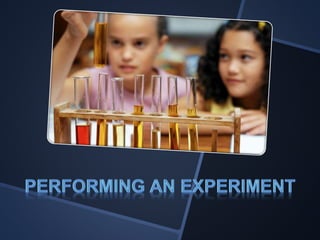
• Why do we want our 
students to have a direct 
experience in conducting 
an experiment in the 
laboratory? 
• Where should these 
direct, purposeful 
experiences lead us to?
It is done in relation to a certain learning objective. 
Implies that these direct experiences must not be the 
period or the end. We must be brought to a higher 
plane. The higher plane referred to here is the level 
of generalization and abstraction.
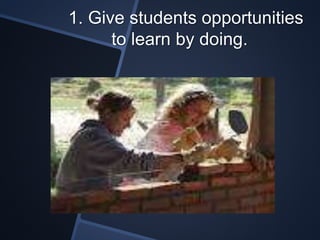
1. Give students opportunities 
to learn by doing.
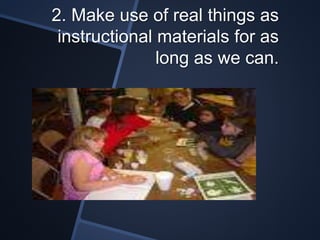
2. Make use of real things as 
instructional materials for as 
long as we can.
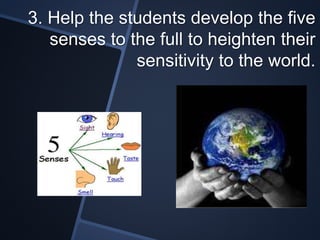
3. Help the students develop the five 
senses to the full to heighten their 
sensitivity to the world.
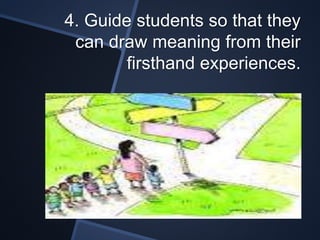
4. Guide students so that they 
can draw meaning from their 
firsthand experiences.
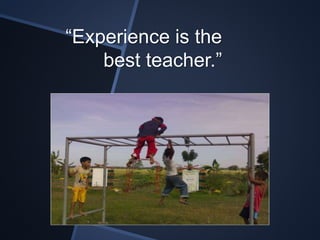
“Experience is the 
best teacher.”
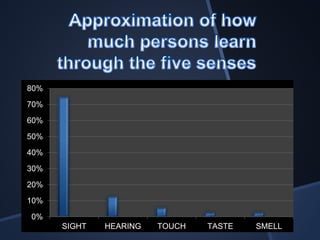
80% 
70% 
60% 
50% 
40% 
30% 
20% 
10% 
0% 
SIGHT HEARING TOUCH TASTE SMELL
• Apply the concept of direct experiences to the 
college courses you have taken. Were there 
missed opportunities for direct experiences? If yes, 
what are they? 
• Go over the Re-structured Basic Education 
Curriculum (RBEC). Find out which competencies 
can be best taught through direct experience.
THANK YOU FOR WATCHING 
and LISTENING

Direct, Purposeful Experiences (EdTech)

  • 1.
    Group : 5 Members: Añes, Shaira Aroza, Patrick Swaze Balonga, Marlyn Cabangon, Allain Joseph Capillanes, Gene Vi Patricio, Jeanette Quiobe, kristel Prepared by: Allain
  • 2.
    What do direct,Purposeful Experiences refers to? • These are our concrete experiences and first hand Experiences that make up the foundation of our learning. • These are the rich experiences that our senses bring from which we construct the ideas, the concepts, the generalization that give meaning and order to our lives. ( Dale, 1969)
  • 3.
    • Direct, purposefulexperiences are first hand, sensory experiences that serves as the foundation of our learning.
  • 4.
  • 11.
    INDIRECT, PURPOSEFUL EXPERIENCES • Are experience of other people that we observe, read or hear about. • They are not our own self-experiences but still experiences in the sense that we see, read and hear about them.
  • 12.
    INDIRECT ACTIVITIES : Climbing a mountain is firsthand, direct experience. Seeing it done in films or reading about it is a vicarious, substitute experience. It is a clear, therefore , that we can approach the world of reality directly through the senses and indirectly with reduced sensory experience.
  • 14.
    • Purposeful becausethe experiences are not purely mechanical. They are not a matter of going through the motion. These are not “mere sensory excitation”. They are experiences that are internalized in the sense that these experiences involve the asking of questions that have significance in the life of the person undergoing the direct experience
  • 15.
    QUESTION: • Whydo we want our students to have a direct experience in conducting an experiment in the laboratory? • Where should these direct, purposeful experiences lead us to?
  • 16.
    It is donein relation to a certain learning objective. Implies that these direct experiences must not be the period or the end. We must be brought to a higher plane. The higher plane referred to here is the level of generalization and abstraction.
  • 18.
    1. Give studentsopportunities to learn by doing.
  • 19.
    2. Make useof real things as instructional materials for as long as we can.
  • 20.
    3. Help thestudents develop the five senses to the full to heighten their sensitivity to the world.
  • 21.
    4. Guide studentsso that they can draw meaning from their firsthand experiences.
  • 22.
    “Experience is the best teacher.”
  • 23.
    80% 70% 60% 50% 40% 30% 20% 10% 0% SIGHT HEARING TOUCH TASTE SMELL
  • 24.
    • Apply theconcept of direct experiences to the college courses you have taken. Were there missed opportunities for direct experiences? If yes, what are they? • Go over the Re-structured Basic Education Curriculum (RBEC). Find out which competencies can be best taught through direct experience.
  • 25.
    THANK YOU FORWATCHING and LISTENING