TEACHING WITH CONTRIVED
EXPERIENCES
What are Contrived
Experiences?
 Is edited copies of reality andare used
as substitutes for real things when it is
not practical or not possibleto bring or
do the real thing in the classroom.
 Design to stimulate toreal-life
situations.
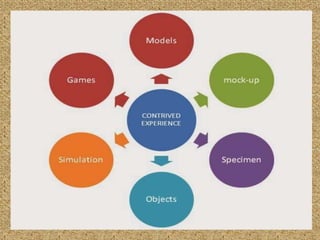
 WHAT ARE VARIED TYPES OF
CONTRIVED EXPERIENCES?
 WHAT STANDARDS CAN BE USED TO
EVALUATE CONTRIVED
EXPERIENCES?
MODELS
 Is a reproductionofa real thing ina small scale,
or large scale or exact size but made ofsynthetic
materials.
 A substitute for a real thing whichmay or may
not be operational.
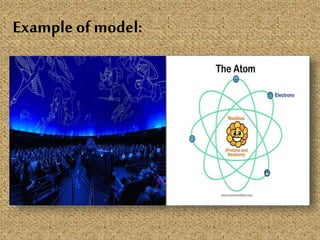
Example of model:
MOCK-UP
 Is an arrangementof a realdeviceor
associateddevices,displayedin such a way
that representationof realityis created.
May be simplifiedin order to certain
features.
A special model where the parts of a
model aresingled out, heightened
and magnified in order to focus on
that part or process under study.
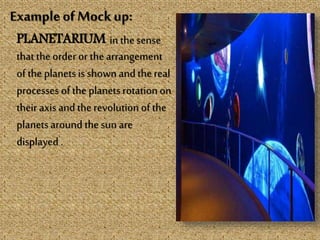
Example of Mockup:
PLANETARIUM in thesense
thatthe order or the arrangement
of the planetsis shown and thereal
processes of the planetsrotation on
their axis and the revolution of the
planetsaround thesun are
displayed .
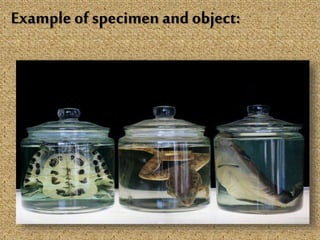
SPECIMEN
Any individual or item consider
typicalof a group, class or whole.
OBJECT
 may alsoincludeARTIFACTSdisplayedin
museum or objectdisplayed inexhibitsor
preservedinsectspecimens inScience.
Example of specimen and object:
SIMULATION
 Is a representation of a manageable real
event in whichthe learner is an active
participant engagedin learninga behavior or
applyingpreviouslyacquiredskills or
knowledge.
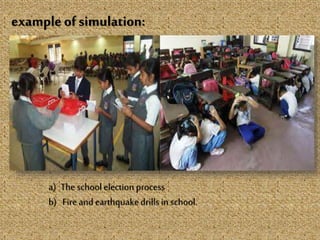
exampleofsimulation:
a) The school election process
b) Fire and earthquake drills in school.
 Another instructional material includedin
contrived experiencesis a GAME.
What is the difference between
game and simulation ?
 Gameareplayed towin while simulations
need nothavea winner.
Why do we make use of
contrived experiences ?
We use models, mockup ,specimens and objectto :
1. Overcome limitations of space and time
2. to "edit" reality for us to beable to focus on parts
or a process of a system that we intendto study .
3. to overcome difficulties of size
4. to understand the inaccessible
5. help the learners understand
abstractions .
10 GENERAL PURPOSES OF
SIMULATIONS AND GAMES IN
EDUCATION
1. To develop changes in attitudes
2. To changespecificbehaviors
3. To prepare participants for assuming
new roles in the future
4. To helpindividualsunderstandtheir current
roles
5. To increasethe students ability to apply
principles
6. To reducecomplex problems or situations to
manageableelements.
7. To illustrate roles that may affectone's life
but that one maynever assume.
8. To motivate learners
9. To develop analytical processes
10. To sensitive individuals to another
person’s liferole.
GAME
 Are used for any of these
purposes.
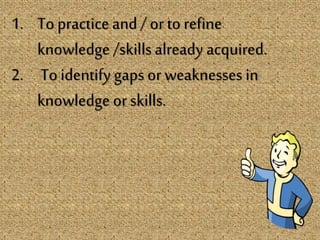
1. To practice and / or to refine
knowledge /skills already acquired.
2. To identify gaps or weaknesses in
knowledge or skills.
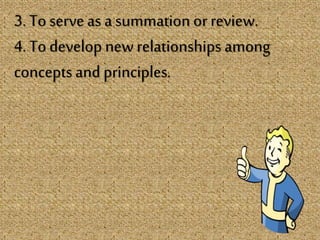
3. To serve as a summation or review.
4. To develop new relationships among
concepts and principles.

teaching with contrived experiences

  • 1.
  • 2.
  • 3.
     Is editedcopies of reality andare used as substitutes for real things when it is not practical or not possibleto bring or do the real thing in the classroom.  Design to stimulate toreal-life situations.
  • 4.
     WHAT AREVARIED TYPES OF CONTRIVED EXPERIENCES?  WHAT STANDARDS CAN BE USED TO EVALUATE CONTRIVED EXPERIENCES?
  • 6.
    MODELS  Is areproductionofa real thing ina small scale, or large scale or exact size but made ofsynthetic materials.  A substitute for a real thing whichmay or may not be operational.
  • 7.
  • 8.
    MOCK-UP  Is anarrangementof a realdeviceor associateddevices,displayedin such a way that representationof realityis created. May be simplifiedin order to certain features.
  • 9.
    A special modelwhere the parts of a model aresingled out, heightened and magnified in order to focus on that part or process under study.
  • 10.
    Example of Mockup: PLANETARIUMin thesense thatthe order or the arrangement of the planetsis shown and thereal processes of the planetsrotation on their axis and the revolution of the planetsaround thesun are displayed .
  • 11.
    SPECIMEN Any individual oritem consider typicalof a group, class or whole.
  • 12.
    OBJECT  may alsoincludeARTIFACTSdisplayedin museumor objectdisplayed inexhibitsor preservedinsectspecimens inScience.
  • 13.
  • 14.
    SIMULATION  Is arepresentation of a manageable real event in whichthe learner is an active participant engagedin learninga behavior or applyingpreviouslyacquiredskills or knowledge.
  • 15.
    exampleofsimulation: a) The schoolelection process b) Fire and earthquake drills in school.
  • 16.
     Another instructionalmaterial includedin contrived experiencesis a GAME. What is the difference between game and simulation ?
  • 17.
     Gameareplayed towinwhile simulations need nothavea winner. Why do we make use of contrived experiences ?
  • 18.
    We use models,mockup ,specimens and objectto : 1. Overcome limitations of space and time 2. to "edit" reality for us to beable to focus on parts or a process of a system that we intendto study .
  • 19.
    3. to overcomedifficulties of size 4. to understand the inaccessible 5. help the learners understand abstractions .
  • 20.
    10 GENERAL PURPOSESOF SIMULATIONS AND GAMES IN EDUCATION
  • 21.
    1. To developchanges in attitudes 2. To changespecificbehaviors 3. To prepare participants for assuming new roles in the future
  • 22.
    4. To helpindividualsunderstandtheircurrent roles 5. To increasethe students ability to apply principles 6. To reducecomplex problems or situations to manageableelements.
  • 23.
    7. To illustrateroles that may affectone's life but that one maynever assume. 8. To motivate learners 9. To develop analytical processes 10. To sensitive individuals to another person’s liferole.
  • 24.
    GAME  Are usedfor any of these purposes.
  • 25.
    1. To practiceand / or to refine knowledge /skills already acquired. 2. To identify gaps or weaknesses in knowledge or skills.
  • 26.
    3. To serveas a summation or review. 4. To develop new relationships among concepts and principles.