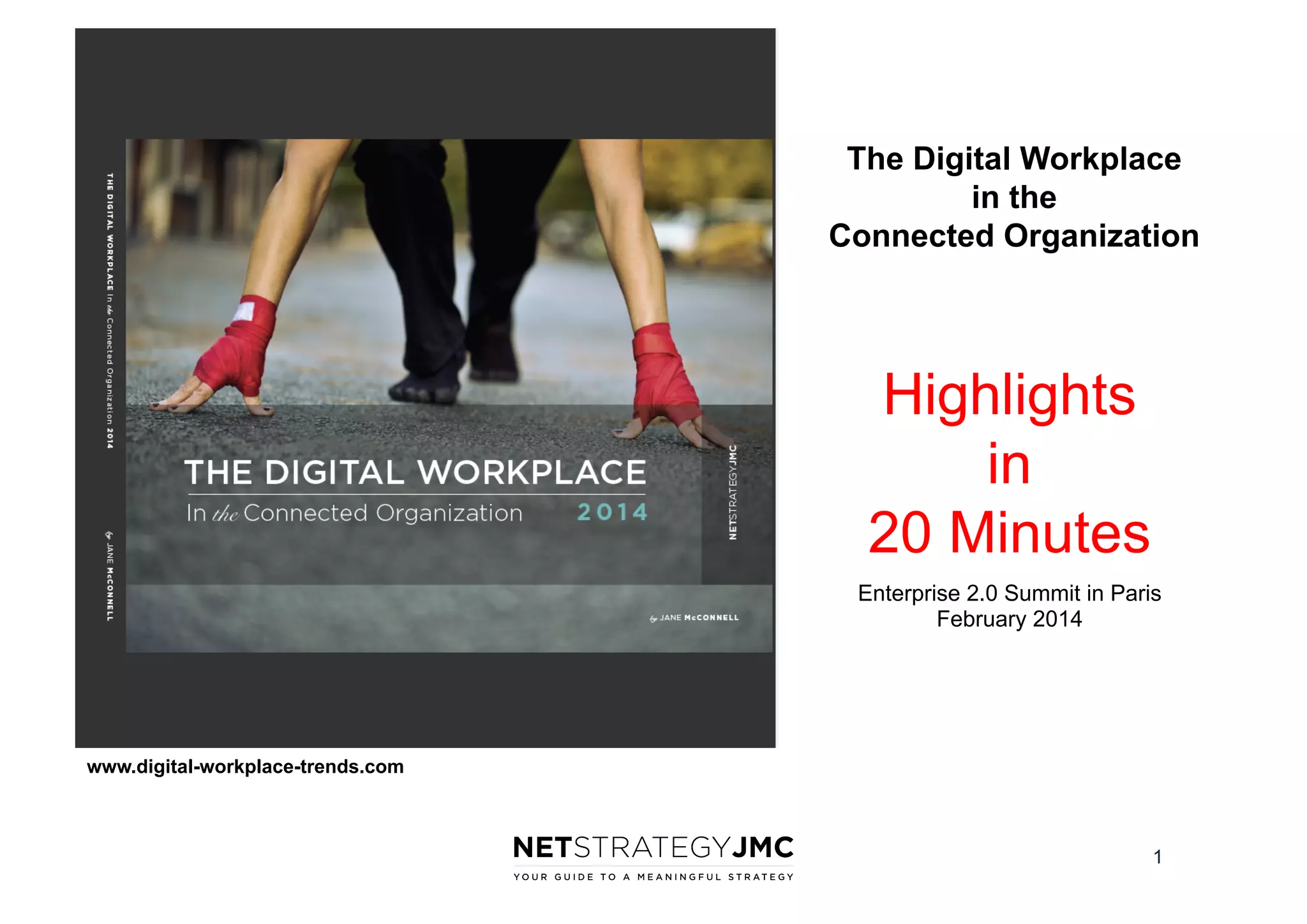

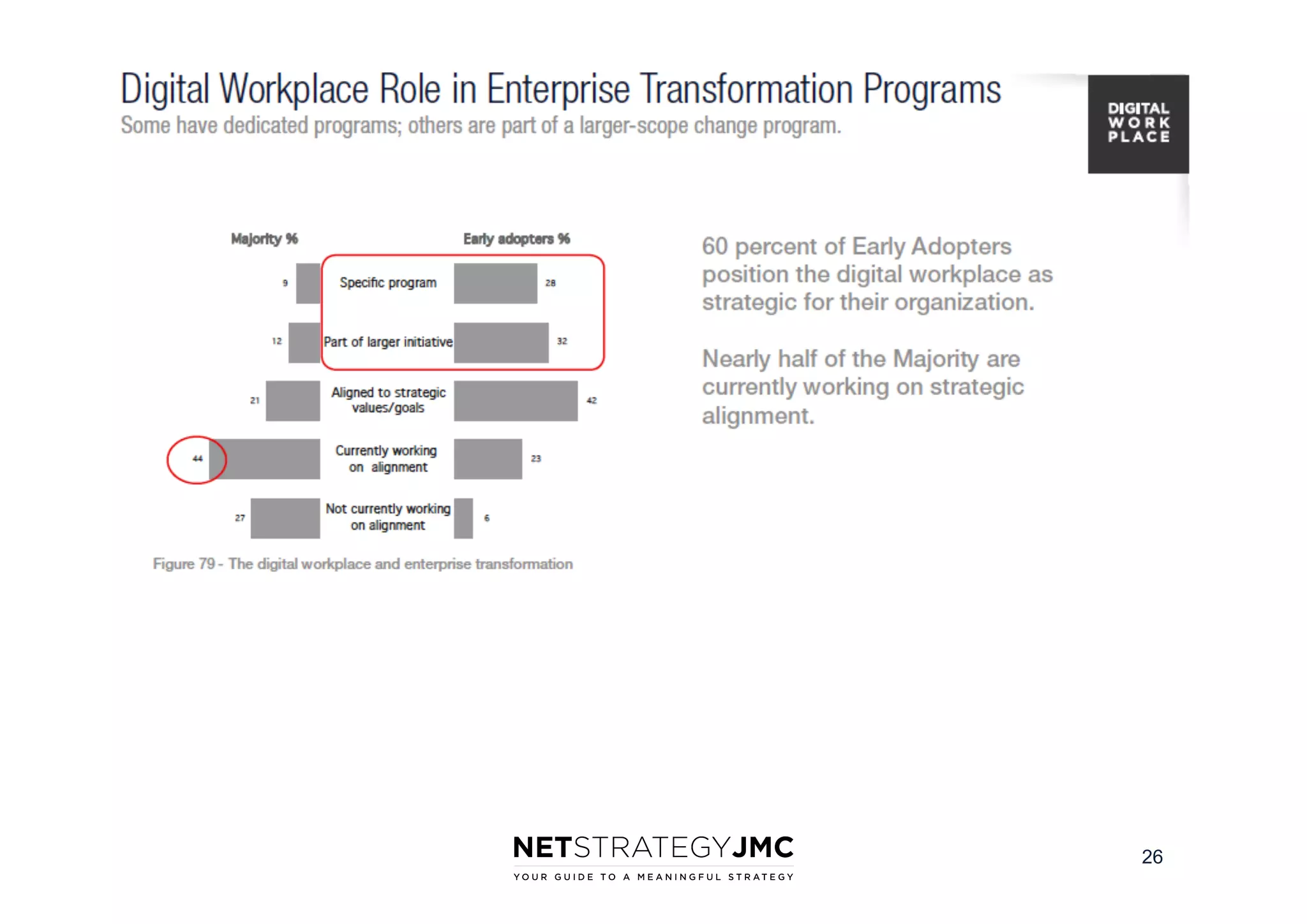
The Digital Workplace
in the
Connected Organization

Highlights
in
20 Minutes
Enterprise 2.0 Summit in Paris
February 2014

www.digital-workplace-trends.com

1
The Digital Workplace
in the
Connected Organization
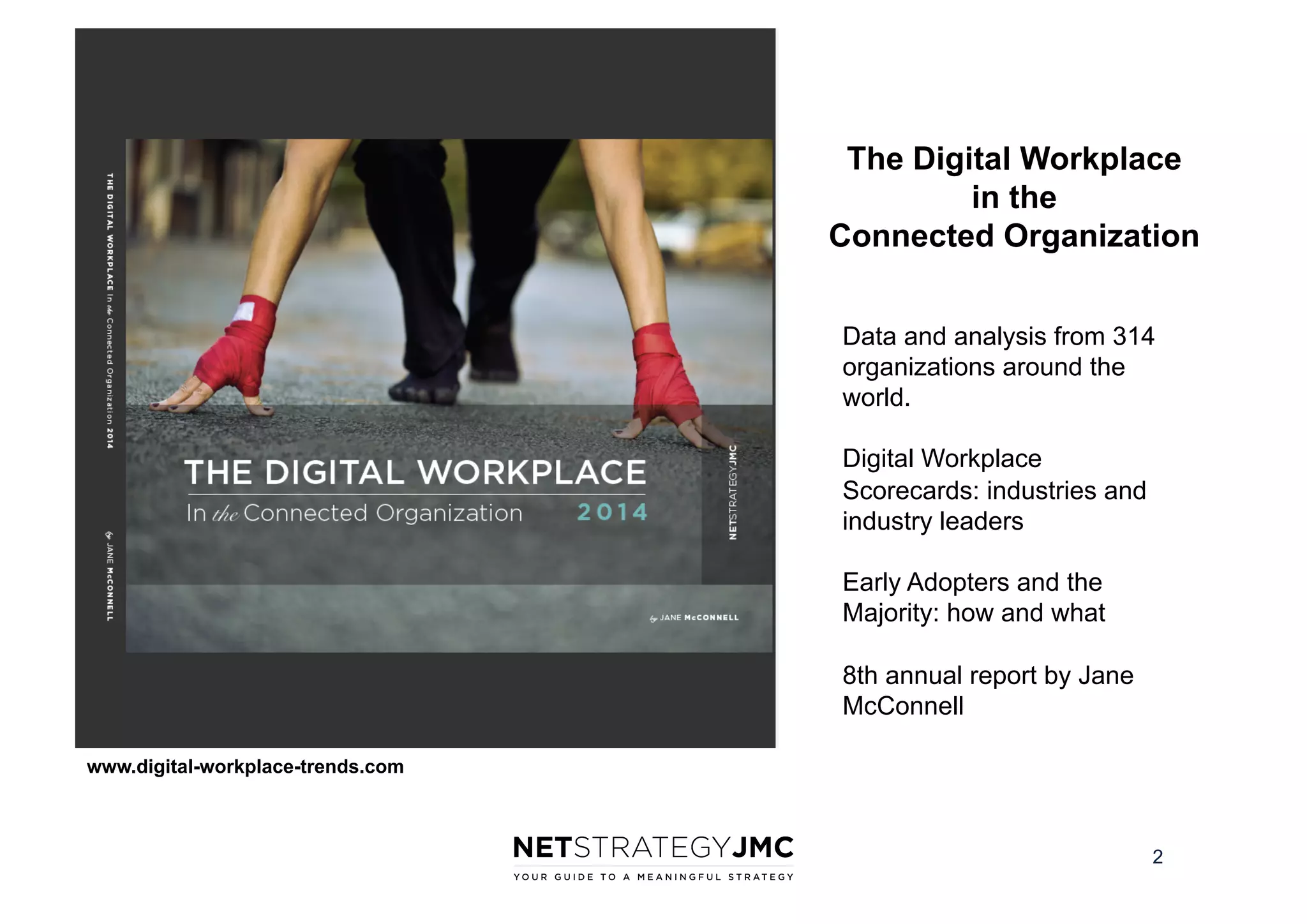
Data and analysis from 314
organizations around the
world.
Digital Workplace
Scorecards: industries and
industry leaders
Early Adopters and the
Majority: how and what
8th annual report by Jane
McConnell
www.digital-workplace-trends.com

2
Author: Jane McConnell
Strategic Advisor 16 years > 100 projects for > 60
large, global organizations, management briefer and
workshop leader

Researcher conducting global surveys and writing
annual reports since 2006

American-French living in the deep Provence for 25
years

3
4
5
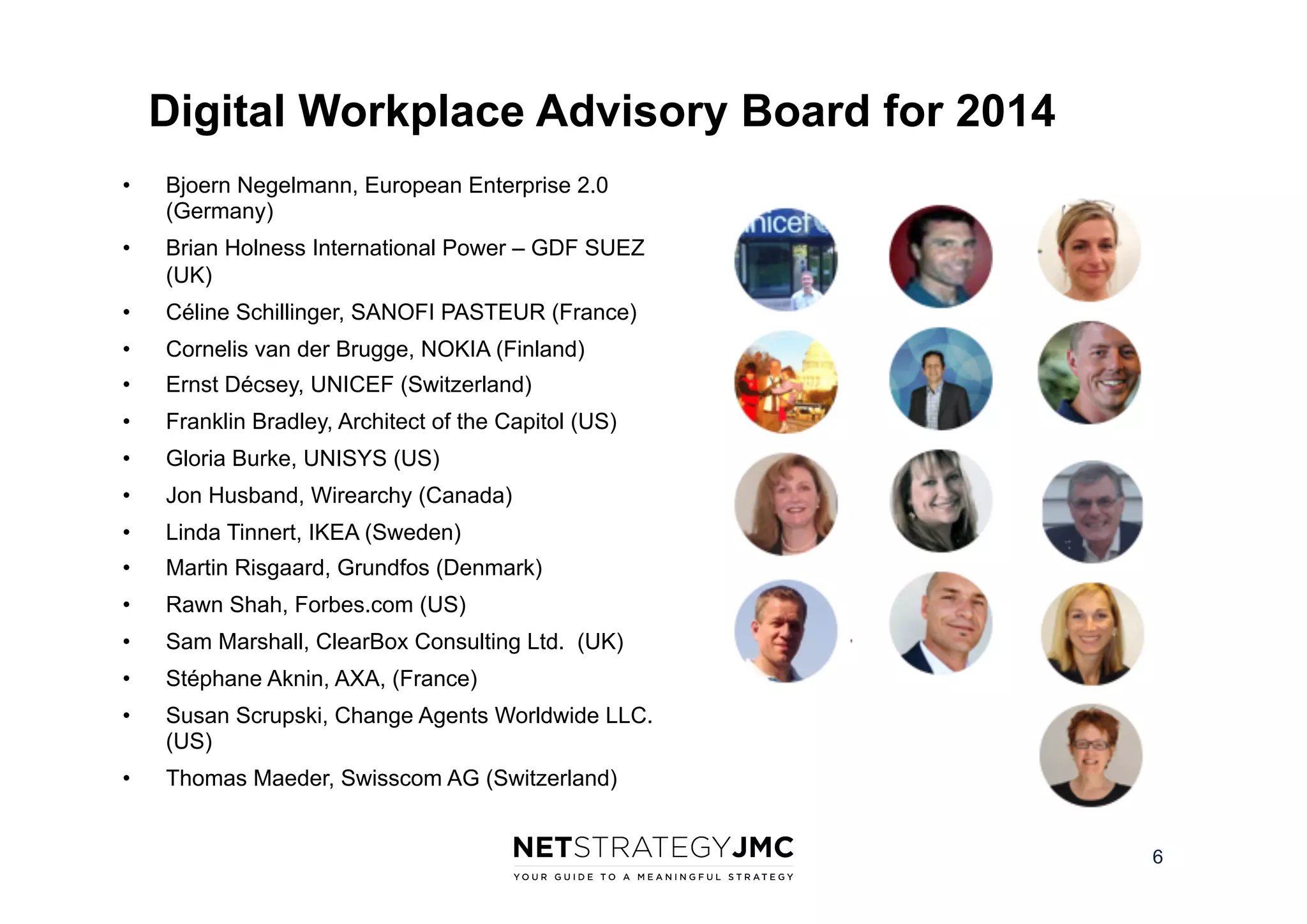
Digital Workplace Advisory Board for 2014
• 

Bjoern Negelmann, European Enterprise 2.0
(Germany)

• 

Brian Holness International Power – GDF SUEZ
(UK)

• 

Céline Schillinger, SANOFI PASTEUR (France)

• 

Cornelis van der Brugge, NOKIA (Finland)

• 

Ernst Décsey, UNICEF (Switzerland)

• 

Franklin Bradley, Architect of the Capitol (US)

• 

Gloria Burke, UNISYS (US)

• 

Jon Husband, Wirearchy (Canada)

• 

Linda Tinnert, IKEA (Sweden)

• 

Martin Risgaard, Grundfos (Denmark)

• 

Rawn Shah, Forbes.com (US)

• 

Sam Marshall, ClearBox Consulting Ltd. (UK)

• 

Stéphane Aknin, AXA, (France)

• 

Susan Scrupski, Change Agents Worldwide LLC.
(US)

• 

Thomas Maeder, Swisscom AG (Switzerland)
6
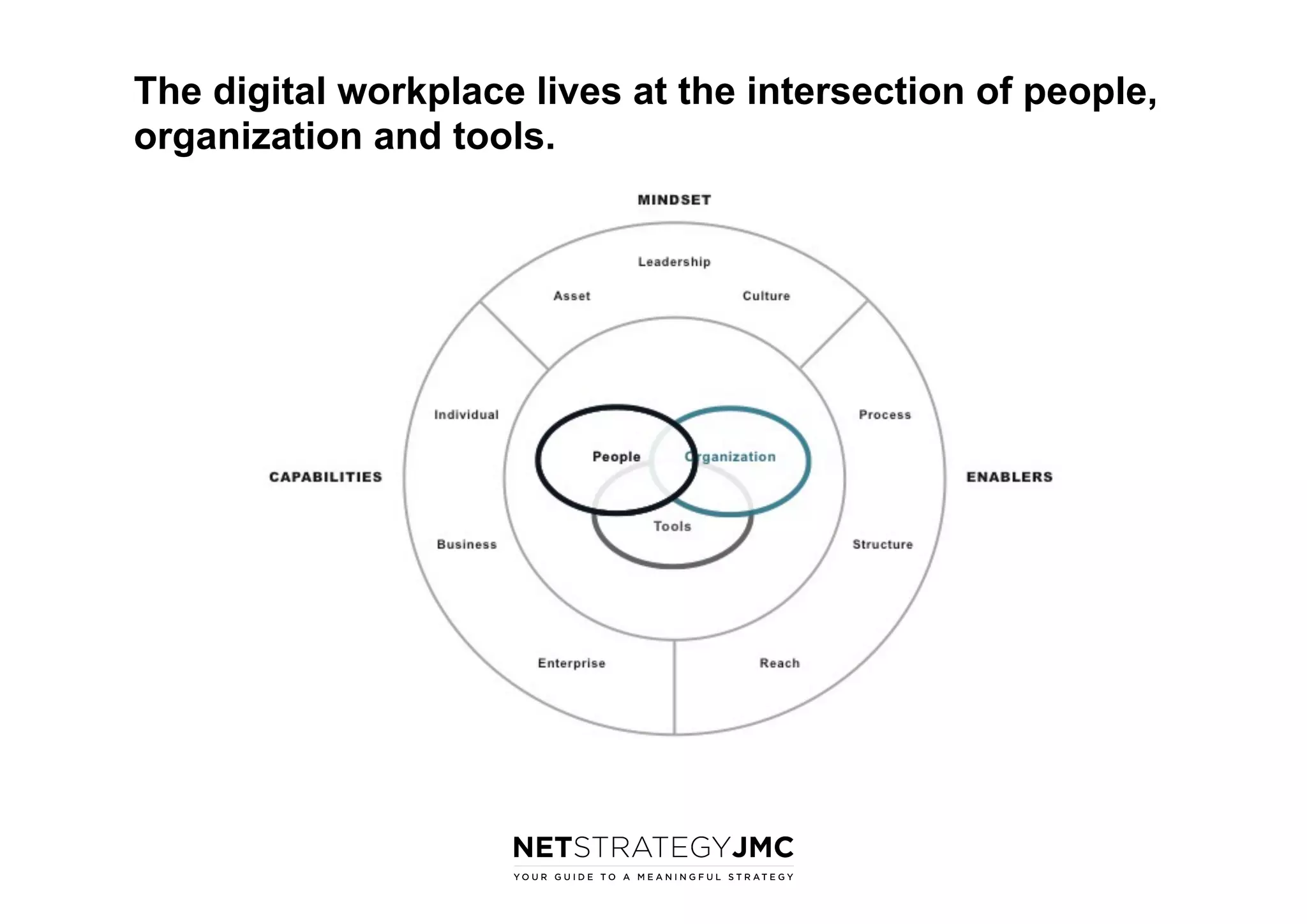
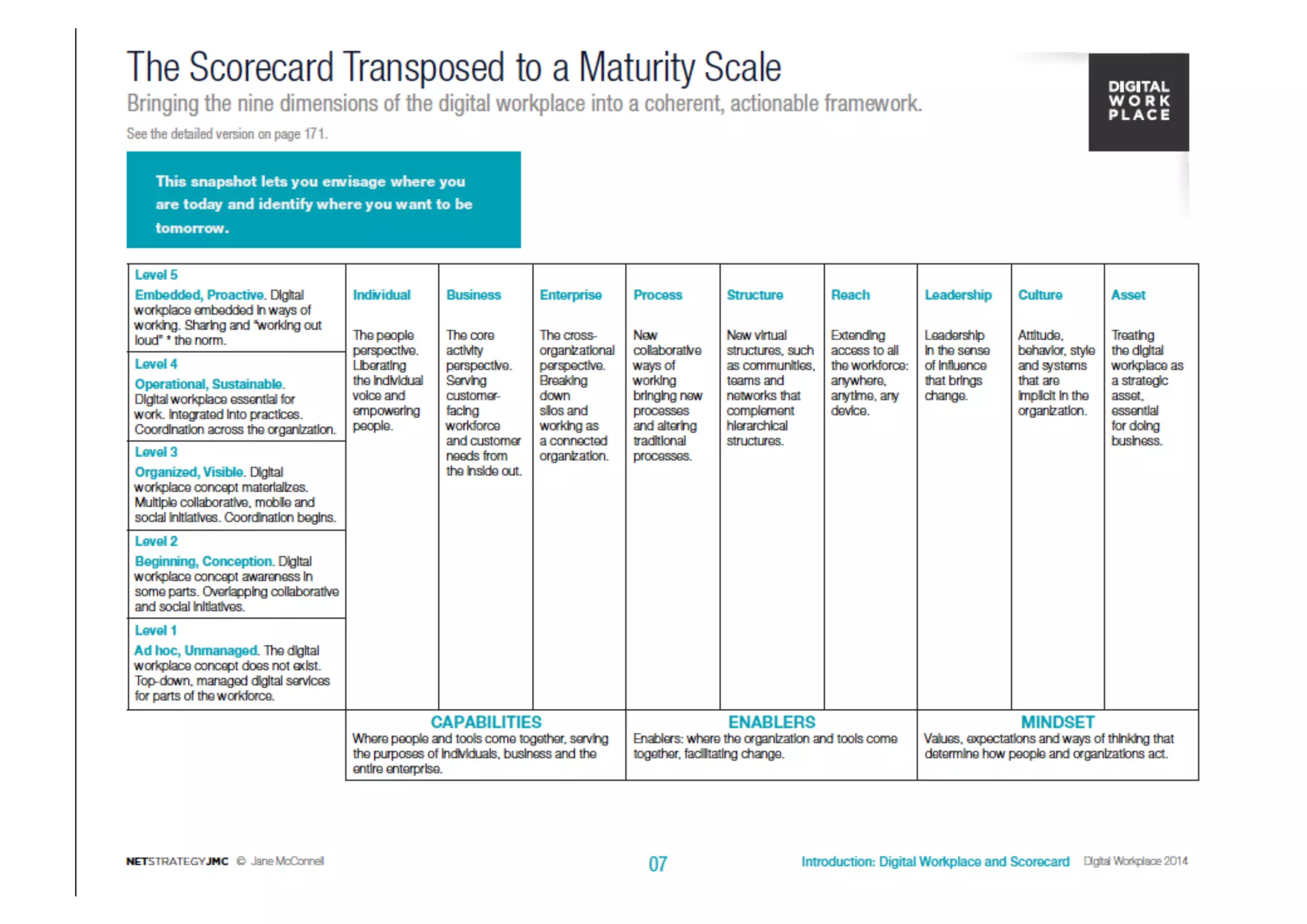
The digital workplace lives at the intersection of people,
organization and tools.
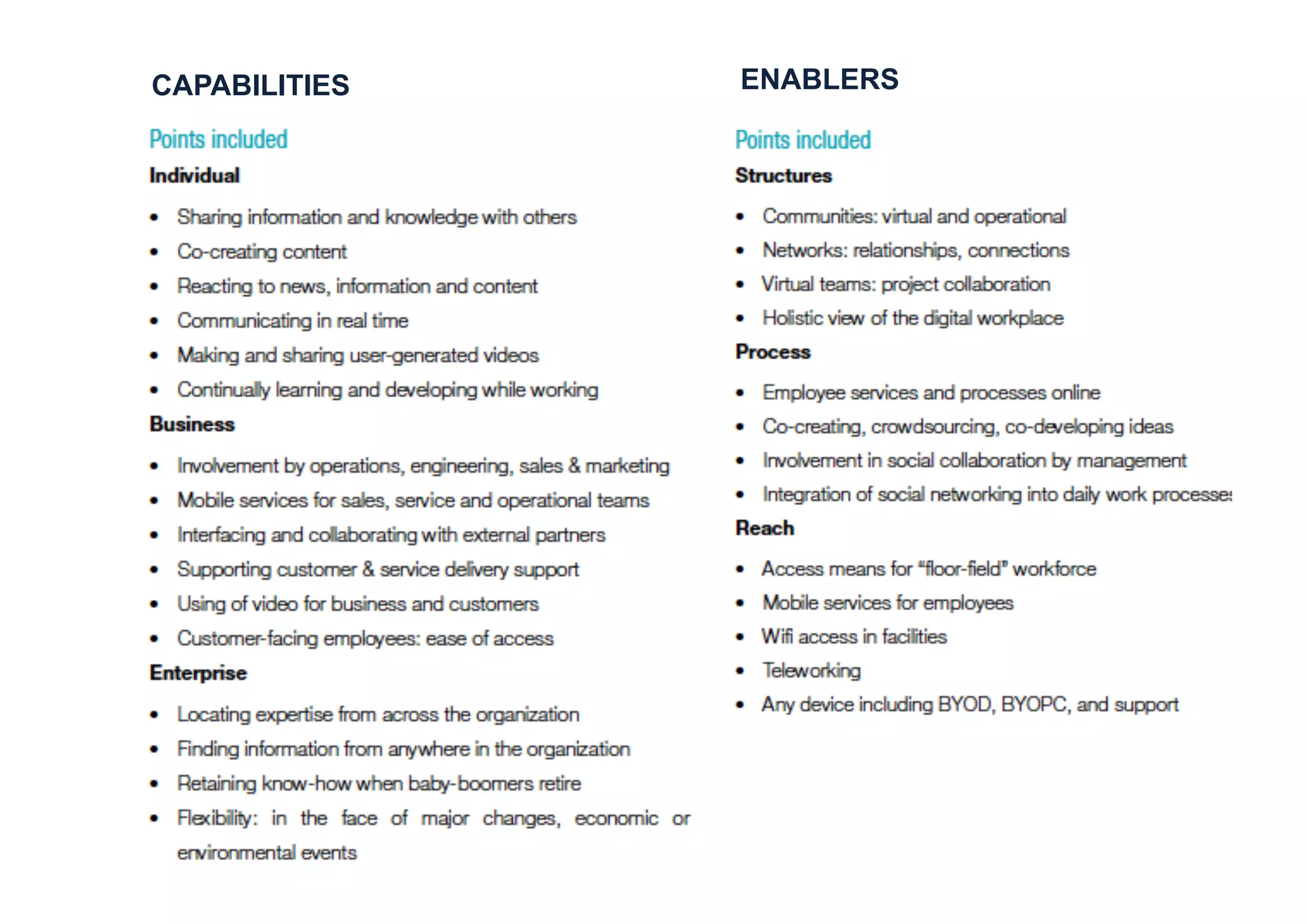
CAPABILITIES

ENABLERS
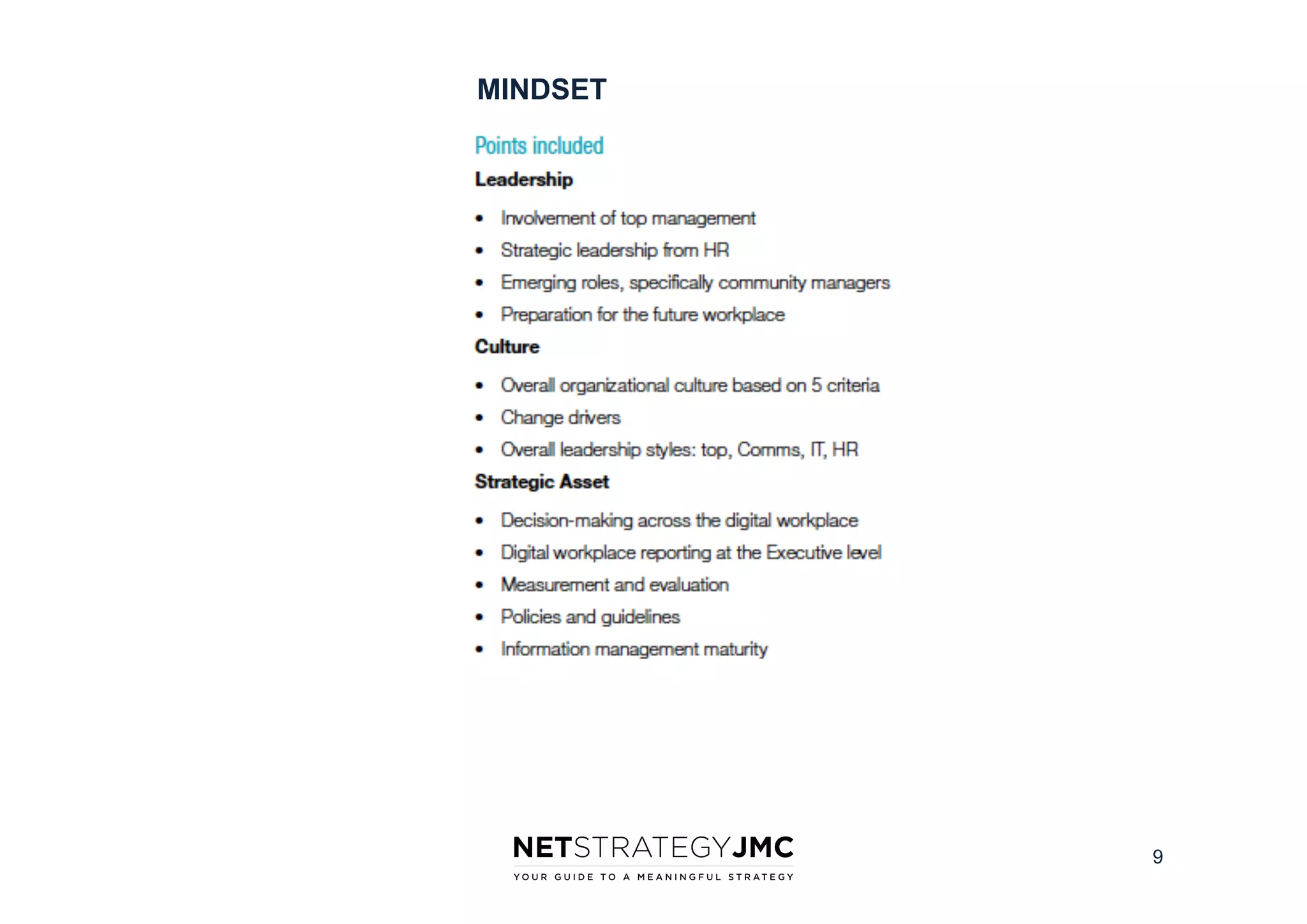
MINDSET

9
10
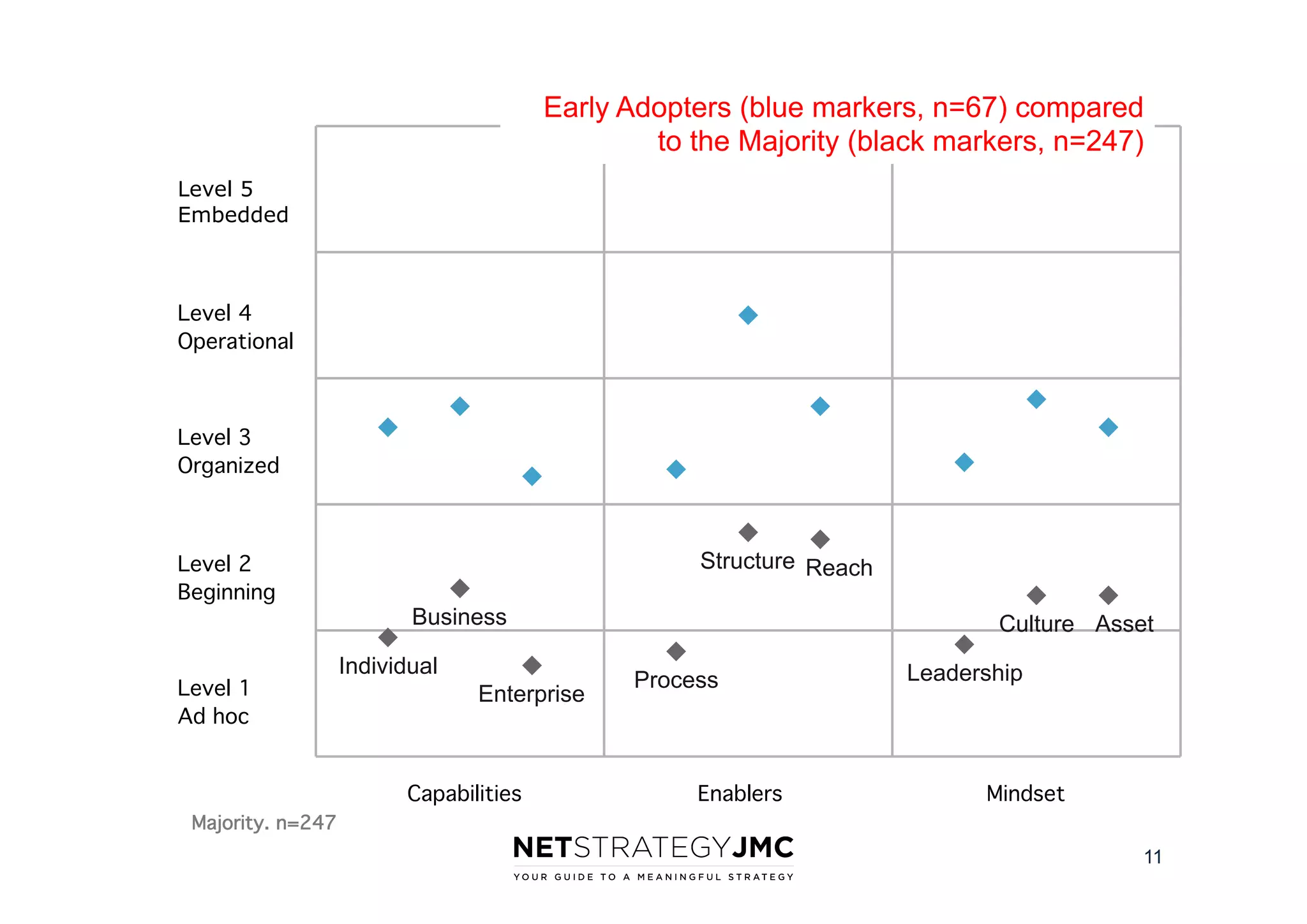
Early Adopters (blue markers, n=67) compared
to the Majority (black markers, n=247)

90
Level 5
Embedded
72
Level 4
Operational
54
Level 3
Organized
36

Structure Reach

Level 2
Beginning
18

Business

Culture Asset

Individual

Level 1
Ad hoc

Enterprise
0
0

Capabilities

Leadership

Process

20

Enablers

40

60

Mindset

Majority. n=247

11
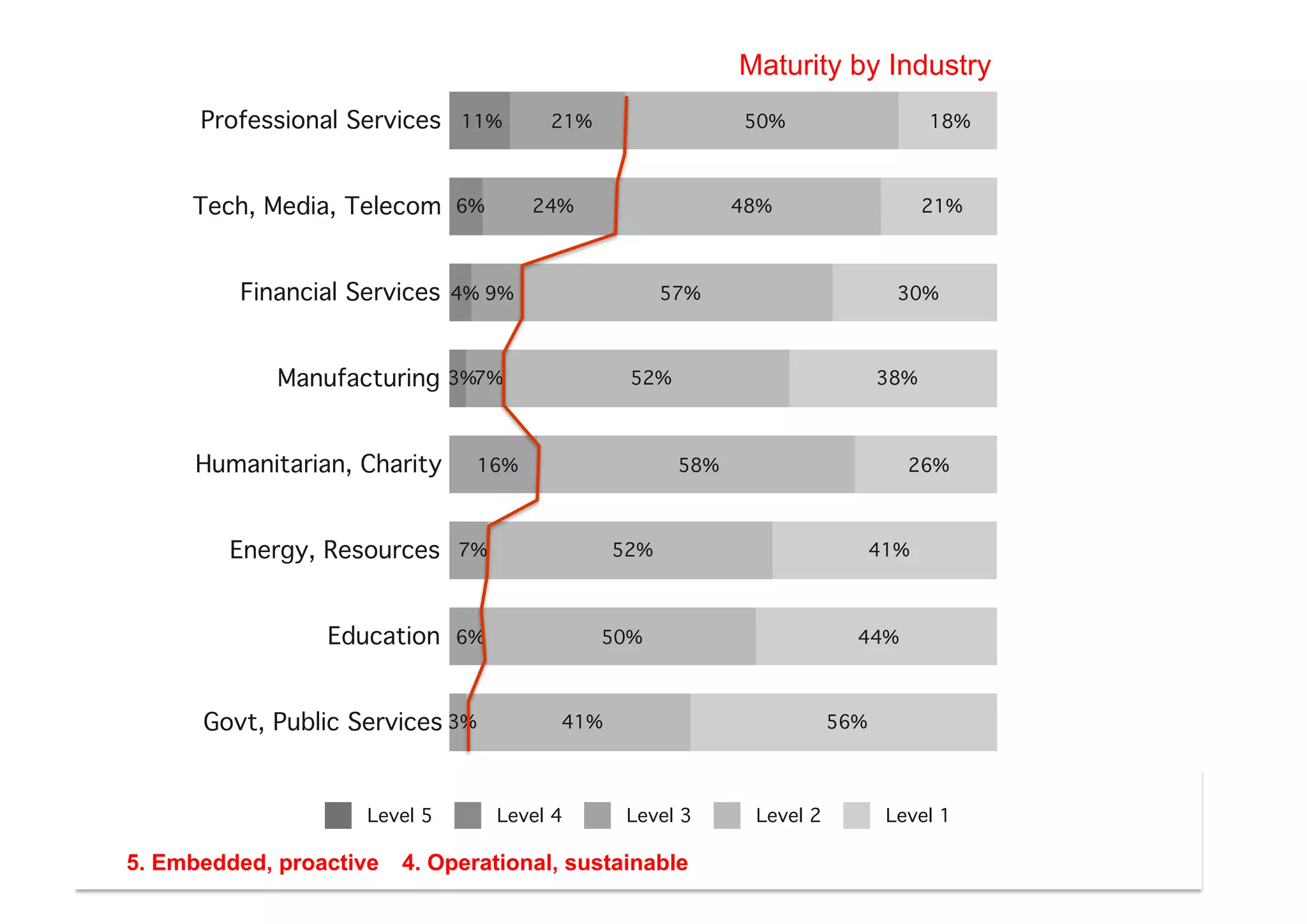
Maturity by Industry
Professional Services
Tech, Media, Telecom
Financial Services
Manufacturing
Humanitarian, Charity

11%

6%

21%

50%

24%

48%

4% 9%

6%

Level 5

5. Embedded, proactive

38%

58%

7%

Govt, Public Services 3%

30%

52%

16%

Education

21%

57%

3%7%

Energy, Resources

18%

26%

52%

41%

50%

44%

41%

Level 4

56%

Level 3

4. Operational, sustainable

Level 2

Level 1
13
The two strategic drivers for the digital
workplace:
•  Increasing organizational intelligence
•  Gaining efficiency and cost-savings
The first is number one for Early Adopters;
the second is number one for the Majority.

14
CUSTOMER FOCUS

46 % of Early Adopters report that
operational managers have “active
use” of the digital workplace for
their jobs. (Majority =10%)
“Customer or service delivery
tools” are part of the digital
workplace for 57 % of Early
Adopters. (Majority = 19 %)

15
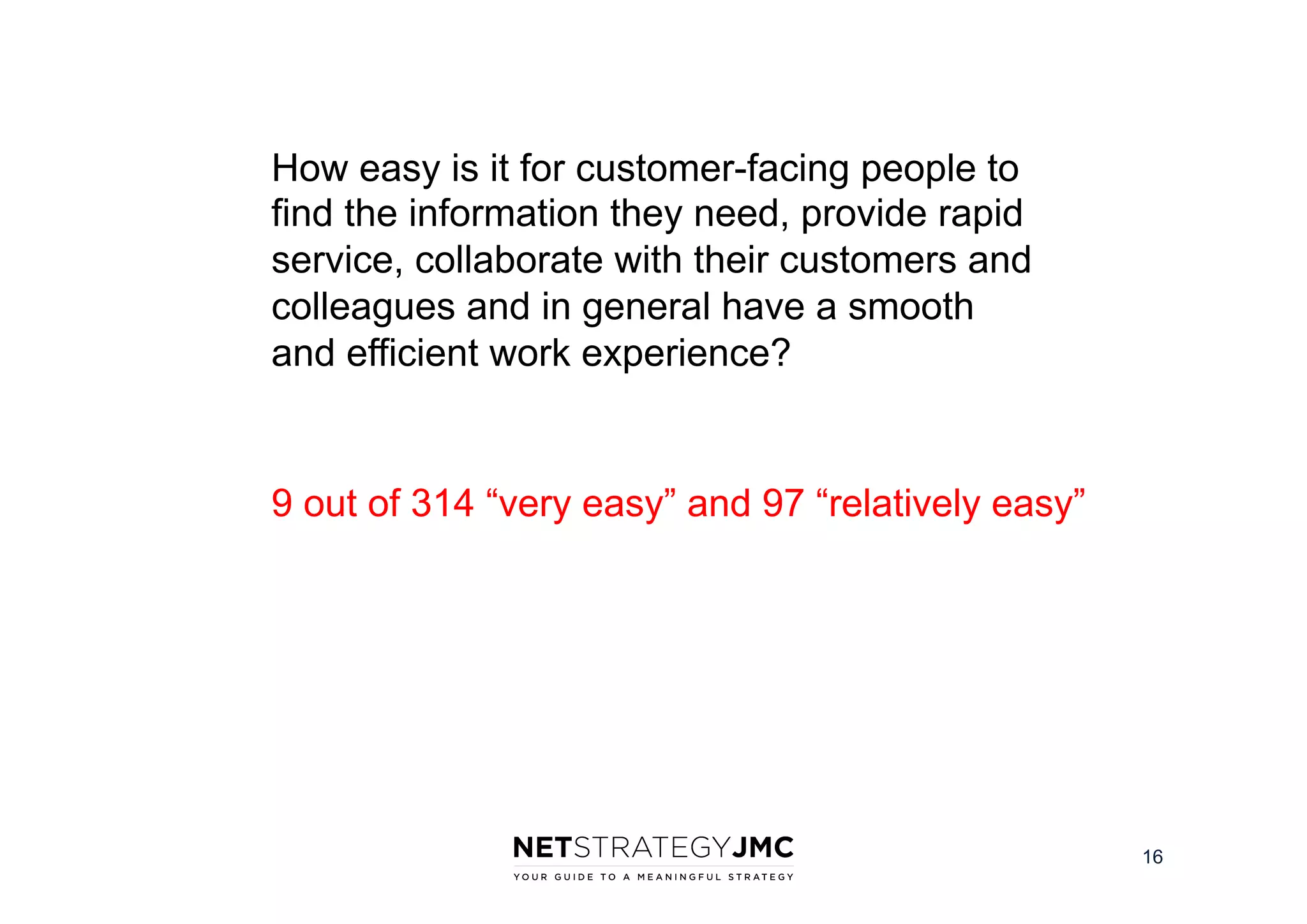
How easy is it for customer-facing people to
find the information they need, provide rapid
service, collaborate with their customers and
colleagues and in general have a smooth
and efficient work experience?

9 out of 314 “very easy” and 97 “relatively easy”

16
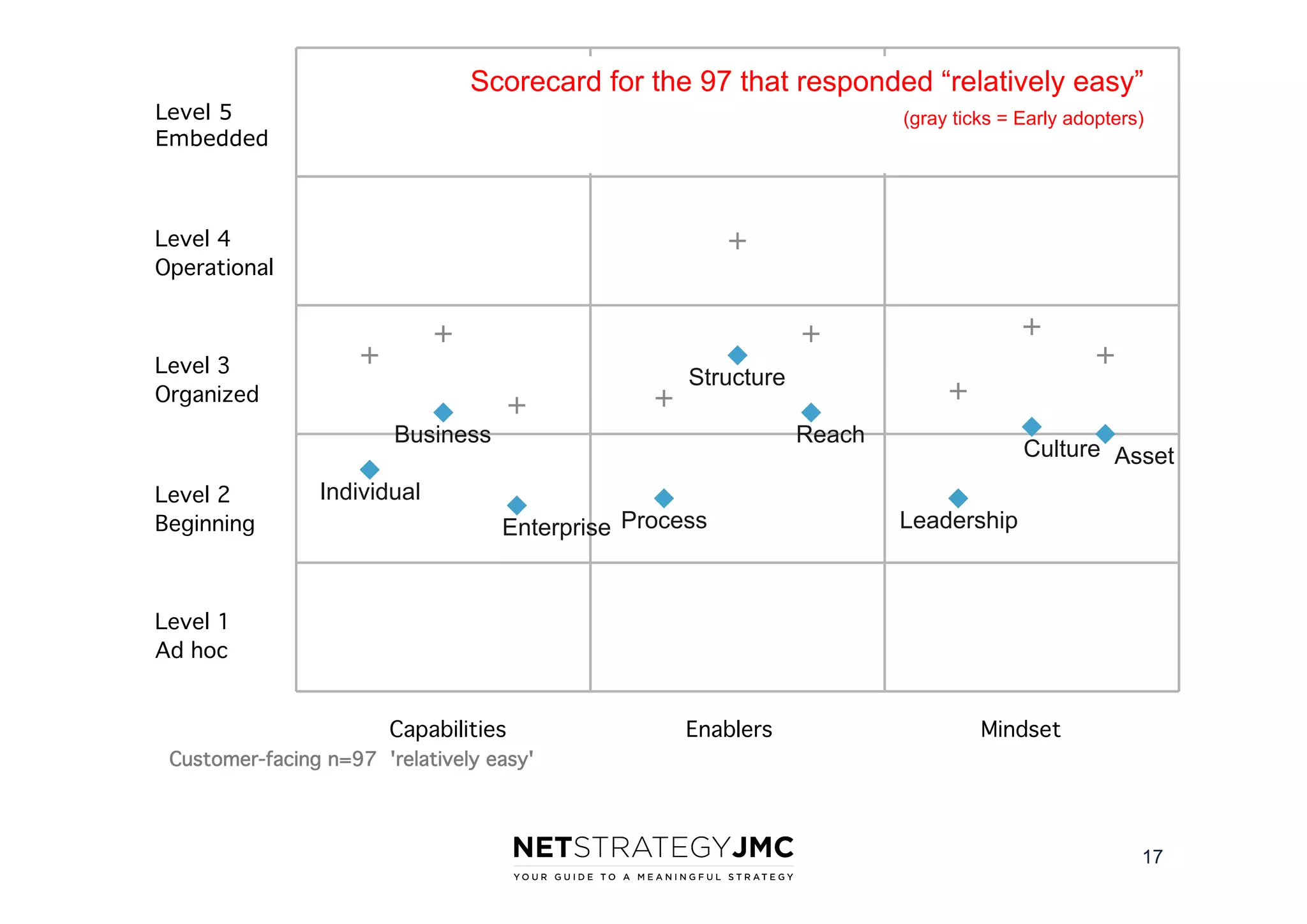
90

Scorecard for the 97 that responded “relatively easy”
Level 5
Embedded

(gray ticks = Early adopters)

72
Level 4
Operational
54
Level 3
Organized

Structure
36

Business

Reach

Culture Asset

Individual

Level 2
Beginning

Enterprise Process

Leadership

18
Level 1
Ad hoc
0
0

Capabilities

20

Enablers

40

60

Mindset

Customer-facing n=97 'relatively easy'

17
90

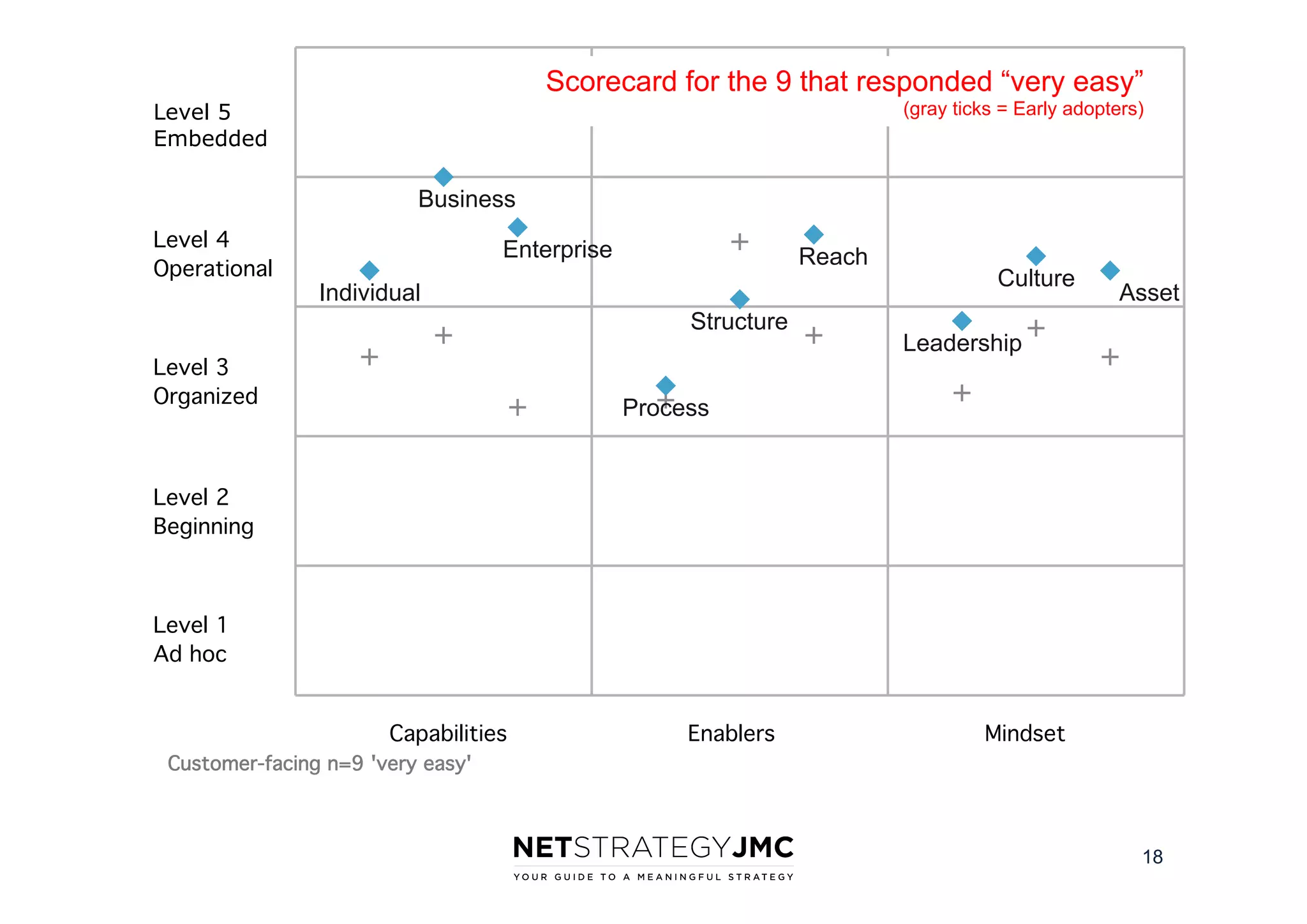
Scorecard for the 9 that responded “very easy”
(gray ticks = Early adopters)

Level 5
Embedded
72
Level 4
Operational

Business
Enterprise

54

Reach

Culture

Individual
Structure

Level 3
Organized

Asset

Leadership

Process
36

Level 2
Beginning
18
Level 1
Ad hoc
0
0

Capabilities

20

Enablers

40

60

Mindset

Customer-facing n=9 'very easy'

18
HUMANIZING THE
ENTERPRISE
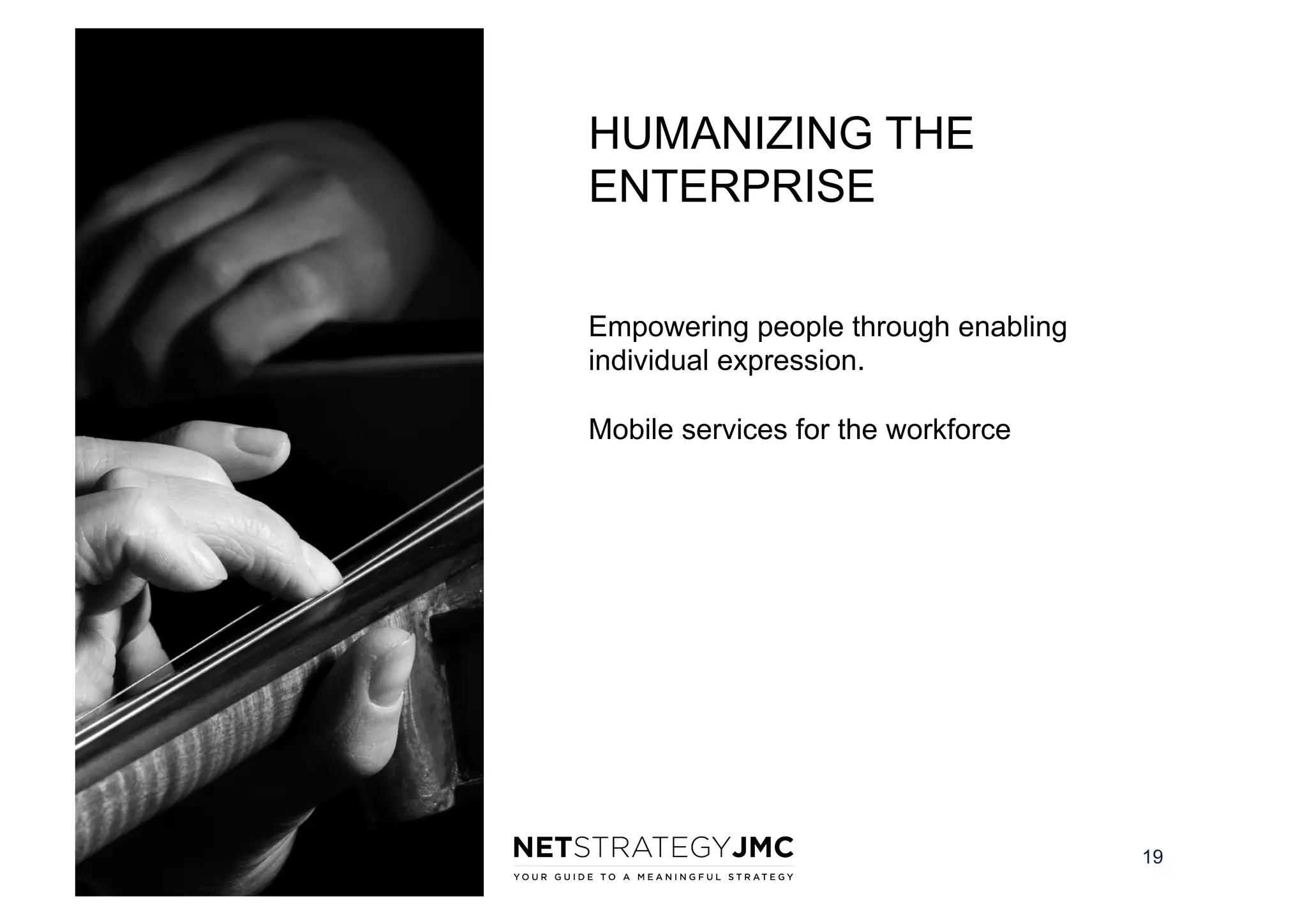
Empowering people through enabling
individual expression.
Mobile services for the workforce

19
20
Mobile is slow

%

21
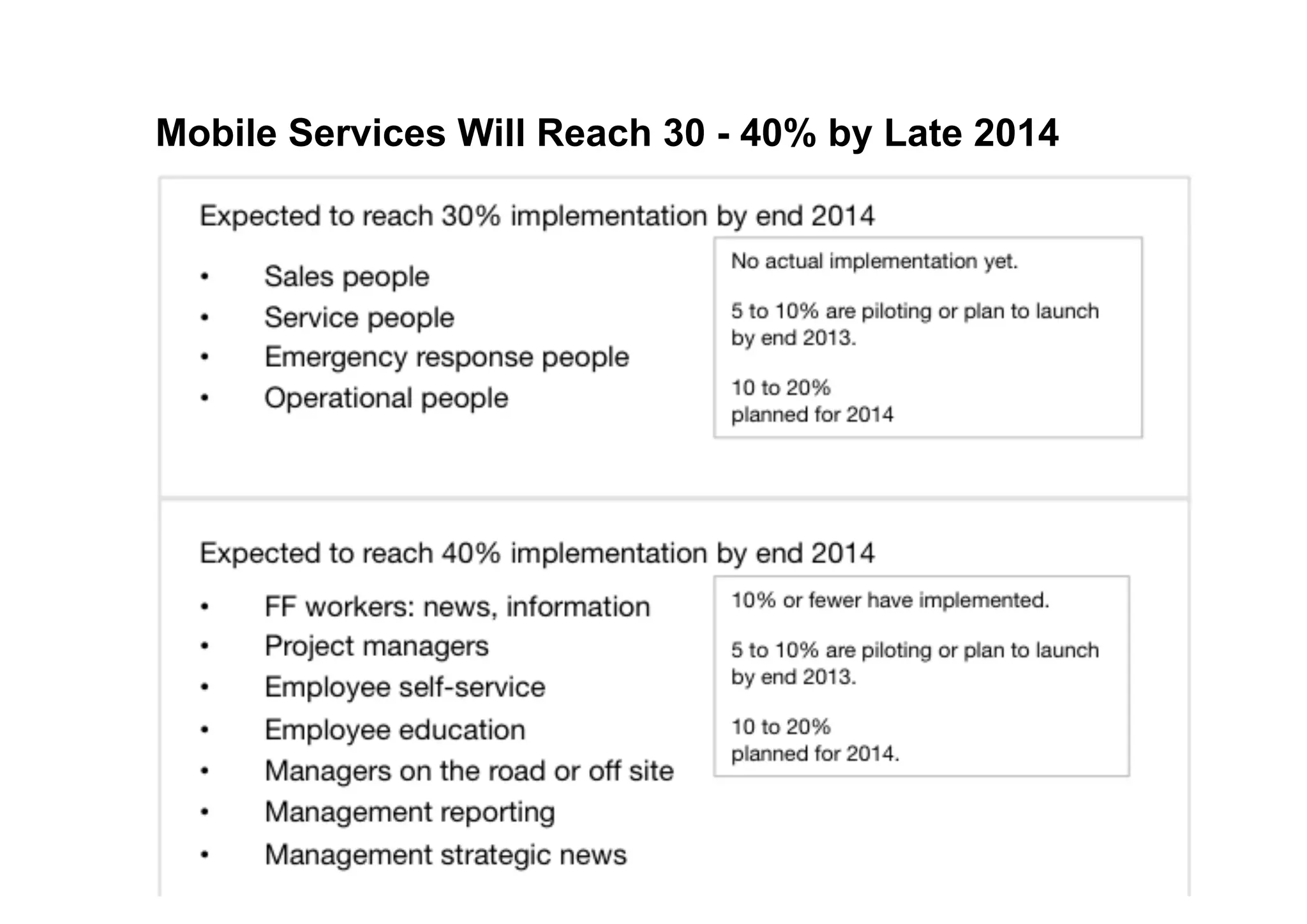
Mobile Services Will Reach 30 - 40% by Late 2014

22
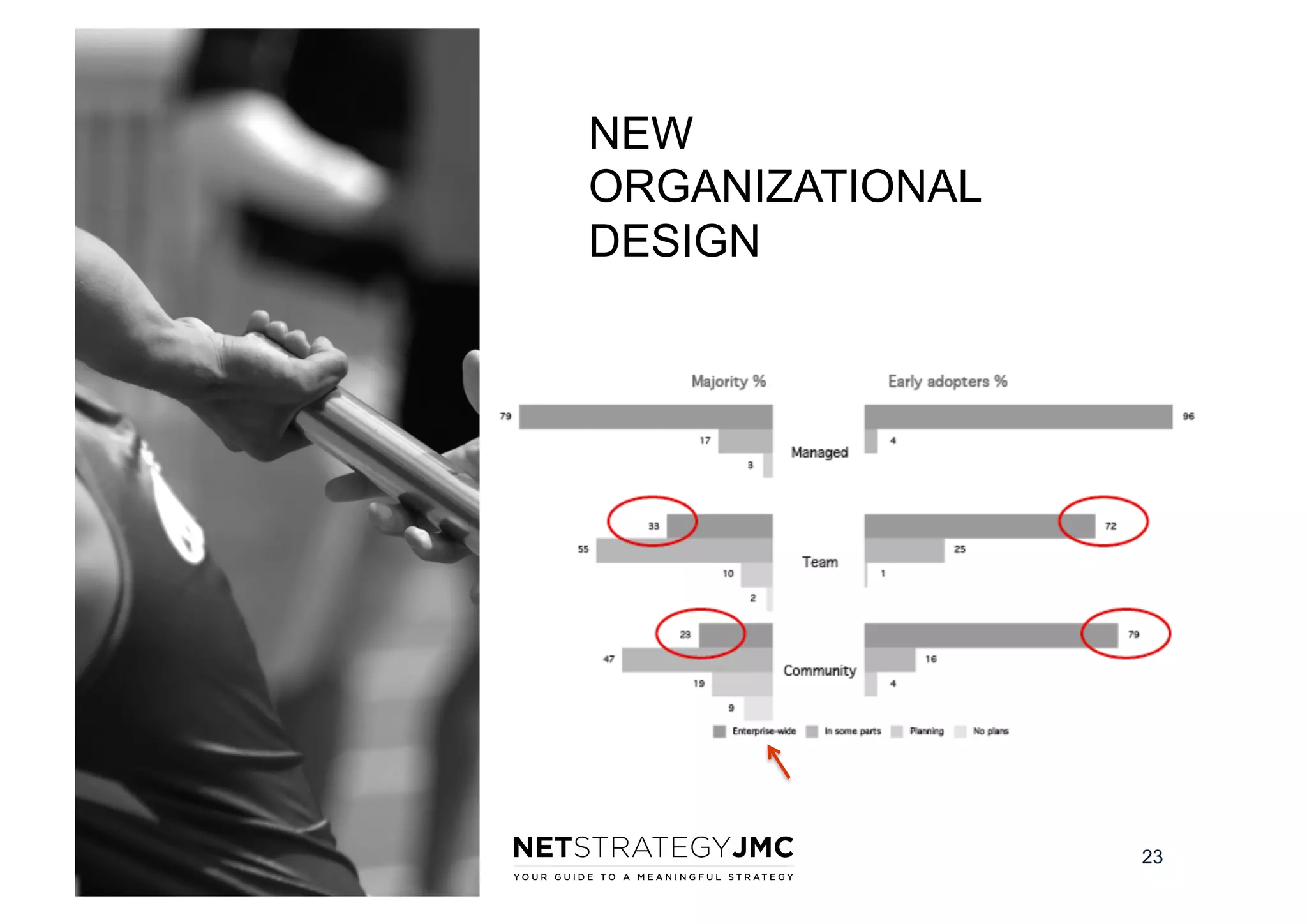
NEW
ORGANIZATIONAL
DESIGN

23
24
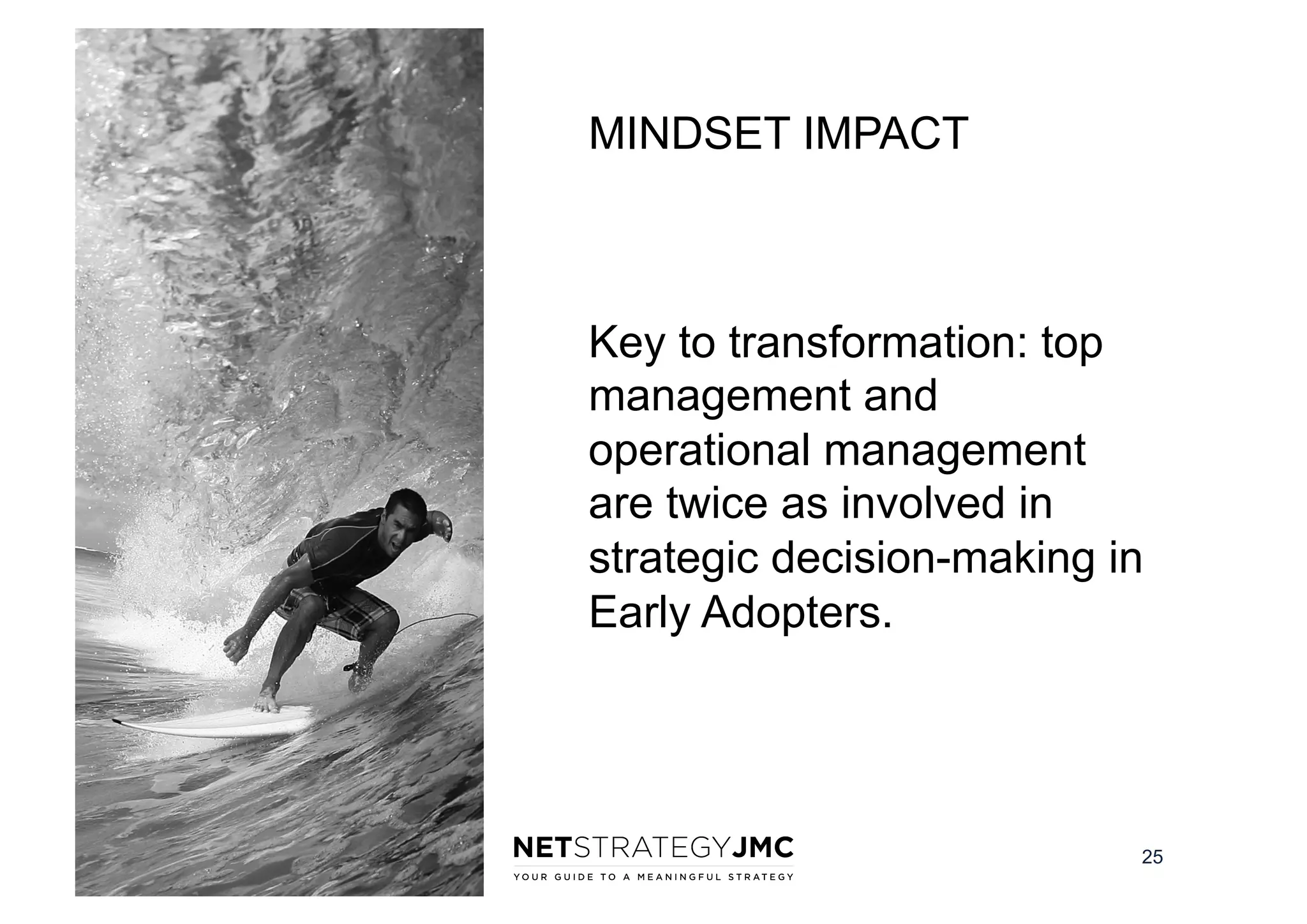
MINDSET IMPACT

Key to transformation: top
management and
operational management
are twice as involved in
strategic decision-making in
Early Adopters.

25
26
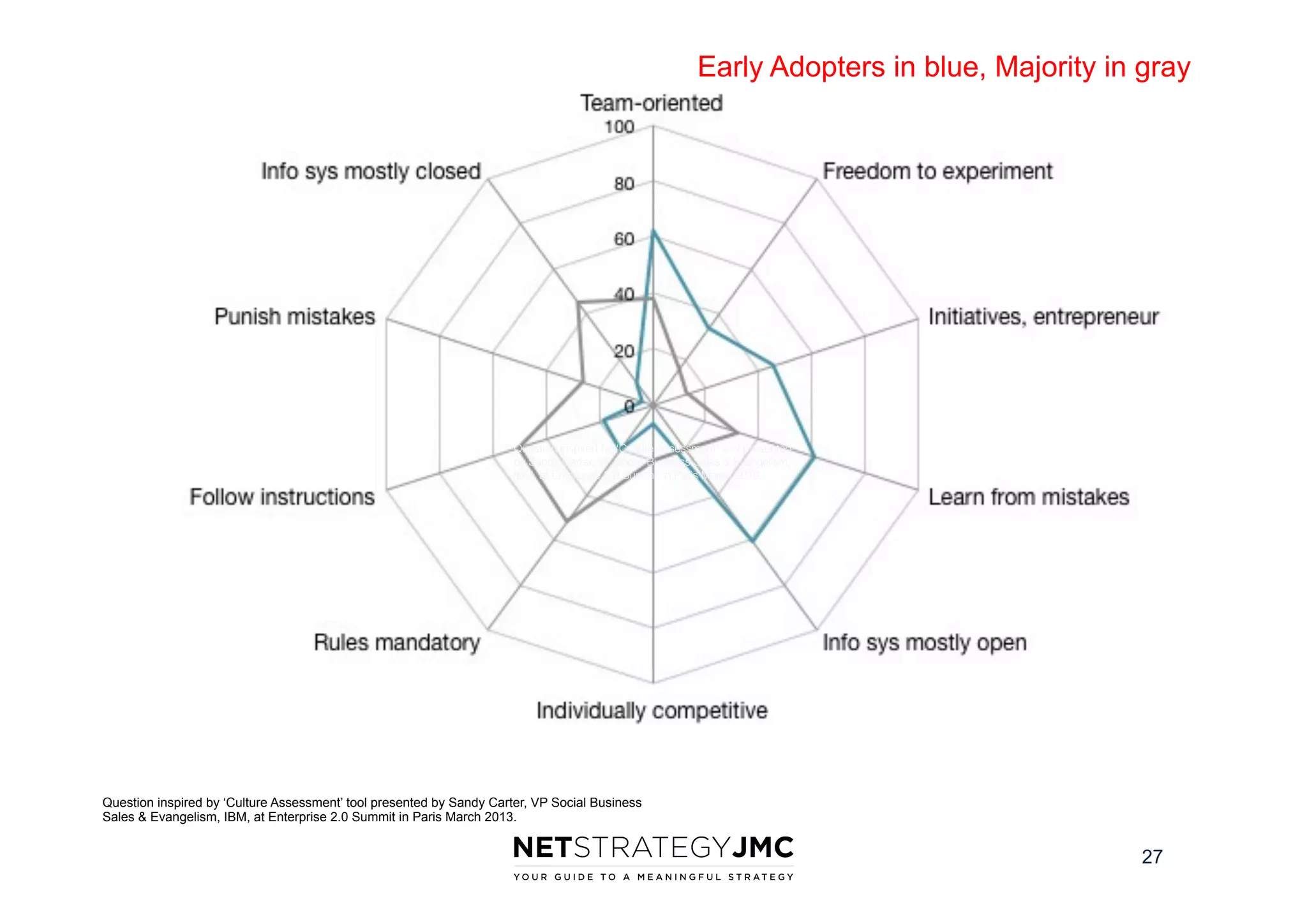
Early Adopters in blue, Majority in gray

Question inspired by ‘Culture Assessment’ tool presented
by Sandy Carter, VP Social Business Sales & Evangelism,
IBM, at Enterprise 2.0 Summit in Paris March 2013.

Question inspired by ‘Culture Assessment’ tool presented by Sandy Carter, VP Social Business
Sales & Evangelism, IBM, at Enterprise 2.0 Summit in Paris March 2013.

27
THE FUTURE
WORKPLACE

28
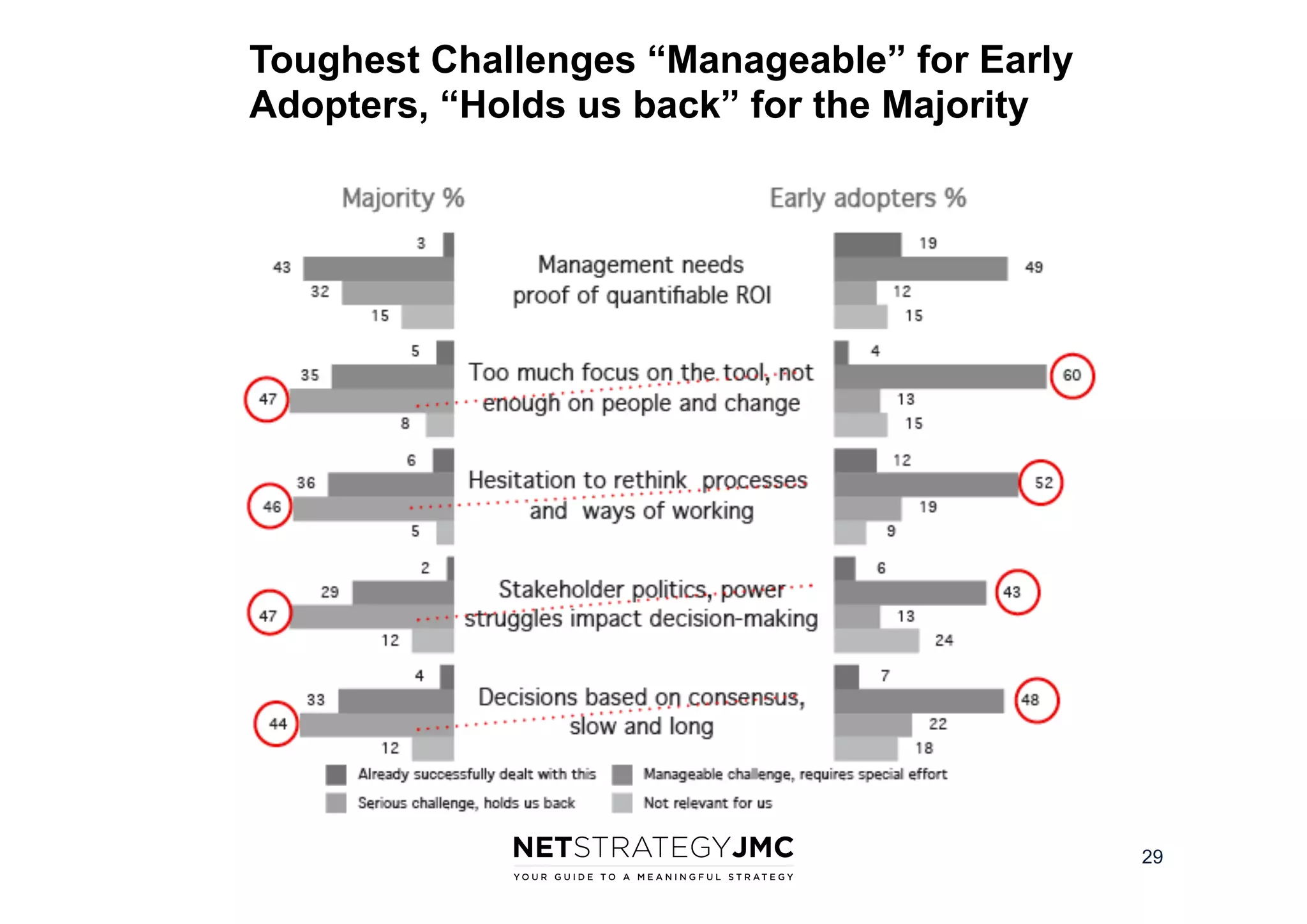
Toughest Challenges “Manageable” for Early
Adopters, “Holds us back” for the Majority

29
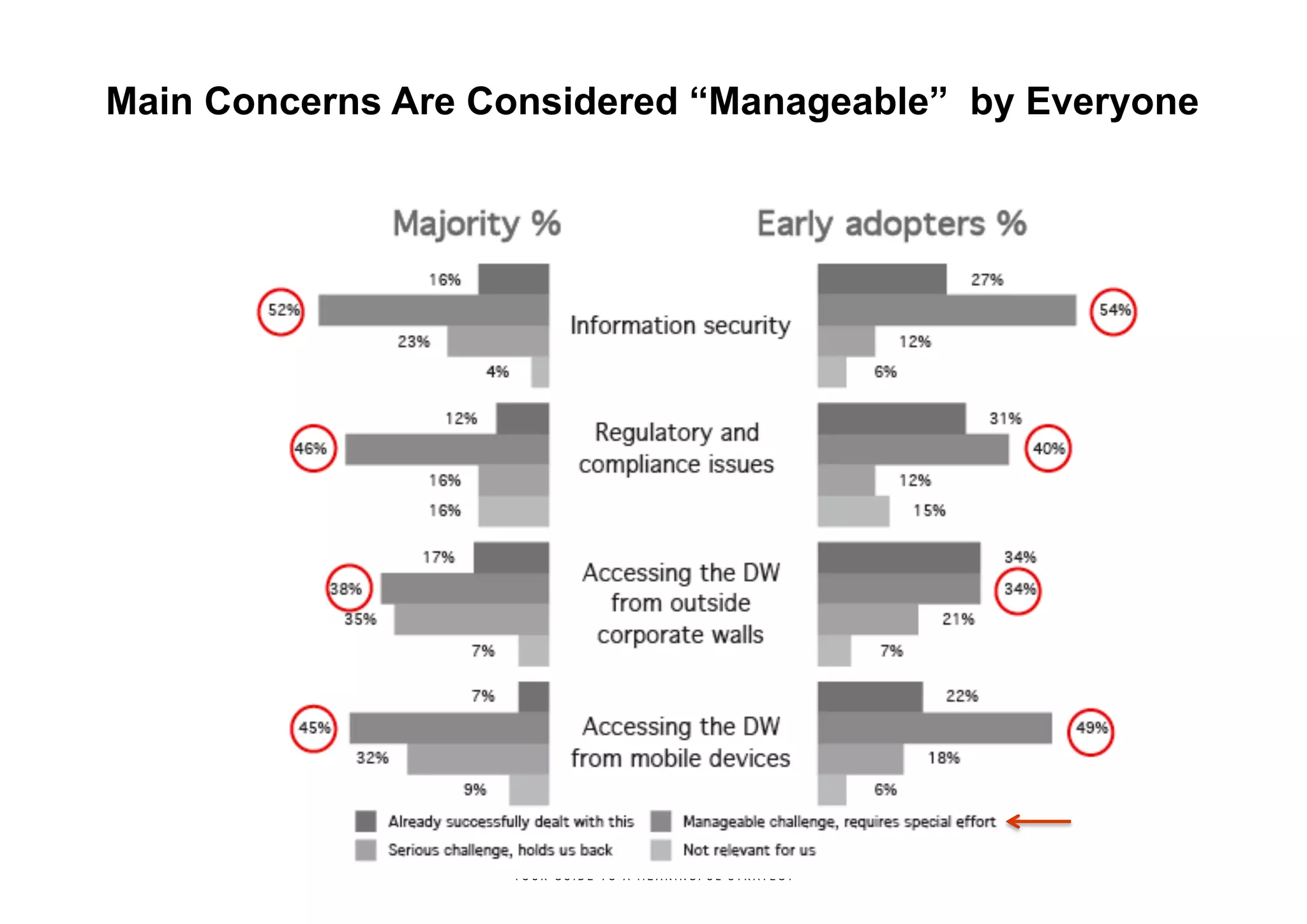
Main Concerns Are Considered “Manageable” by Everyone

30
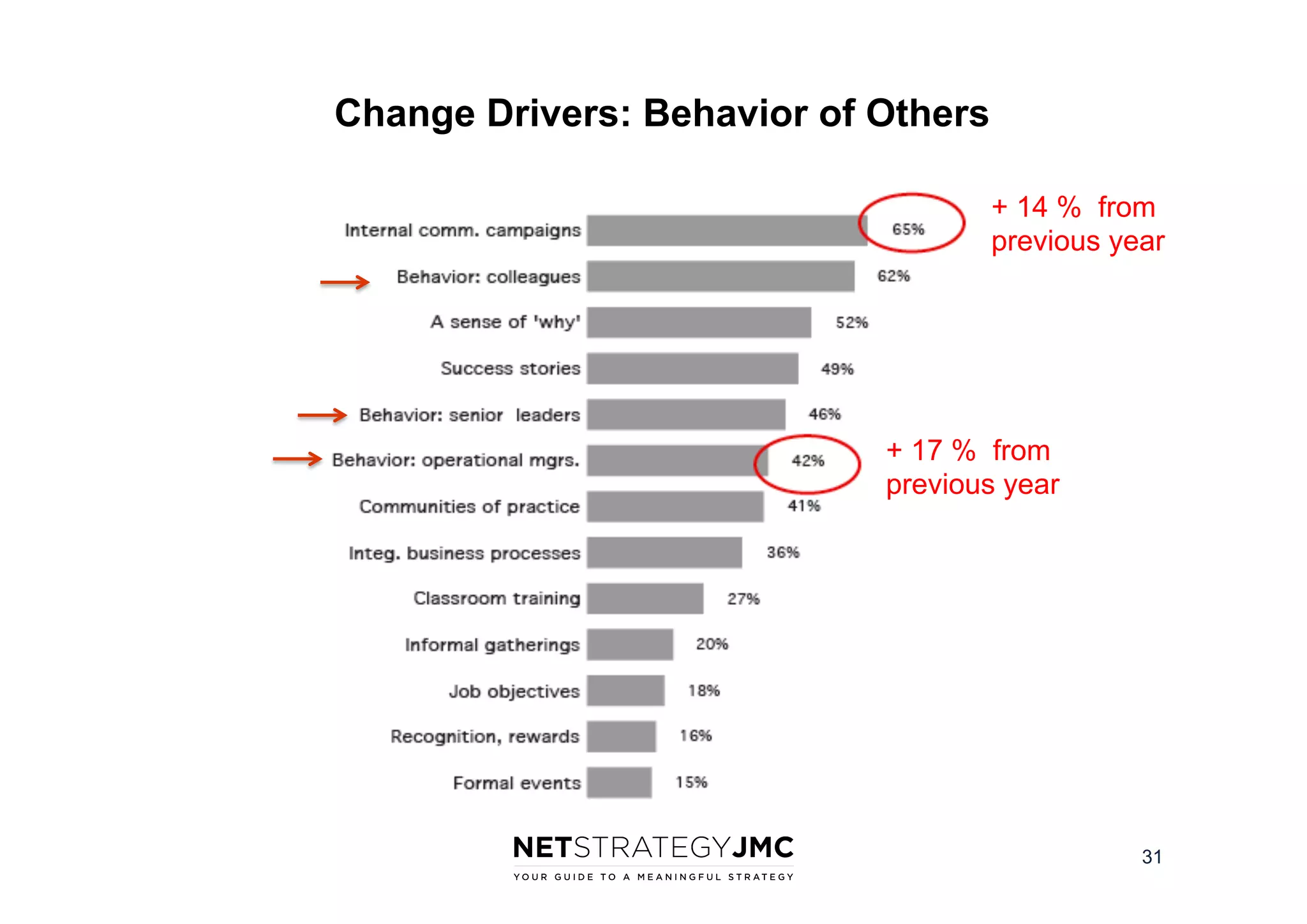
Change Drivers: Behavior of Others
+ 14 % from
previous year

+ 17 % from
previous year

31
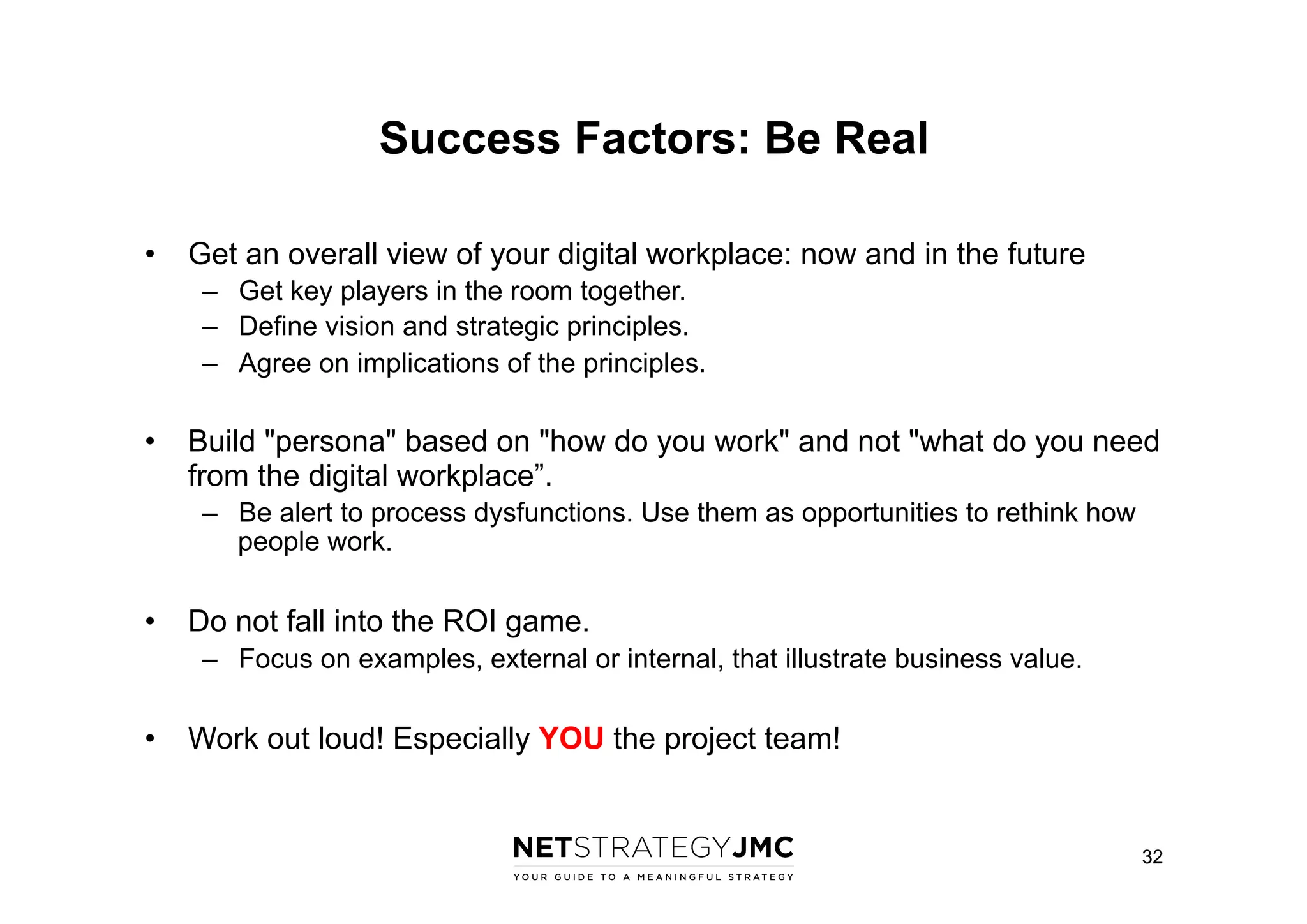
Success Factors: Be Real
•  Get an overall view of your digital workplace: now and in the future
–  Get key players in the room together.
–  Define vision and strategic principles.
–  Agree on implications of the principles.

•  Build "persona" based on "how do you work" and not "what do you need
from the digital workplace”.
–  Be alert to process dysfunctions. Use them as opportunities to rethink how
people work.

•  Do not fall into the ROI game.
–  Focus on examples, external or internal, that illustrate business value.

•  Work out loud! Especially YOU the project team!

32
Jane McConnell
jane@netjmc.com
Twitter: @netjmc
www.netjmc.com
www.digital-workplace-trends.com
www.linkedin.com/in/netjmc
Charter member of Change Agents Worldwide
(www.changeagentsworldwide.com)
Facilitator for IntraNetwork – work group of digital
practitioners, Paris-based (www.intranetwork.fr)

33

Digital Workplace in the Connected Organization

  • 1.
    The Digital Workplace inthe Connected Organization Highlights in 20 Minutes Enterprise 2.0 Summit in Paris February 2014 www.digital-workplace-trends.com 1
  • 2.
    The Digital Workplace inthe Connected Organization Data and analysis from 314 organizations around the world. Digital Workplace Scorecards: industries and industry leaders Early Adopters and the Majority: how and what 8th annual report by Jane McConnell www.digital-workplace-trends.com 2
  • 3.
    Author: Jane McConnell StrategicAdvisor 16 years > 100 projects for > 60 large, global organizations, management briefer and workshop leader Researcher conducting global surveys and writing annual reports since 2006 American-French living in the deep Provence for 25 years 3
  • 4.
  • 5.
  • 6.
    Digital Workplace AdvisoryBoard for 2014 •  Bjoern Negelmann, European Enterprise 2.0 (Germany) •  Brian Holness International Power – GDF SUEZ (UK) •  Céline Schillinger, SANOFI PASTEUR (France) •  Cornelis van der Brugge, NOKIA (Finland) •  Ernst Décsey, UNICEF (Switzerland) •  Franklin Bradley, Architect of the Capitol (US) •  Gloria Burke, UNISYS (US) •  Jon Husband, Wirearchy (Canada) •  Linda Tinnert, IKEA (Sweden) •  Martin Risgaard, Grundfos (Denmark) •  Rawn Shah, Forbes.com (US) •  Sam Marshall, ClearBox Consulting Ltd. (UK) •  Stéphane Aknin, AXA, (France) •  Susan Scrupski, Change Agents Worldwide LLC. (US) •  Thomas Maeder, Swisscom AG (Switzerland) 6
  • 7.
    The digital workplacelives at the intersection of people, organization and tools.
  • 8.
  • 9.
  • 10.
  • 11.
    Early Adopters (bluemarkers, n=67) compared to the Majority (black markers, n=247) 90 Level 5 Embedded 72 Level 4 Operational 54 Level 3 Organized 36 Structure Reach Level 2 Beginning 18 Business Culture Asset Individual Level 1 Ad hoc Enterprise 0 0 Capabilities Leadership Process 20 Enablers 40 60 Mindset Majority. n=247 11
  • 12.
    Maturity by Industry ProfessionalServices Tech, Media, Telecom Financial Services Manufacturing Humanitarian, Charity 11% 6% 21% 50% 24% 48% 4% 9% 6% Level 5 5. Embedded, proactive 38% 58% 7% Govt, Public Services 3% 30% 52% 16% Education 21% 57% 3%7% Energy, Resources 18% 26% 52% 41% 50% 44% 41% Level 4 56% Level 3 4. Operational, sustainable Level 2 Level 1
  • 13.
  • 14.
    The two strategicdrivers for the digital workplace: •  Increasing organizational intelligence •  Gaining efficiency and cost-savings The first is number one for Early Adopters; the second is number one for the Majority. 14
  • 15.
    CUSTOMER FOCUS 46 %of Early Adopters report that operational managers have “active use” of the digital workplace for their jobs. (Majority =10%) “Customer or service delivery tools” are part of the digital workplace for 57 % of Early Adopters. (Majority = 19 %) 15
  • 16.
    How easy isit for customer-facing people to find the information they need, provide rapid service, collaborate with their customers and colleagues and in general have a smooth and efficient work experience? 9 out of 314 “very easy” and 97 “relatively easy” 16
  • 17.
    90 Scorecard for the97 that responded “relatively easy” Level 5 Embedded (gray ticks = Early adopters) 72 Level 4 Operational 54 Level 3 Organized Structure 36 Business Reach Culture Asset Individual Level 2 Beginning Enterprise Process Leadership 18 Level 1 Ad hoc 0 0 Capabilities 20 Enablers 40 60 Mindset Customer-facing n=97 'relatively easy' 17
  • 18.
    90 Scorecard for the9 that responded “very easy” (gray ticks = Early adopters) Level 5 Embedded 72 Level 4 Operational Business Enterprise 54 Reach Culture Individual Structure Level 3 Organized Asset Leadership Process 36 Level 2 Beginning 18 Level 1 Ad hoc 0 0 Capabilities 20 Enablers 40 60 Mindset Customer-facing n=9 'very easy' 18
  • 19.
    HUMANIZING THE ENTERPRISE Empowering peoplethrough enabling individual expression. Mobile services for the workforce 19
  • 20.
  • 21.
  • 22.
    Mobile Services WillReach 30 - 40% by Late 2014 22
  • 23.
  • 24.
  • 25.
    MINDSET IMPACT Key totransformation: top management and operational management are twice as involved in strategic decision-making in Early Adopters. 25
  • 26.
  • 27.
    Early Adopters inblue, Majority in gray Question inspired by ‘Culture Assessment’ tool presented by Sandy Carter, VP Social Business Sales & Evangelism, IBM, at Enterprise 2.0 Summit in Paris March 2013. Question inspired by ‘Culture Assessment’ tool presented by Sandy Carter, VP Social Business Sales & Evangelism, IBM, at Enterprise 2.0 Summit in Paris March 2013. 27
  • 28.
  • 29.
    Toughest Challenges “Manageable”for Early Adopters, “Holds us back” for the Majority 29
  • 30.
    Main Concerns AreConsidered “Manageable” by Everyone 30
  • 31.
    Change Drivers: Behaviorof Others + 14 % from previous year + 17 % from previous year 31
  • 32.
    Success Factors: BeReal •  Get an overall view of your digital workplace: now and in the future –  Get key players in the room together. –  Define vision and strategic principles. –  Agree on implications of the principles. •  Build "persona" based on "how do you work" and not "what do you need from the digital workplace”. –  Be alert to process dysfunctions. Use them as opportunities to rethink how people work. •  Do not fall into the ROI game. –  Focus on examples, external or internal, that illustrate business value. •  Work out loud! Especially YOU the project team! 32
  • 33.
    Jane McConnell jane@netjmc.com Twitter: @netjmc www.netjmc.com www.digital-workplace-trends.com www.linkedin.com/in/netjmc Chartermember of Change Agents Worldwide (www.changeagentsworldwide.com) Facilitator for IntraNetwork – work group of digital practitioners, Paris-based (www.intranetwork.fr) 33