


Di gital
  Age

      Digital Learning

@ Kelvinside Academy
Ov ervie
    w
•Education – Where are we now & how did we get here?
•Generation Z – What does it mean for your children?
•What is Kelvinside Academy doing?
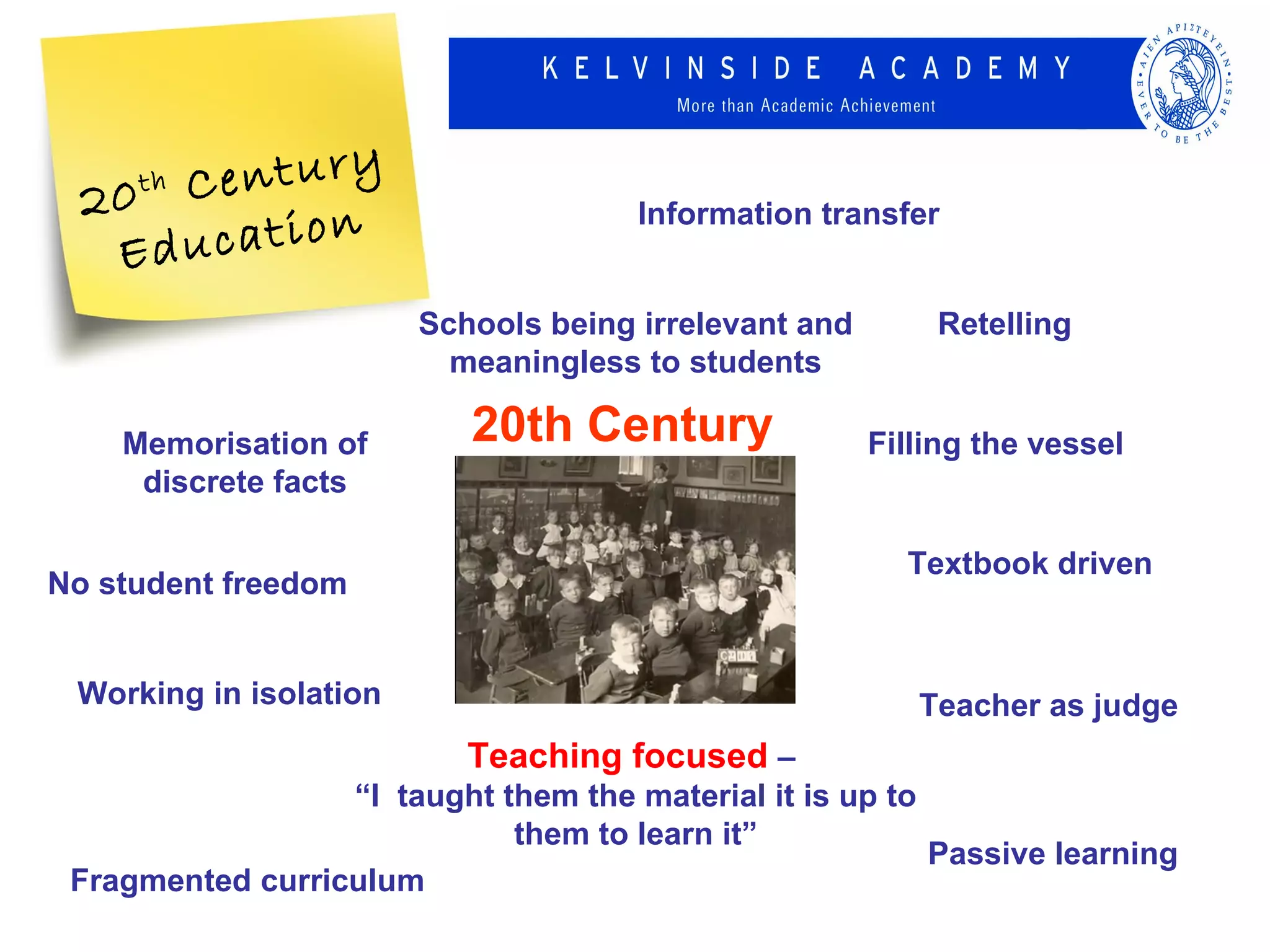
20 C
     thentury
      ucation
                                      Information transfer
   Ed
                        Schools being irrelevant and       Retelling
                          meaningless to students

    Memorisation of        20th Century                Filling the vessel
     discrete facts

                                                         Textbook driven
No student freedom


 Working in isolation                                     Teacher as judge
                           Teaching focused –
                  “I taught them the material it is up to
                             them to learn it”
                                                          Passive learning
 Fragmented curriculum
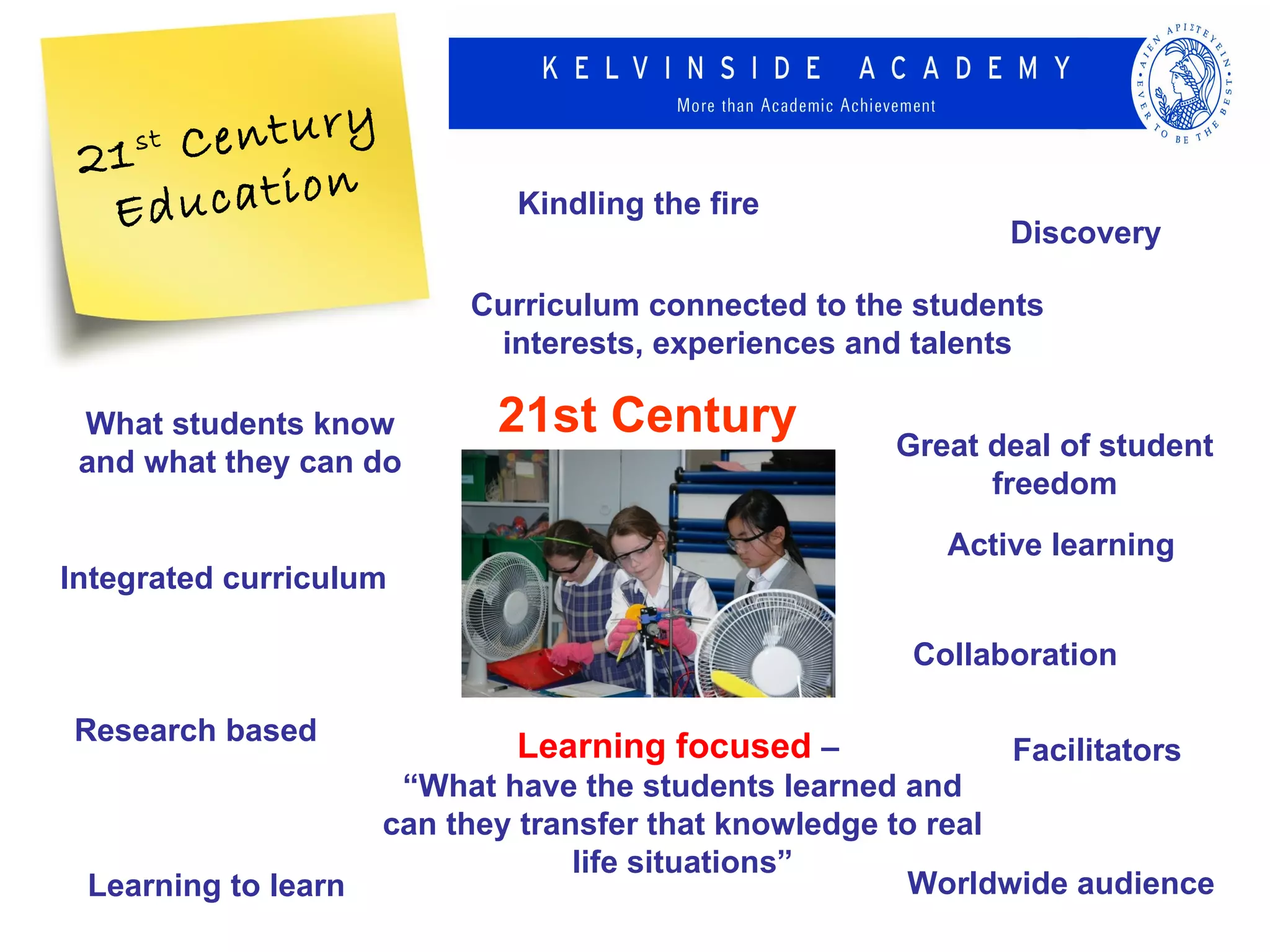
21 C
    stentury
  Ed ucation                 Kindling the fire
                                                            Discovery

                          Curriculum connected to the students
                           interests, experiences and talents

 What students know         21st Century             Great deal of student
 and what they can do
                                                           freedom
                                                        Active learning
Integrated curriculum

                                                      Collaboration

Research based
                             Learning focused –             Facilitators
                      “What have the students learned and
                     can they transfer that knowledge to real
                                  life situations”
 Learning to learn                                     Worldwide audience
n
    Ge neratio
           Z                    ‘Generation Z’
                              1995 - …The Digital
                                    Natives
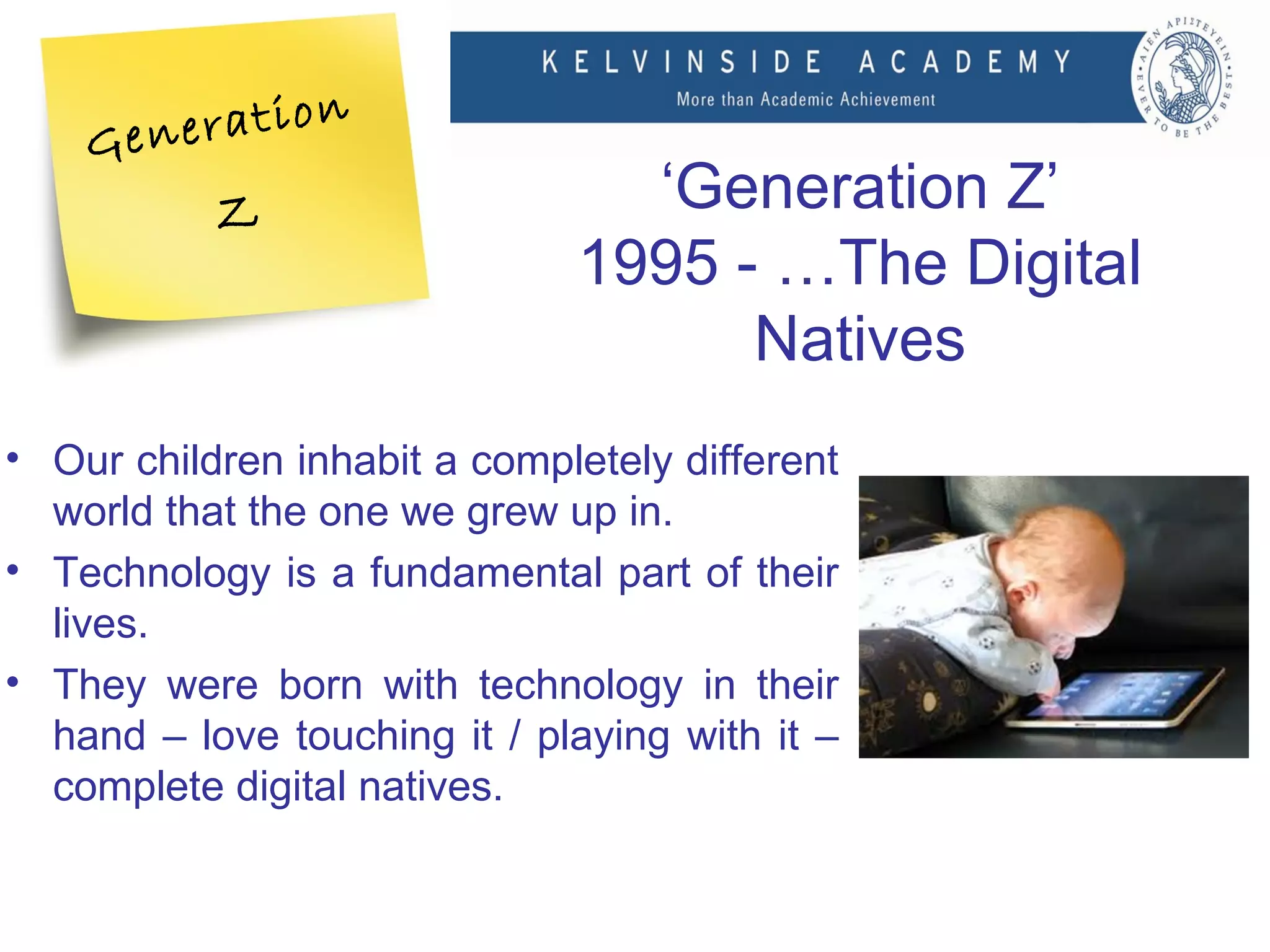
• Our children inhabit a completely different
  world that the one we grew up in.
• Technology is a fundamental part of their
  lives.
• They were born with technology in their
  hand – love touching it / playing with it –
  complete digital natives.
It is NOT
       away!
                       Internet devices         1984 - 1000
going                                           1992 - 1,000,000
                                                1995 - 16,000,000
                                                2000 - 260,000,000
                                                2012 - 1,800,000,000
First text was in 1992, now the number sent every day exceeds the
                   total population of our planet…
            845 million on Facebook every month
            50 million tweets a day (600 a second)

  31 billion searches on Google every month (2.7 billion in 2006)

Estimated that 4 exabytes of unique information will be generated
       this year – that is MORE than previous 5,000 years!

  A weeks worth of news in ‘The New York Times’ contains more
information than a person was likely to come across in a lifetime in
                         the 18th century.
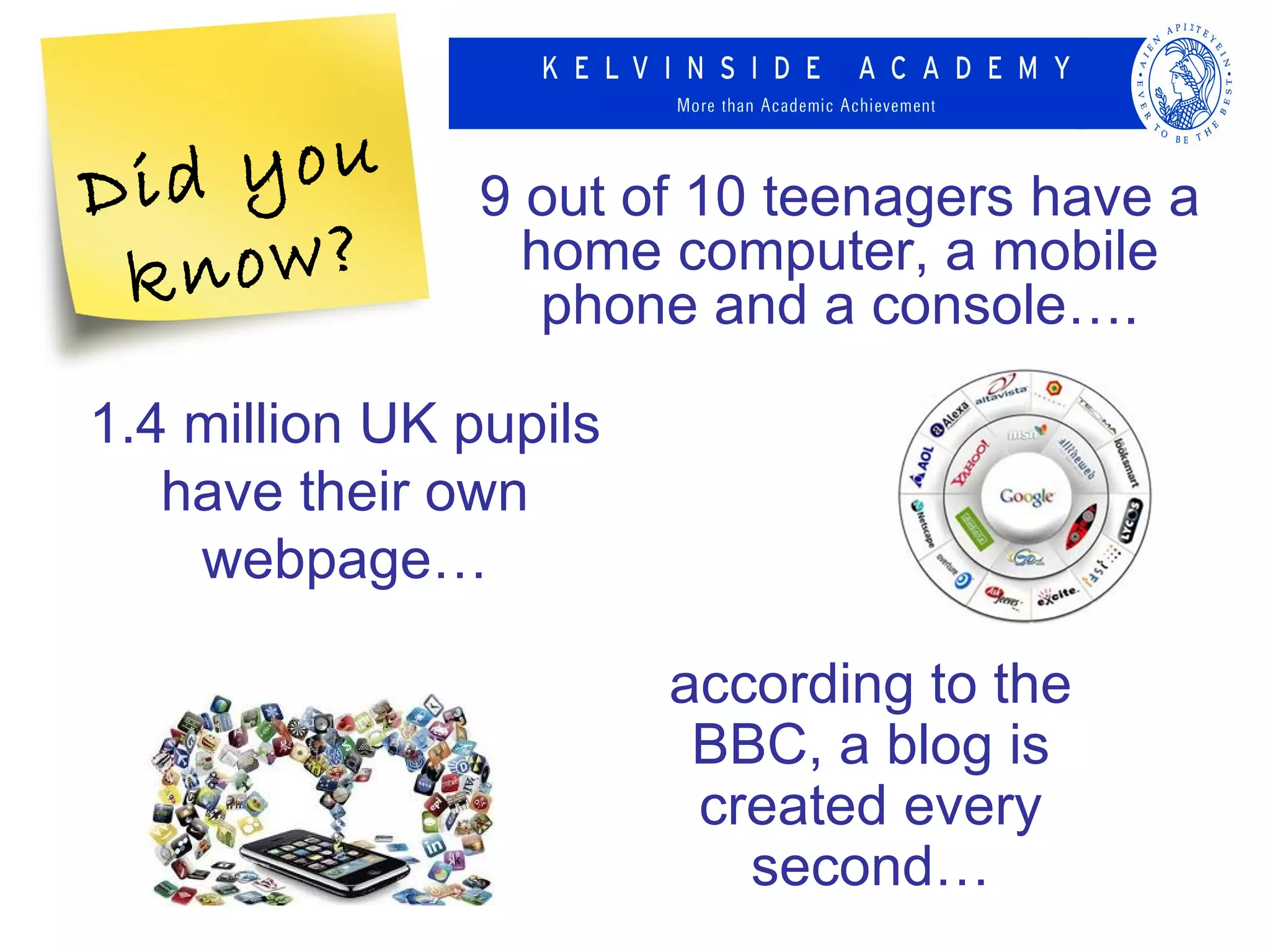
Di d you        9 out of 10 teenagers have a
 k now?           home computer, a mobile
                   phone and a console….

1.4 million UK pupils
   have their own
    webpage…

                        according to the
                         BBC, a blog is
                         created every
                           second…
Wh at do
  you
 th ink?
     How many of you actually:
                    blog….
   play consoles e.g. wii, DS, Xbox…
             have a web page
           listen to RSS feeds
   use          ,        and facebook
                use a tablet
Di d you       We are currently preparing
  k now?        students for jobs that don’t
                       exist yet….

using technologies that
haven’t been invented…

                   in order to solve problems
                    we don’t even know are
                         problems yet…
ership
P a r t n st
    for 21
    C  entury
      Skills
W  hat
       a re we
       d oing?
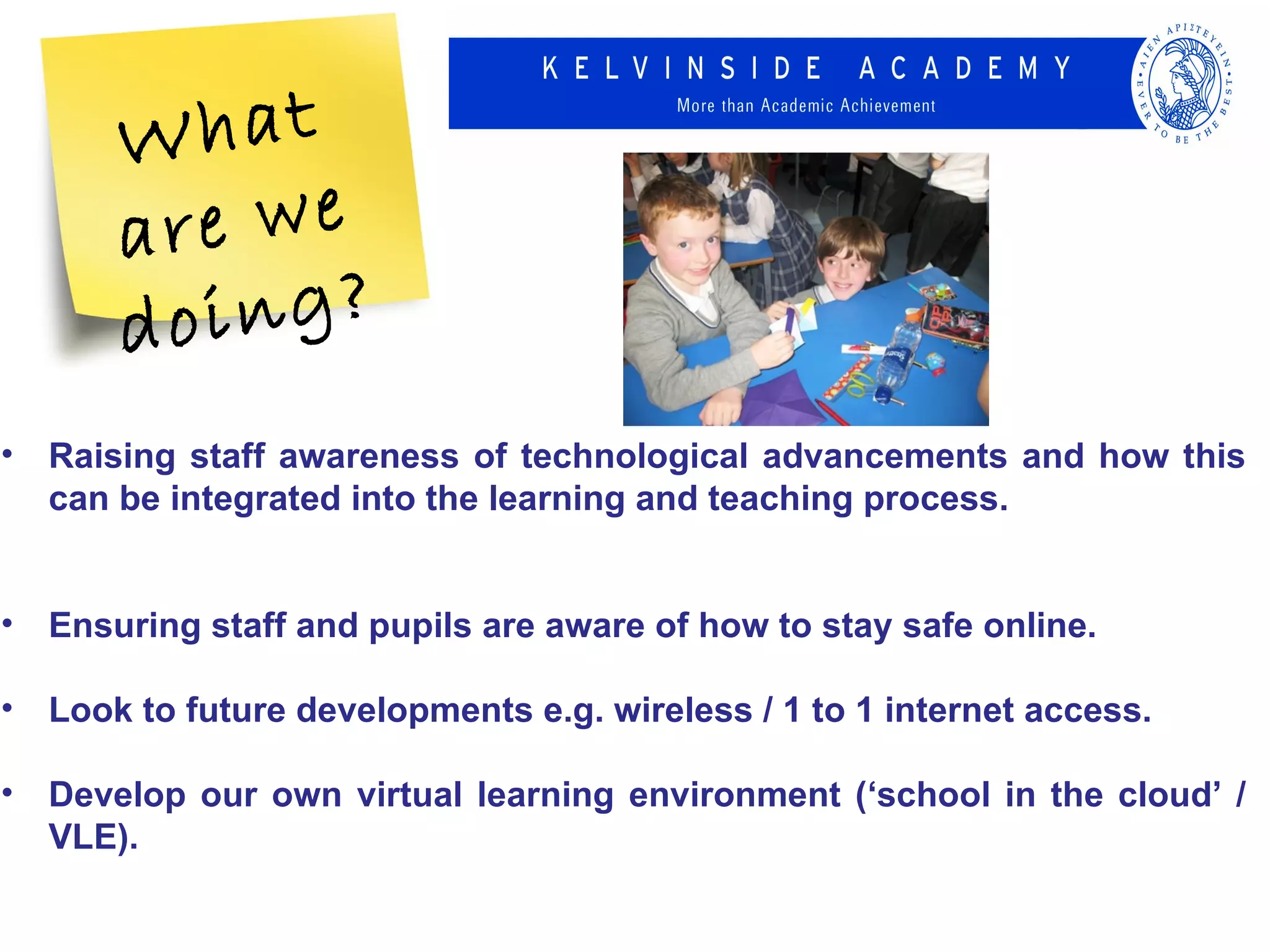
• Raising staff awareness of technological advancements and how this
  can be integrated into the learning and teaching process.


• Ensuring staff and pupils are aware of how to stay safe online.

• Look to future developments e.g. wireless / 1 to 1 internet access.

• Develop our own virtual learning environment (‘school in the cloud’ /
  VLE).
Wh at is
a VLE?

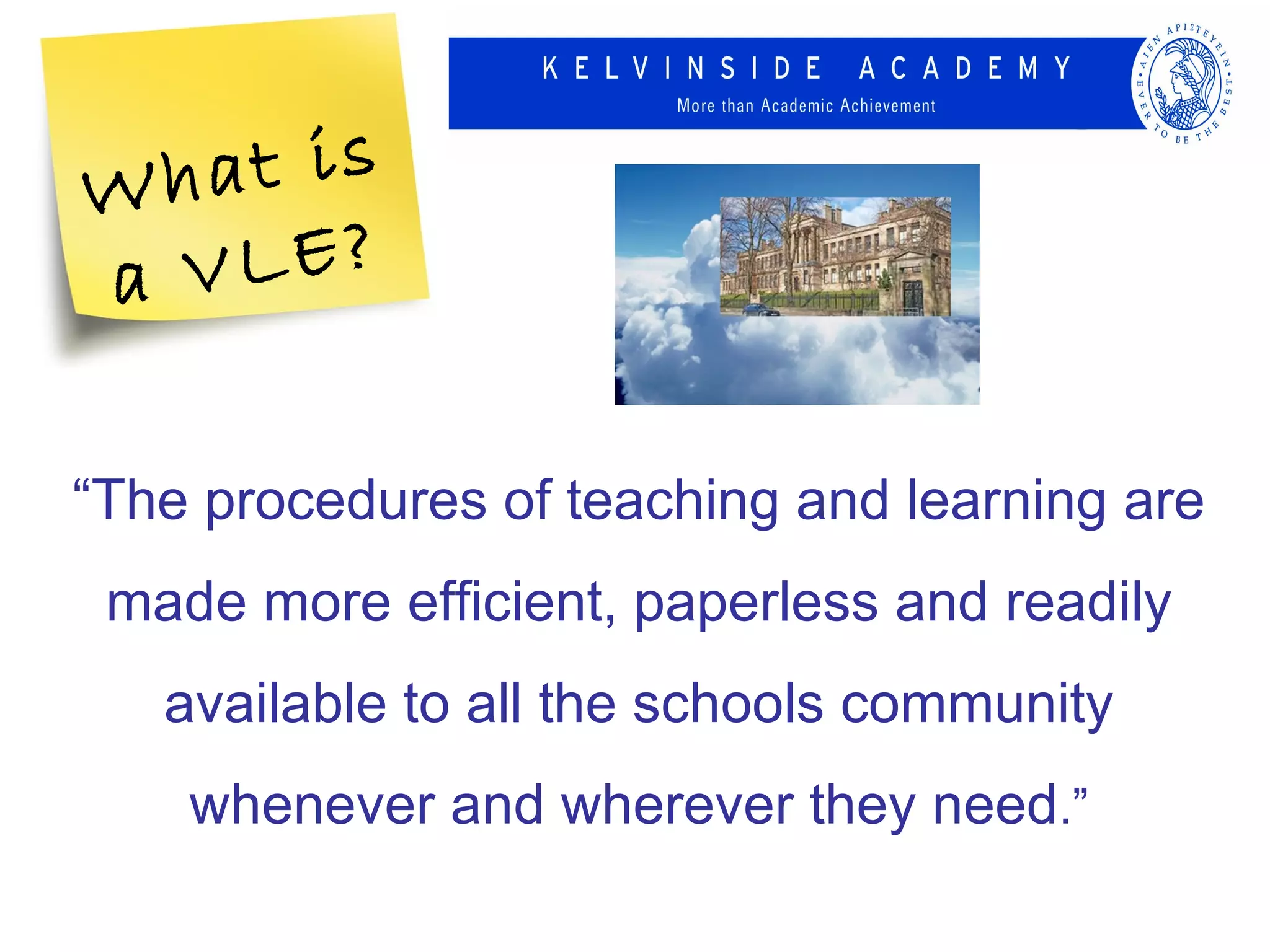
“The procedures of teaching and learning are
 made more efficient, paperless and readily
   available to all the schools community
    whenever and wherever they need.”
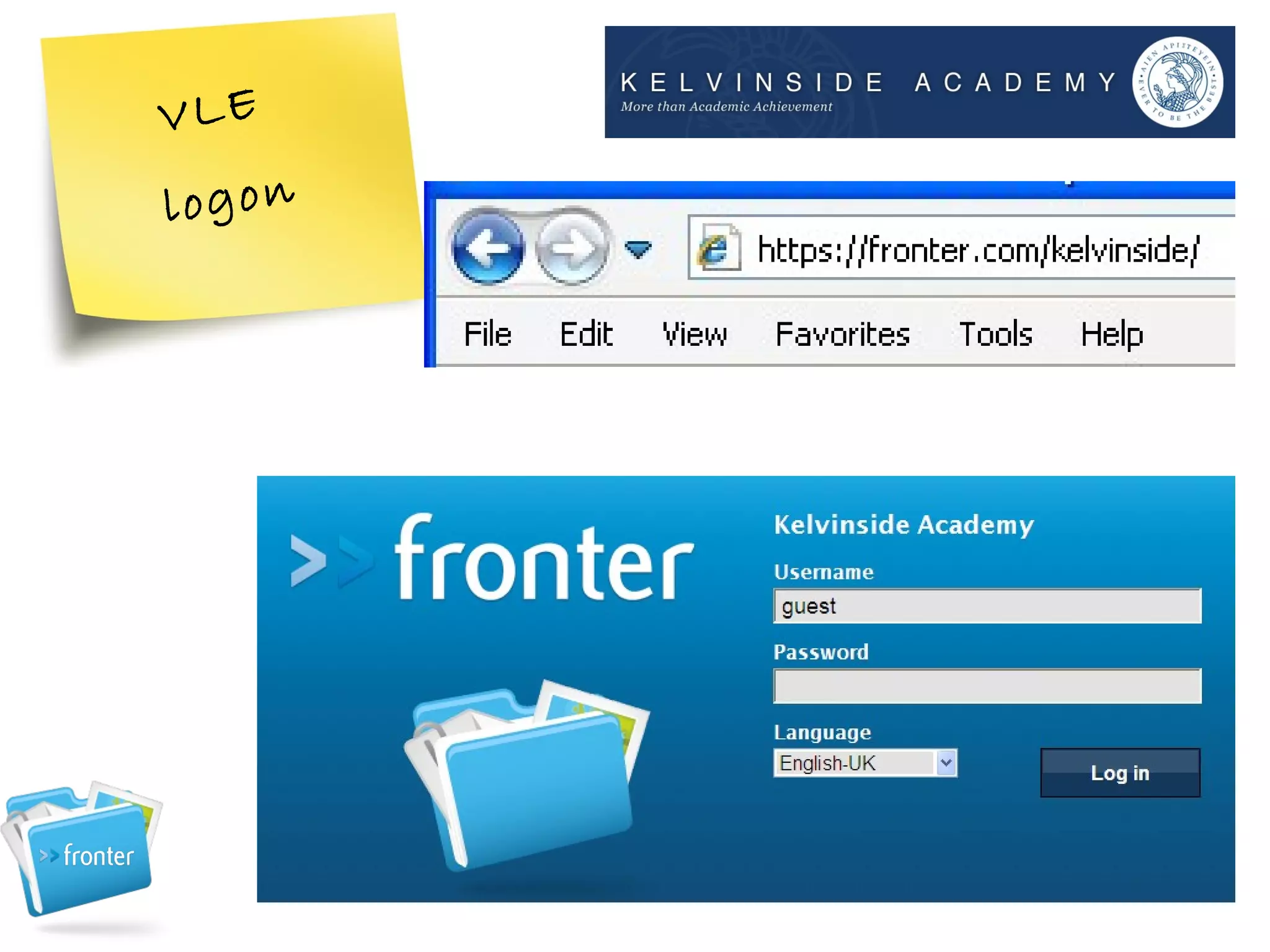
VLE
logon
Tim escal
   es
 Aug 2012 GO LIVE date……
            - Junior School pupils start using it

 Aug 2013 - Senior School pupils start using it

    “For tomorrow belongs to the people
          who prepare for it today”
Que stion
  s…?

       http://fronter.com/kelvinside
            Logon: guest.junior
                    guest.senior
              Password: guest

 Any questions / comments-
 j.maclean@kelvinsideacademy.org.uk

Digital learning at Kelvinside

  • 1.
    Di gital Age Digital Learning @ Kelvinside Academy
  • 2.
    Ov ervie w •Education – Where are we now & how did we get here? •Generation Z – What does it mean for your children? •What is Kelvinside Academy doing?
  • 4.
    20 C thentury ucation Information transfer Ed Schools being irrelevant and Retelling meaningless to students Memorisation of 20th Century Filling the vessel discrete facts Textbook driven No student freedom Working in isolation Teacher as judge Teaching focused – “I taught them the material it is up to them to learn it” Passive learning Fragmented curriculum
  • 6.
    21 C stentury Ed ucation Kindling the fire Discovery Curriculum connected to the students interests, experiences and talents What students know 21st Century Great deal of student and what they can do freedom Active learning Integrated curriculum Collaboration Research based Learning focused – Facilitators “What have the students learned and can they transfer that knowledge to real life situations” Learning to learn Worldwide audience
  • 8.
    n Ge neratio Z ‘Generation Z’ 1995 - …The Digital Natives • Our children inhabit a completely different world that the one we grew up in. • Technology is a fundamental part of their lives. • They were born with technology in their hand – love touching it / playing with it – complete digital natives.
  • 9.
    It is NOT away! Internet devices 1984 - 1000 going 1992 - 1,000,000 1995 - 16,000,000 2000 - 260,000,000 2012 - 1,800,000,000 First text was in 1992, now the number sent every day exceeds the total population of our planet… 845 million on Facebook every month 50 million tweets a day (600 a second) 31 billion searches on Google every month (2.7 billion in 2006) Estimated that 4 exabytes of unique information will be generated this year – that is MORE than previous 5,000 years! A weeks worth of news in ‘The New York Times’ contains more information than a person was likely to come across in a lifetime in the 18th century.
  • 10.
    Di d you 9 out of 10 teenagers have a k now? home computer, a mobile phone and a console…. 1.4 million UK pupils have their own webpage… according to the BBC, a blog is created every second…
  • 11.
    Wh at do you th ink? How many of you actually: blog…. play consoles e.g. wii, DS, Xbox… have a web page listen to RSS feeds use , and facebook use a tablet
  • 12.
    Di d you We are currently preparing k now? students for jobs that don’t exist yet…. using technologies that haven’t been invented… in order to solve problems we don’t even know are problems yet…
  • 13.
    ership P a rt n st for 21 C entury Skills
  • 15.
    W hat a re we d oing? • Raising staff awareness of technological advancements and how this can be integrated into the learning and teaching process. • Ensuring staff and pupils are aware of how to stay safe online. • Look to future developments e.g. wireless / 1 to 1 internet access. • Develop our own virtual learning environment (‘school in the cloud’ / VLE).
  • 16.
    Wh at is aVLE? “The procedures of teaching and learning are made more efficient, paperless and readily available to all the schools community whenever and wherever they need.”
  • 18.
  • 19.
    Tim escal es Aug 2012 GO LIVE date…… - Junior School pupils start using it Aug 2013 - Senior School pupils start using it “For tomorrow belongs to the people who prepare for it today”
  • 20.
    Que stion s…? http://fronter.com/kelvinside Logon: guest.junior guest.senior Password: guest Any questions / comments- j.maclean@kelvinsideacademy.org.uk

Editor's Notes

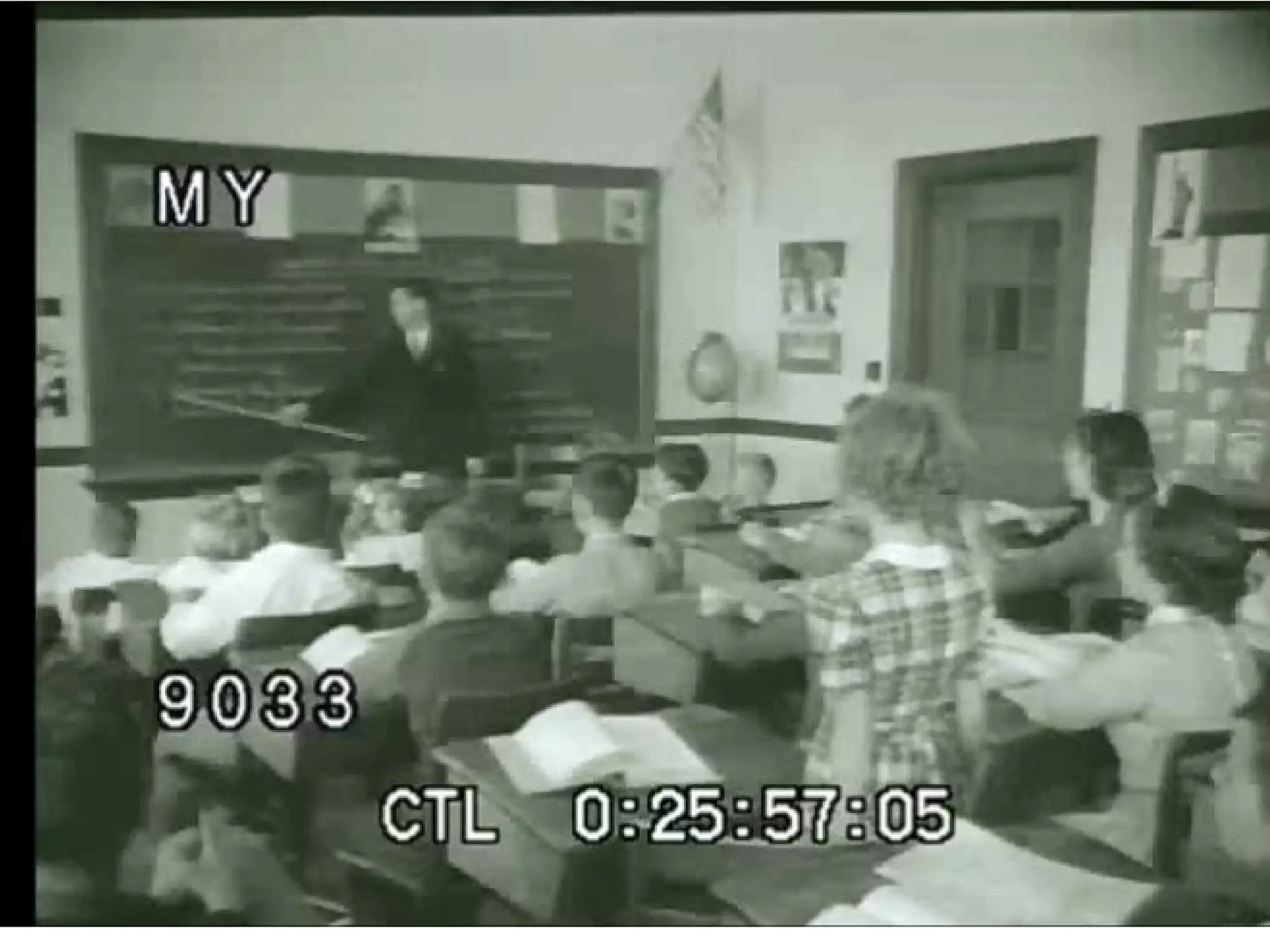
  • #3 Look at where we are and what future developments are in place… exciting times Before we can look at where we are and the future is very important to remind ourselves where we have come from..this helps give us perspective Formalised schooling was introduced during the industrial age and the system of mass producing children – basically filling empty vessels with knowledge in a very passive manner was evident until fairly recently. Pupils learned in an atmosphere of fear…fear of corporal punishment / fear or ridicule / fear of failure
  • #7 All around the world education is changing: not just because of the rapid developments being made in technology but we now know so much more about how the brain learns – multiple intelligences, learning styles and effective learning and teaching pedagogy and environments. The Scottish curriculum, which is called ‘Curriculum for Excellence’ reflects these developments and encourages students really be involved in their learning journey. At kelvinside we are developing pupils on their learning journey / smart targets / involving them in learning process
  • #9 You can see todays teaching job is much more complex than it has ever been previously My job is more than just developing the latest learning and teaching methods into our classes Ensuring that our staff have a greater awareness of the technologies that our young children are ‘living with’….
  • #13 Change is happening faster than ever! The transformation in our society since the mass availability of internet has occurred more rapidly than any previous change in society
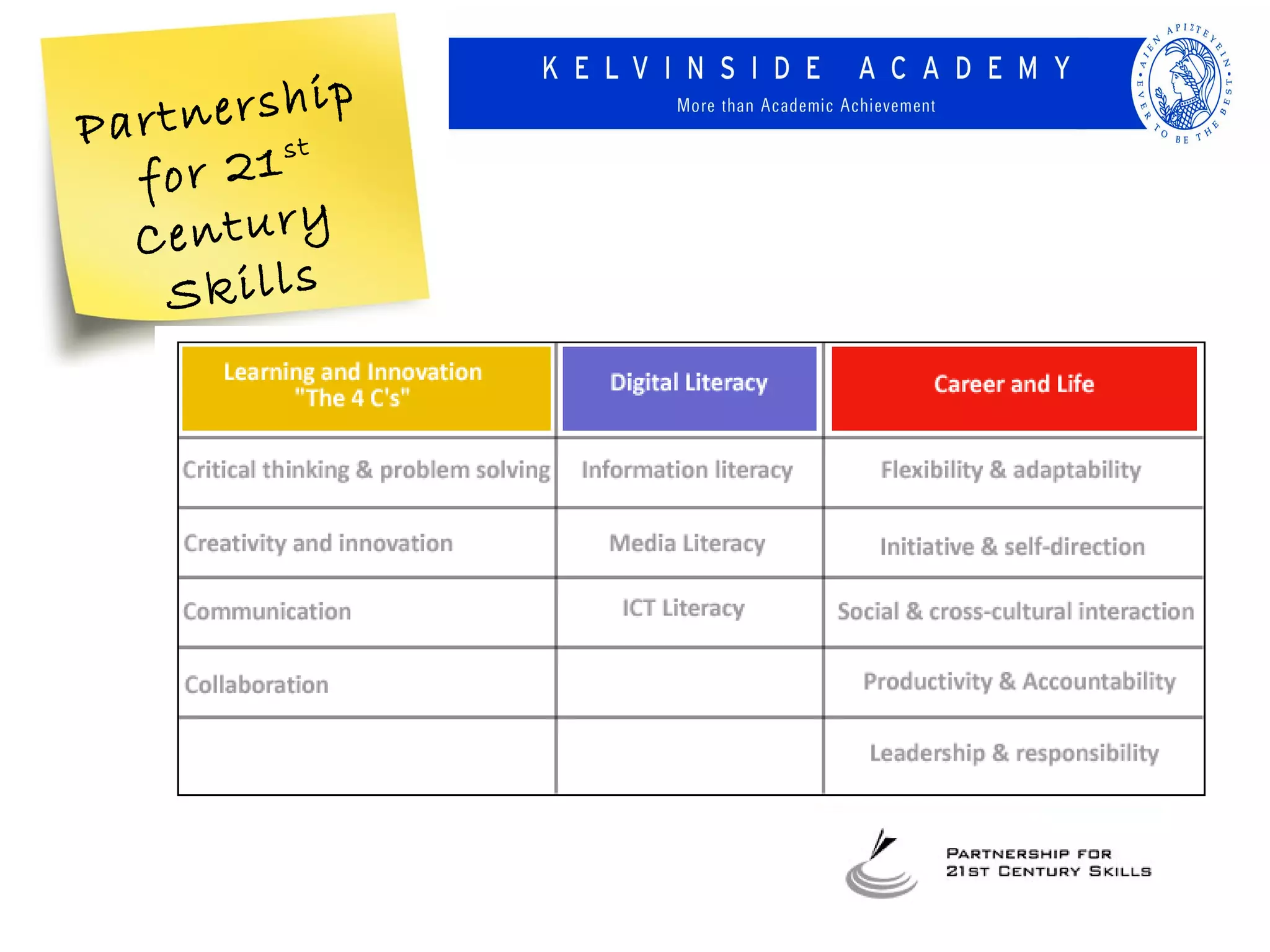
  • #14 The Partnership for 21 st century learning is an international organisation that has identified the skills needed by 21 st century inhabitants. Change jobs – facts… We need learners who can think, create, develop, experiment, analyse and collaborate and most importantly learn how to learn – the ability to adapt is essential
  • #16 Appreciate that not everyone of our generation is au fiat or have embraced technology – some are still sceptical of its uses and benefits. But I can assure you of 2 things – 1 it is NOT going away and it will be an ESSENTIAL component in our children’s future. We have to get over scepticism / indifference and embrace what they all take for granted. Educational systems by their very nature can be slow to change and adapt. However with the speed of the technological advancements being made and the impact that this will have on our children it is one of our top priorities to ensure we keep abreast of what is happening. particularly can be a It is in our acknowledgement of anytime anywhere access to school resources and information - that is what the VLE will deliver. A virtual school in the cloud.
  • #17 We are very aware at Kelvinside, not only the importance of change in our society and in the lifestyles of our pupils but also on how this can be used to improve students access to school resources and improve learning & teaching anytime anywhere access to school resources and information - that is what the VLE will deliver. A virtual school in the cloud.
  • #19 The new SQA assessment