Digital Imaging Systems
plethora of misconceptions regarding digital
imaging systems
Md. Mostak Ahmed
DMT (Radiology & Imaging)
Sylhet IHT, Bangladesh
INTRODUCTION
• The many acronyms associated with digital imaging have
created a plethora of misconceptions regarding digital
imaging systems, and these misconceptions have resulted
in technologists not having a thorough understanding of
how various digital imaging systems work. The following
sections describe the current digital imaging systems based
on how the image data are captured and data extracted
and secondly by their appearance. Regardless of
appearance and how the image data are captured and
extracted, each of the digital imaging systems described
has a wide dynamic range that requires a defined
exposure latitude to enable the technologist to adhere to
the principles of ALARA.
PHOTOSTIMULABLE STORAGE
PHOSPHOR (PSP) PLATE
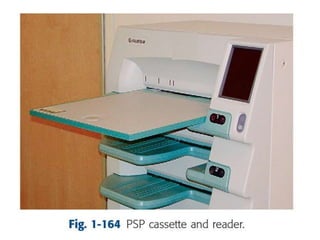
• PSP technology was the first widely implemented digital imaging system for general
radiography. It is most commonly called computed radiography (CR); however it is
addressed in this section as storage phosphor (PSP)–based digital systems. A PSP-based digital
imaging system relies on the use of a storage phosphor plate that serves the purpose of
capturing and storing the x-ray beam exiting the patient. The exposure of the plate to
radiation results in the migration of electrons to electron traps within the phosphor material.
The greater the exposure to the plate, the greater the number of electrons moved to the
electron traps. The exposed plate containing the latent image undergoes a reading process
following the exposure. The reading of the plate involves scanning of the entire plate from
side to side using a laser beam. As the laser moves across the plate, the trapped electrons in
the phosphor are released from the electron traps and migrate back to their resting location.
The migration of the electrons back to their resting locations results in the emission of light
from the phosphor. The greater the exposure to the plate, the greater the intensity of the
light emitted from the plate during the reading process. The light released is collected by an
optical system that sends the light to a device responsible for converting the light into an
analog electrical signal. The device may be a photomultiplier tube or CCD. The analog
electrical signal is sent to an analog-to-digital convertor (ADC) so that the image data may be
processed by the computer to create the desired digital image. Depending on the
manufacturer, the image may be viewed on the technologist’s workstation 5 seconds after
plate reading. After the reading process, the PSP plate is exposed to a bright light so that any
remaining latent image is erased from the plate and the plate may be used for the next
exposure.
PSP Plate- conntinued
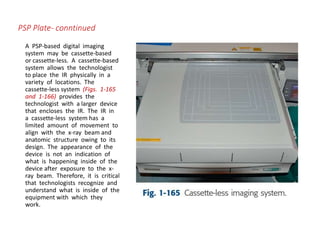
A PSP-based digital imaging
system may be cassette-based
or cassette-less. A cassette-based
system allows the technologist
to place the IR physically in a
variety of locations. The
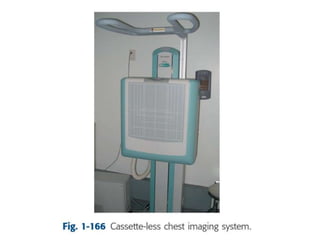
cassette-less system (Figs. 1-165
and 1-166) provides the
technologist with a larger device
that encloses the IR. The IR in
a cassette-less system has a
limited amount of movement to
align with the x-ray beam and
anatomic structure owing to its
design. The appearance of the
device is not an indication of
what is happening inside of the
device after exposure to the x-
ray beam. Therefore, it is critical
that technologists recognize and
understand what is inside of the
equipment with which they
work.
Flat Panel Detector with Thin
Film Transistor (FPD-TFT)
• The flat panel detector with thin film transistor (FPD-TFT) digital imaging system for
general radiography is a second type of digital imaging system. The FPD-TFT system
is commonly referred to as digital radiography (DR) or direct digital radiography
(DDR); however, in this section, the systems are referred to as FPD-TFT systems. The
FPD-TFT IR may be constructed using amorphous selenium or amorphous silicon. The
purpose of those two materials is to provide a source of electrons to the TFT. The
creation of the electrons for the TFT is different with the two materials. The
exposure of amorphous selenium to x-ray photons results in the movement of
electrons through the material and into the electron collection portion of the TFT.
Amorphous silicon requires the use of a scintillator, which produces light when
struck by x-ray photons. The light exiting the scintillator causes the movement of
electrons through the amorphous silicon and into the electron collection centers of
the TFT. The TFT serves the purpose of collecting the electrons in an ordered
manner and then sending the analog electrical signal to an ADC. The signal from
the ADC is sent to the computer to create the digital image. The display of the
radiographic image on the technologist’s workstation with the FPD-TFT system occurs
several seconds after the exposure ends.
FPD-TFT continued
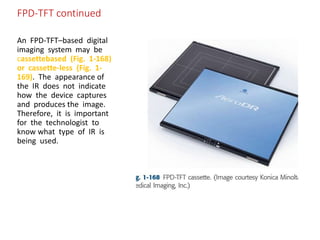
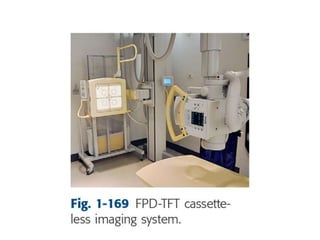
An FPD-TFT–based digital
imaging system may be
cassettebased (Fig. 1-168)
or cassette-less (Fig. 1-
169). The appearance of
the IR does not indicate
how the device captures
and produces the image.
Therefore, it is important
for the technologist to
know what type of IR is
being used.
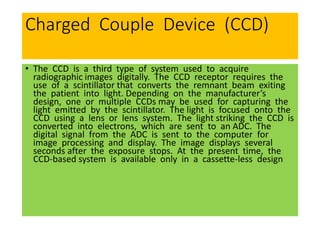
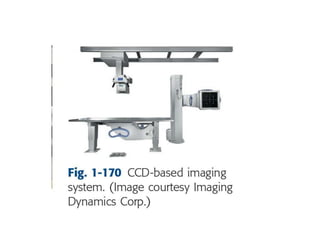
Charged Couple Device (CCD)
• The CCD is a third type of system used to acquire
radiographic images digitally. The CCD receptor requires the
use of a scintillator that converts the remnant beam exiting
the patient into light. Depending on the manufacturer’s
design, one or multiple CCDs may be used for capturing the
light emitted by the scintillator. The light is focused onto the
CCD using a lens or lens system. The light striking the CCD is
converted into electrons, which are sent to an ADC. The
digital signal from the ADC is sent to the computer for
image processing and display. The image displays several
seconds after the exposure stops. At the present time, the
CCD-based system is available only in a cassette-less design
Digital  imaging system

Digital imaging system

  • 1.
    Digital Imaging Systems plethoraof misconceptions regarding digital imaging systems Md. Mostak Ahmed DMT (Radiology & Imaging) Sylhet IHT, Bangladesh
  • 2.
    INTRODUCTION • The manyacronyms associated with digital imaging have created a plethora of misconceptions regarding digital imaging systems, and these misconceptions have resulted in technologists not having a thorough understanding of how various digital imaging systems work. The following sections describe the current digital imaging systems based on how the image data are captured and data extracted and secondly by their appearance. Regardless of appearance and how the image data are captured and extracted, each of the digital imaging systems described has a wide dynamic range that requires a defined exposure latitude to enable the technologist to adhere to the principles of ALARA.
  • 3.
    PHOTOSTIMULABLE STORAGE PHOSPHOR (PSP)PLATE • PSP technology was the first widely implemented digital imaging system for general radiography. It is most commonly called computed radiography (CR); however it is addressed in this section as storage phosphor (PSP)–based digital systems. A PSP-based digital imaging system relies on the use of a storage phosphor plate that serves the purpose of capturing and storing the x-ray beam exiting the patient. The exposure of the plate to radiation results in the migration of electrons to electron traps within the phosphor material. The greater the exposure to the plate, the greater the number of electrons moved to the electron traps. The exposed plate containing the latent image undergoes a reading process following the exposure. The reading of the plate involves scanning of the entire plate from side to side using a laser beam. As the laser moves across the plate, the trapped electrons in the phosphor are released from the electron traps and migrate back to their resting location. The migration of the electrons back to their resting locations results in the emission of light from the phosphor. The greater the exposure to the plate, the greater the intensity of the light emitted from the plate during the reading process. The light released is collected by an optical system that sends the light to a device responsible for converting the light into an analog electrical signal. The device may be a photomultiplier tube or CCD. The analog electrical signal is sent to an analog-to-digital convertor (ADC) so that the image data may be processed by the computer to create the desired digital image. Depending on the manufacturer, the image may be viewed on the technologist’s workstation 5 seconds after plate reading. After the reading process, the PSP plate is exposed to a bright light so that any remaining latent image is erased from the plate and the plate may be used for the next exposure.
  • 5.
    PSP Plate- conntinued APSP-based digital imaging system may be cassette-based or cassette-less. A cassette-based system allows the technologist to place the IR physically in a variety of locations. The cassette-less system (Figs. 1-165 and 1-166) provides the technologist with a larger device that encloses the IR. The IR in a cassette-less system has a limited amount of movement to align with the x-ray beam and anatomic structure owing to its design. The appearance of the device is not an indication of what is happening inside of the device after exposure to the x- ray beam. Therefore, it is critical that technologists recognize and understand what is inside of the equipment with which they work.
  • 7.
    Flat Panel Detectorwith Thin Film Transistor (FPD-TFT) • The flat panel detector with thin film transistor (FPD-TFT) digital imaging system for general radiography is a second type of digital imaging system. The FPD-TFT system is commonly referred to as digital radiography (DR) or direct digital radiography (DDR); however, in this section, the systems are referred to as FPD-TFT systems. The FPD-TFT IR may be constructed using amorphous selenium or amorphous silicon. The purpose of those two materials is to provide a source of electrons to the TFT. The creation of the electrons for the TFT is different with the two materials. The exposure of amorphous selenium to x-ray photons results in the movement of electrons through the material and into the electron collection portion of the TFT. Amorphous silicon requires the use of a scintillator, which produces light when struck by x-ray photons. The light exiting the scintillator causes the movement of electrons through the amorphous silicon and into the electron collection centers of the TFT. The TFT serves the purpose of collecting the electrons in an ordered manner and then sending the analog electrical signal to an ADC. The signal from the ADC is sent to the computer to create the digital image. The display of the radiographic image on the technologist’s workstation with the FPD-TFT system occurs several seconds after the exposure ends.
  • 8.
    FPD-TFT continued An FPD-TFT–baseddigital imaging system may be cassettebased (Fig. 1-168) or cassette-less (Fig. 1- 169). The appearance of the IR does not indicate how the device captures and produces the image. Therefore, it is important for the technologist to know what type of IR is being used.
  • 10.
    Charged Couple Device(CCD) • The CCD is a third type of system used to acquire radiographic images digitally. The CCD receptor requires the use of a scintillator that converts the remnant beam exiting the patient into light. Depending on the manufacturer’s design, one or multiple CCDs may be used for capturing the light emitted by the scintillator. The light is focused onto the CCD using a lens or lens system. The light striking the CCD is converted into electrons, which are sent to an ADC. The digital signal from the ADC is sent to the computer for image processing and display. The image displays several seconds after the exposure stops. At the present time, the CCD-based system is available only in a cassette-less design