Mr. Joven Botin Bilbao
Chief Nursing Officer- Al Hayat National Hospital
Corporate Clinical and Accreditation Educator –Al Inma
Medical Services
Patient Experience
“Developing quality nurse
communication skills is essential to
creating a positive patient experience”
In healthcare facilities, nurses can be
found nearly everywhere—at patient
screenings, in nursing stations, and,
most importantly, with the patient in
the treatment room or at the bedside.
Nurses are on the front lines of
patient care, making nurse-patient
communication essential to a positive
patient experience.
Two main goals in nurse-patient communication:
 Creating a positive, warm, and compassionate
patient experience
 Creating meaningful patient engagement and
delivering patient education
 As healthcare continues to embrace
patient-centered care strategies,
industry stakeholders have begun to
focus on improving the patient
experience.
 Patient experience includes elements of
healthcare quality, patient satisfaction,
and convenient care.
 According to Deirdre Mylod, PhD, Executive
Director of the Institute for Innovation and
SeniorVice President of Research and Analytics
at Press Ganey, ensuring patient safety and
quality care is the first step to creating a positive
patient experience.
 “The way that we approach improvement for
patient experience measures is to reframe it.The
exercise is not to make consumers happy.The
exercise is to reduce patient suffering,” Mylod
said.
 Keeping patient-provider communication
open can also help reduce patient suffering. By
being more comforting to the patient and
ensuring she understands her health status can
reduce worry and increase trust.
 To reduce negative patient experiences, the
researchers advised providers to focus on better
patient-provider communications. Patients who
trust and can speak freely to clinicians are more
likely to express a care preference or safety
concern.
Developing quality nurse communication
skills is essential to creating a positive
patient experience.
 Sitting next to a patient
while talking, even for a
brief period, can help
improve patient
satisfaction
 Making Personal
Connections
 Understanding patient
needs and concerns allows
nurses to target their
communication and clinical
strategies toward specific
patient preferences.
 Using communication skills to
support patient education.
 Patient education is a powerful
nursing intervention that pays many
long-term dividends:
• Improving health outcomes,
• Enhancing the patient experience,
• Improving patient satisfaction,
and
• Reducing avoidable hospital
readmissions
 The teach-back method “closes the
loop” on the nurse-patient
communication gap by proactively
enhancing patient comprehension.
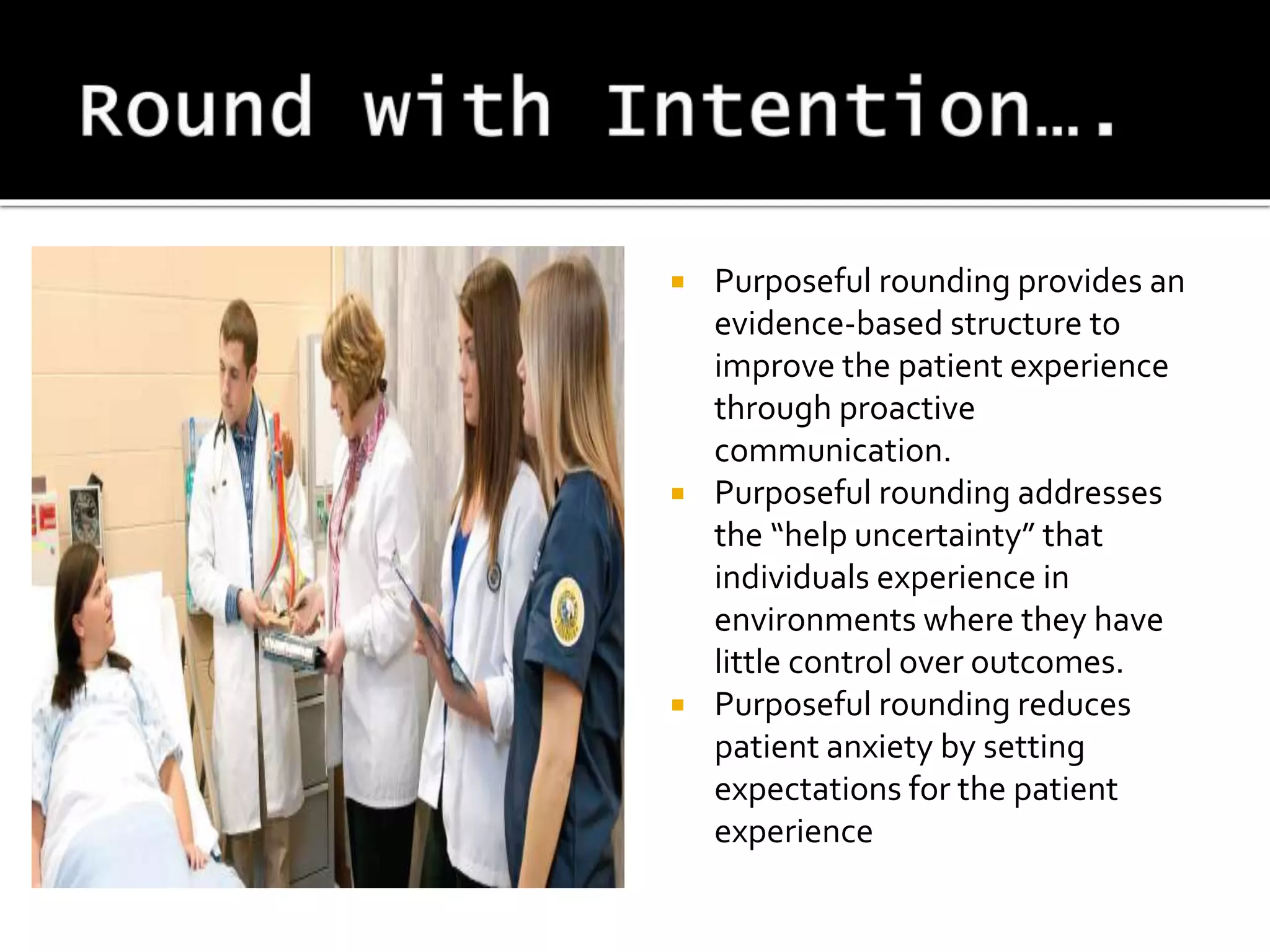
 Purposeful rounding provides an
evidence-based structure to
improve the patient experience
through proactive
communication.
 Purposeful rounding addresses
the “help uncertainty” that
individuals experience in
environments where they have
little control over outcomes.
 Purposeful rounding reduces
patient anxiety by setting
expectations for the patient
experience
 Health IT plays a
significant role in
supporting strong nurse-
patient communication.
 Bedside tablets contain a
host of tools that help
patients become
acquainted with the
hospital and their care
teams, promoting a
more positive experience
during their hospital
stay.
A relationship of health care providers with patients, based on trust,
respect, and reciprocity, and with mutually negotiated goals and
expectations, can be an important support and buffer for patients
experiencing distress. Communication serves to build and maintain
this relationship, to transmit information, to provide support, and to
negotiate treatment decisions. The process of communication
between providers and patients can significantly affect clinical
outcomes. However, recent evidence demonstrates that
communication in patient care may often be suboptimal, particularly
with regard to the emotional experience of the patient. The aim of
the lecture is to present recommendations for effective clinician–
patient communication during hospital visits, which may prevent or
alleviate patient distress. We hope that the recommendations will
help to promote empathic and effective communication in Hospital
care settings.
Patient Experience

Patient Experience

  • 1.
    Mr. Joven BotinBilbao Chief Nursing Officer- Al Hayat National Hospital Corporate Clinical and Accreditation Educator –Al Inma Medical Services Patient Experience
  • 2.
    “Developing quality nurse communicationskills is essential to creating a positive patient experience” In healthcare facilities, nurses can be found nearly everywhere—at patient screenings, in nursing stations, and, most importantly, with the patient in the treatment room or at the bedside. Nurses are on the front lines of patient care, making nurse-patient communication essential to a positive patient experience.
  • 3.
    Two main goalsin nurse-patient communication:  Creating a positive, warm, and compassionate patient experience  Creating meaningful patient engagement and delivering patient education
  • 6.
     As healthcarecontinues to embrace patient-centered care strategies, industry stakeholders have begun to focus on improving the patient experience.  Patient experience includes elements of healthcare quality, patient satisfaction, and convenient care.
  • 7.
     According toDeirdre Mylod, PhD, Executive Director of the Institute for Innovation and SeniorVice President of Research and Analytics at Press Ganey, ensuring patient safety and quality care is the first step to creating a positive patient experience.  “The way that we approach improvement for patient experience measures is to reframe it.The exercise is not to make consumers happy.The exercise is to reduce patient suffering,” Mylod said.
  • 8.
     Keeping patient-providercommunication open can also help reduce patient suffering. By being more comforting to the patient and ensuring she understands her health status can reduce worry and increase trust.  To reduce negative patient experiences, the researchers advised providers to focus on better patient-provider communications. Patients who trust and can speak freely to clinicians are more likely to express a care preference or safety concern.
  • 9.
    Developing quality nursecommunication skills is essential to creating a positive patient experience.
  • 10.
     Sitting nextto a patient while talking, even for a brief period, can help improve patient satisfaction  Making Personal Connections  Understanding patient needs and concerns allows nurses to target their communication and clinical strategies toward specific patient preferences.
  • 11.
     Using communicationskills to support patient education.  Patient education is a powerful nursing intervention that pays many long-term dividends: • Improving health outcomes, • Enhancing the patient experience, • Improving patient satisfaction, and • Reducing avoidable hospital readmissions  The teach-back method “closes the loop” on the nurse-patient communication gap by proactively enhancing patient comprehension.
  • 12.
     Purposeful roundingprovides an evidence-based structure to improve the patient experience through proactive communication.  Purposeful rounding addresses the “help uncertainty” that individuals experience in environments where they have little control over outcomes.  Purposeful rounding reduces patient anxiety by setting expectations for the patient experience
  • 13.
     Health ITplays a significant role in supporting strong nurse- patient communication.  Bedside tablets contain a host of tools that help patients become acquainted with the hospital and their care teams, promoting a more positive experience during their hospital stay.
  • 15.
    A relationship ofhealth care providers with patients, based on trust, respect, and reciprocity, and with mutually negotiated goals and expectations, can be an important support and buffer for patients experiencing distress. Communication serves to build and maintain this relationship, to transmit information, to provide support, and to negotiate treatment decisions. The process of communication between providers and patients can significantly affect clinical outcomes. However, recent evidence demonstrates that communication in patient care may often be suboptimal, particularly with regard to the emotional experience of the patient. The aim of the lecture is to present recommendations for effective clinician– patient communication during hospital visits, which may prevent or alleviate patient distress. We hope that the recommendations will help to promote empathic and effective communication in Hospital care settings.