DIFFERENTIATED
LEARNING IN
MATHEMATCS
ANNABELLE T. GARCIA
WHAT IS DIFFERENTIATED LEARNING?
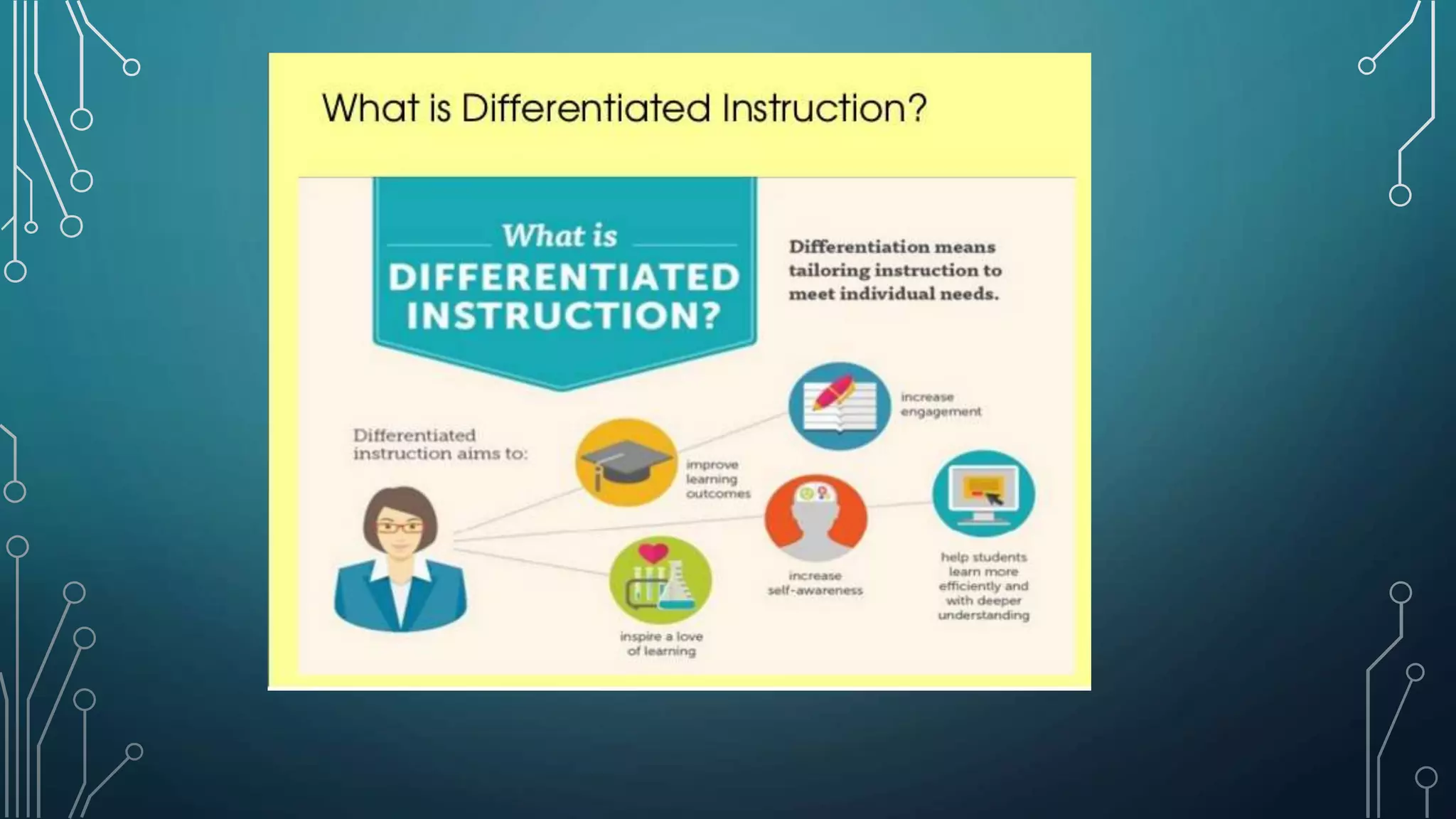
• Differentiated instruction and assessment, also known
as differentiated learning or, in education,
simply, differentiation, is a framework or philosophy for
effective teaching that involves providing all students
within their diverse classroom community of learners a
range of different avenues for understanding new
information (often in the same classroom) in terms of:
acquiring content; processing, constructing, or making
sense of ideas; and developing teaching materials and
assessment measures so that all students within a
classroom can learn effectively, regardless of differences
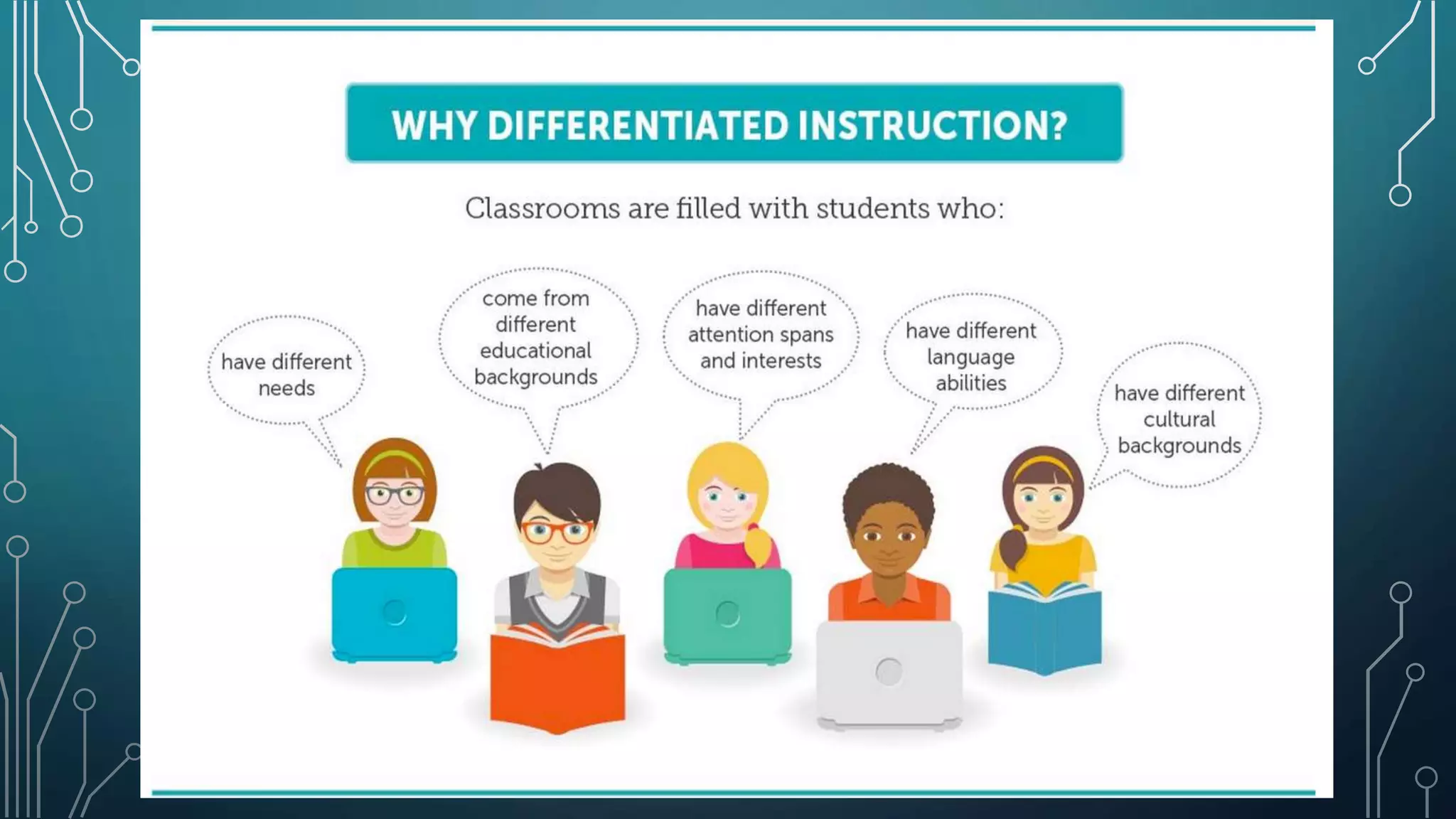
•According to Tomlinson (2004),
differentiated instruction is based on
the idea that because students differ
significantly in their strength, interest,
learning styles and readiness to learn,
it is necessary to adapt instruction to
suit these differing characteristics.
THE PRINCIPLES OF DIFFERENTIATION
•Assessment and instruction are inseparable.
•The teacher adjusts CONTENT, PROCESS, PRODUCT
in response to student’s READINESS, INTERESTS
AND LEARNING PROFILE
•Students and teachers are collaborative in learning.
•Goals of differentiated learning are maximum
growth and individual success.
•Flexibility is the hallmark of differentiated
classroom.
TEACHERS CAN DIFFERENTIATE THROUGH
•CONTENT – the information students learns or
ways students access information.
•PROCESS – how students take in and make sense
of the content.
•PRODUCT – how students show what they know,
understand and can do.
•AFFECT/ENVIRONMENT – the climate or tone of the
classroom.
TEACHERS CAN DIFFERENTIATE
ACCORDING TO STUDENT’S…
•READINESS – student’s proximity to specified
learning goals
•INTERESTS – passions, affinities, kinship that
motivates learning
•LEARNING PROFILE – preferred approaches to
learning.
EFFECTIVE AND DIFFERENTIATED
INSTRUCTION IN MATHEMATICS
•relevant and engaging tasks, including parallel
tasks and open questions
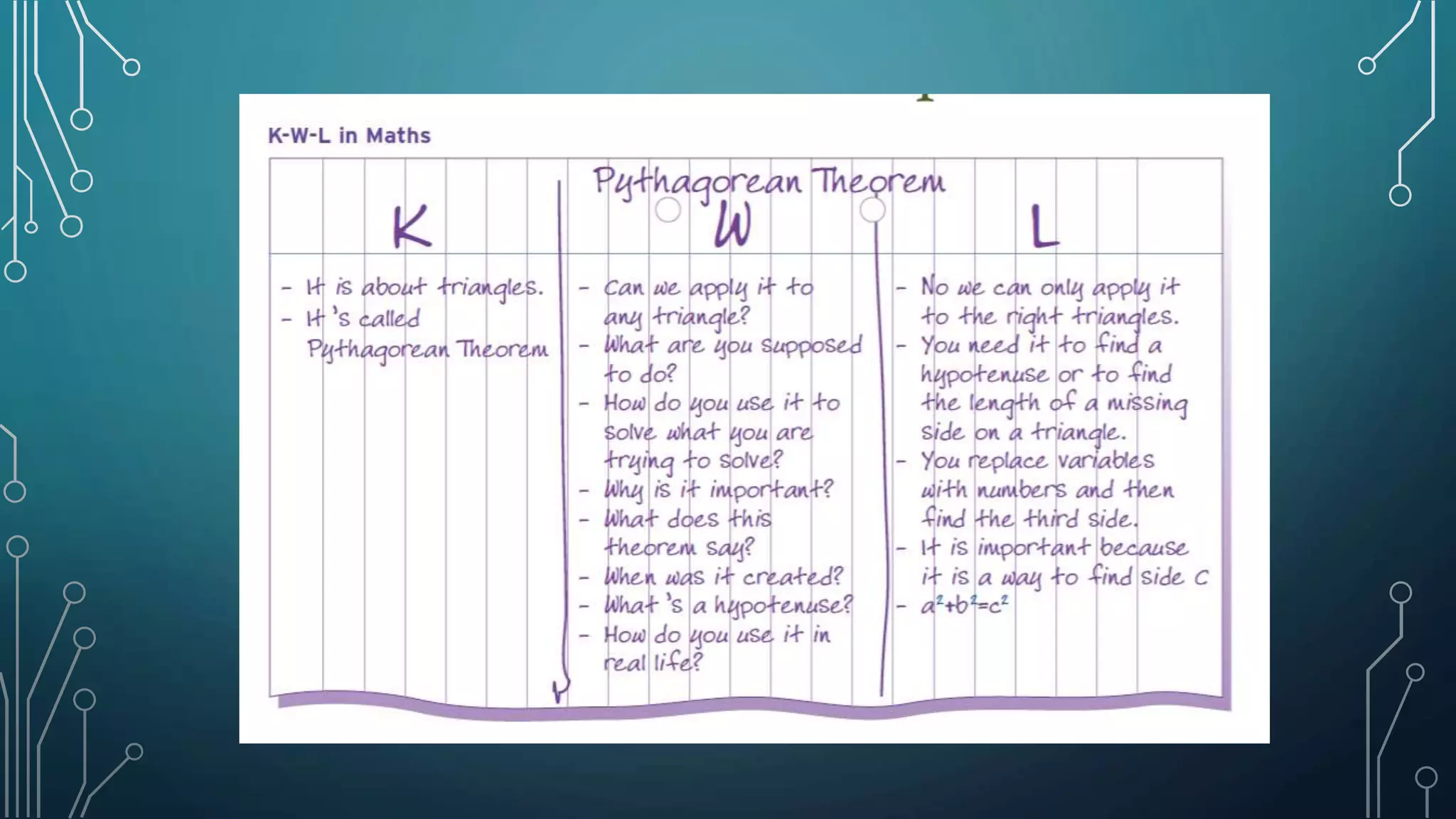
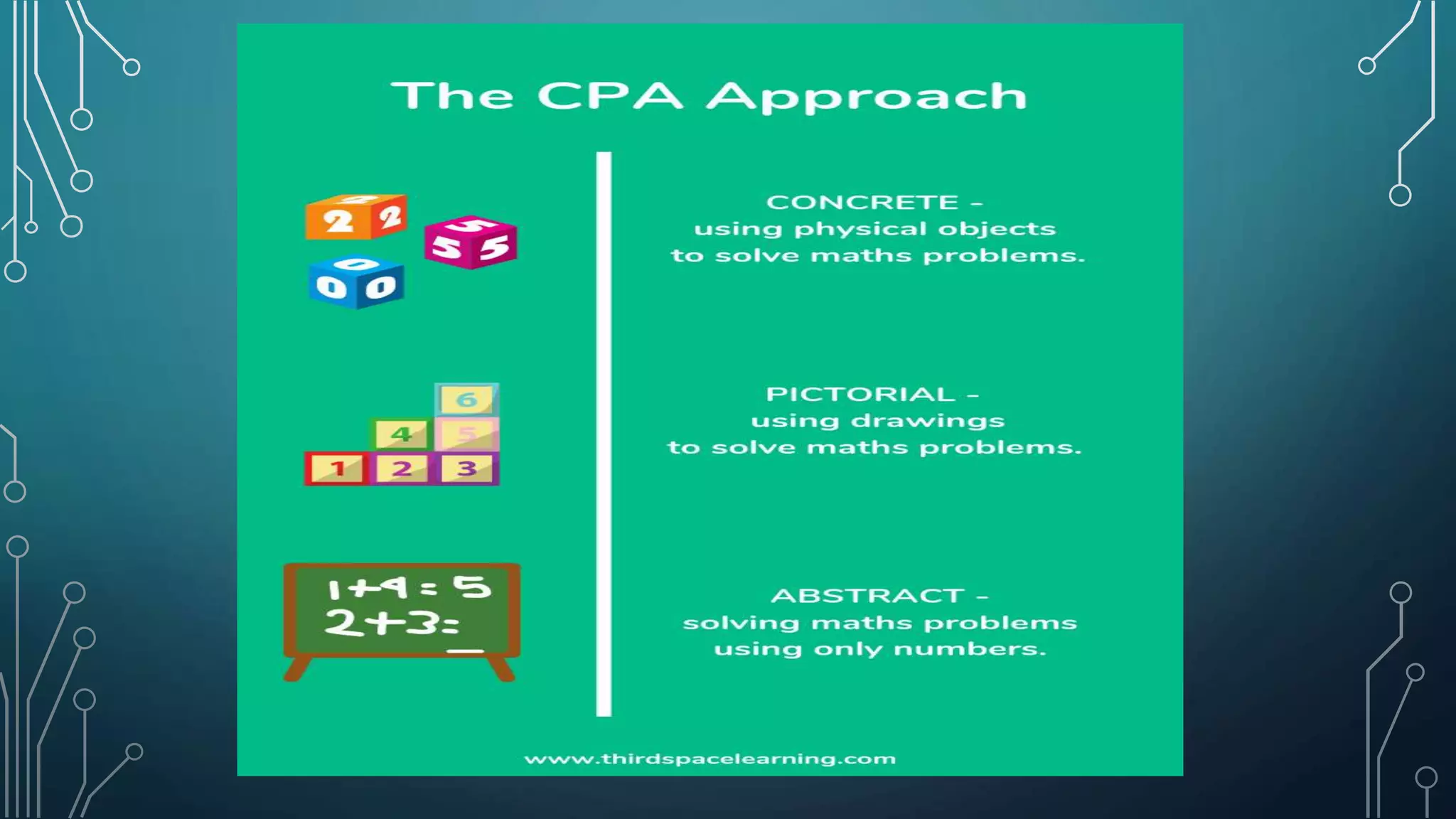
• a variety of representations of the mathematics
(concrete, pictorial, numerical and algebraic)
• access to mathematics learning tools and
technology
• frequent and varied assessment of student
WHY IS DIFFERENTIATION IMPORTANT FOR
STUDENT LEARNING IN MATHEMATICS?
•solving problems in new situations
• reasoning skills including proportional reasoning,
algebraic reasoning, and spatial reasoning
• reflecting on and monitoring one’s thinking
•selecting and using a variety of learning tools and
computational strategies
WHY IS DIFFERENTIATION IMPORTANT FOR
STUDENT LEARNING IN MATHEMATICS?
• connecting mathematics to real life and to other
mathematical ideas
• representing mathematical ideas and relationships
concretely, pictorially, numerically, and
algebraically
• communicating mathematical thinking orally,
visually, and in writing, using everyday language
and mathematical vocabulary
Thank you!

Differentiating Learning in Mathematics

  • 1.
  • 2.
    WHAT IS DIFFERENTIATEDLEARNING? • Differentiated instruction and assessment, also known as differentiated learning or, in education, simply, differentiation, is a framework or philosophy for effective teaching that involves providing all students within their diverse classroom community of learners a range of different avenues for understanding new information (often in the same classroom) in terms of: acquiring content; processing, constructing, or making sense of ideas; and developing teaching materials and assessment measures so that all students within a classroom can learn effectively, regardless of differences
  • 3.
    •According to Tomlinson(2004), differentiated instruction is based on the idea that because students differ significantly in their strength, interest, learning styles and readiness to learn, it is necessary to adapt instruction to suit these differing characteristics.
  • 6.
    THE PRINCIPLES OFDIFFERENTIATION •Assessment and instruction are inseparable. •The teacher adjusts CONTENT, PROCESS, PRODUCT in response to student’s READINESS, INTERESTS AND LEARNING PROFILE •Students and teachers are collaborative in learning. •Goals of differentiated learning are maximum growth and individual success. •Flexibility is the hallmark of differentiated classroom.
  • 7.
    TEACHERS CAN DIFFERENTIATETHROUGH •CONTENT – the information students learns or ways students access information. •PROCESS – how students take in and make sense of the content. •PRODUCT – how students show what they know, understand and can do. •AFFECT/ENVIRONMENT – the climate or tone of the classroom.
  • 8.
    TEACHERS CAN DIFFERENTIATE ACCORDINGTO STUDENT’S… •READINESS – student’s proximity to specified learning goals •INTERESTS – passions, affinities, kinship that motivates learning •LEARNING PROFILE – preferred approaches to learning.
  • 9.
    EFFECTIVE AND DIFFERENTIATED INSTRUCTIONIN MATHEMATICS •relevant and engaging tasks, including parallel tasks and open questions • a variety of representations of the mathematics (concrete, pictorial, numerical and algebraic) • access to mathematics learning tools and technology • frequent and varied assessment of student
  • 10.
    WHY IS DIFFERENTIATIONIMPORTANT FOR STUDENT LEARNING IN MATHEMATICS? •solving problems in new situations • reasoning skills including proportional reasoning, algebraic reasoning, and spatial reasoning • reflecting on and monitoring one’s thinking •selecting and using a variety of learning tools and computational strategies
  • 11.
    WHY IS DIFFERENTIATIONIMPORTANT FOR STUDENT LEARNING IN MATHEMATICS? • connecting mathematics to real life and to other mathematical ideas • representing mathematical ideas and relationships concretely, pictorially, numerically, and algebraically • communicating mathematical thinking orally, visually, and in writing, using everyday language and mathematical vocabulary
  • 14.