Implementing Differentiated Instruction Abby Guinn Jennifer Carolan May 7, 2007
Agenda Differentiation – “big picture” Non-negotiables – video clip Self- Assessment – school growth toward differentiation Initiating systemic change Staff development for differentiation
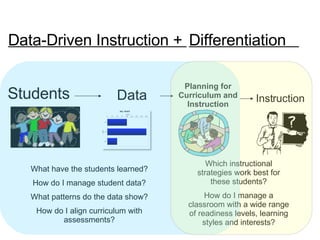
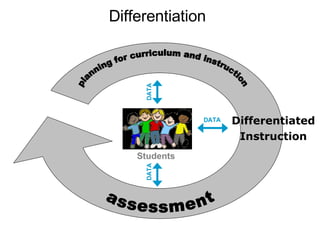
Students Data Planning for Curriculum and Instruction Instruction Differentiation  Data-Driven Instruction +  Which instructional strategies work best for these students? How do I manage a classroom with a wide range of readiness levels, learning styles and interests? What have the students learned? How do I manage student data? What patterns do the data show? How do I align curriculum with assessments?
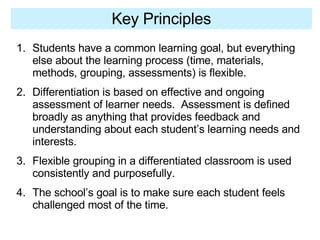
Students have a common learning goal, but everything else about the learning process (time, materials, methods, grouping, assessments) is flexible. Differentiation is based on effective and ongoing assessment of learner needs.  Assessment is defined broadly as anything that provides feedback and understanding about each student’s learning needs and interests. Flexible grouping in a differentiated classroom is used consistently and purposefully. The school’s goal is to make sure each student feels challenged most of the time. Key Principles
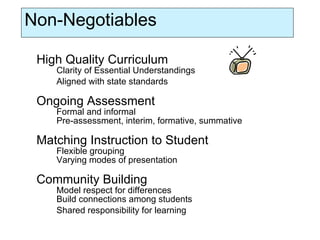
Non-Negotiables High Quality Curriculum  Clarity of Essential Understandings Aligned with state standards Ongoing Assessment Formal and informal Pre-assessment, interim, formative, summative Matching Instruction to Student Flexible grouping Varying modes of presentation Community Building Model respect for differences Build connections among students Shared responsibility for learning
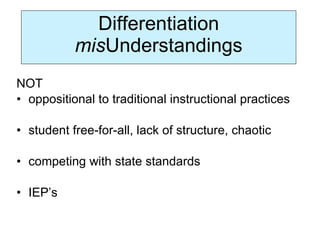
Differentiation  mis Understandings NOT oppositional to traditional instructional practices student free-for-all, lack of structure, chaotic competing with state standards IEP’s
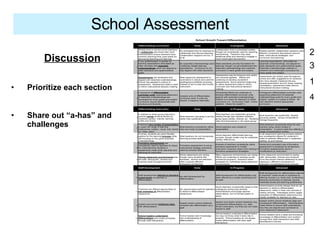
School Assessment Discussion Prioritize each section Share out “a-has” and challenges 1 2 3 4
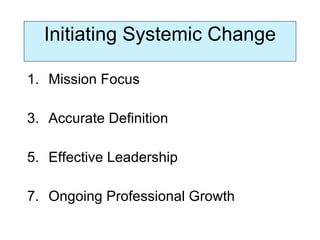
Initiating Systemic Change Mission Focus Accurate Definition Effective Leadership Ongoing Professional Growth
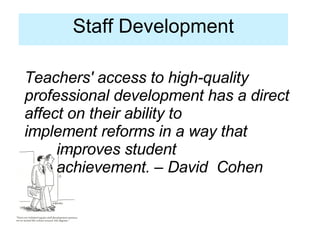
Staff Development Teachers' access to high-quality professional development has a direct affect on their ability to  implement reforms in a way that  improves student  achievement. – David  Cohen
 
Q and A Resources  j [email_address] [email_address] Website: New Schools Community Toolkit: Copy sent to you upon request Thank You!
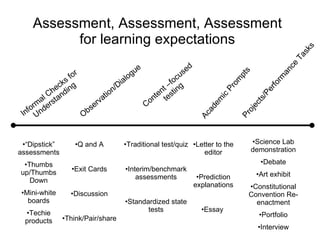
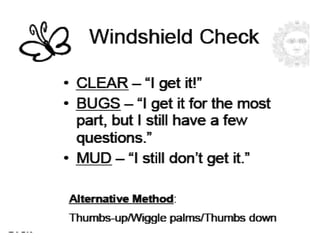
Assessment, Assessment, Assessment for learning expectations Informal Checks for Understanding Observation/Dialogue Content –focused testing Academic Prompts Projects/Performance Tasks “ Dipstick” assessments Thumbs up/Thumbs Down Mini-white boards Techie products Q and A Exit Cards Discussion Think/Pair/share Science Lab demonstration Debate Art exhibit Constitutional Convention Re-enactment Portfolio Interview Traditional test/quiz Interim/benchmark assessments Standardized state tests Letter to the editor Prediction explanations Essay
 
I would say if people haven’t been exposed to [differentiation] before, they might think it’s all or nothing which is really sad because then that might preclude them ever trying. It’s just like, oh, I can’t do this and you’re asking me to do way too much.   Mrs. D
When I first started doing this, I’m so visual.  I mean, almost completely visual and I tended to teach that way. . .so that its pictures and diagrams and all of this kind of stuff.  Very little kinesthetic movement – and that’s when you get the fidgety kids and they’re gone.  You’ve lost them!  - Mrs. D
Some teachers are good at thinking of questions ahead of time. . .I’m not so good at that, but I think I will come up with them on the fly. Because you just sense where the child is at and where you want them to be and what’s the next step for getting this little brain there.  - Mrs. Y
It’s different every year.  You know, you can think you’ve got it nailed down, but you had best be prepared to change at a moment’s notice.  - Mrs. D
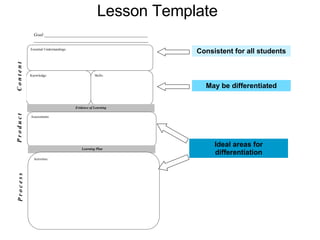
Lesson Template Consistent for all students Ideal areas for differentiation May be differentiated
Thank you! Abby Guinn [email_address] Jennifer Carolan [email_address]
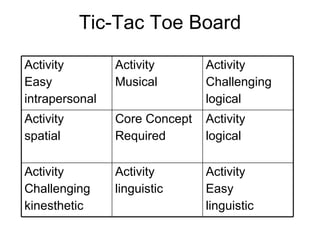
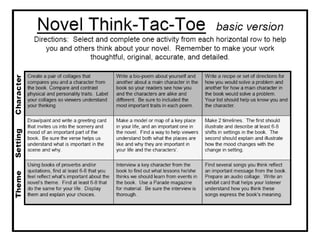
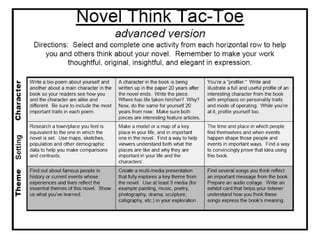
Tic-Tac Toe Board Activity Easy linguistic Activity linguistic Activity Challenging kinesthetic Activity logical Core Concept Required  Activity spatial Activity  Challenging logical Activity Musical Activity Easy intrapersonal
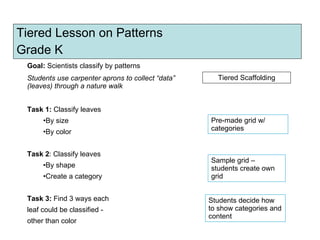
Tiered Lesson on Patterns Grade K Goal:  Scientists classify by patterns Students use carpenter aprons to collect “data” (leaves) through a nature walk Task 1:  Classify leaves By size By color Task 2 : Classify leaves By shape Create a category Task 3:  Find 3 ways each  leaf could be classified -  other than color Pre-made grid w/ categories Sample grid – students create own grid Students decide how to show categories and content Tiered Scaffolding
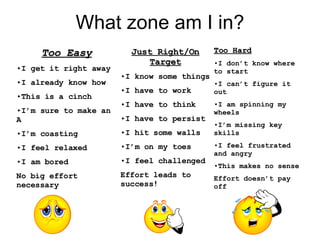
What zone am I in? Too Easy I get it right away I already know how This is a cinch I’m sure to make an A I’m coasting I feel relaxed I am bored No big effort necessary Just Right/On Target I know some things I have to work I have to think I have to persist I hit some walls I’m on my toes I feel challenged Effort leads to success! Too Hard I don’t know where to start I can’t figure it out I am spinning my wheels I’m missing key skills I feel frustrated and angry This makes no sense Effort doesn’t pay off
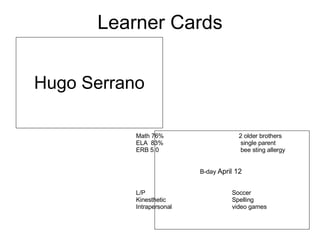
Learner Cards Hugo Serrano Math 76%   2 older brothers ELA  83%   single parent  ERB 5.0   bee sting allergy B-day  April 12 L/P Soccer Kinesthetic Spelling Intrapersonal video games


Differentiation Students Differentiated Instruction DATA DATA DATA planning for curriculum and instruction assessment

Implementing Differentiated Instruction Presentation

  • 1.
    Implementing Differentiated InstructionAbby Guinn Jennifer Carolan May 7, 2007
  • 2.
    Agenda Differentiation –“big picture” Non-negotiables – video clip Self- Assessment – school growth toward differentiation Initiating systemic change Staff development for differentiation
  • 3.
    Students Data Planningfor Curriculum and Instruction Instruction Differentiation Data-Driven Instruction + Which instructional strategies work best for these students? How do I manage a classroom with a wide range of readiness levels, learning styles and interests? What have the students learned? How do I manage student data? What patterns do the data show? How do I align curriculum with assessments?
  • 4.
    Students have acommon learning goal, but everything else about the learning process (time, materials, methods, grouping, assessments) is flexible. Differentiation is based on effective and ongoing assessment of learner needs. Assessment is defined broadly as anything that provides feedback and understanding about each student’s learning needs and interests. Flexible grouping in a differentiated classroom is used consistently and purposefully. The school’s goal is to make sure each student feels challenged most of the time. Key Principles
  • 5.
    Non-Negotiables High QualityCurriculum Clarity of Essential Understandings Aligned with state standards Ongoing Assessment Formal and informal Pre-assessment, interim, formative, summative Matching Instruction to Student Flexible grouping Varying modes of presentation Community Building Model respect for differences Build connections among students Shared responsibility for learning
  • 6.
    Differentiation misUnderstandings NOT oppositional to traditional instructional practices student free-for-all, lack of structure, chaotic competing with state standards IEP’s
  • 7.
    School Assessment DiscussionPrioritize each section Share out “a-has” and challenges 1 2 3 4
  • 8.
    Initiating Systemic ChangeMission Focus Accurate Definition Effective Leadership Ongoing Professional Growth
  • 9.
    Staff Development Teachers'access to high-quality professional development has a direct affect on their ability to implement reforms in a way that improves student achievement. – David Cohen
  • 10.
  • 11.
    Q and AResources j [email_address] [email_address] Website: New Schools Community Toolkit: Copy sent to you upon request Thank You!
  • 12.
    Assessment, Assessment, Assessmentfor learning expectations Informal Checks for Understanding Observation/Dialogue Content –focused testing Academic Prompts Projects/Performance Tasks “ Dipstick” assessments Thumbs up/Thumbs Down Mini-white boards Techie products Q and A Exit Cards Discussion Think/Pair/share Science Lab demonstration Debate Art exhibit Constitutional Convention Re-enactment Portfolio Interview Traditional test/quiz Interim/benchmark assessments Standardized state tests Letter to the editor Prediction explanations Essay
  • 13.
  • 14.
    I would sayif people haven’t been exposed to [differentiation] before, they might think it’s all or nothing which is really sad because then that might preclude them ever trying. It’s just like, oh, I can’t do this and you’re asking me to do way too much. Mrs. D
  • 15.
    When I firststarted doing this, I’m so visual. I mean, almost completely visual and I tended to teach that way. . .so that its pictures and diagrams and all of this kind of stuff. Very little kinesthetic movement – and that’s when you get the fidgety kids and they’re gone. You’ve lost them! - Mrs. D
  • 16.
    Some teachers aregood at thinking of questions ahead of time. . .I’m not so good at that, but I think I will come up with them on the fly. Because you just sense where the child is at and where you want them to be and what’s the next step for getting this little brain there. - Mrs. Y
  • 17.
    It’s different everyyear. You know, you can think you’ve got it nailed down, but you had best be prepared to change at a moment’s notice. - Mrs. D
  • 18.
    Lesson Template Consistentfor all students Ideal areas for differentiation May be differentiated
  • 19.
    Thank you! AbbyGuinn [email_address] Jennifer Carolan [email_address]
  • 20.
    Tic-Tac Toe BoardActivity Easy linguistic Activity linguistic Activity Challenging kinesthetic Activity logical Core Concept Required Activity spatial Activity Challenging logical Activity Musical Activity Easy intrapersonal
  • 21.
    Tiered Lesson onPatterns Grade K Goal: Scientists classify by patterns Students use carpenter aprons to collect “data” (leaves) through a nature walk Task 1: Classify leaves By size By color Task 2 : Classify leaves By shape Create a category Task 3: Find 3 ways each leaf could be classified - other than color Pre-made grid w/ categories Sample grid – students create own grid Students decide how to show categories and content Tiered Scaffolding
  • 22.
    What zone amI in? Too Easy I get it right away I already know how This is a cinch I’m sure to make an A I’m coasting I feel relaxed I am bored No big effort necessary Just Right/On Target I know some things I have to work I have to think I have to persist I hit some walls I’m on my toes I feel challenged Effort leads to success! Too Hard I don’t know where to start I can’t figure it out I am spinning my wheels I’m missing key skills I feel frustrated and angry This makes no sense Effort doesn’t pay off
  • 23.
    Learner Cards HugoSerrano Math 76% 2 older brothers ELA 83% single parent ERB 5.0 bee sting allergy B-day April 12 L/P Soccer Kinesthetic Spelling Intrapersonal video games
  • 24.
  • 25.
  • 26.
  • 27.
  • 28.
    Differentiation Students DifferentiatedInstruction DATA DATA DATA planning for curriculum and instruction assessment

Editor's Notes

  • #2 Introductions Abby – Welcome, happy you’ve chosen this workshop and we look forward to working with you. . . Jennifer - Between the 2 of us, we have over 16 years of teaching experience and devoted our year at Stanford to separate research studies about Differentiation. We jointly published our findings in Educational Leadership in February.