The document outlines strategies for creating a safe, fair, and respectful learning environment through positive teacher-student relationships, clear behavior expectations, and nurturing atmospheres. It emphasizes the importance of communication, consistency, and proactive intervention to meet the individual needs of students, particularly those with emotional and behavioral challenges. The document also includes collaborative activities to engage educators in designing their ideal classroom community.
"Ideal Classroom
Community"
1.Divide theteachers into small groups of 4-5 individuals.
2.Provide each group with a large sheet of paper and markers.
3.Ask each group to brainstorm and draw a visual representation
of their ideal classroom community, focusing on aspects such as
communication, collaboration, respect, and safety.
4.Encourage creativity and detail in their drawings, allowing them
to include specific examples or scenarios that illustrate their ideal
environment.
5.After 15 minutes, have each group present their drawings to the
whole group, explaining the elements they included and why they
are important.
3.
The educational setting
shouldbe attractive,
comfortable and well-kept so
that students will feel that
the classroom is a place
worth being and they are
worth the effort.
4.
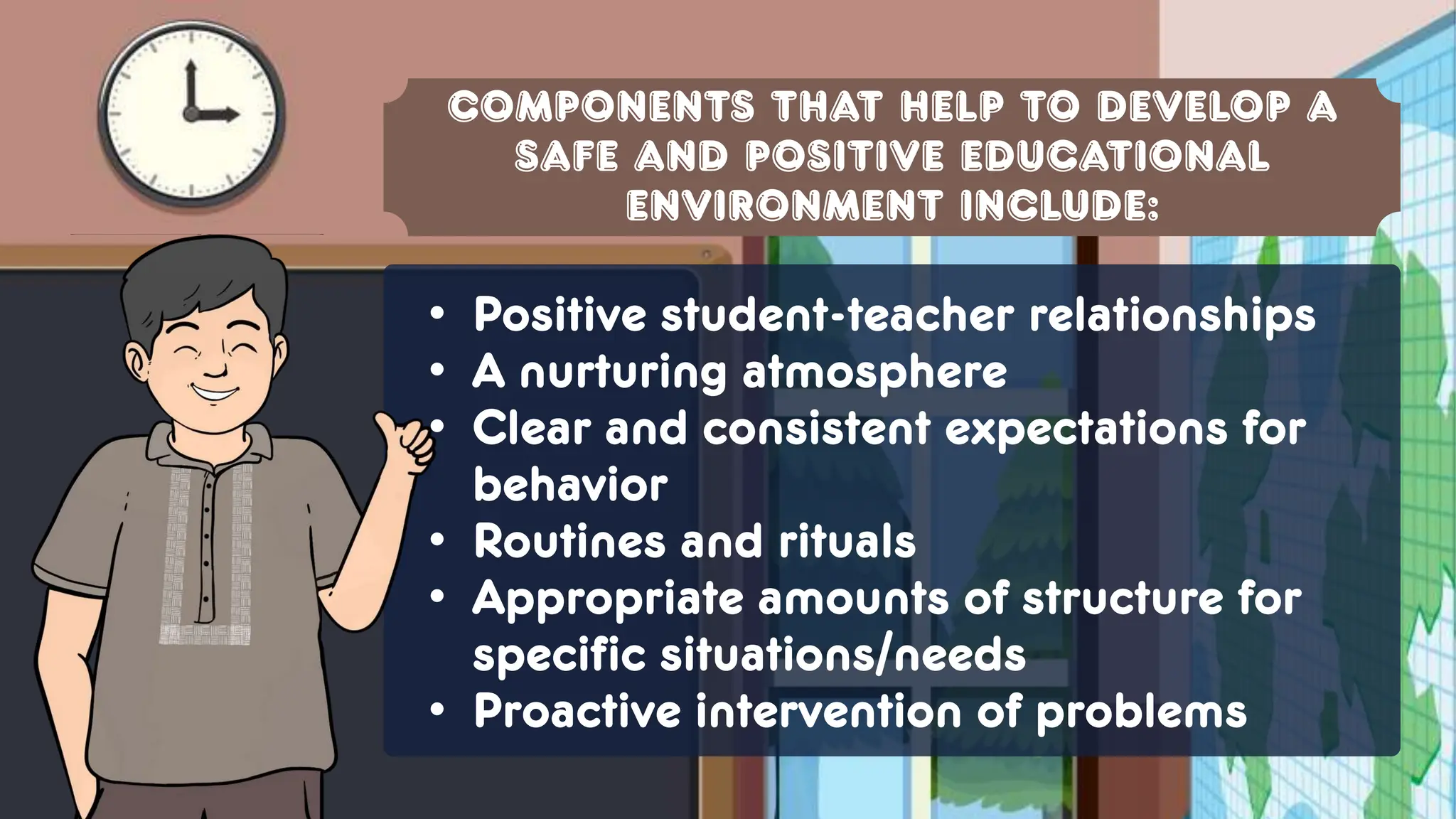
Components that helpto develop a
safe and positive educational
environment include:
• Positive student-teacher relationships
• A nurturing atmosphere
• Clear and consistent expectations for
behavior
• Routines and rituals
• Appropriate amounts of structure for
specific situations/needs
• Proactive intervention of problems
5.
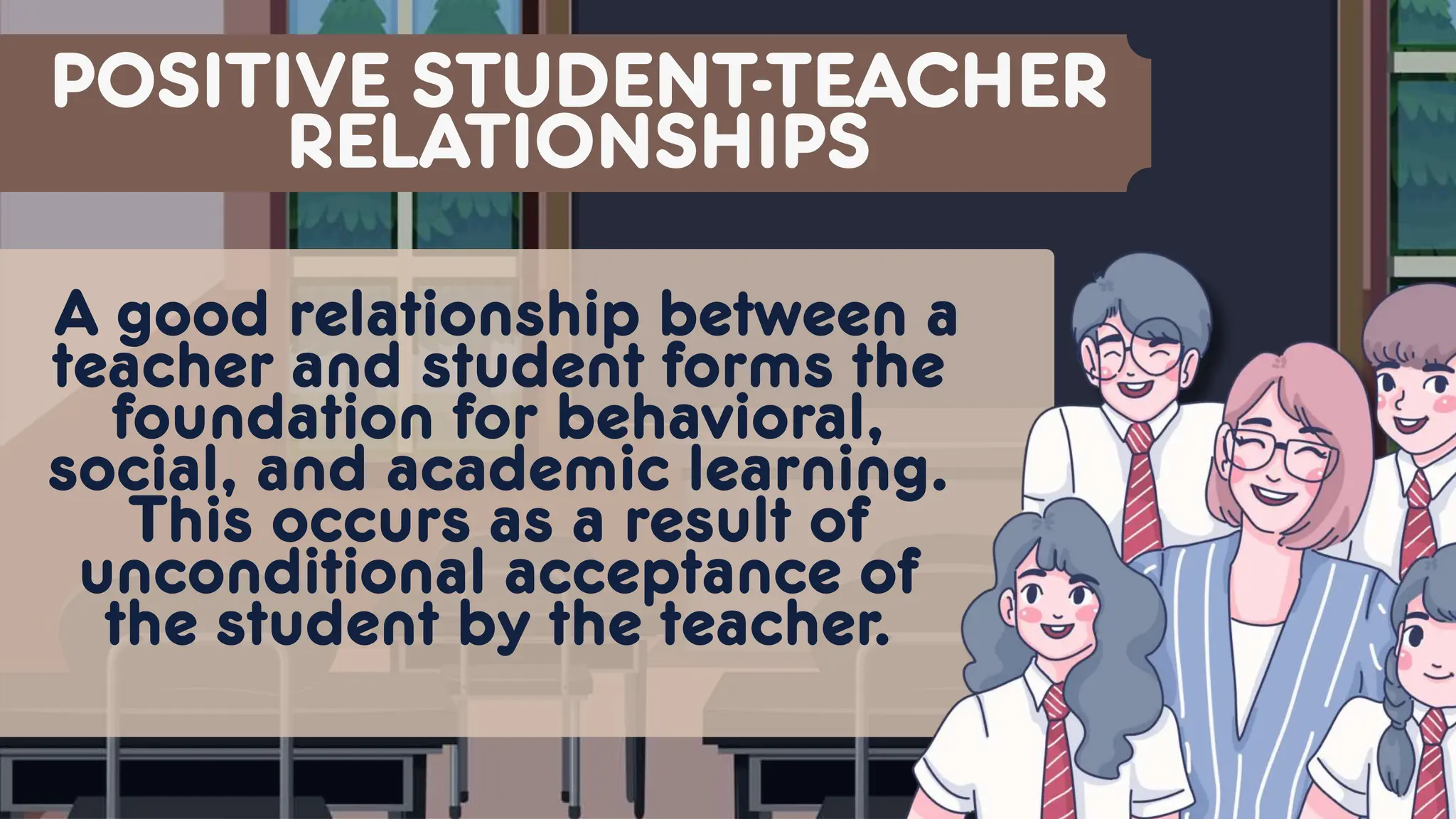
POSITIVE STUDENT-TEACHER
RELATIONSHIPS
A goodrelationship between a
teacher and student forms the
foundation for behavioral,
social, and academic learning.
This occurs as a result of
unconditional acceptance of
the student by the teacher.
6.
Some characteristics ofa positive
relationship are:
• Teacher uses appropriate
and natural voice tone and
voice level while talking
with the students in any
circumstances
• Teacher uses non-
threatening body language
7.
Characteristics of healthy
relationshipinclude:
• Respect
• Recognition
• Caring and support
• Acceptance
• Growth and learning
• Empathy
• Trust and confidentiality
8.
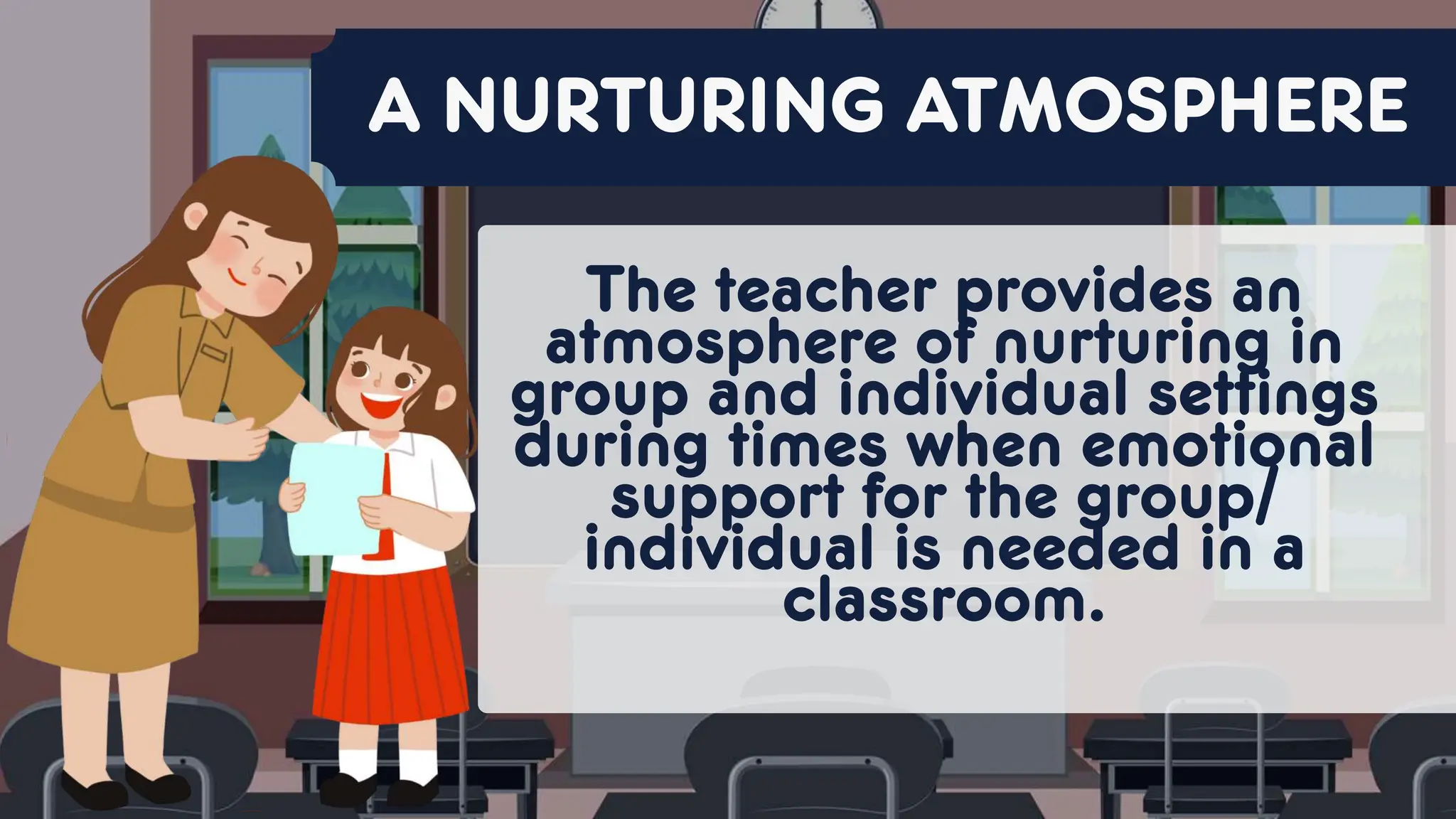
The teacher providesan
atmosphere of nurturing in
group and individual settings
during times when emotional
support for the group/
individual is needed in a
classroom.
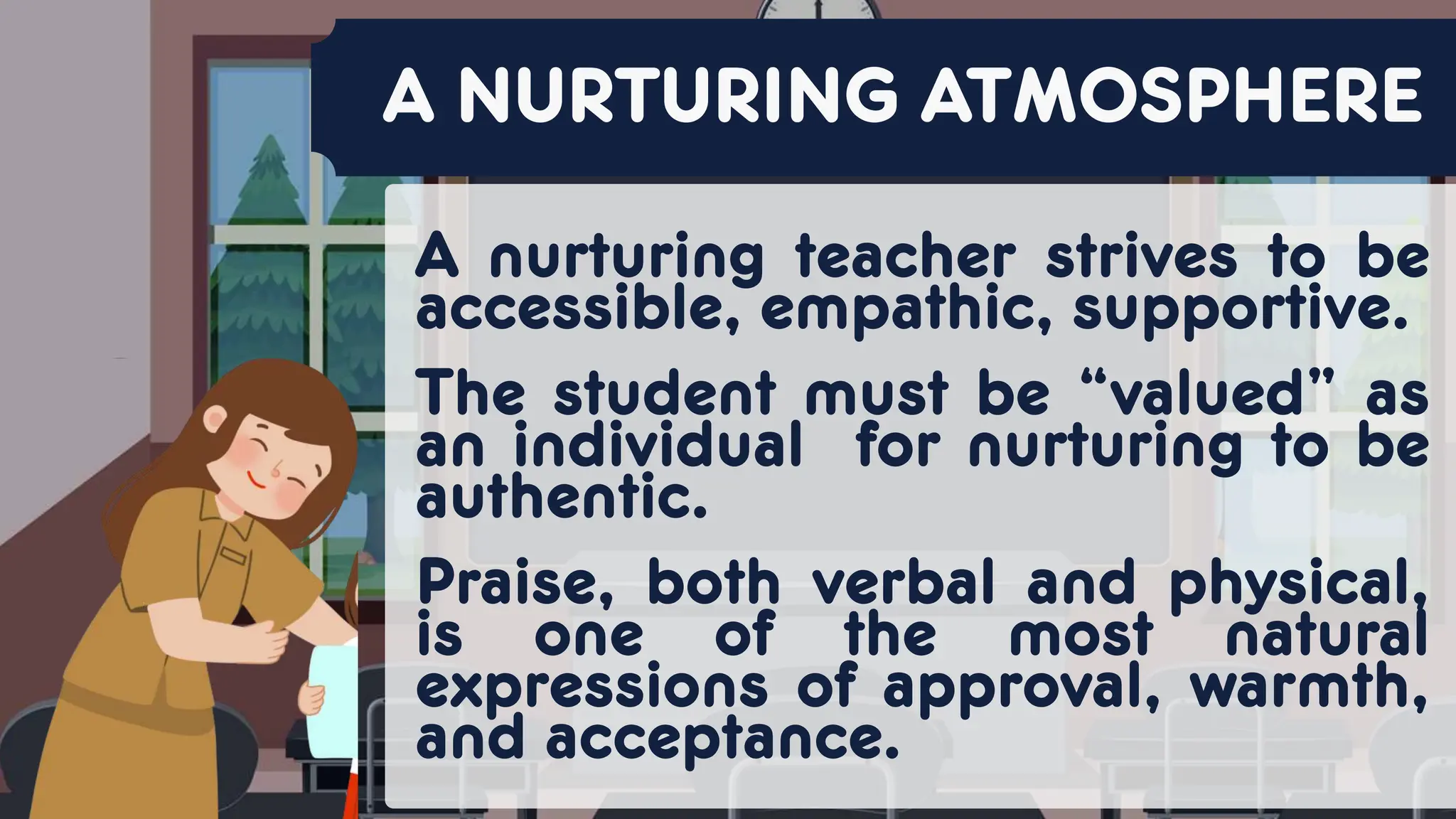
A NURTURING ATMOSPHERE
9.
A nurturing teacherstrives to be
accessible, empathic, supportive.
The student must be “valued” as
an individual for nurturing to be
authentic.
Praise, both verbal and physical,
is one of the most natural
expressions of approval, warmth,
and acceptance.
A NURTURING ATMOSPHERE
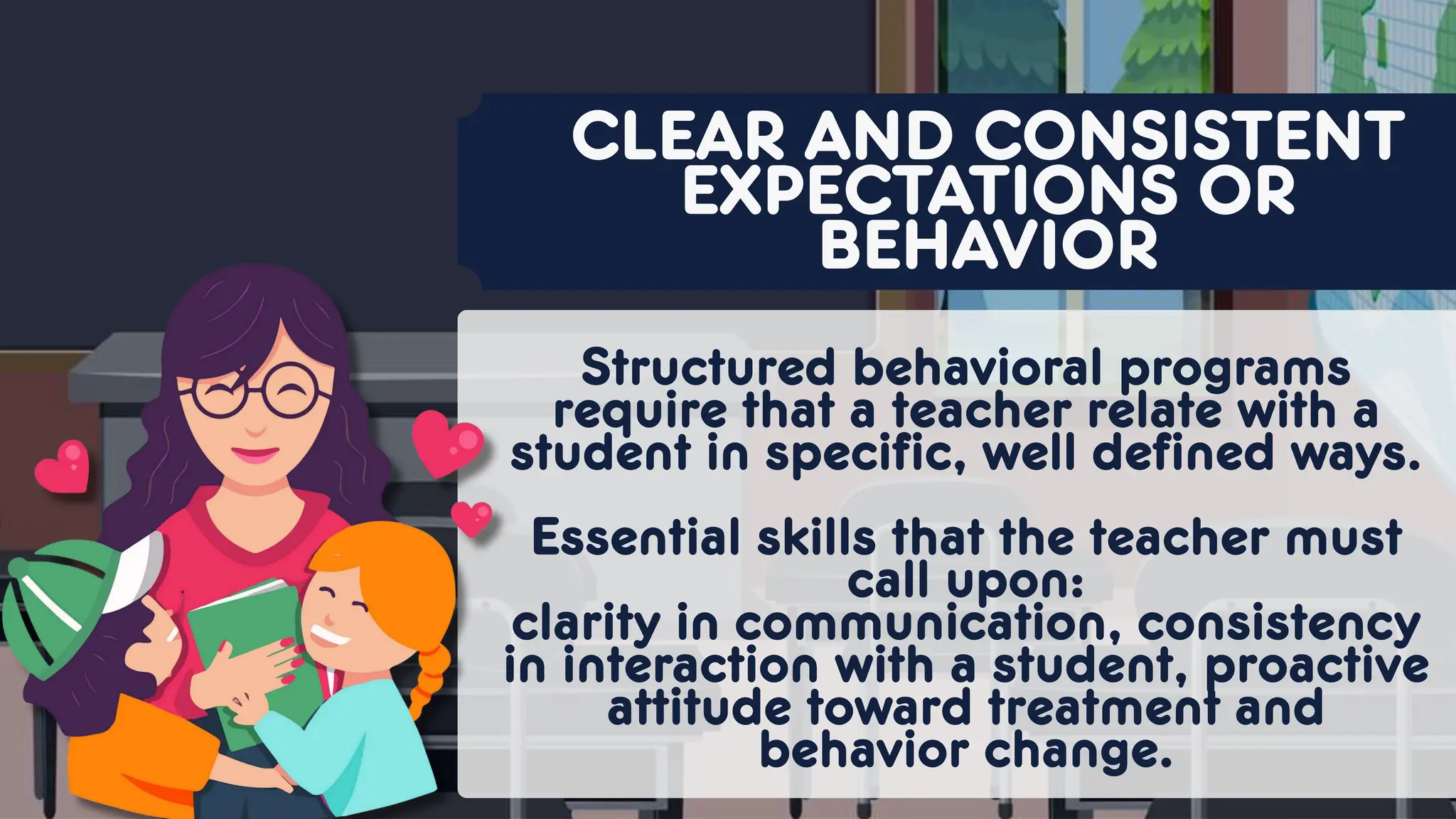
10.
Structured behavioral programs
requirethat a teacher relate with a
student in specific, well defined ways.
Essential skills that the teacher must
call upon:
clarity in communication, consistency
in interaction with a student, proactive
attitude toward treatment and
behavior change.
CLEAR AND CONSISTENT
EXPECTATIONS OR
BEHAVIOR
11.
There are manyreasons
students have difficulty
understanding communication
initiated by others, therefore for
a teacher to be effective, it is
crucial to be clear when
communicating with students.
Clear Communication
12.
Consistency provides thestudents
with a feeling of security and safety. It
also guides behavior management.
It is important for the students to
know what to expect in various
situations and also what to expect in
the teacher-student relationship.
Consistency
13.
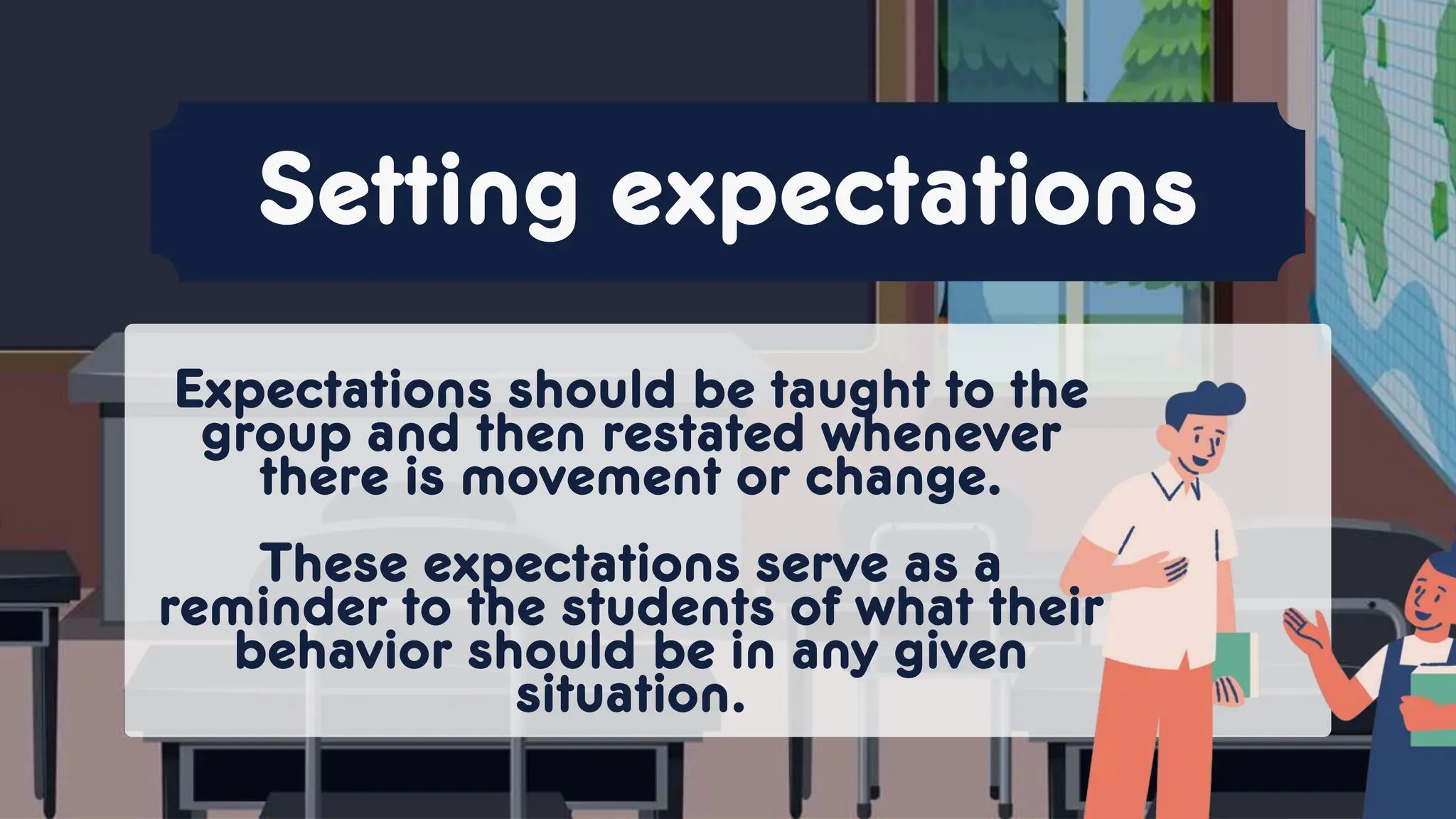
Expectations should betaught to the
group and then restated whenever
there is movement or change.
These expectations serve as a
reminder to the students of what their
behavior should be in any given
situation.
Setting expectations
14.
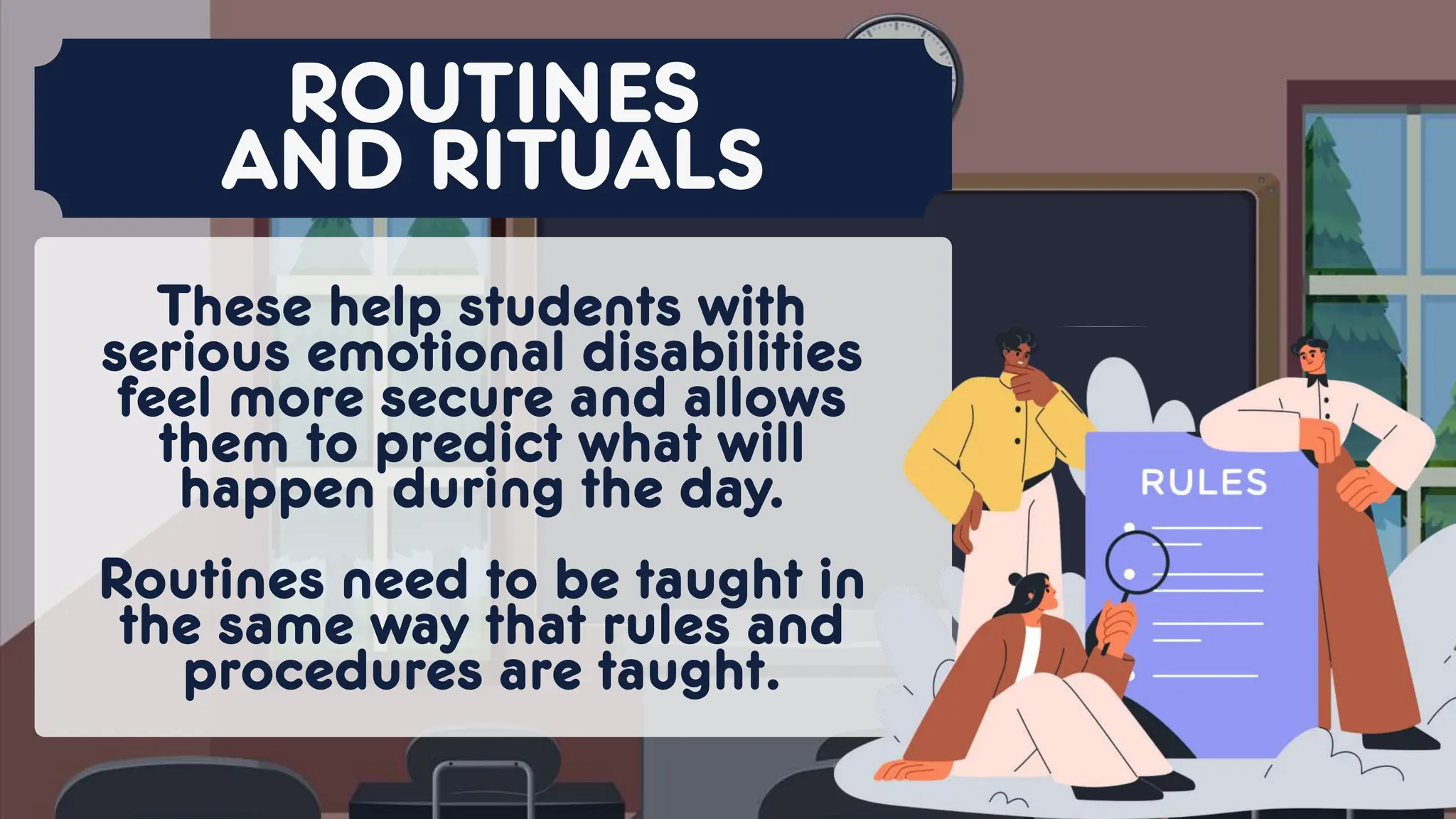
These help studentswith
serious emotional disabilities
feel more secure and allows
them to predict what will
happen during the day.
Routines need to be taught in
the same way that rules and
procedures are taught.
ROUTINES
AND RITUALS
15.
Students with behavioral-
emotional disabilities usually
require more structure than
other students to feel secure
and behave appropriately.
This should be looked at
individually.
APPROPRIATE AMOUNTS OF STRUCTURE
FOR SPECIFIC SITUATION/NEED
16.
• Age andmaturity level
• Recent behaviors
• Student motivation level
• Ability to perform a given
task
• Preparation to handle the
social difficulty or
stimulation of a situation.
Factors to consider when determining the
appropriate amount of structure include:
17.
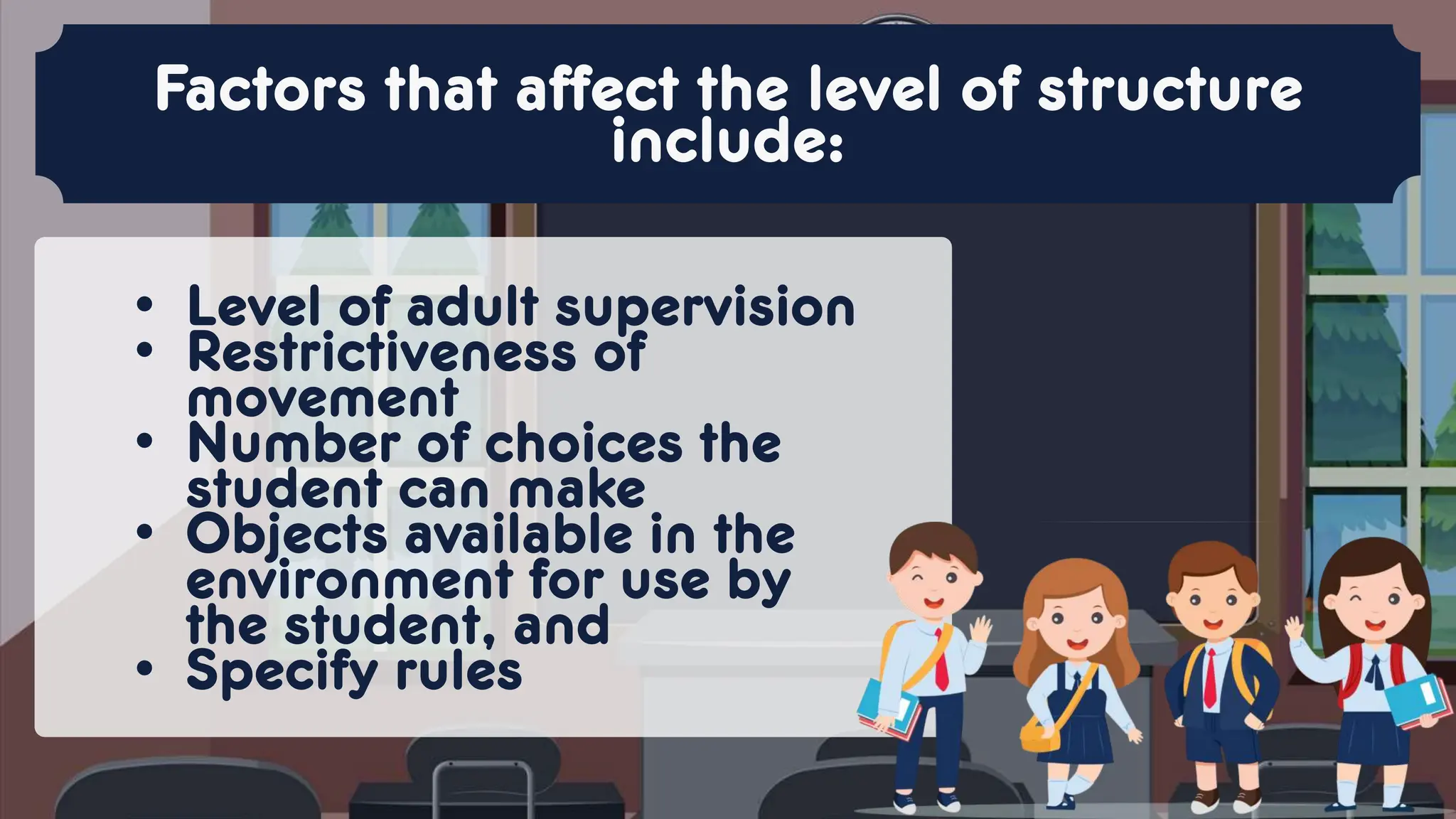
• Level ofadult supervision
• Restrictiveness of
movement
• Number of choices the
student can make
• Objects available in the
environment for use by
the student, and
• Specify rules
Factors that affect the level of structure
include:
18.
The structure ofthe
educational environment can
decrease frustrations, anxiety,
and inappropriate behaviors.
It is important to address
behaviors as early as possible
and work proactively at
preventing crisis situations.
PROACTIVE INTERVENTION OF
PROBLEMS IN THE ENVIRONMENT
19.
When scheduling forthe day, it is helpful to consider
the difficulty of each activity for the students as a
group and individually.
It is important to plan when a student will be working
on an activity that id difficult for him/her and prepare
for the situation.
“A student must not be overloaded with more stress
than he/she can handle at one time.”
Scheduling difficult activities
20.
Helping the studentsidentify an appropriate and
realistic personal goal is one way to work on a
problem before it happens.
It should be worded so that the student is able to state
the goal and will understand fully what s/he is working
toward.
This gives the student and the teacher a concrete and
specific way of communicating about a problem.
Student Goal
#2 Today, we're here to discuss a topic that lies at the heart of effective teaching and learning: Creating a Safe, Fair, and Respectful Learning Environment. As educators, we have a responsibility not only to impart knowledge but also to foster an environment where every student feels valued, respected, and safe. This is crucial not just for their academic success but also for their overall well-being.
Safety: Safety goes beyond physical safety; it encompasses emotional and psychological safety as well. Students should feel secure in expressing their thoughts and ideas without fear of ridicule or judgment. This requires us to create an atmosphere of trust and empathy.
Fairness: Fairness is about ensuring that every student has an equal opportunity to learn and succeed. It means being consistent in our expectations and treatment of students, regardless of their background or circumstances. Fairness also involves addressing any biases or prejudices that may exist in our own attitudes and actions.
Respect: Respect is the foundation of any healthy learning environment. It means treating each student as a unique individual with their own strengths, challenges, and perspectives. It also means teaching students to respect themselves, their peers, and the learning process itself.
#4 "The physical environment of the classroom plays a crucial role in shaping students' attitudes towards learning. An attractive, comfortable, and well-kept classroom sends a powerful message to students that their learning space is a place of value and worth. When students walk into a classroom that is inviting and well-maintained, they are more likely to feel motivated and engaged in their learning.
An attractive classroom can stimulate curiosity and creativity, creating a positive learning atmosphere. Comfortable seating and adequate lighting can enhance students' physical comfort, allowing them to focus better on their tasks. A well-kept classroom, free of clutter and distractions, can promote a sense of order and calmness, which is conducive to learning.
#6 "Positive student-teacher relationships are foundational to creating a safe, secure, and respectful learning environment. When students feel valued, respected, and supported by their teachers, they are more likely to engage in learning and exhibit positive behavior. Teachers can foster positive relationships with students by showing empathy, building trust, and demonstrating care and concern for their well-being.
#7 Teacher Uses Appropriate and Natural Voice Tone and Level: Teachers who use an appropriate and natural voice tone and level when talking to students can convey warmth, respect, and understanding. This helps create a positive and supportive learning environment where students feel valued and listened to.
Teacher Uses Non-Threatening Body Language: Non-threatening body language, such as open gestures, friendly facial expressions, and relaxed posture, can help build trust and rapport with students. Teachers who use non-threatening body language are more likely to create a safe and welcoming atmosphere where students feel comfortable expressing themselves.
#8 Respect: Respect is foundational in any healthy relationship. Teachers who respect their students' thoughts, opinions, and feelings create an environment where students feel valued and empowered.
Recognition: Recognizing students' achievements, efforts, and unique qualities helps build their self-esteem and motivates them to succeed.
Caring and Support: Showing genuine care and providing support to students during challenging times can help them feel understood and encouraged.
Acceptance: Accepting students for who they are, without judgment or prejudice, creates a safe and inclusive environment where everyone feels they belong.
Growth and Learning: Encouraging and facilitating students' personal and academic growth demonstrates a commitment to their development.
Empathy: Understanding and empathizing with students' emotions and experiences helps build trust and connection.
Trust and Confidentiality: Building trust with students by maintaining confidentiality and keeping promises fosters a sense of security and respect.
#9 A nurturing atmosphere is essential for students to feel safe and supported in their learning. This includes creating a classroom environment where students feel comfortable expressing themselves, taking risks, and making mistakes. Teachers can create a nurturing atmosphere by being approachable, supportive, and responsive to students' needs.
#11 Clear and consistent expectations for behavior help establish a sense of order and predictability in the classroom. When students know what is expected of them, they are more likely to behave in accordance with those expectations. Teachers should communicate expectations clearly and consistently enforce them.
#15 Routines and rituals can help create a sense of stability and security for students. Establishing regular routines for tasks such as entering the classroom, transitioning between activities, and ending the day can help students feel more comfortable and confident in their environment.
#16 Appropriate amounts of structure for specific situations and needs are important for maintaining a positive learning environment. While some situations may require a high level of structure and supervision, others may benefit from more flexibility and autonomy. Teachers should adapt their approach to meet the specific needs of their students and the situation.
#17 Age and Maturity Level: Younger students and students with lower maturity levels may require more structure to help them stay focused and on task. Older students and those with higher maturity levels may benefit from more flexibility and autonomy.
Recent Behaviors: Recent behaviors can provide insights into students' current needs and behaviors. Teachers should consider recent behaviors when determining the amount of structure needed to address specific issues or challenges.
Student Motivation Level: Students' motivation levels can impact their ability to work independently and follow classroom expectations. Teachers should consider students' motivation levels when determining the level of structure needed to keep them engaged and motivated.
Ability to Perform a Given Task: Students' ability to perform a given task should also be considered when determining the amount of structure needed. Students who struggle with a task may benefit from more guidance and support.
Preparation to Handle Social Difficulty or Stimulation: Some students may have difficulty handling social situations or stimuli in the classroom. Teachers should consider students' readiness and preparation to handle these situations when determining the amount of structure needed.
#18 Level of Adult Supervision: The amount of adult supervision in the classroom can influence the level of structure needed. A higher level of supervision may be required in situations where students need more guidance and support.
Restrictiveness of Movement: The extent to which students are allowed to move freely in the classroom can affect the level of structure. In some cases, a more structured environment with limited movement may be necessary to maintain order and focus.
Number of Choices the Student Can Make: The number of choices students are allowed to make can impact the level of structure. A more structured environment may limit choices to help students stay on task, while a less structured environment may allow for more autonomy and decision-making.
Objects Available in the Environment for Use by the Student: The availability of objects and materials in the classroom can influence the level of structure. A classroom with fewer objects may require more structure to prevent distractions and maintain focus.
Specify Rules: Clear and specific rules help establish expectations and boundaries in the classroom. Having well-defined rules can reduce confusion and create a more structured environment.
#19 Proactive intervention of problems is key to maintaining a positive learning environment. Teachers should address behavior issues promptly and constructively, using positive reinforcement and appropriate consequences when necessary. By addressing problems proactively, teachers can prevent escalation and maintain a positive classroom atmosphere."