DIATHERMY
PRESENTED BY:
V.B.AKSHARA
INTRODUCTION
2/1O
DIA meaning THROUGH
THERMY meaning HEAT or TEMPERATURE
Karl Franz Nagelschmidt
In 1908 German physician Karl Franz Nagelschmidt coined the term diathermy,
and performed the first extensive experiments on patients.
He wrote the first textbook on diathermy in 1913, which revolutionized the field.
DIATHERMY IS A THERAEUTIC TREATMENT COMMONLY PRESCRIBED
FOR MUSCULAR AND JOINT PAINS
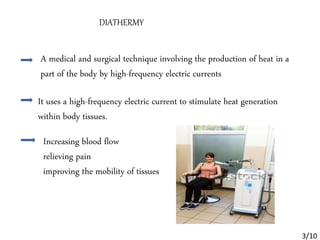
A medical and surgical technique involving the production of heat in a
part of the body by high-frequency electric currents
It uses a high-frequency electric current to stimulate heat generation
within body tissues.
Increasing blood flow
relieving pain
improving the mobility of tissues
DIATHERMY
3/10
WORKING PRINCIPLE
Diathermy uses high-frequency electric current to produce heat deep inside a
targeted tissue.
It can reach areas as deep as two inches beneath the skin’s surface.
The diathermy machine does not apply heat directly to the body. Instead, the
waves generated by the machine allow the body to generate heat from within the
targeted tissue.
Diathermy is usually part of a complete physical therapy or rehabilitative
regimen.
Frequency and length of treatments vary.
4/10
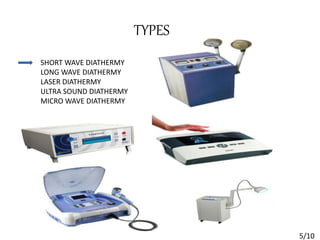
TYPES
SHORT WAVE DIATHERMY
LONG WAVE DIATHERMY
LASER DIATHERMY
ULTRA SOUND DIATHERMY
MICRO WAVE DIATHERMY
5/10
ADVANTAGES
1. Used in surgical procedures.
2. Normally it is a painless procedure.
3. It is used as a relief from various pains.
4. It is used as a method to prevent bleeding.
5. With diathermy procedures, the rate of blood flow
increase which results in fast recovery.
6. Diathermy helps in relaxation.
6/10
DISADVANTAGES
1. The heat effect may cause injuries to eyes.
2. Patients with metal implants should be avoided
from diathermy procedures.
3. Shortwave diathermy during pregnancy can cause
many problems.
4. Diathermy may affect the function of pacemakers.
5. Some patients may experience superficial burns.
7/10
1. arthritis
2. back pain
3. fibromyalgia
4. muscle spasms
5. myositis
6. neuralgia
7. sprains and
strains
8. tenosynovitis
9. tendonitis
10. bursitis
APPLICATION
8/10
1.cancer
2.reduced skin sensation
3.peripheral vascular disease
4.tissue with restricted blood supply (ischemia)
5.infections
6.fractured or broken bones
7.bleeding disorders
8.severe heart, liver, or kidney conditions
9.low skin sensation
10.pregnancy
11.perspiration
12.wound dressings
1.eyes
2.brain
3.ears
4.spinal cord
5.heart
6.reproductive
7.organs
8.genitalia
PREVENTION
9/10
OUTLOOK
After a diathermy treatment, the affected area may feel more
flexible
You may be able to participate in physical therapy behaviors
more comfortably and for a longer period of time.
The increased blood flow to the affected area may induce
healing and tissue repair
10/10
Diathermy

Diathermy

  • 1.
  • 2.
    INTRODUCTION 2/1O DIA meaning THROUGH THERMYmeaning HEAT or TEMPERATURE Karl Franz Nagelschmidt In 1908 German physician Karl Franz Nagelschmidt coined the term diathermy, and performed the first extensive experiments on patients. He wrote the first textbook on diathermy in 1913, which revolutionized the field. DIATHERMY IS A THERAEUTIC TREATMENT COMMONLY PRESCRIBED FOR MUSCULAR AND JOINT PAINS
  • 3.
    A medical andsurgical technique involving the production of heat in a part of the body by high-frequency electric currents It uses a high-frequency electric current to stimulate heat generation within body tissues. Increasing blood flow relieving pain improving the mobility of tissues DIATHERMY 3/10
  • 4.
    WORKING PRINCIPLE Diathermy useshigh-frequency electric current to produce heat deep inside a targeted tissue. It can reach areas as deep as two inches beneath the skin’s surface. The diathermy machine does not apply heat directly to the body. Instead, the waves generated by the machine allow the body to generate heat from within the targeted tissue. Diathermy is usually part of a complete physical therapy or rehabilitative regimen. Frequency and length of treatments vary. 4/10
  • 5.
    TYPES SHORT WAVE DIATHERMY LONGWAVE DIATHERMY LASER DIATHERMY ULTRA SOUND DIATHERMY MICRO WAVE DIATHERMY 5/10
  • 6.
    ADVANTAGES 1. Used insurgical procedures. 2. Normally it is a painless procedure. 3. It is used as a relief from various pains. 4. It is used as a method to prevent bleeding. 5. With diathermy procedures, the rate of blood flow increase which results in fast recovery. 6. Diathermy helps in relaxation. 6/10
  • 7.
    DISADVANTAGES 1. The heateffect may cause injuries to eyes. 2. Patients with metal implants should be avoided from diathermy procedures. 3. Shortwave diathermy during pregnancy can cause many problems. 4. Diathermy may affect the function of pacemakers. 5. Some patients may experience superficial burns. 7/10
  • 8.
    1. arthritis 2. backpain 3. fibromyalgia 4. muscle spasms 5. myositis 6. neuralgia 7. sprains and strains 8. tenosynovitis 9. tendonitis 10. bursitis APPLICATION 8/10
  • 9.
    1.cancer 2.reduced skin sensation 3.peripheralvascular disease 4.tissue with restricted blood supply (ischemia) 5.infections 6.fractured or broken bones 7.bleeding disorders 8.severe heart, liver, or kidney conditions 9.low skin sensation 10.pregnancy 11.perspiration 12.wound dressings 1.eyes 2.brain 3.ears 4.spinal cord 5.heart 6.reproductive 7.organs 8.genitalia PREVENTION 9/10
  • 10.
    OUTLOOK After a diathermytreatment, the affected area may feel more flexible You may be able to participate in physical therapy behaviors more comfortably and for a longer period of time. The increased blood flow to the affected area may induce healing and tissue repair 10/10