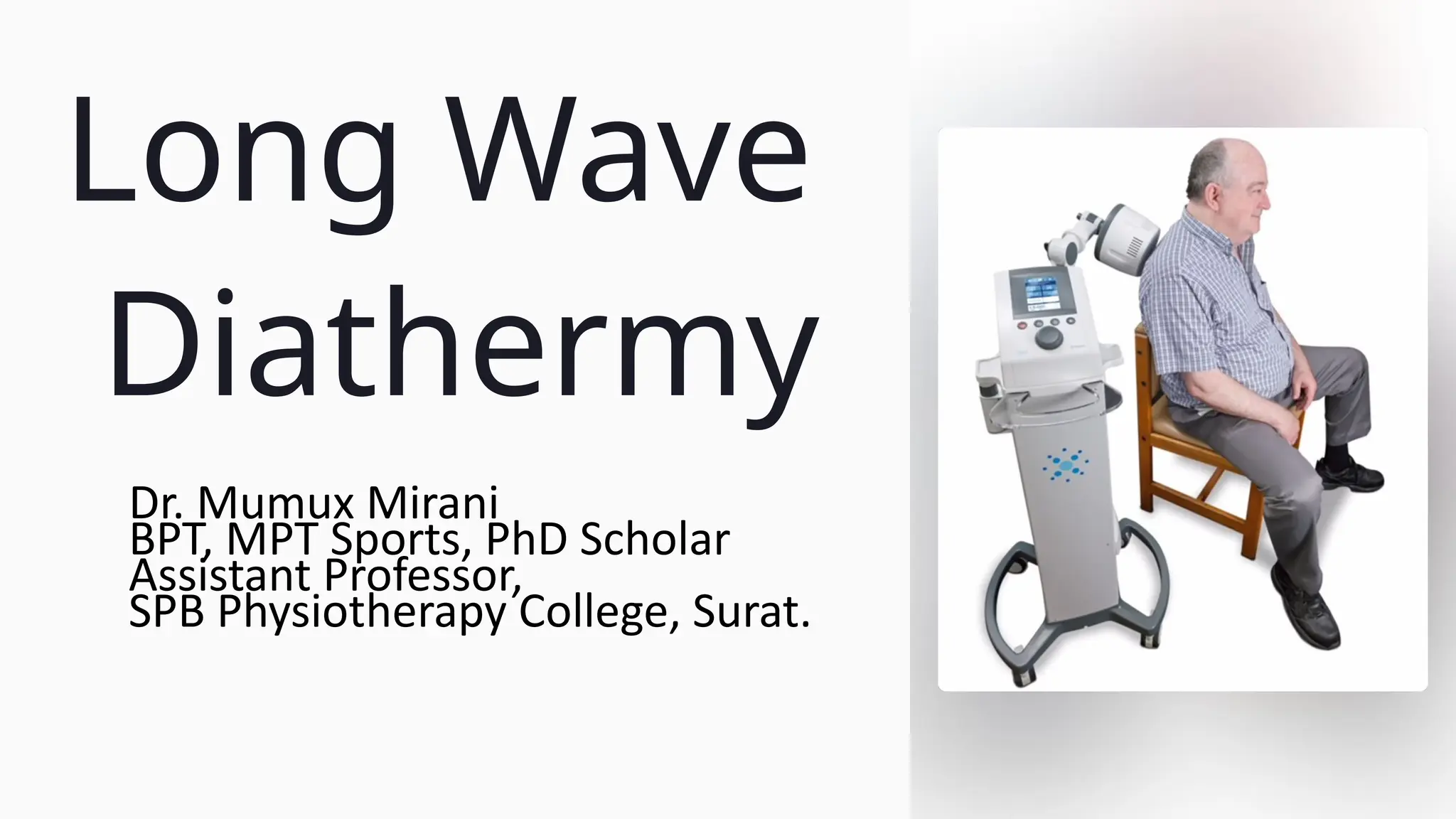
Long Wave
Diathermy
Dr. Mumux Mirani
BPT, MPT Sports, PhD Scholar
Assistant Professor,
SPB Physiotherapy College, Surat.
MWD SWD PWD LWD
Long wave diathermy, a form of deep heat therapy, has
been a staple in physiotherapy for decades.
This modality uses electromagnetic waves to generate
heat deep within the tissues, promoting a range of
therapeutic effects.
This presentation will delve into the intricacies of long
wave diathermy, exploring its mechanism of action,
therapeutic applications, and safety considerations.
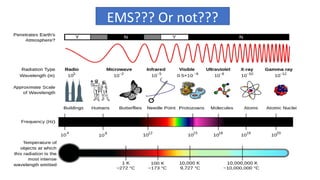
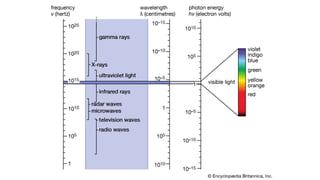
EMS??? Or not???
Mechanism of Action
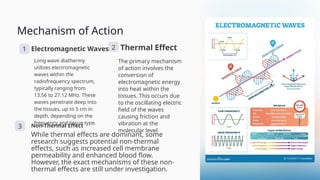
1 Electromagnetic Waves
Long wave diathermy
utilizes electromagnetic
waves within the
radiofrequency spectrum,
typically ranging from
13.56 to 27.12 MHz. These
waves penetrate deep into
the tissues, up to 5 cm in
depth, depending on the
frequency and tissue type.
2 Thermal Effect
The primary mechanism
of action involves the
conversion of
electromagnetic energy
into heat within the
tissues. This occurs due
to the oscillating electric
field of the waves
causing friction and
vibration at the
molecular level.
3 Non-Thermal Effect
While thermal effects are dominant, some
research suggests potential non-thermal
effects, such as increased cell membrane
permeability and enhanced blood flow.
However, the exact mechanisms of these non-
thermal effects are still under investigation.
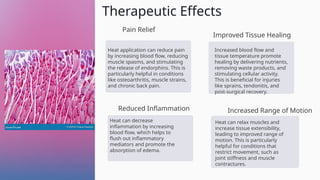
Therapeutic Effects
Pain Relief
Heat application can reduce pain
by increasing blood flow, reducing
muscle spasms, and stimulating
the release of endorphins. This is
particularly helpful in conditions
like osteoarthritis, muscle strains,
and chronic back pain.
Improved Tissue Healing
Increased blood flow and
tissue temperature promote
healing by delivering nutrients,
removing waste products, and
stimulating cellular activity.
This is beneficial for injuries
like sprains, tendonitis, and
post-surgical recovery.
Reduced Inflammation
Heat can decrease
inflammation by increasing
blood flow, which helps to
flush out inflammatory
mediators and promote the
absorption of edema.
Increased Range of Motion
Heat can relax muscles and
increase tissue extensibility,
leading to improved range of
motion. This is particularly
helpful for conditions that
restrict movement, such as
joint stiffness and muscle
contractures.
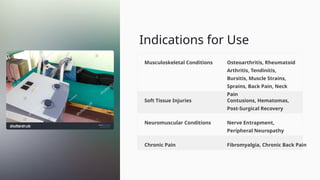
Indications for Use
Musculoskeletal Conditions Osteoarthritis, Rheumatoid
Arthritis, Tendinitis,
Bursitis, Muscle Strains,
Sprains, Back Pain, Neck
Pain
Soft Tissue Injuries Contusions, Hematomas,
Post-Surgical Recovery
Neuromuscular Conditions Nerve Entrapment,
Peripheral Neuropathy
Chronic Pain Fibromyalgia, Chronic Back Pain
Contraindications and Precautions
Absolute Contraindications
• Pregnancy
• Malignancy
• Active Bleeding
• Pacemaker or Implanted Devices
• Metal Implants in the
Treatment Area
• Active Infection
Relative Contraindications
• Cardiac Conditions
• Diabetes
• Circulatory Disorders
• Skin Conditions
• Sensory Deficits
• Obesity
Precautions
• Proper Patient
Positioning and
Padding
• Monitoring for Skin
Temperature and
Sensitivity
• Regular Patient Assessment
• Appropriate Dosage
and Treatment
Duration
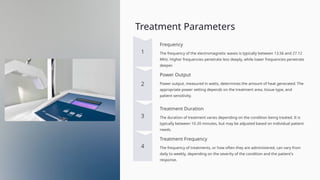
Treatment Parameters
Frequency
The frequency of the electromagnetic waves is typically between 13.56 and 27.12
MHz. Higher frequencies penetrate less deeply, while lower frequencies penetrate
deeper.
Power Output
Power output, measured in watts, determines the amount of heat generated. The
appropriate power setting depends on the treatment area, tissue type, and
patient sensitivity.
Treatment Duration
The duration of treatment varies depending on the condition being treated. It is
typically between 10-20 minutes, but may be adjusted based on individual patient
needs.
Treatment Frequency
The frequency of treatments, or how often they are administered, can vary from
daily to weekly, depending on the severity of the condition and the patient's
response.
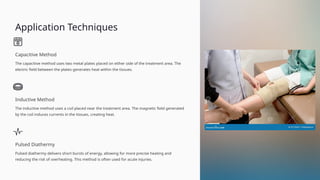
Application Techniques
Capacitive Method
The capacitive method uses two metal plates placed on either side of the treatment area. The
electric field between the plates generates heat within the tissues.
Inductive Method
The inductive method uses a coil placed near the treatment area. The magnetic field generated
by the coil induces currents in the tissues, creating heat.
Pulsed Diathermy
Pulsed diathermy delivers short bursts of energy, allowing for more precise heating and
reducing the risk of overheating. This method is often used for acute injuries.
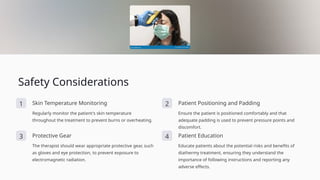
Safety Considerations
1 Skin Temperature Monitoring
Regularly monitor the patient's skin temperature
throughout the treatment to prevent burns or overheating.
2 Patient Positioning and Padding
Ensure the patient is positioned comfortably and that
adequate padding is used to prevent pressure points and
discomfort.
3 Protective Gear
The therapist should wear appropriate protective gear, such
as gloves and eye protection, to prevent exposure to
electromagnetic radiation.
4 Patient Education
Educate patients about the potential risks and benefits of
diathermy treatment, ensuring they understand the
importance of following instructions and reporting any
adverse effects.
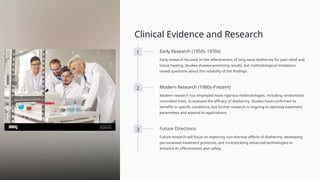
Clinical Evidence and Research
1 Early Research (1950s-1970s)
Early research focused on the effectiveness of long wave diathermy for pain relief and
tissue healing. Studies showed promising results, but methodological limitations
raised questions about the reliability of the findings.
2 Modern Research (1980s-Present)
Modern research has employed more rigorous methodologies, including randomized
controlled trials, to evaluate the efficacy of diathermy. Studies have confirmed its
benefits in specific conditions, but further research is ongoing to optimize treatment
parameters and expand its applications.
3 Future Directions
Future research will focus on exploring non-thermal effects of diathermy, developing
personalized treatment protocols, and incorporating advanced technologies to
enhance its effectiveness and safety.
Conclusion and Key Takeaways
Long wave diathermy remains a valuable
therapeutic tool in physiotherapy.
Its ability to generate deep heat within tissues
offers numerous therapeutic benefits,
including pain relief, improved healing, and
increased range of motion.
However, it is crucial to adhere to strict safety
guidelines, contraindications, and treatment
parameters to ensure optimal outcomes and
minimize risks.
Ongoing research continues to refine our
understanding of diathermy, paving the way
for even more effective and personalized
applications in the future.

Long-Wave-Diathermy-A-Comprehensive-Overview.pptx

  • 1.
    Long Wave Diathermy Dr. MumuxMirani BPT, MPT Sports, PhD Scholar Assistant Professor, SPB Physiotherapy College, Surat.
  • 2.
  • 3.
    Long wave diathermy,a form of deep heat therapy, has been a staple in physiotherapy for decades. This modality uses electromagnetic waves to generate heat deep within the tissues, promoting a range of therapeutic effects. This presentation will delve into the intricacies of long wave diathermy, exploring its mechanism of action, therapeutic applications, and safety considerations.
  • 4.
  • 6.
    Mechanism of Action 1Electromagnetic Waves Long wave diathermy utilizes electromagnetic waves within the radiofrequency spectrum, typically ranging from 13.56 to 27.12 MHz. These waves penetrate deep into the tissues, up to 5 cm in depth, depending on the frequency and tissue type. 2 Thermal Effect The primary mechanism of action involves the conversion of electromagnetic energy into heat within the tissues. This occurs due to the oscillating electric field of the waves causing friction and vibration at the molecular level. 3 Non-Thermal Effect While thermal effects are dominant, some research suggests potential non-thermal effects, such as increased cell membrane permeability and enhanced blood flow. However, the exact mechanisms of these non- thermal effects are still under investigation.
  • 7.
    Therapeutic Effects Pain Relief Heatapplication can reduce pain by increasing blood flow, reducing muscle spasms, and stimulating the release of endorphins. This is particularly helpful in conditions like osteoarthritis, muscle strains, and chronic back pain. Improved Tissue Healing Increased blood flow and tissue temperature promote healing by delivering nutrients, removing waste products, and stimulating cellular activity. This is beneficial for injuries like sprains, tendonitis, and post-surgical recovery. Reduced Inflammation Heat can decrease inflammation by increasing blood flow, which helps to flush out inflammatory mediators and promote the absorption of edema. Increased Range of Motion Heat can relax muscles and increase tissue extensibility, leading to improved range of motion. This is particularly helpful for conditions that restrict movement, such as joint stiffness and muscle contractures.
  • 8.
    Indications for Use MusculoskeletalConditions Osteoarthritis, Rheumatoid Arthritis, Tendinitis, Bursitis, Muscle Strains, Sprains, Back Pain, Neck Pain Soft Tissue Injuries Contusions, Hematomas, Post-Surgical Recovery Neuromuscular Conditions Nerve Entrapment, Peripheral Neuropathy Chronic Pain Fibromyalgia, Chronic Back Pain
  • 9.
    Contraindications and Precautions AbsoluteContraindications • Pregnancy • Malignancy • Active Bleeding • Pacemaker or Implanted Devices • Metal Implants in the Treatment Area • Active Infection Relative Contraindications • Cardiac Conditions • Diabetes • Circulatory Disorders • Skin Conditions • Sensory Deficits • Obesity Precautions • Proper Patient Positioning and Padding • Monitoring for Skin Temperature and Sensitivity • Regular Patient Assessment • Appropriate Dosage and Treatment Duration
  • 10.
    Treatment Parameters Frequency The frequencyof the electromagnetic waves is typically between 13.56 and 27.12 MHz. Higher frequencies penetrate less deeply, while lower frequencies penetrate deeper. Power Output Power output, measured in watts, determines the amount of heat generated. The appropriate power setting depends on the treatment area, tissue type, and patient sensitivity. Treatment Duration The duration of treatment varies depending on the condition being treated. It is typically between 10-20 minutes, but may be adjusted based on individual patient needs. Treatment Frequency The frequency of treatments, or how often they are administered, can vary from daily to weekly, depending on the severity of the condition and the patient's response.
  • 11.
    Application Techniques Capacitive Method Thecapacitive method uses two metal plates placed on either side of the treatment area. The electric field between the plates generates heat within the tissues. Inductive Method The inductive method uses a coil placed near the treatment area. The magnetic field generated by the coil induces currents in the tissues, creating heat. Pulsed Diathermy Pulsed diathermy delivers short bursts of energy, allowing for more precise heating and reducing the risk of overheating. This method is often used for acute injuries.
  • 12.
    Safety Considerations 1 SkinTemperature Monitoring Regularly monitor the patient's skin temperature throughout the treatment to prevent burns or overheating. 2 Patient Positioning and Padding Ensure the patient is positioned comfortably and that adequate padding is used to prevent pressure points and discomfort. 3 Protective Gear The therapist should wear appropriate protective gear, such as gloves and eye protection, to prevent exposure to electromagnetic radiation. 4 Patient Education Educate patients about the potential risks and benefits of diathermy treatment, ensuring they understand the importance of following instructions and reporting any adverse effects.
  • 13.
    Clinical Evidence andResearch 1 Early Research (1950s-1970s) Early research focused on the effectiveness of long wave diathermy for pain relief and tissue healing. Studies showed promising results, but methodological limitations raised questions about the reliability of the findings. 2 Modern Research (1980s-Present) Modern research has employed more rigorous methodologies, including randomized controlled trials, to evaluate the efficacy of diathermy. Studies have confirmed its benefits in specific conditions, but further research is ongoing to optimize treatment parameters and expand its applications. 3 Future Directions Future research will focus on exploring non-thermal effects of diathermy, developing personalized treatment protocols, and incorporating advanced technologies to enhance its effectiveness and safety.
  • 14.
    Conclusion and KeyTakeaways Long wave diathermy remains a valuable therapeutic tool in physiotherapy. Its ability to generate deep heat within tissues offers numerous therapeutic benefits, including pain relief, improved healing, and increased range of motion. However, it is crucial to adhere to strict safety guidelines, contraindications, and treatment parameters to ensure optimal outcomes and minimize risks. Ongoing research continues to refine our understanding of diathermy, paving the way for even more effective and personalized applications in the future.