Short Wave Diathermy
Aditya johan Romadhon, SST.FT, M.Fis
INTRODUCTION
 The concept of producing heat deep within the tissues,
beyond the reach of infrared and other forms of superficial
heat is appreciated by physical therapists
 Generally, this type of currents used to generate heat, is in the
megacycle range
 Most commonly utilized high-frequency currents are found
with:
* Short wave diathermy and * Microwave diathermy
PHYSICS
 Originally, it was utilized for musculoskeletal conditions which require
increased circulation and other benefits of thermal increase
 Heat generation through short wave diathermy depends on the molecular
activity within the tissue exposed (vibration of ions, dipole rotation and
molecular distortion)
 Differential heating is noted within bone, muscle and fat because of the
different densities of these tissues
 Administration of short wave diathermy for medical purposes occurs
through : 3 wavelengths: 7, 11 and 22 meters and 3 frequencies: 45, 27 and
13 mega cycles
PHYSIOLOGICAL EFFECT
 The principal effect of short wave diathermy on the body is the production
of heat in the tissues due to the rise of temperature
 Increased metabolism : Heating tissues accelerates chemical changes such
as metabolism, so oxygen and food stuffs are used up.
 With increased metabolism, there will be increased output of waste
products.
 Increased blood supply: Vasodilatation increases blood flow through the
area, so that the necessary oxygen and nutritive materials are supplied and
waste products are removed
 General rise of temperature: As blood passes through the heated tissues, it
also becomes heated and carries the heat to other body parts
 As a result, heat reduces the excitability of nerves, provided that heat is
not excessive
 Fall in blood pressure: The generalized vasodilatation reduces the
peripheral resistance to blood flow. Heat also reduces blood viscosity,
which helps in the reduction of blood pressure
 Increased activity of sweat glands: If a general rise of temperature occurs,
there will be increased activation of the sweat glands
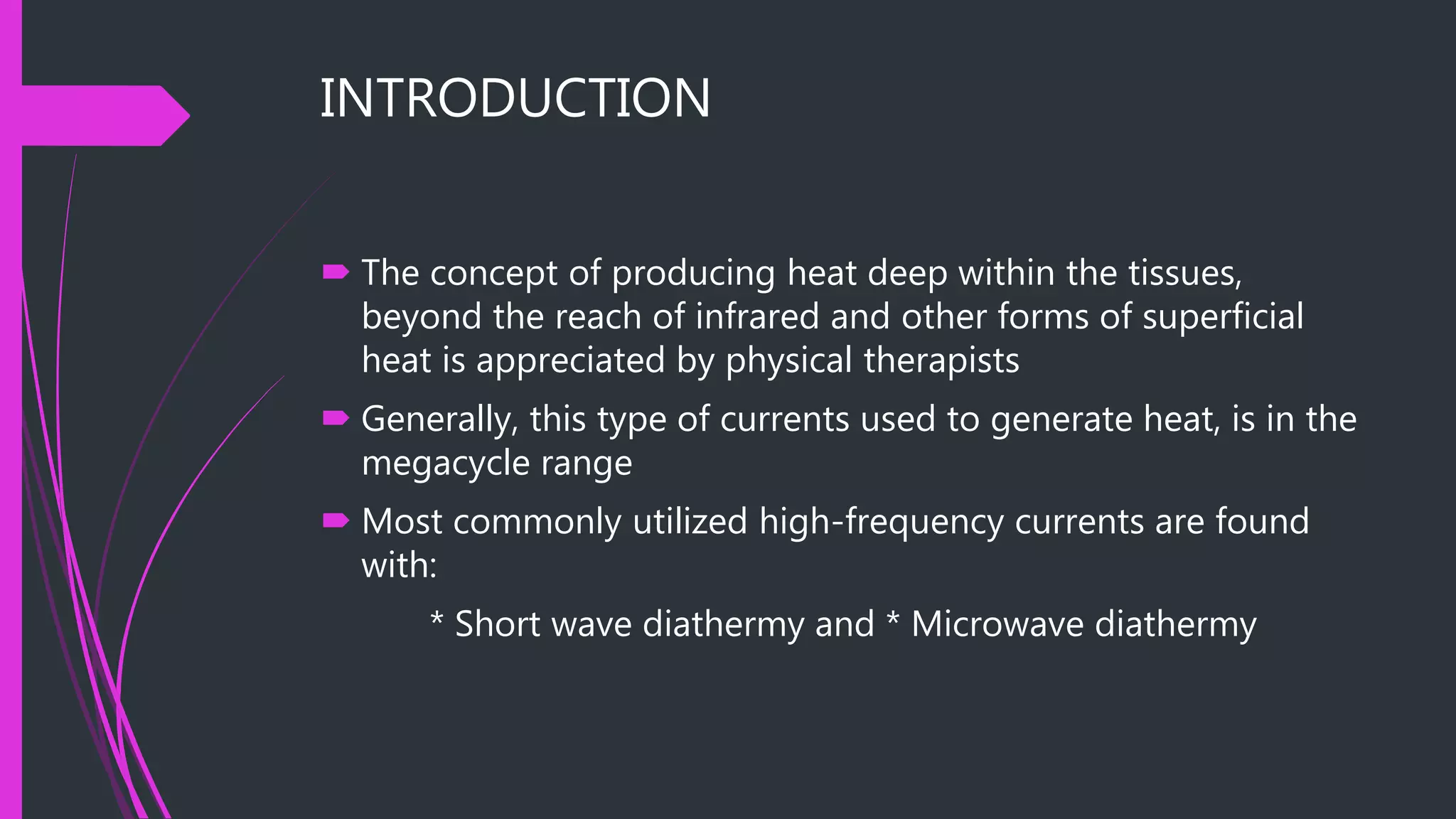
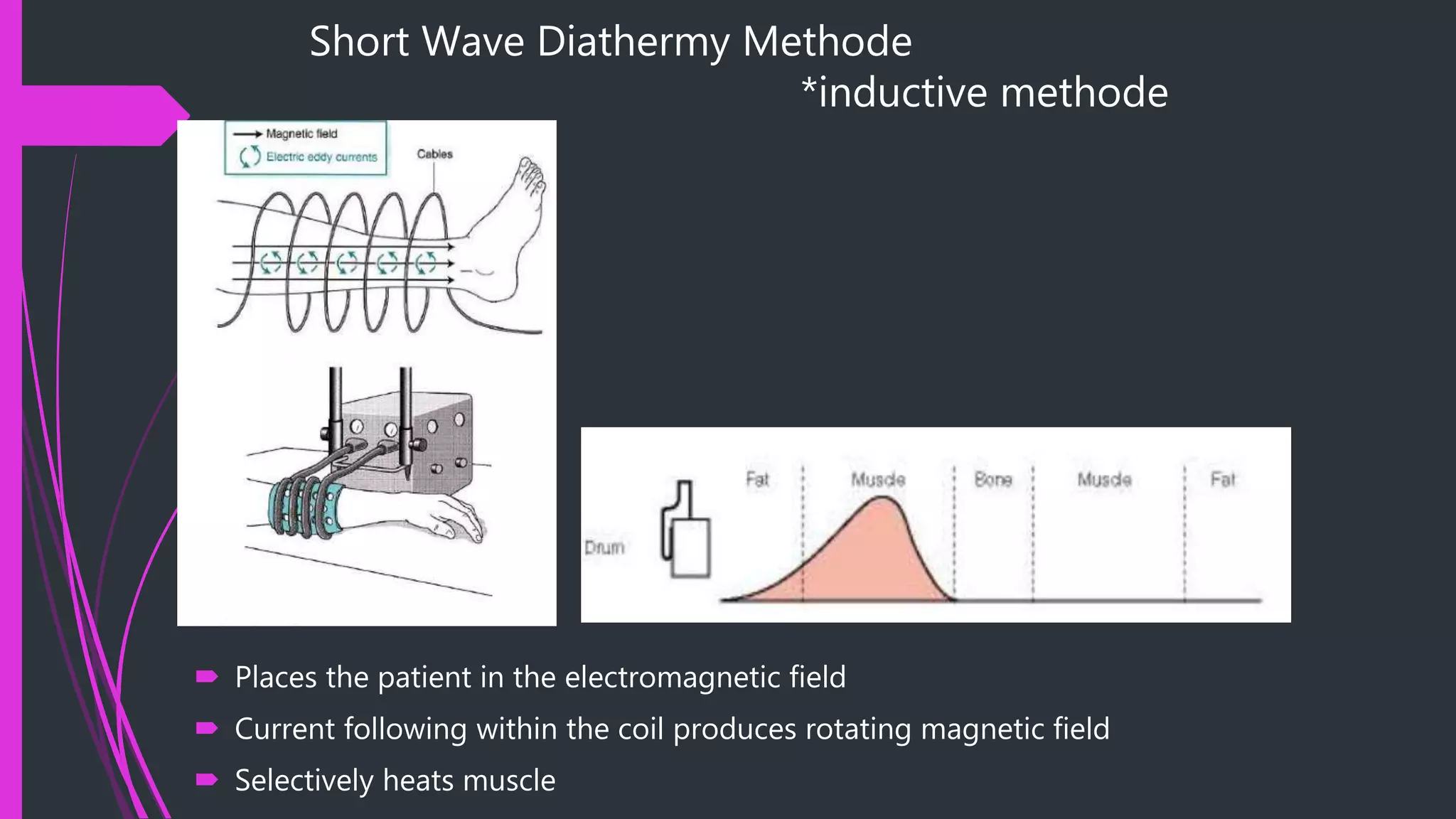
Short Wave Diathermy Methode
*inductive methode
 Places the patient in the electromagnetic field
 Current following within the coil produces rotating magnetic field
 Selectively heats muscle
Short Wave Diathermy
* Capacitive methode
 Uses patient’s tissue as a part of the circuit
 The tissue’s electrical produce heat
 Selectively heats skin (muscle is heated via conduction from adipose)
 Refered as “condenser field diathermy”
TYPES OF ELECTRODES
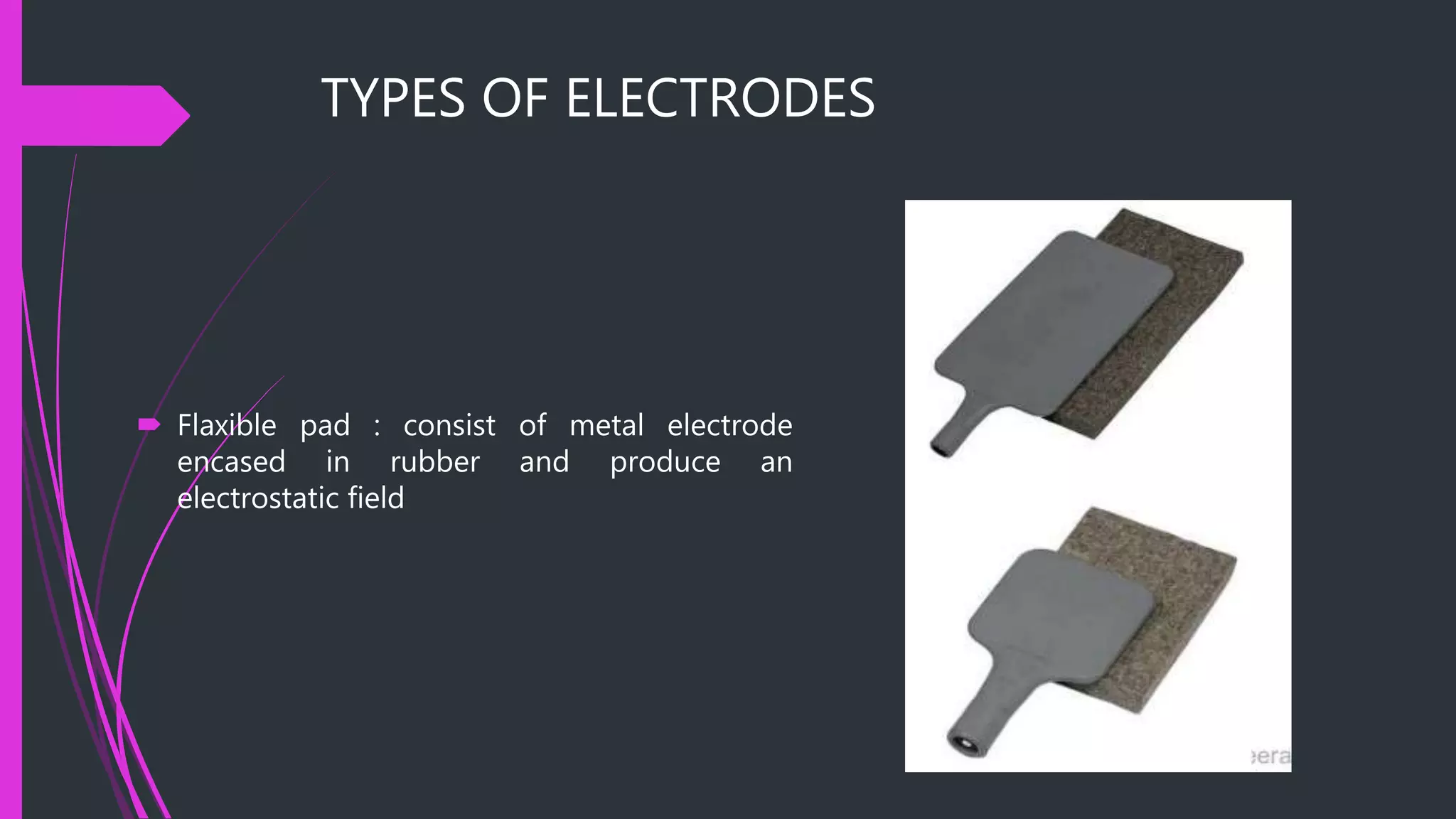
 Flaxible pad : consist of metal electrode
encased in rubber and produce an
electrostatic field
 Space plates : consist of rigid metal
encased in a Perspex cover (electrostatic
field)
 Coil or cable : electrode consist of wire with
plug at either end creates electro-magnetic
field
 The monode : flat, rigid coil encased in
plastic cover (electromagnetic field)
 The diplode (drum electrode): consists of a
flat coil encased in Perspex cover with two
wings (electromagnetic field)
FACTOR INFLUENCES FIELD DISTRIBUTION
ELECTRODES PLACEMENTS
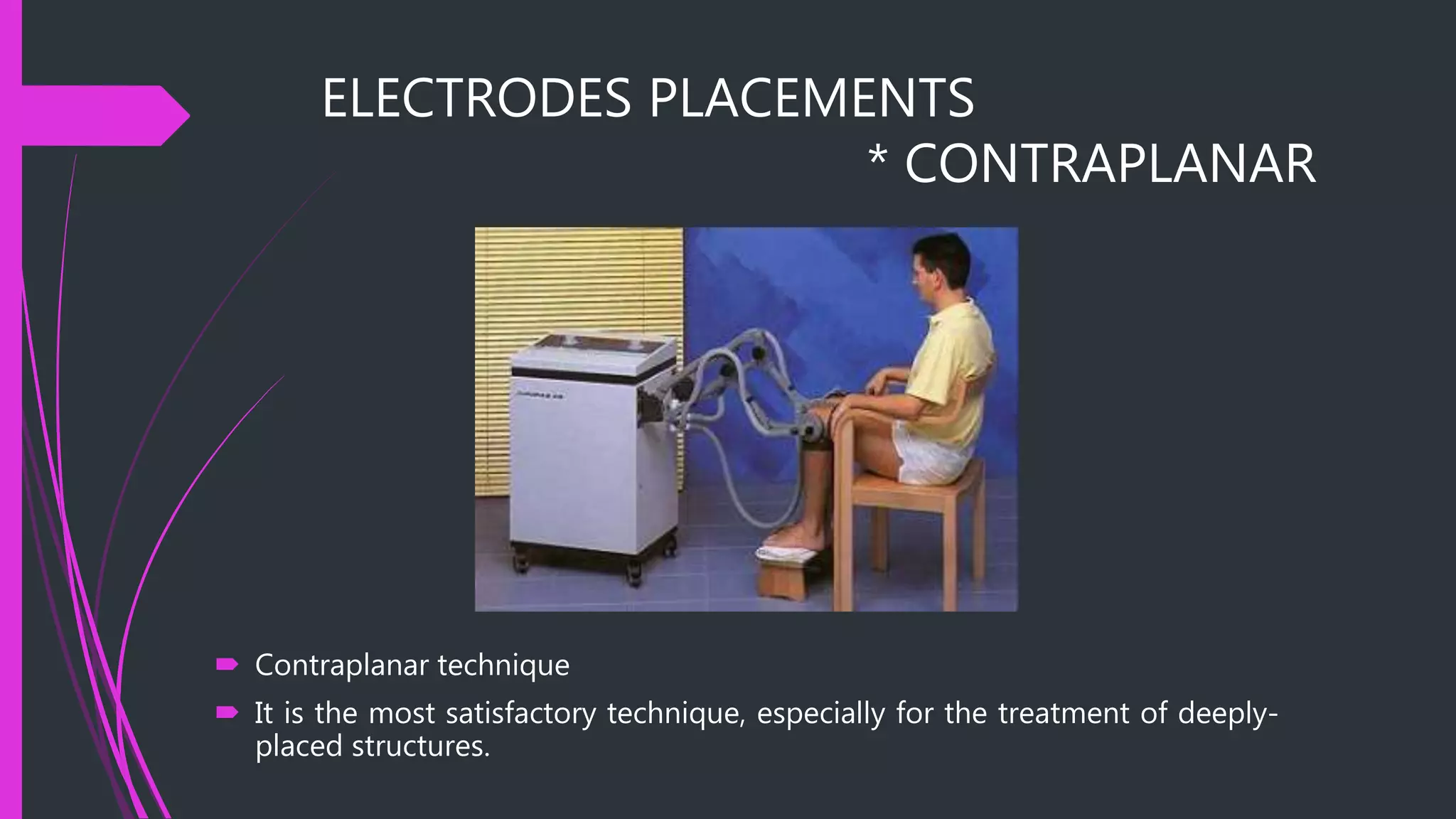
* CONTRAPLANAR
 Contraplanar technique
 It is the most satisfactory technique, especially for the treatment of deeply-
placed structures.
COPLANAR
 Coplanar technique
 In this technique, electrodes are placed side by side on the same aspect of
the part, provided there is an adequate distance between them.
 The distance between the two electrodes should be more than the total
width of spacing
CROSSFIRE
 Cross fire technique
 Half of the treatment period is given with the electrodes in one position and then
they are moved to be at right angle to that obtained during the first part of the
treatment
MONOPOLAR
 Monopolar technique
 The active electrode is placed over the site of the lesion, while the indifferent one is
applied to some distant part of the body
DOSAGE
 Moderate heating : comfortable warmth
 Mild heating : mild gentle warmth
 Minimal perceptible heating : so that you can only just feel the warmth
 Imperceptible heating : no feeling of warmth at all
 It takes some 15-20 minutes for vascular adjustments to occur and thus reach
a steady state
INDICATION
 For chronic and mild conditions:
- Myositis and arthritis.
- Pelvic inflammation.
- Otitis media.
- Bronchitis.
- Sinusitis.
CONTRAINDICATION
 Acute inflammatory conditions or hemorrhage:
Heating of the tissues by diathermy causes dilatation of blood vessels.
Not after an injury or in any case where hemorrhage has recently occurred
or may occur, (gastric or intestinal diseases associated with ulceration).
Not on the abdomen or pelvis during menstruation
CONTRAINDICATION
 Venous thrombosis or phlebitis: Application of short wave diathermy may
aggravate the inflammatory process
 Arterial diseases: Not applied to parts which have defective blood supply
 Pregnancy: Diathermy shouldn’t be applied to the abdomen or pelvis
during pregnancy.
 Metals in the tissues: Diathermy causes concentration of electric field in
the metal, which may precipitate burns
CONTRAINDICATION
 Loss of skin sensation: It is safer to avoid the application of diathermy to
cases where there is loss of skin sensation.
 Tumors: Short wave diathermy shouldn’t be applied to areas of malignant
growth
 X-ray therapy: X-ray therapy devitalizes the tissues, rendering them more
susceptible to damage. SW shouldn’t be applied to areas recently exposed
to therapeutic doses of X-rays
The end

Short wave diathermy

  • 1.
    Short Wave Diathermy Adityajohan Romadhon, SST.FT, M.Fis
  • 2.
    INTRODUCTION  The conceptof producing heat deep within the tissues, beyond the reach of infrared and other forms of superficial heat is appreciated by physical therapists  Generally, this type of currents used to generate heat, is in the megacycle range  Most commonly utilized high-frequency currents are found with: * Short wave diathermy and * Microwave diathermy
  • 3.
    PHYSICS  Originally, itwas utilized for musculoskeletal conditions which require increased circulation and other benefits of thermal increase  Heat generation through short wave diathermy depends on the molecular activity within the tissue exposed (vibration of ions, dipole rotation and molecular distortion)  Differential heating is noted within bone, muscle and fat because of the different densities of these tissues  Administration of short wave diathermy for medical purposes occurs through : 3 wavelengths: 7, 11 and 22 meters and 3 frequencies: 45, 27 and 13 mega cycles
  • 4.
    PHYSIOLOGICAL EFFECT  Theprincipal effect of short wave diathermy on the body is the production of heat in the tissues due to the rise of temperature  Increased metabolism : Heating tissues accelerates chemical changes such as metabolism, so oxygen and food stuffs are used up.  With increased metabolism, there will be increased output of waste products.  Increased blood supply: Vasodilatation increases blood flow through the area, so that the necessary oxygen and nutritive materials are supplied and waste products are removed
  • 5.
     General riseof temperature: As blood passes through the heated tissues, it also becomes heated and carries the heat to other body parts  As a result, heat reduces the excitability of nerves, provided that heat is not excessive  Fall in blood pressure: The generalized vasodilatation reduces the peripheral resistance to blood flow. Heat also reduces blood viscosity, which helps in the reduction of blood pressure  Increased activity of sweat glands: If a general rise of temperature occurs, there will be increased activation of the sweat glands
  • 6.
    Short Wave DiathermyMethode *inductive methode  Places the patient in the electromagnetic field  Current following within the coil produces rotating magnetic field  Selectively heats muscle
  • 7.
    Short Wave Diathermy *Capacitive methode  Uses patient’s tissue as a part of the circuit  The tissue’s electrical produce heat  Selectively heats skin (muscle is heated via conduction from adipose)  Refered as “condenser field diathermy”
  • 8.
    TYPES OF ELECTRODES Flaxible pad : consist of metal electrode encased in rubber and produce an electrostatic field
  • 9.
     Space plates: consist of rigid metal encased in a Perspex cover (electrostatic field)
  • 10.
     Coil orcable : electrode consist of wire with plug at either end creates electro-magnetic field
  • 11.
     The monode: flat, rigid coil encased in plastic cover (electromagnetic field)
  • 12.
     The diplode(drum electrode): consists of a flat coil encased in Perspex cover with two wings (electromagnetic field)
  • 13.
  • 14.
  • 15.
  • 16.
  • 17.
  • 18.
    ELECTRODES PLACEMENTS * CONTRAPLANAR Contraplanar technique  It is the most satisfactory technique, especially for the treatment of deeply- placed structures.
  • 19.
    COPLANAR  Coplanar technique In this technique, electrodes are placed side by side on the same aspect of the part, provided there is an adequate distance between them.  The distance between the two electrodes should be more than the total width of spacing
  • 20.
    CROSSFIRE  Cross firetechnique  Half of the treatment period is given with the electrodes in one position and then they are moved to be at right angle to that obtained during the first part of the treatment
  • 21.
    MONOPOLAR  Monopolar technique The active electrode is placed over the site of the lesion, while the indifferent one is applied to some distant part of the body
  • 22.
    DOSAGE  Moderate heating: comfortable warmth  Mild heating : mild gentle warmth  Minimal perceptible heating : so that you can only just feel the warmth  Imperceptible heating : no feeling of warmth at all  It takes some 15-20 minutes for vascular adjustments to occur and thus reach a steady state
  • 23.
    INDICATION  For chronicand mild conditions: - Myositis and arthritis. - Pelvic inflammation. - Otitis media. - Bronchitis. - Sinusitis.
  • 24.
    CONTRAINDICATION  Acute inflammatoryconditions or hemorrhage: Heating of the tissues by diathermy causes dilatation of blood vessels. Not after an injury or in any case where hemorrhage has recently occurred or may occur, (gastric or intestinal diseases associated with ulceration). Not on the abdomen or pelvis during menstruation
  • 25.
    CONTRAINDICATION  Venous thrombosisor phlebitis: Application of short wave diathermy may aggravate the inflammatory process  Arterial diseases: Not applied to parts which have defective blood supply  Pregnancy: Diathermy shouldn’t be applied to the abdomen or pelvis during pregnancy.  Metals in the tissues: Diathermy causes concentration of electric field in the metal, which may precipitate burns
  • 26.
    CONTRAINDICATION  Loss ofskin sensation: It is safer to avoid the application of diathermy to cases where there is loss of skin sensation.  Tumors: Short wave diathermy shouldn’t be applied to areas of malignant growth  X-ray therapy: X-ray therapy devitalizes the tissues, rendering them more susceptible to damage. SW shouldn’t be applied to areas recently exposed to therapeutic doses of X-rays
  • 27.