28th Annual
Update in Medicine
Conference
Francisco J Cervantes MD FAAP
Diabetes: It is a matter of Fat
October 26, 2012
Laredo TX
WWW.LaredoPediatrics.com
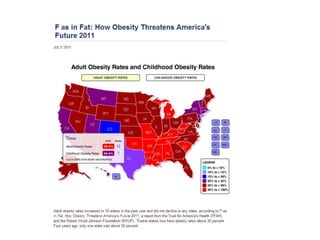
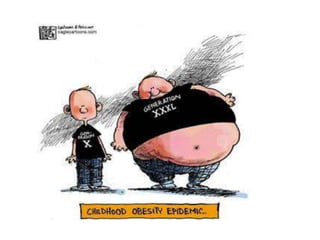
America is facing an epidemic!!
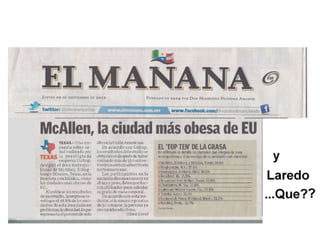
The U.S. is the fattest nation in the world.
64.5% of Americans are overweight or obese.
Source: JAMA. 2002;288:1723-1727
Obesity is the second largest preventable
cause of death in the U.S.! (Smoking is #1.)
Source: JAMA 1996; 276: 1907-1950.
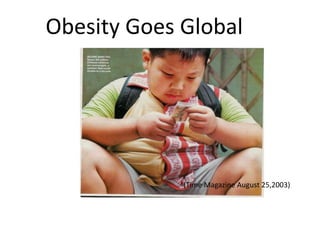
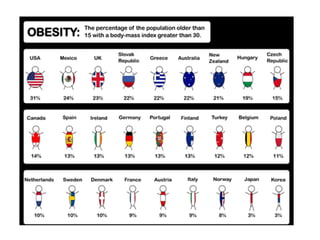
Obesity Goes Global
(Time Magazine August 25,2003)
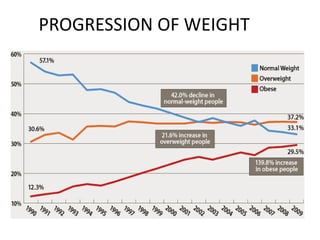
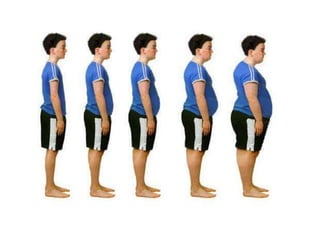
PROGRESSION OF WEIGHT
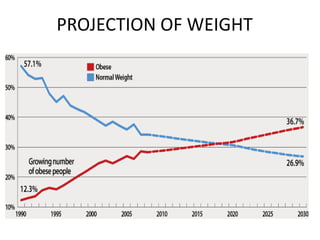
PROJECTION OF WEIGHT
Future Family Pictures
BMI History
• The body mass index is a brainchild of a
Belgian statistician and mathematician named
Adolphe Quatelet who created the BMI
sometime from1830 to 1850
Article Source:
http://EzineArticles.com/125508
BMI History
• his project was intended to describe the
standard proportions of the human build.
• The equation was largely ignored by the
medical community even though insurance
companies began using somewhat vague
comparisons of height and weight among
policyholders beginning in the early twentieth
century
BMI History
• Medical researchers searched for an accurate,
uniform way to measure fatness for decades
when in 1972, physiology professor and obesity
researcher Ancel Keys published his “Indices of
Relative Weight and Obesity,” a landmark study of
more than 7,400 men in five countries. Keys
considered the various height-weight formulas in
existence and found Quetelet’s equation to be
the best marker of body-fat percentage. He
renamed this number the body mass index or
BMI.
BMI as Standard
• BMI became an international standard for
obesity measurement in the 1980s. The public
learned about BMI the late 1990s, when the
government launched an initiative to
encourage healthy eating and exercise.
DEFINITION OF OBESITY
• By 1985, the National Institutes of Health
began defining obesity according to body
mass index. (27.8 for men and 27.3 for
women)
• Then in 1998, the NIH consolidated the
threshold for men and women and added the
category of overweight.
BMI and healthy weight
• In 1998, the NIH lowered the overweight
threshold for BMI 27.8 to 25 to match
international guidelines.
• The move added 30 million Americans who were
previously in the "healthy weight" category to the
"overweight" category.
• Today, the NIH advises doctors and their patients
to include BMI in a complete assessment of a
person's body size and overall health.
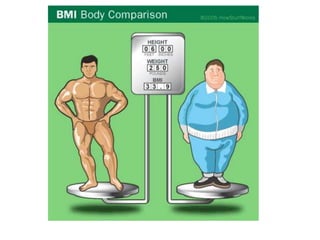
Is BMI an Accurate Measure of
Obesity?
It's important to note that although BMI
is accurate most of the time, it may
overestimate or underestimate body
fat. For example, BMI doesn't
distinguish between body fat and
muscle mass, which weighs more than
fat.
Waist and Hip Ratio
waist-to-hip ratios are a much more
accurate way of determining the
kinds of body fat that might actually
pose health risks.
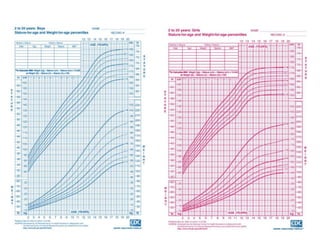
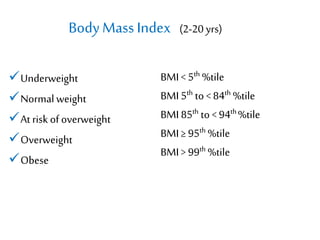
BodyMass Index (2-20 yrs)
Underweight
Normal weight
At risk of overweight
Overweight
Obese
BMI < 5th %tile
BMI 5th to < 84th %tile
BMI 85th to < 94th %tile
BMI ≥ 95th %tile
BMI > 99th %tile
Weight and Height Assessment
• Before 1980, doctors generally used weight-
for-height tables -- one for men and one for
women -- that included ranges of body
weights for each inch of height. These tables
were limited because they were based on
weight alone.
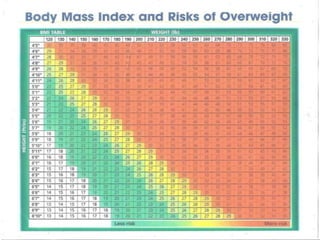
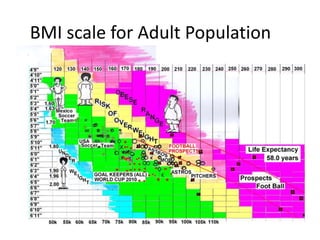
BMI scale for Adult Population
Body Mass Index
 2003: AAP recommended
that pediatricians calculate
and plot the BMI of all
children and adolescents
yearly
 Yet, only a minority of
pediatricians routinely use
BMI
 Adoption of BMI use is less
than optimal
 Many prefer to rely on “visual
impression” to diagnose
overweight
Advantages of BMI-for-Age
 BMI-for-age relates to health risk
 Correlates with clinical risk factors for
cardiovascular disease including hyperlipidemia,
elevated insulin, and high blood pressure
 BMI-for-age during pubescence is related to lipid
levels and high blood pressure in middle age
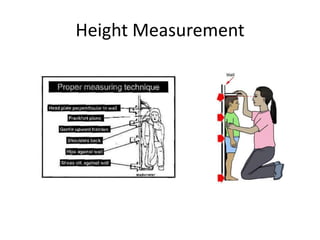
Height Measurement
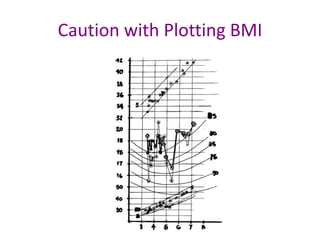
Caution with Plotting BMI
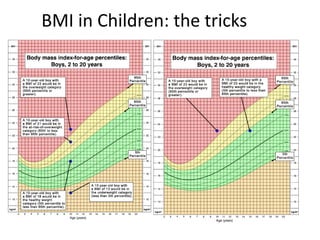
BMI in Children: the tricks
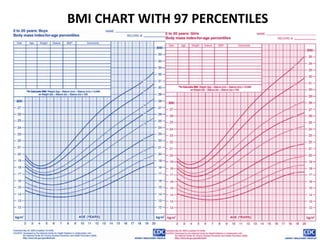
BMI CHART WITH 97 PERCENTILES
BMI screening shortcomings
• Why is there insufficient evidence of its
effectiveness?
• Screening ALONE is insufficient to improve clinical
outcomes
• Screening needs to trigger other actions
– Treatment algorithms
– Reviewing family history
– Identifying high risk behaviors related to diet and physical
activity
– Screening for comorbidities
BMI AND OBESITY
The National Institutes of Health (NIH)
recommends that doctors assess whether their
patients are overweight based on three factors:
• BMI
• Waist circumference measures of abdominal fat
• Risk factors for diseases associated with obesity,
such as high blood pressure, high LDL ("bad”
cholesterol), low HDL ("good" cholesterol), high
blood sugar, and smoking
A Rational Approach
August 2002: Modified Diet, basically: lower
sugar intake, more protein and vegetables,
diet drinks or water. Blood work and diet
recommended at school to Overweight kids
and close f/u
September 2003: Results of First 1000 classified
patients
April 2004: Update to 3000 patients
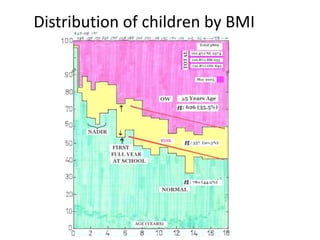
Distribution of children by BMI
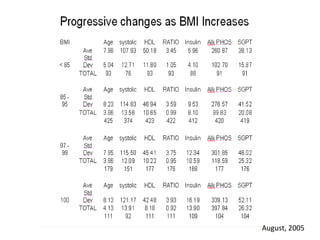
August, 2005
Local Experience
•2116 patients, about equally divided,
boys (1041, 49.2%) and girls (1075, 50.8%)
•First generation American-born children of
Hispanic descend.
•Patients were followed because of changes in
BMI then the discovery of the fatty liver and
subsequently Gallbladder disease.
• All patients have at least one metabolic screen.
•BMI groups normal BMI 75, 85, 95,97 and ≥99
WWW.Laredopediatrics.com
Screening
• CMP, GGT, Lipid profile, Liver Function Test:
Alkaline phosphatase, ALT, AST, Bilirubin,
• HbA1c, Insulin, THS and T4
• Biometric information; Weight, Height, BMI,
Waist and hip circumference and Percentage of
body fat
• Blood pressure
• Ultrasound of the liver if altered liver enzymes, or
complaining of RUQ pain or discomfort
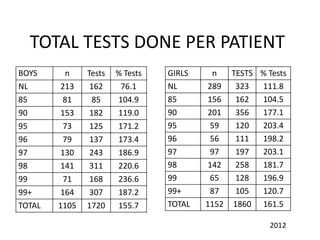
TOTAL TESTS DONE PER PATIENT
BOYS n Tests % Tests
NL 213 162 76.1
85 81 85 104.9
90 153 182 119.0
95 73 125 171.2
96 79 137 173.4
97 130 243 186.9
98 141 311 220.6
99 71 168 236.6
99+ 164 307 187.2
TOTAL 1105 1720 155.7
GIRLS n TESTS % Tests
NL 289 323 111.8
85 156 162 104.5
90 201 356 177.1
95 59 120 203.4
96 56 111 198.2
97 97 197 203.1
98 142 258 181.7
99 65 128 196.9
99+ 87 105 120.7
TOTAL 1152 1860 161.5
2012
0
50
100
150
200
250
300
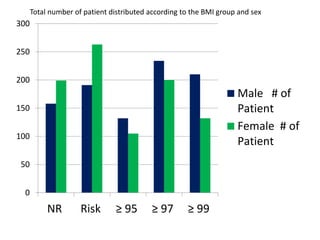
NR Risk ≥ 95 ≥ 97 ≥ 99
Male # of
Patient
Female # of
Patient
Total number of patient distributed according to the BMI group and sex
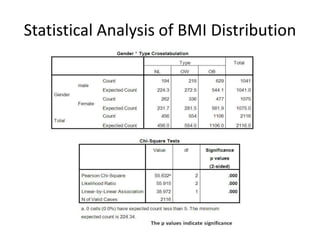
Statistical Analysis of BMI Distribution
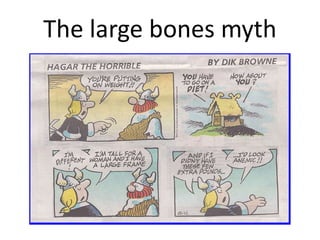
The large bones myth
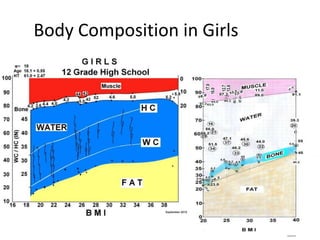
Body Composition in Girls
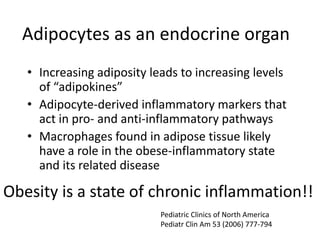
Adipocytes as an endocrine organ
• Increasing adiposity leads to increasing levels
of “adipokines”
• Adipocyte-derived inflammatory markers that
act in pro- and anti-inflammatory pathways
• Macrophages found in adipose tissue likely
have a role in the obese-inflammatory state
and its related disease
Obesity is a state of chronic inflammation!!
Pediatric Clinics of North America
Pediatr Clin Am 53 (2006) 777-794
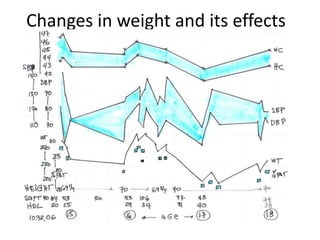
Changes in weight and its effects
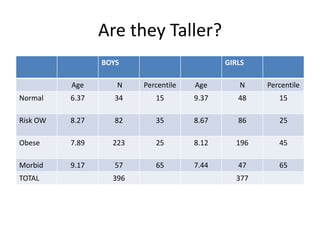
Are they Taller?
BOYS GIRLS
Age N Percentile Age N Percentile
Normal 6.37 34 15 9.37 48 15
Risk OW 8.27 82 35 8.67 86 25
Obese 7.89 223 25 8.12 196 45
Morbid 9.17 57 65 7.44 47 65
TOTAL 396 377
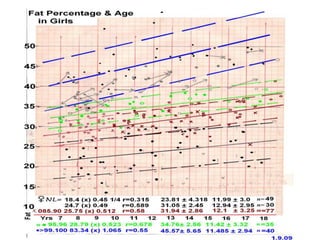
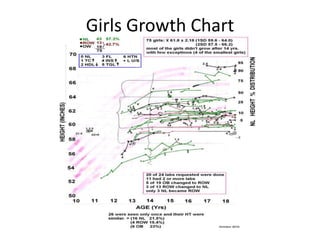
Girls Growth Chart
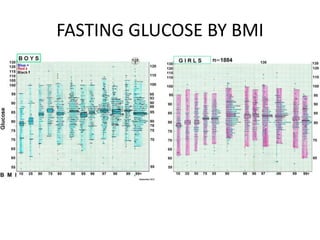
FASTING GLUCOSE BY BMI
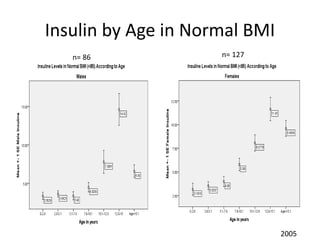
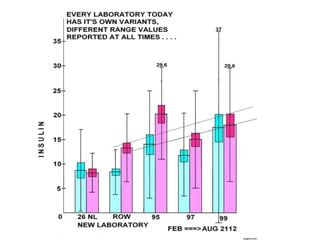
Insulin by Age in Normal BMI
2005
n= 86 n= 127
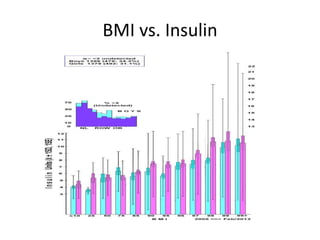
BMI vs. Insulin
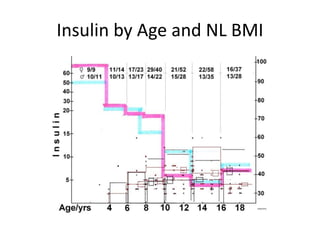
Insulin by Age and NL BMI
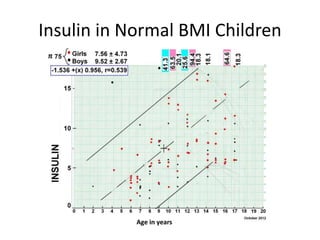
Insulin in Normal BMI Children
Age in years
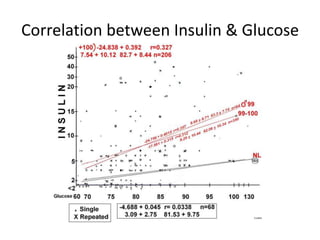
Correlation between Insulin & Glucose
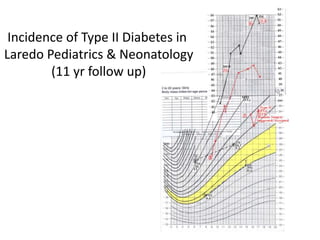
Incidence of Type II Diabetes in
Laredo Pediatrics & Neonatology
(11 yr follow up)
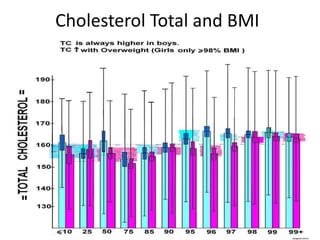
Cholesterol Total and BMI
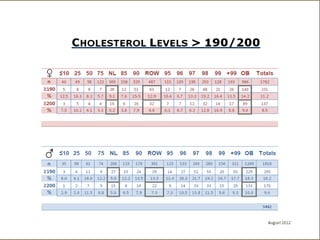
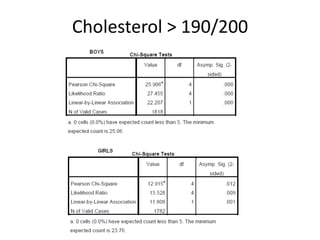
Cholesterol > 190/200
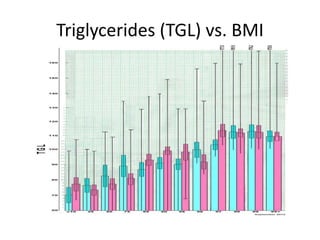
Triglycerides (TGL) vs. BMI
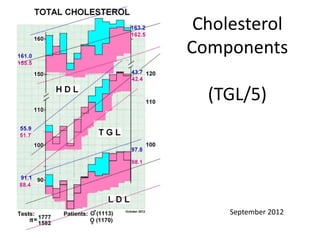
Cholesterol
Components
(TGL/5)
September 2012
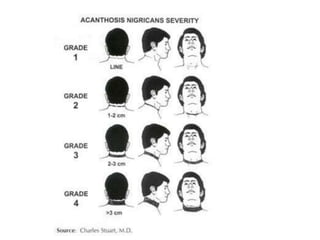
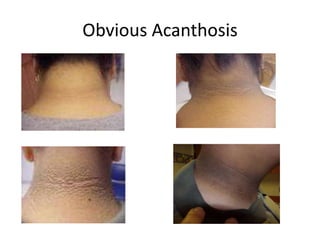
Obvious Acanthosis
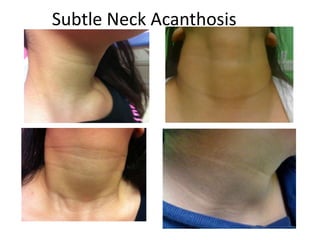
Subtle Neck Acanthosis
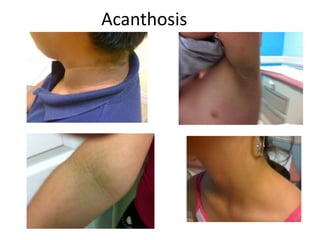
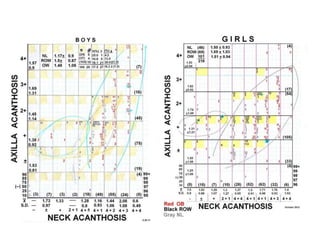
Acanthosis
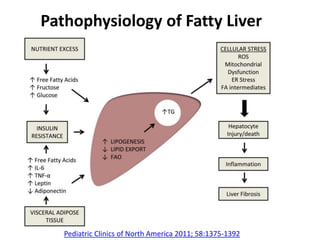
Source: Pediatric Clinics of North America 2011; 58:1375-1392 (
Pathophysiology of Fatty Liver
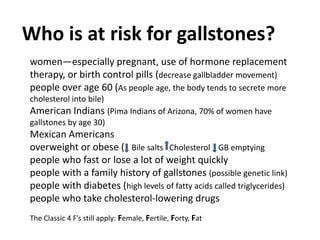
women—especially pregnant, use of hormone replacement
therapy, or birth control pills (decrease gallbladder movement)
people over age 60 (As people age, the body tends to secrete more
cholesterol into bile)
American Indians (Pima Indians of Arizona, 70% of women have
gallstones by age 30)
Mexican Americans
overweight or obese ( Bile salts Cholesterol GB emptying
people who fast or lose a lot of weight quickly
people with a family history of gallstones (possible genetic link)
people with diabetes (high levels of fatty acids called triglycerides)
people who take cholesterol-lowering drugs
Who is at risk for gallstones?
The Classic 4 F’s still apply: Female, Fertile, Forty, Fat
Development of Cholecystitis
75 Percentile Factor
Abnormal values by
Percentile
Boys Girls
TGL 75% 85%
HDL 90% 85%
Glucose 50% 75%
Insulin 50% 75%
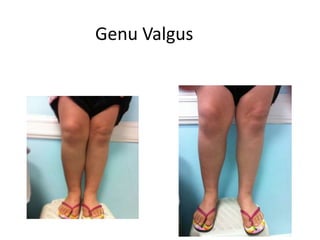
Genu Valgus
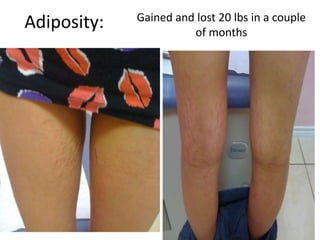
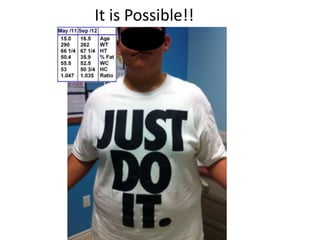
Adiposity: Gained and lost 20 lbs in a couple
of months
Is Practice, and practice, and practice, and practice, and practice……..
It is Possible!!
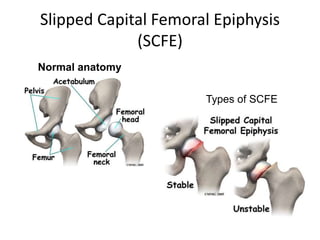
Slipped capital femoral epiphysis
(SCFE)
The ball at the upper end of the femur (thigh bone) slips off in a
backward direction. Due to weakness of the growth plate. Most
often, it develops during periods of accelerated growth, shortly
after the onset of puberty is an unusual disorder of the adolescent
hip It is not rare.
TYPES:
• Stable SCFE. This is referred to as a "mild slip," which causes some
stiffness or pain in the knee or groin area, and possibly a limp
• Unstable SCFE. This is a more severe usually much more painful,
unable to bear weight on the affected side, ROM severely limited,
leg turns outward, is more serious because it can restrict blood
flow to the hip joint, leading necrosis
Slipped capital femoral epiphysis
(SCFE)
Risk Factors:
• The cause of SCFE is unknown. It occurs two to three times more often in
males than females. A large number of patients are overweight.
• In most cases, is a slow and gradual process. However, it may occur
suddenly and be associated with a minor fall or trauma.
• Symptomatic SCFE, treated early and well, allows for good long-term hip
function
Symptoms:
• Weeks or months of hip or knee pain and an intermittent limp
• walks with a limp. In certain severe cases, unable to bear any weight on
the affected leg
• affected leg is usually turned outward in comparison to the normal leg
• affected leg may appear to be shorter
Slipped Capital Femoral Epiphysis
(SCFE)
Normal anatomy
Types of SCFE
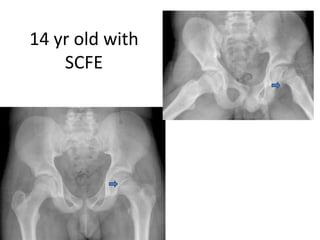
14 yr old with
SCFE
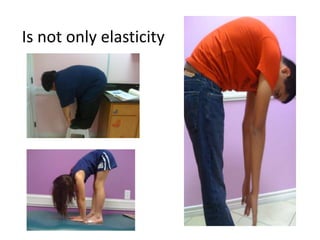
Is not only elasticity
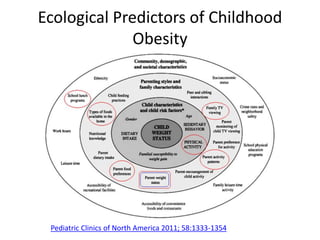
Ecological Predictors of Childhood
Obesity
Source: Pediatric Clinics of North America 2011; 58:1333-1354 (DOI:10.006 )
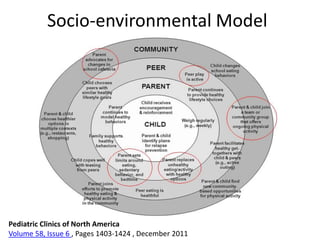
Socio-environmental Model
Pediatric Clinics of North America
Volume 58, Issue 6 , Pages 1403-1424 , December 2011
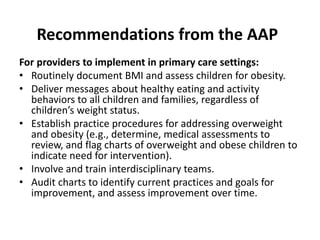
Recommendations from the AAP
For providers to implement in primary care settings:
• Routinely document BMI and assess children for obesity.
• Deliver messages about healthy eating and activity
behaviors to all children and families, regardless of
children’s weight status.
• Establish practice procedures for addressing overweight
and obesity (e.g., determine, medical assessments to
review, and flag charts of overweight and obese children to
indicate need for intervention).
• Involve and train interdisciplinary teams.
• Audit charts to identify current practices and goals for
improvement, and assess improvement over time.
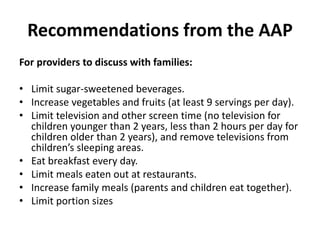
Recommendations from the AAP
For providers to discuss with families:
• Limit sugar-sweetened beverages.
• Increase vegetables and fruits (at least 9 servings per day).
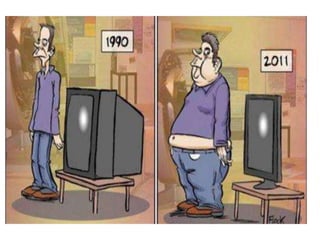
• Limit television and other screen time (no television for
children younger than 2 years, less than 2 hours per day for
children older than 2 years), and remove televisions from
children’s sleeping areas.
• Eat breakfast every day.
• Limit meals eaten out at restaurants.
• Increase family meals (parents and children eat together).
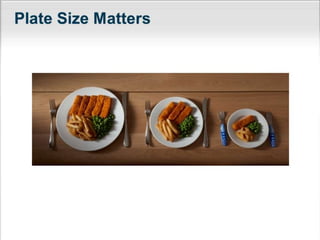
• Limit portion sizes
But, I only eat like a bird!
Yes, but….
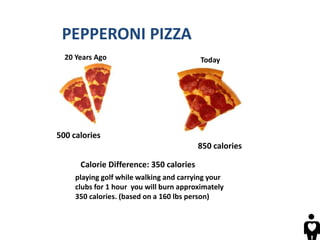
PEPPERONI PIZZA
20 Years Ago Today
500 calories
850 calories
Calorie Difference: 350 calories
playing golf while walking and carrying your
clubs for 1 hour you will burn approximately
350 calories. (based on a 160 lbs person)
Facts About Diabetes
 80% in our children has at least 1 close
relative with diabetes
10% has one of the parents with diabetes
1% has both parents with diabetes
Mexican American have poor tolerance to
carbohydrates
As the intake of carbohydrates increases so
are the levels of insulin, visceral fat and
acanthosis.
THE GOOD NEWS: IT IS REVERSIBLE!!
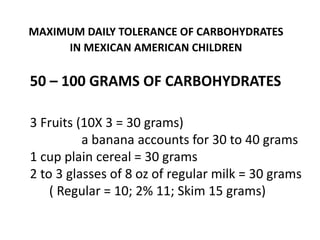
MAXIMUM DAILY TOLERANCE OF CARBOHYDRATES
IN MEXICAN AMERICAN CHILDREN
50 – 100 GRAMS OF CARBOHYDRATES
3 Fruits (10X 3 = 30 grams)
a banana accounts for 30 to 40 grams
1 cup plain cereal = 30 grams
2 to 3 glasses of 8 oz of regular milk = 30 grams
( Regular = 10; 2% 11; Skim 15 grams)
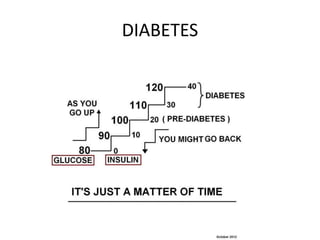
DIABETES
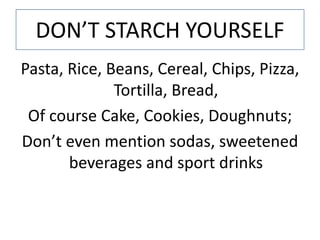
DON’T STARCH YOURSELF
Pasta, Rice, Beans, Cereal, Chips, Pizza,
Tortilla, Bread,
Of course Cake, Cookies, Doughnuts;
Don’t even mention sodas, sweetened
beverages and sport drinks
Hippocrates Master of Medicine:
460-377 B.C
“Thus Curiosity, Keenness of observation
and the value of scrupulous record
keeping became paramount priorities in
the new philosophy of Care”
Sherwin B Nuland describing Hippocrates Influence on Medicine

diabetesisamatteroffat

  • 1.
    28th Annual Update inMedicine Conference Francisco J Cervantes MD FAAP Diabetes: It is a matter of Fat October 26, 2012 Laredo TX WWW.LaredoPediatrics.com
  • 2.
    America is facingan epidemic!! The U.S. is the fattest nation in the world. 64.5% of Americans are overweight or obese. Source: JAMA. 2002;288:1723-1727 Obesity is the second largest preventable cause of death in the U.S.! (Smoking is #1.) Source: JAMA 1996; 276: 1907-1950.
  • 3.
    Obesity Goes Global (TimeMagazine August 25,2003)
  • 5.
  • 6.
  • 10.
  • 14.
    BMI History • Thebody mass index is a brainchild of a Belgian statistician and mathematician named Adolphe Quatelet who created the BMI sometime from1830 to 1850 Article Source: http://EzineArticles.com/125508
  • 15.
    BMI History • hisproject was intended to describe the standard proportions of the human build. • The equation was largely ignored by the medical community even though insurance companies began using somewhat vague comparisons of height and weight among policyholders beginning in the early twentieth century
  • 16.
    BMI History • Medicalresearchers searched for an accurate, uniform way to measure fatness for decades when in 1972, physiology professor and obesity researcher Ancel Keys published his “Indices of Relative Weight and Obesity,” a landmark study of more than 7,400 men in five countries. Keys considered the various height-weight formulas in existence and found Quetelet’s equation to be the best marker of body-fat percentage. He renamed this number the body mass index or BMI.
  • 17.
    BMI as Standard •BMI became an international standard for obesity measurement in the 1980s. The public learned about BMI the late 1990s, when the government launched an initiative to encourage healthy eating and exercise.
  • 18.
    DEFINITION OF OBESITY •By 1985, the National Institutes of Health began defining obesity according to body mass index. (27.8 for men and 27.3 for women) • Then in 1998, the NIH consolidated the threshold for men and women and added the category of overweight.
  • 19.
    BMI and healthyweight • In 1998, the NIH lowered the overweight threshold for BMI 27.8 to 25 to match international guidelines. • The move added 30 million Americans who were previously in the "healthy weight" category to the "overweight" category. • Today, the NIH advises doctors and their patients to include BMI in a complete assessment of a person's body size and overall health.
  • 20.
    Is BMI anAccurate Measure of Obesity? It's important to note that although BMI is accurate most of the time, it may overestimate or underestimate body fat. For example, BMI doesn't distinguish between body fat and muscle mass, which weighs more than fat.
  • 22.
    Waist and HipRatio waist-to-hip ratios are a much more accurate way of determining the kinds of body fat that might actually pose health risks.
  • 23.
    BodyMass Index (2-20yrs) Underweight Normal weight At risk of overweight Overweight Obese BMI < 5th %tile BMI 5th to < 84th %tile BMI 85th to < 94th %tile BMI ≥ 95th %tile BMI > 99th %tile
  • 24.
    Weight and HeightAssessment • Before 1980, doctors generally used weight- for-height tables -- one for men and one for women -- that included ranges of body weights for each inch of height. These tables were limited because they were based on weight alone.
  • 26.
    BMI scale forAdult Population
  • 27.
    Body Mass Index 2003: AAP recommended that pediatricians calculate and plot the BMI of all children and adolescents yearly  Yet, only a minority of pediatricians routinely use BMI  Adoption of BMI use is less than optimal  Many prefer to rely on “visual impression” to diagnose overweight
  • 28.
    Advantages of BMI-for-Age BMI-for-age relates to health risk  Correlates with clinical risk factors for cardiovascular disease including hyperlipidemia, elevated insulin, and high blood pressure  BMI-for-age during pubescence is related to lipid levels and high blood pressure in middle age
  • 29.
  • 30.
  • 31.
    BMI in Children:the tricks
  • 32.
    BMI CHART WITH97 PERCENTILES
  • 34.
    BMI screening shortcomings •Why is there insufficient evidence of its effectiveness? • Screening ALONE is insufficient to improve clinical outcomes • Screening needs to trigger other actions – Treatment algorithms – Reviewing family history – Identifying high risk behaviors related to diet and physical activity – Screening for comorbidities
  • 35.
    BMI AND OBESITY TheNational Institutes of Health (NIH) recommends that doctors assess whether their patients are overweight based on three factors: • BMI • Waist circumference measures of abdominal fat • Risk factors for diseases associated with obesity, such as high blood pressure, high LDL ("bad” cholesterol), low HDL ("good" cholesterol), high blood sugar, and smoking
  • 36.
    A Rational Approach August2002: Modified Diet, basically: lower sugar intake, more protein and vegetables, diet drinks or water. Blood work and diet recommended at school to Overweight kids and close f/u September 2003: Results of First 1000 classified patients April 2004: Update to 3000 patients
  • 37.
  • 38.
  • 39.
    Local Experience •2116 patients,about equally divided, boys (1041, 49.2%) and girls (1075, 50.8%) •First generation American-born children of Hispanic descend. •Patients were followed because of changes in BMI then the discovery of the fatty liver and subsequently Gallbladder disease. • All patients have at least one metabolic screen. •BMI groups normal BMI 75, 85, 95,97 and ≥99 WWW.Laredopediatrics.com
  • 40.
    Screening • CMP, GGT,Lipid profile, Liver Function Test: Alkaline phosphatase, ALT, AST, Bilirubin, • HbA1c, Insulin, THS and T4 • Biometric information; Weight, Height, BMI, Waist and hip circumference and Percentage of body fat • Blood pressure • Ultrasound of the liver if altered liver enzymes, or complaining of RUQ pain or discomfort
  • 41.
    TOTAL TESTS DONEPER PATIENT BOYS n Tests % Tests NL 213 162 76.1 85 81 85 104.9 90 153 182 119.0 95 73 125 171.2 96 79 137 173.4 97 130 243 186.9 98 141 311 220.6 99 71 168 236.6 99+ 164 307 187.2 TOTAL 1105 1720 155.7 GIRLS n TESTS % Tests NL 289 323 111.8 85 156 162 104.5 90 201 356 177.1 95 59 120 203.4 96 56 111 198.2 97 97 197 203.1 98 142 258 181.7 99 65 128 196.9 99+ 87 105 120.7 TOTAL 1152 1860 161.5 2012
  • 42.
    0 50 100 150 200 250 300 NR Risk ≥95 ≥ 97 ≥ 99 Male # of Patient Female # of Patient Total number of patient distributed according to the BMI group and sex
  • 43.
    Statistical Analysis ofBMI Distribution
  • 44.
  • 47.
  • 49.
    Adipocytes as anendocrine organ • Increasing adiposity leads to increasing levels of “adipokines” • Adipocyte-derived inflammatory markers that act in pro- and anti-inflammatory pathways • Macrophages found in adipose tissue likely have a role in the obese-inflammatory state and its related disease Obesity is a state of chronic inflammation!! Pediatric Clinics of North America Pediatr Clin Am 53 (2006) 777-794
  • 50.
    Changes in weightand its effects
  • 51.
    Are they Taller? BOYSGIRLS Age N Percentile Age N Percentile Normal 6.37 34 15 9.37 48 15 Risk OW 8.27 82 35 8.67 86 25 Obese 7.89 223 25 8.12 196 45 Morbid 9.17 57 65 7.44 47 65 TOTAL 396 377
  • 52.
  • 53.
  • 54.
    Insulin by Agein Normal BMI 2005 n= 86 n= 127
  • 55.
  • 56.
    Insulin by Ageand NL BMI
  • 58.
    Insulin in NormalBMI Children Age in years
  • 59.
  • 60.
    Incidence of TypeII Diabetes in Laredo Pediatrics & Neonatology (11 yr follow up)
  • 62.
  • 64.
  • 65.
  • 67.
  • 69.
  • 70.
  • 71.
  • 73.
    Source: Pediatric Clinicsof North America 2011; 58:1375-1392 ( Pathophysiology of Fatty Liver
  • 74.
    women—especially pregnant, useof hormone replacement therapy, or birth control pills (decrease gallbladder movement) people over age 60 (As people age, the body tends to secrete more cholesterol into bile) American Indians (Pima Indians of Arizona, 70% of women have gallstones by age 30) Mexican Americans overweight or obese ( Bile salts Cholesterol GB emptying people who fast or lose a lot of weight quickly people with a family history of gallstones (possible genetic link) people with diabetes (high levels of fatty acids called triglycerides) people who take cholesterol-lowering drugs Who is at risk for gallstones? The Classic 4 F’s still apply: Female, Fertile, Forty, Fat
  • 75.
    Development of Cholecystitis 75Percentile Factor Abnormal values by Percentile Boys Girls TGL 75% 85% HDL 90% 85% Glucose 50% 75% Insulin 50% 75%
  • 76.
  • 77.
    Adiposity: Gained andlost 20 lbs in a couple of months
  • 80.
    Is Practice, andpractice, and practice, and practice, and practice……..
  • 81.
  • 82.
    Slipped capital femoralepiphysis (SCFE) The ball at the upper end of the femur (thigh bone) slips off in a backward direction. Due to weakness of the growth plate. Most often, it develops during periods of accelerated growth, shortly after the onset of puberty is an unusual disorder of the adolescent hip It is not rare. TYPES: • Stable SCFE. This is referred to as a "mild slip," which causes some stiffness or pain in the knee or groin area, and possibly a limp • Unstable SCFE. This is a more severe usually much more painful, unable to bear weight on the affected side, ROM severely limited, leg turns outward, is more serious because it can restrict blood flow to the hip joint, leading necrosis
  • 83.
    Slipped capital femoralepiphysis (SCFE) Risk Factors: • The cause of SCFE is unknown. It occurs two to three times more often in males than females. A large number of patients are overweight. • In most cases, is a slow and gradual process. However, it may occur suddenly and be associated with a minor fall or trauma. • Symptomatic SCFE, treated early and well, allows for good long-term hip function Symptoms: • Weeks or months of hip or knee pain and an intermittent limp • walks with a limp. In certain severe cases, unable to bear any weight on the affected leg • affected leg is usually turned outward in comparison to the normal leg • affected leg may appear to be shorter
  • 84.
    Slipped Capital FemoralEpiphysis (SCFE) Normal anatomy Types of SCFE
  • 85.
    14 yr oldwith SCFE
  • 86.
    Is not onlyelasticity
  • 89.
    Ecological Predictors ofChildhood Obesity Source: Pediatric Clinics of North America 2011; 58:1333-1354 (DOI:10.006 )
  • 90.
    Socio-environmental Model Pediatric Clinicsof North America Volume 58, Issue 6 , Pages 1403-1424 , December 2011
  • 91.
    Recommendations from theAAP For providers to implement in primary care settings: • Routinely document BMI and assess children for obesity. • Deliver messages about healthy eating and activity behaviors to all children and families, regardless of children’s weight status. • Establish practice procedures for addressing overweight and obesity (e.g., determine, medical assessments to review, and flag charts of overweight and obese children to indicate need for intervention). • Involve and train interdisciplinary teams. • Audit charts to identify current practices and goals for improvement, and assess improvement over time.
  • 92.
    Recommendations from theAAP For providers to discuss with families: • Limit sugar-sweetened beverages. • Increase vegetables and fruits (at least 9 servings per day). • Limit television and other screen time (no television for children younger than 2 years, less than 2 hours per day for children older than 2 years), and remove televisions from children’s sleeping areas. • Eat breakfast every day. • Limit meals eaten out at restaurants. • Increase family meals (parents and children eat together). • Limit portion sizes
  • 93.
    But, I onlyeat like a bird!
  • 94.
  • 96.
    PEPPERONI PIZZA 20 YearsAgo Today 500 calories 850 calories Calorie Difference: 350 calories playing golf while walking and carrying your clubs for 1 hour you will burn approximately 350 calories. (based on a 160 lbs person)
  • 100.
    Facts About Diabetes 80% in our children has at least 1 close relative with diabetes 10% has one of the parents with diabetes 1% has both parents with diabetes Mexican American have poor tolerance to carbohydrates As the intake of carbohydrates increases so are the levels of insulin, visceral fat and acanthosis. THE GOOD NEWS: IT IS REVERSIBLE!!
  • 101.
    MAXIMUM DAILY TOLERANCEOF CARBOHYDRATES IN MEXICAN AMERICAN CHILDREN 50 – 100 GRAMS OF CARBOHYDRATES 3 Fruits (10X 3 = 30 grams) a banana accounts for 30 to 40 grams 1 cup plain cereal = 30 grams 2 to 3 glasses of 8 oz of regular milk = 30 grams ( Regular = 10; 2% 11; Skim 15 grams)
  • 102.
  • 103.
    DON’T STARCH YOURSELF Pasta,Rice, Beans, Cereal, Chips, Pizza, Tortilla, Bread, Of course Cake, Cookies, Doughnuts; Don’t even mention sodas, sweetened beverages and sport drinks
  • 106.
    Hippocrates Master ofMedicine: 460-377 B.C “Thus Curiosity, Keenness of observation and the value of scrupulous record keeping became paramount priorities in the new philosophy of Care” Sherwin B Nuland describing Hippocrates Influence on Medicine