
Delaying HIV-1 Disease Progression in Pre-HAART Positives Treating Endemic Co-infections Judd L. Walson, MD, MPH University of Washington Kenya Medical Research Institute Centre for Clinical Research
Today’s Talk Hypothesis testing in resource limited settings Pre-HAART Positives - explaining the focus Studies Unanswered Questions/Future Research
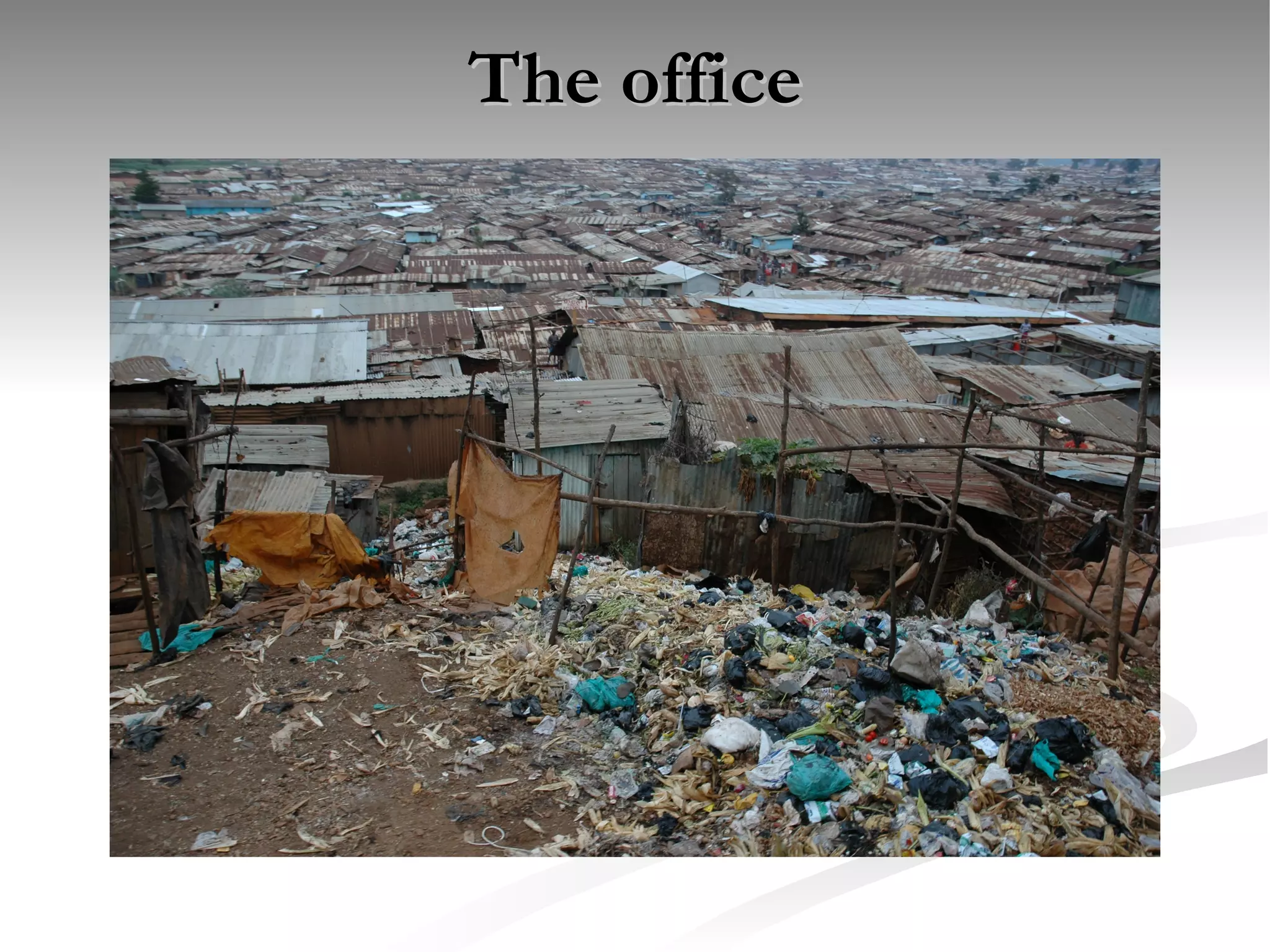
The office
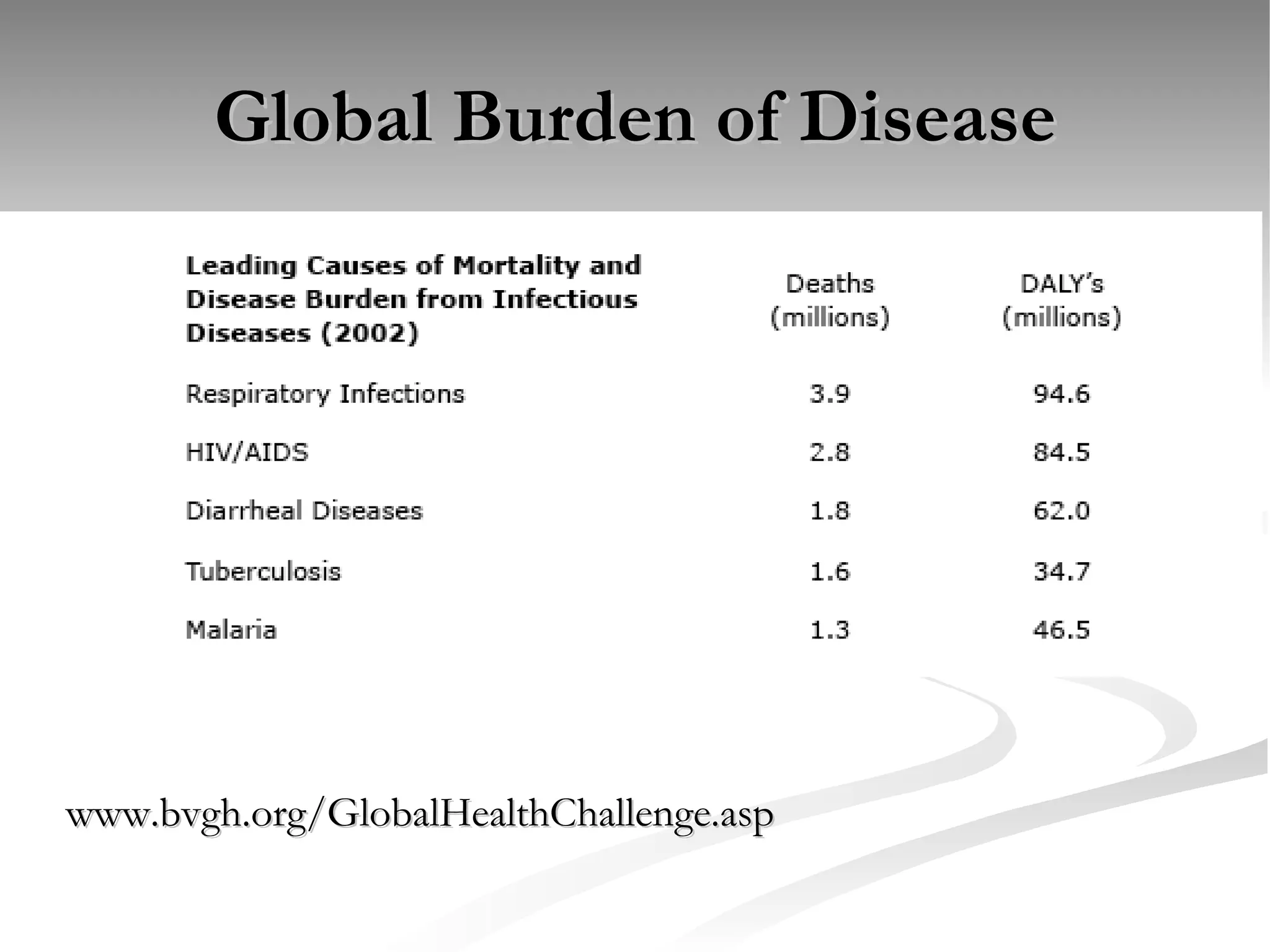
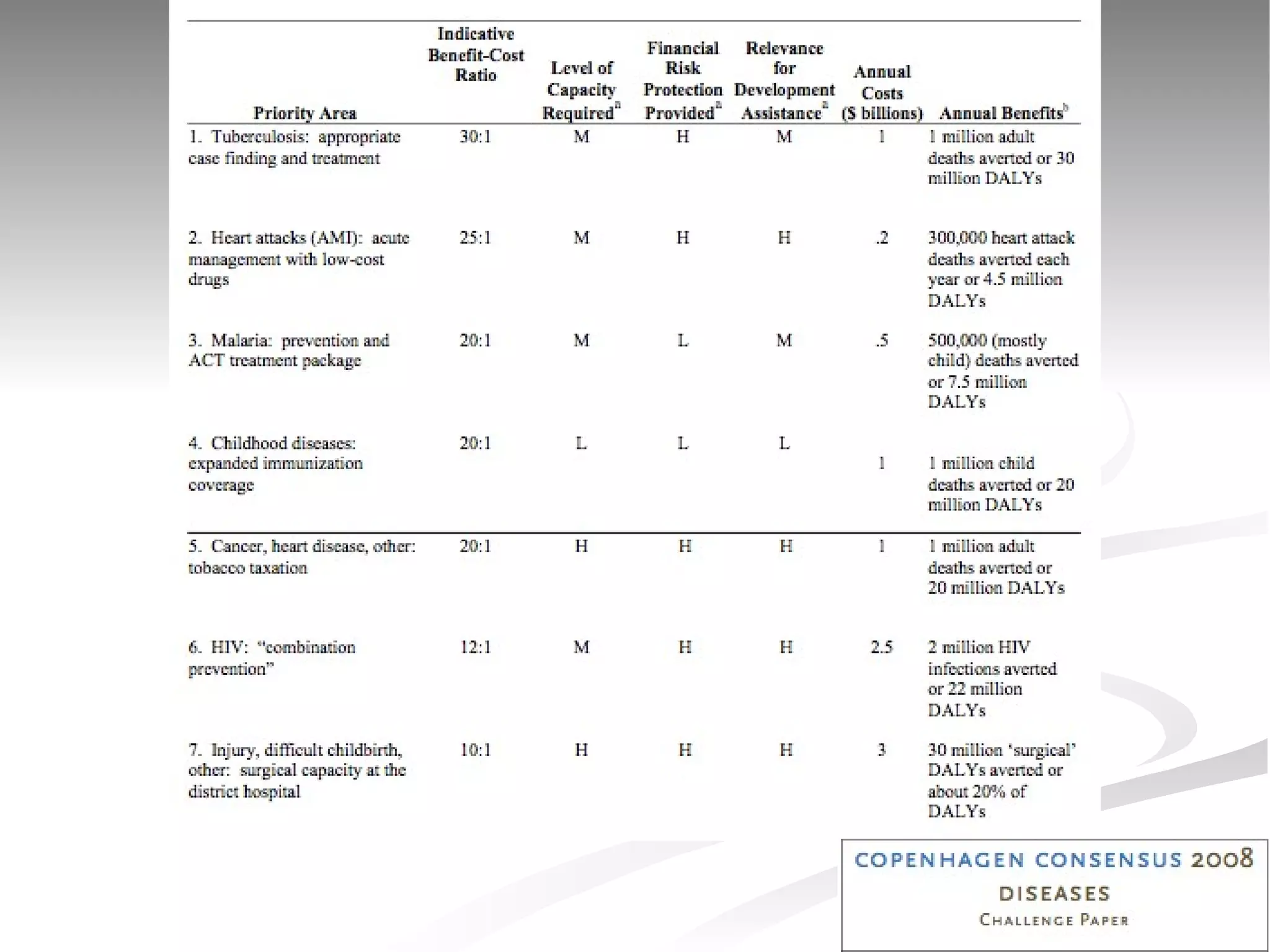
Global Burden of Disease www.bvgh.org/GlobalHealthChallenge.asp
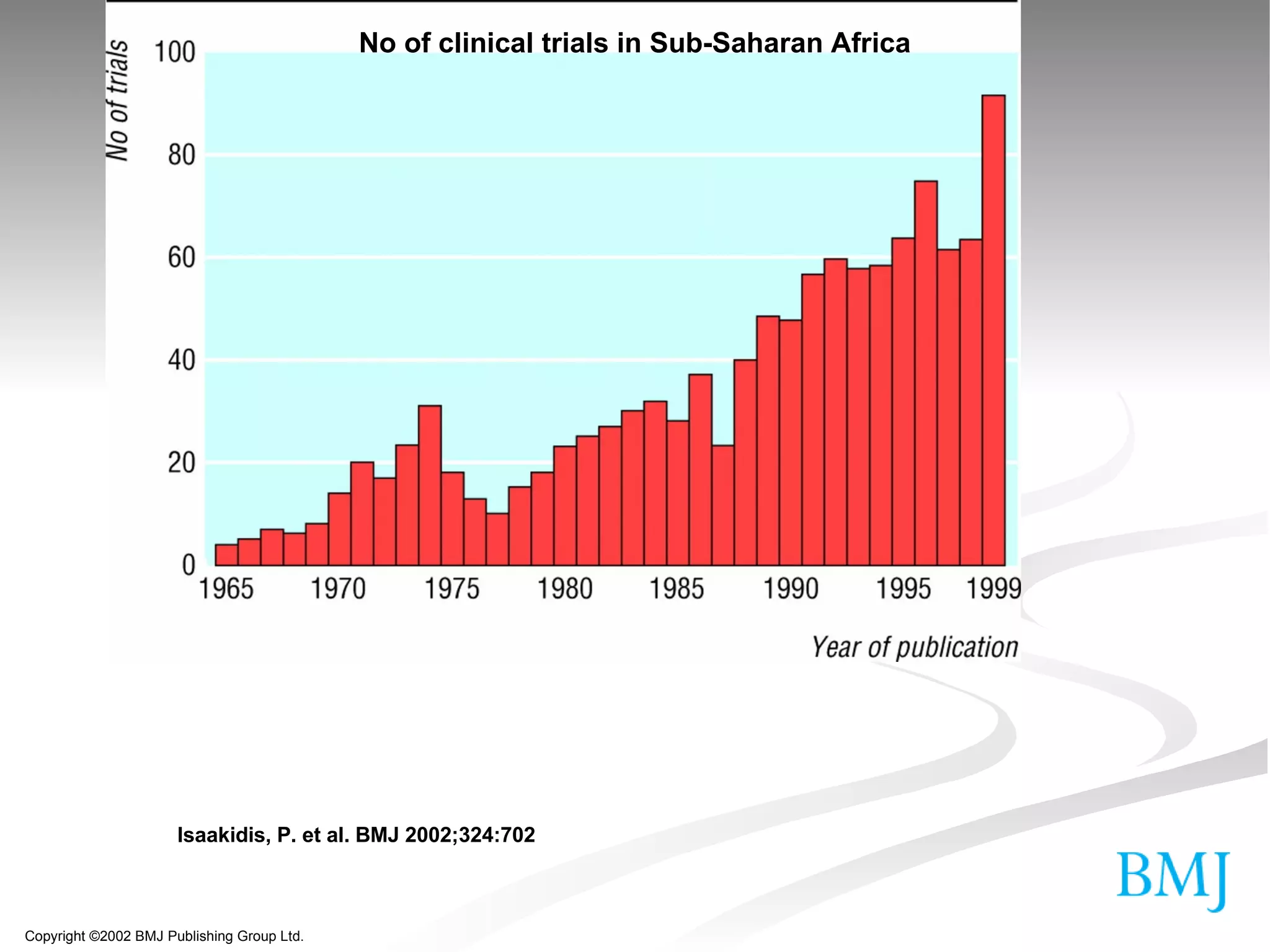
Copyright ©2002 BMJ Publishing Group Ltd. Isaakidis, P. et al. BMJ 2002;324:702 No of clinical trials in Sub-Saharan Africa
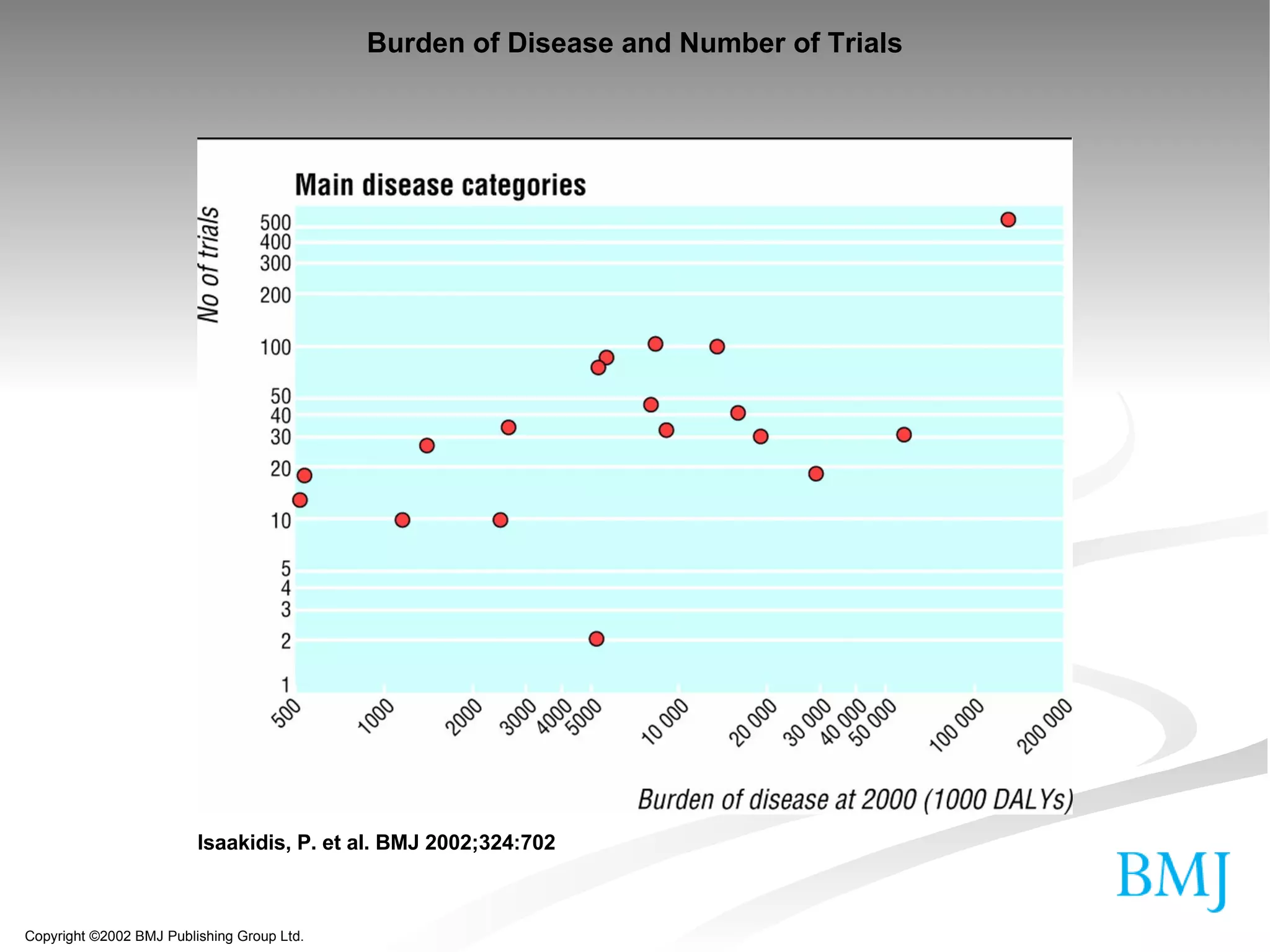
Copyright ©2002 BMJ Publishing Group Ltd. Isaakidis, P. et al. BMJ 2002;324:702 Burden of Disease and Number of Trials
 
Evidence Based Medicine for Resource Limited Settings
 
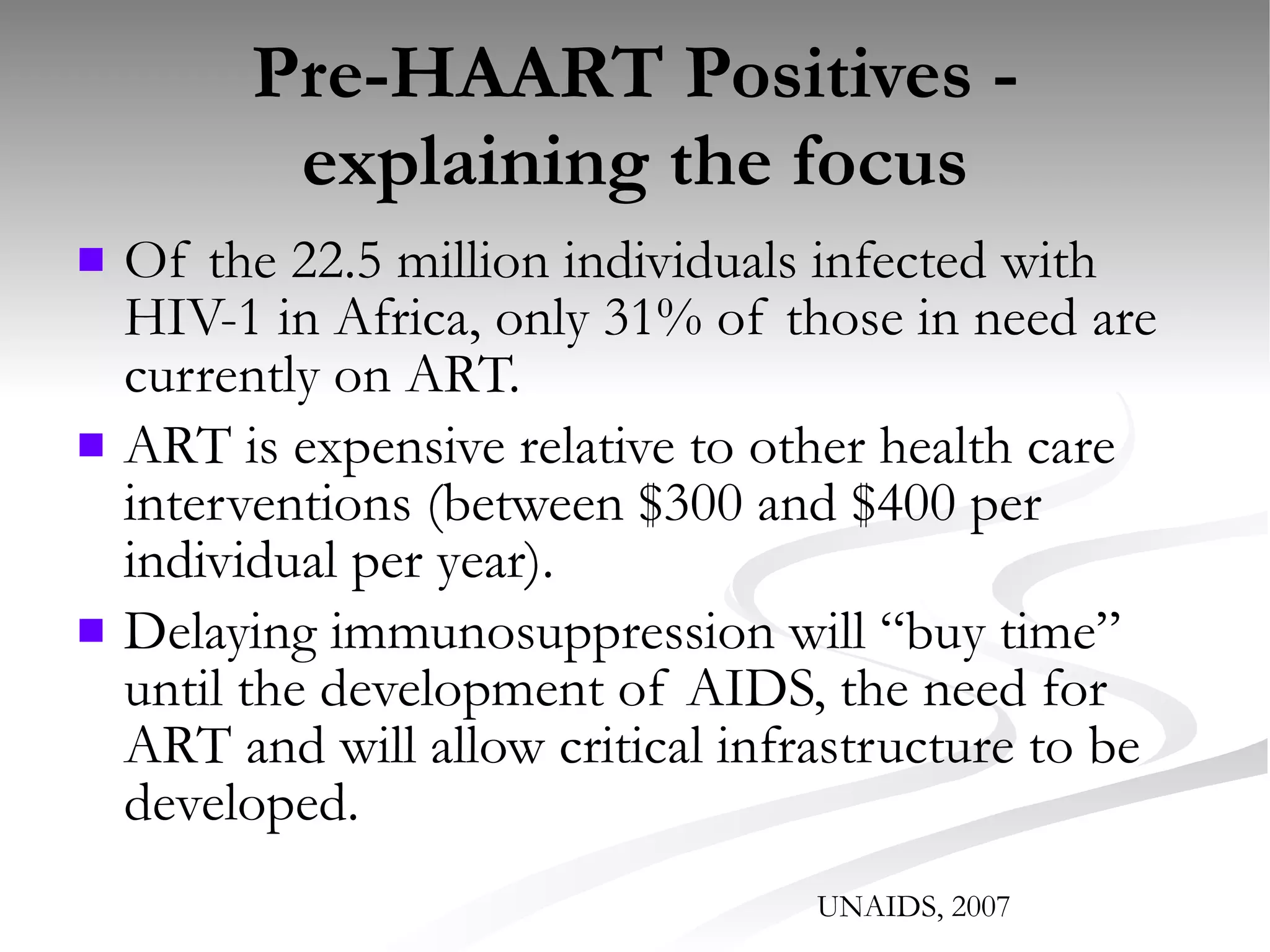
Pre-HAART Positives - explaining the focus Of the 22.5 million individuals infected with HIV-1 in Africa, only 31% of those in need are currently on ART. ART is expensive relative to other health care interventions (between $300 and $400 per individual per year). Delaying immunosuppression will “buy time” until the development of AIDS, the need for ART and will allow critical infrastructure to be developed. UNAIDS, 2007
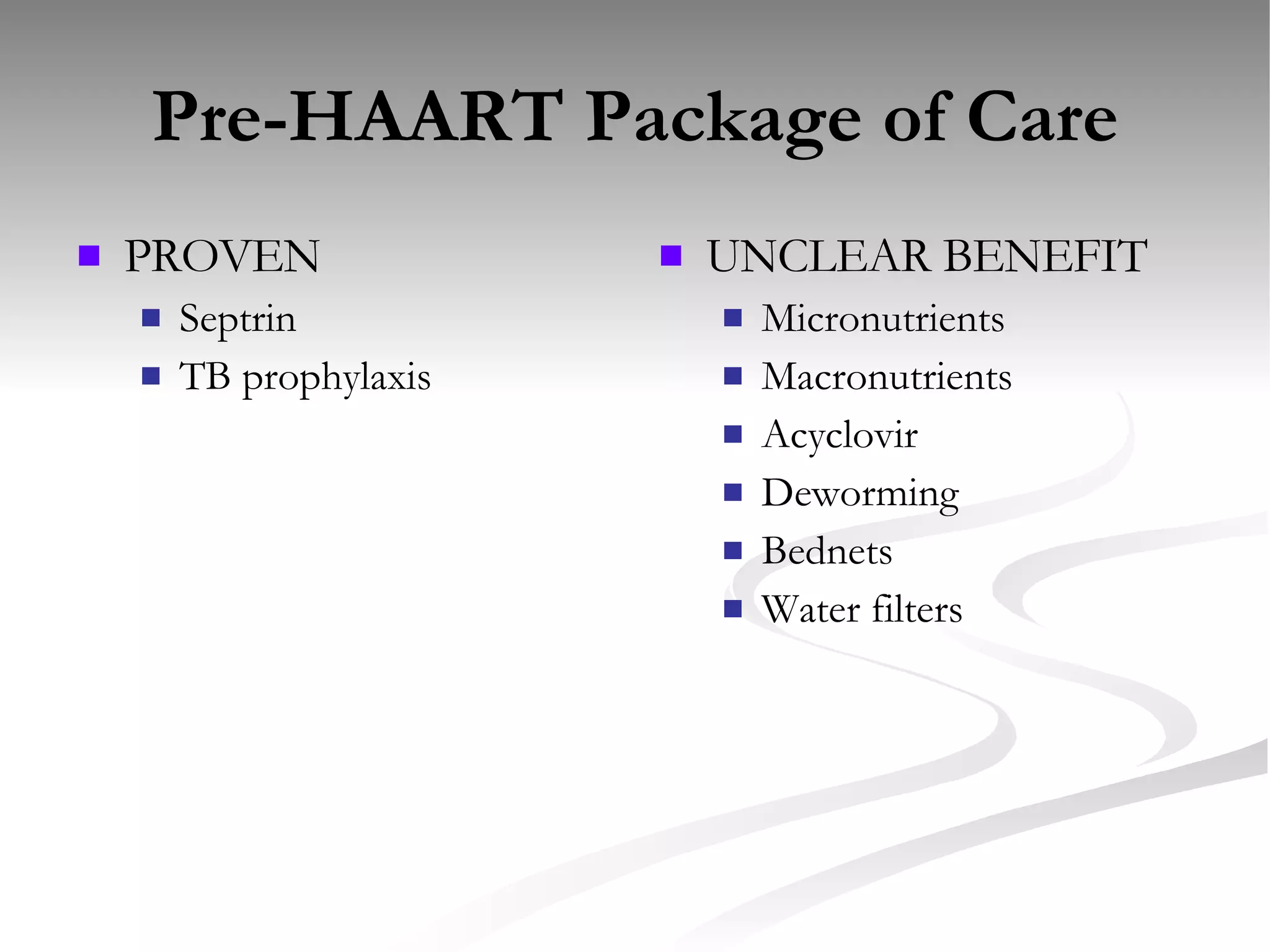
Pre-HAART Package of Care PROVEN Septrin TB prophylaxis UNCLEAR BENEFIT Micronutrients Macronutrients Acyclovir Deworming Bednets Water filters
 
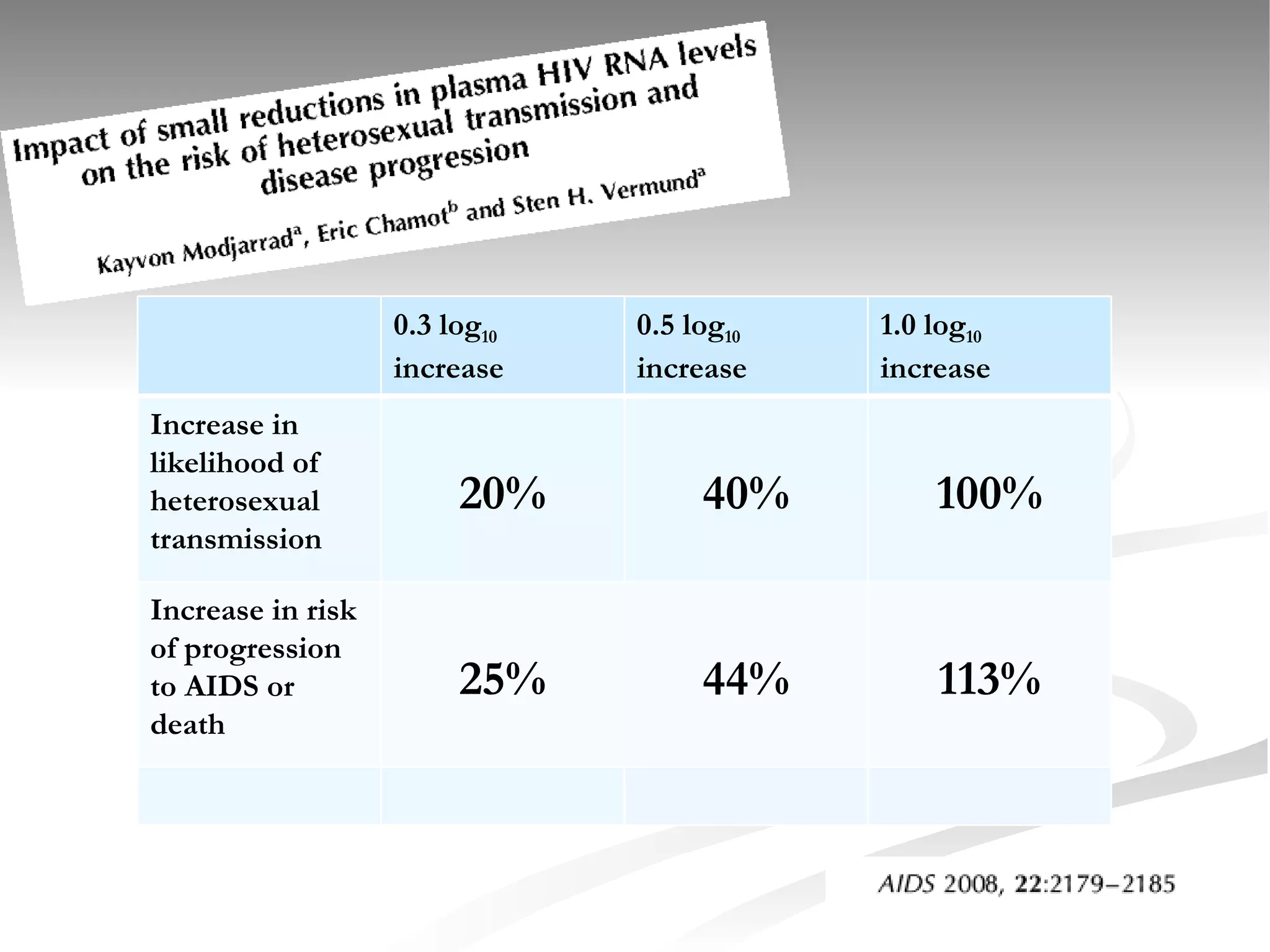
0.3 log 10  increase 0.5 log 10  increase 1.0 log 10  increase Increase in likelihood of heterosexual transmission 20% 40% 100% Increase in risk of progression to AIDS or death 25% 44% 113%
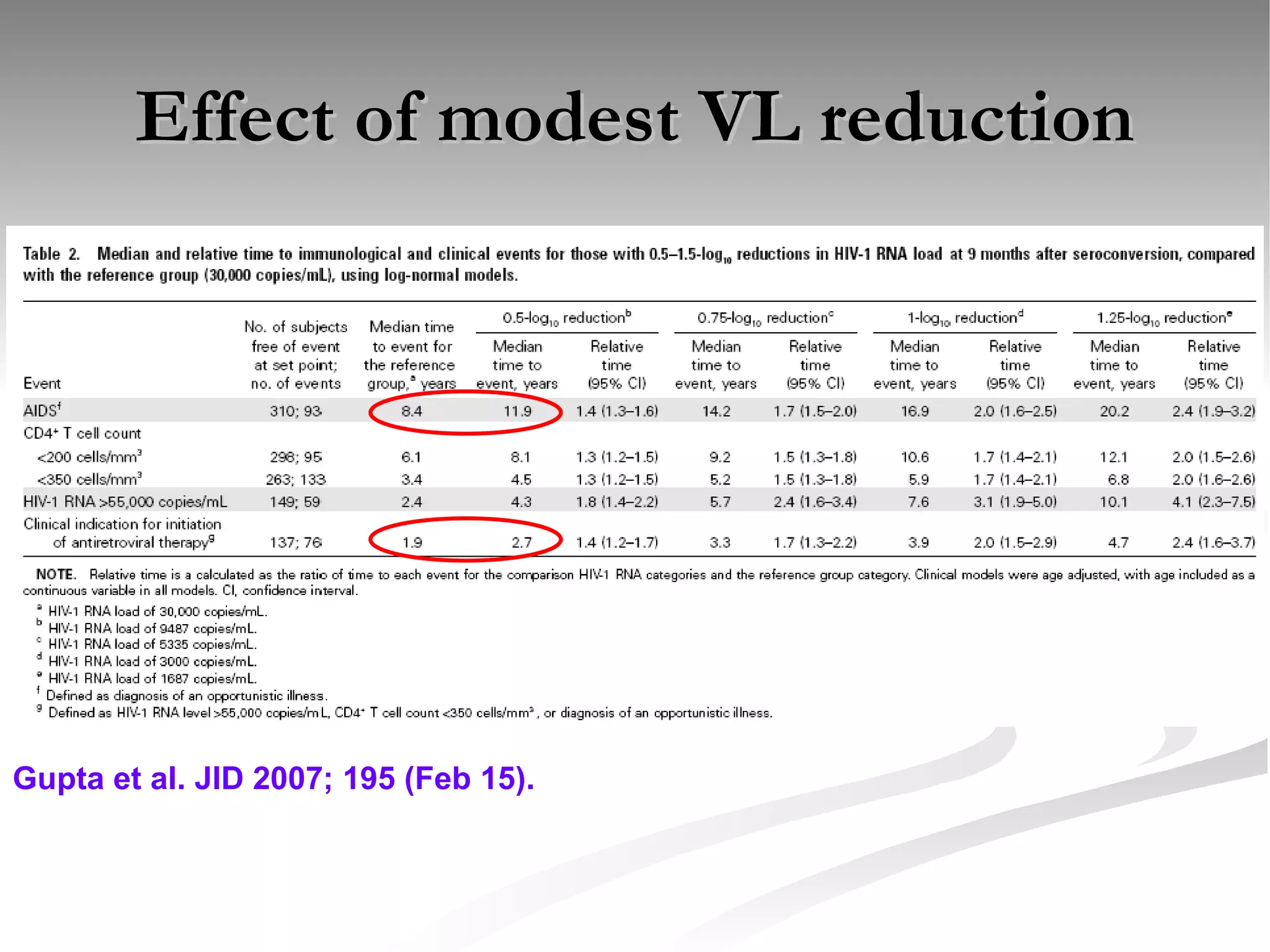
Effect of modest VL reduction Gupta et al. JID 2007; 195 (Feb 15).
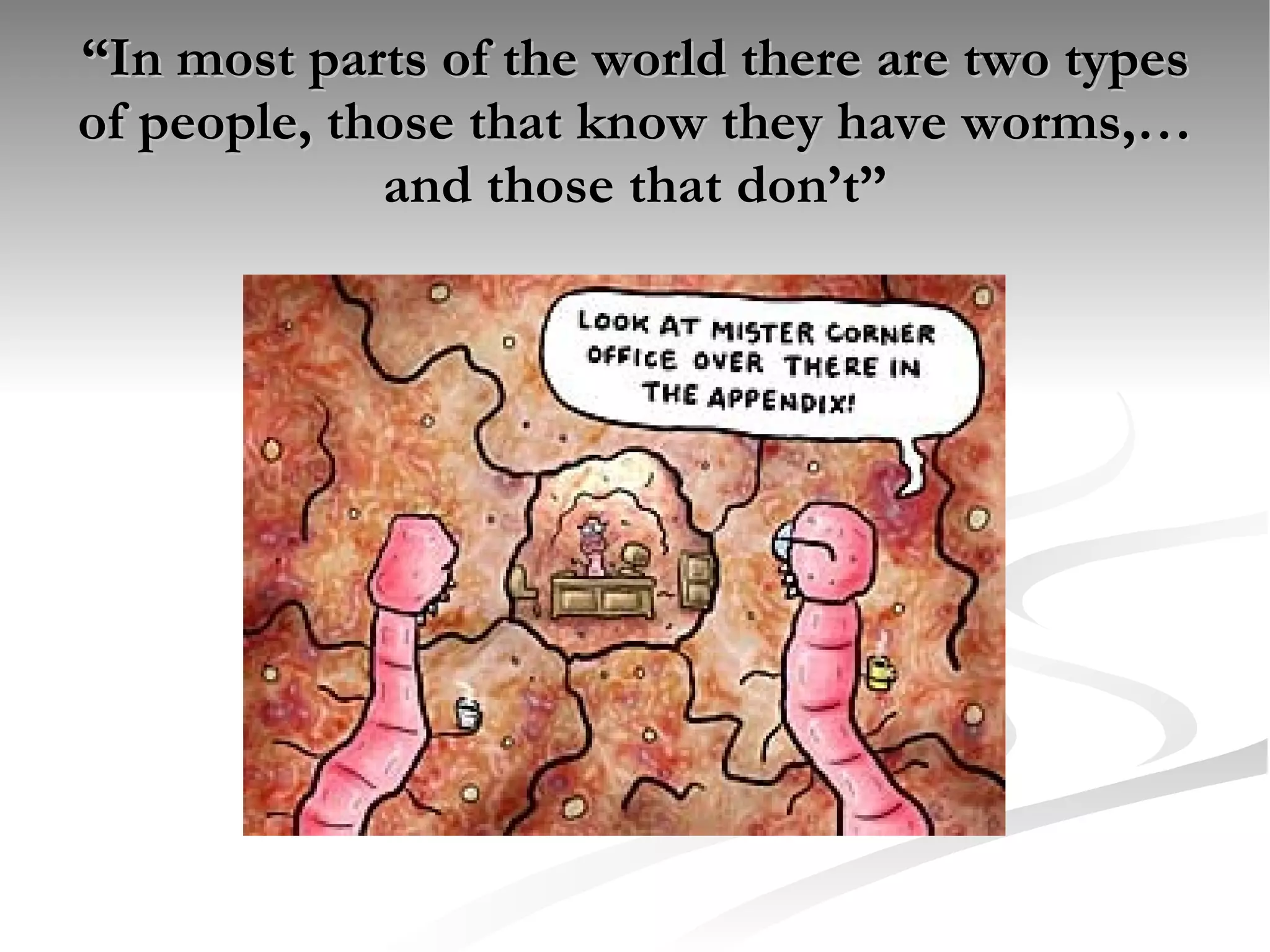
“ In most parts of the world there are two types of people, those that know they have worms,…and those that don’t”
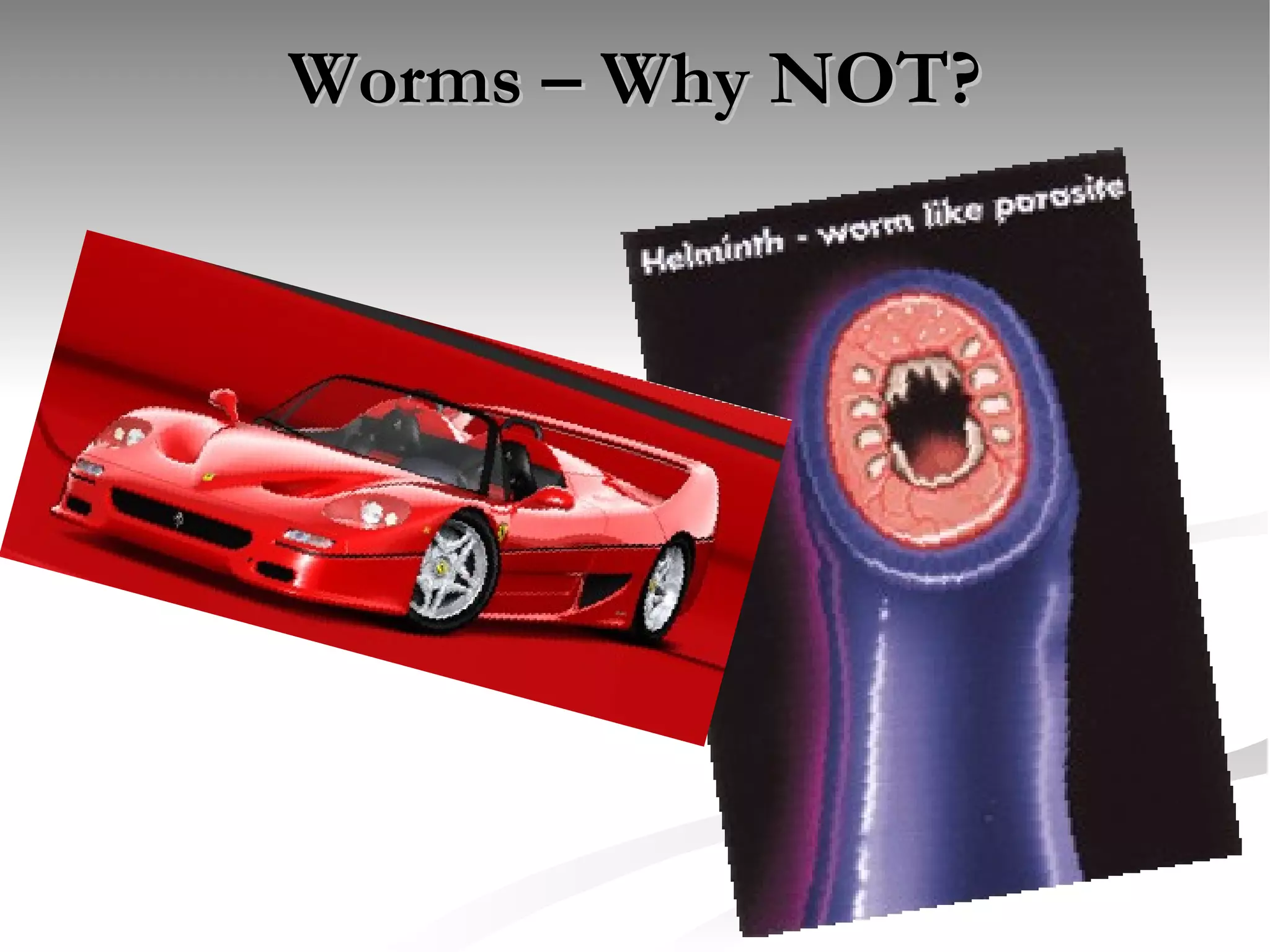
Worms – Why NOT?
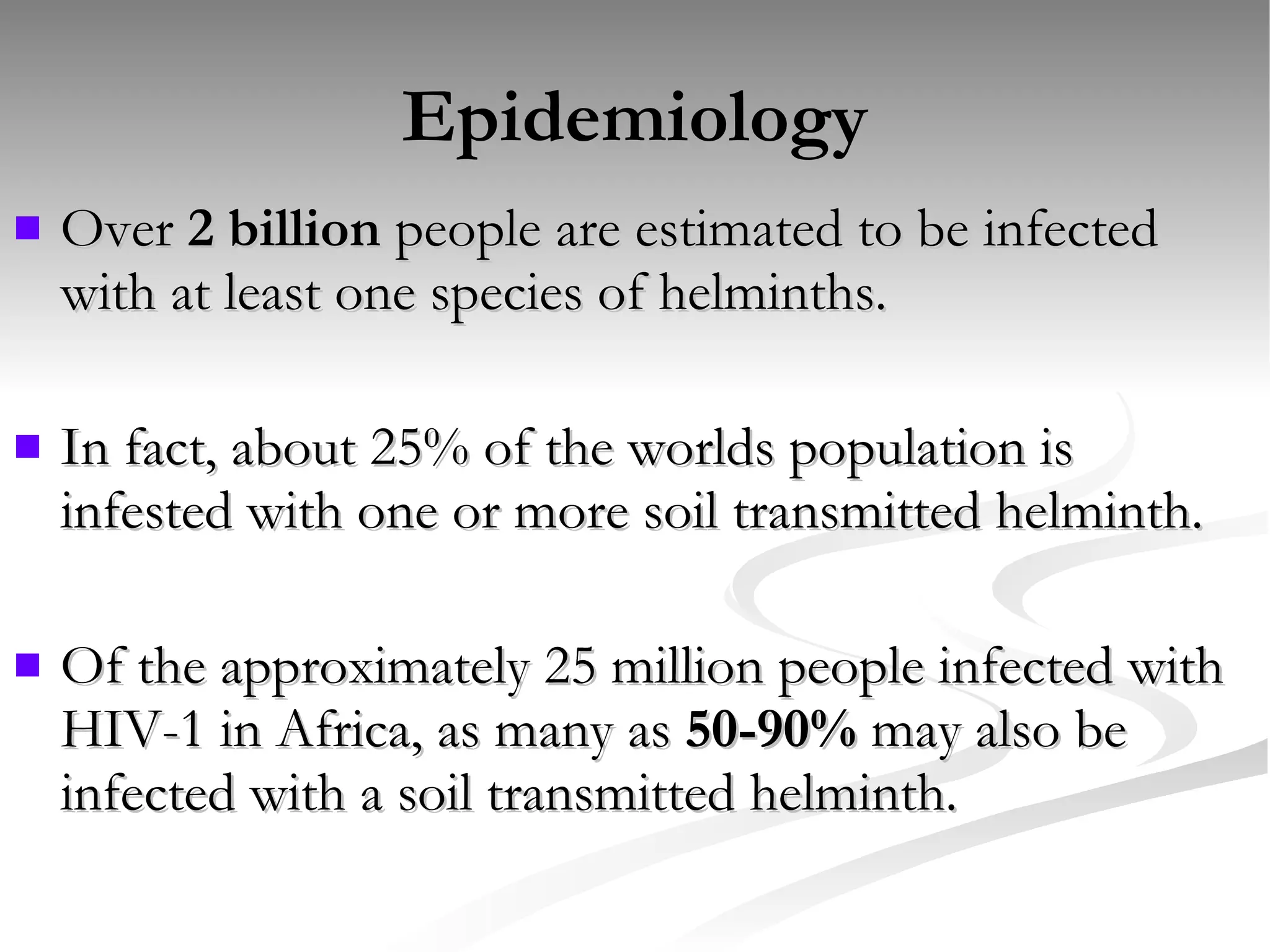
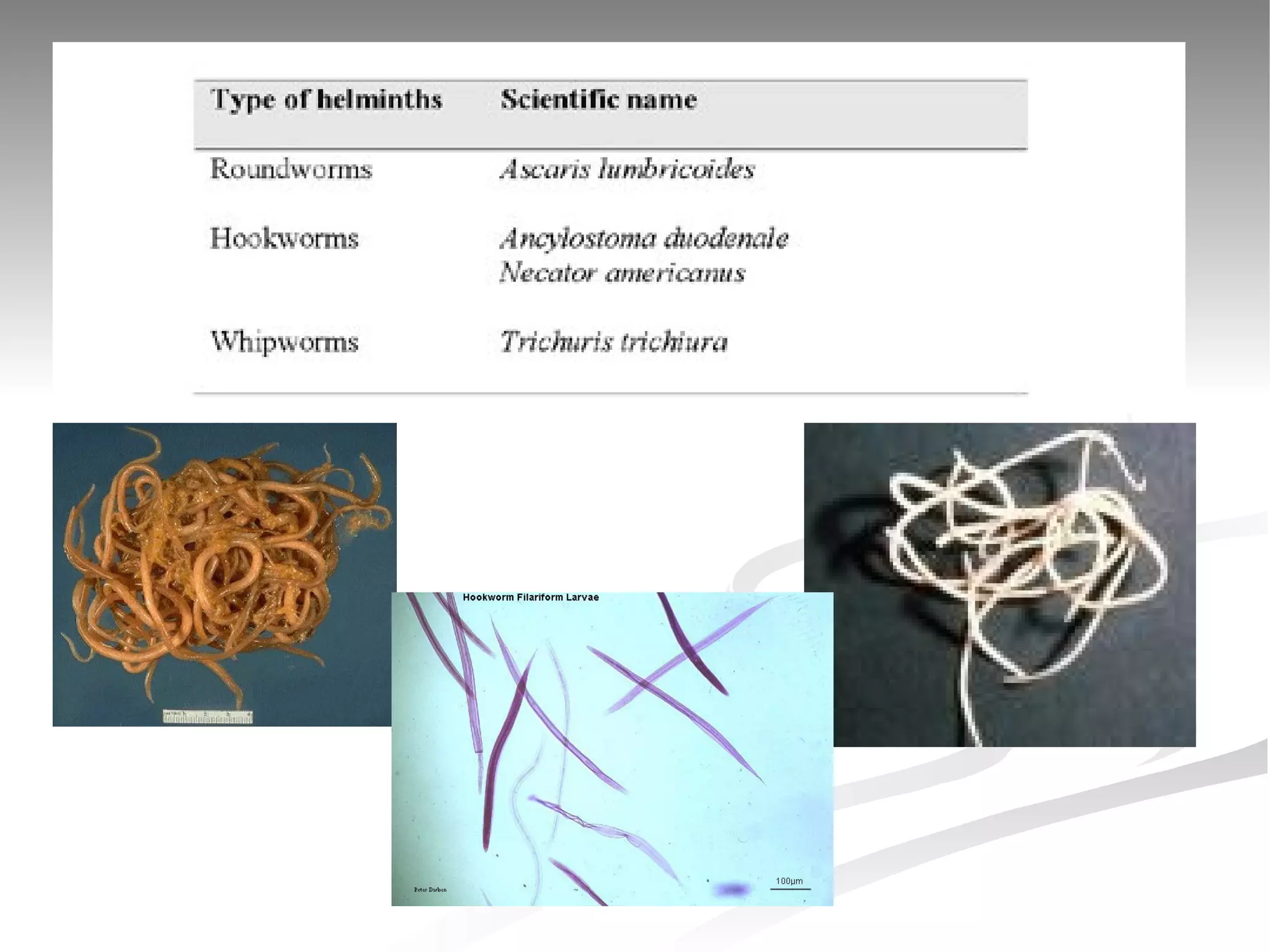
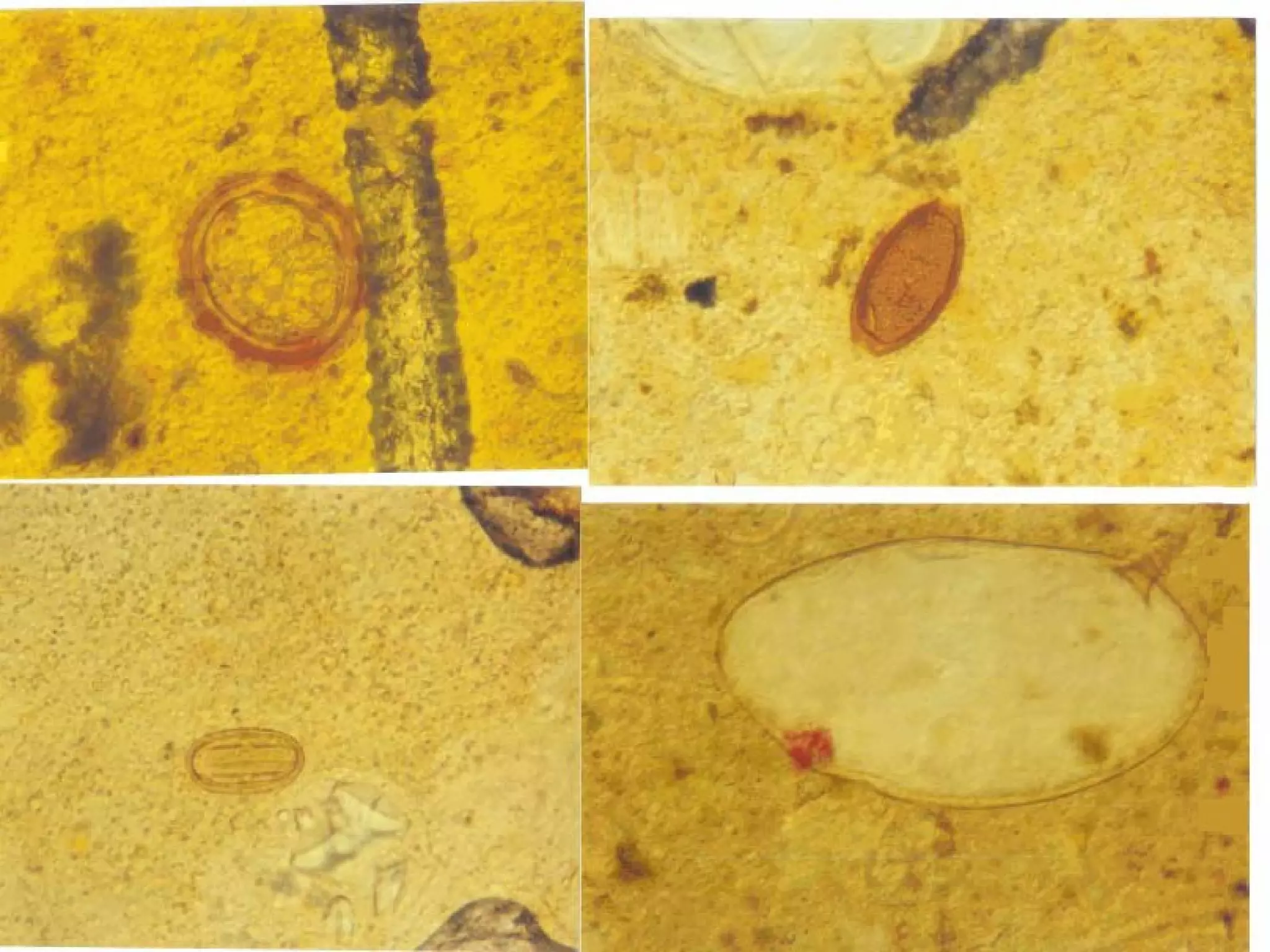
Epidemiology Over  2 billion  people are estimated to be infected with at least one species of helminths. In fact, about 25% of the worlds population is infested with one or more soil transmitted helminth. Of the approximately 25 million people infected with HIV-1 in Africa, as many as  50-90%  may also be infected with a soil transmitted helminth.


Distribution of helminths and HIV-1 in Africa Clinical Microbiology Reviews, October 2004, p. 1012-1030, Vol. 17, No. 4
 
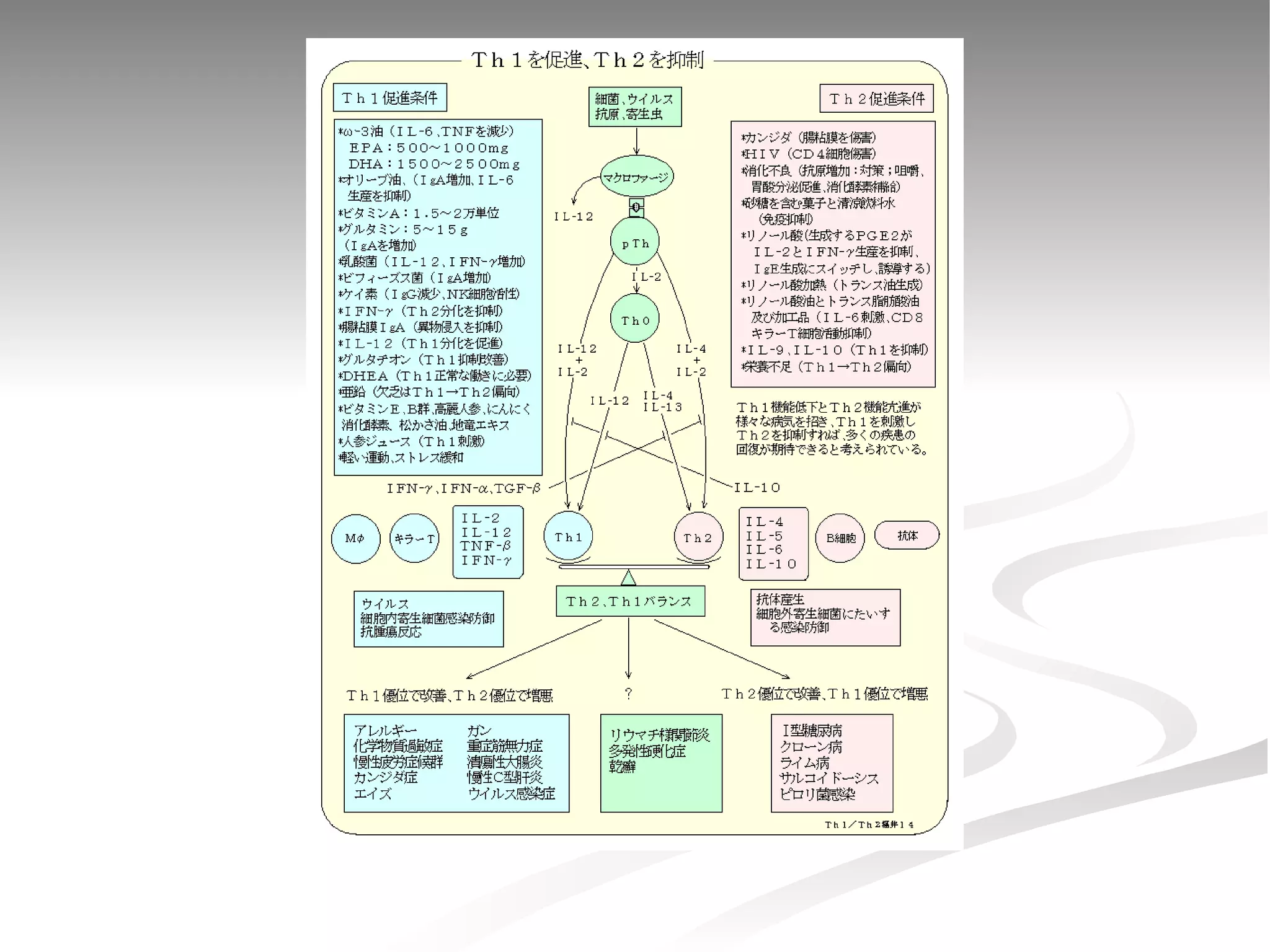
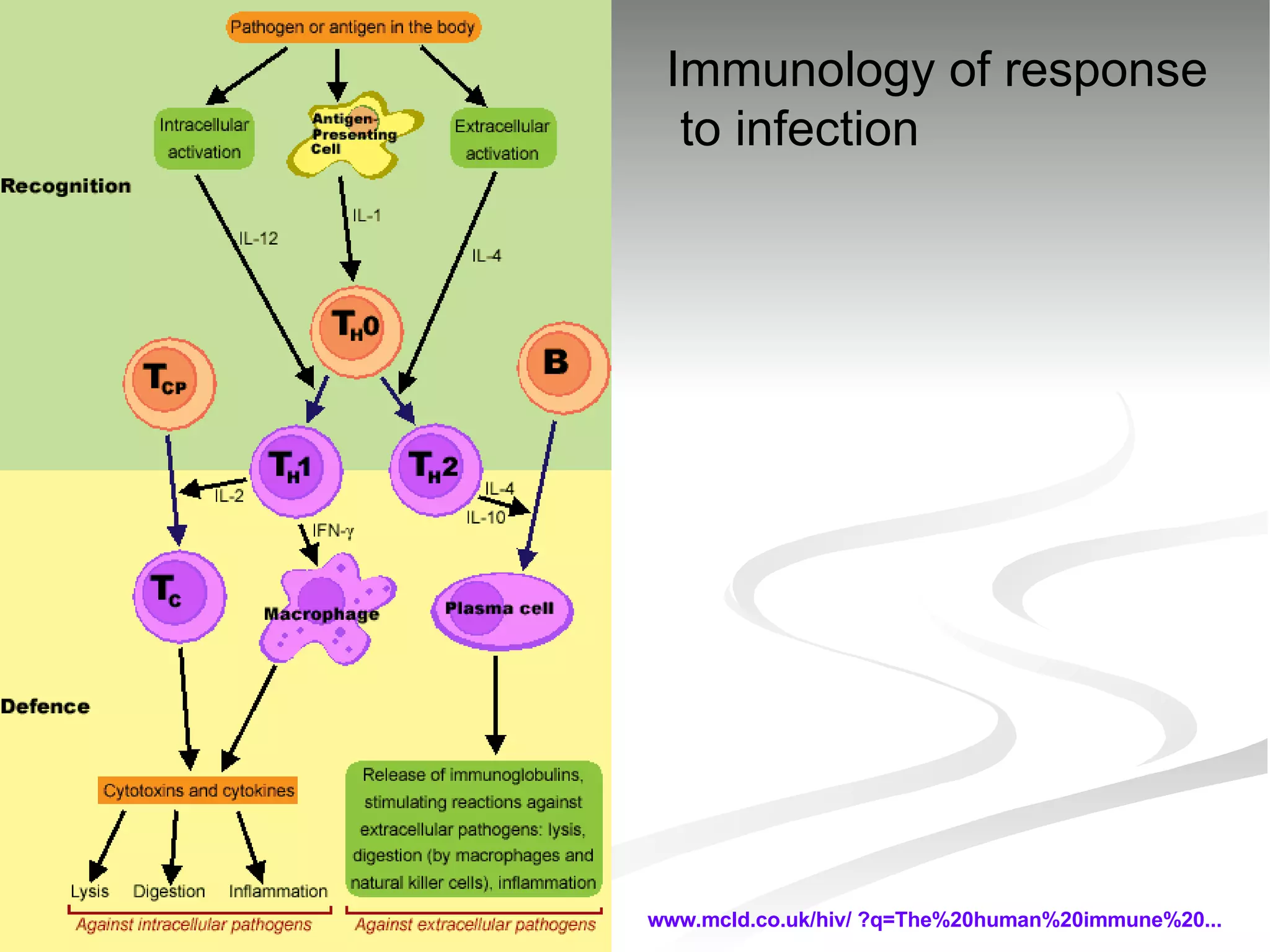
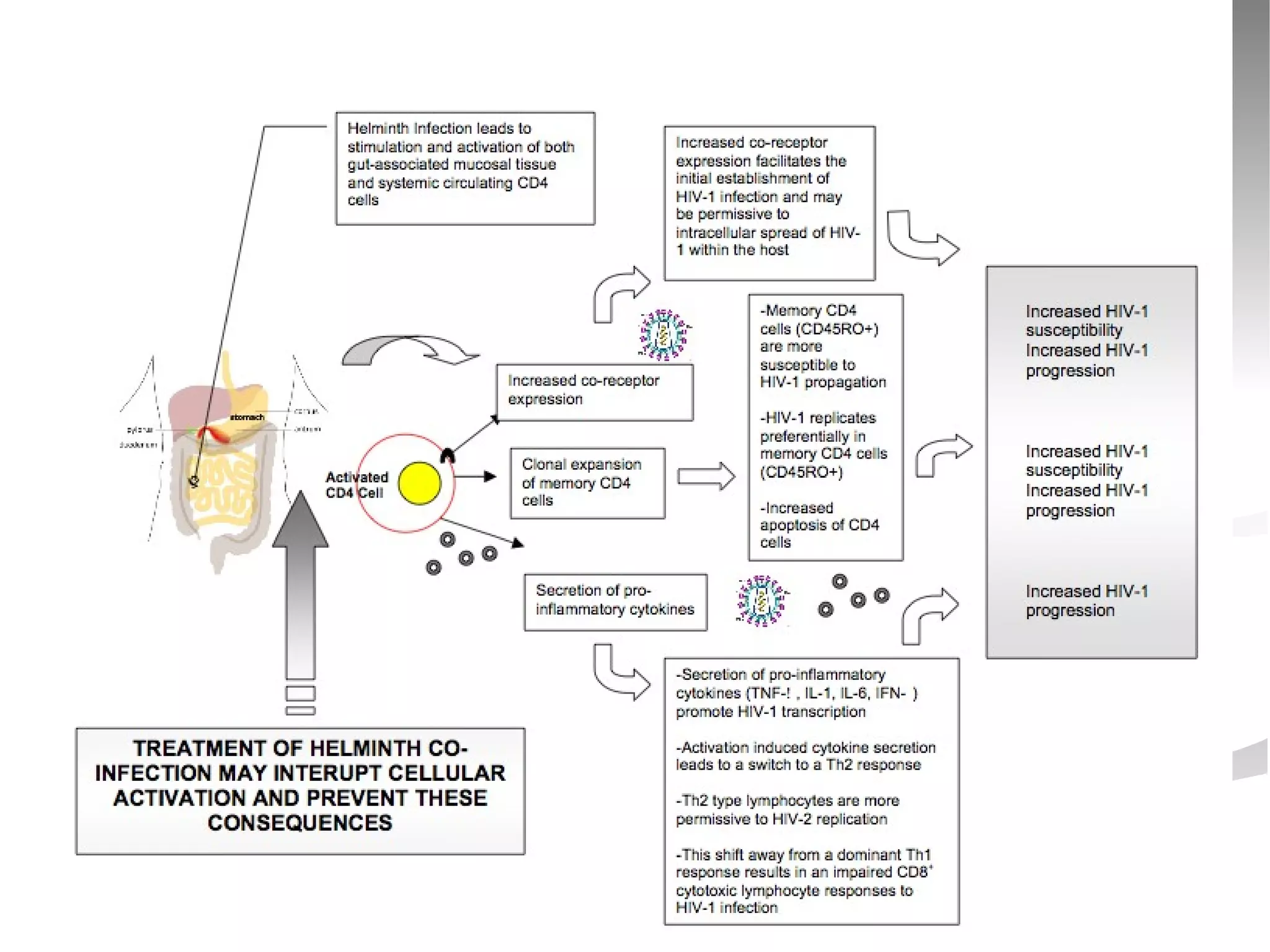
www.mcld.co.uk/hiv/ ?q=The%20human%20immune%20...   Immunology of response to infection
 
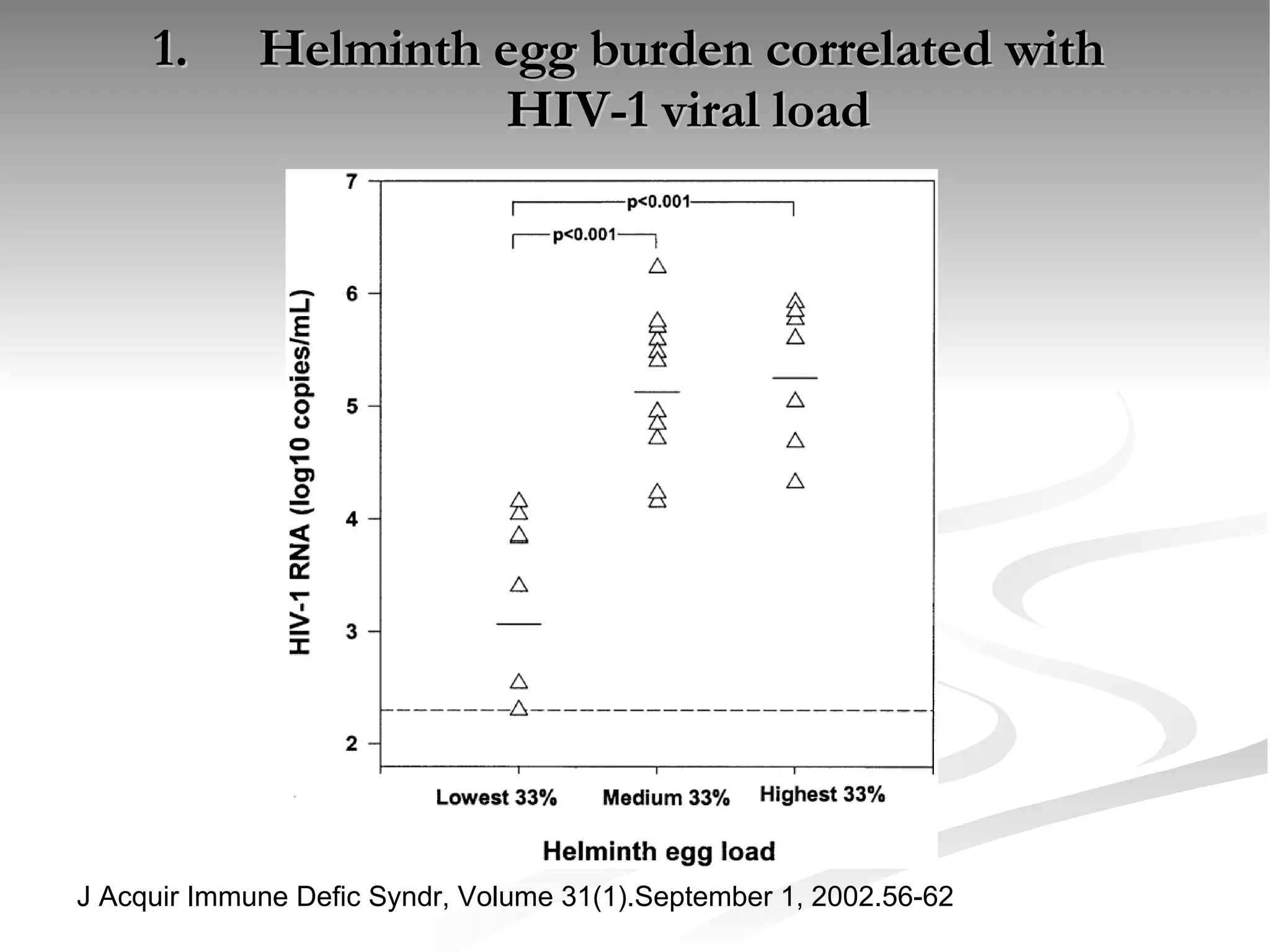
Helminth egg burden correlated with  HIV-1 viral load J Acquir Immune Defic Syndr, Volume 31(1).September 1, 2002.56-62
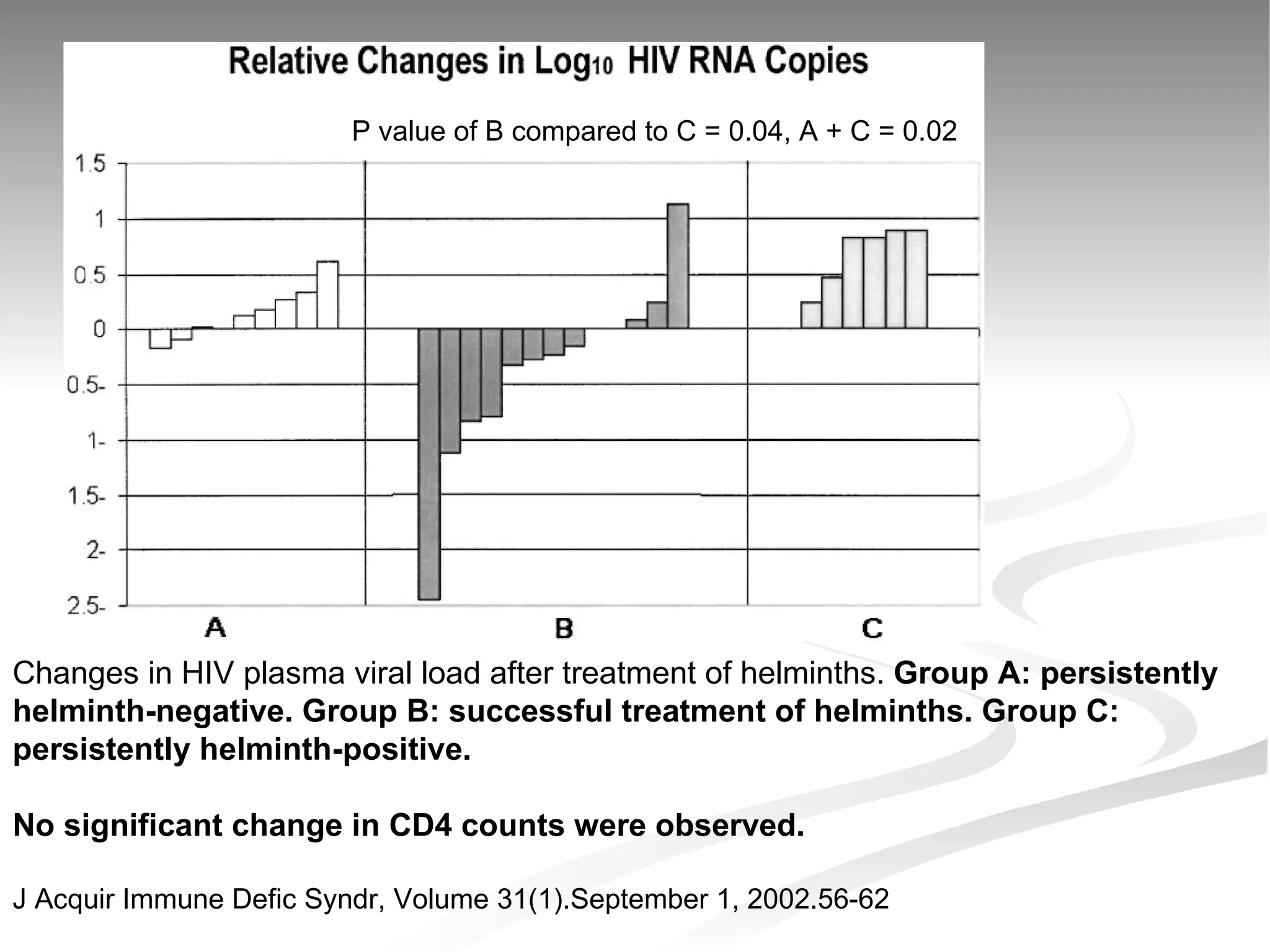
Changes in HIV plasma viral load after treatment of helminths.  Group A: persistently helminth-negative. Group B: successful treatment of helminths. Group C: persistently helminth-positive.  No significant change in CD4 counts were observed. J Acquir Immune Defic Syndr, Volume 31(1).September 1, 2002.56-62 P value of B compared to C = 0.04, A + C = 0.02
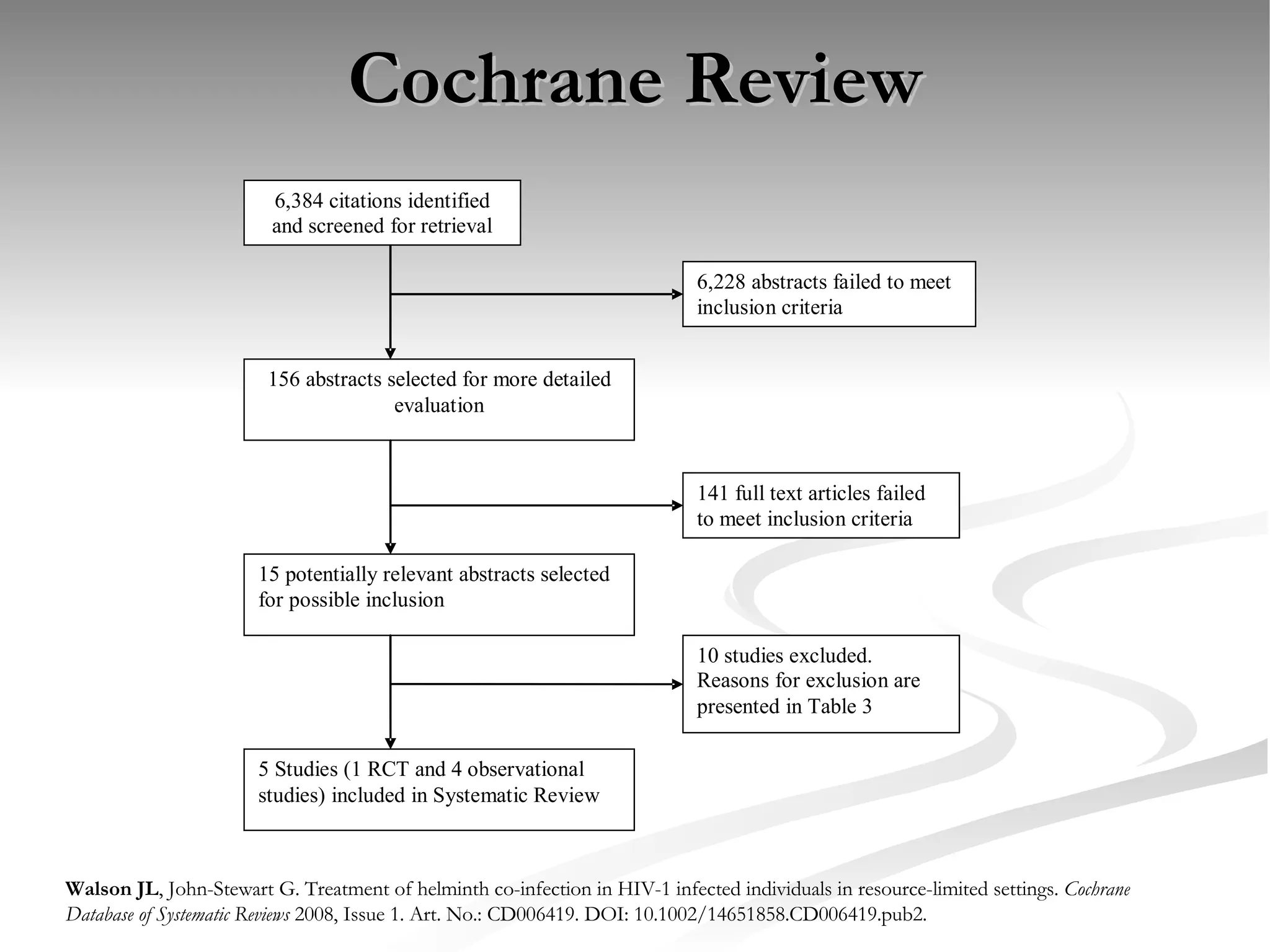
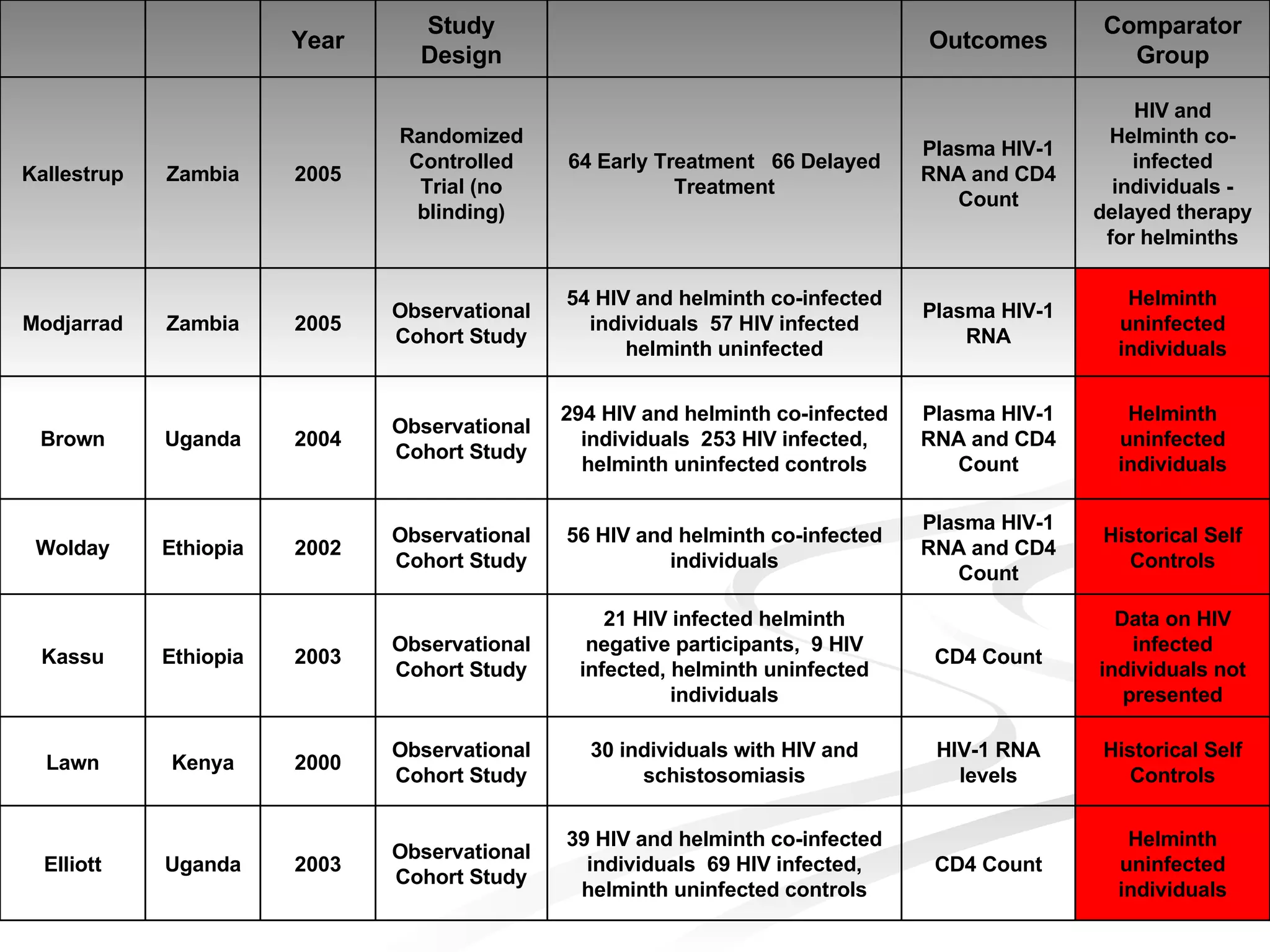
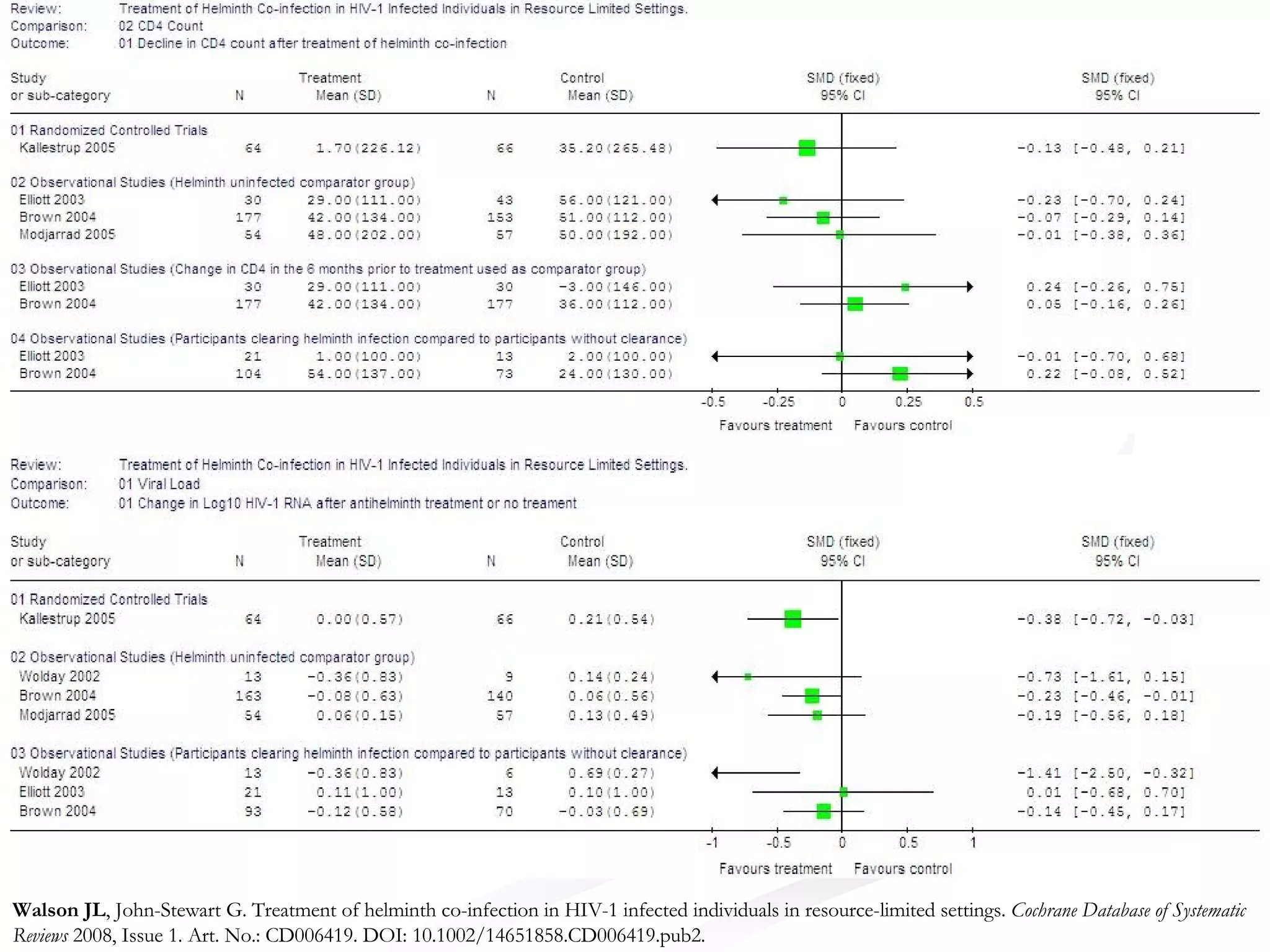
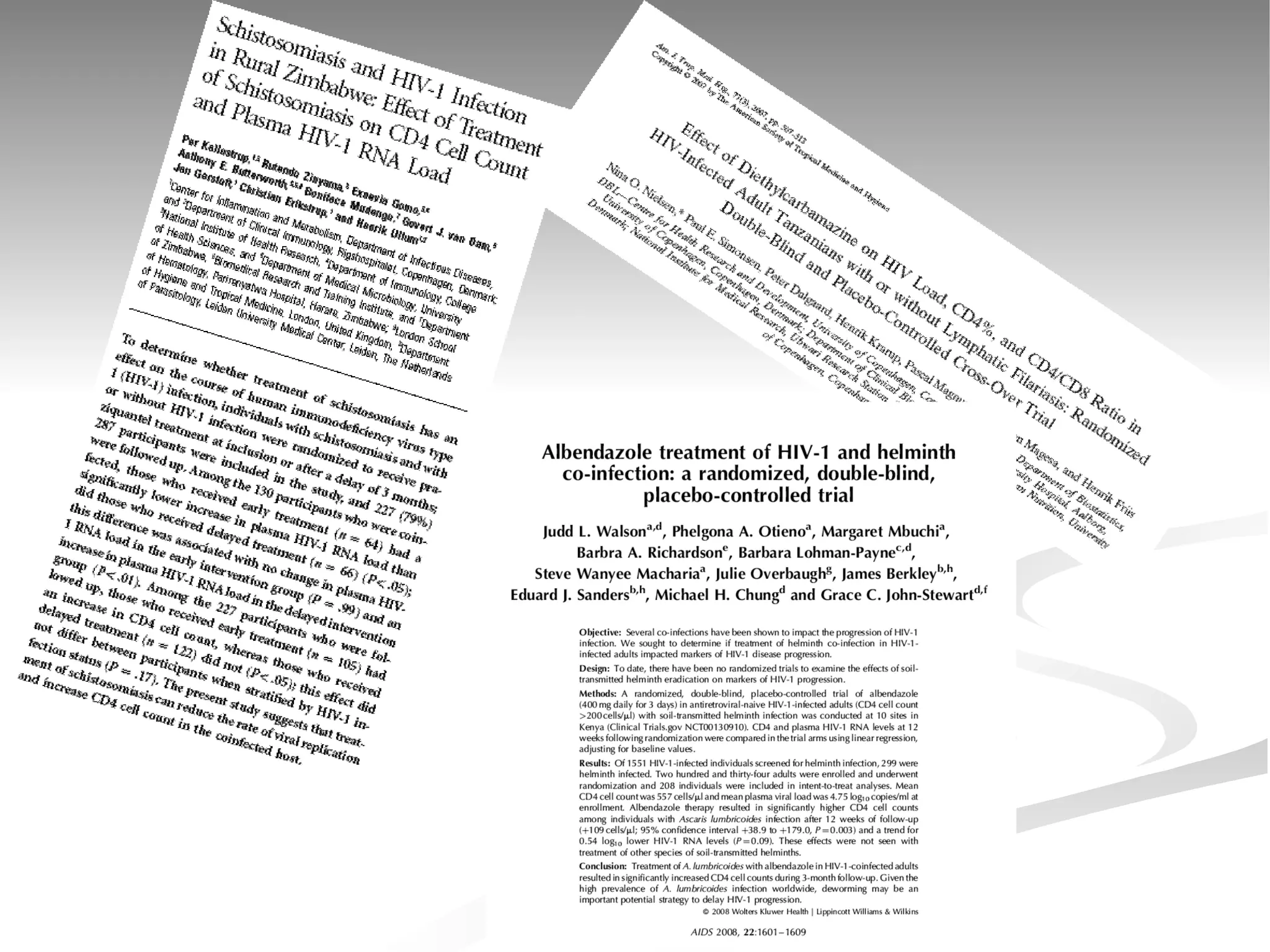
Cochrane Review Walson JL , John-Stewart G. Treatment of helminth co-infection in HIV-1 infected individuals in resource-limited settings.  Cochrane Database of Systematic Reviews  2008, Issue 1. Art. No.: CD006419. DOI: 10.1002/14651858.CD006419.pub2.
    Year Study Design   Outcomes Comparator Group Kallestrup Zambia 2005 Randomized Controlled Trial (no blinding) 64 Early Treatment  66 Delayed Treatment Plasma HIV-1 RNA and CD4 Count HIV and Helminth co-infected individuals - delayed therapy for helminths Modjarrad Zambia 2005 Observational Cohort Study 54 HIV and helminth co-infected individuals  57 HIV infected helminth uninfected Plasma HIV-1 RNA Helminth uninfected individuals Brown Uganda 2004 Observational Cohort Study 294 HIV and helminth co-infected individuals  253 HIV infected, helminth uninfected controls Plasma HIV-1 RNA and CD4 Count Helminth uninfected individuals Wolday Ethiopia 2002 Observational Cohort Study 56 HIV and helminth co-infected individuals Plasma HIV-1 RNA and CD4 Count Historical Self Controls Kassu Ethiopia 2003 Observational Cohort Study 21 HIV infected helminth negative participants,  9 HIV infected, helminth uninfected individuals CD4 Count Data on HIV infected individuals not presented Lawn Kenya 2000 Observational Cohort Study 30 individuals with HIV and schistosomiasis HIV-1 RNA levels Historical Self Controls Elliott Uganda 2003 Observational Cohort Study 39 HIV and helminth co-infected individuals  69 HIV infected, helminth uninfected controls CD4 Count Helminth uninfected individuals
Walson JL , John-Stewart G. Treatment of helminth co-infection in HIV-1 infected individuals in resource-limited settings.  Cochrane Database of Systematic Reviews  2008, Issue 1. Art. No.: CD006419. DOI: 10.1002/14651858.CD006419.pub2.
Treatment of helminth co-infection: short term effects on HIV-1 progression markers and immune activation
Study Justification There were no randomized clinical trials evaluating the effect of eradicating soil-transmitted helminths on markers of HIV-1 disease progression. Treatment of helminth co-infection may offer a useful strategy to delay HIV-1 progression among individuals in resource-poor settings?
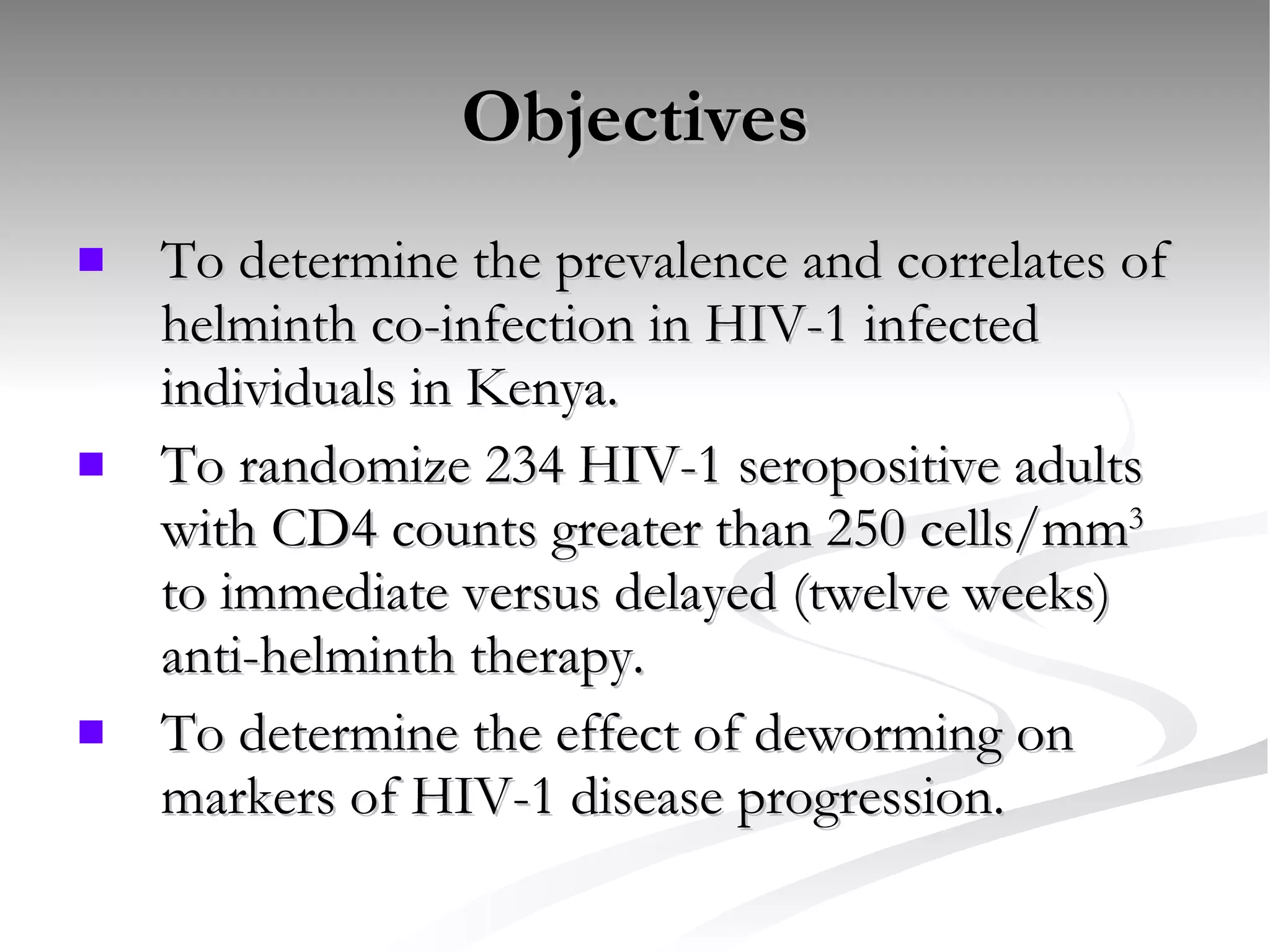
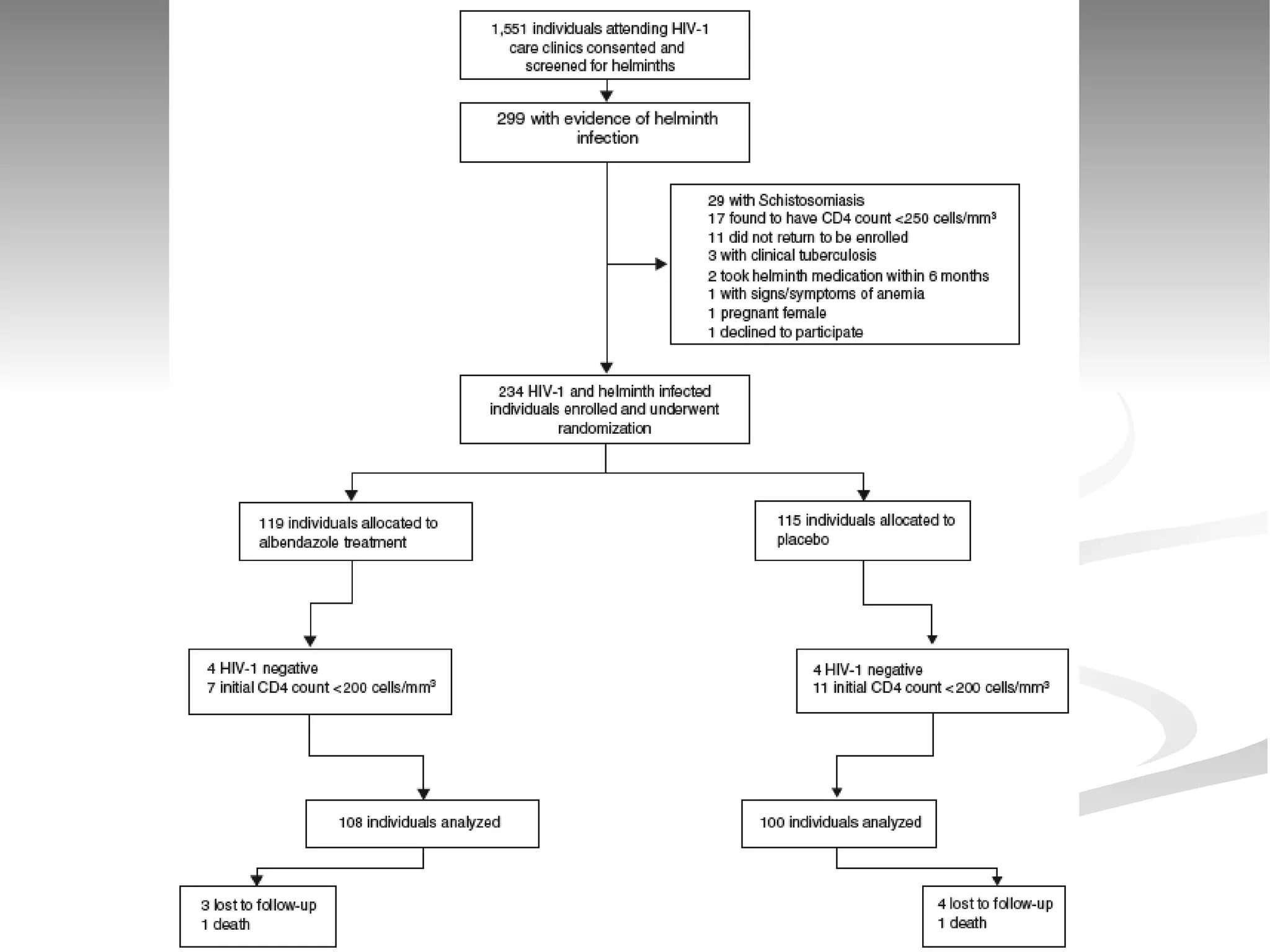
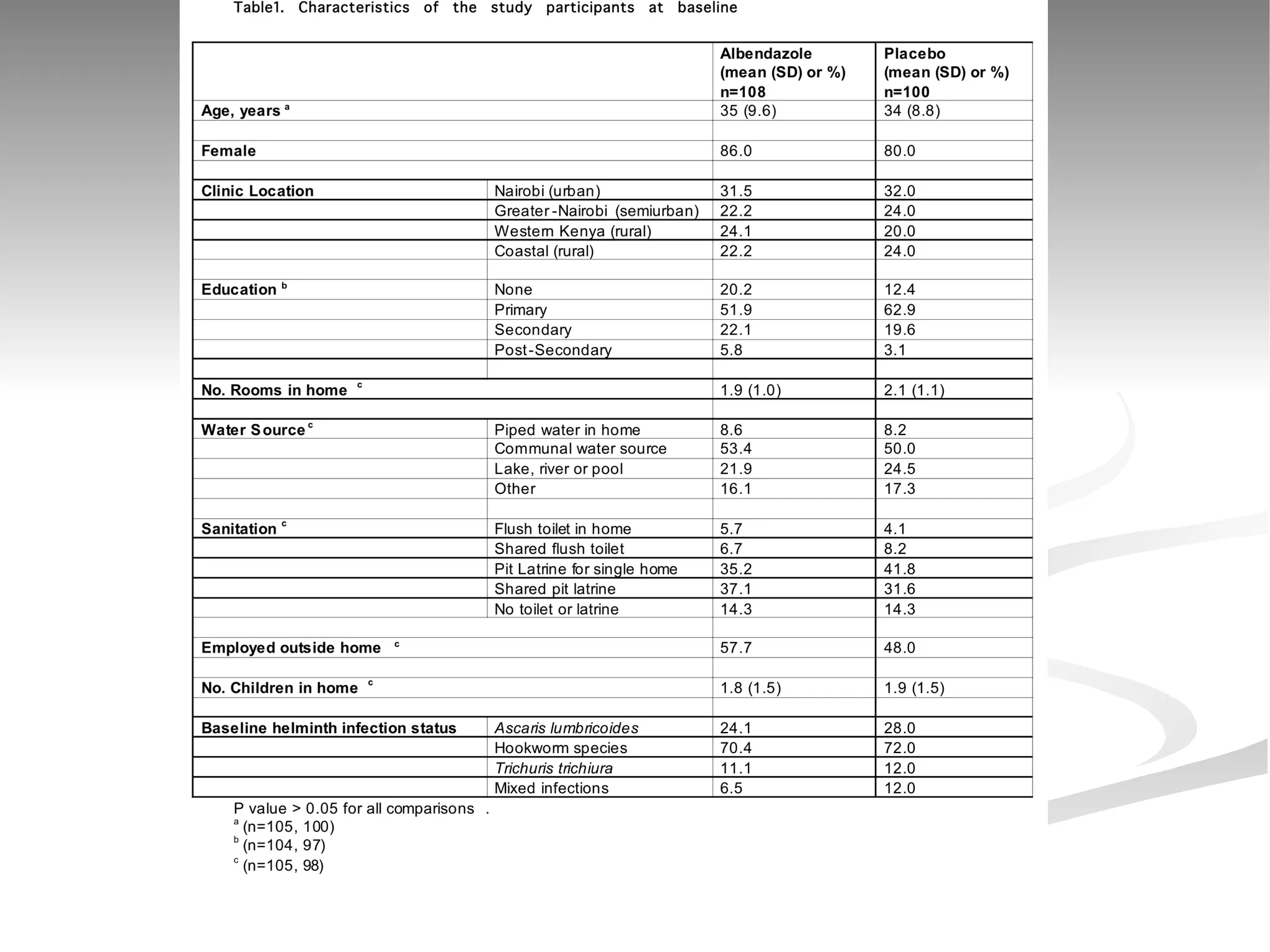
Objectives To determine the prevalence and correlates of helminth co-infection in HIV-1 infected individuals in Kenya. To randomize 234 HIV-1 seropositive adults with CD4 counts greater than 250 cells/mm 3  to immediate versus delayed (twelve weeks) anti-helminth therapy. To determine the effect of deworming on markers of HIV-1 disease progression.
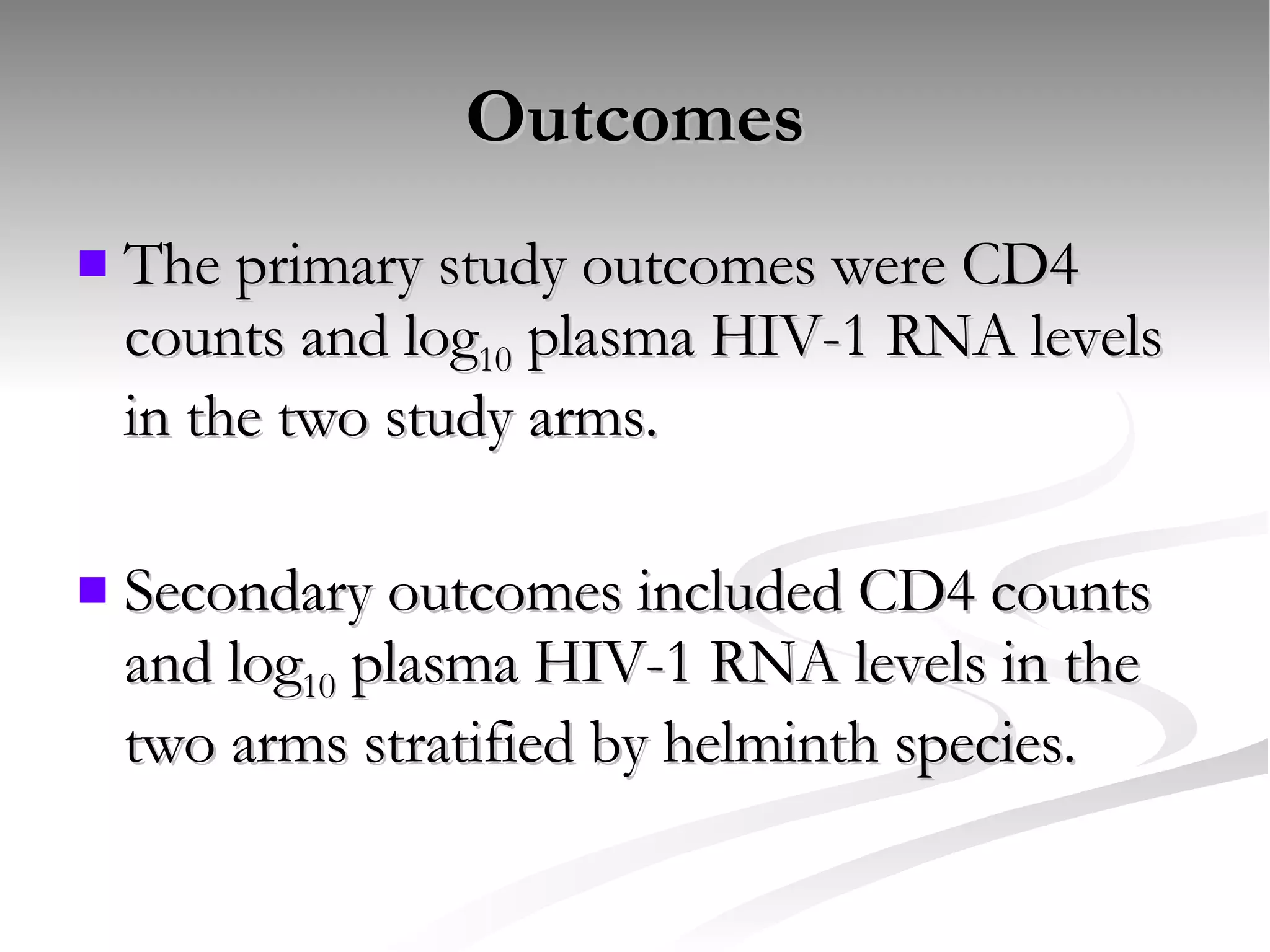
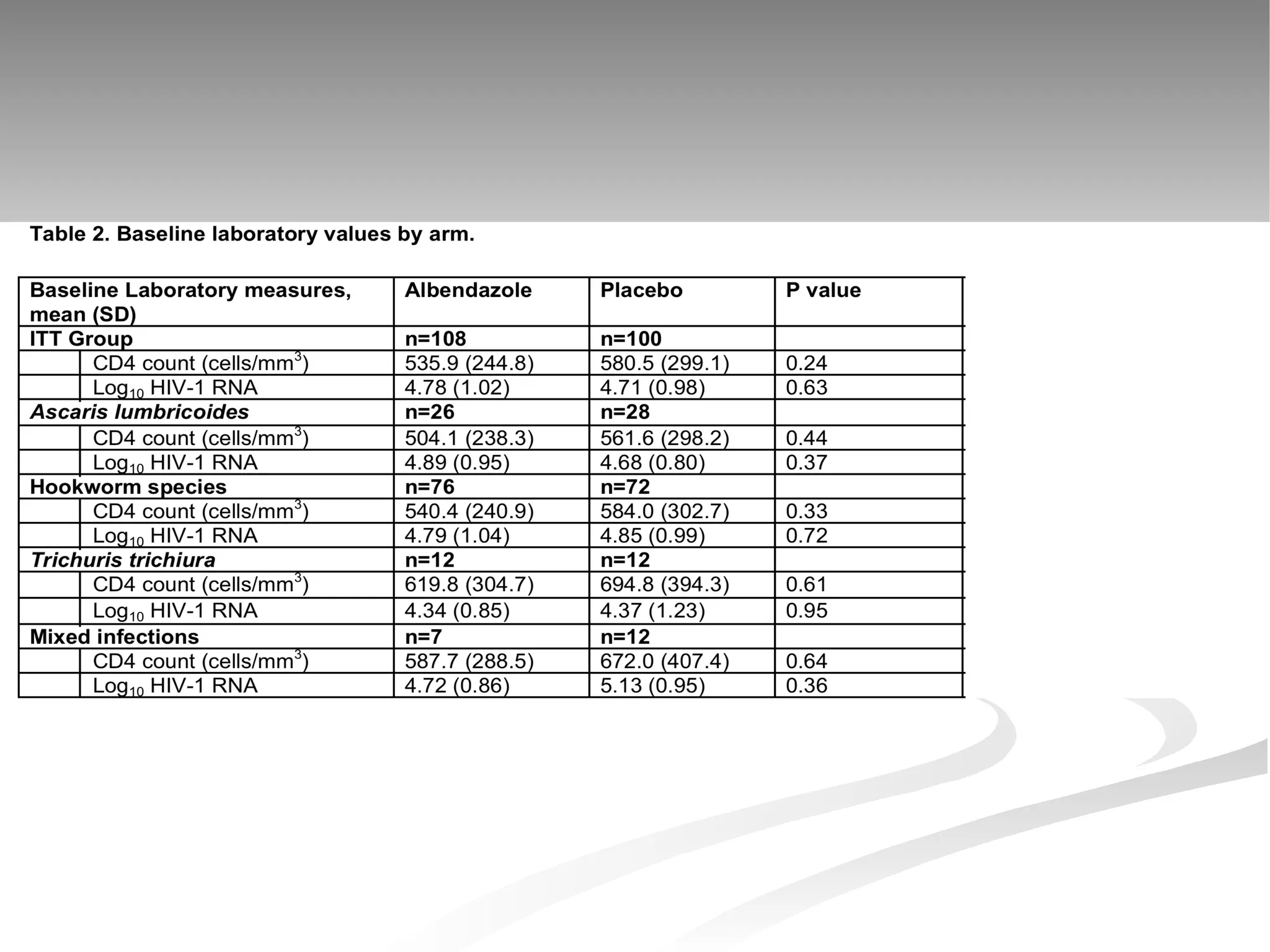
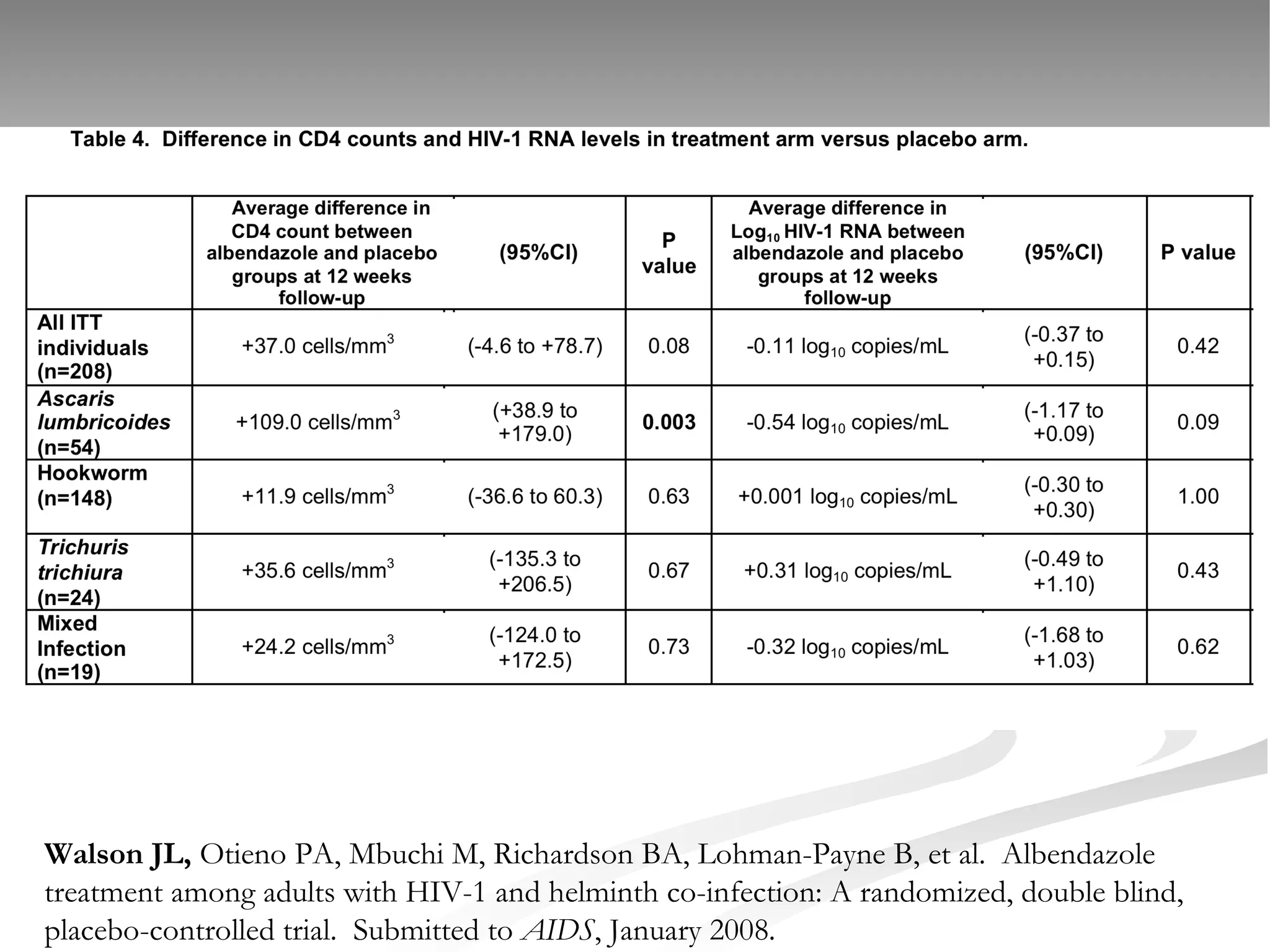
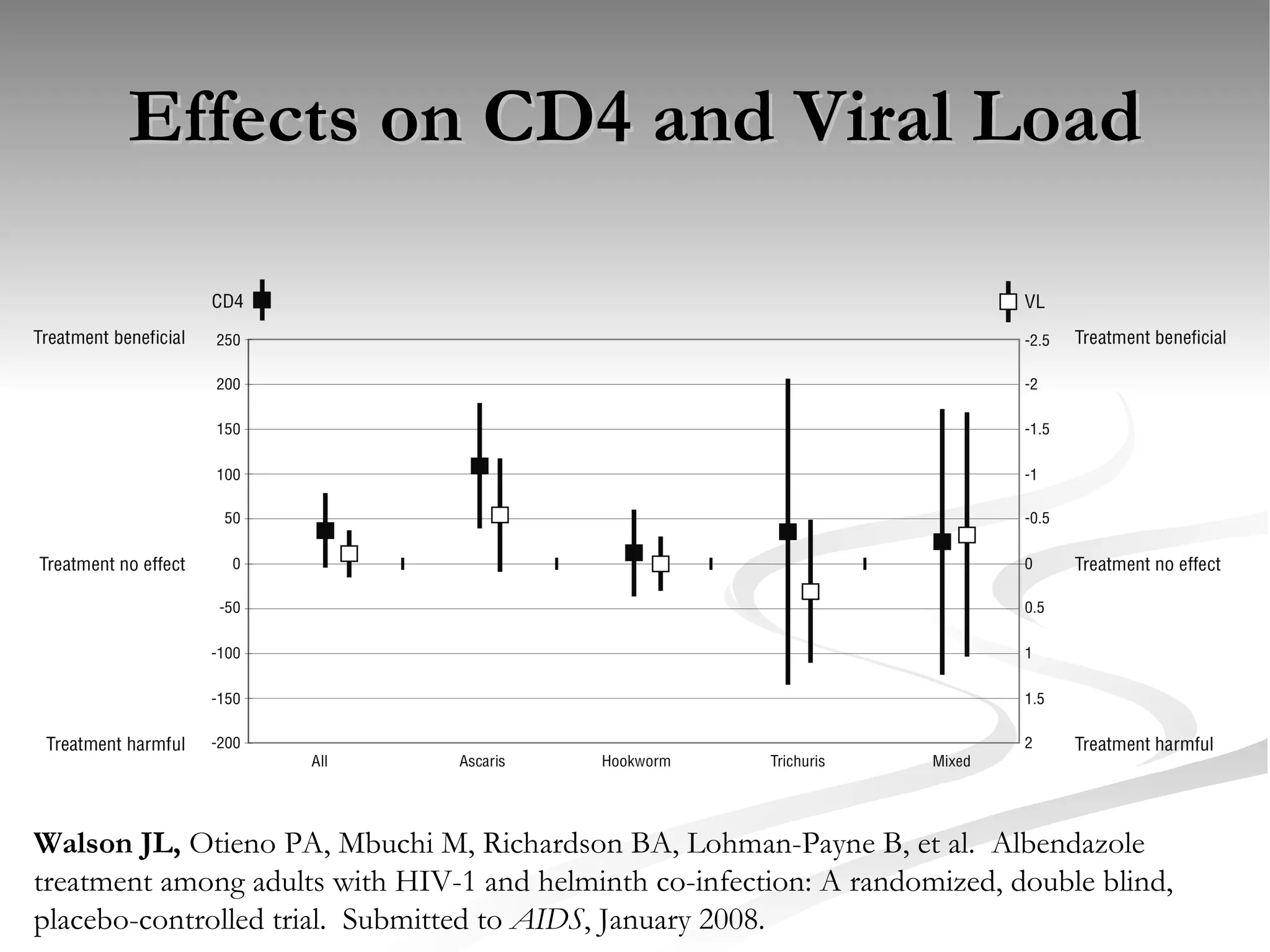
Outcomes The primary study outcomes were CD4 counts and log 10  plasma HIV-1 RNA levels in the two study arms. Secondary outcomes included CD4 counts and log 10  plasma HIV-1 RNA levels in the two arms stratified by helminth species.
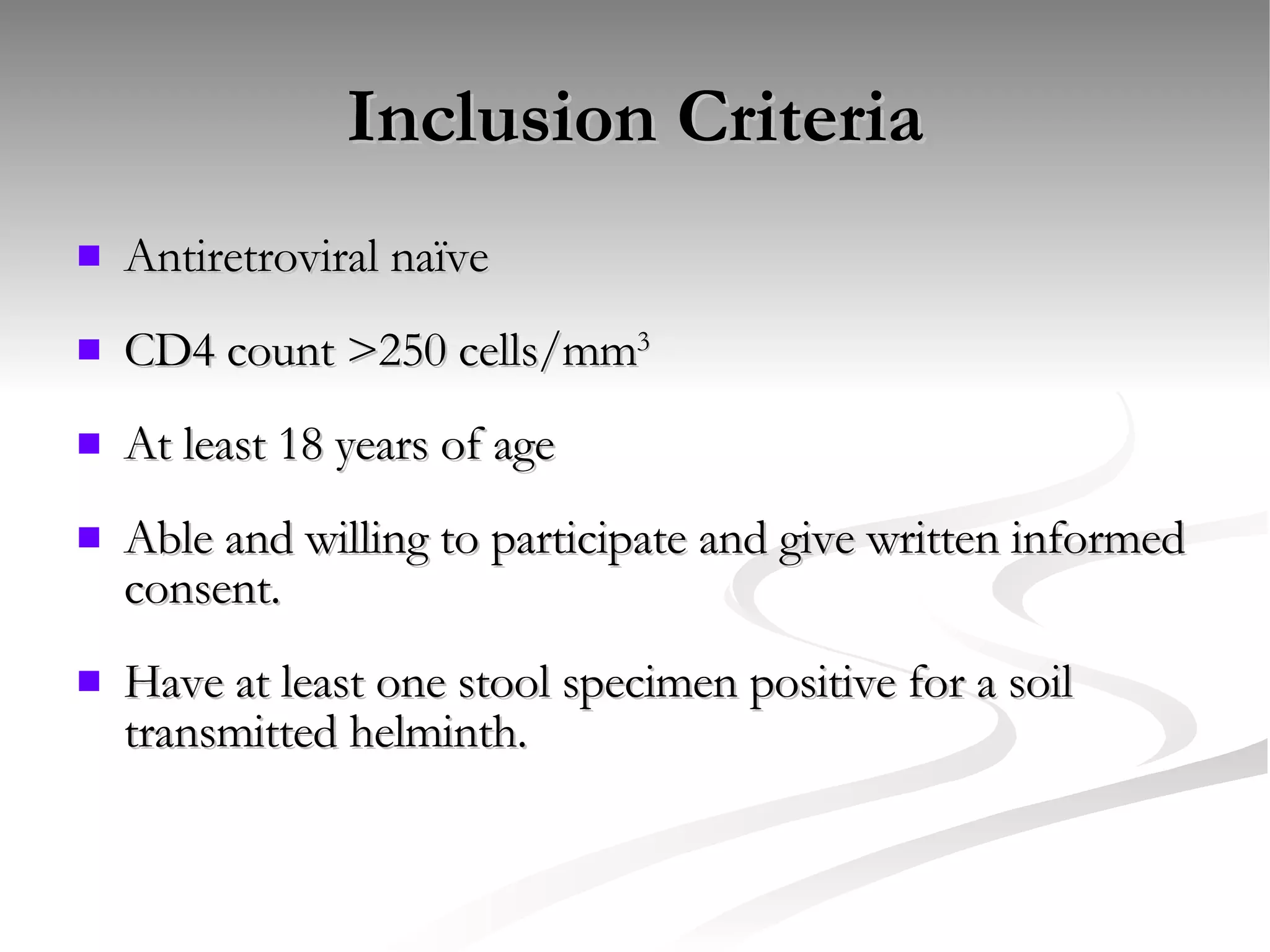
Inclusion Criteria Antiretroviral na ï ve CD4 count >250 cells/mm 3 At least 18 years of age Able and willing to participate and give written informed consent. Have at least one stool specimen positive for a soil transmitted helminth.
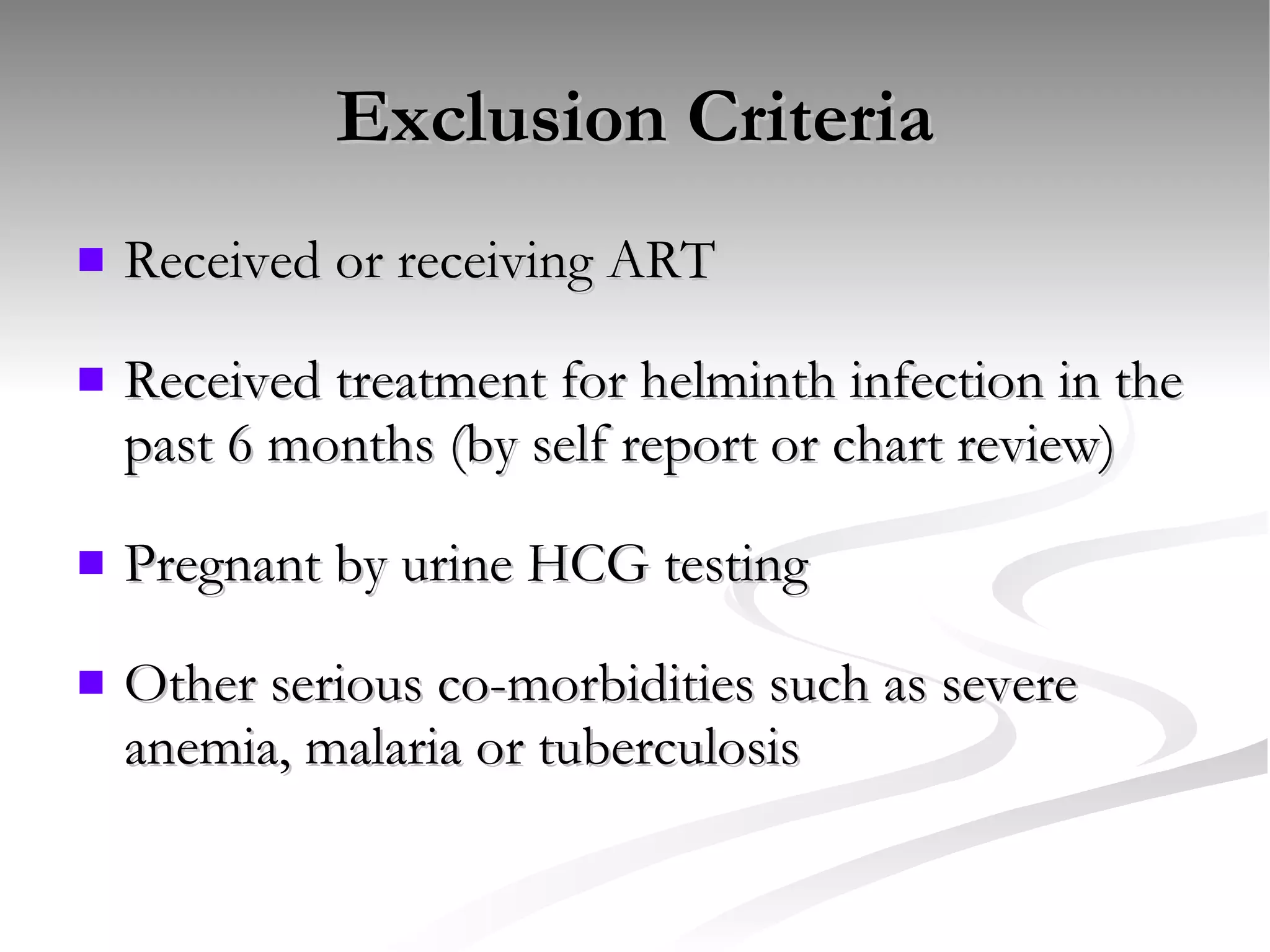
Exclusion Criteria Received or receiving ART Received treatment for helminth infection in the past 6 months (by self report or chart review) Pregnant by urine HCG testing Other serious co-morbidities such as severe anemia, malaria or tuberculosis
12 week follow up All patients with stool positive for helminth infection at week 12 treated with three 400 mg doses of Albendazole, regardless of initial randomization group. All patients referred for further HIV care at the conclusion of the study period, regardless of disease stage.
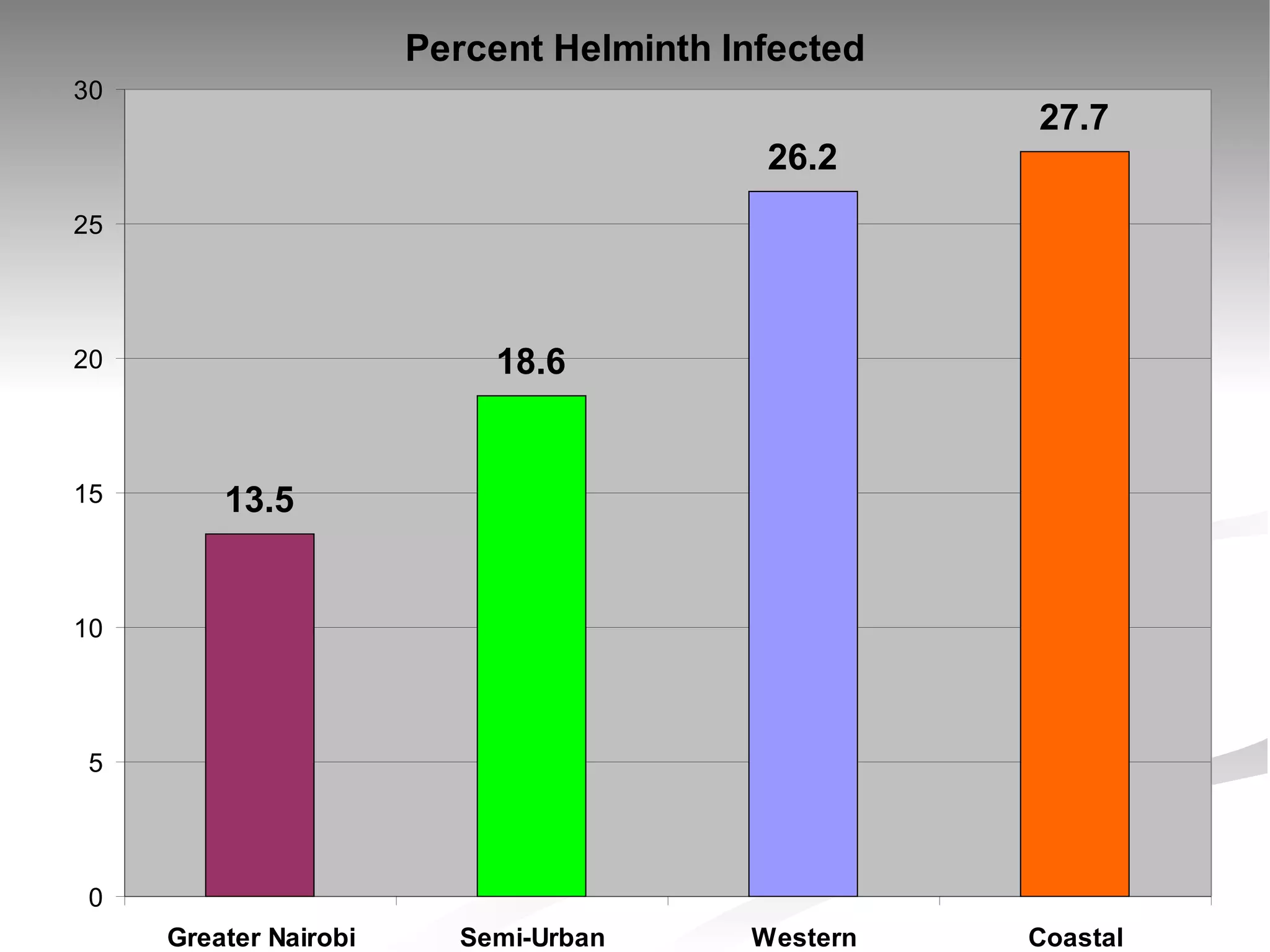
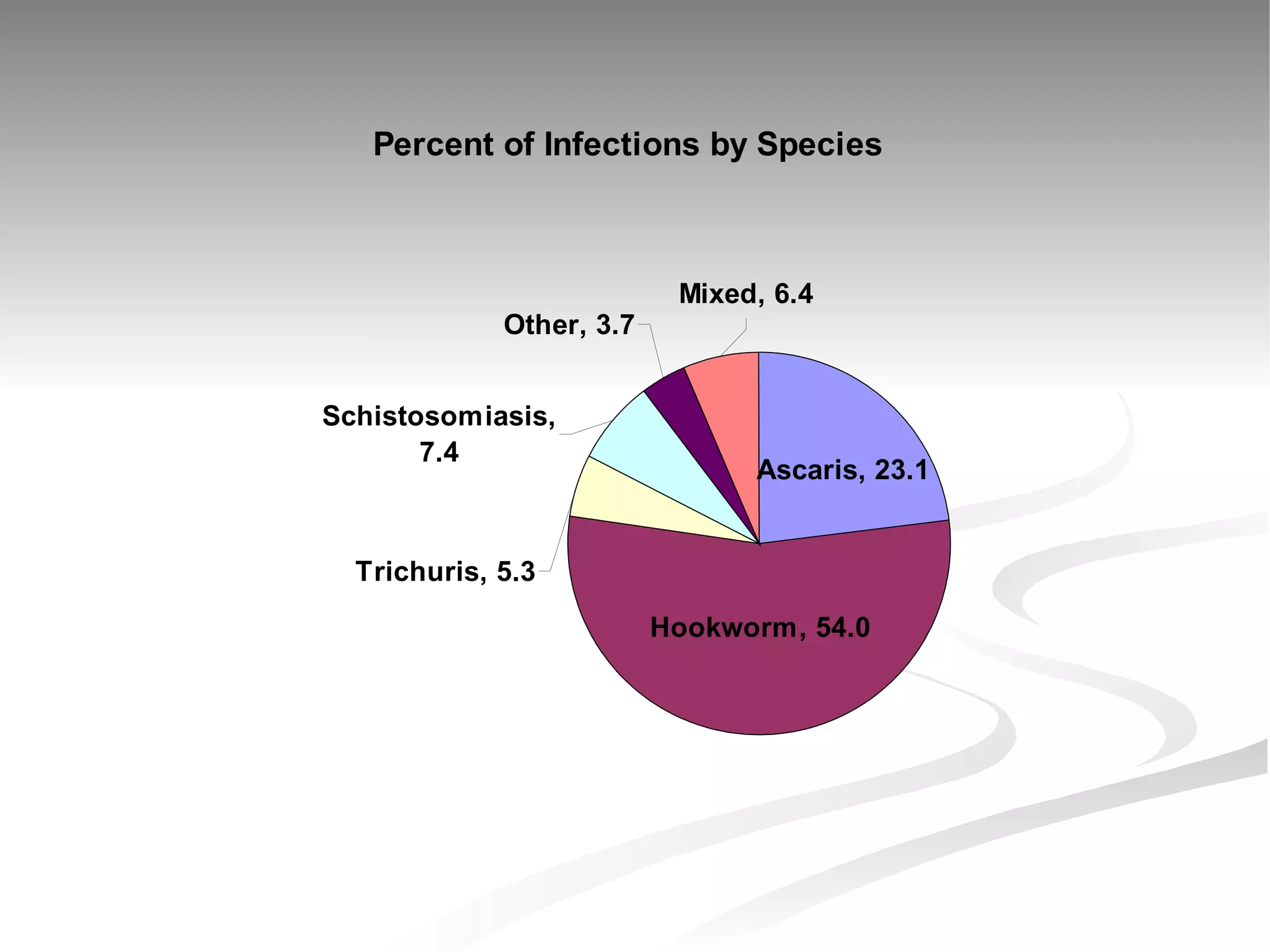
Obstacles Need to screen large numbers of patient samples for helminths Unclear what the prevalence of helminth infection is in adults at various geographic sites Sites are diverse, organized and assisted by different partners, differing capacities Budget - $50,000 (Initially)
 
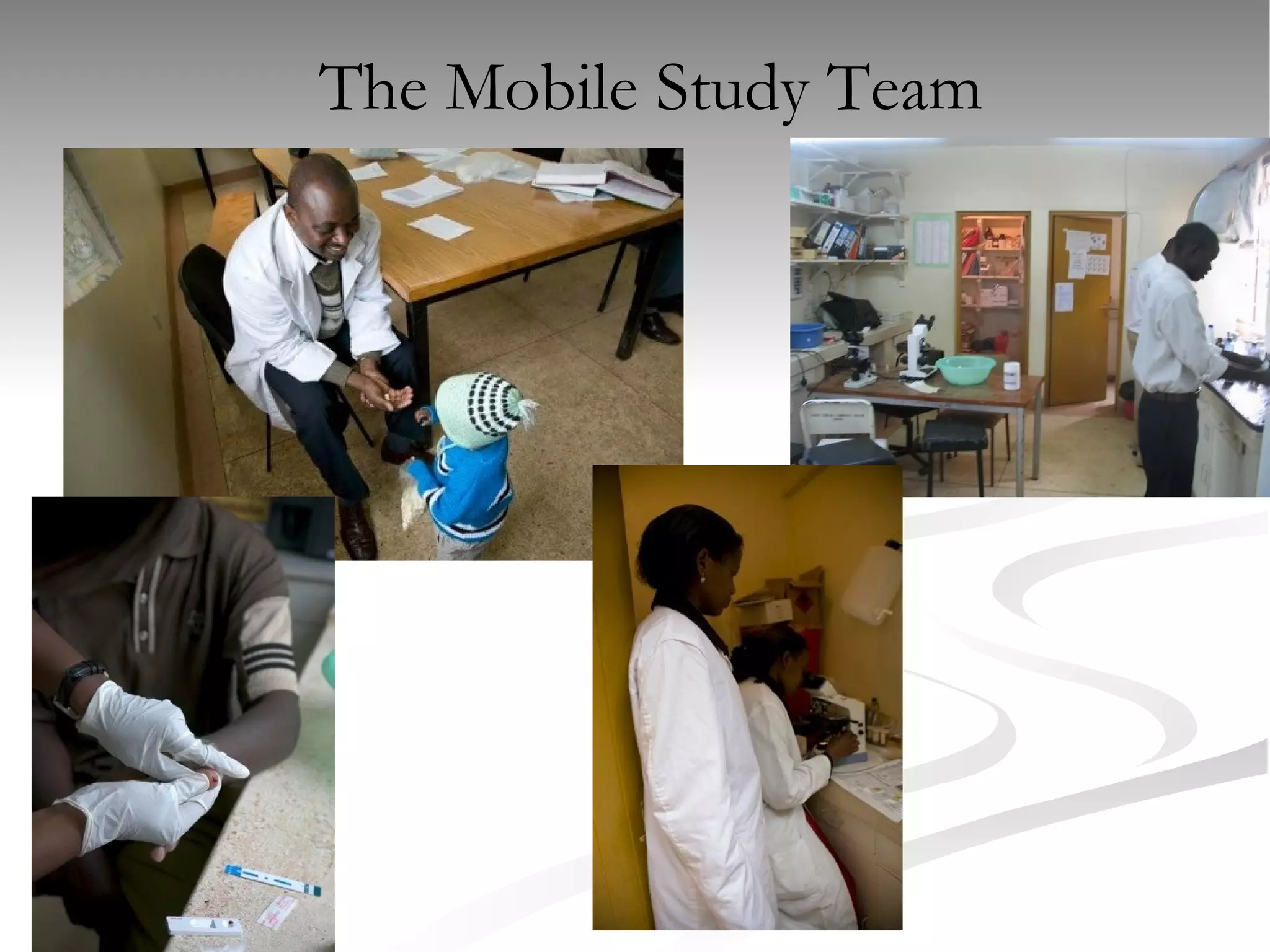
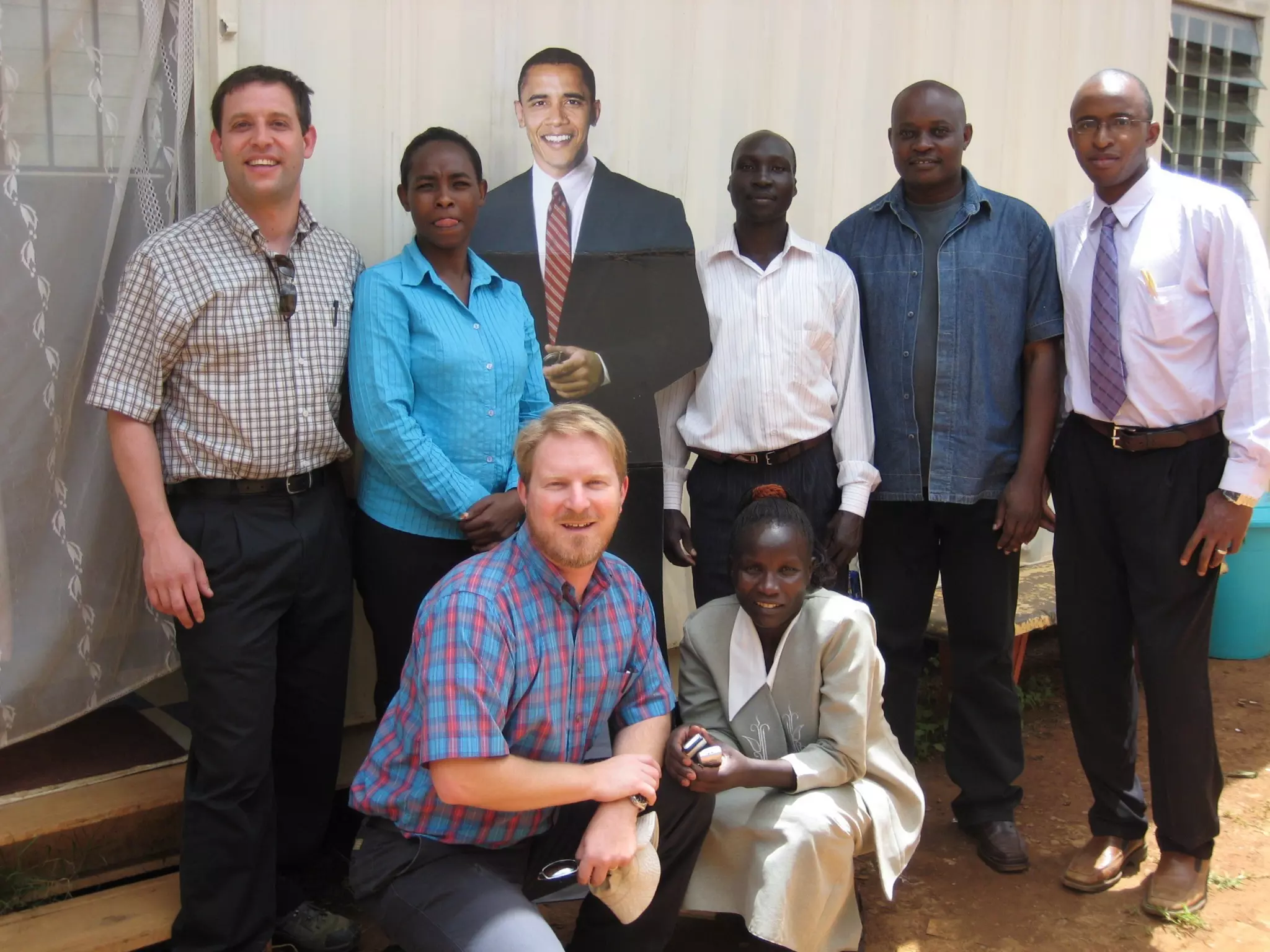
The Mobile Study Team


Walson JL,  Otieno PA, Mbuchi M, Richardson BA, Lohman-Payne B, et al.  Albendazole treatment among adults with HIV-1 and helminth co-infection: A randomized, double blind, placebo-controlled trial.   Submitted to  AIDS , January 2008.
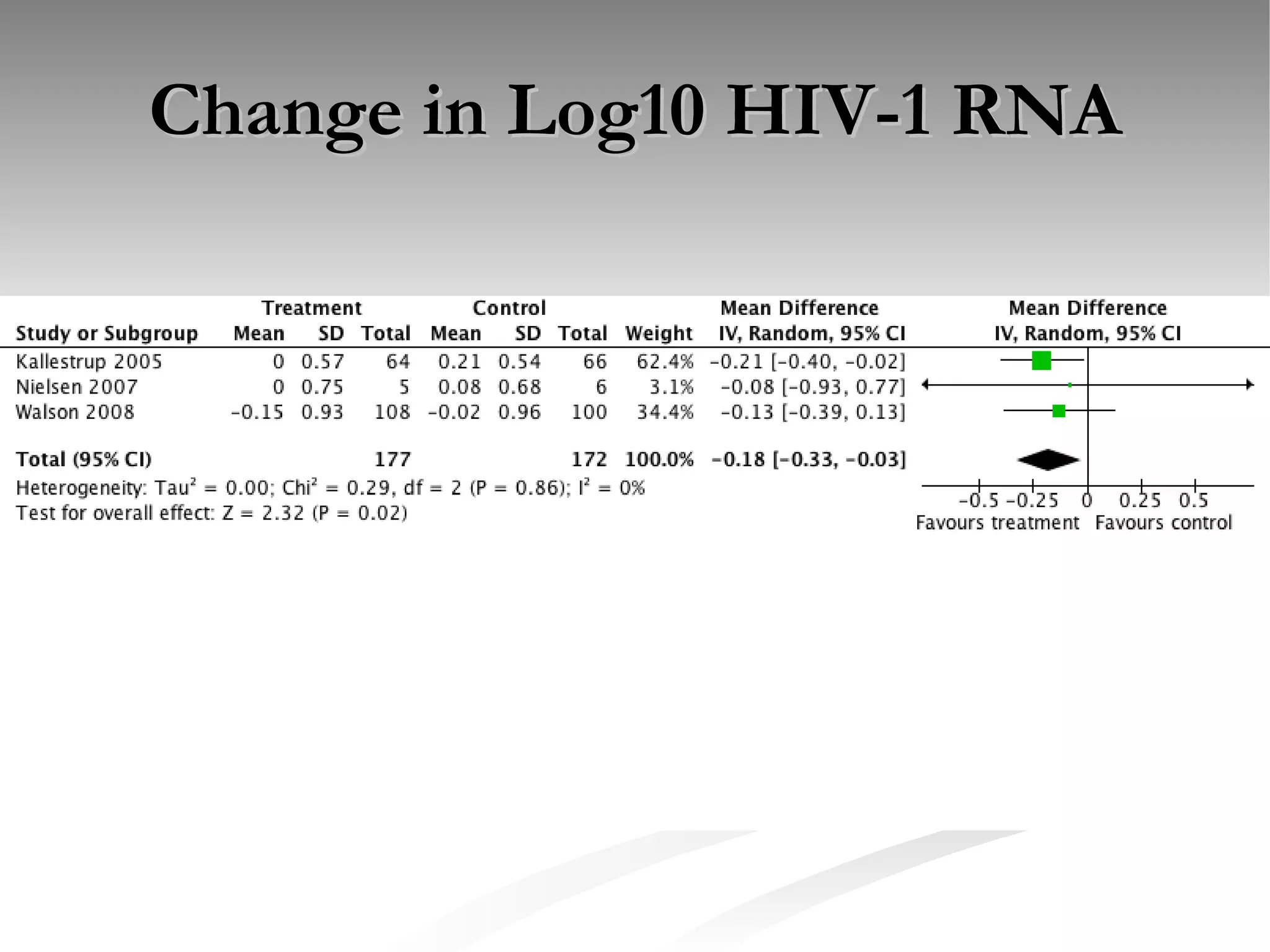
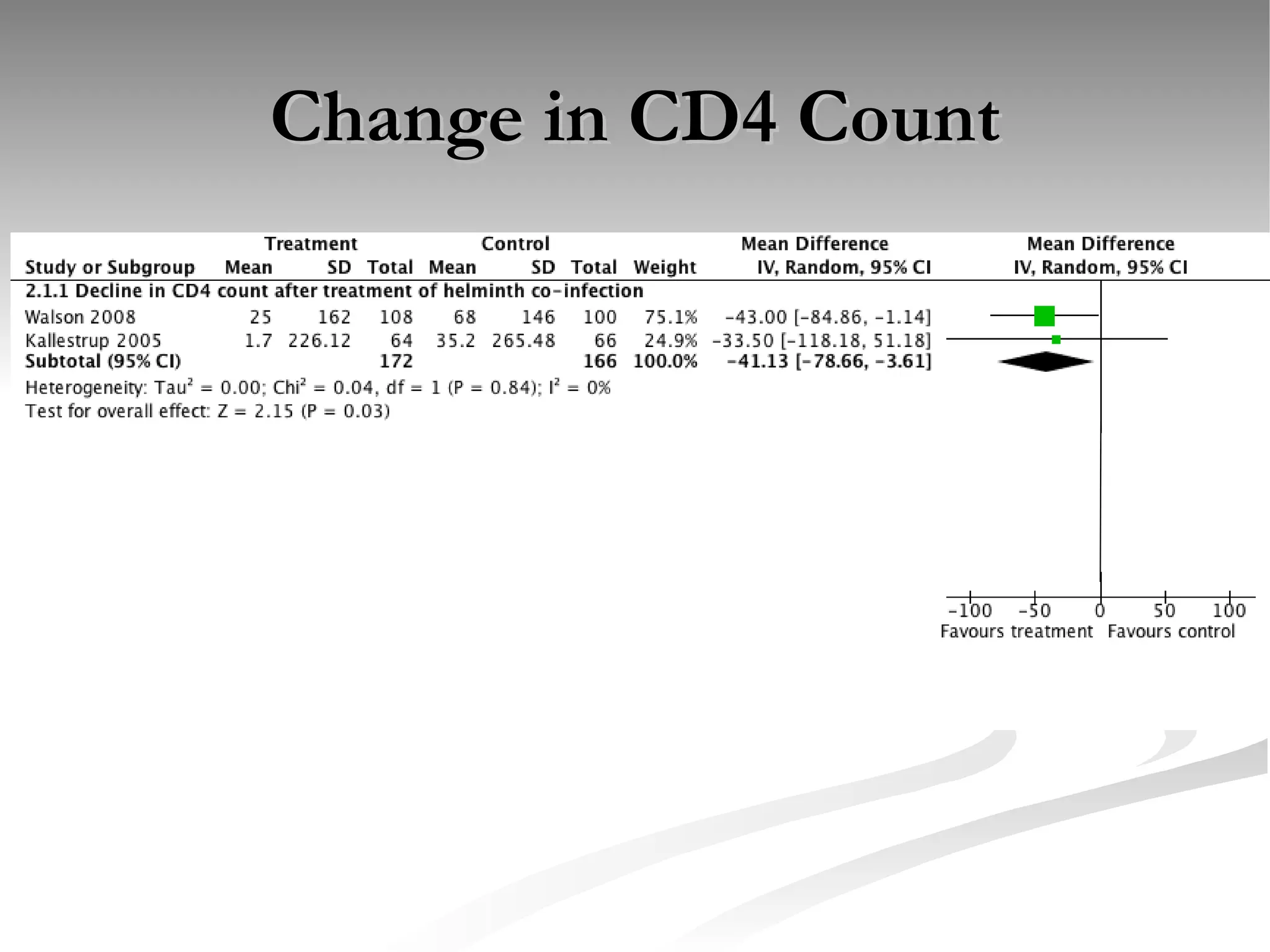
Effects on CD4 and Viral Load Walson JL,  Otieno PA, Mbuchi M, Richardson BA, Lohman-Payne B, et al.  Albendazole treatment among adults with HIV-1 and helminth co-infection: A randomized, double blind, placebo-controlled trial.   Submitted to  AIDS , January 2008.
 
Change in Log10 HIV-1 RNA
Change in CD4 Count
Next? Screening is relatively expensive and not sensitive – who to deworm? Are the findings transient?  Need longer follow up. What is the outcome that matters – Focus  on TIME TO QUALIFY FOR ART.
Empiric therapy of helminth co-infection to reduce HIV-1 disease progression.
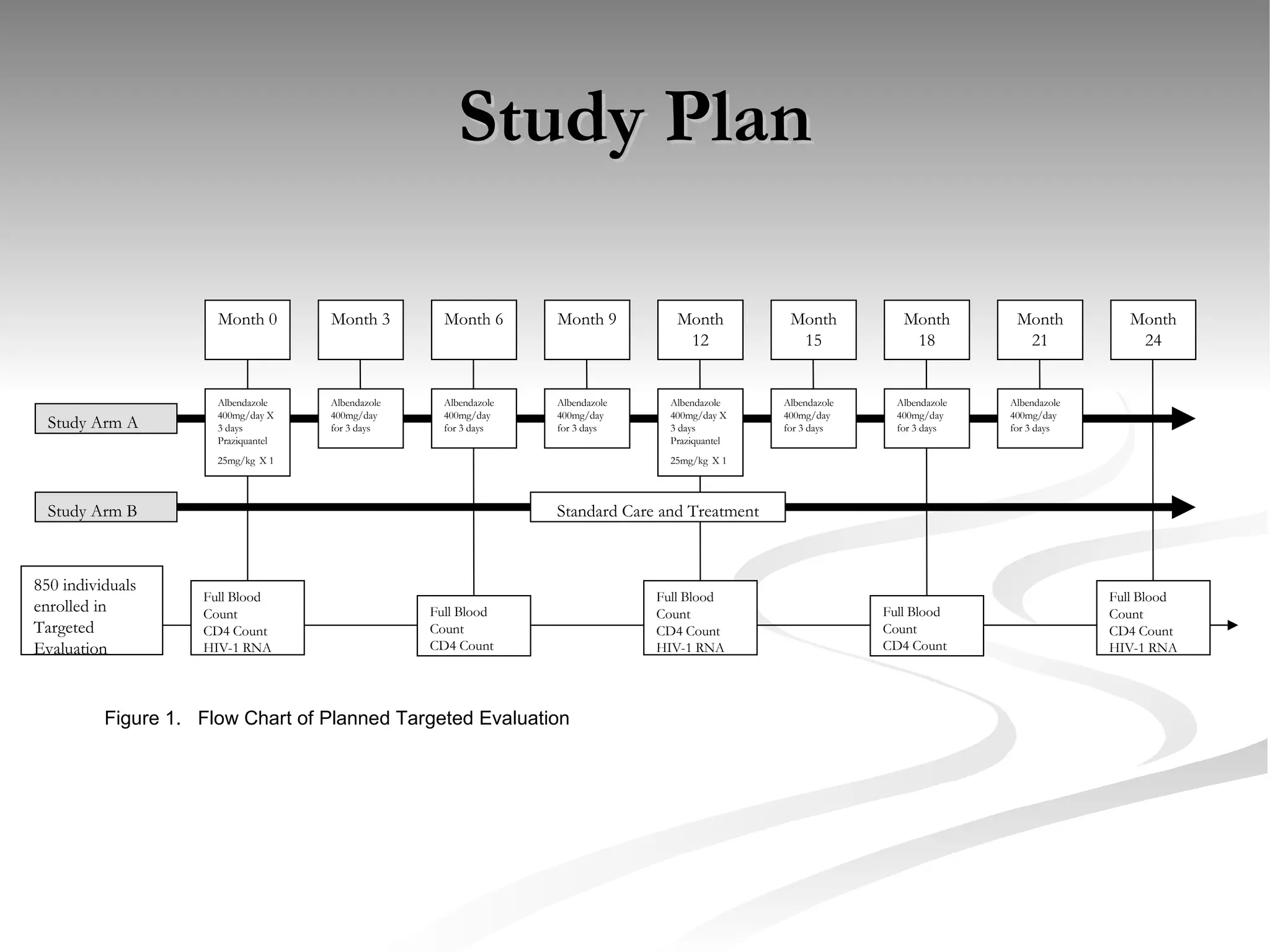
Study Plan 850 individuals enrolled in Targeted Evaluation Month 0 Month 3 Month 6 Month 12 Month 15 Month 18 Month 21 Full Blood Count CD4 Count HIV-1 RNA Study Arm A Study Arm B Standard Care and Treatment Albendazole 400mg/day X 3 days Praziquantel 25mg/kg   X 1 Albendazole 400mg/day for 3 days Albendazole 400mg/day for 3 days Albendazole 400mg/day for 3 days Albendazole 400mg/day for 3 days Full Blood Count CD4 Count HIV-1 RNA Full Blood Count CD4 Count Full Blood Count CD4 Count HIV-1 RNA Full Blood Count CD4 Count Month 9 Albendazole 400mg/day for 3 days Month 24 Albendazole 400mg/day for 3 days Albendazole 400mg/day X 3 days Praziquantel 25mg/kg   X 1 Figure 1.  Flow Chart of Planned Targeted Evaluation
Obstacles Need stable clinic sites to provide 2 years of follow up, including unscheduled visits Need well controlled laboratory facilities with QA/QC Again, working with different partners, different capacities
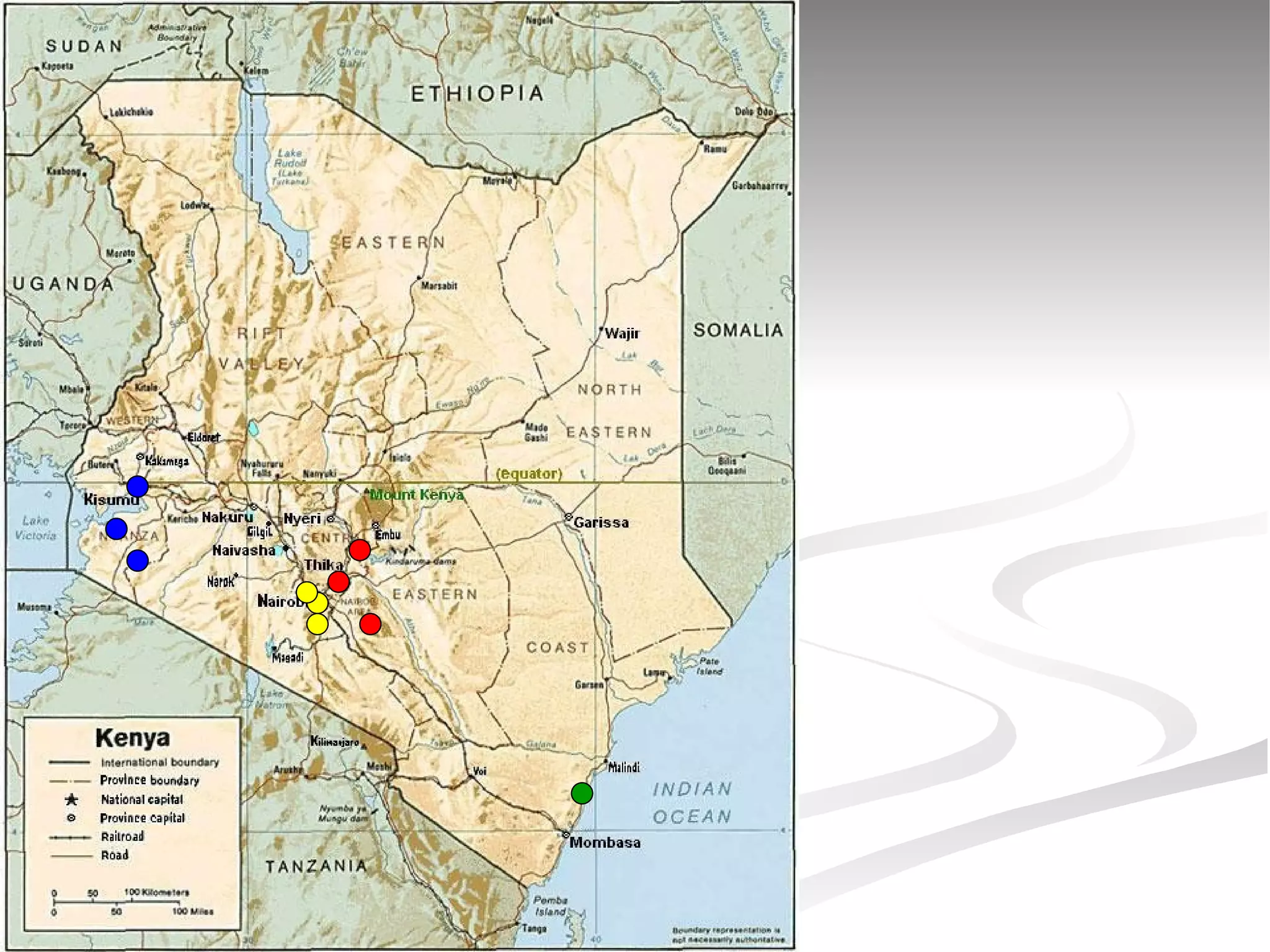
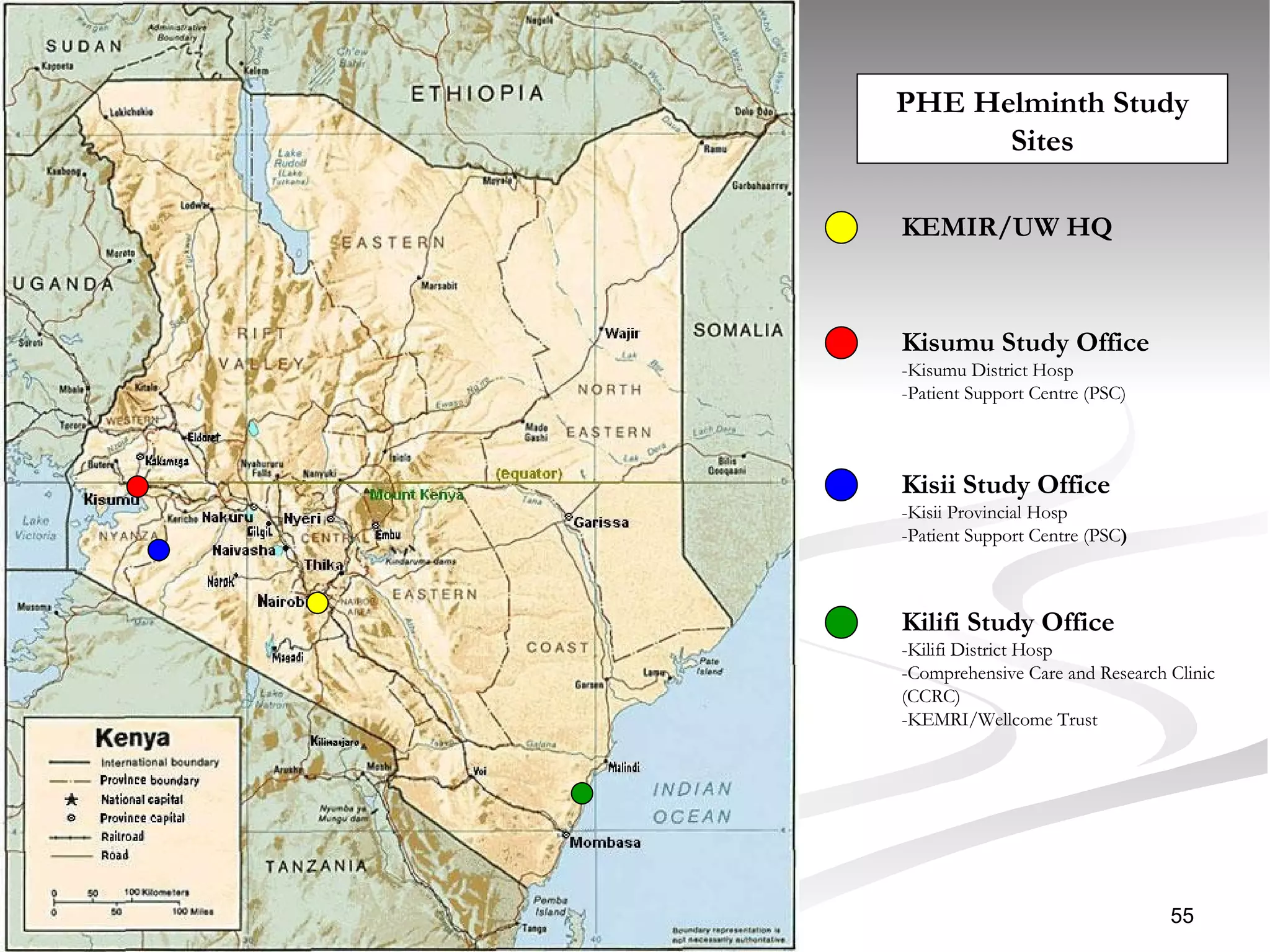
PHE Helminth Study Sites KEMIR/UW HQ Kisumu Study Office -Kisumu District Hosp -Patient Support Centre (PSC) Kisii Study Office -Kisii Provincial Hosp -Patient Support Centre (PSC ) Kilifi Study Office -Kilifi District Hosp  -Comprehensive Care and Research Clinic (CCRC) -KEMRI/Wellcome Trust
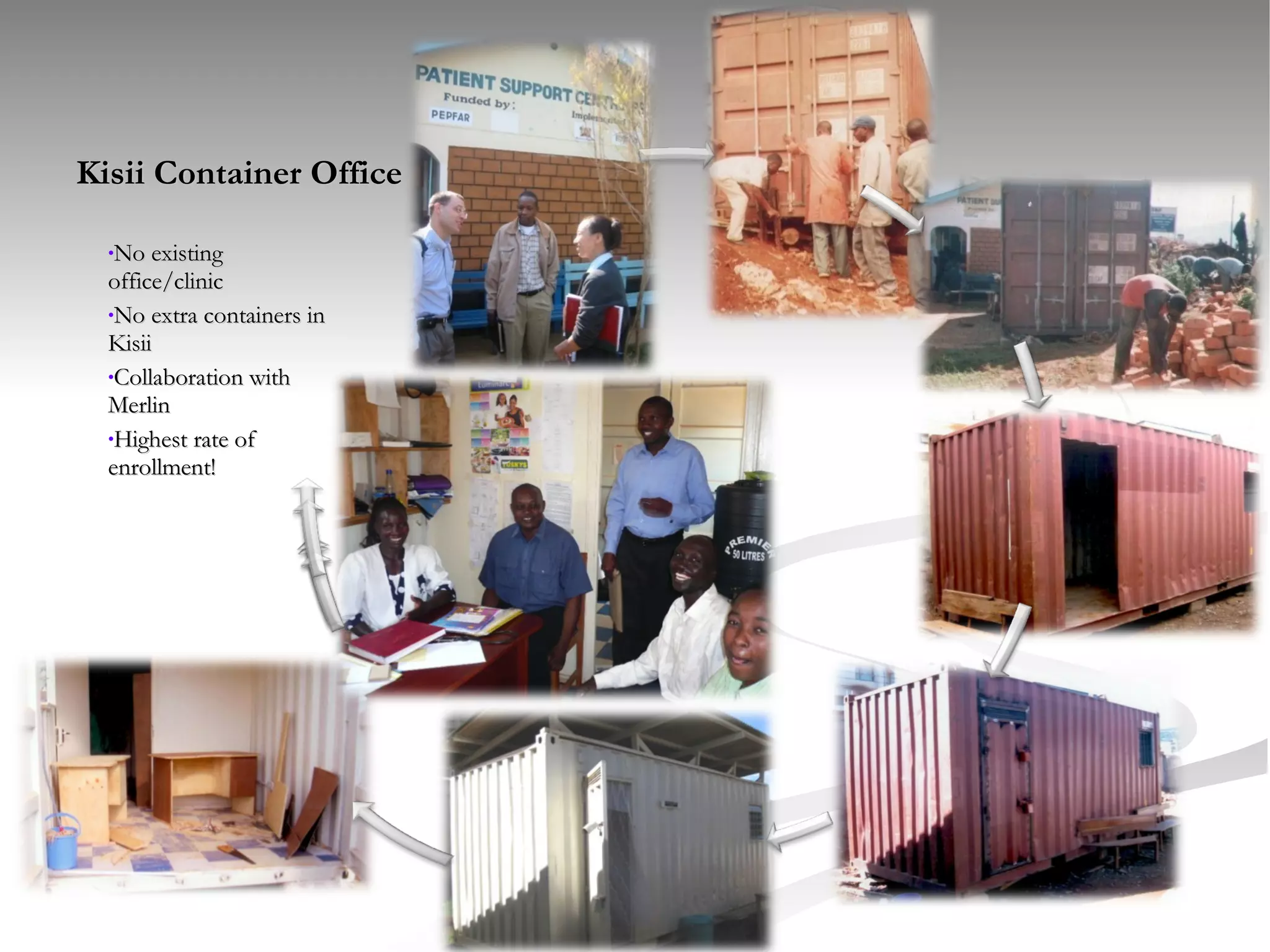
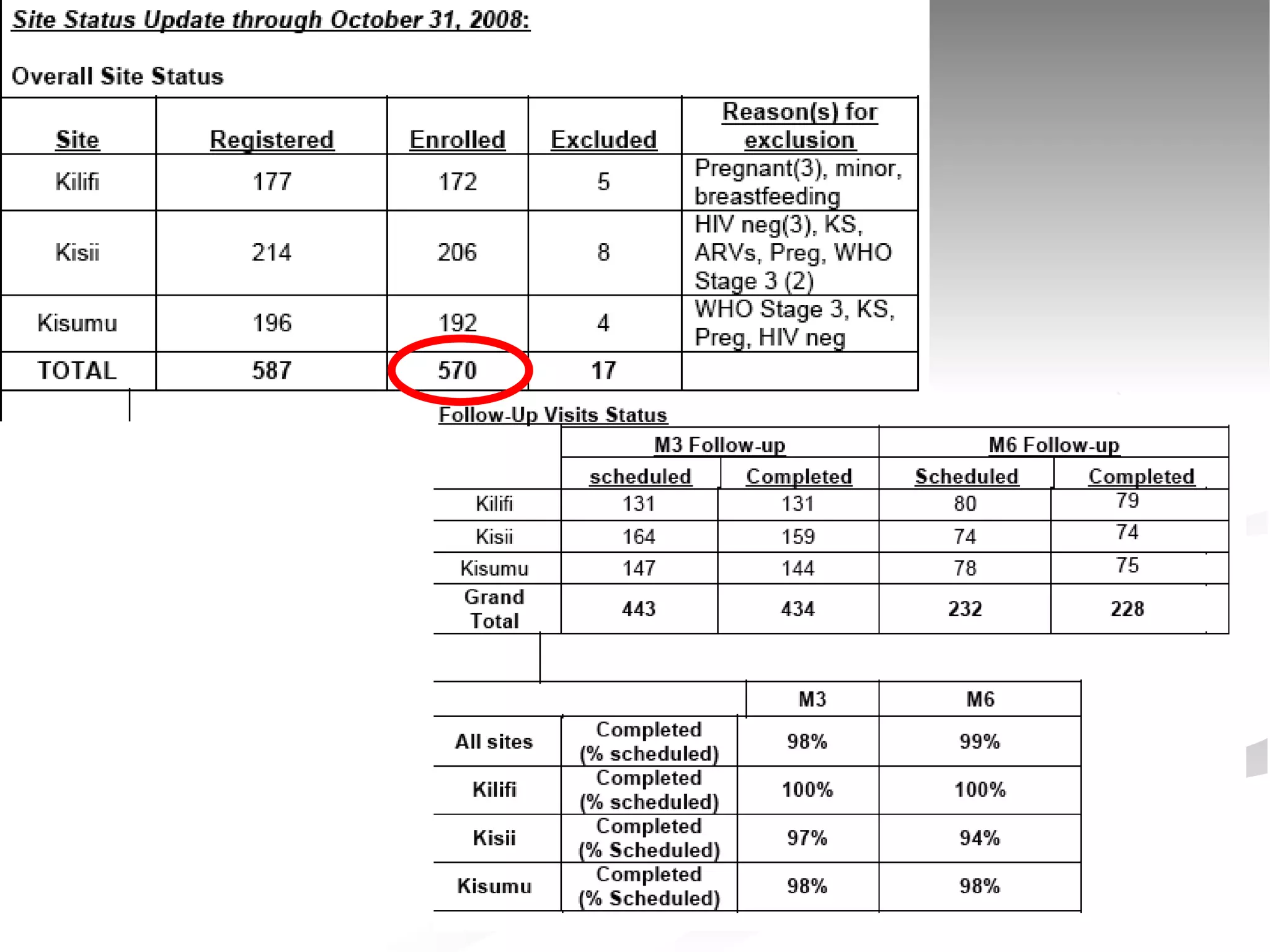
Kisii Container Office No existing office/clinic No extra containers in Kisii Collaboration with Merlin Highest rate of enrollment!
 
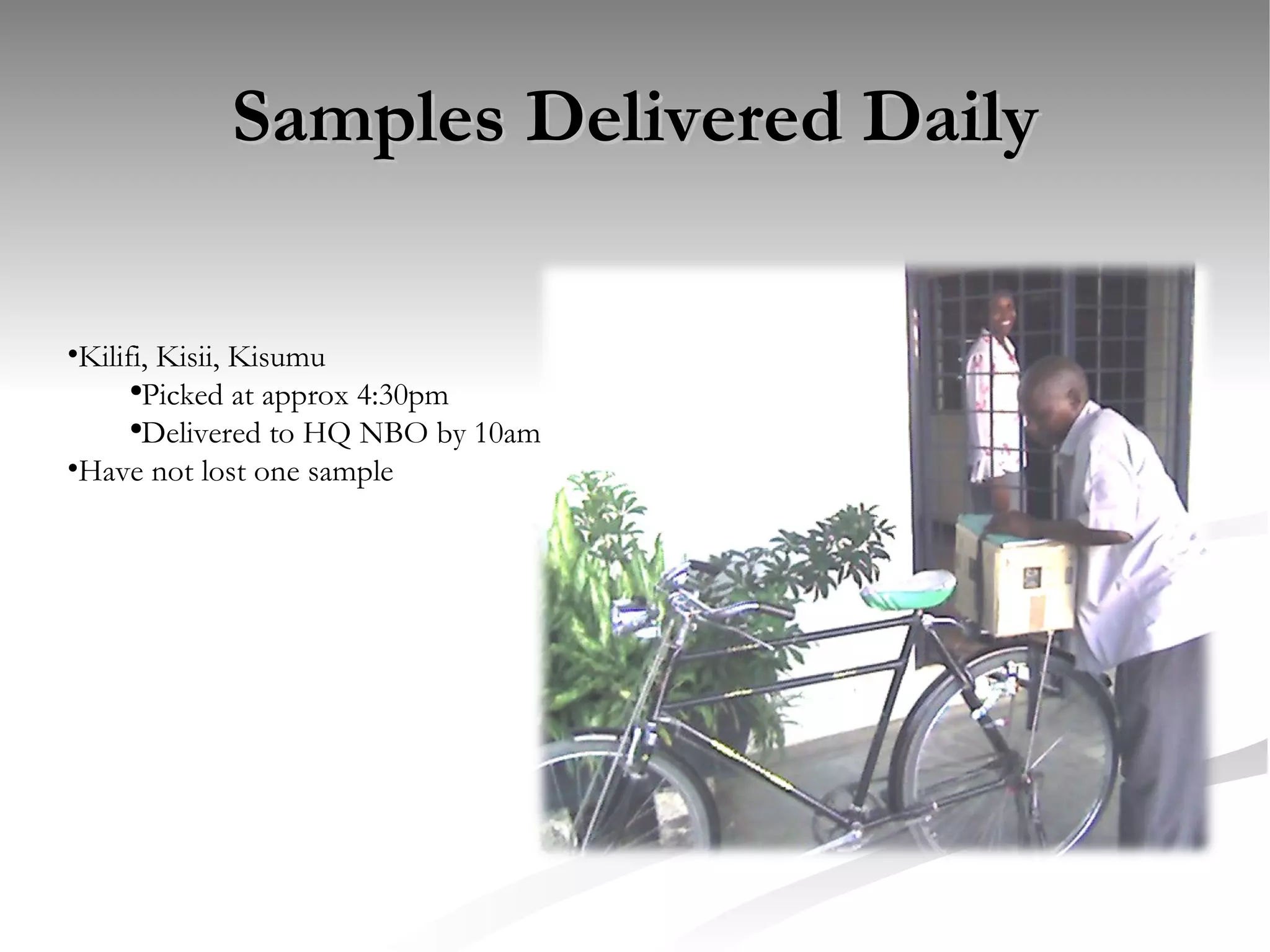
Samples Delivered Daily Kilifi, Kisii, Kisumu Picked at approx 4:30pm Delivered to HQ NBO by 10am Have not lost one sample
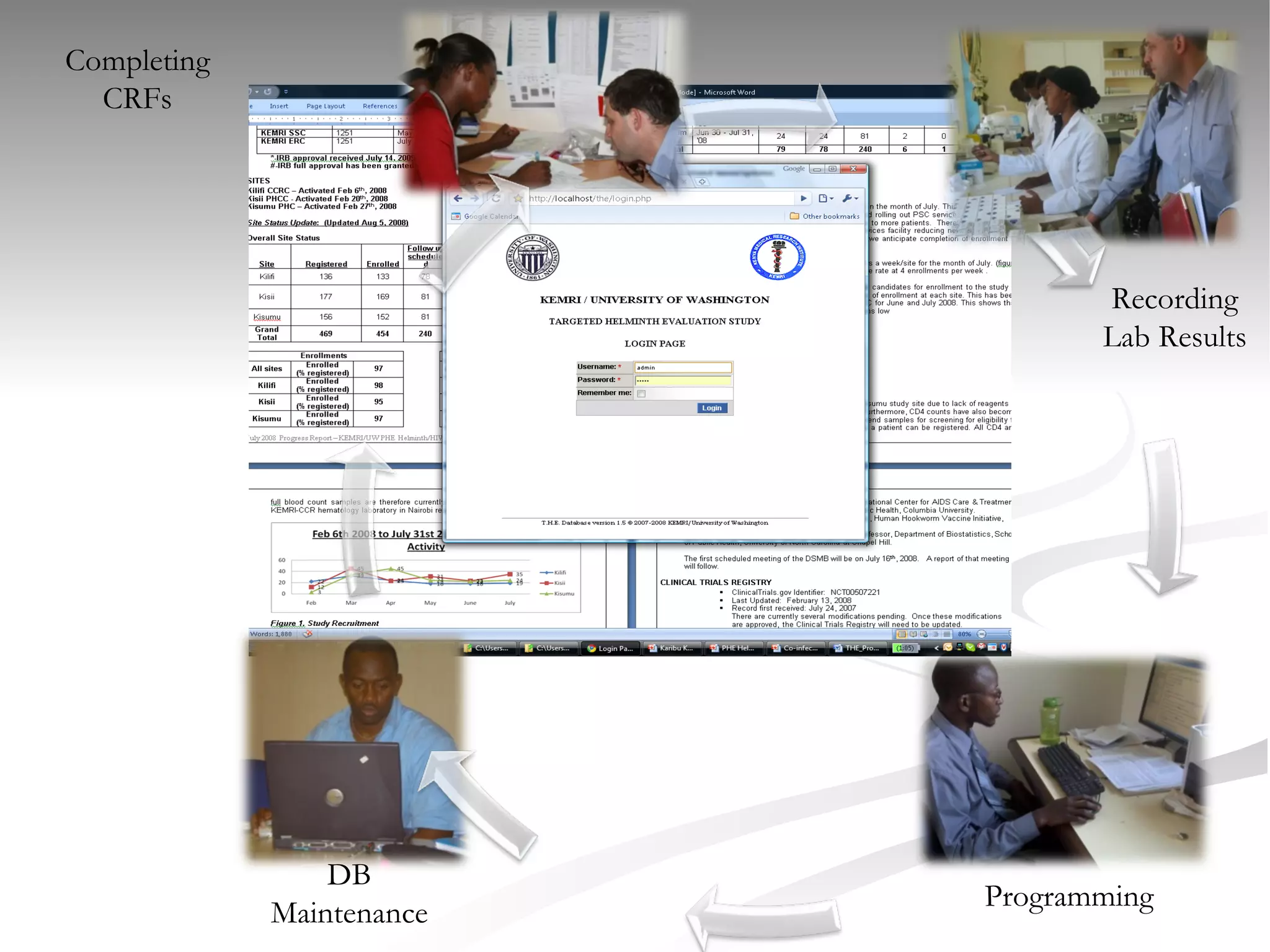
Completing CRFs Programming DB Maintenance Recording Lab Results
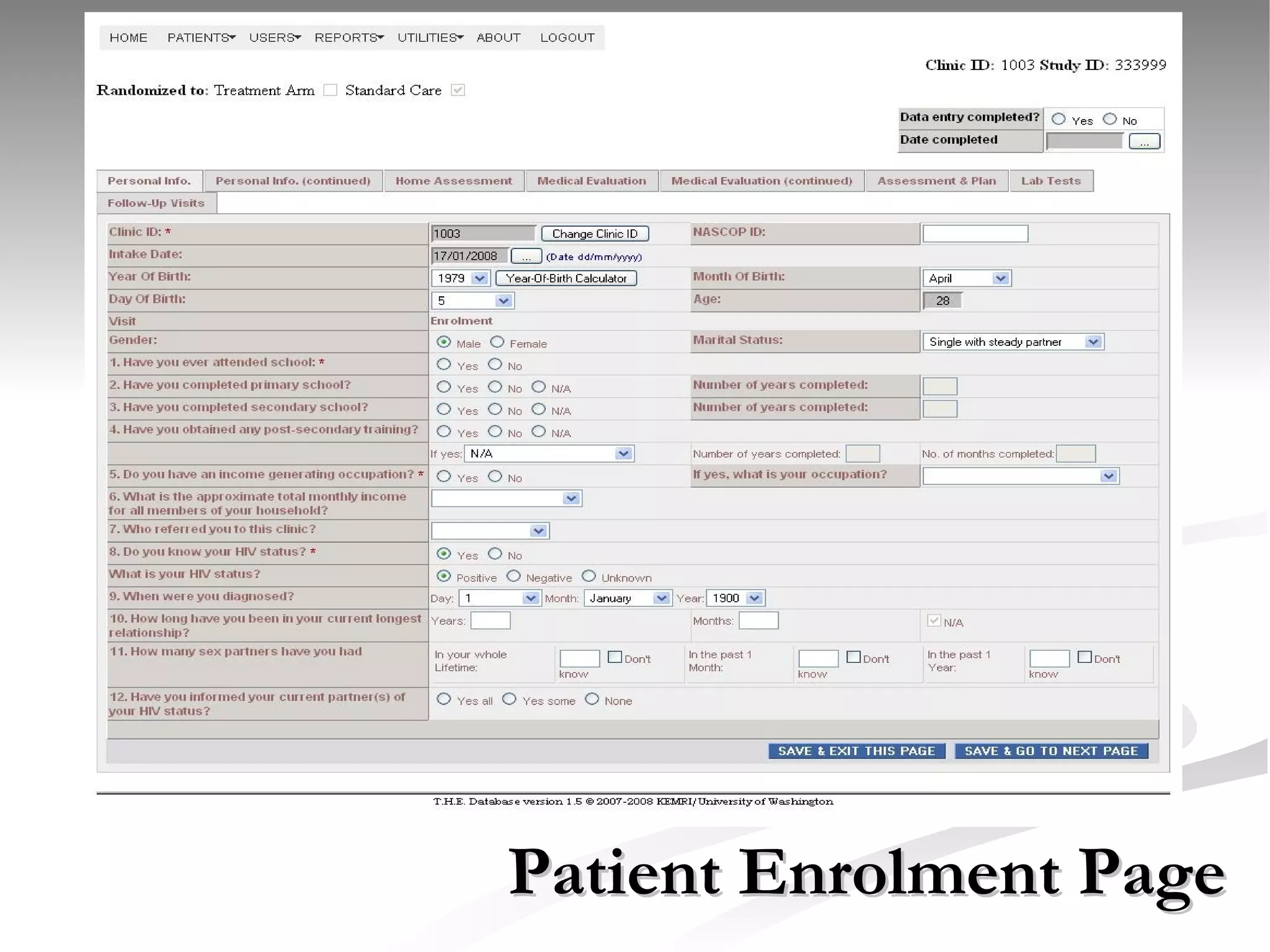
Patient Enrolment Page
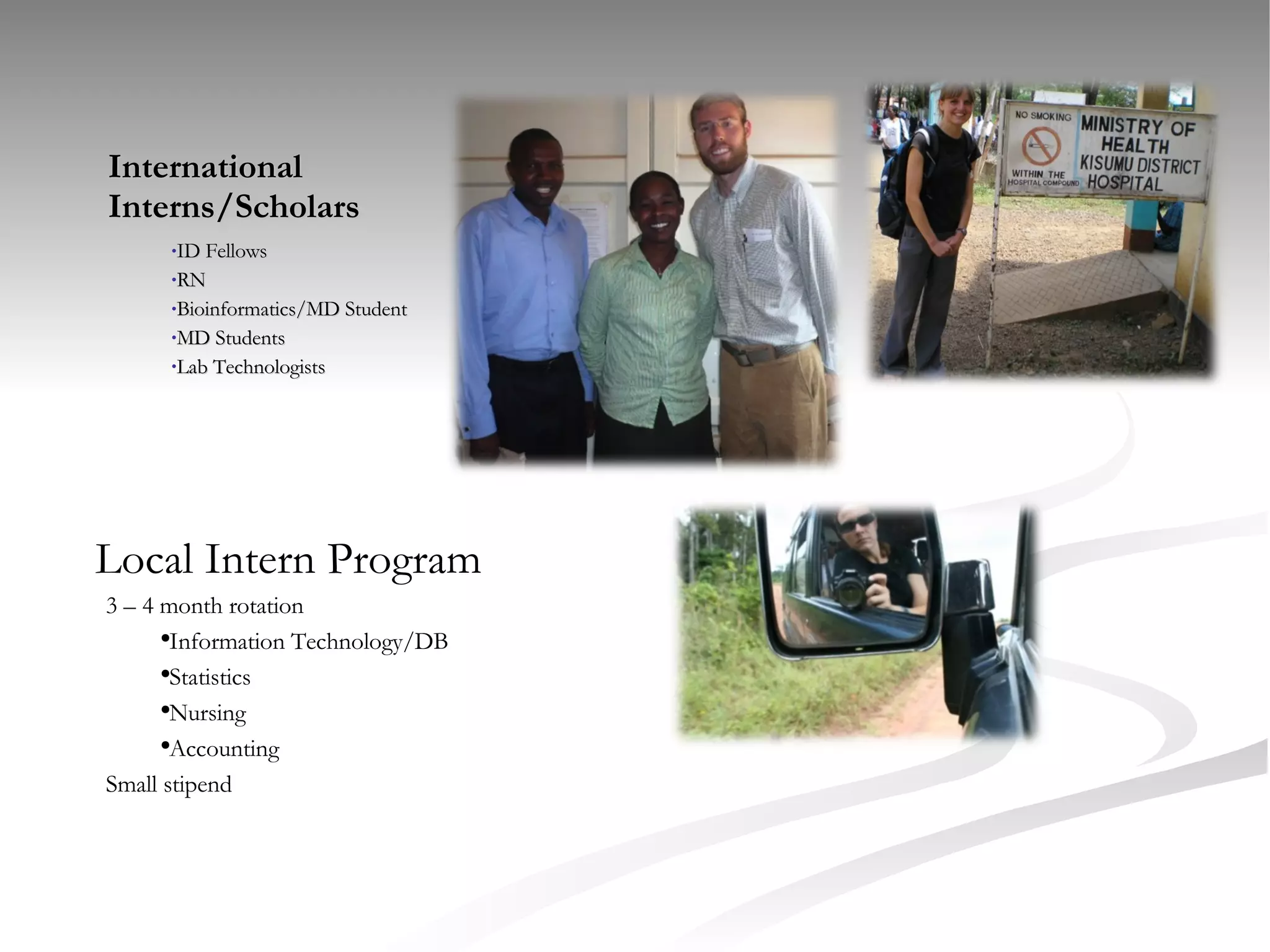
International Interns/Scholars ID Fellows RN Bioinformatics/MD Student MD Students Lab Technologists Local Intern Program 3 – 4 month rotation Information Technology/DB Statistics Nursing Accounting Small stipend
 
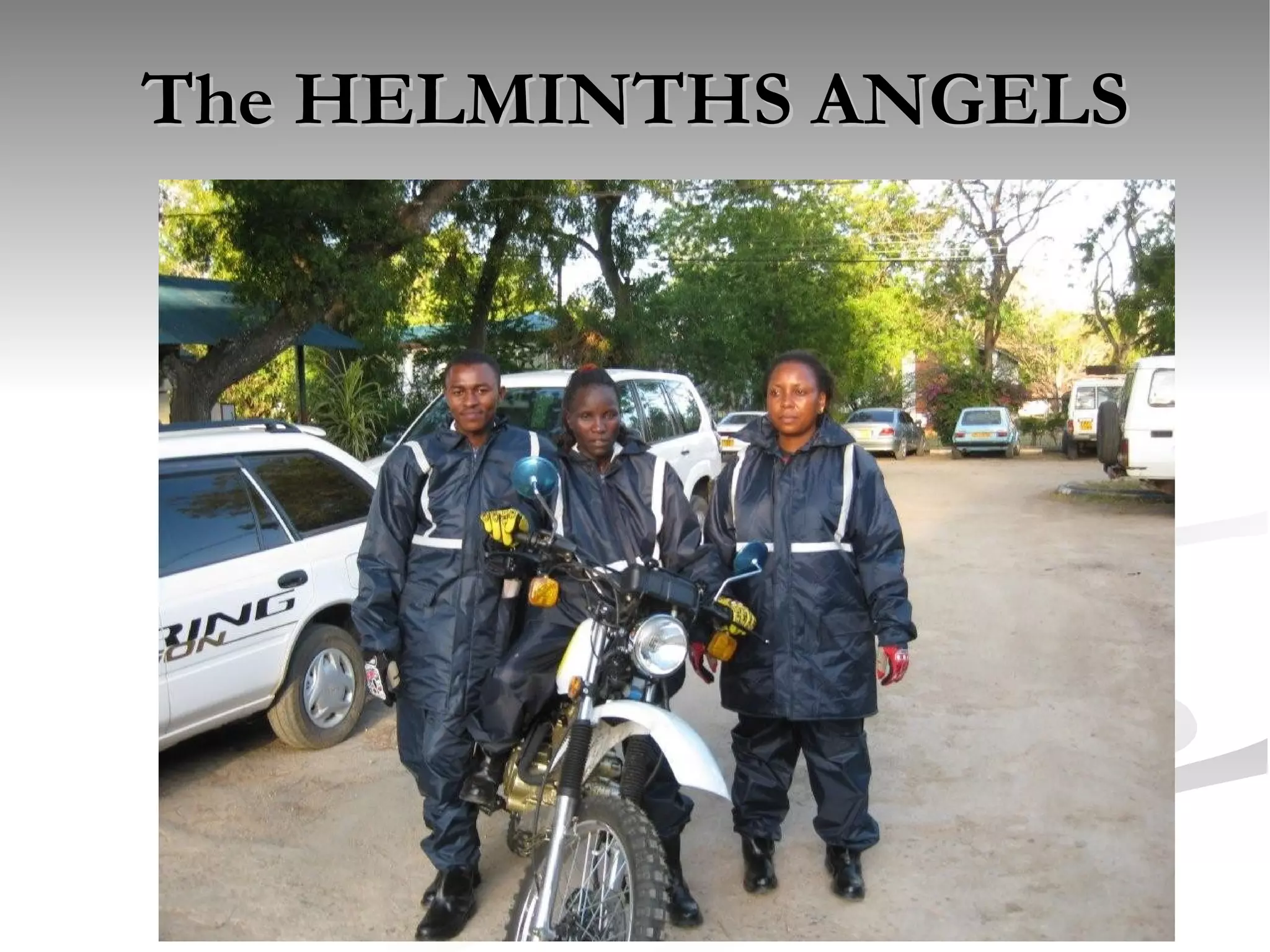
The HELMINTHS ANGELS
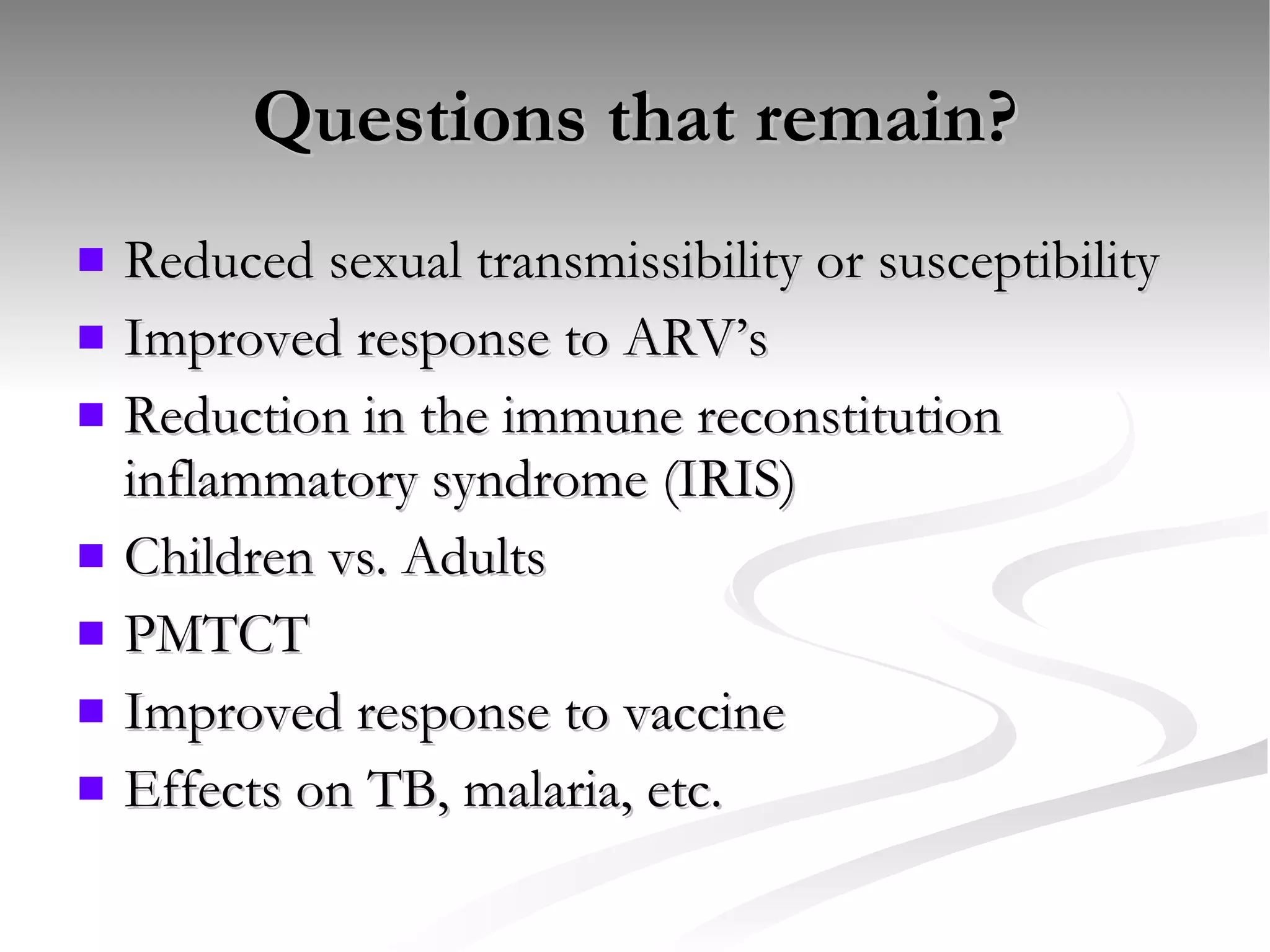
Questions that remain? Reduced sexual transmissibility or susceptibility Improved response to ARV’s Reduction in the immune reconstitution inflammatory syndrome (IRIS) Children vs. Adults PMTCT Improved response to vaccine Effects on TB, malaria, etc.
Additional Studies Currently finalizing protocol for ITN/Filter study PRIMARY AIM To determine the effect of insecticide treated bednets and a simple water purification system on markers of HIV progression (time to HAART eligibility, changes in CD4 counts, WHO Clinical Staging and mortality).
Acknowledgements All the study participants Grace John-Stewart, Phelgona Otieno, Ben Piper, Benson Singa, King Holmes, Barbara Payne, Barbra Richardson, Margaret Barrett, Chris Kealy, Rekha Patel, Rowena de Saram The fantastic study staff in Nairobi The staff of all of the study sites KEMRI CCR – Dr. Wasunna, Dr. Rashid Wellcome Trust Kilifi – Kevin Marsh, James Berkley, Eduard Sanders CDC – Marta Ackers, Jonathan Mermin, Becky Bunnell

DGH Lecture Series: Judd Walson

  • 1.
    Delaying HIV-1 DiseaseProgression in Pre-HAART Positives Treating Endemic Co-infections Judd L. Walson, MD, MPH University of Washington Kenya Medical Research Institute Centre for Clinical Research
  • 2.
    Today’s Talk Hypothesistesting in resource limited settings Pre-HAART Positives - explaining the focus Studies Unanswered Questions/Future Research
  • 3.
  • 4.
    Global Burden ofDisease www.bvgh.org/GlobalHealthChallenge.asp
  • 5.
    Copyright ©2002 BMJPublishing Group Ltd. Isaakidis, P. et al. BMJ 2002;324:702 No of clinical trials in Sub-Saharan Africa
  • 6.
    Copyright ©2002 BMJPublishing Group Ltd. Isaakidis, P. et al. BMJ 2002;324:702 Burden of Disease and Number of Trials
  • 7.
  • 8.
    Evidence Based Medicinefor Resource Limited Settings
  • 9.
  • 10.
    Pre-HAART Positives -explaining the focus Of the 22.5 million individuals infected with HIV-1 in Africa, only 31% of those in need are currently on ART. ART is expensive relative to other health care interventions (between $300 and $400 per individual per year). Delaying immunosuppression will “buy time” until the development of AIDS, the need for ART and will allow critical infrastructure to be developed. UNAIDS, 2007
  • 11.
    Pre-HAART Package ofCare PROVEN Septrin TB prophylaxis UNCLEAR BENEFIT Micronutrients Macronutrients Acyclovir Deworming Bednets Water filters
  • 12.
  • 13.
    0.3 log 10 increase 0.5 log 10 increase 1.0 log 10 increase Increase in likelihood of heterosexual transmission 20% 40% 100% Increase in risk of progression to AIDS or death 25% 44% 113%
  • 14.
    Effect of modestVL reduction Gupta et al. JID 2007; 195 (Feb 15).
  • 15.
    “ In mostparts of the world there are two types of people, those that know they have worms,…and those that don’t”
  • 16.
  • 17.
    Epidemiology Over 2 billion people are estimated to be infected with at least one species of helminths. In fact, about 25% of the worlds population is infested with one or more soil transmitted helminth. Of the approximately 25 million people infected with HIV-1 in Africa, as many as 50-90% may also be infected with a soil transmitted helminth.
  • 18.
  • 19.
  • 20.
  • 21.
    Distribution of helminthsand HIV-1 in Africa Clinical Microbiology Reviews, October 2004, p. 1012-1030, Vol. 17, No. 4
  • 22.
  • 23.
    www.mcld.co.uk/hiv/ ?q=The%20human%20immune%20... Immunology of response to infection
  • 24.
  • 25.
    Helminth egg burdencorrelated with HIV-1 viral load J Acquir Immune Defic Syndr, Volume 31(1).September 1, 2002.56-62
  • 26.
    Changes in HIVplasma viral load after treatment of helminths. Group A: persistently helminth-negative. Group B: successful treatment of helminths. Group C: persistently helminth-positive. No significant change in CD4 counts were observed. J Acquir Immune Defic Syndr, Volume 31(1).September 1, 2002.56-62 P value of B compared to C = 0.04, A + C = 0.02
  • 27.
    Cochrane Review WalsonJL , John-Stewart G. Treatment of helminth co-infection in HIV-1 infected individuals in resource-limited settings. Cochrane Database of Systematic Reviews 2008, Issue 1. Art. No.: CD006419. DOI: 10.1002/14651858.CD006419.pub2.
  • 28.
        YearStudy Design   Outcomes Comparator Group Kallestrup Zambia 2005 Randomized Controlled Trial (no blinding) 64 Early Treatment 66 Delayed Treatment Plasma HIV-1 RNA and CD4 Count HIV and Helminth co-infected individuals - delayed therapy for helminths Modjarrad Zambia 2005 Observational Cohort Study 54 HIV and helminth co-infected individuals 57 HIV infected helminth uninfected Plasma HIV-1 RNA Helminth uninfected individuals Brown Uganda 2004 Observational Cohort Study 294 HIV and helminth co-infected individuals 253 HIV infected, helminth uninfected controls Plasma HIV-1 RNA and CD4 Count Helminth uninfected individuals Wolday Ethiopia 2002 Observational Cohort Study 56 HIV and helminth co-infected individuals Plasma HIV-1 RNA and CD4 Count Historical Self Controls Kassu Ethiopia 2003 Observational Cohort Study 21 HIV infected helminth negative participants, 9 HIV infected, helminth uninfected individuals CD4 Count Data on HIV infected individuals not presented Lawn Kenya 2000 Observational Cohort Study 30 individuals with HIV and schistosomiasis HIV-1 RNA levels Historical Self Controls Elliott Uganda 2003 Observational Cohort Study 39 HIV and helminth co-infected individuals 69 HIV infected, helminth uninfected controls CD4 Count Helminth uninfected individuals
  • 29.
    Walson JL ,John-Stewart G. Treatment of helminth co-infection in HIV-1 infected individuals in resource-limited settings. Cochrane Database of Systematic Reviews 2008, Issue 1. Art. No.: CD006419. DOI: 10.1002/14651858.CD006419.pub2.
  • 30.
    Treatment of helminthco-infection: short term effects on HIV-1 progression markers and immune activation
  • 31.
    Study Justification Therewere no randomized clinical trials evaluating the effect of eradicating soil-transmitted helminths on markers of HIV-1 disease progression. Treatment of helminth co-infection may offer a useful strategy to delay HIV-1 progression among individuals in resource-poor settings?
  • 32.
    Objectives To determinethe prevalence and correlates of helminth co-infection in HIV-1 infected individuals in Kenya. To randomize 234 HIV-1 seropositive adults with CD4 counts greater than 250 cells/mm 3 to immediate versus delayed (twelve weeks) anti-helminth therapy. To determine the effect of deworming on markers of HIV-1 disease progression.
  • 33.
    Outcomes The primarystudy outcomes were CD4 counts and log 10 plasma HIV-1 RNA levels in the two study arms. Secondary outcomes included CD4 counts and log 10 plasma HIV-1 RNA levels in the two arms stratified by helminth species.
  • 34.
    Inclusion Criteria Antiretroviralna ï ve CD4 count >250 cells/mm 3 At least 18 years of age Able and willing to participate and give written informed consent. Have at least one stool specimen positive for a soil transmitted helminth.
  • 35.
    Exclusion Criteria Receivedor receiving ART Received treatment for helminth infection in the past 6 months (by self report or chart review) Pregnant by urine HCG testing Other serious co-morbidities such as severe anemia, malaria or tuberculosis
  • 36.
    12 week followup All patients with stool positive for helminth infection at week 12 treated with three 400 mg doses of Albendazole, regardless of initial randomization group. All patients referred for further HIV care at the conclusion of the study period, regardless of disease stage.
  • 37.
    Obstacles Need toscreen large numbers of patient samples for helminths Unclear what the prevalence of helminth infection is in adults at various geographic sites Sites are diverse, organized and assisted by different partners, differing capacities Budget - $50,000 (Initially)
  • 38.
  • 39.
  • 40.
  • 41.
  • 42.
  • 43.
  • 44.
  • 45.
  • 46.
    Walson JL, Otieno PA, Mbuchi M, Richardson BA, Lohman-Payne B, et al. Albendazole treatment among adults with HIV-1 and helminth co-infection: A randomized, double blind, placebo-controlled trial. Submitted to AIDS , January 2008.
  • 47.
    Effects on CD4and Viral Load Walson JL, Otieno PA, Mbuchi M, Richardson BA, Lohman-Payne B, et al. Albendazole treatment among adults with HIV-1 and helminth co-infection: A randomized, double blind, placebo-controlled trial. Submitted to AIDS , January 2008.
  • 48.
  • 49.
    Change in Log10HIV-1 RNA
  • 50.
  • 51.
    Next? Screening isrelatively expensive and not sensitive – who to deworm? Are the findings transient? Need longer follow up. What is the outcome that matters – Focus on TIME TO QUALIFY FOR ART.
  • 52.
    Empiric therapy ofhelminth co-infection to reduce HIV-1 disease progression.
  • 53.
    Study Plan 850individuals enrolled in Targeted Evaluation Month 0 Month 3 Month 6 Month 12 Month 15 Month 18 Month 21 Full Blood Count CD4 Count HIV-1 RNA Study Arm A Study Arm B Standard Care and Treatment Albendazole 400mg/day X 3 days Praziquantel 25mg/kg X 1 Albendazole 400mg/day for 3 days Albendazole 400mg/day for 3 days Albendazole 400mg/day for 3 days Albendazole 400mg/day for 3 days Full Blood Count CD4 Count HIV-1 RNA Full Blood Count CD4 Count Full Blood Count CD4 Count HIV-1 RNA Full Blood Count CD4 Count Month 9 Albendazole 400mg/day for 3 days Month 24 Albendazole 400mg/day for 3 days Albendazole 400mg/day X 3 days Praziquantel 25mg/kg X 1 Figure 1. Flow Chart of Planned Targeted Evaluation
  • 54.
    Obstacles Need stableclinic sites to provide 2 years of follow up, including unscheduled visits Need well controlled laboratory facilities with QA/QC Again, working with different partners, different capacities
  • 55.
    PHE Helminth StudySites KEMIR/UW HQ Kisumu Study Office -Kisumu District Hosp -Patient Support Centre (PSC) Kisii Study Office -Kisii Provincial Hosp -Patient Support Centre (PSC ) Kilifi Study Office -Kilifi District Hosp -Comprehensive Care and Research Clinic (CCRC) -KEMRI/Wellcome Trust
  • 56.
    Kisii Container OfficeNo existing office/clinic No extra containers in Kisii Collaboration with Merlin Highest rate of enrollment!
  • 57.
  • 58.
    Samples Delivered DailyKilifi, Kisii, Kisumu Picked at approx 4:30pm Delivered to HQ NBO by 10am Have not lost one sample
  • 59.
    Completing CRFs ProgrammingDB Maintenance Recording Lab Results
  • 60.
  • 61.
    International Interns/Scholars IDFellows RN Bioinformatics/MD Student MD Students Lab Technologists Local Intern Program 3 – 4 month rotation Information Technology/DB Statistics Nursing Accounting Small stipend
  • 62.
  • 63.
  • 64.
    Questions that remain?Reduced sexual transmissibility or susceptibility Improved response to ARV’s Reduction in the immune reconstitution inflammatory syndrome (IRIS) Children vs. Adults PMTCT Improved response to vaccine Effects on TB, malaria, etc.
  • 65.
    Additional Studies Currentlyfinalizing protocol for ITN/Filter study PRIMARY AIM To determine the effect of insecticide treated bednets and a simple water purification system on markers of HIV progression (time to HAART eligibility, changes in CD4 counts, WHO Clinical Staging and mortality).
  • 66.
    Acknowledgements All thestudy participants Grace John-Stewart, Phelgona Otieno, Ben Piper, Benson Singa, King Holmes, Barbara Payne, Barbra Richardson, Margaret Barrett, Chris Kealy, Rekha Patel, Rowena de Saram The fantastic study staff in Nairobi The staff of all of the study sites KEMRI CCR – Dr. Wasunna, Dr. Rashid Wellcome Trust Kilifi – Kevin Marsh, James Berkley, Eduard Sanders CDC – Marta Ackers, Jonathan Mermin, Becky Bunnell