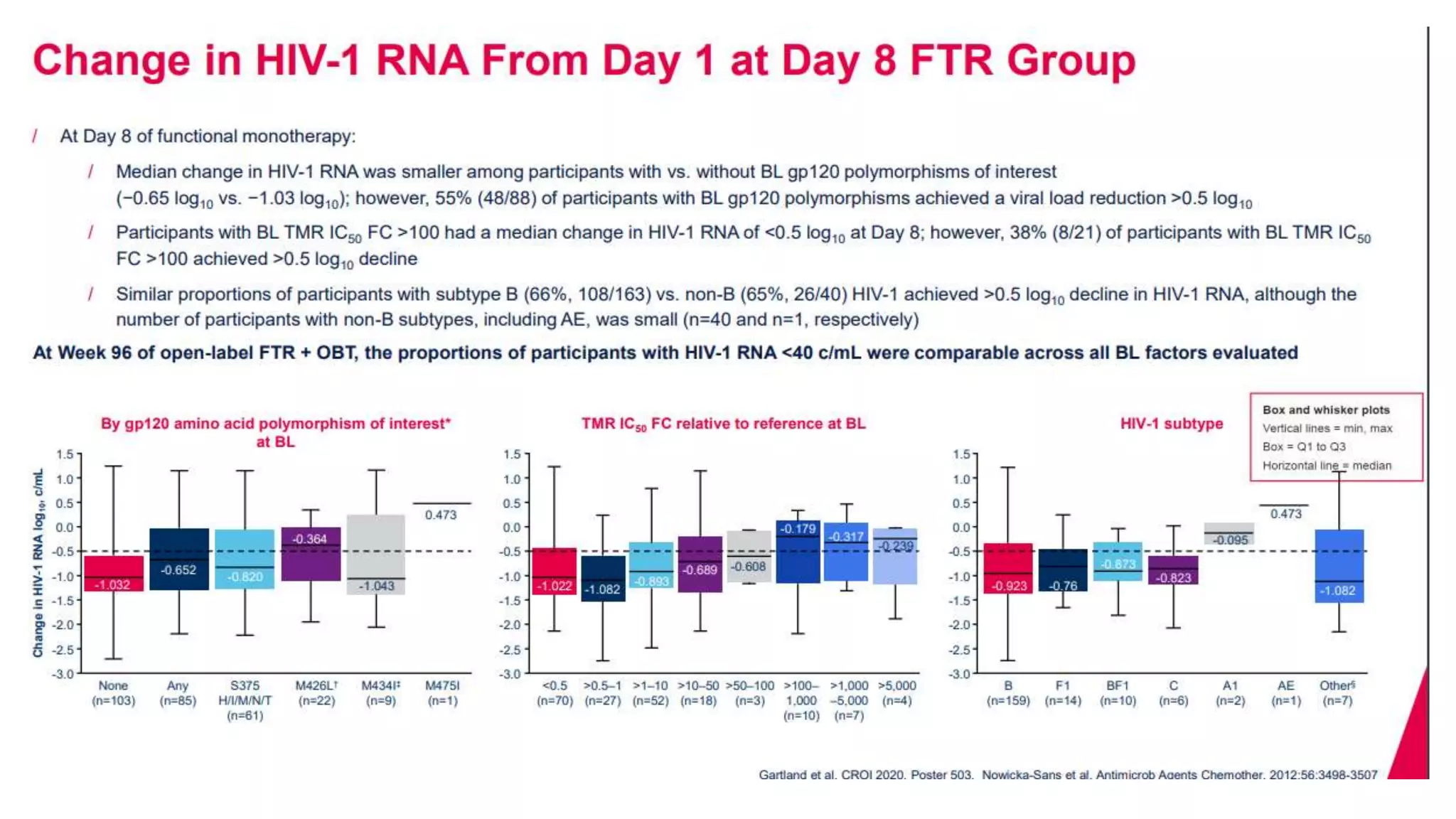
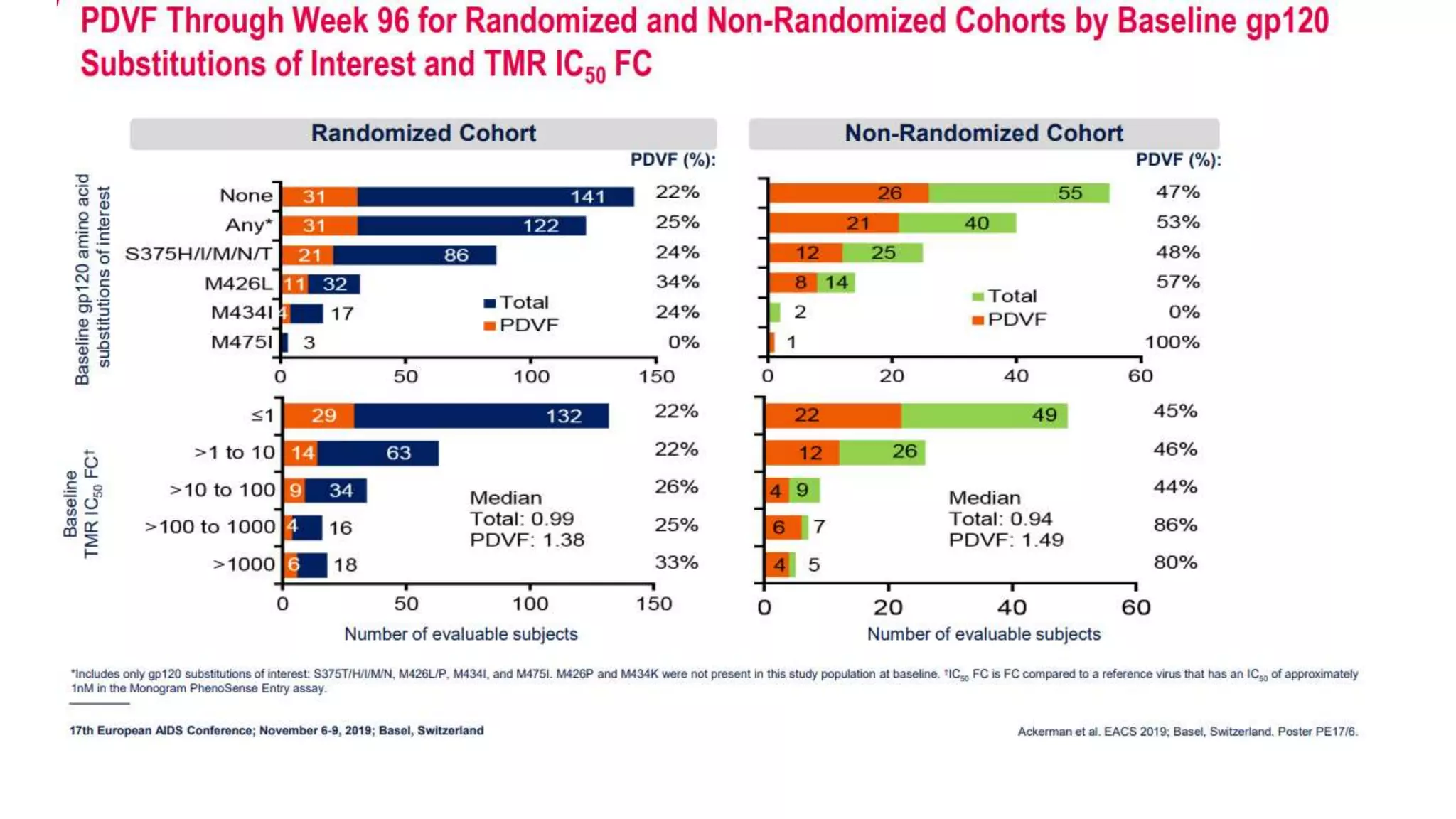
HIV & Global Health Rounds
The UC San Diego AntiViral Research Center sponsors weekly
presentations by infectious disease and global public health clinicians,
physicians, and researchers. The goal of these presentations is to
provide the most current research, clinical practices, and trends in HIV,
HBV, HCV, TB, and other infectious diseases of global significance.
The slides from the HIV & Global Health Rounds presentation that you
are about to view are intended for the educational purposes of our
audience. They may not be used for other purposes without the
presenter’s express permission.
Review of New (Approved and
Unapproved) Antiretrovirals
Lucas Hill, PharmD
9/11/2020
Disclosures
• Gilead Speaker’s Bureau
Outline
• Patient case
• Fostemsavir
• Cabotegravir/Rilpivirine
• Leronlimab
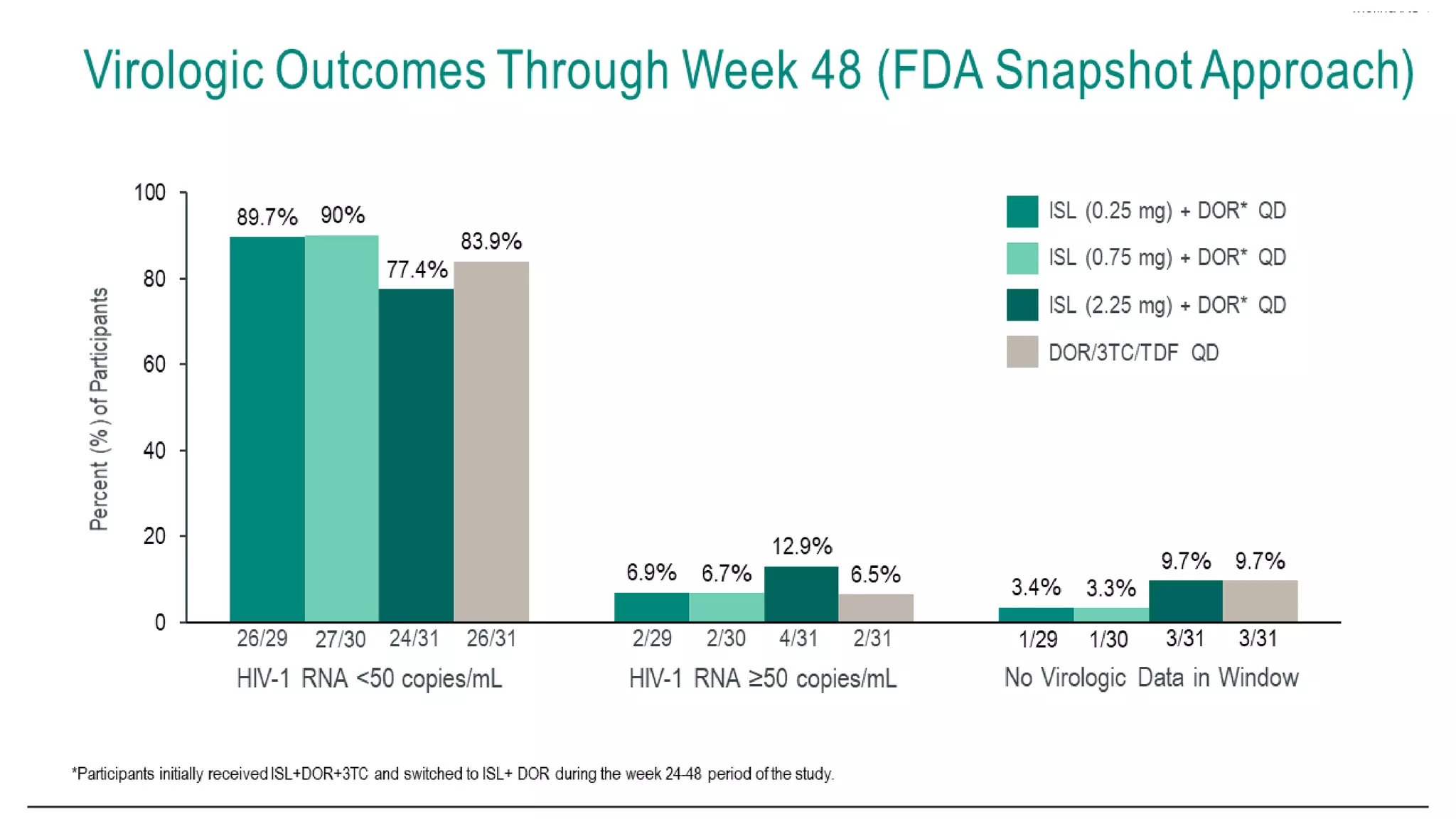
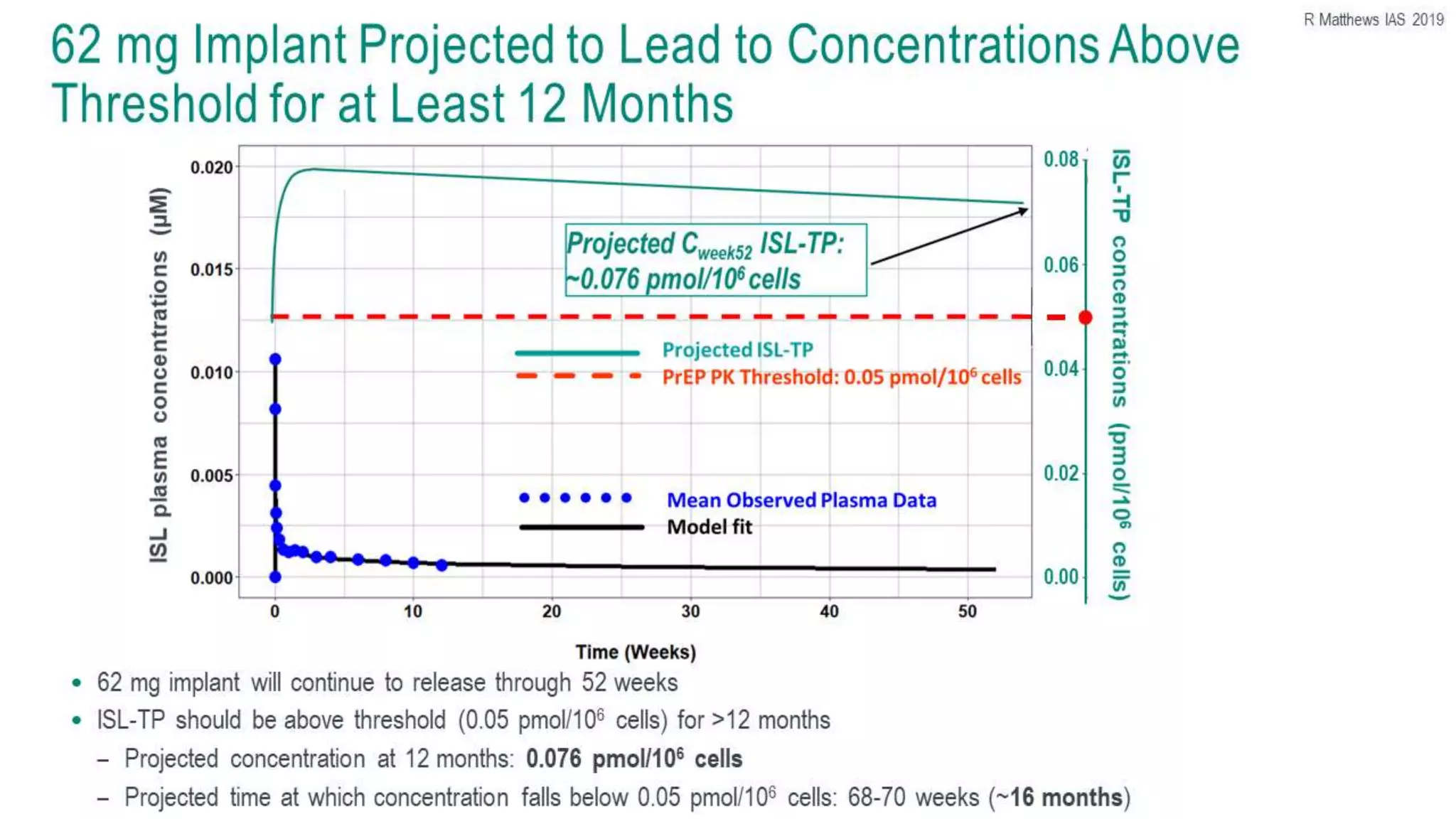
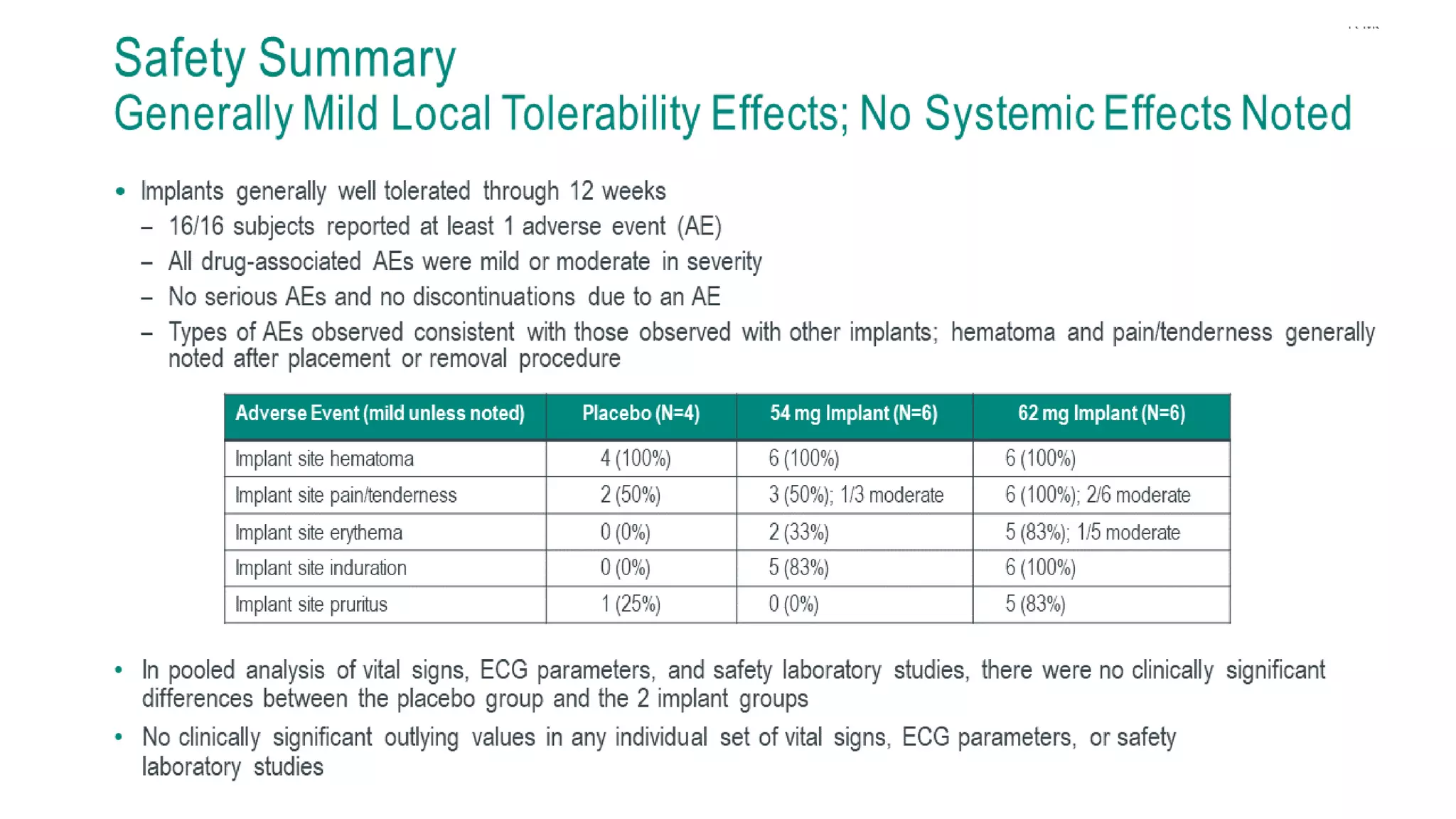
• Islatravir
• Lenacapavir
CC
• 54 y/o WM diagnosed with HIV in 1992, CD4 count at diagnosis was
698 cells/uL
• No other significant medical history
• Only previous documented viral suppression was one value in 2007
• CD4 nadir of 3 cells/uL in 2006
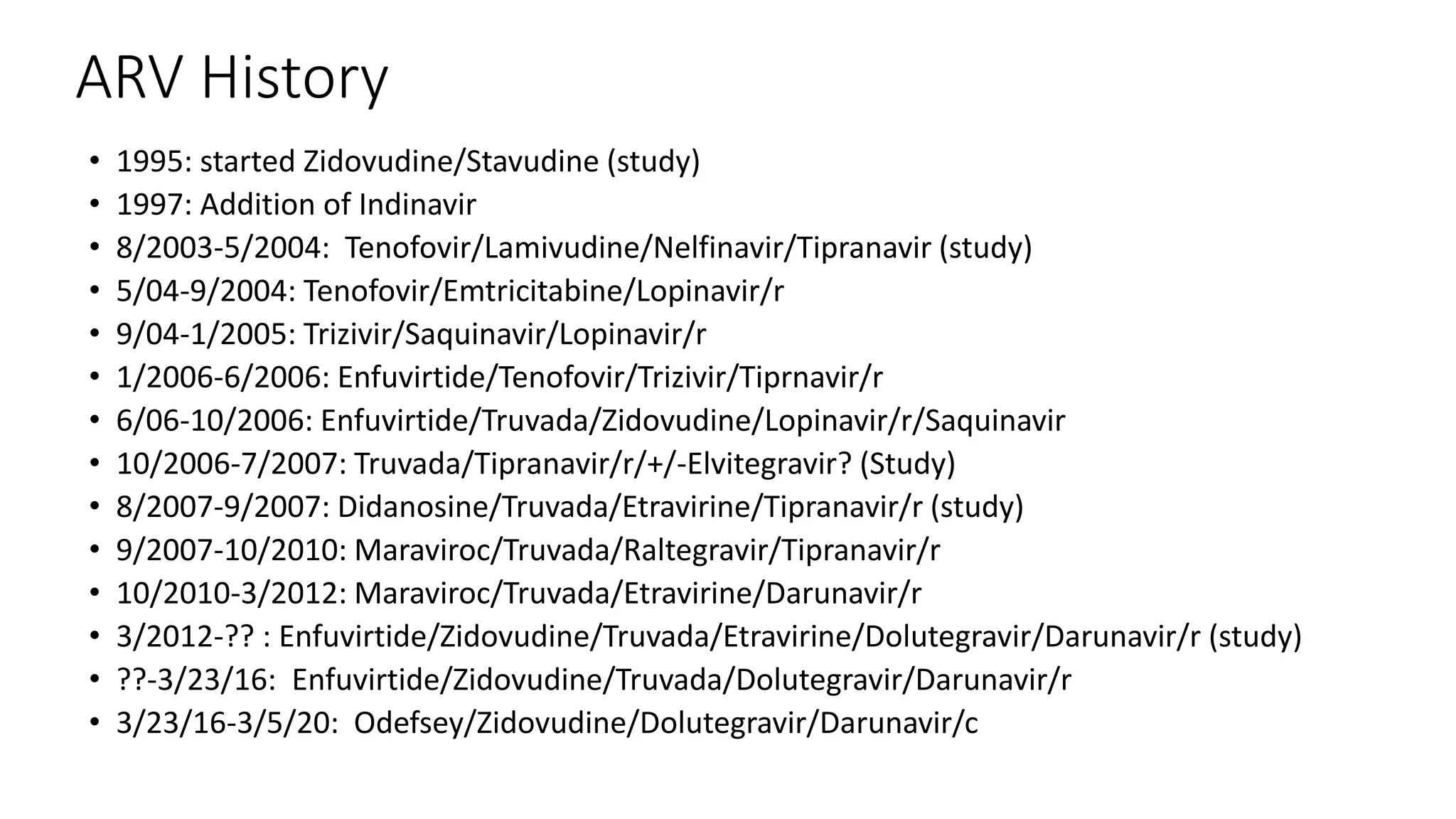
ARV History
• 1995: started Zidovudine/Stavudine (study)
• 1997: Addition of Indinavir
• 8/2003-5/2004: Tenofovir/Lamivudine/Nelfinavir/Tipranavir (study)
• 5/04-9/2004: Tenofovir/Emtricitabine/Lopinavir/r
• 9/04-1/2005: Trizivir/Saquinavir/Lopinavir/r
• 1/2006-6/2006: Enfuvirtide/Tenofovir/Trizivir/Tiprnavir/r
• 6/06-10/2006: Enfuvirtide/Truvada/Zidovudine/Lopinavir/r/Saquinavir
• 10/2006-7/2007: Truvada/Tipranavir/r/+/-Elvitegravir? (Study)
• 8/2007-9/2007: Didanosine/Truvada/Etravirine/Tipranavir/r (study)
• 9/2007-10/2010: Maraviroc/Truvada/Raltegravir/Tipranavir/r
• 10/2010-3/2012: Maraviroc/Truvada/Etravirine/Darunavir/r
• 3/2012-?? : Enfuvirtide/Zidovudine/Truvada/Etravirine/Dolutegravir/Darunavir/r (study)
• ??-3/23/16: Enfuvirtide/Zidovudine/Truvada/Dolutegravir/Darunavir/r
• 3/23/16-3/5/20: Odefsey/Zidovudine/Dolutegravir/Darunavir/c
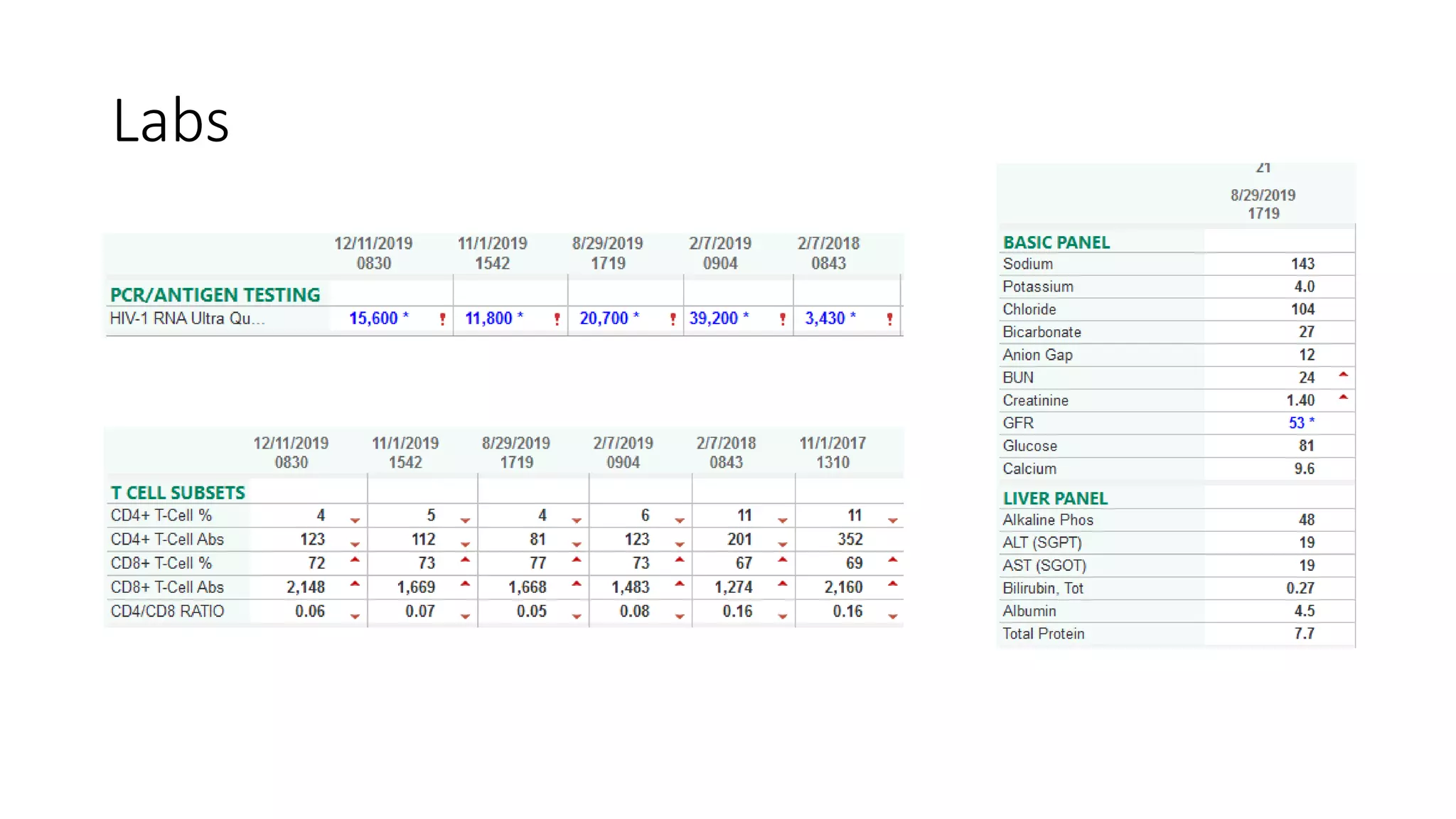
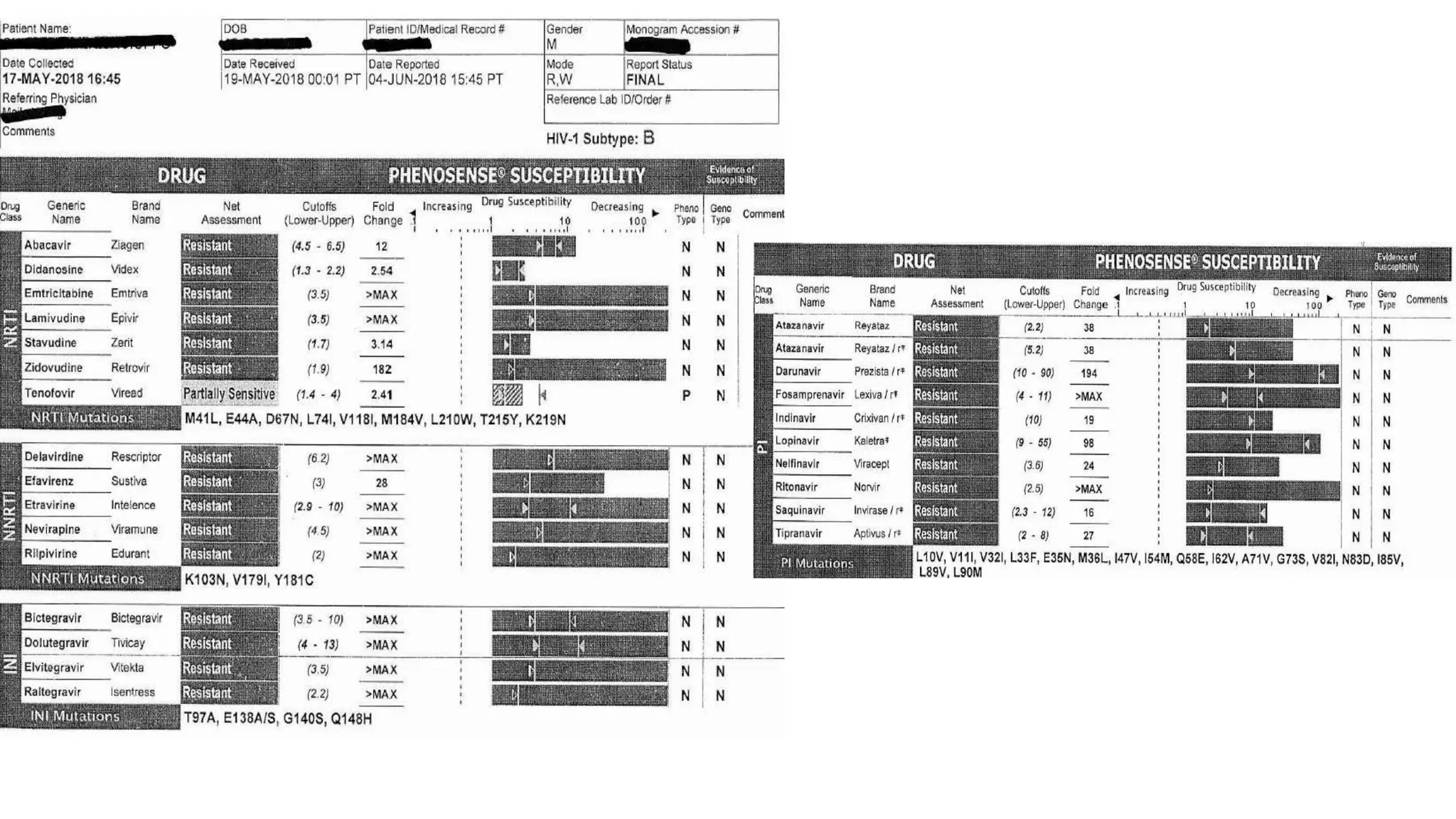
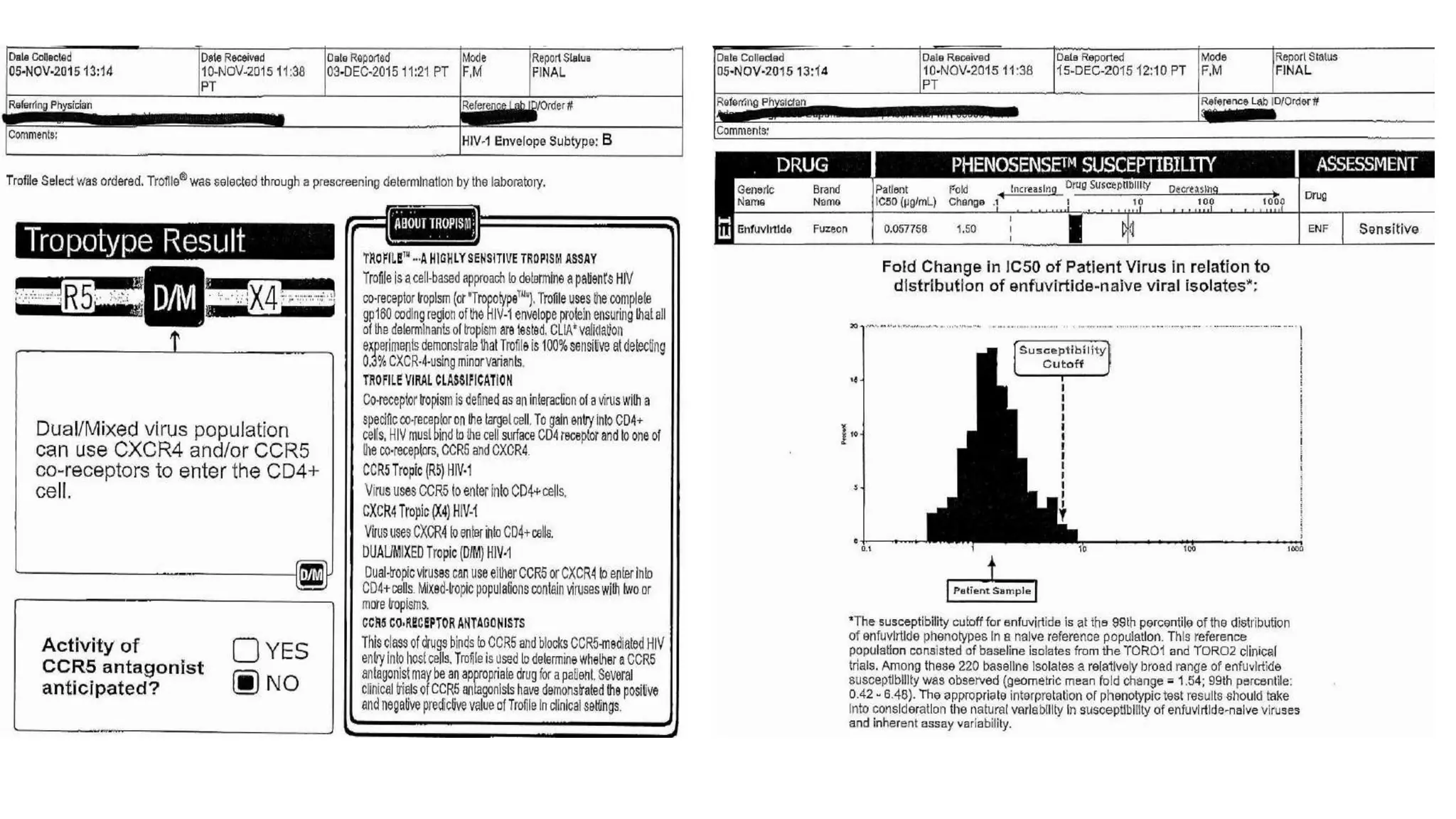
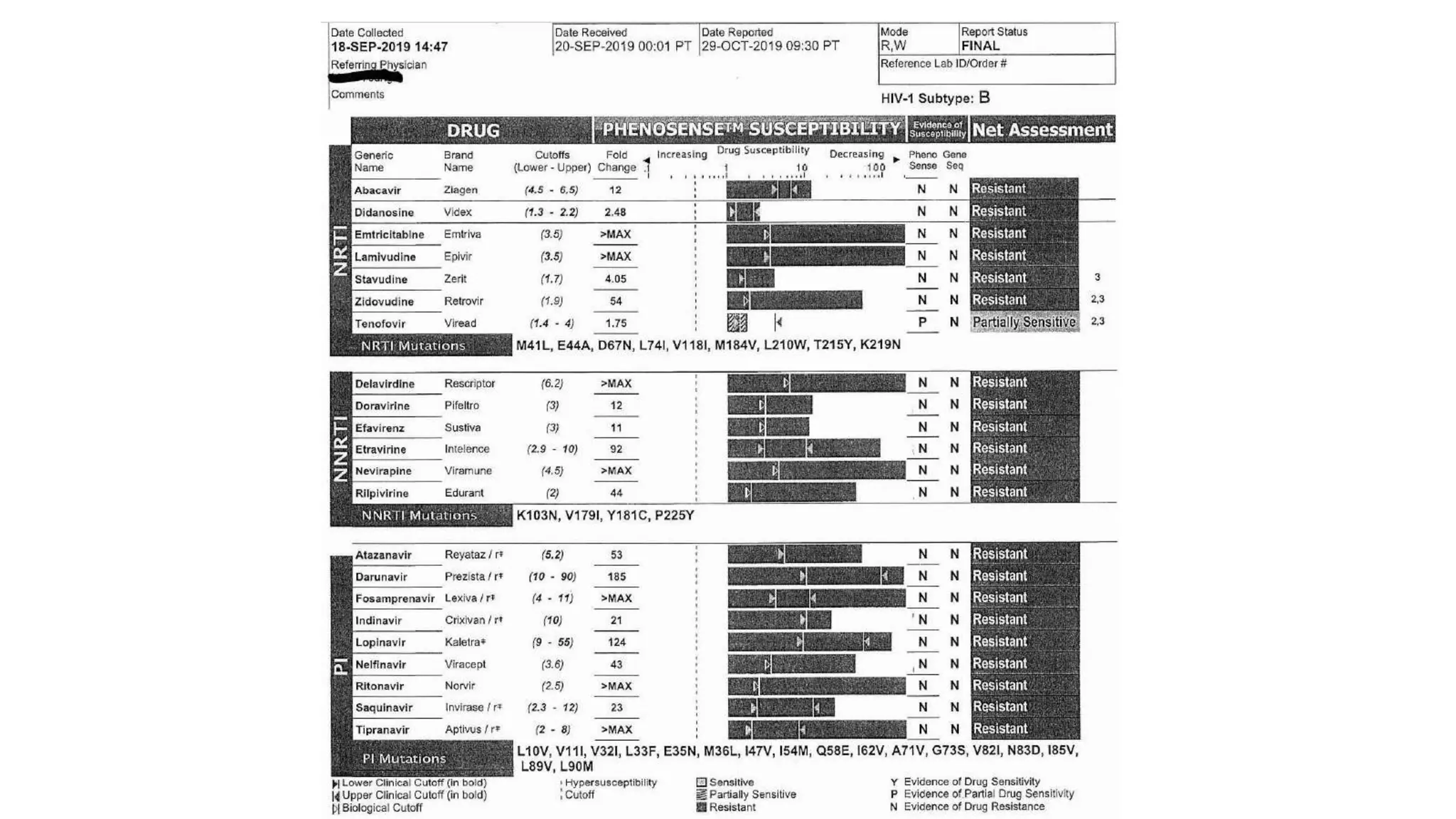
Labs
Can we come up with a treatment regimen?
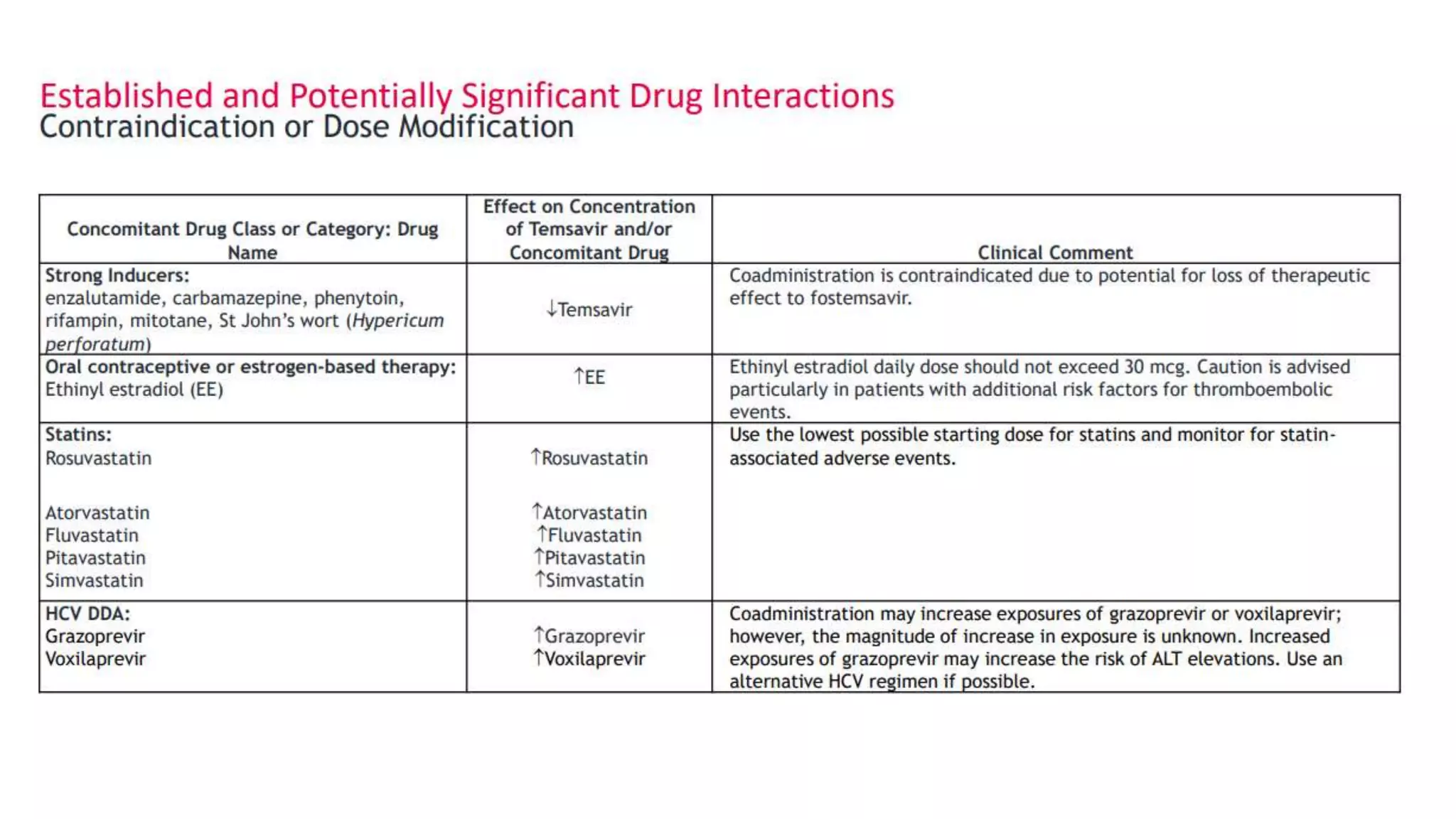
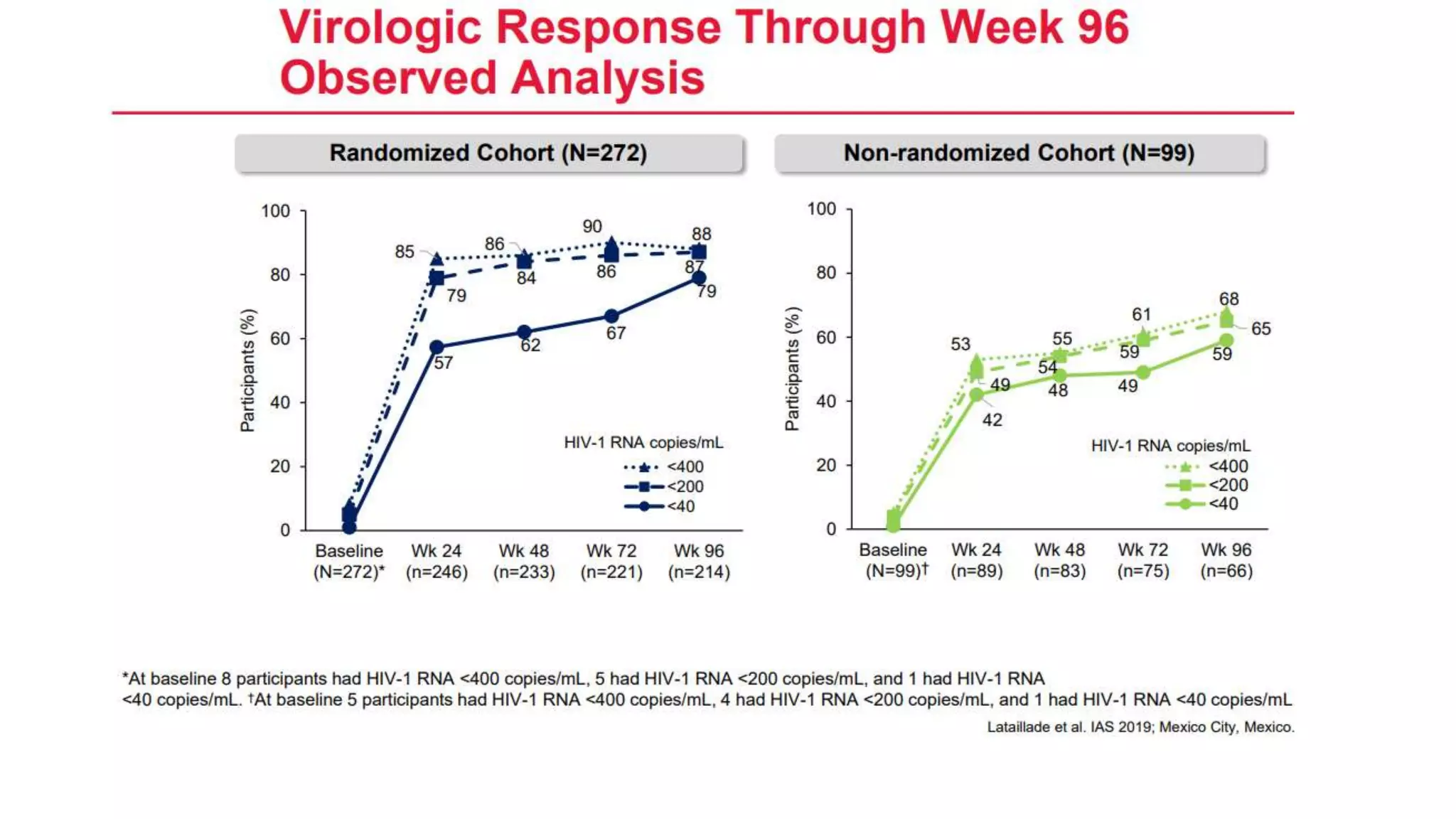
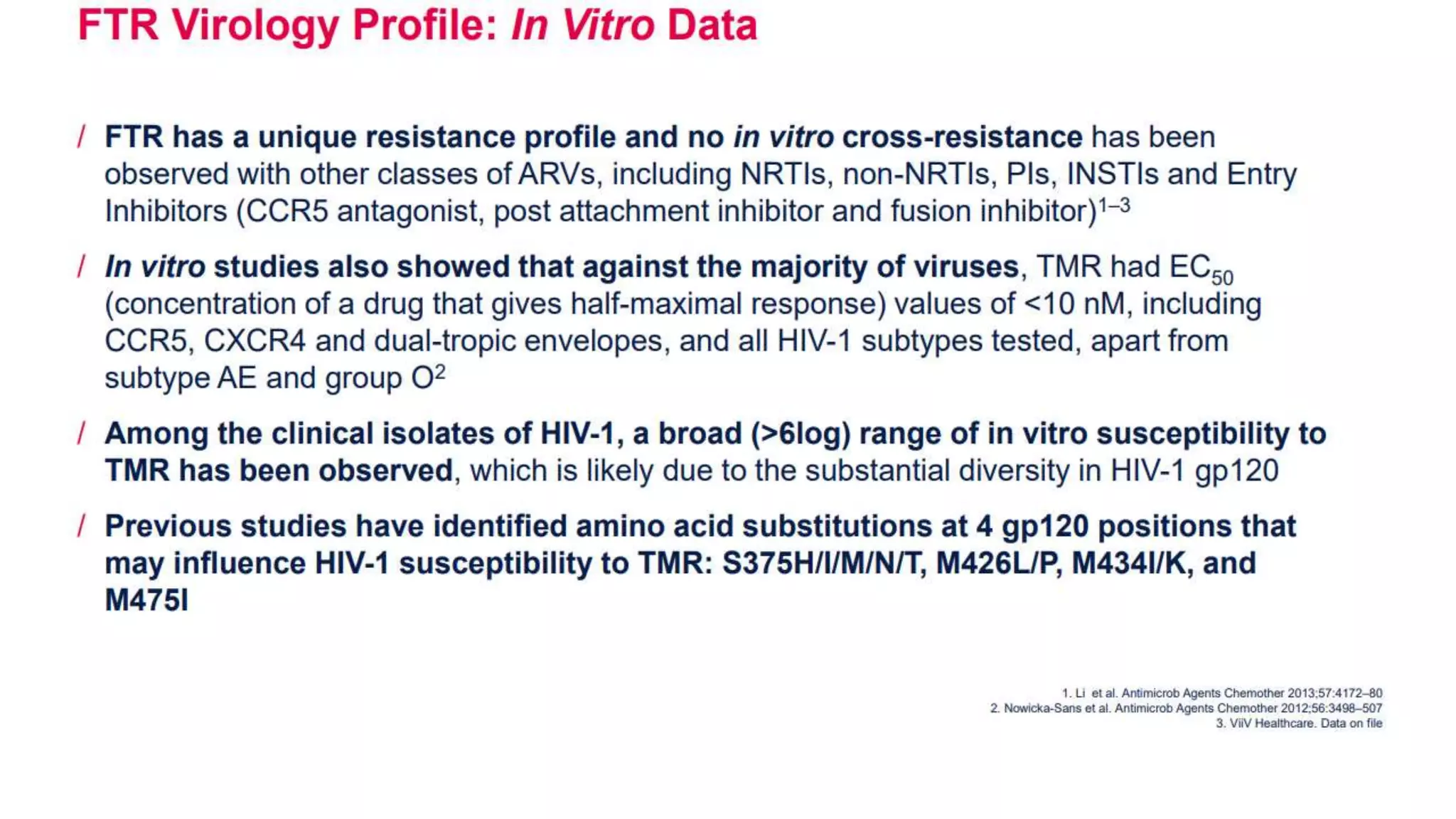
Fostemsavir (Rukobia)
Indication and dosage
• Treatment of HIV in heavily treatment experienced adults with multi-
drug resistant HIV failing their current antiretroviral regimen due to
resistance, tolerance, or safety considerations
• 600mg ER tablet twice daily
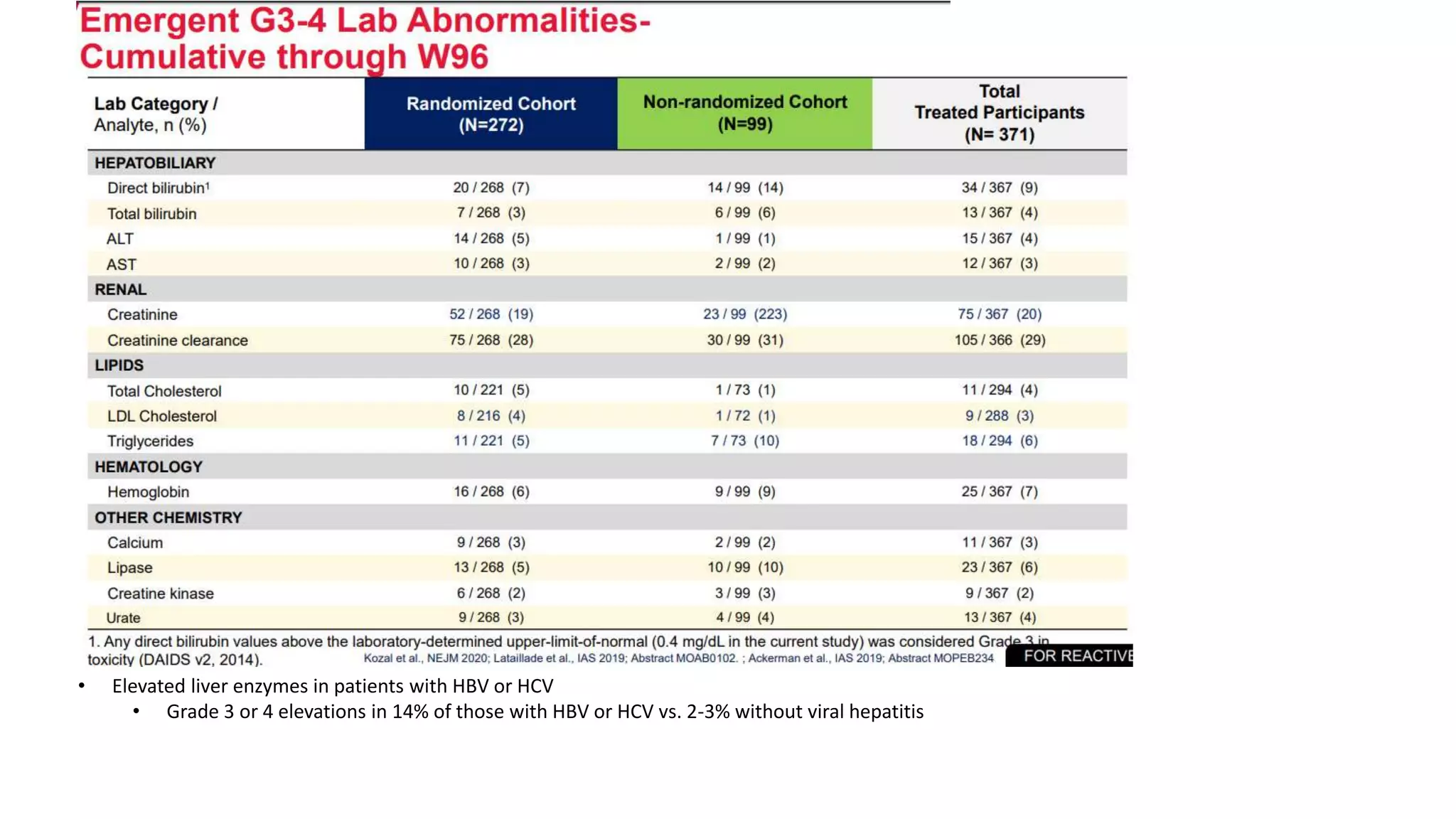
• Elevated liver enzymes in patients with HBV or HCV
• Grade 3 or 4 elevations in 14% of those with HBV or HCV vs. 2-3% without viral hepatitis
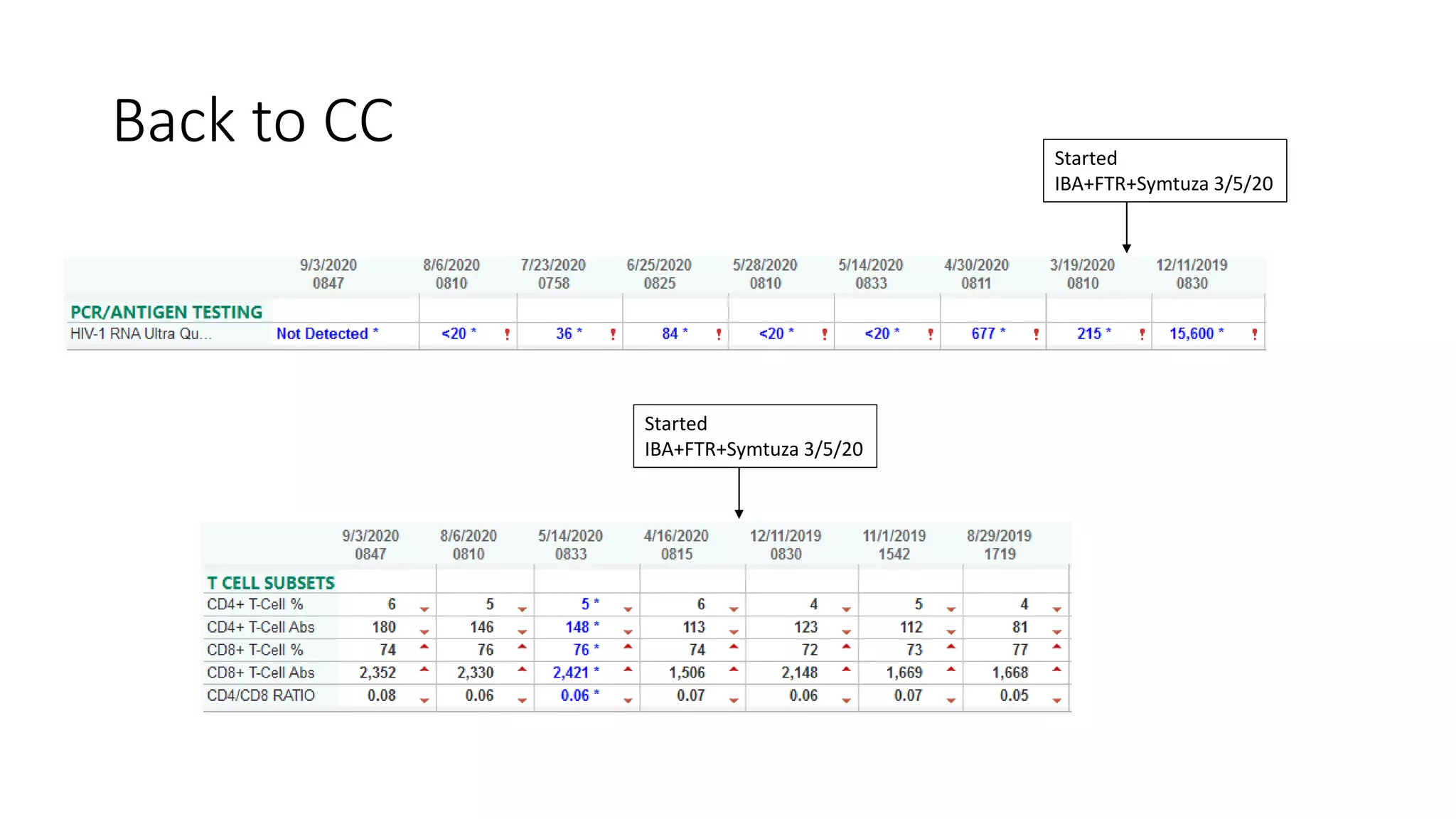
Back to CC Started
IBA+FTR+Symtuza 3/5/20
Started
IBA+FTR+Symtuza 3/5/20
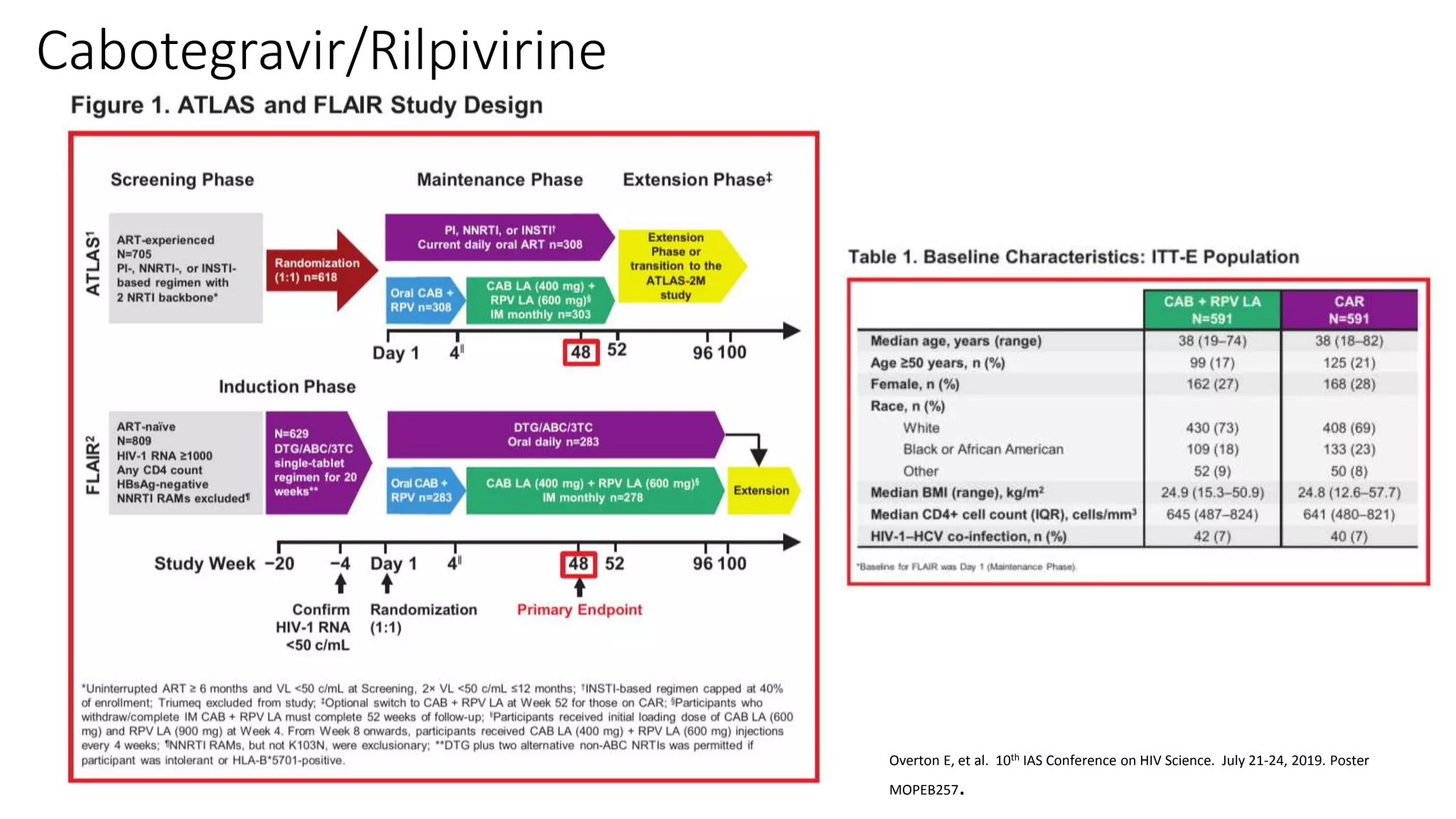
Cabotegravir/Rilpivirine
Overton E, et al. 10th IAS Conference on HIV Science. July 21-24, 2019. Poster
MOPEB257.
ATLAS/FLAIR
ATLAS/FLAIR side effects
ATLAS/FLAIR Patient Satisfaction
ATLAS/FLAIR resistance
FLAIR 96 week results
• Two participants withdrew
between week 48 and 96
due to injection site
reactions
Orkin C, et al. CROI 2020. March 8-11, 2020. Poster 482.
ATLAS 2M
Overton E, et al. CROI 2020. March 8-11, 2020.
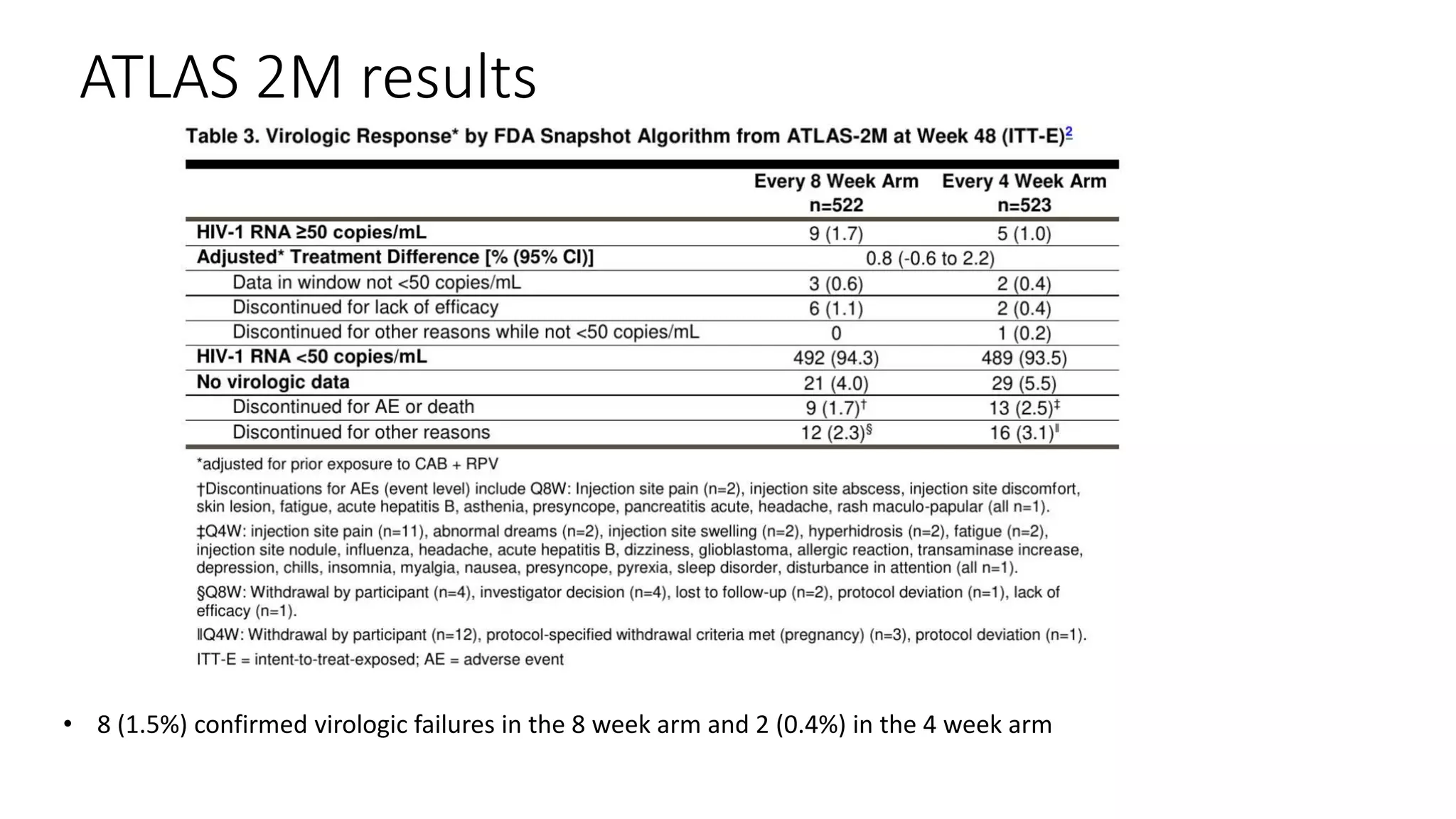
ATLAS 2M results
• 8 (1.5%) confirmed virologic failures in the 8 week arm and 2 (0.4%) in the 4 week arm
ATLAS 2M Failures
ATLAS 2M ISR
• 6 (1%) in the 8 week arm and 11 (2%) in the 4 week arm withdrew from the study due to ISR
CAB/RPV Summary
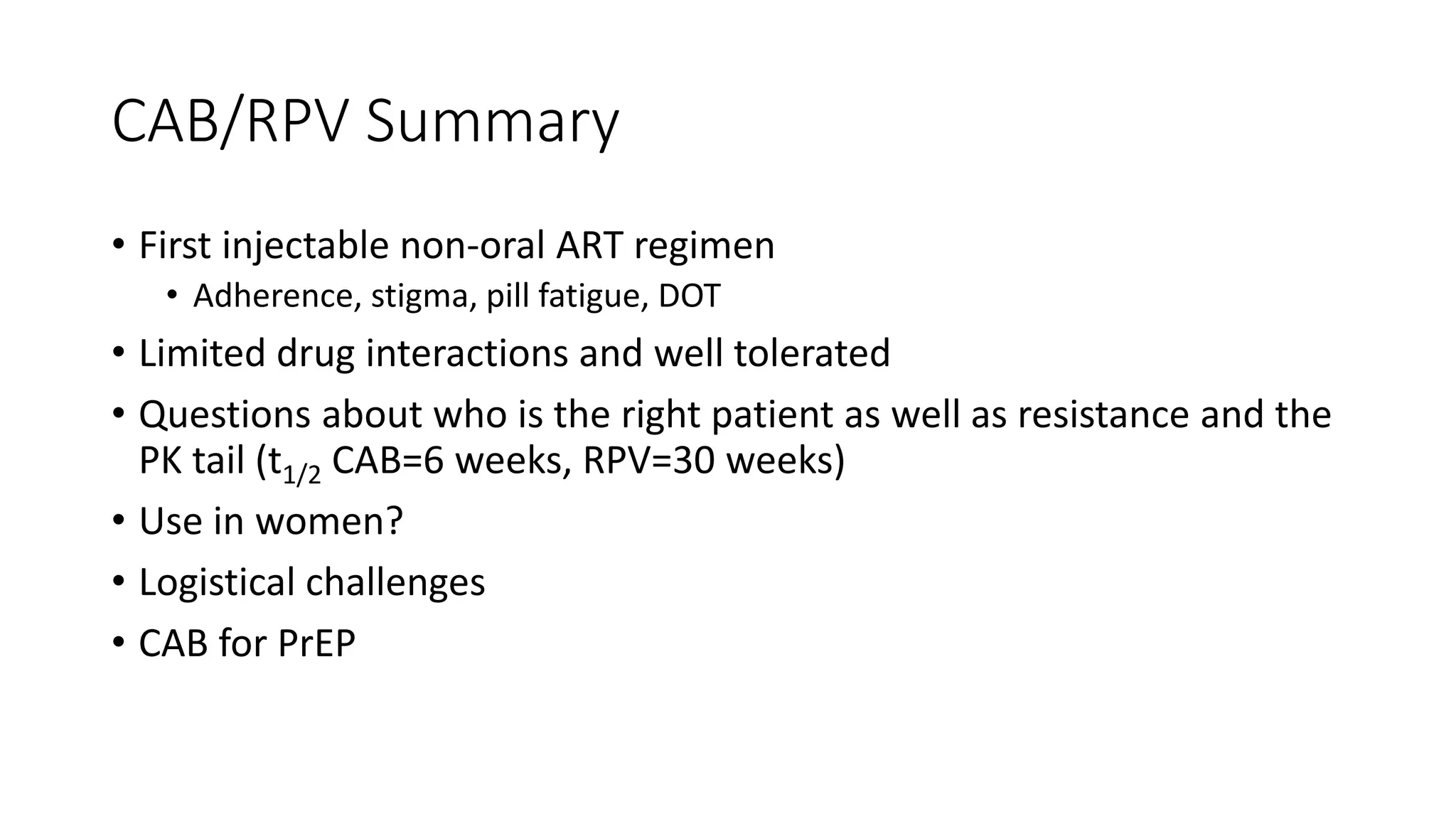
• First injectable non-oral ART regimen
• Adherence, stigma, pill fatigue, DOT
• Limited drug interactions and well tolerated
• Questions about who is the right patient as well as resistance and the
PK tail (t1/2 CAB=6 weeks, RPV=30 weeks)
• Use in women?
• Logistical challenges
• CAB for PrEP
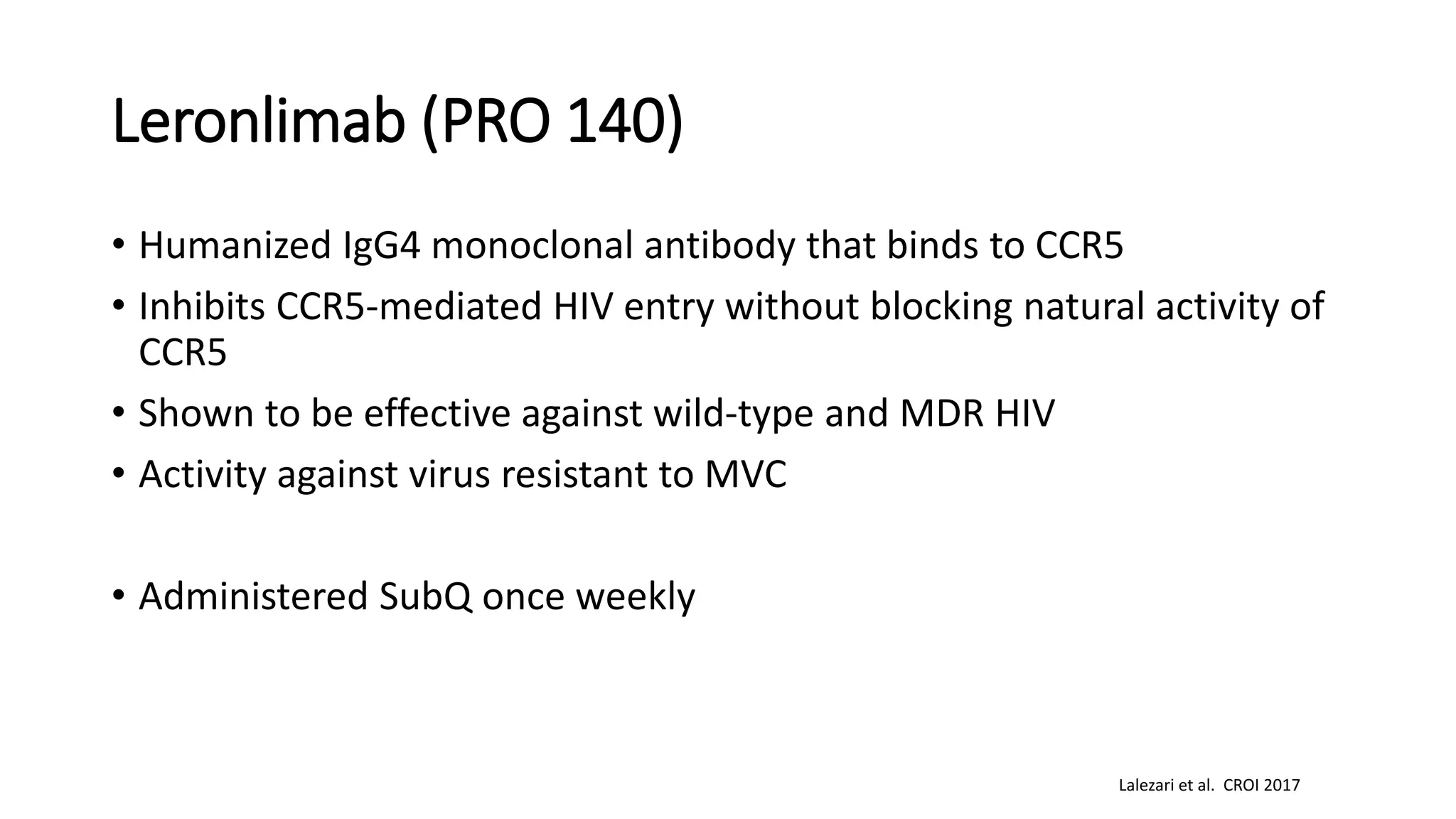
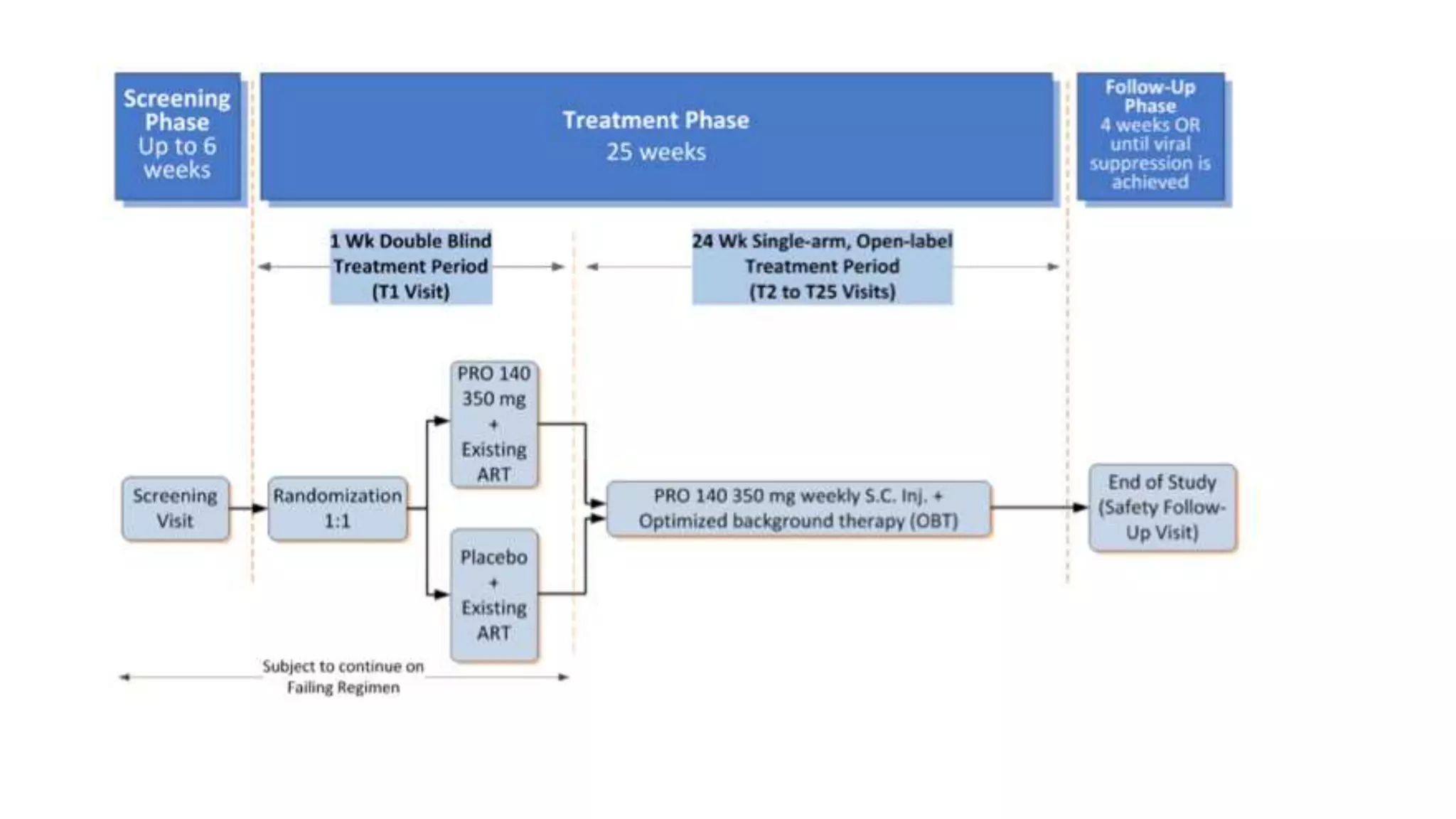
Leronlimab (PRO 140)
• Humanized IgG4 monoclonal antibody that binds to CCR5
• Inhibits CCR5-mediated HIV entry without blocking natural activity of
CCR5
• Shown to be effective against wild-type and MDR HIV
• Activity against virus resistant to MVC
• Administered SubQ once weekly
Lalezari et al. CROI 2017
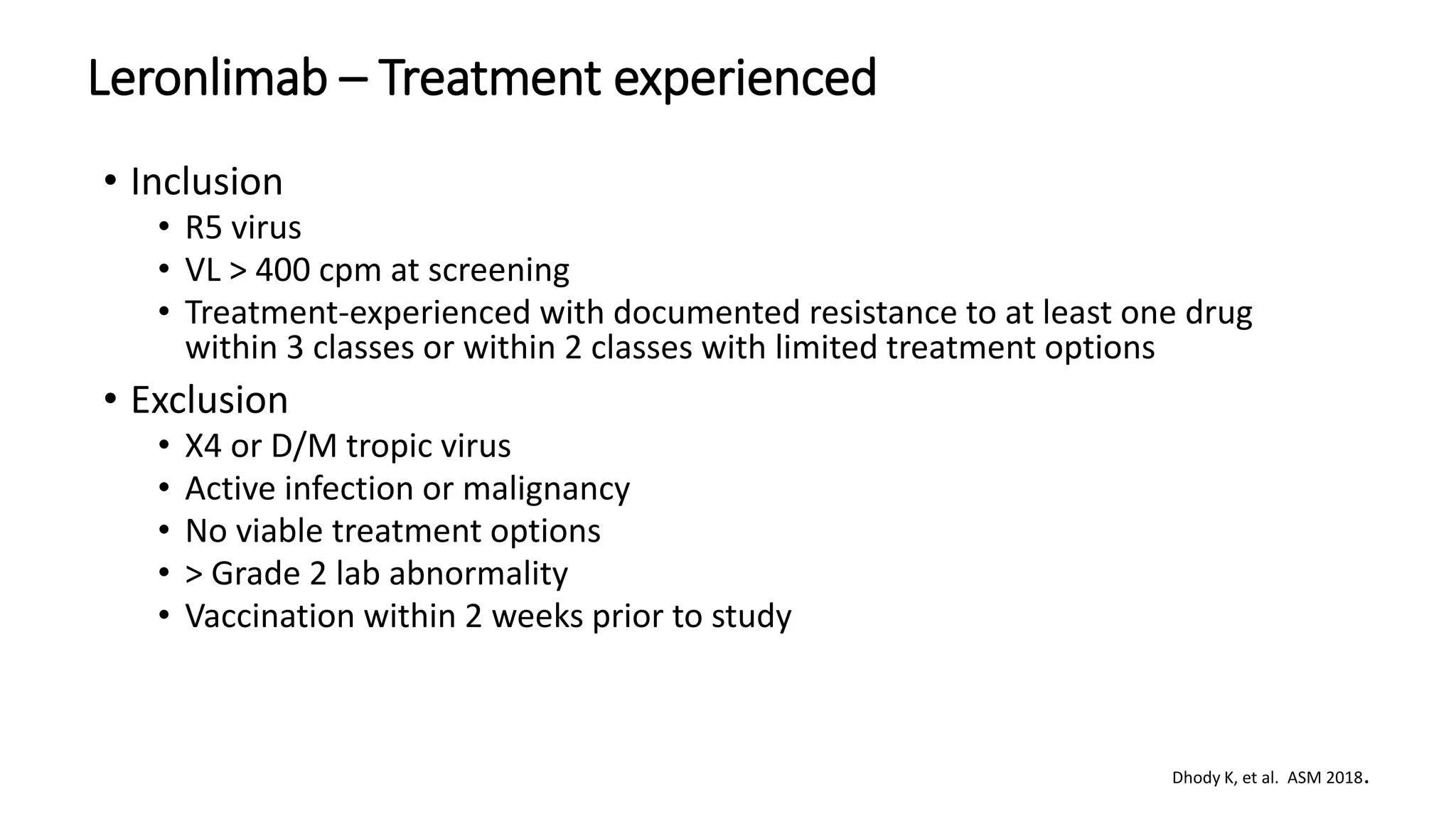
• Inclusion
• R5 virus
• VL > 400 cpm at screening
• Treatment-experienced with documented resistance to at least one drug
within 3 classes or within 2 classes with limited treatment options
• Exclusion
• X4 or D/M tropic virus
• Active infection or malignancy
• No viable treatment options
• > Grade 2 lab abnormality
• Vaccination within 2 weeks prior to study
Leronlimab – Treatment experienced
Dhody K, et al. ASM 2018.
Results
• 73% male, 52% white, 46% black, mean HIV VL 21,104 cpm, mean
CD4 count 298, mean resistance to 9 ARVs
• Well tolerated, no discontinuations due to AE, ISR in <10% of subjects,
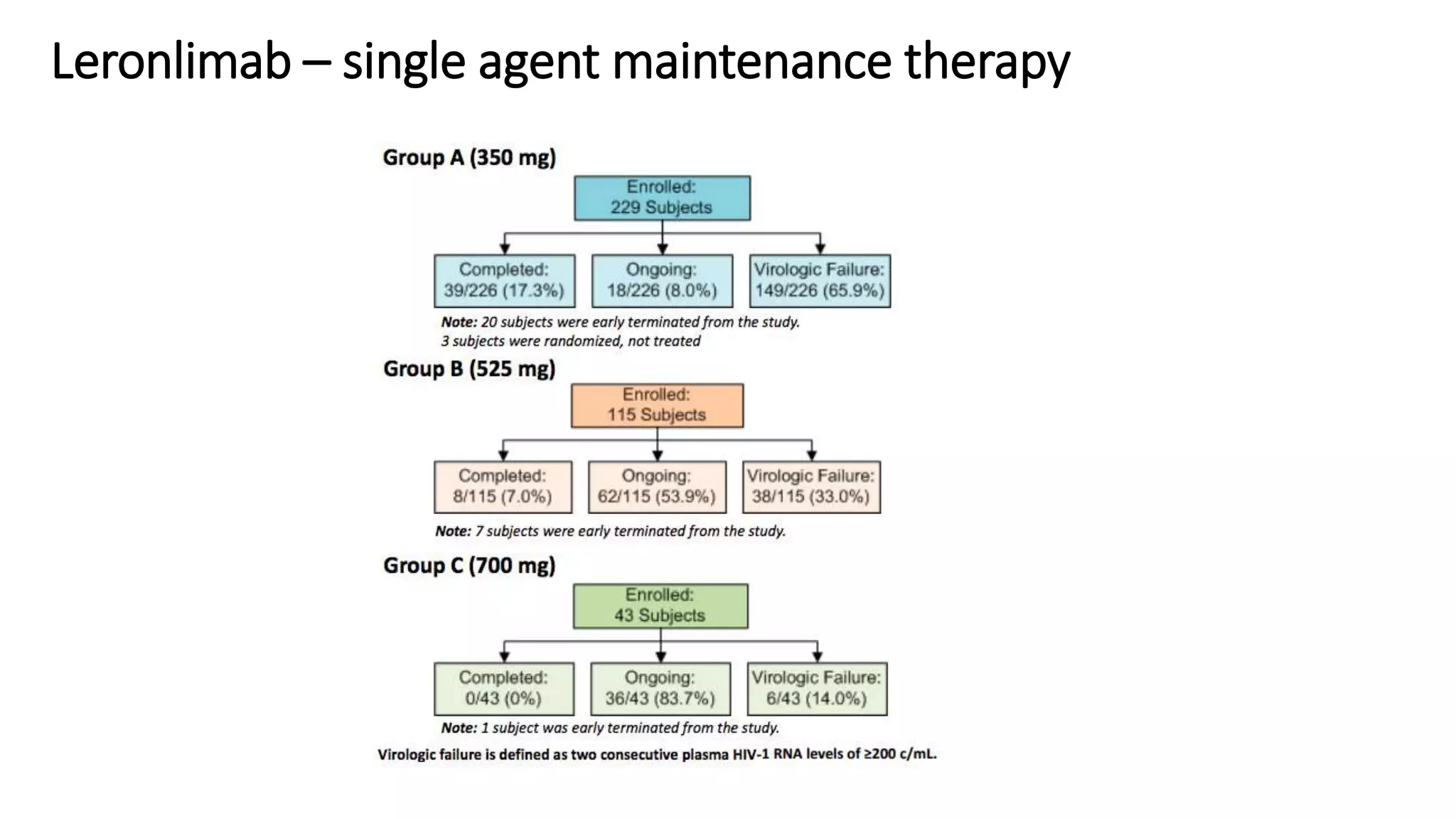
Leronlimab – single agent maintenance therapy
• Patients with CCR5 tropic virus who were virally suppressed switched
to leronlimab monotherapy for 48 weeks
• Inclusion
• On ART for at least 24 weeks
• R5 tropic virus
• No detectable viral loads for previous 24 weeks
• Nadir CD4 count >200
• CD4>350 for previous 24 weeks
• Exclusion
• HBV, AIDS defining illness, > Grade 3 lab abnormality
Dhody et al. CROI 2019.
Leronlimab – single agent maintenance therapy
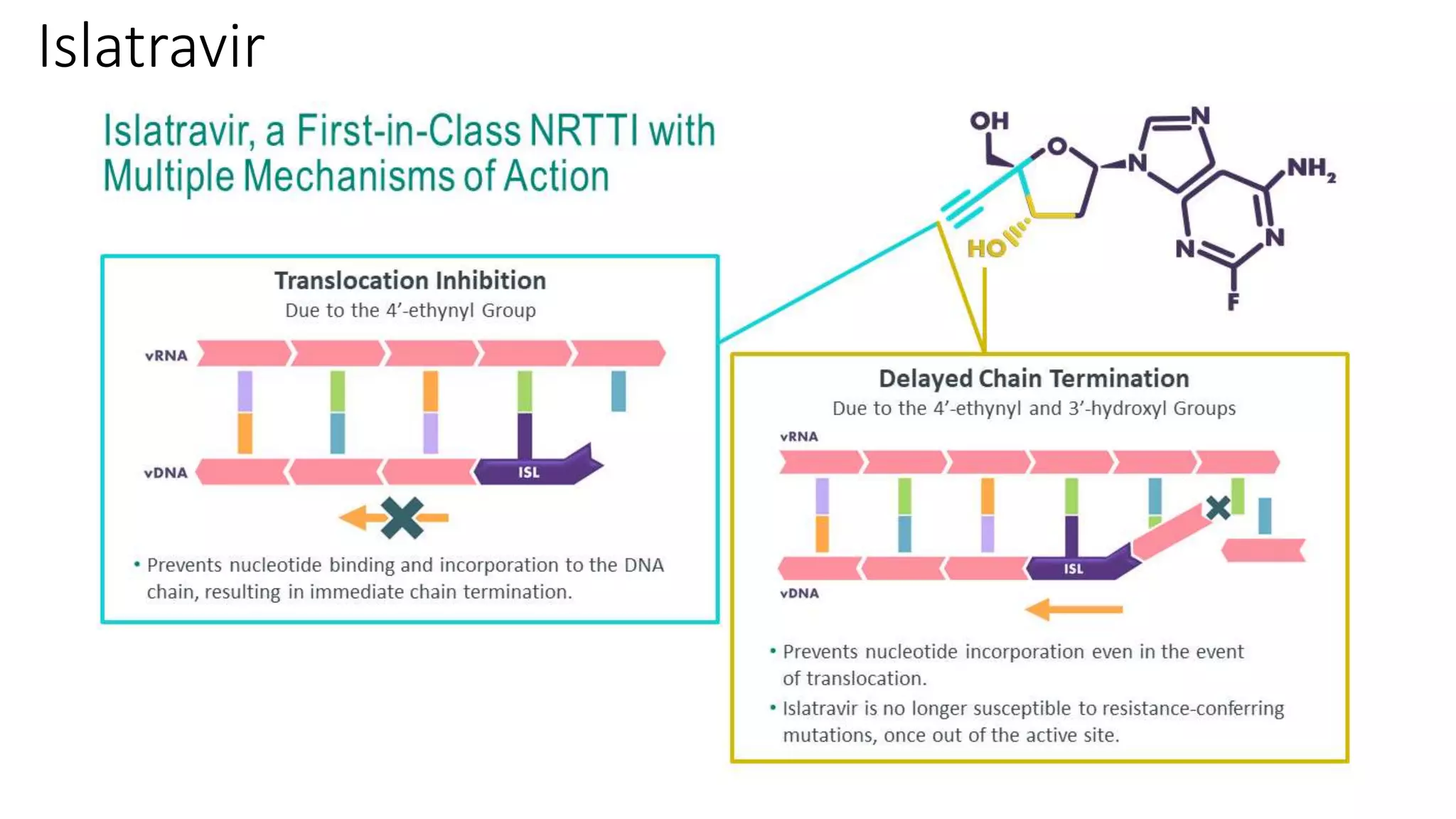
Islatravir
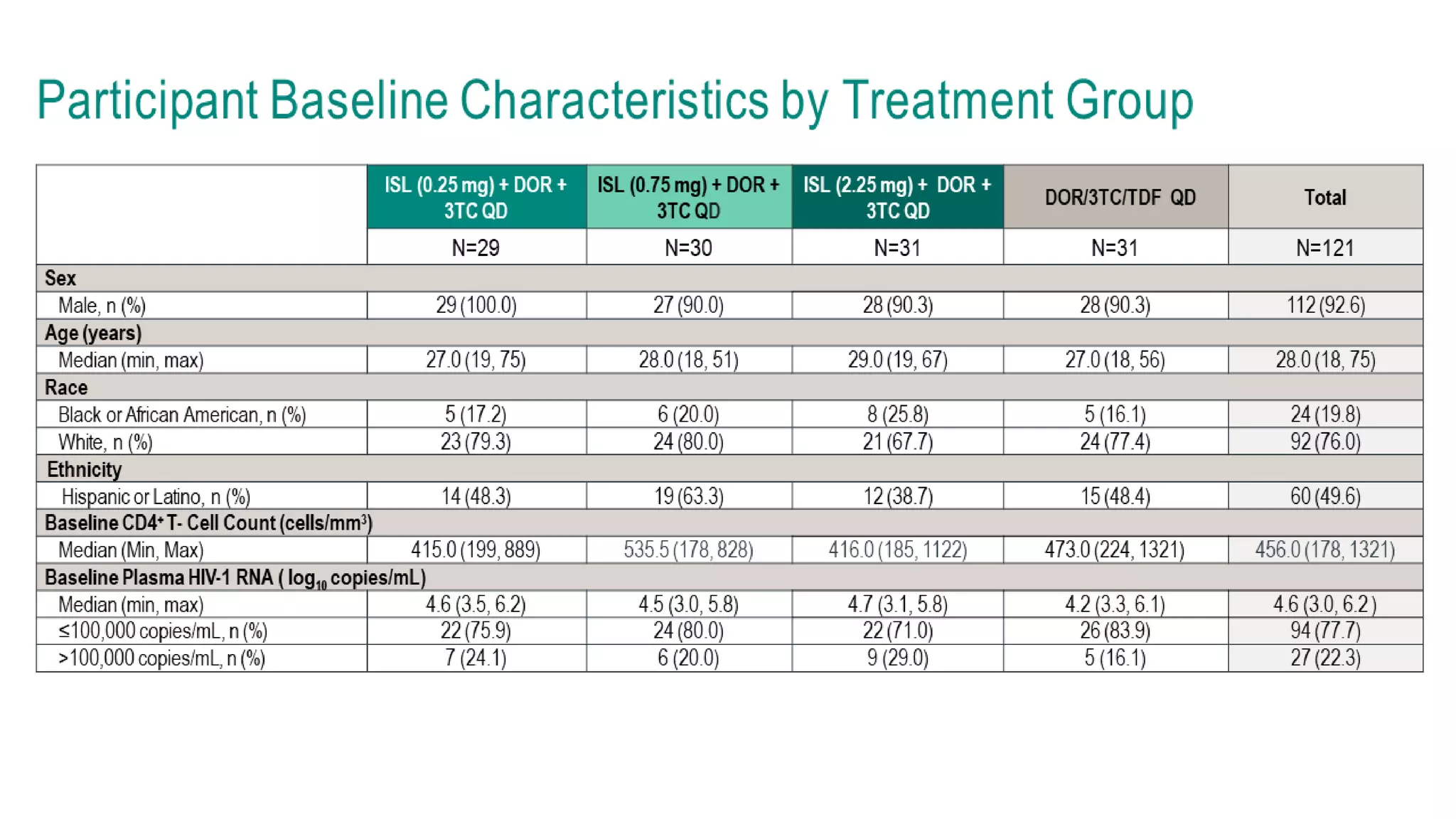
Islatravir
• Intracellular half life of 78.5-128 hours
• In vitro evidence of activity against NRTI resistant variants
Maeda K et al. Antivir Ther. 2014;19:179-89.
McComsey G et al. CROI 2020.
Lenacapavir: Mechanism of Action
HIV capsid is essential at multiple stages in the viral life cycle
Margot N, et al. EACS 2019. Basel, Switzerland. PE13/22
LEN is a first-in-class HIV capsid (CA) inhibitor with a multi-stage
mode of action and picomolar potency (EC50 = 50pM)
‡
‡
Lenacapavir: Mechanism of Action
LEN inhibits CA-mediated nuclear entry of viral DNA, HIV assembly,
and proper capsid formation, functions essential for viral replication
Margot N, et al. EACS 2019. Basel, Switzerland. PE13/22
LEN
‡
Study Design
n=6
10Day 1
B/F/TAF
Phase 1b, double-blind, randomized, placebo-controlled, single dose, dose-ranging study in PLWH
N = 39
225
n=6
LEN 20 mg
Placebo
HIV-1 infected adults
• HIV-1 RNA 5,000-400,000 c/mL
• CD4 count >200 cells/mm3
• Naïve to capsid inhibitor and INSTIs
LEN 50 mg
LEN 150 mg
n=6
n=10*
LEN 450 mg
n=6
Primary Objective
• To assess the antiviral activity of LEN in reducing plasma HIV-1 RNA over 10 days after a single
subcutaneous (SC) dose
B/F/TAF
B/F/TAF
B/F/TAF
B/F/TAF
B/F/TAF
Single SC Dose Primary Endpoint Last Visit
Secondary Objective
• To assess the safety and tolerability of LEN
*The 10 participants receiving placebo consisted of 2 from each dose cohort as 8 from each dose cohort (7 for the 750 mg
cohort) were randomized to receive either active treatment (n=6 except n=5 for the 750 mg cohort) or placebo (n=2).
B/F/TAF, bictegravir/emtricitabine/tenofovir alafenamide
Daar E, et al. CROI 2020. Boston, MA. Poster 469
LEN 750 mg
B/F/TAF
n=5
GS-US-200-4072: LEN Safety & Antiviral Activity following a Single Subcutaneous Dose ‡
Antiviral Activity of a Single Subcutaneous Dose
Daar E, et al. CROI 2020. Boston, MA. 469
• Single SC doses of LEN from 20 to
750 mg resulted in potent antiviral
activity
• Maximum mean HIV-1 declines for
each group ranged from -1.4 to -2.2
log10 c/mL over 10 days
*Change (mean) on Day 10 in 20-mg cohort was -1.3 log10 copies/mL while maximal change (mean) through Day 10 was -1.4 log10 copies/mL
†Change (mean) on Day 10 in 450-mg cohort was -2.1 log10 copies/mL while maximal change (mean) through Day 10 was -2.2 log10 copies/mL
CI, confidence interval; CV, coefficient of variation
Antiviral Activity Through Day 10
-1.3*
-1.8
-2.1†
-2.3
GS-US-200-4072: LEN Safety & Antiviral Activity following a Single Subcutaneous Dose
Single LEN Dose
‡
PBO (n=10)
LEN 20 mg (n=6)
LEN 50 mg (n=6)
LEN 150 mg (n=6)
LEN 450 mg (n=6)
LEN 750 mg (n=5)
PK & Safety of SC LEN
 Single SC doses of up to 900 mg LEN
were generally safe and well tolerated
– No serious or Grade 2, 3, or 4 AEs related to
study drug†
– No AEs leading to discontinuation
– ISRs were common (80%) but all mild
 Target concentrations sustained for ≥ 6
months after single 900 mg dose
– Slow release necessitates oral PK loading
dose prior to first injection
Preliminary PK and safety data support continued clinical development of long-acting
SC LEN in conjunction with an oral LEN loading dose
ISRs, injection site reactions
IQ: Ratio of LEN plasma concentration/EC95 *paEC95 =1.16 ng/mL (macrophages), 2.32 ng/mL (CD4+ T cells), and 3.87 ng/mL (MT-4 cells)
†One participant had Grade 3 AEs of abscess (also serious AE), cellulitis, and MRSA infection, none of which were related to LEN
Mean (SD) LEN Single Dose Plasma
Concentration-Time Profiles
‡
6 months
(26 weeks)
Begley R, et al. AIDS 2020. San Francisco/Oakland, CA. PEB0265
MeanLEN,ng/mL
(SD)
44 48 52 56
0.1
1
LEN 300 mg (1 x 1.0 mL)
LEN 900 mg (3 x 1.0 mL)
LEN 900 mg (2 x 1.5 mL)
4036322824201612840
24 ng/mL;
mean IQ ≥6*
Weeks Postdose
GS-US-200-4538: LEN Safety & PK in Healthy Volunteers
1
100
10
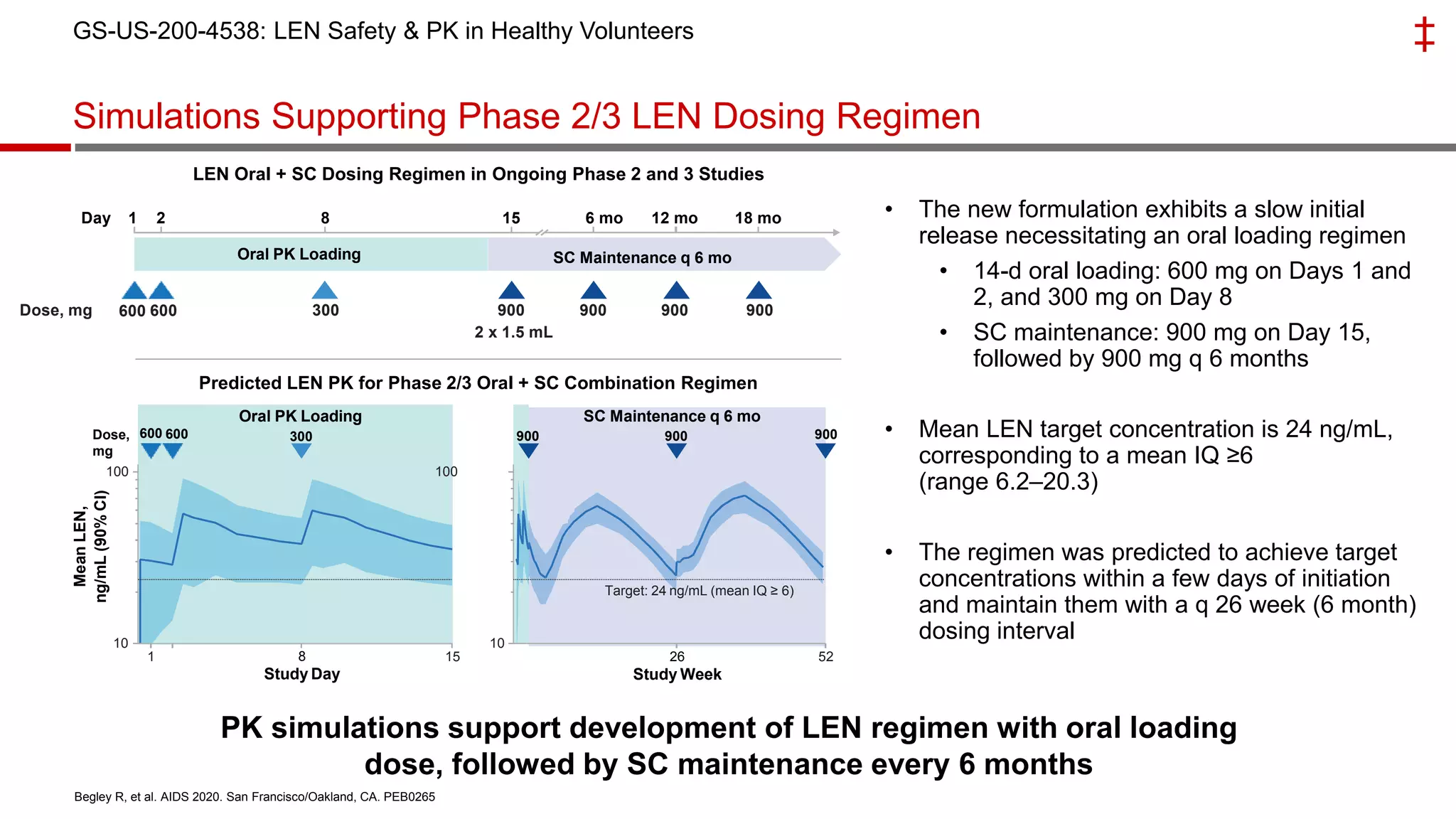
Simulations Supporting Phase 2/3 LEN Dosing Regimen
‡GS-US-200-4538: LEN Safety & PK in Healthy Volunteers
PK simulations support development of LEN regimen with oral loading
dose, followed by SC maintenance every 6 months
• The new formulation exhibits a slow initial
release necessitating an oral loading regimen
• 14-d oral loading: 600 mg on Days 1 and
2, and 300 mg on Day 8
• SC maintenance: 900 mg on Day 15,
followed by 900 mg q 6 months
• Mean LEN target concentration is 24 ng/mL,
corresponding to a mean IQ ≥6
(range 6.2–20.3)
• The regimen was predicted to achieve target
concentrations within a few days of initiation
and maintain them with a q 26 week (6 month)
dosing interval10
8
Study Day
MeanLEN,
ng/mL(90%CI)
1 15
600
Oral PK Loading
10
100 100
Target: 24 ng/mL (mean IQ ≥ 6)
26
Study Week
52
Dose,
mg
Predicted LEN PK for Phase 2/3 Oral + SC Combination Regimen
SC Maintenance q 6 mo
Oral PK Loading
Dose, mg 300 900 900 900 900600
2 x 1.5 mL
SC Maintenance q 6 mo
Day 1 2 8 15 6 mo 12 mo 18 mo
LEN Oral + SC Dosing Regimen in Ongoing Phase 2 and 3 Studies
600 300 900 900 900
Begley R, et al. AIDS 2020. San Francisco/Oakland, CA. PEB0265
600
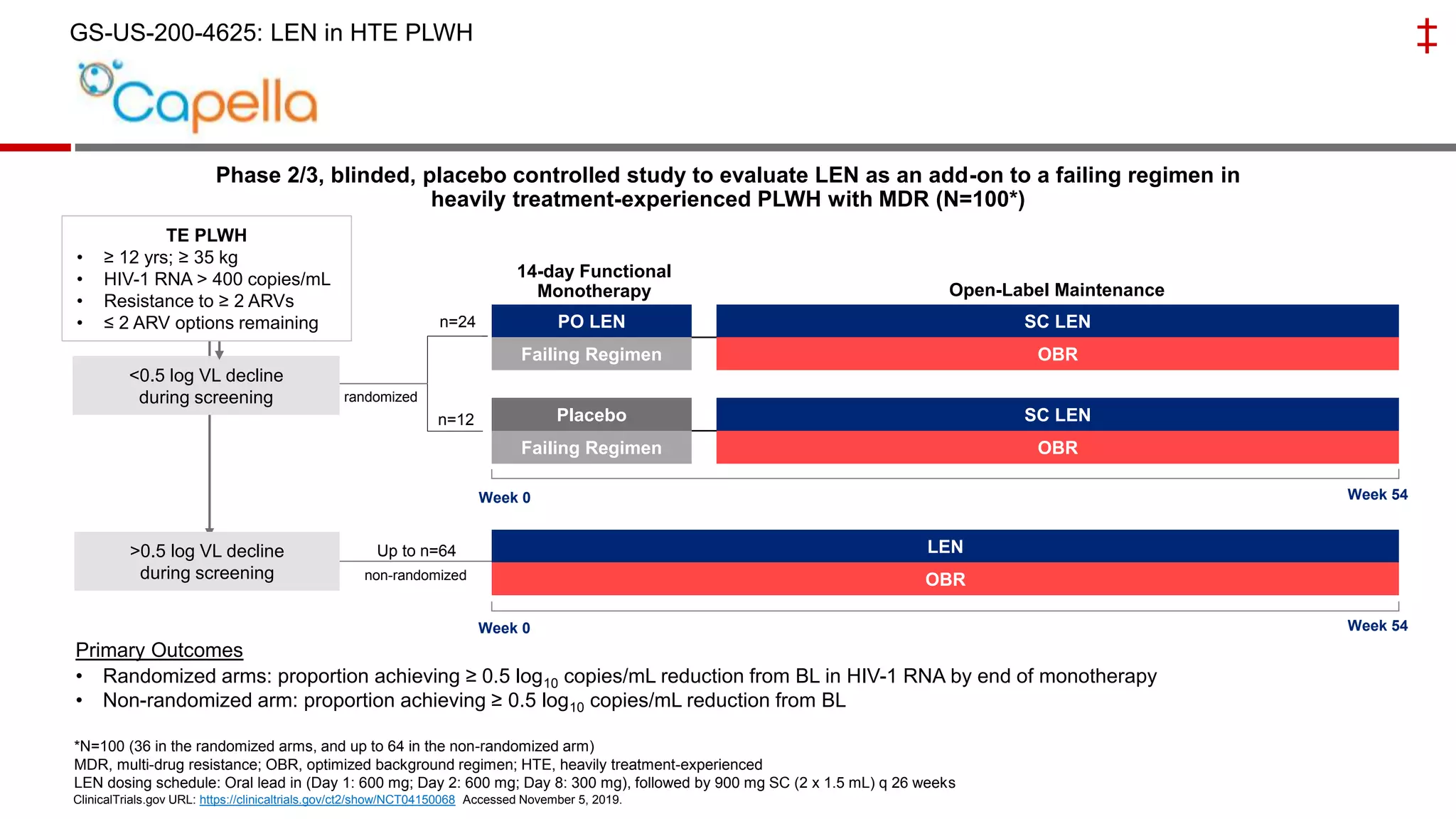
GS-US-200-4625: LEN in HTE PLWH
Primary Outcomes
• Randomized arms: proportion achieving ≥ 0.5 log10 copies/mL reduction from BL in HIV-1 RNA by end of monotherapy
• Non-randomized arm: proportion achieving ≥ 0.5 log10 copies/mL reduction from BL
Phase 2/3, blinded, placebo controlled study to evaluate LEN as an add-on to a failing regimen in
heavily treatment-experienced PLWH with MDR (N=100*)
n=24
n=12
ClinicalTrials.gov URL: https://clinicaltrials.gov/ct2/show/NCT04150068 Accessed November 5, 2019.
*N=100 (36 in the randomized arms, and up to 64 in the non-randomized arm)
MDR, multi-drug resistance; OBR, optimized background regimen; HTE, heavily treatment-experienced
LEN dosing schedule: Oral lead in (Day 1: 600 mg; Day 2: 600 mg; Day 8: 300 mg), followed by 900 mg SC (2 x 1.5 mL) q 26 weeks
Up to n=64
<0.5 log VL decline
during screening
TE PLWH
• ≥ 12 yrs; ≥ 35 kg
• HIV-1 RNA > 400 copies/mL
• Resistance to ≥ 2 ARVs
• ≤ 2 ARV options remaining
randomized
non-randomized
Week 54Week 0
Week 54Week 0
‡
PO LEN SC LEN
Failing Regimen OBR
LEN
OBR
Placebo SC LEN
Failing Regimen OBR
14-day Functional
Monotherapy Open-Label Maintenance
>0.5 log VL decline
during screening
PLWH
• ARV-naïve
• HIV-1 RNA ≥ 500 copies/mL
• CD4+ ≥ 200 c/µL
• No HBV/HCV
GS-US-200-4334: LEN in TN PLWH
Phase 2, randomized, open label, active controlled study in treatment-naïve PLWH (N=175)
‡
Primary Outcome
• Proportion with plasma HIV-1 RNA
< 50 copies/mL at Week 54
Secondary Outcomes
• Proportion with HIV-1 RNA < 50 copies/mL at Weeks 28, 38, and 80
• Change from BL in log10 HIV-1 RNA and CD4+ cell count at Weeks 28, 38, 54, and 80
Induction Period Maintenance Period
n=50
n=25
n=50
n=50
ClinicalTrials.gov URL: https://clinicaltrials.gov/ct2/show/NCT04143594 Accessed November 5, 2019.
Data on File
Week 28
PO LEN QD
FTC/TAF
BIC/FTC/TAF
LEN
FTC/TAF BIC
LEN
FTC/TAF TAF
LEN dosing schedule: Oral lead in (Day 1: 600 mg; Day 2: 600 mg; Day 8: 300 mg), followed by 900 mg SC (2 x 1.5 mL) q 26 weeks
FTC/TAF, TAF, and BIC administered as oral QD
Week 54 Week 80Week 0
Questions?

09.11.20 | Review of New Antiretrovirals

  • 1.
    HIV & GlobalHealth Rounds The UC San Diego AntiViral Research Center sponsors weekly presentations by infectious disease and global public health clinicians, physicians, and researchers. The goal of these presentations is to provide the most current research, clinical practices, and trends in HIV, HBV, HCV, TB, and other infectious diseases of global significance. The slides from the HIV & Global Health Rounds presentation that you are about to view are intended for the educational purposes of our audience. They may not be used for other purposes without the presenter’s express permission.
  • 2.
    Review of New(Approved and Unapproved) Antiretrovirals Lucas Hill, PharmD 9/11/2020
  • 3.
  • 4.
    Outline • Patient case •Fostemsavir • Cabotegravir/Rilpivirine • Leronlimab • Islatravir • Lenacapavir
  • 5.
    CC • 54 y/oWM diagnosed with HIV in 1992, CD4 count at diagnosis was 698 cells/uL • No other significant medical history • Only previous documented viral suppression was one value in 2007 • CD4 nadir of 3 cells/uL in 2006
  • 6.
    ARV History • 1995:started Zidovudine/Stavudine (study) • 1997: Addition of Indinavir • 8/2003-5/2004: Tenofovir/Lamivudine/Nelfinavir/Tipranavir (study) • 5/04-9/2004: Tenofovir/Emtricitabine/Lopinavir/r • 9/04-1/2005: Trizivir/Saquinavir/Lopinavir/r • 1/2006-6/2006: Enfuvirtide/Tenofovir/Trizivir/Tiprnavir/r • 6/06-10/2006: Enfuvirtide/Truvada/Zidovudine/Lopinavir/r/Saquinavir • 10/2006-7/2007: Truvada/Tipranavir/r/+/-Elvitegravir? (Study) • 8/2007-9/2007: Didanosine/Truvada/Etravirine/Tipranavir/r (study) • 9/2007-10/2010: Maraviroc/Truvada/Raltegravir/Tipranavir/r • 10/2010-3/2012: Maraviroc/Truvada/Etravirine/Darunavir/r • 3/2012-?? : Enfuvirtide/Zidovudine/Truvada/Etravirine/Dolutegravir/Darunavir/r (study) • ??-3/23/16: Enfuvirtide/Zidovudine/Truvada/Dolutegravir/Darunavir/r • 3/23/16-3/5/20: Odefsey/Zidovudine/Dolutegravir/Darunavir/c
  • 7.
  • 11.
    Can we comeup with a treatment regimen?
  • 12.
  • 13.
    Indication and dosage •Treatment of HIV in heavily treatment experienced adults with multi- drug resistant HIV failing their current antiretroviral regimen due to resistance, tolerance, or safety considerations • 600mg ER tablet twice daily
  • 28.
    • Elevated liverenzymes in patients with HBV or HCV • Grade 3 or 4 elevations in 14% of those with HBV or HCV vs. 2-3% without viral hepatitis
  • 33.
    Back to CCStarted IBA+FTR+Symtuza 3/5/20 Started IBA+FTR+Symtuza 3/5/20
  • 34.
    Cabotegravir/Rilpivirine Overton E, etal. 10th IAS Conference on HIV Science. July 21-24, 2019. Poster MOPEB257.
  • 35.
  • 36.
  • 37.
  • 38.
  • 39.
  • 40.
    FLAIR 96 weekresults • Two participants withdrew between week 48 and 96 due to injection site reactions Orkin C, et al. CROI 2020. March 8-11, 2020. Poster 482.
  • 41.
    ATLAS 2M Overton E,et al. CROI 2020. March 8-11, 2020.
  • 42.
    ATLAS 2M results •8 (1.5%) confirmed virologic failures in the 8 week arm and 2 (0.4%) in the 4 week arm
  • 43.
  • 44.
    ATLAS 2M ISR •6 (1%) in the 8 week arm and 11 (2%) in the 4 week arm withdrew from the study due to ISR
  • 45.
    CAB/RPV Summary • Firstinjectable non-oral ART regimen • Adherence, stigma, pill fatigue, DOT • Limited drug interactions and well tolerated • Questions about who is the right patient as well as resistance and the PK tail (t1/2 CAB=6 weeks, RPV=30 weeks) • Use in women? • Logistical challenges • CAB for PrEP
  • 46.
    Leronlimab (PRO 140) •Humanized IgG4 monoclonal antibody that binds to CCR5 • Inhibits CCR5-mediated HIV entry without blocking natural activity of CCR5 • Shown to be effective against wild-type and MDR HIV • Activity against virus resistant to MVC • Administered SubQ once weekly Lalezari et al. CROI 2017
  • 47.
    • Inclusion • R5virus • VL > 400 cpm at screening • Treatment-experienced with documented resistance to at least one drug within 3 classes or within 2 classes with limited treatment options • Exclusion • X4 or D/M tropic virus • Active infection or malignancy • No viable treatment options • > Grade 2 lab abnormality • Vaccination within 2 weeks prior to study Leronlimab – Treatment experienced Dhody K, et al. ASM 2018.
  • 49.
    Results • 73% male,52% white, 46% black, mean HIV VL 21,104 cpm, mean CD4 count 298, mean resistance to 9 ARVs • Well tolerated, no discontinuations due to AE, ISR in <10% of subjects,
  • 50.
    Leronlimab – singleagent maintenance therapy • Patients with CCR5 tropic virus who were virally suppressed switched to leronlimab monotherapy for 48 weeks • Inclusion • On ART for at least 24 weeks • R5 tropic virus • No detectable viral loads for previous 24 weeks • Nadir CD4 count >200 • CD4>350 for previous 24 weeks • Exclusion • HBV, AIDS defining illness, > Grade 3 lab abnormality Dhody et al. CROI 2019.
  • 51.
    Leronlimab – singleagent maintenance therapy
  • 52.
    Leronlimab – singleagent maintenance therapy
  • 53.
    Leronlimab – singleagent maintenance therapy
  • 54.
  • 55.
    Islatravir • Intracellular halflife of 78.5-128 hours • In vitro evidence of activity against NRTI resistant variants Maeda K et al. Antivir Ther. 2014;19:179-89.
  • 62.
    McComsey G etal. CROI 2020.
  • 66.
    Lenacapavir: Mechanism ofAction HIV capsid is essential at multiple stages in the viral life cycle Margot N, et al. EACS 2019. Basel, Switzerland. PE13/22 LEN is a first-in-class HIV capsid (CA) inhibitor with a multi-stage mode of action and picomolar potency (EC50 = 50pM) ‡
  • 67.
    ‡ Lenacapavir: Mechanism ofAction LEN inhibits CA-mediated nuclear entry of viral DNA, HIV assembly, and proper capsid formation, functions essential for viral replication Margot N, et al. EACS 2019. Basel, Switzerland. PE13/22 LEN ‡
  • 68.
    Study Design n=6 10Day 1 B/F/TAF Phase1b, double-blind, randomized, placebo-controlled, single dose, dose-ranging study in PLWH N = 39 225 n=6 LEN 20 mg Placebo HIV-1 infected adults • HIV-1 RNA 5,000-400,000 c/mL • CD4 count >200 cells/mm3 • Naïve to capsid inhibitor and INSTIs LEN 50 mg LEN 150 mg n=6 n=10* LEN 450 mg n=6 Primary Objective • To assess the antiviral activity of LEN in reducing plasma HIV-1 RNA over 10 days after a single subcutaneous (SC) dose B/F/TAF B/F/TAF B/F/TAF B/F/TAF B/F/TAF Single SC Dose Primary Endpoint Last Visit Secondary Objective • To assess the safety and tolerability of LEN *The 10 participants receiving placebo consisted of 2 from each dose cohort as 8 from each dose cohort (7 for the 750 mg cohort) were randomized to receive either active treatment (n=6 except n=5 for the 750 mg cohort) or placebo (n=2). B/F/TAF, bictegravir/emtricitabine/tenofovir alafenamide Daar E, et al. CROI 2020. Boston, MA. Poster 469 LEN 750 mg B/F/TAF n=5 GS-US-200-4072: LEN Safety & Antiviral Activity following a Single Subcutaneous Dose ‡
  • 69.
    Antiviral Activity ofa Single Subcutaneous Dose Daar E, et al. CROI 2020. Boston, MA. 469 • Single SC doses of LEN from 20 to 750 mg resulted in potent antiviral activity • Maximum mean HIV-1 declines for each group ranged from -1.4 to -2.2 log10 c/mL over 10 days *Change (mean) on Day 10 in 20-mg cohort was -1.3 log10 copies/mL while maximal change (mean) through Day 10 was -1.4 log10 copies/mL †Change (mean) on Day 10 in 450-mg cohort was -2.1 log10 copies/mL while maximal change (mean) through Day 10 was -2.2 log10 copies/mL CI, confidence interval; CV, coefficient of variation Antiviral Activity Through Day 10 -1.3* -1.8 -2.1† -2.3 GS-US-200-4072: LEN Safety & Antiviral Activity following a Single Subcutaneous Dose Single LEN Dose ‡ PBO (n=10) LEN 20 mg (n=6) LEN 50 mg (n=6) LEN 150 mg (n=6) LEN 450 mg (n=6) LEN 750 mg (n=5)
  • 70.
    PK & Safetyof SC LEN  Single SC doses of up to 900 mg LEN were generally safe and well tolerated – No serious or Grade 2, 3, or 4 AEs related to study drug† – No AEs leading to discontinuation – ISRs were common (80%) but all mild  Target concentrations sustained for ≥ 6 months after single 900 mg dose – Slow release necessitates oral PK loading dose prior to first injection Preliminary PK and safety data support continued clinical development of long-acting SC LEN in conjunction with an oral LEN loading dose ISRs, injection site reactions IQ: Ratio of LEN plasma concentration/EC95 *paEC95 =1.16 ng/mL (macrophages), 2.32 ng/mL (CD4+ T cells), and 3.87 ng/mL (MT-4 cells) †One participant had Grade 3 AEs of abscess (also serious AE), cellulitis, and MRSA infection, none of which were related to LEN Mean (SD) LEN Single Dose Plasma Concentration-Time Profiles ‡ 6 months (26 weeks) Begley R, et al. AIDS 2020. San Francisco/Oakland, CA. PEB0265 MeanLEN,ng/mL (SD) 44 48 52 56 0.1 1 LEN 300 mg (1 x 1.0 mL) LEN 900 mg (3 x 1.0 mL) LEN 900 mg (2 x 1.5 mL) 4036322824201612840 24 ng/mL; mean IQ ≥6* Weeks Postdose GS-US-200-4538: LEN Safety & PK in Healthy Volunteers 1 100 10
  • 71.
    Simulations Supporting Phase2/3 LEN Dosing Regimen ‡GS-US-200-4538: LEN Safety & PK in Healthy Volunteers PK simulations support development of LEN regimen with oral loading dose, followed by SC maintenance every 6 months • The new formulation exhibits a slow initial release necessitating an oral loading regimen • 14-d oral loading: 600 mg on Days 1 and 2, and 300 mg on Day 8 • SC maintenance: 900 mg on Day 15, followed by 900 mg q 6 months • Mean LEN target concentration is 24 ng/mL, corresponding to a mean IQ ≥6 (range 6.2–20.3) • The regimen was predicted to achieve target concentrations within a few days of initiation and maintain them with a q 26 week (6 month) dosing interval10 8 Study Day MeanLEN, ng/mL(90%CI) 1 15 600 Oral PK Loading 10 100 100 Target: 24 ng/mL (mean IQ ≥ 6) 26 Study Week 52 Dose, mg Predicted LEN PK for Phase 2/3 Oral + SC Combination Regimen SC Maintenance q 6 mo Oral PK Loading Dose, mg 300 900 900 900 900600 2 x 1.5 mL SC Maintenance q 6 mo Day 1 2 8 15 6 mo 12 mo 18 mo LEN Oral + SC Dosing Regimen in Ongoing Phase 2 and 3 Studies 600 300 900 900 900 Begley R, et al. AIDS 2020. San Francisco/Oakland, CA. PEB0265 600
  • 72.
    GS-US-200-4625: LEN inHTE PLWH Primary Outcomes • Randomized arms: proportion achieving ≥ 0.5 log10 copies/mL reduction from BL in HIV-1 RNA by end of monotherapy • Non-randomized arm: proportion achieving ≥ 0.5 log10 copies/mL reduction from BL Phase 2/3, blinded, placebo controlled study to evaluate LEN as an add-on to a failing regimen in heavily treatment-experienced PLWH with MDR (N=100*) n=24 n=12 ClinicalTrials.gov URL: https://clinicaltrials.gov/ct2/show/NCT04150068 Accessed November 5, 2019. *N=100 (36 in the randomized arms, and up to 64 in the non-randomized arm) MDR, multi-drug resistance; OBR, optimized background regimen; HTE, heavily treatment-experienced LEN dosing schedule: Oral lead in (Day 1: 600 mg; Day 2: 600 mg; Day 8: 300 mg), followed by 900 mg SC (2 x 1.5 mL) q 26 weeks Up to n=64 <0.5 log VL decline during screening TE PLWH • ≥ 12 yrs; ≥ 35 kg • HIV-1 RNA > 400 copies/mL • Resistance to ≥ 2 ARVs • ≤ 2 ARV options remaining randomized non-randomized Week 54Week 0 Week 54Week 0 ‡ PO LEN SC LEN Failing Regimen OBR LEN OBR Placebo SC LEN Failing Regimen OBR 14-day Functional Monotherapy Open-Label Maintenance >0.5 log VL decline during screening
  • 73.
    PLWH • ARV-naïve • HIV-1RNA ≥ 500 copies/mL • CD4+ ≥ 200 c/µL • No HBV/HCV GS-US-200-4334: LEN in TN PLWH Phase 2, randomized, open label, active controlled study in treatment-naïve PLWH (N=175) ‡ Primary Outcome • Proportion with plasma HIV-1 RNA < 50 copies/mL at Week 54 Secondary Outcomes • Proportion with HIV-1 RNA < 50 copies/mL at Weeks 28, 38, and 80 • Change from BL in log10 HIV-1 RNA and CD4+ cell count at Weeks 28, 38, 54, and 80 Induction Period Maintenance Period n=50 n=25 n=50 n=50 ClinicalTrials.gov URL: https://clinicaltrials.gov/ct2/show/NCT04143594 Accessed November 5, 2019. Data on File Week 28 PO LEN QD FTC/TAF BIC/FTC/TAF LEN FTC/TAF BIC LEN FTC/TAF TAF LEN dosing schedule: Oral lead in (Day 1: 600 mg; Day 2: 600 mg; Day 8: 300 mg), followed by 900 mg SC (2 x 1.5 mL) q 26 weeks FTC/TAF, TAF, and BIC administered as oral QD Week 54 Week 80Week 0
  • 74.