HIV & Global Health Rounds
The UC San Diego AntiViral Research Center sponsors weekly
presentations by infectious disease and global public health clinicians,
physicians, and researchers. The goal of these presentations is to
provide the most current research, clinical practices, and trends in HIV,
HBV, HCV, TB, and other infectious diseases of global significance.
The slides from the HIV & Global Health Rounds presentation that you
are about to view are intended for the educational purposes of our
audience. They may not be used for other purposes without the
presenter’s express permission.
THE IMPACT OF COVID-19
ON THE OPIOID EPIDEMIC
Laura Bamford, MD, MSCE
November 13, 2020
NO DISCLOSURES
PRINCIPLES OF HARM REDUCTION
Harm reduction is a set of practical strategies and ideas aimed at reducing negative consequences
associated with drug use. Harm Reduction is also a movement for social justice built on a belief in,
and respect for, the rights of people who use drugs.
5%
increase
compared
to 2018
Source: Centers for
Disease Control and
Prevention
Drug-related
Overdose Deaths
in the United
States in 2019
24
24%
Ahmad F et al. National Center
for Health Statistics 2020.
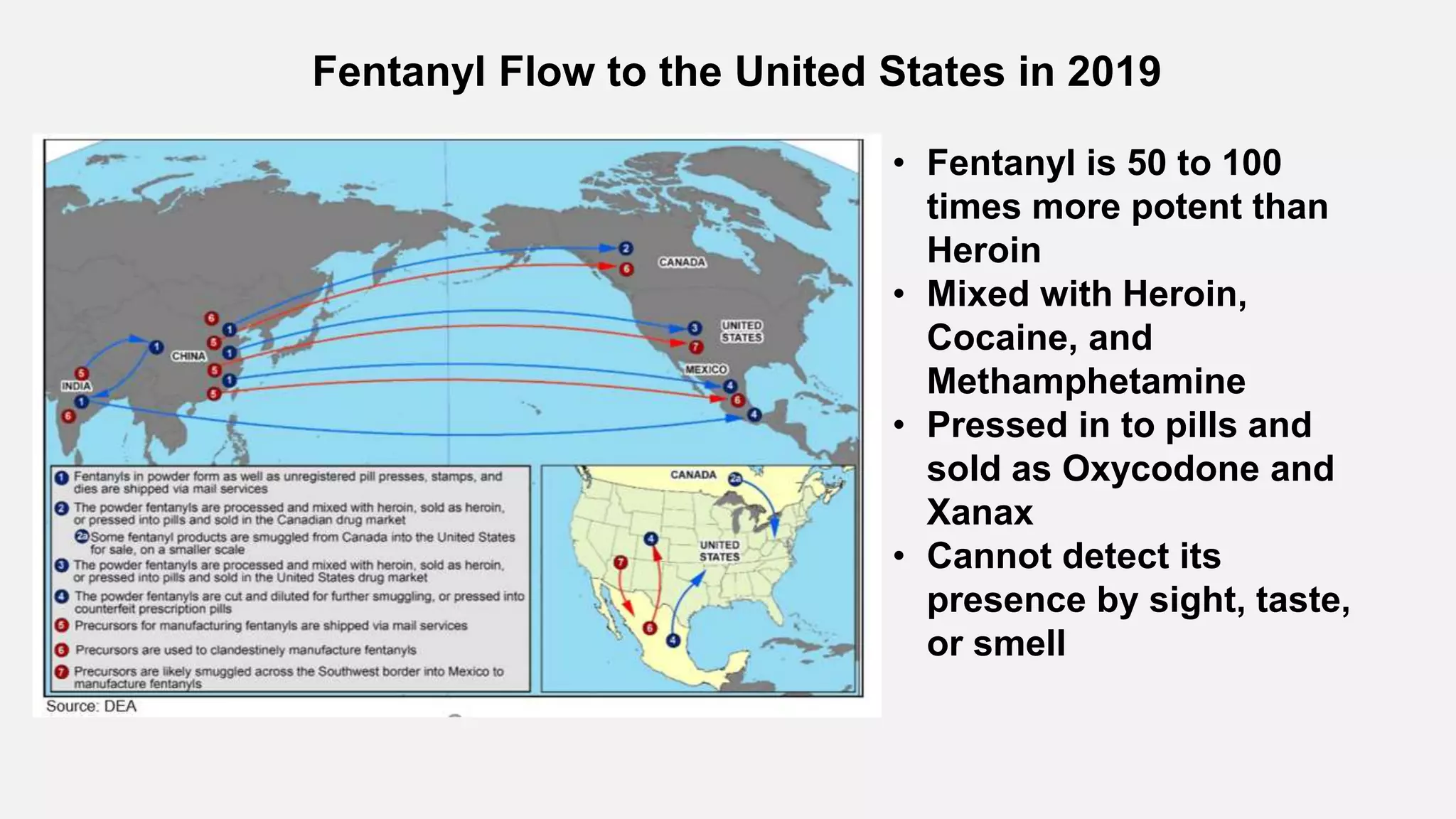
• Fentanyl is 50 to 100
times more potent than
Heroin
• Mixed with Heroin,
Cocaine, and
Methamphetamine
• Pressed in to pills and
sold as Oxycodone and
Xanax
• Cannot detect its
presence by sight, taste,
or smell
Fentanyl Flow to the United States in 2019
IMPACT OF COVID-19 ON INDIVIDUALS
WITH SUBSTANCE USE DISORDERS
• Access to substance use disorder
treatment programs and peer-
support groups decreased
• Syringe service program operations
limited
• Focus of emergency departments on
COVID-19
• Pandemic creates increased
isolation and stress which may
increase substance use and trigger
relapse
• Isolation increases risk of fatal
overdose
• Decreased bystander overdose
rescue
• Decreased or inconsistent income
may cause inconsistent substance
use
• Need to access illicit drugs makes
staying in place challenging
• Difficult to isolate when homeless or
incarcerated
• Illicit drug supply may be disrupted
and more unpredictable
• Early release of incarcerated
individuals
• Decreased access to HIV and HCV
testing
Tyndall M Int J Drug Policy 2020.
Issue brief: Reports of increases in opioid- and
other drug-related overdose and other concerns
during COVID pandemic
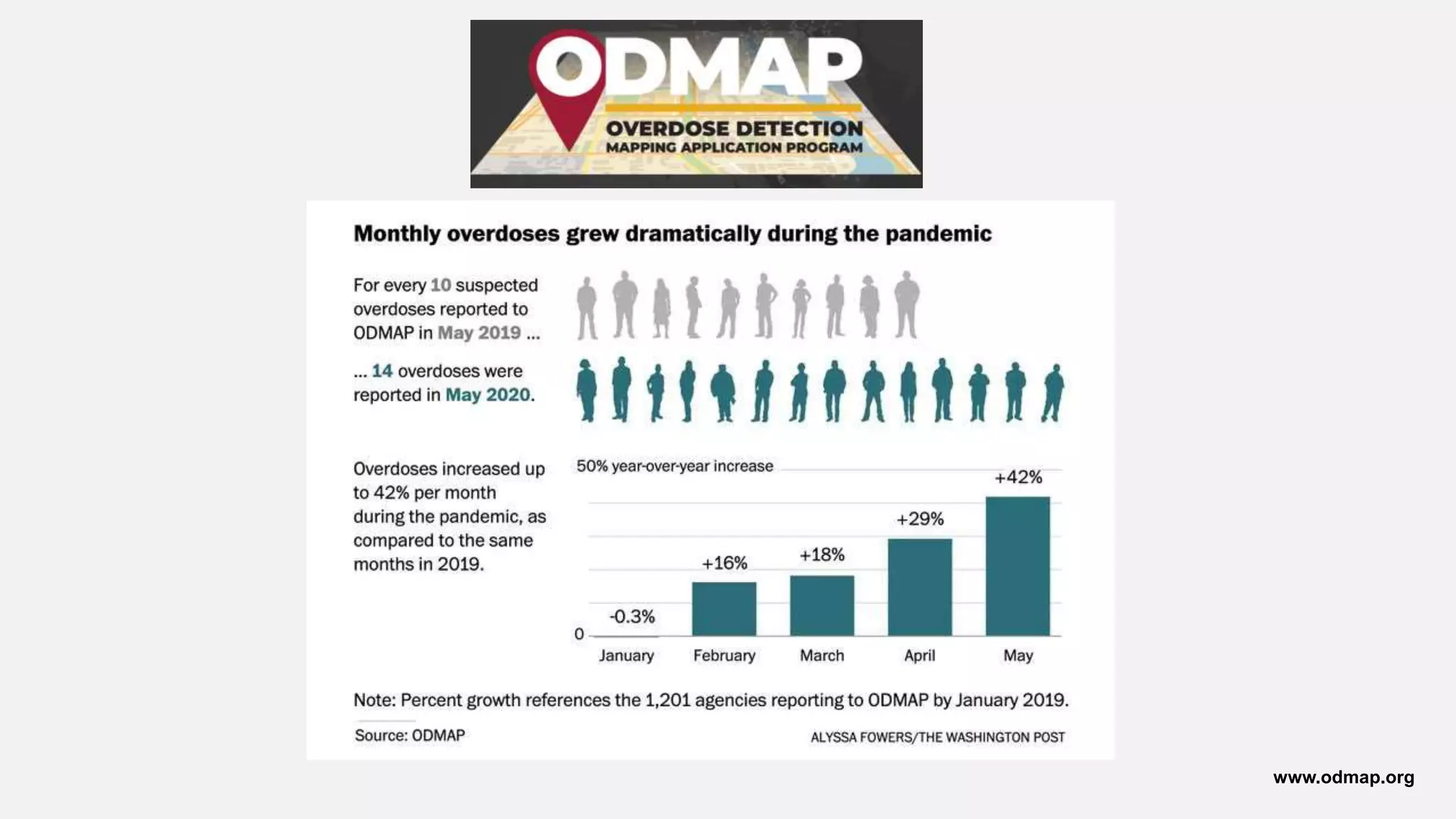
• More than 40 states have reported increases in opioid-
related mortality
• Drug-related overdose deaths are estimated to have risen
an average of 13% so far in 2020 compared to 2019
www.odmap.org
Increase in drug-related deaths through the first half of 2020 compared to 2019
All data is provisional. Definitions of what counts as a drug-related death vary by state. Data for Arizona,
California, Florida, Minnesota, Tennessee, Texas, Washington and Wisconsin includes only a subset of
counties within each state. Source: State and local health departments, coroners and medical examiners
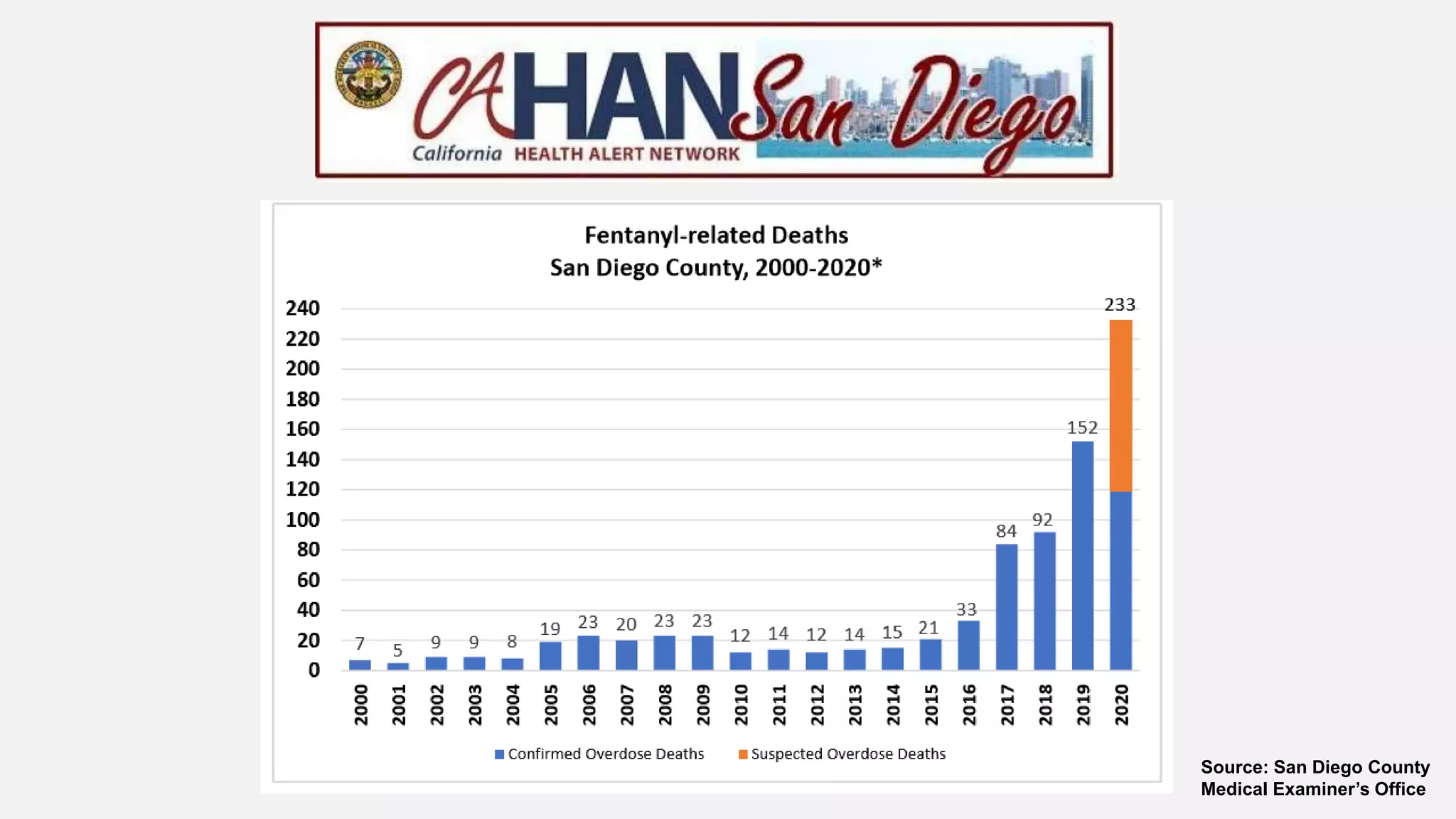
Source: San Diego County
Medical Examiner’s Office
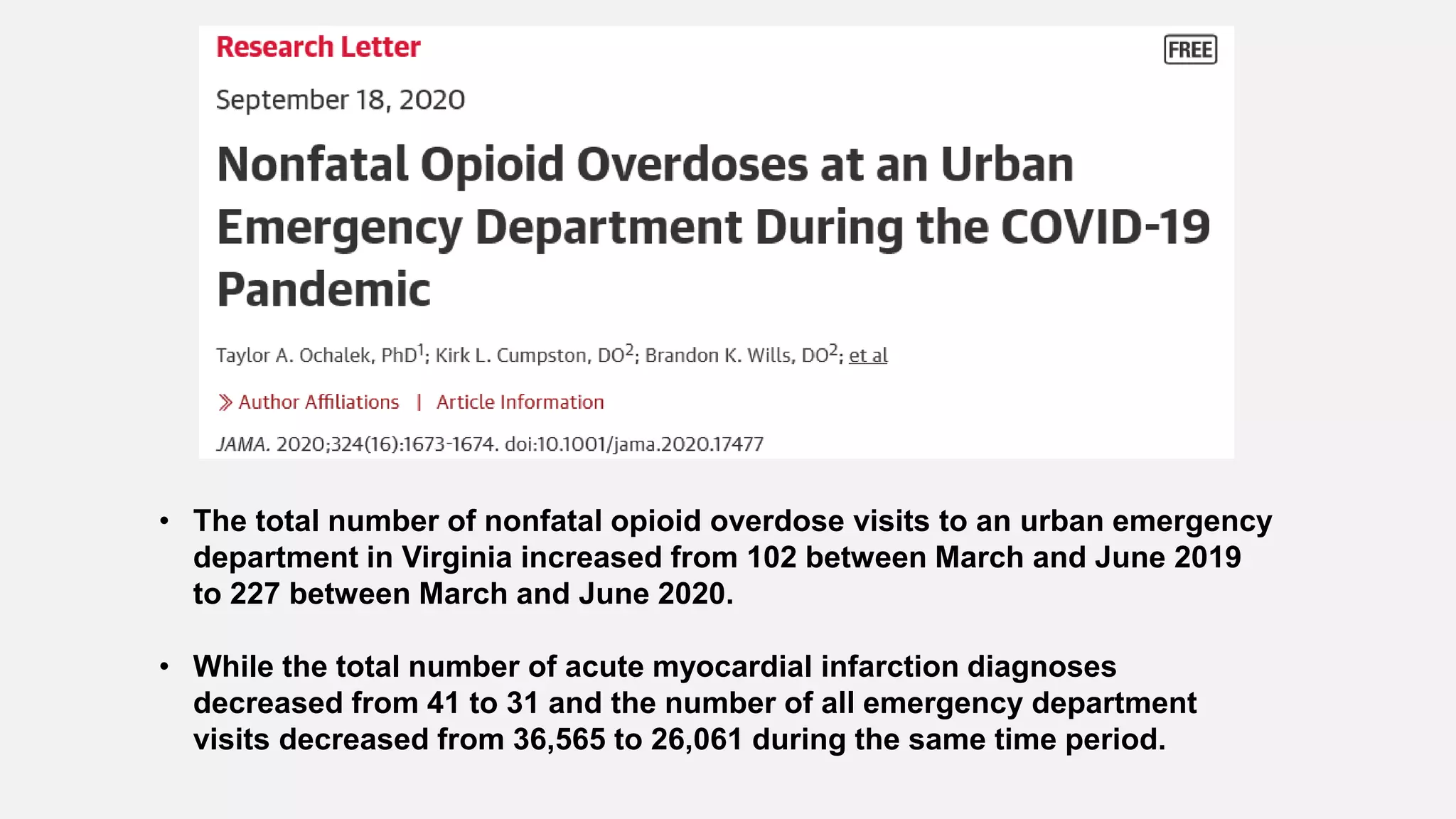
• The total number of nonfatal opioid overdose visits to an urban emergency
department in Virginia increased from 102 between March and June 2019
to 227 between March and June 2020.
• While the total number of acute myocardial infarction diagnoses
decreased from 41 to 31 and the number of all emergency department
visits decreased from 36,565 to 26,061 during the same time period.
FIGURE 1. Distribution of opioid/stimulant involvement in drug overdose deaths, by geographic
region* — State Unintentional Drug Overdose Reporting System (SUDORS), 25 jurisdictions,
January–June 2019†
FIGURE 3. Potential opportunities for intervention, by opioid/stimulant involvement — State
Unintentional Drug Overdose Reporting System (SUDORS), 25 jurisdictions, January–June
2019*,†,§,¶,**
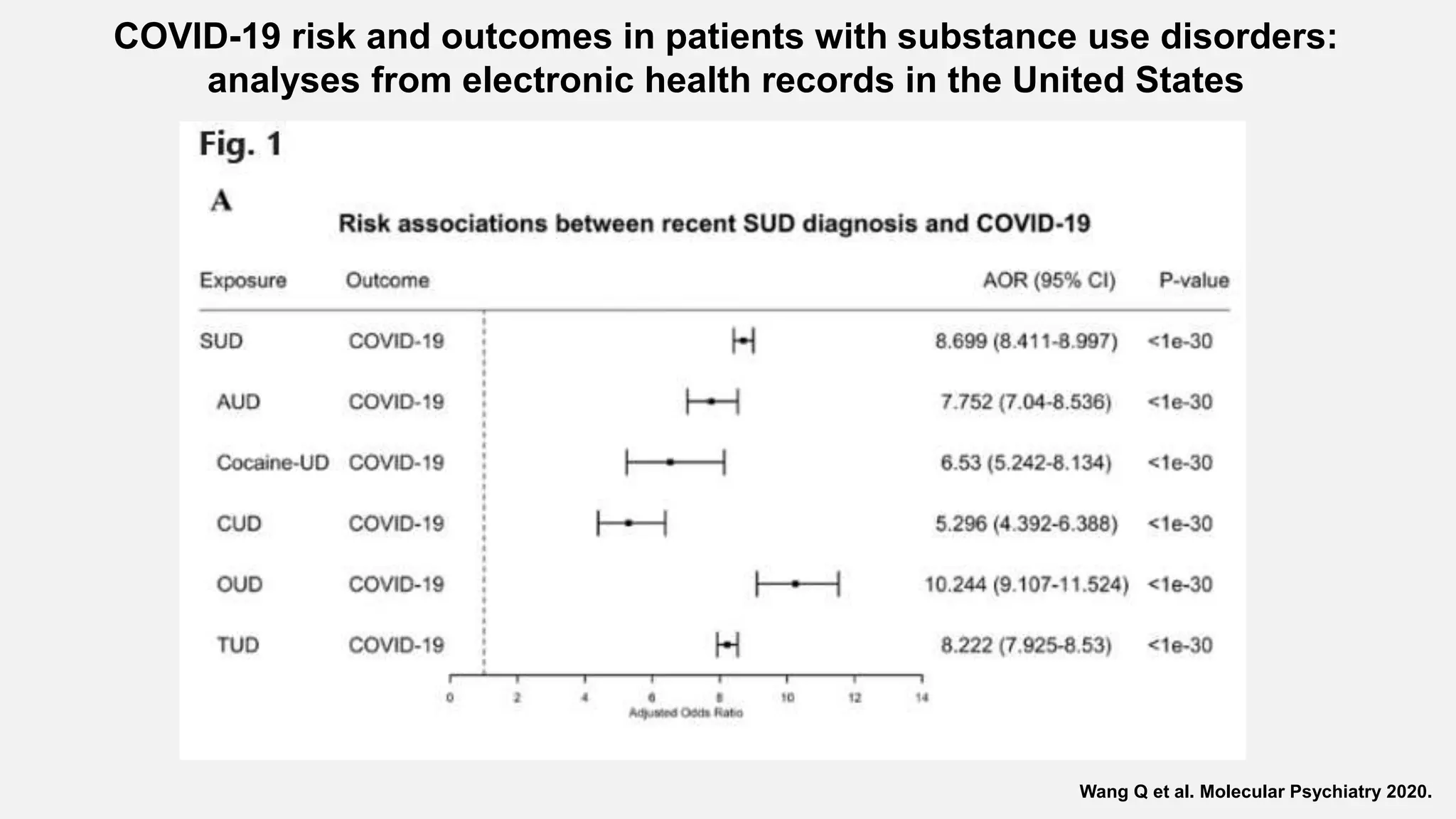
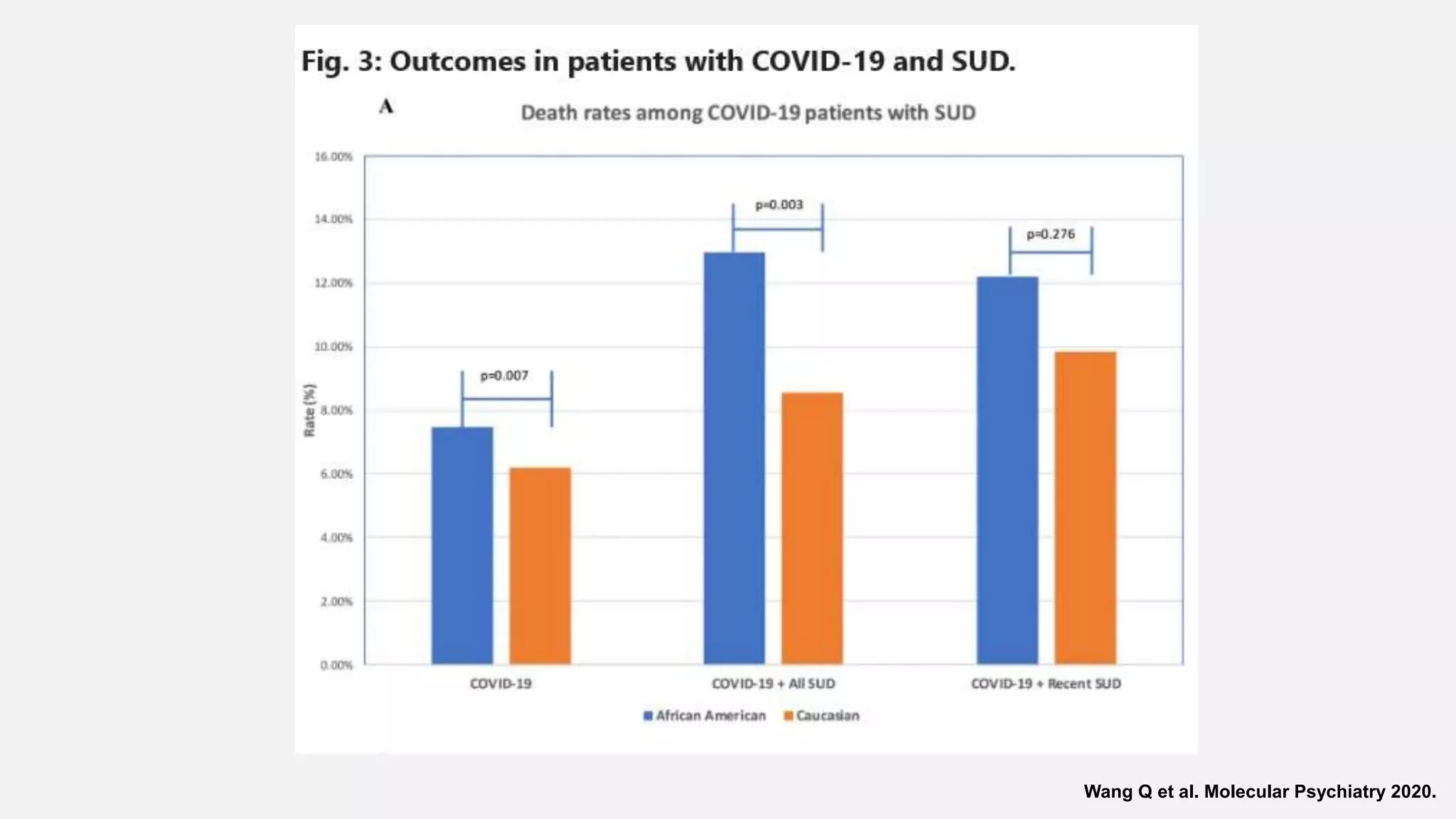
Wang Q et al. Molecular Psychiatry 2020.
COVID-19 risk and outcomes in patients with substance use disorders:
analyses from electronic health records in the United States
Wang Q et al. Molecular Psychiatry 2020.
J Infect Dis, Volume 222, Issue Supplement_5, 1 October 2020, Pages S239–S249, https://doi.org/10.1093/infdis
The content of this slide may be subject to copyright: please see the slide notes for details.
FIGURE 1. HUMAN IMMUNODEFICIENCY VIRUS
OUTBREAKS AMONG PERSONS WHO INJECT DRUGS
(UNITED STATES, 2016–2019). ...
Sex (at Birth) and HIV Transmission Category
11% increase
in HIV
incidence
from 2016 to
2018
CDC. HIV Surveillance Report 2018.
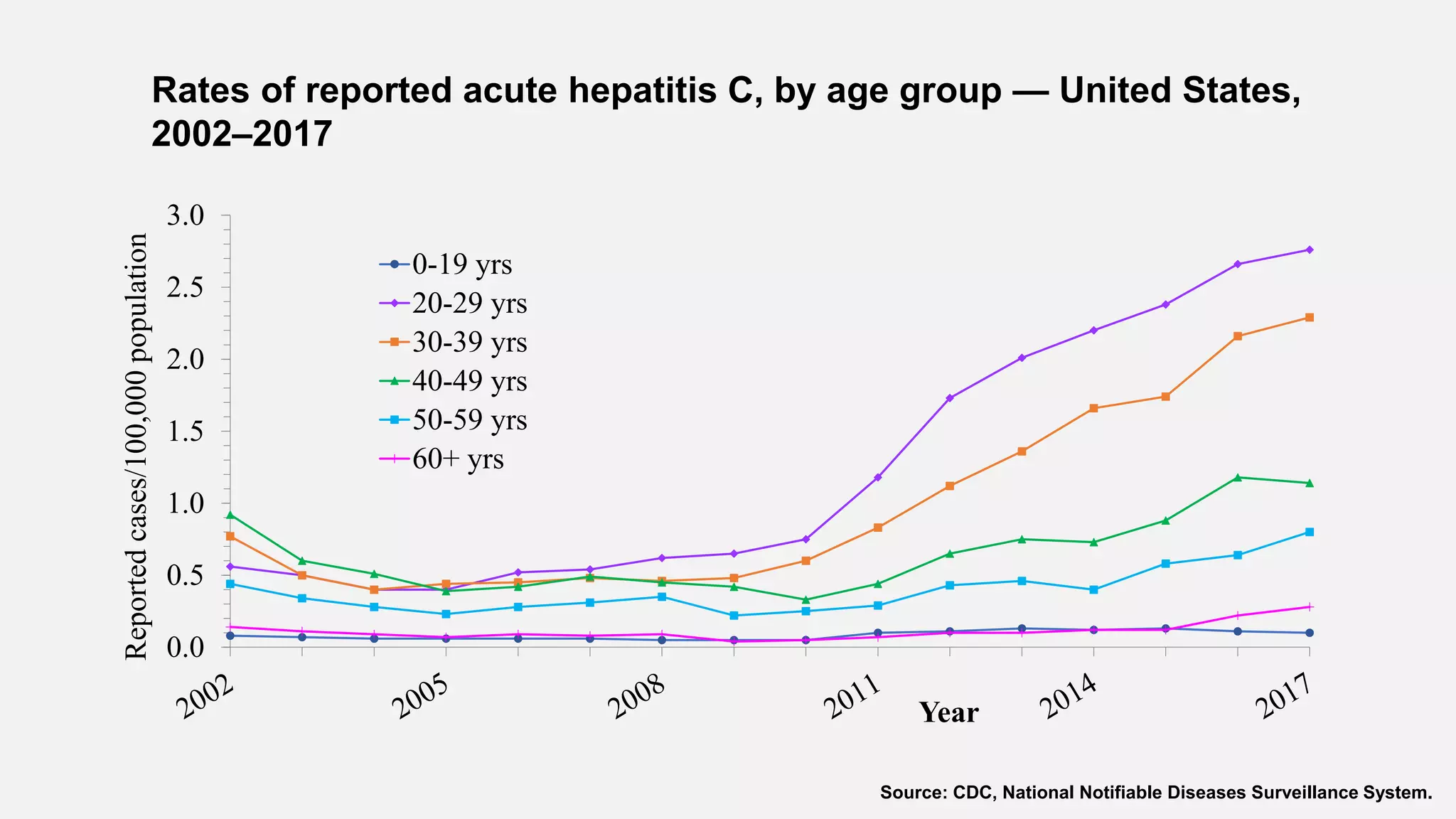
0.0
0.5
1.0
1.5
2.0
2.5
3.0
Reportedcases/100,000population
Year
0-19 yrs
20-29 yrs
30-39 yrs
40-49 yrs
50-59 yrs
60+ yrs
Rates of reported acute hepatitis C, by age group — United States,
2002–2017
Source: CDC, National Notifiable Diseases Surveillance System.
• Study utilized ICD-9, ICD-10, and CPT codes from a national health
insurance database to identify diagnoses indicative of injection drug use
• Identified 844,242 individuals with clinical encounters that were
suggestive of injection drug use
• 71,938 (8.5%) were tested for HIV and 65,188 (7.7%) were tested for HCV
during the study period
• Being male, rural residence, and receiving services for skin and soft
tissue infections and endocarditis were significantly associated with
missed opportunities for HIV and HCV testing
Pitrak D et al. ID Week 2020.
• From January 1, 2020 through August 17, 2020, researchers in Chicago observed
a decrease in routine HIV screening in 13 emergency departments in the city
• During this same time period there was an increase in patients diagnosed with
acute HIV infection seeking treatment in these emergency departments
• The researchers hypothesized that many of these patients were presenting with
symptoms that they attributed to COVID-19
• The rate of acute HIV infections in these emergency departments was
significantly higher in the first 8 months of 2020 compared to the prior 4 years
• The data suggest HIV screening should be included in COVID-19 testing
programs
Blach S et al. Journal of Hepatology 2020.
906,000
746,000
121,000
72,300
44,800
623,000
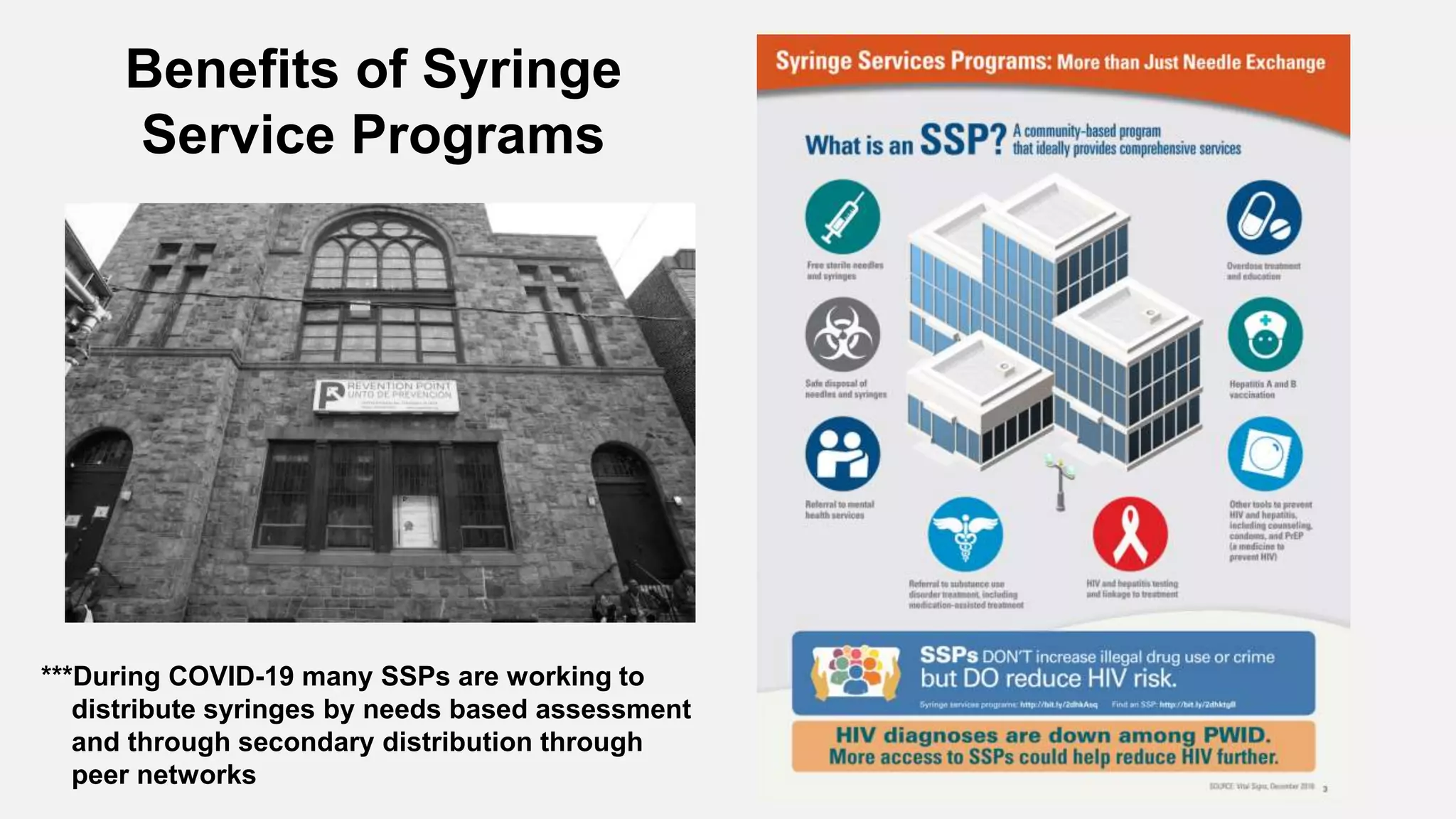
***During COVID-19 many SSPs are working to
distribute syringes by needs based assessment
and through secondary distribution through
peer networks
Benefits of Syringe
Service Programs
San Diego County
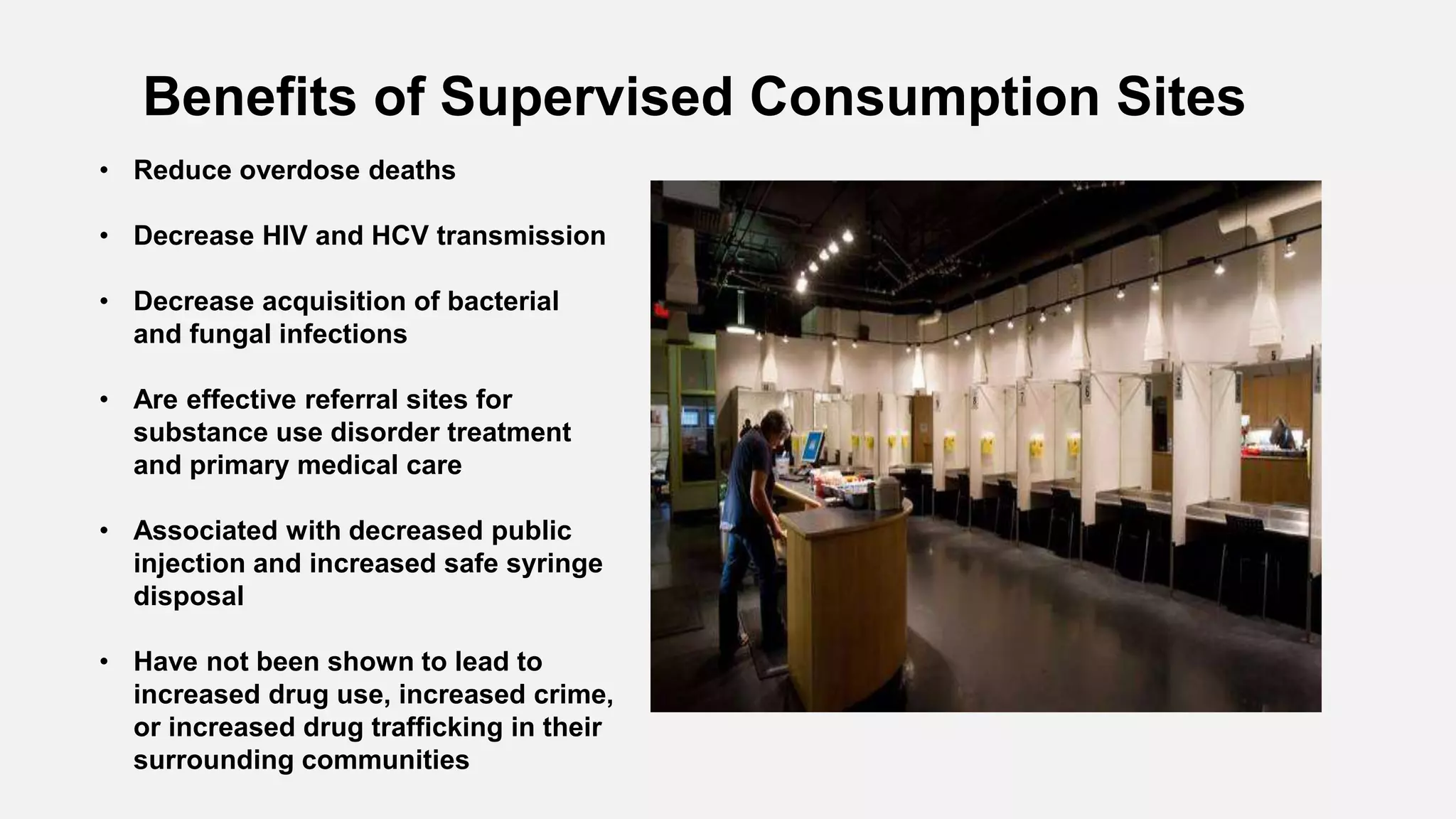
Benefits of Supervised Consumption Sites
• Reduce overdose deaths
• Decrease HIV and HCV transmission
• Decrease acquisition of bacterial
and fungal infections
• Are effective referral sites for
substance use disorder treatment
and primary medical care
• Associated with decreased public
injection and increased safe syringe
disposal
• Have not been shown to lead to
increased drug use, increased crime,
or increased drug trafficking in their
surrounding communities
Kral A et al. N Engl J Med 2020.
UNITED STATES V. SAFEHOUSE
In February 2019, the U.S. Attorney for the Eastern District
of Pennsylvania filed a civil lawsuit asking a federal court
to declare that supervised consumption sites are illegal
under 21 U.S.C. §856(a), a section colloquially known as
the “Crack House” Statute.
On October 2, 2019, a U.S. District Judge ruled that “the
ultimate goal of Safehouse’s proposed operation is to
reduce drug use, not facilitate it, and accordingly, §856(a)
does not prohibit Safehouse’s proposed conduct.”
On November 16, 2020 Safehouse is scheduled to appear
in the 3rd Circuit Court of Appeals to begin remote oral
arguments.
www.safehousephilly.org
PROVISION OF METHADONE AND
BUPRENORPHINE FOR TREATMENT OF OPIOID
USE DISORDER IN THE COVID-19 EMERGENCY
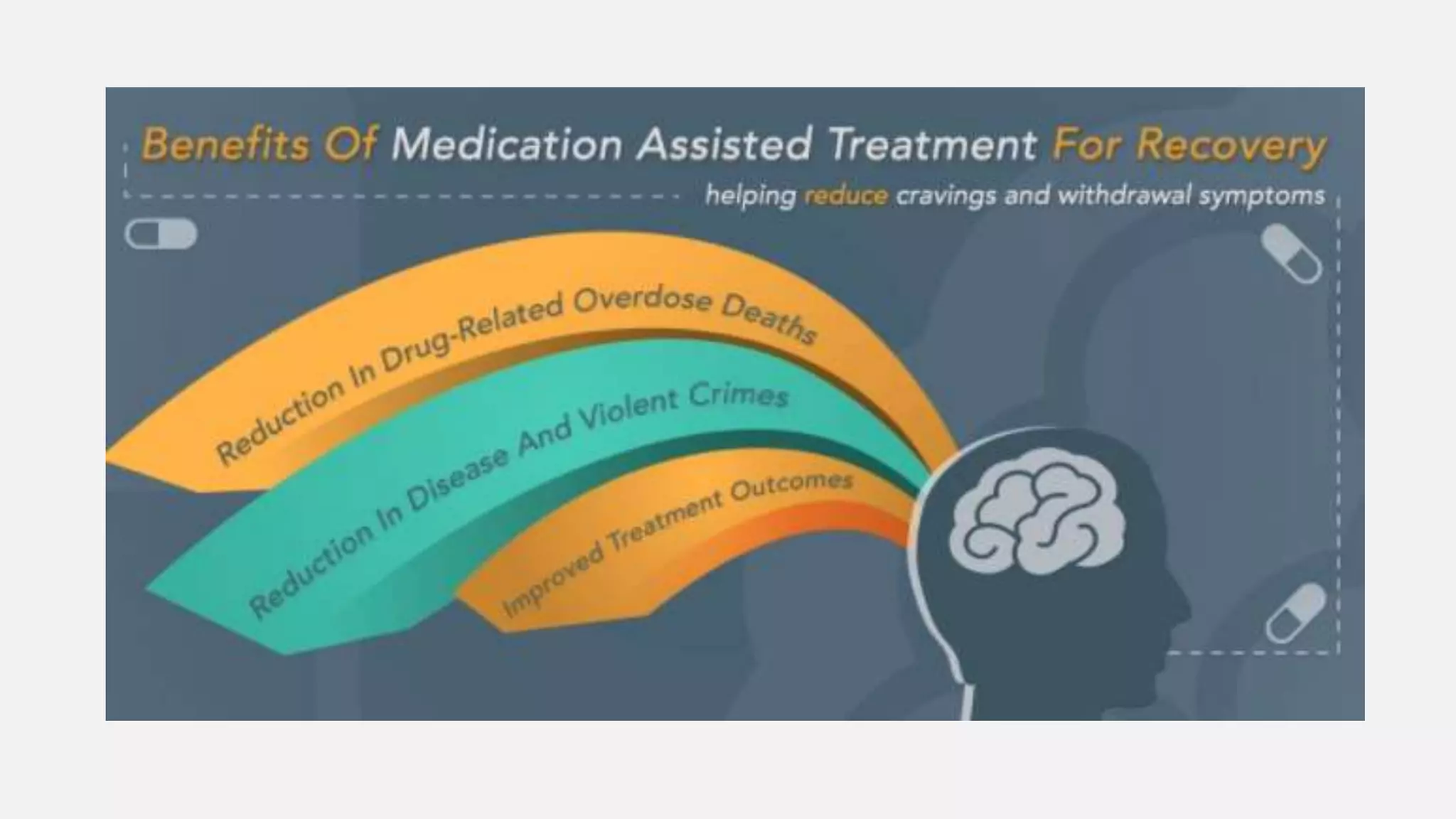
• Reduction of financial barriers to treatment and access
to MAT and Naloxone through the emergency
expansion of Medicaid
• Easing of restrictions on the dispensing of Methadone
• Expanding the role of telemedicine for Buprenorphine
initiation and follow-up via video or telephone visit
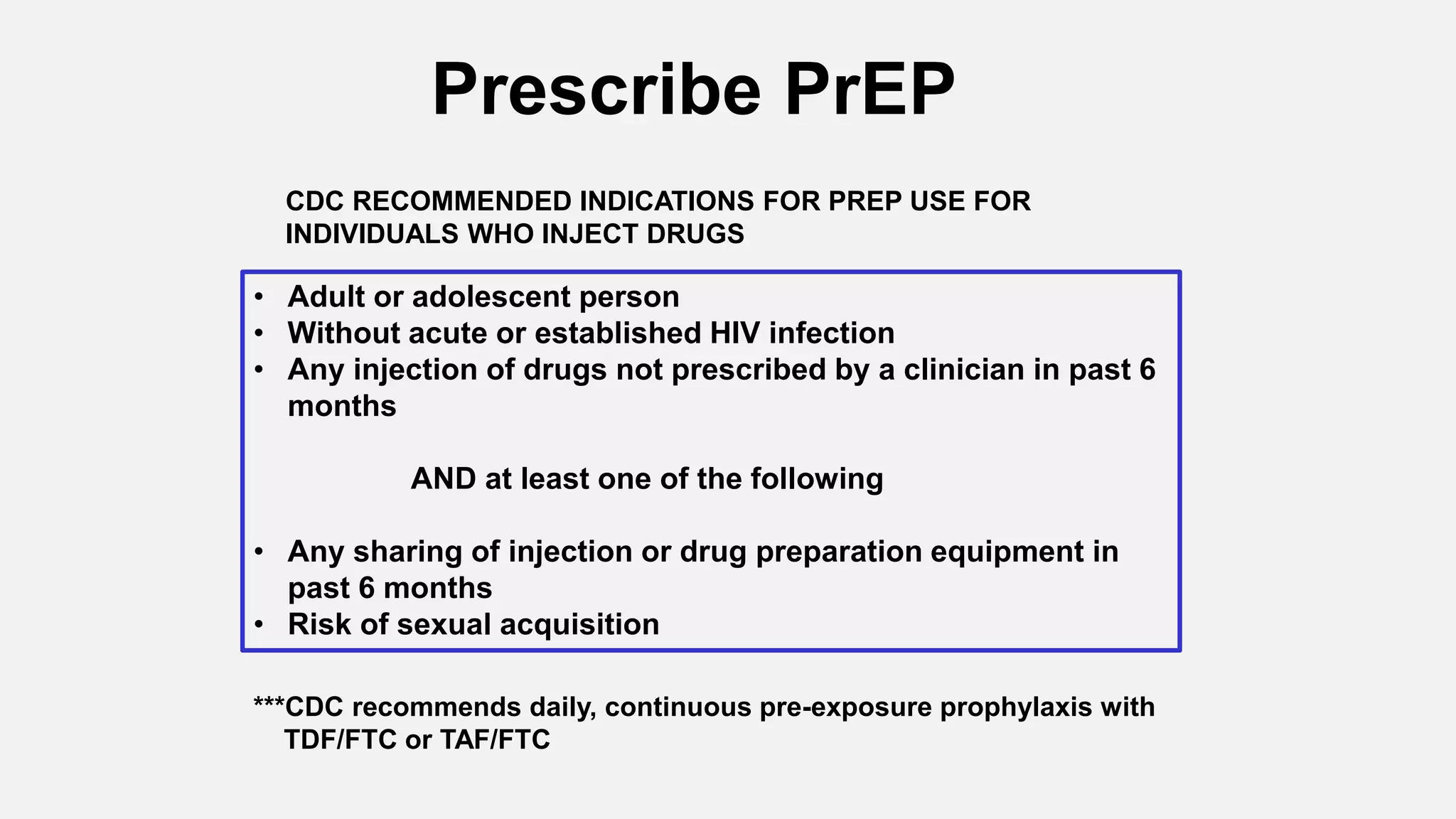
***CDC recommends daily, continuous pre-exposure prophylaxis with
TDF/FTC or TAF/FTC
Prescribe PrEP
• Adult or adolescent person
• Without acute or established HIV infection
• Any injection of drugs not prescribed by a clinician in past 6
months
AND at least one of the following
• Any sharing of injection or drug preparation equipment in
past 6 months
• Risk of sexual acquisition
CDC RECOMMENDED INDICATIONS FOR PREP USE FOR
INDIVIDUALS WHO INJECT DRUGS
COVID-19 IMPACT OF PREP ACCESS
• PWID report that competing health priorities, housing instability, periods of
incarceration, side effect concerns, and HIV stigma all prevent access to PrEP1
• In Baltimore, a city with high rates of injection drug use only 25% of 265 PrEP
eligible PWID surveyed had previously heard of PrEP with only 2 reporting currently
taking PrEP even though 63% were interested in taking it2
• Survey of gay and bisexual men PrEP users and healthcare providers across the
United States demonstrated a reduction of PrEP uptake, generally by choice rather
than by restricted access3
• A study from Fenway Health demonstrated a 72.1% reduction in new patients
starting PrEP and a 191% increase in lapsed PrEP refills especially among younger
individuals, transgender individuals, and ethnic minorities4
1. Biello K et al. Harm Reduction Journal 2018. 3. Brawley S et al. 23rd International AIDS Conference 2020.
2. Sherman S et al. Drug Alcohol Depedence 2019. 4. Krakower D et al. 23rd International AIDS Conference 2020.
11.13.20 | The Impact of COVID-19 on the Opioid Epidemic

11.13.20 | The Impact of COVID-19 on the Opioid Epidemic

  • 1.
    HIV & GlobalHealth Rounds The UC San Diego AntiViral Research Center sponsors weekly presentations by infectious disease and global public health clinicians, physicians, and researchers. The goal of these presentations is to provide the most current research, clinical practices, and trends in HIV, HBV, HCV, TB, and other infectious diseases of global significance. The slides from the HIV & Global Health Rounds presentation that you are about to view are intended for the educational purposes of our audience. They may not be used for other purposes without the presenter’s express permission.
  • 2.
    THE IMPACT OFCOVID-19 ON THE OPIOID EPIDEMIC Laura Bamford, MD, MSCE November 13, 2020
  • 3.
  • 4.
    PRINCIPLES OF HARMREDUCTION Harm reduction is a set of practical strategies and ideas aimed at reducing negative consequences associated with drug use. Harm Reduction is also a movement for social justice built on a belief in, and respect for, the rights of people who use drugs.
  • 6.
  • 7.
    Source: Centers for DiseaseControl and Prevention Drug-related Overdose Deaths in the United States in 2019
  • 8.
    24 24% Ahmad F etal. National Center for Health Statistics 2020.
  • 9.
    • Fentanyl is50 to 100 times more potent than Heroin • Mixed with Heroin, Cocaine, and Methamphetamine • Pressed in to pills and sold as Oxycodone and Xanax • Cannot detect its presence by sight, taste, or smell Fentanyl Flow to the United States in 2019
  • 10.
    IMPACT OF COVID-19ON INDIVIDUALS WITH SUBSTANCE USE DISORDERS • Access to substance use disorder treatment programs and peer- support groups decreased • Syringe service program operations limited • Focus of emergency departments on COVID-19 • Pandemic creates increased isolation and stress which may increase substance use and trigger relapse • Isolation increases risk of fatal overdose • Decreased bystander overdose rescue • Decreased or inconsistent income may cause inconsistent substance use • Need to access illicit drugs makes staying in place challenging • Difficult to isolate when homeless or incarcerated • Illicit drug supply may be disrupted and more unpredictable • Early release of incarcerated individuals • Decreased access to HIV and HCV testing Tyndall M Int J Drug Policy 2020.
  • 11.
    Issue brief: Reportsof increases in opioid- and other drug-related overdose and other concerns during COVID pandemic • More than 40 states have reported increases in opioid- related mortality • Drug-related overdose deaths are estimated to have risen an average of 13% so far in 2020 compared to 2019
  • 12.
  • 13.
    Increase in drug-relateddeaths through the first half of 2020 compared to 2019 All data is provisional. Definitions of what counts as a drug-related death vary by state. Data for Arizona, California, Florida, Minnesota, Tennessee, Texas, Washington and Wisconsin includes only a subset of counties within each state. Source: State and local health departments, coroners and medical examiners
  • 14.
    Source: San DiegoCounty Medical Examiner’s Office
  • 15.
    • The totalnumber of nonfatal opioid overdose visits to an urban emergency department in Virginia increased from 102 between March and June 2019 to 227 between March and June 2020. • While the total number of acute myocardial infarction diagnoses decreased from 41 to 31 and the number of all emergency department visits decreased from 36,565 to 26,061 during the same time period.
  • 16.
    FIGURE 1. Distributionof opioid/stimulant involvement in drug overdose deaths, by geographic region* — State Unintentional Drug Overdose Reporting System (SUDORS), 25 jurisdictions, January–June 2019†
  • 17.
    FIGURE 3. Potentialopportunities for intervention, by opioid/stimulant involvement — State Unintentional Drug Overdose Reporting System (SUDORS), 25 jurisdictions, January–June 2019*,†,§,¶,**
  • 18.
    Wang Q etal. Molecular Psychiatry 2020. COVID-19 risk and outcomes in patients with substance use disorders: analyses from electronic health records in the United States
  • 19.
    Wang Q etal. Molecular Psychiatry 2020.
  • 20.
    J Infect Dis,Volume 222, Issue Supplement_5, 1 October 2020, Pages S239–S249, https://doi.org/10.1093/infdis The content of this slide may be subject to copyright: please see the slide notes for details. FIGURE 1. HUMAN IMMUNODEFICIENCY VIRUS OUTBREAKS AMONG PERSONS WHO INJECT DRUGS (UNITED STATES, 2016–2019). ...
  • 21.
    Sex (at Birth)and HIV Transmission Category 11% increase in HIV incidence from 2016 to 2018 CDC. HIV Surveillance Report 2018.
  • 22.
    0.0 0.5 1.0 1.5 2.0 2.5 3.0 Reportedcases/100,000population Year 0-19 yrs 20-29 yrs 30-39yrs 40-49 yrs 50-59 yrs 60+ yrs Rates of reported acute hepatitis C, by age group — United States, 2002–2017 Source: CDC, National Notifiable Diseases Surveillance System.
  • 23.
    • Study utilizedICD-9, ICD-10, and CPT codes from a national health insurance database to identify diagnoses indicative of injection drug use • Identified 844,242 individuals with clinical encounters that were suggestive of injection drug use • 71,938 (8.5%) were tested for HIV and 65,188 (7.7%) were tested for HCV during the study period • Being male, rural residence, and receiving services for skin and soft tissue infections and endocarditis were significantly associated with missed opportunities for HIV and HCV testing
  • 24.
    Pitrak D etal. ID Week 2020. • From January 1, 2020 through August 17, 2020, researchers in Chicago observed a decrease in routine HIV screening in 13 emergency departments in the city • During this same time period there was an increase in patients diagnosed with acute HIV infection seeking treatment in these emergency departments • The researchers hypothesized that many of these patients were presenting with symptoms that they attributed to COVID-19 • The rate of acute HIV infections in these emergency departments was significantly higher in the first 8 months of 2020 compared to the prior 4 years • The data suggest HIV screening should be included in COVID-19 testing programs
  • 25.
    Blach S etal. Journal of Hepatology 2020. 906,000 746,000 121,000 72,300 44,800 623,000
  • 26.
    ***During COVID-19 manySSPs are working to distribute syringes by needs based assessment and through secondary distribution through peer networks Benefits of Syringe Service Programs
  • 27.
  • 28.
    Benefits of SupervisedConsumption Sites • Reduce overdose deaths • Decrease HIV and HCV transmission • Decrease acquisition of bacterial and fungal infections • Are effective referral sites for substance use disorder treatment and primary medical care • Associated with decreased public injection and increased safe syringe disposal • Have not been shown to lead to increased drug use, increased crime, or increased drug trafficking in their surrounding communities
  • 29.
    Kral A etal. N Engl J Med 2020.
  • 30.
    UNITED STATES V.SAFEHOUSE In February 2019, the U.S. Attorney for the Eastern District of Pennsylvania filed a civil lawsuit asking a federal court to declare that supervised consumption sites are illegal under 21 U.S.C. §856(a), a section colloquially known as the “Crack House” Statute. On October 2, 2019, a U.S. District Judge ruled that “the ultimate goal of Safehouse’s proposed operation is to reduce drug use, not facilitate it, and accordingly, §856(a) does not prohibit Safehouse’s proposed conduct.” On November 16, 2020 Safehouse is scheduled to appear in the 3rd Circuit Court of Appeals to begin remote oral arguments. www.safehousephilly.org
  • 32.
    PROVISION OF METHADONEAND BUPRENORPHINE FOR TREATMENT OF OPIOID USE DISORDER IN THE COVID-19 EMERGENCY • Reduction of financial barriers to treatment and access to MAT and Naloxone through the emergency expansion of Medicaid • Easing of restrictions on the dispensing of Methadone • Expanding the role of telemedicine for Buprenorphine initiation and follow-up via video or telephone visit
  • 33.
    ***CDC recommends daily,continuous pre-exposure prophylaxis with TDF/FTC or TAF/FTC Prescribe PrEP • Adult or adolescent person • Without acute or established HIV infection • Any injection of drugs not prescribed by a clinician in past 6 months AND at least one of the following • Any sharing of injection or drug preparation equipment in past 6 months • Risk of sexual acquisition CDC RECOMMENDED INDICATIONS FOR PREP USE FOR INDIVIDUALS WHO INJECT DRUGS
  • 34.
    COVID-19 IMPACT OFPREP ACCESS • PWID report that competing health priorities, housing instability, periods of incarceration, side effect concerns, and HIV stigma all prevent access to PrEP1 • In Baltimore, a city with high rates of injection drug use only 25% of 265 PrEP eligible PWID surveyed had previously heard of PrEP with only 2 reporting currently taking PrEP even though 63% were interested in taking it2 • Survey of gay and bisexual men PrEP users and healthcare providers across the United States demonstrated a reduction of PrEP uptake, generally by choice rather than by restricted access3 • A study from Fenway Health demonstrated a 72.1% reduction in new patients starting PrEP and a 191% increase in lapsed PrEP refills especially among younger individuals, transgender individuals, and ethnic minorities4 1. Biello K et al. Harm Reduction Journal 2018. 3. Brawley S et al. 23rd International AIDS Conference 2020. 2. Sherman S et al. Drug Alcohol Depedence 2019. 4. Krakower D et al. 23rd International AIDS Conference 2020.